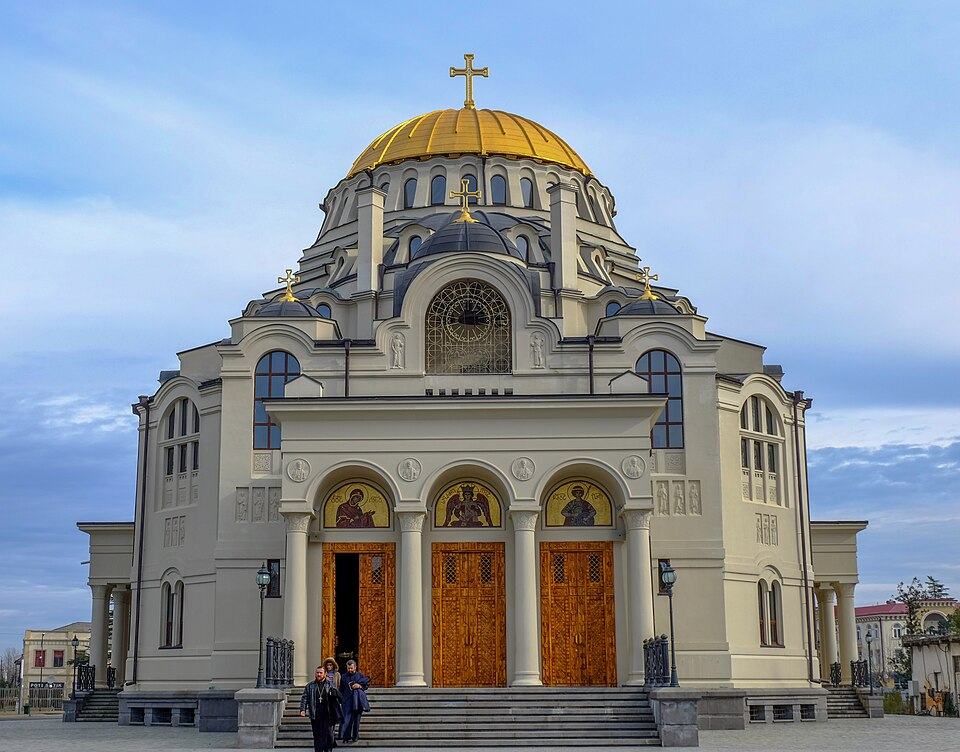
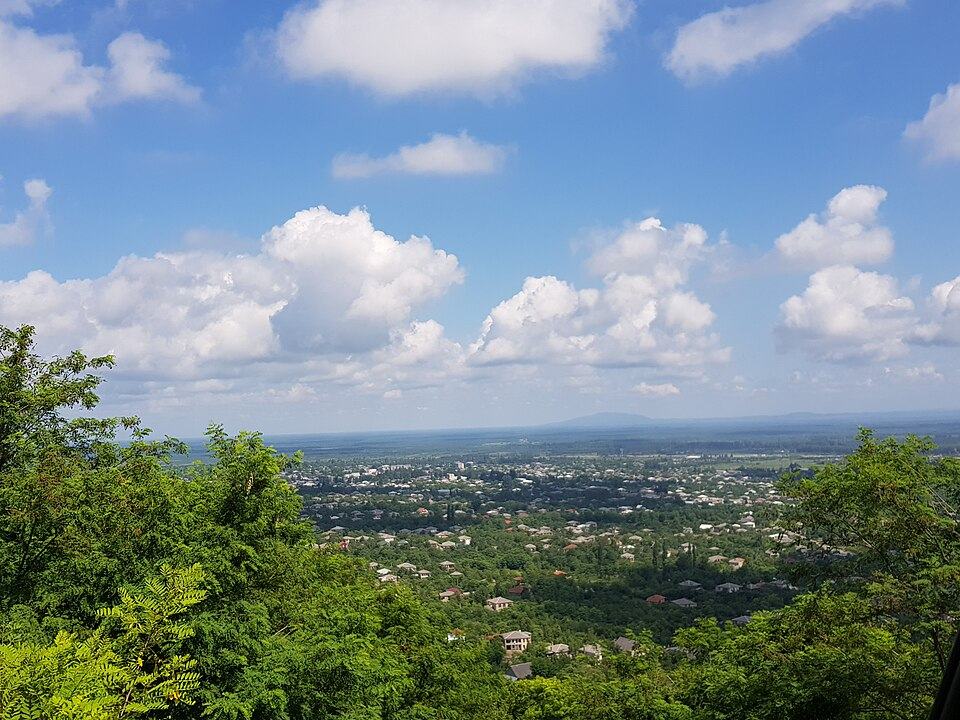
Khobi Monastery
Thirteenth-century convent of the Dormition near Khobi, once the family church and burial place of the Dadiani princes of Mingrelia.
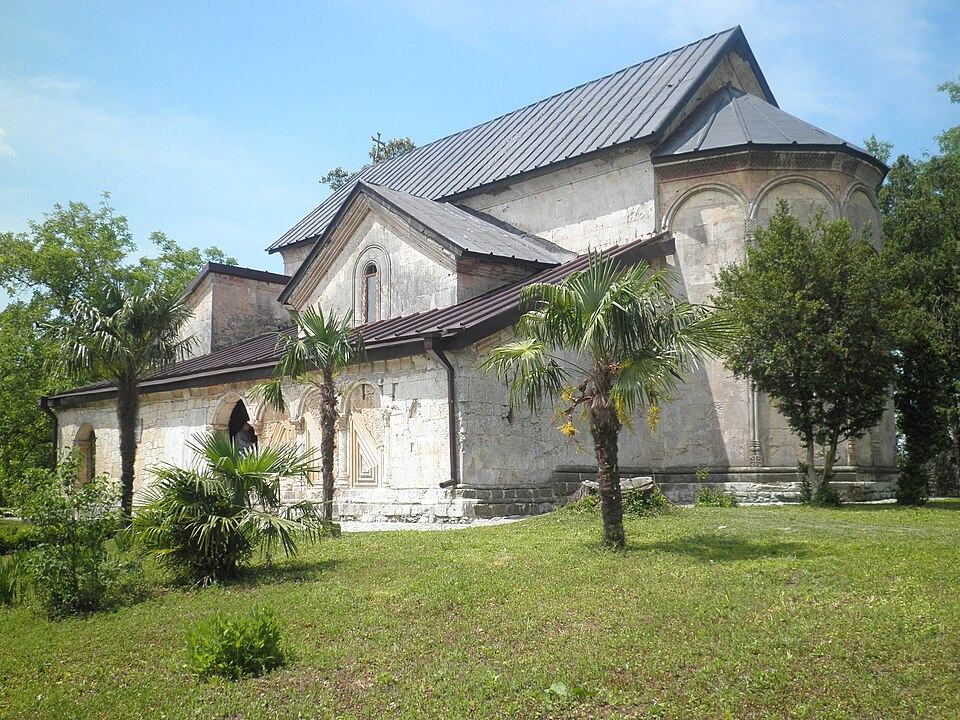 Khobi MonasteryPhoto: ForwarderL, CC BY-SA 3.0
Khobi Monastery stands in the village of Nojikhevi, about 3 km north of the small town of Khobi, on the Samegrelo plain between Senaki and Zugdidi. Its full name is the Nojikhevi convent of the Dormition of the Mother of God, and a community of nuns lives here today. The main church is a domeless hall roofed with cross vaults, with two corner chapels that were later joined to the central bay. Open galleries run along the west and south sides, and the facades are decorated with finely carved stone. A bell tower built between the 14th and 17th centuries rises close by.
Inside, frescoes of the 13th and 14th centuries show the influence of late Byzantine Palaeologan painting, and a 17th-century layer adds portraits of the Dadiani family with Georgian captions. In the southern chapel, a long inscription in the old asomtavruli script records that Vameq I Dadiani brought marble columns, capitals and parts of a pulpit home from a campaign against Zichia, on the north-eastern shore of the Black Sea; some pieces may be 5th-century Byzantine work. Around the church lie the ruins of a 17th-century bishop's palace and a perimeter wall restored in 2016.
History
Khobi first appears in a document of the Georgian Monastery of the Cross in Jerusalem dated 1212 to 1222, and the art historian Vakhtang Beridze placed the present church in the second half of the 13th century. It became the family abbey and burial ground of the Dadiani, the princely rulers of Mingrelia. In the 17th century visitors described relics kept here, including a robe venerated as the Virgin's. After a pause in the Soviet period, the church returned to worship and now serves a nunnery.
What to see and do
- Carved stone facades and open galleries
- 13th and 14th-century frescoes in the Palaeologan manner
- 17th-century portraits of the Dadiani family
- Vameq I Dadiani's inscription about the marble brought from Zichia
- The old bell tower and the ruined bishop's palace
How to visit
Getting there
The monastery is about 3 km north of Khobi town, roughly 30 minutes by car from Zugdidi and 40 minutes from Poti. Tbilisi is about 4.5 to 5 hours away by road.
When to go
All year; April to June and September to October are most comfortable. Plan 45 minutes to 1 hour here.
- This is a working convent: cover shoulders and knees, and women should cover their hair
- Ask the nuns before taking photographs inside
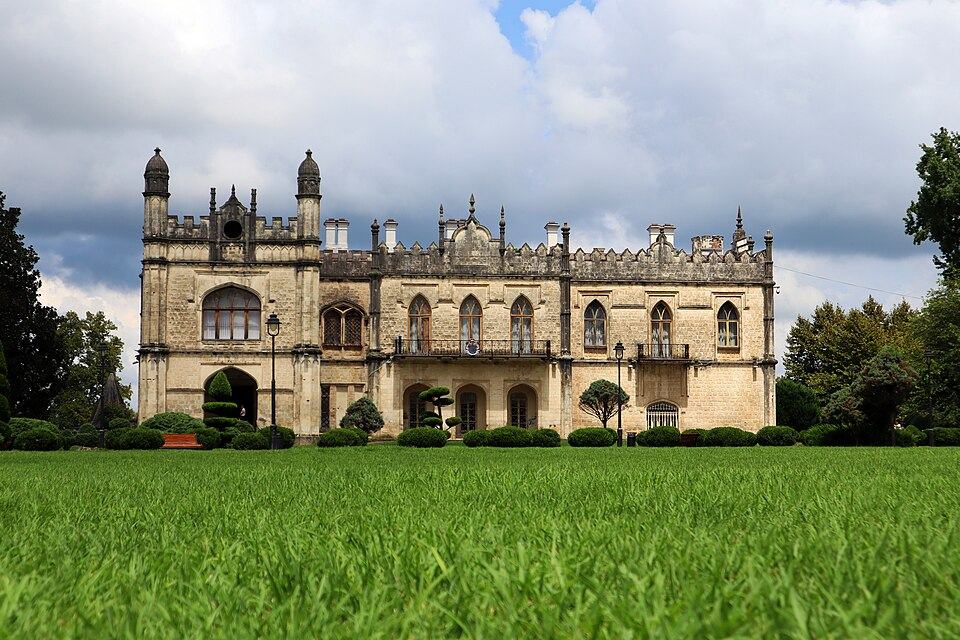
- Combine it with the Dadiani Palace in Zugdidi, which tells more of the family's story
- In summer, come in the morning before the lowland heat builds
Khobi Monastery: FAQ
Who is buried at Khobi Monastery?
Khobi was the family abbey and burial church of the Dadiani, the princes who ruled Mingrelia. Some of its 17th-century wall paintings show members of the family.
How old is Khobi Monastery?
The present church is usually dated to the second half of the 13th century. Khobi is first mentioned in a document of 1212 to 1222, and its frescoes range from the 13th to the 17th century.
Nearby places
Straight-line distance from Khobi Monastery.