- The best first-week route is a loop from Tbilisi: the Old Town, Uplistsikhe and Mtskheta, two nights in Kazbegi, a second Tbilisi afternoon and two days in Kakheti wine country.
- No day needs more than about 3.5 hours of driving, and every stop is on a paved road.
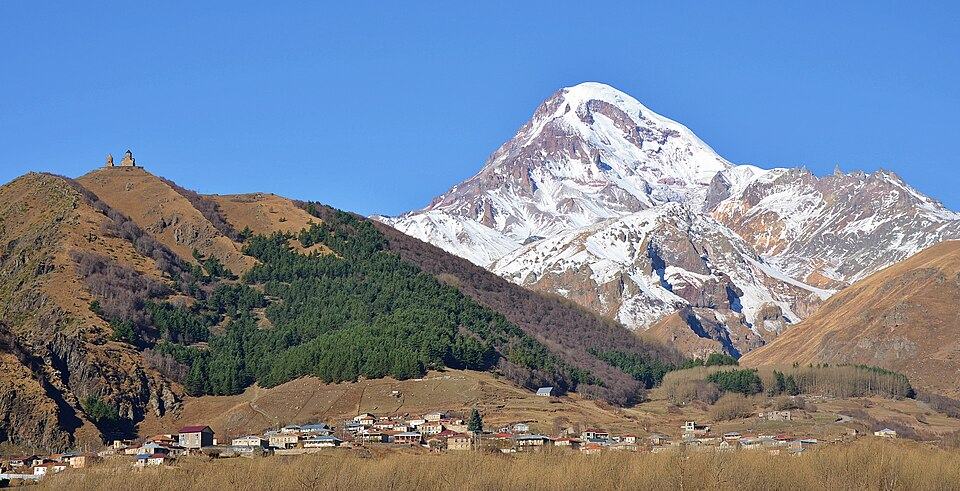
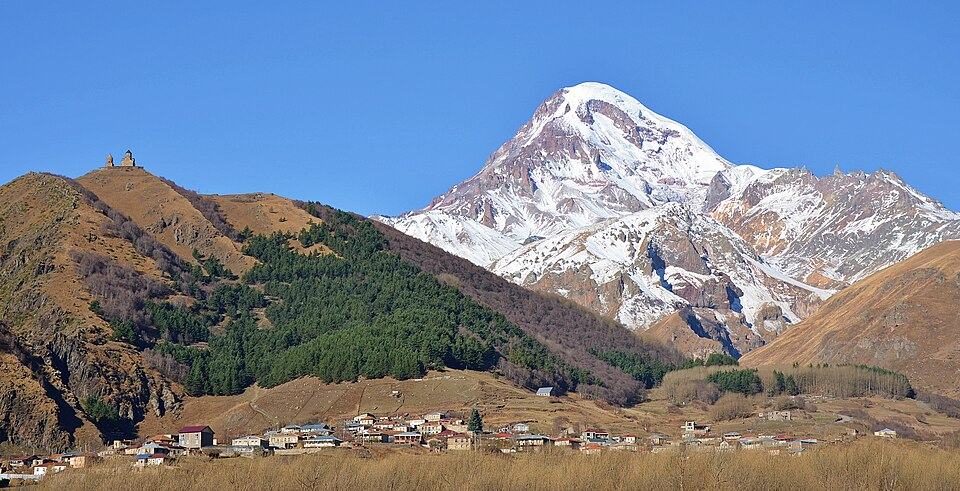
- Sleep in Stepantsminda instead of doing Kazbegi as a day trip: mornings at Gergeti Trinity Church are clearer and the valleys need a full day.
- The best months are May, June, September and October. July and August are hot in Tbilisi but ideal in the high mountains.
- Approximate 2026 costs per person per day: 100-170 GEL ($40-65) on a budget, 250-450 GEL ($95-175) mid-range, 600-1,050 GEL ($230-400) for comfort with a private driver.
- Most nationalities need no visa and can stay up to a year, but since 1 January 2026 every foreign tourist must carry health and accident insurance with at least 30,000 GEL of cover.
Seven days is the right length for a first trip to Georgia. It covers the three things almost every visitor comes for, Tbilisi, the high Caucasus around Kazbegi and the wine villages of Kakheti, plus the cave town of Uplistsikhe and the old capital Mtskheta. Distances are short: nothing on this route is more than three hours from Tbilisi, so you spend your days walking, eating and looking rather than sitting in a car.
This is the route we drive most often with our own guests at Maspindzeli, and it works with a private driver, a rental car or public marshrutkas. Below you will find the day-by-day plan with what to eat and where to sleep, versions with Svaneti, Batumi or winter snow, a month-by-month guide, realistic 2026 costs and the practical details that catch people out.
The 7-day route at a glance
The loop starts and ends in Tbilisi: west for cave towns and cathedrals, north for two nights in the mountains, then east to Kakheti. Doing the mountains early leaves room to swap days if the weather turns.
| Day | Base | Highlights | Drive time |
|---|---|---|---|
| 1 | Tbilisi | Old Town, Narikala Fortress, sulphur baths, Bridge of Peace | Airport to centre 25-30 min |
| 2 | Tbilisi | Uplistsikhe cave town, Gori, Svetitskhoveli and Jvari in Mtskheta | About 3 h in total |
| 3 | Stepantsminda | Georgian Military Road: Ananuri, Gudauri, Jvari Pass, Gergeti Trinity Church | About 3 h (155 km) plus stops |
| 4 | Stepantsminda | Juta or Truso valley walk, Dariali gorge, Gveleti Waterfall | 1-1.5 h of local driving |
| 5 | Tbilisi | Drive back, then Sameba, Rustaveli Avenue, Dry Bridge Market, Mtatsminda | About 3 h |
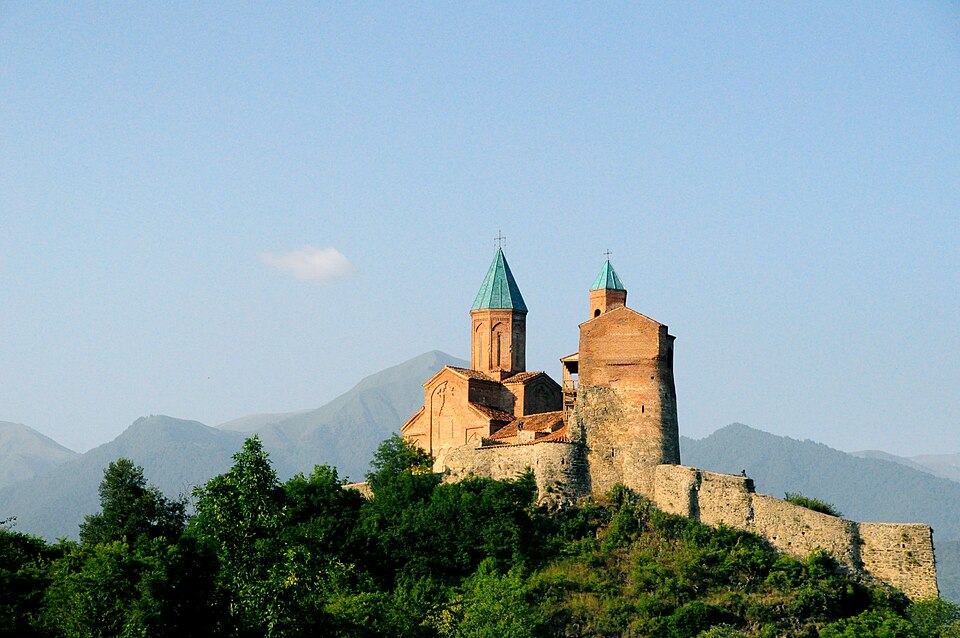
| 6 | Telavi area | Gombori Pass, Alaverdi, Gremi, Nekresi, dinner in a family qvevri cellar | About 3 h in total |
| 7 | Tbilisi or fly home | Tsinandali, Sighnaghi, Bodbe Monastery, return to Tbilisi | About 3.5 h in total |
Prefer a driver-guide? Our Classic Georgia week covers the same regions with an extra day in Kakheti.
Day 1: Tbilisi Old Town, Narikala and the sulphur baths
Spend day one on foot in Kala, the Old Town. Tbilisi grew up around hot springs in the 5th century (tbili means warm in Georgian), so start at the baths.
What to see
- Abanotubani and Leghvtakhevi
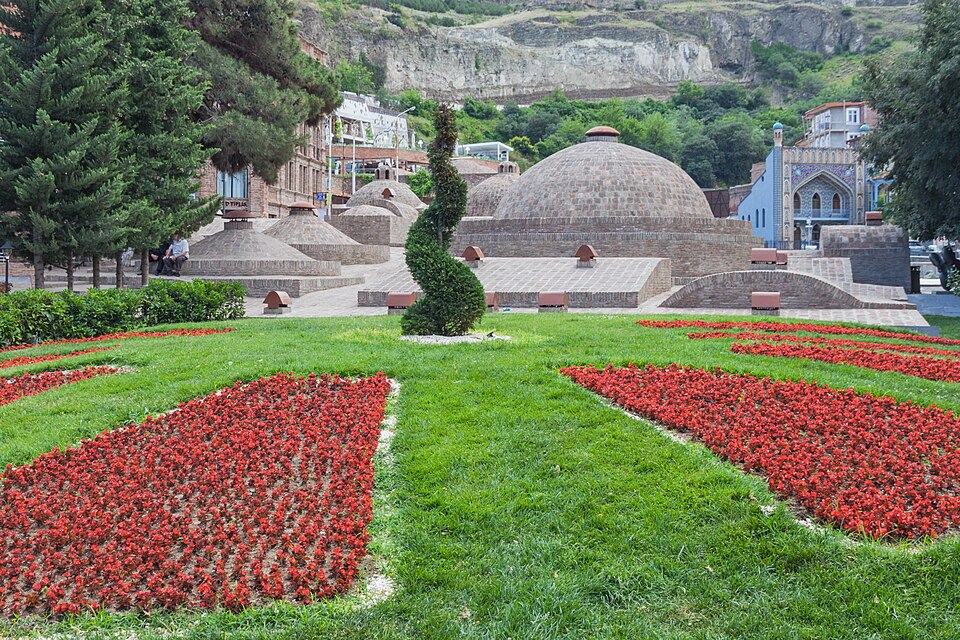
Brick domes vent sulphur steam at street level. Walk past the blue-tiled Orbeliani bath into the Leghvtakhevi gorge, which ends at a waterfall in the middle of the city. - Narikala Fortress
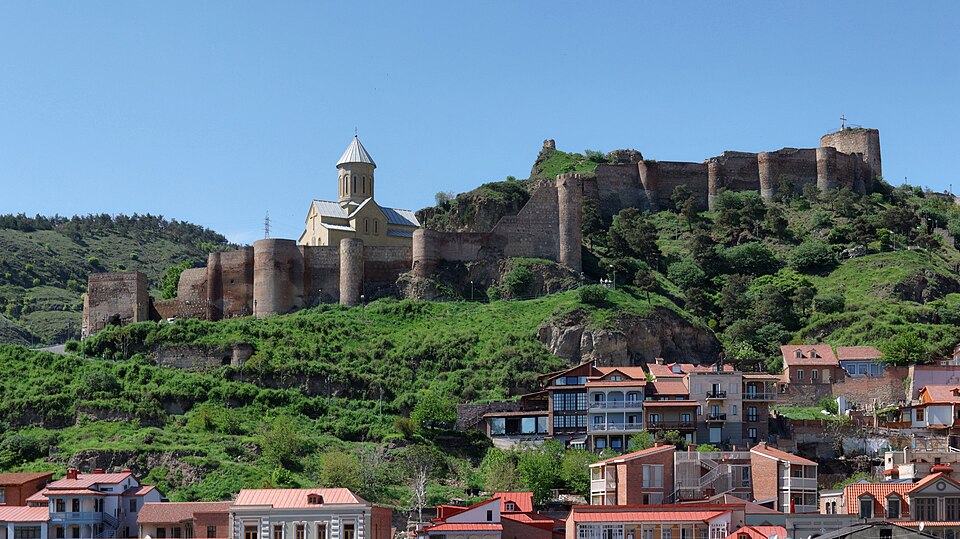
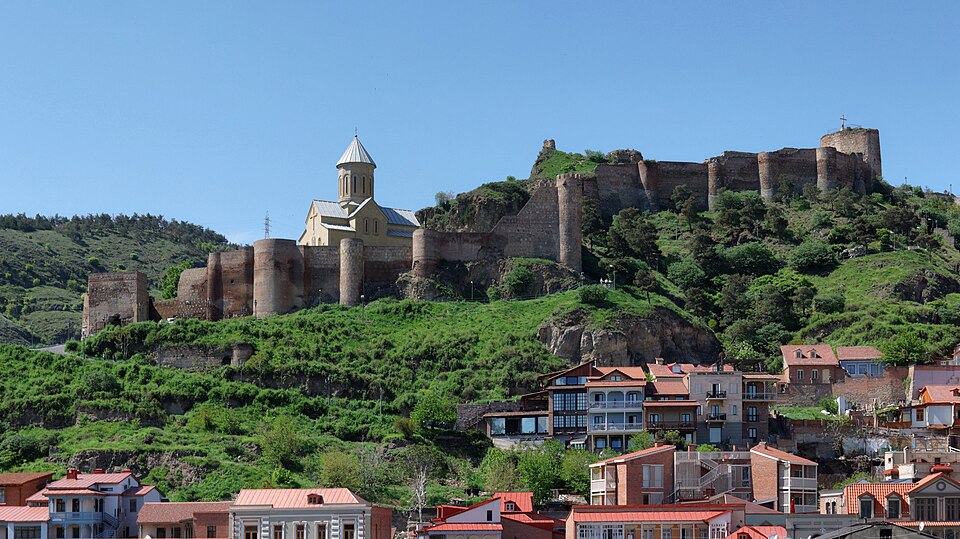
Walk up from the baths or take the cable car from Rike Park. The fortress, first built in the 4th century, has the best view over the Old Town's wooden balconies. Follow the ridge west to Kartlis Deda, the Mother of Georgia, who holds a sword for enemies and a cup of wine for friends. - Old Town churches
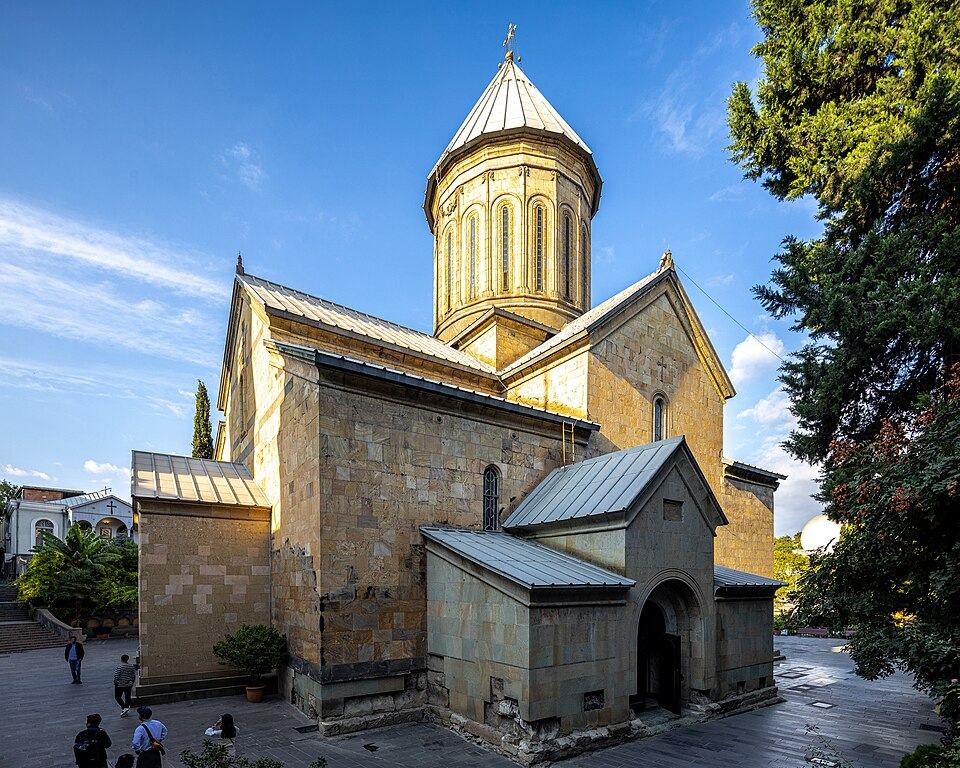
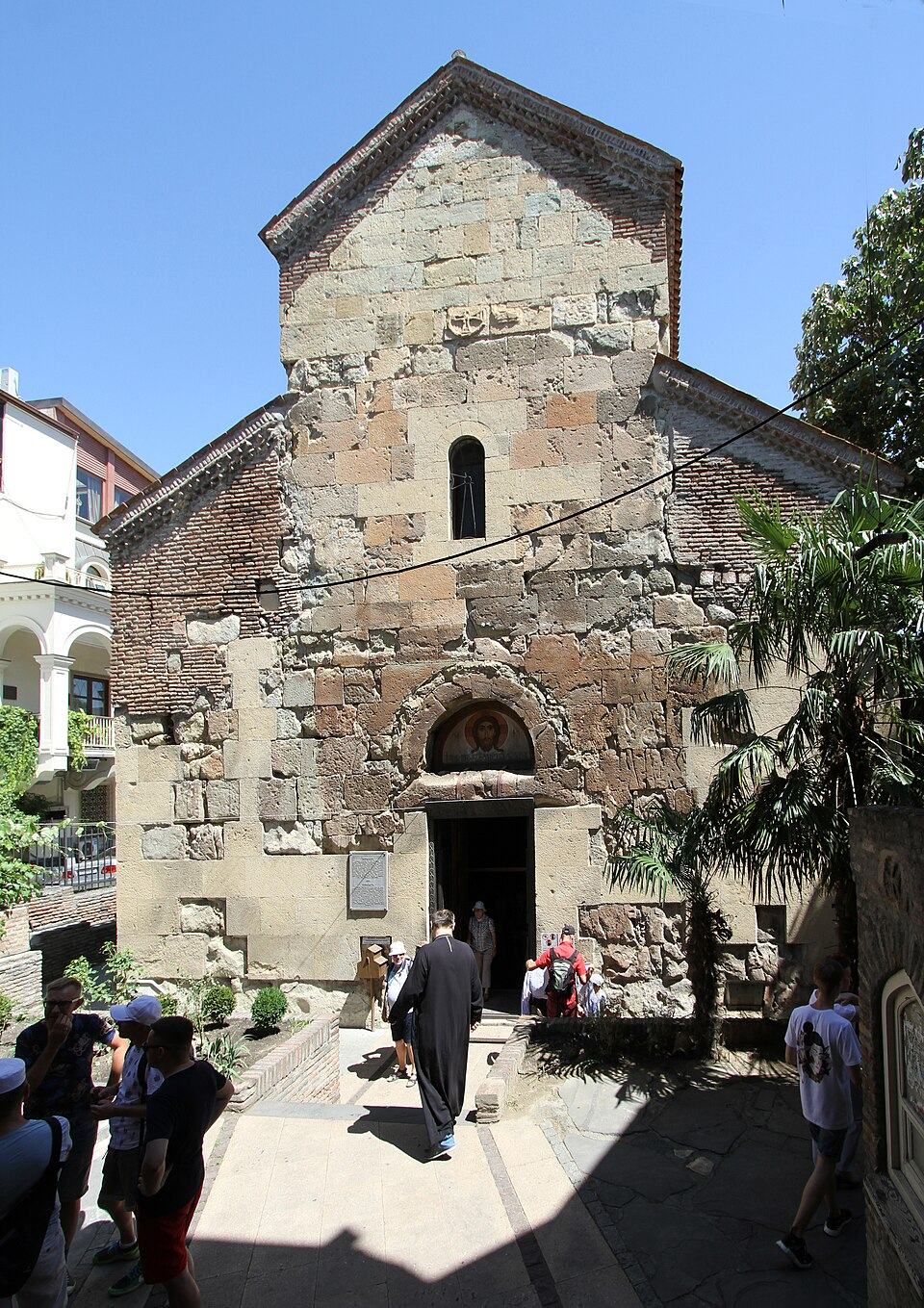
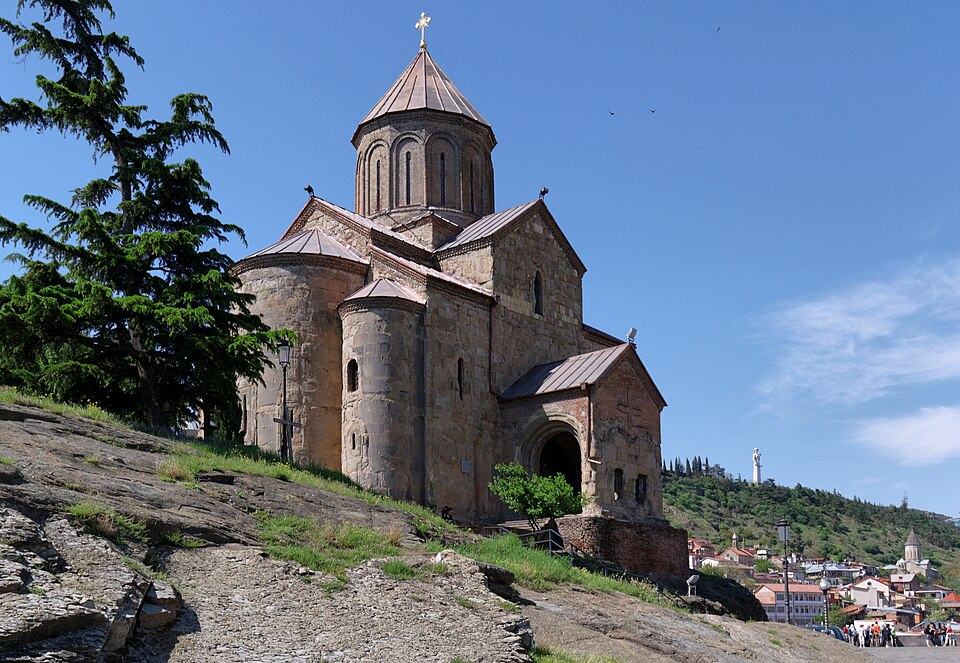
Sioni Cathedral keeps the grapevine cross of Saint Nino, and 6th-century Anchiskhati is the oldest surviving church in the city. Across the river, 13th-century Metekhi stands on the cliff beside a statue of King Vakhtang Gorgasali, the city's founder. - Bridge of Peace and an evening soak
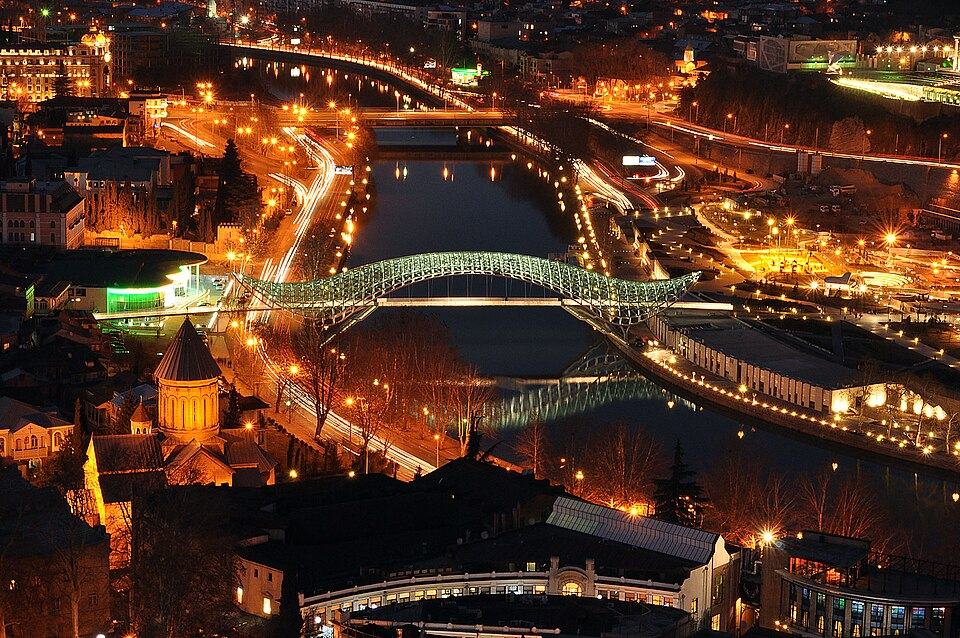
Cross the Bridge of Peace at dusk as its lights come on, then book a private bath room by the hour back in Abanotubani. Add a kisi, the traditional scrub with a rough mitt.
Where to eat
Start with khinkali, the twisted soup dumplings: hold the knot, bite and sip the broth. Add Imeruli khachapuri (round cheese bread), Adjaruli khachapuri (boat-shaped, with egg and butter), badrijani nigvzit (aubergine rolls with walnut paste) and pkhali (minced greens with walnuts and herbs). End the night at a natural wine bar to taste qvevri wine.
Where to stay
Sololaki, the Old Town and Abanotubani put everything within walking distance, though streets are steep and some are noisy at night. Vera and Vake are quieter and leafier. Marjanishvili and Chugureti, near Fabrika, are cheaper and livelier.
Day 2: Uplistsikhe, Gori and Mtskheta
A loop west into Shida Kartli and back through Mtskheta, with about 3 hours of driving in total. Leave by 9am to beat the heat and the tour groups at Uplistsikhe.
What to see
- Uplistsikhe
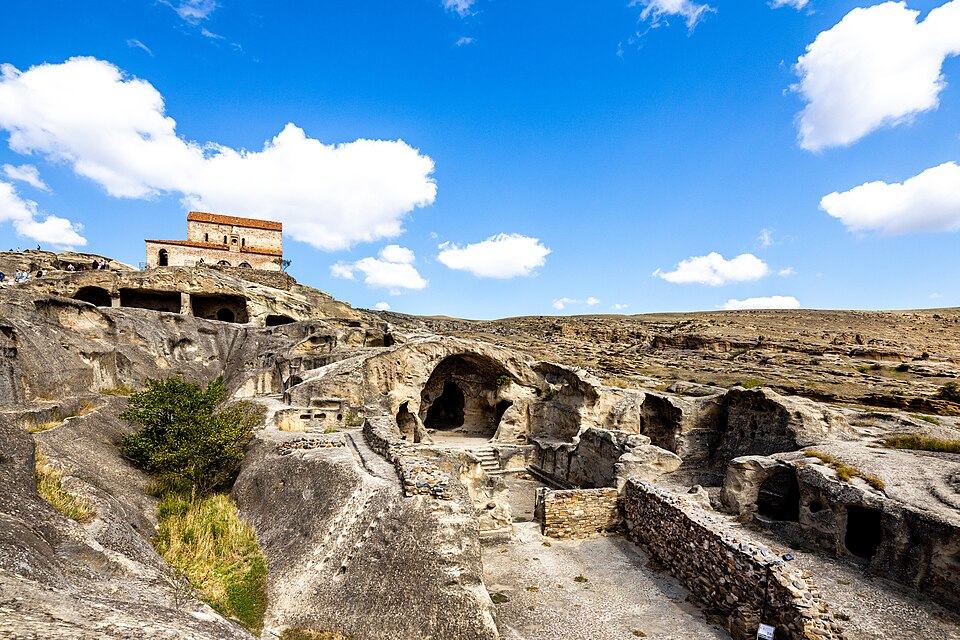
A town cut into a sandstone ridge above the Mtkvari, about 10 km east of Gori, and lived in for well over two thousand years. Explore rock-cut halls, wine presses, a tunnel down to the river and the brick church on top. Allow 1.5 to 2 hours; the rock is slippery when wet. - Gori
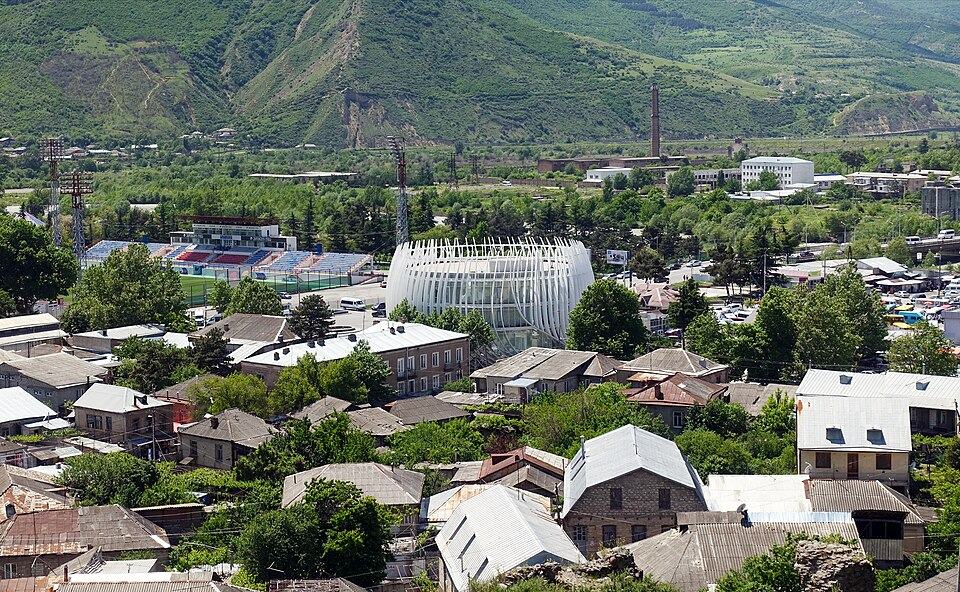
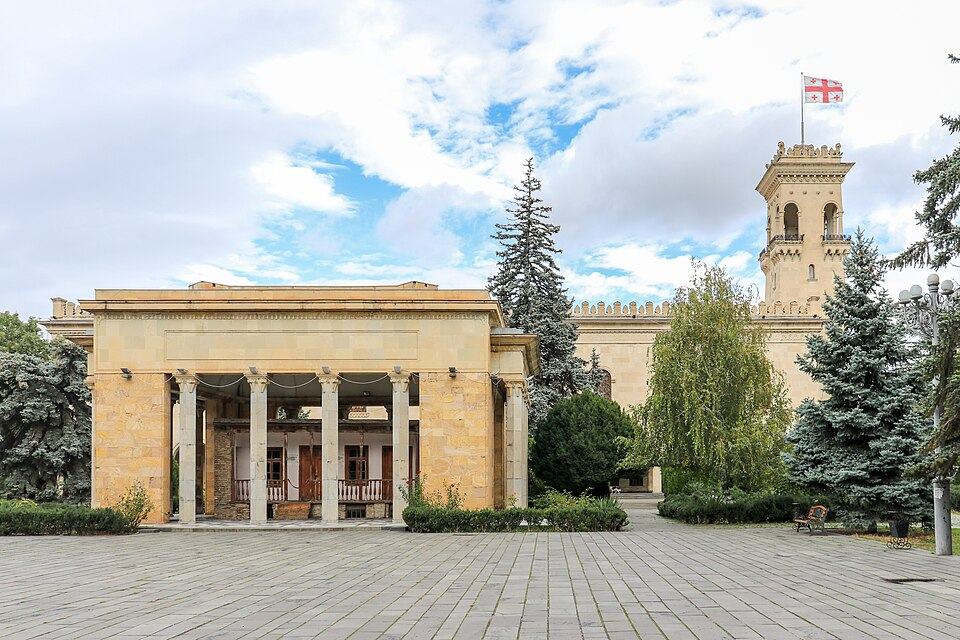
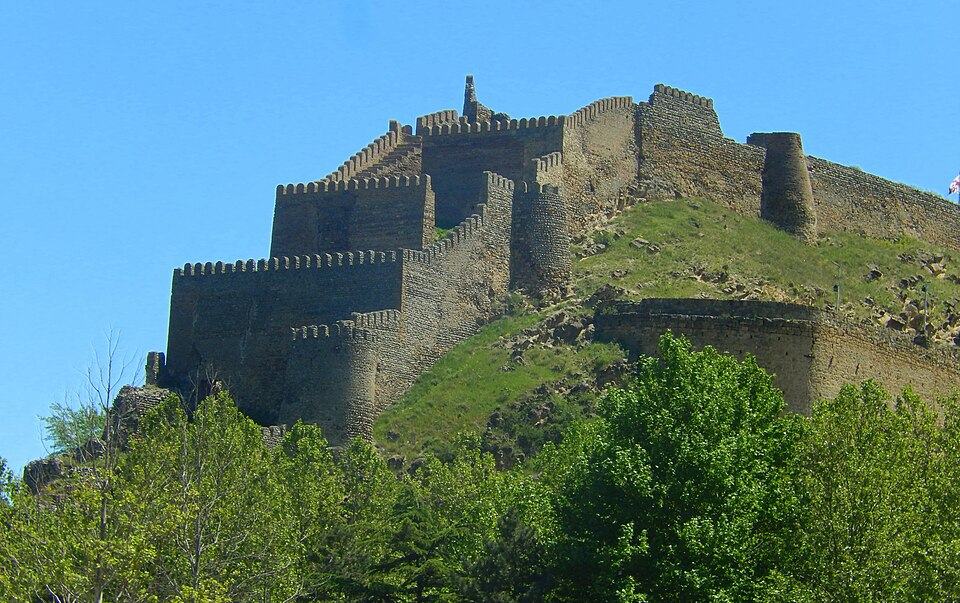
Stalin's birthplace. The Stalin Museum, with his birth house and armoured railway carriage outside, still presents him with little criticism, which is itself a reason to see it. Climb Gori Fortress for the view. - Svetitskhoveli Cathedral
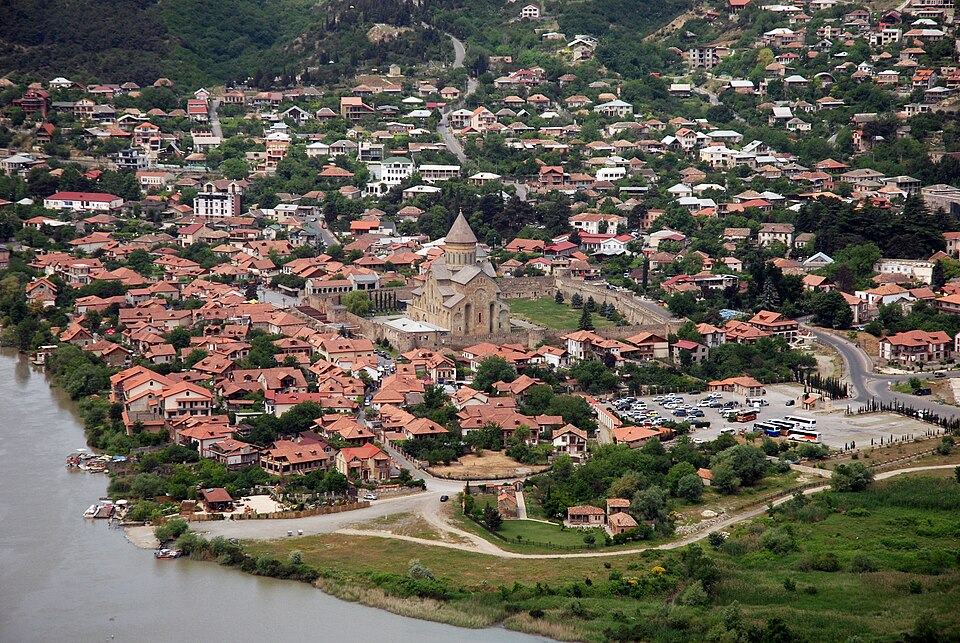
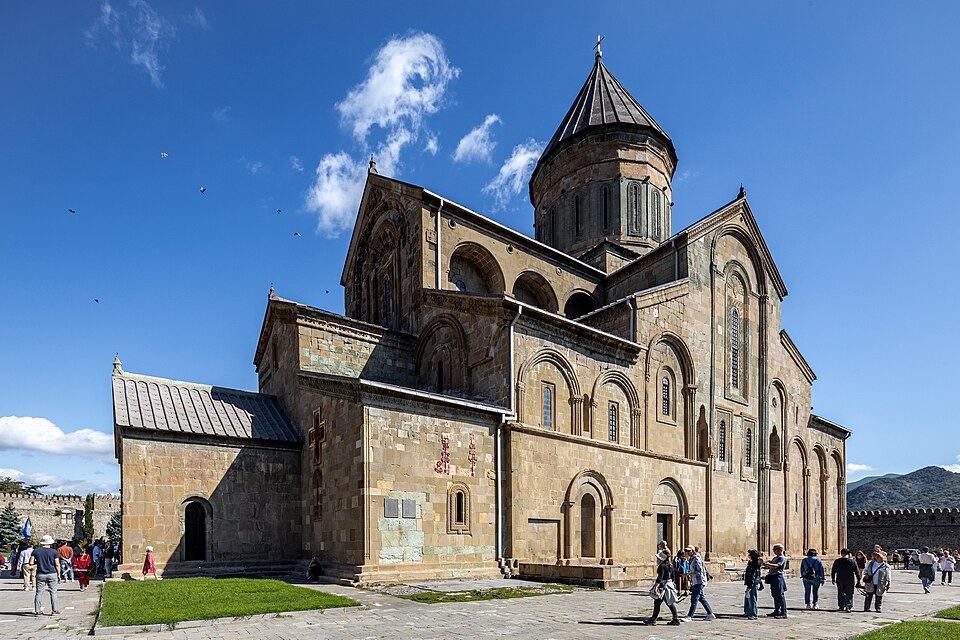
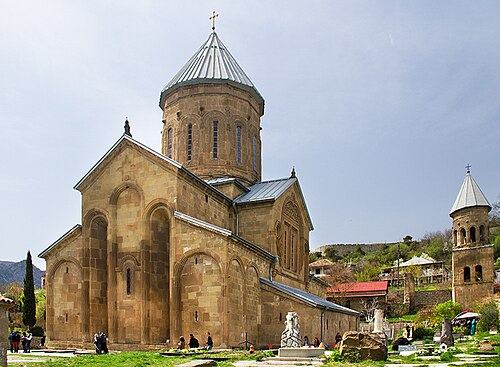
An hour east, Mtskheta was the capital of the Kingdom of Kartli until the early 6th century. Its 11th-century cathedral stands where tradition places the burial of Christ's robe, and many Georgian kings lie inside. Samtavro Monastery, linked to Saint Nino, is a short walk away. - Jvari Monastery at sunset
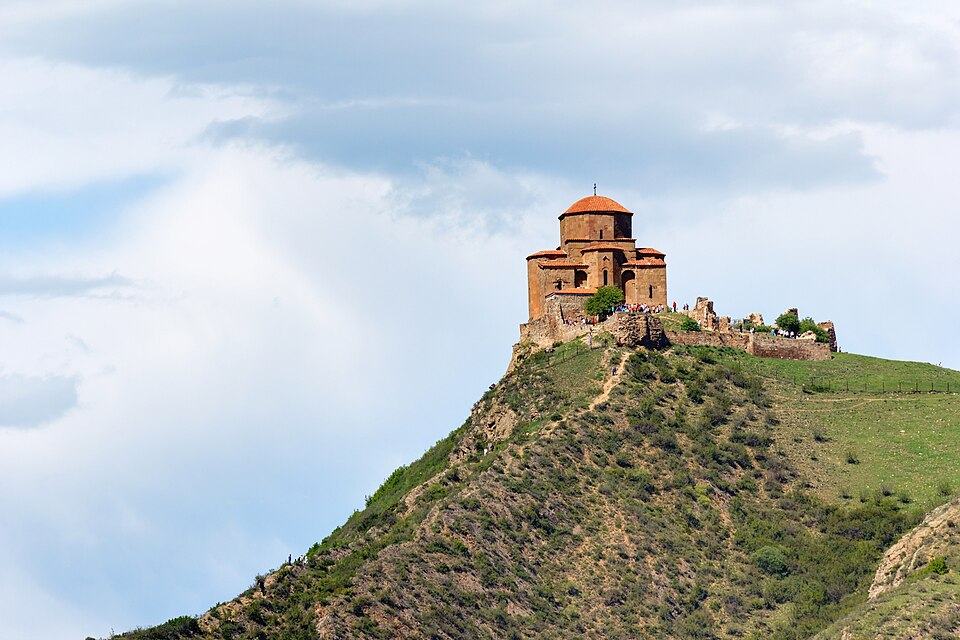
Finish at the late 6th-century hilltop church across the river, looking straight down on the meeting of the Aragvi and Mtkvari. Tbilisi is 30 minutes away.
Where to eat
Mtskheta is known for lobio, red beans stewed in a clay pot, served with mchadi cornbread, pickles and lobiani, bread stuffed with spiced beans. Back in Tbilisi, try mtsvadi, meat grilled over vine cuttings, or chashushuli, a spicy veal and tomato stew.
Where to stay
Tbilisi again. Pack a small bag for the mountains and leave the rest at your hotel until Day 5.
Day 3: The Georgian Military Road to Kazbegi
The Georgian Military Road climbs 155 km from Tbilisi to Stepantsminda, still widely called Kazbegi, over the 2,379 m Jvari Pass. The drive takes about 3 hours; with stops it fills the day. Outside summer, check that the pass is open before you leave.
What to see
- Zhinvali Reservoir and Ananuri
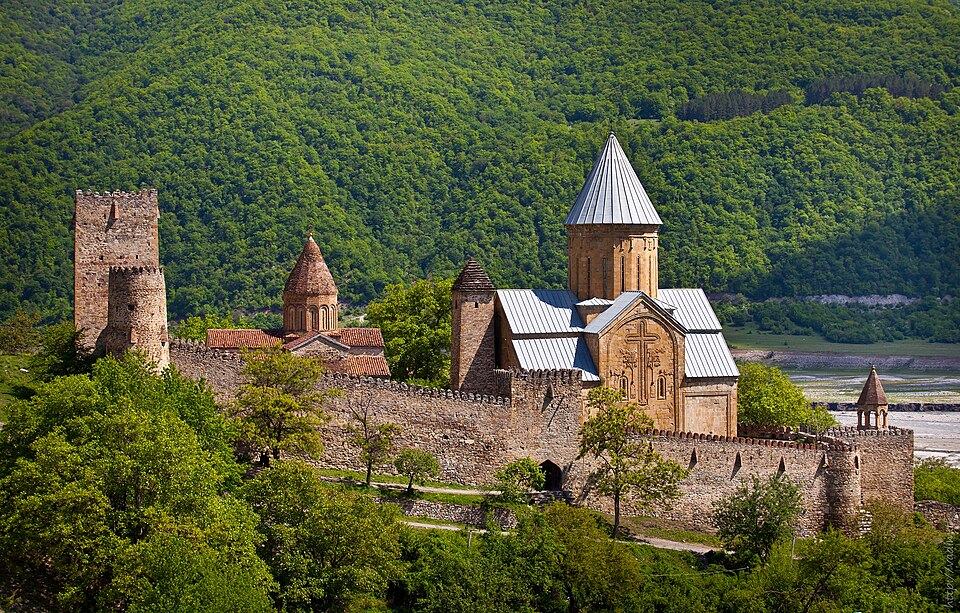
An hour north of Tbilisi, this 17th-century fortress with two churches stands on the turquoise Zhinvali Reservoir. Climb the tower and look for the carved vines on the main church's facade. - Pasanauri
The town where the White and Black Aragvi rivers meet, and the place most Georgians name as the home of khinkali. Stop here for lunch. - Gudauri and the Friendship Monument
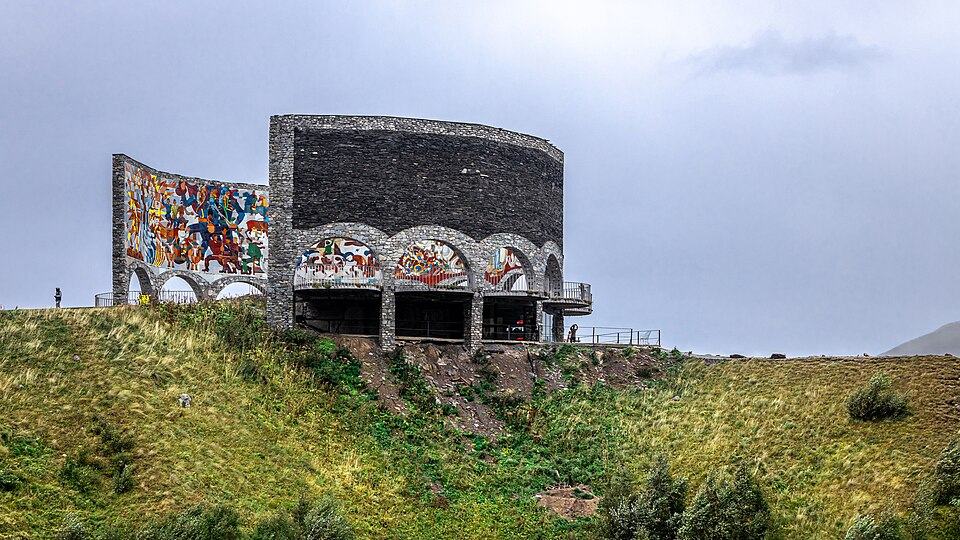
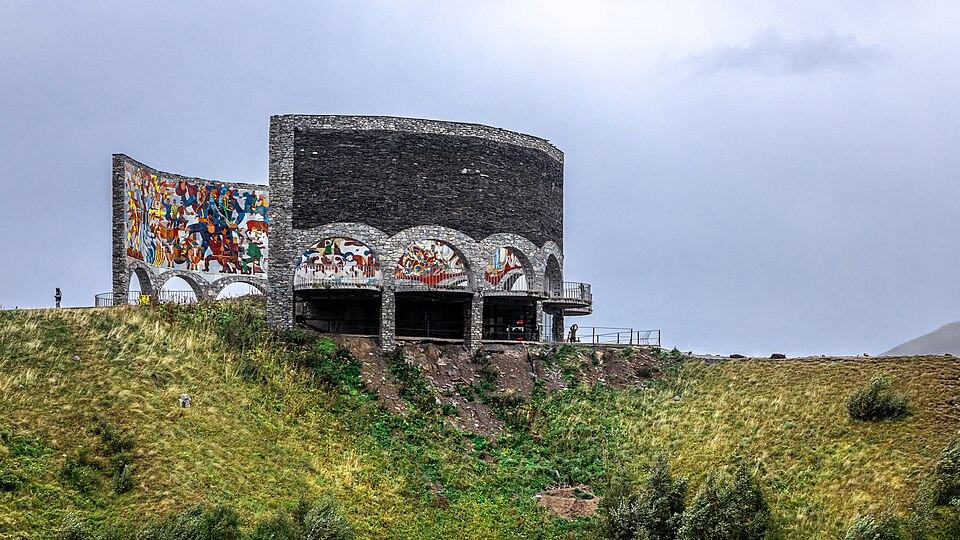
Hairpins climb to Gudauri, Georgia's largest ski resort at about 2,200 m. Just beyond it, the curved mosaic wall of the 1983 Friendship Monument overhangs a deep valley; the view is the reason to stop. - Jvari Pass
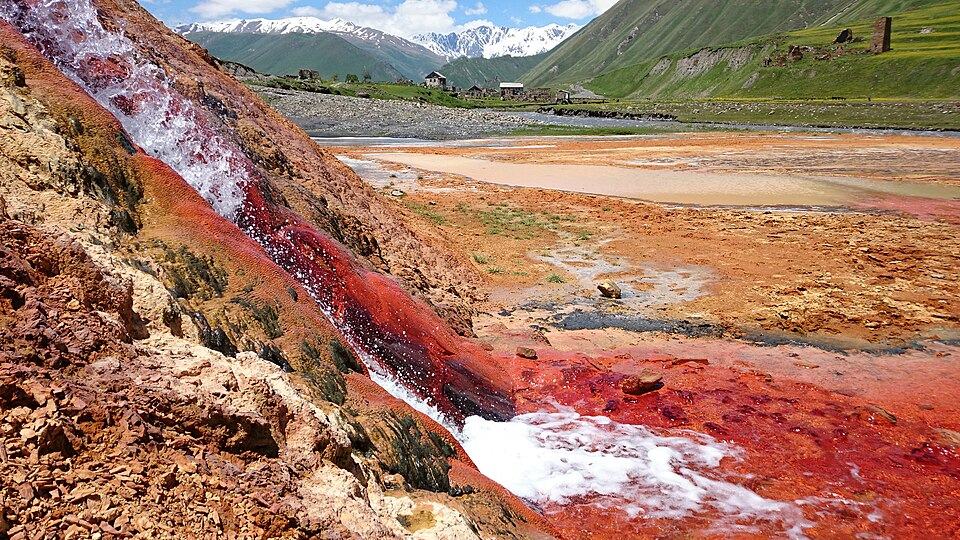
The high point of the road. On the north side, orange travertine terraces built up by mineral springs spill down the slope beside the road. - Gergeti Trinity Church
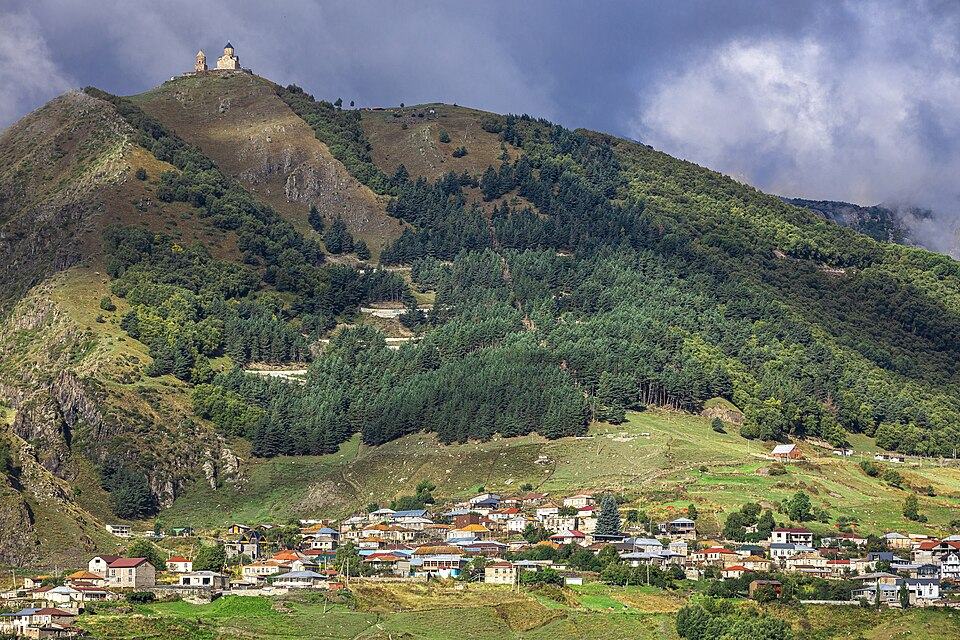
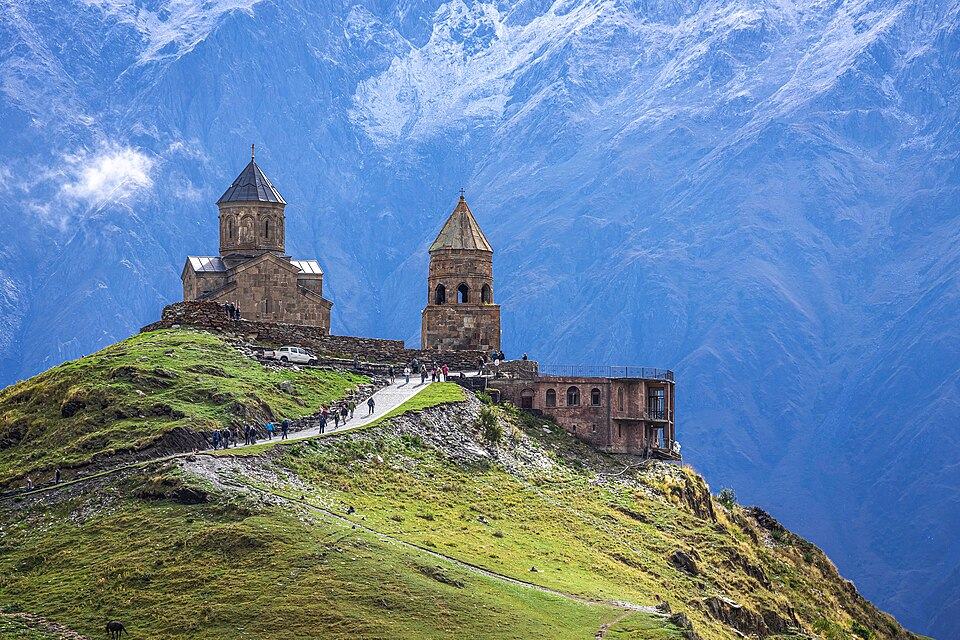
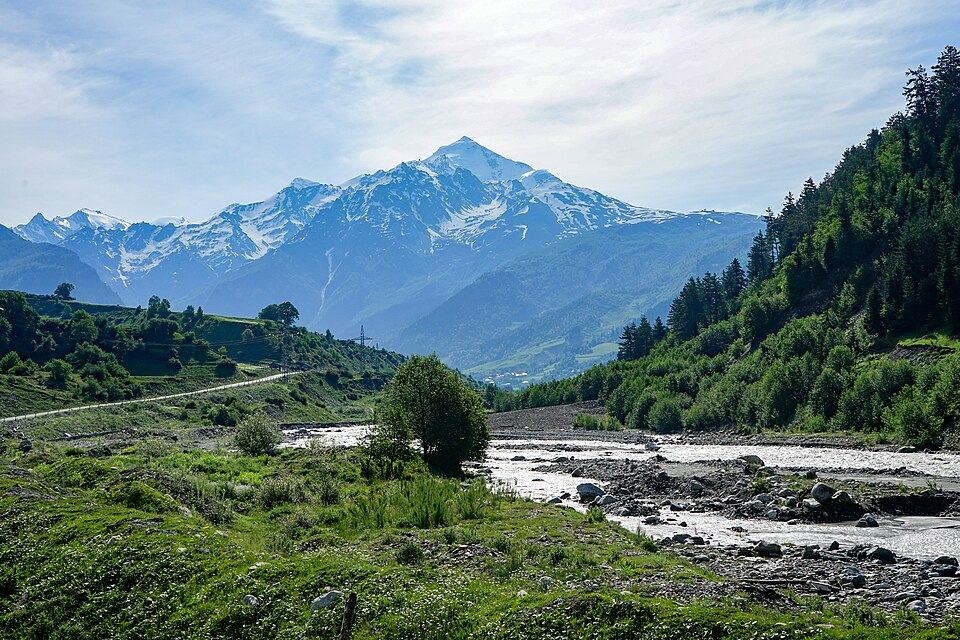
The 14th-century church stands at 2,170 m with Mount Kazbek (5,054 m) behind it when the clouds allow. Hike up from Gergeti village in 1.5 to 2 hours, or take a local 4x4 in about 20 minutes. Mornings are usually clearest.
Where to eat
In Pasanauri, order mtiuluri khinkali, the mountain style filled with meat, onion and pepper and none of the herbs of city-style kalakuri. Guesthouse dinners in Kazbegi often include khabizgina, a khachapuri filled with cheese and potato, local mountain cheese and tea brewed from wild thyme.
Where to stay
Stepantsminda has the shops, cash machines and most of the places to stay. Gergeti village, across the Tergi River, is at the foot of the church trail, while Sno and Arsha, a few kilometres south, are quieter. Book ahead for July to September.
Day 4: Kazbegi on foot: Juta or Truso valley
A walking day. Pick one valley and start early: in summer, clouds often build over the peaks by early afternoon.
Option A: Juta valley
Juta, at about 2,150 m, is 40 minutes from Stepantsminda by a rough road from Sno; local minivans run it daily in summer. An easy trail climbs into meadows below the jagged Chaukhi massif. Allow 2 to 4 hours, with summer huts for lunch. Juta is under snow from late autumn to late spring.
Option B: Truso valley
Truso starts near Kobi and is wider and emptier, with abandoned stone villages, travertine terraces and a bubbling mineral lake. Take a 4x4 to Ketrisi and walk 3 to 5 hours return toward Zakagori fortress. The head of the valley meets the boundary line of the occupied Tskhinvali region, so go no further than the police post.
Afternoon: the Dariali gorge
Drive north through the narrow Dariali gorge for the short uphill walk to Gveleti Waterfall and a look at Dariali Monastery, a modern complex beside the border crossing. Strong hikers can instead spend the whole day on the 8 to 10 hour round trip toward the Gergeti Glacier, ideally with a guide.
Where to eat
Pack a lunch or eat lobiani and soup at the Juta huts. For dinner, try khashlama, lamb or beef boiled with herbs, or in spring chakapuli, lamb stewed with tarragon, white wine and sour plums.
Where to stay
A second night in Stepantsminda or Gergeti, or in summer a simple chalet in Juta itself.
Day 5: Back to Tbilisi: Sameba, Dry Bridge and Mtatsminda
Drive back down the Military Road in the morning, about 3 hours, and spend the afternoon in Tbilisi beyond the Old Town.
What to see
- Holy Trinity Cathedral (Sameba): consecrated in 2004, the main cathedral of the Georgian Orthodox Church and one of the largest Orthodox churches in the world.
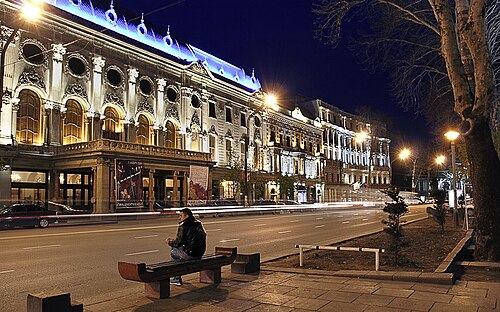
- Rustaveli Avenue: the 19th-century boulevard of the Opera, the Parliament and the Georgian National Museum, which displays Colchian gold and the 1.8-million-year-old hominid finds from Dmanisi.
- Dry Bridge Market: an open-air flea market of Soviet medals, cameras, vinyl and paintings, busiest at weekends.
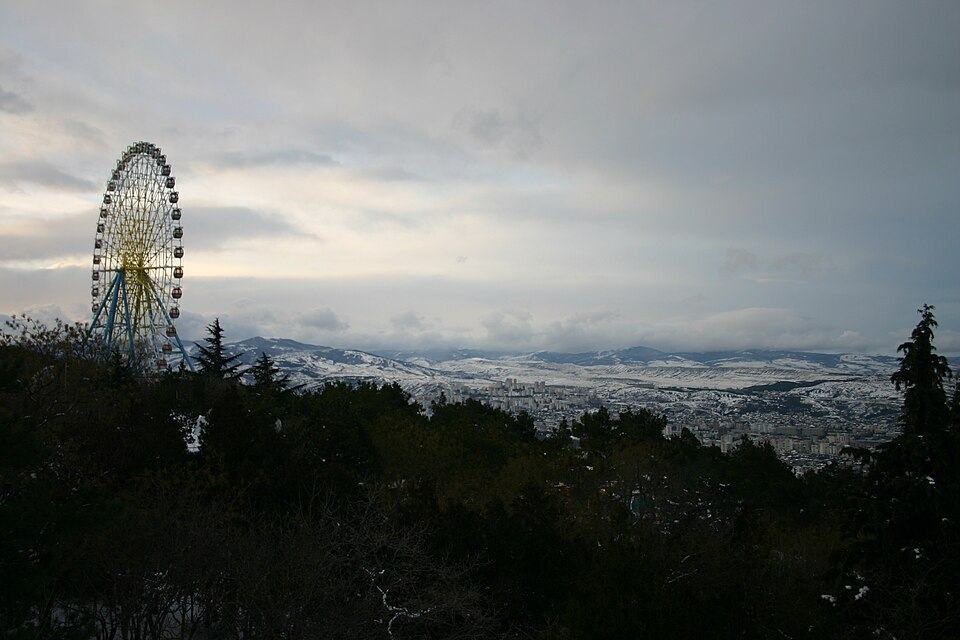
- Mtatsminda: ride the funicular to the ridge-top park for sunset, stopping at the Pantheon where many of Georgia's writers are buried.
- Fabrika: a Soviet sewing factory turned into a hostel and a courtyard of bars and cafes, good for an evening drink.
Where to eat
Try shkmeruli, chicken baked in garlic and milk from the Racha region, and elarji, Megrelian cornmeal stirred with sulguni cheese until it stretches. A dinner with polyphonic singing or folk dance makes a good last night in the capital.
Where to stay
Back in Tbilisi: the Old Town again, or Vera, close to Rustaveli Avenue and quieter at night.
Day 6: Kakheti wine country: Alaverdi, Gremi and a qvevri cellar
Kakheti makes most of Georgia's wine, in a country whose winemaking goes back about 8,000 years. Cross the forested Gombori Pass to Telavi, about 2 hours, and spend the day in the Alazani valley beneath the Caucasus.
What to see
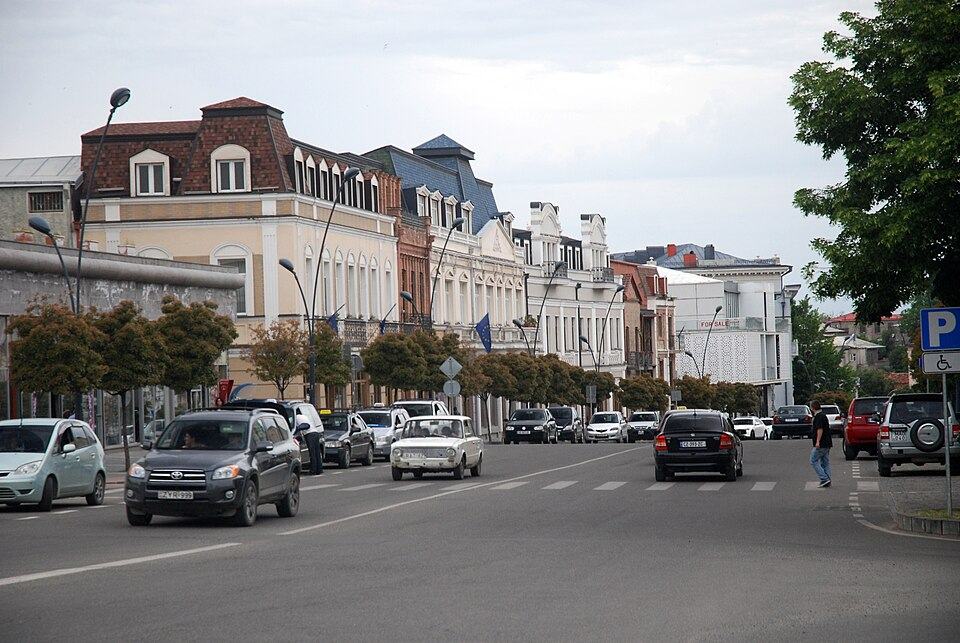
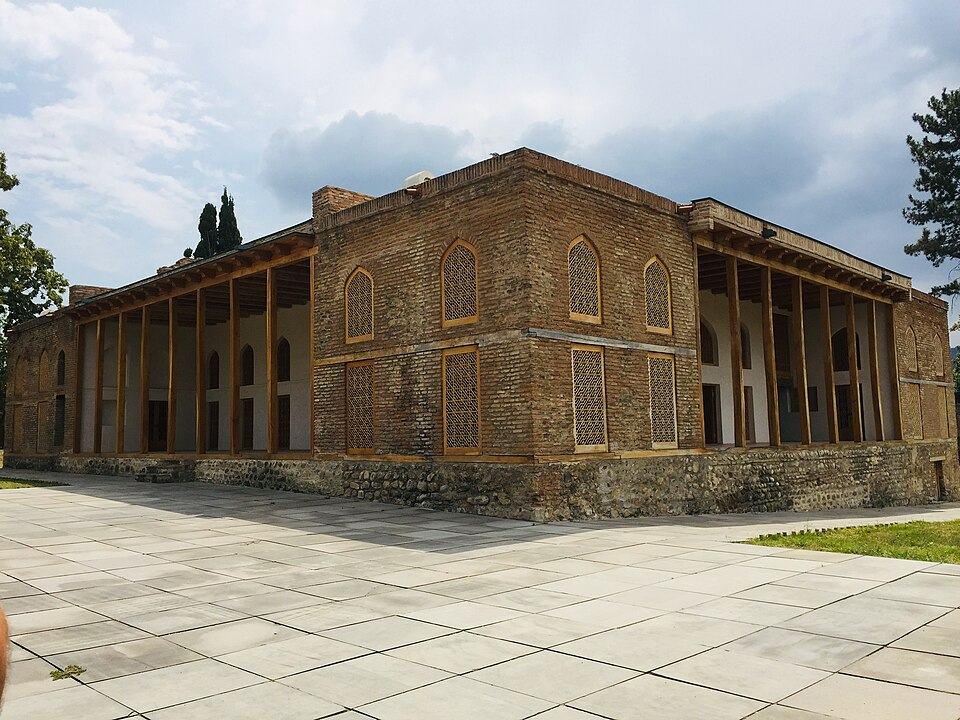
- Telavi
Kakheti's main town, with Batonis Tsikhe, the fortified 18th-century palace of King Erekle II. - Alaverdi Monastery
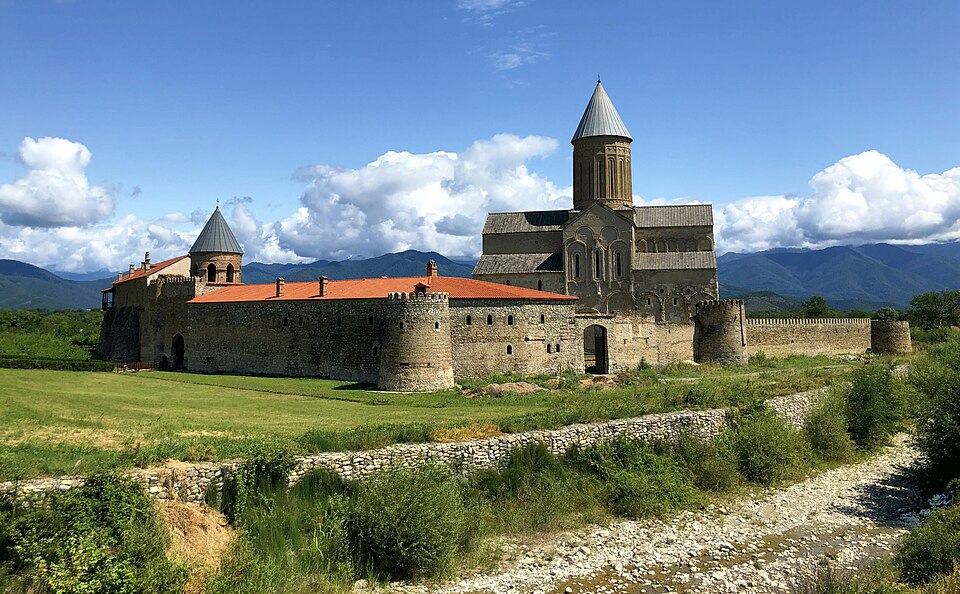
The 11th-century cathedral rises about 50 m above the vineyards and was Georgia's tallest church for nearly a thousand years. The monks still make wine in qvevri, the large egg-shaped clay jars sunk into the earth. - Gremi
A brick church and royal tower on a hilltop, all that remains of the 16th-century capital of the Kingdom of Kakheti. Climb the tower for the view. - Nekresi Monastery
One of the oldest Christian sites in Georgia, high on a wooded slope; a shuttle usually runs up from the lower car park. Late afternoon light is best. - Dinner in a family qvevri cellar
Taste skin-fermented amber whites and inky Saperavi in a family marani, then sit down to dinner. Expect a glass of chacha, the grape spirit, at the end.
Where to eat
Kakhetian food means mtsvadi grilled over vine cuttings, shotis puri baked in the clay tone oven, khashlama and salads with walnut. During rtveli, the harvest in late September and October, villages hang strings of churchkhela out to dry.
Where to stay
Telavi is the practical base. For a rural night, choose a wine estate near Kvareli or Tsinandali, or a family guesthouse in a village such as Ikalto or Napareuli with its own cellar.
Here mainly for food and wine? Our Wine and Supra week spends far longer in the cellars and kitchens.
Day 7: Tsinandali, Sighnaghi and Bodbe
Cross the valley to Sighnaghi and return to Tbilisi, about 3.5 hours of driving in total. An evening flight works.
What to see
- Tsinandali Estate
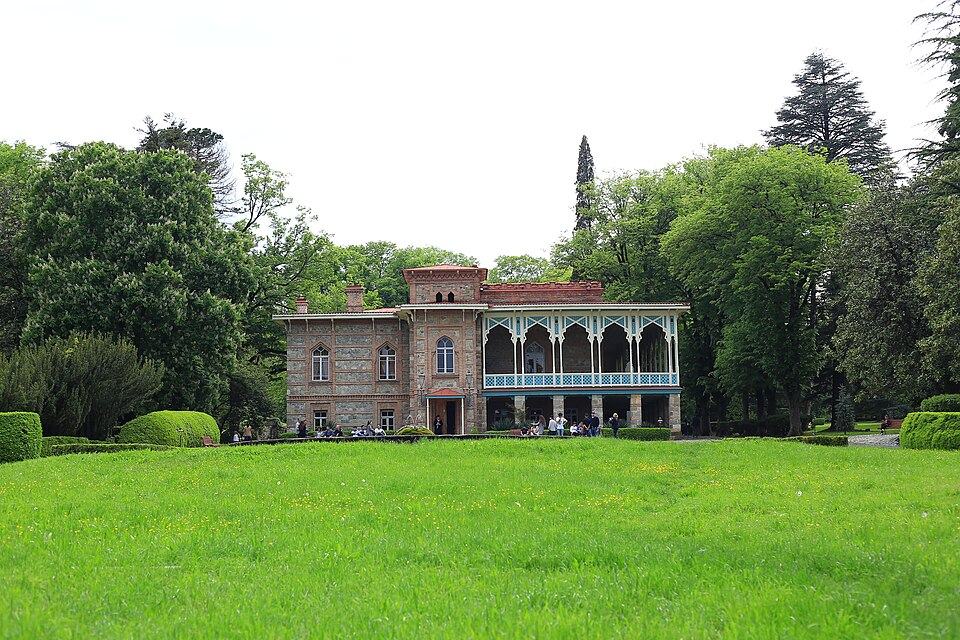
Ten minutes from Telavi, the 19th-century estate of the poet Alexander Chavchavadze has a house museum, gardens and a historic wine cellar. - Sighnaghi
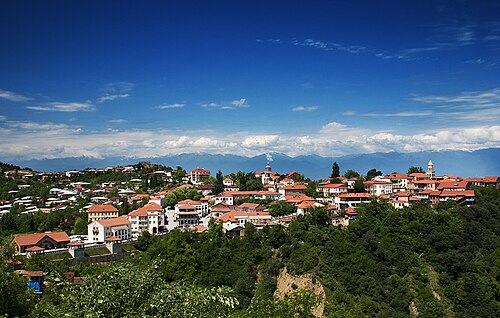
About 1h15 south-east, this hilltop town was fortified by King Erekle II in the 18th century. Walk a stretch of the walls for the view across the Alazani valley to the Caucasus. - Bodbe Monastery
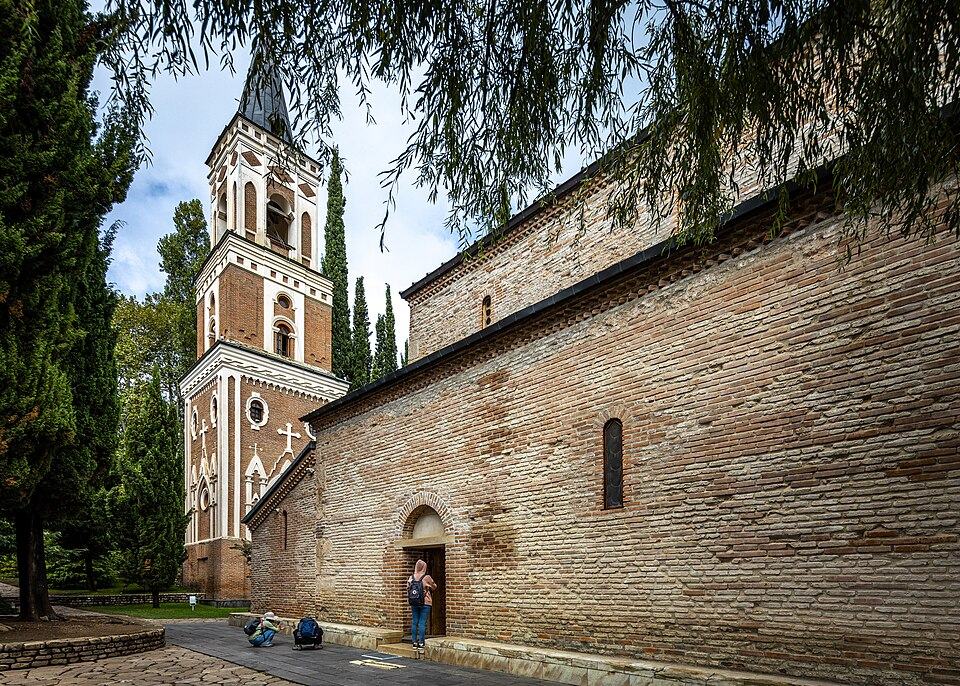
Two kilometres away, the convent where Saint Nino, who brought Christianity to Georgia, is buried. A steep forest path drops to her spring: 20 minutes down and a stiff climb back. - Back to Tbilisi
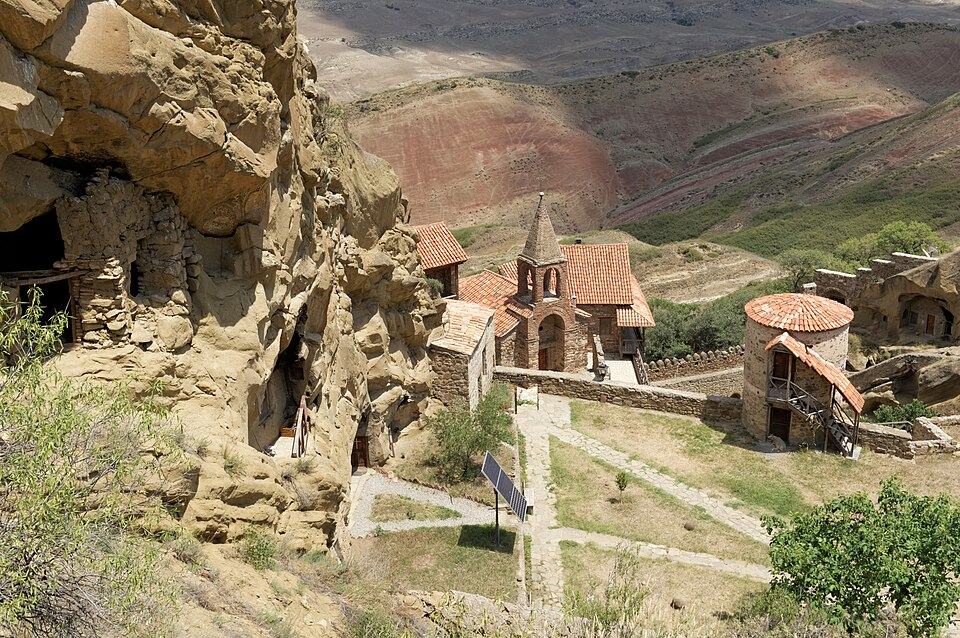
The road via Sagarejo takes 1h45 to 2 hours. Save David Gareja, the cave monastery on the Azerbaijani border, for a day of its own.
Where to eat
Have lunch in Sighnaghi with a valley view: khinkali, mtsvadi, Kakhetian cheese and pkhali. Buy wine to take home and ask for the bottles to be wrapped for your checked bag.
Where to stay
If you are not flying tonight, stay in Tbilisi, or sleep in Sighnaghi and drive the 1.5 hours to the airport in the morning.
Alternative versions: with Svaneti, with Batumi, and in winter
Swap parts of the loop if you are a keen hiker, want the sea or are arriving in the snow.
With Svaneti (for hikers)
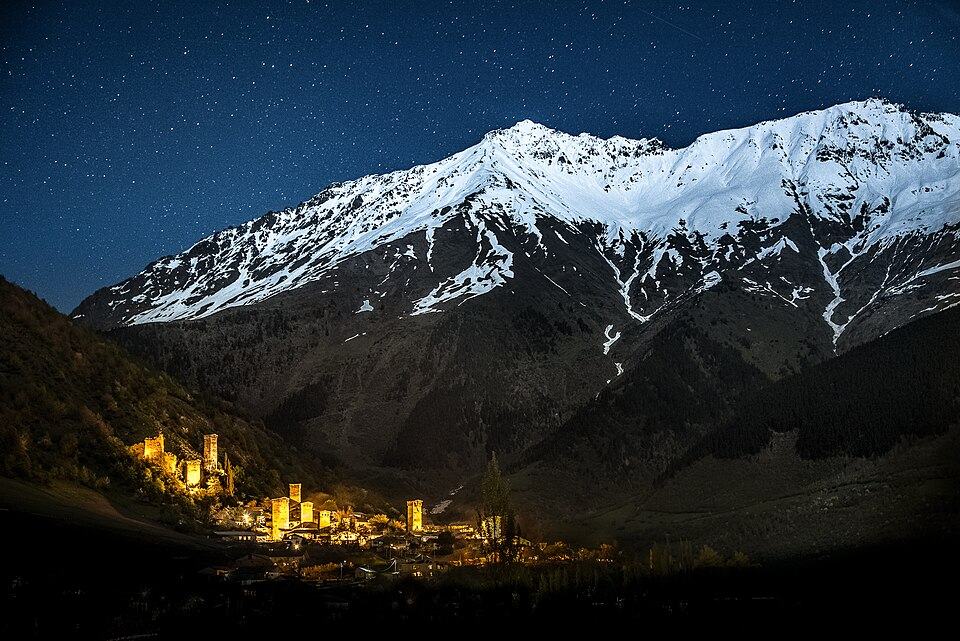
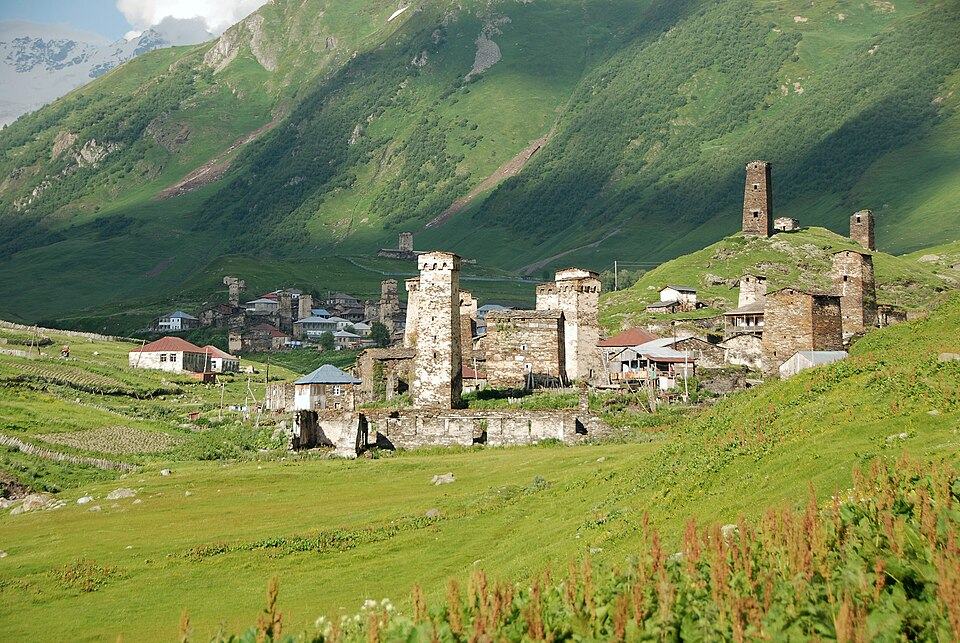
Upper Svaneti, with medieval defensive towers beneath 5,000 m peaks, is Georgia's most dramatic region, but it is far: Mestia is about 5 hours by road from Kutaisi. In seven days, drop Kazbegi and Kakheti and do this instead.
- Day 1: Tbilisi
Old Town and baths, as above. - Day 2: Tbilisi to Kutaisi
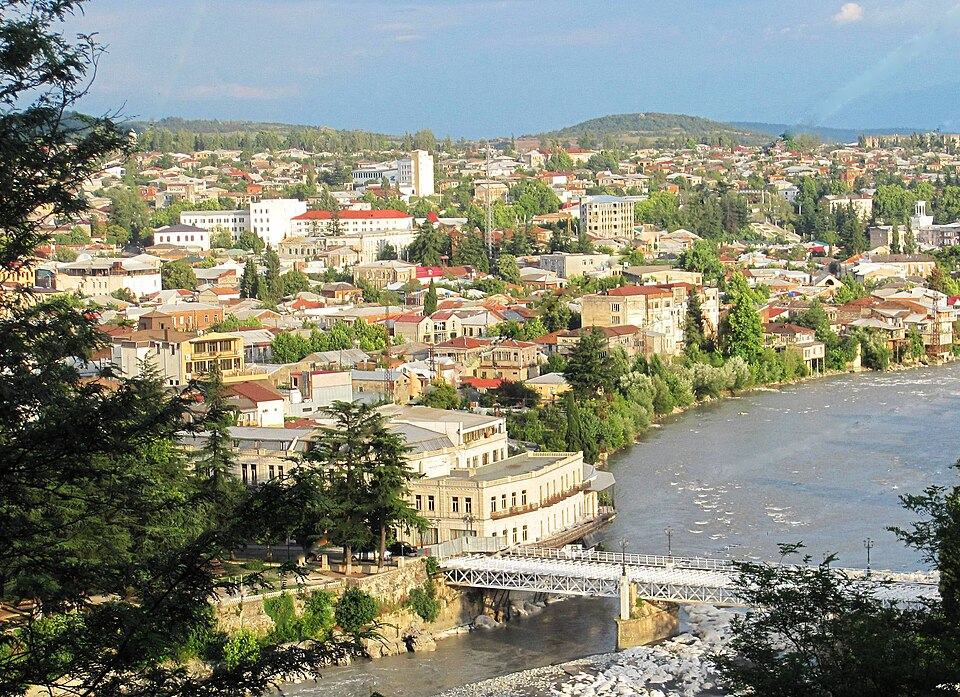
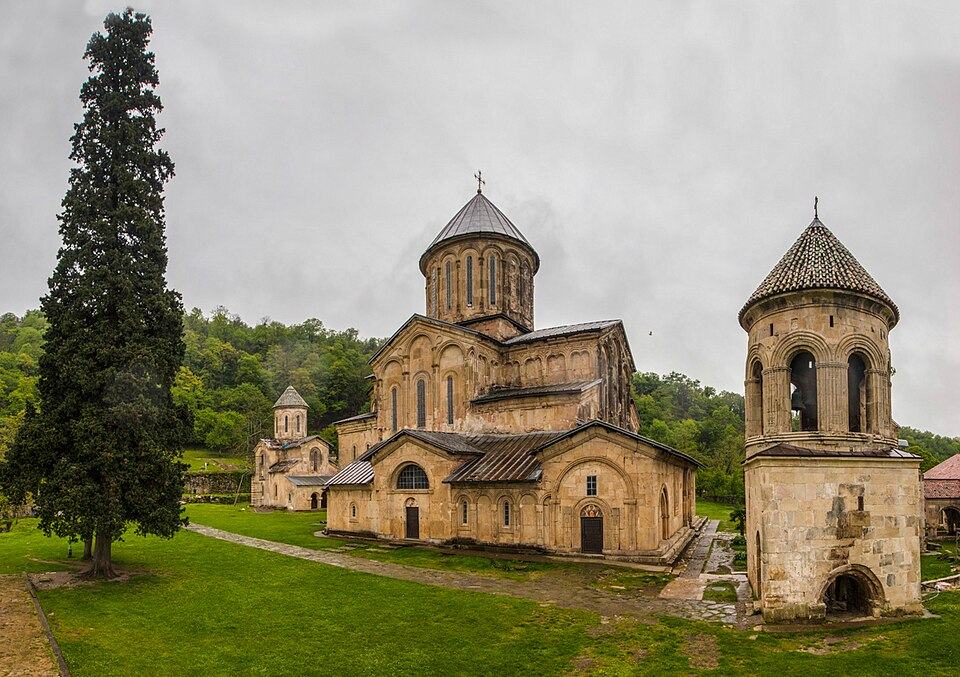
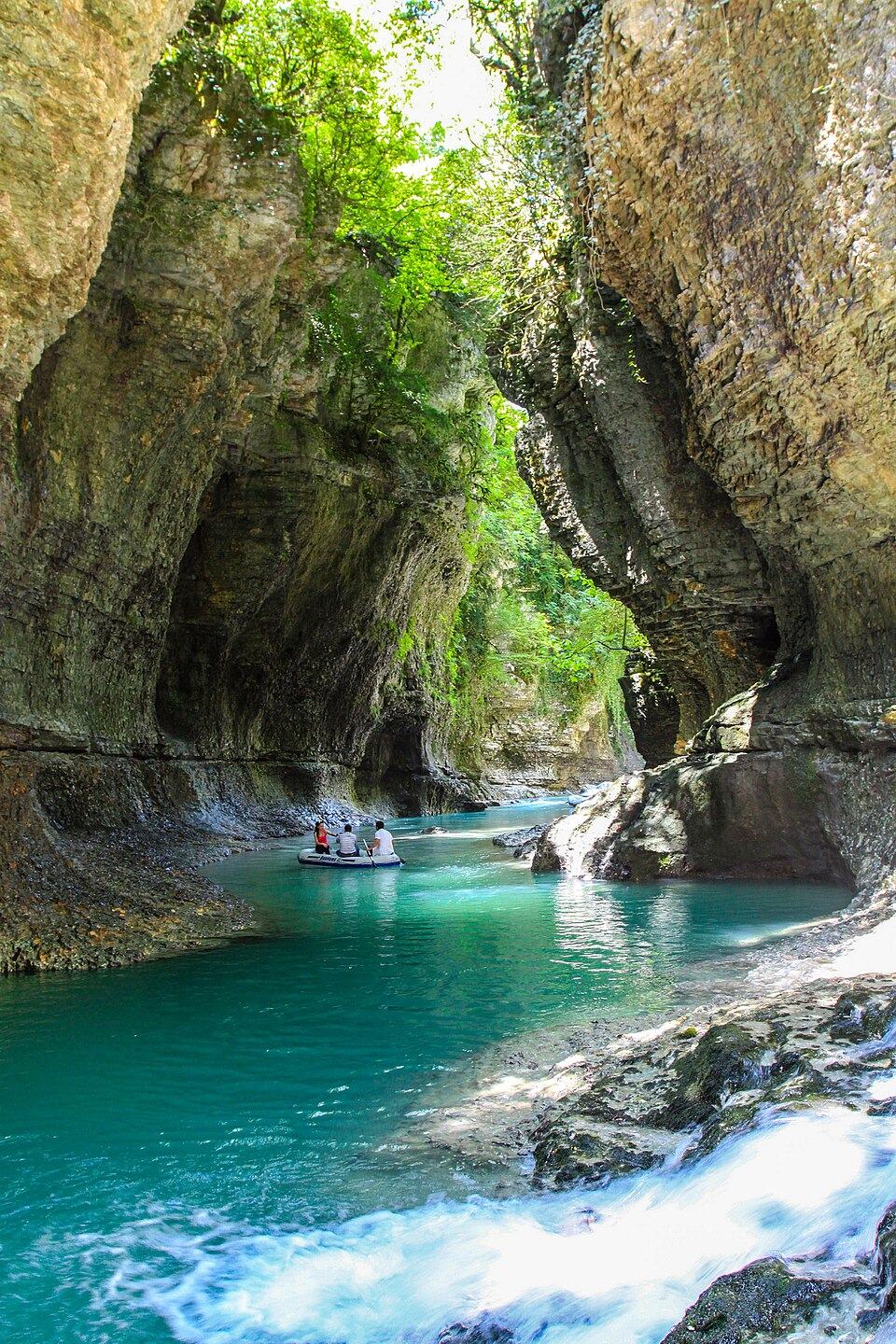
Uplistsikhe on the way, about 3.5 hours of driving, then Gelati Monastery and Bagrati Cathedral. - Day 3: Kutaisi to Mestia
Martvili Canyon, then up the Enguri gorge, about 5 hours of driving. - Day 4: Ushguli
Tower villages at about 2,100 m beneath Shkhara, Georgia's highest peak, 1.5 to 2 hours each way. - Day 5: Mestia hikes
The Chalaadi Glacier (easy, 3 to 4 hours return) or the Koruldi Lakes (long and steep, or mostly by 4x4). - Day 6: Back to Tbilisi
A full day on the road, a small plane to Natakhtari airfield near Tbilisi when weather and seats allow, or a drive to Zugdidi and the train. - Day 7: Mtskheta
Jvari and Svetitskhoveli, 30 minutes from Tbilisi, before your flight.
With 10 days you can keep Kazbegi and Kakheti and add Svaneti, or walk the four-day Mestia to Ushguli trek between family guesthouses.
With Batumi (for the Black Sea)
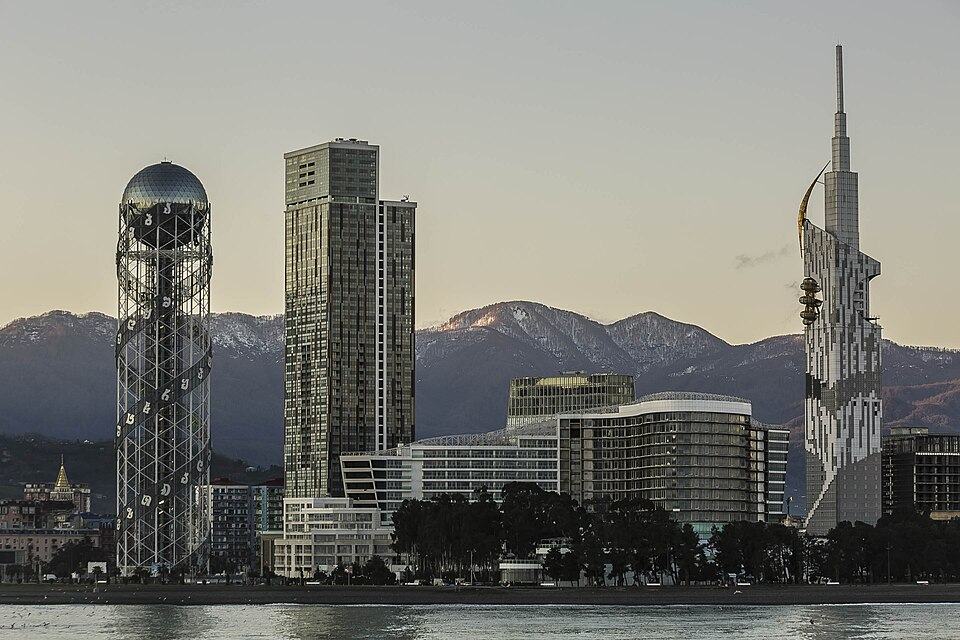
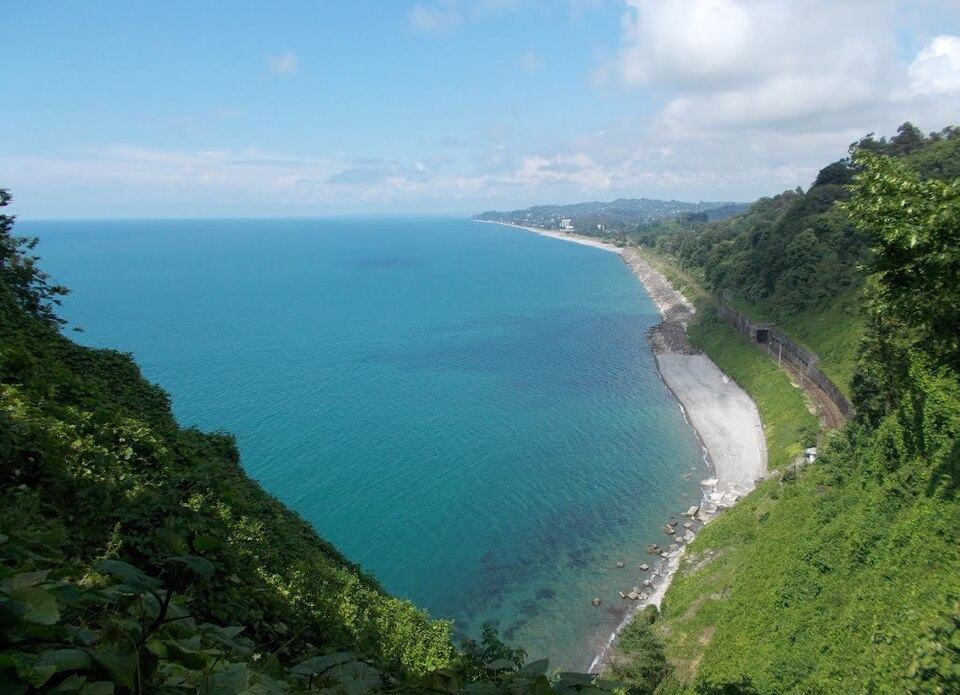
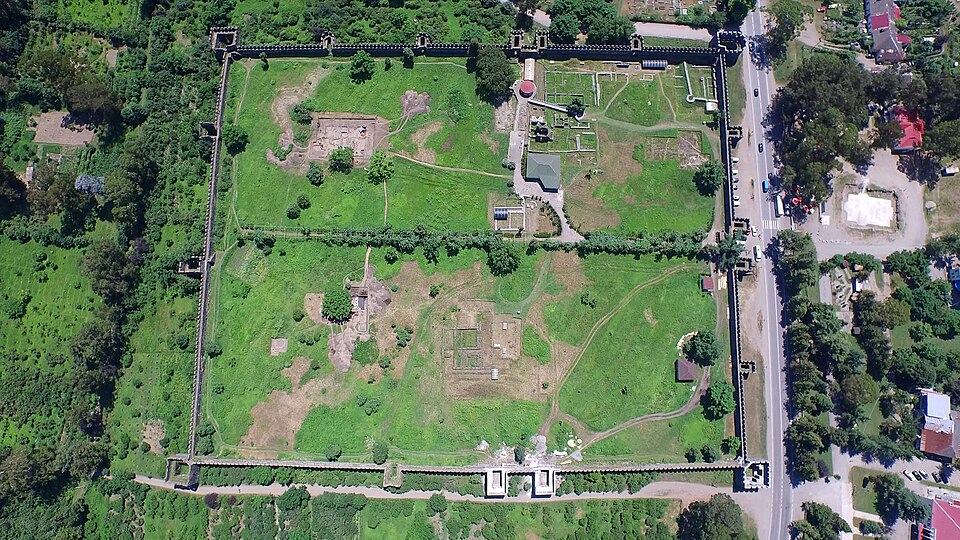
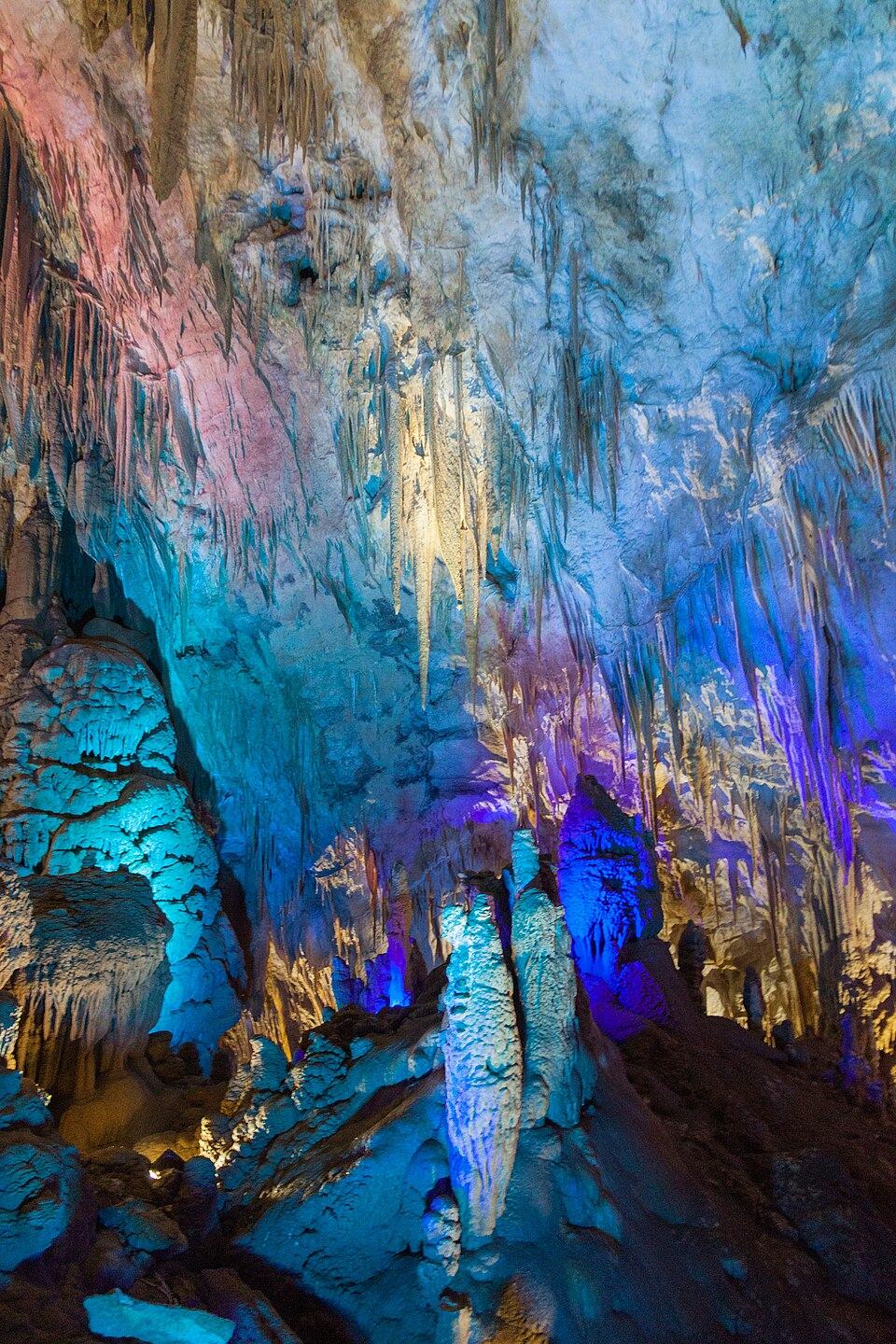
Batumi is 5 to 5.5 hours from Tbilisi by train. Keep Days 1 to 5, take the morning train on Day 6 and walk the seafront boulevard at sunset. On Day 7, see the Batumi Botanical Garden and the Roman-era Gonio Fortress, then fly home from Batumi or Kutaisi. Sea swimming is good from June to September. With 8 days, add a night in Kutaisi for Gelati, Prometheus Cave and Martvili Canyon.
Winter version (December to March)
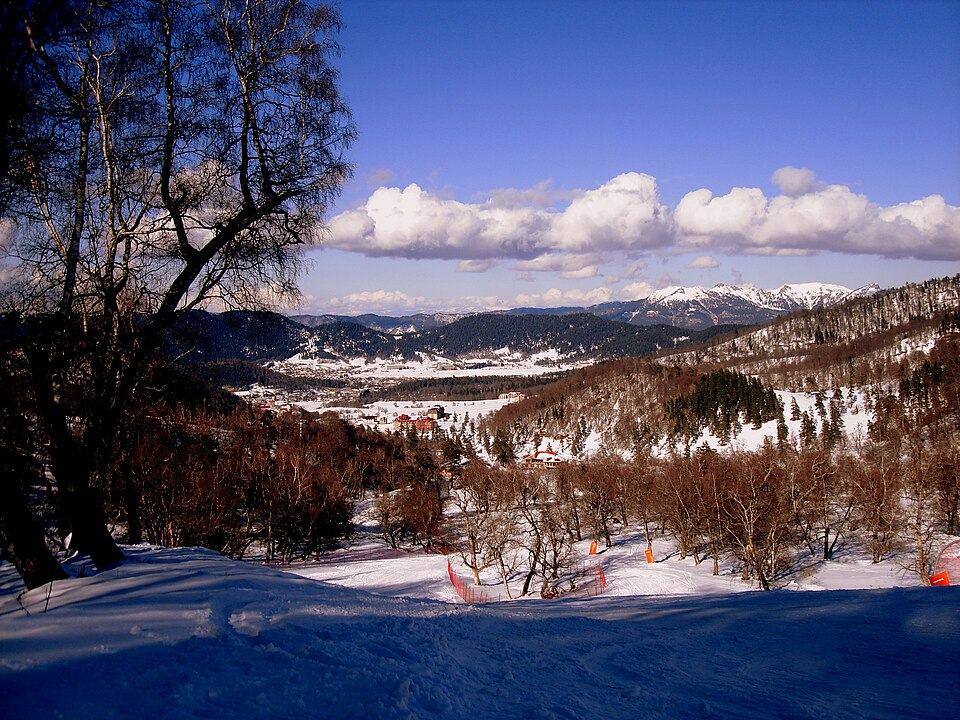
Tbilisi rarely gets much snow and the baths are at their best. Heavy snow can shut the Jvari Pass for anything from a few hours to several days, so treat Day 4 as a buffer and check the road each morning.
- Swap the valley walk for skiing in Gudauri, usually open from December to April.
- Gergeti Trinity Church is still reachable most days by local 4x4 or on foot in good boots.
- Kakheti is quiet and cosy: fires in the cellars, the new vintage and monasteries to yourself.
- On a longer trip, Bakuriani and the Hatsvali and Tetnuldi slopes near Mestia are Georgia's other ski areas.
- Pack for well below freezing in the mountains, even when Tbilisi is 5 to 8°C by day.
When to go: Georgia month by month
For this route, go in May, June, September or October: Tbilisi is warm but not hot, the valleys are open and autumn brings the harvest. July and August are hot in the city but best for high hiking. Temperatures are average Tbilisi highs and lows; Stepantsminda, at about 1,750 m, is usually 8 to 10°C cooler.
| Month | Tbilisi high / low | Conditions | Best for |
|---|---|---|---|
| January | 7 / -1°C | Cold and dry, deep snow in the mountains | Ski slopes, hot sulphur baths, Orthodox Christmas (7 January) |
| February | 8 / 0°C | Cold; best snow cover at the ski resorts | Gudauri and Bakuriani, quiet museums |
| March | 13 / 4°C | Spring in the lowlands, winter above 1,500 m | Tbilisi and Kakheti, late skiing |
| April | 19 / 8°C | Green with showers; high passes still snowy | Blossom, Kakheti, Orthodox Easter |
| May | 24 / 13°C | Warm and green, one of the wettest months | This itinerary, wildflowers, lower hikes |
| June | 29 / 17°C | Valleys open; afternoon mountain storms | Kazbegi, Juta and Truso, first beach days |
| July | 32 / 20°C | Hot in Tbilisi, pleasant in the mountains | Svaneti and Tusheti treks, Black Sea |
| August | 32 / 20°C | Hot, busy, highest prices | High hikes, Batumi, village festivals |
| September | 26 / 16°C | Settled and warm, cooler nights | Everything: hiking, harvest, a warm sea |
| October | 20 / 11°C | Mild, autumn colours, first snow on peaks | Rtveli harvest, Tbilisoba festival |
| November | 13 / 5°C | Cool and quieter, some grey days | Young wine, city breaks, lower prices |
| December | 8 / 1°C | Cold and festive; ski season opens | Winter Tbilisi, early-season skiing |
Getting around: driver, marshrutka, rental car or train
Every stop on this route is on a paved road. How you connect them depends on your budget.
| Option | Typical cost (approx. 2026) | Good for | Downsides |
|---|---|---|---|
| Private driver | 200-450 GEL ($75-175) per car per day | Stopping anywhere, mountain roads, 2 to 4 people | Most expensive; English varies unless you book a driver-guide |
| Marshrutka (minibus) | 5-25 GEL ($2-10) per intercity ride | Main routes such as Tbilisi to Kazbegi, Gori or Sighnaghi | Leaves when full, no stops at sights, little luggage space |
| Rental car | 80-160 GEL ($30-60) per day for a small car; more for a 4x4 | Confident drivers who want freedom | Fast overtaking, livestock, mountain weather |
| Train | 30-75 GEL ($12-30) for Tbilisi to Batumi | Tbilisi to Batumi, Tbilisi to Zugdidi for Svaneti | No use for Kazbegi or Kakheti |
| Bolt or taxi app | 5-15 GEL ($2-6) in central Tbilisi; 25-40 GEL to the airport | City rides, airport transfers | Cities and larger towns only |
What we recommend
For two or more people, a driver is worth it: the Military Road rewards frequent stops, and Uplistsikhe and Nekresi are awkward by bus. Marshrutkas work well for Tbilisi to Stepantsminda (from Didube, about 3 hours) and Tbilisi to Sighnaghi (from Samgori, 2 to 2.5 hours), but Days 2 and 6 need local taxis.
If you drive yourself
- Traffic drives on the right. Many foreign licences are valid for up to a year, but carry an International Driving Permit, which some rental firms ask for.
- Expect fast overtaking on blind bends, cows on the road and unlit roads. Avoid mountain driving after dark.
- The drink-driving limit is very low. If you are tasting wine, let someone else drive.
- A 4x4 is needed only for side trips such as Truso and the Abano Pass to Tusheti; local 4x4 drivers wait in Stepantsminda.
Budget: how much a week in Georgia costs
Georgia is good value by European standards, though Tbilisi prices have risen quickly. These are approximate 2026 estimates per person per day for two people sharing a room, at about 2.6 GEL to the US dollar, excluding flights and insurance.
| Per person per day (approx. 2026) | Budget | Mid-range | Comfort |
|---|---|---|---|
| Accommodation (half a double room) | 35-60 GEL ($13-23): hostel or guesthouse | 75-150 GEL ($30-60): 3-star hotel or good guesthouse | 200-400 GEL ($75-155): boutique hotel or wine estate |
| Food and drink | 40-60 GEL ($15-23): bakeries, local cafes | 80-130 GEL ($30-50): sit-down meals with wine | 150-250 GEL ($60-95): top restaurants, tastings |
| Transport | 10-25 GEL ($4-10): marshrutkas, metro | 60-120 GEL ($23-46): shared driver or day tours | 150-250 GEL ($60-95): private driver-guide |
| Sights, baths, tastings | 10-25 GEL ($4-10) | 30-60 GEL ($12-23) | 80-150 GEL ($30-60) |
| Daily total | 100-170 GEL ($40-65) | 250-450 GEL ($95-175) | 600-1,050 GEL ($230-400) |
| 7-day total | 700-1,200 GEL ($270-460) | 1,750-3,150 GEL ($670-1,200) | 4,200-7,350 GEL ($1,600-2,800) |
- Khinkali: about 1 to 2.5 GEL per dumpling.
- Glass of house wine: about 5 to 12 GEL.
- Metro or bus ride in Tbilisi: 1 GEL.
- Marshrutka from Tbilisi to Stepantsminda: about 15 to 20 GEL.
Practical tips: visa, money, SIM, safety and etiquette
Visa and the insurance rule
Passport holders from over 90 countries, the EU, UK, US, Canada and Australia among them, can enter without a visa and remain for up to a year; travellers from most other countries can get an e-visa online. A rule in force from 1 January 2026 requires every foreign tourist to hold a health and accident policy that runs for the whole trip, with a minimum of 30,000 GEL of cover, written in English or Georgian. Airlines and border officers may ask to see it, so keep a PDF and a printout.
Money
The currency is the Georgian lari (GEL). Cash machines are everywhere in towns and cards work in most hotels, restaurants and supermarkets. Carry cash for marshrutkas, markets, village guesthouses and small cellars. Exchange offices in Tbilisi give fair rates.
SIM cards
Buy a SIM at Tbilisi airport or any operator shop with your passport. Magti has the best mountain coverage, including Stepantsminda; Silknet and Cellfie are fine in cities. Tourist data packages cost roughly 10 to 30 GEL, and international eSIMs work too.
Safety
Violent crime is rare; the real risks are fast driving and mountain weather. In Tbilisi, avoid demonstrations, use app taxis and watch your drink in bars. Ear-tagged street dogs are vaccinated and usually calm. Do not approach the boundary lines of the occupied regions of Abkhazia and Tskhinvali (South Ossetia). The emergency number is 112.
Church etiquette
Women should cover their hair and wear a skirt below the knee; big churches lend scarves and wrap skirts at the door. Men should wear long trousers and remove hats. Keep quiet during services and ask before taking photos inside.
Tipping
Many restaurants add a 10 to 15 percent service charge, so check the bill; if not, leave about 10 percent. Tip drivers and guides around 10 percent of the day's price.
Language
Georgian has its own alphabet. Younger people in Tbilisi and tourist areas often speak English; older people more often speak Russian. Learn gamarjoba (hello), madloba (thank you) and gaumarjos (cheers).
Frequently asked questions
Is 7 days enough for Georgia?
Yes, for a first trip. A week covers Tbilisi, Mtskheta, Uplistsikhe, two nights in Kazbegi and Kakheti wine country. Svaneti, Batumi or Tusheti need a second week or a different route.
What is the best route for a first trip to Georgia?
Start and finish in Tbilisi. After the Old Town, take a day trip to Uplistsikhe and Mtskheta, spend two nights in Kazbegi, come back for another afternoon in the capital, then give Kakheti two days.
Is Georgia safe for tourists?
Yes. Violent crime against visitors is rare, and solo and female travellers commonly travel independently. The main risks are reckless driving, mountain weather and political demonstrations in central Tbilisi. Stay away from the boundary lines of the occupied territories.
Do I need a visa to visit Georgia?
Most visitors do not. Over 90 nationalities, EU, UK, US, Canadian and Australian citizens included, can spend up to a year in Georgia without one. What everyone does need, since 1 January 2026, is insurance for illness and accidents covering at least 30,000 GEL.
How much does a week in Georgia cost?
Approximate 2026 estimates per person, excluding flights: 700 to 1,200 GEL ($270 to $460) on a budget, 1,750 to 3,150 GEL ($670 to $1,200) mid-range, and from about 4,200 GEL ($1,600) with boutique hotels and a private driver.
What is the best month to visit Georgia?
September: settled weather, open mountain valleys and the start of the grape harvest. May, June and October are close behind. July and August are best for high-altitude hiking but hot in Tbilisi.
Can I visit Kazbegi as a day trip from Tbilisi?
Yes. The round trip is about 310 km and 6 hours of driving, taking in Ananuri, Gudauri and Gergeti Trinity Church, but you miss the valleys. Stay a night if you can.
Should I fly into Tbilisi or Kutaisi?
Tbilisi, for this route; the airport is 25 to 30 minutes from the centre. Kutaisi, 3 to 3.5 hours west by road, has many low-cost flights and suits trips that start with Svaneti or Batumi.