Home›Destinations›UNESCO World Heritage Sites in Georgia

Collection · 15 places

UNESCO World Heritage Sites in Georgia

Georgia has four properties on the UNESCO World Heritage List as of October 2026. Three are cultural and were listed in the 1990s: the Historical Monuments of Mtskheta (1994), Gelati Monastery (1994) and Upper Svaneti (1996). The fourth, and the only natural one, is the Colchic Rainforests and Wetlands, added in 2021: seven protected pieces of ancient humid forest and coastal bog in Adjara, Guria and Samegrelo.

Some of these properties cover several places, so this list breaks them into the sites you actually visit, such as Svetitskhoveli, Jvari and Samtavro for Mtskheta, or Mtirala, Kintrishi and Kolkheti for the Colchic forests. Bagrati Cathedral in Kutaisi was once part of the Gelati listing but was removed in 2017 after a heavy reconstruction, so it no longer counts.

Georgia also keeps 14 places on its tentative list, the shortlist for future nominations, all submitted in 2007. The second part of this list covers the most rewarding of them, including Vardzia, David Gareja, Uplistsikhe and Old Tbilisi. The others are Alaverdi, Ananuri, Dmanisi, Gremi, Kvetera, Nikortsminda, Samtavisi and Vani. Georgia's UNESCO intangible heritage, such as qvevri winemaking, polyphonic singing and the Georgian alphabet, is a separate list.

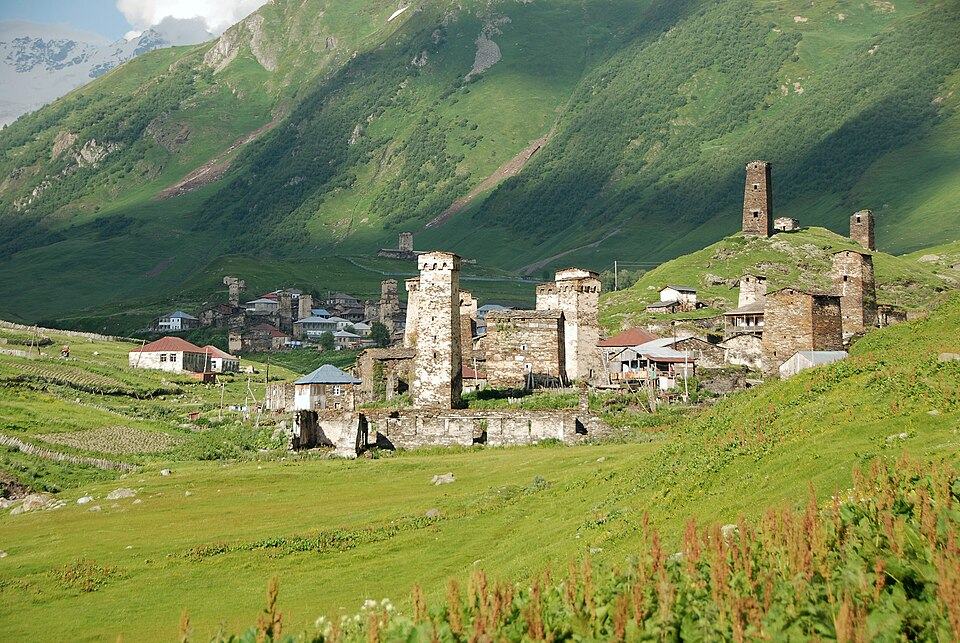
UshguliUshguliPhoto: Florian Pinel, CC BY-SA 3.0
1
Samegrelo & Svaneti · Cities & Towns

Ushguli and Upper Svaneti

A cluster of four villages at about 2,100 m under Shkhara, Georgia's highest peak, packed with medieval stone defence towers. The listed core is Chazhashi, where towers and family houses stand much as they did centuries ago. Lamaria church on the hill above and the walk toward the Shkhara glacier complete the visit.

Inscribed 1996 as Upper Svaneti; core area Chazhashi

Best months
June to September
Access
About 1.5 h from Mestia on a mountain road that is now mostly paved; shared 4x4s run in summer
Entry
Free
Read the guide →
Svetitskhoveli CathedralSvetitskhoveli CathedralPhoto: Supanut Arunoprayote, CC BY 4.0
2
Mtskheta-Mtianeti · Churches & Monasteries

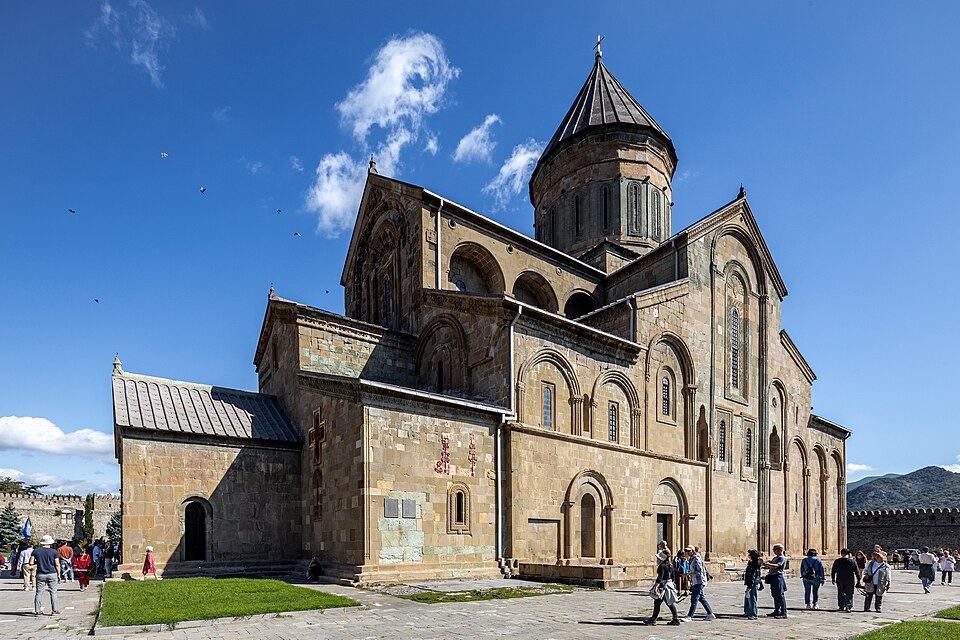
Svetitskhoveli Cathedral, Mtskheta

Georgia's most important church, built between 1010 and 1029 over the spot where, by tradition, Christ's robe is buried. Inside are royal tombs, faded frescoes and a small stone chapel said to mark the robe's resting place. Kings were crowned and buried here for centuries.

Inscribed 1994 with the Mtskheta monuments

Best months
All year; weekday mornings are quietest
Access
About 30 min by car from Tbilisi; in the centre of Mtskheta
Entry
Free
Read the guide →
Jvari MonasteryJvari MonasteryPhoto: Alexxx1979, CC BY-SA 4.0
3
Mtskheta-Mtianeti · Churches & Monasteries

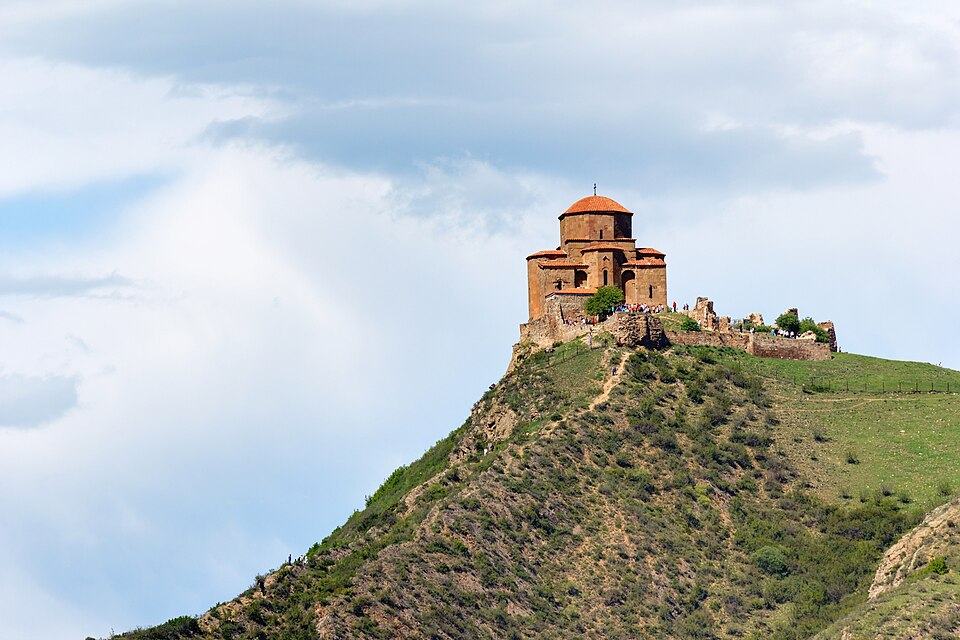
Jvari Monastery, Mtskheta

A late 6th-century church on a hilltop facing Mtskheta, the model for a whole family of Georgian churches with its four-apse plan. From its terrace you watch the green Aragvi run into the browner Mtkvari far below. Come at sunset or early morning for the best light.

Part of the Mtskheta property (1994)

Best months
All year
Access
About 30 min by car from Tbilisi on a side road; no public transport to the top
Entry
Free
Read the guide →
Gelati MonasteryGelati MonasteryPhoto: Ihor Burliai, CC BY-SA 3.0
4
Imereti · Churches & Monasteries

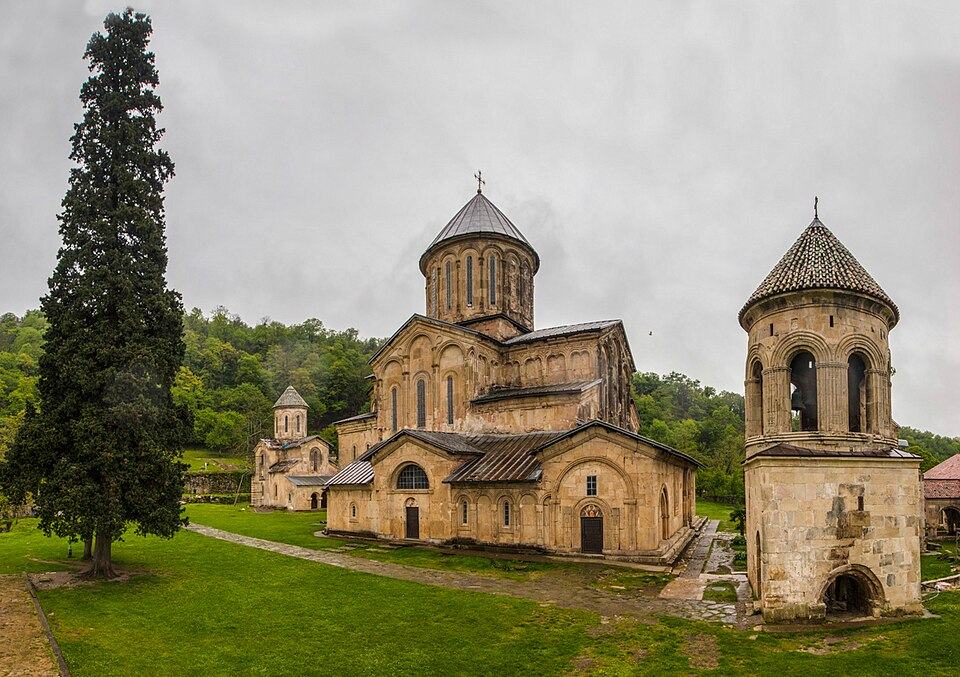
Gelati Monastery

King David the Builder founded this monastery and academy above Kutaisi in 1106, and he lies buried under its south gate. The main church has a gold-ground mosaic of the Virgin and Child in its apse, made in the 1120s or 1130s, and painted portraits of Georgian rulers. Conservation work on the roofs has been going on for years, so parts may be covered.

Inscribed 1994; Bagrati removed in 2017

Best months
All year
Access
About 20 min by taxi from Kutaisi
Entry
Free
Read the guide →
Samtavro MonasterySamtavro MonasteryPhoto: Levan Gokadze, CC BY-SA 2.0
5
Mtskheta-Mtianeti · Churches & Monasteries

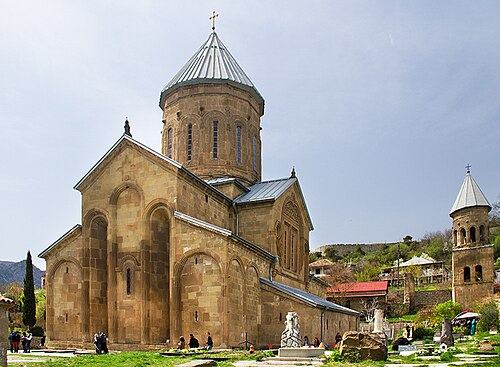
Samtavro Monastery, Mtskheta

A working convent at the north end of Mtskheta whose 11th-century church holds the graves of King Mirian III and Queen Nana, Georgia's first Christian rulers. Pilgrims queue at the tomb of the 20th-century monk St Gabriel. A short walk links it with Svetitskhoveli.

Listed with Mtskheta in 1994

Best months
All year; mornings outside service times
Access
10 min on foot from Svetitskhoveli
Entry
Free
Read the guide →
Mtirala National ParkMtirala National ParkPhoto: Philipp Weigell, CC BY 3.0
6
Adjara · Nature & Hiking

Mtirala National Park

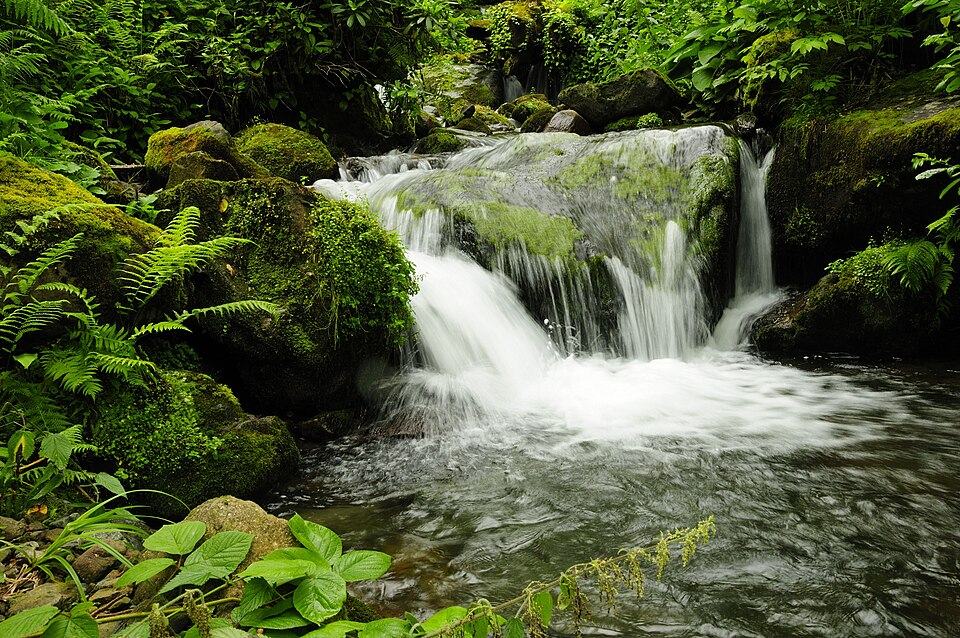
The easiest piece of the Colchic forest to visit, in steep hills behind Chakvi that soak up over 4 m of rain a year. Trails lead through beech, chestnut and rhododendron to a waterfall and a swimming lake. Rare relict plants from before the Ice Age survive here.

Colchic forests property, inscribed 2021

Best months
May to October
Access
Drive 10 km north of Batumi to Chakvi, then 15 km uphill to Chakvistavi
Entry
Free
Read the guide →
Kintrishi Protected AreasKintrishi Protected AreasPhoto: dkhinveli, CC0
7
Adjara · Nature & Hiking

Kintrishi Protected Areas

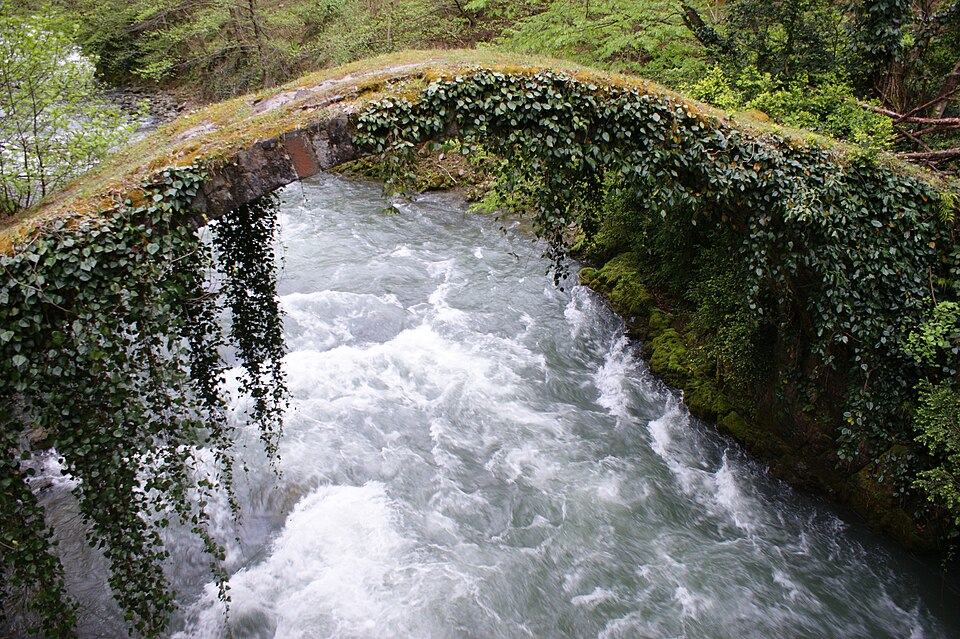
Inland from Kobuleti, the Kintrishi valley protects old boxwood and yew forest that has been a reserve since 1959. A short trail reaches a medieval arched bridge, and a longer route climbs to Lake Tbikeli in two to three days. Most of the reserve is strictly protected, so stay on marked paths.

Inscribed 2021, sharing one component with Mtirala

Best months
May to October
Access
Tskhemvani lies 24 km inland from Kobuleti, up the Kintrishi valley
Entry
Free
Read the guide →
Kolkheti National Park and Paliastomi LakeKolkheti National Park and Paliastomi LakePhoto: Paata vardanashvili, CC BY-SA 4.0
8
Samegrelo & Svaneti · Nature & Hiking

Kolkheti National Park wetlands

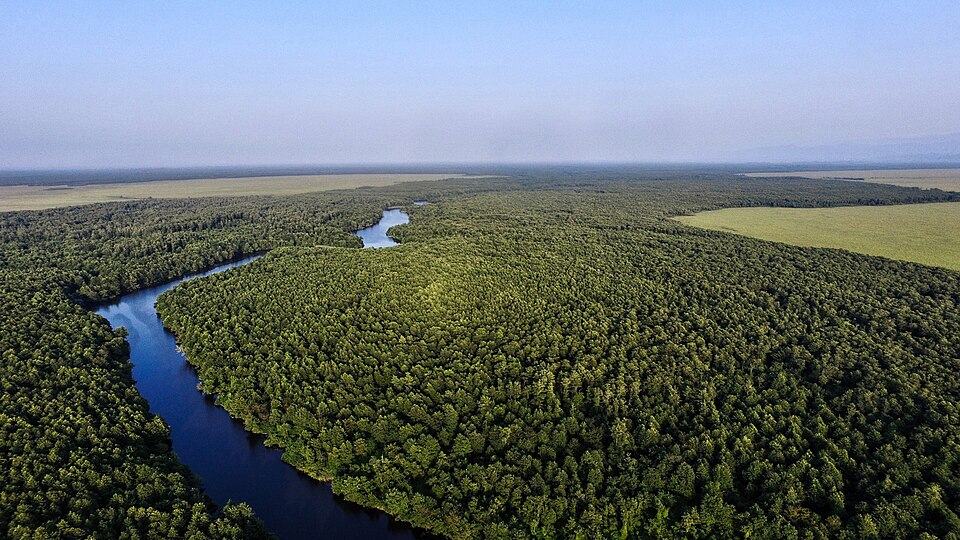
Five of the seven Colchic components are peat bogs and swamp forest on the coastal plain around Poti. The visitor part of the park is Paliastomi Lake, where boats run out across the water and up the Pichori river. Migrating birds pass through in spring and autumn.

Five Colchic wetland components (Grigoleti, Imnati, Pitshora, Nabada, Churia), inscribed 2021

Best months
April to June and September to October
Access
On the southern edge of Poti, about 5 h by car from Tbilisi
Entry
Free to visit; boat trips paid separately
Read the guide →
VardziaVardziaPhoto: Alexkom000, CC BY 4.0
9
Samtskhe-Javakheti · Caves & Cave Towns

Vardzia and Khertvisi

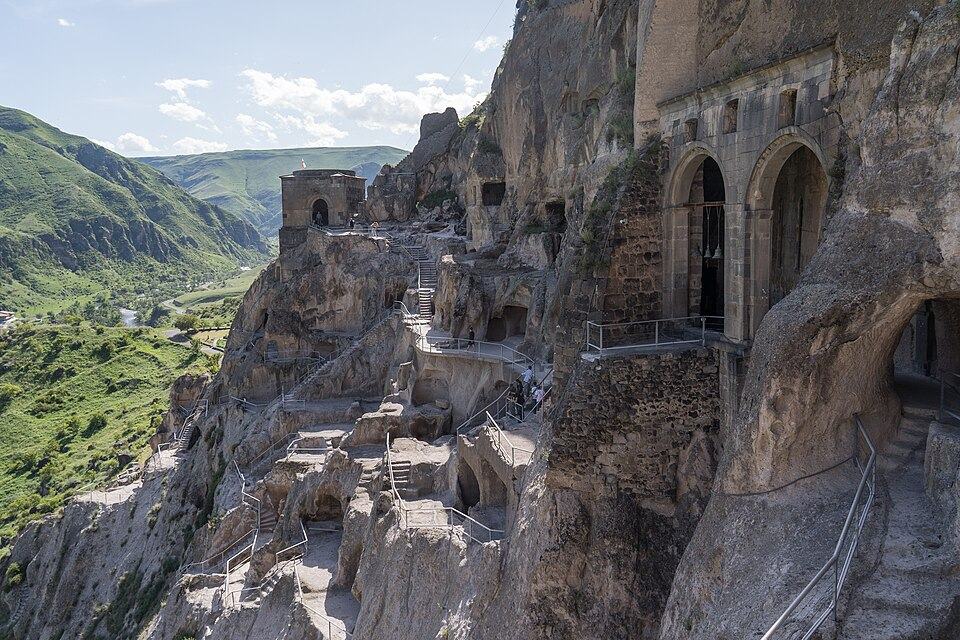
The cave city of Queen Tamar, hundreds of rooms cut into a cliff over the Mtkvari, together with the fortress of Khertvisi down the valley. It is the most visited site on the tentative list and many think it deserves full listing. After a rockfall in 2026 one small corner of the cliff is fenced off, while the rest stays open.

UNESCO tentative list (2007), as Vardzia-Khertvisi

Best months
April to June and September to October
Access
About 4 h by car from Tbilisi; 1 to 1.5 h from Akhaltsikhe
Entry
about 15 GEL (about $6) in 2026
Read the guide →
David Gareja MonasteryDavid Gareja MonasteryPhoto: Vyacheslav Argenberg, CC BY 4.0
10
Kakheti · Caves & Cave Towns

David Gareja Monasteries

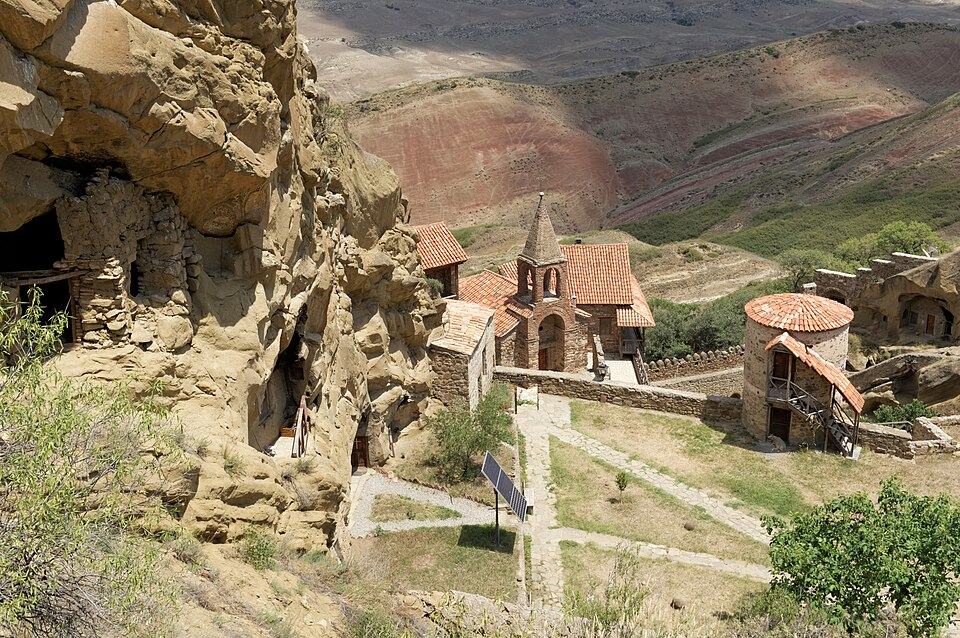
A spread of rock-cut monasteries in the semi-desert on the border with Azerbaijan, founded in the 6th century and painted with fine medieval frescoes. The main Lavra is open; the ridge with the Udabno caves has been largely closed since 2019. Pink and ochre hills make it unlike anywhere else in Georgia.

UNESCO tentative list (2007), as David Gareji Monasteries and Hermitage

Best months
April to May and September to November
Access
About 2 h by car from Tbilisi; no public transport
Entry
Free
Read the guide →
UplistsikheUplistsikhePhoto: Supanut Arunoprayote, CC BY 4.0
11
Shida Kartli · Caves & Cave Towns

Uplistsikhe

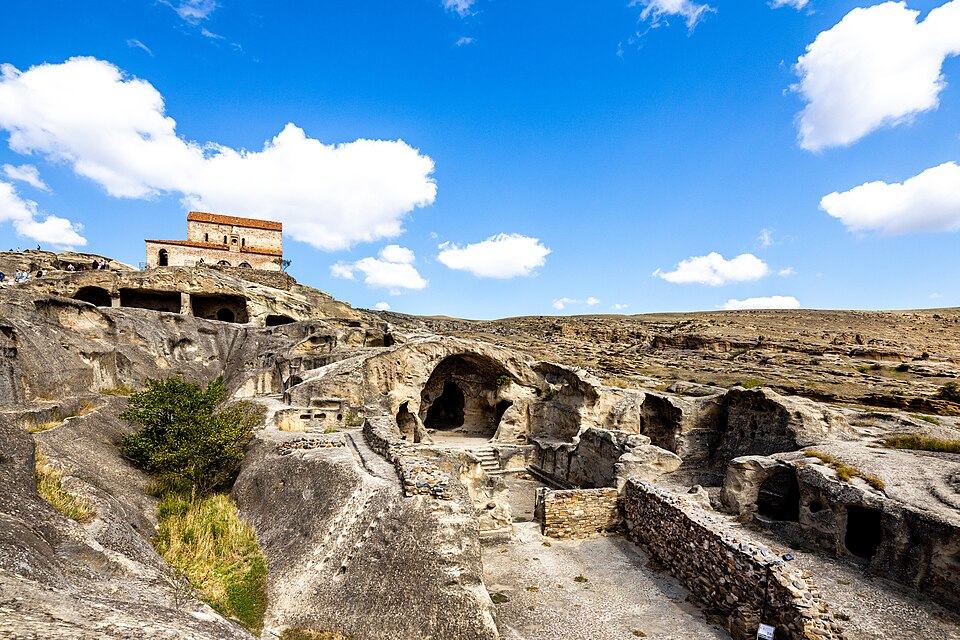
A rock-cut settlement near Gori with roots in the late Bronze Age, later a pagan religious centre and then a medieval Georgian stronghold. You climb a carved main street past halls and cellars to a brick basilica on the top. It is an easy half-day from Tbilisi.

UNESCO tentative list (2007)

Best months
March to June and September to November
Access
Roughly 100 km west of Tbilisi; the last 10 km from Gori by taxi
Entry
about 15 GEL (about $6) in 2026
Read the guide →
Old Tbilisi (Kala)Old Tbilisi (Kala)Photo: Alexxx1979, CC BY-SA 4.0
12
Tbilisi · Cities & Towns

Old Tbilisi

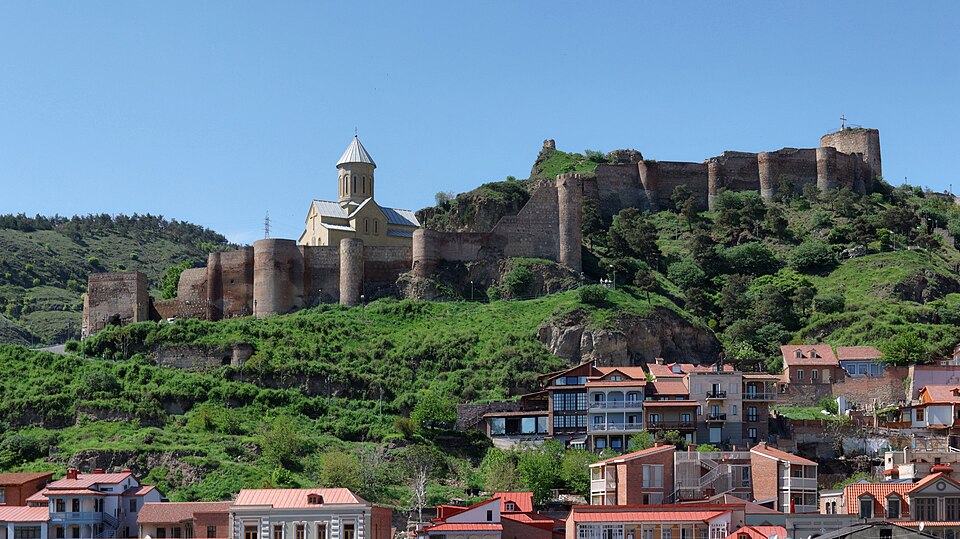
The old quarter below Narikala Fortress, with sulphur bath domes, wooden balconies, churches, a mosque and a synagogue within a few streets. Much of it has been restored since the 2010s, not always gently. Walk it slowly from Abanotubani up through Sololaki.

UNESCO tentative list (2007), as Tbilisi Historic District

Best months
All year, nicest in spring and autumn
Access
On foot from Freedom Square
Entry
Free
Read the guide →
OmaloOmaloPhoto: Abramia Giorgi, CC BY-SA 4.0
13
Kakheti · Cities & Towns

Mta-Tusheti

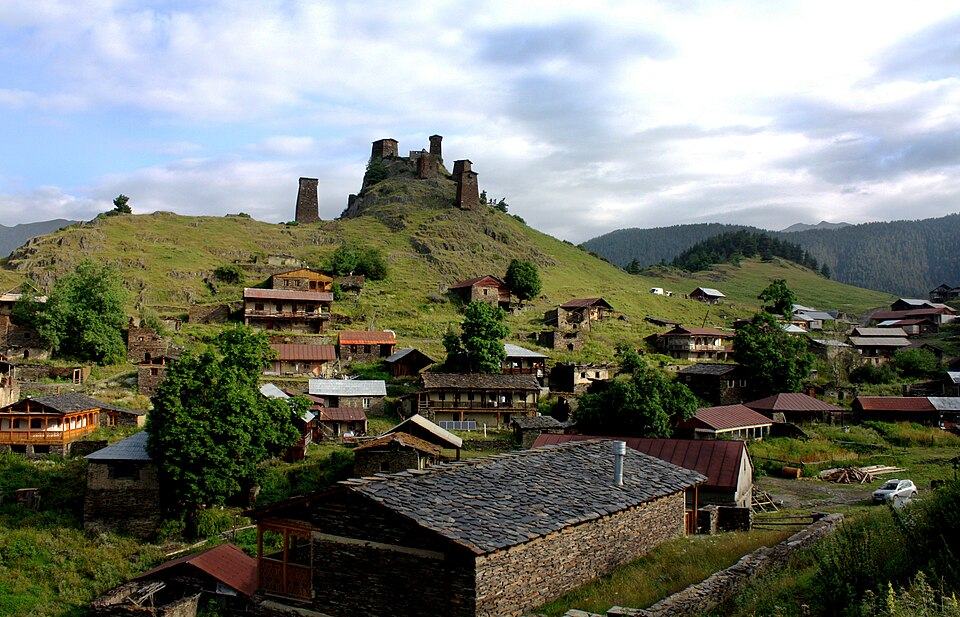
Remote mountain villages of slate towers and stone houses in Tusheti, reached only over the Abano Pass. Omalo with its Keselo towers and the village of Dartlo are the highlights. Families still move up with their sheep for the summer.

UNESCO tentative list (2007)

Best months
July to September; the road opens roughly June to early October
Access
4 to 6 h by 4x4 from Kvemo Alvani over an unpaved pass of about 2,850 m
Entry
Free
Read the guide →
Shatili
14
Mtskheta-Mtianeti · Fortresses & Castles

Shatili

A fortified village in Khevsureti where more than 60 stone towers and houses grew together into one defensive block on a rocky slope. It sits in the Arghuni valley near the Chechen border. Some towers now serve as guesthouses.

UNESCO tentative list (2007)

Best months
July to September
Access
About 4 to 5 h by 4x4 from Tbilisi over the Datvisjvari Pass (about 2,680 m)
Entry
Free
Read the guide →
Gremi CitadelGremi CitadelPhoto: Sarah Murray, CC BY-SA 2.0
15
Kakheti · Fortresses & Castles

Gremi Citadel

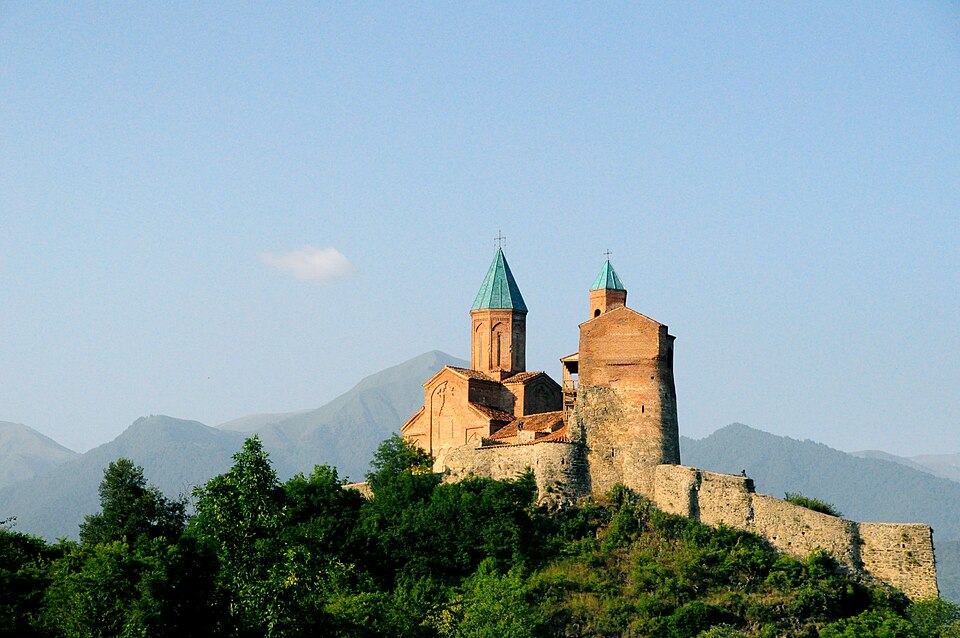
The 16th-century royal seat of the kings of Kakheti, now a brick church and a tall tower on a hill above the Alazani valley. The tower holds a small museum, and the church keeps frescoes from the 1570s. It is an easy stop on a Kakheti wine day.

UNESCO tentative list (2007), as Gremi Church of Archangels and Royal Tower

Best months
April to October
Access
Half an hour north-east of Telavi on the Kvareli road
Entry
about 5 GEL (about $2) in 2026 for the tower museum
Read the guide →
Tips from your host
  • Mtskheta's three listed churches fit into half a day from Tbilisi; go on a weekday to avoid wedding and pilgrim crowds.
  • Plan Ushguli for June to September; in winter the road from Mestia can close after heavy snow.
  • All the churches on this list are active places of worship: women should bring a scarf and a skirt or wrap, and men should avoid shorts.
  • Combine Gelati with Motsameta and the Kutaisi caves, and Vardzia with Rabati Castle and Borjomi.
  • Bagrati Cathedral in Kutaisi is worth a visit for its views, but it is no longer part of the UNESCO listing.

Do it with us

UNESCO World Heritage Sites in Georgia, privately

Any date, any group size. Private guide, transport, horses and camping gear if needed.

Ready-made tourMtskheta Day Trip1 day · from $110 pp (sample)

UNESCO World Heritage Sites in Georgia: FAQ

How many UNESCO World Heritage Sites does Georgia have?

Four, as of October 2026: three cultural properties (Mtskheta, Gelati and Upper Svaneti) and one natural one, the Colchic forests and wetlands. No new Georgian sites were added at the 2025 or 2026 World Heritage Committee sessions.

Is Vardzia a UNESCO World Heritage Site?

Not yet. Vardzia, together with Khertvisi Fortress, has been on Georgia's tentative list since 2007, which means it may be nominated in future.

Why was Bagrati Cathedral removed from the UNESCO list?

A reconstruction completed in 2012 added new structures that UNESCO judged harmful to the authenticity of the ruin. Bagrati was taken out of the Gelati property in 2017, which also allowed Gelati to leave the List of World Heritage in Danger.

Which UNESCO sites can I see on a day trip from Tbilisi?

Mtskheta's three monuments, Svetitskhoveli, Jvari and Samtavro, are about 30 minutes away. Tentative-list sites Uplistsikhe and David Gareja are also classic day trips.

What is the Colchic Rainforests and Wetlands site?

Georgia's only natural World Heritage property, listed in 2021. It protects seven areas of ancient humid forest and coastal wetland in Adjara, Guria and Samegrelo, covering about 31,000 hectares, including Mtirala, Kintrishi and parts of Kolkheti National Park.

Do UNESCO sites in Georgia charge an entrance fee?

The listed churches and monasteries are free. Some tentative-list sites charge: Vardzia and Uplistsikhe cost about 15 GEL (about $6) each for adults in 2026.

Is Georgian wine on the UNESCO list?

The ancient qvevri method of making wine in buried clay jars was added to UNESCO's intangible cultural heritage list in 2013. Georgian polyphonic singing and the living culture of the three Georgian scripts are on that list too.

Which is the most impressive UNESCO site in Georgia?

For scenery, Ushguli under Shkhara is hard to beat. For history and art, Gelati's mosaics and Svetitskhoveli's royal tombs are the highlights.

Last checked Oct 2026 by the Maspindzeli team. Mountain conditions change: ask us before you go.

Tours that visit them