- Around 95 countries and territories, among them the EU states, the UK, the US, Canada and Australia, have visa-free access to Georgia, with stays of up to a year per visit.
- Other nationalities use the online e-visa, unless a current visa or residence card from one of roughly 50 approved countries lets them in for 90 days in any 180.
- From 1 January 2026, foreign tourists need health and accident insurance valid in Georgia for the whole trip and covering at least 30,000 GEL; airlines already ask for proof.
- You can arrive overland from Turkey, Armenia or Russia, but Azerbaijan has kept its land border closed to most arrivals since 2020.
- Entering Abkhazia or the Tskhinvali region from Russia is a crime under Georgian law, and some mountain treks near the Russian border require registration with the border police.
Getting into Georgia is simple for most travellers. With a passport from the EU, the UK, North America, Australia or one of many other countries, you can arrive without a visa and remain for as long as a year. The newest requirement is insurance: tourists arriving after 1 January 2026 need a health and accident policy lasting the length of the trip, and airlines have started asking to see it at check-in.
This guide sets out the rules as they stood in October 2026: who qualifies for visa-free entry and who needs the e-visa, passport validity, the insurance requirement, what to expect at Tbilisi, Kutaisi and Batumi airports and at each land border, customs limits for wine and chacha, and the registration needed for some mountain treks. Rules change, so confirm anything critical with the Georgian Ministry of Foreign Affairs or a Georgian embassy before you travel.
Do you need a visa for Georgia? Visa-free stays explained
Georgia has one of the most open entry regimes anywhere. Citizens of roughly 95 countries and territories may come without a visa for tourism, family visits or business meetings. The Ministry of Foreign Affairs publishes the official list on its consular website, and the count quoted in different sources ranges from the low to the high 90s, depending on how territories are counted.
The list includes every EU and Schengen state, the UK, the US, Canada, Australia, New Zealand, Japan, South Korea, Israel, Turkey, the Gulf states, much of Latin America and most former Soviet republics. Travellers from India, China and much of Africa and South Asia should check, as many need the e-visa.
The one-year rule
Visa-free visitors may stay for up to one year from the day they enter. Leaving and coming back starts a new period, but repeated border runs by people who are really living in Georgia attract questions, and the border officer always has the final word on entry. To work for a Georgian employer, study or settle, apply for a residence permit through a Public Service Hall instead of chaining tourist stays.
Entering on another country's visa or residence permit
If your nationality is not on the list, you can still enter without a Georgian visa when you hold a valid visa or residence permit from one of about 50 approved countries, including the EU and Schengen states, the US, the UK, Canada, Japan and the Gulf states. This route gives 90 days in any 180-day period. Since 16 May 2025, citizens of 17 countries, among them Pakistan, Bangladesh, Nigeria and Morocco, can rely on a Gulf visa or permit only if it is valid for at least a year on the day they arrive.
Georgia e-visa: who needs one and how to apply
Travellers who are neither visa-free nor holding a qualifying foreign visa or permit apply for an electronic visa on the official portal, evisa.gov.ge. Look-alike agency sites charge extra for the same form.
- Complete the online form
Enter your passport details, travel dates and the address where you will sleep on the first night. - Upload your documents
A passport scan, a photo, accommodation bookings, a return or onward ticket and your insurance policy. Proof of funds may also be requested. - Pay the fee by card
The government sets the fee, and the portal shows it before you submit. - Wait for the decision
Allow up to about five working days, and apply at least two weeks before you fly. The approval arrives by email: print it and keep a copy on your phone.
The e-visa is a short-stay visa, usually for a single entry, and the permitted length of stay is printed on it. A few nationalities cannot use the portal at all and must apply at a Georgian embassy or consulate.
Passport validity and ID cards
Georgia's formal requirement is a passport that stays valid for your entire visit. Airlines and onward countries can be stricter, so travel with three to six months of validity to spare and a few blank pages if you are continuing to Armenia, Azerbaijan or Turkey.
Citizens of EU member states may enter with a national identity card instead of a passport, which suits a short city break. On a regional trip, bring the passport anyway, because your next country may not accept the card.
A damaged document causes more trouble than one close to expiry: a torn data page or water damage can lead an airline to refuse boarding. If a child is travelling with only one parent, carry a signed consent letter from the other; it is not always requested, but it can save a long conversation at a border.
Mandatory travel insurance for Georgia from 1 January 2026
An amendment to the Law of Georgia on Tourism made insurance compulsory for foreign tourists from 1 January 2026. It applies whether you come visa-free or on a visa, by air or overland.
What the policy must show
- Cover for health and accidents, meaning emergency medical treatment and hospital care.
- A sum insured, or limits, of no less than 30,000 GEL, roughly 11,500 US dollars at 2026 rates.
- Georgia named within the territory covered.
- Start and end dates that span your whole time in the country.
- The insurer, the insured person, the risks covered and the premium.
- Wording in English or Georgian, on paper or as an electronic document. Foreign insurers are as acceptable as Georgian ones.
Who is exempt
The rule does not apply to Georgian citizens or holders of Georgian residence permits. Also exempt are diplomats and holders of diplomatic, official or service passports, staff of accredited missions and international organisations and their families, people whose entry is governed by particular international treaties, and professional drivers on international freight and passenger routes.
How it is checked
So far, airlines flying to Georgia are the main checkpoint. Passengers report being asked for the policy at check-in and at the gate, and boarding can be refused without one. Passport officers may ask too, though many visitors are not questioned. Media reports mention a 300 GEL fine for being caught without cover, but no official penalty schedule has been published, and there is nowhere to buy a policy at the airport or border, so sort it out before you leave home.
The legal minimum would not go far after a serious accident. For trekking, climbing, skiing or riding, choose a policy that names those activities and includes search and rescue and helicopter evacuation.
Arriving by air: Tbilisi, Kutaisi and Batumi airports
Georgia has three international airports, and arrival works the same way at each. At passport control an officer takes your photo and may ask why you have come, where you are staying and, since 2026, about insurance. Then you collect bags and walk through the green customs channel if you are within the allowances.
Tbilisi (TBS)
Shota Rustaveli Tbilisi International, the main gateway, is a 25 to 40 minute drive from the Old Town and handles most full-service airlines, with many flights landing in the small hours. The arrivals hall has cash machines, exchange desks and mobile operator counters. Ignore the men touting rides and book an app taxi or take the city bus instead.
Kutaisi (KUT)
David the Builder Kutaisi International Airport, west of Kutaisi, is where most low-cost flights from Europe land. It is small and quick to clear. Buses scheduled around arrivals run to Kutaisi, Tbilisi and Batumi. Tbilisi is 3.5 to 4 hours away by road, so many travellers spend the first night in Kutaisi.
Batumi (BUS)
Batumi's airport sits on the southern edge of the city, a short drive from the seafront and close to the Turkish border. Istanbul flights run all year and summer adds services from European and Middle Eastern cities, which makes it handy for trips that begin on the Black Sea.

Land borders: Turkey, Armenia, Russia and Azerbaijan
Georgia has land borders with four countries, and three of them are open to foreign travellers in both directions.
| Neighbour | Main crossing | What to know |
|---|---|---|
| Turkey | Sarpi, about half an hour south of Batumi (Hopa on the Turkish side) | Open around the clock and easy to cross on foot; busy in summer. Quieter crossings at Vale (Posof) and Kartsakhi (Cildir) serve the south-west. |
| Armenia | Sadakhlo (Bagratashen), about 1.5 hours south of Tbilisi | The busiest crossing, open 24 hours, used by marshrutkas, shared taxis and the overnight Tbilisi to Yerevan train. Smaller alternatives are Guguti (Gogavan) and Ninotsminda (Bavra). |
| Russia | Upper Lars (Zemo Larsi), in the Dariali gorge north of Stepantsminda | The only open crossing. It closes whenever snow shuts the Jvari Pass, and lorry queues can stretch for hours. Western bank cards do not work in Russia, and your government may advise against travel there. |
| Azerbaijan | Red Bridge (Tsiteli Khidi) and Lagodekhi | Closed to entry into Azerbaijan for most travellers since 2020, with the closure extended again and again. A daily Tbilisi to Baku night train restarted in May 2026, but it is unclear who may board, so check before booking. Flying is the safe choice. |
Arriving overland, you go through the same checks as at an airport, insurance included, although travellers so far report fewer questions at land crossings.
Bringing a car
A foreign-registered car enters on a temporary import declaration. Carry the registration document and, if you are not the owner, a notarised authorisation. Georgian third-party motor insurance is compulsory for foreign vehicles and sold at the border. Georgian rental companies often forbid taking their cars abroad, so ask before planning a loop through Armenia.
What you cannot do: the occupied territories and other limits
Georgia's Law on Occupied Territories, adopted in 2008, covers Abkhazia and the Tskhinvali region (South Ossetia), both occupied by Russia. It permits entry to them only from land controlled by the Georgian government. Going in from the Russian side is a criminal offence in Georgia, punishable by a fine or imprisonment, and travellers who have done so can be arrested or turned away when they later reach the rest of the country.
From Georgian-controlled land, the Tskhinvali region is closed to foreigners, and crossing into Abkhazia over the Enguri bridge depends on permission from the de facto authorities that can be withdrawn without notice. Foreign governments almost universally advise against any trip to either region and cannot offer consular help there, and the insurance you bought for Georgia will not usually cover them.
Other things to avoid
- Overstaying your permitted period, which brings a fine on departure and can lead to a ban on returning.
- Flying a drone near borders, the boundary lines, military sites or government buildings. Check current rules with the Civil Aviation Agency before flying anywhere.
- Photographing border posts, soldiers or police at work, which invites questioning.
- Joining street protests: visitors have faced detention and deportation.
- Buying or carrying drugs. A 2018 court ruling stopped treating personal cannabis use as a crime, but possession and sale are still offences, and penalties for other drugs are severe.
Customs allowances: wine, chacha, cash and souvenirs
The Revenue Service of Georgia sets the duty-free allowances. Adults aged 18 and over arriving by air may bring in:
- 4 litres of wine and 16 litres of beer.
- 1 litre of spirits of 22 percent or stronger, or 2 litres of weaker drinks such as liqueurs, or a combination within those limits.
- 200 cigarettes, or 50 cigars, or 250 g of other tobacco.
- Other goods worth up to 3,000 GEL and weighing up to 30 kg, once per calendar day, with food assessed separately.
Overland, the alcohol and tobacco limits are the same but apply once every 30 days, and the general goods allowance falls to 500 GEL and 30 kg. Goods brought in for resale must be declared whatever their value. Cash, cheques and securities worth more than 30,000 GEL, or the equivalent in another currency, must be declared both on arrival and on departure.
Taking wine and chacha home
For personal amounts, the limits that matter on the way out are your home country's allowance and airline rules rather than Georgian customs. Travellers returning to the EU can usually bring 4 litres of wine and 1 litre of spirits without duty; the UK allows 18 litres of still wine and 4 litres of spirits. Above that, you pay duty at home.
- Pack bottles in checked luggage, wrapped in clothes or bubble wrap; liquids over 100 ml are not allowed through security in cabin bags.
- Airlines ban drinks stronger than 70 percent alcohol and limit those between 24 and 70 percent to 5 litres per passenger in retail packaging. Very strong homemade chacha can approach the upper limit.
- Homemade wine in plastic water bottles tends to leak; sealed glass travels better.
Souvenirs and medicines that need paperwork
Icons, old carpets, antique jewellery, coins and older artworks may count as cultural property and need an export certificate. Buy from dealers who can supply one, keep receipts, and treat 'antique' icons at flea markets with suspicion. Carry prescription medicines in the pharmacy box, with the prescription or a doctor's letter, because some psychotropic and opioid drugs are controlled.
Border-zone registration for hikes: Shatili, Tusheti and Mount Kazbek
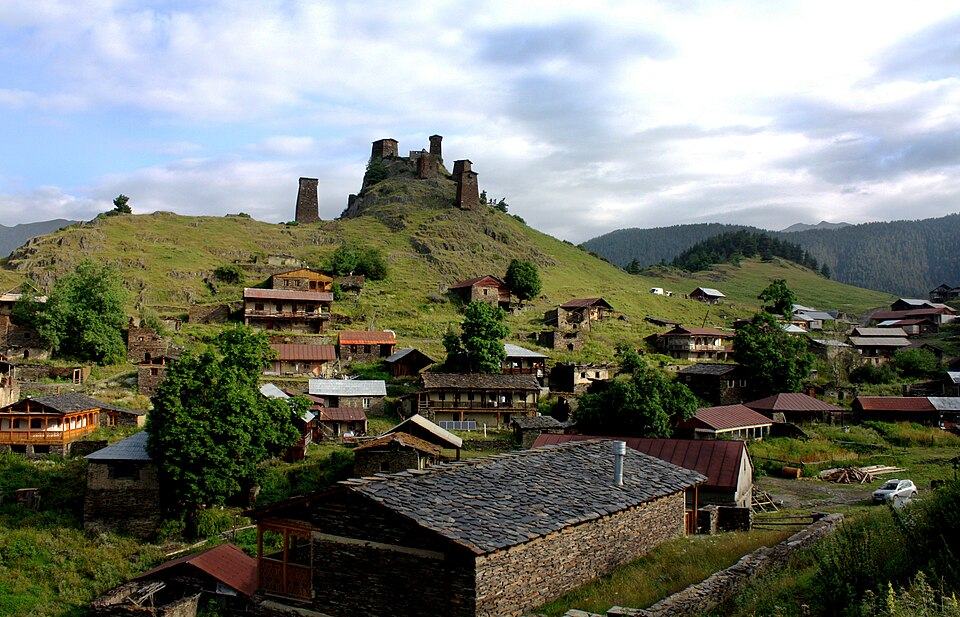
Long stretches of the Greater Caucasus run along the Russian border, and the Georgian border police control access to some valleys. Most day trips need nothing beyond your passport, but a few routes require you to register in person.
| Area | What you need | Where |
|---|---|---|
| Omalo to Shatili trek over the Atsunta Pass | Registration with the border police, checked again on the Khevsureti side | Girevi border post (allow about an hour); checked at Khidotani |
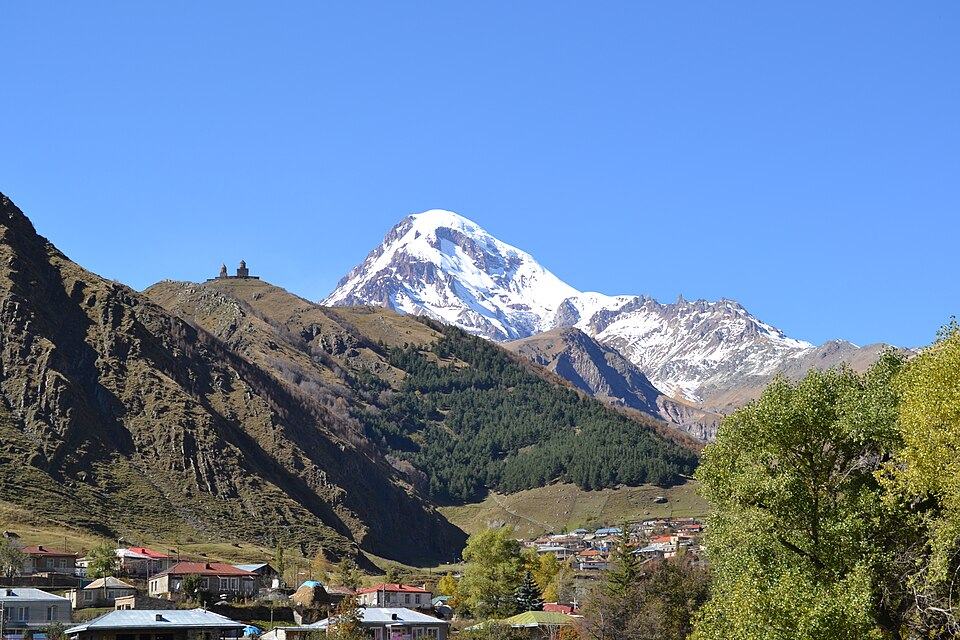
| Mount Kazbek (5,054 m) summit climb | Registration before the ascent | Border police office in Stepantsminda; licensed guides arrange it for groups |
| Shatili, Mutso and the Argun valley | Passport for checks at border posts | Posts along the valley road |
| Truso valley beyond Zakagori fortress | A permit; most visitors turn back at the fortress | Georgian post below Zakagori |
| Mazeri and the Ushba trail, Svaneti | Passport check | Border police checkpoint on the trail |
| Mamisoni and Notsara passes, Racha | Free permit specific to your route | Border police office in Oni |
| Vashlovani protected areas, by the Azerbaijani border | Registration and passport | Visitor centre in Dedoplistskaro |
Registration is free. Bring the original passport, a rough itinerary with dates, and if possible the name of your guide or guesthouse. Posts and procedures shift from year to year, so check locally the day before you set out.

Travelling on to Armenia and Azerbaijan
Because the frontier between Armenia and Azerbaijan is shut, a three-country route usually runs Baku, Tbilisi, Yerevan or the reverse, with one leg by air.
Armenia
Armenia admits passport holders from the EU, Britain, the United States, Canada and many other countries visa-free for up to 180 days a year, and most others can get an e-visa or a visa on arrival. Yerevan is about 5 to 6 hours from Tbilisi by road via Sadakhlo, by marshrutka, shared taxi or private transfer, or overnight by train. A loop through both countries can end with a flight home from Yerevan.
Azerbaijan
Most visitors need an e-visa, issued online through Azerbaijan's ASAN visa system, usually within a few working days; a few nationalities are visa-free. With the land border closed to entry, the practical link is a flight of a little over an hour between Tbilisi and Baku. Some travellers have been allowed to leave Azerbaijan for Georgia by land during the closure, but confirm the current rules before relying on it.
For all three countries in one trip, allow at least two weeks: a few days each in Baku and Yerevan and most of the time in Georgia.
Georgia entry document checklist
Use this table when packing. Carry the originals and keep scans in your email or cloud storage.
| Document | Who needs it | Tips |
|---|---|---|
| Passport, or national ID card for EU citizens | Everyone | Valid for the whole stay; three to six months spare if travelling on |
| Health and accident insurance certificate | All foreign tourists since 1 January 2026 | At least 30,000 GEL of cover, Georgia named, dates covering the whole trip |
| E-visa approval | Nationalities not on the visa-free list | Apply on evisa.gov.ge at least two weeks ahead |
| Third-country visa or residence permit | Visitors entering on that basis | Valid on arrival; some nationalities need a year's validity on Gulf permits |
| Onward or return ticket | Recommended for everyone | Airlines may ask, especially on one-way tickets |
| Address of first night | Everyone | Asked at passport control and on the e-visa form |
| Vehicle papers and Georgian motor insurance | Drivers of foreign-registered cars | Insurance is sold at the border |
| Parental consent letter | Children travelling with one parent or none | Signed by the absent parent, ideally with an English translation |
| Prescriptions | Anyone carrying regular or controlled medicines | Keep medicines in original packaging |
| Border police registration | Hikers on the Atsunta Pass or Kazbek routes | Done locally in Girevi or Stepantsminda |
Frequently asked questions
Do US citizens need a visa for Georgia?
No. Americans, like citizens of the EU, the UK, Canada and Australia, are visa-free and may stay up to a year per visit. You need a passport valid for the whole stay and, since 2026, health and accident insurance.
How long can I stay in Georgia without a visa?
Up to one year from the date of entry if your nationality is on the visa-free list. If you enter on the strength of another country's visa or residence permit, the limit is 90 days in any 180-day period.
Is travel insurance mandatory for Georgia in 2026?
Yes. Foreign tourists must be insured for health and accidents for every day of their stay, and the policy limit must reach 30,000 GEL or more. Airlines can refuse boarding without proof, and policies are not sold at the border.
Can I travel from Georgia to Azerbaijan by land?
Not at present, for most travellers. Since 2020 Azerbaijan has not let most foreigners in over land, and each closure decree has been renewed. A night train to Baku came back on 26 May 2026, yet eligibility for foreigners is unclear while the land border stays officially shut, so check before you book. The short flight from Tbilisi to Baku is the reliable option.
Can I enter Georgia from Russia?
Yes, through Upper Lars on the Georgian Military Road, the only open land crossing between the two countries. Expect queues and winter closures. Going from Russia into Abkhazia or the Tskhinvali region, by contrast, breaks Georgian law.
How much wine can I bring home from Georgia?
It depends on your home country's allowance and your airline rather than on Georgia. Returning EU travellers can usually bring 4 litres of wine duty-free and UK travellers 18 litres. Pack bottles well in checked luggage.
Do I need a permit to hike in Tusheti or climb Kazbek?
For the trek from Omalo to Shatili over the Atsunta Pass, register with the border police in Girevi. Kazbek climbers register in Stepantsminda before the ascent. Ordinary day hikes around Omalo and Stepantsminda need only your passport.
Can EU citizens enter Georgia with an ID card?
Yes, a valid national identity card from an EU member state is accepted. Pack a passport too for onward travel in the region, since neighbouring countries may not take the card.