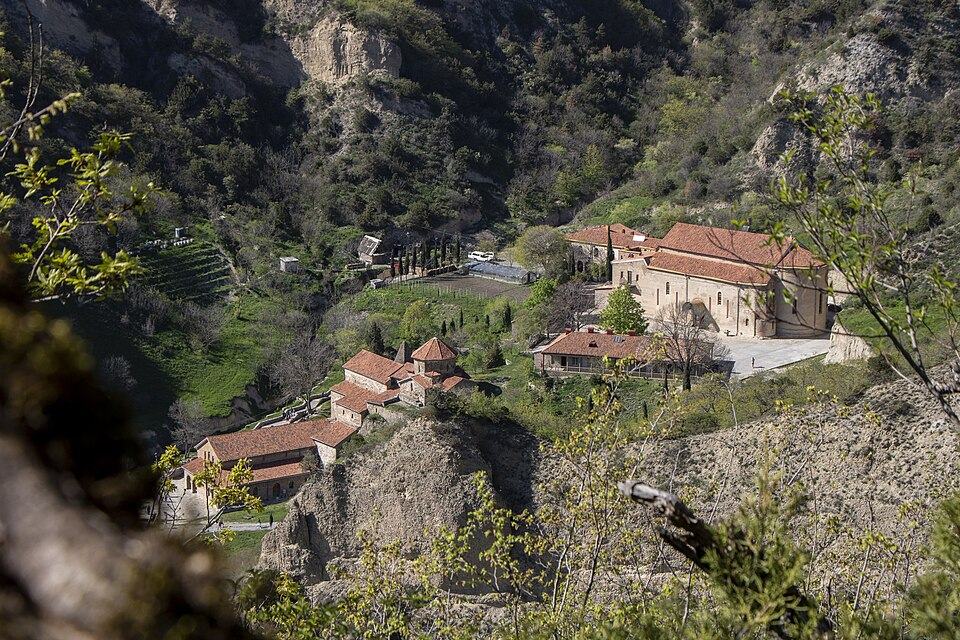
Svetitskhoveli Cathedral
Georgia's most important cathedral, built 1010–1029 over the traditional burial place of Christ's robe, with the tombs of Georgian kings.
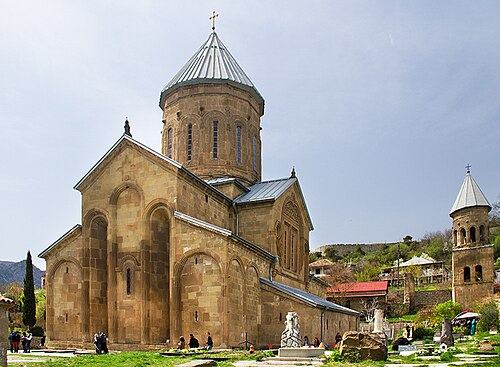
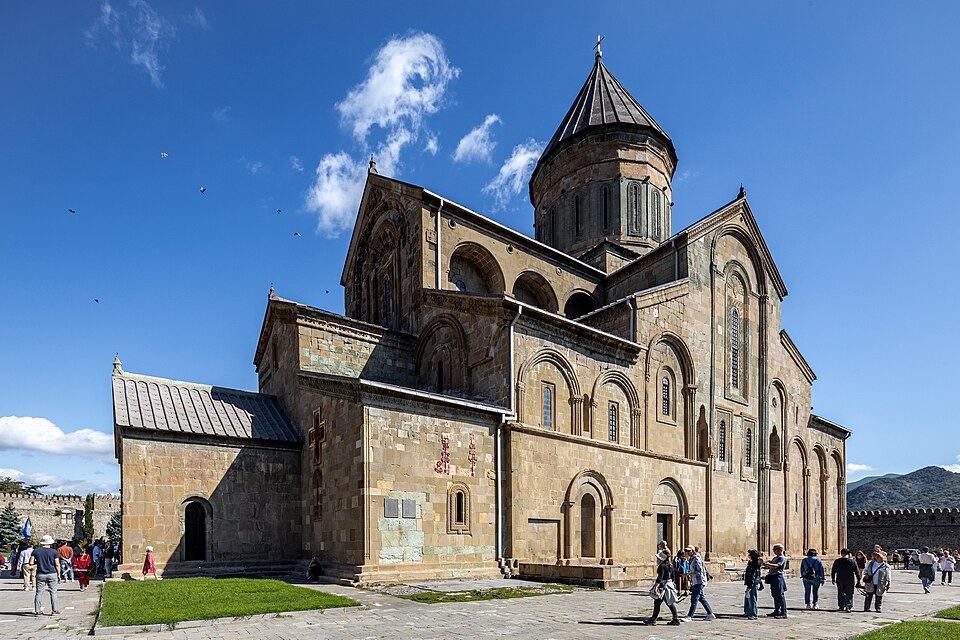 Svetitskhoveli CathedralPhoto: Supanut Arunoprayote, CC BY 4.0
Svetitskhoveli Cathedral is the spiritual heart of Georgia and the centre of Mtskheta. The present building was completed between 1010 and 1029 by the architect Arsukisdze, and for centuries it was one of the largest churches in Georgia. Tradition holds that the robe of Christ was brought here from Jerusalem by a Mtskheta Jew named Elioz and buried with his sister Sidonia, and that a great cedar grew from her grave. The name means 'life-giving pillar', after the column that stands on that spot.
Inside, look for the small stone chapel built as a copy of the Church of the Holy Sepulchre, the frescoes uncovered on the walls and pillars, and the graves of kings, including Vakhtang Gorgasali and Erekle II. The cathedral is an active church with services most days, and on Sundays and holidays it fills with worshippers. It stands inside an 18th-century defensive wall and is part of the Historical Monuments of Mtskheta UNESCO World Heritage Site.
History
A wooden church stood here in the 4th century, built under King Mirian III after the conversion. In the 5th century King Vakhtang Gorgasali replaced it with a stone basilica, and the present cross-domed cathedral was built on the site between 1010 and 1029 under Catholicos Melkisedek I. It was damaged by invasions and earthquakes and repaired several times, notably in the 15th century. The fortified wall around it was built under King Erekle II in the 18th century.
What to see and do
- The life-giving pillar and the traditional site of Christ's robe
- Small stone chapel modelled on the Holy Sepulchre
- Royal tombs, including Vakhtang Gorgasali and Erekle II
- Frescoes uncovered on the walls and pillars
- Carved facades and the fortified 18th-century wall
How to visit
Getting there
The cathedral is in the centre of Mtskheta, 20 km from Tbilisi. Marshrutkas from Didube station stop a few minutes' walk away.
When to go
Weekday mornings; Sunday mornings are busy with the liturgy. Plan 45 minutes–1 hour here.
- Women need a headscarf and skirt, and men long trousers; wraps are lent at the gate.
- Do not use flash, and be discreet with cameras during services.
- A local guide makes the legends and royal graves much easier to follow.
- Svetitskhovloba on 14 October brings a major festival and very large crowds.
Svetitskhoveli Cathedral: FAQ
What is buried under Svetitskhoveli Cathedral?
According to Georgian tradition, the robe of Christ is buried under the cathedral, where the life-giving pillar stands. Georgian kings, including Vakhtang Gorgasali and Erekle II, are also buried inside.
When was Svetitskhoveli built?
The present cathedral was built between 1010 and 1029. It replaced a 5th-century stone basilica and an earlier 4th-century wooden church on the same site.
Tours that include Svetitskhoveli Cathedral
Read more in our guides
 Photo: Alexxx1979, CC BY-SA 4.0
A day-by-day loop from Tbilisi through Uplistsikhe, Kazbegi and Kakheti, showing how long each drive takes, where to eat and sleep, and realistic 2026 costs.
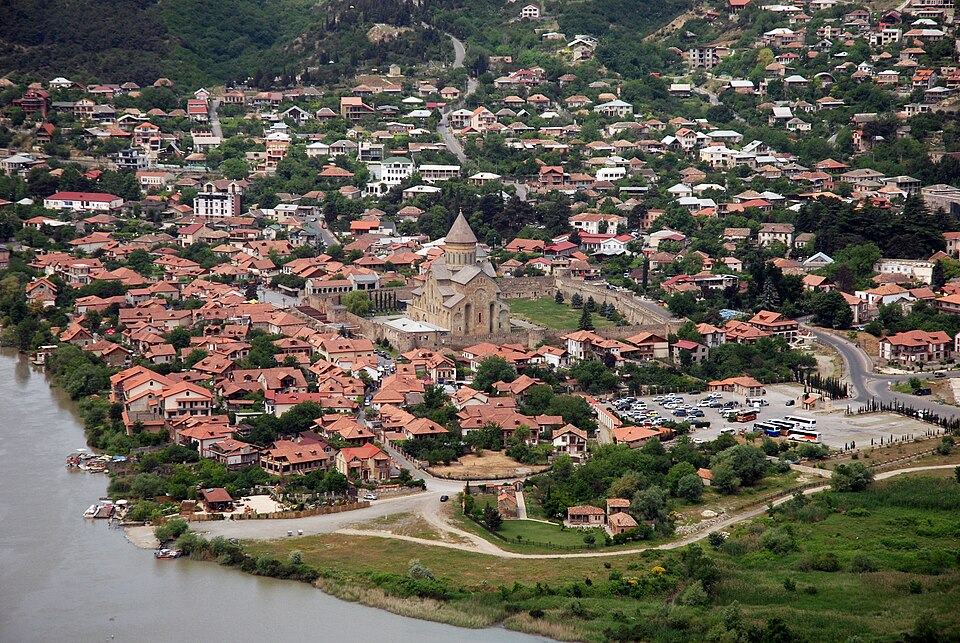 Photo: Jelger Groeneveld, CC BY 2.0
Twelve trips out of the capital, from Mtskheta and Kazbegi to Sighnaghi, Uplistsikhe and David Gareja, with distances, transport options and which places deserve a night.
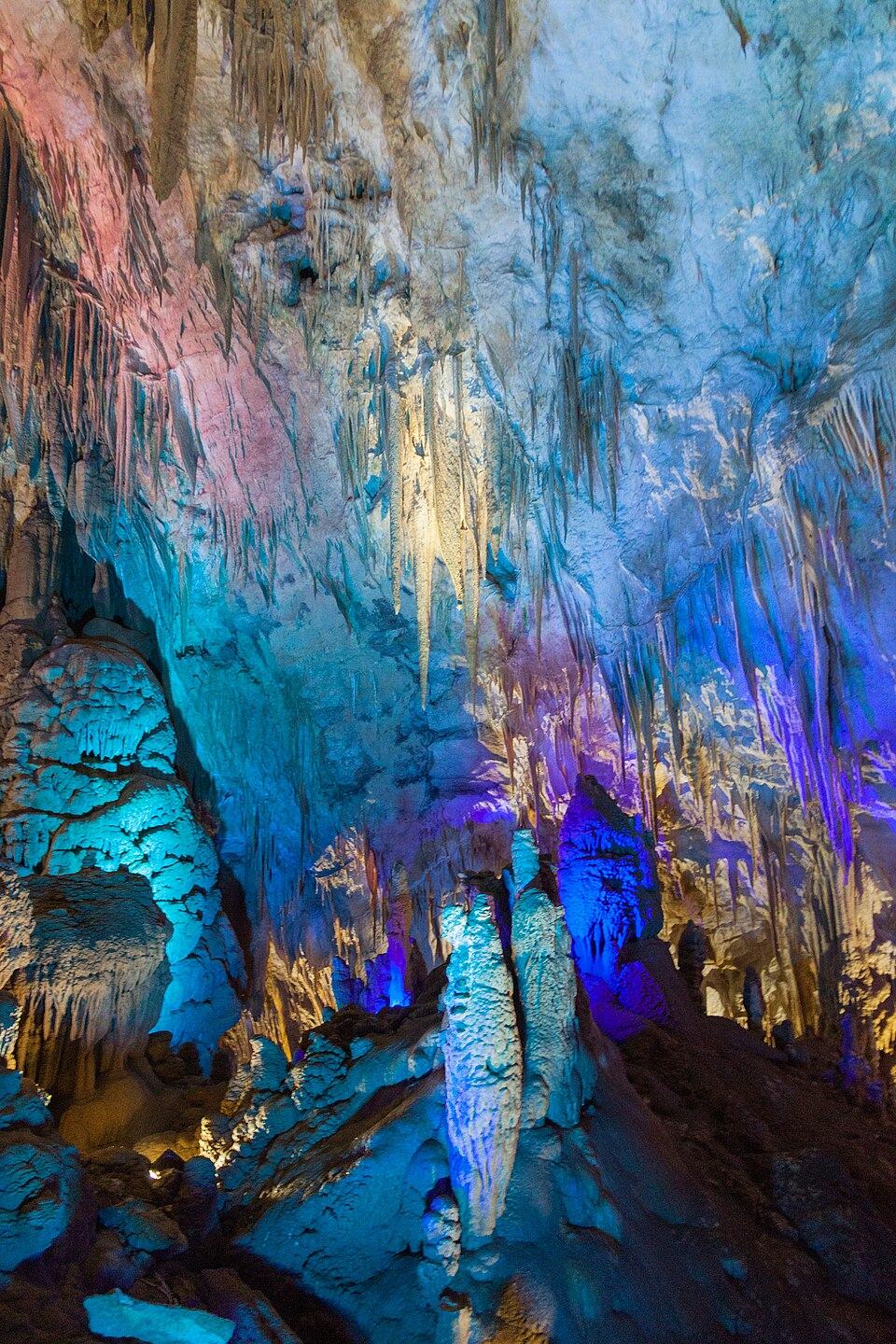 Photo: Marcin Konsek, CC BY-SA 4.0
What Prometheus Cave, Martvili Canyon, the National Museum, Vardzia, the Tbilisi cable cars and dozens of other sights cost to enter in 2026, with hours, combo tickets and free alternatives.
Nearby places
Straight-line distance from Svetitskhoveli Cathedral.