Leghvtakhevi Waterfall
A 22-metre waterfall at the end of a short gorge walk behind the sulphur baths, right in the middle of the city.
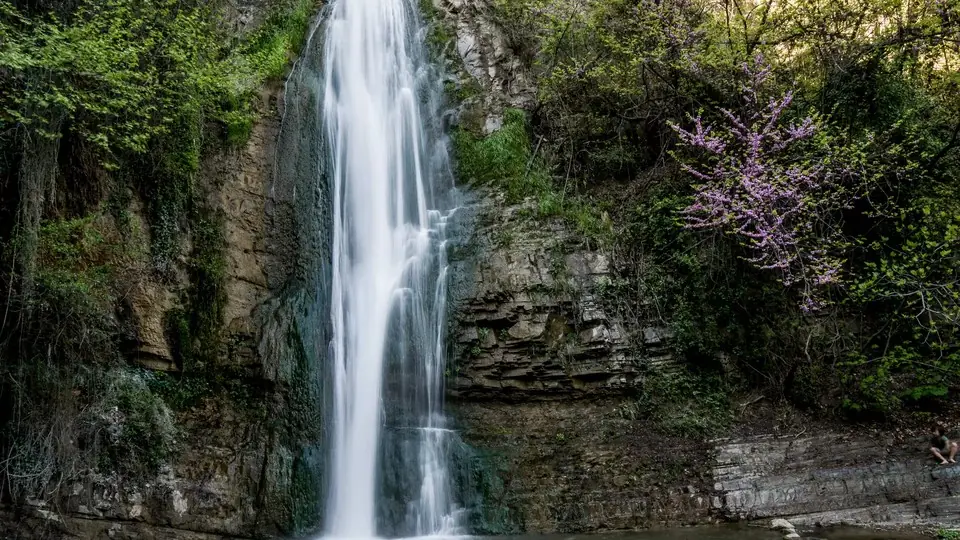 Leghvtakhevi WaterfallPhoto: georgia.travel
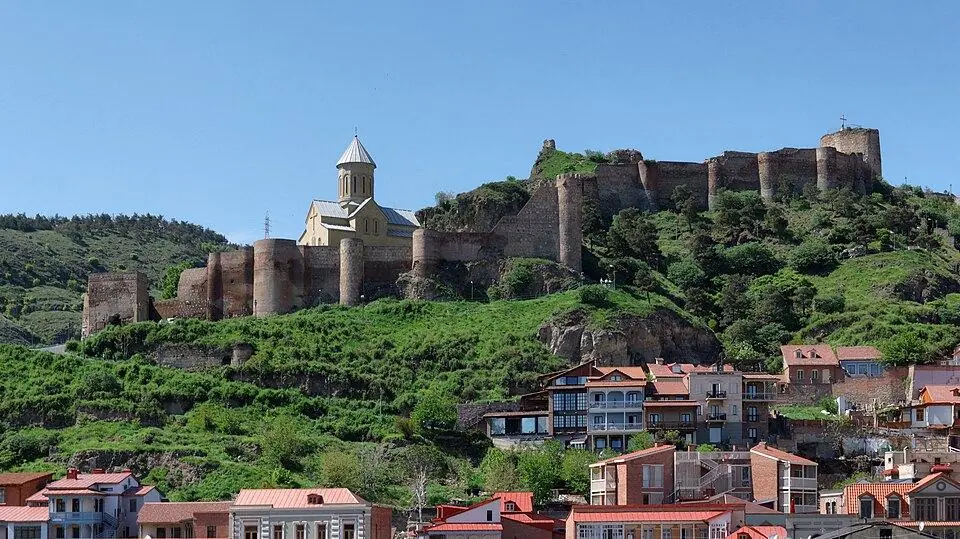
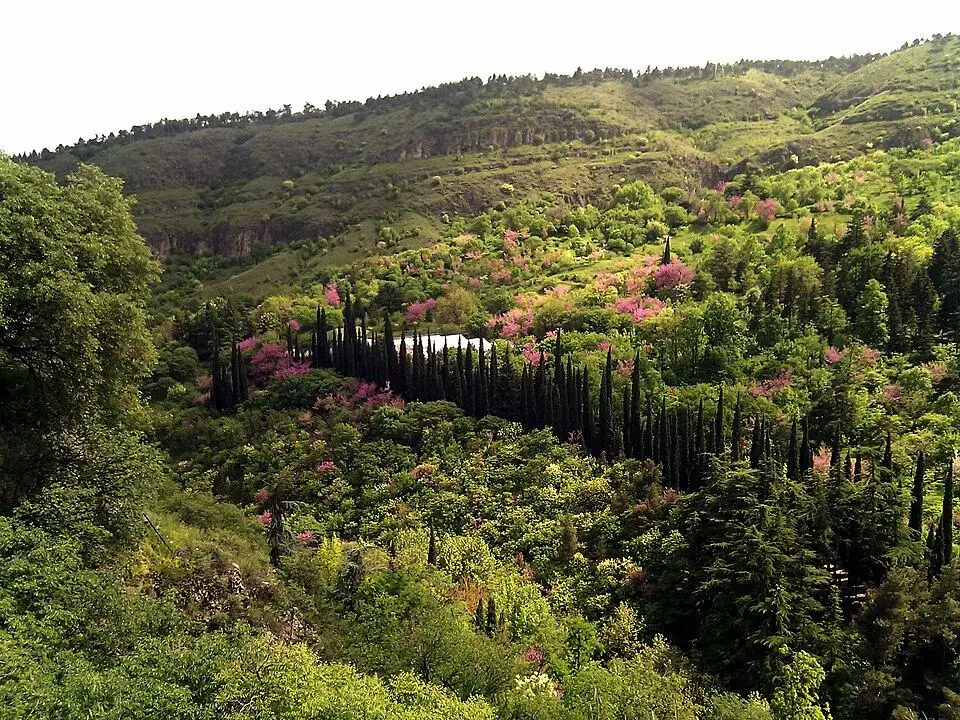
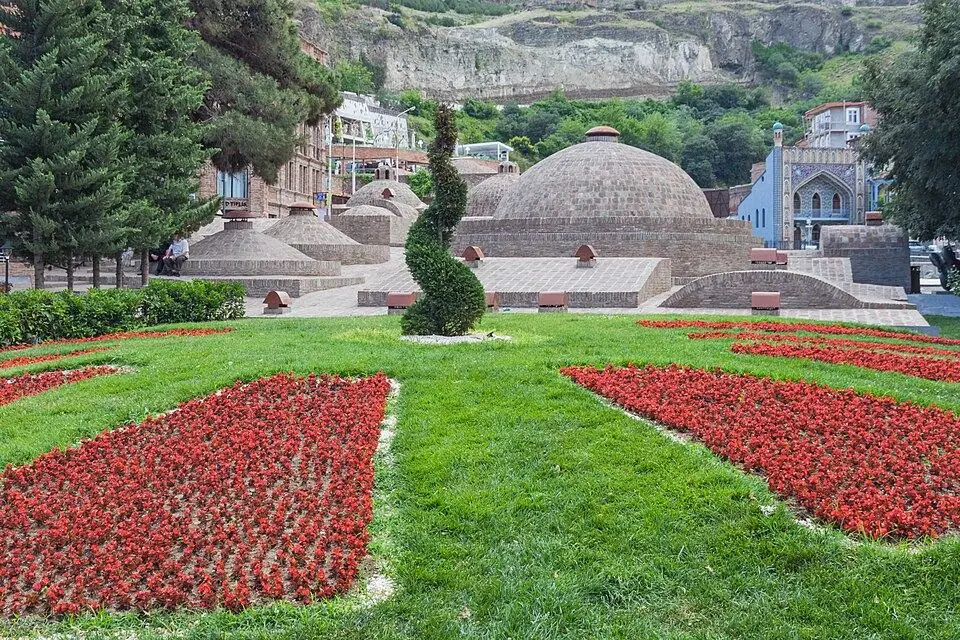
Leghvtakhevi, the Fig Gorge, is the narrow ravine that cuts between Narikala and the hills of Sololaki and opens onto the bath district at Abanotubani. The name comes from leghvi, Georgian for fig, after the trees that once covered the valley. A paved path follows the stream up from the baths, past cliffs, a small bridge and benches, to a 22-metre waterfall at the head of the gorge. It is a short, easy walk and one of the few places in central Tbilisi where you hear water instead of traffic.
The walk takes about 10 minutes each way from the domes of Abanotubani. It is busiest in the late afternoon and evening, when people stop here after the baths. The same stream flows down from the Botanical Garden further up the valley. Visit after rain or in spring for the strongest flow; in late summer the falls can thin to a trickle. The rocks near the water are slippery, so stay on the path.
History
The gorge traditionally separated the bath district from the rest of the city and is often described as the birthplace of Tbilisi's sulphur waters. The waterfall has also been known as Tsavkisiskhevi, Sololakiskhevi and Dabakhana. The area was renovated in 2012, turning a neglected ravine into one of the Old Town's most popular short walks.
What to see and do
- Walk the paved path from Abanotubani into the gorge
- See the 22-metre waterfall at the head of the ravine
- Look up at the cliffs below Narikala Fortress
- Combine with a bath session and the cable car
How to visit
Getting there
Start from the bath domes at Abanotubani and follow the stream into the gorge; the waterfall is about 10 minutes' walk. Abanotubani is 10 minutes on foot from Freedom Square.
When to go
Spring or after rain. Plan 30–45 minutes here.
- Wear shoes with grip; stones near the falls are wet and slippery.
- Come early in the morning to have the gorge almost to yourself.
- Combine with Abanotubani, Narikala and the Botanical Garden on one walk.
Weather at Leghvtakhevi Waterfall
Based on the climate of Tbilisi, 1 km away. Warmest in August (32° by day), coldest in January (0° at night), with 511 mm of rain a year. Best months: Sep–Oct.
Leghvtakhevi Waterfall: FAQ
Where is the waterfall in Tbilisi Old Town?
The Leghvtakhevi waterfall is at the end of a small gorge behind the Abanotubani sulphur baths. Follow the stream from the bath domes and you reach it in about 10 minutes.
Is the Leghvtakhevi waterfall free?
Yes, the gorge path and the waterfall are free to visit.
Tours that include Leghvtakhevi Waterfall

Read more in our guides
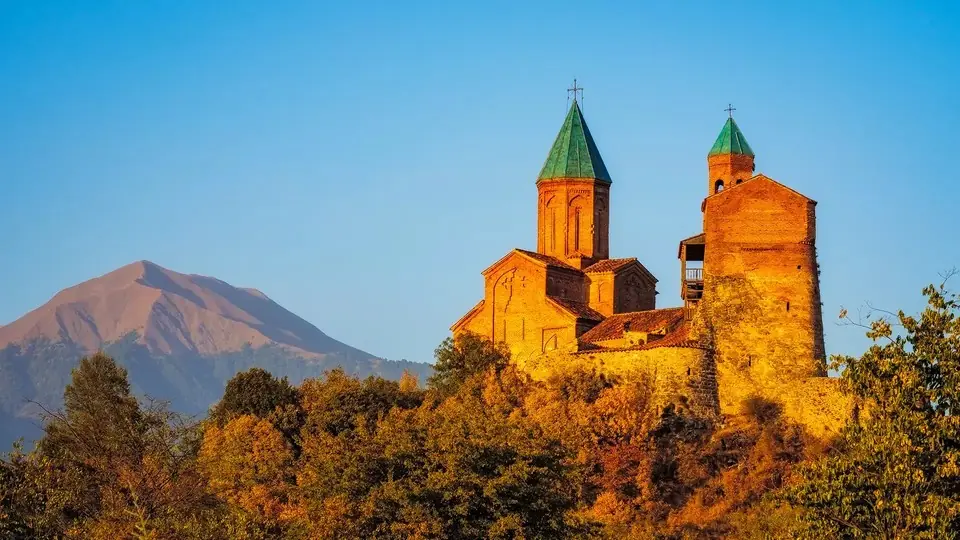 Photo: georgia.travel
A day-by-day loop from Tbilisi through Uplistsikhe, Kazbegi and Kakheti, with drive times for each leg, beds and meals along the way, and realistic 2026 costs.
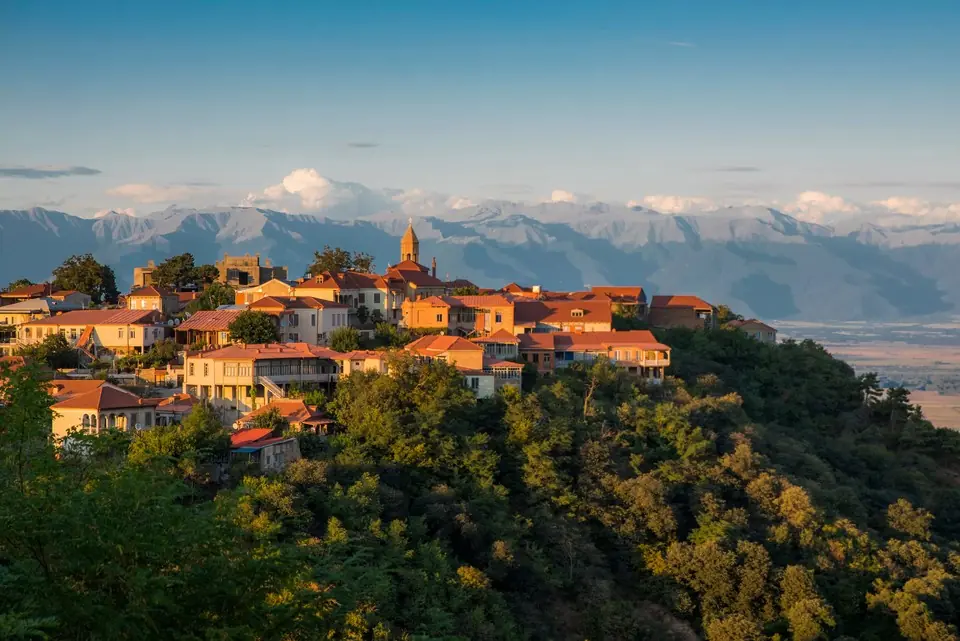 Photo: georgia.travel
Five days and four nights in eastern Georgia done properly: Tbilisi, Mtskheta, a night under Mount Kazbek and a night in Sighnaghi, plus Kutaisi, Svaneti and winter versions with real drive times.
 Photo: georgia.travel
Three ready-made days in the Georgian capital, each split into morning, afternoon and evening, with minutes on foot between stops, food stops by area and a plan B for rain.
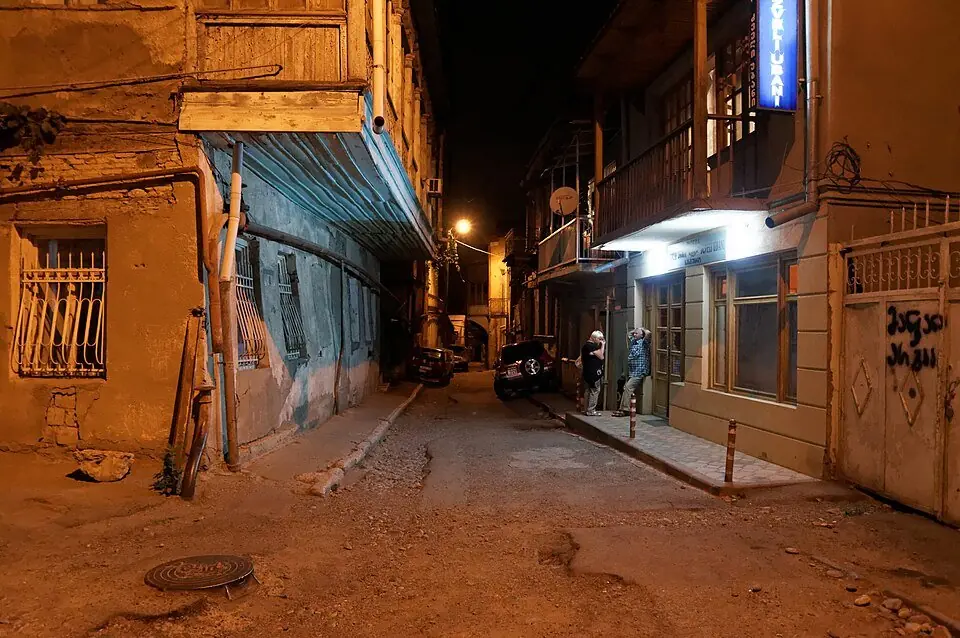 Photo: Vyacheslav Argenberg, CC BY 4.0
Dinner at nine, amber wine at eleven, techno until breakfast or a ballet at seven: how nights out in Tbilisi really work, area by area, with 2026 prices and the safety rules that matter.
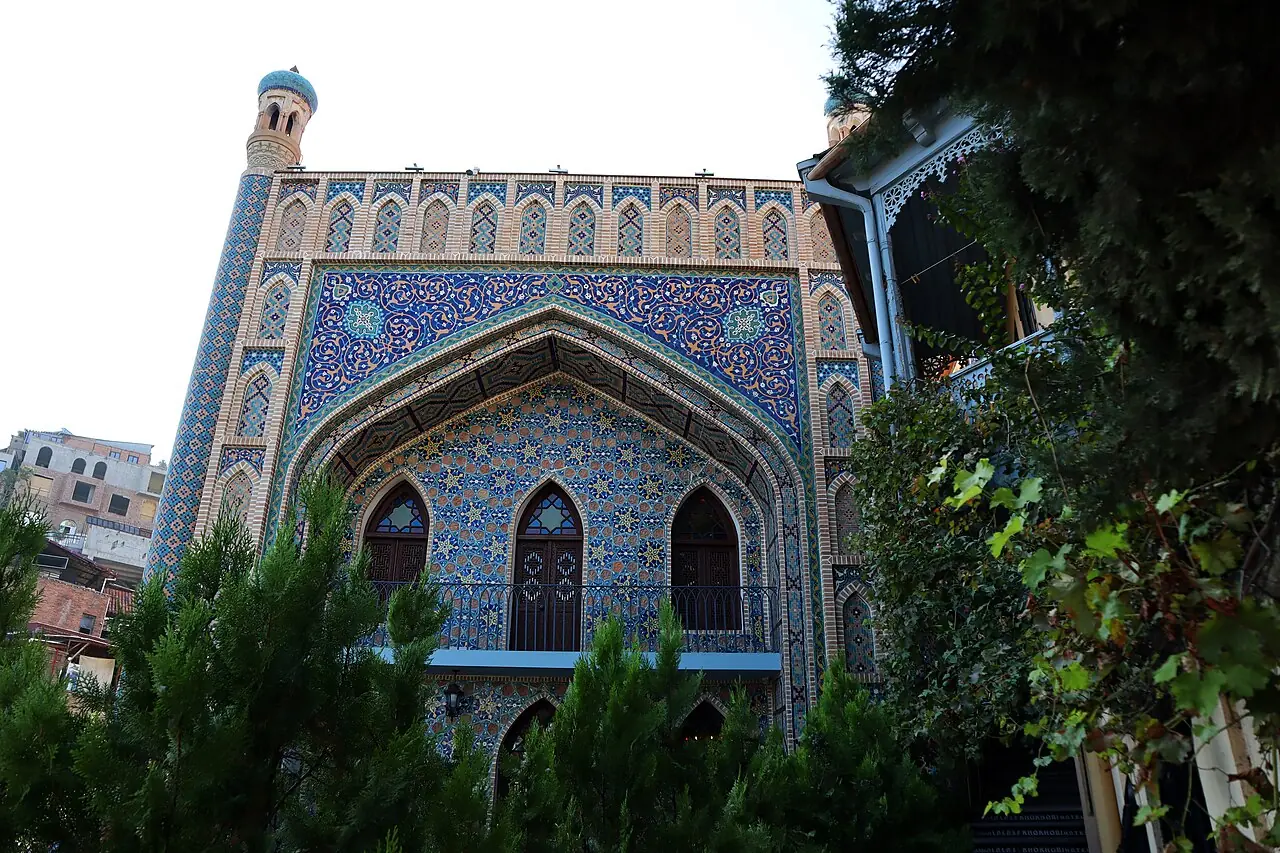 Photo: Natia an, CC BY-SA 4.0
Steam over the brick domes on a frosty evening: how to choose between a public hall and a private room, which kind of bathhouse suits you, what the kisi scrub involves and when to book.
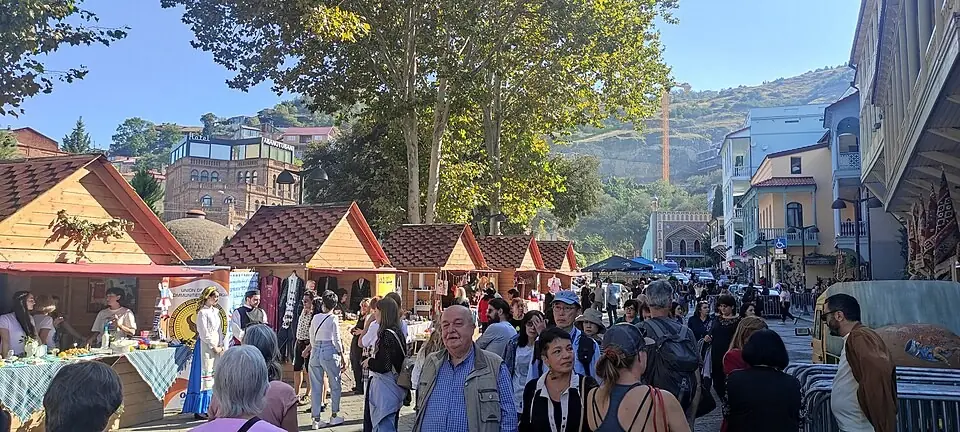 Photo: David Osipov, CC BY 4.0
Tbilisi's own birthday party fills the Old Town and the riverbank for one weekend each autumn. Here is when it happens, where to go and how to plan a trip around it.
Festivals in Leghvtakhevi Waterfall
Nearby places
Straight-line distance from Leghvtakhevi Waterfall.