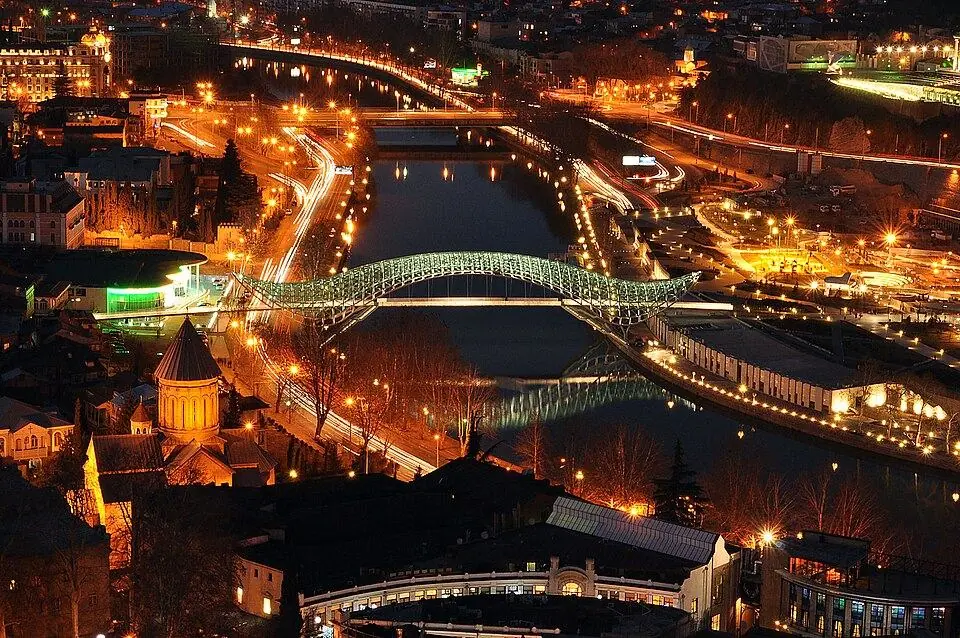
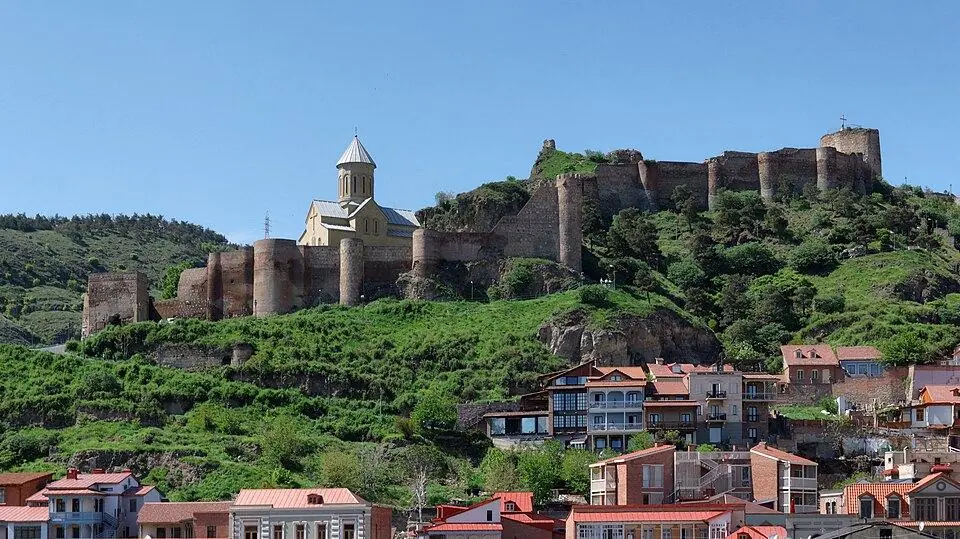
Shardeni Street
Shardeni Street is a car-free lane in Old Tbilisi, between Sioni Cathedral and Meidan, lined with wine bars, terraces, clubs and small art galleries.
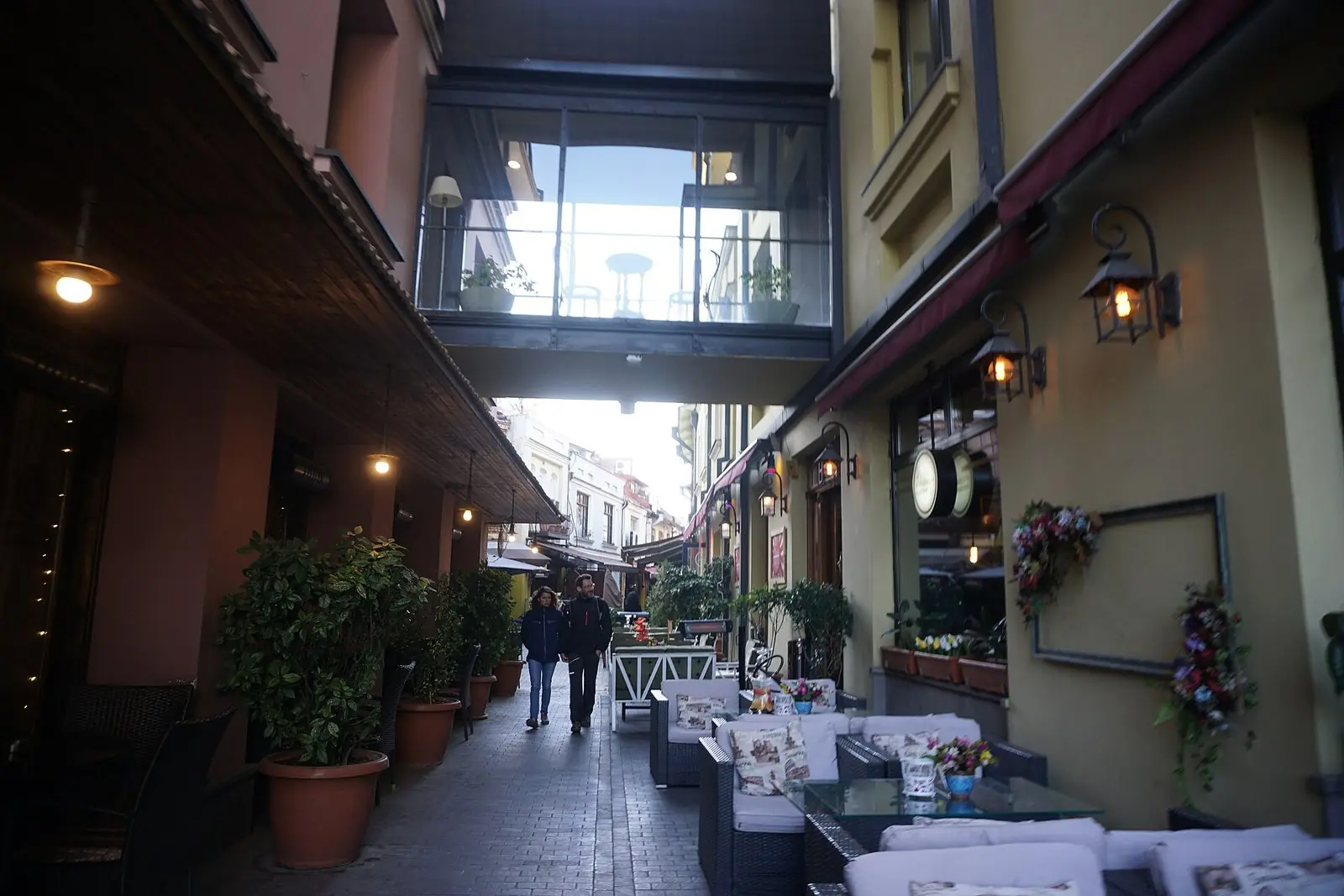 Shardeni StreetPhoto: Andrew Milligan sumo, CC BY 2.0
Shardeni Street is a short pedestrian lane in Old Tbilisi, running ~120 m from Vakhtang Gorgasali Square, the old Meidan at the Metekhi Bridge, to Sioni Street, ~70 m from Sioni Cathedral. Restored 19th-century facades with iron lanterns and flower boxes face each other across the paving, and nearly every ground floor holds a restaurant, wine bar, cafe, club or small gallery. From spring to autumn the terraces take over the lane. Two even narrower alleys, Bambis Rigi and Rkinis Rigi, branch off it, and locals call this whole little going-out quarter simply Shardeni.
In daylight the lane is calm: you can walk it in a few minutes, browse the galleries and craft shops, and photograph the glass skyway that links two upper floors above the tables. After dark it becomes one of the liveliest corners of the city. Lamps come on, the terraces fill with locals and visitors, and music spills out of bars that range from quiet wine rooms and jazz to late electronic clubs. Most people drop in for Georgian wine or dinner after sightseeing, since the sulphur baths, Meidan Bazaar and the Bridge of Peace are all close by.
History
For centuries this was a roofed market lane between Tatar Square, today's Gorgasali Square, and Sioni Street. The shade gave it the name Bneli Rigi, the Dark Row, while the alleys beside it took the names of their trades, iron and cotton. From 1979 to 1989 a city workshop led by the architect Giorgi Batiashvili rebuilt the quarter; most accounts date the car-free street and its new name to 1981. A second makeover from 2002 added terraces and galleries. Jean Chardin (1643-1713), the French jeweller behind the name, stayed in Tbilisi in 1672-1673, and his travel book carries one of the oldest surviving views of the city.
What to see and do
- The glass skyway joining two upper floors over the lane, with lanterns and terrace sofas below
- The bronze Tamada at the Sioni Street end, an enlarged copy of an ancient Colchian figurine of a man raising a drinking horn, found at Vani
- Bambis Rigi and Rkinis Rigi, the Cotton Row and the Iron Row, two tiny side lanes that keep their old trade names
- Galleries with changing shows by contemporary Georgian artists, and shops selling local ceramics, jewellery and textiles
- A bronze of the film director Sergei Parajanov at the eastern end of Bambis Rigi
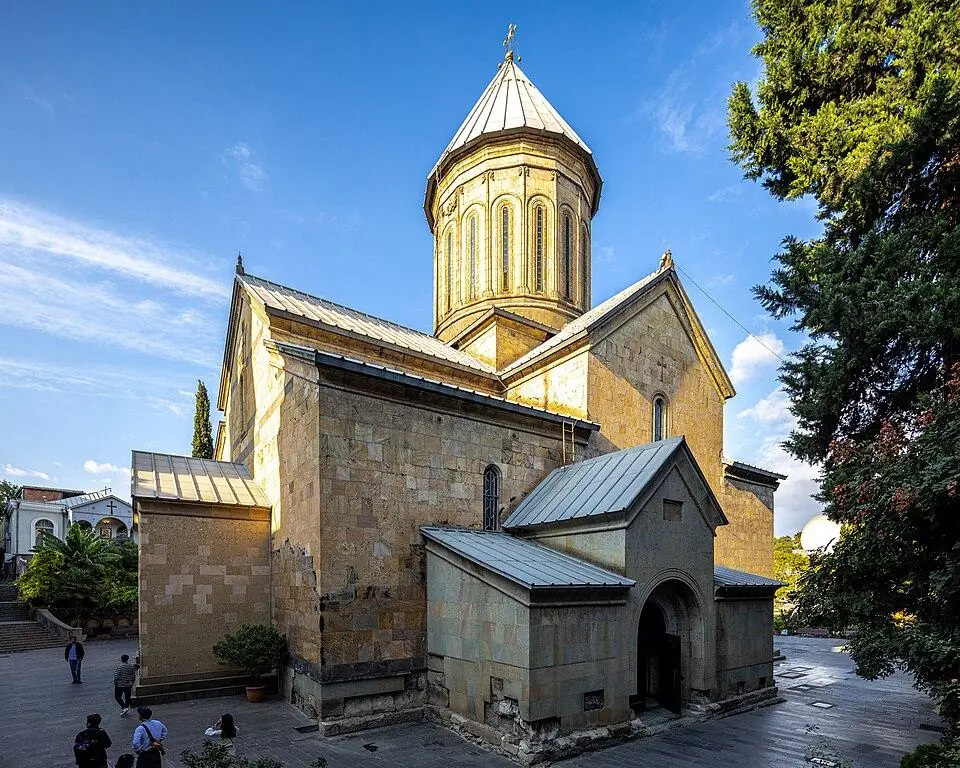
- The 19th-century caravanserai that houses the Tbilisi History Museum, and Sioni Cathedral, each a minute from the top of the lane
How to visit
Getting there
Shardeni Street lies between Sioni Street and Gorgasali Square, ~0.7 km from Freedom Square and its metro station, a walk of about 10 minutes downhill by Kote Afkhazi Street. From Avlabari metro on the left bank it takes 15 minutes or so on foot over the Metekhi Bridge; cars cannot enter the lane, so taxis stop on Gorgasali Square or Kote Afkhazi Street.
When to go
Evenings from late spring to early autumn, when the terraces are out; mornings are quiet for photos. Plan 10 minutes to walk through; 1–3 hours for a drink or dinner here.
- Read the menu before you sit down: terrace prices here are among the highest in the old town, and a few streets away in Sololaki, or across the river in Chugureti, a meal costs less.
- On warm Friday and Saturday nights outdoor tables go fast, so book ahead or arrive before about 20:00.
- Light sleepers should choose a hotel a few blocks away or a room facing a courtyard, because music from the bars carries well into the night.
- It slots easily into an old-town walk: come down from Freedom Square to Sioni Cathedral, stop on Shardeni, then carry on south to Meidan Bazaar and the baths, or north along Erekle II Street to the Bridge of Peace.
Weather at Shardeni Street
Based on the climate of Tbilisi, 1 km away. Warmest in August (32° by day), coldest in January (0° at night), with 511 mm of rain a year. Best months: Sep–Oct.
Shardeni Street: FAQ
Why is it called Shardeni Street?
It honours Jean Chardin, spelt Shardeni in Georgian, a 17th-century French jeweller and traveller who visited Tbilisi in 1672-1673 and wrote about its bazaars. Back when it was a roofed market lane, people called it the Dark Row.
Is Shardeni Street worth visiting?
Yes, above all in the evening: Shardeni Street packs terraces, wine bars, clubs and small galleries into one car-free lane beside Sioni Cathedral and the baths. Go for the atmosphere and a glass of Georgian wine rather than for a bargain.
Is the Gabriadze clock tower on Shardeni Street?
No. The leaning clock tower of the Gabriadze puppet theatre is ~0.6 km further north, beside Anchiskhati Basilica in the upper old town; the walk there along Sioni and Erekle II streets takes about 10 minutes.
Is Shardeni Street safe at night?
Generally yes: it stays busy and well lit until late, with people around at most hours. Watch your phone and bag in the crowd, and order a taxi through an app for the ride home.
Nearby places
Straight-line distance from Shardeni Street.