Tbilisi Weather
Official month-by-month averages for Tbilisi: highs, lows, rain, sunshine and snow days, what each season feels like on the street, the best months to come and what to pack.
Tbilisi weather: 7-day forecast
Forecast for 41.694° N, 44.801° E, 430 m, updated through the day: data from MET Norway (CC BY 4.0). The monthly averages below are long-term climate, not a forecast.
The monthly figures come from the Tbilisi weather station records described in the guide on this page. Cloud cover: CHELSA 1981–2010. Daylight and sunrise are for the 15th of each month (Georgia keeps UTC+4 all year). A rain day has at least 1 mm.
- Tbilisi has hot, sunny summers and cool winters. The official 1991-2020 normals put August, the warmest month, at 31.9°C (89.4°F) by afternoon and January at 7.1°C (44.8°F), with nights near 0°C in midwinter and about 20°C in midsummer.
- The capital is dry for Georgia, with 511.5 mm of rain a year; June has the largest total and May the most rain days, while January is the driest month.
- Snow is brief: in an average year it lies on the ground on ~9 days, mostly in January and February, and Tbilisi sees ~66 afternoons of 30°C or more, nearly all from June to September.
- For comfortable sightseeing come from mid-April to mid-June or from mid-September to late October; the city still works in every month.
- Pack layers and grippy shoes all year, a rain jacket for spring, sun protection for summer and a warm coat for winter, plus proof of travel insurance, compulsory for foreign visitors since 1 January 2026.
Tbilisi weather runs through four distinct seasons: a hot, sunny and fairly dry summer, a cool grey winter with only short-lived snow, and a mild spring and autumn that suit walking the city best. Georgia's official 1991-2020 climate normals give an average afternoon high of 7.1°C (44.8°F) in January and 31.9°C (89.4°F) in August, and the whole year brings just 511.5 mm of rain, with the wettest weeks in May and June. Nights fall to around freezing in midwinter and stay near 20°C in high summer.
This guide starts with the monthly table, built from the numbers Georgia's National Environmental Agency reported to the World Meteorological Organization, so you get measured averages rather than model estimates. Then it walks through each season and month as it feels on the street, compares the capital with the mountains and the coast, picks the best months for a visit and ends with a packing list. We guide guests around Tbilisi all year, and the advice on heat, showers and snow comes from rearranging real days around them.
Tbilisi weather by month: average temperature, rain and sunshine
The table shows 30-year averages for 1991 to 2020 from the Tbilisi weather station, which stands at 432 m in the Mtkvari valley. The figures are the World Meteorological Organization's climate normals, submitted by Georgia's National Environmental Agency and published by the US National Centers for Environmental Information (NOAA). A rain day means at least 1 mm. The newer set has no sunshine record for Tbilisi, so that column uses the earlier 1961-1990 WMO normals from the Tbilisi Novoalexeyevka station on the city's eastern edge.
| Month | Average high | Average low | Rain | Rain days | Sunshine |
|---|---|---|---|---|---|
| January | 7.1°C (44.8°F) | -0.4°C (31.3°F) | 16.4 mm | 3.7 | 99 h |
| February | 8.7°C (47.7°F) | 0.3°C (32.5°F) | 18.2 mm | 4.3 | 102 h |
| March | 13.5°C (56.3°F) | 3.8°C (38.8°F) | 29.1 mm | 5.1 | 142 h |
| April | 18.8°C (65.8°F) | 8.0°C (46.4°F) | 63.8 mm | 8.7 | 171 h |
| May | 23.9°C (75.0°F) | 12.9°C (55.2°F) | 82.9 mm | 10.4 | 213 h |
| June | 28.7°C (83.7°F) | 17.1°C (62.8°F) | 84.0 mm | 8.3 | 249 h |
| July | 31.7°C (89.1°F) | 20.1°C (68.2°F) | 41.6 mm | 5.7 | 256 h |
| August | 31.9°C (89.4°F) | 20.0°C (68.0°F) | 39.4 mm | 4.6 | 248 h |
| September | 26.7°C (80.1°F) | 15.9°C (60.6°F) | 34.8 mm | 4.9 | 206 h |
| October | 20.2°C (68.4°F) | 10.6°C (51.1°F) | 46.3 mm | 6.0 | 164 h |
| November | 13.0°C (55.4°F) | 4.6°C (40.3°F) | 34.2 mm | 5.3 | 103 h |
| December | 8.2°C (46.8°F) | 0.9°C (33.6°F) | 20.8 mm | 4.4 | 93 h |
| Year | 19.4°C (66.9°F) | 9.5°C (49.1°F) | 511.5 mm | 71.4 | 2,046 h |
Averages smooth out a lot. Across those 30 years the mildest January had highs averaging 10.1°C (1999) and the coldest only 2.3°C (2008). August ranged from 27.5°C (2009) to a fierce 36.7°C (2006). Read the table as the likeliest picture, then check a forecast a few days before you fly.
Heat, frost and daylight shape a day as much as the average does. The second table counts the days that change your plans: afternoons of 30°C or more, nights below freezing and days with snow lying on the ground. It adds humidity and the times of sunrise and sunset, which we calculated for the 15th of each month.
| Month | Days of 30°C or more | Nights below 0°C | Days with snow cover | Humidity | Sunrise / sunset on the 15th (approx.) |
|---|---|---|---|---|---|
| January | 0 | 15.5 | 3.1 | 75.3% | 08:26 / 17:53 |
| February | 0 | 12.1 | 3.6 | 73.0% | 07:58 / 18:32 |
| March | 0 | 3.7 | 0.4 | 68.6% | 07:15 / 19:06 |
| April | 0.2 | 0.3 | 0 | 69.0% | 06:22 / 19:40 |
| May | 1.6 | 0 | 0 | 69.7% | 05:42 / 20:12 |
| June | 12.3 | 0 | 0 | 65.6% | 05:25 / 20:36 |
| July | 22.1 | 0 | 0 | 63.1% | 05:39 / 20:35 |
| August | 22.4 | 0 | 0 | 63.3% | 06:08 / 20:03 |
| September | 6.9 | 0 | 0 | 69.0% | 06:40 / 19:13 |
| October | 0.2 | 0 | 0 | 76.1% | 07:11 / 18:21 |
| November | 0 | 3.3 | 0.4 | 78.4% | 07:49 / 17:42 |
| December | 0 | 11.6 | 1.7 | 78.2% | 08:21 / 17:31 |
| Year | 65.7 | 46.5 | 9.2 | 70.8% |
Why Tbilisi is hot, dry and sunny: the climate explained
Tbilisi lies in eastern Georgia along the Mtkvari river, and its streets climb from ~380 m by the water to ~770 m on Mtatsminda. Two mountain barriers decide its weather. The Greater Caucasus to the north works as a wall against cold air from the Russian plains, so even Arctic outbreaks reach the city in a softened form. To the west, damp air from the Black Sea has to rise over the Likhi range, the low divide between the country's wet west and dry east, and drops much of its rain on the way up. When that air sinks into the east it arrives warmer and drier, a foehn effect that the National Environmental Agency describes in its overview of the country's climate.
The outcome is a dry, sunny capital. Tbilisi averages 511.5 mm of rain a year, compared with 1,358.2 mm in Kutaisi and 2,521.4 mm at Kobuleti on the coast. The older WMO normals give it 2,046 hours of sunshine a year, ~250 in each summer month and under 100 in December and January. Summer heat is fairly dry, with relative humidity near 63% in July and August, so a 32°C afternoon here feels less sticky than one by the sea. The damp, grey stretch comes in late autumn and winter, at about 78% in November and December.
If you are combining the capital with other regions, this comparison from the same 1991-2020 dataset shows how much the climate shifts within a few hours' drive. Heights are those of the weather stations, not the town centres.
| Place (station height) | July average high | January average low | Rain per year |
|---|---|---|---|
| Tbilisi (432 m) | 31.7°C | -0.4°C | 511.5 mm |
| Telavi, Kakheti (545 m) | 30.2°C | -1.7°C | 753.9 mm |
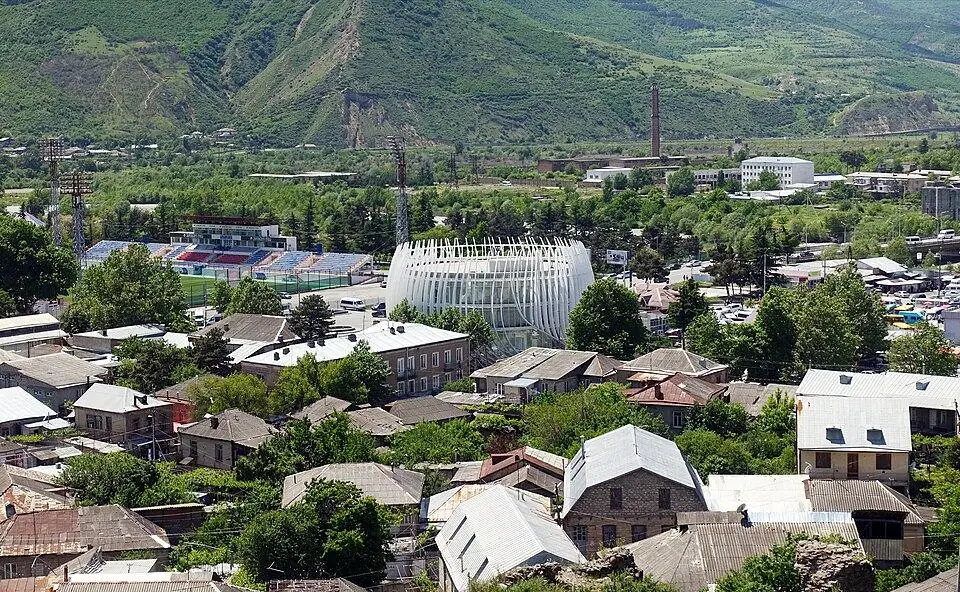
| Gori, Shida Kartli (609 m) | 29.1°C | -3.3°C | 506.6 mm |
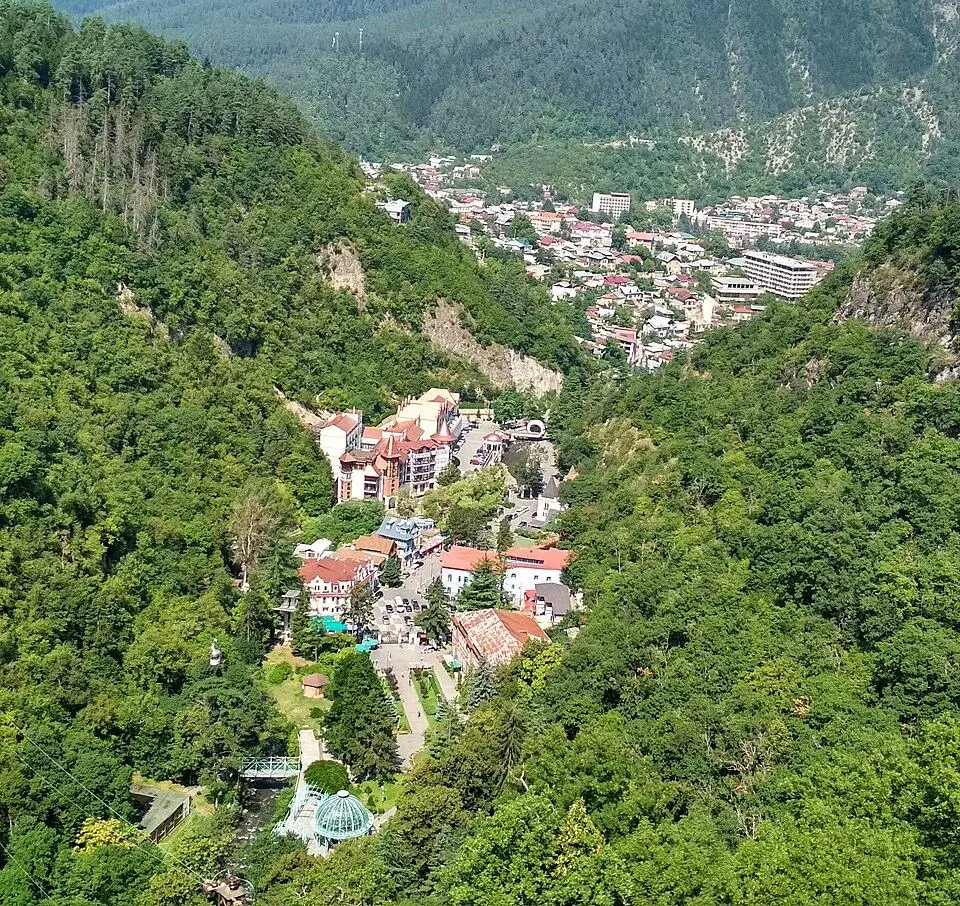
| Borjomi (~790 m) | 28.4°C | -4.1°C | 627.5 mm |
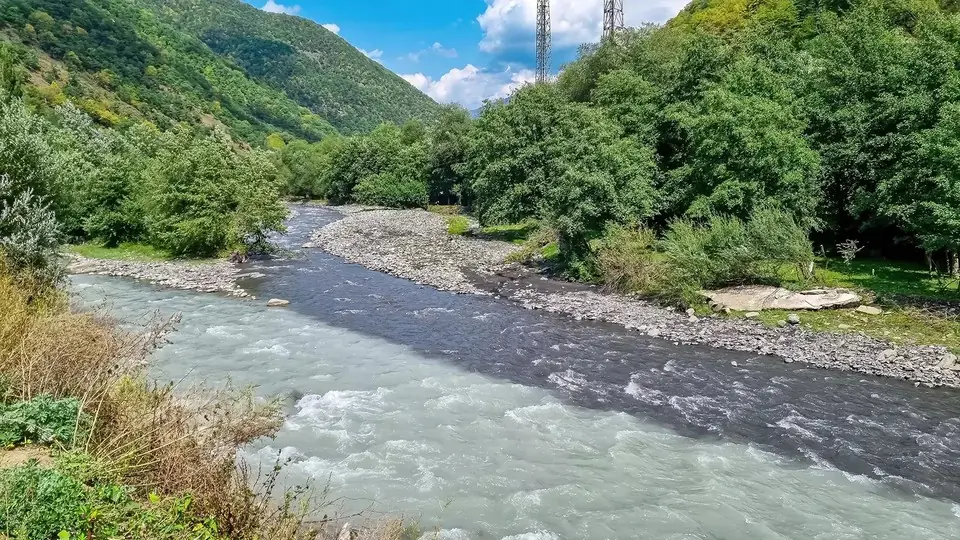
| Pasanauri, Georgian Military Road (1,080 m) | 26.5°C | -6.4°C | 950.2 mm |
| Kutaisi, Imereti (109 m) | 29.4°C | 3.7°C | 1,358.2 mm |
| Kobuleti, Black Sea coast (5 m) | 27.6°C | 2.6°C | 2,521.4 mm |
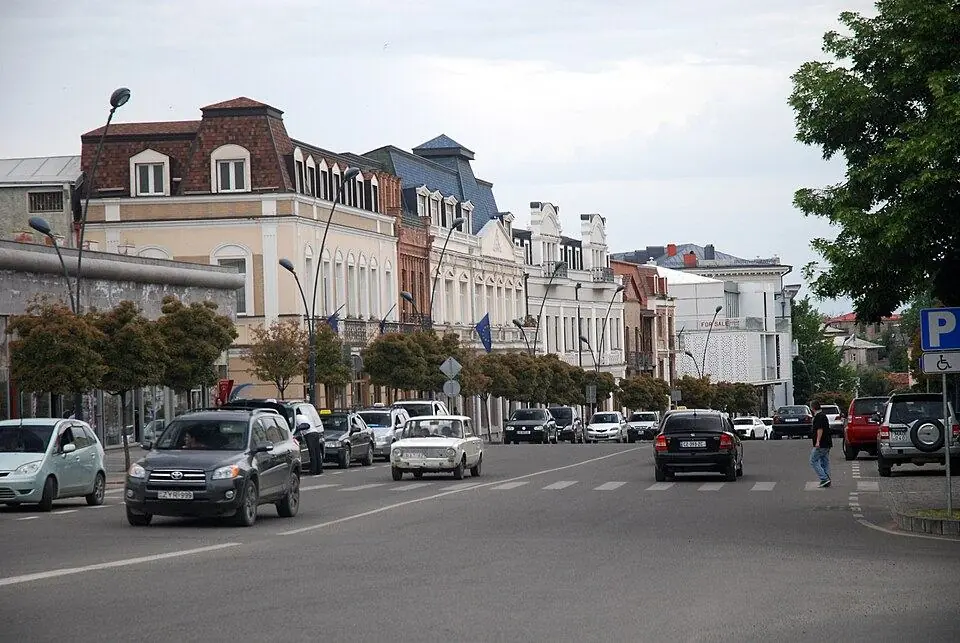
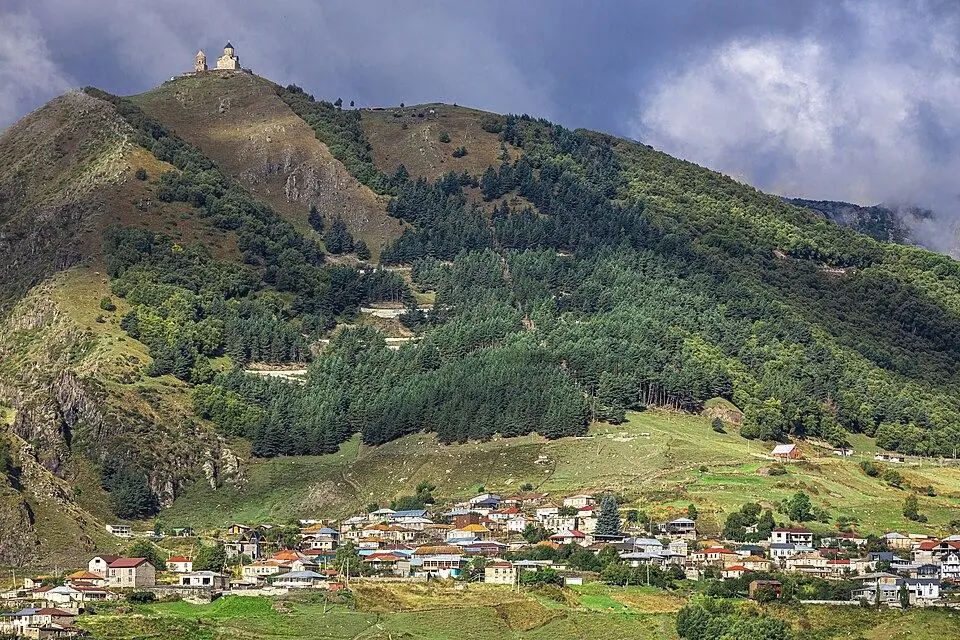
Kakheti behaves much like Tbilisi, a degree or two cooler and noticeably wetter. Heading north on the Georgian Military Road cools you quickly: Pasanauri, ~90 km from the city, is ~5°C cooler than Tbilisi on a July afternoon, and Stepantsminda at ~1,740 m is colder again. The west is another world, milder in winter but several times wetter.
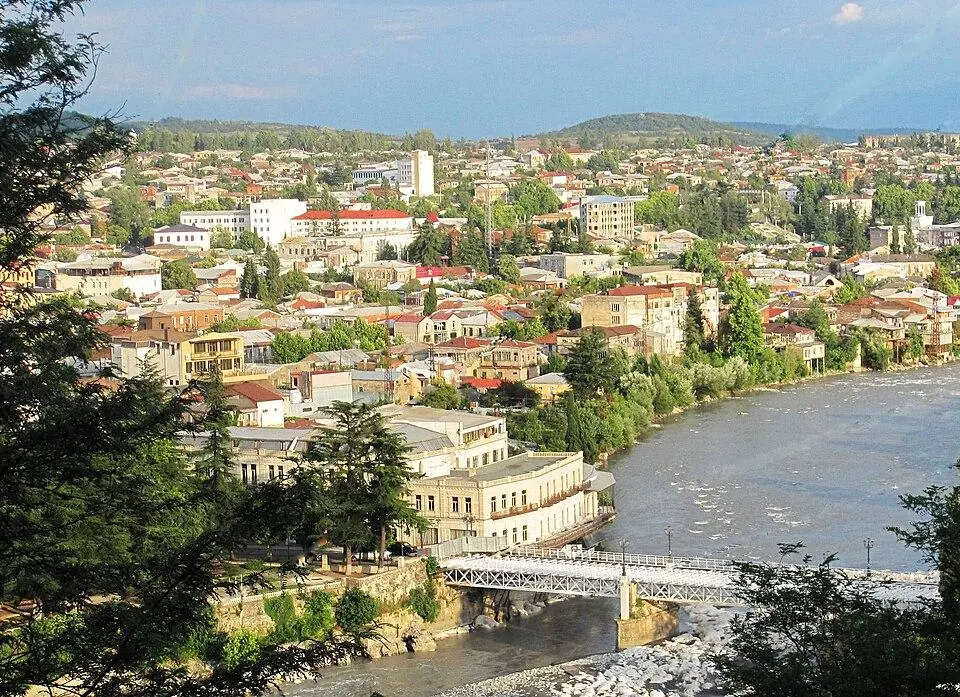
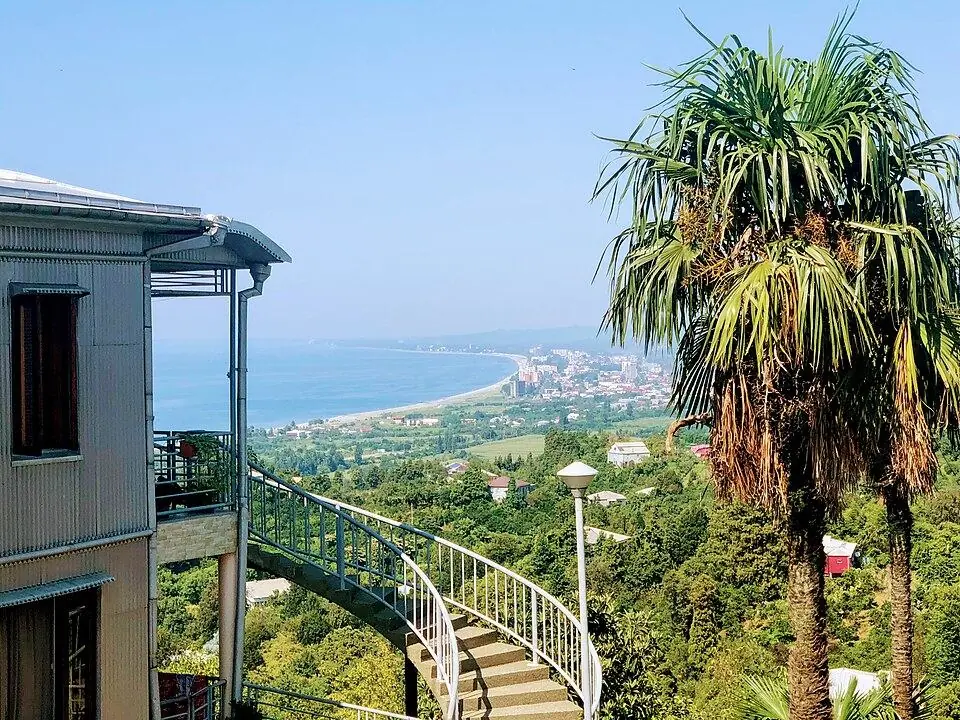
Tbilisi weather in winter (December to February)
Winter in Tbilisi is cool rather than harsh. Afternoons average 7.1°C to 8.7°C and nights sit right around freezing. Across the three months there are ~39 frosty nights, yet snow covers the ground on only ~8 days in an average winter. Skies are often grey and the air is damp, but rain is light, 16.4 to 20.8 mm a month. Real cold comes in short snaps: the lowest reading of 1991-2020 was -14.1°C (6.6°F), on 4 February 2014.
Tbilisi in December
December averages 8.2°C by day and 0.9°C at night, with 20.8 mm of rain over ~4 days. It has the shortest days of the year, with sunrise around 08:20 and sunset around 17:30 by mid-month. From mid-December the city dresses up for the New Year season with lights and Christmas markets, and the Tbilisi International Film Festival usually fills the cinemas for a week early in the month. Ski lifts in Gudauri and Bakuriani normally start in mid or late December, so one trip can mix city days with the slopes.
Tbilisi in January
January is both the coldest and the driest month: 7.1°C by day, -0.4°C at night and only 16.4 mm of rain. About half the nights drop below zero, and on an average of 24 days the afternoon stays at 10°C or less. The calendar is full: New Year on 1 and 2 January, Orthodox Christmas on 7 January with the Alilo procession of carol singers through the streets, and Epiphany on 19 January. Outside those dates hotels are among the quietest of the year.
Tbilisi in February
February is a little milder, 8.7°C by day and 0.3°C at night, but it is the month most likely to bring snow to the streets, with 3.6 days of snow cover on average and the coldest night of the whole 30-year period. Daylight passes 10.5 hours by mid-month. With few visitors in town, it is a good time for long sessions in the sulphur baths, the National Museum and the city's wine bars.
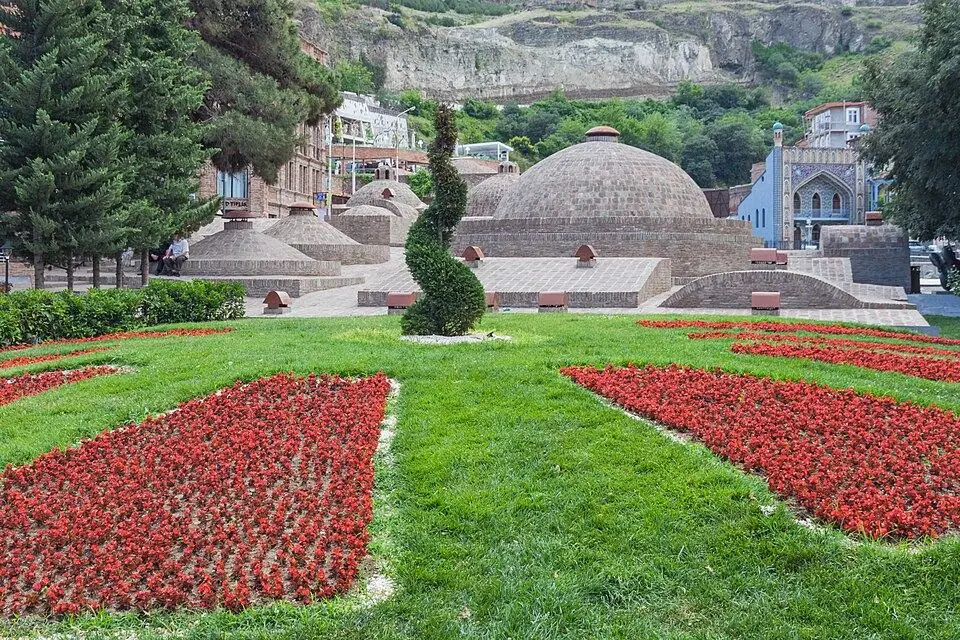
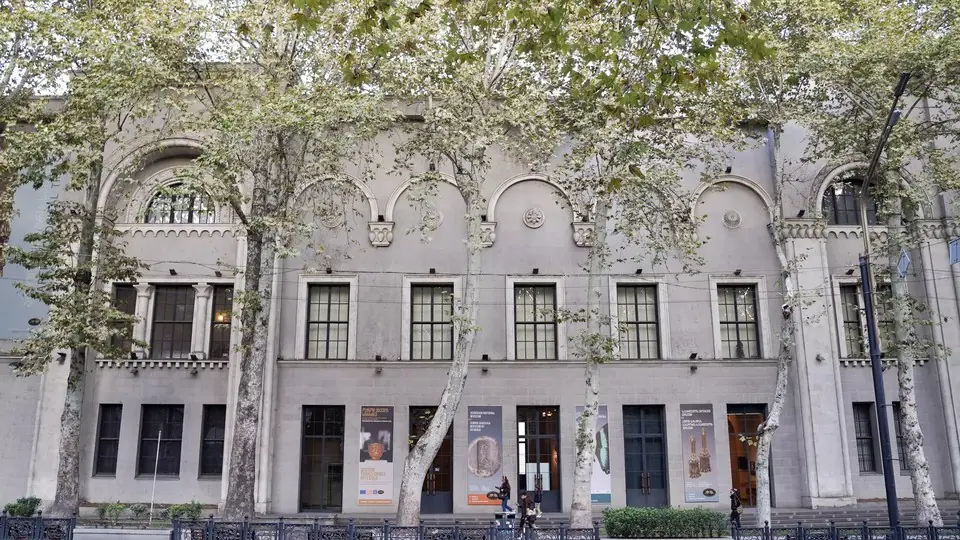
Tbilisi in spring (March to May): blossom, showers and the wettest weeks
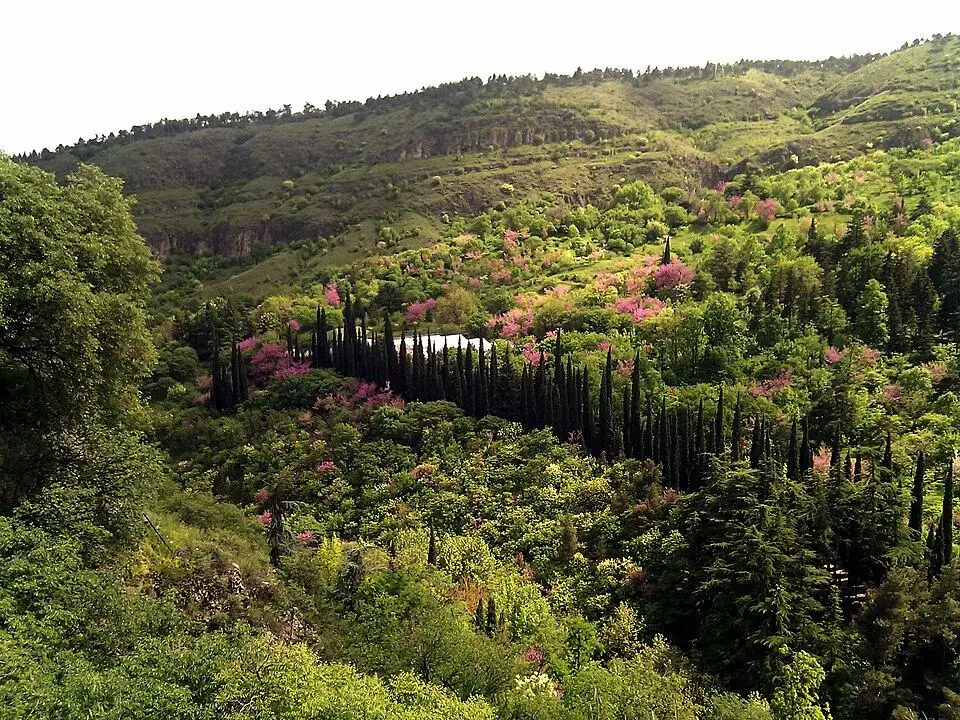
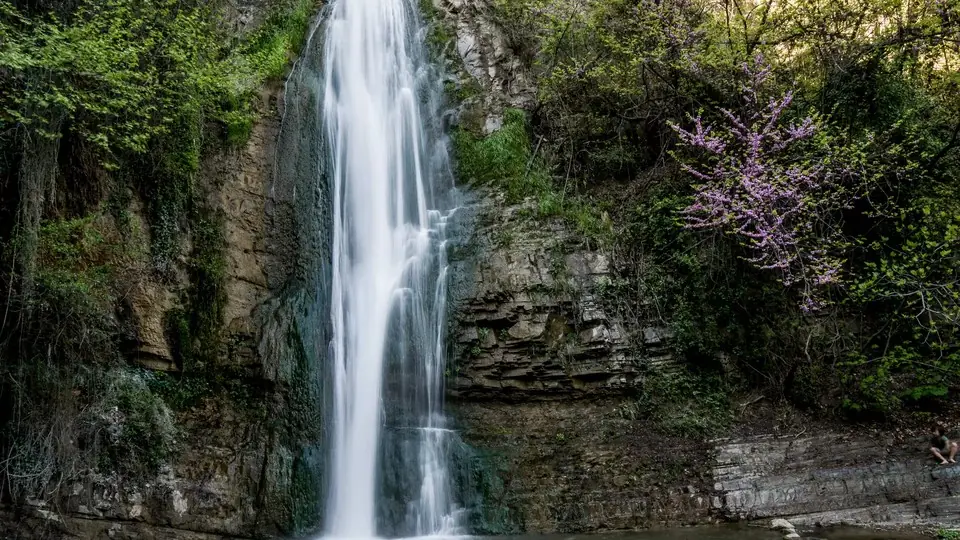
Spring moves fast. Early March can feel like winter and late May already has summer afternoons. April, May and June are the wettest months of the year, and the rain mostly comes as short, heavy showers and thunderstorms rather than days of drizzle. Gardens and hillsides turn their greenest, and the Leghvtakhevi waterfall behind the baths runs at full strength.
Tbilisi in March
March warms to 13.5°C by day and 3.8°C at night. Frost is still possible on ~4 nights, and 29.1 mm of rain falls over ~5 days. Fruit trees begin to flower in courtyards and gardens. Two public holidays come early in the month, Mother's Day on 3 March and International Women's Day on 8 March.
Tbilisi in April
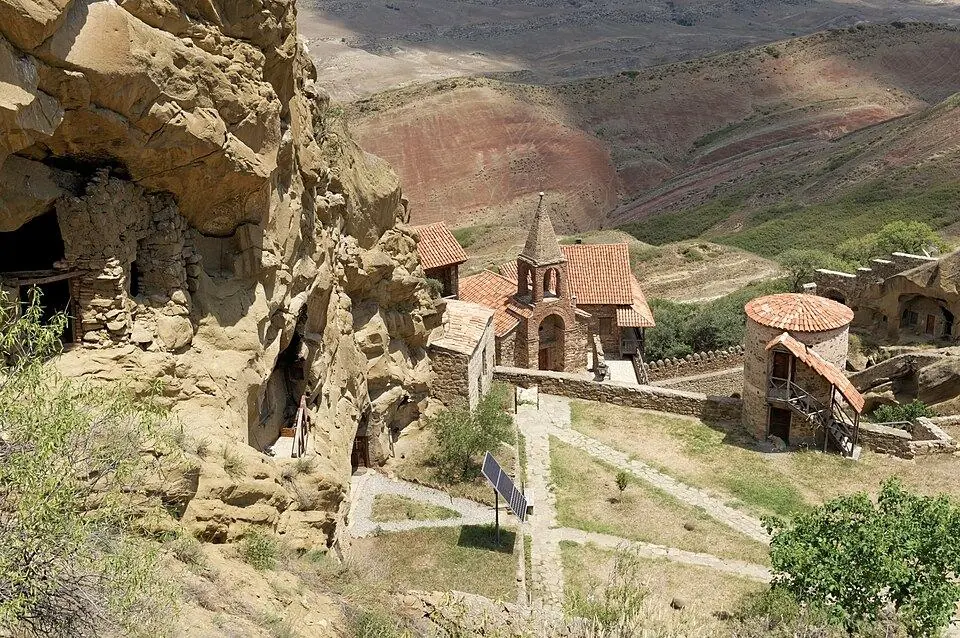
April is when the rain picks up: 63.8 mm over 8.7 days, more than twice March's total, with highs of 18.8°C and lows of 8.0°C. Between showers it is a lovely month for walking, and the best time for a day trip to David Gareja before the semi-desert bakes. National Unity Day falls on 9 April. Orthodox Easter, the biggest feast of the year, fell on 12 April in 2026 and comes on 2 May in 2027; Friday to Monday around it are days off and churches fill for the Saturday night service.
Tbilisi in May
May is warm, green and the most changeable month. Afternoons average 23.9°C, nights 12.9°C, and no other month has as many rain days: 10.4, bringing 82.9 mm. Storms can be heavy, and May 2012 collected 267.3 mm, the wettest month of the 30 years. It is also festival season. The New Wine Festival fills Mtatsminda Park on the second Saturday of May (8 May 2027), Independence Day on 26 May brings events to Rustaveli Avenue, and 9, 12 and 17 May are public holidays too.
Tbilisi weather in summer (June to August): how hot does it get?
Summer is hot and bright. Average highs run 28.7°C in June, 31.7°C in July and 31.9°C in August. In an average year Tbilisi has ~66 afternoons of 30°C or more, ~57 of them in these three months, and ~14 days reach 35°C, mostly in July and August. Above 40°C is rare: in the 1991-2020 record it happened on only a few days, among them one in August 2000 and one in July 2018. Nights stay warm, around 20°C, but the dry air means shade and a breeze genuinely cool you down.
Tbilisi in June
June is the warm-up, 28.7°C by day and 17.1°C at night, and it still has thunderstorms: 84.0 mm of rain, the largest monthly total of the year, over ~8 days. The wettest single day in the 30-year record was 30 June 1997, with 117.7 mm. These are the longest days of the year, light from about 05:25 to 20:35.
Tbilisi in July
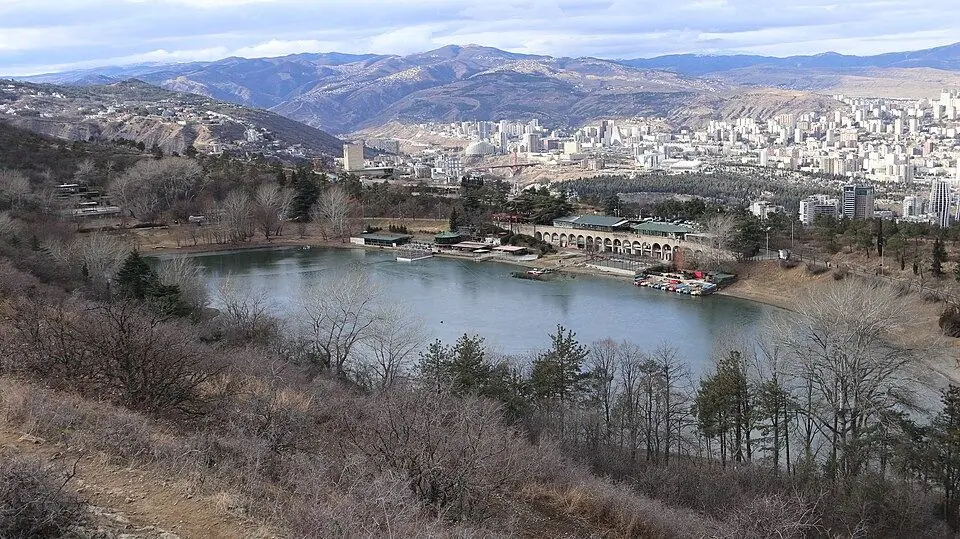
July brings settled heat: 31.7°C and 20.1°C, only 41.6 mm of rain and 256 hours of sunshine, the sunniest month. Two outdoor music events suit the season: Tbilisi Open Air, usually on an early July weekend by Lisi Lake, and the Art-Gene folk festival, usually in late July at the Open Air Museum of Ethnography.
Tbilisi in August
August is the hottest month by the smallest margin, 31.9°C by day and 20.0°C at night, and it has the most 35°C days, 7.3 on average. Some Augusts run far above the norm: in 2006 the month's highs averaged 36.7°C. Offices close on 28 August for Mariamoba, the Dormition of the Virgin, and many Tbilisi families spend part of the month by the sea or in the mountains.
How to handle the Tbilisi heat
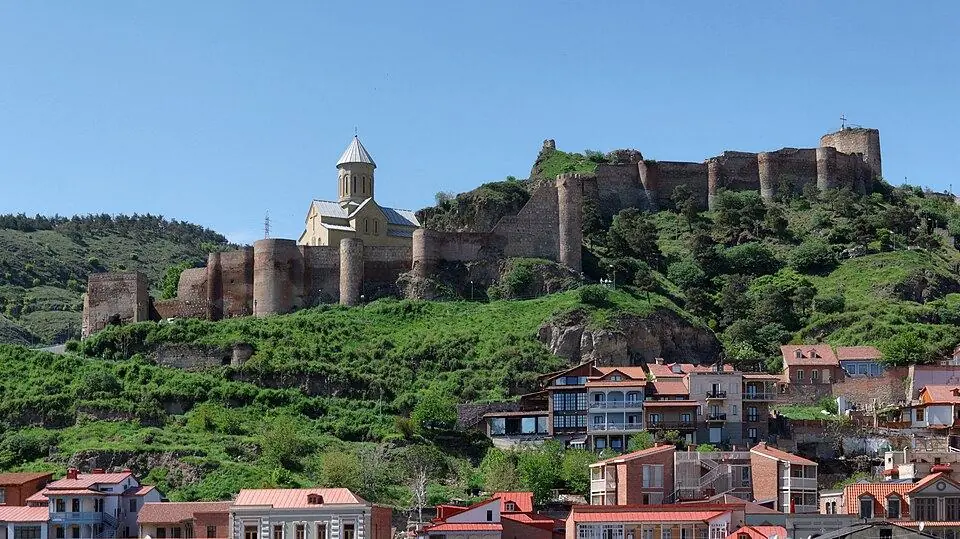
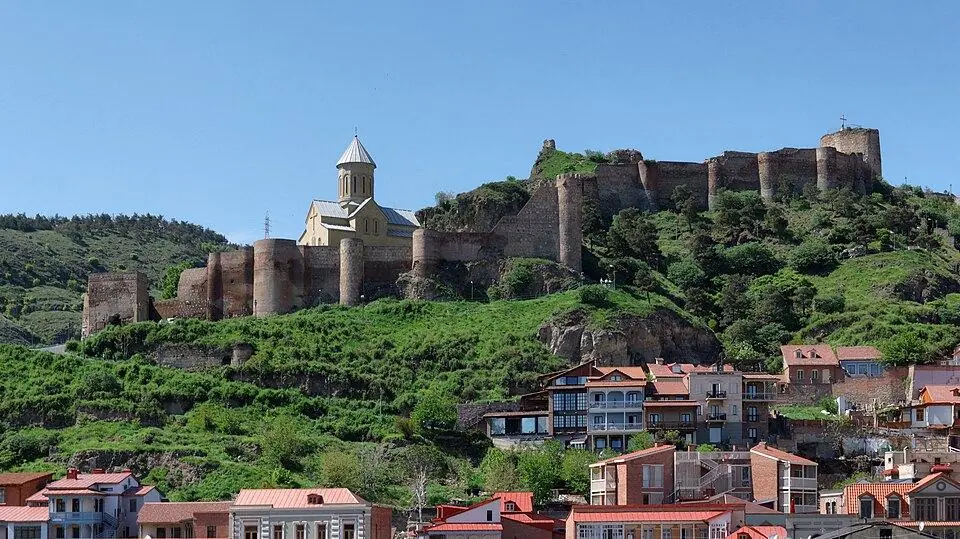
- Walk the Old Town, Narikala and Sololaki between about 08:00 and 11:00, while the lanes are still in shade.
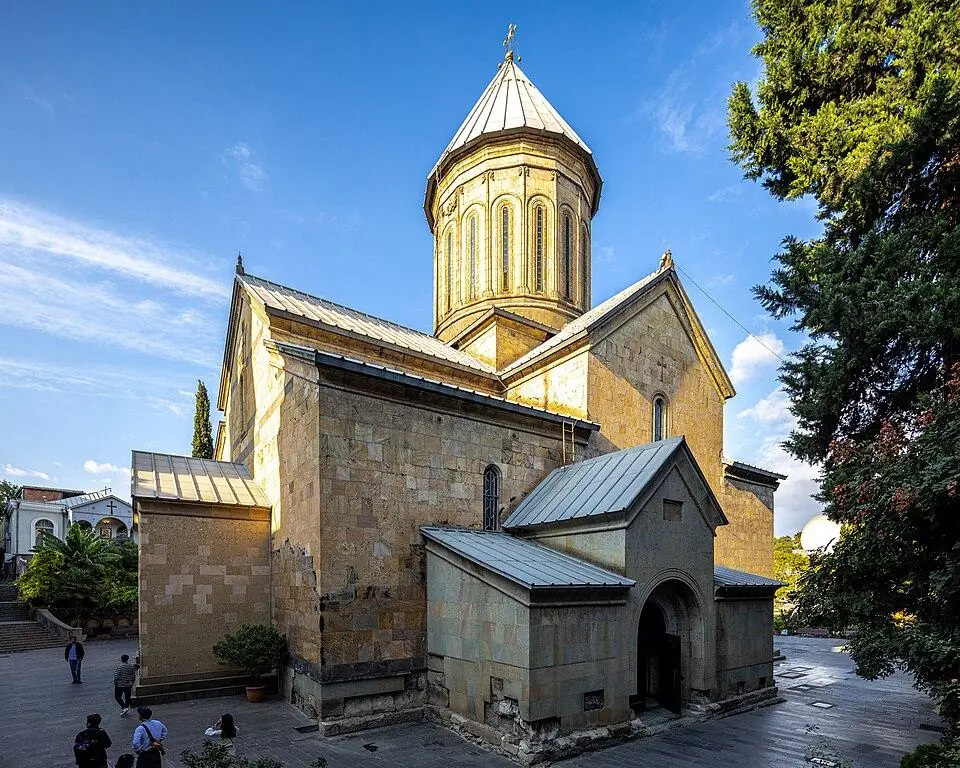
- Keep roughly 13:00 to 17:00 for indoor stops: the National Museum, a long lunch or a rest at the hotel. Old stone churches such as Sioni and Anchiskhati feel cool inside.
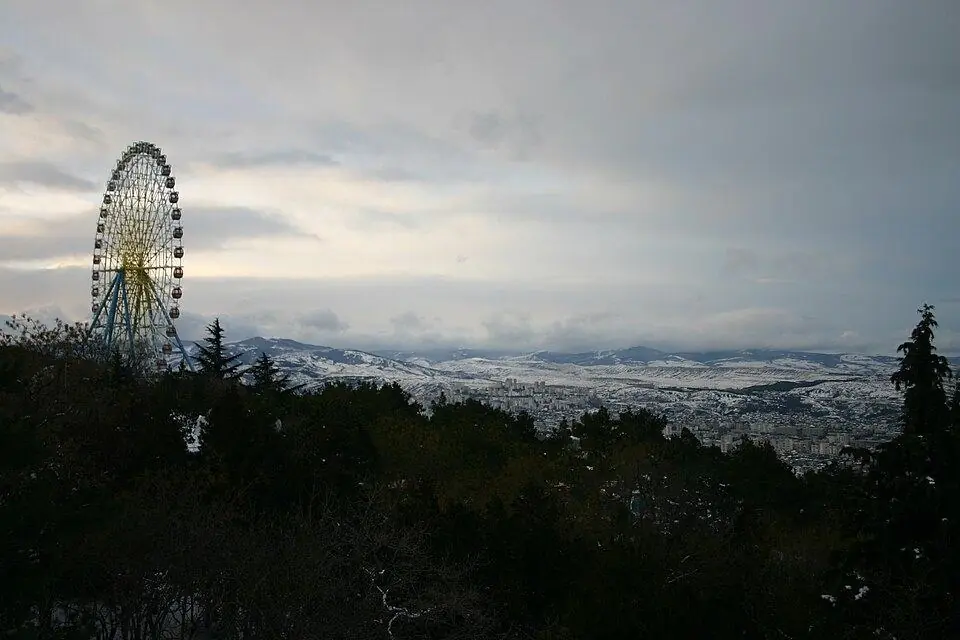
- Go uphill for the evening: the funicular to Mtatsminda Park at ~770 m or the ropeway to Turtle Lake at ~690 m, both a little cooler and breezier than the riverside.
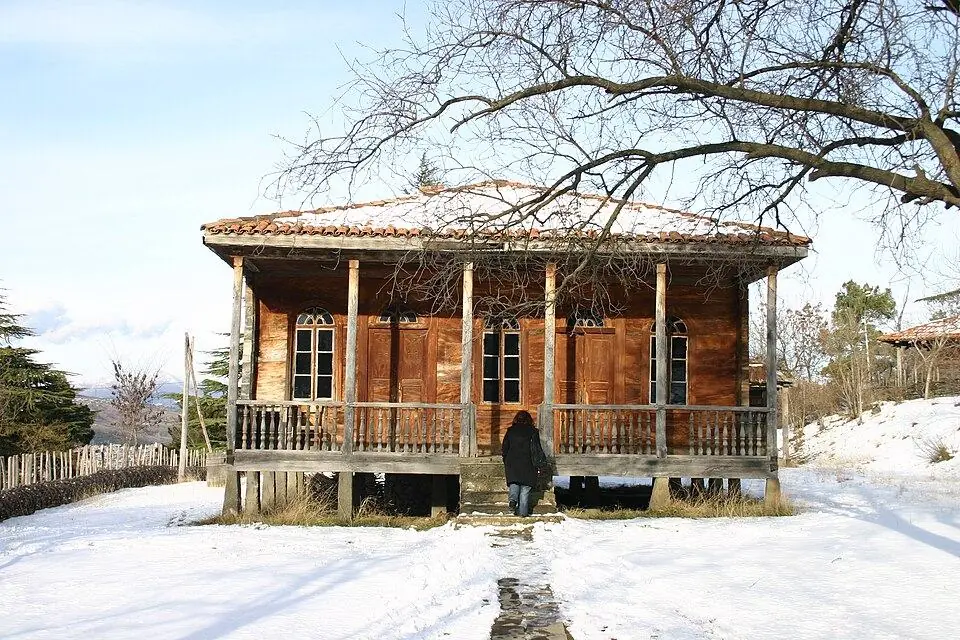
- Carry water and a sun hat; shade is patchy on the fortress walls and between the houses of the ethnography museum.
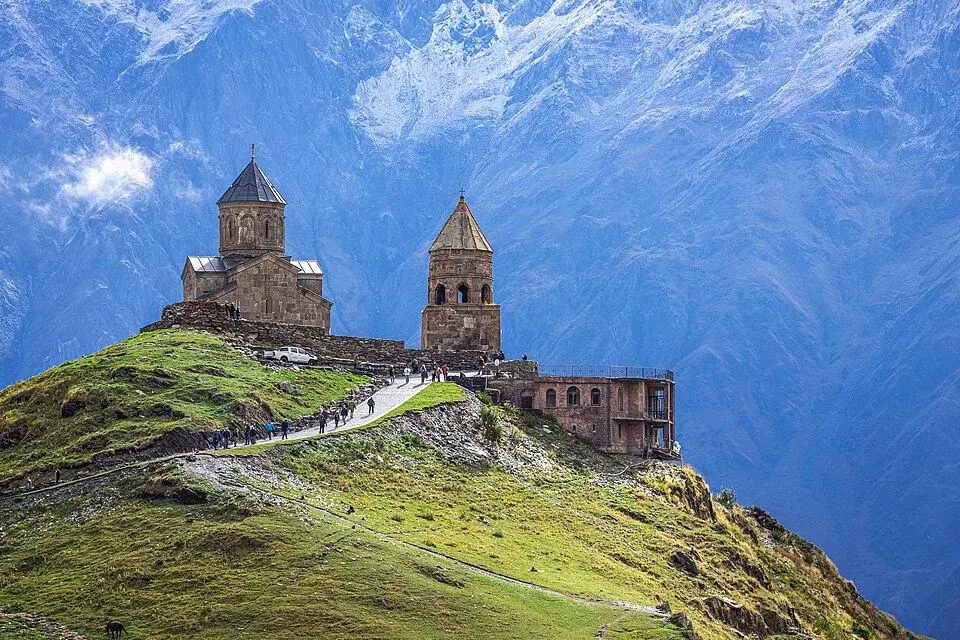
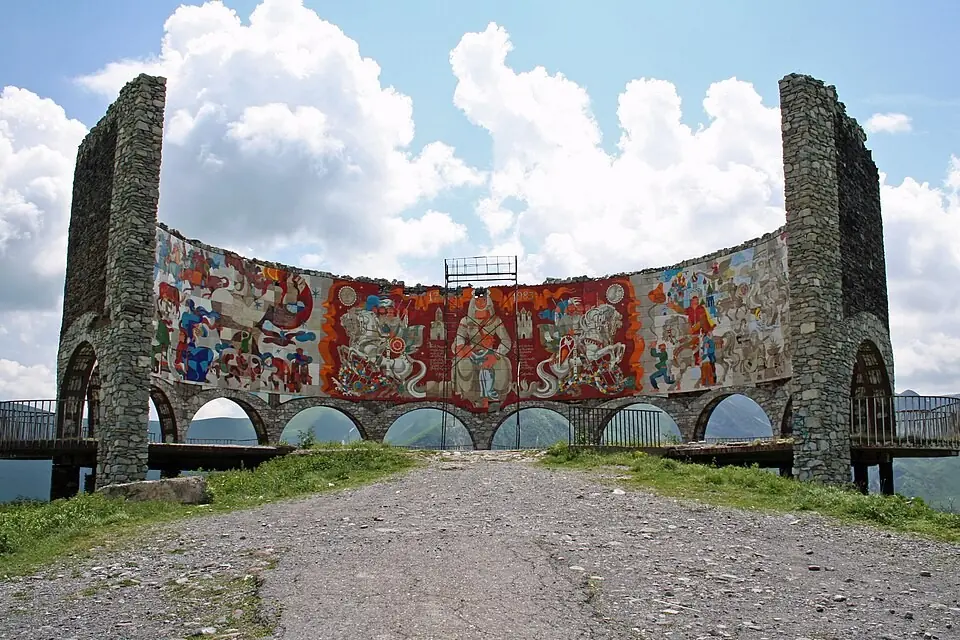
- Take a day in the mountains: Stepantsminda at ~1,740 m, about 3 hours north, is often ~10°C cooler than the capital.
Tbilisi in autumn (September to November): the second sweet spot
For many visitors autumn is the best season of all. The heat lingers into September, October is mild and clear, and November turns cool and grey. Rain stays moderate throughout, between 34.2 and 46.3 mm a month, and the markets fill with grapes, persimmons and fresh churchkhela.
Tbilisi in September
September averages 26.7°C and 15.9°C, with 34.8 mm of rain over ~5 days. The first week can still feel like summer, and the month has ~7 days above 30°C, but evenings cool quickly by the end. The grape harvest starts in Kakheti from about mid-September, and the Tsinandali Festival of classical music runs in the first half of the month, both easy add-ons from the city.
Tbilisi in October
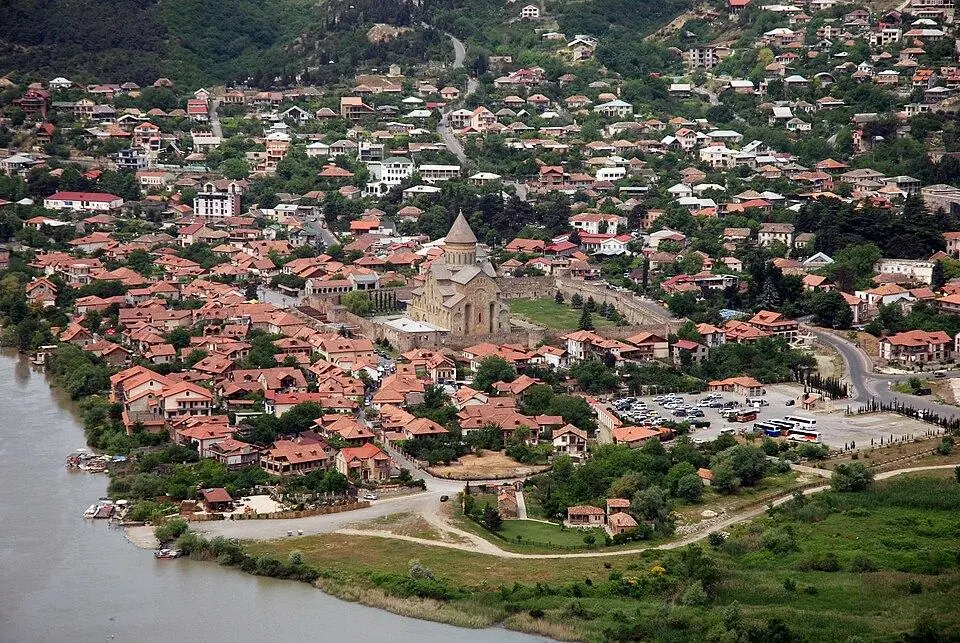
October is our favourite month for walking the city: 20.2°C by day, 10.6°C at night and ~6 rain days. Tbilisoba, the capital's own festival of food, wine and folk music, usually takes the first weekend, and on 14 October crowds travel to Mtskheta for Svetitskhovloba. Humidity climbs to ~76%, mornings can be misty, and by the end of the month the woods on the hills around the city turn yellow and red.
Tbilisi in November
November drops to 13.0°C by day and 4.6°C at night. It is the dampest month, at 78.4% humidity, with 34.2 mm of rain over ~5 days and the first frosts on ~3 nights, and days shrink below 10 hours. It is a calm month for museums, theatre, the baths and the young wine in Kakheti cellars; our guide to Georgia in November covers it in detail. The last big holiday of the autumn is Giorgoba on 23 November, when the country honours Saint George with a day off.


Best time to visit Tbilisi for the weather
On weather alone, the most comfortable weeks in Tbilisi run from mid-April to mid-June and from mid-September to late October. Afternoons then sit between ~19°C and ~29°C, 30°C days are few and the days are long enough for unhurried walks. May and June carry the most rain, so if showers bother you more than heat, autumn is the safer choice.
| If you want | Come in | Why |
|---|---|---|
| Comfortable sightseeing | Late April to early June; mid-September to October | Highs of ~19-27°C and long days |
| Quiet streets and low prices | November, February and March | Cool and calm outside the holidays |
| Festivals | May, October, late December to mid-January | New Wine Festival, Tbilisoba, New Year and Orthodox Christmas |
| City plus skiing | January to March | Gudauri is ~2-2.5 hours away with the deepest snow |
| City plus high-mountain hiking | July to mid-September | The city is hot, but the high trails are open only then |
| City plus the grape harvest | Mid-September to October | Rtveli in Kakheti, 2 hours or so from Tbilisi |
The capital is the one part of Georgia that works in every month. The high mountains, the coast and the ski slopes each have narrower windows; for those, read our month-by-month look at the best time to visit Georgia, region by region. A long weekend in Tbilisi itself can go on almost any date, and our private city tour shifts its timings to the season, starting earlier in summer and leaving more time for the baths in winter.

Rain, heat and snow: planning a Tbilisi day around the weather
Our guides reshuffle days around the weather all the time. These swaps work in any season.
If it rains
- The Georgian National Museum on Rustaveli Avenue, with the gold of ancient Colchis in its treasury.
- A private room at the Abanotubani sulphur baths, best of all on a wet evening.
- The indoor halls of Dezerter Bazaar, for cheese, spices, pickles and churchkhela.
- A night at the Tbilisi Opera and Ballet Theatre, or a slow tasting in a natural wine bar.
- The Leghvtakhevi waterfall, which runs fullest right after heavy rain.
If it snows
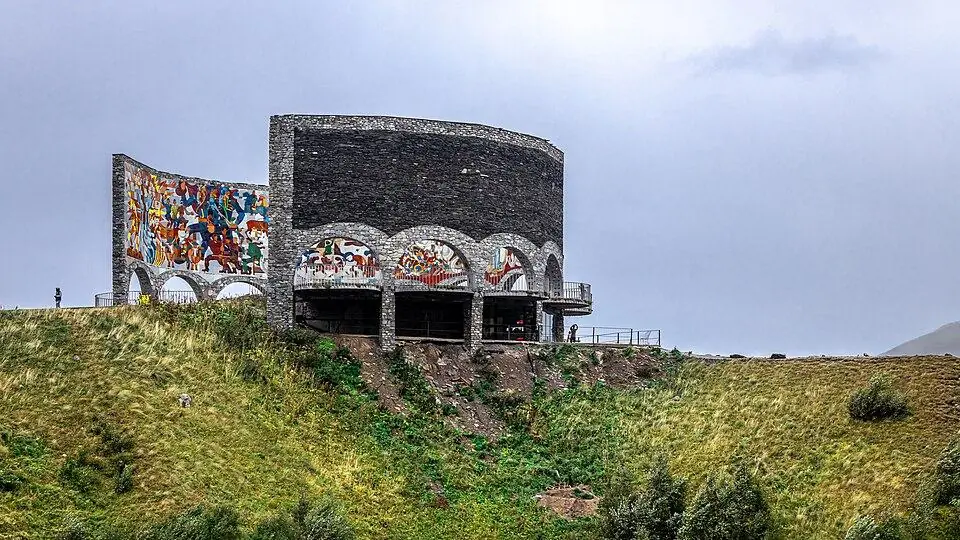
A snowy day in Tbilisi is beautiful from a window and tricky on foot. Swap the steep Old Town lanes for Rustaveli Avenue, the museums and a long lunch, and use taxis for the hills. If you planned to drive north, remember that the road to Kazbegi goes over the 2,379 m Jvari Pass, which can close for hours or even days after heavy snow from December to March: check road status the evening before.
Day trips and the weather
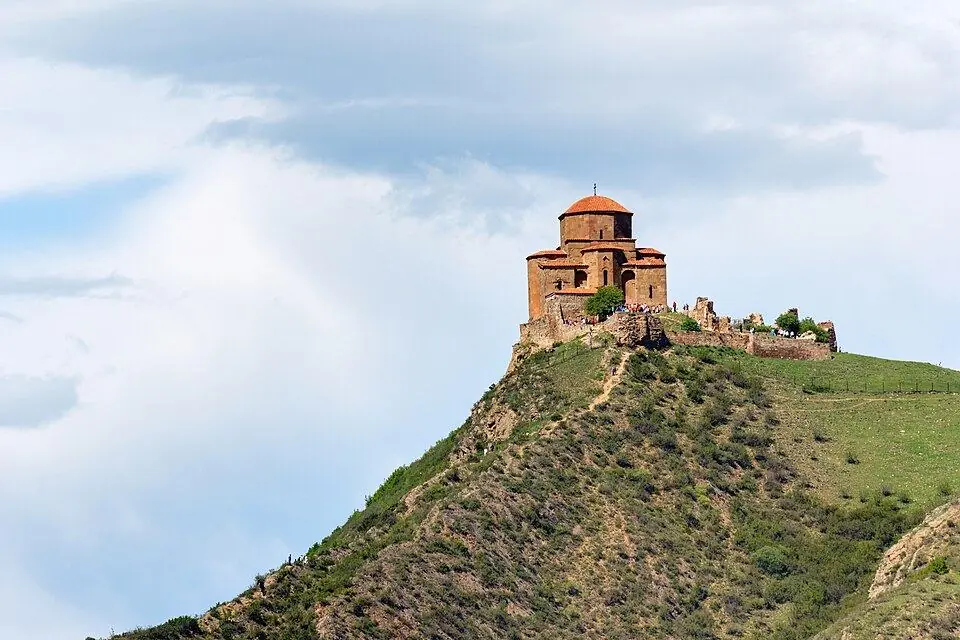
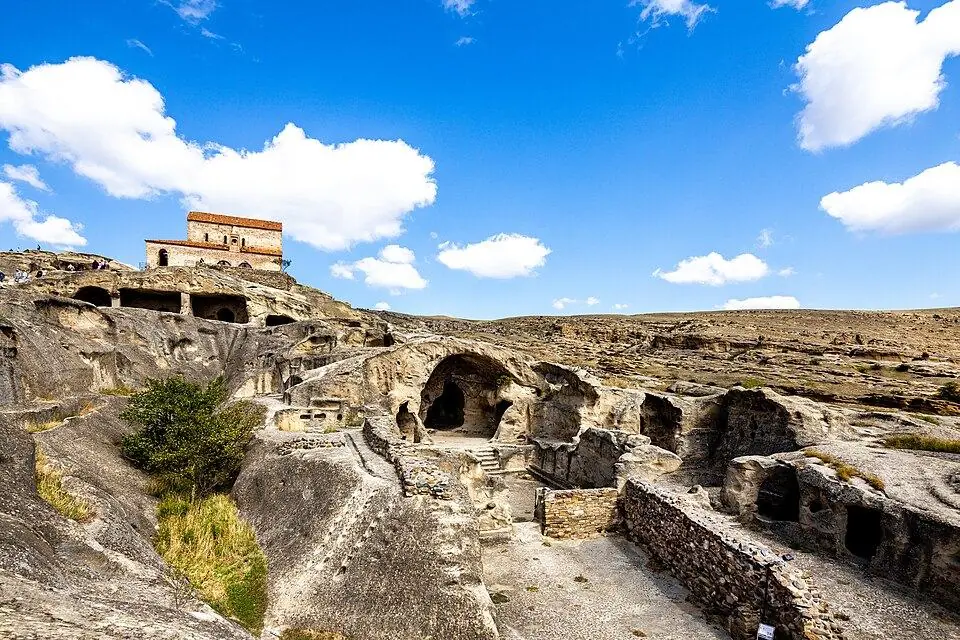
The lowland trips, Mtskheta, Uplistsikhe and Kakheti, work all year. David Gareja, on a bare ridge by the Azerbaijani border, is best in spring and autumn and very hot in July and August. Kazbegi is the classic summer escape, and in winter it becomes a snowy outing that needs flexible dates. More options are in our round-up of day trips from Tbilisi.
What to pack for Tbilisi in each season
Three things belong in your bag in every season: shoes with good grip for the steep, polished cobbles, clothes for churches (a headscarf and a skirt or wrap for women, long trousers for men) and swimwear for the sulphur baths. Beyond that, pack for the month.
December to February
- A warm coat or down jacket, a hat and gloves for nights around 0°C
- Waterproof boots with a deep tread for icy or slushy lanes
- A thermal layer if you add Kazbegi or a ski day in Gudauri
March to May
- Layers: a T-shirt, a sweater and a light jacket for evenings that fall to ~4°C in March and ~13°C in May
- A compact umbrella or a packable rain jacket for the showers
- Sunglasses for the bright days between them
June to August
- Light, breathable clothes, plus one outfit that covers shoulders and knees for churches
- A sun hat, strong sunscreen and a refillable water bottle
- A fleece for a day in Kazbegi or a breezy evening on Mtatsminda
September to November
- Summer clothes and a light layer in September
- A medium jacket and a rain shell in October
- A warm jacket, scarf and gloves for late November, when nights drop toward freezing
Checking the Tbilisi weather forecast before you go
Climate normals tell you what to expect; a forecast tells you what is actually coming. Georgia's official weather service, the National Environmental Agency, publishes forecasts and weather warnings for Tbilisi and the regions at meteo.gov.ge, in Georgian and English. For a mountain day trip, look at the forecast for the destination, not for the capital: Stepantsminda at ~1,740 m and Gudauri at ~2,200 m can be 10°C or more colder on the same day, and storms build quickly above 2,000 m.
On our private tours we read the forecast with you each evening and move days around it, trading a scorching afternoon for a museum or a stormy pass for a day in Kakheti. Pick any date and bring as many people as you like; your guide works in your language, and toddlers are as welcome as grandparents, so the plan bends to the weather rather than the other way round.
Tbilisi weather: FAQ
What is the average temperature in Tbilisi?
The yearly mean is 13.7°C (56.7°F) in the 1991-2020 normals. Afternoon highs average 19.4°C over the year, from 7.1°C in January to 31.9°C in August, and nights average 9.5°C, from -0.4°C in January to 20.1°C in July.
Which month is the hottest in Tbilisi?
August, by a whisker: its average high is 31.9°C against 31.7°C in July, and it has the most days of 35°C or more. Both months see about 22 afternoons above 30°C, so do your sightseeing in the mornings and evenings.
Does it snow in Tbilisi?
Sometimes, but it rarely stays. On average snow covers the ground on ~9 days a year, mostly in January and February, and it usually melts within a day or two. The mountains are another story: Gudauri and Bakuriani normally have skiable snow from mid or late December.
What is the rainiest month in Tbilisi?
June has the largest rain total, 84.0 mm, and May has the most rain days, 10.4. Both get their rain mainly as short, heavy showers and thunderstorms. January is the driest month, with 16.4 mm.
What is the weather like in Tbilisi in October?
Mild and mostly dry: highs average 20.2°C, lows 10.6°C, with ~6 rain days and 46.3 mm of rain. It is one of the best months to visit, with Tbilisoba at the start of the month and the harvest in nearby Kakheti.
Is Tbilisi hotter than Batumi in summer?
Yes, by day. Tbilisi averages 31.7°C on July afternoons, while Kobuleti, the nearest coastal station with 1991-2020 normals, ~28 km north of Batumi, averages 27.6°C. The coast is milder in winter and far wetter, with about five times the capital's yearly rain.
What should I wear in Tbilisi?
Dress in layers and choose shoes with grip for the steep cobbled lanes. In summer bring light clothes plus something that covers shoulders and knees for churches; in winter a warm coat, a hat and waterproof boots. Women should carry a headscarf for church visits.
When should I go to Tbilisi for the best weather?
Mid-April to mid-June and mid-September to late October give the most comfortable weather, with highs of ~19°C to ~29°C. Tbilisi works in every month, though: winter is quiet and good value, and summer is hot but sunny and full of outdoor events.
Last checked Oct 2026 by the Maspindzeli team.
Tbilisi weather month by month
What each month brings, what to wear and what is on.
Weather nearby
July and January average highs, nearest first.
Places with this weather
Sights and villages close to Tbilisi and at a similar height.
Not sure the weather will suit your plans?
We check the forecast for Tbilisi every week. Message us your dates and we will tell you what to expect and what to pack.
WhatsApp +995 598 74 74 54