Open Air Museum of Ethnography
A wooded hillside near Turtle Lake with about 70 traditional houses, towers and wine cellars brought from all over Georgia.
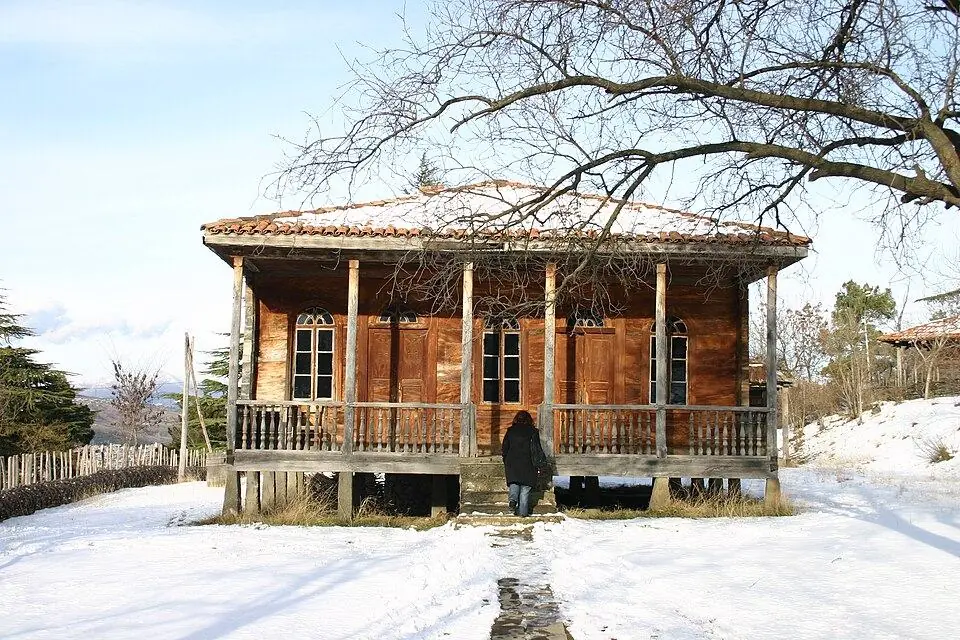 Open Air Museum of EthnographyPhoto: Jonathan Cardy, CC BY-SA 3.0
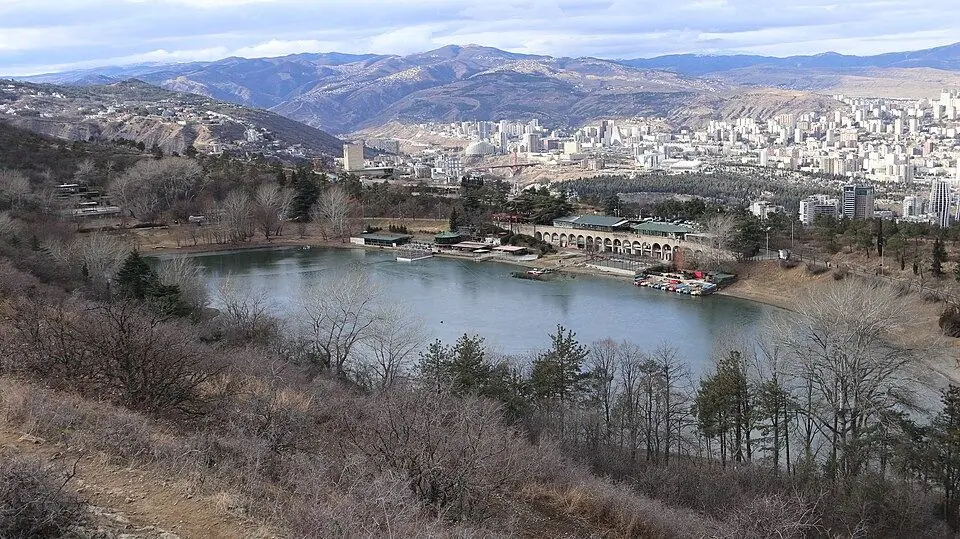
The Giorgi Chitaia Open Air Museum of Ethnography covers more than 50 hectares of wooded hillside on the western edge of the Vake district, just west of Turtle Lake. Around 70 traditional buildings from across Georgia have been moved or reconstructed here and grouped by region: watchtowers from Svaneti, Khevsureti and Pshavi, Kakhetian wine cellars, wooden houses from western Georgia, and the semi-underground darbazi houses of eastern Georgia with their stepped wooden domes. Many of them are furnished with tools, carpets, weapons and household objects drawn from a collection of over 8,000 items.
It is the easiest way to see Georgia's regional architecture in one visit, and a good introduction before travelling to the mountains. Paths run up and down the slope between the houses, so wear comfortable shoes. Watch for the early Christian basilica that came from Tianeti, and for a family burial vault of the 6th–7th century. Combine the museum with Turtle Lake, about a kilometre away on the same road.
History
The museum was founded on 27 April 1966 by the ethnographer Giorgi Chitaia to preserve Georgia's vernacular architecture and rural way of life. Houses, granaries, towers and churches were brought from villages around the country or reconstructed on site, and the collection is now arranged in eleven zones representing the historical regions. Today the Georgian National Museum runs it.
What to see and do
- Step inside a darbazi house with its stepped wooden dome
- See defensive towers from Svaneti and Khevsureti
- Visit Kakhetian wine cellars and their qvevri
- Find the early Christian basilica from Tianeti
How to visit
Getting there
The museum is on the Turtle Lake road on the western edge of Vake, about 15–20 minutes by taxi from Rustaveli Avenue. Turtle Lake is about 1 km away on the same road; its ropeway from Vake Park has been suspended since December 2025.
When to go
Spring and autumn. Plan 1.5–2.5 hours here.
- Wear walking shoes; the site is spread across a steep hillside.
- Bring water in summer, as shade is patchy between the houses.
- Combine with Turtle Lake on the same afternoon.
Weather at Open Air Museum of Ethnography
Based on the climate of Tbilisi, 5 km away. Warmest in August (32° by day), coldest in January (0° at night), with 511 mm of rain a year. Best months: Sep–Oct.
Open Air Museum of Ethnography: FAQ
Is the Tbilisi ethnographic museum worth visiting?
Yes, especially if you will not reach the mountains. It shows traditional houses, towers and wine cellars from every region of Georgia in one place, set in a quiet wooded park.
How do I get to the Open Air Museum of Ethnography?
Take a taxi up the Turtle Lake road from Vake, about 15–20 minutes from the centre. The ropeway from Vake Park to Turtle Lake has been suspended since December 2025.
Read more in our guides
 Photo: georgia.travel
What Prometheus Cave, Martvili Canyon, the National Museum, Vardzia, the Tbilisi cable cars and dozens of other sights cost to enter in 2026, with hours, combo tickets and free alternatives.
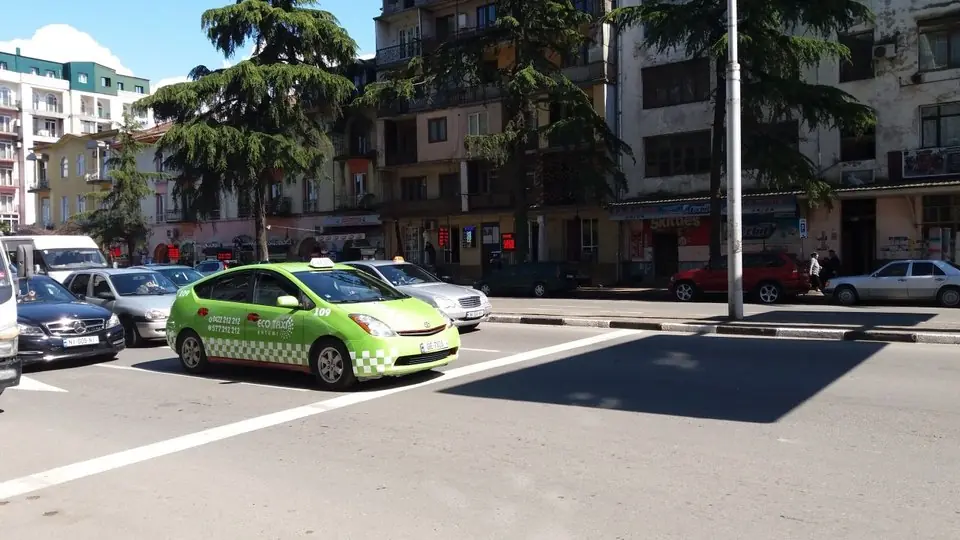 Photo: Raf24, CC BY-SA 4.0
Which ride apps work in Tbilisi, Batumi and Kutaisi, what a ride costs in 2026, card or cash, how to handle a street taxi, and when a driver or a day tour beats the app.
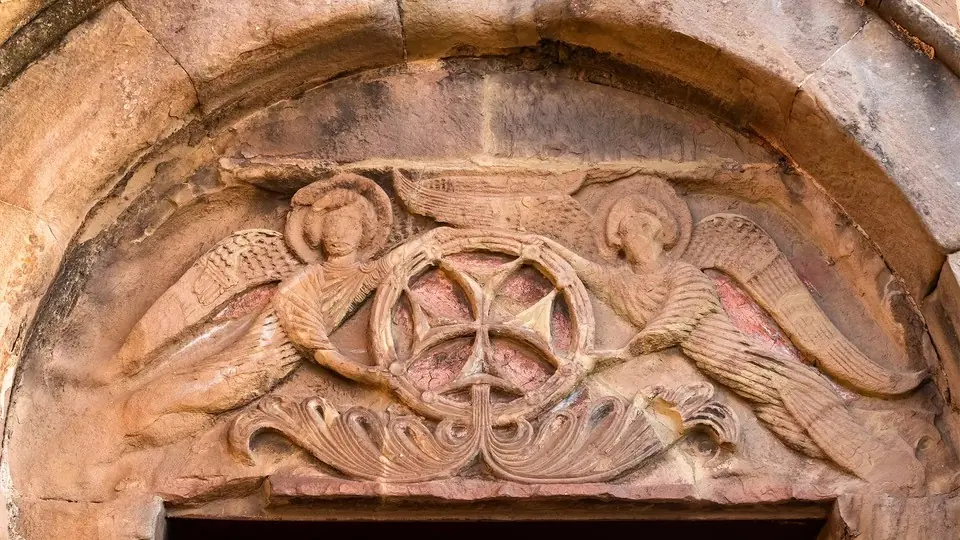 Photo: georgia.travel
How Georgia's domed stone churches work, where the best carved facades are, and how cave towns, tower villages, Tbilisi's balconies and Soviet modernism fit in, with 12 buildings to put on your route.
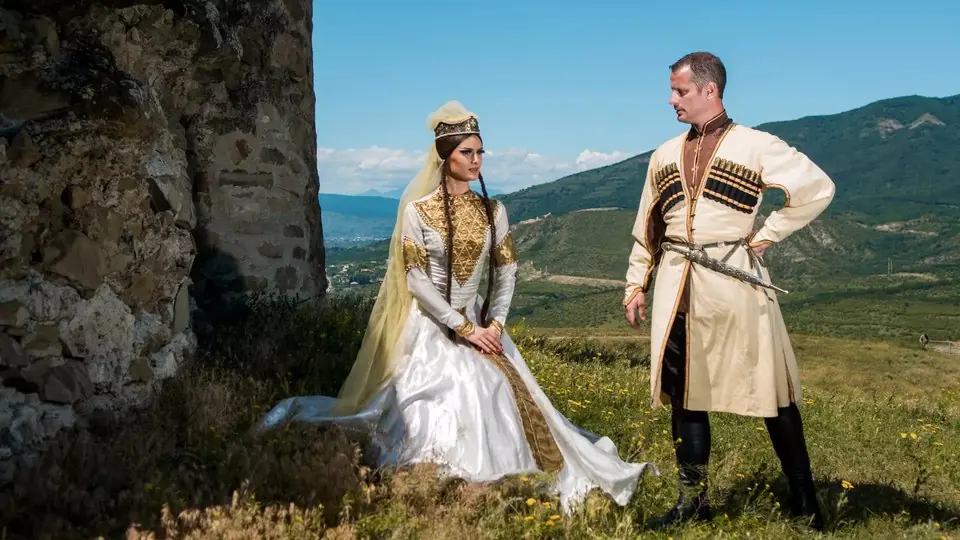 Photo: georgia.travel
What the Georgian chokha is, piece by piece, how it changes from Khevsureti to Adjara, what women wear, why it came back, and where to see, buy or rent one.
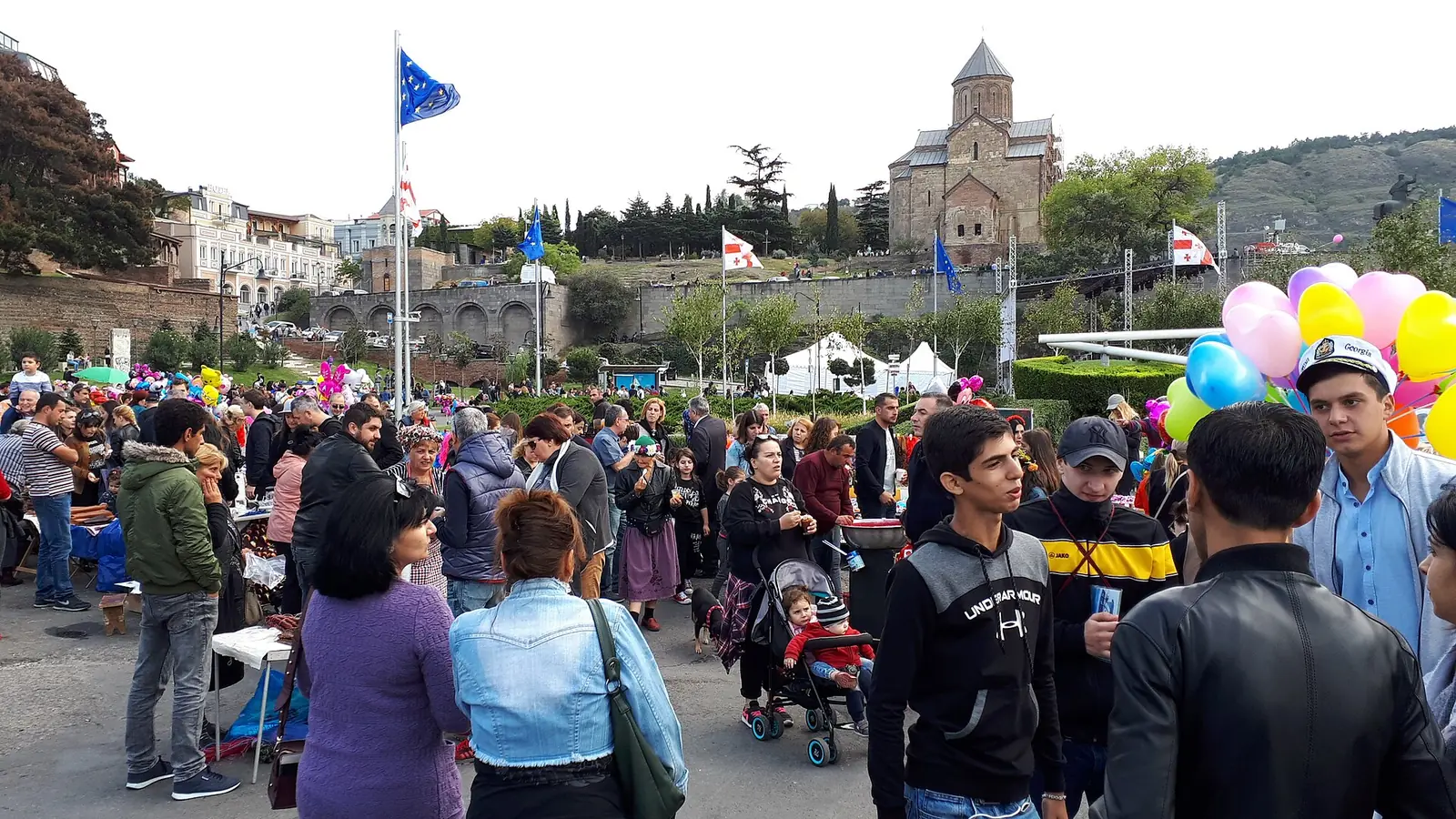 Photo: Lorenz King, CC BY-SA 4.0
Who the Georgians are and how they live: the guest as sent by God, the supra, family and elders, what -shvili and -dze mean, regional characters, song, faith and language.
 Photo: georgia.travel
Three ready-made days in the Georgian capital, each split into morning, afternoon and evening, with minutes on foot between stops, food stops by area and a plan B for rain.
Festivals in Open Air Museum of Ethnography
Nearby places
Straight-line distance from Open Air Museum of Ethnography.