- Georgian folk dance is famous for its men, who spin and land on tiptoe in supple leather boots, and for its women, who seem to glide in floor-length gowns.
- In Kartuli, the best-known couple dance, the man never touches the woman. She opens the dance and ends it with a bow.
- Each region has its own dances: the Khorumi war dance of Adjara and Guria, sword fights from Khevsureti and contests of skill from the mountains north of Tbilisi.
- Georgian polyphonic singing is on UNESCO's list, but dance is not. Kartuli, Perkhuli, Khorumi and Gandagana hold Georgia's own heritage status instead.
- The Sukhishvili company tours abroad for months, so its Tbilisi concerts come in short runs. Check the Tbilisi Concert Hall, the Art-Gene festival in July and folk-show restaurants for your dates.
Georgian dance is the folk dance of Georgia, the small country in the Caucasus, and it looks like nothing else. Men spin, leap and land on the tips of their toes in soft boots. Women cross the stage in long gowns with steps so small they seem to float. Each region has dances of its own. In Tbilisi you can watch them at concerts of the national companies, at summer festivals and at dinner shows.
This guide explains what makes traditional Georgian dance different and introduces ten folk dances, with the region and story of each. Then come the costumes, the famous companies Sukhishvili and Erisioni, and where to see Georgian dance in Tbilisi and the regions. It ends with a few steps to learn, dance etiquette and a short FAQ.
What makes traditional Georgian dance different
Three things set Georgian dance apart. The first is the men's footwork. Male dancers rise onto the tips of their toes, turn there, and even jump and land on them. In ballet, pointe work is almost always for women, in shoes with a stiff box. Georgian men do it in soft leather boots with nothing stiff inside, and the Sukhishvili company says its dancers start learning at about five.
The company also tells a story about where the move came from. Kneeling to a woman was thought beneath a Georgian man, so he rose onto his toes to impress her instead.
The second is the way the women move. Their gowns reach the floor and the steps under them are tiny and quick, so they seem to glide. In Kartuli the woman keeps her eyes lowered the whole time.
The third is distance between partners. In Kartuli, the classic couple dance, the man never touches his partner, not even her sleeve. She opens the dance, he answers each move, and a bow from her ends it. With no holds and no lifts, all the drama sits in the gap between them.
The music is live: the doli drum, flutes and accordion, and in Adjara the chiboni bagpipe.
10 Georgian folk dances and what they mean
The big companies stage Georgian dances from every region as short scenes. These ten are the ones you are most likely to see.
| Dance | Region | Who dances | Theme |
|---|---|---|---|
| Kartuli | All Georgia | One couple | Courtship and respect |
| Perkhuli | All Georgia, old forms in Svaneti | A ring or chain | Round dance with song |
| Khorumi | Adjara and Guria | Men, odd number | A battle in four scenes |
| Acharuli and Gandagana | Adjara | Couples | Playful flirting |
| Partsa | Guria | A large group | Speed and human towers |
| Mtiuluri | Mtiuleti, north of Tbilisi | Two teams of men, then women | A contest of skill |
| Khevsuruli | Khevsureti | A couple and a rival | Love and a sword fight |
| Kazbeguri | Kazbegi | Men | Life in the high mountains |
| Kintouri | Tbilisi | Men | Old city traders |
| Samaia | All Georgia | Three women | Queen Tamar |
1. Kartuli: the couple dance
Kartuli simply means Georgian, and it belongs to no single region. It is a courtship dance, still seen at weddings. The man circles with a still, upright upper body, a sign of self-control. In 2020 it joined Georgia's national list of intangible heritage.
2. Perkhuli: the round dance
Perkhuli is the oldest form: a ring or chain of dancers who link arms and sing as they move. Anyone can join. Svaneti keeps about a dozen very old round dances about war. Perkhuli gained national heritage status in 2013.
3. Khorumi: the war dance of the south-west
Khorumi belongs to Adjara and Guria by the Black Sea. Only men dance it, in an odd number behind one leader, to a limping beat of five counts. On stage it tells a campaign in four scenes: making camp, spying on the enemy, the attack and the victory.
4. Acharuli and Gandagana: flirting on the coast
Acharuli is the bright, teasing couple dance of Adjara, danced in red and other strong colours. Boys and girls flirt far more openly than in Kartuli. Gandagana, another Adjarian dance for men and women, has had national heritage status since 2019.
5. Partsa: the fast dance of Guria
Partsa comes from Guria, the green hill country behind the coast. It is very fast, and its high point is the live tower, when dancers stand on each other's shoulders. Sukhishvili took it to La Scala in Milan in the late 1960s, the first folk company on that stage.
6. Mtiuluri: a contest in the mountains
The name points to Mtiuleti, the highland valley around Pasanauri. Two teams of young men try to outdo each other, then the women dance, and soloists show tricks on their knees and toes.
7. Khevsuruli: swords and a scarf
Khevsureti, in the remote north-east, gives the most dramatic number. A couple flirt, a rival steps in, and the men fight with swords and small shields until sparks fly. The woman stops the fight by throwing her headscarf between them.
8. Kazbeguri: the high Caucasus
Kazbeguri comes from the valley below Mount Kazbek. Men dressed all in black stamp and turn in hard, sharp moves that mirror the harsh mountain climate.
9. Kintouri: old Tbilisi on stage
Kintouri brings old Tbilisi to the stage. The kintos were small traders known for their quick wit. Dancers in black, with baggy trousers and a silk scarf on a silver belt, play them as cheeky rogues.
10. Samaia: three women and a queen
Three women in matching gowns dance Samaia, a portrait of Queen Tamar, Georgia's great medieval ruler. Each dancer stands for one side of her, the youthful princess, the mother full of wisdom and the mighty monarch, and the gowns copy church frescoes.
Georgian dance costumes in brief
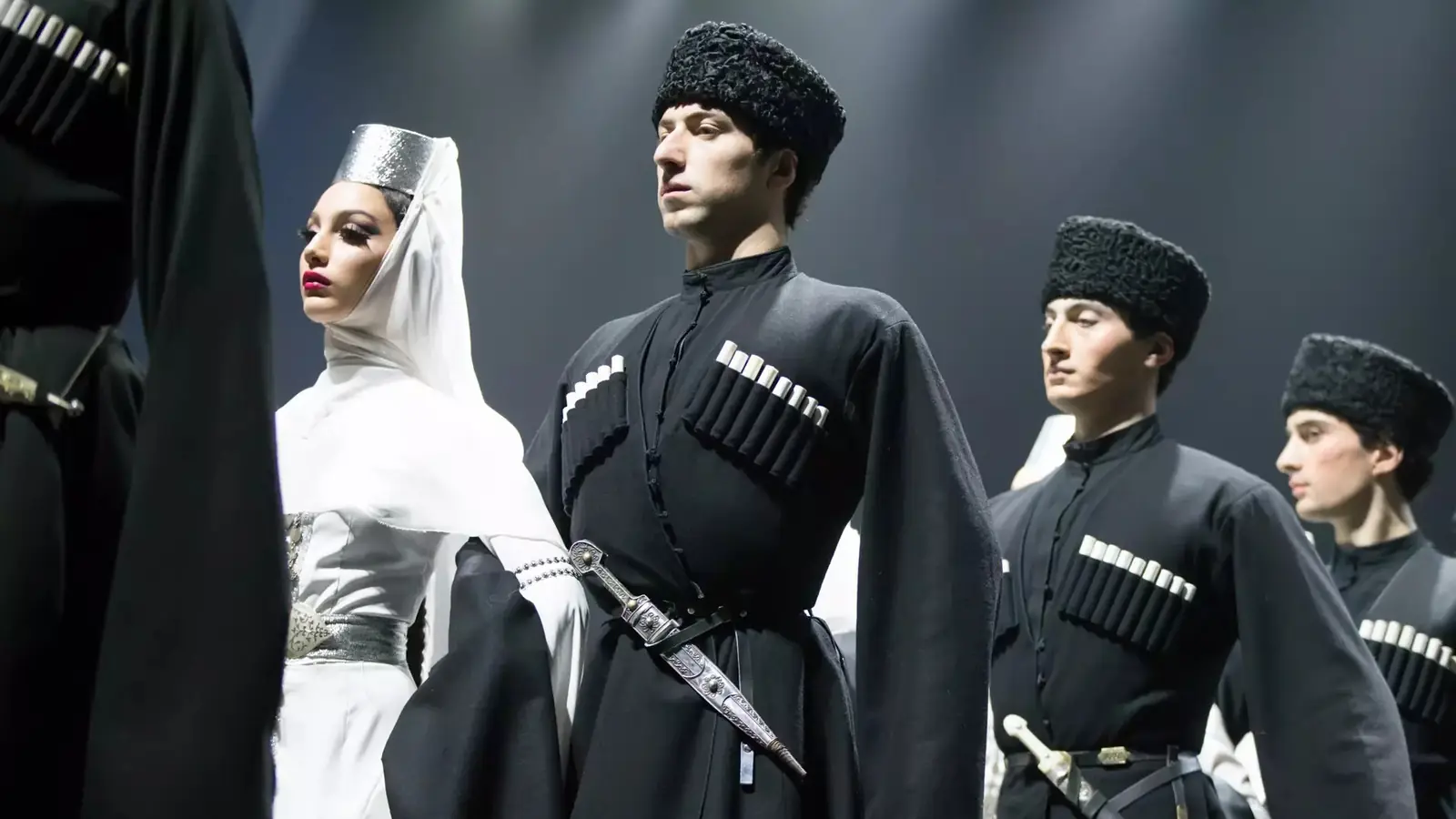
Men dance in the chokha, the fitted national coat, with soft boots and often a dagger at the belt. Women wear long gowns with flowing sleeves and a veil. Colour often tells you which dance is coming: black for Kazbeguri and Kintouri, red for Acharuli. Our guide to the Georgian chokha explains each piece of the outfit.
Sukhishvili, Erisioni and other Georgian dance companies
Sukhishvili, the Georgian National Ballet
Iliko Sukhishvili and his wife and dance partner, Nino Ramishvili, founded the company in 1945. They shaped the stage style most people now picture: big casts, fast spins, swordplay and a live band. Their grandchildren, Iliko and Nino Sukhishvili Jr, run it today. Despite its name, it is a folk company, not a ballet.
A Sukhishvili concert lasts about 1 hour 45 minutes, with a 15-minute break, and the musicians play on stage. The company spends months of each year on tour. Its Dance Academy trains children, who now give concerts of their own.
Erisioni
Erisioni traces its history back to 1885, with an unbroken line of directors since then. It mixes polyphonic song with dance, and between 1999 and 2007 its shows Georgian Legend and Legend of Tamar toured the world. The name, from an old Georgian dictionary, means high above the mountain peaks. In November 2026 its website listed no new dates.
Smaller groups keep local dances alive in the regions. The Bermukha ensemble of Khikhadziri, in highland Adjara, is known for its Khorumi.
Where to see Georgian dance in Tbilisi
What you can see depends on the month, because the big companies spend long spells abroad. Check each venue for your dates.
| Where | What you see | When | Tickets |
|---|---|---|---|
| Tbilisi Concert Hall (State Philharmonic), Melikishvili Street | Full Sukhishvili programmes and other ensembles | Mostly late spring and early summer | Check the hall's box office |
| Art-Gene Folk Festival, Open Air Museum of Ethnography | Village groups, choirs and big ensembles | Late July (23-26 July in 2026) | About 60-90 GEL (about $23-35) a day in 2026 |
| Tbilisoba, Old Town and riverside | Folk groups on open stages | A weekend in early October | Free |
| Folk-show restaurants | Short dance and song sets at dinner | Most of the year | The cost of dinner, booked ahead |
| Tbilisi Opera and Ballet Theatre, Rustaveli Avenue | Classical ballet and opera | See the theatre's programme | Theatre box office |
Concert halls and their seasons
The Tbilisi Concert Hall, home of the State Philharmonic, hosts most of Sukhishvili's home concerts. In recent years they came in late May and June, with summer nights on the open-air stage Takara. Its 2026-27 tours fill October and November in North America and January to March in Europe, so look for home dates outside those months.
Erisioni and smaller ensembles appear at one-off concerts and festivals. If no folk company is in town, the Tbilisi Opera and Ballet Theatre, home of the State Ballet of Georgia, makes a fine evening.
Folk-show restaurants
Several restaurants in central Tbilisi build their evenings around folk performers, with short sets between courses. The show is simpler than a concert, but you see the steps from a few metres away. Ask when you book whether the dancers perform that night.
Our Tbilisi City Break leaves most evenings free, so a concert fits in easily. We can also build a private evening around a folk show, at a dinner with dancers or a concert when a company is in town. Choose any night and bring a group of any size, from a couple to a crowd. Your guide for the evening speaks your language, and kids of all ages can join, as we set no minimum age.
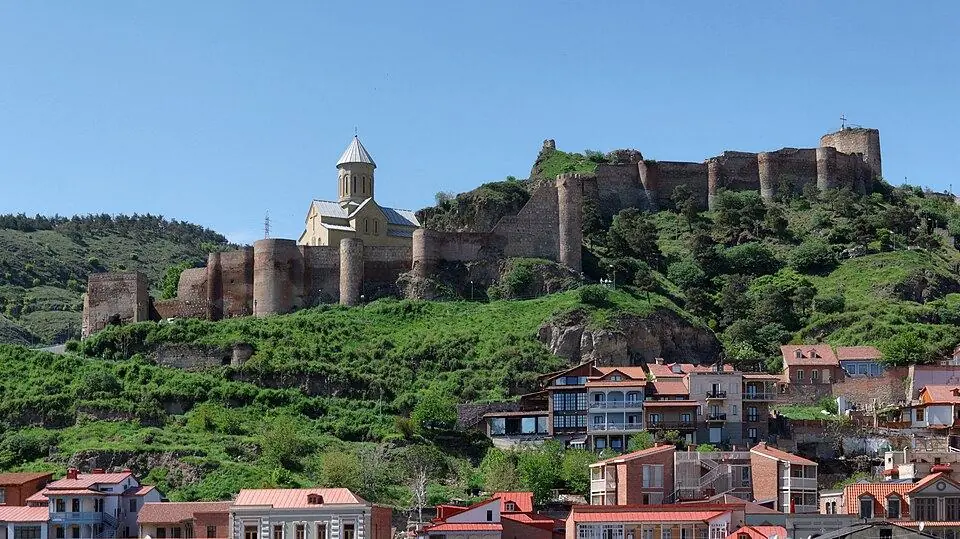
Where to see Georgian folk dance outside Tbilisi
In the regions, dance belongs to feast days, and locals join in when the music starts.
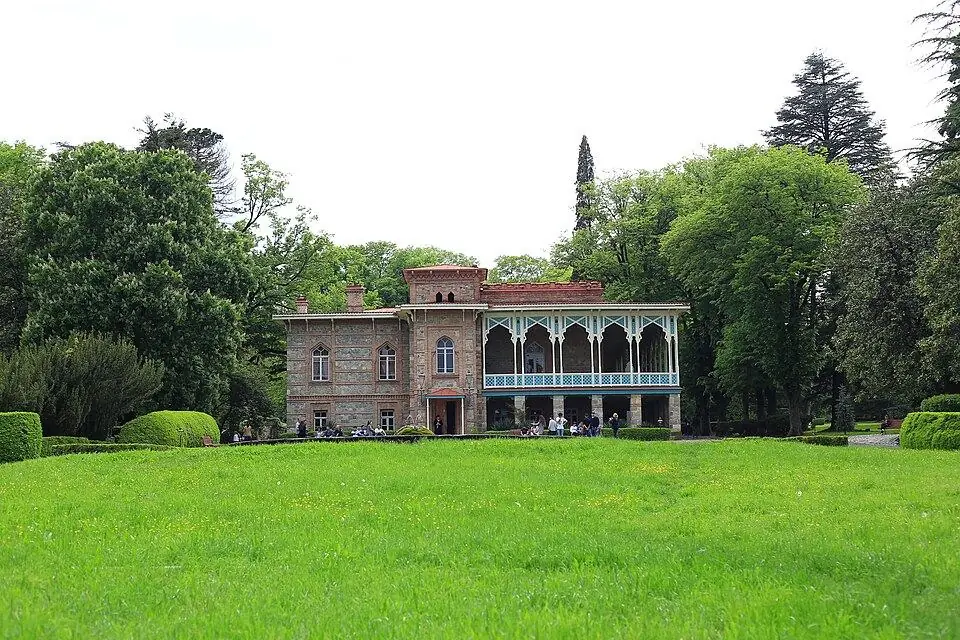
- Tsinandali Estate, Kakheti: Sukhishvili held its first three-day festival in the estate's amphitheatre on 22-24 May 2026, and it plans to make it yearly.
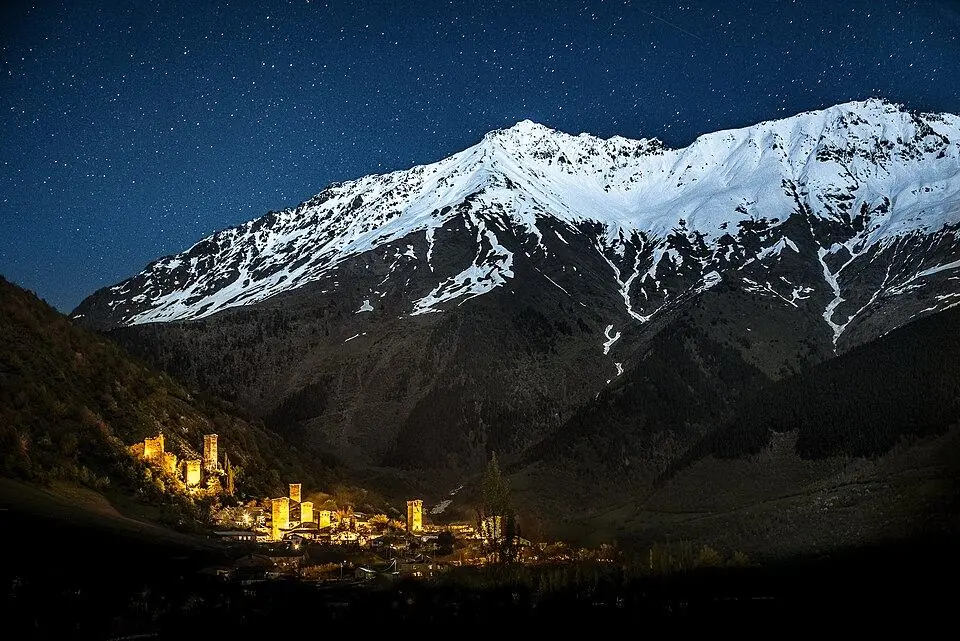
- Mestia, Svaneti: Svanetoba brings Svan songs and dances to Seti Square, usually on the last weekend of July.
- Beshumi, highland Adjara: at Shuamtoba in early August, older men still dance Khorumi. In 2026 it fell on 2 August.
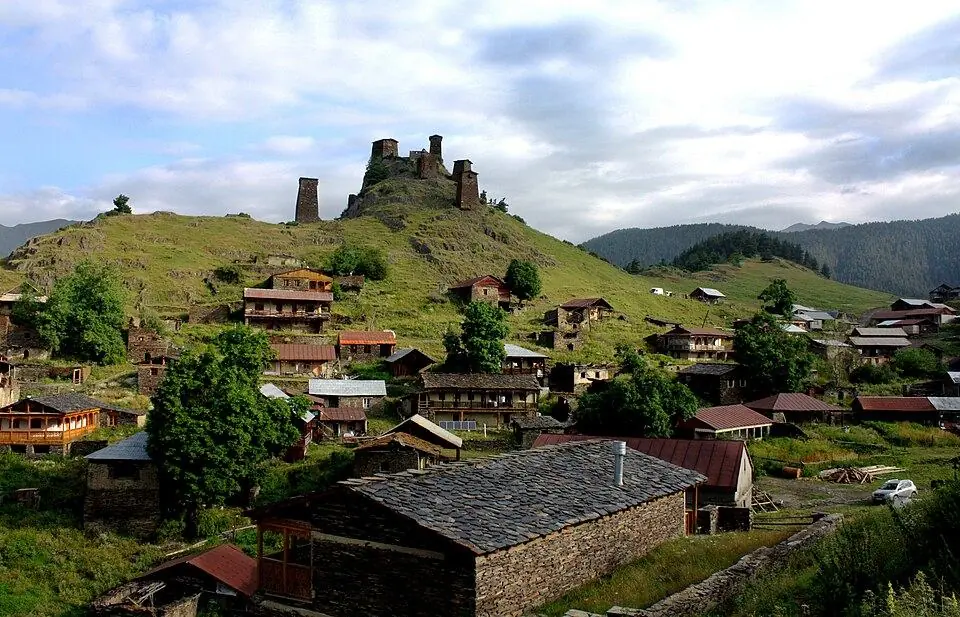
- Omalo, Tusheti: at Tushetoba in early August, folk groups dance on an outdoor stage.
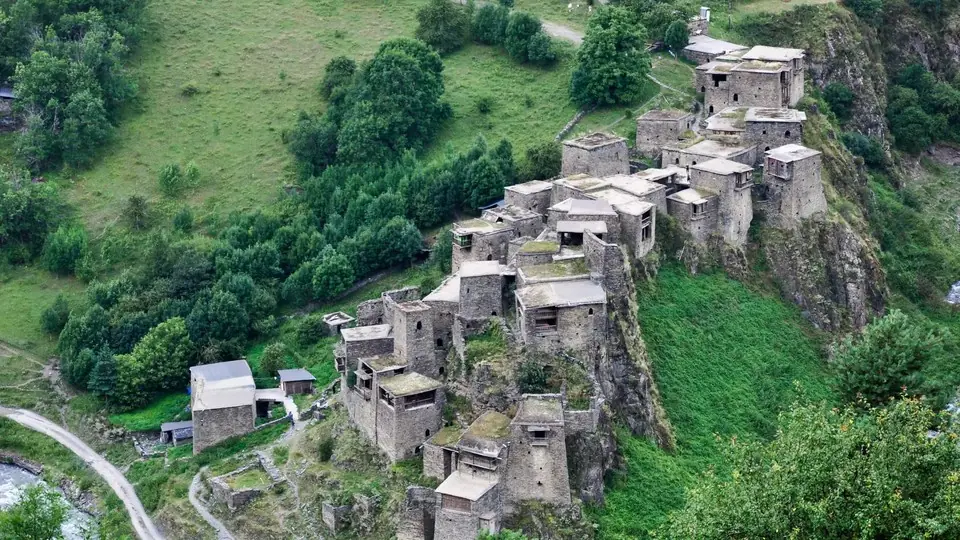
- Shatili, Khevsureti: Shatiloba in August brings Khevsur music and dance back to the tower village.
- Batumi: the Gandagana festival of highland Adjara fills the city centre with folk concerts, crafts and village food once a year in autumn. The date moves between late September and late November, so check gobatumi.com before you plan around it.
Weddings and family feasts are where Georgians dance most, and at a supra a song can turn into a dance between the tables. In the capital, Tbilisoba in early October puts folk groups on stages across the Old Town.
Learning a few Georgian dance steps
Nobody masters Georgian dance on holiday, but a short lesson teaches the posture and a few steps.
Several Tbilisi studios run beginner classes for visitors of about two hours, listed on the big activity booking sites. Acharuli and Kartuli are the usual first dances. If you would like a lesson, tell us when you plan your trip and we will try to fit one in.
- Stand tall, with your chest lifted and your shoulders still. The upper body hardly moves.
- Men hold the arms out wide, one a little higher. Women keep the arms soft and round.
- Take small, quick steps on the balls of your feet. Leave the toe work to trained dancers, as it can injure untrained feet.
Etiquette when locals invite you to dance
At weddings, feasts and village festivals, someone will probably pull you into a dance. Say yes. Nobody expects real steps, and a guest who tries wins a lot of goodwill.
- Keep a polite distance from a partner of the other sex, as in Kartuli. Do not take a woman's hand or waist unless she offers it.
- In a ring or a chain, link arms the way your neighbours do and follow the leader.
- When a circle forms around one or two soloists, watch and clap. Step in only when someone waves you in.
- Ask before you film at a wedding or a church feast, and never use a flash at a concert.
Georgian dance FAQ
What is the Georgian national dance?
Kartuli, the restrained couple dance whose name simply means Georgian, is the one most often given that title. It joined the national heritage list in 2020. Khorumi, Perkhuli and Gandagana hold the same status.
Is Georgian dance on the UNESCO list?
No. Georgian polyphonic singing is on UNESCO's intangible heritage list, but no Georgian dance is. Four dances are on Georgia's own national list, a step Georgia requires before an item can be put forward to UNESCO.
Why do Georgian men dance on their toes?
It is the signature move of the men's dances, done in soft leather boots with no blocks inside. The Sukhishvili company links it to an old idea that a man should not kneel to a woman, so he showed off on his toes instead.
Where can I see Georgian dance in Tbilisi?
Look for a Sukhishvili concert at the Tbilisi Concert Hall, mostly in late spring or early summer, or the Art-Gene Folk Festival in late July. At other times a folk-show restaurant is the easiest choice.
When does Sukhishvili perform in Tbilisi?
Dates change every year, and the company tours abroad for months. Its home concerts have tended to fall in May and June, so check the Tbilisi Concert Hall before you travel.
Can tourists take a Georgian dance class in Tbilisi?
Yes. Several studios run beginner lessons of about two hours for visitors, usually in Acharuli or Kartuli. No experience is needed.
Do Georgian dancers touch each other?
In Kartuli, no. The man keeps his distance and never touches the woman, so there are no lifts. Group and round dances are different: dancers link arms, and in Partsa they even stand on each other's shoulders.