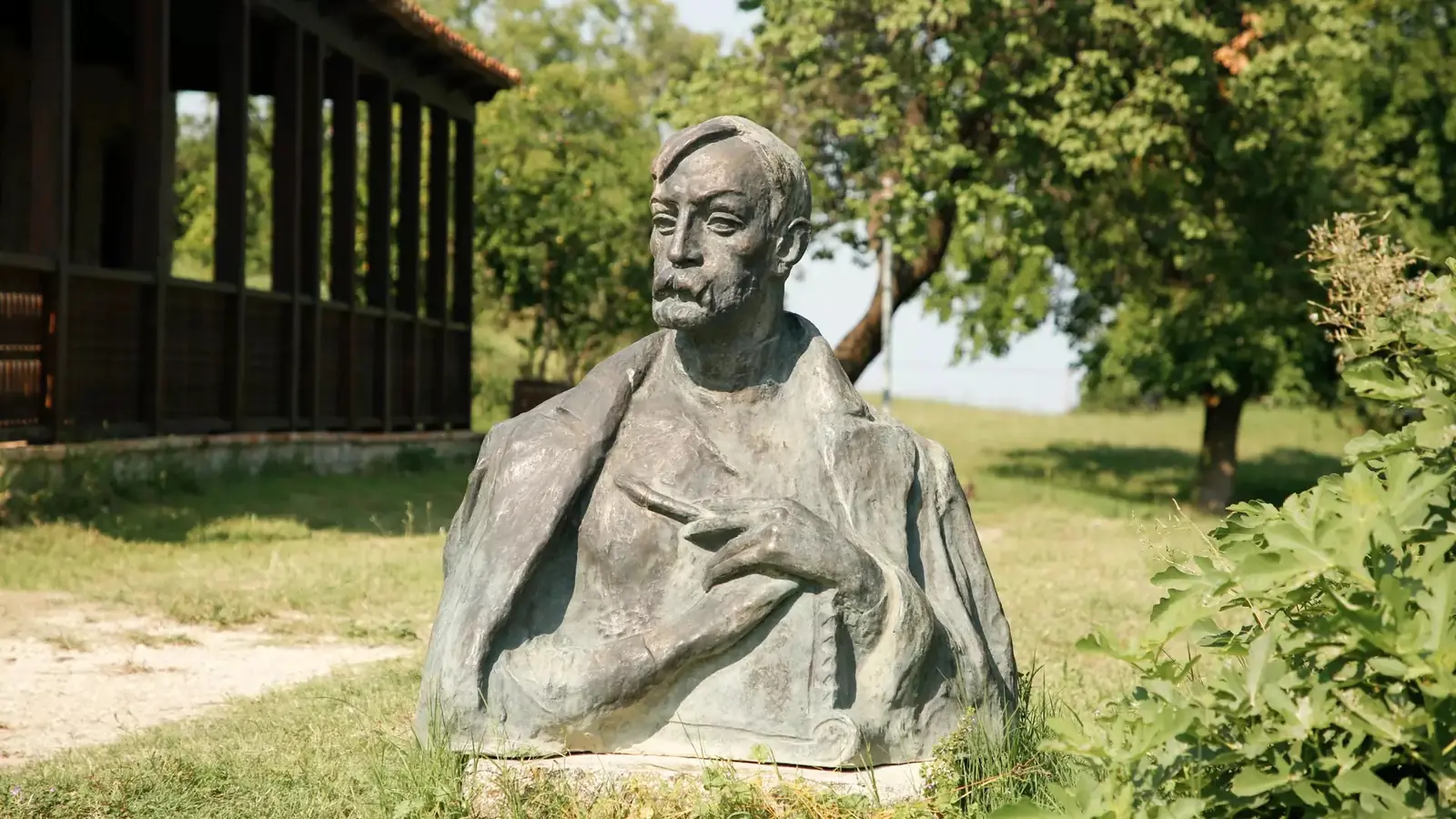
- Niko Pirosmani was born in about 1862 in Mirzaani, Kakheti. He painted shop signs and tavern pictures in Tbilisi and died poor in 1918.
- His style is easy to spot: black oilcloth left bare as the background, still figures that face you, calm animals and long feast tables.
- Tbilisi's National Gallery has the biggest display of his work. In 2026 his paintings filled four rooms there, and a foreign adult's ticket cost about 25 GEL (about $10).
- In Kakheti, the Sighnaghi Museum shows more than a dozen of his paintings. His house museum in Mirzaani, ~14 km away, holds about 14 more.
- Sighnaghi, Mirzaani and Dedoplistskaro fit into one long day out of the capital, ~275 km in all, with some 5 hours on the road.
Niko Pirosmani (about 1862-1918) was a self-taught Georgian painter who worked for meals and wine in Tbilisi taverns and died in poverty. Today his pictures are national treasures. The best places to see them are the National Gallery on Rustaveli Avenue in Tbilisi, the town museum in Sighnaghi and his house museum in Mirzaani, the Kakheti village where he was born. He painted on cheap black oilcloth: feasts, animals, shopkeepers and farm folk against dark, empty grounds.
This guide tells his life in short, with the famous tale of the actress and the roses, and shows you how to read his pictures. Then comes the practical part: what hangs where, 2026 tickets and hours, and a one-day route through eastern Kakheti that links Sighnaghi, Mirzaani and the steppe town of Dedoplistskaro. A short FAQ closes the page.
Who was Niko Pirosmani? A short life
His full name was Nikoloz Pirosmanashvili, and Georgians still call him Nikala, a fond form of Niko. He was born in about 1862 in Mirzaani, a farming village in eastern Kakheti. He lost both parents as a child, and in 1870 his older sisters took him to Tbilisi. There he served in wealthy homes and learned to read Georgian and Russian.
He never went to art school. In 1882 he and Gigo Zaziashvili, another untrained painter, opened a workshop for shop signs. It made little money. Later he worked as a railway conductor and ran a dairy shop with a partner. From the early 1900s he lived almost wholly by his brush.
His clients ran the dukhani, the cheap wine cellars of the poorer districts. They paid him in food, drink and a corner to sleep in. He painted their signs, their families and big pictures for their walls. He kept no list, so many works are lost. About 200 survive.
In 1912 the painter Kirill Zdanevich, his brother Ilia, a poet, and their friend Mikhail Le-Dantyu came across his pictures in a tavern. Four of his works hung in a Moscow show in 1913. In 1916 the new Society of Georgian Painters asked him to its meetings. Soon after, a newspaper cartoon mocked him, and he pulled away, badly hurt.
War and revolution brought hunger to Tbilisi. In the spring of 1918 he was found ill and starving in the small room under a stairway where he slept. He died in hospital soon after. He was buried in Tbilisi's St Nino cemetery, but the spot was never marked, and his grave has never been found.
Pirosmani paintings: how to recognise his style
You can learn to spot a Pirosmani in a minute. Most of his pictures are on black oilcloth, the cheap, shiny cloth that taverns used on their tables. He left large parts of it bare, so the black becomes night, shadow or earth. Over it he laid a few plain colours: white, red, green, brown and yellow. The effect is flat and solemn, part icon and part shop sign.
- People who stand still and face you, with grave, unsmiling faces.
- Animals alone in a dark field: a giraffe, a deer, a bear under the moon, a lion. Their eyes look straight at you.
- Feasts: men in a row behind a long table of bread, fish and wine, with a tamada raising his glass.
- Words in Georgian letters painted onto the picture, such as a shop name or a title.
- The life he knew in Tbilisi and Kakheti: grape pickers, fishermen, street traders, mothers with children, and heroes such as Queen Tamar and the poet Shota Rustaveli.
Margarita and the million roses: a legend
One story about Pirosmani is better known than any painting. In the early 1900s, it says, a French actress and singer named Margarita came to Tbilisi to perform. The poor painter fell in love. One morning he sold all he owned and filled the street below her window with carts of flowers. She kissed him and soon left the city. They never met again.
No record proves any of it. The writer Konstantin Paustovsky told the tale decades later, and each retelling changes it. It won fame across the Soviet Union in the early 1980s, when Alla Pugacheva sang "A Million Scarlet Roses" to words by Andrei Voznesensky. The painting is real, though. His portrait of the actress Margarita, dated 1909, hung in the National Gallery in Tbilisi in 2026.
From tavern walls to the Louvre
Fame came only after his death. The first book on him appeared in 1926. Dimitri Shevardnadze, the painter behind the 1916 society, set up the National Gallery in 1920. It is now the main showcase for his work.
Critics in Paris came to prize him as a great naive painter. A 1969 show in Paris, at the Museum of Decorative Arts in the Louvre palace, made him known abroad, the same year Giorgi Shengelaia made his film "Pirosmani". Picasso drew his portrait in 1972. Big shows followed in Vienna in 2018-19 and near Basel in 2023-24.
Where to see Niko Pirosmani's paintings: the main museums
Most of his surviving work is state property. The Art Museum of Georgia owns about 140 paintings, the largest group anywhere, but only part is on show at once.
| Place | What you see | Foreign adult ticket (2026) | Usual hours (2026) |
|---|---|---|---|
| National Gallery, 11 Rustaveli Avenue, Tbilisi | The main Pirosmani display: four rooms, about 50 works | About 25 GEL (about $10) | Tue-Sun 10:00-18:00 |
| Art Museum of Georgia, off Freedom Square, Tbilisi | Owner of the main collection; a few of his works hang with Georgian art of 1900-1930 | About 40 GEL (about $15) | Tue-Sun 10:00-18:00 |
| Sighnaghi Museum, Kakheti | A room of his paintings, plus Kakheti history and archaeology | About 20 GEL (about $8) | Tue-Sun 10:00-18:00 |
| Pirosmani house museum, Mirzaani | The house he built, his belongings and about 14 paintings | About 5 GEL (about $2) | Tue-Sun 10:00-18:00 |
All four close on Mondays, and the state museums also close on public holidays. Buy your ticket at least 30 minutes before closing time.
Where to see Pirosmani in Tbilisi: the National Gallery
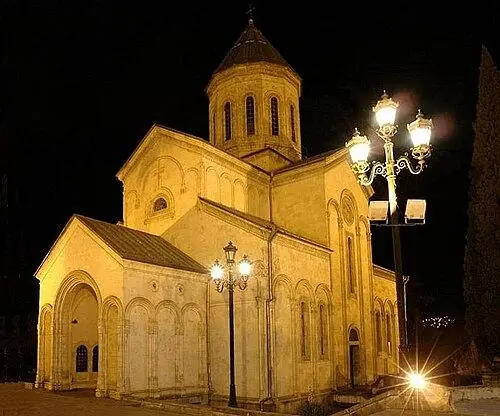
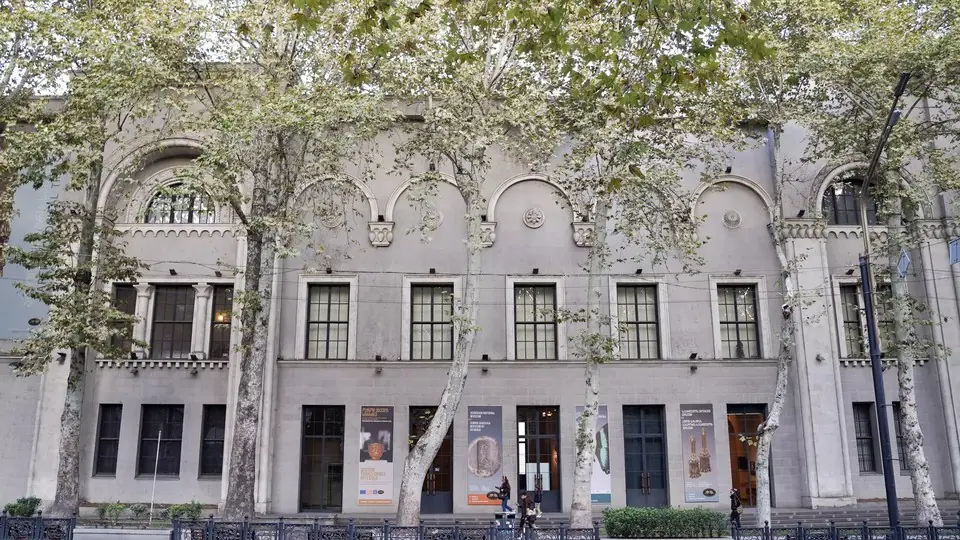
The National Gallery stands at 11 Rustaveli Avenue, right beside Kashveti Church. Albert Salzmann designed the building in 1888-1892 as the Temple of Glory, a Russian army museum. A glass roof floods the main halls with daylight. Many locals still call it the Blue Gallery, after the colour its walls once wore.
After a long closure for upkeep, the gallery opened again in spring 2026. Its permanent Pirosmani show takes up four rooms, with about 50 works. Look for the Giraffe, Actress Margarita, harvest scenes and his Easter tables. Captions are short, so read a little first or bring a guide. In 2026 a ticket for a foreign visitor was about 25 GEL (about $10). The gallery is usually open 10:00-18:00 from Tuesday to Sunday.
Allow about an hour. Then walk a few minutes down the avenue to the Georgian National Museum for the ancient gold in its treasury.
Other Pirosmani stops in Tbilisi
- Art Museum of Georgia. It reopened in October 2024 in a new wing off Freedom Square, entered from Lado Gudiashvili Street. A few Pirosmani canvases hang among Georgian paintings of 1900-1930.
- Art Palace of Georgia, 6 Kargareteli Street. This museum of theatre, music, film and dance keeps painted shop signboards from his early years. A ticket was about 12 GEL (about $5) in 2026.
- Dry Bridge market. Good for painted copies of his animals, not for originals.
Our private Tbilisi walking tour can finish at the National Gallery. Any date works, a group of two or twenty is fine, and your guide speaks your language.
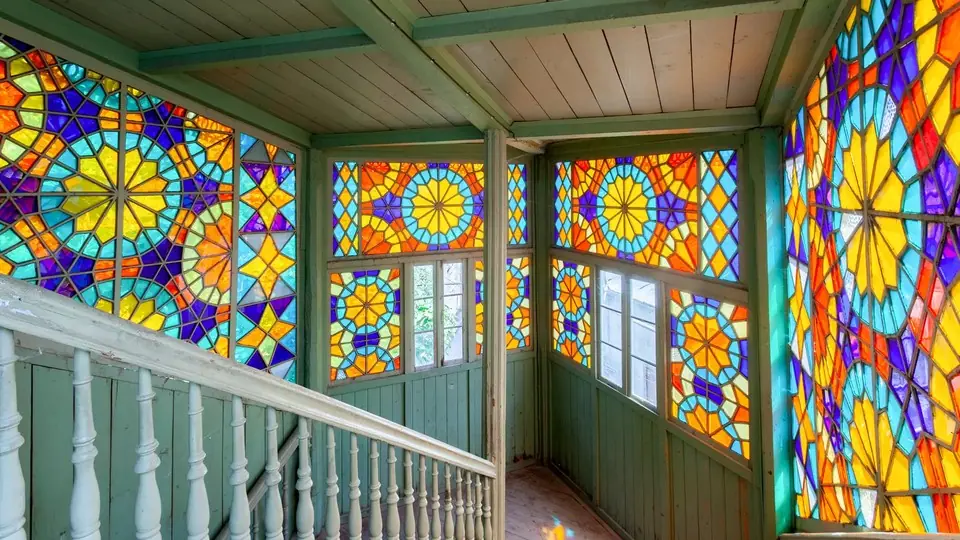
Pirosmani at the Sighnaghi Museum
Sighnaghi, the walled hill town ~14 km from Mirzaani, is the easiest place to see him outside the capital. Its town museum, part of the national museum network, mixes local history and art. Stone tools, bronzes and church finds tell the story of the region. The draw for most visitors, though, is a room of more than a dozen Pirosmani paintings: portraits, animals and country scenes.
Give it 45 minutes to an hour. In 2026 the town's tourism website listed about 20 GEL (about $8) for foreign adults, though the museum's own page still showed a lower, older fare. Doors usually open at 10:00 and close at 18:00, Tuesday to Sunday. For the walls, Bodbe and wine cellars, see our Kakheti travel guide.
Pirosmani in Mirzaani: the house museum
Mirzaani lies south-east of Sighnaghi, on the road from Tsnori towards Dedoplistskaro. The house museum is at 29 Pirosmani Street. Pirosmani built this small house himself in 1898, and it opened as a museum in 1960. The state heritage agency runs it today.
Inside you find about 14 of his paintings, his belongings, old rugs and farm tools from the Kiziki area, and a lithograph by Picasso. Works by later Georgian painters, Lado Gudiashvili among them, hang here too. Above all, you stand in the village whose fields, feasts and animals he kept painting in Tbilisi for the rest of his life.
The official tariff in 2026 was about 5 GEL (about $2) for an adult. A guided visit in a foreign language cost about 30 GEL (about $12) in 2026. The museum is usually open 10:00-18:00 and closed on Mondays.
A one-day Pirosmani route in Kakheti
Sighnaghi, Mirzaani and Dedoplistskaro sit in a neat line in eastern Kakheti. With a car and driver, all three fit into one long day from Tbilisi: a loop of ~275 km with about 5 hours of driving. Avoid Mondays, when both museums close.
- 08:30 Leave Tbilisi
Drive east through Sagarejo, ~110 km and about 2 hours. Bodbe Monastery, 2 km from Sighnaghi, makes a short first stop. - 10:30 Sighnaghi
See the Pirosmani room, then walk a stretch of the town wall. - 13:00 Lunch
Eat in town or with a winemaking family in the valley below. - 14:30 Mirzaani
Drive ~14 km, about 25 minutes, south-east to the house museum. Allow an hour. - 16:00 Khornabuji
Continue ~21 km, about half an hour, to Dedoplistskaro and Khornabuji Fortress. Climb to the ruined walls on the ridge for the view over the Shiraki plain. - 17:30 Back to Tbilisi
The direct road home is ~130 km, about 2 to 2.5 hours.
With a night in Sighnaghi, see the museum and walls on day one and Mirzaani and the fortress the next morning. Then go on to Vashlovani National Park or head back to Tbilisi.
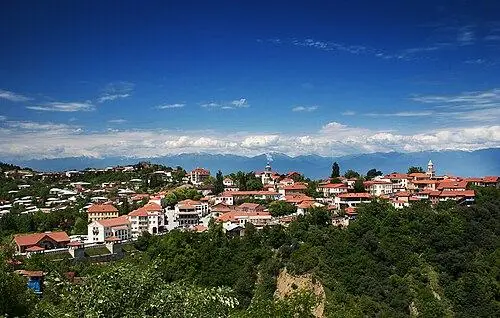
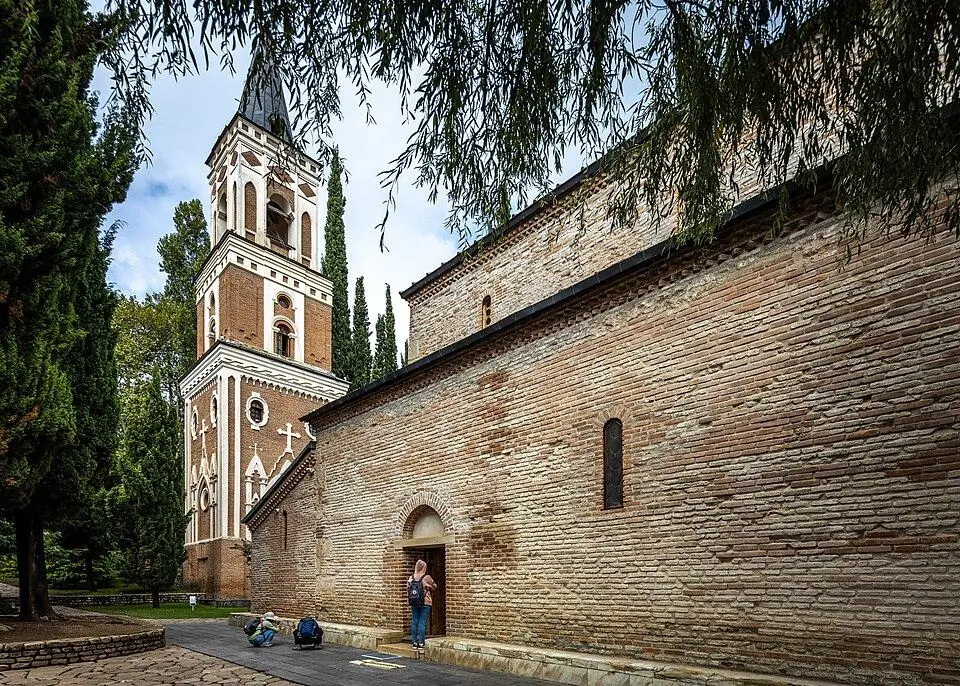
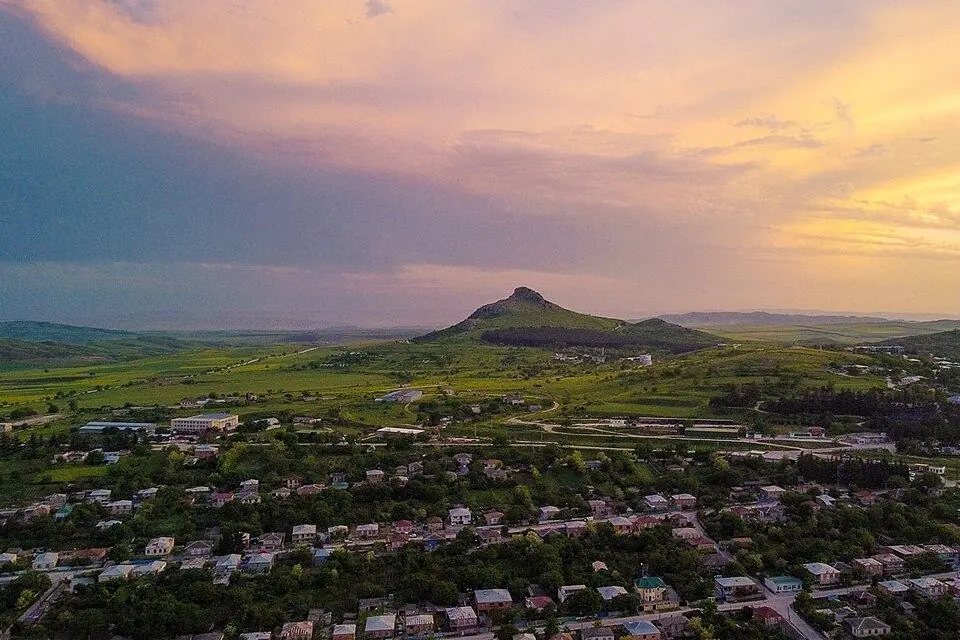
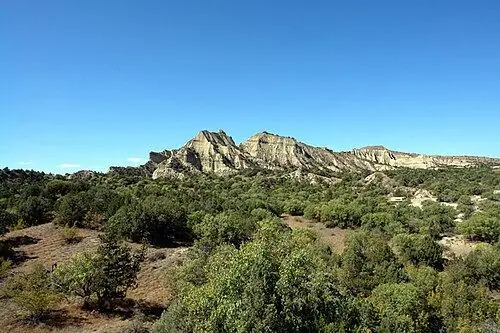
Our Kakheti Wine Day Trip is private. It runs on any date, for groups large or small, and your guide speaks your language. We can drop the Tsinandali estate and add the Sighnaghi Museum and Mirzaani instead, which turns it into a Pirosmani day with a cellar lunch. Foreign visitors must also hold travel insurance, and the policy has to cover 30,000 GEL or more.
Niko Pirosmani FAQ
Who was Niko Pirosmani?
He was a self-taught Georgian painter, born in about 1862 in Mirzaani in Kakheti. He painted signs and tavern pictures in Tbilisi, often for food and a bed, and died poor in 1918. Today he is Georgia's best-loved artist.
Where can I see Pirosmani paintings in Tbilisi?
Go to the National Gallery at 11 Rustaveli Avenue, where four rooms held about 50 of his works in 2026. The Art Museum of Georgia, off Freedom Square, shows a few more. Both close on Mondays.
Is there a Pirosmani museum?
Yes. His house museum in Mirzaani, his birth village, opened in 1960 in a house he built in 1898. It holds about 14 of his paintings and his belongings.
How far is Mirzaani from Sighnaghi and Tbilisi?
Mirzaani is ~14 km from Sighnaghi, about 25 minutes by car, and ~114 km from Tbilisi, about 2 hours. A car, a taxi from Sighnaghi or a private tour is the easiest way there.
What is Pirosmani's most famous painting?
Many Georgians would name the Giraffe, Actress Margarita or Fisherman in a Red Shirt. His feasts and lone animals on black grounds are just as loved.
Is the million roses story true?
Nobody knows. The tale of the flowers for the actress Margarita comes from later retellings, not from records of his time. It inspired the 1980s hit song "A Million Scarlet Roses". His 1909 portrait of her is real.