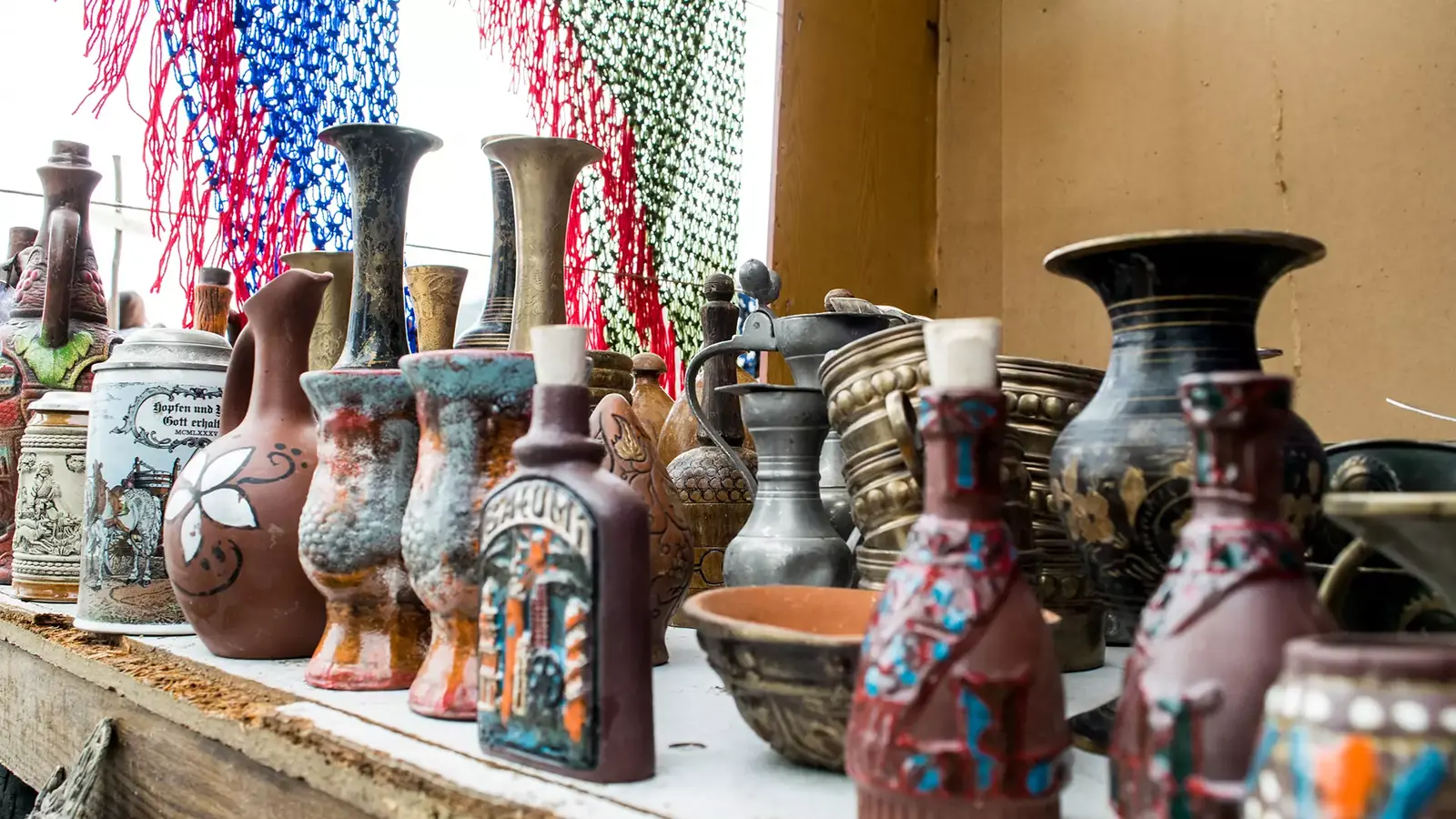
- The best Georgian souvenirs are wine and chacha, churchkhela and spice mixes, cloisonné enamel (minankari), Tusheti felt, kilims and the round Svan felt hat.
- Most cost little: in 2026 a stick of churchkhela is about 3-5 GEL (about $1-2) and a good bottle of wine about 15-40 GEL (about $6-15).
- Buy each thing near its maker when you can: wine at a Kakheti cellar, felt from Tush families, spices at a town bazaar and enamel from a Tbilisi workshop.
- Georgia puts no cap on wine or chacha for your own use, but the country you fly to does. The EU's 2026 duty-free limit is 4 litres of still wine plus a litre of spirits. Great Britain allows 18 litres of wine and 4 of spirits.
- Modern crafts need no papers. Old icons, paintings, manuscripts and other cultural valuables need an export permit from the Ministry of Culture, and wildlife trophies cannot leave at all.
The best Georgian souvenirs are things you can drink, eat or wear: a bottle of qvevri wine, a few sticks of churchkhela, a bag of Svanetian salt, a felt hat from the mountains or a small piece of cloisonné enamel. Families make most of them, and most cost less than a dinner out. The best places to buy are often far from the capital. Wine is best bought at the cellar door in Kakheti, felt from the shepherd families of Tusheti, and spices at a town bazaar.
This guide covers what to buy in Georgia, item by item. For each one you get where it comes from, how to spot good quality and what it costs in 2026. A table shows where to shop in each region. Then come the rules for flying it all home: bottle limits for the EU, the UK and the US, food bans and the export permit for antiques and art. The last part has gift ideas for Christmas and New Year. For markets and malls in the capital, see our guide to shopping in Tbilisi.
Georgian souvenirs at a glance: what to buy and what it costs
The prices below are rough figures for autumn 2026, in lari, converted to dollars at roughly 2.6 lari each. Bazaars and village stalls charge less than shops in Old Tbilisi. Quality moves the price more than anything else.
| Souvenir | Best bought in | Rough price, 2026 | Packing |
|---|---|---|---|
| Wine: Saperavi, amber Rkatsiteli | Family cellars in Kakheti; Tbilisi wine shops | about 15-40 GEL (about $6-15) a bottle | Hold, wrapped in clothes |
| Chacha and Georgian brandy | Wineries, wine shops, airport duty-free | about 20-60 GEL (about $8-23); aged craft bottles about 70-115 GEL (about $27-44) | Hold; 24-70% alcohol only |
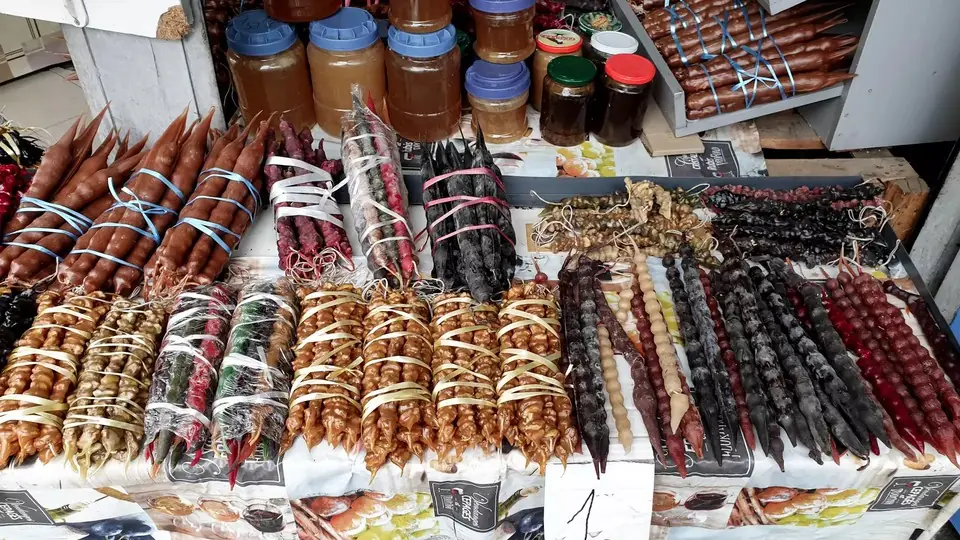
| Churchkhela | Bazaars and roadside stalls in Kakheti | each stick about 3-5 GEL (about $1-2) | Cabin or hold |
| Spices: Svanetian salt, khmeli suneli | Town bazaars; Mestia for Svan salt | per bag, about 2-5 GEL (about $1-2) | Cabin or hold |
| Tkemali sauce and adjika | Bazaars and supermarkets | about 4-10 GEL (about $2-4) a bottle or jar | Hold (counts as liquid) |
| Gurian tea and mountain honey | Guria, Adjara, roadside stalls | tea about 8-25 GEL (about $3-10); honey about 15-35 GEL (about $6-13) a jar | Honey in the hold |
| Cloisonné enamel (minankari) | Workshops in Tbilisi | silver pieces about 60-300 GEL (about $23-115) | Cabin |
| Felt slippers, hats and rugs | Tush makers in Kakheti; Tbilisi craft shops | slippers about 30-70 GEL (about $12-27) | Light and squashable |
| Svan felt hat (svanuri kudi) | Mestia; stalls all over Georgia | about 20-50 GEL (about $8-19) | Light |
| Kilims and carpets | Dealers in Old Tbilisi; Kakheti workshops | small new kilim from about 150 GEL (about $58) | Roll it; old rugs need papers |
| Clay jugs and cups | Pottery stalls in Imereti; craft shops | about 20-80 GEL (about $8-31) | Wrap well |
| Drinking horn (kantsi) | Souvenir shops, Dry Bridge Market | about 30-150 GEL (about $12-58) | Hold |
| Chokha coat | Tbilisi tailors and shops | about 420-960 GEL (about $160-370) ready-made | Fold flat |

Georgian wine and chacha: the souvenir everyone wants
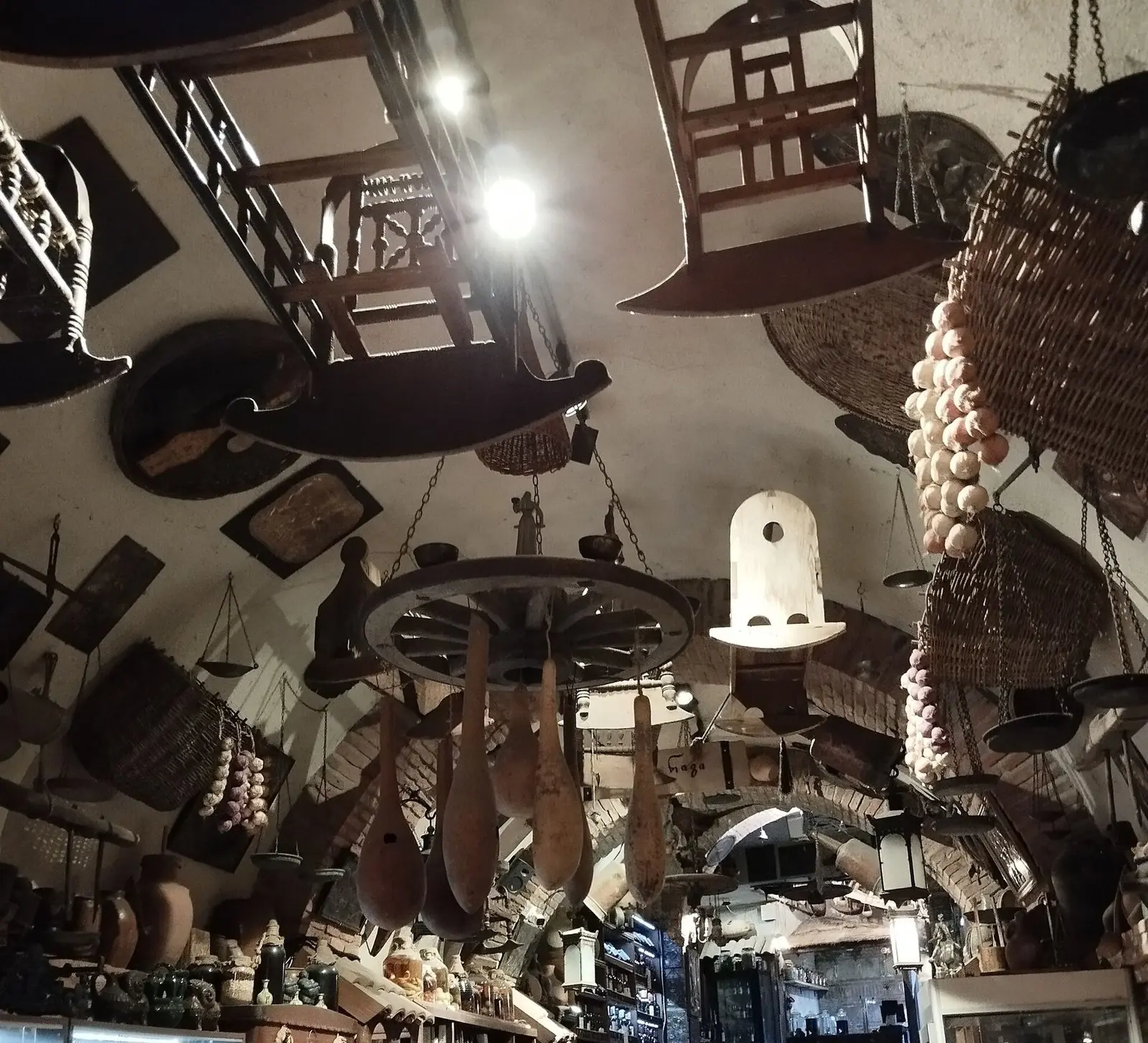
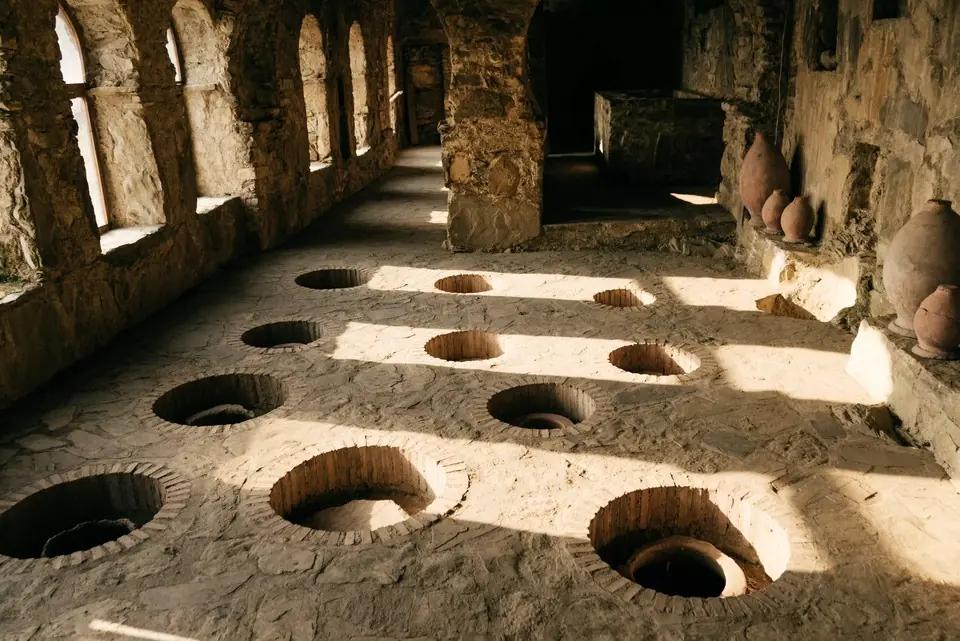
Wine is the first thing most people pack. Georgia counts more than 500 native grapes, and only a few dozen reach the shops. Two of them fill most bottles. Saperavi makes deep, inky reds. Rkatsiteli is the main white: crisp from steel tanks, nutty and grippy when made the old way in a qvevri, the clay jar buried in the cellar floor.
Amber wine made in qvevri is the bottle that tastes most of Georgia, and it is hard to find abroad. Producers who use qvevri print the word on the label, often in English.
Which bottles to buy
- Dry red: a Saperavi, or Mukuzani, a protected name for oak-aged Saperavi from one zone of Kakheti.
- Amber: Rkatsiteli, Kisi or Mtsvane fermented on the skins in qvevri. Serve it slightly cool with cheese and walnuts.
- Semi-sweet red: Kindzmarauli from Kakheti or Khvanchkara from Racha, for friends who like a softer, sweeter wine.
- A wine from a region you visited: Racha, Imereti and Kartli bottles are rare outside Georgia, so they make a good story at home.
Where possible, buy straight from the cellar. A family winery lets you taste first, the price is fair and the money stays in the village. Many cellars keep boxes for guests. In Tbilisi, specialist wine shops sell small producers from every region, and supermarkets carry the big brands at fair prices. Our guide to Georgian wine explains grapes, styles and cellars in depth.
Chacha and Georgian brandy
Chacha is the spirit Georgians distil from grape pomace: the skins, pips and stalks that remain once the wine is pressed. Factory bottles hold 40-50% alcohol and carry an excise stamp across the cap. For a gift, pick an oak-aged chacha from a winery you liked. Georgian brandy, sold as konyaki, is distilled from wine and aged in oak for years, and it suits an older relative. Our chacha guide covers the styles and how to drink it.


Food souvenirs from Georgia: churchkhela, spices, sauces and tea
Food is the cheapest way to take Georgia home, and most of it survives the trip.
Churchkhela
Churchkhela is a string of nuts dipped many times in grape juice thickened with flour, then hung up to dry. The new batch arrives from October to December, after the harvest, so it is a natural winter gift. Choose sticks that feel soft and a little tacky, not rock hard. Kakheti makes the walnut kind. In the west, from Imereti to Guria, hazelnuts and corn flour are common. Our churchkhela guide has the full story.
Spices
- Svanetian salt: coarse salt pounded with garlic, chilli, blue fenugreek, coriander and other seeds. Families in Mestia still make it by hand, and every big bazaar sells it.
- Khmeli suneli: a dried blend of coriander, fenugreek, marigold, savory and other herbs, used in stews and walnut sauces.
- Utskho suneli: blue fenugreek, sweet and nutty, behind much of the taste of Georgian food.
- Imeretian saffron: dried marigold petals. It gives colour and a gentle flavour, but it is not real saffron, so do not pay saffron prices.
At a bazaar, spices are sold loose by weight. Ask for each bag to be sealed twice, or your suitcase will smell of garlic for months.
Sauces, tea and honey
Tkemali, the sour plum sauce, comes red or green and goes with grilled meat and potatoes. Adjika from Samegrelo is a fiery paste of chilli, garlic and herbs. Both count as liquids at airport security, so pack them in the hold. Gurian tea grows on the green hills of Guria and Adjara and comes in neat packs from small estates. Honey is sold by the jar at roadside stalls, for example by the gate of Ananuri on the Georgian Military Road.



Georgian enamel (minankari): what it is and how to buy it
Cloisonné enamel is Georgia's finest small craft, and Georgians call it minankari. The jeweller bends thin gold or silver wire into tiny cells on a metal plate. Each cell takes a pinch of coloured glass powder. The piece goes into the kiln, and the filling and firing repeat until the surface is smooth and glossy.
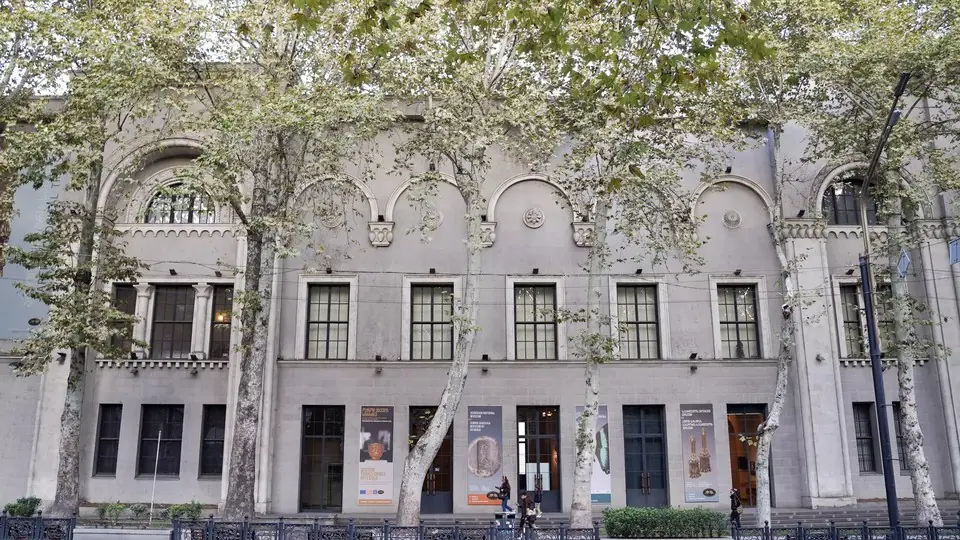
The craft runs deep here. The Khakhuli triptych, a huge medieval icon now in the Fine Arts Museum in Tbilisi, carries 115 enamel plaques made in Georgian and Byzantine workshops between the 8th and 12th centuries. See it before you shop, and you will judge new work much better. Many small studios in Tbilisi make enamel jewellery the same way today.
How to tell real enamel
- Look closely: real cloisonné shows fine metal lines between the colours.
- The surface is glassy and very slightly uneven. Flat, perfect colour with no wire lines usually means resin or a print.
- Ask about the base. Silver is normal and gold costs several times more. Copper is cheaper but darkens with time.
- Ask to see the bench. Many makers work behind the shop and are happy to show the steps.
Popular designs are pomegranates, vines, birds, the Borjgali sun sign and letters of the Georgian alphabet. A silver pendant or pair of earrings costs about 60-300 GEL (about $23-115) in 2026. Big pieces and gold cost far more.
Felt, wool socks and the Svan hat: crafts from the mountains
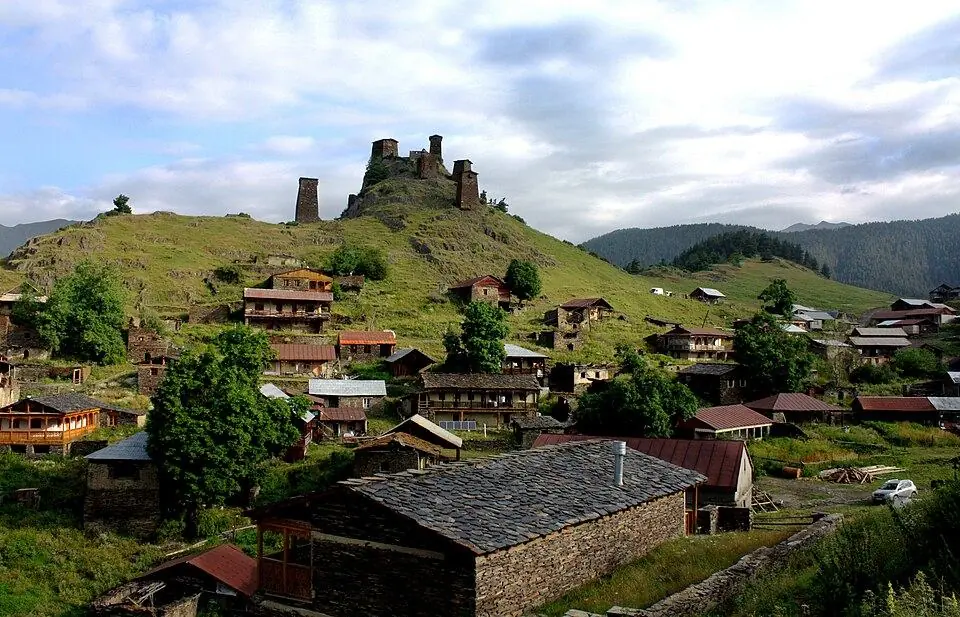
Felt is the oldest cloth in Georgia. Shepherds in the high valleys pressed wool into felt for cloaks, rugs and tent covers, and some families still do. Tusheti, in the far north-east, is the best-known source. In winter many Tush families live down in the lowlands, in the villages of Zemo and Kvemo Alvani in Kakheti. So their felt and knitting are easiest to find there and in Tbilisi craft shops.
- Felt slippers and hats: warm and almost weightless. In 2026 slippers cost about 30-70 GEL (about $12-27).
- Felt rugs and wall hangings: soft wool pressed into patterns, often in reds, browns and natural greys.
- Knitted socks: thick wool socks in bold patterns, sold at mountain roadside stalls and in Tbilisi. A pair costs about 15-35 GEL (about $6-13).
- Chitebi: the bright hand-knitted slippers of Tusheti, a cosy gift for children.
The Svan hat
The svanuri kudi is a round felt cap, stitched with a dark cross on the crown. Svan men wear it in sun and snow alike, and stalls sell it all over Georgia. A good one is thick and holds its shape. Thin, cheap ones sag within a week. If your route reaches Svaneti, buy it in Mestia. Our Georgian chokha guide explains the rest of the national dress.
Georgian carpets, kilims and the blue tablecloth
Georgia has a long weaving history, but here flat-woven rugs, called pardagi, are more typical than knotted pile carpets. Tush women wove dark kilims coloured with plant dyes such as madder and barberry. In 20th-century Kakheti, weavers made bright kilims full of animals, birds and people. In Kvemo Kartli, women of the Azerbaijani community weave Borchalo pile carpets, a craft only a few dozen weavers keep alive. In Dedoplistskaro, a studio has revived the old Kiziki patterns of the Sighnaghi area.
Take care in the rug shops. Many rugs sold in Tbilisi come from Azerbaijan, Armenia, Iran or Turkey, and some are made by machine. That is fine if the price and the story are honest. Ask where and when it was woven, and have it written on the receipt. In 2026 a small new kilim starts from about 150 GEL (about $58). Old pieces cost far more, and an old rug may need an export permit, explained below.
Lurji supra, the blue tablecloth
A cheaper textile with a story is the lurji supra. It is a cotton tablecloth printed in blue with plants, stars, birds and feasting figures. It was common in eastern Georgia, and the state lists the craft as national intangible heritage. A few small workshops print them by hand again, and they fold flat in a suitcase.


Ceramics, drinking horns, crosses and other handmade gifts
- Clay jugs and cups: the doki is a round clay wine jug, and the piala a shallow drinking bowl. Potters around Shrosha in Imereti sell them from stalls on the main road between Tbilisi and Kutaisi. Little qvevri models make good desk souvenirs.
- Drinking horns (kantsi): used for the big toasts at a supra. Choose goat or cattle horn, often with a silver or brass rim. Never buy the horns of wild tur or chamois, which are protected.
- St Nino's cross: a cross with drooping arms, first tied, the story goes, from two vine stems. Stalls around the churches of Mtskheta sell it in wood, silver and vine. New icons from church shops are fine to take home too.
- Georgian alphabet gifts: UNESCO added Georgia's three alphabets, still in daily use, to its intangible heritage list in 2016. Bracelets, mugs, posters and tea towels with the 33 letters are light and cheap.
- Daggers (khanjali): sold in silver-trimmed sheaths in souvenir shops. A dagger goes in checked luggage only.
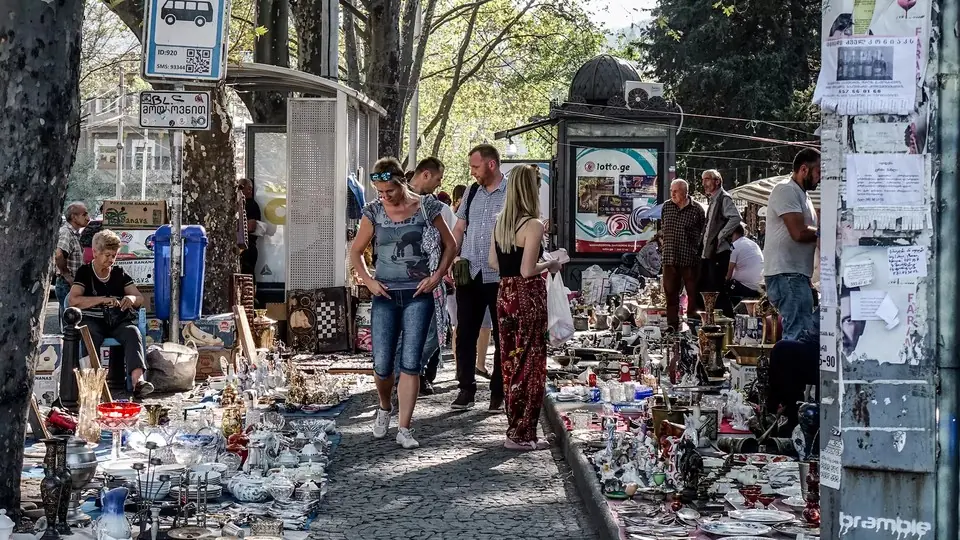
- Soviet curios: badges, old cameras and porcelain fill the Dry Bridge Market in Tbilisi.
A chokha to wear
The grandest souvenir of all is a chokha, the long wool coat of Georgian national dress. In 2026 ready-made coats cost about 420-960 GEL (about $160-370), and a set made to measure needs several fittings. For children, Old Town shops sell small chokhas. Photo studios rent full outfits by the hour if you only want the picture.

Where to buy souvenirs in Georgia, region by region
Prices fall and quality rises the closer you get to the maker. Use this table to plan your shopping along your route.
| Where | What to buy | Tip |
|---|---|---|
| Tbilisi | Everything, above all enamel, rugs and Soviet curios | Meidan Bazaar for food and drink gifts; Dry Bridge Market for curios and paintings |
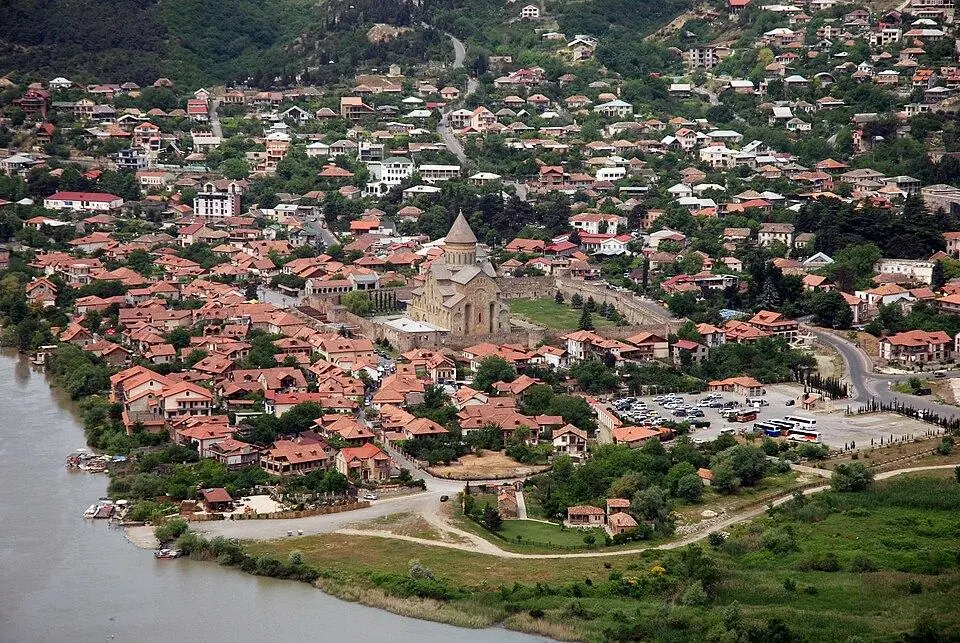
| Mtskheta, ~20 km from Tbilisi | Churchkhela, St Nino's crosses, icons, honey | Stalls line the lanes to Svetitskhoveli; busiest at weekends |
| Kakheti | Wine, chacha, churchkhela, Tush felt | Buy at the cellars; Telavi bazaar for spices; craft shops in Sighnaghi |
| Georgian Military Road and Kazbegi | Wool socks, felt hats, honey | Stalls at Ananuri and at the Friendship Monument viewpoint |
| Svaneti | Svanetian salt, Svan hats, wool | Shops in Mestia and village stalls |
| Kutaisi and Imereti | Spices, churchkhela, clay pots | Kutaisi's Green Bazaar in the morning; pottery stalls near Shrosha |
| Racha | Khvanchkara wine | Family cellars around Ambrolauri |
| Guria and Adjara | Tea and honey | Small tea estates in Guria; Batumi's markets |
| Samegrelo | Adjika and Megrelian spice mixes | The bazaar in Zugdidi |


On our private tours, your guide knows the good cellars, workshops and stalls along the way and stops wherever you like. You pick the dates, bring as many or as few people as you like, and travel with a guide fluent in your own language. Three days in the capital leave time for a market morning, a wine shop and a trip to Mtskheta.
Taking souvenirs home from Georgia: rules for wine, chacha and food
Georgia does not limit how much wine or chacha you take out for your own use. What counts is what your airline allows and what your destination lets in. Treat the figures below as a general guide for 2026, and check the official customs site of your country before you fly.
| Rule | Limit in 2026 |
|---|---|
| Airline safety rules | Over 70% alcohol: banned. 24-70%: a maximum of 5 litres each, sealed as sold |
| Cabin bags | Containers over 100 ml of wine, sauce or honey are refused, unless bought airside at duty-free and kept in the sealed bag |
| Into the EU, age 17+ | Still wine 4 litres; beer 16 litres; spirits over 22% 1 litre, or sparkling and fortified wine 2 litres |
| Into Great Britain, age 17+ | 18 litres of wine, still or sparkling; 42 litres of beer; 4 litres of spirits or 9 litres of fortified wine |
| Into the US, age 21+ | 1 litre duty-free; more with duty, subject to state law |
Above the allowance you can usually bring more for your own use, as long as you declare it and pay the duty. In Great Britain, going over means duty on every drink in that group, not just the extra bottles.
Food rules
Solid foods such as churchkhela, spices, tea and dried fruit are usually fine. The EU and the UK ban meat and milk products from outside Europe, so cheese and cured meat must stay behind. Australia and New Zealand want you to declare nuts, wood and many foods, and an officer decides. When in doubt, declare.
Antiques, art and banned souvenirs: what needs an export permit
Georgia protects its cultural valuables under a 2001 law on their export and import. It reaches far beyond museum pieces. It covers paintings, icons, sculpture, original prints, folk objects, finds from digs and rare books or manuscripts. Coins, seals and documents count once they are more than 100 years old, and so do furniture and old musical instruments. Rare fossils, minerals and natural history specimens fall under it too.
Such items need an export permit. Under the law, the Ministry of Culture issues it after an expert check. A permit covers one export and is valid for three months. Modern souvenir crafts and mass-produced goods are outside the law, so a new enamel pendant or a felt hat needs no papers. For an original painting, even a new one, ask the gallery for written proof of what it is, in case customs asks.
Never buy these
- Skins of bears, wolves or other wild animals, and horns of tur or chamois.
- Pieces of stalactite or stalagmite broken off in caves.
- Coins, crosses, jewellery or weapons said to come from old graves or digs.
- Any 'antique' icon offered with no papers.
If a dealer cannot tell you whether a piece needs a permit, walk away. Customs can seize it at the airport, and you lose both the item and the money. Spending a lot in one shop? You may get the 18% VAT back at the airport, and our guide to money in Georgia explains how tax-free shopping works.
Georgian gifts for Christmas and New Year
In Georgia, presents come at New Year, not at Christmas. Tovlis Babua, Grandfather Snow, brings them on the night of 31 December. Orthodox Christmas on 7 January is a quieter church feast. For visitors, December is a good month to shop. Fresh churchkhela is in, the Tbilisi Christmas market usually opens in mid-December, and stalls fill with sweets and crafts.
Seasonal gifts to look for
- Gozinaki: walnuts set in honey and cut into diamonds, the classic New Year sweet. It keeps for weeks in a tin.
- Chichilaki: a little tree of hazel wood shaved into white curls, the Georgian New Year tree. A table-top one flies safely inside a box of clothes. Australia asks you to declare wooden items.
- A winter box: a bottle of Saperavi, a few sticks of churchkhela and a bag of khmeli suneli for anyone who loved the food.
| Budget, 2026 | Gift ideas |
|---|---|
| Under about 20 GEL (about $8) | Churchkhela, a bag of Svanetian salt, khmeli suneli, Gurian tea, an alphabet bookmark |
| About 20-100 GEL (about $8-38) | A good wine or chacha, felt slippers, wool socks, clay cups, a Svan hat |
| About 100-300 GEL (about $38-115) | Silver enamel jewellery, aged chacha, a lurji supra, a small kilim |
| Over about 300 GEL (about $115) | A chokha made to measure, enamel in gold, an old rug with its export permit |
Sending gifts instead? Some Tbilisi shops and wineries can arrange courier delivery. Alcohol rules and duties at home still apply, and parcels sent near the holidays can take weeks. Carrying them is cheaper and safer.
Spending the holidays with a Georgian family? Bring sweets, a good bottle or something from your own country. For the customs, read our New Year in Georgia guide and our Georgian Christmas guide. On a private day in the city, your guide can add a market stop and a craft workshop to the walk.

Georgian souvenirs: FAQ
What souvenirs should I bring from Georgia?
The classic Georgian souvenirs are wine, chacha and churchkhela, then spices such as Svanetian salt, enamel jewellery, Tusheti felt and the Svan felt hat. With a bigger budget, look at kilims or a chokha. Most are light, cheap and made by families.
What is the most popular souvenir from Georgia?
Wine. Georgia has made wine for about 8,000 years, and qvevri winemaking is on UNESCO's heritage list. A bottle of amber qvevri wine from a family cellar is the gift people at home are least likely to find in their own shops.
How many bottles of wine can I take home from Georgia?
Georgia sets no limit for personal use. The 2026 EU limit is 4 litres of still wine without duty, roughly five bottles. Great Britain allows 18 litres, about 24 bottles. The US allows 1 litre duty-free. You can bring more if you declare it and pay the duty.
Can I take chacha on a plane?
Yes, in checked luggage, in sealed shop bottles of up to 70% alcohol and up to 5 litres per person. In the cabin, only duty-free bottles in a sealed bag are allowed. Homemade chacha in a plastic bottle often breaks the rules.
Can I bring churchkhela through customs?
Usually yes. It contains nuts, grape juice and flour, but no meat or milk, so the EU and UK bans do not catch it. If you fly to Australia or New Zealand, declare the nuts on your arrival card. Pack it in its own bag, since it can be sticky.
Do I need a permit to take a painting or antique out of Georgia?
For old or valuable pieces, yes. The export law covers icons, paintings, manuscripts, archaeological finds, coins over 100 years old and similar items, and the Ministry of Culture issues the permit. Modern souvenir crafts need none. For original art, ask the seller for papers before you pay.
What is minankari?
Minankari is the Georgian word for cloisonné enamel: coloured glass fired into tiny cells of gold or silver wire. Georgian workshops made it over a thousand years ago, and today it is the classic small gift in silver jewellery. Real pieces show thin metal lines between the colours.
Where can I buy souvenirs in Tbilisi?
Meidan Bazaar under Gorgasali Square is handy for food and drink gifts. The Dry Bridge Market is best for curios and paintings, and the Old Town and Sololaki for crafts and enamel. Our guide to shopping in Tbilisi covers the markets, streets and malls in detail.