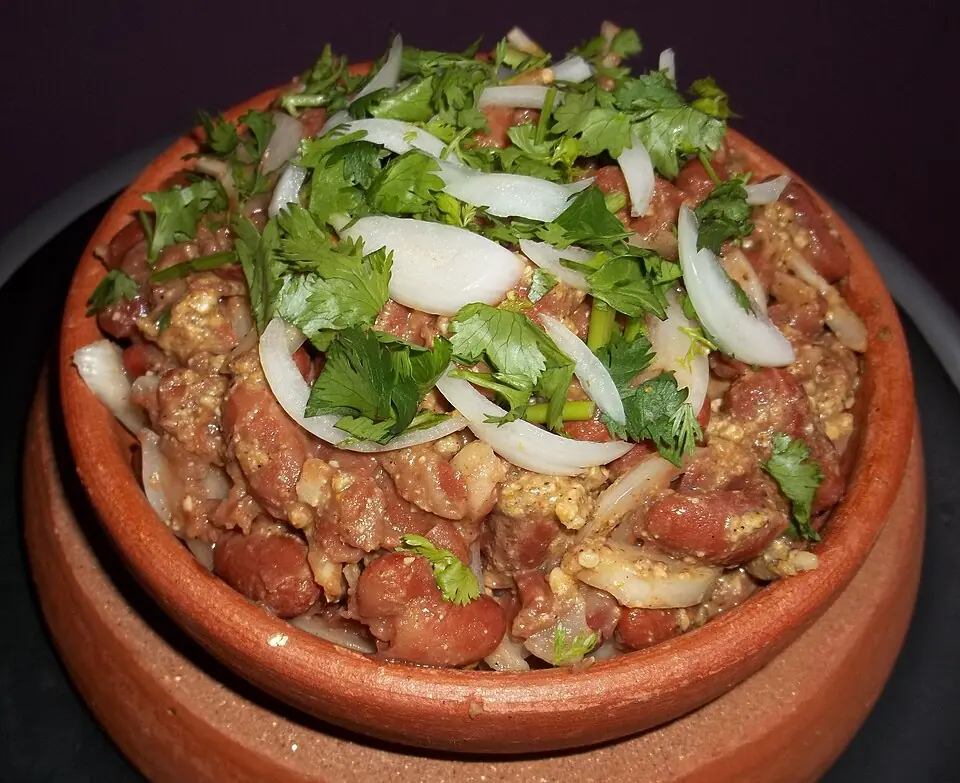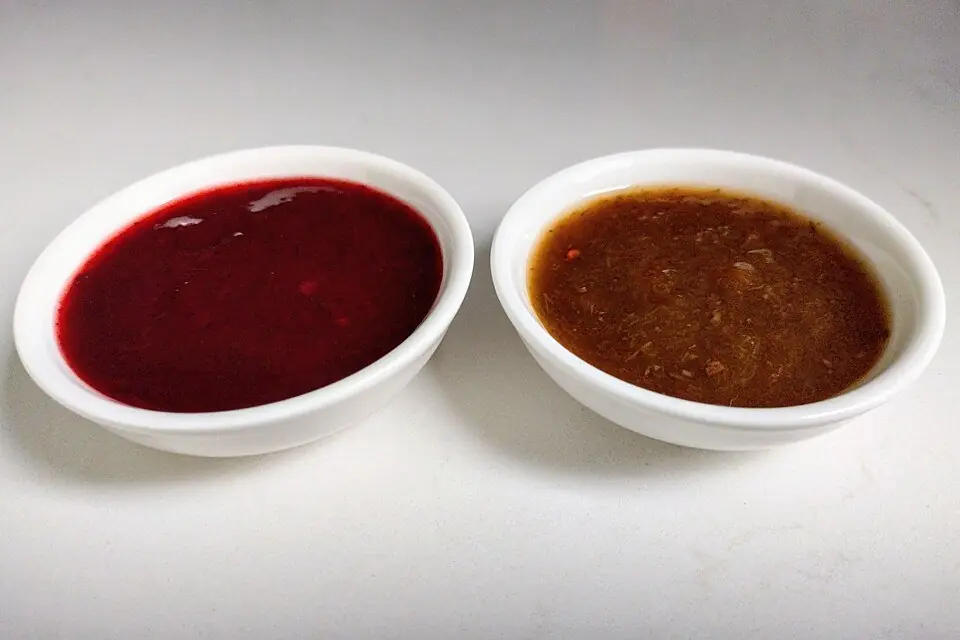
- Tkemali is Georgia's tart plum sauce, made from cherry plums cooked down with garlic, chilli, dill, coriander and ombalo (pennyroyal); green tkemali comes from unripe spring plums, red tkemali from ripe summer ones.
- Georgians pour it over mtsvadi, fried potatoes, chicken and fish and stir it into kharcho and lobio; it is free of animal products, which makes it a vegan and Lenten staple.
- Ajika (adjika) is a hot paste from Samegrelo and Abkhazia, red from dried chillies or green from fresh ones, and far stronger and drier than the tomato relish sold as adjika in Russia.
- Bazhe is a garlicky walnut sauce for fish and poultry, satsebeli a thin tomato sauce for kebabs, and smaller dips such as garlic matsoni and kindzmari each belong to particular dishes.
- Supermarket bottles cost roughly 3-6 GEL in 2026 and market homemade sauce a little more; anything over 100 ml, ajika paste included, has to fly in checked luggage.
Tkemali is Georgia's sour plum sauce: small cherry plums simmered down with garlic, chilli, fresh herbs and a wild mint called ombalo, then bottled either green or red. It goes on grilled pork, fried potatoes and roast chicken, and some kind of bottle stands on nearly every Georgian table. It is the best known of the Georgian sauces but far from the only one, because Megrelian ajika, walnut bazhe and tomato satsebeli matter just as much at a real meal.
We start with tkemali and stay with it longest: the two plum seasons, the herb that gives it its character and what to use when you cannot find that herb at home. Then come ajika, bazhe, satsebeli and the smaller dips Georgians serve with one dish only, plus a table that sets them side by side. The last part is practical, covering where to buy good sauce in Tbilisi, Kutaisi and Zugdidi, homemade against factory bottles, rough 2026 prices and how to get a few jars home without a sticky suitcase.
What is tkemali? Georgia's sour plum sauce
Tkemali (ტყემალი, said roughly TKEH-mah-lee) names both a fruit and a sauce. In Georgian it is the everyday word for the cherry plum, Prunus cerasifera, a small, sharp plum that grows half wild along village fences, river banks and country roads. The sauce cooked from that fruit took the same name, so a Georgian asking for tkemali at dinner means the bottle, not the tree.
The first taste is sour, then garlic arrives, then a cool, minty lift from the ombalo and a slow warmth of chilli. It is thinner than ketchup, closer to a loose fruit purée, and because the acid cuts straight through fat it is the default partner for anything off the grill.
| Tkemali at a glance | Short answer |
|---|---|
| Main ingredients | Cherry plums, garlic, salt, chilli, dill, coriander and ombalo (pennyroyal) |
| Kinds | Green (unripe plums), red (ripe red plums), sometimes yellow |
| Season | Green plums in late spring, red in midsummer; bottles all year |
| Diet | No meat, dairy or eggs; factory labels may list sugar or starch |
| Eat it with | Mtsvadi, fried potatoes, chicken, fish, kharcho and lobio |
Factories in Russia and elsewhere now bottle plum sauce under the same word, so Georgia has moved to protect its own: tkemali is on the national register of geographical indications, alongside cheeses, honeys and, since 2022, ajika.
Green and red tkemali sauce: the plums and the seasons
Cherry plums set fruit early and stay hard, green and fiercely sour for weeks. In spring Georgian children eat them off the branch with a pinch of salt, and from about late April stalls sell them by the kilo for two classic uses: green tkemali, and chakapuli, the Easter-season stew of lamb, tarragon and white wine that needs their acid.
Green tkemali
Cooked in late spring and early summer from plums that are still firm, green tkemali is pale olive, very tart and loud with dill and ombalo, and plenty of Georgians prefer it to red. It suits fish, spring lamb and young potatoes. A homemade batch keeps less well than red, so eat it within a few months.
Red tkemali
By July and August the red cherry plums ripen, and families cook them in big pots for the winter store. Red tkemali is rounder, slightly sweet under the sourness, with more garlic and chilli. It fills most supermarket bottles and sits beside most plates of grilled pork. Yellow plums give a golden, milder sauce, and cooks often mix kinds or add a spoon of sugar when the fruit is too sharp.
Ombalo, the herb in tkemali, and what to use abroad
Ombalo (ომბალო) is pennyroyal, Mentha pulegium, a low, creeping mint of damp meadows. Its leaves smell sharper than garden mint, with a cool, faintly medicinal edge, and that note is what separates tkemali from any other plum sauce. Families gather it in summer and dry it, and market spice sellers keep bags of it next to khmeli suneli and blue fenugreek.
Abroad it is hard to find as a kitchen herb, though some nurseries sell the plant and Georgian or Russian grocers may stock it dried. Cooks without it use garden mint or spearmint with a small pinch of dried thyme or summer savory. The sauce still tastes good, just less like the one you had in Tbilisi.
What to eat with tkemali, and how Georgians make it
How tkemali is made
Every family tweaks the method, but the outline is simple. Whole plums simmer in a little water until the skins split, then the soft fruit is pushed through a sieve so the stones and skins stay behind. The pulp goes back on the heat with crushed garlic, salt, chilli, ground coriander seed and chopped dill, coriander leaf and ombalo, and bubbles until it coats a spoon before being bottled hot.
What Georgians eat it with
- Mtsvadi: pork, veal or lamb skewers grilled over vine cuttings, with raw onion rings and a bowl of tkemali. The pairing every Georgian names first.
- Fried potatoes: potatoes fried with onion are a standard home supper and roadside lunch, and tkemali goes over the top.
- Chicken and fish: roast or fried chicken, and fried trout or Black Sea fish, often with green tkemali.
- In the pot: a splash sharpens kharcho, the beef, rice and walnut soup, and a pot of lobio beans.
- Fasting food: with no animal products, it livens up the bean, mushroom and vegetable dishes of Lent.
At a feast the sauces arrive together in small dishes around the grill platter. On our Wine and Supra tour you browse the Dezerter Bazaar among jars of ajika, take a cooking class in a Tbilisi home and, later in the week, sit down to a full supra in Kakheti. It runs privately, so you pick the dates and bring two people or twenty.



Georgian sauces compared: taste, pairings and region
Georgian cooks match each sauce to particular dishes, and a full table carries two or three at once. Use this when reading a menu or facing a market stall.
| Sauce | Taste | Eat it with | Region |
|---|---|---|---|
| Green tkemali | Very sour, fresh, herbal | Fish, spring lamb, mtsvadi, young potatoes | All Georgia; best May to June |
| Red tkemali | Sour-sweet, garlicky, mild heat | Mtsvadi, fried potatoes, chicken, kharcho | All Georgia |
| Red ajika | Very hot, salty, garlic and fenugreek | Grilled meat, roast chicken, Megrelian kharcho, ghomi with sulguni | Samegrelo and Abkhazia, now everywhere |
| Green ajika | Hot, fresh, grassy | Fresh cheese, eggs, boiled meat | Samegrelo and the west |
| Bazhe | Creamy, nutty, garlicky, lightly tart | Fried fish, chicken, turkey, aubergine, boiled vegetables | All Georgia; winter feasts |
| Satsebeli | Thin, tomato-sour, garlicky | Kababi, mtsvadi, chicken, fried potatoes | All Georgia; made in summer |
| Garlic matsoni | Cool, tangy, garlicky | Fried aubergine, mushrooms, chicken | All Georgia |
| Kindzmari | Sharp, vinegary, full of coriander | Boiled beef, chicken or fish | All Georgia |
| Niortskali | Raw garlic in salted water or broth | Chicken tabaka | All Georgia |
Ajika (adjika): Megrelian red and green chilli paste
Ajika, also spelled adjika, is a thick chilli paste and the heat behind western Georgian cooking. The word is Abkhaz, from apyrpyl-jika, pepper-salt. One origin story has Abkhaz shepherds pilfering the salt meant for their flocks until the owners spiked it with hot pepper, a mixture the shepherds liked even more. From Abkhazia it spread to Samegrelo, where it became a pillar of Megrelian food, and then across Georgia.
In November 2018 Georgia listed the method of making Abkhazian and Megrelian ajika as intangible cultural heritage, and on 29 September 2022 ajika became geographical indication No. 26. The registered specification requires hot red pepper, garlic, salt, blue fenugreek and other dried spices, and permits walnuts, seeds and herbs.
Red and green ajika
For red ajika, dried chillies, sometimes seeded to tame them, are ground again and again with garlic, salt, coriander seed and blue fenugreek into a brick-red paste about as thick as pesto, sometimes with walnuts. It is hot and salty enough to use like a seasoning: a dab on grilled meat, a rub for roast chicken, a spoon in Megrelian kharcho. Green ajika swaps in fresh green chillies and a fistful of coriander, sometimes mint or basil, for a brighter, grassier paste that suits fresh cheese, eggs and boiled meat. Markets also sell dry ajika, a coarse salt and chilli mix used as a rub.
Georgian ajika vs Abkhazian and Russian adjika
- Abkhazian: the oldest recipe uses only red pepper, salt, garlic and dried coriander, rubbed by hand between two flat stones, from peppers that were once smoked. Abkhazia is an occupied region of Georgia and most governments advise against travel there, so on a trip you will taste the Megrelian kind.
- Megrelian: the Georgian standard, more spiced, with blue fenugreek and often walnuts, in red, green and dry versions.
- Russian: in Russia adjika usually means a cooked, spoonable relish of tomatoes, sweet peppers and garlic, often with horseradish or apple, milder and much wetter, closer to a spicy salsa.
- Turkish: the Abaza community in Sakarya province makes acıka, which Turkey has registered as a geographical indication.
Zugdidi holds an Ajika Festival each summer or autumn, running since 2018, with tastings of red, green and dry ajika, Svan salt and tkemali. On our Georgian Cooking Tour you spend a day in a farmhouse kitchen near Martvili making elarji and gebzhalia, with red ajika on the table.



Bazhe: the Georgian walnut sauce
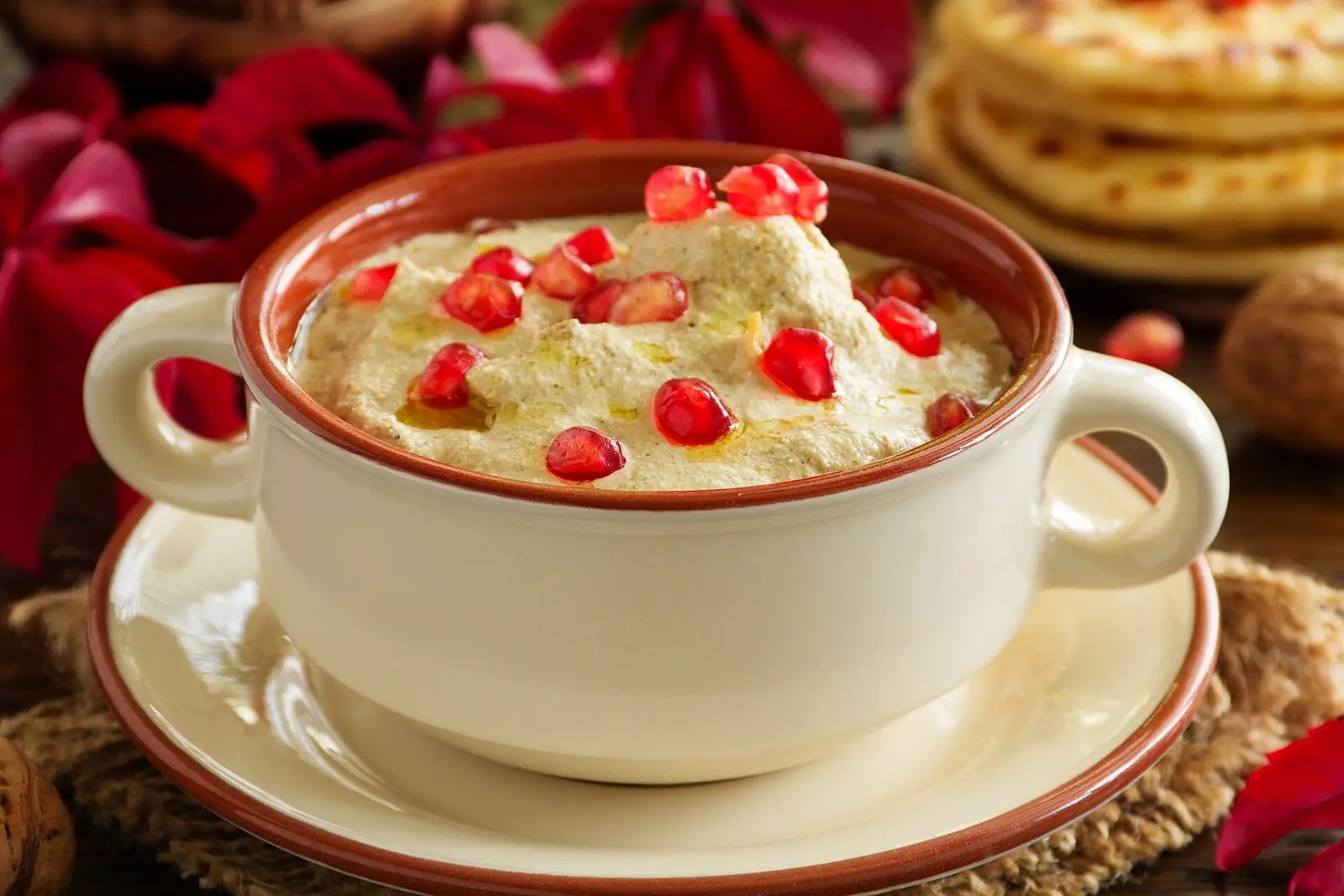
Bazhe (ბაჟე) is walnuts turned into a sauce. The nuts are ground very fine with garlic, loosened with cold water or broth, soured with wine vinegar or pomegranate juice and seasoned with coriander seed, blue fenugreek and dried marigold, which tints it faintly yellow. It pours like thick cream, tastes nutty and gently tart, and is served cool, never hot.
Do not confuse it with satsivi. Satsivi, roughly cold dish, is poultry under a walnut sauce usually cooked with onion and broth, the centrepiece of New Year. Bazhe is the plainer sauce on its own, often uncooked, for fried fish, roast or boiled chicken, turkey, fried aubergine and boiled vegetables, with mchadi cornbread to wipe the plate.
Satsebeli: Georgian tomato sauce for kebabs
Satsebeli (საწებელი) means something to dip into. Older cookbooks use it for a family of sour fruit sauces, tkemali and pomegranate among them, but on a menu today it means the tomato one, pomidvris satsebeli to be precise. Ripe tomatoes, sometimes with sweet or hot peppers, cook down with garlic, chilli, coriander and khmeli suneli, then are thinned so the sauce pours.
Families cook big batches in summer, when tomatoes are cheap, and some make a quick raw version from grated tomato, garlic and herbs. Satsebeli belongs above all with kababi, minced meat skewers rolled in lavash with raw onion, and is just as good with mtsvadi, chicken, fried potatoes and eggs.
Other Georgian sauces and dips: garlic matsoni, kindzmari and more
A handful of simpler sauces come with one or two dishes each; order the dish and the sauce usually follows.
- Garlic matsoni: thick yoghurt beaten with crushed garlic and sometimes dill, for fried aubergine, fried mushrooms and chicken, and a cool foil to Megrelian heat.
- Kindzmari: chopped coriander, garlic and wine vinegar, often with a little broth, over boiled beef, chicken or fish; menus sometimes name the dish after it.
- Niortskali: garlic pounded with salt into water or broth, the partner for chicken tabaka, the small bird fried flat under a weight.
- Makvali: a late-summer sauce of wild blackberries with garlic and herbs, served with roast poultry in some families.
Svan salt sits on the same shelf: a mountain seasoning from Svaneti in which garlic, caraway, coriander seed, marigold, chilli and blue fenugreek are pounded into coarse salt. A pinch lifts tomatoes, eggs and potatoes, and since it is dry it makes an easy present.
Where to buy tkemali and ajika in Georgia
Markets
In Tbilisi, the Dezerter Bazaar, a short walk from the main station, has a long row of pickle and sauce sellers: homemade tkemali in reused drink bottles, ajika in jars, and dried ombalo, Svan salt and khmeli suneli at the spice stalls beside them. Most sellers let you taste from a spoon. In the west, Kutaisi's central Green Bazaar and the Zugdidi market sell Megrelian ajika made by village families.
Supermarkets
Chains such as Carrefour, Spar, Nikora, Goodwill and 2 Nabiji stock factory tkemali in green and red, ajika and tomato sauce in sealed, labelled jars and bottles. On the label, mtsvane (მწვანე) means green and tsiteli (წითელი) red.
Homemade or factory?
Homemade sauce is brighter, with more garlic and ombalo, and no two bottles match. It has no preservative, so keep it cool and finish it within a few weeks of opening; a domed cap or a fizz means it has begun to ferment. Factory bottles are milder and some add sugar or starch, but they keep for months unopened and survive a suitcase better.
| What | Where | Approx. price, 2026 |
|---|---|---|
| Factory tkemali, ~0.5 litre bottle | Supermarkets | ~3-6 GEL (about $1-2) |
| Homemade tkemali, 0.5-1 litre bottle | Dezerter Bazaar, Kutaisi and Zugdidi markets | ~5-10 GEL (about $2-4) |
| Red or green ajika, small jar | Markets and supermarkets | ~5-10 GEL (about $2-4) |
| Dried ombalo, dry ajika or Svan salt, small bag | Market spice stalls | ~2-5 GEL (about $1-2) |
| A side dish of sauce | Restaurants | ~2-5 GEL (about $1-2) |
These are rough 2026 figures that move with each harvest, and Old Town souvenir shops charge more for gift packs. On our Georgian Cooking Tour you shop the Dezerter Bazaar with your guide and finish at the Kutaisi Green Bazaar, stocking up on ajika and spices and learning how to pack them for the flight.


Can you take tkemali on a plane? Packing sauces for home
In hand luggage, Georgian airports, like most others, refuse liquids, gels and pastes in containers over 100 ml, and ajika counts as a paste. Jars of 100 ml or less go in your clear bag. A few European airports with new scanners accept larger containers, but each airport on your route sets its own rule, so plan on 100 ml.
Everything bigger goes in the hold. Choose sealed factory bottles, tape each cap, put every bottle in two zip bags and pack them in the middle of the case among clothes. Leave behind any homemade bottle that already looks swollen.
At home, cooked sauces without meat or dairy are usually fine for personal use, including in the EU, whose ban on travellers' food covers meat and milk products; fresh plums, herbs and seeds are another matter. Australia and New Zealand ask you to declare food on arrival. Check your own customs site before you fly.
Tkemali and Georgian sauces FAQ
What is tkemali, the Georgian plum sauce, made of?
Cherry plums cooked down and sieved, then seasoned with garlic, salt, chilli, coriander seed, dill, coriander leaf and ombalo, the herb called pennyroyal in English. It contains no meat, dairy or eggs.
What does tkemali sauce taste like?
Sour first, then garlicky and herbal, with gentle chilli heat. Green tkemali is sharper, red rounder and a little sweet, and both are thinner and far less sweet than ketchup.
What is the difference between green and red tkemali?
Green tkemali uses unripe cherry plums from late spring and tastes very tart and herbal. Red tkemali uses ripe red plums from July and August and is the more common bottled kind.
What can I use instead of ombalo?
Most cooks outside Georgia use ordinary mint, sometimes with a little thyme or savory added. Pennyroyal is considered unsafe in pregnancy, so pregnant cooks should use plain mint.
Is ajika the same as adjika?
Yes, they are two spellings of one word. In Georgia it means a thick, very hot paste of chilli, garlic, salt and spices; in Russia the name often covers a milder cooked tomato and pepper relish.
What is the difference between bazhe and satsivi?
Bazhe is a walnut sauce, often uncooked, served with fish, poultry and vegetables. Satsivi is a dish of cold chicken or turkey under a cooked walnut sauce, made above all for New Year.
What do Georgians eat satsebeli with?
Mostly kababi wrapped in lavash, plus mtsvadi, chicken and fried potatoes. It is a thin tomato sauce with garlic, chilli and herbs, cooked in big batches in summer.
Can you take tkemali on a plane?
Only 100 ml or less in hand luggage; larger bottles go in checked luggage, taped, double-bagged and packed among clothes. Sealed factory bottles travel best, and you should declare food where your arrival card asks.