Satsivi Recipe
საცივი
A satsivi recipe for the dish at the centre of the Georgian New Year table: turkey poached, browned in the oven and left to chill in a thick walnut sauce with garlic, blue fenugreek and dried marigold. Chicken works the same way on an ordinary day.
Recipe by the Maspindzeli team in Tbilisi · Updated 21 Oct 2026 · Cooked everywhere at New Year, above all in western Georgia
Full recipe with the timeline, timers and US measures: maspindzeli.ge/recipes/satsivi/
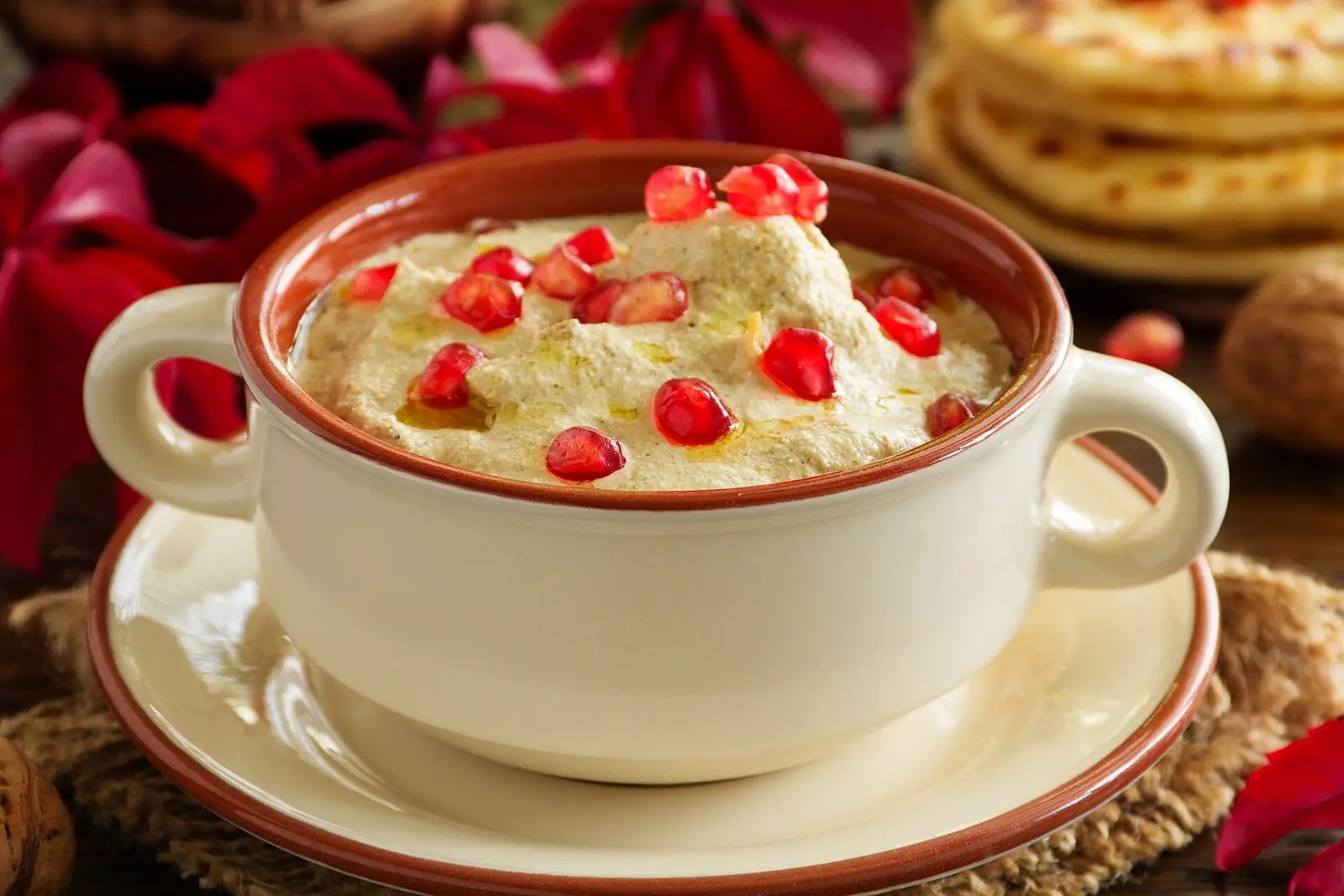
Satsivi (საცივი, sometimes spelt sacivi) is poultry eaten cold under a thick, pale gold sauce of ground walnuts, garlic and Georgian spices. This satsivi recipe follows the method most Georgian home cooks use: the bird is poached, then browned in the oven, and its broth is whisked into the walnuts with softened onion, blue fenugreek, coriander seed, dried marigold and a hint of cinnamon and clove. The name comes from tsivi, the Georgian word for cold, so it reaches the table chilled, never hot.
In Georgia satsivi means New Year. Turkey is the classic bird for the holiday, and in the last days of December the markets fill with shoppers carrying home turkeys and bags of new-season walnuts. Because the dish needs time to rest, families cook it a day or two before 31 December and set it in the middle of the feast. When CRRC Georgia asked adults to name their favourite New Year dish, 38% chose satsivi, well ahead of gozinaki. For the rest of the year chicken is the usual bird, and plenty of restaurants keep a chicken version on the menu.
Recipes shift from region to region and from family to family. Barbare Jorjadze's book of 1874, the first Georgian cookbook, already gives a turkey satsivi in the Gurian style, and the west of the country still treats the dish as its own; in Samegrelo the sauce may be mixed raw and sharpened with hot ajika. Plan ahead: the cooking takes about three hours, roughly two and a quarter of them hands-on, and the finished dish then needs six hours to cool and chill, or better a night in the fridge.
Timeline: what to do, and when
9 h 5 min from start to table · 2 h 15 min hands-on · 6 h waiting
Each bar is one step. Hands-on Waiting, while the oven, the pot or the dough does the work. Steps that sit inside a wait are done in parallel.
Dashed stretches are long waits, shortened on the chart so the busy steps stay readable.
Recipe
Satsivi
Ingredients
Turkey and broth
Walnut sauce
To serve
Amounts are scaled. Times stay about the same, but a bigger pot takes a little longer to come to the boil.
Contains: walnuts (tree nuts).
You will need
- Large pot of at least 6 litres
- Roasting tin
- Meat grinder with a fine plate, or a food processor
- Mortar and pestle
- Frying pan
- Stick blender or jug blender
- Fine sieve (for the broth, and for the sauce if you want it silky)
- Wide, heavy-based pan and a wooden spoon
- Wide serving dish that fits in the fridge
Method
- Start the broth15 min hands-on· start here
Rinse the turkey pieces and put them in the large pot with the cold water, the halved onion and the bay leaves. Bring slowly to the boil over a medium heat, skimming off the grey foam with a spoon as it rises, until the surface stays clear. Add 1 tsp salt.
- Simmer the turkey1 h 20 min waiting· starts at +15 min
Turn the heat down so the water barely trembles, half cover the pot and cook for 75 to 90 minutes, until a skewer slides into the thickest part of a thigh with little resistance. A hard boil makes the broth cloudy. About 15 minutes before the end, heat the oven to 200 °C / 390 °F (180 °C / 355 °F fan).
- Grind the walnuts15 min hands-on· starts at +20 min, during step 2
Pass the walnuts twice through the fine plate of a meat grinder, or pulse them in a food processor until they clump into a damp, oily meal. Tip them into a large bowl and squeeze and knead them with one hand for a couple of minutes. If golden oil seeps out, tilt the bowl, pour the oil into a cup and keep it for the top.
- Pound the garlic and spices10 min hands-on· starts at +35 min, during step 2
Crush the whole cloves in a mortar, then add the garlic and the coarse salt and pound to a paste. Work in the coriander, blue fenugreek, marigold, cinnamon and red pepper, then knead the spice paste evenly through the walnuts.
- Chop the onions10 min hands-on· starts at +45 min, during step 2
Peel the four onions and chop them as finely as you can. Tiny pieces melt into the sauce, while big ones leave chewy strands.
- Move the turkey to the oven5 min hands-on· starts at +1 h 35 min
Lift the turkey pieces out onto the roasting tin and leave the broth in the pot off the heat. Spoon a little of the yellow fat floating on the broth over the turkey.
- Roast until golden25 min waiting· starts at +1 h 40 min
Roast for about 25 minutes, until the skin is golden in patches and the meat is completely tender. Browning is how most Georgian cooks do it and gives the dish a roasted depth, but you can skip it and carry straight on.
- Strain the broth and soften the onions20 min hands-on· starts at +1 h 40 min, during step 7
Pour the broth through a sieve into a bowl and throw away the onion and bay leaves. Skim 3 tbsp of fat from the top into a frying pan and cook the chopped onions in it over a low heat for about 15 minutes with a pinch of salt, stirring often, until soft and see-through but not brown. Blend them with a ladle of broth to a smooth purée.
- Mix the sauce15 min hands-on· starts at +2 h 5 min
Add about 1.2 litres of the warm broth to the walnut paste a ladle at a time, stirring hard after each one so no lumps form, then stir in the onion purée. The sauce should pour like single cream; it sets much thicker once cold. For a silky finish, as many Georgian cooks like it, rub it through the sieve with the back of a ladle. Keep the rest of the broth.
- Cut up the turkey15 min hands-on· starts at +2 h 20 min
Pull the meat off the bones in large pieces of about 5 cm, keeping some of the browned skin if you like it. Plenty of Georgian families leave the pieces on the bone, which is just as traditional but messier to eat.
- Heat the sauce10 min hands-on· starts at +2 h 35 min
Pour the sauce into the wide, heavy pan and warm it over a medium-low heat, stirring all the time with the wooden spoon and scraping the bottom, until it just begins to bubble. Ground walnuts catch quickly, and a fierce boil can make the sauce split.
- Add the turkey and finish10 min hands-on· starts at +2 h 45 min
Slide in the turkey, bring back to a gentle bubble and cook for 3 to 5 minutes, stirring carefully. Lift the pan from the hob, add the vinegar and mix it through, then taste and adjust the salt and red pepper.
- Cool to room temperature1 h waiting· starts at +2 h 55 min
Spoon the satsivi into the wide serving dish, no deeper than about 7 cm, and leave it uncovered for about an hour until it is no longer warm. Do not leave it out for more than two hours. Chill the spare broth as well.
- Chill and let it settle5 h waiting· starts at +3 h 55 min
Cover the dish and refrigerate for at least 5 hours, ideally overnight. As it rests the sauce firms up and the garlic and spices soften into one another.
- Loosen and serve10 min hands-on· starts at +8 h 55 min
If the sauce has set too stiff to spoon, fold a few tablespoons of the cold broth gently through it. Drizzle the saved walnut oil over the top, scatter over a few coriander leaves or pomegranate seeds and serve cold, or after 20 minutes out of the fridge for a softer sauce.
About 720 kcal per serving (1 of 8, about 420 g), without bread. This is an estimate from standard values for the ingredients, not a lab figure.
Satsivi is served cold from a shared dish in the middle of the table. Take a piece of turkey with a good spoonful of sauce and use bread or mchadi to wipe your plate clean. On New Year's Eve the dish stays on the table all night, so people return to it between toasts.
Tips, swaps and variations
Tips from your host
- Taste the walnuts before you begin. A single stale or rancid kernel turns the whole sauce bitter, which is why Georgian cooks look for pale, oily, new-season nuts.
- Grind the nuts as fine as you can. Twice through a meat grinder is the traditional way, and the oil it presses out is the glossy layer poured over the dish just before it goes to the table.
- Never stop stirring while the sauce is on the heat. Ground walnuts sink and scorch on the base of the pan within a minute, and a burnt taste cannot be fixed.
- Use white wine vinegar rather than red and add it at the very end. Both keep the sauce pale gold instead of grey.
- Save the spare broth in the fridge. Satsivi stiffens a lot as it chills and again by the next day, and a spoonful of cold broth loosens it without watering down the taste.
- Breast meat cooks faster than legs. If you use a turkey crown or breast on the bone, lift it out of the pot after 45 to 50 minutes so it stays moist.
Variations and swaps
- Chicken satsivi, the everyday version: put 1 whole chicken of 1.6 to 1.8 kg in 2.5 litres of water and simmer it for about 40 minutes, then roast it at 200 °C / 390 °F (180 °C / 355 °F fan) for 25 to 30 minutes until golden and the juices run clear. Cut it into 8 to 10 pieces and carry on with the same sauce. Everything is ready about 40 minutes sooner.
- A whole turkey for a big table: a bird of 3 to 4 kg, cut into 10 to 12 pieces, needs a 10-litre pot, about 2 hours of gentle simmering and one and a half to two times the sauce.
- Megrelian style: the sauce is not cooked at all. Mix the ground walnuts, garlic and spices with hot broth and a spoonful of hot red ajika, pour it over the roasted bird and leave it for 3 to 4 hours before serving.
- Thicker or richer sauce: some cooks whisk 2 egg yolks into the vinegar and stir them into the hot sauce just before it bubbles, others fry 1 tbsp flour with the onions. The first adds egg to the dish and the second gluten.
- Spices and sourness: with no blue fenugreek or marigold, use 1 tbsp khmeli suneli in their place. Many families leave out the cinnamon and cloves, some pound a small bunch of fresh coriander with the garlic, and lemon juice is a common, gentler swap for vinegar. Pomegranate molasses, found in some modern recipes, makes the sauce darker and slightly sweet.
- Satsivi for fasting days: some households keeping the Nativity fast, which lasts until Christmas on 7 January, make a meatless satsivi for New Year. Use boiled, cooled water instead of broth and soften the onions in sunflower oil, then pour the sauce over boiled cauliflower, fried aubergine slices or roasted red peppers. This version is vegan.
Serve it with
- Mchadi (cornbread), shoti or tonis puri to wipe up the sauce
- Khachapuri, its usual companion on the New Year table
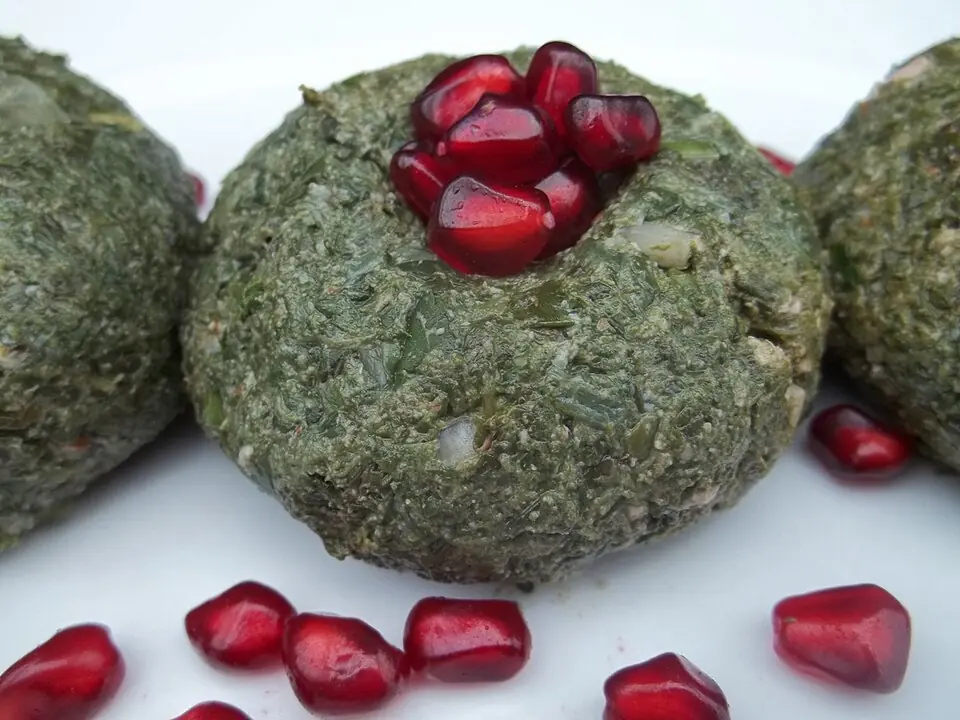
- Pkhali, pickles and a plate of fresh herbs such as tarragon and coriander
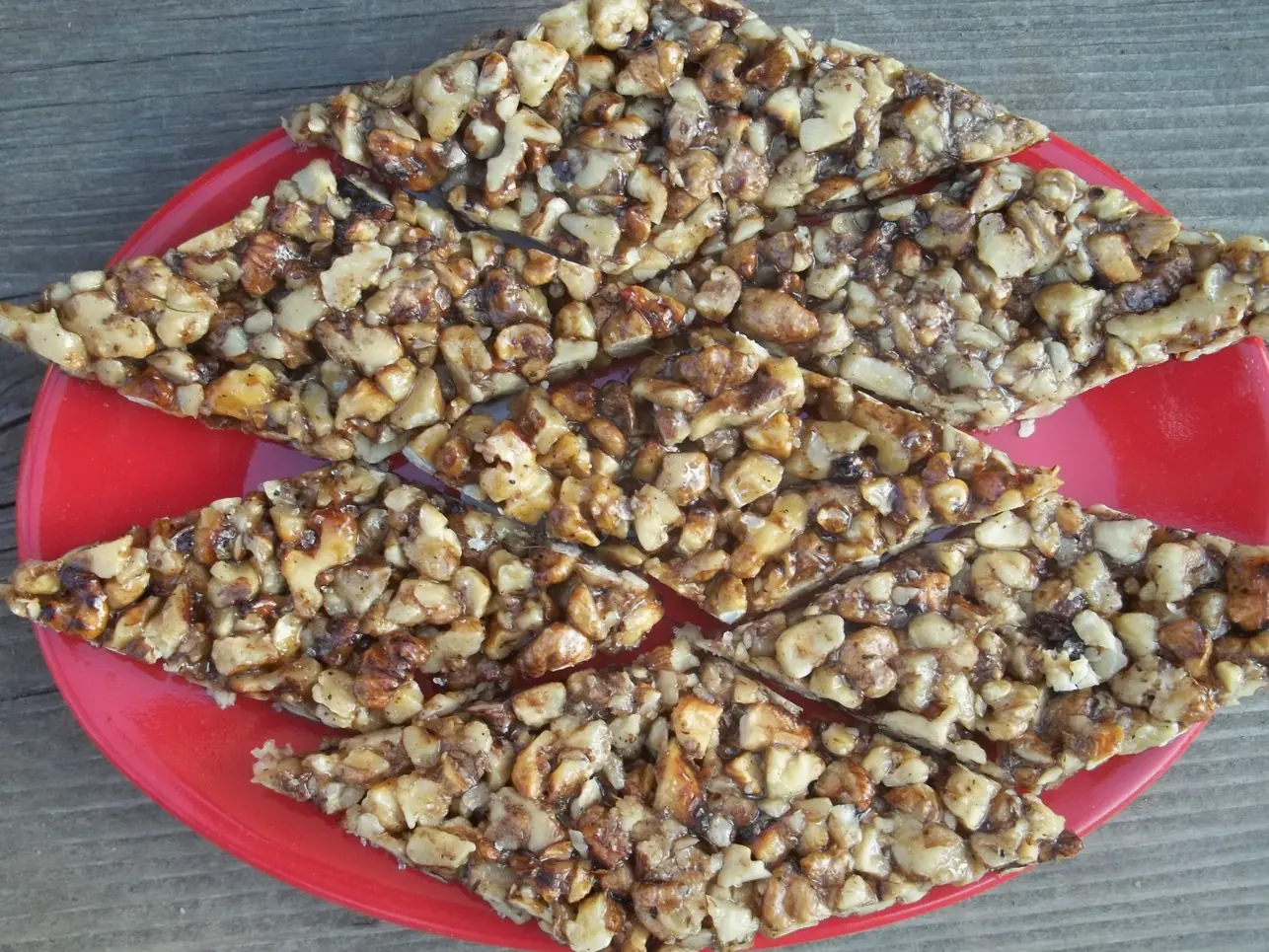
- Gozinaki and churchkhela after midnight on 31 December
- Georgian white or amber qvevri wine
Make ahead and storage
Keep the dish tightly covered in the fridge and eat it within 3 days of cooking. It is at its best on the second day, so for New Year's Eve, cooking it on 30 December works well. Serve leftovers cold, stirring in a little chilled broth if the sauce has turned stiff. It is not a dish for the freezer: the sauce tends to split and turn grainy once thawed.


Maspindzeli Travel, Tbilisi · private tours and cooking classes in Georgia · maspindzeli.ge · WhatsApp +995 598 74 74 54 · hello@maspindzeli.ge