- Georgian bread (puri) falls into two families: wheat loaves from the east, baked on the hot wall of a clay tone oven, and corn breads from the west, led by mchadi.
- Shotis puri, or shoti, is the pointed, canoe-shaped white loaf sold hot from basement tone bakeries all over Tbilisi, for about 1-2 GEL (roughly 40-75 US cents) in 2026.
- Kakheti's longer, blade-shaped dedis puri, 'mother's bread', has been protected as Georgian intangible cultural heritage since 2015.
- Mchadi is cornmeal, water and salt shaped into flat cakes and cooked in a pan or clay dish; Georgians eat it with lobio, fresh cheese and pkhali.
- Nazuki, a sweet raisin loaf spiced with cinnamon and cloves, is sold from roadside ovens in Surami, ~130 km west of Tbilisi on the way to Borjomi and Kutaisi.
Georgian bread, puri (პური) in Georgian, comes in two big families. The east eats wheat bread baked on the inside wall of a tone, a deep clay oven set into the ground, and the loaf you will meet first is shotis puri, a long canoe of crust with pointed ends. The west eats mchadi, a dense flat cake of cornmeal cooked in a pan. Around these two sit lavashi flatbread, the sweet spiced nazuki of Surami and a run of loaves baked only for Easter, New Year or a village feast.
Below you will find how a tone works and why bakers throw the dough at its wall, how city shoti differs from Kakheti's 'mother's bread', what mchadi goes with, where to pull over for nazuki on the road west, and which breads belong to feast days and the supra. The last section shows how to find a neighbourhood tone bakery in Tbilisi, what to say at the window and what a loaf costs in 2026. Cheese-filled breads have their own page: our khachapuri guide.
Types of Georgian bread at a glance
Bread sits on every Georgian table, at every meal. In October 2025 the head of the Georgian Bakers' Association put Tbilisi's appetite at roughly 400 tonnes of bread products a day. Most of it is white wheat bread, but west of the Likhi range, where maize took over the fields after the 17th century, corn bread still rules many home kitchens.
| Bread | Home region | What it is | Eat it with |
|---|---|---|---|
| Shotis puri (shoti) | Tbilisi and the east | Long white loaf with pointed ends, baked on a tone wall | Cheese, salads, grilled meat, anything with sauce |
| Dedis puri, 'mother's bread' | Kakheti | Longer tone loaf curved like a blade | Qvevri wine, young cheese, mtsvadi |
| Mchadi | Imereti, Samegrelo, Guria | Flat cake of cornmeal, water and salt | Lobio, fresh cheese, pkhali, pickles |
| Chvishtari | Samegrelo and Svaneti | Corn cake with cheese in the dough | Eaten hot as a snack or starter |
| Lavashi | All of the Caucasus | Thin flatbread from the tone or a griddle | Kababi and grilled meat |
| Nazuki | Surami and Shida Kartli | Sweet yeast loaf with raisins and spice | Tea, coffee, a long drive |
| Paska | Everywhere, at Easter | Heavy, rich sweet bread with dried fruit | Red-dyed eggs and wine |
| Khachapuri, lobiani, kubdari | Every region | Breads filled with cheese, beans or meat | A meal in themselves |
The tone oven: how Georgian bakers slap dough onto a clay wall
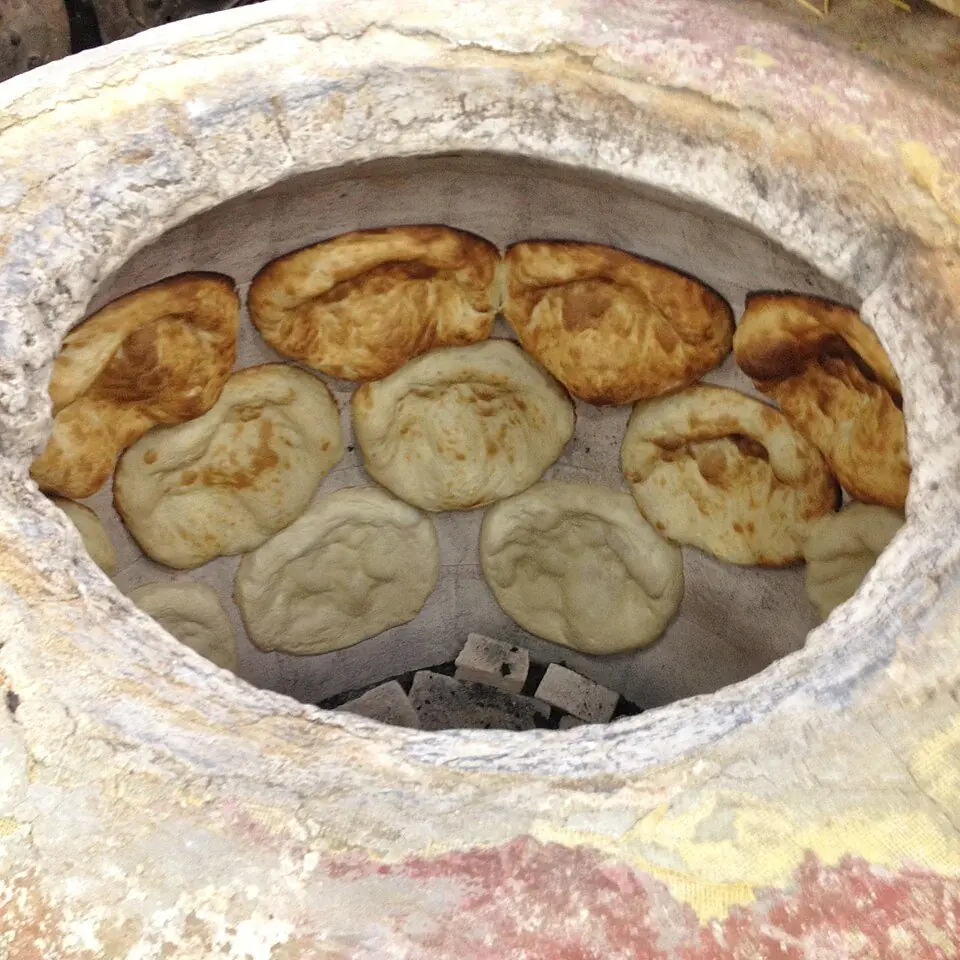
A tone (თონე, said TOH-neh) is an oven shaped like a well. The village kind is a bottomless cylinder of fired clay, usually no more than about a metre tall, dug into the earth so only the rim shows. Twigs and then dried vine cuttings burn at the bottom until the clay is soaked with heat. The idea is shared with the Armenian tonir and the tandoor: dough bakes stuck to a hot side wall, not lying on a floor.
City bakeries build the same thing bigger, lined with firebrick, mostly fired by gas and sunk into the floor of a basement room.
- Let the fire settle
When the flames die down, a village baker covers the embers with an iron plate so the loaves cannot scorch. - Wet the wall
Salted water goes onto the hot clay. It helps the dough grip and leaves a faint salty edge on the crust. - Stretch and throw
Each ball of risen dough is pulled into a long tongue and pressed onto the wall in one lean into the oven, row after row. - Cover and wait
At home, boards go over the mouth to trap the heat. On a wall this hot the bread needs only minutes. - Spear and scrape
A pointed iron hook pierces each loaf through the middle while a flat blade frees it from the clay in one piece.
Shotis puri: why shoti bread is shaped like a canoe
Shotis puri (შოთის პური), usually just shoti, is the loaf tucked under arms on every Tbilisi street in the morning: roughly forearm length, pale gold, pointed at both ends and dipped in the middle where the dough thinned against the clay. The standard recipe is white wheat flour, water, salt and yeast or a sourdough starter. The shape is oven logic: a long strip hangs well on a curved wall, more loaves fit into each firing, and the thin tips crisp into crunchy horns while the centre stays chewy.
Tonis puri (თონის პური) means 'tone bread' and covers anything from the clay oven; shoti is its most common shape. Sliced factory loaves fill every corner shop, yet many households still buy from the tone bakery daily, because shoti is best within a few hours and turns leathery by morning. Tear it rather than slicing it, and revive a day-old loaf with a few minutes in a hot oven.
Deda puri: Kakheti's 'mother's bread' and the village tone
In Kakheti the tone loaf has its own name. Dedis puri, also spelled deda puri or dedas puri, means 'mother's bread', since baking it fell to the eldest woman of the family. She kneaded it in a broad wooden trough, the gobi, starting the dough with a leaven the day before. The loaf is longer than city shoti and bent like a blade, thick along one edge and thin along the other, so locals also call it khmala, after khmali, sword.
Village tones here burn vine prunings, which scent the crust, and baking days used to end with a small feast on the oven's rim: hot bread, cheese, wine and a toast to whoever grew the wheat. A 2015 order of the state heritage agency listed the traditional making of Kakhetian bread as intangible cultural heritage, alongside Kakhetian churchkhela.
Bakeries on the Kakheti highway beyond Sagarejo sell long loaves straight from the oven, and many guesthouses and wineries around Telavi, Sighnaghi and Kvareli bake in their own tone and let guests try. Our Kakheti travel guide lists the towns and cellars.
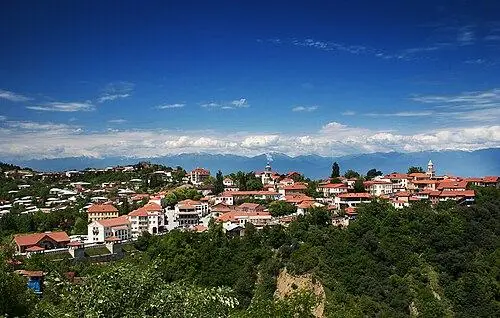
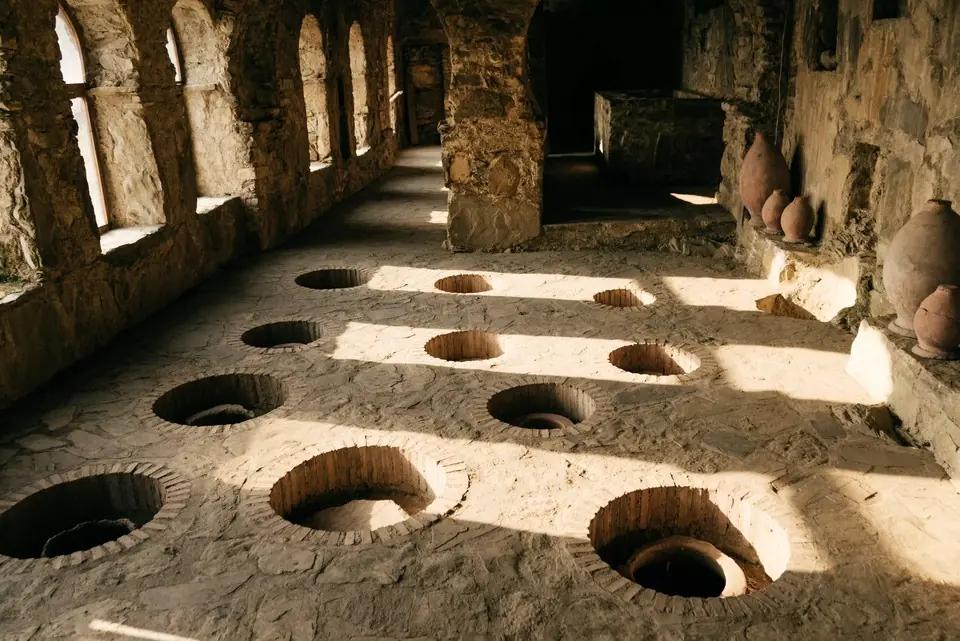
On our Wine and Supra tour you bake shoti in a family tone below Sighnaghi before the evening feast. Like all our trips it is private: your dates, your group however large, and a guide who speaks your language.
Mchadi: Georgian corn bread from the west
Cross the Likhi range into Imereti and the bread basket changes. Mchadi (მჭადი) is a small, flat cake of cornmeal, usually white, mixed with warm water and a little salt and kneaded by hand until the dough binds without cracking. Cooks shape it with wet palms into thick ovals and cook them slowly on both sides in a heavy pan until speckled brown. It is dense and crusty with a gentle corn sweetness, closer to a griddle cake than to American cornbread.
Maize reached Georgia in the 17th century and nearly drove millet out of the western fields. The older grain left its mark: ghomi, now a soft corn porridge, is the Georgian name for foxtail millet. In Guria and Imereti some cooks still bake mchadi between hot clay dishes called ketsi, wrapped in leaves under a layer of embers. Chvishtari, from Samegrelo and Svaneti, works sulguni cheese into the corn dough.
What to eat with mchadi
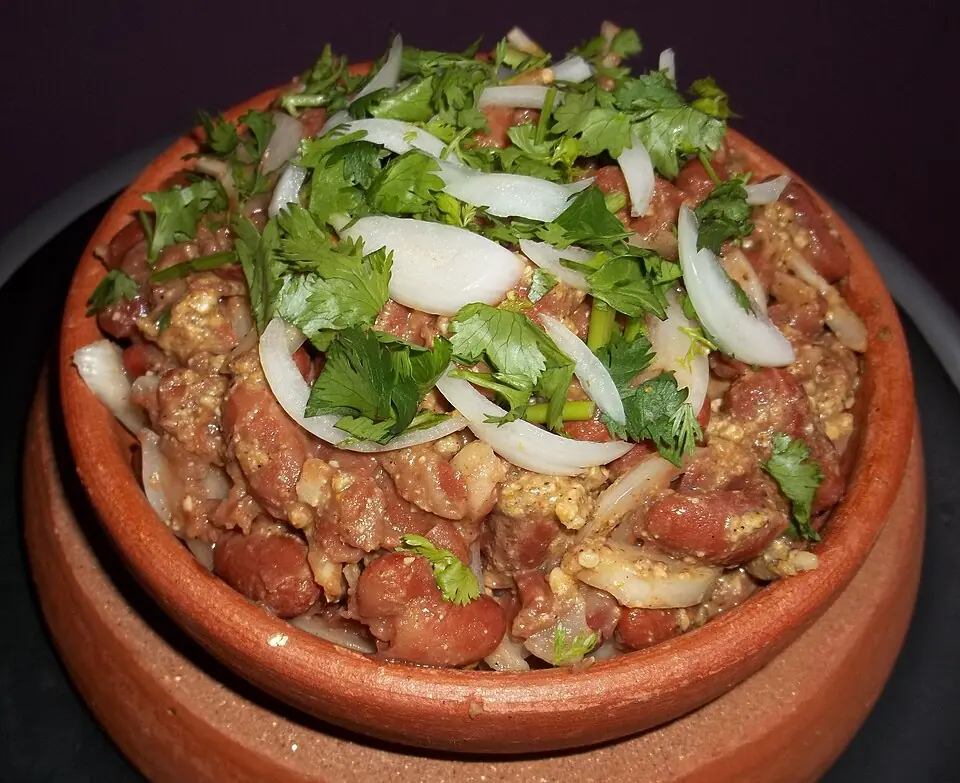
- Lobio, red beans from a clay pot, the classic partner.
- Imeretian cheese or sulguni, eaten while the corn cake is still hot.
- Pkhali, the vegetable and walnut pâtés.
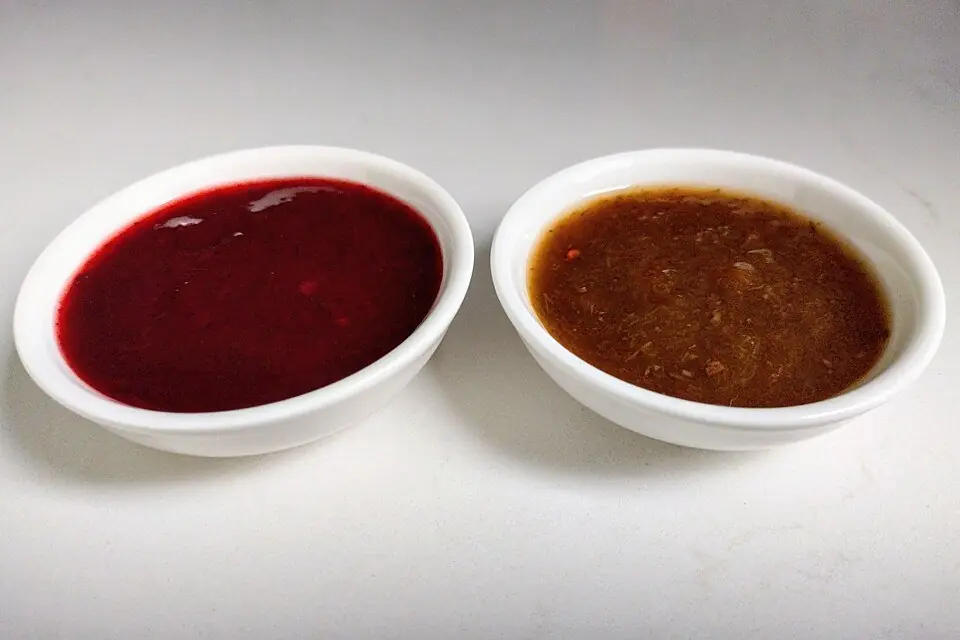
- Ajika and tkemali, the hot pepper paste and sour plum sauce of the west.
- Satsivi and other walnut dishes at New Year.
Lavashi: the thin flatbread at Georgian grill houses
Lavashi (ლავაში) is dough rolled thin and baked for moments on the tone wall or a hot metal sheet. It belongs to the whole Caucasus, and UNESCO listed the Armenian lavash tradition as intangible heritage in 2014. In Georgia you meet it mostly at grill houses, wrapped around kababi, minced meat moulded on a skewer. It dries out within hours, so buy it on the day.
Nazuki: the sweet bread of the Surami roadside stalls
Nazuki (ნაზუქი) is Georgia's best-known sweet bread: a glossy brown, gently domed loaf of yeast dough enriched with milk, matsoni yoghurt, eggs and sugar or honey, studded with raisins and scented with cinnamon and cloves. In a tone, the baker sprinkles sugar onto the embers so the caramel smoke browns the crust evenly. The word came from Persian, and Sulkhan-Saba Orbeliani's 18th-century dictionary explains it as 'exquisite'. Wrapped in a cloth, a loaf keeps for days.
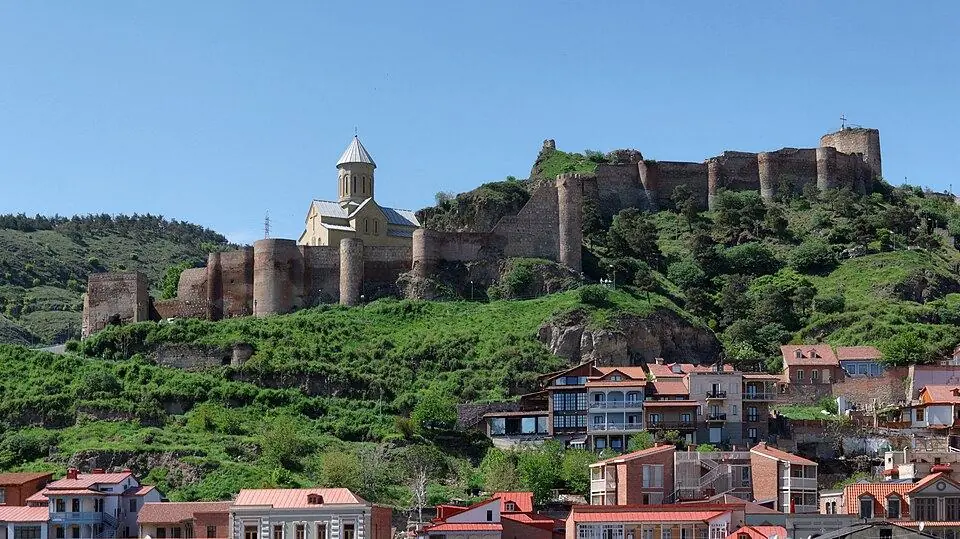
Its home is Shida Kartli, above all Surami, a small resort town at the foot of the Likhi range near Khashuri. When the economy collapsed in the 1990s, families there set up tone ovens beside the main east-west road and sold nazuki around the clock. Their kilometre of stalls became known as Nazukebi, 'the nazukis', and it still trades, with ovens working behind the counters.
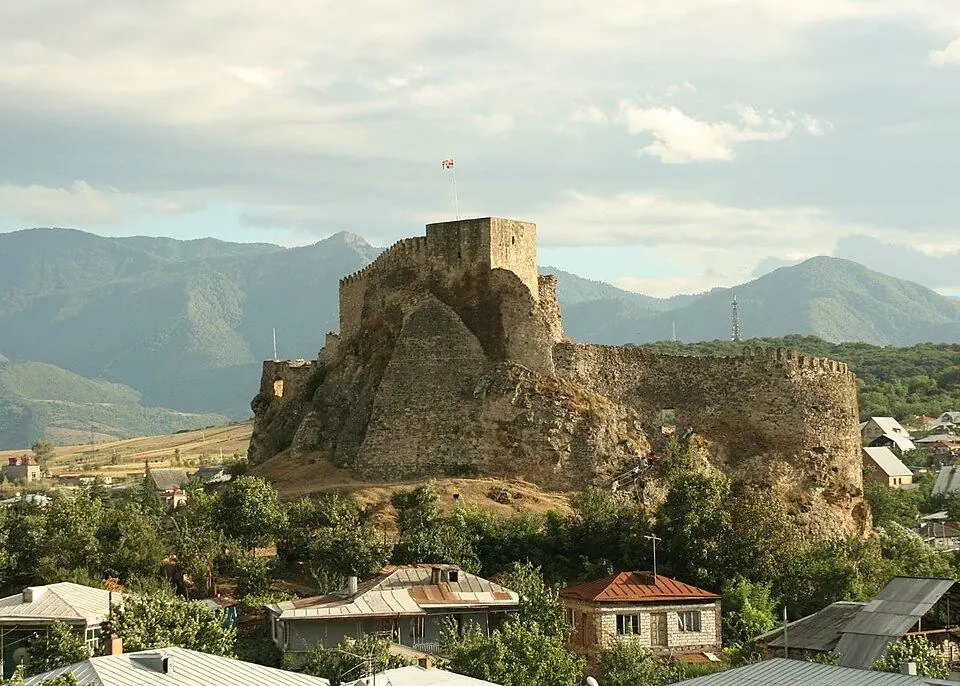
Surami is ~130 km from Tbilisi, about 1 hour 45 minutes by car, just off the E60 motorway before it climbs to the Rikoti tunnels. Pair the stop with Surami Fortress and its legend of Zurab, the youth walled into it; Borjomi lies ~30 km further on. Expect a few lari a loaf in 2026.
Our Georgian Cooking Tour stops in Surami for nazuki on the drive west to a family kitchen in Kutaisi, and it opens with a basement tone bakery in Old Tbilisi. You pick the dates and the group size, and your guide speaks your language.
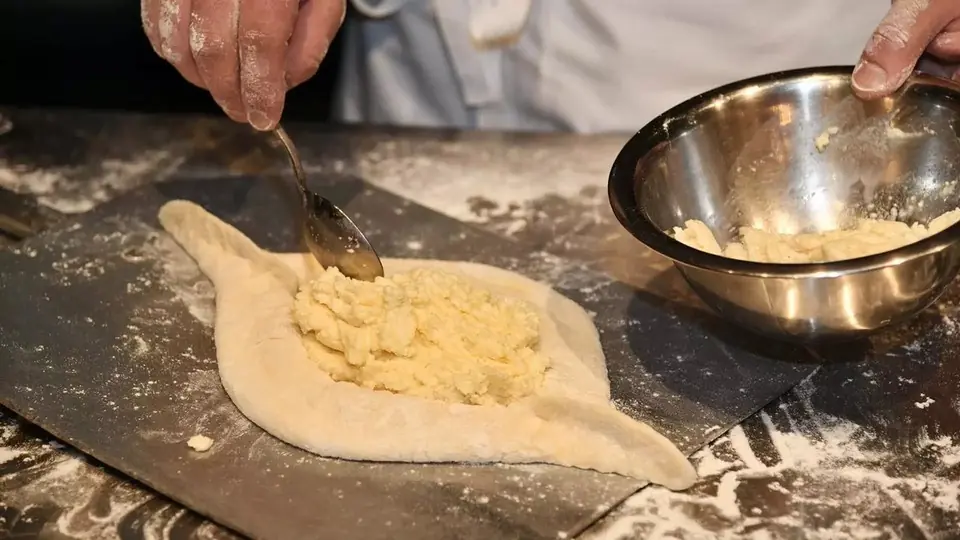
Sweet and festive Georgian breads: Easter paska and New Year loaves
Easter: paska, nazuki and kada
Paska is the Easter bread, heavy and slightly moist, rich with butter, raisins and other dried fruit, warm spice and milk or soured cream. Families bake it about a week early so it can mature, and its tall rounded shape is said to stand for Golgotha. It comes to the table with red-dyed eggs and goes along on the family visits to the graves after Easter. In Kartli many households bake nazuki instead, and mountain villages make sweet stuffed kada. Orthodox Easter 2027 falls on 2 May.
New Year and Old New Year
At New Year, Kartli families make basila bread and a pair of small fate loaves for every person in the house. Khevsur cooks decorate their New Year bread with a cross, a bull and an ear of grain. For Kalanda, the Old New Year on 14 January and the feast of St Basil, Guria and Imereti bake a crescent pie of cheese and boiled egg, and some families hide a coin in a sweet basilopita. In Svaneti the calendar runs on to Lamproba, the February torch festival, when families bake lemzir, breads filled with cheese.
Bread at the supra and in everyday Georgian life
In Georgian, bread stands for the meal itself. Puris chama, literally 'eating bread', means sitting down to eat, and pur-marili, 'bread and salt', is the word for hospitality and the feast a host lays on.
At a supra, bread comes first and stays to the end. In Kakheti the wine and the long loaves go down before any dish, laid across the middle of the table with the food arranged around them, and custom says shoti is broken by hand, never cut. Our supra guide explains the toasts and the tamada who leads them.
Everyday life runs on the same pattern: bread, cheese and tea for breakfast, lobio with mchadi for lunch in the west, and a bakery window on the walk home. The busiest days of the bakers' year come just before New Year.
Georgian bakery tips: finding a tone bakery in Tbilisi and what bread costs
Tbilisi has tone bakeries in nearly every neighbourhood, most of them in basements. Look for a hatch at pavement level, golden loaves stacked behind the glass and a sign reading პური (puri, bread), ცხელი პური (tskheli puri, hot bread) or თონე (tone).
- Time it
The freshest batches come out in the morning and around dinner time, and many bakeries stay open late. - Ask by number
Erti is one, ori two, sami three: say 'erti shoti' or hold up fingers. - Pay in coins
A shoti costs 1 to 2 GEL (about $0.40 to $0.75) in 2026, after rises of 5 to 10 tetri in October 2025 when flour got dearer. Small bakeries prefer cash. - Keep it breathing
Eat the end on the way home like everyone else, keep the rest in a cloth or paper bag, not plastic, and finish it the same day.
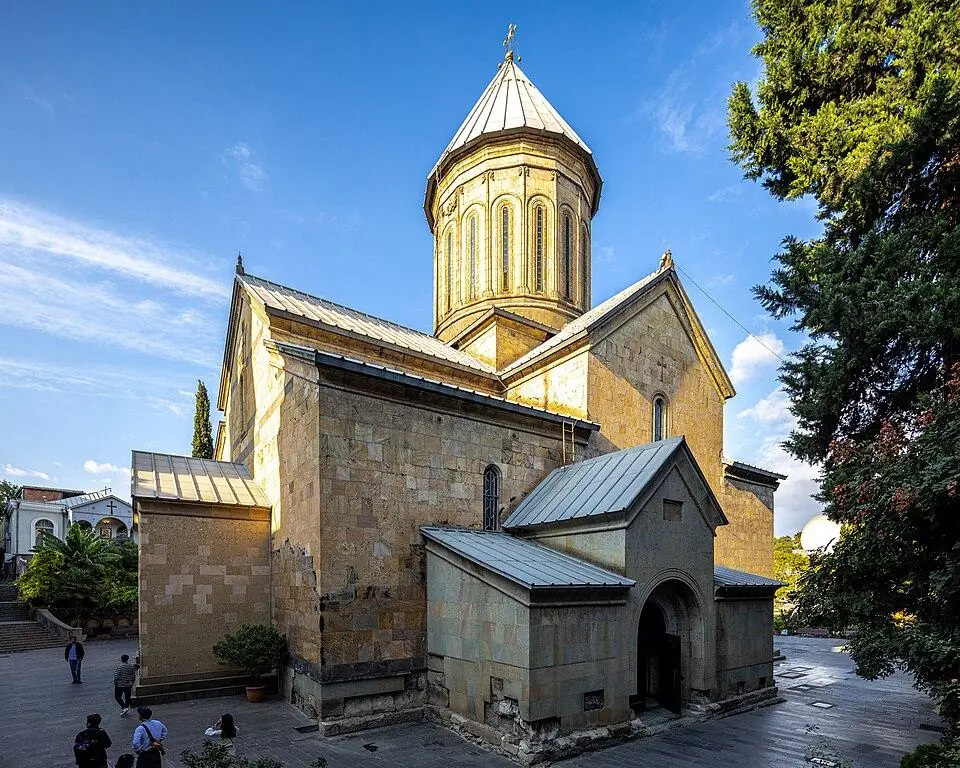
Good places to look: the lanes around Sioni Cathedral and the rest of Old Tbilisi, Sololaki, the streets near Dezerter Bazaar and Marjanishvili, and the residential blocks of Vake and Saburtalo.
| Bread | Where to buy | Approximate price, 2026 |
|---|---|---|
| Shoti or tonis puri | Neighbourhood tone bakery | 1-2 GEL (about $0.40-0.75) |
| Factory loaf | Supermarket or corner shop | About 2 GEL (about $0.75) |
| Nazuki | Roadside ovens in Surami | A few lari a loaf |
| Mchadi | Restaurant side order | A few lari a portion |
Georgian bread FAQ
What is Georgian bread called?
Bread is puri (პური) in Georgian. The everyday loaf is shotis puri or shoti, a canoe-shaped white bread from a clay tone oven, and mchadi is the corn bread of western Georgia.
What is shoti bread made of?
Just white flour, water and salt, raised with yeast or a sour starter, so the everyday loaf is vegan. Its thin, crisp crust and chewy middle come from the very hot clay wall and the salted water brushed onto it.
What is the difference between tonis puri and shotis puri?
Tonis puri is any bread baked in a tone; shotis puri is the long, pointed loaf most tone bakeries make. In Kakheti the longer, curved version is called dedis puri, 'mother's bread'.
What is a tone oven?
A deep, round clay or brick oven sunk into the ground or a bakery floor and open at the top. The baker presses dough straight onto its hot, wetted wall and lifts the loaves out with an iron hook and scraper.
What is mchadi eaten with?
Mchadi, Georgian corn bread, goes with lobio beans, fresh Imeretian cheese or sulguni, pkhali and spicy ajika. It is the daily bread of Imereti, Samegrelo and Guria.
Is Georgian corn bread gluten-free?
Plain mchadi is cornmeal, water and salt, with no wheat. Some cooks add wheat flour, and pans may be shared, so ask if you have coeliac disease.
Where can I buy nazuki?
At the roadside stalls in Surami, ~130 km west of Tbilisi just off the E60 motorway, where small tone ovens bake it all day.
How much does bread cost in Georgia?
In 2026 a fresh shoti from a Tbilisi tone bakery costs between 1 and 2 GEL (40 to 75 US cents), and a supermarket loaf about 2 GEL. Treat these as approximate; prices rose slightly in October 2025.