Kharcho Recipe
ხარჩო
This kharcho recipe makes the Georgian beef soup most people mean by the name: tender beef, rice and ground walnuts in a thick, tart broth, soured with plum and scented with Georgian spices and fresh coriander.
Recipe by the Maspindzeli team in Tbilisi · Updated 18 Oct 2026 · Cooked all over Georgia; the walnut stew version belongs to Samegrelo
Full recipe with the timeline, timers and US measures: maspindzeli.ge/recipes/kharcho/
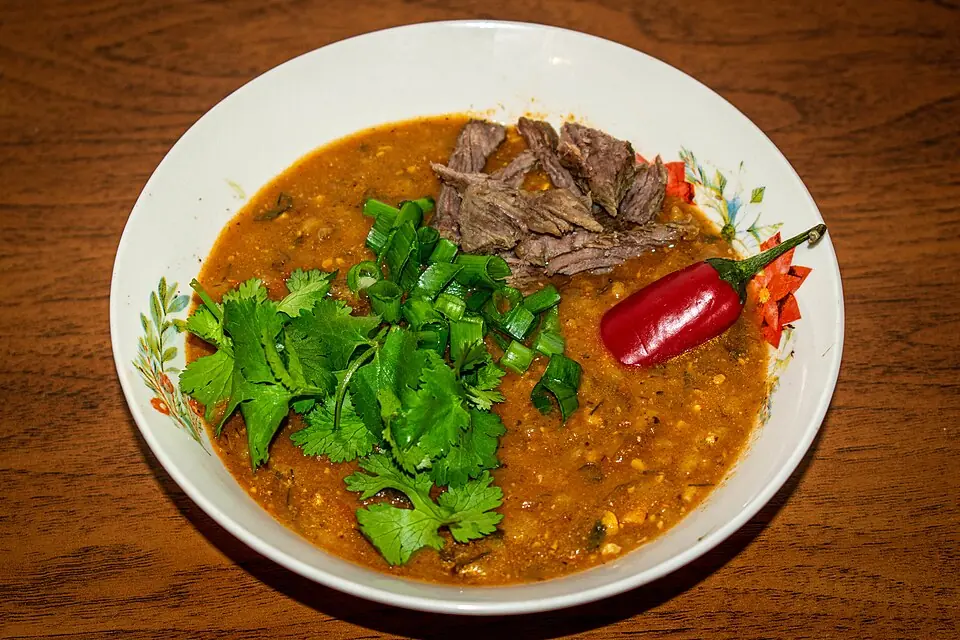
Kharcho is a thick Georgian soup of slow-cooked beef, rice and ground walnuts, made sour with plum and fragrant with blue fenugreek, dried marigold and plenty of fresh coriander. This kharcho recipe is the soup you see on menus across the country, also spelled harcho. In Georgian homes it is often called sup-kharcho, soup kharcho, to tell it apart from other dishes with the same name.
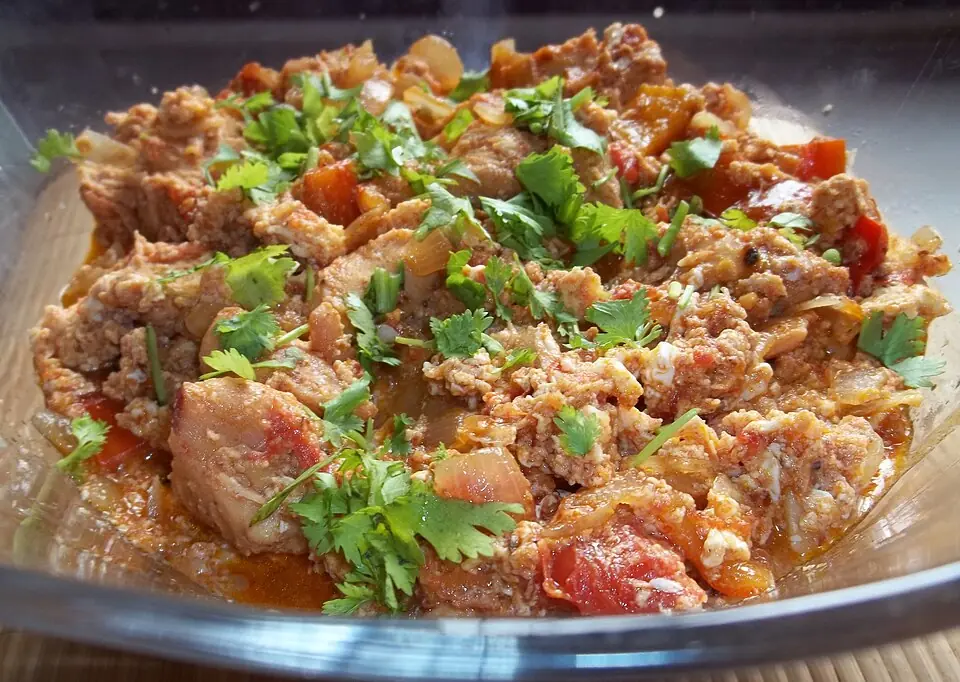
The word covers more than one dish. In Samegrelo, in western Georgia, megruli kharcho (Megrelian kharcho) is a thick stew of beef or chicken in a hot, garlicky walnut sauce with no rice at all, eaten with ghomi, the local cornmeal porridge. The soup with rice is cooked all over Georgia and was a fixture of Soviet canteens, so every family and every cook has a slightly different version.
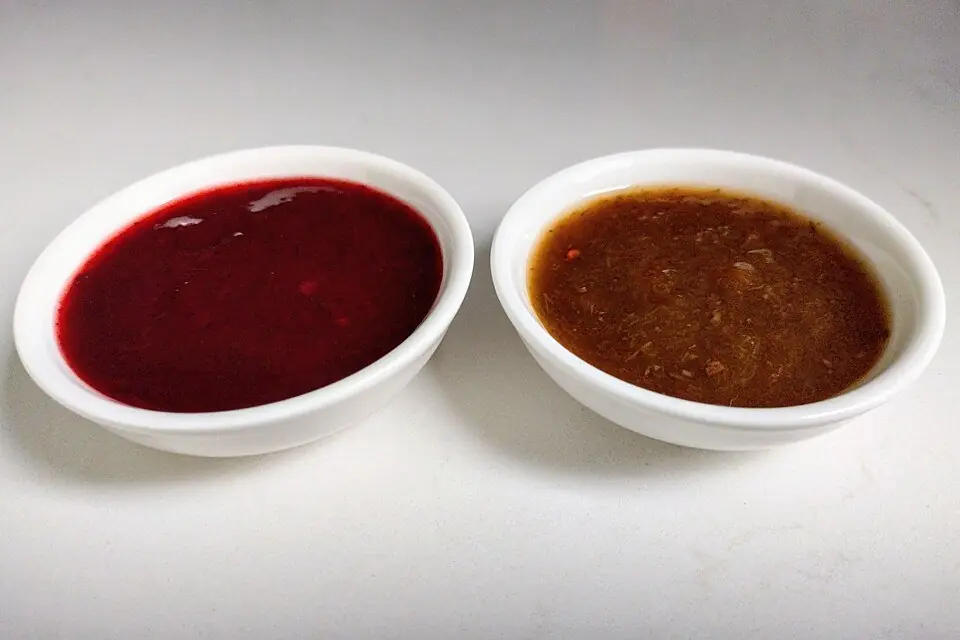
What makes it kharcho rather than plain beef soup is the trio of fatty beef, walnuts and a sour plum element: tklapi (dried sour plum leather) or tkemali sauce. It is a filling everyday soup rather than a feast dish, and it is at its best on a cold evening with warm bread.
Timeline: what to do, and when
3 h from start to table · 1 h 5 min hands-on · 10 min waiting
Each bar is one step. Hands-on Waiting, while the oven, the pot or the dough does the work. Steps that sit inside a wait are done in parallel.
Recipe
Kharcho
Ingredients
Broth
Walnut paste
Soup
Amounts are scaled. Times stay about the same, but a bigger pot takes a little longer to come to the boil.
Contains: walnuts (tree nuts).
You will need
- Large pot, at least 5 litres
- Skimmer or slotted spoon
- Fine sieve
- Food processor, blender or large mortar and pestle
- Frying pan
Method
- Start the broth15 min hands-on· start here
Put the beef in a large pot with 3 litres of cold water and bring it to the boil over high heat. As it comes up, lift off the grey foam with a skimmer and keep going until only a little white foam is left.
- Simmer the beef1 h 45 min waiting· starts at +15 min
Add the bay leaves and 1 tsp salt, turn the heat to low and partly cover the pot. Let it barely bubble for about 1 hour 45 minutes, until the meat pulls apart easily with a fork.
- Make the walnut paste10 min hands-on· starts at +30 min, during step 2
Toast the walnuts in a dry pan over medium-low heat for 3 to 4 minutes, just until they smell nutty. Grind them with the garlic, utskho suneli, ground coriander, marigold and a pinch of salt until the paste looks oily and holds together.
- Prepare the rest10 min hands-on· starts at +40 min, during step 2
Finely chop the onions and the herbs, keeping them separate. Rinse the rice in cold water until it runs almost clear. If you are using tklapi, tear it up, soak it in 100 ml hot water and mash it to a thick purée.
- Strain and cut the meat10 min hands-on· starts at +2 h
Lift the beef onto a board and pour the broth through a fine sieve into a clean pot. You want about 2.5 litres, so top up with hot water if needed, and spoon 1 tbsp of fat off the top for the onions. Cut the meat into bite-sized pieces, discard bone and gristle, return it to the broth and bring back to the boil.
- Fry the onions10 min hands-on· starts at +2 h 10 min
Warm the skimmed fat or oil in a frying pan over medium heat and cook the onions for 8 to 10 minutes, stirring often, until soft and pale gold. Stir in the tomato paste, if using, for the last minute.
- Cook the rice12 min waiting· starts at +2 h 20 min
Tip the onions and the rice into the boiling broth, stir well and keep it at a steady simmer for 12 minutes. Stir once or twice so the rice does not settle on the bottom.
- Add walnuts and sour plum5 min hands-on· starts at +2 h 32 min
Loosen the walnut paste with a ladle of hot broth until smooth, then stir it into the pot. Add half the tkemali or tklapi, the khmeli suneli and the chilli. Taste, then add more sour plum until the soup tastes clearly tart.
- Simmer and thicken8 min waiting· starts at +2 h 37 min
Keep it at a gentle simmer for 8 minutes, stirring from the bottom now and then, because walnuts catch easily. The soup is ready when the rice is soft and the broth is as thick as single cream.
- Finish with herbs5 min hands-on· starts at +2 h 45 min
Season with salt and black pepper. Stir in most of the coriander and the basil or dill, simmer for 1 minute, then turn off the heat.
- Rest and serve10 min waiting· starts at +2 h 50 min
Cover the pot and leave it for 10 minutes so the flavours settle. Ladle into warm bowls and scatter over the rest of the coriander.
About 550 kcal per bowl (1 of 6). This is an estimate from standard values for the ingredients, not a lab figure.
Eat it very hot, with bread for dipping. Add more coriander, chilli or a few drops of sour plum at the table to suit your taste.
Tips, swaps and variations
Tips from your host
- Choose fatty brisket or shin on the bone. Lean stewing steak gives a thin broth, and the fat is what carries the spices.
- Grind the walnuts until they release their oil. A coarse crumb stays gritty in the bowl, while a smooth, oily paste melts into the broth and thickens it.
- Add the sour plum in two goes and taste each time. Good kharcho tastes tart first, then nutty, then warm from the spices.
- Once the walnuts are in, keep the heat gentle and stir from the bottom. Walnut soups scorch quickly and a burnt bottom spoils the whole pot.
- Chop the coriander stalks as well as the leaves. They hold a lot of flavour and Georgian cooks rarely throw them away.
Variations and swaps
- Megrelian kharcho (megruli kharcho): in Samegrelo, kharcho is a stew, not a soup. Boiled beef or chicken goes into a thick sauce of ground walnuts, garlic, coriander seed, blue fenugreek, marigold and smoky Megrelian ajika, with no rice, and it is served with ghomi or elarji. Many Megrelian cooks say the walnuts alone should thicken it; others add a spoon of toasted cornmeal.
- Chicken or lamb: beef is the classic choice, but chicken kharcho is common at home, especially in the walnut stew style. For the soup, simmer a jointed chicken for about 1 hour instead of the beef.
- No tklapi or tkemali: use about 100 ml unsweetened pomegranate juice, or 2 to 3 tbsp lemon juice. In summer, a handful of fresh sour cherry plums, stoned and mashed, is the closest match.
- Spice swaps: replace blue fenugreek with half the amount of regular ground fenugreek. There is no real substitute for dried marigold, so leave it out or add a small pinch of turmeric for colour. Georgian markets also sell a ready-made kharcho spice mix (kharchos suneli).
- Green tkemali in spring gives a sharper, fresher soup, and some families add one diced potato with the rice.
- Tomato-based versions are common outside Georgia, where tomatoes replace the plum. They make a good soup, but a sweeter one; in Georgia the sourness should come from plum.
Serve it with
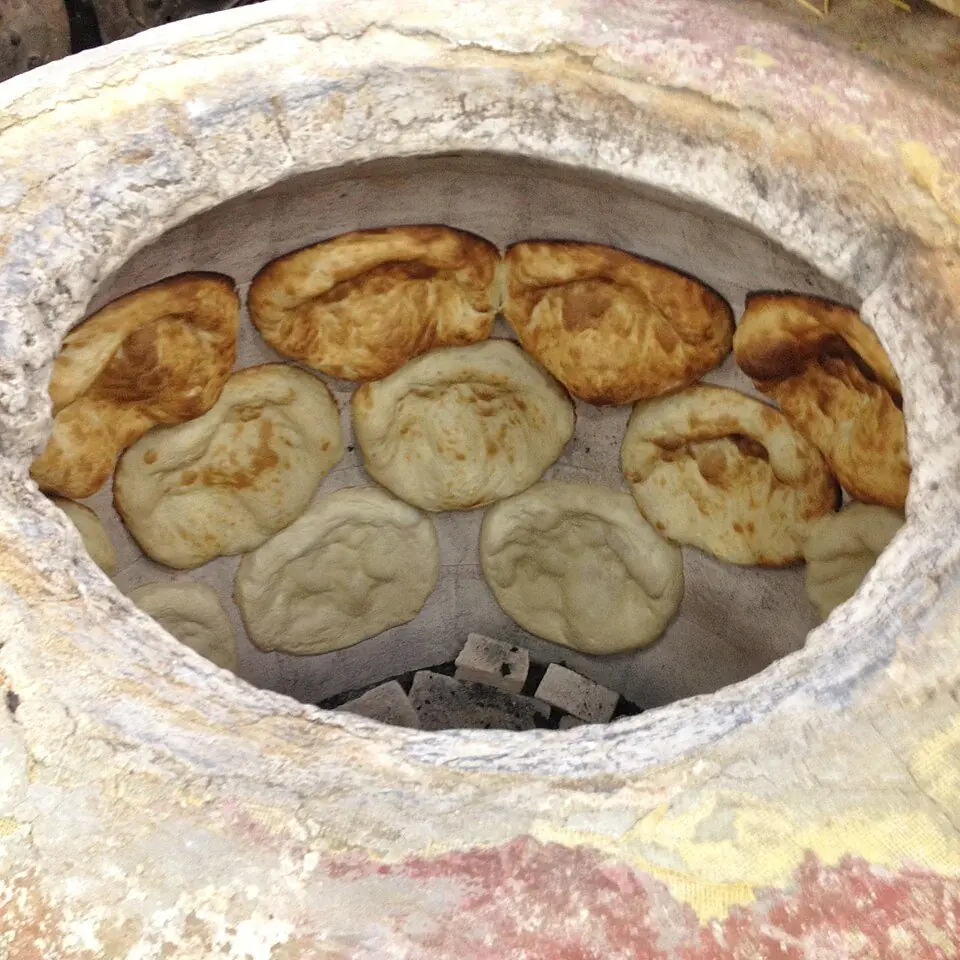
- Shoti or tonis puri, the Georgian bread baked in a round clay oven
- Mchadi (cornbread), especially in western Georgia
- Extra chopped coriander and dried chilli at the table
- Mzhave (Georgian pickles) or a plate of fresh herbs and spring onions
- A glass of dry Georgian red wine
Make ahead and storage
Kharcho keeps for 3 days in a covered container in the fridge and often tastes better on the second day. It thickens as it cools, so reheat it gently in a pan with a splash of hot water, stirring often. It freezes for up to 2 months, though the rice softens; add fresh coriander after reheating.


Maspindzeli Travel, Tbilisi · private tours and cooking classes in Georgia · maspindzeli.ge · WhatsApp +995 598 74 74 54 · hello@maspindzeli.ge