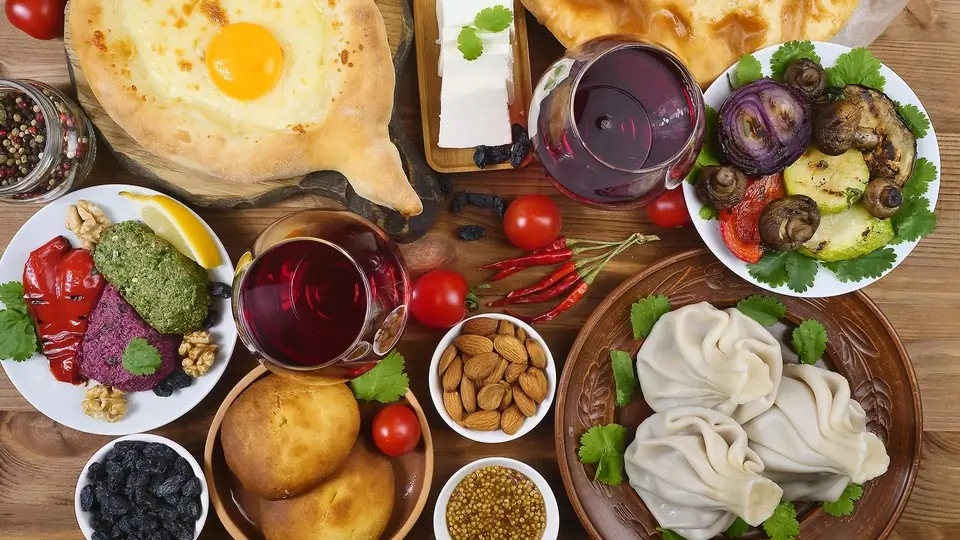
Chakhokhbili Recipe
ჩახოხბილი
This chakhokhbili recipe is the classic Georgian chicken stew: chicken browned in its own fat in a dry pot, then braised with plenty of onions and ripe tomatoes and finished with garlic and a big handful of fresh herbs.
Recipe by the Maspindzeli team in Tbilisi · Updated 18 Oct 2026 · Cooked all over Georgia
Full recipe with the timeline, timers and US measures: maspindzeli.ge/recipes/chakhokhbili/
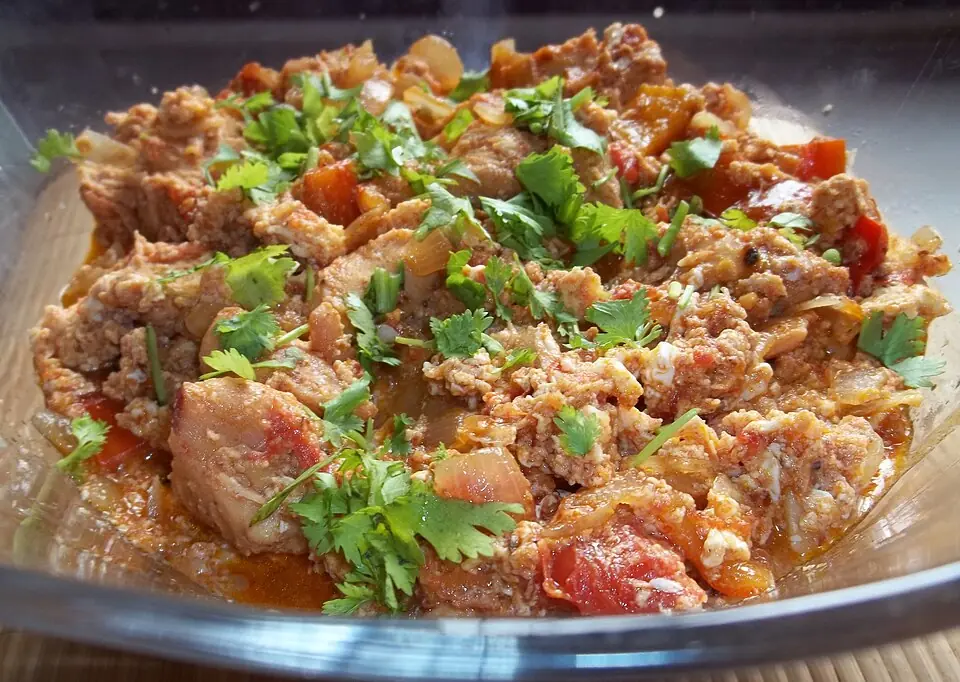
Chakhokhbili is chicken stewed with onions and tomatoes and finished with garlic and fresh herbs. This chakhokhbili recipe follows the way it is cooked in Georgian homes today: the chicken goes into a dry pot with no oil and cooks in its own fat, so the flavour builds before any onion or tomato goes in. You may also see it written chakhokbili or chahohbili, and it is one of the best-known Georgian chicken recipes.
The name comes from khokhobi, the Georgian word for pheasant, and the dish was first made with that bird. Today it is almost always chicken. Tomatoes only came into Georgian cooking in the 19th century, so the tomato-rich stew you eat today is the modern form of an older dish.
You find chakhokhbili all over the country, from weekday family dinners to the supra table. It is gentle rather than hot and needs no special ingredients beyond khmeli suneli, which makes it a good first Georgian dish to cook at home.
Timeline: what to do, and when
1 h 30 min from start to table · 1 h 2 min hands-on · 10 min waiting
Each bar is one step. Hands-on Waiting, while the oven, the pot or the dough does the work. Steps that sit inside a wait are done in parallel.
Recipe
Chakhokhbili
Ingredients
Chicken
Sauce
To finish
Amounts are scaled. Times stay about the same, but a bigger pot takes a little longer to come to the boil.
Contains: milk.
You will need
- Wide heavy-based pot or casserole with a lid, about 28 cm
- Sharp knife or poultry shears
- Box grater
Method
- Joint and dry the chicken10 min hands-on· start here
Cut the chicken into 10 to 12 pieces, leaving the skin on and cutting each breast in two. Pat the pieces very dry with kitchen paper and sprinkle with 1 tsp salt.
- Start in a dry pot15 min waiting· starts at +10 min
Lay the pieces skin side down in a dry, heavy pot over medium-low heat, with no oil and no water. Cover and leave for 15 minutes: the chicken gives up its juices and starts to melt its own fat.
- Chop the onions8 min hands-on· starts at +11 min, during step 2
Meanwhile, finely chop the onions and slice the red pepper, if using.
- Grate the tomatoes6 min hands-on· starts at +19 min, during step 2
Halve the tomatoes and rub the cut sides on the coarse holes of a box grater into a bowl until only the skins are left in your hand. Discard the skins. If using tinned tomatoes, crush them by hand.
- Brown the chicken10 min hands-on· starts at +25 min
Uncover and turn the heat up to medium. Let the juices bubble away, then turn the pieces every few minutes until golden on all sides. If there is more than about 3 tbsp of fat in the pot, spoon some off.
- Soften the onions10 min hands-on· starts at +35 min
Lift the chicken onto a plate. Add the butter, onions and pepper to the pot and cook for about 10 minutes, stirring and scraping up the browned bits, until the onions are soft and light gold.
- Add wine and tomatoes5 min hands-on· starts at +45 min
Pour in the wine, if using, and let it bubble for 2 minutes. Add the tomatoes, bay leaves, khmeli suneli and chilli, then put the chicken back in with its juices. The sauce should come about halfway up the chicken; add a splash of hot water only if the tomatoes were dry.
- Simmer25 min waiting· starts at +50 min
Cover and simmer gently over low heat for 25 minutes, stirring once or twice, until the meat is soft and the sauce has turned thick. If the sauce looks thin, leave the lid off for the last 5 minutes.
- Chop the herbs8 min hands-on· starts at +52 min, during step 8
Meanwhile, chop the coriander, basil, dill and parsley together, keeping a small handful aside for the top. Crush the garlic with a pinch of salt.
- Finish with garlic and herbs5 min hands-on· starts at +1 h 15 min
Stir the garlic and most of the herbs into the pot, then taste and season with salt and black pepper. Simmer for 2 minutes more, take the pot off the heat and remove the bay leaves.
- Rest and serve10 min waiting· starts at +1 h 20 min
Cover and leave for 10 minutes so the garlic and herbs soften into the sauce. Scatter over the remaining herbs and serve in deep plates.
About 680 kcal per serving (1 of 4). This is an estimate from standard values for the ingredients, not a lab figure.
Serve two or three pieces per person in a deep plate with plenty of sauce, and use bread to wipe the plate clean.
Tips, swaps and variations
Tips from your host
- Dry the chicken well and use a heavy pot. Wet skin steams and sticks, while dry skin browns and comes away from the pan on its own.
- Do not skimp on onions. Georgian cooks use a lot, and they melt into the sauce and make it thick and slightly sweet.
- Ripe summer tomatoes make the best sauce. In winter, good tinned whole tomatoes beat pale fresh ones.
- Add the garlic and herbs only at the end. Long cooking dulls coriander and basil, and their fresh taste is the point of the dish.
- Thighs and drumsticks are the most forgiving. If you use a whole bird, cut the breast into large pieces so it stays juicy.
- It tastes even better the next day, so it is a good dish to make ahead for guests.
Variations and swaps
- Pheasant or turkey: the original bird was pheasant. A jointed pheasant needs a little extra butter because it is lean; turkey thighs need about 15 minutes longer.
- With vinegar: some Georgian cooks start the chicken with a splash of wine vinegar and water instead of in a dry pot, letting the liquid cook away before the onions go in. The sauce comes out sharper.
- Without wine: many home cooks never add it. If your tomatoes are sweet, a squeeze of lemon at the end gives the same lift.
- Spicier: stir in 1 tsp red ajika with the tomatoes, or use two green chillies.
- Pomegranate: older Tbilisi versions were finished with pomegranate. A spoon of narsharab (pomegranate molasses) stirred in at the end gives a similar tart edge.
- Dairy-free: use sunflower oil instead of butter.
Serve it with
- Shoti or other fresh white bread to mop up the sauce
- Ghomi (cornmeal porridge), mchadi cornbread or plain rice
- A plate of fresh herbs, radishes and spring onions
- Pkhali or other vegetable starters
- Dry Georgian wine, such as a white Rkatsiteli or a red Saperavi
Make ahead and storage
Chakhokhbili keeps for 3 days in a covered container in the fridge and tastes even better the next day. Reheat it gently in a covered pan with a splash of water until piping hot, then add a few fresh herbs. It freezes well for up to 3 months.


Maspindzeli Travel, Tbilisi · private tours and cooking classes in Georgia · maspindzeli.ge · WhatsApp +995 598 74 74 54 · hello@maspindzeli.ge