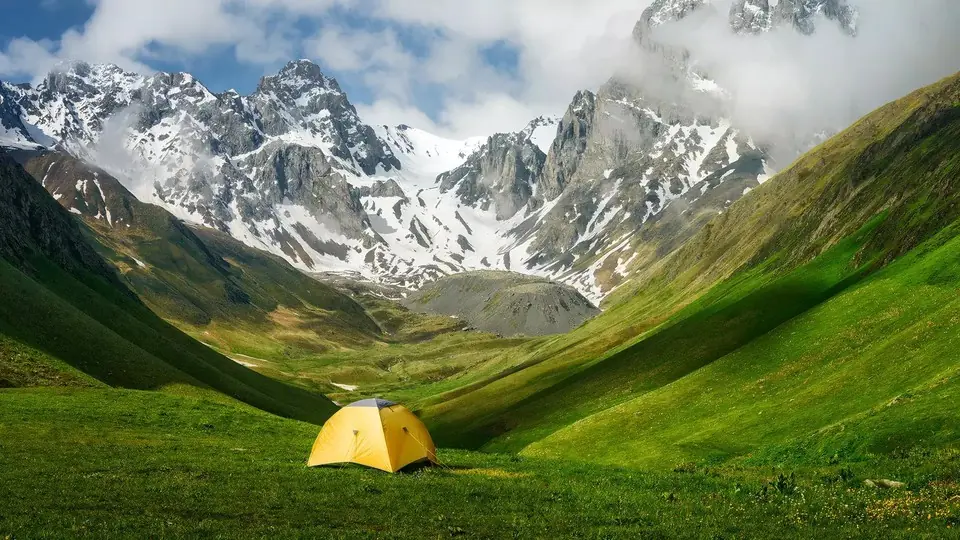
- The best camping in Georgia is in the high Caucasus from mid-July to mid-September: the Atsunta route from Tusheti to Khevsureti, the Abudelauri lakes below Chaukhi, the Koruldi and Tobavarchkhili lakes, Udziro in Racha and the Javakheti volcanoes.
- Away from villages, farmland and protected areas a quiet overnight camp is widely accepted; in national parks you sign in at the visitor centre and pitch only at marked sites or shelters.
- Camps near the Russian border, such as Girevi before the Atsunta Pass, Black Rock Lake and Truso beyond Zakagori, need your original passport plus registration on the day or a Border Police permit arranged ahead.
- Above 2,500 m clear summer nights fall to around freezing, so take a bag with a comfort rating near minus 5 °C; buy stove gas in Tbilisi, as canisters cannot fly.
- On our private camping treks we supply tents, mats, the camp kitchen, a cook and pack horses, and rent sleeping bags; each tour page shows what is included and what is extra.
Camping in Georgia is easy to arrange and deeply rewarding. The Greater Caucasus is full of summer pastures, glacial lakes and side valleys where a tent is the only way to spend the night, and outside national parks nobody minds a discreet camp well away from houses. High camps are free of snow from about mid-July to mid-September. Protected areas are stricter: register with the rangers first and camp where they tell you.
Below we go region by region, from Tusheti and the Kazbegi valleys to the lava plateau of Javakheti, the Vashlovani semi-desert and the Black Sea. Then come the rules for parks and border zones, fires, water, dogs and bears, a month-by-month table of snow and night lows, a kit list of what to bring, rent or buy, camping near Tbilisi, campervans and roof tents, and how our own camping treks work.
Best places to camp in Georgia: the regions at a glance
Formal campsites are rare in Georgia, but ground where a tent is normal is everywhere: shepherds' summer pastures, lake basins above the trees, meadows at the end of 4x4 tracks and staffed shelters on park trails. These are the ten areas we rate; our hiking in Georgia guide covers the trails themselves.
| Area | Usual camps | Altitude | Best months | Rule to know |
|---|---|---|---|---|
| Tusheti and Khevsureti | Girevi, Kvakhidi meadows, Khidotani, Mutso | 1,900 to 2,600 m | Mid-July to early September | Sign in at Omalo; border registration in Girevi |
| Kazbegi side valleys | Juta, Abudelauri lakes, Truso | 2,000 to 2,600 m | Late June to September | Permit needed beyond Zakagori |
| Svaneti lakes | Koruldi lakes above Mestia | about 2,740 m | July to September | No water on the climb |
| Tobavarchkhili | Natipuru, Okhoje and the main lake | 1,930 to 2,650 m | Late July to mid-September | No rangers, no signal |
| Racha | Udziro lake, Imereti ridge, Shaori | 1,130 to 2,800 m | Mid-July to early September | Keep south of the Mamisoni area |
| Lagodekhi | Forest camp and two shelters | 2,000 to 2,800 m | July to September | Register with ID; carry passport |
| Borjomi-Kharagauli | Staffed shelters, marked campsites | up to about 2,600 m | Mid-May to mid-October | No camping off marked sites |
| Javakheti | Levani lakes, Samsari caldera, Tabatskuri | about 2,000 m and up | June to mid-September | Check rules on the reserve side of Tabatskuri |
| Vashlovani | Mijniskure on the Alazani | under 1,000 m | April, May, October, November | Register in Dedoplistskaro; 4x4 only |
| Black Sea and Adjara | Pine strips by the beaches, Mtirala, Green Lake | 0 to 2,060 m | Mid-June to September | Few formal campsites; heavy rain |
For a first trip with facilities, try the Juta campsites or the Borjomi shelters; for solitude, Tobavarchkhili, Udziro or Javakheti.
Camping in Tusheti and Khevsureti: Girevi, Atsunta and Mutso
Upper Tusheti is protected land: a strict reserve, a national park and a protected landscape around the villages. Call at the park office in Kvemo (Lower) Omalo on arrival. Signing in is free, and the rangers will tell you which meadows serve as campsites that summer, because you may not pitch just anywhere. In 2026 a campsite pitch was roughly 5 GEL (near $2) for each person per night and a shelter bed about 10 GEL (about $4). Near villages, keep off mown hay meadows, a family's winter fodder.
The region's great camping route crosses to Khevsureti over the Atsunta Pass, roughly 3,430 m of scree and late snow. After guesthouse nights in Omalo and Dartlo, the customary camps are a meadow by Girevi, the last inhabited spot in the Pirikiti valley, then the Kvakhidi pastures at about 2,600 m, the last level ground below the climb, then the Khidotani side after the pass and the river below Mutso. Our Omalo to Shatili trail page details each stage.
Water is easy in the valley but not on the pass: between the final stream above Kvakhidi and the first water beyond the saddle you may walk 4 to 5 hours dry, so start with 2 to 3 litres each and treat everything, since sheep graze every valley. Trekking reports mention two shelters built in 2024 at Kvakhidi and on the Khidotani ridge but not officially open in mid-2025; take a tent regardless.
Khevsureti borders Chechnya, so expect passport checks around Shatili, Mutso and Ardoti, where camps sit by the Andaki and Argun rivers. The way out crosses the Datvisjvari Pass, about 2,680 m, on a dirt road that slips after heavy rain, so check its status before relying on it. Tusheti's Abano Pass road, about 2,950 m, usually opens in June and closes with the first big snow in October.
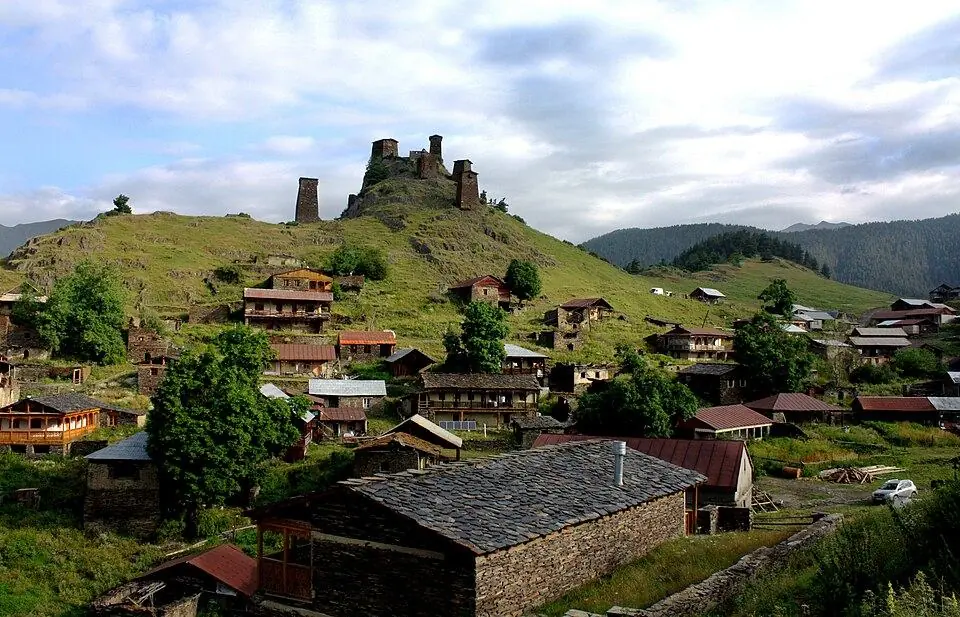
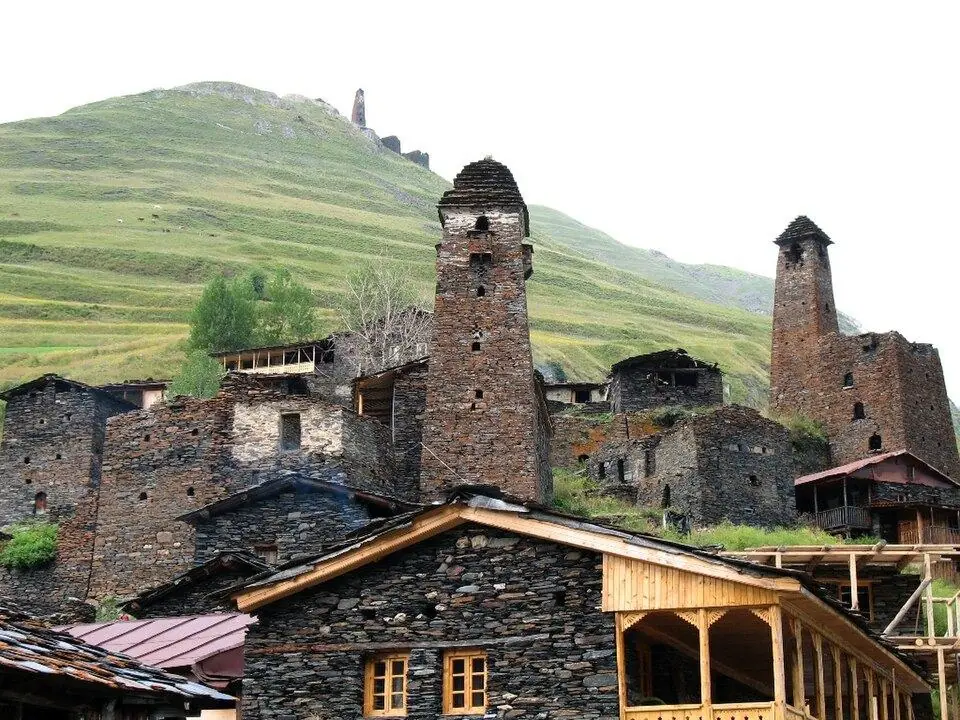
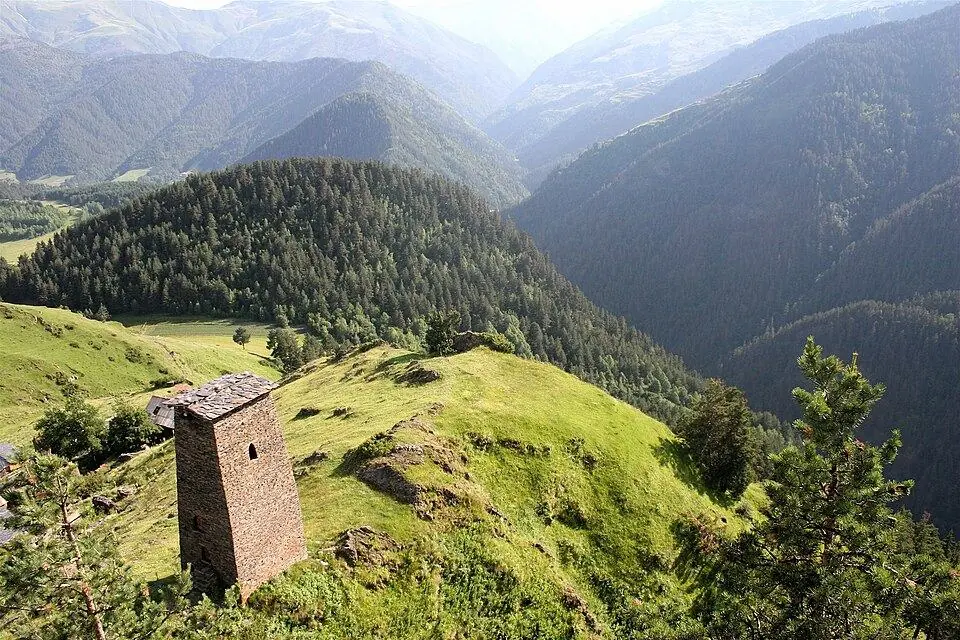
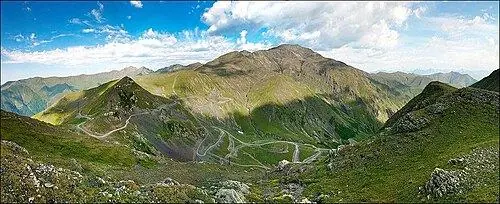
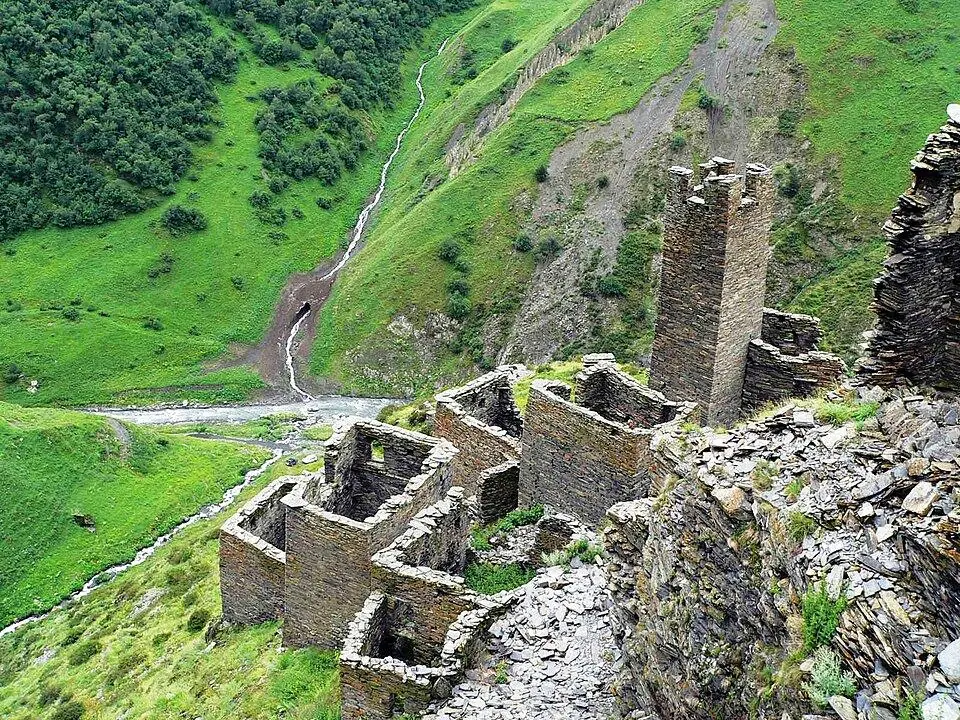
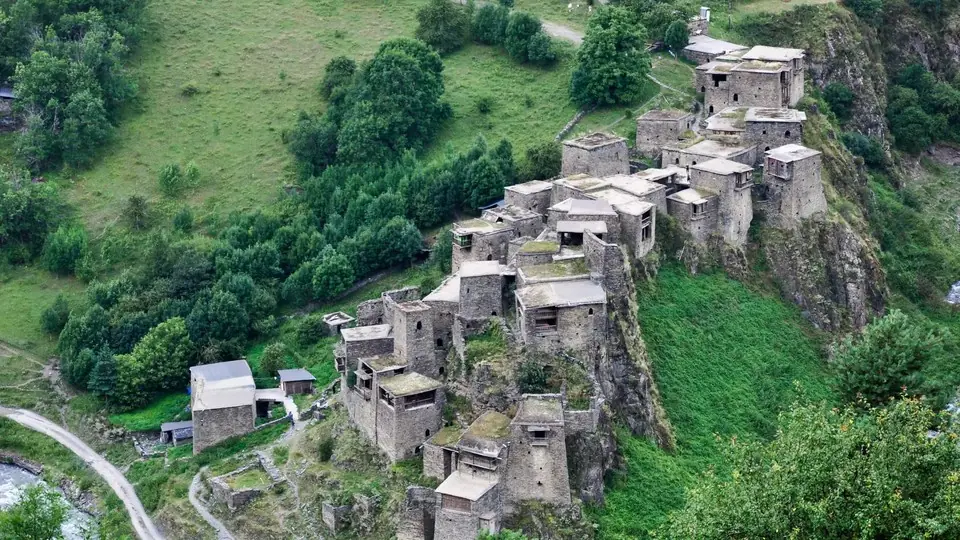
Our Tusheti to Khevsureti Trek uses these four camps between guesthouse nights. Horses carry the camp, food and your main bag, a cook runs the kitchen and the guide handles the border formalities. For a bed every night, take the Tusheti 4x4 Adventure.
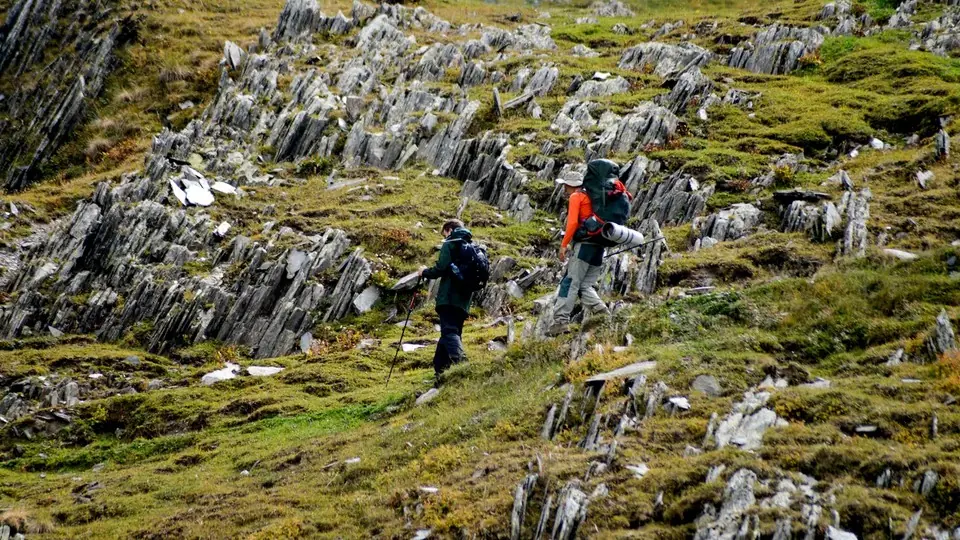
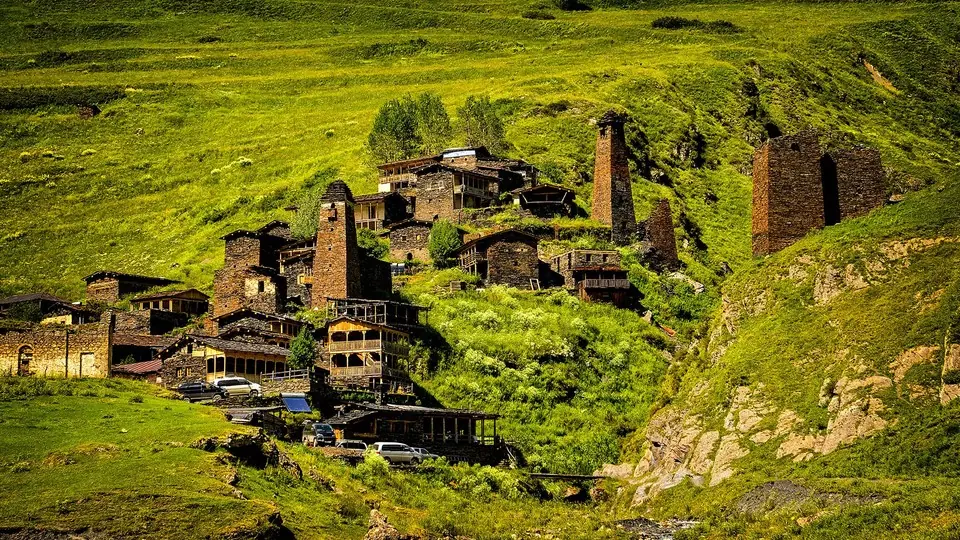
Camping in Kazbegi's side valleys: Juta, Truso and the Abudelauri lakes
Stepantsminda is a town of guesthouses; the camping is in the side valleys. Much of this ground lies in Kazbegi National Park, so ask in town where tents are welcome before you go.
Juta and the Chaukhi Pass
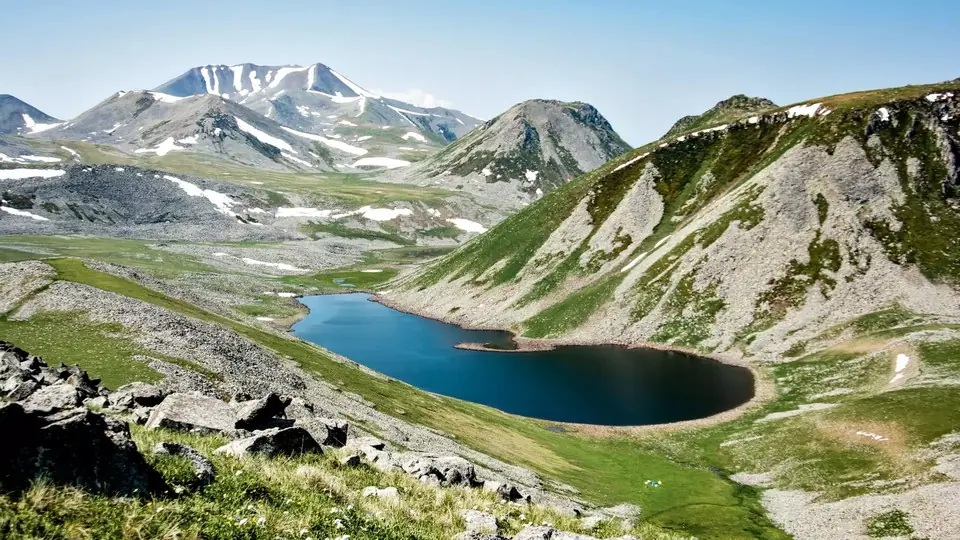
Juta sits at about 2,200 m below the rock spires of Chaukhi and is one of the few high villages with real summer campsites: seasonal camps above the houses offer pitches, hot showers and tents to hire, so a sleeping bag is all you need. Since a washout in June 2025 the top of the road has been unsafe for normal cars, so in 2026 visitors walked the final 2 to 3 km or took a seasonal shuttle. Strong walkers cross the Chaukhi Pass, about 3,340 m, and camp by the Green Lake of the Abudelauri group at roughly 2,600 m. Expect 3 to 4 hours without water between the last stream and the lakes. Details are on our Juta to Roshka trail page.
Truso valley
Truso follows the young Tergi upstream from Kobi to Zakagori fortress, passing travertine terraces, iron-red springs and deserted villages. Its broad floor, between 2,000 and 2,250 m, makes an easy first camp. Two limits apply. A border police post stands near Zakagori because the valley ends at the boundary of the occupied Tskhinvali region: no permit is needed up to the fortress, but the Suatisi or Mna valleys beyond need a border-zone permit arranged in advance. And mud slides off the walls after storms, so pitch on open ground away from gullies.
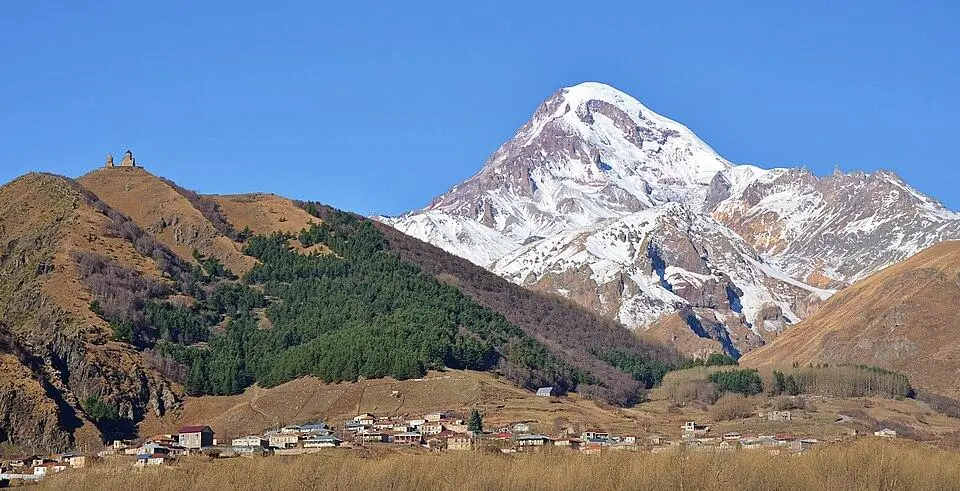
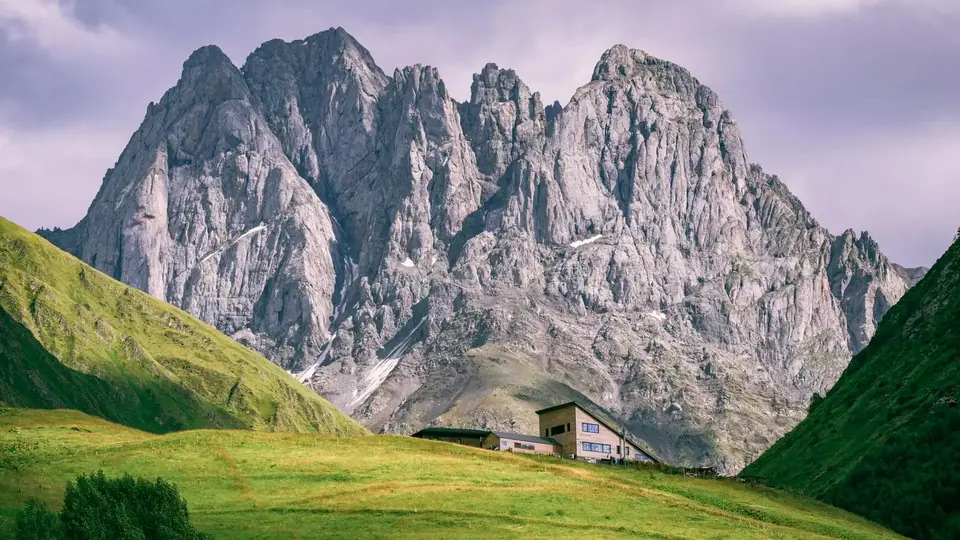
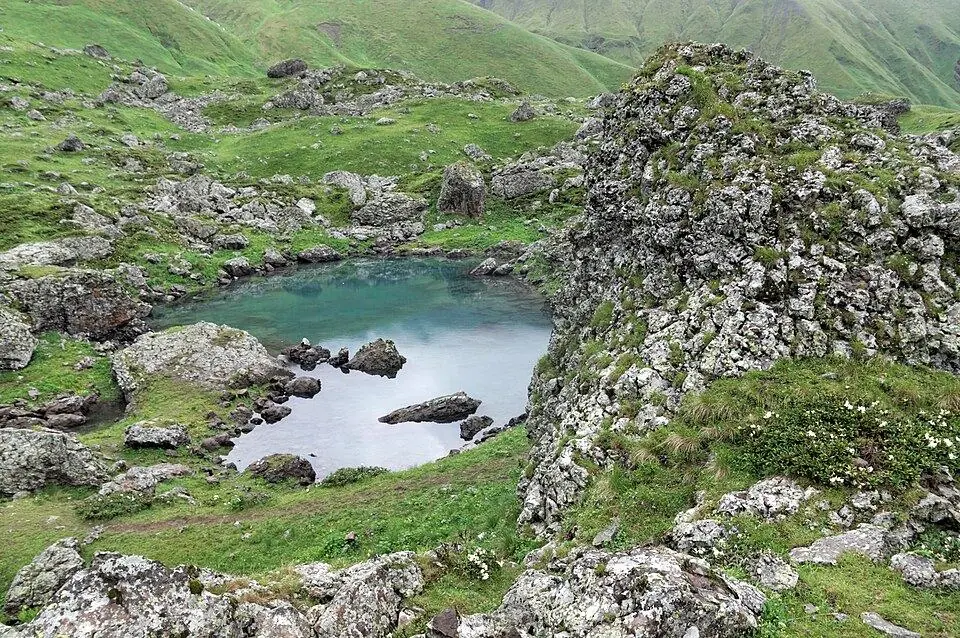
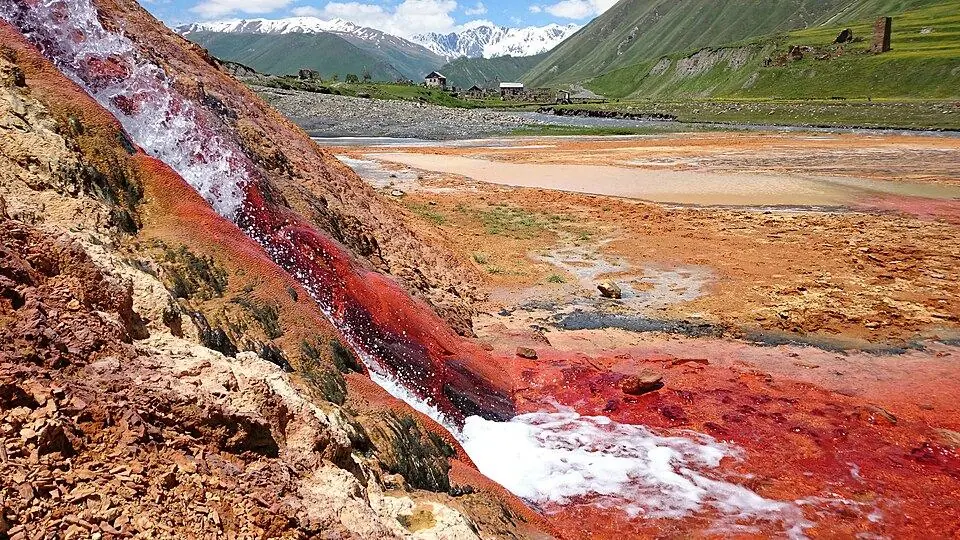
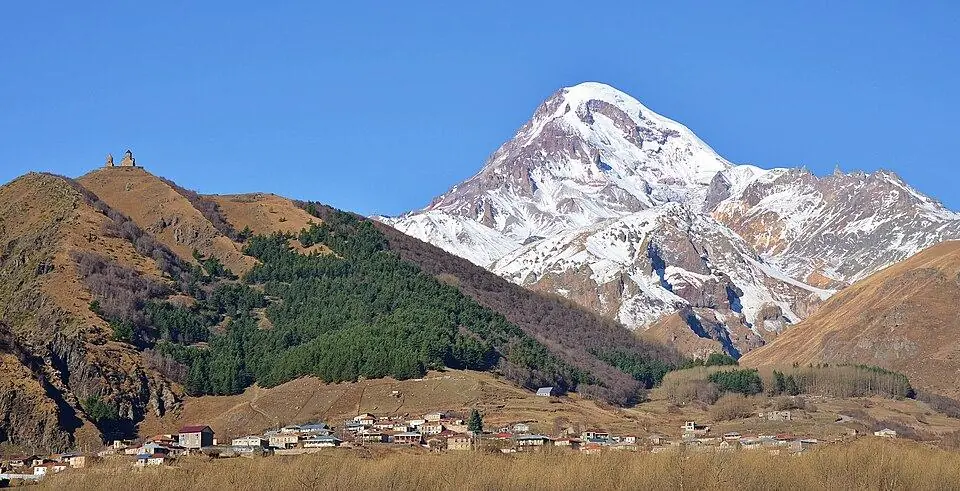
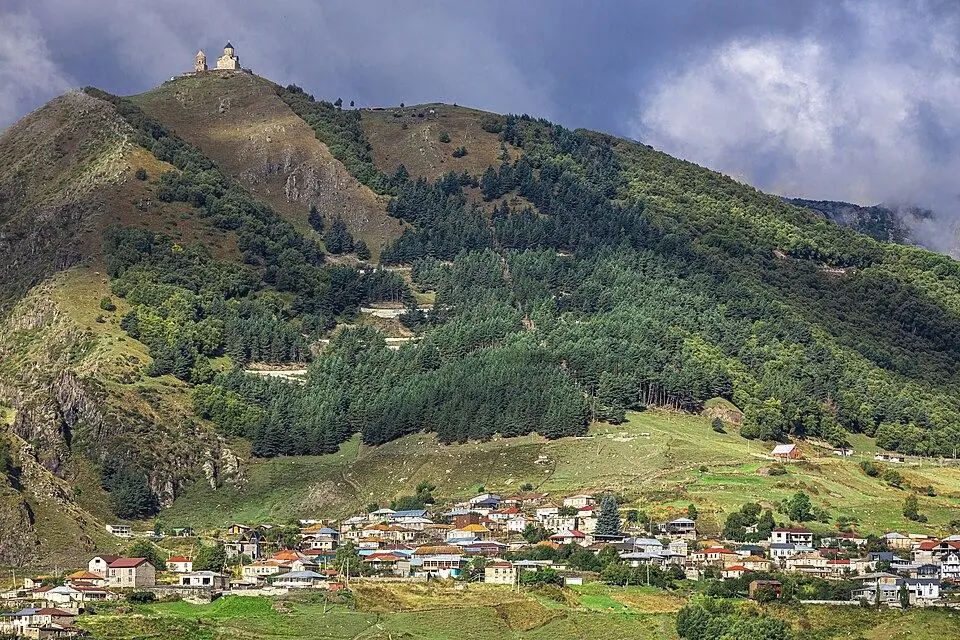
The Kazbegi and Khevsureti Trek crosses Chaukhi with a supported camp at the Abudelauri lakes, where we bring tents, mats and the camp kitchen. The Kazbegi Hiking Week is the hotel-based alternative, with full days in Juta and Truso.
Camping by the lakes of Svaneti, Tobavarchkhili and Racha
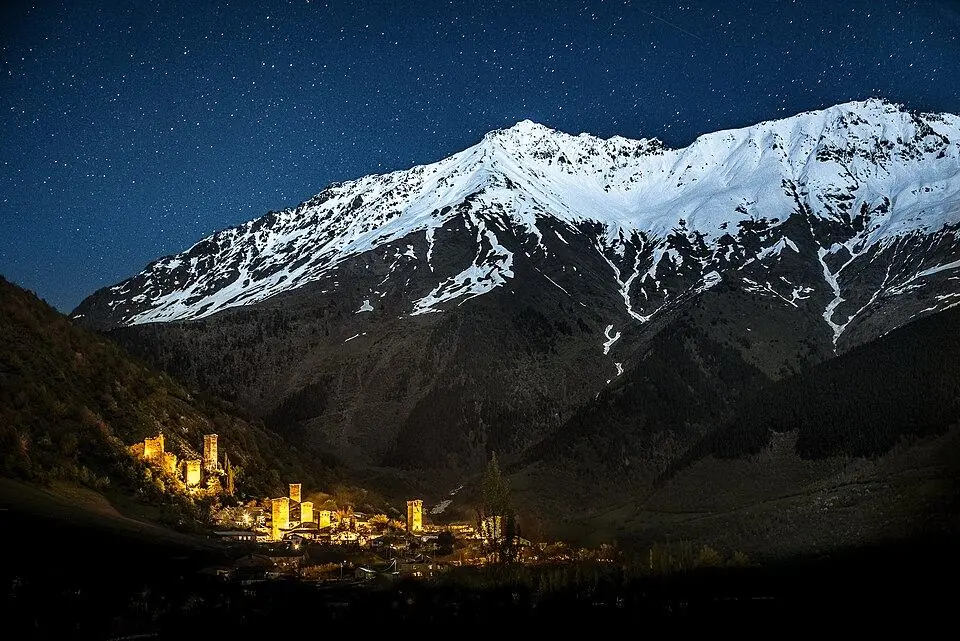
Svaneti trekking runs on guesthouses, Mestia to Ushguli included, so carry a tent here only for the high lakes.
Koruldi lakes
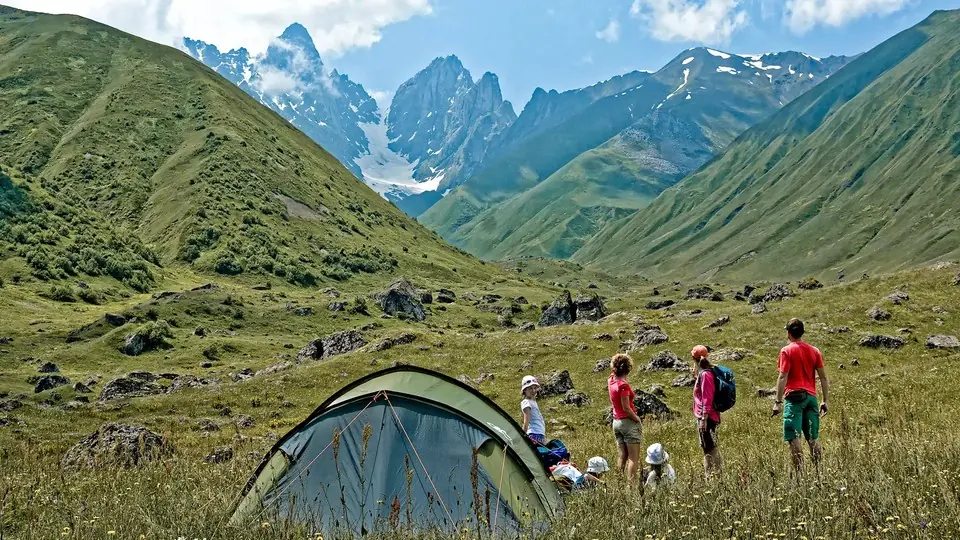
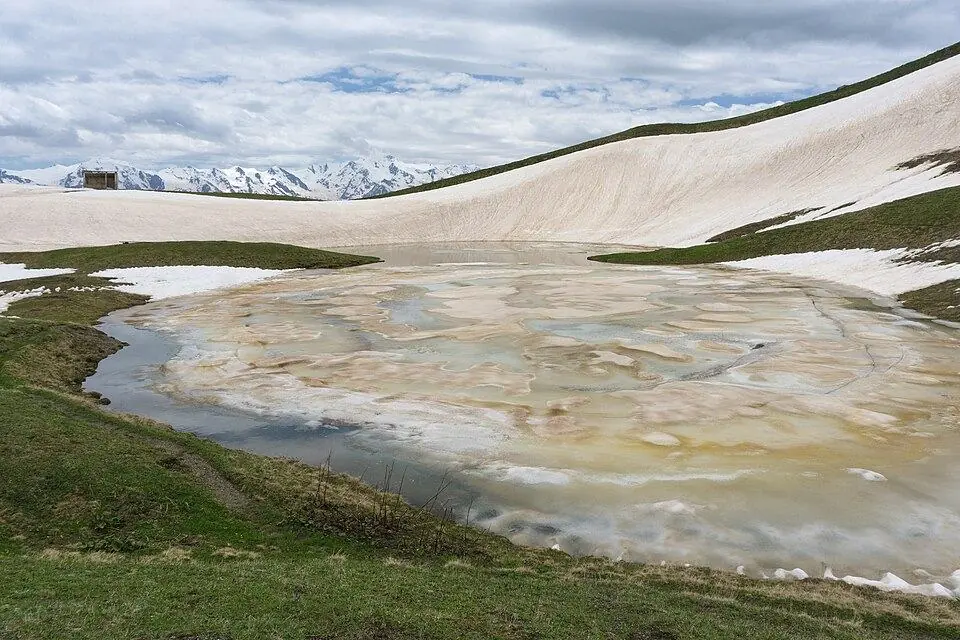
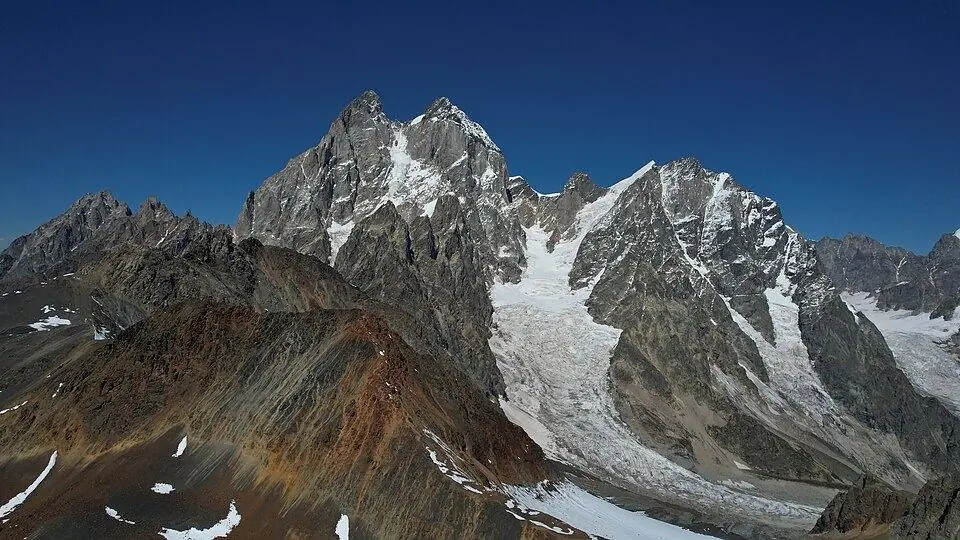
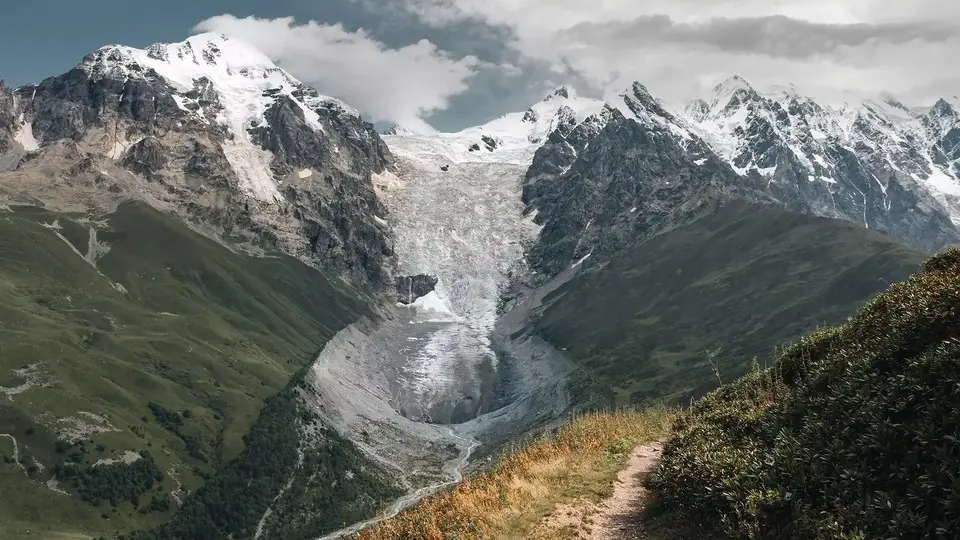
The Koruldi lakes sit on pasture above Mestia at ~2,740 m, a hard day of ~19 km return with up to 1,300 m of climbing. A night up there splits it into two easy days and gives you sunrise on Ushba. There is effectively no water on the climb, so take 2 to 3 litres each, and skip the shallow lakes, where cattle graze. No permit is needed, and experienced walkers can cross the 2,955 m Guli Pass and descend to Mazeri; see our Koruldi Lakes and Guli Pass trail pages.
Tobavarchkhili, the silver lakes
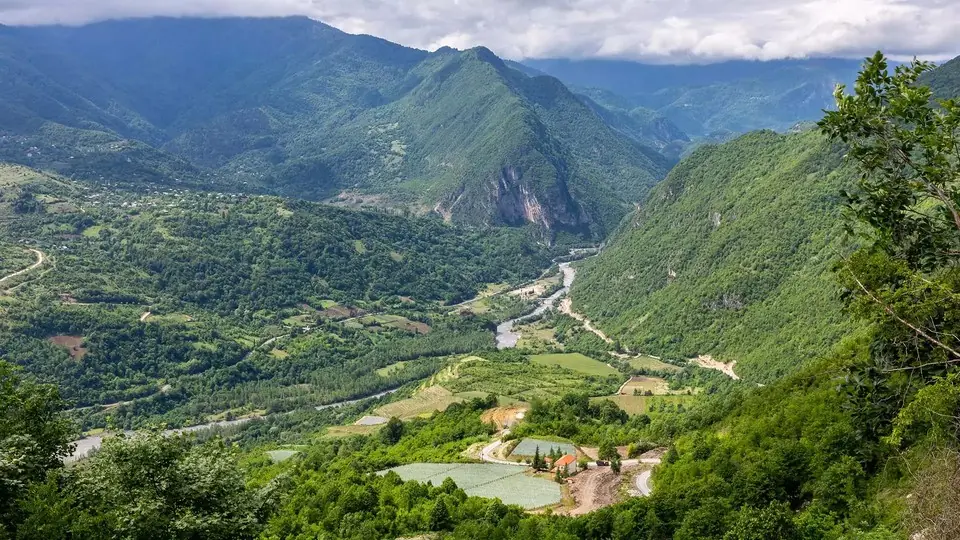
On the Egrisi range in Samegrelo, Tobavarchkhili is camping in its purest form: no villages, huts, rangers or signal. A 4x4 from Mukhuri needs 3 to 5 hours to reach the Natipuru meadow, about 1,930 m. Our trail page then describes a four-day loop of about 35 km over the Okhoje pass, near 2,720 m, to Tobavarchkhili itself at close to 2,650 m; a longer variant exits down the Magana valley. Water is plentiful, but nothing is sold after Mukhuri, gas included. Bears roam the forests and sea cloud can bury the ridge in an hour, so go from late July to mid-September and leave your plan with your driver.
Racha
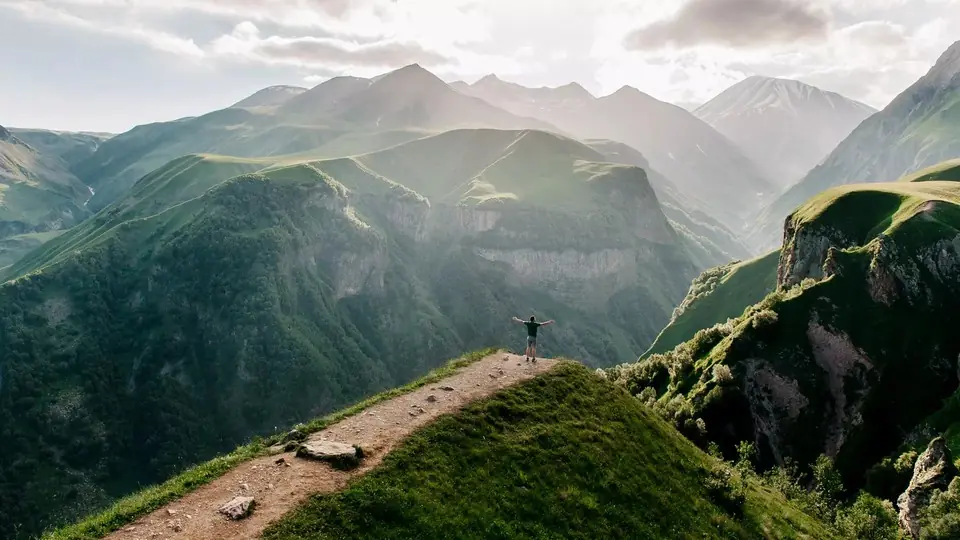
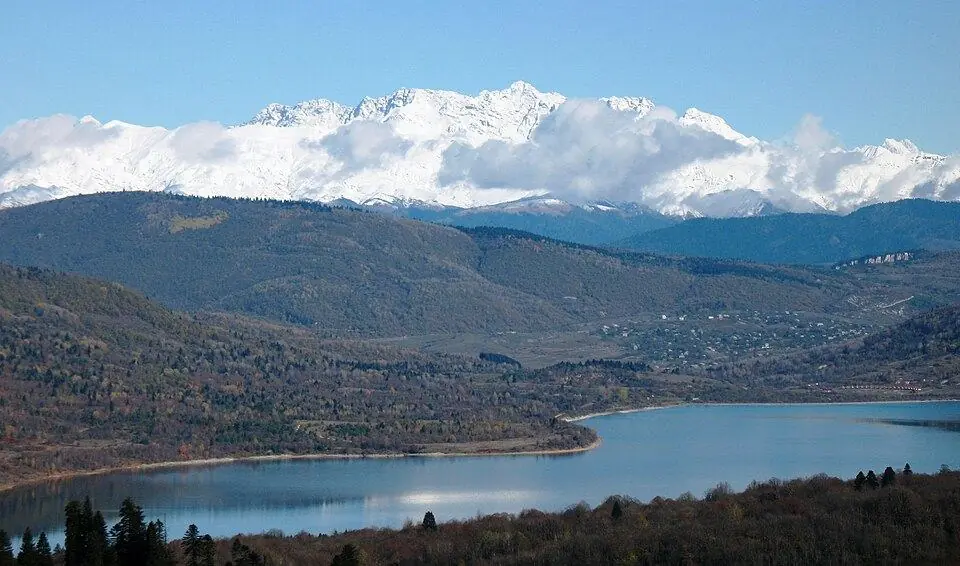
From Glola, about 1,350 m in the upper Rioni valley, a steep forest climb and a long open ridge lead to Udziro, a lake close to 2,800 m. The trip is some 22 km over two days with a night by the water. Fill 2 to 3 litres at the shepherds' spring, since the ridge above is dry, and bring a stove. Stay inside the lake basin rather than pushing north toward the Mamisoni Pass and the Russian border. The unmarked Imereti to Racha ridge, from Drbo to Oni, tops out near 2,361 m with tents the only option and springs that fail by August. For car campers, the shore of Shaori, a reservoir at about 1,130 m, makes a cool summer stop.
Our Svaneti Trek is a guesthouse trek with a warm-up day at Koruldi; ask if you want a supported night at the lakes. The Imereti to Racha Trek camps two nights on that ridge with horses and a cook. Tobavarchkhili is not a fixed tour yet, but we can plan it privately.
Shelters, volcanic lakes, semi-desert and sea: Lagodekhi, Borjomi, Javakheti, Vashlovani and the coast
Lagodekhi
Georgia's oldest reserve, protected since 1912, keeps the Black Rock Lake route, a three-day walk, open from June to October. You sign in at the Lagodekhi visitor centre, handing over a copy of your ID, and you must carry the original passport: the lake sits on the border with Dagestan in Russia, and border police patrol the ridge. Nights are at the Meteo shelter at the top of the forest and a higher one below the lake, or in tents beside them, for about 30 GEL (about $11) a bed or 5 GEL a pitch in 2026. See our Black Rock Lake trail page.
Borjomi-Kharagauli
This is the best-organised park for overnight walking. Sign in at the Borjomi visitor centre, or Kharagauli's if you start in the west, and book beds there; you may not pitch anywhere except the shelters and marked campsites. APA listed about 20 to 30 GEL (about $7 to $11) a bed and 10 GEL a pitch for 2026. Shelters have bunks but no taps, so ask which springs are flowing. The classic is the four-day St Andrew Trail, about 54 km over Sametskhvario (2,642 m).
Javakheti
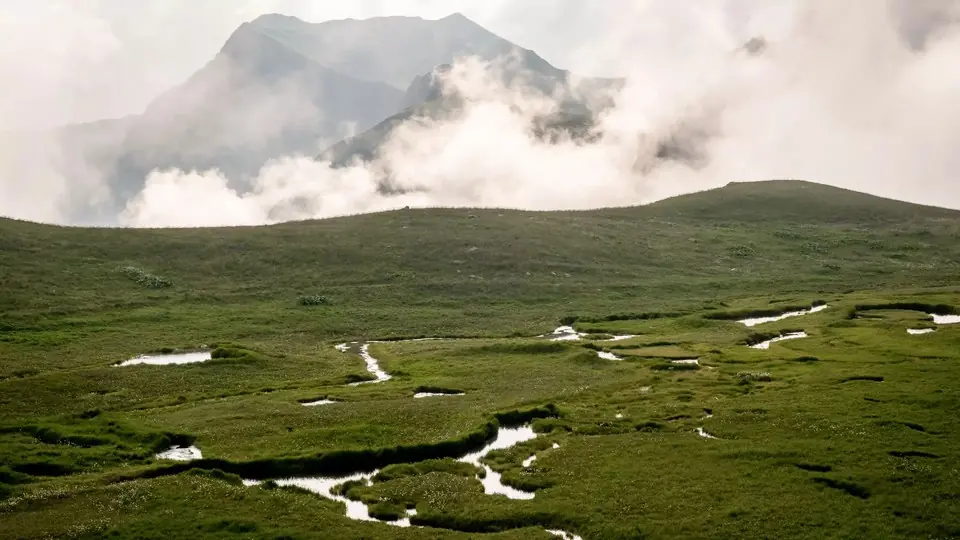
The southern plateau is treeless grassland near 2,000 m with lakes and extinct volcanoes: Paravani, the country's largest lake, at about 2,070 m, and the Abul-Samsari chain rising to roughly 3,300 m. Good camps sit by the Levani lakes, inside the Samsari caldera and on the shore of deep Lake Tabatskuri, about 1,990 m; part of Tabatskuri lies in the Ktsia-Tabatskuri Managed Reserve, so check where pitching is allowed there. Expect wind, cold nights, no shade or firewood, and streams that dry up by late August.
Vashlovani
Badlands, pistachio woodland and steppe in the far south-east, best in April and May or October and November; summer is fiercely hot. Register with an ID copy in Dedoplistskaro; entry was about 5 GEL (about $2) in 2026. The main overnight spot is Mijniskure, on the Alazani where it marks the border with Azerbaijan, with bungalows at about 40 to 50 GEL a room and space for tents. Its well is the one dependable water source, the tracks need a 4x4 and parts of the park need a border permit.
The coast and Adjara
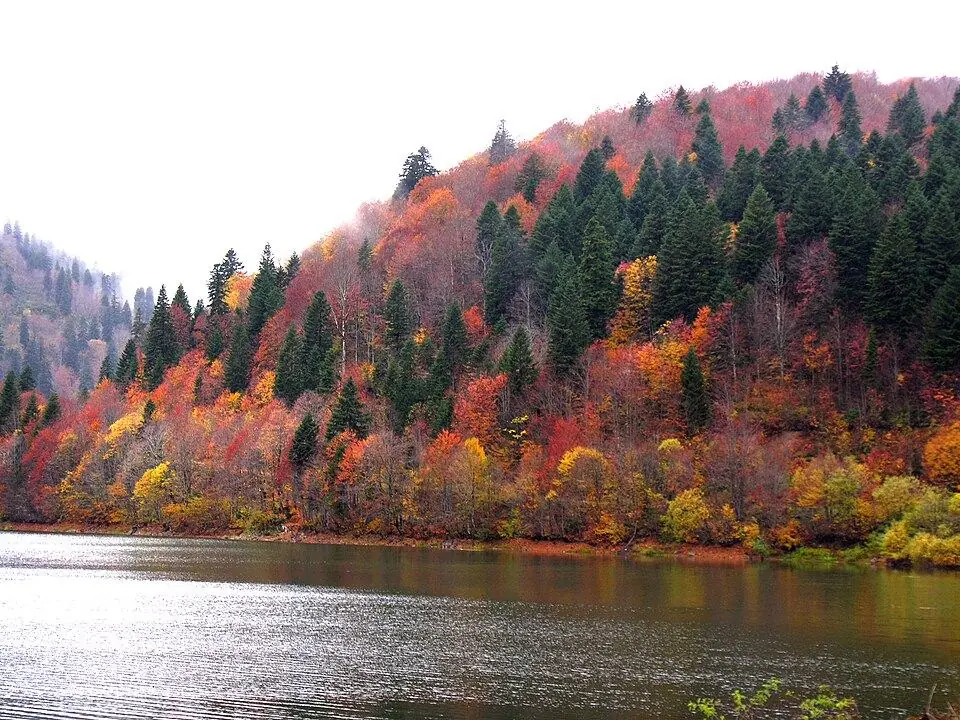
The coast is the weakest camping region: tents and vans appear in summer in the pine strips behind the beaches of Grigoleti and Shekvetili, but formal campsites are few and midsummer is humid and busy. The hills behind are better: Mtirala's two-day loop reaches a shelter at roughly 1,250 m in rainforest soaked by some 4,000 mm of rain a year, Kintrishi's trail reaches Lake Tbikeli at ~2,200 m, and Green Lake near Goderdzi, about 2,060 m, is a favourite for a night on the shore.
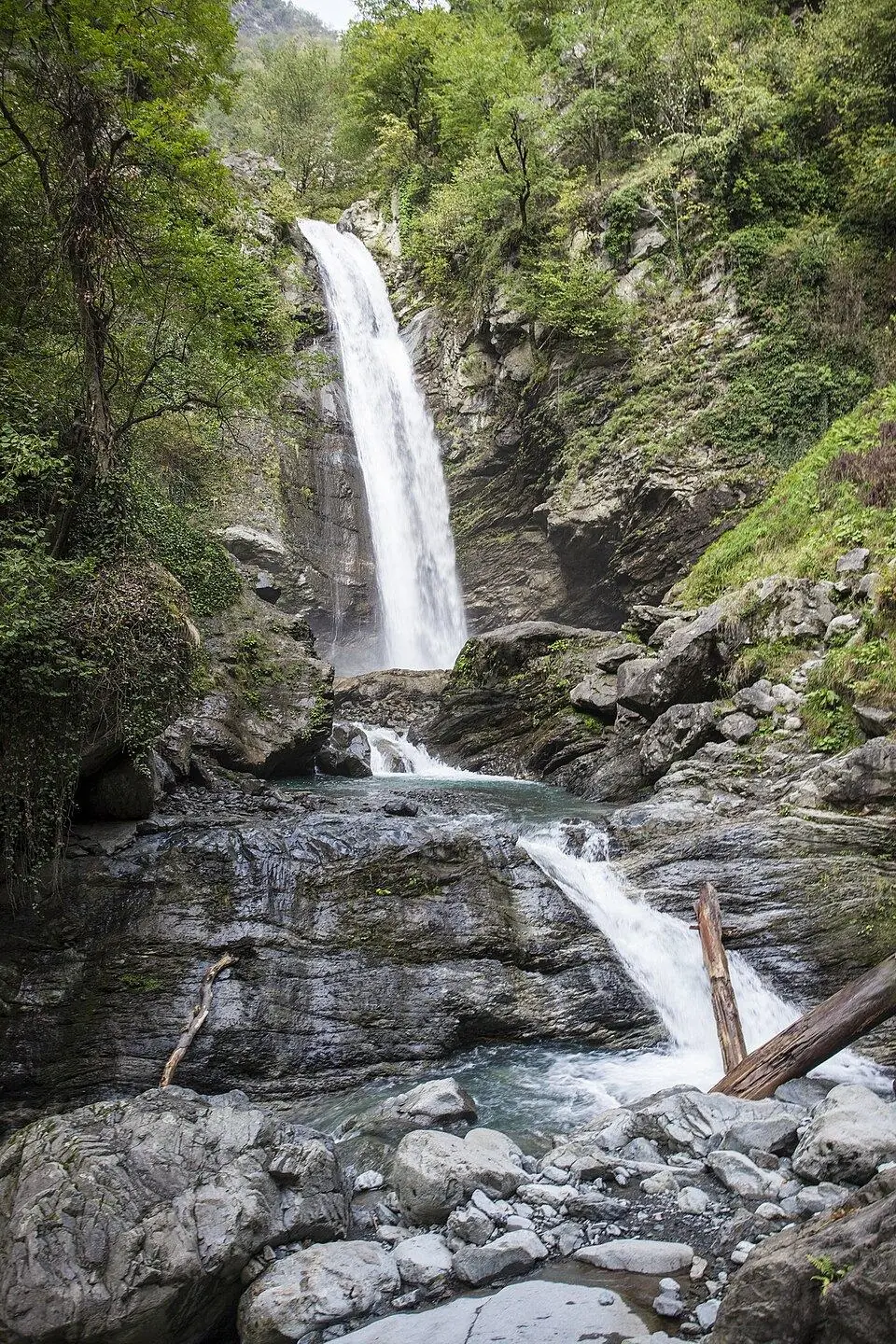
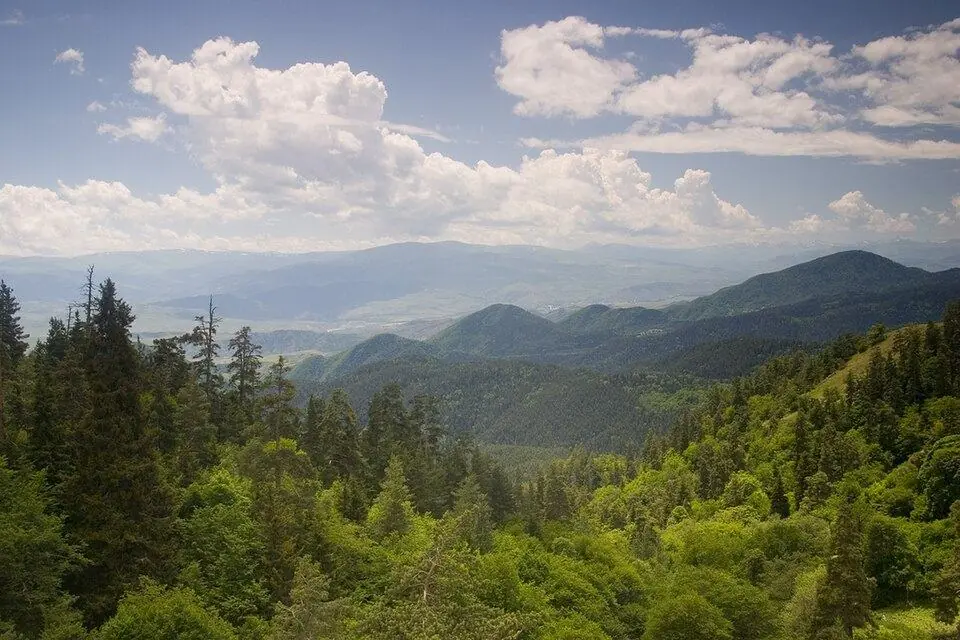
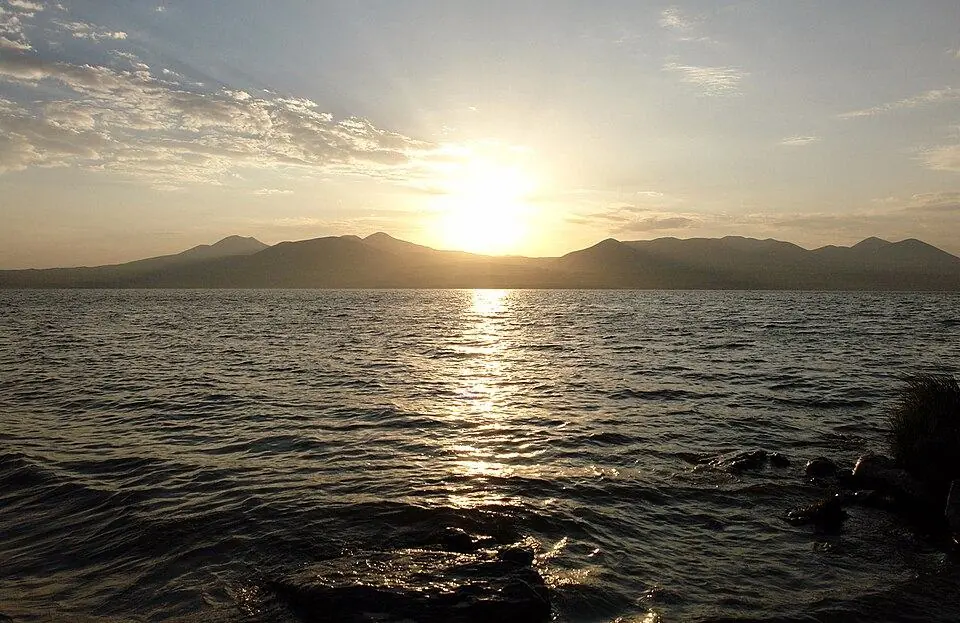
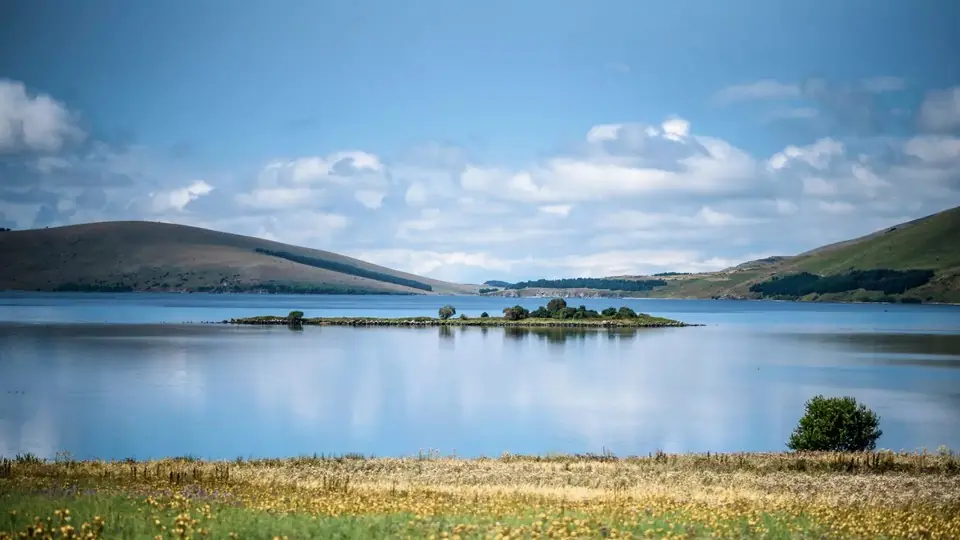
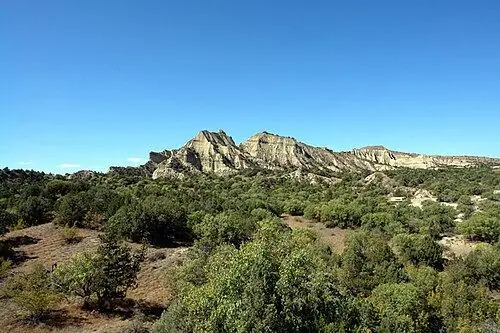
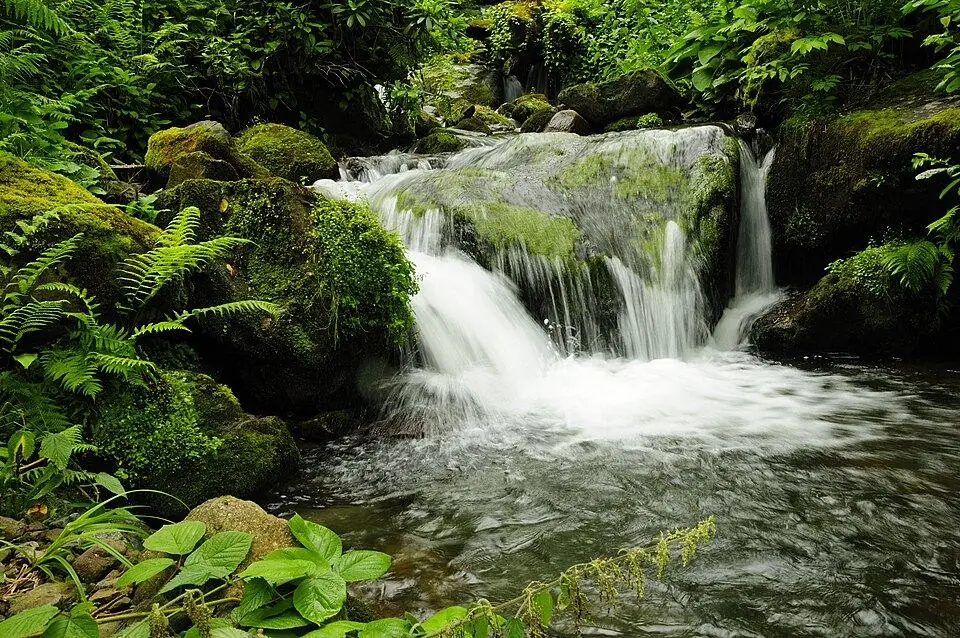
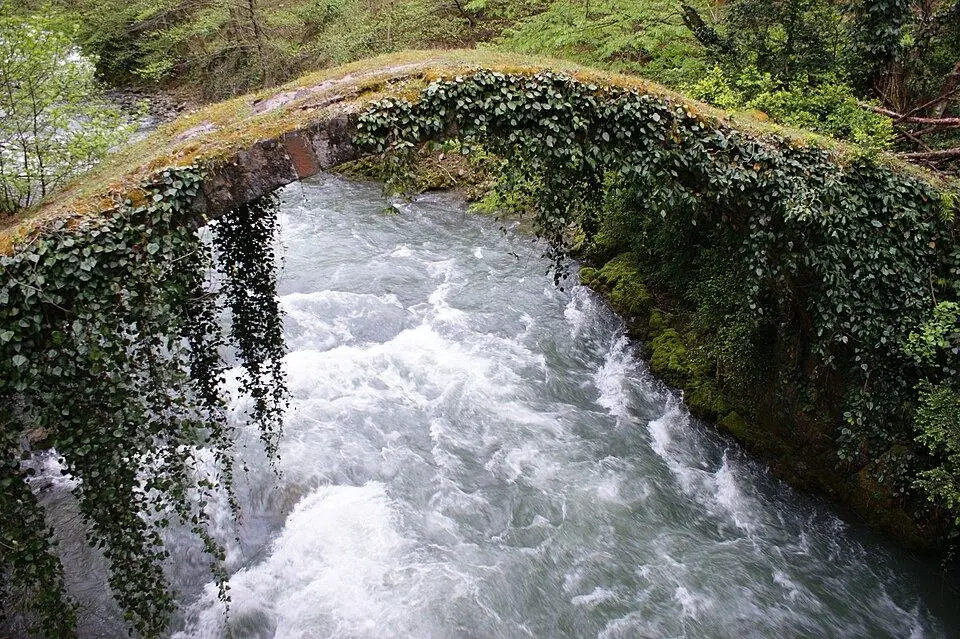
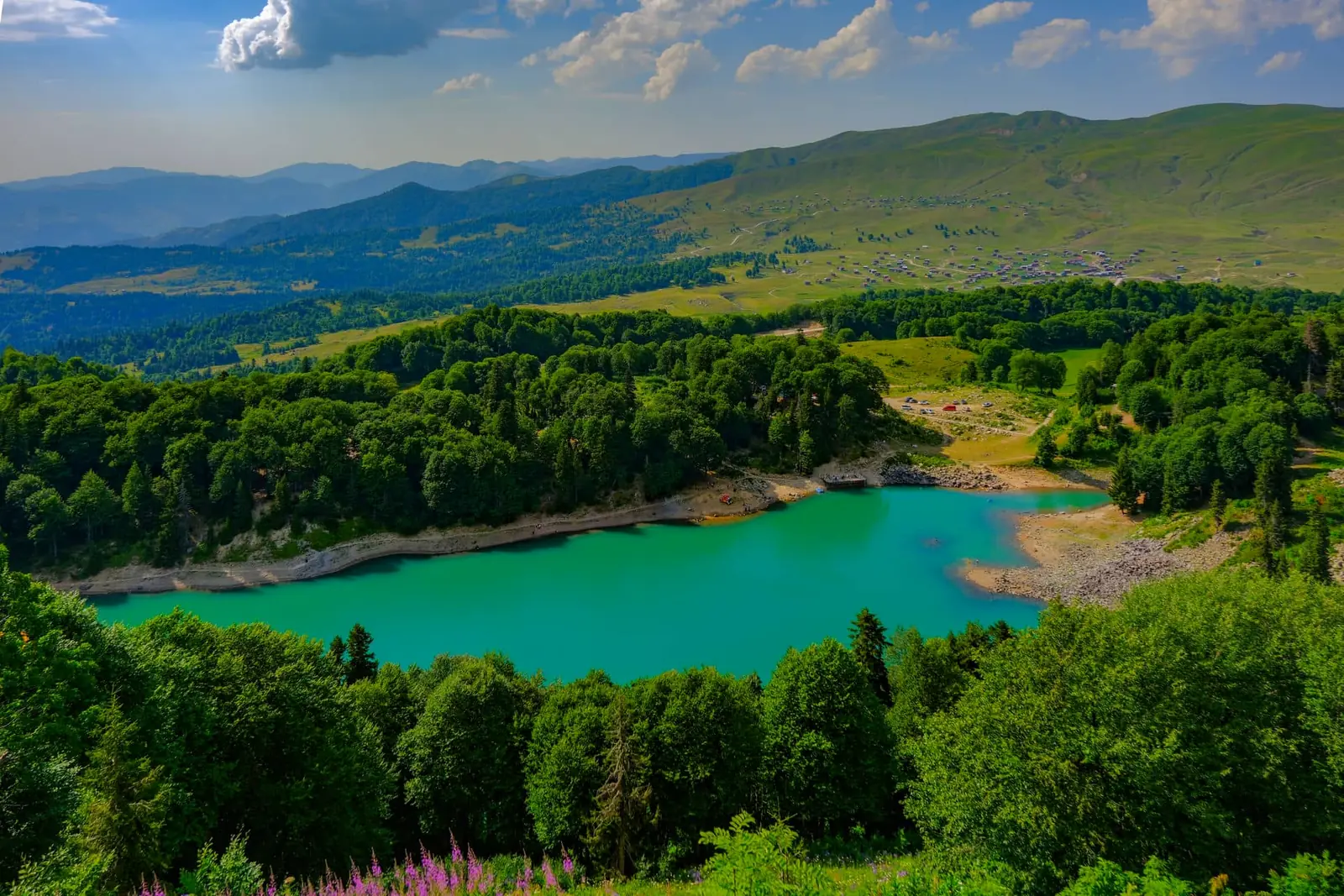
Our Black Rock Lake trek pairs a forest camp and a shelter night with Kakheti's cellars, the Borjomi Park Trek uses two shelters with a pack horse, and the Javakheti trek has three supported camps before Vardzia.
Is wild camping legal in Georgia? Rules for parks and border zones
Broadly yes: a night or two in a tent is accepted on open land away from villages, outside protected areas and off private property. Camping on someone's land without asking can bring a fine, so ask whenever a house, fence or cut meadow is in sight, and keep away from the shrines of Tusheti and Khevsureti.
Georgia's Agency of Protected Areas (APA) manages the parks, and they all work the same way: sign in at the visitor centre before a long route, camp only at marked campsites or in shelters, pay the small fee, and light fires only in the pits provided. Strict nature reserves are closed to camping.
Because the main ridge is the border with Russia, many top camps lie in a border zone. The Border Police of Georgia issue tourist permits for it at their central office, 12 Kandelaki Street in Tbilisi, or regional divisions; you apply in person or by email with your route and passport scans. Some routes are handled on the spot instead:
- Atsunta Pass: register at the Girevi post, then show the paper near Khidotani or Mutso.
- Black Rock Lake: register at the Lagodekhi visitor centre with an ID copy; never cross the watershed.
- Truso: free to Zakagori; anything beyond needs an advance permit.
- Mount Kazbek: register at the Stepantsminda border police office before climbing.
- Shatili, Mutso and the Argun valley: passport checks on roads and trails.
- Vashlovani: register in Dedoplistskaro; parts need a border permit.
- Machakhela's Kokoleti trail in Adjara: apply at least 10 working days ahead.
Whatever a map app shows, stay far back from the occupation lines of Abkhazia and of the Tskhinvali region (South Ossetia), two occupied territories. On our treks the guide arranges registration and park sign-in; you just send passport details. Carry the original passport, not a copy, on every day near the frontier.
When to go camping in Georgia: snow-free months and night temperatures
Altitude sets the calendar. Passes between roughly 2,700 and 3,400 m are usually snowbound until early or mid-July, and new snow can fall from late September. Valley camps open in late June as the roads clear; forest parks, semi-desert and coast suit spring and autumn. Nights are colder than people expect: Stepantsminda, at about 1,740 m, averages a low near 8 °C in July and August, and each 100 m higher knocks off roughly another half degree. The figures below are our estimates for a camp near 2,500 m.
| Month | High camps, 2,500 to 3,000 m | Valley and plateau camps | Low parks, semi-desert, coast | Clear-night low near 2,500 m | Sleeping bag comfort |
|---|---|---|---|---|---|
| January | Deep snow | Roads to Tusheti and Khevsureti shut | Borjomi snowshoe nights | -12 to -18 °C | Winter bag only |
| February | Deep snow, avalanches | Snow | Borjomi snowshoe nights | -12 to -18 °C | Winter bag only |
| March | Avalanche season | Snow above 1,500 m | Vashlovani greens up | -8 to -14 °C | Low camps, -5 °C |
| April | Snow | Snow above 1,800 m | Vashlovani, parks near Tbilisi | -5 to -10 °C | Low camps, 0 to -5 °C |
| May | Snow, frozen lakes | Plateau thawing | Lagodekhi forest, Borjomi, Imereti ridge | -3 to -7 °C | -5 °C |
| June | Passes snowy, rivers high | Juta, Truso, Tusheti as roads open | Coast from mid-June | -1 to -4 °C | -5 °C |
| July | Clear from mid-month | All open, peak flowers | Coast busy; Vashlovani too hot | +3 to -2 °C | 0 °C low, -5 °C high |
| August | Best month | Streams fail in Javakheti | Coast humid | +3 to -2 °C | 0 °C low, -5 °C high |
| September | Good to mid-month | Quiet; shepherds leave Tusheti | Coast still warm; Borjomi | -1 to -5 °C | -5 °C, -10 °C near 3,000 m |
| October | Closing | Abano road shuts; Juta, Truso early | Borjomi, Vashlovani, Tbilisi hills | -5 to -9 °C | -10 °C or stay low |
| November | Winter | Snow | Vashlovani on mild days | -8 to -12 °C | Low camps only |
| December | Winter | Snow | Borjomi snowshoe nights | -10 to -16 °C | Winter bag only |
Insulation underneath matters as much as the bag, so use a properly insulated mat above 2,500 m. With a liner, hat and down jacket, a bag rated to minus 5 °C covers nearly every summer camp. For the weather across the whole year, read our best time to visit Georgia page.
Campfires, water, shepherd dogs, bears and livestock
Campfires
The National Forestry Agency bans fires under tree canopy, in young conifers, on old burns, among logging waste and on peat or dry grass. Elsewhere in a forest you may light one only on a spot cleared of anything flammable for 1.5 m around. Breaking the rules can mean a fine reported at 300 to 500 GEL, and a negligent forest fire is a crime. In parks, use the pits or nothing; high camps have no wood anyway. Never burn plastic, and carry rubbish out.
Water
Livestock grazes nearly every valley up to the passes, so treat all stream and lake water; silty glacier streams also clog filters. Carry enough on the known dry stretches:
- Atsunta Pass day: 4 to 5 hours with no source; carry 2 to 3 litres.
- Chaukhi Pass: 3 to 4 hours dry before the Abudelauri lakes.
- Koruldi climb: effectively dry; Udziro ridge: dry above the shepherds' spring.
- Black Rock Lake, day 1: dry forest climb; start with 3 litres.
- Javakheti and the Imereti to Racha ridge: springs fail by late August.
- Vashlovani: one well at Mijniskure.
- Borjomi shelters: no taps; ask which springs are running.
Shepherd dogs
From June to September big Caucasian sheepdogs guard flocks on the summer pastures and treat a tent near the sheep as a threat. Pitch well away from flocks and folds. If dogs approach, stop, never run, hold a pole low between you, face them and back off slowly while calling for the shepherd.
Bears, wolves and livestock
Brown bears live in Lagodekhi, Borjomi-Kharagauli, the Egrisi forests and many high valleys, and wolves roam the larger parks, though encounters are rare. Talk in dense forest, cook away from the tents, keep food sealed and out of the tent at night, and never feed animals. Cows and horses wander through camps after dark and nose at anything salty. Avoid animal tracks, gullies and river flats, camp below exposed crests because of afternoon storms, and check for ticks in spring and early summer.
Camping checklist for Georgia: what to bring, rent or buy
| Item | Bring from home | Rent in Tbilisi | Buy in Georgia |
|---|---|---|---|
| Tent | If you own a wind-stable one | Our tent for 2 or 3 | Small choice in Tbilisi |
| Sleeping bag | Comfort about -5 °C for high camps | Our sleep kit: bag to about 0 °C and mat | Small choice in Tbilisi |
| Mat | Insulated, for camps above 2,500 m | In the sleep kit | Foam mats in Tbilisi |
| Stove and pot | A canister stove flies without gas | Our cook kit: stove, canister, pot, mugs | Tbilisi outdoor shops |
| Gas canisters | Never: banned on flights | One full canister per cook kit | Tbilisi; unreliable in the mountains |
| Food | Freeze-dried meals if you like them | - | Bread, cheese, nuts, churchkhela, buckwheat in town shops |
| Safety and money | Water filter, satellite messenger, head torch, power bank | - | Lari in cash: Tusheti has no cash machine |
Dangerous-goods rules ban gas cartridges from cabin and checked baggage alike, and a liquid-fuel bottle flies only empty, cleaned and with the airline's consent, so buy gas in Tbilisi. Stepantsminda and Mestia sometimes stock canisters; do not count on Omalo, Roshka, Glola or Mukhuri. Independent campers can rent our tent, sleep kit and cook kit, delivered to their Tbilisi hotel, at the daily rates on our rentals page. For a camp near 3,000 m or in June or September, bring a warmer bag than our standard kit.
Camping near Tbilisi and road trips by campervan or roof tent
First nights out near the capital
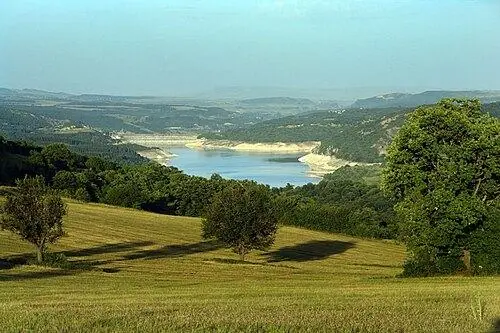
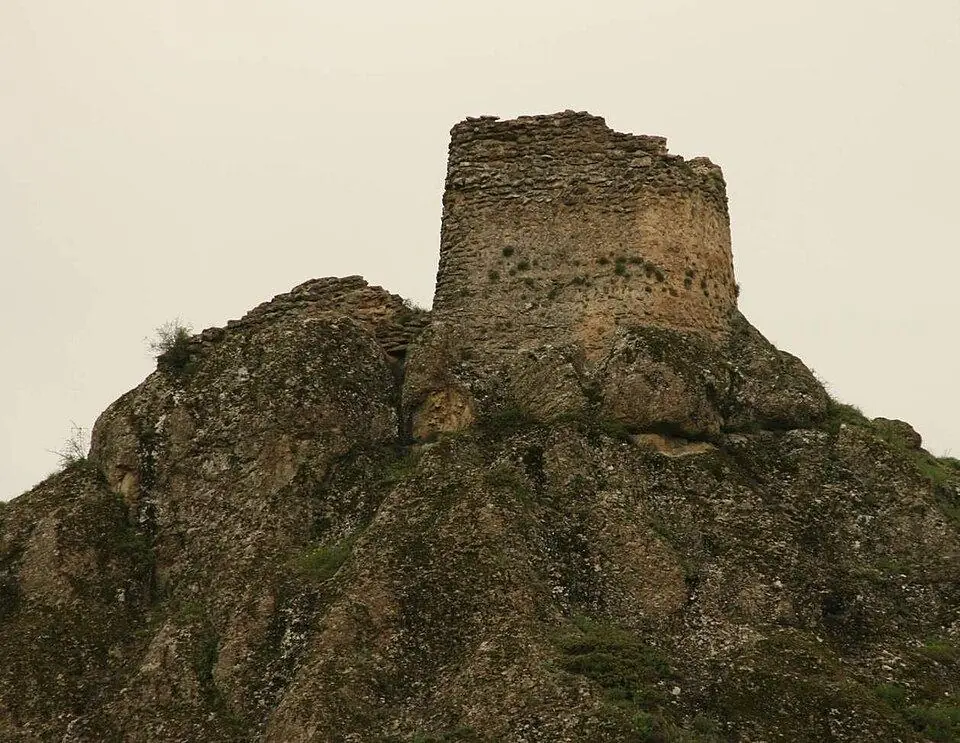
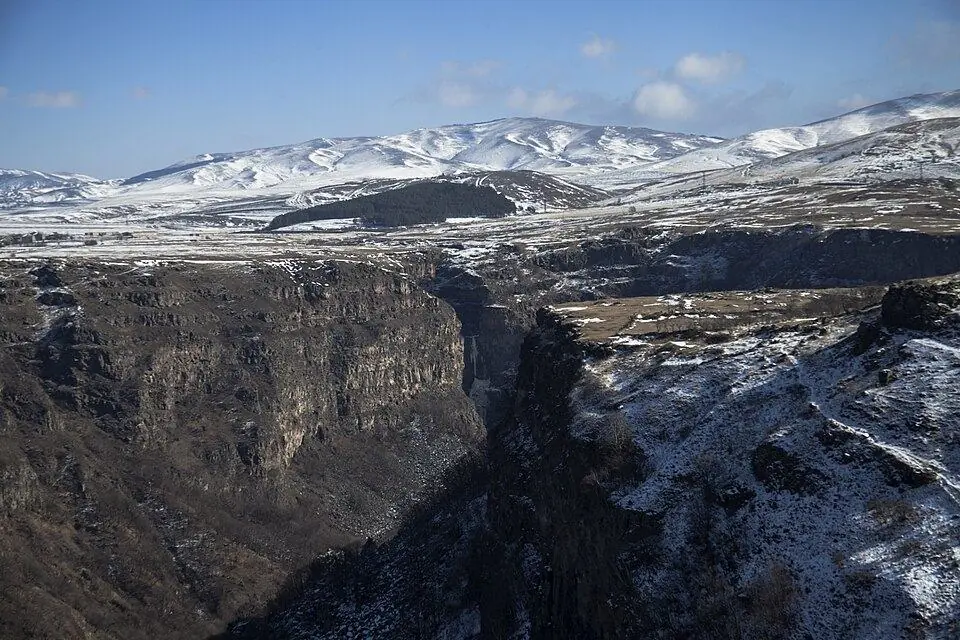
Algeti National Park, above Manglisi about an hour south-west of Tbilisi, is the easiest start: cool conifer forest, camping spots and cottages booked through the visitor centre on Kurorti Street in Manglisi, and the 16 km Royal Ridge loop. Tbilisi National Park, 45 minutes north, reportedly has designated camping areas near the Sabaduri forest; ask the park first. The limestone towers around Birtvisi fortress, a rocky 5 km walk from Tbisi village, suit an overnight hike with all your water carried in, and Bazaleti lake near Dusheti draws tents on summer weekends. Go in April to June or September and October.
Campervans and roof-tent 4x4s
From May to October we can arrange a Pajero or Prado class 4x4 carrying a roof tent plus bedding, cooking kit, a table and chairs; a VW Transporter class campervan with pop-up roof, kitchen, fridge and bedding; or a motorhome with shower and heating. Two-wheel-drive vans suit the paved roads to Stepantsminda, Mestia, Oni and across Javakheti; the 4x4 handles the last stretches to Juta and Roshka, the Truso track and the Tskhratskaro Pass to Tabatskuri. Many contracts exclude the Abano and Khevsureti roads, so read yours.
Sleep at campsites such as Juta's, in guesthouse yards where hosts usually let you park for a small fee and a shower, or at lake and river spots away from houses, such as Paravani, Bazaleti and Shaori. Tent rules apply in parks and border strips. Dump points barely exist, so empty toilets at campsites or guesthouses and tip grey water far from streams. Good loops: Kazbegi and Truso in 3 to 4 days; Javakheti lakes and Vardzia in 4 to 5; Imereti and Racha via the Nakerala Pass in 3 to 4.
Our camping treks and gear rental: what we provide
Every trek we run is private: any date, any group size. You never need to bring a tent: on camping routes we supply two-person tents, mats, a mess tent and camp kitchen, a cook for hot breakfasts and dinners, and pack horses with horsemen for the camp, food and your main bag. Sleeping bags are available to rent. A mountain guide in your language leads each walking day with a satellite messenger and first-aid kit, and we arrange border registration and park sign-in. Tents, horses and gear are included or offered as an extra, so see each tour page for the exact list.
| Tour | Days | Tent or shelter nights | Other nights | Season |
|---|---|---|---|---|
| Tusheti to Khevsureti Trek via Atsunta | 8 | 4 tents | 3 guesthouses | July to mid-September |
| Kazbegi and Khevsureti Trek | 9 | 1 tent | Hotels, guesthouses | July to mid-September |
| Javakheti Volcanic Lakes Trek | 5 | 3 tents | 1 homestay | July to mid-September |
| Imereti to Racha Trek | 6 | 2 tents | 3 guesthouses or hotel | Late May to early July, plus September to mid-October |
| Black Rock Lake Trek and Kakheti Wine | 5 | 1 tent, 1 shelter | 2 in Kakheti | July to September |
| Borjomi Park Trek, Rabati and Vardzia | 5 | 2 shelters | Hotel, guesthouse | Mid-May to mid-October |
Our rentals cover a tent for two or three, a sleep kit and a cook kit delivered in Tbilisi, plus roof-tent 4x4s and campervans. Send us your dates and region, and we will say which camps are in season.
Camping in Georgia FAQ
Is wild camping allowed in Georgia?
Generally yes, on open land away from villages and private property and outside protected areas. In national parks you register and camp only at marked sites or shelters, and border strips need a permit or registration.
Do I need a permit to camp in the Georgian mountains?
Usually not. Exceptions are the Atsunta Pass (register at Girevi), Black Rock Lake (register at the park with ID) and border-zone routes such as Truso beyond Zakagori (Border Police permit in advance). Parks ask you to sign in.
Where is the best camping in Georgia?
High camps: the Atsunta route, the Abudelauri lakes and Juta. Empty lakes: Tobavarchkhili, Udziro and Javakheti. Shelters and marked campsites: Borjomi-Kharagauli and Lagodekhi.
When is the best time to go camping in Georgia?
Mid-July to mid-September above 2,500 m, late June to early October for valley camps such as Juta and Truso, and spring or autumn for Vashlovani and the hills near Tbilisi.
How cold is it at night camping in the Caucasus?
Near 2,500 m, clear July and August nights reach about freezing, and go several degrees lower in June and September. Bring a bag rated to about minus 5 °C (comfort) and an insulated mat.
Can I bring camping gas on a flight to Georgia?
No, gas cartridges are banned in cabin and checked bags. Buy screw-on canisters in Tbilisi or rent our cook kit, which includes a full one.
Can I rent camping gear in Tbilisi?
Yes. Several outdoor shops rent tents and bags, and we deliver tents, sleep kits and cook kits to your hotel. On our camping treks the tents, mats, kitchen and cook are supplied.
Can you have a campfire in Georgia?
Only where safe and allowed: never under trees or on dry grass or peat, and only on a spot cleared for 1.5 m. In parks use the official pits; above the treeline, bring a stove.