- Mount Kazbek (Mkinvartsveri) is 5,054 m high, the figure used by Georgia's national tourism administration; the 5,047 m and 5,033 m printed elsewhere come from older maps or unnamed sources.
- The standard route leaves Gergeti Trinity Church (2,170 m), traverses the ice to the Meteo hut at ~3,650 m, then gains ~1,400 m to the top in a push of 10 to 14 hours there and back.
- Plan six to eight days from Stepantsminda with one or two acclimatisation days and a spare day for weather; mid-July to late August gives the best odds, and winter or shoulder-season ascents are for experienced alpinists only.
- You need crampon, ice axe and rope skills, insurance naming mountaineering and helicopter rescue to at least 5,100 m, and a border-zone permit, which a guide normally arranges.
- In 2026 budget ~60 GEL a night for a hut bunk and roughly 3,000 to 6,500 GEL per person for a guided package; non-climbers can walk to a glacier viewpoint below the peak in one day.
A Mount Kazbek climb is a glacier ascent of a 5,054 m dormant volcano above Stepantsminda, and a fit hill walker who has learned to use crampons can reach the top with a guide in six to eight days in July or August. The standard Georgian route rises behind Gergeti Trinity Church, crosses the Gergeti glacier to the Bethlemi hut, the old Meteo station, and finishes in one long push that leaves the hut in the small hours. It involves no rock climbing, yet thin air, crevasses and sudden storms make it real mountaineering.
We run private Kazbek climbs from Stepantsminda, and this guide sets out what we tell every climber before they book: the route stage by stage, life at the hut, a day-by-day plan with acclimatisation and a spare weather day, the best weeks and why winter belongs to experts, the dangers and the skills that answer them, a complete gear list, the border permit, insurance and rescue, and a 2026 cost table. If you would rather look at the mountain than stand on it, the last sections are for you.
Mount Kazbek at a glance: altitude, location and the 5,054 m question
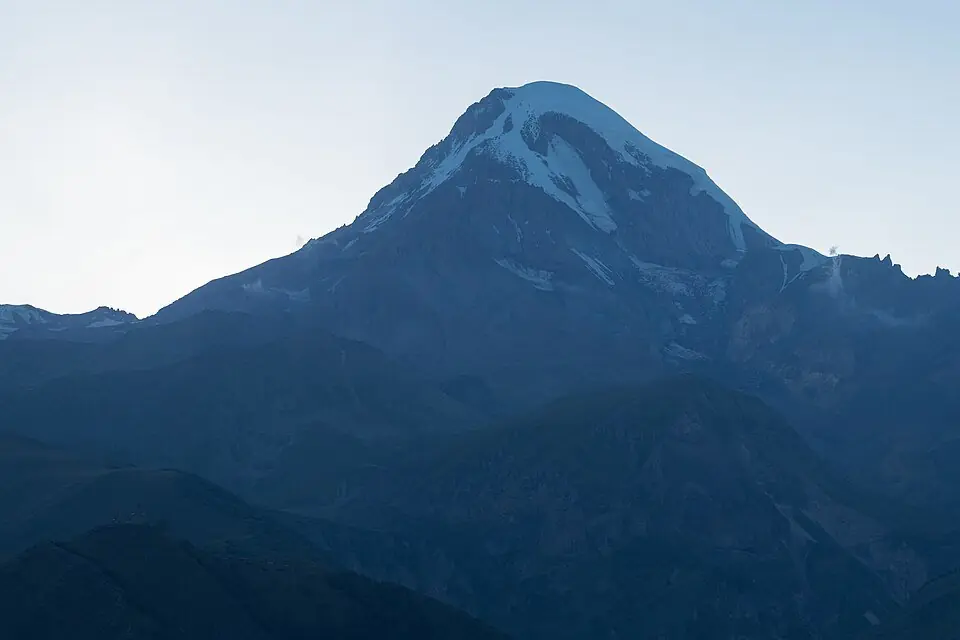
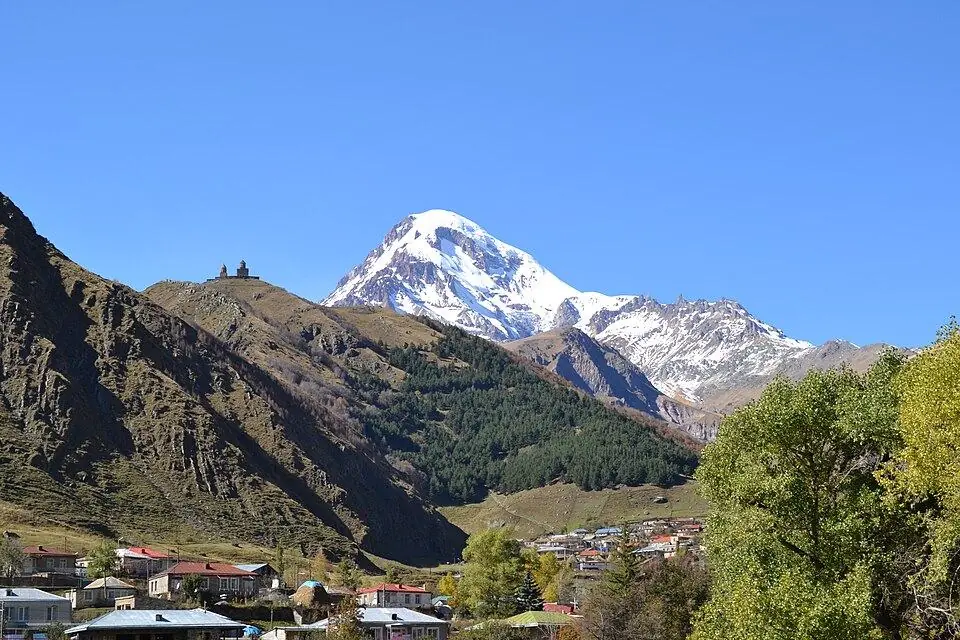
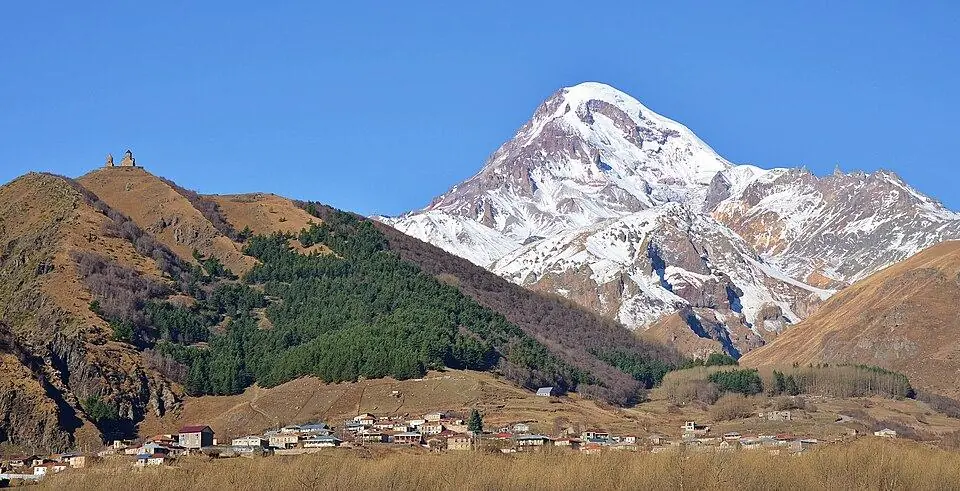
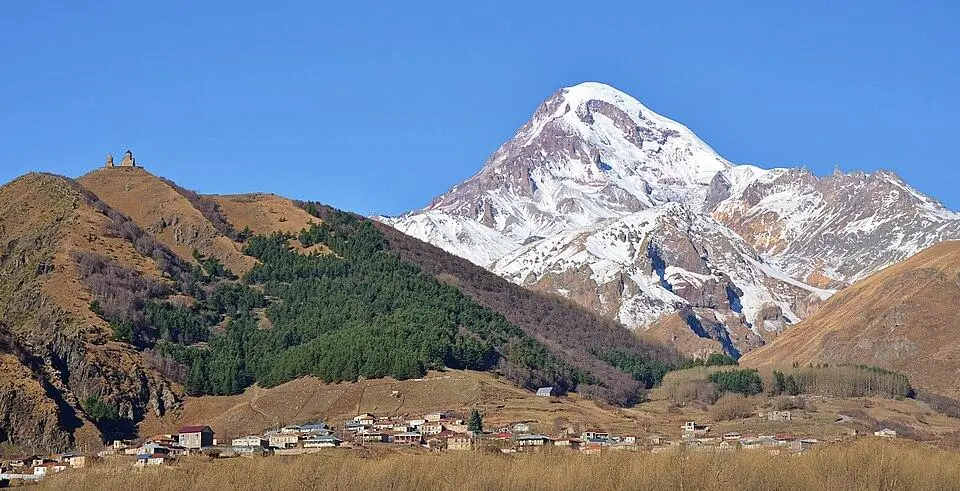
Kazbek towers over Stepantsminda, the main town of the Khevi valley, ~155 km north of Tbilisi by the Georgian Military Road. Georgians call it Mkinvartsveri, roughly 'ice summit'; Kazbek (Mt Kazbek or Kazbegi on maps) comes from the Kazbegi family, the old lords of Khevi. It is a dormant stratovolcano that last erupted around 750 BC, standing on the Khokh range just north of the main Caucasus watershed, and the third-highest peak in Georgia after Shkhara and Janga. Its northern slopes belong to Russia; the normal route climbs the Georgian side and meets the border only near the top.
| Fact | Figure |
|---|---|
| Summit height | 5,054 m (16,581 ft), the official Georgian figure |
| Prominence | ~2,350 m, which makes it one of the Caucasus ultras |
| Start of the climb | Car park below Gergeti Trinity Church, 2,170 m, ~8 km by road from Stepantsminda |
| Base hut | Bethlemi hut (Meteo station), ~3,650 m |
| Summit day | ~1,400 m up and down, 10 to 14 hours return |
| First recorded ascent | 1868, by a British party with a Chamonix guide |
| Main season | Mid-July to late August; late June to mid-September with a guide |
| Time needed | 6 to 8 days from Stepantsminda, 8 days door to door from Tbilisi |
| Character | Non-technical glacier climb where altitude is the crux |
Why we use 5,054 m, and where 5,047 m comes from
Search for the Kazbek altitude and you meet at least four numbers. We use 5,054 m, the height given by the Georgian National Tourism Administration and the main peak databases. A GPS receiver placed on the summit in May 2019 reportedly measured 5,053.9 m, which rounds to the same figure, though we have not seen that survey published. The 5,047 m on many tour sites, sometimes beside 5,054 m on the same site, names no survey, and 5,033 m or 5,034 m comes mostly from older maps and Russian-language pages. For planning the gap changes nothing.
Freshfield, Moore and Tucker of London's Alpine Club made the first recorded ascent in 1868 with François Devouassoud of Chamonix and local men from Gveleti. Georgians date their own mountaineering to 28 August 1923, when Giorgi Nikoladze led eighteen climbers, five of them women, to the top. Legend chained Amirani, the Georgian Prometheus, to this mountain.
The Mount Kazbek climb from Stepantsminda: the standard Georgian route
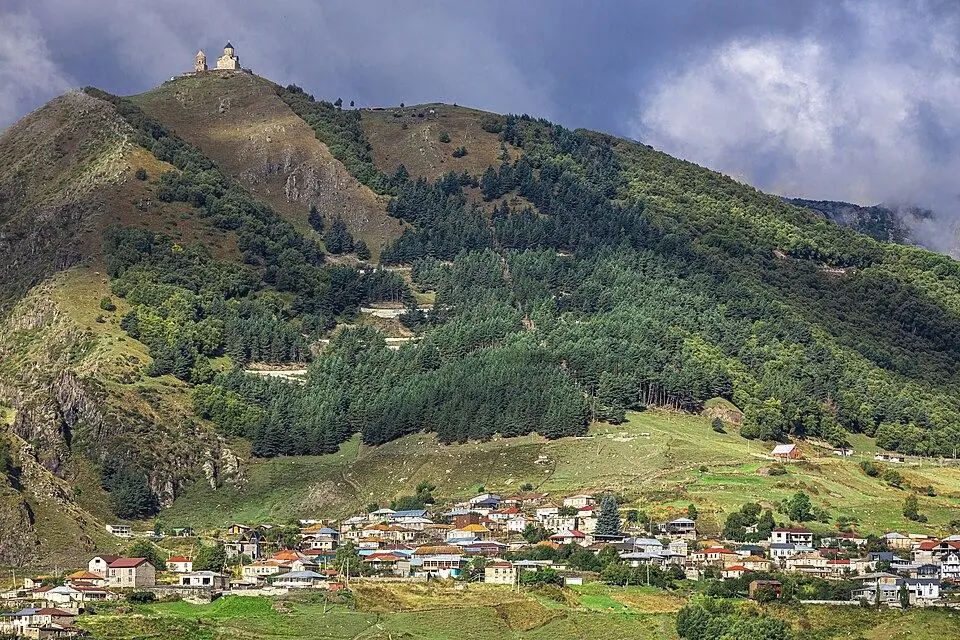
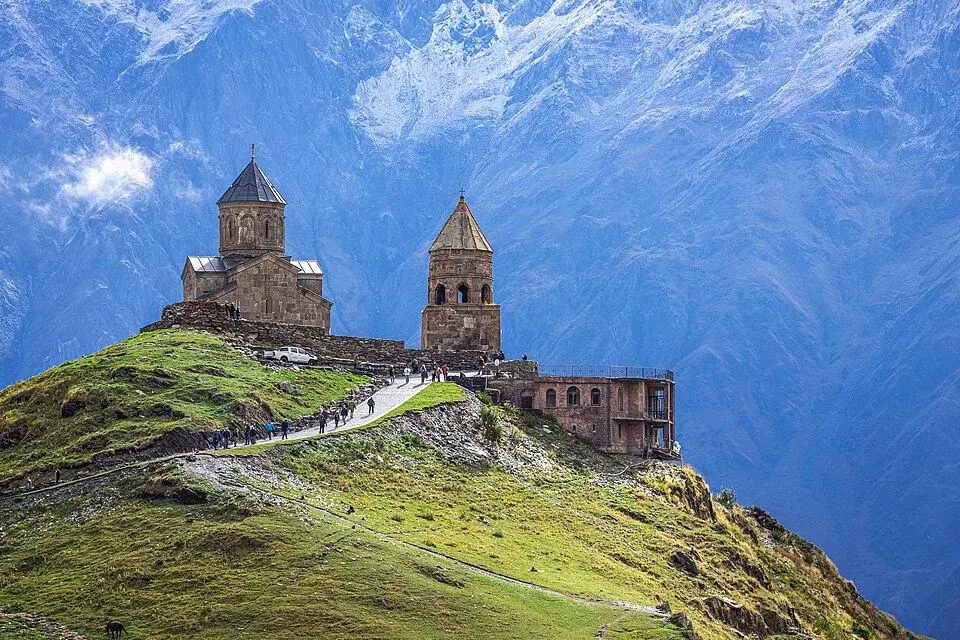
Nearly every ascent from Georgia follows the normal route: up the grassy ridge behind Gergeti Trinity Church, over the lower Gergeti glacier to the hut, then across the upper glacier and a high plateau to the summit cone. The figures below are typical; guides shift the line with the snow and ice.
- Stepantsminda to the church car park (~1,740 m to 2,170 m)
Most climbers save their legs and ride the ~8 km paved road from town to the car park below the church by taxi or 4x4. On foot from Gergeti village, the old path adds roughly 430 m of climbing and an hour and a half. - Church to the Sabertse Pass and Altihut (to ~3,000 m)
A broad path, rutted by hikers and horses, heads north over open pasture to the Sabertse Pass (~2,950 m), where the summit cone fills the view, then follows a moraine crest to Altihut and a small cafe at ~3,000 m. Count on 3 to 4 hours, without shade. - Across the Gergeti glacier to the Bethlemi hut (~3,650 m)
Past Altihut the trail drops to a meltwater stream and onto the lower glacier, which you cross for ~1.5 km before a tiring zigzag up loose moraine to the hut. Pack horses usually unload at the edge of the ice, so from here you carry everything. From the church the approach is ~9.5 km with ~1,500 m of ascent, 6 to 8 hours with a full pack. - Hut to the summit plateau (to ~4,500 m)
Summit day begins between 1 and 3 am. The first stretch climbs rubble and boulders beside the ice, a slope local guides call Khmaura. Then crampons go on, the team ropes up and the guide threads a line through the crevasse zone of the upper glacier onto a wide plateau that rises gently toward the border. - Saddle and summit cone (to 5,054 m)
Above the plateau the angle steepens to a saddle under the summit, where many teams drop spare kit. The final ~150 m is a snow and ice slope of about 35 to 40 degrees, usually with a stamped zigzag track, ending on a small rounded top 5 to 8 hours after leaving the hut. - Back to the hut and down to Stepantsminda
The descent to the hut takes 3 to 5 hours, often on a line that avoids Khmaura once the sun starts loosening stones there. Most teams sleep at the hut again and walk out the next day, 5 to 6 hours to the church.
The first half of the approach is also a popular day hike, described on our Gergeti Trinity Church and Gergeti Glacier trail page. Walked two days before you move up to the hut, it makes the best acclimatisation day there is and shows you the path in daylight.
Bethlemi hut (the old Meteo station), Altihut and camping
The Bethlemi hut (also spelled Betlemi) is where almost every ascent from Georgia starts its final day. It was built in the 1930s as a Soviet weather station (a 2025 climber's account gives 1933), so guides, drivers and horsemen all still call it the Meteo or the Meteostation. The national tourism site lists it at 3,653 m and other sources range from 3,600 to 3,700 m, so we write ~3,650 m. Today the stone building holds dormitory rooms with bunks, a small cafe selling hot meals and drinks at mountain prices, and electricity for lights and phone charging.
Comfort is basic: no showers, no running water, toilets outside and mice that raid anything left on the floor, so hang your food bag. Drinking water comes from snowmelt and a nearby spring; filter or treat it. In 2025 a bunk cost about 60 GEL per person a night and a tent on the stone-walled platforms around the hut about 20 GEL, paid to the hut keeper; climbers are also registered on arrival. Mobile data often works. In July and August the hut fills, so let your guide reserve bunks.
Two holy places above the hut double as acclimatisation goals: a small metal chapel at ~3,930 m, an hour's climb away, and the Bethlemi cave at ~4,000 m, the cliff hermitage that gave the hut its name, once reached by a hanging iron chain and said to have sheltered relics such as Abraham's tent.
Altihut and camping lower down
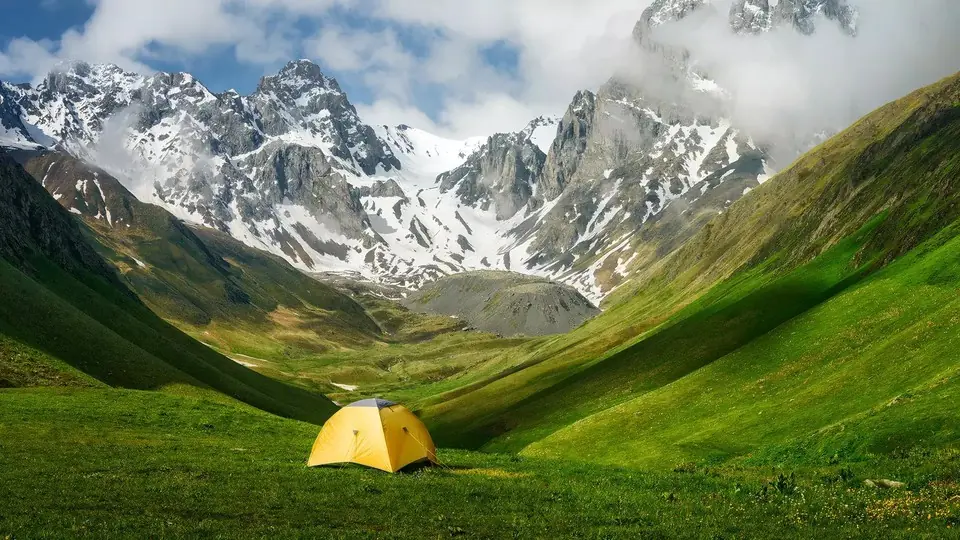
Altihut, a modern hut at ~3,000 m below the glacier crossing (its name, 3014, is its altitude), has beds, heating and cooked meals. It costs more than the Meteo and sits ~650 m lower, so it suits a first night on the way up if you acclimatise slowly; ask for current rates. Tents also go up below the Sabertse Pass, where summer nights still freeze.
How many days to climb Kazbek: a day-by-day plan with acclimatisation
The commonest mistake on Kazbek is going too fast. Walking from Stepantsminda to the hut in one day lifts your sleeping height by ~1,900 m, far beyond the 300 to 500 m a day that altitude doctors advise once you are above 3,000 m. No road goes higher, so the jump cannot be avoided completely, but a sensible plan cushions it: first a climb high and back down to sleep in town, then a rest and training day at the hut before the summit.
| Day | Plan | Up / down | Walking | Night |
|---|---|---|---|---|
| 1 | Drive Tbilisi to Stepantsminda (~155 km, ~3 h); kit check and a short stroll | small | 1 to 2 h | Stepantsminda, ~1,740 m |
| 2 | Acclimatisation hike from the church to the Sabertse Pass or the glacier viewpoint and back | ~+800 to 1,000 m and down again | 6 to 8 h | Stepantsminda |
| 3 | 4x4 to the church, walk up and cross the lower glacier to the hut | ~+1,500 m | 6 to 8 h | Bethlemi hut, ~3,650 m |
| 4 | Climb to the chapel at ~3,930 m; crampon, axe and rope practice | ~+300 m / -300 m | 3 to 5 h | Bethlemi hut |
| 5 | Summit day, leaving between 1 and 3 am | ~+1,400 m / -1,400 m | 10 to 14 h | Bethlemi hut |
| 6 | Spare day for weather or a second attempt | depends | depends | Bethlemi hut or Stepantsminda |
| 7 | Down to the church, 4x4 to town | ~-1,500 m | 5 to 6 h | Stepantsminda |
| 8 | Drive back to Tbilisi with stops on the Military Road | none | none | Tbilisi |
If day 5 goes to plan, the spare day becomes a slow descent and a hot shower in town. Slow acclimatisers should add a night at Altihut between days 2 and 3. Climbers already acclimatised on another high peak sometimes go up and down from the church in four days, the outline on the national tourism site, but for most visitors that leaves no margin.
Our Mount Kazbek Climb runs this eight-day plan as a private trip for any number of climbers on dates you choose, with pack horses to the glacier edge and certified mountain guides who take no more than two climbers each on summit day. The tour page lists what the price covers.
Best time to climb Kazbek, and why winter is for experts only
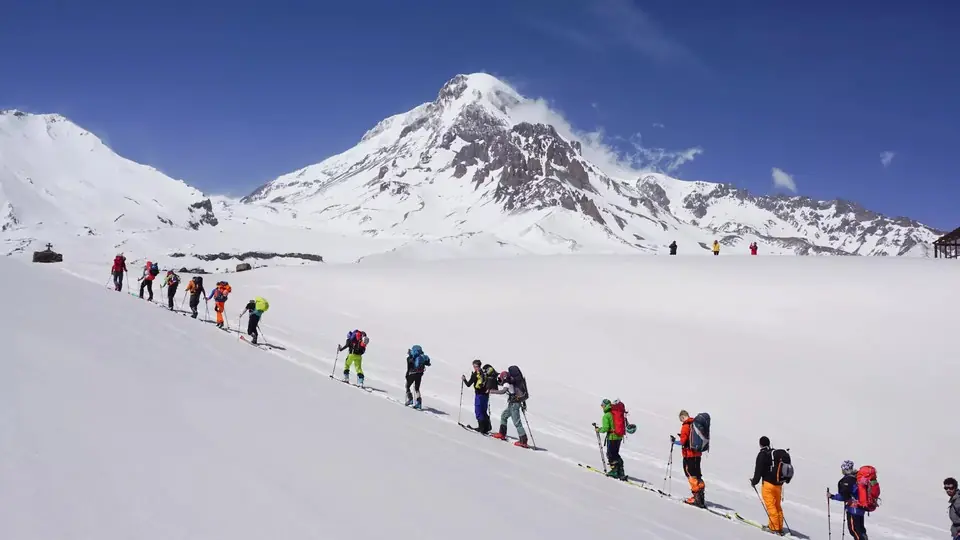
Kazbek's season is short. The national tourism site gives the end of June to the middle of October, but most guided teams climb between mid-July and the end of August, when the track is stamped firm, the weather is steadiest and the hut is staffed and busy. Even then, expect frost at the hut every night and -10 °C or colder on the summit before sunrise, while thunderstorms build over the lower slopes most afternoons.
| Period | What to expect | Our advice |
|---|---|---|
| Late June to mid-July | Old snow from the Sabertse Pass upward, soft snow by afternoon, crevasses hidden under snow bridges, changeable weather | Possible with a guide; slower going |
| Mid-July to late August | The most settled spell, a beaten trail and the most climbers; cold nights, afternoon storms lower down | Best window; reserve guides and bunks early |
| First half of September | Fewer people, colder nights, wider open crevasses and harder ice on the final slope | Good for fit, experienced teams |
| Mid-September to October | First winter storms, short days, icy upper slopes, few climbers to share the trail | Experienced alpinists only |
| November to May | Winter: severe cold and wind, avalanche-prone slopes on the approach, very short days | Expert winter expeditions only |
Kazbek in winter and in the shoulder seasons
People do climb Kazbek in winter, and ski mountaineers make spring ascents from the Meteo, but the risk is of another order. On a January night the summit can drop to -20 °C or lower before wind chill, and the upper slopes turn to hard blue ice where a slip does not stop. Snow loads the slopes between the church and the glacier, nobody has broken a trail, fresh snow hides the crevasses and in December daylight lasts only about nine hours.
Rescue is slower too: helicopters cannot fly in a storm, and in past winter and spring accidents crews were kept off the mountain for days. Do not count on a staffed hut or another team nearby. We arrange winter and shoulder-season ascents only for climbers with previous winter mountaineering at altitude.
How hard is Kazbek? Difficulty, crevasses, altitude and other dangers
By technical standards Kazbek is one of the easier 5,000 m summits: guides usually grade the normal route as an easy alpine climb, around F+ to PD-, with no rock pitches and one steep slope. It turns serious because altitude, a crevassed glacier, cold and a very long day all arrive together. Fitness and acclimatisation decide most summits; skills decide how well you cope when something goes wrong.
- Crevasses: the upper Gergeti glacier is cut by crevasses that widen through the summer, while early in the season snow bridges cover them. Above the hut, travel roped, with an experienced leader picking the line.
- Altitude: headache, nausea, poor sleep and no appetite are normal at the hut for a night or two. Confusion, staggering, a wet cough or breathlessness at rest signal the dangerous forms of altitude sickness; go down at once.
- Weather: in cloud the wide, featureless plateau lets teams drift toward crevasses or the border, and the saddle catches fierce wind when the valley is calm.
- Rockfall: warm sun releases stones from the moraine walls along the lower glacier and from the Khmaura rubble above the hut. Pass both early.
- Cold and sun: frost-nipped fingers before dawn, then sunburn or snow blindness, often on the same morning.
- The way down: most slips happen on the descent, when legs are tired and soft snow balls up under crampons.
Skills you need for a Kazbek guided climb
You do not have to be a climber to stand on Kazbek, but you do have to be more than a hiker. Be honest with yourself on each of these before you book:
- Fitness to gain ~1,500 m in a day under a 12 to 15 kg pack, and two days later to keep moving for 10 to 14 hours above 3,600 m.
- Walking in crampons on hard snow and ice, uphill, downhill and across a slope, without snagging a spike on your trouser leg.
- Ice axe self-arrest: stopping a slide head first or feet first, on your back and on your front.
- Moving as a rope team: keeping the rope taut, matching your pace to the others and holding a fall.
- For independent teams only: crevasse rescue with a pulley system, navigation in a whiteout from a GPS track, and the discipline to turn round.
Never worn crampons? A winter skills course at home or a day on an Alpine glacier is the best preparation; our training session near the hut refreshes skills rather than teaching them from scratch. Time above 4,000 m also tells you how your body reacts. Kilimanjaro is higher, yet it is a walk; Kazbek adds a glacier, a rope and an ice slope.
Kazbek gear list, and renting a glacier kit
Climbing hardware
- Mountaineering boots that take crampons securely, insulated or double for summit day; light trekking boots are not enough
- Crampons fitted to those boots before you leave town
- Ice axe, usually 55 to 65 cm
- Climbing harness, helmet, two locking carabiners and a prusik loop or short sling
- Trekking poles for the approach and the long descent
Clothing
- Thermal base layers, a fleece and a hooded down or synthetic jacket
- Waterproof shell jacket and trousers, plus trekking trousers
- Liner gloves, insulated gloves and warm mittens
- Warm hat, sun hat, neck tube and spare socks for summit day
Hut and summit day
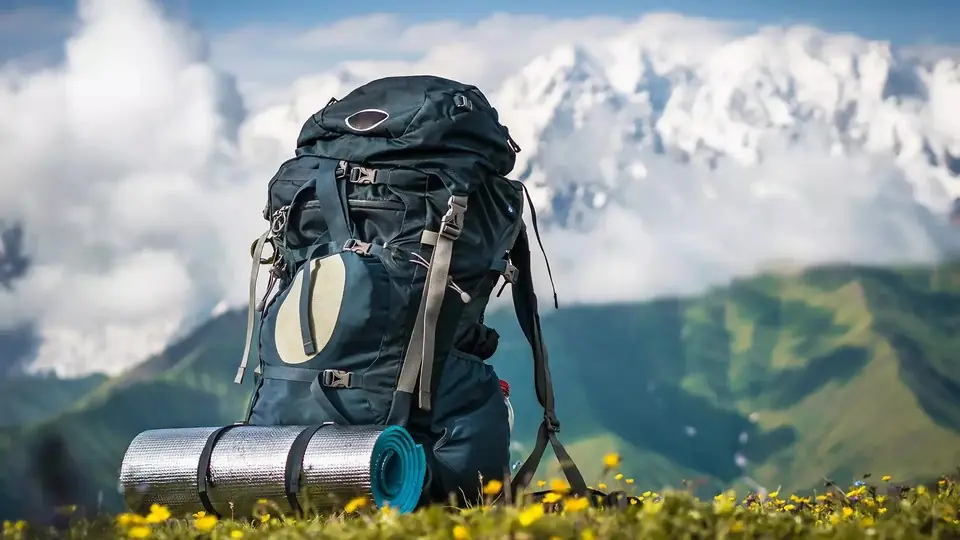
- A 50 to 60 litre pack that carries crampons and axe well
- Sleeping bag rated to about -10 °C and light hut shoes
- Category 4 glacier glasses, ski goggles, strong sun cream and lip balm
- Headtorch with spare batteries
- Two litres of water capacity, one bottle insulated, plus a filter or tablets
- Snacks you will still want to eat at 4,500 m
- First-aid and blister kit, and any altitude medicine agreed with your doctor
- Power bank, original passport, insurance details and cash in lari
You do not need to fly your hardware in. Our glacier kit of crampons, ice axe, harness and helmet rents for about 50 GEL (about $20) a day in 2026, with lower day rates for longer hires, and our camping gear rental adds tents, sleeping bags, mats and stoves, delivered to your Tbilisi hotel. Shops in Stepantsminda also hire boots, crampons and sleeping bags; in July and August reserve ahead. Gas canisters are not allowed in flight luggage, so buy them in Tbilisi.
Border-zone permit, registration, insurance and rescue
Kazbek's summit sits on the state border with Russia, so the climb counts as travel in the border zone. Georgia's Border Police ask anyone hiking or mountaineering there to hold a special permit: the group leader applies with the planned route and copies of every member's passport, either at the Border Police headquarters in Tbilisi or at a regional division, which for this area is the Kazbegi division.
In 2025 climbing groups collected their permit near Stepantsminda the day before going up and were asked to show an insurance policy, and the national tourism site says climbers are registered again at the hut. We know of no fee for either step. With us, the guide does the paperwork: send passport details and your insurance certificate when you book, and carry the original passport on the mountain. Independent climbers should check the current procedure with the Border Police first, because posts and forms change between seasons.
Insurance
Since 1 January 2026 Georgian law has obliged foreign tourists to hold a health and accident policy lasting the whole visit, its cover worth no less than 30,000 GEL. That legal minimum is not climbing cover. Many policies exclude mountaineering or stop well below 4,000 m, so for Kazbek choose one that names glacier mountaineering with ropes and crampons up to at least 5,100 m and pays for search, rescue and evacuation by helicopter. Our guide to Georgia's entry requirements explains the legal rule on travel insurance in full.
Rescue
In an emergency call 112, the single number for police, ambulance and mountain rescuers. Call takers usually manage English, and the SOS button in the official 112 app sends your position. Signal often holds at the hut, not everywhere above it. Helicopter evacuations from Kazbek have been flown by state crews, including the Border Police aviation unit, and need clear weather; a ground team takes many hours from Stepantsminda, and the nearest large hospitals are three hours away in Tbilisi. On summit day carry enough warm clothing to survive a night out, and tell the hut keeper your plan.
What a Kazbek climb costs in 2026
The biggest variables are whether you hire a guide and how many climbers share each one. These typical 2026 figures come from recent climbers' accounts, local operators and our own transfer and rental prices. Treat them as a budget guide and confirm each one before you travel.
| Item | Approximate cost, 2026 | Notes |
|---|---|---|
| Minibus Tbilisi (Didube) to Stepantsminda | ~15 to 20 GEL (about $6 to $8) a seat | About 3 hours, cash only |
| Private car Tbilisi to Stepantsminda | ~220 to 350 GEL (about $85 to $135) one way | Per car, with stops on request |
| 4x4 from town to the church car park | ~50 to 80 GEL (about $19 to $31) a car, return | Saves ~430 m of climbing |
| Bunk at the Bethlemi hut | ~60 GEL (about $23) per person a night | Bring a sleeping bag |
| Tent pitch at the Bethlemi hut | ~20 GEL (about $8) a tent a night | Stone-walled platforms |
| Altihut | Ask when booking | Beds with meals; dearer than the Meteo |
| Pack horse with handler | ~100 to 300 GEL (about $40 to $115) per horse each way | Usually to the glacier edge; agree load and price first |
| Porters | On request | Not a standard service; some outfits add a second guide or helper |
| Certified guide only, hut to summit and back | ~1,300 to 2,100 GEL (about $500 to $800) per guide | One or two climbers per guide |
| Guided package, 6 to 8 days | ~3,000 to 6,500 GEL (about $1,150 to $2,500) per person | Lower per head in bigger groups |
| Glacier kit rental | ~50 GEL (about $20) a day | Crampons, ice axe, harness, helmet |
| Border permit and hut registration | No fee known | Original passport needed |
Going independently costs little beyond transport and the hut, but only suits a team that can pull its own members out of a crevasse. When comparing guided offers, ask how many climbers each guide ropes up with on summit day, and whether the hut, permit, horses and group gear are included.
Not a climber? Glacier views and other ways to see Kazbek
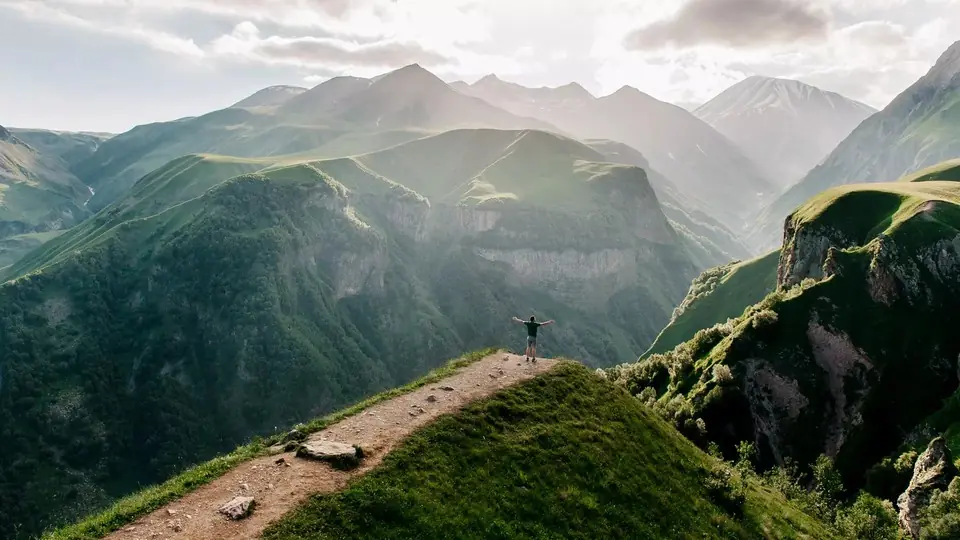
You can get close without a rope. The day hike to the moraine viewpoint at ~3,200 m needs fitness rather than glacier kit, and our trail page for the Gergeti Trinity Church and Gergeti Glacier route covers it stage by stage. For less effort, walk or ride a 4x4 up to the church for the classic view of it against the mountain; on clear mornings Kazbek also looks down on the Juta and Truso valleys and the village of Sno.
With the Kazbegi Hiking Week you sleep in one Stepantsminda hotel and walk a different valley each day, the glacier viewpoint included, and the Kazbegi Day Trip reaches the church by 4x4 and is back in Tbilisi by evening. The Kazbegi travel guide covers the rest of the area. Kazbek's northern side has its own route from North Ossetia in Russia, but the border is closed on the mountain, so from Georgia you go up and down the same way.
Mount Kazbek climb FAQ
How high is Mount Kazbek?
Mount Kazbek is 5,054 m (16,581 ft), the figure Georgia's official tourism site and the big peak lists use. You will also find 5,047 m and 5,033 m in other sources, which come from older maps or pages that name no survey.
How hard is it to climb Kazbek?
It is a non-technical but serious glacier climb, with crevasses, one slope of about 35 to 40 degrees near the top and a summit day of 10 to 14 hours from a hut at ~3,650 m. Most turn-backs come from altitude or weather rather than technique, so fitness and acclimatisation matter most.
How long does it take to climb Mount Kazbek?
Allow six to eight days from Stepantsminda, or eight days from Tbilisi, with time to acclimatise and a reserve day in case of storms. The walk to the hut takes 6 to 8 hours and summit day 10 to 14 hours there and back.
Can you climb Kazbek without a guide?
Yes. Experienced alpinists climb it independently once they hold the border permit and register at the hut. Without glacier and crevasse rescue experience, go with a certified mountain guide.
Do you need a permit to climb Kazbek?
Yes. The summit lies on the border with Russia, so climbers need a border-zone permit from the Border Police and are registered again at the Bethlemi hut. A guide normally arranges both; carry your original passport.
What is the best month to climb Kazbek?
Mid-July to the end of August brings the steadiest weather and the best summit odds. With a guide, the last days of June and early September are also workable, while later autumn and winter are for experienced alpinists only.
Can you climb Kazbek in winter?
Only as an expert winter expedition. Expect severe cold and wind, hard ice on the upper slopes, avalanche danger on the approach and slow rescue, because helicopters cannot fly in storms.
How much does it cost to climb Kazbek?
In 2026 most guided packages of six to eight days cost between ~3,000 and ~6,500 GEL a head (roughly $1,150 to $2,500), less in a bigger group. Independent climbers mainly pay for transport, the hut at ~60 GEL a night and gear hire.