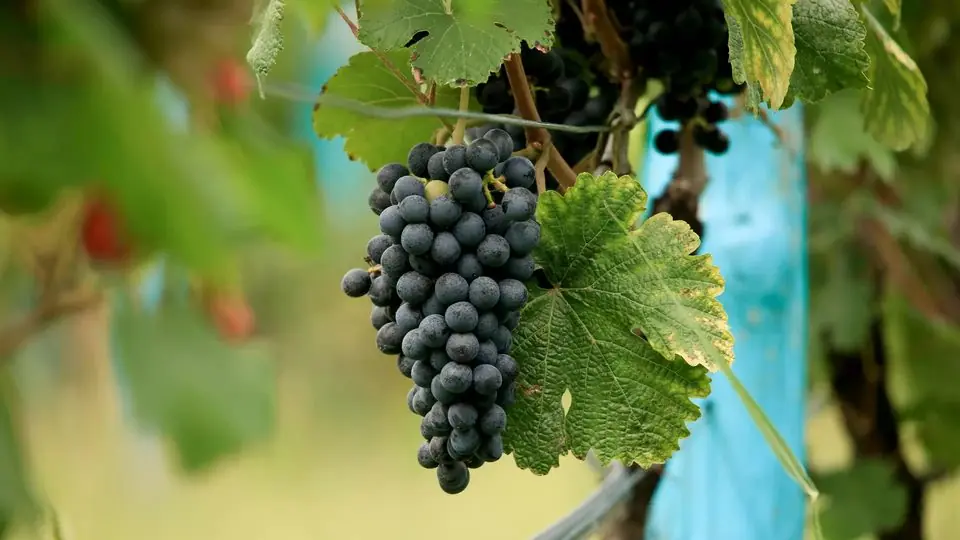
- Saperavi is Georgia's leading red grape and a rare teinturier, with red pulp as well as dark skin. That is why its wine looks almost black. The name is built on peri, the Georgian word for colour.
- In the record 2025 harvest Kakheti pressed about 134,000 tonnes of Saperavi out of roughly 323,000 tonnes of grapes. Only the white Rkatsiteli came ahead, at about 170,000 tonnes.
- At least eleven protected wine names allow Saperavi. The dry ones are Mukuzani, Napareuli, Kvareli, Kotekhi, Saperavi Khashmi, Akhoebi and Zegaani, and the semi-sweet ones Kindzmarauli and Akhasheni. The wider Kakheti and Bolnisi names complete the list.
- Semi-sweet Kindzmarauli and Akhasheni owe their sweetness to the grape alone. Fermentation is stopped while 18 to 45 grams of sugar per litre remain, and nothing sweet may be added.
- Concentrated dry Saperavi can keep improving for a decade or more. The semi-sweet appellations are made to be drunk within about two years of bottling.
Saperavi is the grape behind nearly every deep red wine you will be poured in Georgia (the country). It is a native grape whose juice runs red straight from the press, so the wine comes out close to black. The same grape gives bone-dry reds such as Mukuzani and the naturally semi-sweet Kindzmarauli that many visitors try first. It also makes rosé, sparkling and fortified wines. Kakheti, the eastern wine region, grows most of it, and village families there still ferment it in clay qvevri.
This guide is about the grape itself. It covers where the name comes from, which protected wine names use Saperavi and what their official rules demand. You will see how the dry and semi-sweet styles are made and what qvevri and oak each do to the taste. We also cover how long bottles keep and what to eat with them. It ends with where to taste in Kakheti, how to choose and carry bottles home, and the countries that now grow it. For amber wine, other grapes and qvevri in general, see our Georgian wine guide.
What is Saperavi? Georgia's red-fleshed grape
Squeeze a ripe Merlot or Pinot Noir berry and the juice is nearly clear. The colour of those wines comes only from the skins. Saperavi is different. It belongs to a small family of grapes whose pulp is coloured too. They are called teinturiers, from the French word for a dyer. The Georgian name says the same thing. It is formed from peri, colour, and is usually translated as dye or something to colour with. Fresh Saperavi must already looks like ink, and finished wine can be opaque even at the rim of the glass.
Ripe bunches are blue-black and a little larger than average, and the vine is a late ripener. The official rules for the Kindzmarauli zone put budburst around mid-April and full ripeness at the end of September. In most of Kakheti the Saperavi picking carries on into October, after the white grapes are in. The vine also stands up to hard winters, a trait that later helped it travel to cool regions abroad.
Figures from the 2025 vintage, the biggest Georgian harvest in three decades, show how much the country leans on it. By late October 2025 Kakheti had processed about 323,000 tonnes of grapes. Roughly 134,000 tonnes of that was Saperavi, against about 170,000 tonnes of Rkatsiteli. These are National Wine Agency numbers reported by Georgian media. That makes about two bunches in five pressed in Kakheti that autumn Saperavi.
What Saperavi tastes like
Young dry Saperavi smells of blackberry, black cherry, plum and sour cherry. With time in barrel or bottle it picks up liquorice, cocoa, tobacco, dried herbs and a savoury, almost smoky edge. On the palate it is full and juicy, with grippy tannin and a streak of acid that keeps even ripe, powerful wines lively. Alcohol usually sits between 12 and 14 percent.
One grape, many local forms
An old grape collects variants. Georgian vine experts have described at least 17 forms and clones of Saperavi over roughly 150 years. The one you will meet on labels and in appellation rules is Saperavi Budeshuri, also written Budeshuriseburi. The National Wine Agency treats this long-berried form as a mutation of the ordinary grape. It is allowed in Napareuli, Kindzmarauli, Akhoebi and the general Kakheti appellation. Otskhanuri Sapere from Imereti sounds similar but is a separate red grape of western Georgia.
Saperavi history: from village vineyards to protected names
Nobody can say exactly where Saperavi was first grown. Georgians think of it as Kakhetian. Yet the historian Ivane Javakhishvili argued that it first spread from Shavsheti and Klarjeti and moved east over the centuries. These historic Georgian provinces lie in what is now north-east Turkey. Today it is planted in every Georgian wine region, from Kartli and Imereti to Racha and Guria. Still, Kakheti remains its heartland.
Its modern story starts in the 19th century. At Tsinandali, Prince Alexander Chavchavadze ran a cellar that mixed European methods with local ones. The estate's oenotheque still holds a Saperavi of the 1839 vintage, bottled in 1841. The estate presents it as Georgia's oldest bottled wine. From the 1880s the Russian imperial estates office bought Kakhetian properties, among them Mukuzani and Zegaani. It spent heavily on their vineyards and cellars. The official file of the Zegaani appellation dates the area's modern winemaking to that period.
Under Soviet rule Saperavi was made in huge volumes. The semi-sweet style became a favourite across the USSR, and names such as Mukuzani and Kindzmarauli turned into household brands. After independence, and above all after Russia shut its market to Georgian wine from 2006 to 2013, producers looked west and worked on quality. Georgia began registering appellations of origin in 2005, with Khvanchkara as number 1 and Mukuzani as number 2. New Saperavi names keep arriving: Saperavi Khashmi in 2018, Akhoebi in 2020 and Zegaani in 2022.
Saperavi appellations: Mukuzani, Kindzmarauli, Napareuli and the rest
A protected designation of origin, or PDO, ties a wine name to a mapped zone, the grapes allowed and a style. The National Wine Agency's online PDO list showed 33 names in October 2026. At least eleven of them can be made from Saperavi. The rules for most Kakheti Saperavi names cap the crop at 10 tonnes a hectare. They also limit the yield to 650 litres of wine per tonne of grapes. The wine may be sold only in bottles or other retail packs, never in bulk.
| Appellation | Where | Style | Rules worth knowing | Registered |
|---|---|---|---|---|
| Mukuzani | Right bank of the Alazani, Gurjaani district: Mukuzani, Velistsikhe, Vazisubani, Akhasheni, Zegaani and neighbouring villages | Dry red | Saperavi only; vineyards at 350-700 m; if the wine is aged, at least 6 months in wood | 2005 (No. 2) |
| Akhasheni | Parts of Akhasheni, Zegaani and Chumlaki, Gurjaani district | Naturally semi-sweet red | Grapes picked at 22% sugar or more; 18-45 g/l sugar left in the wine; no added sugar or concentrate | 2005 |
| Kindzmarauli | Kvareli district, left bank, at the foot of the Caucasus | Naturally semi-sweet red | Saperavi or Saperavi Budeshuri; vineyards at 250-550 m; 18-45 g/l sugar | 2006 |
| Kvareli | Kvareli and villages such as Shilda, Eniseli and Gremi | Dry red | Saperavi only; vineyards at 250-550 m | 2007 |
| Napareuli | Left bank, Telavi district: Napareuli, Saniore, Jughaani, Artana, Pshaveli, Laliskuri | Dry red (and a dry white from Rkatsiteli) | Vineyards at 450-750 m; grapes must be processed inside the zone | 2007 |
| Kotekhi | Right bank in Gurjaani district | Dry red; a Rkatsiteli white exists too | Red from Saperavi; zone at 250-700 m | 2007 |
| Kakheti | The whole region, eight districts | Red and rosé, from dry to sweet | Reds from Saperavi, Saperavi Budeshuri or Cabernet Sauvignon | 2007 |
| Saperavi Khashmi | Khashmi village, Sagarejo district, above the Iori river | Dry red | The highest Saperavi zone, with vineyards at 730-800 m; at least 12% alcohol | 2018 |
| Akhoebi | A 345 ha zone inside Kardenakhi, Gurjaani district | Dry red | Saperavi or Saperavi Budeshuri; vineyards at 350-750 m | 2020 |
| Zegaani | Zegaani village and its lands, Gurjaani district | Dry red | Fermented in qvevri; grapes crushed within 3 hours of picking; made and bottled inside the zone | 2022 |
| Bolnisi | Bolnisi district, Kvemo Kartli | Dry red (white, amber and rosé too) | Reds from Saperavi, Tavkveri, Shavkapito and Asuretuli Shavi | Applied 2018 |
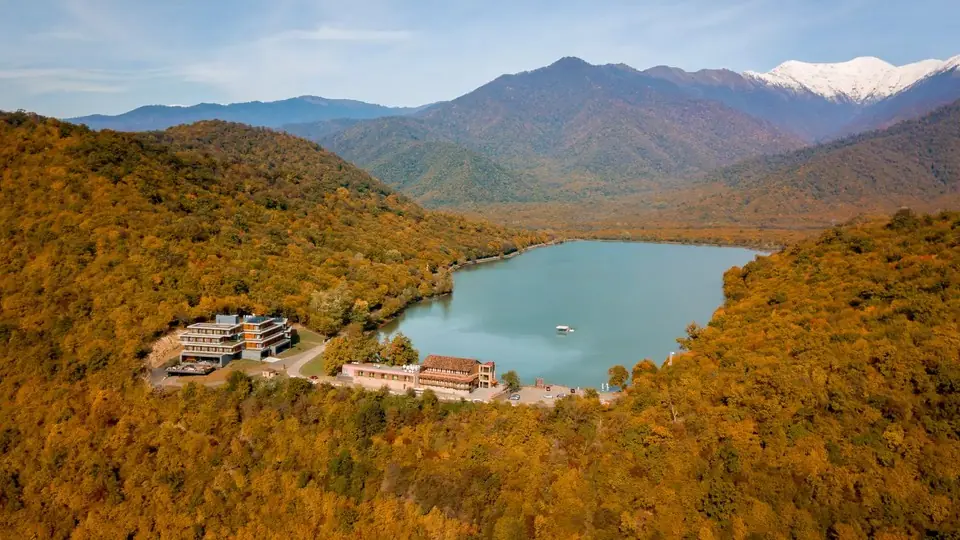
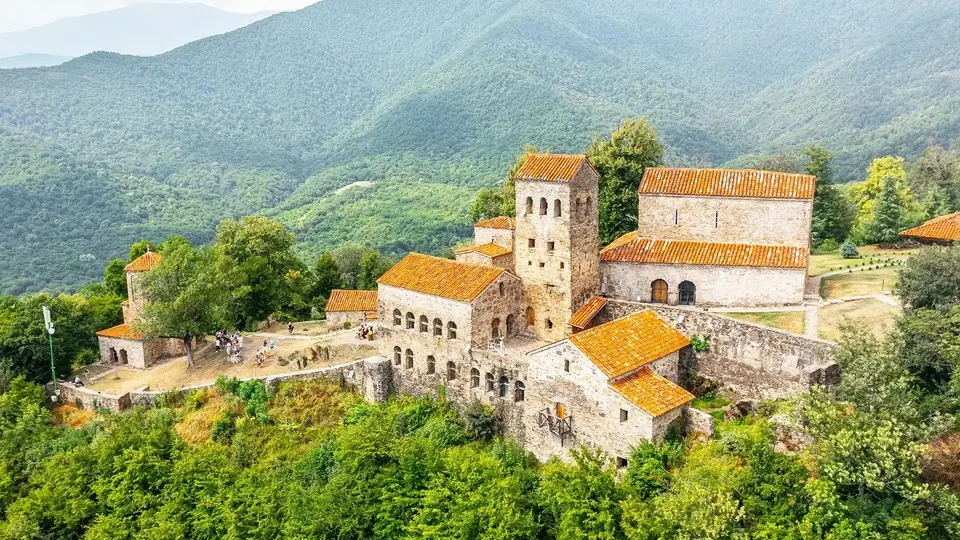
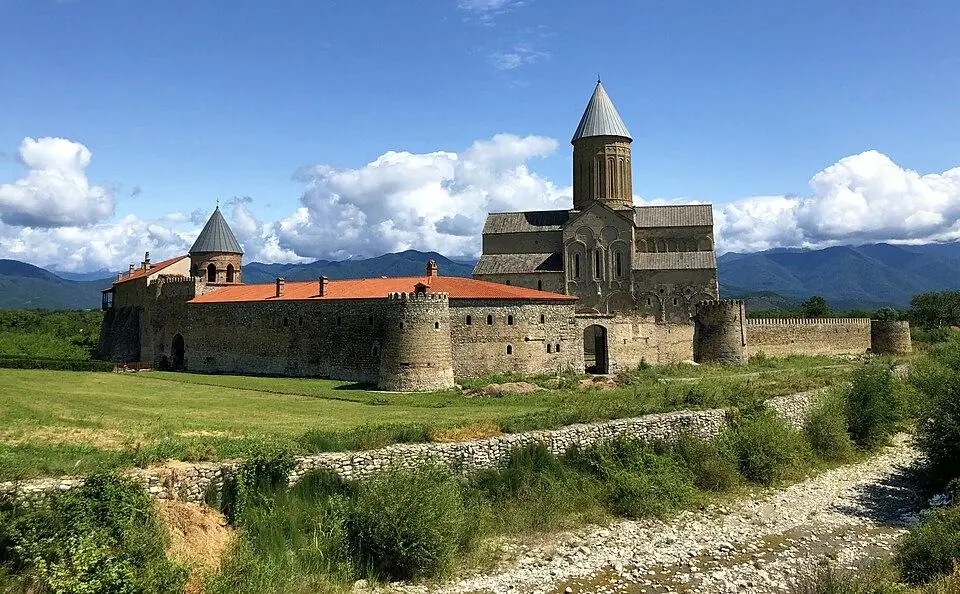
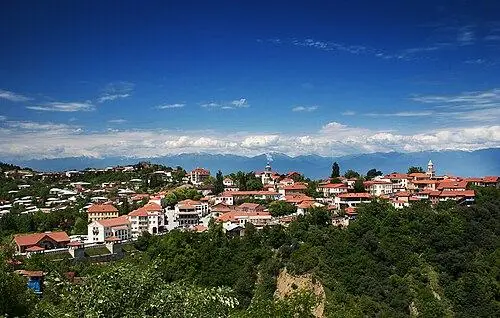
The map makes the cellar visits easier to plan. Mukuzani, Akhasheni, Zegaani, Kotekhi and Akhoebi all lie on the right bank, on the slopes of the Tsiv-Gombori range around Gurjaani. Their zones overlap. Grapes from Akhasheni village can become dry Mukuzani or semi-sweet Akhasheni, depending on how the wine is made. Kindzmarauli, Kvareli and Napareuli sit across the Alazani, on the left bank under the main Caucasus ridge. Khashmi is on the Sagarejo side, the first wine country you reach from Tbilisi.
Saperavi wine styles: dry, semi-sweet, rosé and sparkling
No other Georgian grape is asked to do so many jobs. The rules of the Kakheti appellation alone allow Saperavi as a dry, semi-dry, semi-sweet or sweet red and as a rosé. Producers also make sparkling and fortified versions. Bottles made for export usually state the style in English.
| Style | Sugar | How it is made | Names to look for |
|---|---|---|---|
| Dry (mshrali) | No more than 4 g/l in the PDO rules | Fermented until the sugar is gone, then aged in steel, oak or qvevri | Mukuzani, Napareuli, Kvareli, Saperavi Khashmi, Zegaani |
| Semi-dry | A little sugar left | Fermentation stopped early; mostly a commercial style | Varietal Saperavi from larger wineries |
| Naturally semi-sweet | 18-45 g/l | Very ripe grapes; fermentation halted by cold, no sugar added | Kindzmarauli, Akhasheni |
| Rosé | Usually dry | Short contact with the skins; still deep pink because the pulp is coloured | Kakheti PDO rosé, many estates |
| Sparkling | Brut to semi-sweet | Tank or bottle fermentation | Estates and specialist sparkling houses |
| Fortified and sweet | High | Spirit added or grapes left to shrivel | Small batches; ask in the cellar |
How naturally semi-sweet Saperavi is made
Protected semi-sweet Saperavi is never sweetened from a sack. For Kindzmarauli and Akhasheni the grapes have to reach at least 22 percent sugar at harvest. The must ferments until the winemaker halts it, usually by chilling and a dose of sulphur. At that point 18 to 45 grams of the grape's own sugar per litre are still there. The Akhasheni rules also exclude malolactic fermentation and ban added sugar or concentrate. The wine ends at 10.5 percent alcohol or more, and Saperavi's acid keeps it from tasting syrupy.
Plenty of visitors meet the grape this way first, often at a supra where the hosts serve Kindzmarauli with fruit, walnuts and sweets. If you want something drier, ask for mshrali, the Georgian word for dry, or look for a dry appellation on the label.
What the rules say about dry Saperavi
Mukuzani shows how strict a dry appellation can be. The grapes must reach 19 percent sugar or more, and the stems come off before fermentation. The ferment may not run hotter than 30°C, and malolactic fermentation follows. The winemaker can then age the wine in wood for at least six months or bottle it young. The finished wine needs at least 11 percent alcohol, and the rules allow up to 15.
Qvevri Saperavi or European-style Saperavi?
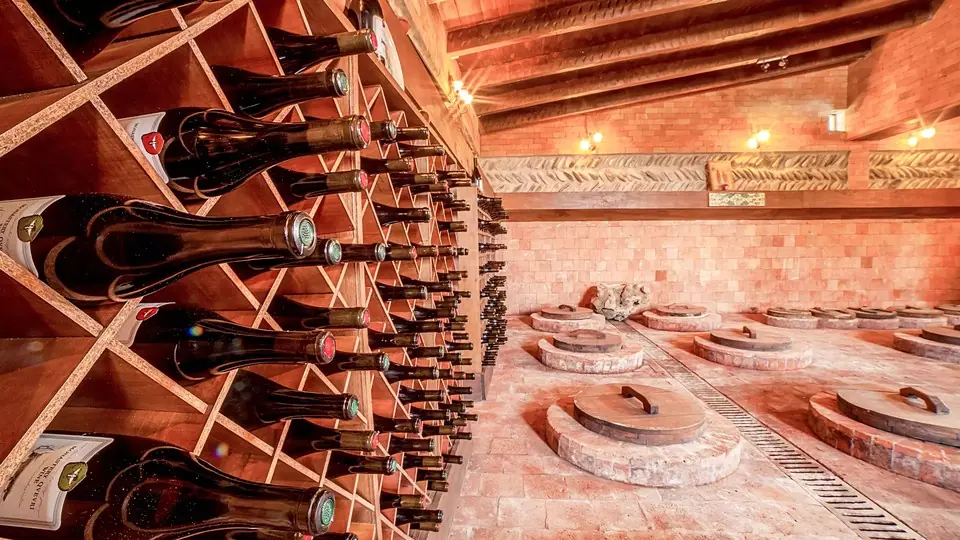
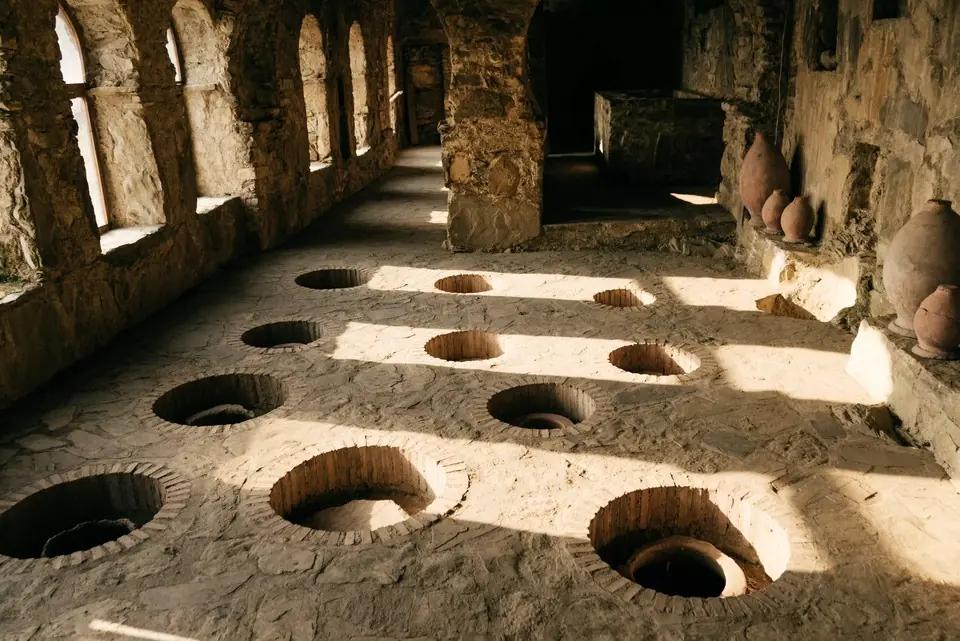
Two ways of making Saperavi live side by side in Kakheti, and plenty of wineries use both. In the European method the bunches are destemmed and crushed. They then ferment on their skins in temperature-controlled steel for one to three weeks. After that it is all pressed, and the wine often moves to barrels. The National Wine Agency notes oak from France, the United States, Hungary, Russia and Slavonia in use. In the Kakhetian tradition, crushed grapes, skins and sometimes a share of the stems go into a buried qvevri. They ferment with the yeasts that come in on the fruit. The mix stays in the sealed clay for weeks or months before the wine is drawn off.
| Qvevri | European style | |
|---|---|---|
| Vessel | Clay qvevri sunk in the cellar floor | Steel tanks, sometimes wooden vats |
| Yeast | Wild, from the grapes and the cellar | Often selected cultured yeast |
| Skin contact | Several weeks to several months | Usually one to three weeks |
| Stems | Some Kakhetian makers keep part of them | Removed; the Mukuzani rules require it |
| Ageing | In the qvevri, then bottle or sometimes oak | Oak barrels or steel |
| When young | Earthy, savoury and firm | Rounder fruit, with vanilla or spice from new oak |
| Where you find it | Family cellars, natural-wine producers, Zegaani PDO | Large estates and most appellation wines in shops |
How long a qvevri red stays on its skins is a house decision. At Pheasant's Tears in Sighnaghi, for example, reds and whites alike rest on their skins in clay for three weeks to half a year. Long contact gives more tannin and a darker, more savoury wine that wants food and some patience. Shorter contact gives fresher fruit.
How long does Saperavi wine age?
Acid and tannin are what let a red wine last, and Saperavi has plenty of both. The National Wine Agency says concentrated dry Saperavi is worth ten years or more in bottle. Kindzmarauli and Akhasheni are meant to be enjoyed within one or two years of bottling. The 1839 bottle at Tsinandali is a museum piece, but it makes the point. Our rule of thumb for what you buy on the trip:
- Simple dry Saperavi from steel: open within two to four years, while the fruit is at its brightest.
- Oak-aged appellation reds such as Mukuzani or Napareuli: good from about three years, and the best vintages hold for ten or more.
- Qvevri Saperavi: often tight and tannic when young. Give it a year or two and decant it.
- Semi-sweet Kindzmarauli and Akhasheni: drink within a year or two, because they lose freshness instead of gaining depth.
Keep bottles lying down somewhere dark at about 12 to 15°C. Serve dry Saperavi slightly cool, around 16 to 18°C, and semi-sweet versions colder, around 10 to 12°C. Unfiltered qvevri reds leave a deposit, so let the bottle stand for a day and pour gently or decant.
What to eat with Saperavi: Georgian food pairings
Saperavi grew up with Georgian food. Its acid cuts through pork fat and walnut sauces, and its tannin wants grilled meat. At a supra the dark wine arrives with the mtsvadi. These pairings work in Georgia and at home.
| Dish | Which Saperavi | Why it works |
|---|---|---|
| Mtsvadi, pork or veal grilled over vine cuttings | Dry qvevri Saperavi or Mukuzani | Smoke and charred fat soften the tannin |
| Khinkali with meat | Young dry Saperavi without oak | Peppery broth needs a fresh red, not a heavy one |
| Ostri or chashushuli, beef stewed with tomato and chilli | Dry, fruity Saperavi | The acidity matches the tomato |
| Ojakhuri, fried pork with potatoes | Dry Kvareli or Napareuli | Simple, rich food for a structured red |
| Lobio in a clay pot with mchadi | Light qvevri Saperavi | Earthy beans meet an earthy wine |
| Aged sheep's cheese such as Tushetian guda | Older dry Saperavi | Salt and fat flatter mature tannin |
| Churchkhela, walnuts, fresh fruit | Kindzmarauli or Akhasheni | Sweetness on both sides of the table |
Away from Georgia, treat dry Saperavi as you would Syrah or Cabernet Sauvignon: lamb, game, mushroom stews, burgers and hard cheese. Save the semi-sweet styles for fruit desserts, blue cheese, dark chocolate or spicy food, where a dry red would taste bitter.
To drink Saperavi the way Georgians do, with a laden table and a tamada leading the toasts, join our private Wine and Supra tour. It gives you seven days of Tbilisi markets, Kakhetian cellars and a full feast with polyphonic singers. It runs privately on whichever dates suit you, whatever the size of your party.
Where to taste Saperavi in Kakheti
Kakheti lets you taste Saperavi from all of its appellations within two or three days. Plan the visits by bank of the Alazani. The right bank holds the Gurjaani names and Tsinandali, and the left bank holds Napareuli and the Kvareli zones. For winery details, booking and tasting prices, see our guide to the best Kakheti wineries. This is the Saperavi route through them.
- Khashmi, on the way in
Take the Sagarejo road out of Tbilisi and ask your guide for a cellar in Khashmi before you drop into the Alazani Valley. Its dry Saperavi grows at 730-800 m, the highest of the appellations. - The Mukuzani zone around Gurjaani
Mukuzani, Velistsikhe, Vazisubani, Akhasheni and Zegaani all fall inside the Mukuzani zone. A day of family cellars here covers dry Mukuzani, semi-sweet Akhasheni and qvevri Zegaani. The Gurjaani Wine Festival fills Akhtala Park on the second Saturday of October. - Tsinandali and Telavi
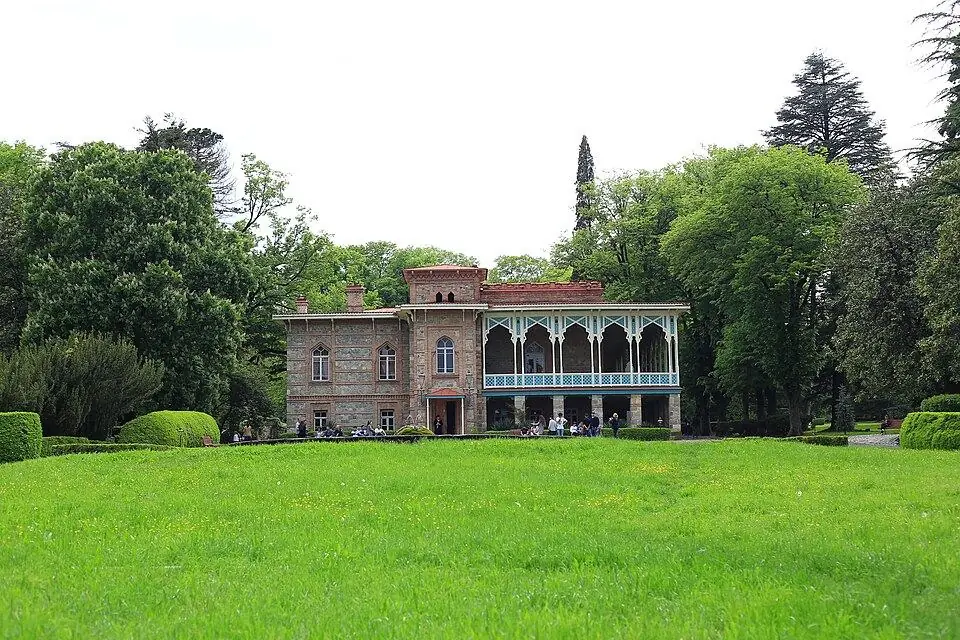
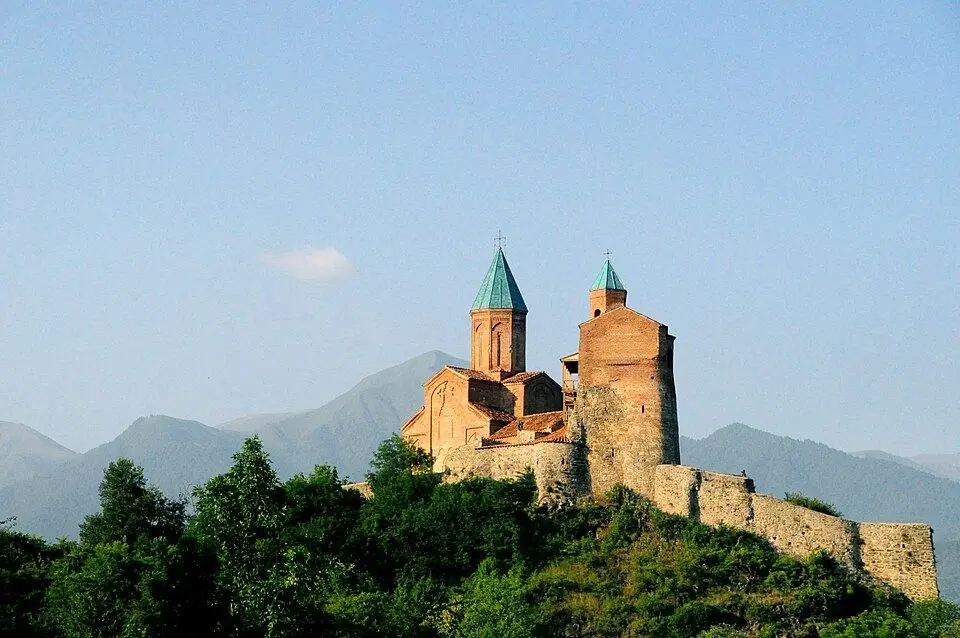
At the Tsinandali estate, look for the 1839 Saperavi in the oenotheque before tasting the house reds. Then try family cellars in and around Telavi. - Napareuli across the river
Cross the Alazani to Napareuli, ~23 km north of Telavi, for dry left-bank Saperavi. Twins Old Cellar adds a qvevri museum to the tasting. - Kvareli for Kindzmarauli
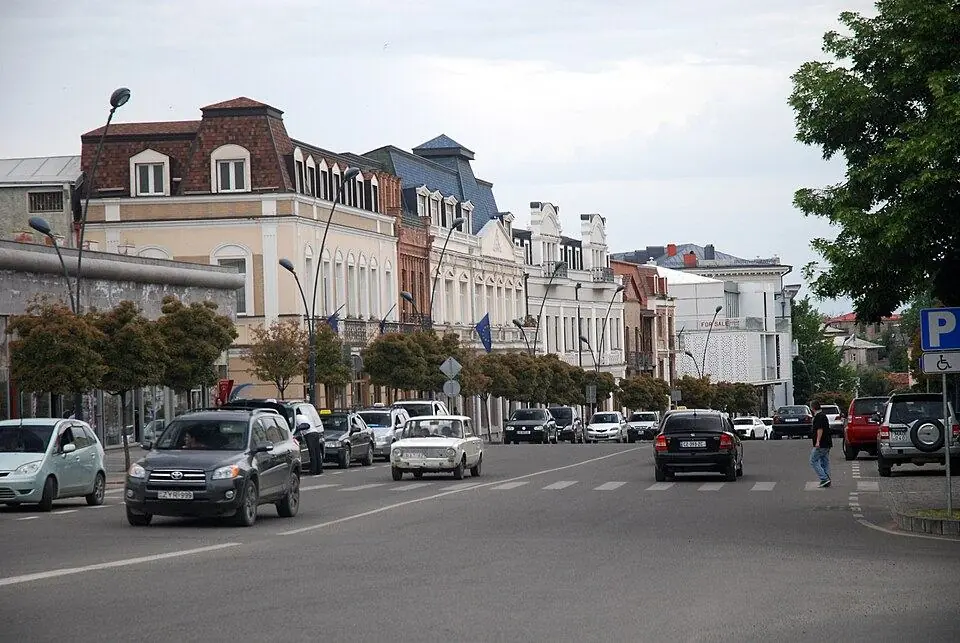
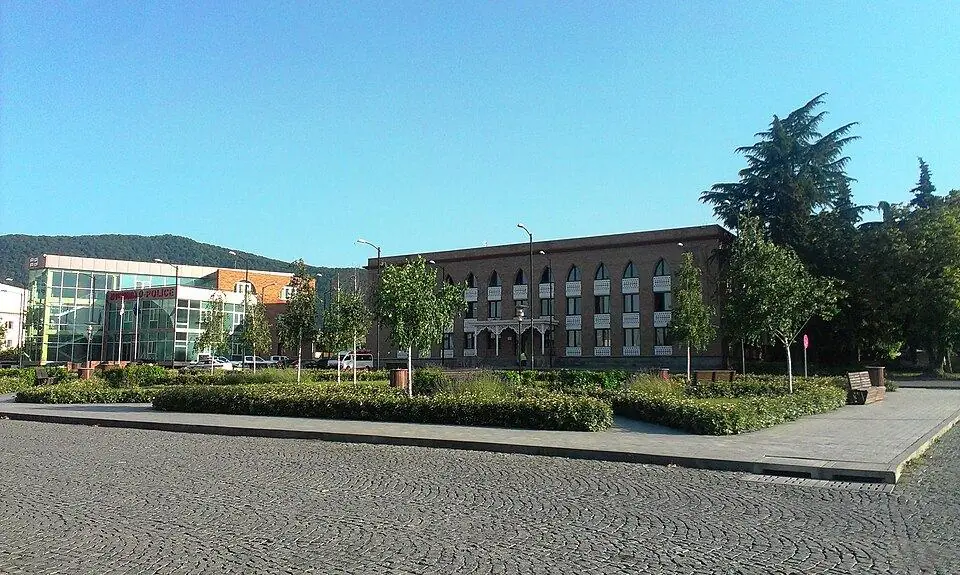
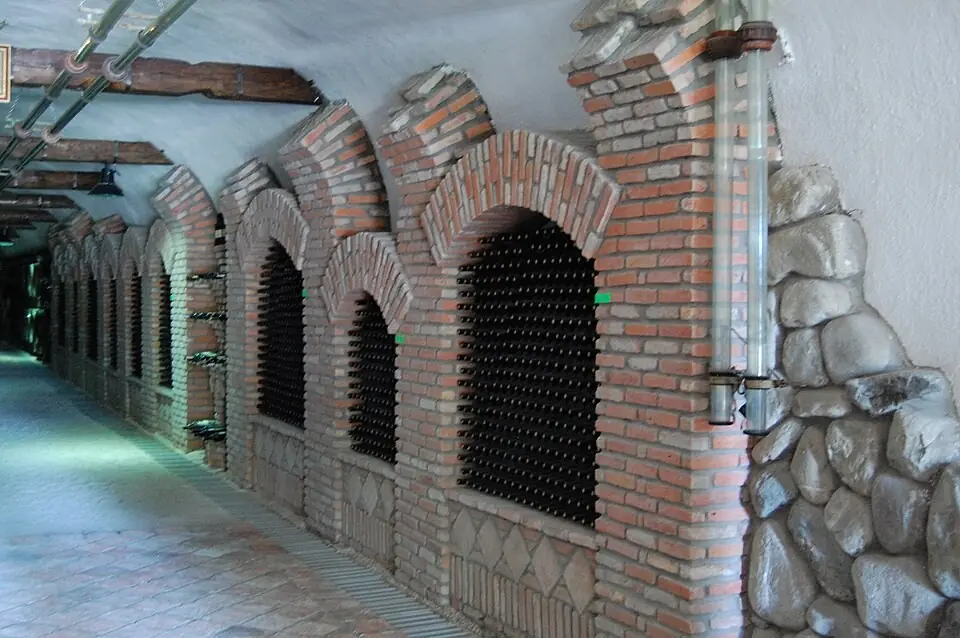
End below the mountains in Kvareli, with Kindzmarauli Marani in town and the Khareba tunnel cut into the hillside. Near Gremi, TEMI ferments organic Saperavi in qvevri on land inside the Kindzmarauli zone.
Short on time? Our private Kakheti wine day trip leaves Tbilisi in the morning for Bodbe and Sighnaghi. It stops for lunch from the qvevri at a family winery, calls at Tsinandali and is back by evening. It runs on any date you pick, for a group of whatever size.

Tasting Saperavi in Tbilisi
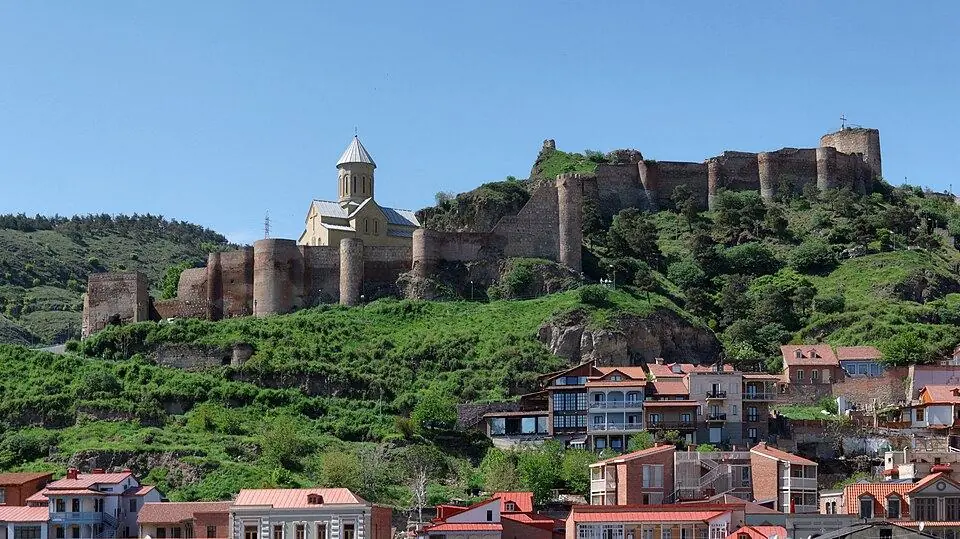
If Kakheti does not fit your trip, try the capital's wine bars, clustered in Sololaki, around Fabrika and in the old quarter. They pour Saperavi flights from small producers in every region. In spring the New Wine Festival is held in Mtatsminda Park each May, usually on its second Saturday. It is the easiest place to compare young Saperavi from dozens of cellars in one afternoon.


Buying Saperavi in Georgia and taking bottles home
- Read the label in three steps: the grape, then the appellation if there is one, then the sweetness. Qvevri or kvevri on the label means the wine was made in clay.
- Buy at the cellar door where you can. Family producers sell wines that never reach shops, and the money stays in the village.
- Tbilisi wine shops carry appellation Saperavi from many producers, and staff will tell you which bottles travel and age well.
- Homemade red in a recycled plastic bottle is part of the fun, but it rarely survives a flight. Enjoy it during the trip.
- Pack bottles wrapped and bagged in the middle of a checked suitcase. In cabin baggage wine counts as a liquid unless you bought it in duty-free after security.
- Buy semi-sweet Saperavi to drink soon and dry appellation reds to keep.
- What you may bring in duty-free depends on your home country. The EU, UK and US limits are set out in our Georgian wine guide.
Where else is the Saperavi grape grown?
Saperavi left Georgia long ago. It moved around the Black Sea and across the former Soviet Union. Today it is planted in Moldova, Ukraine, Russia, Bulgaria, Armenia and Azerbaijan, and further east in Uzbekistan and Kazakhstan.
Because it copes well with cold, it was a natural fit for cool New World regions. In New York's Finger Lakes, Dr Konstantin Frank, who had worked with the vine in Ukraine, put Saperavi in his first plantings in 1958. His winery still bottles it. Other growers followed from the 1990s, and the region now holds its own Saperavi festival. Ontario's Niagara vineyards grow it too. In Australia, trials by Brown Brothers in north-east Victoria in the 1990s led to plantings in the King Valley. Growers from several regions have since formed an Australian Saperavi Association.
In the New World it is almost always made dry, often with oak. That is a good way to get to know the grape at home. But only Georgia gives you semi-sweet Kindzmarauli, qvevri Saperavi and the chance to drink it with the families who have grown it for generations.
Saperavi FAQ
What is Saperavi wine?
Saperavi wine is made from Saperavi, the main red grape of Georgia (the country), whose pulp is red as well as its skin. The wine is very dark, with black fruit, firm tannin and high acid. It ranges from dry to naturally semi-sweet. Kakheti, in eastern Georgia, grows most of it.
Is Saperavi dry or sweet?
It can be either. Dry appellations include Mukuzani, Napareuli, Kvareli and Saperavi Khashmi. Kindzmarauli and Akhasheni are naturally semi-sweet, keeping 18 to 45 grams of grape sugar per litre. Semi-dry, rosé and sparkling versions exist too, and the label always states the style.
How do you pronounce Saperavi?
Say it as four even syllables, sa-pe-ra-vi, with the vowels as in Italian. Georgian words carry only a light stress, so do not lean hard on any one syllable.
What does Saperavi taste like?
Expect blackberry, black cherry and plum, with liquorice, spice, tobacco or cocoa as the wine ages. It is full-bodied, with lively acidity and grippy tannin. Qvevri versions add earthy, savoury notes.
Is Saperavi like Cabernet Sauvignon?
In body and ageing potential, yes, and the two are often compared. Saperavi is usually darker and fresher. Its coloured pulp gives colour without long skin contact, and the grape keeps high acid. Some drinkers also find it close to Syrah.
Is Kindzmarauli made from Saperavi?
Yes. Kindzmarauli is a protected wine name and Saperavi is the grape. The rules allow only Saperavi and its Saperavi Budeshuri form, grown in a mapped zone of Kvareli district. The wine is always naturally semi-sweet.
How long can you keep Saperavi?
Concentrated dry Saperavi can improve for ten years or more in a cool, dark place. Simple dry bottles are best within a few years, and semi-sweet Kindzmarauli and Akhasheni within one or two.
Where can I taste Saperavi in Georgia?
In Kakheti: Kvareli for Kindzmarauli, the villages around Gurjaani for Mukuzani and Akhasheni, Napareuli north of Telavi, and family cellars everywhere. In Tbilisi, wine bars pour Saperavi flights, and the New Wine Festival in May brings many producers together.