- For a first visit, combine one estate, such as Tsinandali or the Khareba wine tunnel at Kvareli, with one family cellar, such as Twins Old Cellar in Napareuli or a village marani in Velistsikhe.
- Large wineries usually accept walk-in visitors all year; family cellars and small natural-wine producers want a message or call a few days ahead.
- Reported 2026 prices: about 35 GEL (about $13) for the Khareba tunnel with a tasting, about 10 GEL (about $4) for the Tsinandali house museum and oenotheque, and about 20 GEL (about $8) at Kindzmarauli Marani.
- Keep to two or three wineries a day and let someone sober drive: Georgia's legal blood alcohol limit is 0.3 per mille, which a couple of glasses can exceed.
- The 2026 harvest in Kakheti started around 10 September, and several family wineries sell harvest days with picking, pressing and a feast.
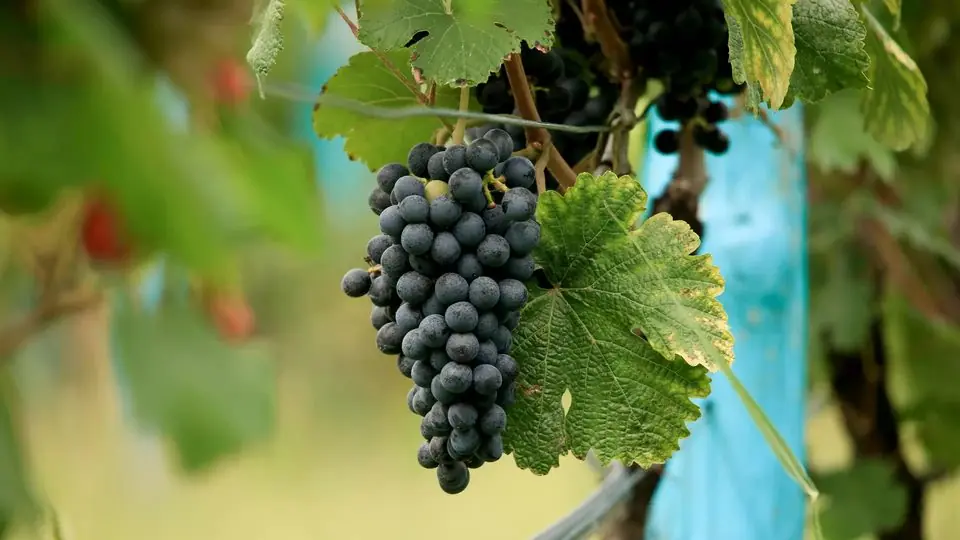
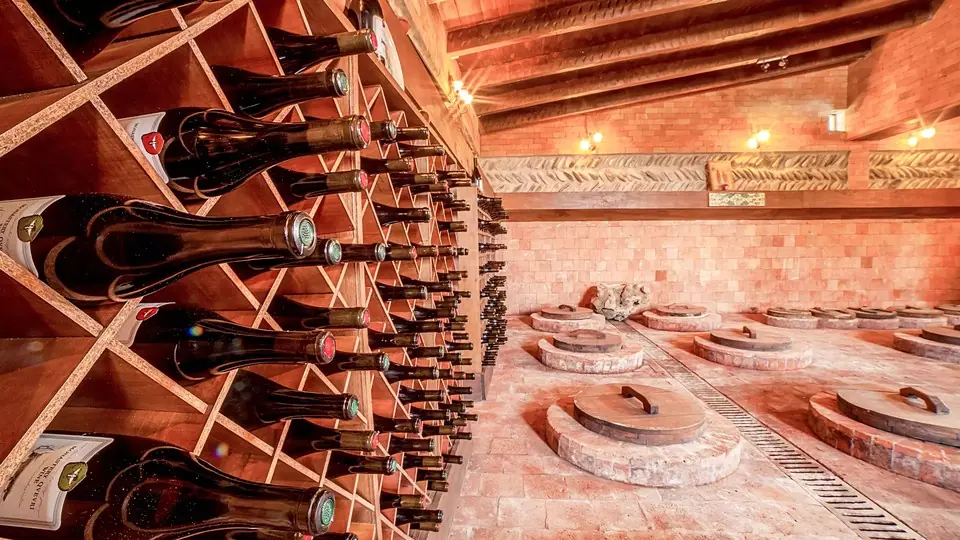
The best wineries in Kakheti for a first trip are a mix of big names and family homes: the Tsinandali estate near Telavi, the Khareba wine tunnel at Kvareli and Pheasant's Tears in Sighnaghi, plus at least one marani where a family draws wine from clay jars set in the floor. Below we group our sixteen picks into four areas, Telavi and Tsinandali, Kvareli, Sighnaghi and Velistsikhe, and Gurjaani and Napareuli, so each area fills an easy day.
This is a practical list rather than a wine lesson: for qvevri, amber wine and grape varieties, see our Georgian wine guide, and for roads, towns and monasteries, our Kakheti travel guide. Here you will find, for each cellar, what it makes and in which style, whether to book, how a tasting runs and, where a recent figure exists, what it cost in 2026. We finish with how to pace a tasting day, what changes during the harvest and how to get bottles home.
Best Kakheti wineries at a glance
The table sums up our picks. In the style column, qvevri means the wine ferments in clay jars buried in the cellar floor and European means steel tanks or oak barrels; plenty of producers do both. Prices are approximate figures reported for 2026, rounded. Where we found no recent figure, the cell says ask, and you should confirm the price when you book.
| Winery | Area | Type and style | Booking | Tasting price |
|---|---|---|---|---|
| Tsinandali Estate | Tsinandali, near Telavi | Historic estate and museum; European style | Walk in; book tastings at busy times | Museum and oenotheque about 10 GEL (about $4) in 2026; five wines about 35 GEL (about $13) in 2026 |
| Shumi Winery | Tsinandali | Estate with a wine museum; qvevri and European | Usually walk in | Ask |
| Schuchmann Wines Chateau | Kisiskhevi, near Telavi | Estate with hotel and spa; qvevri and European | Book ahead | Ask |
| Shalauri Wine Cellar | Edge of Telavi | Small artisan winery; qvevri only | Book ahead | Ask |
| Akido | Ikalto | Family winery in an old house; qvevri | Book ahead | Ask |
| Khareba wine tunnel | Kvareli | Large winery with a tunnel cellar | Walk in | About 35 GEL (about $13) in 2026 with tasting |
| Kindzmarauli Marani | Kvareli | Large producer; home of semi-sweet Kindzmarauli | Walk in | About 20 GEL (about $8) in 2026 |
| TEMI Community | Near Gremi | Social enterprise; organic qvevri wine | Book ahead | From about 20 GEL (about $8) in 2026 |
| Nelkarisi (Friends' Cellar) | Shilda, near Nekresi | Small estate; qvevri and steel | Book online | Ask |
| Wine Yard N1 | Akhasopheli, near Kvareli | Family winery with meals | Book ahead | About 80 GEL (about $31) in 2026 with food |
| Pheasant's Tears | Sighnaghi | Qvevri only; restaurant | Walk in for a glass; book a tasting menu | Ask |
| Okro's Wines | Sighnaghi | Natural qvevri wine | Message ahead | Ask |
| Numisi cellar-museum | Velistsikhe | Family museum around an old marani | Book for lunch | Ask |
| Vakho Oqruashvili Wine Cellar | Velistsikhe | Tiny family marani; qvevri | Book ahead | Ask |
| Vazisubani Estate | Vazisubani, Gurjaani | 19th-century manor hotel; qvevri | Book ahead | Ask |
| Twins Old Cellar | Napareuli | Family winery with a qvevri museum and hotel | Book ahead | Ask |
Wineries around Telavi and Tsinandali
The south bank around Telavi has the densest cluster of cellars in Kakheti, and the dry white called Tsinandali takes its name from the village 10 km south-east of town. A princely estate, a museum winery, a German-founded chateau and farmhouse cellars all lie within half an hour of the centre.
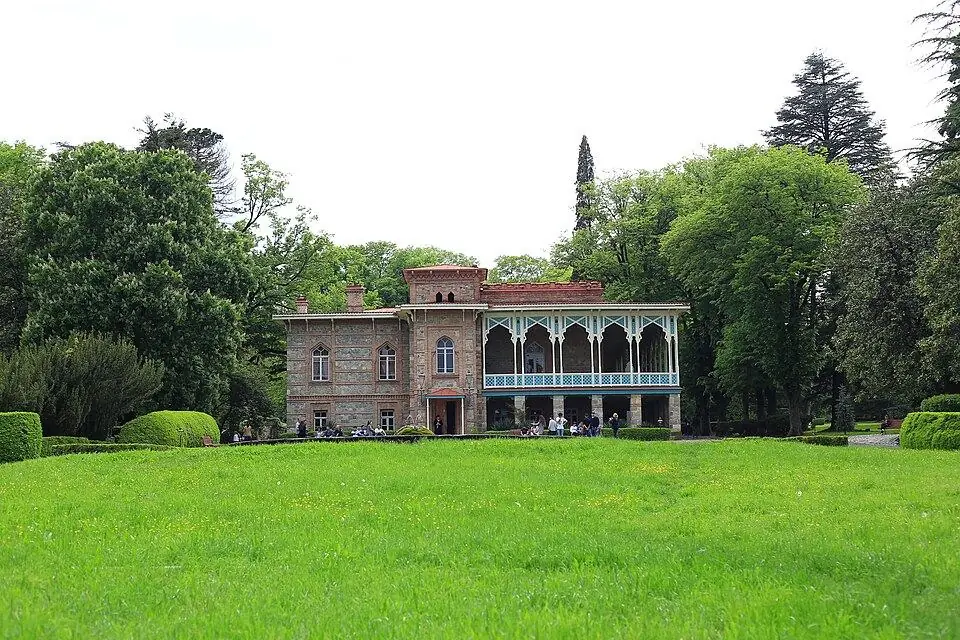
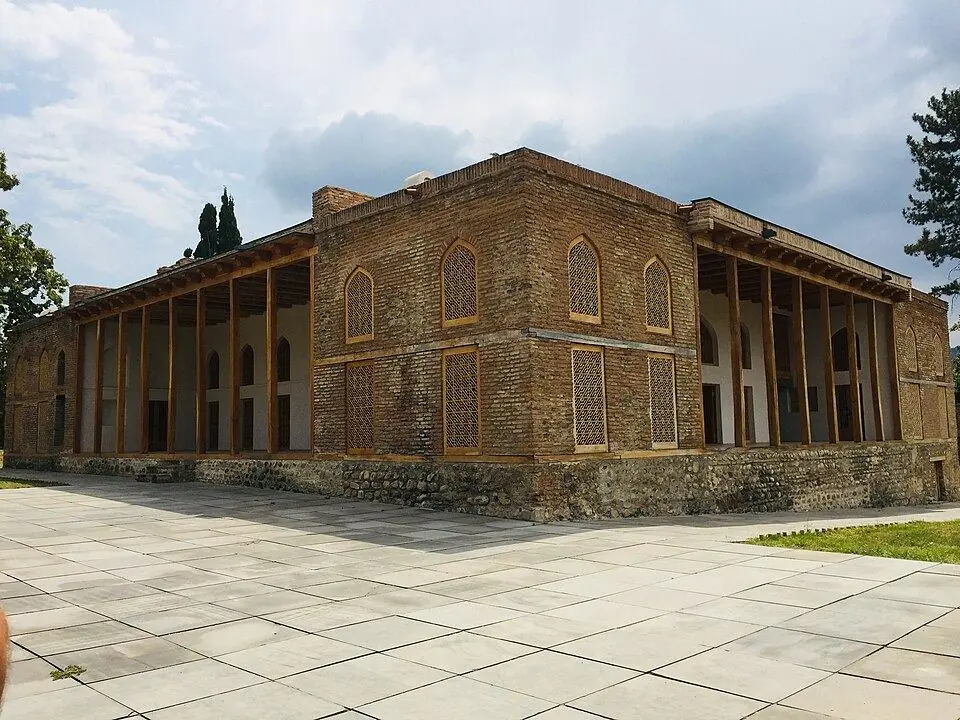
Tsinandali Estate
Prince Alexander Chavchavadze brought European winemaking to his estate early in the 19th century while keeping Georgian qvevri, and the estate calls his cellar the model for the classic Georgian winery. His oenotheque holds more than 16,500 bottles of about 70 wines, including a Saperavi of 1839, bottled in 1841, which the estate names as the oldest bottled wine in Georgia. Its own wines are poured in five tasting sets with Georgian snacks, or by the glass at the wine bar.
Reported 2026 prices were about 10 GEL (about $4) for the house museum and oenotheque, about 2 GEL (under $1) more for a short tasting, and about 35 GEL (about $13) for five wines. Walk in for the museum; book tastings in summer and at harvest time.
Shumi Winery
Shumi, in the same village, suits people who like to compare. Its museum shows clay vessels from archaeological digs, and it grows a living collection of hundreds of vine varieties, Georgian and foreign (sources disagree on the count). The highlight is a tasting of one grape from one vineyard made two ways, in qvevri and in the European manner. Guides report free entry to the grounds and paid tastings; call ahead with a group.
Schuchmann Wines Chateau
Burkhard Schuchmann and his German family founded this winery in 2008 in Kisiskhevi, just outside Telavi. Its vineyards lie in the Tsinandali, Napareuli and Kindzmarauli appellations, and it makes qvevri wines alongside European-style bottlings from Saperavi, Rkatsiteli, Mtsvane and Kisi, plus international grapes such as Cabernet Sauvignon and Riesling. With a hotel, villas and a wine spa on site, it is the easiest place to pair a polished tasting with a night's sleep. Book ahead.
Shalauri Wine Cellar and Akido
Shalauri, started by four friends on the edge of Telavi, works only in qvevri: 43 jars, about 25,000 bottles a year, reds aged for several years and a terrace facing the mountains. Akido, near Ikalto Monastery, is a family winery in a restored early 20th-century Kakhetian house whose cellar floor is bare earth, dampened on hot days to keep the qvevri cool. It is known for Saperavi and Rkatsiteli and offers tastings, meals, khachapuri classes and a harvest programme. Reserve both by phone or social media.
A route for the Telavi side
- Alaverdi and Ikalto
Begin at Alaverdi, about 20 km north of Telavi, having asked a day or two earlier whether the monks' cellar can take visitors. Then head to Ikalto for the stone wine press in the old academy grounds and a first tasting at Akido. - A long lunch
Make lunch the main tasting of the day, at Shalauri or a family marani in Telavi booked through your guesthouse. - Tsinandali in the afternoon
Drive about 10 km south-east of Telavi for the house museum, the oenotheque and a short set of wines. Add Shumi, in the same village, only if you skipped one of the morning stops. - Stay or head back
Sleep in Telavi or at the Schuchmann chateau, or return to Tbilisi over the Gombori Pass in about 2 hours once you have checked the road status.
Kvareli wineries: tunnel cellars and Kindzmarauli
North of the river, Kvareli sits under the wooded Caucasus and is home to two Saperavi appellations: naturally semi-sweet Kindzmarauli and dry Kvareli. Its wineries range from the best-known tunnel cellar in Georgia to a community project and family homes.
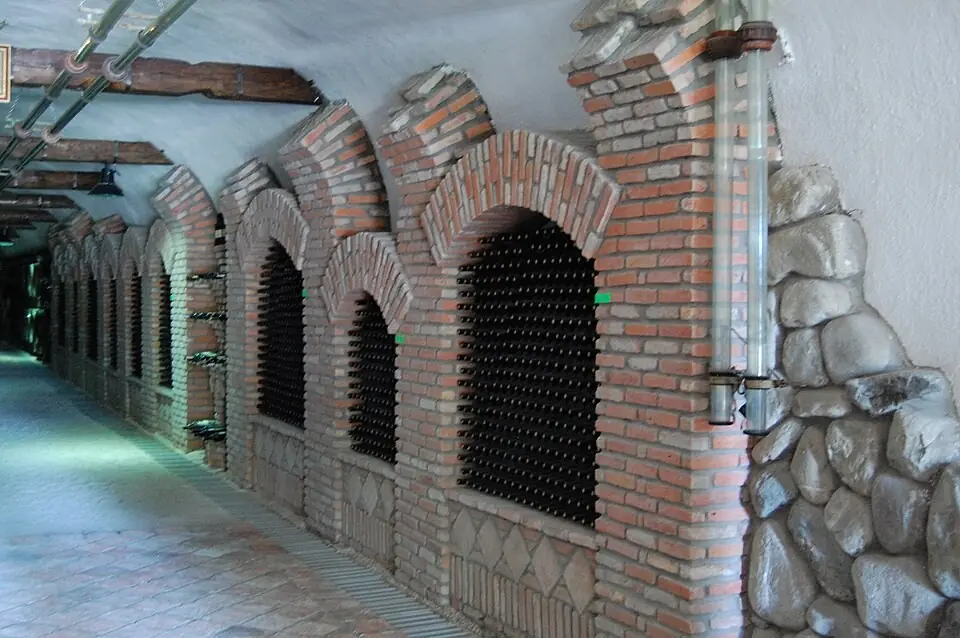
Khareba wine tunnel
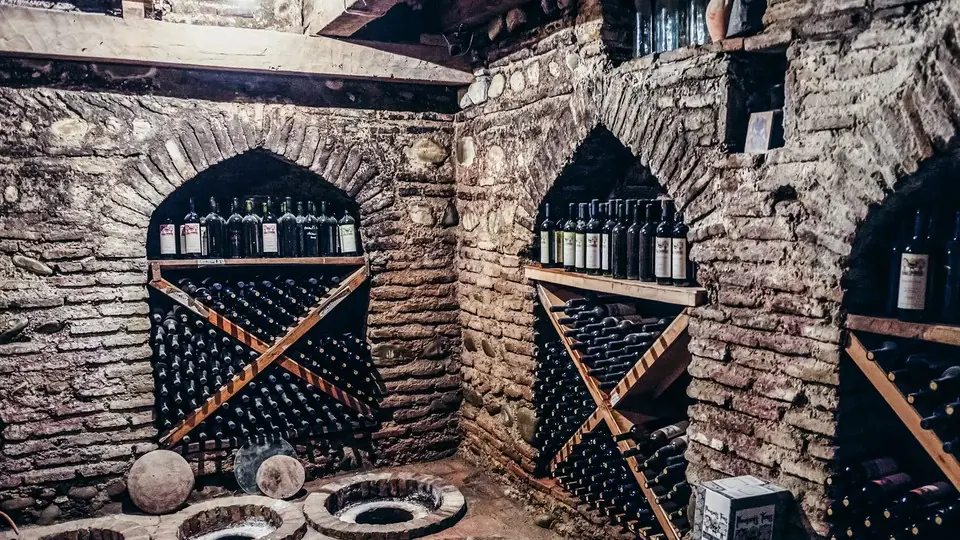
Winery Khareba stores its bottles in nearly 8 km of tunnels that hold about 12 to 14°C all year; they were cut into the hillside in Soviet times, reportedly by the builders of the Tbilisi metro. You walk one lit gallery and finish with a tasting; bigger packages add chacha, a khinkali class or churchkhela making. It is commercial and busy with groups, but walk-ins are normal and it suits a very hot or wet day.
In 2026 the tunnel tour with a tasting was reported at about 35 GEL (about $13) per person, about 10 GEL (about $4) for the tour without wine, and up to about 100 GEL (about $38) for the fullest packages with workshops.
Kindzmarauli Marani
Kindzmarauli Marani, in Kvareli town beside the old fortress, is one of the largest producers in Georgia and the name most Georgians link with the semi-sweet red. A visit shows the production and bottling halls, then a seated tasting, reported at about 20 GEL (about $8) per person in 2026. No booking is needed; there is a shop and a restaurant.
TEMI, Nelkarisi and Wine Yard N1
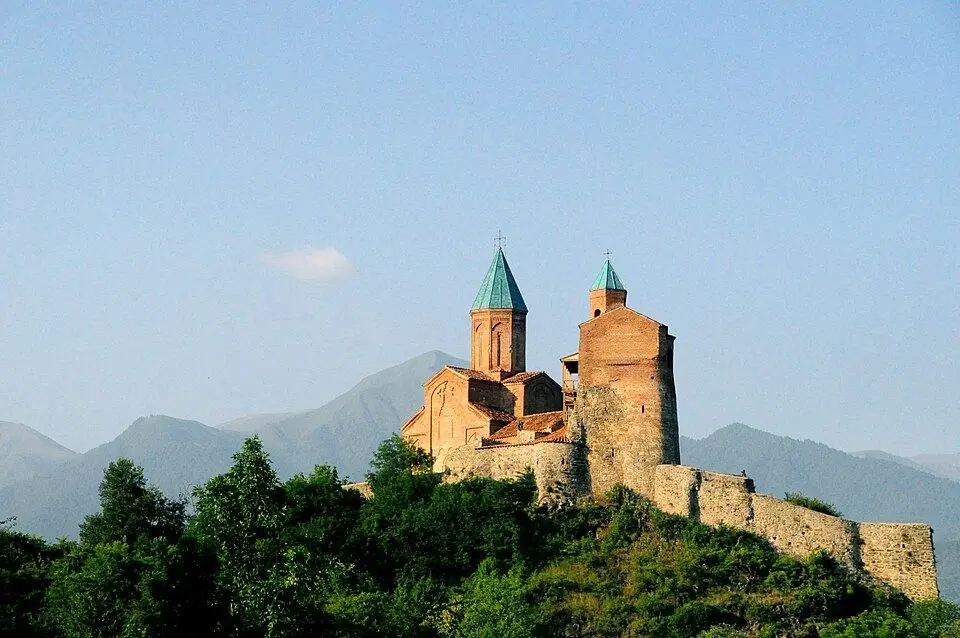
TEMI, near Gremi, is run by a social enterprise, a mixed community of about 70 people, some with disabilities, with roots in 1989. Its wines are organic Rkatsiteli and Saperavi, made in qvevri within the Kindzmarauli zone. Tastings started at about 20 GEL (about $8) in 2026, and it hosts harvest days in autumn and qvevri openings in spring. Book online.
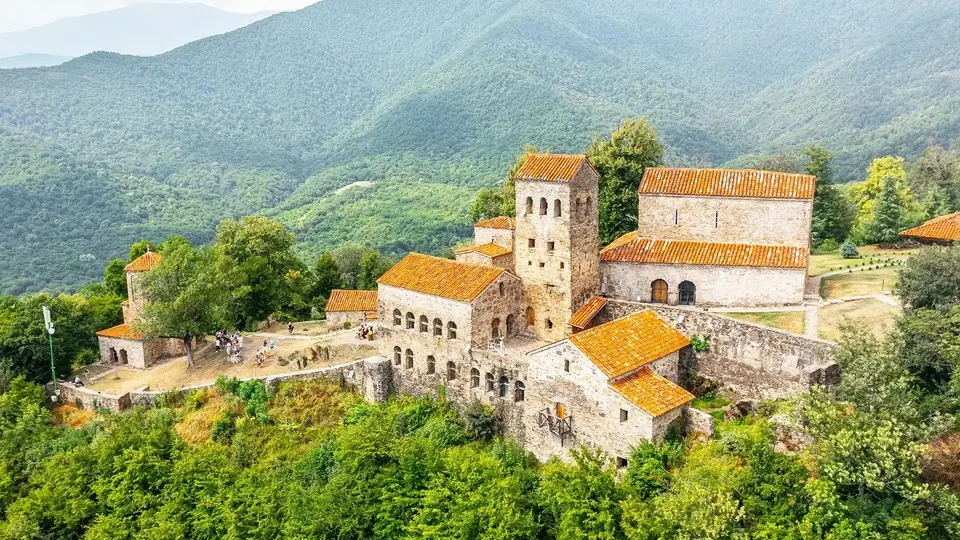
Nelkarisi, the new name of Friends' Cellar, lies in Shilda near Nekresi Monastery. Founded in 2009 by friends from eleven countries, it uses both qvevri and steel, with Saperavi as its flagship, and its packages include the excavated ruins of ancient Nelkarisi. Wine Yard N1, a family winery in Akhasopheli, is the opposite of a tour: you sit in the garden while the family cooks, for about 80 GEL (about $31) a head in 2026 with food and wine without limit.
A route for the Kvareli side
- Gremi first
Climb to the royal citadel at Gremi while it is cool, then taste at TEMI a short drive away. - Nekresi at midday
Walk or take the shuttle up to Nekresi Monastery, then have lunch at Nelkarisi or at a family table such as Wine Yard N1. - Khareba after lunch
Spend the hottest hours in the tunnel, then buy bottles at Kindzmarauli Marani in town. - Kvareli Lake
End with a walk by the lake and stay in Kvareli; Telavi is about 45 km back across the valley.

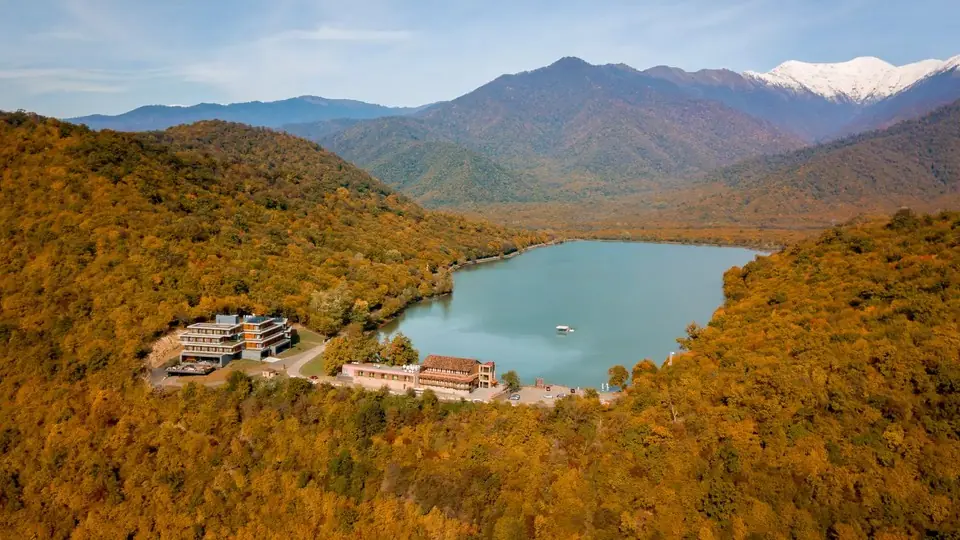
Sighnaghi and Velistsikhe wineries
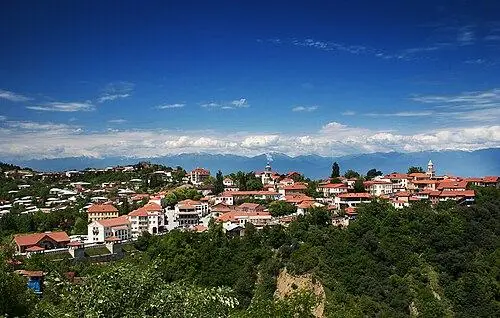
Sighnaghi is home to two natural-wine producers whose bottles sell far beyond Georgia. Velistsikhe, a big wine village in the Gurjaani zone on the right bank of the Alazani, lies on the valley road north towards Telavi, so it makes an easy second stop.
Pheasant's Tears
Every Pheasant's Tears wine ferments and ages in qvevri, some of which date from the middle of the 19th century, and never sees oak. The cellar was built in the vineyard so that grapes reach the jars within hours of picking, and skins, with ripe stems, stay with the juice for between three weeks and six months, for whites and reds alike. Several rare local grapes in the range had gone more than a hundred years without being bottled before the winery took them up.
You taste at the winery's restaurant on Baratashvili Street: a glass or bottle, a structured tasting, or a food and wine menu with back vintages and experimental cuvees poured only there. In 2026 it usually opened daily from about 12:00 to 23:00, with the kitchen open until about 22:00. Walk in for a glass; reserve the tasting menu.
Okro's Wines
John Okruashvili started Okro's in Sighnaghi in 2004. The wines are natural, fermented with long skin contact in qvevri and made without additives, from six Georgian grapes that include Rkatsiteli, Mtsvane and Saperavi as well as the rarer Budeshuri and Tavkveri. Tastings are held on a terrace looking across the valley. Opening hours vary, so message ahead.
Numisi and the family cellars of Velistsikhe
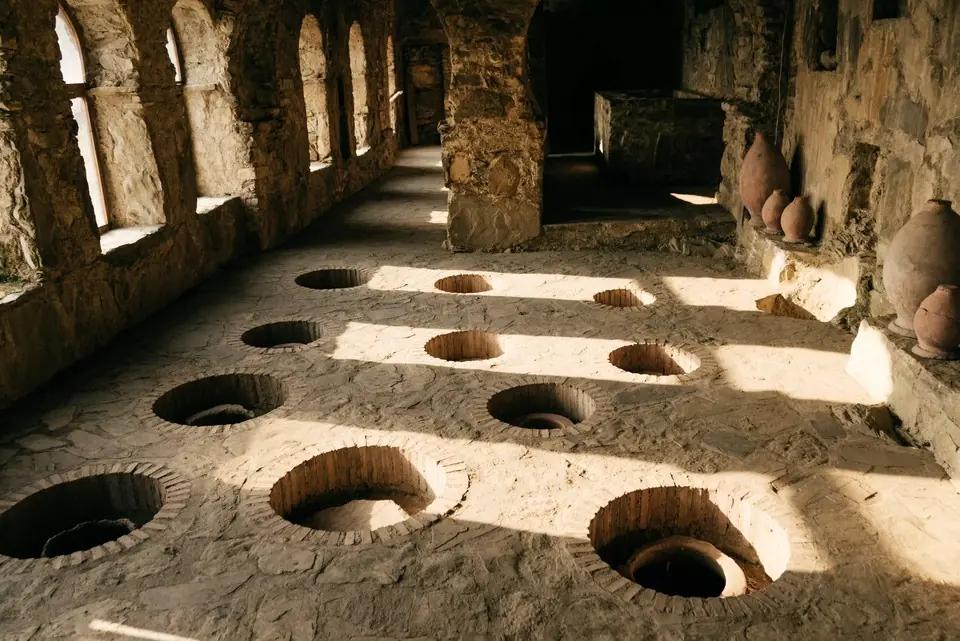
Numisi is a family cellar-museum built around a vaulted marani that sources date to the 16th century, with a stone wine press and 33 qvevri in the floor. The family opened it as a private museum in 2010, and the collection runs to thousands of objects. A visit combines the museum with a tasting and, if arranged, a Kakhetian lunch and bread baking. It is reported to open Tuesday to Sunday, about 10:00-18:00.
In the same village, Vakho Oqruashvili's cellar is about as small as a winery gets. You can see how pressed juice runs through channels in the wall straight into the jars, drink wine drawn from a qvevri into a clay bowl, and stay for lunch with mtsvadi grilled by the family. Book Numisi and Vakho's by phone or through Facebook.
A route from Sighnaghi to Velistsikhe
- Bodbe and the walls
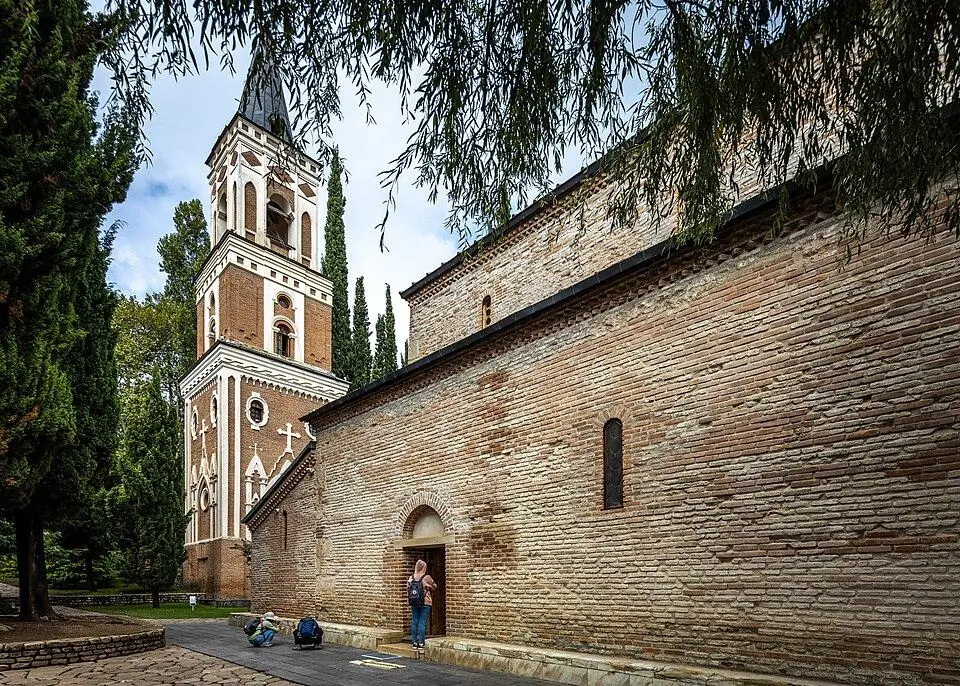
Arrive early at Bodbe Monastery, 2 km below the town, and walk a section of the wall before the tour groups do. - Lunch at Pheasant's Tears
Book the food and wine menu, then, if they confirm, a terrace tasting at Okro's. - North to Velistsikhe
Follow the valley road through Gurjaani to Velistsikhe for Numisi or Vakho's cellar in the late afternoon. - Night in Telavi
Carry on to Telavi for the night, or sleep in Sighnaghi and leave Velistsikhe for the next morning.
Gurjaani and Napareuli wineries
The middle of the valley sees fewer visitors and makes a great deal of wine. Gurjaani district alone has more than 80 wineries, and its microzones give several of Georgia's protected wine names, including dry Mukuzani and semi-sweet Akhasheni. Across the river, Napareuli is known for dry Saperavi and Rkatsiteli.
Vazisubani Estate
Vazisubani, a restored manor in the village of the same name that the Michelin Guide dates to 1891, now runs as a boutique hotel of 19 rooms with a park of old trees. The estate's wines are unfiltered and made in qvevri, among them an amber blend of Rkatsiteli, Mtsvane and Kisi, and you taste them in the cellar or over lunch in the restaurant. Book in advance, above all for a meal.
Twins Old Cellar
In Napareuli, about 23 km north of Telavi, the twin brothers Gia and Gela Gamtkitsulashvili rebuilt their father's old cellar into a family winery in 1997. It now holds more than 135 qvevri, most of them taking 3.5 to 4.5 tonnes, and a museum on site is devoted to qvevri winemaking and Georgian grape varieties. The standard visit pairs the museum with three wines and a glass of chacha. A hotel in the vineyards, classes in tone bread and churchkhela, and harvest work in autumn make it a good overnight stop.
A route through the middle of the valley
- Highway to Gurjaani
Take the main Kakheti road east past Sagarejo and up the valley to Gurjaani, around 2 hours from Tbilisi. - Vazisubani for lunch
Taste in the manor cellar and eat in the estate restaurant. - Velistsikhe on the way
If you have not covered it from Sighnaghi, stop at Numisi or a family marani in Velistsikhe as you drive north. - Cross to Napareuli
Cross the Alazani for the museum and a tasting at Twins Old Cellar, and sleep there or in Telavi. Alaverdi and Gremi are both close for the next morning.
How to plan a winery day in Kakheti
A Kakheti tasting is never a quick sip. A family visit with lunch takes two to three hours, an estate tour one to two, and the valley roads between them add half an hour or more each time. Two or three wineries is a full day: one estate with a fixed tour and one family cellar with the main meal, plus a third stop only if the first two were short.
Booking
The big names, such as Khareba, Kindzmarauli Marani, Shumi and Tsinandali, take walk-in visitors all year; phone ahead in winter. Family cellars and small producers are homes or tiny teams: message a few days ahead with your numbers, say if you want a tasting or a meal, and confirm the evening before. Most book by phone, Facebook or Instagram, and your guesthouse can often call for you.
Drivers and drink-driving
Do not plan to drive yourself. Georgia's legal limit is 0.3 per mille of alcohol in the blood, a level that a couple of glasses can pass, and Georgian hosts top up glasses without asking. Hire a driver for the day, use taxis from your base town, or travel on a private tour where the driver stays sober while you taste.
Money, food and children
Small cellars usually want cash. Eat before the first glass and keep water within reach. At an estate, a tip of 5 to 10 GEL per person suits a long session, as our tipping guide explains; at a family cellar, buying bottles is thanks enough. Children are welcome almost everywhere: Khareba's workshops, Akido's yard and the bread and churchkhela classes at Twins Old Cellar keep them busy, and our private tours have no lower age limit.
Our private Kakheti wine day trip follows this pattern from Tbilisi: Bodbe and Sighnaghi in the morning, lunch and four or five qvevri wines with a winemaking family, and the Tsinandali estate on the way back. We run it privately on the date you choose, for groups of every size, with a guide in your language and a sober driver.

Visiting Kakheti wineries during Rtveli, the grape harvest
Rtveli opens in September with Rkatsiteli in Kakheti, and the picking moves west through the autumn until the last Chkhaveri comes in from Guria and Adjara in December. In 2026 Kakheti's harvest began around 10 September. By 18 September the National Wine Agency had counted about 12,400 tonnes of grapes taken in across the region, with roughly 320,000 tonnes expected over the season, after a record 2025 when Georgia processed about 336,000 tonnes.
Harvest weeks change the visit. On picking days a family may be in the vineyard from dawn, so your host may ask you to come in the evening or to join the work instead of a formal tasting. Several producers sell harvest days: Akido and Wine Yard N1 with picking, pressing and a feast, TEMI in its vineyards, and Twins Old Cellar for hotel guests. Book rooms early for harvest weekends.
Plan around two autumn festivals if you can: TelaVino in the palace courtyard in Telavi, held each autumn since 2014, and the Gurjaani Wine Festival in Akhtala Park, held every October since 2019 and on 10 October in 2026. In spring, the opening of the qvevri, when new wine is first drawn off its skins, is another good moment; TEMI welcomes visitors to it.
Our seven-day Wine and Supra tour visits family cellars, Alaverdi, the Khareba tunnel and Tsinandali and ends with a full feast, and our six-day Rtveli tour puts you in a Kakhetian family's vineyard from mid-September to mid-October. Both are private, for any group size.
Which Kakheti winery suits you
Sixteen wineries is more than anyone can fit into a short trip. Use this table to choose two or three that match what you came for.
| If you want | Go to | Why |
|---|---|---|
| One classic estate on a day trip | Tsinandali Estate | House museum, oenotheque and a tasting in about two hours, close to Telavi |
| Natural wine | Pheasant's Tears, Okro's Wines, Shalauri | Qvevri wines made with little or no intervention |
| Wine history | Numisi, Twins Old Cellar, Shumi, Tsinandali | Old cellars, qvevri museums, archaeological vessels and 19th-century bottles |
| A meal with a family | Wine Yard N1, Akido, Vakho Oqruashvili's cellar | The tasting happens at the family table with home cooking |
| Children in the group | Khareba, Akido, Twins Old Cellar | Workshops, space outdoors and bread or churchkhela classes |
| Little or no wine | Khareba, Tsinandali | A cheap tunnel tour without tasting, a museum and a garden |
| A night at a winery | Schuchmann, Vazisubani, Twins Old Cellar, Tsinandali Estate | Rooms on site, so nobody has to drive after dinner |
| Step-free access | Khareba, Shilda winery, Telavi Marani | Named as accessible wineries by georgia.travel |
Cellars are often down a flight of stairs, so call ahead to ask which parts of a visit are step-free.
Shipping or carrying Kakheti wine home
Buy at the cellar door when you can: family producers sell bottles that rarely reach shops, some cellars, such as Pheasant's Tears, keep back vintages for visitors, and the money goes to the people who made the wine. Bring cash for small cellars.
Customs limits
We could not find an official Georgian limit on wine taken out for personal use; the Revenue Service's traveller guidance covers what you bring in. What limits you is your destination's duty-free allowance and your airline's baggage weight. Our Georgian wine guide lists the EU, UK and US allowances; above them you normally declare the wine and pay duty, so check your customs website before buying cases.
Carrying bottles
- A full 75 cl bottle weighs roughly 1.2 to 1.5 kg, so a box of six adds about 8 kg to your checked bag.
- Ask the winery whether it sells cardboard bottle boxes or padded shippers; they are lighter than wrapping each bottle in clothes.
Shipping
For more than a suitcase holds, ask before you pay whether the winery ships abroad or uses a courier, what it costs and who pays duty on arrival, and check your country's rules on alcohol sent to private individuals. Many producers here export, so asking which importer stocks them at home is often the easiest way to buy more later.
Kakheti wineries FAQ
What is the best winery in Kakheti?
There is no single best one. For a first visit, the Tsinandali estate near Telavi shows the history, the Khareba tunnel at Kvareli is the most unusual setting, and Pheasant's Tears in Sighnaghi is the best-known natural producer. Add one family marani, such as Twins Old Cellar in Napareuli.
Do you need to book wine tastings in Kakheti?
Not for the big estates such as Khareba or Tsinandali, which welcome visitors without notice in every season. Small producers and family cellars do need a few days' warning, because they are homes without tasting room staff. During the September and October harvest, book everything earlier.
How much does a wine tasting cost in Kakheti in 2026?
In 2026, estate visits were reported at about 10 GEL (about $4) for the museum and oenotheque at Tsinandali, about 35 GEL (about $13) for a tunnel tour and tasting at Khareba, and about 20 GEL (about $8) for a seated tasting at Kindzmarauli Marani in Kvareli town. A family visit with a full meal costs more, about 80 GEL (about $31) at Wine Yard N1. Confirm when you book.
How many wineries can you visit in one day?
Two or three. A family cellar with lunch takes two to three hours and an estate tour one to two, plus the driving between them. Pair one estate with one family cellar, and resist adding a fourth stop.
Can I drive myself on a Kakheti wine tour?
Only if you do not drink. Georgian law caps blood alcohol for drivers at 0.3 per mille, and hosts keep refilling glasses. Hire a driver, use taxis from Telavi, Sighnaghi or Kvareli, or take a private tour with a driver who stays sober.
Is the Khareba wine tunnel worth visiting?
Yes, if you expect a large commercial winery rather than an intimate cellar. The tunnels, nearly 8 km of them, stay cool all year, the visit is short and easy with children, and it cost about 35 GEL (about $13) with a tasting in 2026. Pair it with Gremi and a family cellar.
What is the best time of year to visit Kakheti wineries?
Mid-September to mid-October, when the harvest is on and many families let guests pick and press grapes. Spring is good too, with the qvevri being opened and green vineyards. Estates are open all year, so a winter visit is quiet and perfectly possible.
Can I ship wine home from a Kakheti winery?
Sometimes. Some producers can send wine abroad by courier, so ask before you pay, and check that your country accepts alcohol sent to private individuals. Otherwise pack bottles in checked luggage and keep within your home country's duty-free allowance.