Lobio Recipe
ლობიო
A home-style lobio recipe: red kidney beans simmered soft, half crushed and stirred through with golden onion, garlic, fresh coriander and Georgian spices. Vegan, filling and the dish Georgians eat on fasting days.
Recipe by the Maspindzeli team in Tbilisi · Updated 18 Oct 2026 · Cooked everywhere; Racha, Imereti and Guria each have a well-known style
Full recipe with the timeline, timers and US measures: maspindzeli.ge/recipes/lobio/
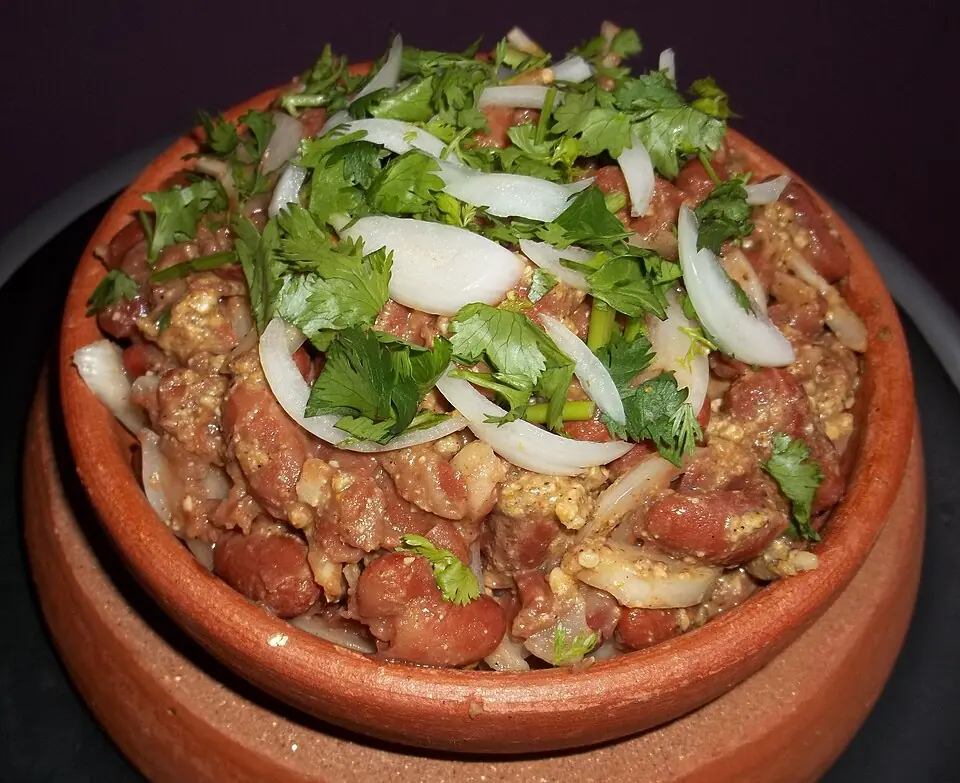
This lobio recipe makes the everyday Georgian bean stew: red kidney beans cooked until soft, partly crushed, then mixed with gently fried onion, garlic, plenty of fresh coriander and a pounded paste of Georgian spices. It usually comes to the table bubbling in a small clay pot, so menus call it lobio kotanshi (you will also see lobio qotanshi), which means lobio in a pot. If you ate a Georgian bean stew on your trip, this is very likely it.
Lobio is simply the Georgian word for beans, and it covers dozens of dishes. Kidney beans reached Georgia from the Americas after the 1500s and are now grown and cooked in every region, each with its own habits. Racha cooks them with smoked ham, Imereti with leeks, Guria mixes whole beans with walnuts and vinegar, and Samegrelo sharpens them with sour plum.
This is everyday food rather than feast food. It is cheap, it fills you up, and the classic version uses no meat, dairy or eggs, so it is a staple on the many fasting days of the Georgian Orthodox calendar, Lent included. Georgians eat it hot, with mchadi (cornbread), pickles and a bunch of fresh herbs on the side.
Timeline: what to do, and when
14 h 10 min from start to table · 1 h 5 min hands-on · 12 h waiting
Each bar is one step. Hands-on Waiting, while the oven, the pot or the dough does the work. Steps that sit inside a wait are done in parallel.
Dashed stretches are long waits, shortened on the chart so the busy steps stay readable.
Recipe
Lobio
Ingredients
Beans
Onions
Spice paste
To finish
Amounts are scaled. Times stay about the same, but a bigger pot takes a little longer to come to the boil.
You will need
- Large bowl for soaking
- Large heavy-based pot (3 to 4 litres)
- Frying pan
- Mortar and pestle (or a small blender)
- Wooden spoon or potato masher
- Small clay pots or bowls for serving (optional)
Method
- Rinse and soak5 min hands-on· start here
Tip the beans into a sieve, pick out any small stones or shrivelled beans and rinse well. Put them in a large bowl and cover with at least three times their volume of cold water, because they will roughly double in size.
- Soak overnight12 h waiting· starts at +5 min
Leave the beans to soak for about 12 hours, and never less than 8. In a warm kitchen, put the bowl in the fridge or change the water once so they do not start to ferment.
- Drain and bring to the boil5 min hands-on· starts at +12 h 5 min
Drain and rinse the beans, put them in the large pot and cover with fresh cold water by about 5 cm. Set the pot over high heat.
- Boil hard, then pour off the water20 min waiting· starts at +12 h 10 min
Once the water is at a rolling boil, keep it boiling hard for at least 10 minutes: raw kidney beans contain a toxin that only a proper boil destroys. Skim off the foam, then drain away this first water, as Georgian cooks usually do.
- Refill and add the bay leaves5 min hands-on· starts at +12 h 30 min
Cover the beans again with about 1.5 litres of boiling water from the kettle, add the bay leaves and bring back to a gentle simmer. Partly cover the pot.
- Simmer until soft1 h 15 min waiting· starts at +12 h 35 min
Simmer gently for 60 to 90 minutes, depending on the age of the beans, topping up with boiling water so they stay just covered. Stir now and then with a wooden spoon. They are ready when a bean crushes easily between your fingers with no chalky centre; add 1 tsp salt for the last 15 minutes.
- Fry the onions20 min hands-on· starts at +13 h 10 min, during step 6
Finely chop the onions. Warm the oil in a frying pan over medium-low heat and cook the onions for 15 minutes, stirring often, until soft, sweet and pale gold. Do not let them turn dark brown.
- Pound the spice paste10 min hands-on· starts at +13 h 30 min, during step 6
Chop the coriander, stems and all, and keep a handful aside for the end. In a mortar, pound the garlic with a big pinch of coarse salt, then work in the ground coriander, blue fenugreek, khmeli suneli, chilli and the rest of the chopped coriander until you have a rough green paste.
- Crush the beans5 min hands-on· starts at +13 h 50 min
Ladle out and keep about 500 ml of the cooking liquid, then drain off any excess so the beans are only just covered. Remove the bay leaves. Crush about half the beans against the side of the pot with a wooden spoon or masher, leaving the rest whole.
- Simmer together10 min hands-on· starts at +13 h 55 min
Stir in the onions with their oil, the spice paste and about 250 ml of the reserved liquid. Simmer over low heat for 10 minutes, stirring often so it does not catch, and add more liquid until the lobio is thick but still drops easily from a spoon.
- Finish and serve5 min hands-on· starts at +14 h 5 min
Take the pot off the heat and stir in the tkemali or vinegar, if using. Taste and adjust the salt and chilli. Spoon into warmed clay pots or bowls, scatter over the reserved coriander and serve hot.
About 500 kcal per serving (1 of 4). This is an estimate from standard values for the ingredients, not a lab figure.
Georgians eat lobio straight from the clay pot, scooping it up with pieces of mchadi and taking a bite of pickle or raw spring onion in between to cut the richness.
Tips, swaps and variations
Tips from your host
- Do not skip the 10-minute hard boil. Kidney beans that are only simmered or slow-cooked from raw can make you ill, even if they taste soft.
- Crush only half the beans. Good lobio is creamy with whole beans through it, not a smooth purée.
- Pound the garlic and spices with salt in a mortar rather than chopping them. The salt grinds the garlic and the spices release far more aroma.
- Keep the bean cooking liquid until the end. Lobio thickens as it stands, and the liquid loosens it without diluting the flavour.
- Warm clay pots slowly in a low oven (about 100 °C / 210 °F) before filling them. Never put a cold clay pot straight onto a high flame or it may crack.
- Old beans can take two hours or more to soften. Buy them from a shop with a quick turnover and do not salt the pot until they are tender.
Variations and swaps
- Canned-bean shortcut (about 35 minutes): skip the soaking and boiling and use 4 cans (400 g each) of red kidney beans, drained and rinsed (about 960 g). Fry the onions, make the spice paste, then warm the beans in the pot with 250 ml water for 5 minutes, crush half, stir everything together and simmer for 10 minutes.
- Walnut lobio (nigvziani lobio): pound 100 g walnuts into the spice paste and add 1 tbsp vinegar. It is richer, still vegan and Lent-friendly, but contains nuts. Many families serve it warm or at room temperature.
- Clay-pot finish: spoon the finished lobio into small clay pots and bake for 15 to 20 minutes at 180 °C / 355 °F until it bubbles at the edges, as many restaurants do.
- Racha style: cook the beans with a piece of smoked ham or bacon and fry the onions in pork fat. Racha is known for this smoky version, which is not vegetarian.
- With butter: some cooks melt a knob of butter over each pot just before serving. It is no longer vegan or suitable for Lent.
- Samegrelo style: more chilli or a spoonful of red ajika, and a generous splash of sour plum sauce (tkemali) at the end.
- Herbs and spices: Georgian cooks often add dried savory (kondari), mint or parsley. No khmeli suneli? Use 1/2 tsp extra ground coriander, 1/2 tsp dried savory or thyme and a pinch of dried mint.
Serve it with
- Mchadi (Georgian cornbread)
- Mzhave (pickles): cabbage, green tomatoes, cucumbers, peppers or jonjoli
- A plate of fresh herbs, spring onions and radishes
- Georgian tomato and cucumber salad
- Shoti or tonis puri bread if you have no mchadi
- Pkhali and other cold vegetable starters
Make ahead and storage
Lobio keeps for 3 to 4 days in a covered container in the fridge and tastes even better the next day. It thickens as it cools, so reheat gently in a pan with a splash of water, stirring, until piping hot, and add fresh coriander before serving. It freezes well for up to 3 months; thaw overnight in the fridge.



Maspindzeli Travel, Tbilisi · private tours and cooking classes in Georgia · maspindzeli.ge · WhatsApp +995 598 74 74 54 · hello@maspindzeli.ge