Lobiani Recipe
ლობიანი
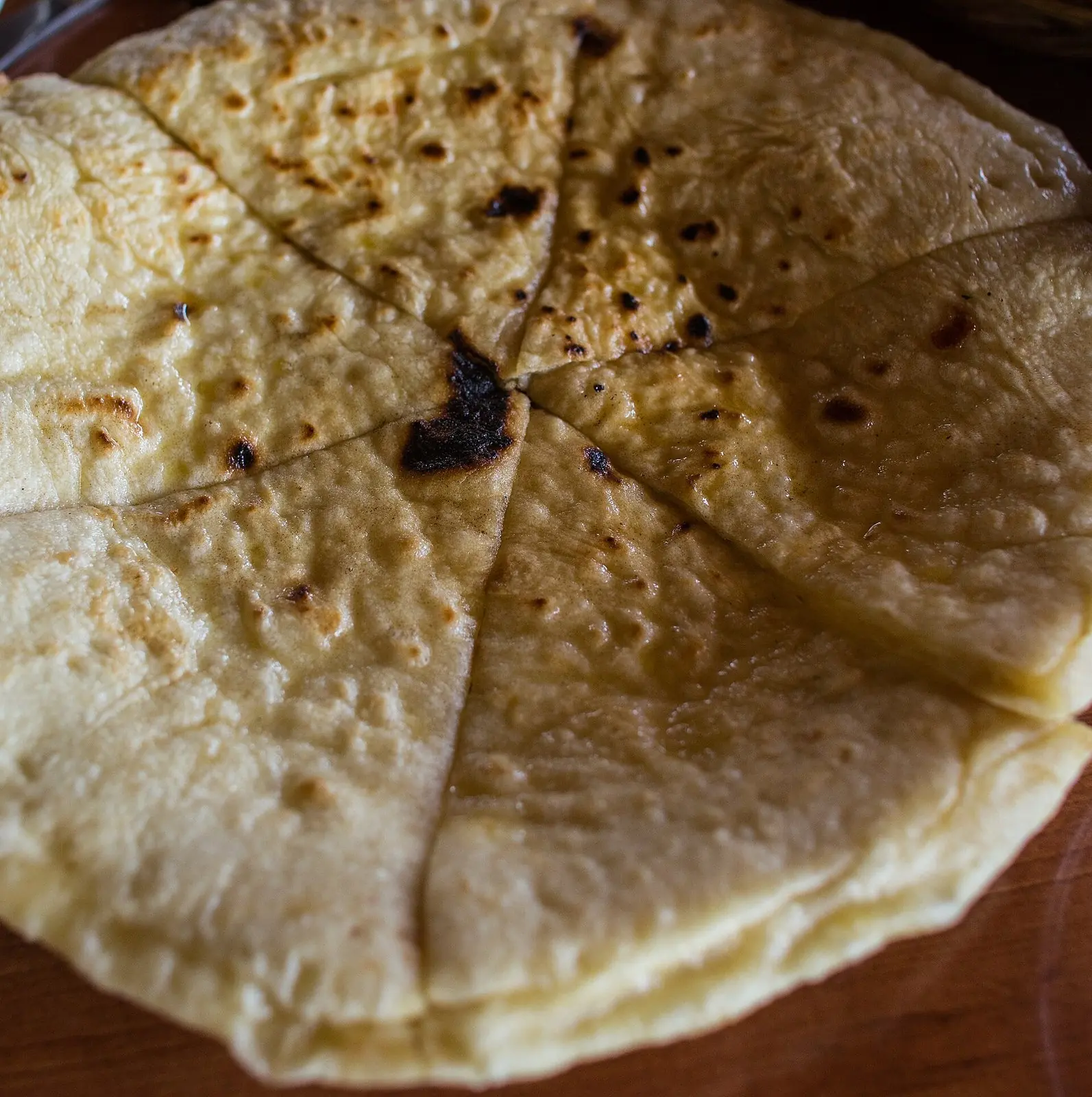
Lobiani is Georgia's round, flat bread with a seasoned bean filling sealed inside. This lobiani recipe wraps soft yeast dough around mashed red kidney beans and golden onion, then bakes it hot and finishes it with butter.
Recipe by the Maspindzeli team in Tbilisi · Updated 20 Oct 2026 · Baked all over Georgia; the Racha version with smoked ham is the best known
Full recipe with the timeline, timers and US measures: maspindzeli.ge/recipes/lobiani/
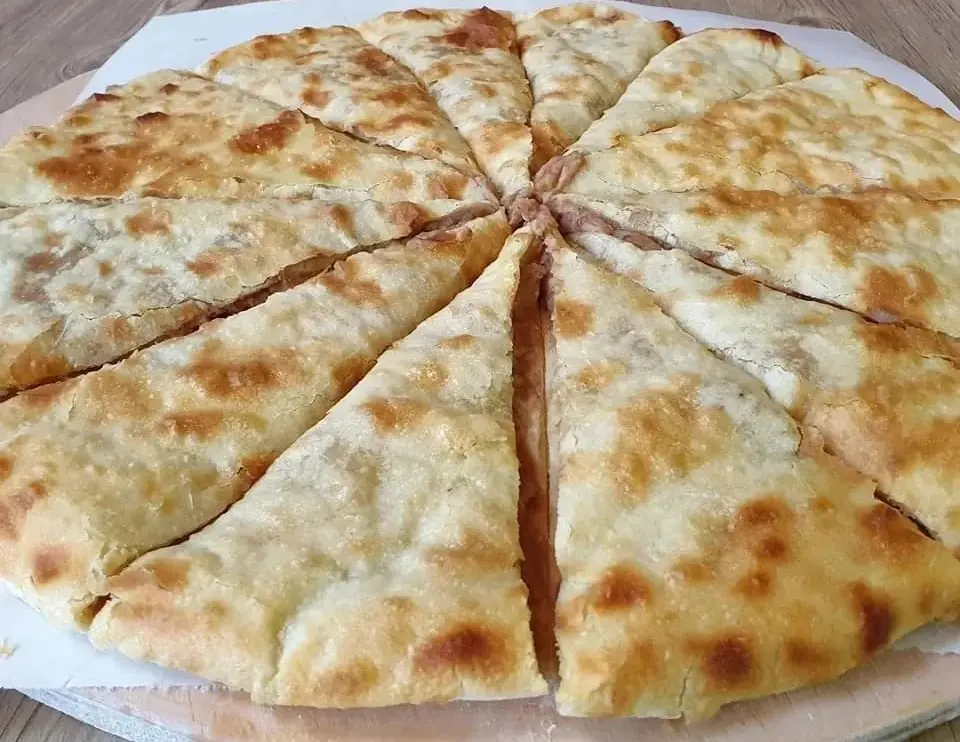
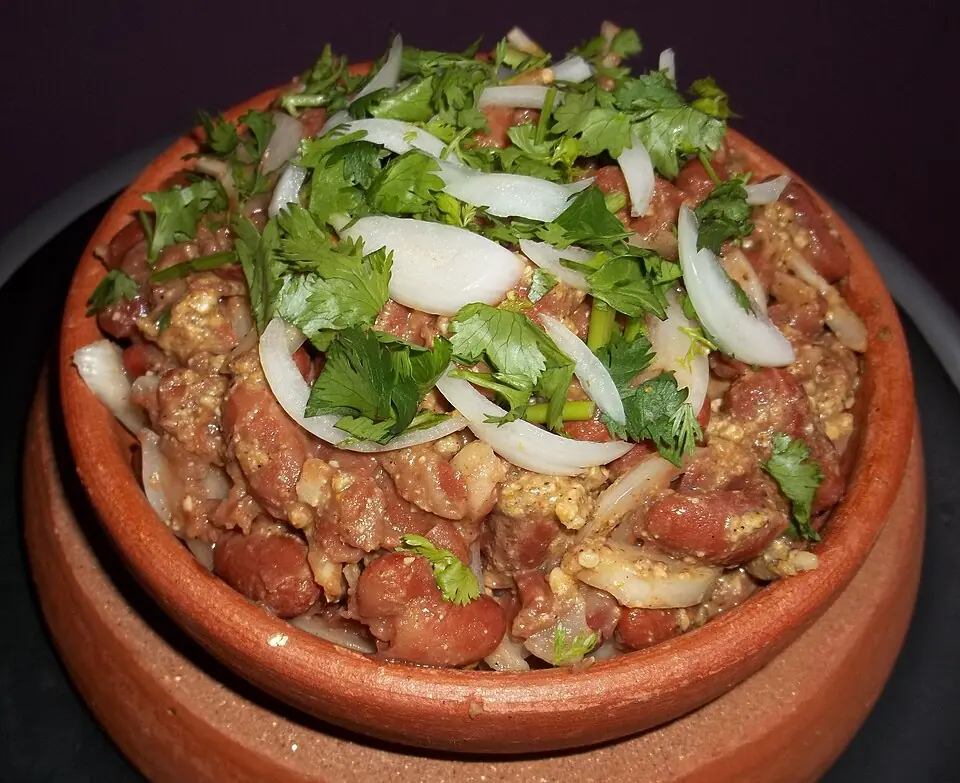
Lobiani, often called Georgian bean bread in English, is a thin round loaf with a generous layer of mashed beans baked inside. This lobiani recipe gives the plain home version. Red kidney beans are cooked until very soft, mashed with onion fried in oil and a few Georgian spices, then wrapped in a simple yeast dough, rolled thin and baked in a hot oven. A brush of butter at the end keeps the crust tender. If you know khachapuri, picture the same sealed round with beans where the cheese would be; the name comes from lobio, the Georgian word for beans.
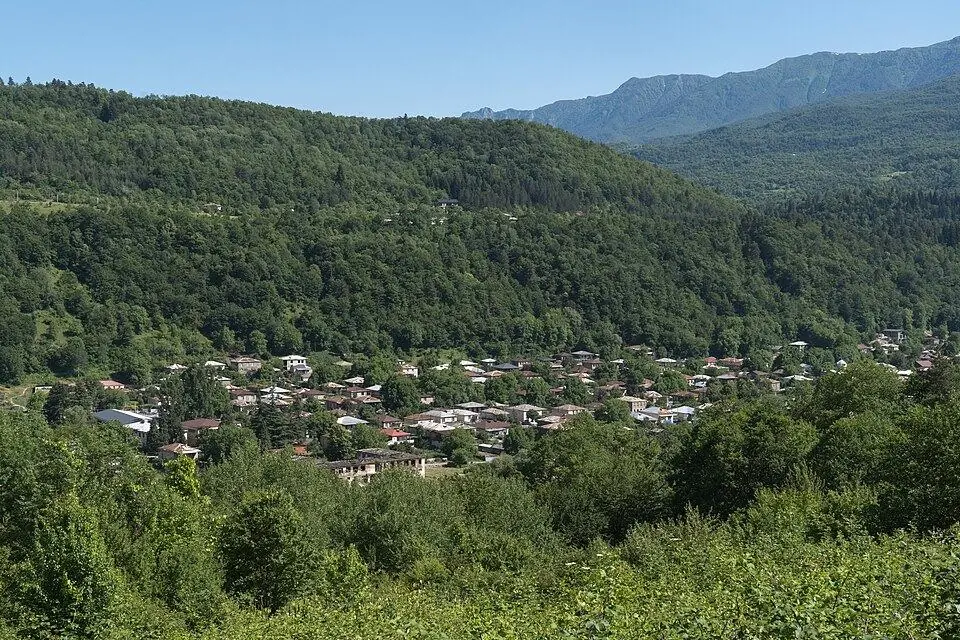
You can buy lobiani all over Georgia, but Georgians tie it above all to Racha, a mountain region in the north-west known for its wood-smoked ham. Rachuli lobiani, made with beans that have simmered next to a piece of that ham, is the best-known regional version, and the variations below explain how to make it.
Most of the year it is simple everyday food, bought warm from a bakery or baked at home for the family. It also has a day of its own: many Georgian households bake lobiani for Barbaroba, the feast of St Barbara on 17 December. Brushed with oil rather than butter, the bread is free of meat, dairy and eggs, which makes it fasting food during Lent and the other Orthodox fasts.
Timeline: what to do, and when
15 h 5 min from start to table · 1 h 28 min hands-on · 12 h 20 min waiting
Each bar is one step. Hands-on Waiting, while the oven, the pot or the dough does the work. Steps that sit inside a wait are done in parallel.
Dashed stretches are long waits, shortened on the chart so the busy steps stay readable.
Recipe
Lobiani
Ingredients
Beans
Filling
Dough
To finish
Amounts are scaled. Times stay about the same, but a bigger pot takes a little longer to come to the boil.
Contains: gluten (wheat), milk.
You will need
- Large bowl for soaking the beans
- Large pot (3 litres or more)
- Frying pan
- Potato masher, food mill or mincer
- Mixing bowl for the dough
- Rolling pin
- 2 baking trays and baking paper
- Pastry brush
- Oven (220 °C / 430 °F, or 200 °C / 390 °F fan)
Method
- Rinse and soak the beans5 min hands-on· start here
Spread the beans on a tray, pick out any grit or wrinkled ones and rinse them in a sieve. Tip them into a large bowl and pour in cold water to about 10 cm above the beans, as they swell to twice their size.
- Soak overnight12 h waiting· starts at +5 min
Leave the beans to soak for 8 to 12 hours. In a warm kitchen, stand the bowl in the fridge so they stay fresh and do not sour.
- Bring to the boil5 min hands-on· starts at +12 h 5 min
Tip the soaked beans into a colander and rinse them, then transfer them to the large pot with fresh cold water to cover by about 5 cm. Set it over high heat.
- Boil hard and change the water15 min waiting· starts at +12 h 10 min
Once the pot reaches a full rolling boil, keep it there for 10 minutes: this destroys a natural toxin in raw kidney beans. Then tip the beans into a colander and discard this first water, as Georgian cooks do.
- Start the slow simmer5 min hands-on· starts at +12 h 25 min
Return the beans to the pot with the bay leaves and enough boiling water from the kettle to cover them by 3 cm. Bring back to a gentle bubble and set the lid slightly ajar.
- Simmer until very soft1 h 15 min waiting· starts at +12 h 30 min
Cook for 60 to 90 minutes, adding hot water whenever the beans poke above the surface. For lobiani they must be softer than for a salad: a bean should squash flat under a spoon with no grainy core. Stir in 1 tsp salt for the last 10 minutes.
- Make the dough15 min hands-on· starts at +12 h 35 min, during step 6
Dissolve the sugar in the warm water, sprinkle over the yeast and give it about 5 minutes to turn frothy. Combine the flour and salt in a bowl, add the yeast mixture with the oil and mix to a shaggy dough. Knead for about 10 minutes until smooth, soft and only a little tacky; add a spoonful of water if it feels stiff.
- Let the dough rise1 h waiting· starts at +12 h 50 min, during step 6
Roll the dough into a ball, turn it in a lightly oiled bowl and cover it. Leave it somewhere warm for about an hour, until doubled.
- Fry the onion15 min hands-on· starts at +12 h 55 min, during step 6
Warm the oil in a frying pan, add the chopped onion and let it cook gently, stirring often, for 12 to 15 minutes until soft and golden. Take the pan off the heat and stir in the coriander, blue fenugreek, savory and black pepper so they bloom in the warm oil.
- Mash the filling10 min hands-on· starts at +13 h 45 min
Scoop out about 100 ml of the cooking water and keep it, then drain the beans thoroughly and remove the bay leaves. Mash the beans while hot into a thick, fairly smooth paste with a masher, or pass them through a food mill or mincer. Work in the onion with all its oil and taste: the filling should be boldly seasoned. If it crumbles, loosen it with a spoonful or two of the saved water.
- Cool the filling20 min waiting· starts at +13 h 55 min
Spread the filling over a large plate so it cools quickly. Before it goes into the dough it should be at room temperature and firm enough to roll into a ball.
- Divide the dough and heat the oven5 min hands-on· starts at +13 h 55 min, during step 11
Put two baking trays in the oven and heat it to 220 °C / 430 °F (200 °C / 390 °F fan). Knock back the dough, cut it into 4 equal pieces of about 200 g, shape them into balls and leave them under a cloth.
- Shape the first two breads10 min hands-on· starts at +14 h 15 min
Divide the cooled filling into 4 balls. On a floured worktop, press a dough ball into a 15 cm round that is thinner at the rim than in the middle, set a ball of filling in the centre, then gather the dough up over it in pleats and pinch it closed, twisting off any thick knot. Turn it seam side down, flatten it with your fingertips, then roll it gently from the centre outwards to about 25 cm across and 1 cm thick. Poke a small hole in the middle, lift it onto a square of baking paper and shape a second one the same way.
- Bake the first pair16 min waiting· starts at +14 h 25 min
Slide each bread on its paper onto a hot tray and bake for 15 to 18 minutes, swapping the trays between shelves halfway, until golden on top with darker patches underneath.
- Shape the other two10 min hands-on· starts at +14 h 26 min, during step 14
While the first pair bakes, fill, seal and roll the two remaining breads in the same way, each on its own sheet of paper.
- Butter them and bake the rest4 min hands-on· starts at +14 h 41 min
Lift the first breads out and slide the second pair onto the hot trays. Brush the baked ones generously with melted butter and stack them under a clean tea towel.
- Bake the second pair16 min waiting· starts at +14 h 45 min
Bake for another 15 to 18 minutes, again swapping the trays halfway, until golden.
- Butter and serve4 min hands-on· starts at +15 h 1 min
Brush the last two breads with the rest of the butter as soon as they come out. Cut all four into wedges and serve them warm.
About 950 kcal per bread (1 of 4; a whole 25 cm lobiani, often cut into wedges and shared). This is an estimate from standard values for the ingredients, not a lab figure.
Cut each bread into 6 or 8 wedges, like a pizza, and eat them with your hands while warm, with a bite of pickle in between. Cold wedges keep their shape well, so leftovers make good picnic and travel food.
Tips, swaps and variations
Tips from your host
- Cook the beans until they collapse at a touch. Underdone beans give a dry, lumpy filling that pushes through the dough.
- Drain the beans well before mashing and keep a little of their cooking water. A stiff filling is easy to loosen, but a wet one makes the dough tear and steam from inside.
- Season the filling a touch more strongly than you would to eat it from a spoon. Wrapped in bread, the salt and spice taste milder.
- Never shape with warm filling. It softens the dough so that it sticks to the rolling pin and splits along the seam.
- Roll from the middle outwards and give the bread a quarter turn after each pass. If a bean breaks through, press a scrap of dough over the spot and dust it with flour.
- Butter the breads while they are hot and keep them stacked under a tea towel. The trapped steam stops the crust from turning hard.
Variations and swaps
- Rachuli lobiani with ham (not vegetarian): put a 250 g piece of smoked ham or smoked streaky bacon into the pot halfway through the simmering. Leave out the onion and spices and season the mash with salt and black pepper only, working in 30 g lard or butter if the ham was lean. Chop the ham very finely and stir it through the filling, or lift it out and serve it sliced on the side. Brush the baked breads with lard or butter.
- Vegan and Lenten: brush the hot breads with sunflower oil instead of butter. The dough and filling in this recipe already contain no dairy, eggs or meat.
- Matsoni dough: for a softer, slightly tangy crumb, swap 100 ml of the water for 100 g matsoni or plain yoghurt at room temperature. Some Georgian cooks make lobiani dough this way. It is then vegetarian, not vegan.
- Richer dough: use warm milk in place of the water and knead in 1 beaten egg, with a little extra flour if the dough turns sticky. Many family recipes do this for a softer, richer bread.
- Yeast-free dough: Darra Goldstein's The Georgian Feast wraps its bean bread in a rich dough of butter, eggs and sour cream with a little baking soda and no yeast at all.
- In a frying pan: cook each bread in a heavy pan brushed with oil over low to medium heat for 7 to 8 minutes a side, until browned in patches and cooked through. Plenty of Georgian home cooks make lobiani this way when they do not want to heat the oven.
- Tinned beans (about 2 hours in all): skip the soaking and boiling and open three 400 g tins of kidney beans, roughly 720 g once drained. Rinse them, heat them gently for 5 minutes with a little water, then mash and season as above.
- Spicing: Racha cooks often use nothing but salt and black pepper, while others add khmeli suneli or a pinch of chilli flakes. Without blue fenugreek, use half the amount of ordinary ground fenugreek seed, which is stronger and more bitter.
Serve it with
- Georgian pickles (mzhave): cabbage, green tomatoes or jonjoli
- Sliced tomatoes and cucumbers dressed with herbs and a little oil
- Slices of Racha ham (lori), on days when you are not fasting
- Spring onions, radishes and a bunch of fresh coriander or tarragon
Make ahead and storage
Lobiani is nicest warm on the day you bake it, but it keeps well. Wrap the cooled breads and refrigerate them for up to 3 days, then reheat in a 180 °C / 355 °F oven for about 10 minutes or in a covered pan over low heat. To store them longer, freeze each bread wrapped on its own for up to 2 months and reheat from frozen at 180 °C / 355 °F for 15 to 20 minutes. The bean filling can be made a day ahead and kept covered in the fridge.



Maspindzeli Travel, Tbilisi · private tours and cooking classes in Georgia · maspindzeli.ge · WhatsApp +995 598 74 74 54 · hello@maspindzeli.ge