Imeruli Khachapuri Recipe
იმერული ხაჭაპური
A home-style imeruli khachapuri recipe: a quick matsoni dough raised with baking soda, a generous filling of Imeretian cheese and a covered frying pan. Two round breads, cut into wedges and ready in about 80 minutes.
Recipe by the Maspindzeli team in Tbilisi · Updated 22 Oct 2026 · From Imereti, the region around Kutaisi
Full recipe with the timeline, timers and US measures: maspindzeli.ge/recipes/imeruli-khachapuri/
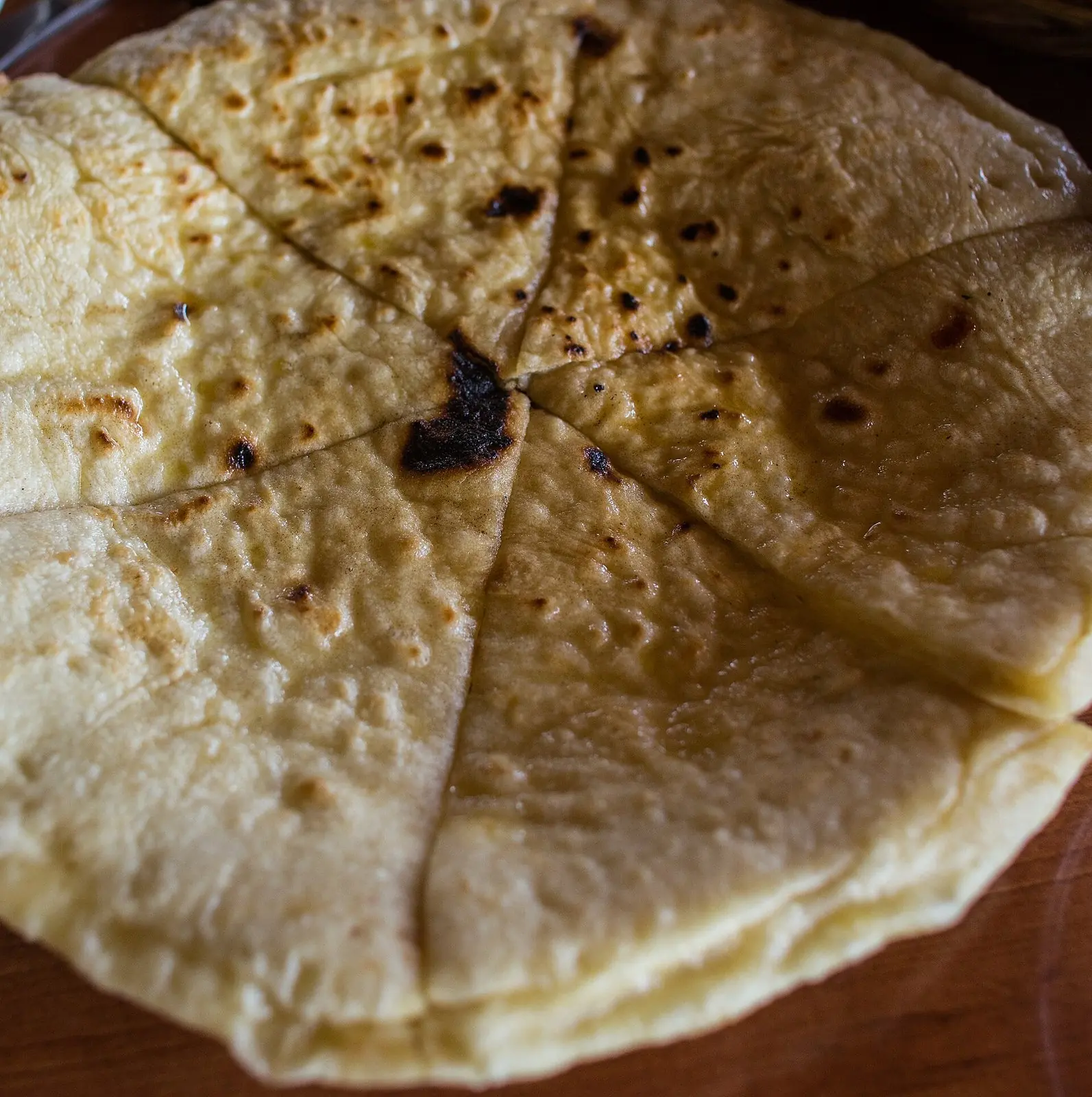
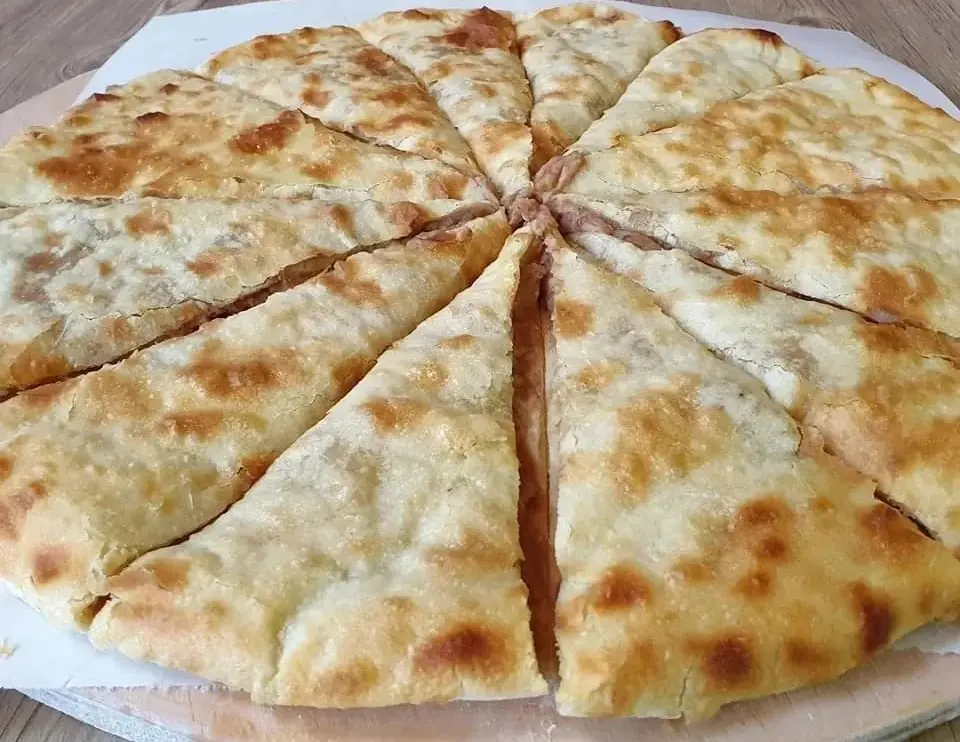
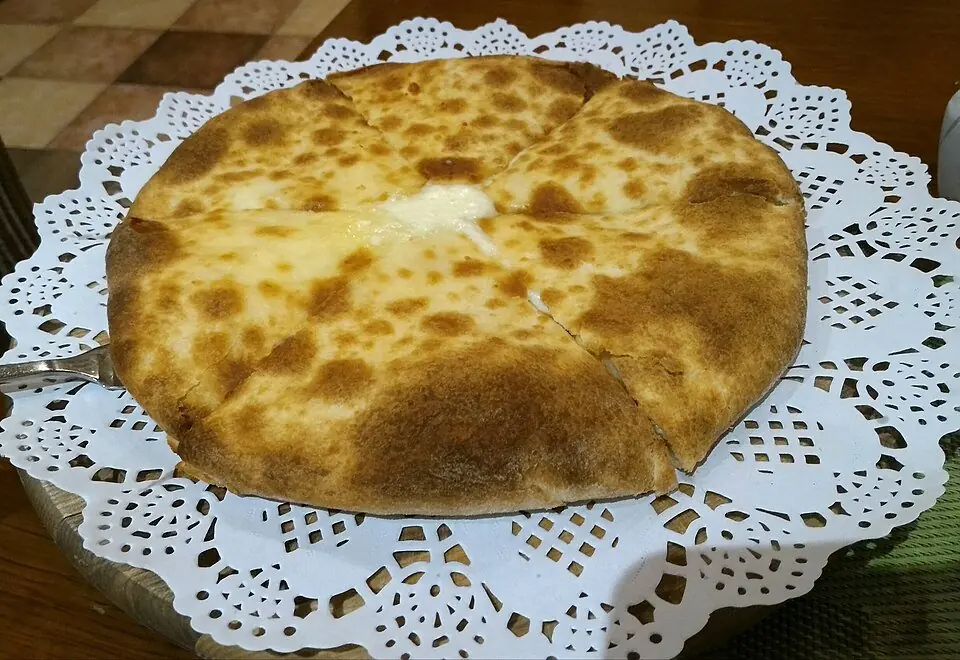
This imeruli khachapuri recipe gives the round, sealed cheese bread that Georgian families make at home more than any other. A soft dough of matsoni (Georgian yoghurt), lifted with a little baking soda rather than yeast, is wrapped around a thick layer of Imeretian cheese, pressed out into a thin disc and cooked in a covered frying pan until both sides are freckled brown. A brush of butter, a few cuts with a big knife, and it goes to the table. On menus you will also see it as Imeretian khachapuri, or simply as khachapuri.
Imereti, the green region around Kutaisi in western Georgia, gave the bread its name and its cheese, and Georgians like to call it the mother of all khachapuri. Village cooks once baked it on a ketsi, a clay disc heated in the embers of the hearth; a heavy pan on the hob is the modern kitchen's answer to that. The other regional types, and where to try them, are in our khachapuri guide.
It is everyday food: a wedge with tea at breakfast, a stack wrapped in a cloth for a long drive, a round cut into triangles on every supra table. When guests turn up unannounced, this quick dough is what many hosts reach for, and if you want to know how to make khachapuri without an oven or a long rise, this is the method. Plenty of Georgian cooks prefer a yeast dough baked in the oven; you will find it in the variations.
Timeline: what to do, and when
1 h 20 min from start to table · 43 min hands-on · 30 min waiting
Each bar is one step. Hands-on Waiting, while the oven, the pot or the dough does the work. Steps that sit inside a wait are done in parallel.
Recipe
Imeruli Khachapuri
Ingredients
Matsoni dough
Cheese filling
To finish
Amounts are scaled. Times stay about the same, but a bigger pot takes a little longer to come to the boil.
Contains: gluten (wheat), milk, egg.
You will need
- Large mixing bowl
- Fork or small whisk
- Coarse grater, if your cheese is firm
- Heavy frying pan, 26 to 28 cm, with a lid (cast iron is ideal)
- Rolling pin (optional; your palms do the job)
- Wide spatula or a large plate for turning
- Pastry brush
Method
- Mix the dough10 min hands-on· start here
Spoon the matsoni into the bowl, sprinkle the baking soda over it and stir: within a minute it turns airy and starts to bubble. Beat in the egg, the melted butter and the salt. Add the flour a handful at a time, stirring with a fork and then working it with one hand, until the dough stops clinging to your fingers. Knead it on a lightly floured board for 2 to 3 minutes; it should stay softer than bread dough.
- Rest the dough30 min waiting· starts at +10 min
Put a plate over the bowl and let the dough sit on the worktop for half an hour. It barely rises, but the flour soaks up the liquid and the gluten relaxes, so it later stretches thin without tearing.
- Prepare the cheese12 min hands-on· starts at +12 min, during step 2
Taste the cheese and fix the salt first (see the tips). Crumble it between your fingers, or grate it coarsely if it is firm, until no lump is bigger than a pea. Work in the egg, and the soft butter if the cheese feels dry, then press the mixture into 2 firm balls of about 320 g each.
- Shape the first khachapuri8 min hands-on· starts at +40 min
Put the frying pan over medium-low heat to warm through. Halve the dough. On a floured board, flatten one half with your palms into a disc about 18 cm across, leaving the centre a touch thicker than the edges. Sit a cheese ball in the middle, lift the edges up and over it in loose folds and pinch them together on top so no cheese peeps out. Turn the parcel join side down and press it outwards from the centre, or roll it lightly, into a round about 24 cm wide and roughly 1 cm thick.
- Cook the first side7 min waiting· starts at +48 min
Lay the round in the dry, hot pan (a few drops of oil only if your pan tends to stick), prick the middle once or twice with a fork and put the lid on. Give it 6 to 8 minutes, until the underside is golden with darker freckles and the top has puffed a little and looks matt.
- Shape the second one7 min hands-on· starts at +48 min, during step 5
While the first one cooks, fill and flatten the second khachapuri in exactly the same way and leave it on the floured board.
- Turn and finish the first6 min waiting· starts at +55 min
Flip the khachapuri with a wide spatula, or slide it onto a plate, cover with the upturned pan and invert the two together. Cook the second side uncovered for 5 to 7 minutes, until it is spotted brown and the middle springs back when pressed.
- Butter it and start the second3 min hands-on· starts at +1 h 1 min
Move the cooked bread to a board and brush the top generously with melted butter. Lay the second round in the pan, prick it and cover.
- Cook the second khachapuri13 min waiting· starts at +1 h 4 min
Cook it as before: 6 to 8 minutes under the lid, then turn it and give it 5 to 7 minutes without. Keep the first bread warm under a folded tea towel meanwhile.
- Brush, cut and serve3 min hands-on· starts at +1 h 17 min
Brush the second khachapuri with the rest of the butter. Cut each round into 6 or 8 wedges with a large knife and serve at once, while the cheese inside is still soft.
About 980 kcal per serving (1 of 4: half a khachapuri, 3 to 4 wedges). This is an estimate from standard values for the ingredients, not a lab figure.
Imeruli is finger food. Pick up a wedge by its crust and bite from the point towards the edge; nobody reaches for cutlery. At a supra the hot rounds usually arrive a little after the cold starters, already cut, and the plate goes round the table while the cheese is soft. Any wedges left over are eaten cold the next morning with a cup of tea.
Tips, swaps and variations
Tips from your host
- Judge the salt before you do anything else. A crumb of the filling should taste clearly seasoned, about as salty as a good crisp, because the dough has almost none and the cheese seasons the whole bread. If it stings your tongue, slice the cheese, cover it with cold water for 1 to 3 hours, changing the water once or twice, then squeeze it dry.
- Check the moisture with your hand. Squeezed in a fist, the filling should hold together like damp sand and leave your palm faintly greasy, with no liquid running out. Wring wet cheese in a clean cloth or stir in 1 tbsp flour; bind dry, crumbly cheese with the egg and a little soft butter.
- Keep the heat at medium-low. A fierce pan browns the crust in two minutes and leaves pale, raw dough around the cheese, while gentle heat gives an even golden crust and a fully melted middle.
- Spread the filling right to the edges as you press the round out. A good Imeruli has an equally thin layer of dough above and below and cheese almost to the rim, not a wide ring of plain bread.
- Pinch shut any gap in the seam and patch a thin spot with a scrap of dough before the round goes into the pan. Cheese that leaks onto a dry pan scorches and sticks.
- Butter the bread the moment it comes off the heat. The hot crust drinks it in and stays tender instead of turning crisp.
Variations and swaps
- Yeast dough in the oven: dissolve 7 g dried yeast and 1 tsp sugar in 250 ml warm water, whey or milk, then mix with 500 g flour, 1 tsp salt and 2 tbsp sunflower oil (an egg is optional). Knead for 8 to 10 minutes and leave to rise for about an hour, until doubled. Divide into 2 or 3, fill with 600 to 700 g cheese as above, and bake on a preheated tray at 220 °C / 430 °F (200 °C / 390 °F fan) for 15 to 20 minutes before brushing with butter. Many Georgian cookbooks give this dough, and it cooks in a frying pan too.
- Matsoni dough in the oven: lay the shaped rounds on baking paper, brush the tops with an egg yolk beaten with 1 tbsp sour cream and bake at 200 °C / 390 °F (180 °C / 355 °F fan) for 20 to 25 minutes, until golden above and below. Handy when you are making several at once.
- No matsoni: plain whole-milk yoghurt is the nearest swap, and kefir or buttermilk work as well. For a richer, more tender dough, replace half the yoghurt with sour cream, as some Georgian family recipes do.
- Baking powder instead of soda: use 2 tsp and mix it into the flour rather than the yoghurt. The bread keeps a little more of the yoghurt's tang.
- Cheese outside Georgia: mix equal weights of feta and mozzarella, using low-moisture block mozzarella or fresh mozzarella torn and squeezed dry. Sheep's milk feta is usually sharper and saltier than cow's milk white cheese, so with a strong one use one part feta to two of mozzarella. Brynza or farmer's cheese from an Eastern European shop also does well once you have checked the salt.
- With sulguni: many cooks today stir some sulguni (sold abroad as suluguni) into the filling for extra stretch. Keep it to about a quarter of the cheese; a classic home Imeruli is made with Imeretian cheese alone.
- Ketsi khachapuri: in some Imeretian villages the rounds are still baked between hot clay discs set in the embers, on a bed of dried cherry-laurel leaves with more leaves on top, which lends a light aroma. At home, a cast-iron pan with a heavy lid comes closest.
Serve it with
- Tomato and cucumber salad with plenty of herbs
- Pkhali and other walnut starters
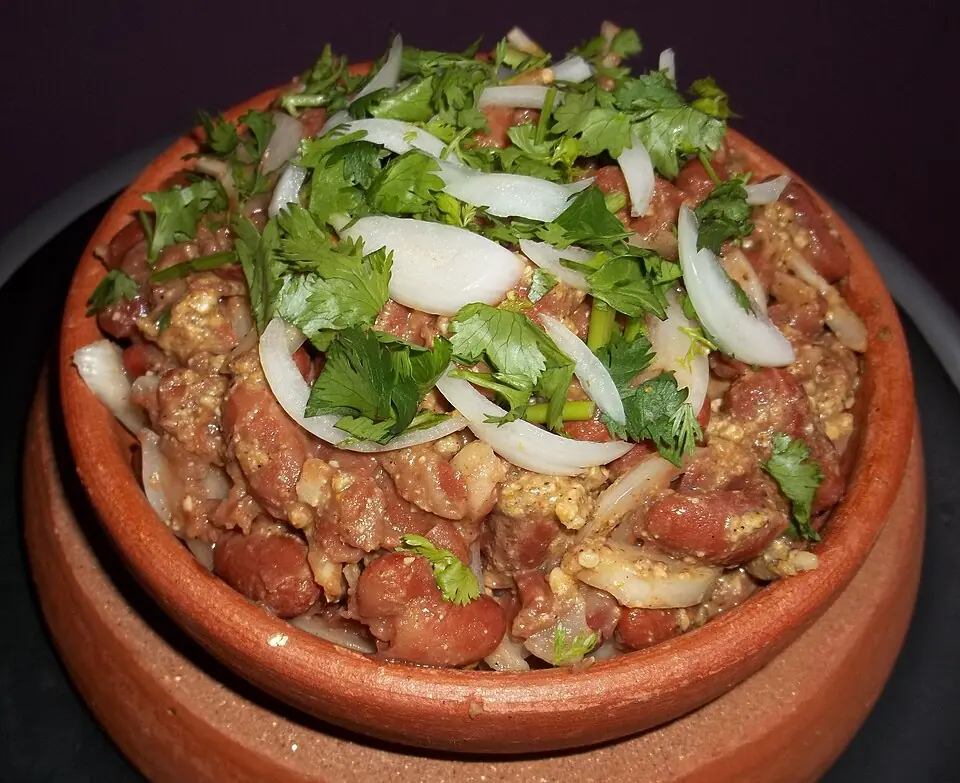
- Lobio in a clay pot
- Georgian pickles (mzhave)
- Tea or coffee at breakfast
- A glass of dry Imeretian white wine, such as Tsolikouri
Make ahead and storage
Imeruli tastes best within an hour or so of cooking, yet it is still good at room temperature, which is why Georgians happily eat leftover wedges for breakfast or pack them for a journey. Keep it covered at cool room temperature on the day you make it, then wrap it and refrigerate for up to 3 days. Reheat wedges in a dry frying pan with the lid on over low heat, 2 to 3 minutes each side, or in a 180 °C / 355 °F oven for about 8 minutes. Cooked and wrapped, it freezes for up to 2 months; warm it from frozen at 180 °C / 355 °F for about 15 minutes. Do not make the soda dough ahead, as it loses its lift while it waits.


Maspindzeli Travel, Tbilisi · private tours and cooking classes in Georgia · maspindzeli.ge · WhatsApp +995 598 74 74 54 · hello@maspindzeli.ge