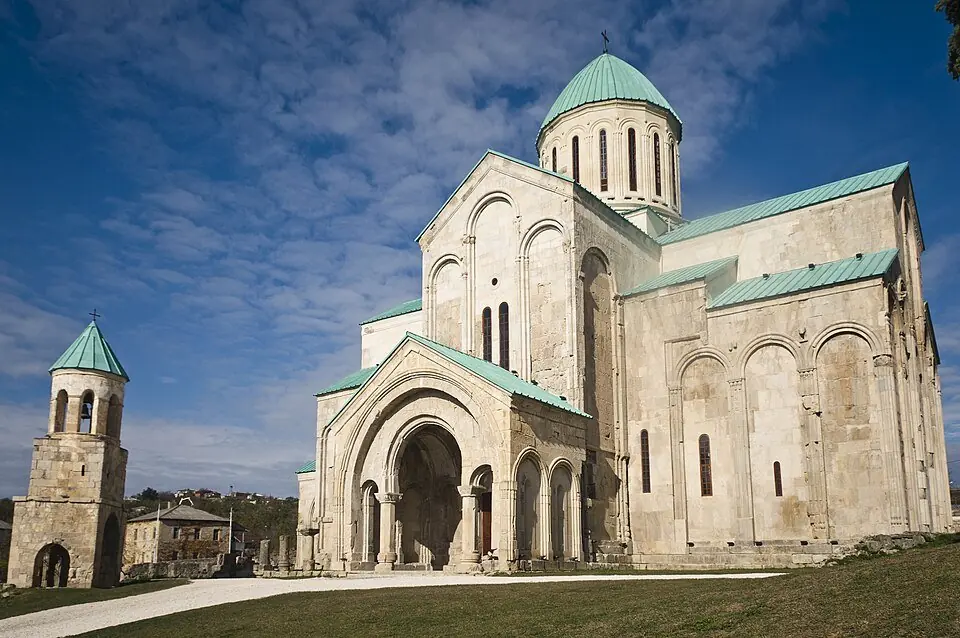
- Kutaisi, Georgia's third city, needs one full day for Bagrati, the White Bridge, the Green Bazaar and the cable car, plus one or two more for the monasteries, caves and canyons around it.
- Gelati and Motsameta are 15 to 20 minutes from the centre, Sataplia and Prometheus Cave 20 to 35 minutes, and the Okatse and Martvili canyons roughly an hour away.
- In 2026 a foreign adult pays about 40 GEL (about $15) for Prometheus Cave or Martvili Canyon and about 30 GEL (about $11) for Sataplia or Okatse, while Gelati and Bagrati are free.
- From Tbilisi, minibuses run every 30 to 40 minutes and take 3.5 to 4 hours, a car takes about 3 to 3.5 hours, and trains stop at the Kutaisi Airport station, not in town.
- Come in May, June, September or October; July and August are hot and humid, which is when the 14°C caves are most welcome.
The best things to do in Kutaisi are a stroll over the White Bridge and uphill to Bagrati Cathedral, a morning in the Green Bazaar, a ride on the old cable car over the Rioni and a 20-minute trip out to Gelati Monastery, a UNESCO site with a gold 12th-century mosaic. Within an hour of the centre you also reach the lit caverns of Prometheus and Sataplia and the canyons of Okatse and Martvili. This Kutaisi travel guide covers each one with drive times, 2026 ticket prices and the order that works on the ground.
Kutaisi is the capital of western Georgia: green, low-rise and easy-going, cheaper than Tbilisi, and served by an airport with low-cost flights from across Europe. Most visitors stay two or three nights and use it as a base. Below are the sights in town, the best day trips, Imeretian food, transport, plans for one to three days and the right season for each kind of trip.
Is Kutaisi worth visiting?
Yes, and not only as a night between Tbilisi and the coast or Svaneti. Greek authors set Aia, the city of King Aeetes and the Golden Fleece, in this corner of Colchis. In 1008 Kutaisi became the first capital of a united Georgia under Bagrat III, until David the Builder took the court to Tbilisi in 1122, and the kings of Imereti ruled the west from here until the Russian Empire absorbed their kingdom in 1810.
The 2024 census counted about 161,000 people, which makes it the third city after Tbilisi and Batumi. Parliament sat in a glass-domed building on the edge of town from 2012 to 2018, and in 2023 UNESCO named Kutaisi a City of Literature; the Blue Horns, a circle of symbolist poets, came together here during the First World War. On the street it feels like a large market town of balconied 19th-century houses and plane trees, with meals and rooms priced well below the capital.
It suits budget flyers, families (caves, dinosaur footprints, a funfair on the hill) and anyone heading on to Svaneti, Racha or the Black Sea. Evenings are quiet and midsummer is humid. Plan at least two nights: one day for the city, one for the sights outside it.
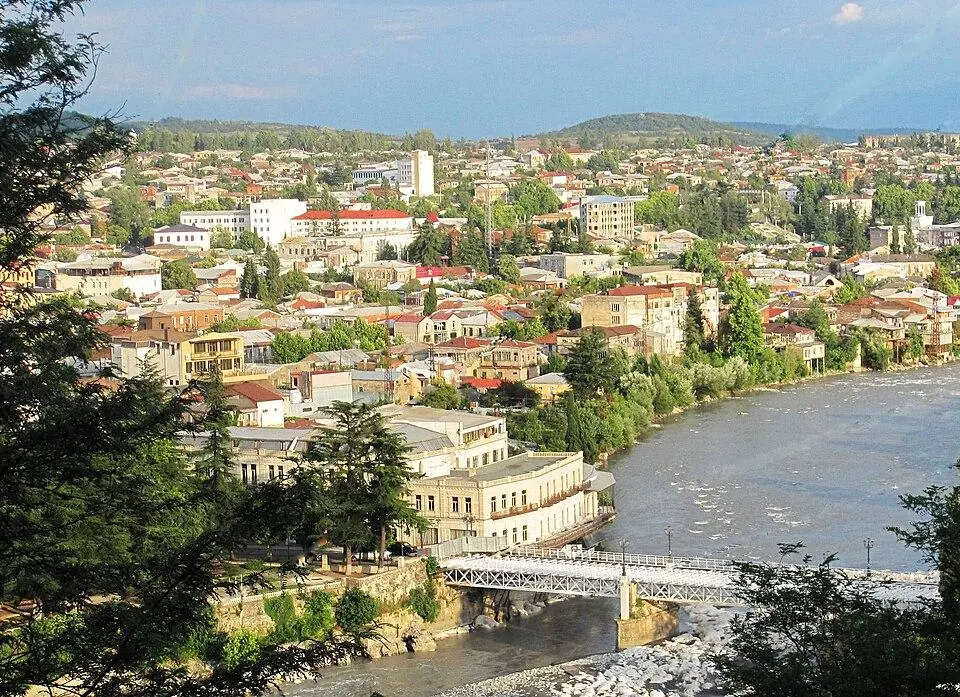
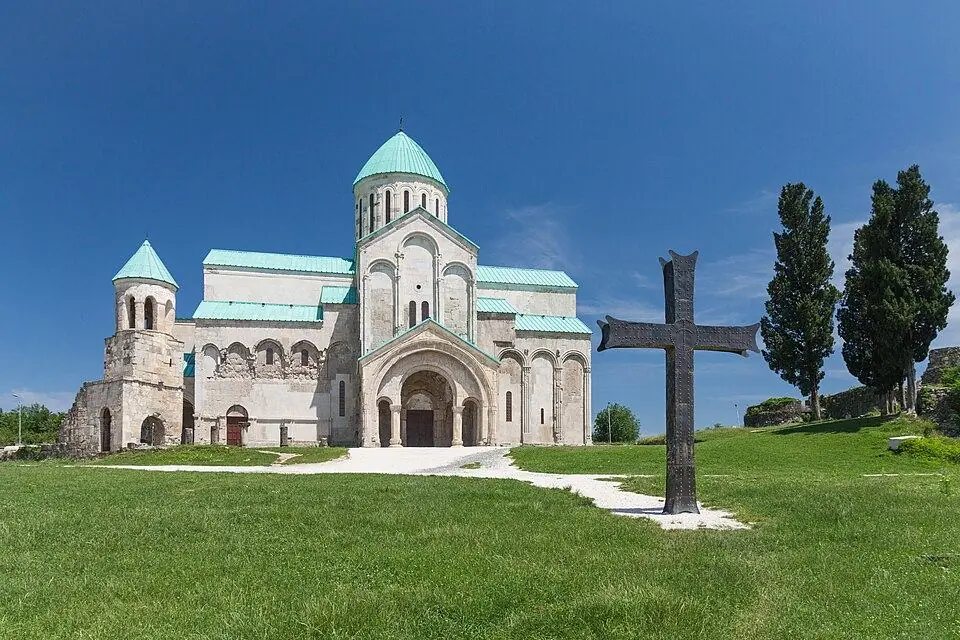
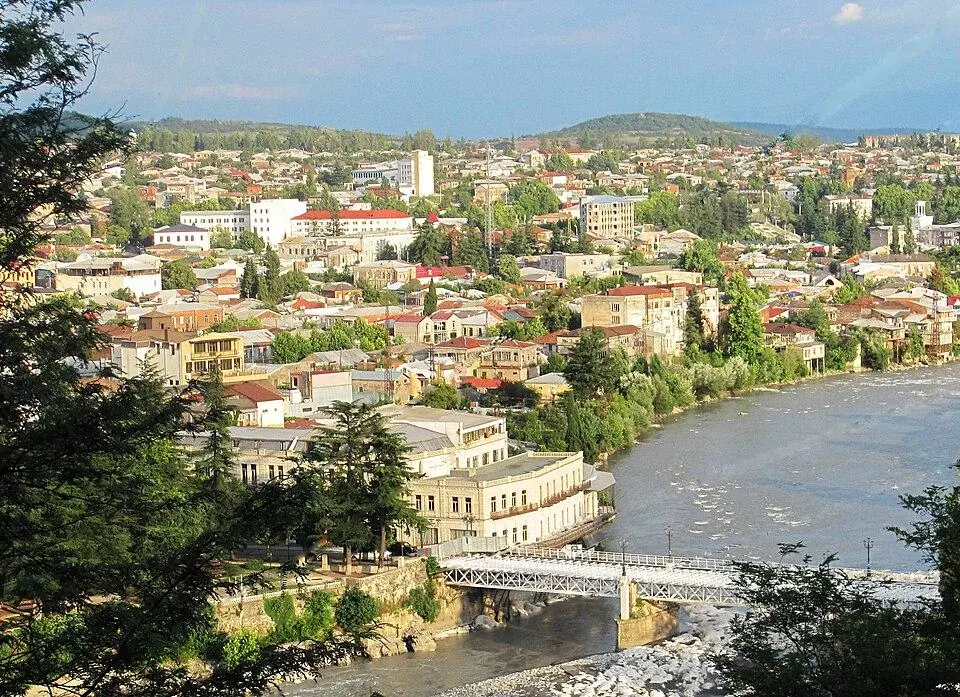
Top things to do in Kutaisi city
The main square, the bazaar, the White Bridge and the old quarter lie within ten minutes' walk of one another, and Bagrati is a short climb above. Here they are in roughly the order you meet them on foot.
The Colchis Fountain and the main square
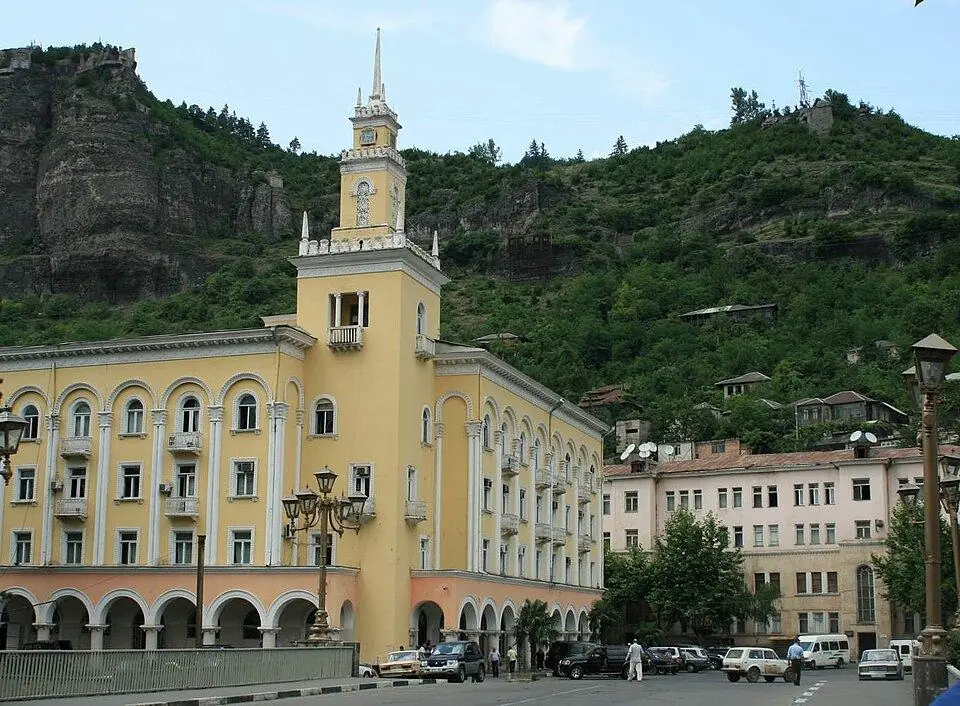
David the Builder Square is framed by the Meskhishvili Theatre, the opera house and heavy 19th- and 20th-century facades. In the middle, the Colchis Fountain of 2012 carries about 30 gilded figures, blown-up copies of small horses, birds and people from ancient Georgian graves, including the seated bronze drinker known as the tamada. It is lit after dark.
The Green Bazaar
A block away, the central market spills out of its Soviet-era halls into the surrounding streets: rounds of Imeretian cheese, bunches of tarragon, pickled jonjoli, adjika, honey and churchkhela, with persimmons and tangerines in autumn. Come in the morning, look up at the old reliefs on the hall walls and stock up on picnic food for your day trips.
The White Bridge and the old quarter
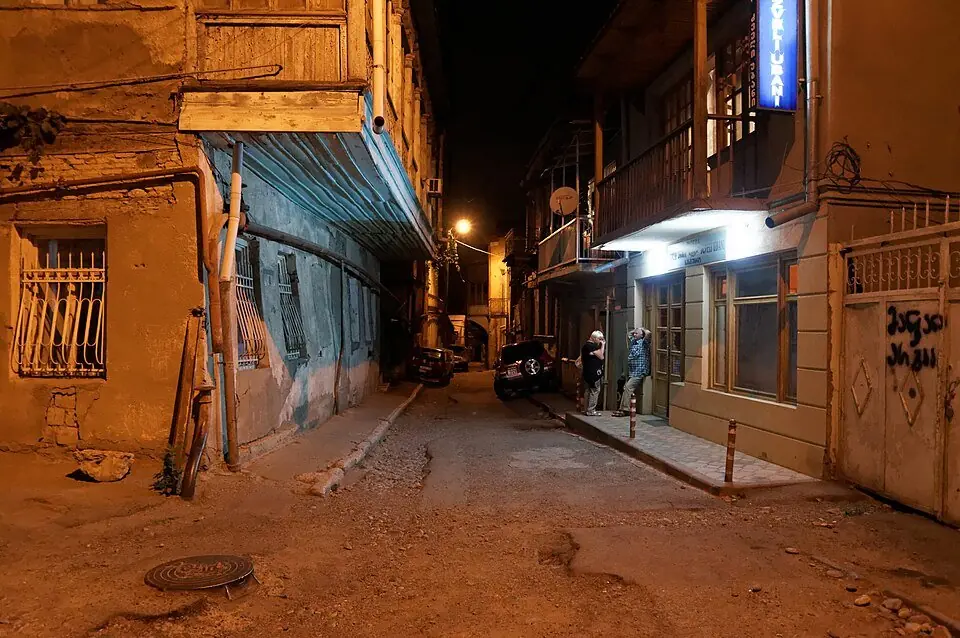
Tetri Khidi, the White Bridge, has crossed the Rioni near the square since 1850, though the present iron span dates from the 1870s. A small bronze boy perched on its railing since 2006 salutes Eldar Shengelaia's 1968 film An Unusual Exhibition, and glass panels in the deck show the river rushing below. On the far bank, lanes of two-storey houses with wooden balconies climb toward the cathedral.
Bagrati Cathedral and Ukimerioni Hill
Bagrati crowns Ukimerioni Hill, 15 to 20 minutes' walk up from the bridge. An inscription in the floor gives the year 1003. Ottoman troops brought down the dome in 1692, and the walls stood roofless for almost three centuries until a reconstruction ended in 2012. That rebuild, with modern materials beside medieval stone, led UNESCO to drop Bagrati from the World Heritage List in 2017, while Gelati kept its place. Go at sunset for the view; the ruins of the royal citadel share the hill. There is no ticket, and the doors are usually open from about 09:00 until 21:00 (2026).
The cable car to Gora park
Kutaisi's little cable car has crossed the Rioni since 1961. From a riverside park near the White Bridge it climbs about 55 m over ~400 m to the hilltop park locals call Gora, where an old-fashioned funfair with a Ferris wheel looks over the old town. The ride takes under two minutes and costs a few lari; check that it runs in winter or high wind.
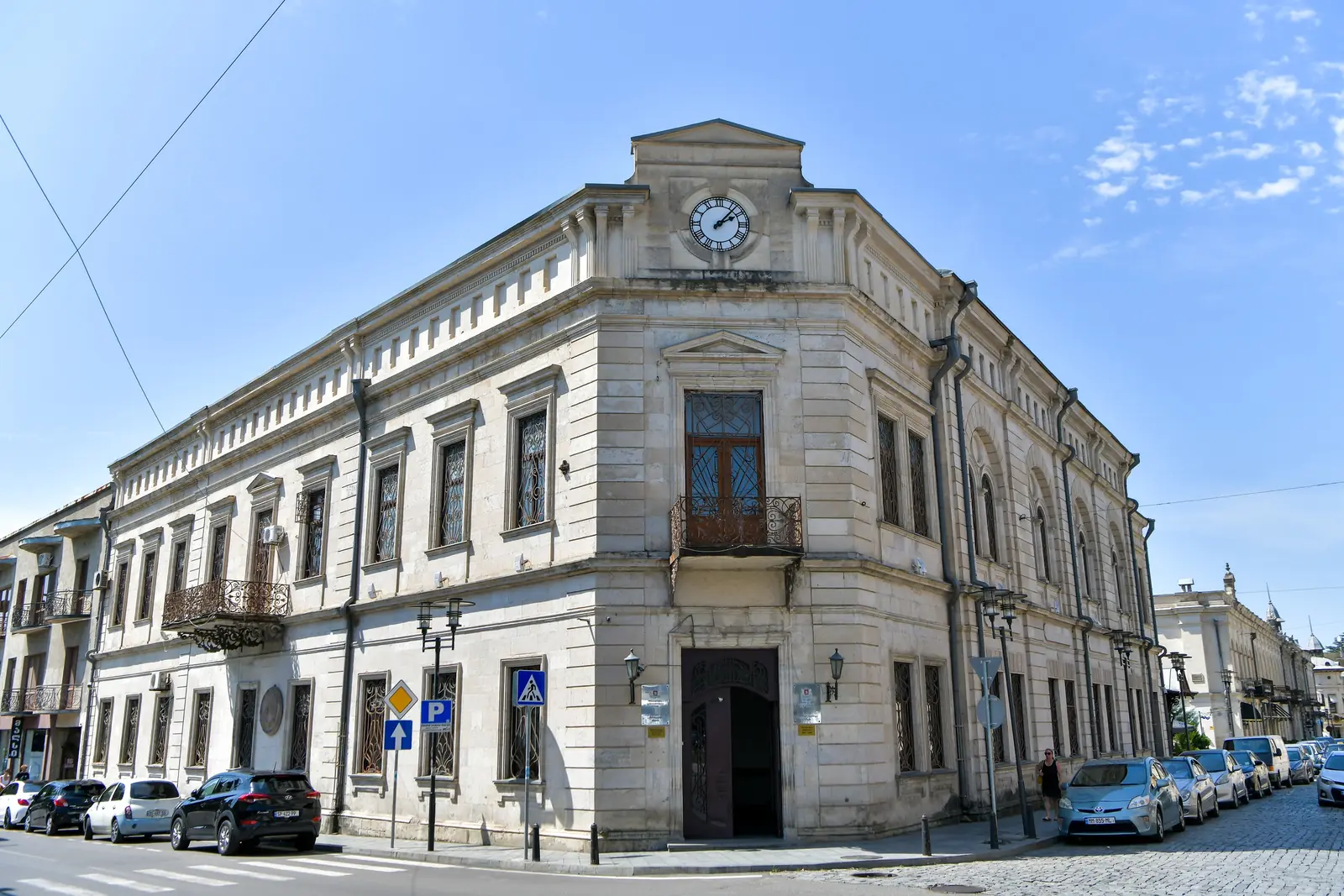
Kutaisi State Historical Museum
Two minutes from the fountain on Pushkin Street, the city museum keeps Colchian bronzes and coins, icons in chased silver and gold, and manuscripts from western Georgian monasteries. An hour here makes Gelati far easier to read. Tickets are about 5 GEL (about $2) in 2026, usually 10:00 to 18:00; check Monday opening.
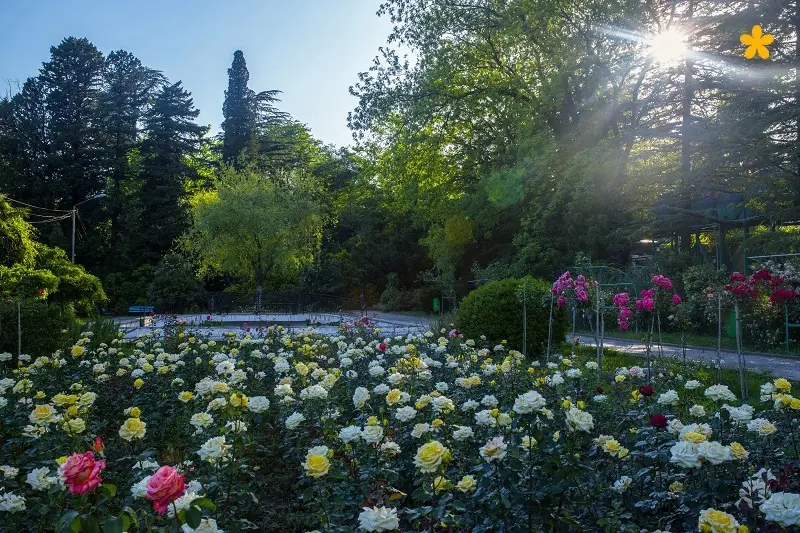
The Botanical Garden and its oak chapel
About a kilometre north of the centre by the river, the garden was laid out in 1840 and has grown pleasantly wild. Its curiosity is a chapel inside the hollow trunk of an oak said to be about 400 years old, with room for a few people at a time. Usually open about 09:30 to 18:00 (2026).
More ideas in town
- The Jewish quarter, whose 1886 synagogue on Gaponov Street is the largest of three; ask before photographing inside.
- Summer rafting on a ~4 km class II stretch of the Rioni through town, about 25 minutes on the water.
- A short cloisonné enamel class at a city studio, where you make your own small piece of jewellery.
| Sight | Time needed | Cost (2026) | Best time |
|---|---|---|---|
| Colchis Fountain and main square | 15-30 minutes | Free | After dark |
| Green Bazaar | 45 minutes-1 hour | Free | Morning |
| White Bridge and old quarter | 1-2 hours | Free | Late afternoon |
| Bagrati Cathedral | 45 minutes-1 hour | Free | Sunset |
| Cable car and Gora park | About 1 hour | A few lari | Dusk |
| State Historical Museum | 1-1.5 hours | About 5 GEL | Before Gelati, or when it rains |
| Botanical Garden | About 1 hour | Free or a small fee | A hot afternoon |
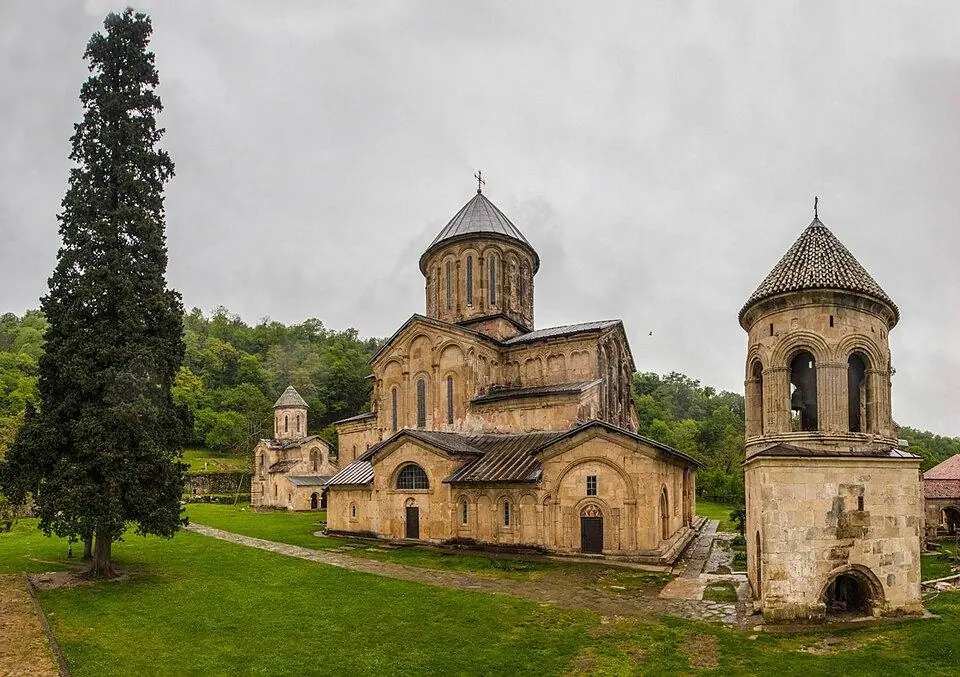
Gelati and Motsameta: the monasteries above Kutaisi
Gelati Monastery
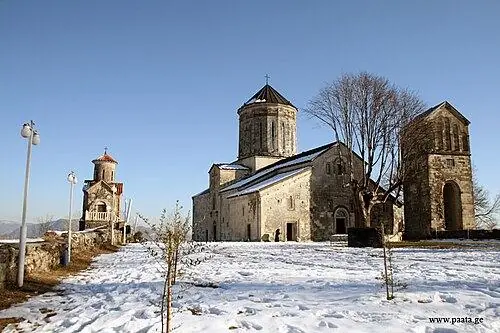
Gelati stands among trees ~11 km north-east of the centre, about 20 minutes by car. David IV the Builder founded it in 1106 as a monastery and an academy of philosophy and science, and asked to be buried under the south gate so that everyone entering would tread on his grave. Beside it rests an iron leaf of the Gates of Ganja, a war trophy his son Demetrius I brought home in 1138.
Most people come for the apse of the main Church of the Virgin, where a mosaic of the Virgin and Child between two archangels, made around 1125 to 1130, is one of the very few medieval mosaics in Georgia. Paintings from the 12th to the 17th centuries cover the walls, including portraits of kings, and two 13th-century churches, a bell tower and the academy hall complete a World Heritage Site listed in 1994.
Roofs fitted between 2015 and 2018 let damp reach the murals, and since 2024 a temporary roof has covered the main church while specialists stabilise the paintings. Expect scaffolding and closed sections. Entry is free, usually about 09:00 to 18:00 (2026).
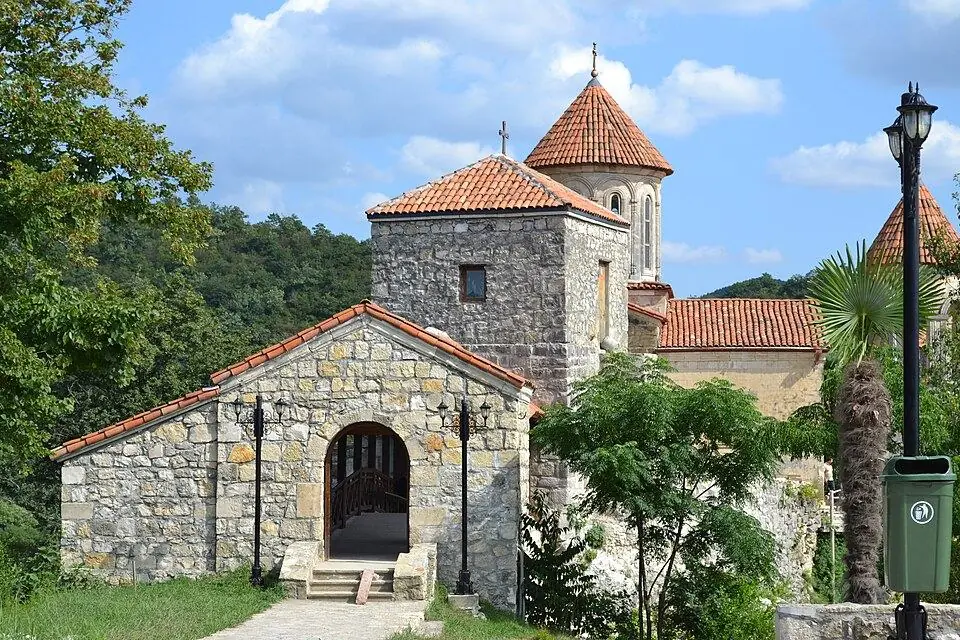
Motsameta Monastery
Motsameta sits on a cliff above a horseshoe bend of the Tskaltsitela, ~6 km from the centre and ten minutes by road from Gelati. It honours the brothers David and Constantine Mkheidze, killed in the 8th century by the army of the Arab commander Marwan ibn Muhammad; legend says their blood turned the river red, which is what Tskaltsitela means. Pilgrims crawl three times under the reliquary while making a wish. A steep path drops from the car park, and the view up the gorge is the highlight.
A city bus heads to Gelati five times a day from behind the Meskhishvili Theatre; the fare was about 2 GEL in 2026, and the final return leaves the monastery at about 16:30. Nothing stops near Motsameta, so a taxi that waits at both is simpler.
Prometheus Cave, Sataplia and the caves near Kutaisi
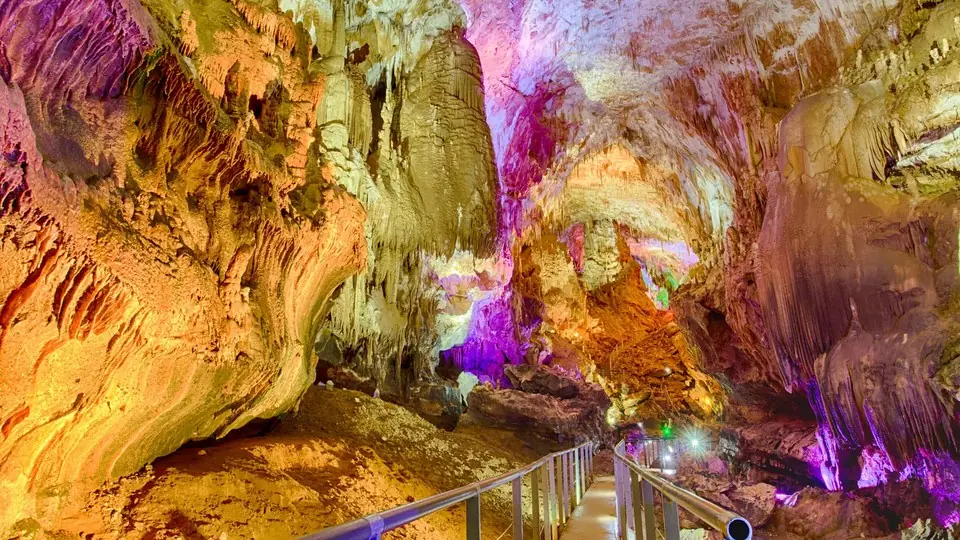
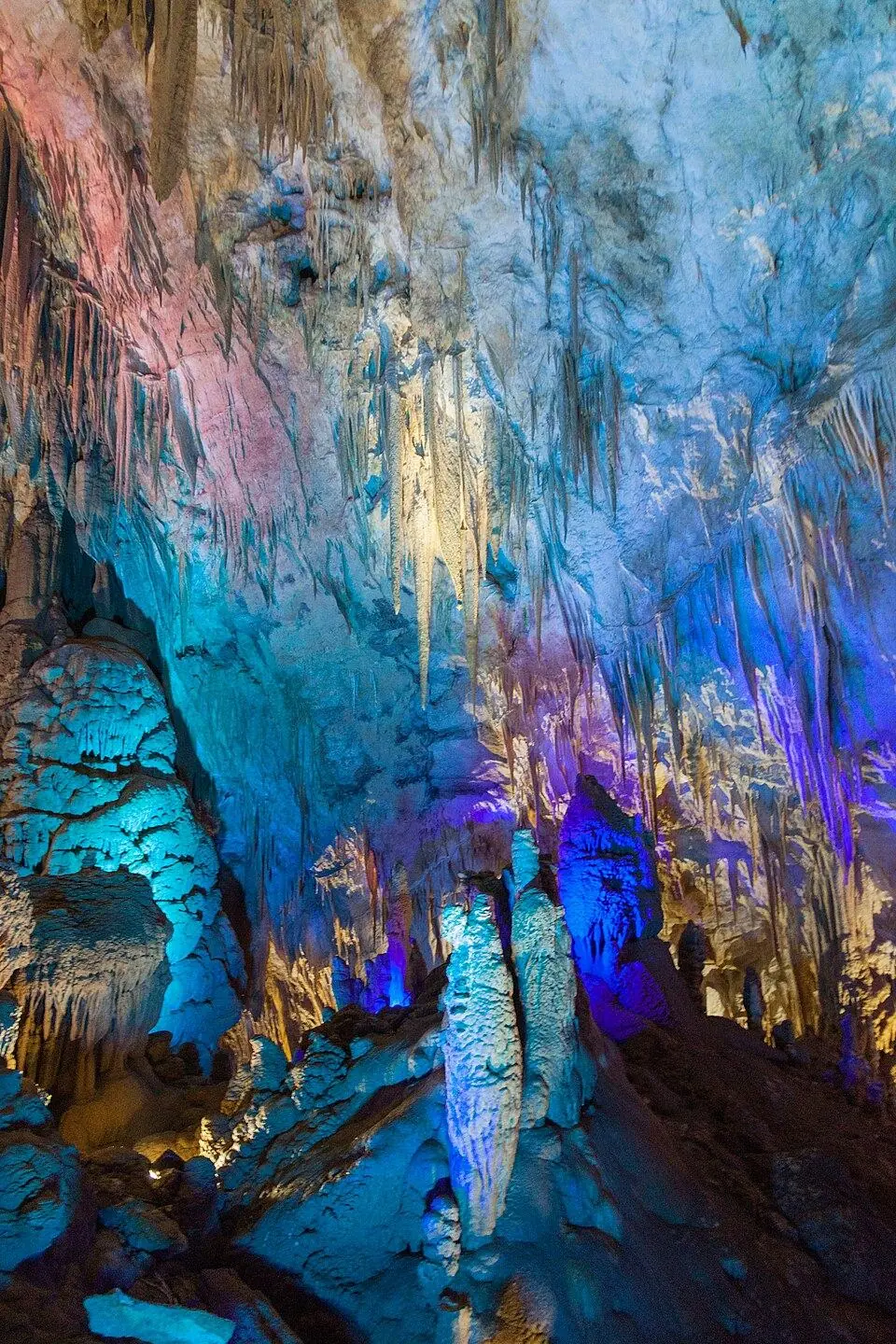
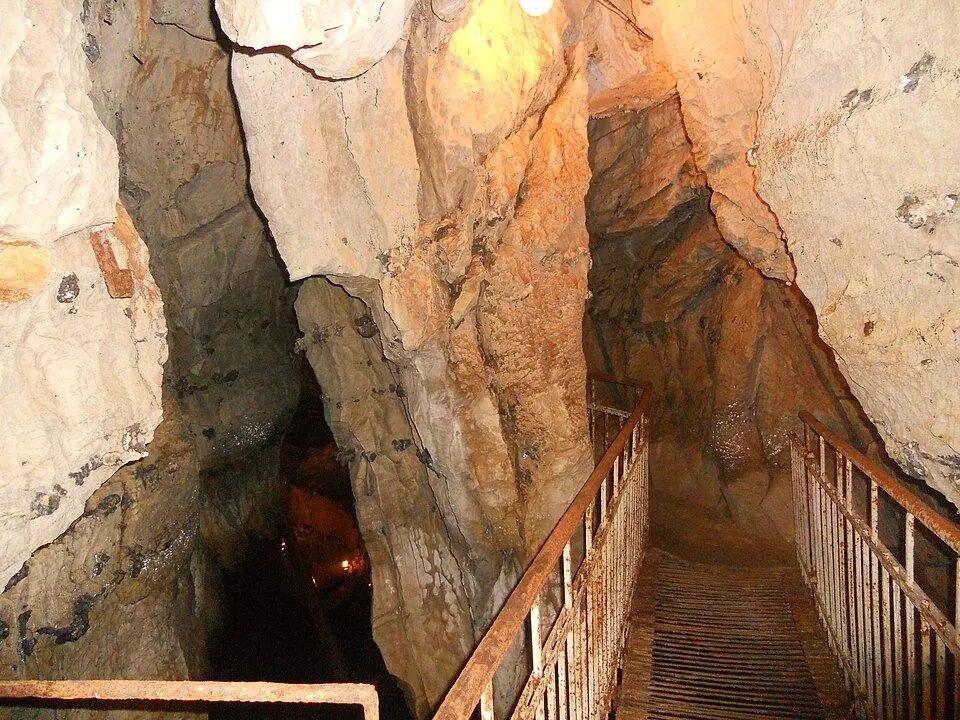
The limestone hills north-west of the city are full of caves, and three have lit paths and guides. All stay at about 14°C year-round, the perfect plan for a sticky July afternoon or a wet winter day. Bring a light jacket and shoes with grip.
Prometheus Cave
Near Kumistavi village, ~20 km and 30 to 35 minutes from Kutaisi, Prometheus is Georgia's busiest protected area, with about 286,000 visitors in 2025. Cavers explored it in the 1980s and it opened in 2011, named after the Titan whom local legend chains to the cliffs nearby. Six of its 22 known halls are on the lit route, one to two kilometres of paths and steps past stalactites, curtains and underground pools. Every visit is guided and lasts roughly an hour; on days when the underground river is low and still, a short boat trip carries you toward the exit.
Tickets for foreign adults were about 40 GEL (about $15) in 2026, and the boat adds roughly 30 GEL. Visitors aged 6 to 18 are charged about 5.50 GEL, and under-6s enter free. Hours are usually 10:00 to 17:30 every day; on summer weekends, be there when the doors open.
Sataplia
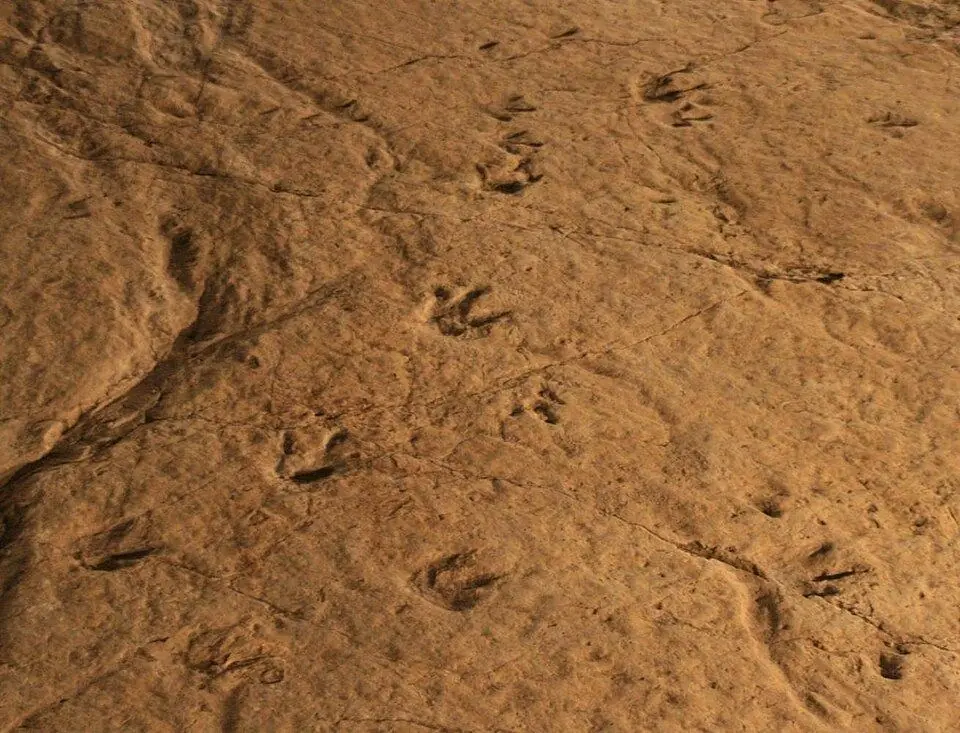
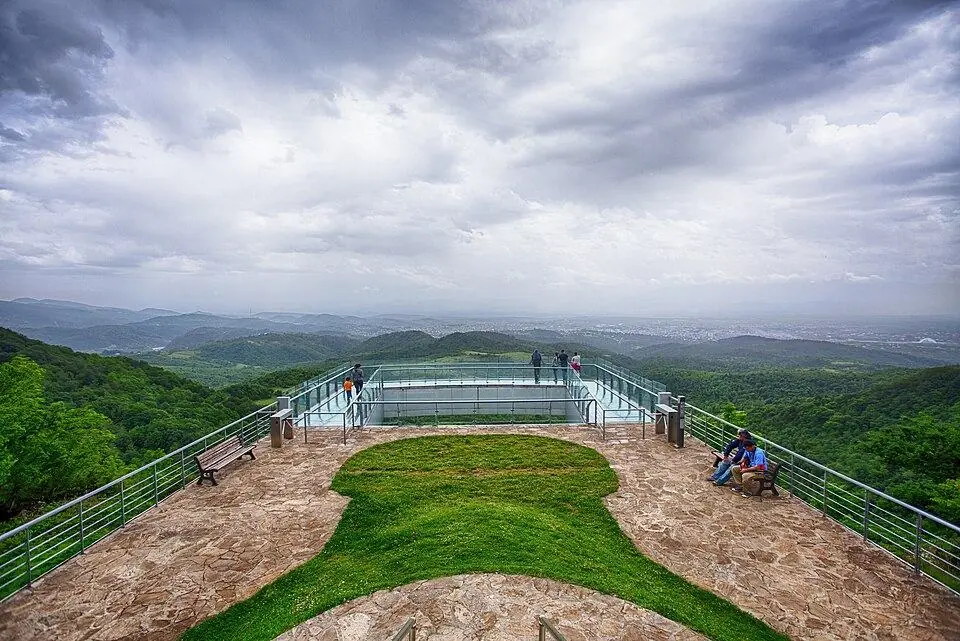
Sataplia, place of honey, covers a forested hill ~10 km by road from the centre. A local scientist, Petre Chabukiani, found fossil footprints here in 1933, and the clearest of its roughly 200 dinosaur tracks now lie under a pavilion roof. The trail continues to a small cave with a lit route of about 300 m and a glass-floored platform jutting from the cliff, with Kutaisi spread below. Life-size dinosaur models keep children happy. Allow 1.5 to 2 hours; in 2026 the foreign adult ticket was about 30 GEL (about $11).
Navenakhevi Cave
Near Terjola, 20 km east of the city, Navenakhevi is small but crammed with about 120 stalagnates, the columns that form where a stalactite meets a stalagmite. A short route through four halls on two levels takes 30 to 45 minutes. It is rarely busy and costs about 12 GEL (about $4), a handy stop on the drive from Tbilisi.
Tskaltubo
Ten minutes from Prometheus, Tskaltubo was one of the Soviet Union's best-known spas, built around radon springs at 33 to 35°C. Colonnaded bathhouses and sanatoriums ring its park, a few restored and many empty; since 1993 some have housed families displaced from occupied Abkhazia, so do not wander in or photograph residents without asking. You can still bathe at Bathhouse No. 6, built in 1950 for Stalin. Minibuses from Kutaisi run every 15 to 20 minutes for about 2 GEL.
| Site | From Kutaisi | Time to allow | Foreign adult ticket (2026) | Best for |
|---|---|---|---|---|
| Prometheus Cave | ~20 km, 30-35 min | 1-1.5 hours | About 40 GEL, boat about 30 extra | Big halls and the boat |
| Sataplia | ~10 km, about 20 min | 1.5-2 hours | About 30 GEL | Dinosaur tracks, children |
| Navenakhevi Cave | ~20 km, about 30 min | 30-45 minutes | About 12 GEL | Formations without crowds |
| Tskaltubo | ~10 km, 15-20 min | Half a day | Park free; baths extra | Radon baths, Soviet architecture |
Okatse, Kinchkha and Martvili: canyon day trips from Kutaisi
North of Kutaisi, rivers running off the Askhi limestone massif have cut deep, narrow gorges. Two of them, an hour's drive apart, make the region's favourite day out.
Okatse Canyon and Kinchkha Waterfall
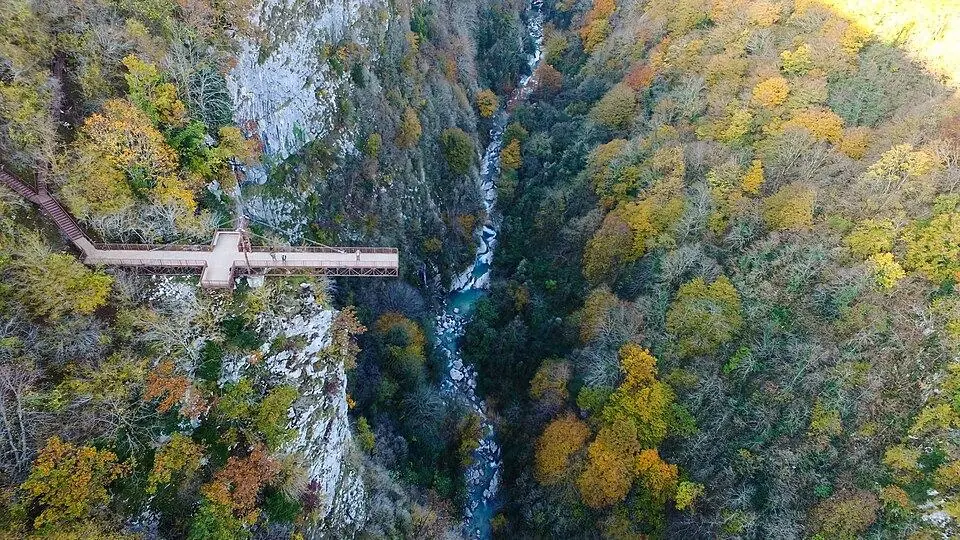
The Okatse visitor centre is in Gordi, ~45 km north-west of Kutaisi and about an hour and a quarter away via Khoni. A forest trail of ~2.3 km through the old hunting grounds of the Dadiani princes leads to a 780 m steel walkway bolted to the canyon wall, ending at a platform over a drop of several tens of metres. Allow 2 to 3 hours; local jeeps can shorten the approach. The trail shuts in rain and snow, children under 6 are not allowed, and it tests anyone afraid of heights. About 30 GEL (about $11) for foreign adults in 2026.
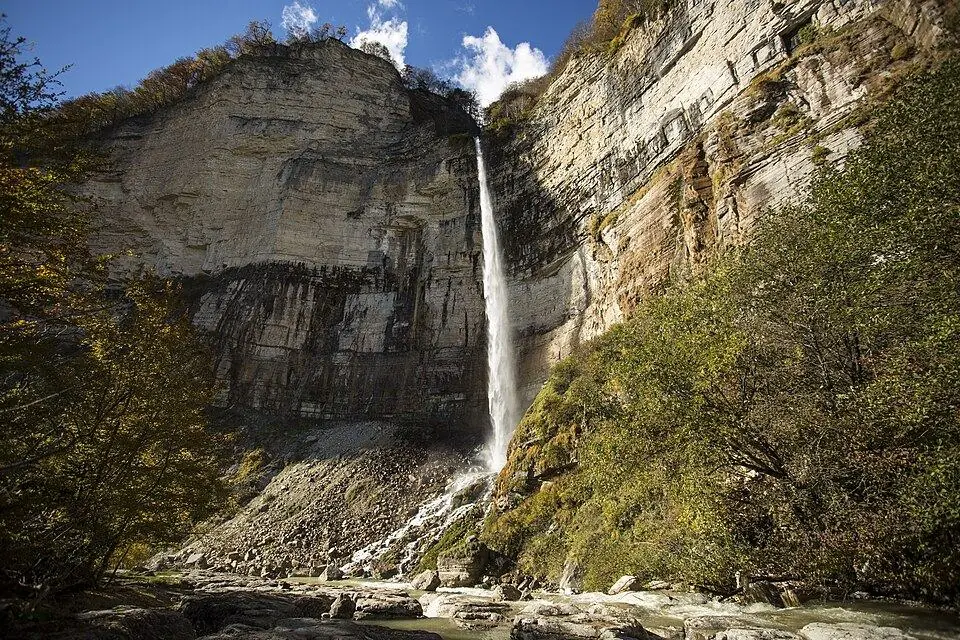
A quarter of an hour further up the valley, Kinchkha falls in three steps, the tallest about 70 m. It is fullest in spring and can shrink to a trickle by late August. Stairs lead to the viewpoints, and a zip line of about 650 m runs nearby. Kinchkha costs about 20 GEL, or about 40 GEL with Okatse.
Martvili Canyon
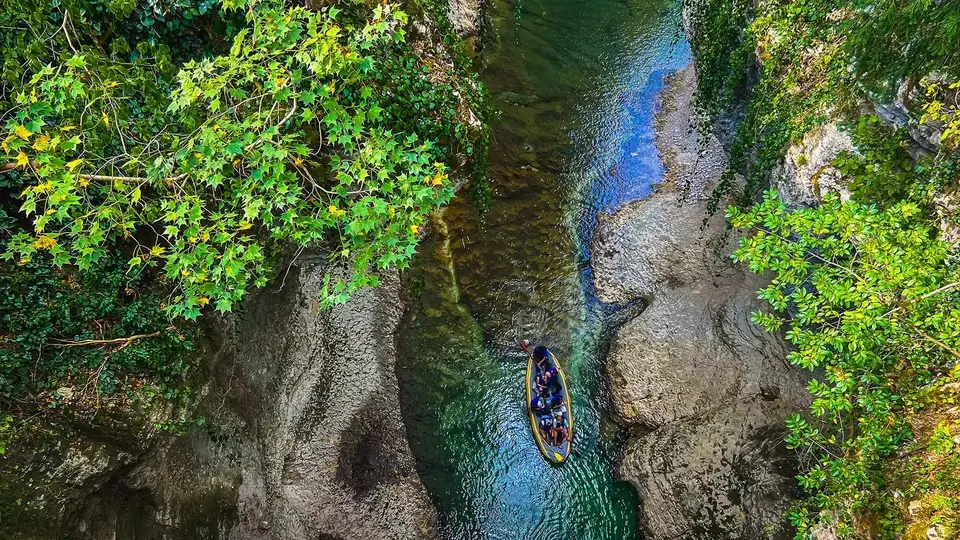
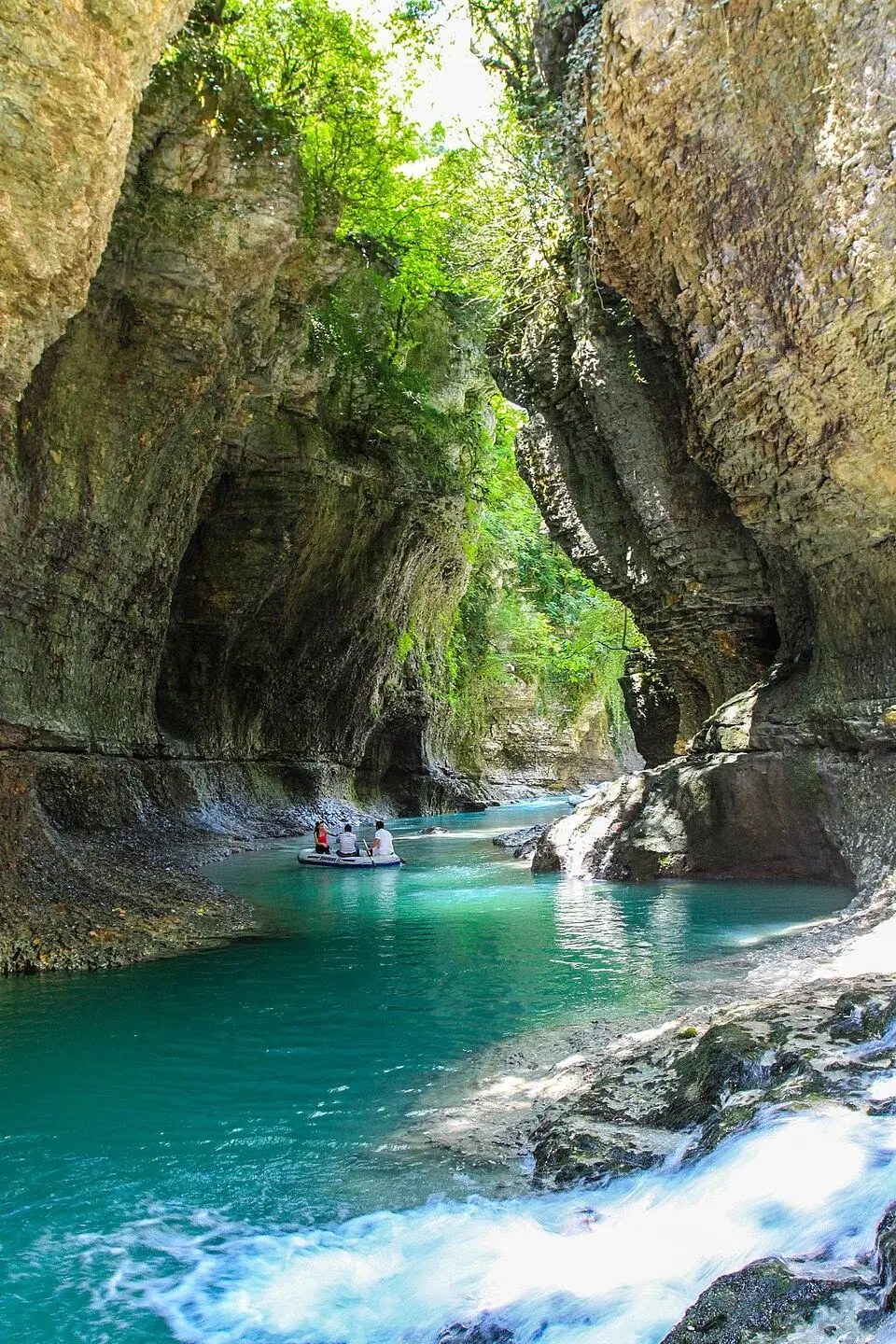
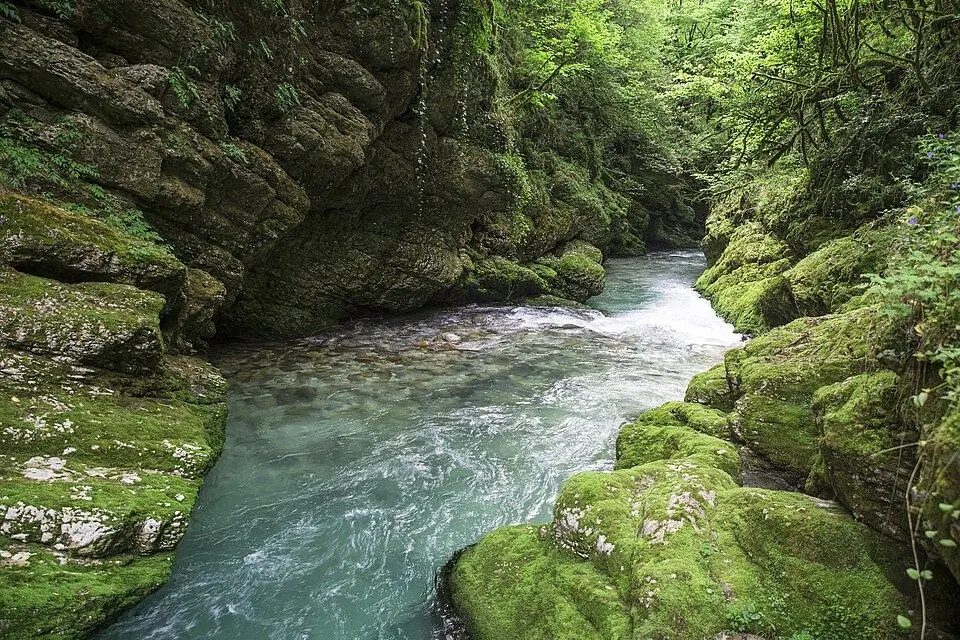
Just across the regional line in Samegrelo, near Inchkhuri village, Martvili Canyon is ~45 to 50 km and about an hour from Kutaisi, and here you look up from below. A 700 m loop path with bridges follows the turquoise Abasha between walls draped in moss and fern. On calm days inflatable boats push about 300 m up the tightest section; they do not run in rain, and children need to be roughly 1 m tall to board. A foreign visitor's entry ticket cost about 40 GEL (about $15) in 2026, with roughly 20 GEL extra for the boat. Come at opening time or late in the day.
Twenty minutes north, Balda Canyon is a quieter cousin with icy blue water, and the 10th-century Martvili Monastery looks over the Samegrelo lowland from its hill. Roadside restaurants here serve spicier Megrelian food, such as elarji, cornmeal stirred with cheese.
More day trips from Kutaisi
With a driver, Kutaisi opens up most of western Georgia. These are the best outings beyond the caves and canyons.
| Destination | Distance and drive | Why go | Pair it with |
|---|---|---|---|
| Vani Archaeological Museum | ~40 km, about 45 minutes | Gold and bronzes from an ancient Colchian city | The hot pools at Sulori or Dikhashkho |
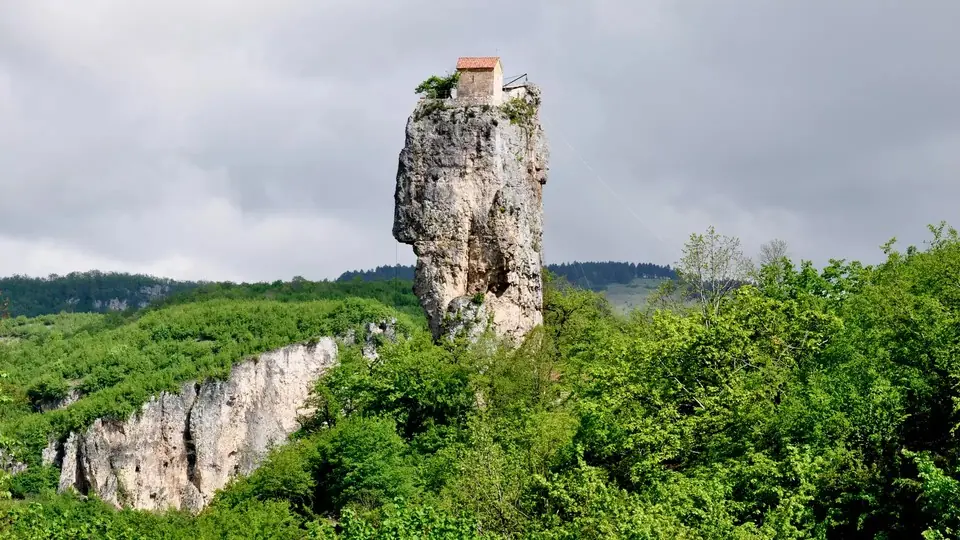
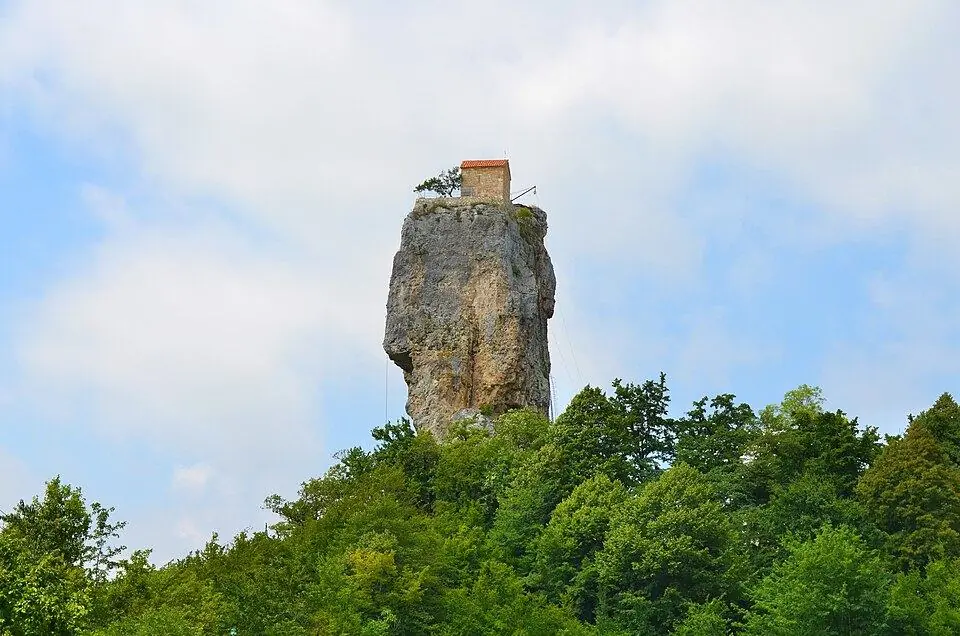
| Chiatura and the Katskhi Pillar | ~80 km, about 1.5 hours | Cable cars over a mining gorge and a church on a 40 m rock column | Mgvimevi cave monastery |
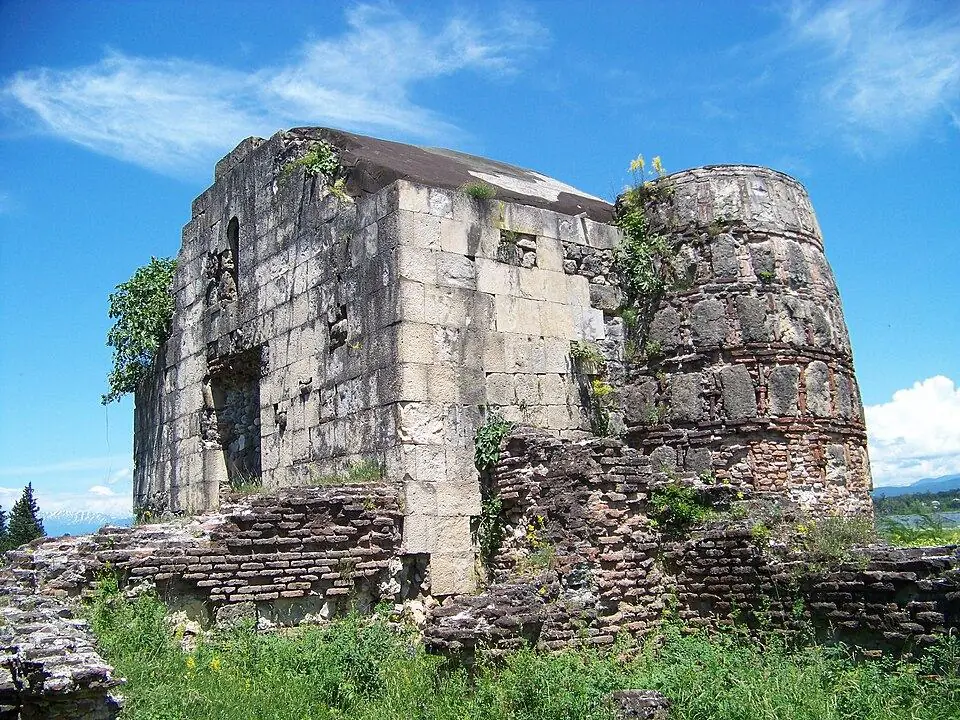
| Geguti and Sairme | ~9 km, then ~50 km (about 1 h 15) | A ruined royal palace, then a forest spa with mineral springs | The Mayakovsky museum in Baghdati |
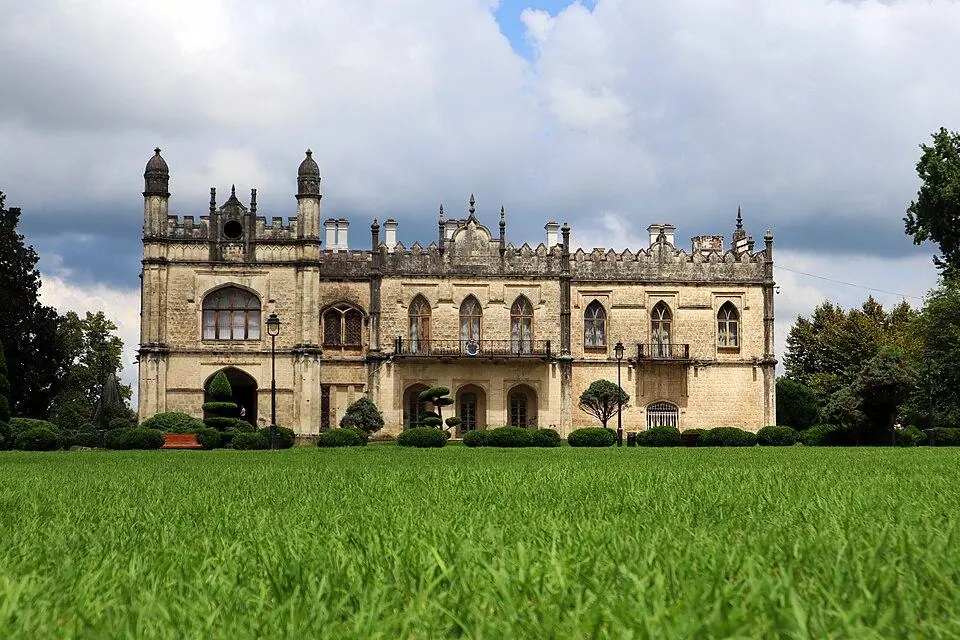
| Zugdidi and Dadiani Palace | ~100 km, about 1.5 hours | The 19th-century palace of the Megrelian princes | Martvili Canyon on the way |
| Racha: Ambrolauri and Nikortsminda | 1.5-2 hours via the Nakerala Pass | Mountain valleys, a carved cathedral and Khvanchkara wine | A night in Racha |
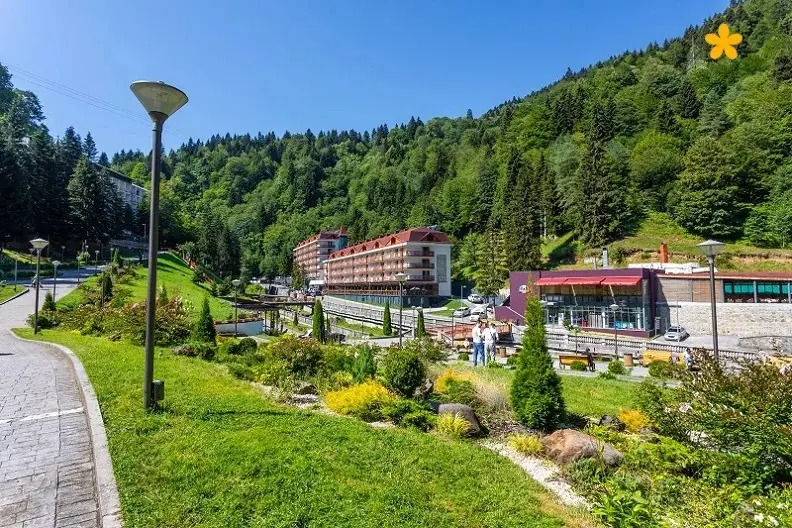
| Borjomi | About 2.5 hours | The mineral-water park and its forests | A night away |
| Batumi | ~150 km, about 2.5 hours | The Black Sea, the boulevard and the Botanical Garden | Two nights on its own |
Svaneti works better as your next stop than as a day out: Mestia is ~240 km away via Zugdidi, about 4.5 hours of driving, and the single daily minibus pulls out of Kutaisi around 10:00. For a slower loop through Imereti and Racha, our five-day private tour starts and ends in Kutaisi.
Where to eat in Kutaisi: Imeretian food and wine
Imeretian cooking is gentler on spice than Megrelian and leans on fresh cheese, walnuts, maize, beans and greens. Order these local dishes:
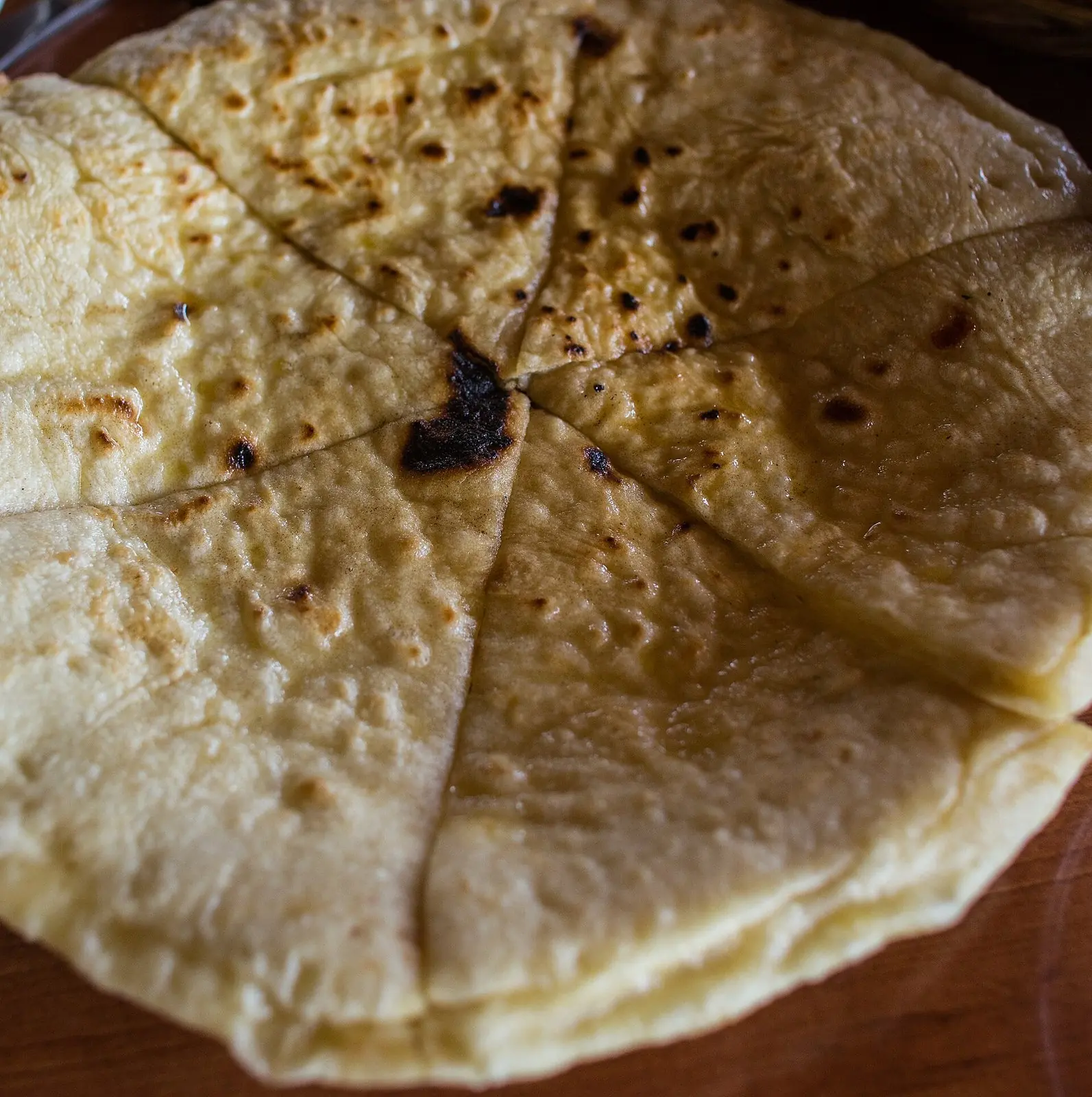
- Imeruli khachapuri: the round, closed cheese bread now found all over Georgia started here, filled with fresh, slightly tangy local cheese.
- Imeruli kveli: the mild, springy cheese itself, sold in rounds at the bazaar and eaten with mint and tarragon.
- Mchadi and lobio: cornbread cakes with beans from a clay pot, the everyday lunch of the west.
- Pkhali: spinach, beet leaves or leek chopped fine with walnut paste and herbs.
- Kuchmachi: giblets stewed with walnuts and topped with pomegranate seeds.
- Kutaisi kebab: grilled minced meat in thin bread with onion and tomato sauce, eaten standing up with a glass of Georgian lemonade.
Local winemakers ferment Tsitska, Tsolikouri and Krakhuna in buried clay jars, which Imeretians call churi, usually with shorter skin contact than in Kakheti, so the wines are fresh, light whites and pale ambers; Otskhanuri Sapere is the local red. Ask for the house wine by the jug, or have your driver stop at a family cellar during the harvest, from mid-September into October.
Some addresses have stayed popular for years: Bikentia's Kebabery, a standing-room counter serving little besides its famous kebab; Sisters, with Georgian classics, a long wine list and live folk singing in the evenings; and Palaty, a low-lit, two-level cafe-bar with live piano. Check recent reviews, as the scene changes fast.
How to get to Kutaisi and get around
| Route | How | Time | Fare or note (2026) |
|---|---|---|---|
| Tbilisi to Kutaisi | Car or private driver | 3-3.5 hours, ~230 km | E60 motorway through the Rikoti tunnels; stops at Mtskheta, Uplistsikhe or Gori |
| Tbilisi to Kutaisi | Minibus from Didube | 3.5-4 hours | About 20 GEL; every 30-40 minutes through the day |
| Tbilisi to Kutaisi | Train to Kutaisi Airport station | About 3 hours | Then 20-30 minutes into town; no direct train to the city since 2025 |
| Kutaisi airport to centre | Shuttle bus or taxi | 20-30 minutes | Shuttle about 5 GEL, cards accepted |
| Batumi to Kutaisi | Minibus, car or train | About 2.5 hours by road, ~150 km | Minibus about 15 GEL, roughly hourly |
| Mestia to Kutaisi | Minibus | 4.5-5 hours | One a day at about 08:00; about 35 GEL |
Kutaisi International Airport, ~14 km west of town, is Georgia's low-cost gateway, with Wizz Air flights from much of Europe and coaches timed to arrivals for Tbilisi and Batumi.
Getting around
The centre is walkable, and taxis are cheap: use an app such as Bolt or agree the fare first. Regional minibuses leave mostly from Chavchavadze Avenue 67; the official 2026 timetable lists Tskaltubo every 15 to 20 minutes (about 2 GEL), Khoni for Okatse every 30 minutes (about 3 GEL) and Martvili hourly (about 6 GEL). None reaches Prometheus, Sataplia, Okatse or Martvili Canyon itself, so you finish by taxi, and a driver for the day saves hours of waiting.
Where to stay
- Around the main square and the White Bridge: walk to everything; the best base for a first visit.
- The old quarter below Bagrati: guesthouses in balconied houses and quiet nights, with an uphill walk home.
- Tskaltubo: spa hotels ten minutes from Prometheus Cave.
- Near the airport: only for a dawn flight.
Kutaisi itinerary: one, two or three days
One day
- Morning: bazaar and museum
Start at the Green Bazaar around 09:00, then the Colchis Fountain and an hour in the history museum. - Midday: White Bridge and Bagrati
Lunch near the river, cross the bridge and wander up through the old quarter to Bagrati. - Afternoon: Gelati and Motsameta
Taxi out to Gelati, or catch the 14:00 bus, and stop at Motsameta on the way back. - Evening: view and supper
Ride the cable car to Gora park at dusk if it is running, then an Imeretian dinner with local white wine.
Two days
- Day 1: city and monasteries
Follow the one-day plan. - Day 2: caves or canyons
For an easy day or with children, see Sataplia and Prometheus Cave with lunch in Tskaltubo. For a full day outdoors, drive to Okatse, Kinchkha and Martvili Canyon.
Three days or more
Do both day-two options, or swap one for Chiatura and the Katskhi Pillar. With a fourth day, carry on to Racha, Svaneti or the coast instead of doubling back to Tbilisi. Landing in the morning? The loop of Gelati, Motsameta, Sataplia and Prometheus needs only about two hours of driving, so it fits an arrival day.
Best time to visit Kutaisi
Kutaisi is humid and subtropical, with about 1,350 mm of rain a year spread across every month. Summers are long and sticky; winters are mild, and snow rarely lasts in town.
| Season | Average high / low | What to expect |
|---|---|---|
| Winter (Dec-Feb) | ~10°C / ~4°C in January | Quiet and damp; city and caves fine, but the Okatse walkway and Martvili boats close in rain or snow |
| Spring (Mar-May) | ~20°C / ~10°C in April | Green hills, Kinchkha at full flow and the Kutaisoba city festival in early May |
| Summer (Jun-Aug) | ~29°C / ~20°C in July | Hot and humid, busy canyons at weekends; August is the driest month |
| Autumn (Sep-Nov) | ~22°C / ~14°C in October | Grape harvest, warm days and turning leaves, though October is the wettest month |
May, June, September and October suit a mix of city walks and day trips best. In midsummer start early and save the caves for the afternoon heat. Winter is cheap and peaceful, with grey days and canyon closures.
Kutaisi travel FAQ
Is Kutaisi worth visiting?
Yes. It has Bagrati Cathedral, the UNESCO-listed Gelati Monastery, a lively bazaar and inexpensive food, and it makes the most practical base for the caves and canyons of the west. Two or three nights suit most travellers.
How many days do you need in Kutaisi?
One day covers the city plus Gelati and Motsameta. A second day adds either the caves or the canyons, and a third lets you see both.
What is Kutaisi famous for?
It was a centre of ancient Colchis, tied by legend to the Golden Fleece, and the first capital of united Georgia from 1008. Today it is known for Gelati, Bagrati, the White Bridge, Imeruli khachapuri and the caves and canyons nearby.
Can you get to Gelati Monastery by bus?
Yes. A city bus leaves from behind the Meskhishvili Theatre five times a day for about 2 GEL (2026), with the last return at about 16:30. Take a taxi if you also want Motsameta.
Can you visit Prometheus Cave and Martvili Canyon in one day?
Yes. They are about an hour's drive apart, so Prometheus in the morning and Martvili after lunch makes a comfortable day; Okatse and Kinchkha can replace either one. No public transport links the sites, so you need a car, a driver or a tour.
How much do the caves and canyons near Kutaisi cost?
In 2026 foreign adults pay about 40 GEL for Prometheus Cave or Martvili Canyon, about 30 GEL for Sataplia or Okatse, about 20 GEL for Kinchkha and about 12 GEL for Navenakhevi. Boats cost extra, and combined tickets save a little.
Is Bagrati Cathedral a UNESCO World Heritage Site?
No longer. It was listed with Gelati in 1994 but removed in 2017, after its reconstruction was judged to harm its authenticity. Gelati remains on the list.