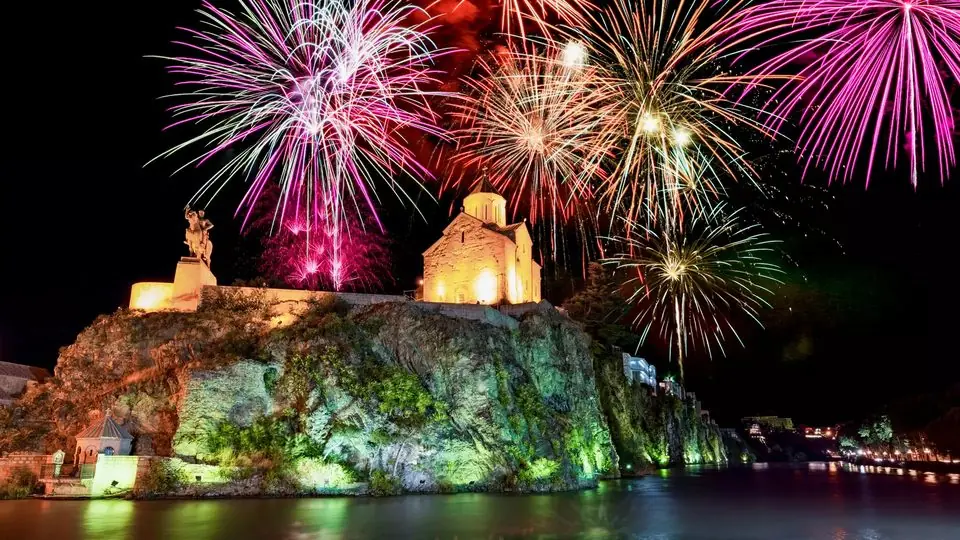
- New Year is the biggest night of the year in Georgia, bigger than Christmas. Families feast at home on 31 December, rockets fly from every street at midnight, and 1 and 2 January are public holidays.
- The Georgian New Year has its own symbols. The chichilaki is a small tree of shaved hazel wood, gozinaki is a sweet of walnuts and honey, and the mekvle is the first guest, said to bring the year's luck.
- Tbilisi has the lights and the crowds, Gudauri and Bakuriani the snow, Batumi the mildest weather and Kakheti a quiet feast with wine. Book rooms and New Year's Eve tables by early November.
- On 1 and 2 January banks, offices and many small shops and museums close. Supermarkets, malls, the metro and trains keep going. In 2027 the second holiday falls on a Saturday.
- The season does not stop there. Orthodox Christmas comes on 7 January, and a second, older New Year is toasted late on 13 January. The chichilaki is burned around Epiphany on 19 January.
New Year in Georgia is the high point of the winter, far bigger than Christmas. Georgians see it in at home with a long family feast. At midnight they spill onto balconies and into yards while rockets burst over every town. The first two days of January are public holidays. Many homes also keep the old customs: a chichilaki tree of shaved hazel, a plate of gozinaki and a chosen first guest who brings the year's luck. Then the holidays roll on, with Orthodox Christmas on 7 January and a second New Year a week later.
This guide explains the Georgian New Year the way locals live it. It runs from the bazaar rush on 31 December to Bedoba, the lucky day on 2 January. We show what goes on the table and how a chichilaki is made. Then we compare the best places to be: Tbilisi, the ski slopes of Gudauri and Bakuriani, Batumi on the coast and the wine villages of Kakheti. Last come what is open on 1 and 2 January, the two January feasts that follow, and how to plan your trip.
New Year in Georgia 2026/27: the dates that matter
The holiday season in Georgia lasts about five weeks, not one night. It starts when the cities switch on their lights in mid-December. It ends after Epiphany on 19 January. Two calendars shape it. The state uses the Gregorian calendar, so New Year falls on 1 January, as in Europe. The Georgian Orthodox Church keeps the older Julian calendar, which runs 13 days behind. That gap puts Christmas on 7 January and gives the country a second, older New Year on the 14th.
| Date (2026/27) | What happens | Day off? |
|---|---|---|
| Mid-December 2026 (not yet announced) | Tbilisi and Batumi light their main trees and open their New Year villages | No |
| About 20-27 December (not yet announced) | Ski lifts usually start at Bakuriani, Gudauri, Goderdzi and Mestia | No |
| Thursday 31 December | Bazaar shopping and cooking by day, the family supra at night, rockets at midnight | No, but many places close early |
| Friday 1 January 2027 | New Year's Day: a late start, visits to relatives, the second round of the feast | Yes |
| Saturday 2 January | Bedoba, the day said to decide your luck for the year | Yes (not moved to Monday) |
| Wednesday 6 to Thursday 7 January | Candles in windows and the night liturgy, then Christmas Day and the Alilo walk | 7 January: yes |
| Wednesday 13 to Thursday 14 January | Old New Year: a smaller dinner and a second wave of rockets | No |
| Monday 18 to Tuesday 19 January | Epiphany: churches bless water, and families burn their chichilaki | 19 January: yes |
Rooms, flights and drivers are hardest to find from about 28 December to 8 January. Georgians who live abroad fly home, and Tbilisi families head for the snow. If your dates are flexible, the first half of December and the second half of January are calmer and cheaper.
Georgian New Year traditions: why 31 December outshines Christmas
Ask a Georgian which night matters most, and the answer is almost always 31 December. In Soviet times church feasts were pushed out of public life. Their gifts, trees and feasting moved to the secular New Year, and the habit stuck. Today Christmas on 7 January is the quiet, church-going holiday. New Year is the loud one, made for family, friends and fireworks.
The last day of the year
The 31st is a day of errands. Bazaars are packed from early morning with people buying turkey, walnuts, pomegranates, herbs and fir branches. Queues form outside bakeries for warm bread. In many kitchens the cooking began two or three days earlier, because the table must look full and never run short. Tbilisi traffic crawls all afternoon. Then, from about 22:00, the streets go quiet as everyone gets home.
Midnight and the long night after
At midnight glasses go up, people hug and kiss, and whole families crowd onto balconies. The fireworks are not a single city show. Thousands of households launch their own rockets, so the sky flashes from every side for half an hour or more. Then the visiting starts. Neighbours drop in, cousins call by, and young people move between flats, bars and clubs until dawn.
Since 2025 Georgia has controlled fireworks more strictly. Only shops with a permit may sell them, and you may not carry them to a rally. The night is still loud. Keep well back from anyone lighting rockets, and keep nervous children and pets indoors.
Tovlis Babua brings the presents
Georgia's Father Christmas is Tovlis Babua, which means Snow Grandpa. He is said to come down from Svaneti in a white felt cloak and a round Svan hat, with his gifts in a saddlebag. Children open their presents on the night of 31 December or on New Year's morning, not at Christmas.
Bedoba on 2 January
The second day of the year is Bedoba, from bedi, the Georgian word for fate or luck. People believe the year will go the way this day goes. So they try to spend it well. They sleep in, eat what they love, see the people they care about and avoid quarrels. Some do a small thing they hope to do more of in the new year, such as a short trip.
Chichilaki: the Georgian New Year tree
A chichilaki looks like a small white fir made of curls. It starts as a straight stick of hazel, or sometimes walnut. The maker warms the stick over a fire so it bends without cracking and peels off the bark. Then, with a sharp knife, they pare long thin ribbons of wood from the bottom up. Each ribbon stays fixed near the top and falls back in a soft curl. Hundreds of them form the branches. Small ones stand about 20 cm tall, and the largest reach about 3 m.
The custom comes from western Georgia, above all Guria, Samegrelo and Imereti. People call the curls Basila's beard, after St Basil the Great, whose feast falls on the Old New Year. Folk scholars also see the chichilaki as a tree of life, a wish for plenty in the year ahead. Families hang it with dried fruit, sweets, churchkhela and coloured ribbons. Old Gurian versions carried pomegranates or apples on a small cross at the top, and a ring of ivy and red berries near the top.
The chichilaki is not packed away after the holidays. Around Epiphany, on 18 or 19 January, families burn it outside. The flames are said to carry off the old year's troubles. Today you see chichilaki in homes all over the country, often next to an ordinary fir. They also stand in shop windows and hotel lobbies. In some years the Orbeliani Palace, the president's residence in Tbilisi, puts up a whole display of them.
The mekvle: the first guest of the year
The custom Georgians watch most closely at New Year is the mekvle, the first person to step into the home. The word comes from kvali, a footprint or a furrow. In old farming villages the first visitor once cut the year's first ritual furrow, and grain was scattered through the house to bring a good harvest. Over time the role shrank to the lucky first foot through the door. It is still taken seriously.
Whoever crosses the threshold first is believed to shape the family's year. So families pick their mekvle in advance. They want a cheerful, kind and healthy person who has had a good year. The mekvle enters with the right foot first, wishes the house health and plenty, and showers the hosts with sweets. The hosts answer with sweets of their own and give the guest a seat of honour at the table.
Most families today count the first guest after midnight on 1 January. Some keep the visit for the morning of 2 January, Bedoba, so ask your hosts which they follow. The name changes by region. In Samegrelo the first guest is the kuchkha, and in Adjara the mperkhavi. Older rites were richer still. The mekvle came at dawn with a wooden tray of ritual breads, wine, honey and a chichilaki, and in Adjara a ram tied with ribbons was once led into the house. If the year goes badly, the mekvle may take the blame, half in jest.
The New Year supra: what Georgians eat and drink
The New Year table is a full supra, the Georgian feast led by a toastmaster called the tamada. Unlike a restaurant meal, nearly everything goes on the table at once and stays there all night. Plates end up stacked on plates. Families sit down late in the evening, stop for the midnight toast and carry on into the small hours. On 1 January the table is laid again for visitors, and the leftovers last for days.
| Dish or drink | What it is | Good to know |
|---|---|---|
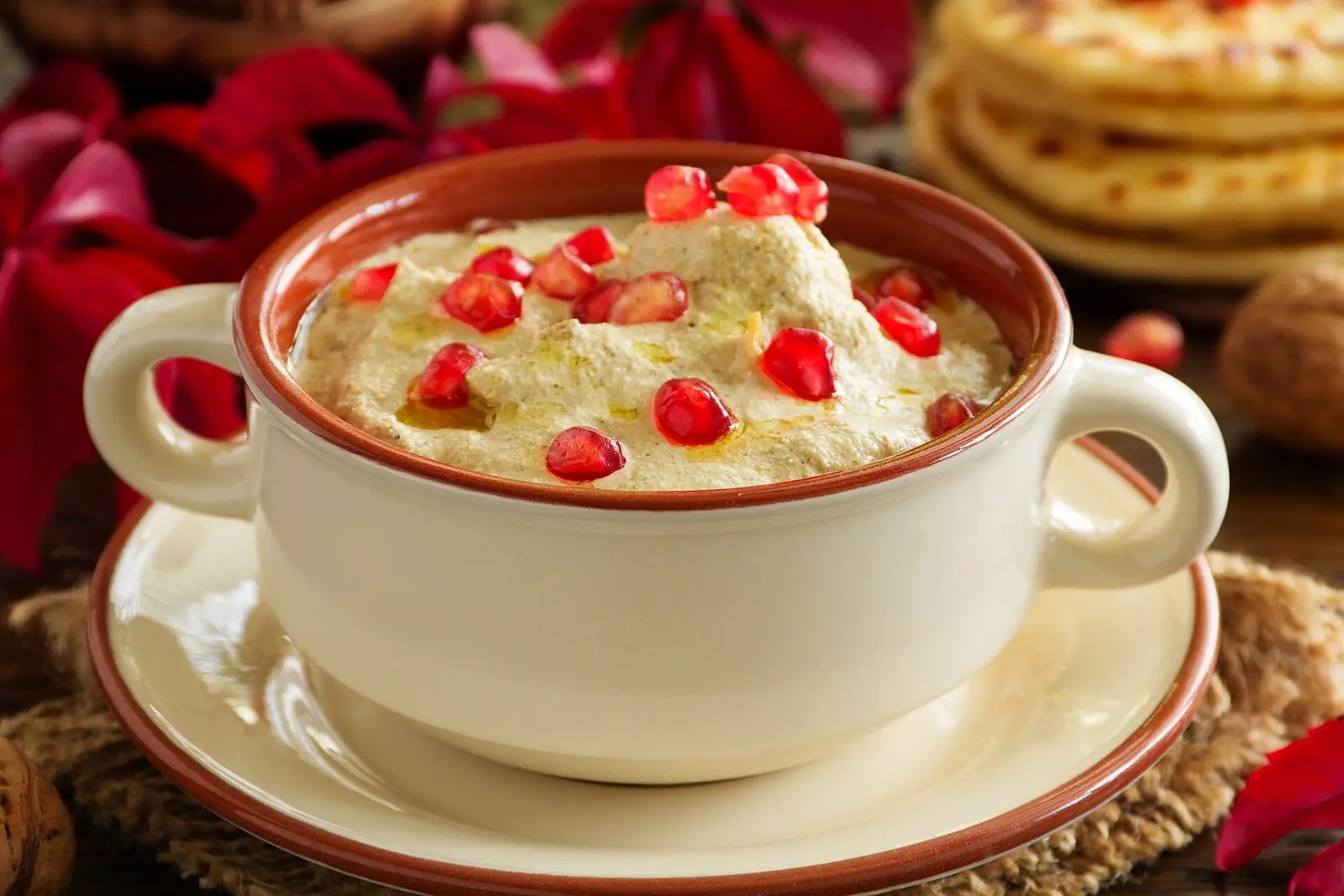
| Satsivi | Cold turkey or chicken under a thick sauce of walnuts, garlic and spices | The centre of the table; turkey is the holiday choice |
| Roast piglet | A whole suckling pig, served with adjika, a hot red pepper paste | Mostly cooked at home; in Samegrelo it may be stuffed with kuchmachi, a dish of offal and walnuts |
| Khachapuri | Cheese bread in its regional forms | Samegrelo makes a double-cheese version for the holiday |
| Gurian pie | Half-moon pastry stuffed with cheese and hard-boiled egg | Baked in Guria and Imereti, above all for the Old New Year |
| Festive breads | Mchadi cornbread in the west; basila loaves and small fate breads in Kartli | Bakeries sell out on 31 December, so shop early |
| Pkhali and salads | Spinach, beet or leek pastes with walnut; often an Olivier potato salad | Olivier is a Soviet-era habit that never left |
| Fruit and nuts | Mandarins, pomegranates, persimmons and whole walnuts | Bowls of them stay out for days |
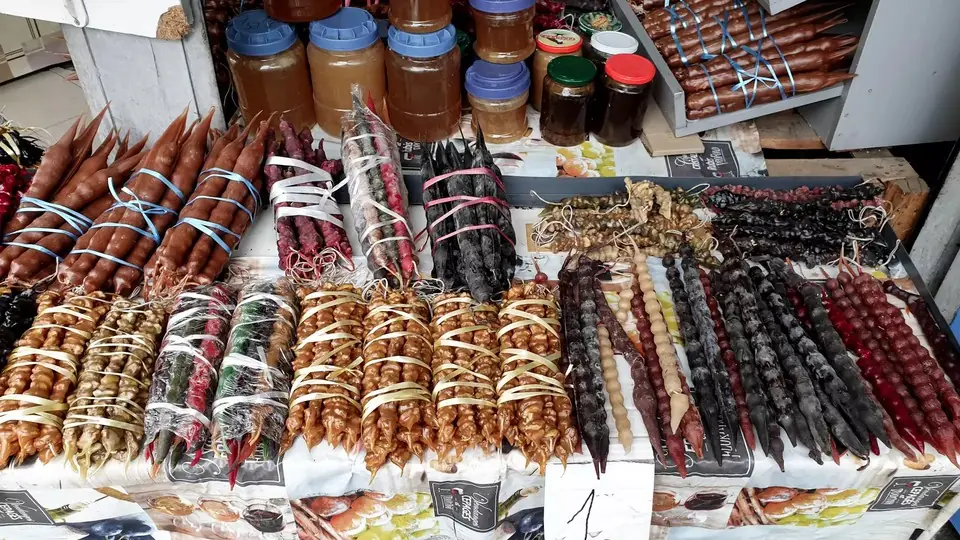
| Gozinaki and churchkhela | Walnuts set in honey; strings of walnuts dipped in thick grape juice | The two New Year sweets |
| Wine and fizz | Homemade or qvevri wine all night, Georgian sparkling wine at midnight | Chacha, the grape spirit, appears later |
Each region adds its own touch. In Racha the table gets a pair of cheese buns called bachuli, one to see out the old year and one to welcome the next. In Upper Adjara a pot of boiled maize stands for a good harvest. In Khevsureti the holiday loaf carries the pressed shapes of a cross, a bull and a grain ear.
You can join a New Year supra in three ways. Restaurants in Tbilisi and the resorts sell New Year's Eve dinners with a set menu, live music and a tamada. A family guesthouse in Kakheti or the mountains may seat you at its own table. Or a Georgian friend may invite you home, which is the warmest option of all. Bring a small gift such as sweets, wine or something from your own country. Pace yourself, because new plates keep coming long after you feel full.
Gozinaki: the honey and walnut sweet of New Year
Gozinaki is the taste of New Year in Georgia. Cooks toast walnuts, boil honey until it will set as it cools, stir in the nuts and roll the hot mass flat on a wet board. Once it firms up, they cut it into diamonds. Honey stands for a sweet year and walnuts for plenty, so a plate goes round right after midnight.
Many families still make their own in the last days of December. Shops and bazaars sell it all winter, and the stalls at the Tbilisi Christmas market stock it too. To make it at home, follow our gozinaki recipe, which explains the cold-water test for the honey.
Where to spend New Year in Georgia: city, snow, sea or wine country
Where you spend the night shapes the whole trip. This table compares the main choices, then each one gets a short note.
| Where | From Tbilisi | Best for | Book by |
|---|---|---|---|
| Tbilisi | In the city | Lights, markets, fireworks from a hill, restaurants and clubs | Early November for central rooms |
| Gudauri | ~120 km, about 2-2.5 hours by road | Skiing, deep snow and hotel gala dinners | 2-3 months ahead |
| Bakuriani | ~180-190 km, about 3-3.5 hours by road | Families, gentle slopes, sledging and cottages | 2-3 months ahead |
| Batumi | About 4 hours on the fastest trains | Mild weather, a seafront tree and a big street concert | 1-2 months ahead |
| Kakheti (Sighnaghi, Telavi, Kvareli) | About 2 hours by road | A quiet supra with home wine and a guesthouse family | 1-2 months ahead |
| Mestia (Svaneti) | 8-9 hours by road, or a small plane when the weather allows | Snow, stone towers and the Hatsvali slopes | 2-3 months ahead |
Tbilisi: lights, crowds and rockets
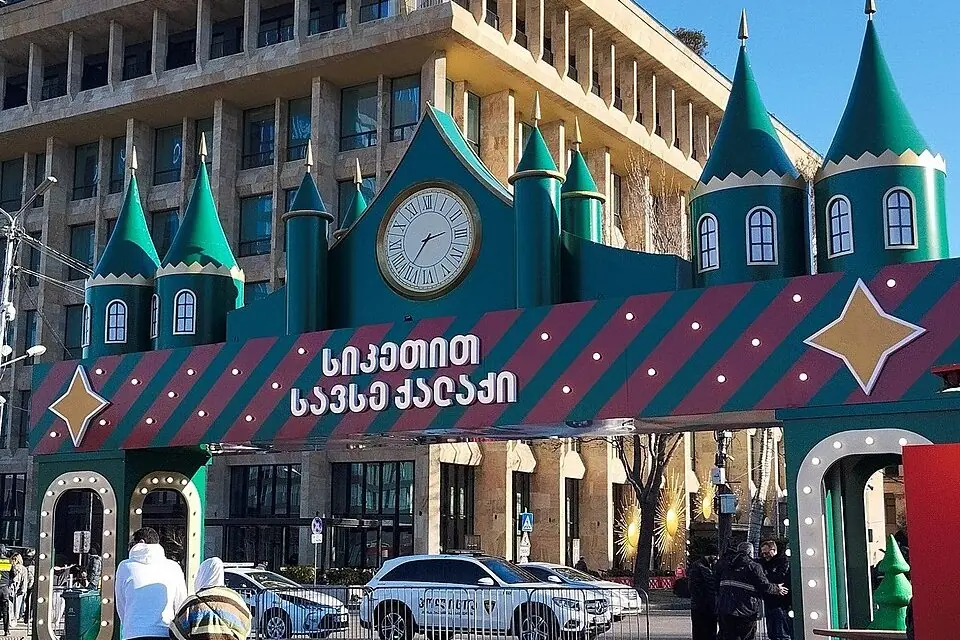
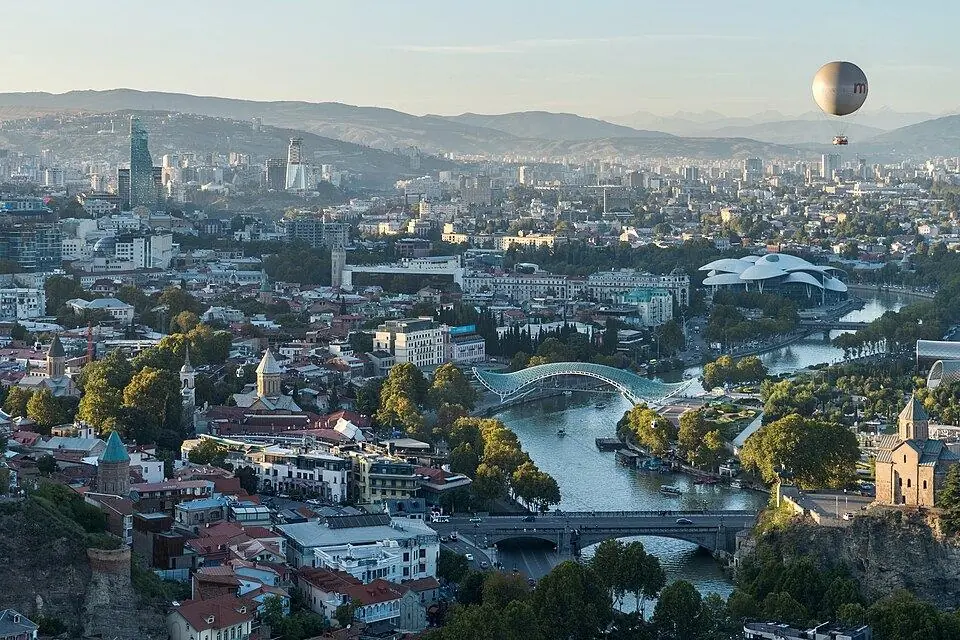
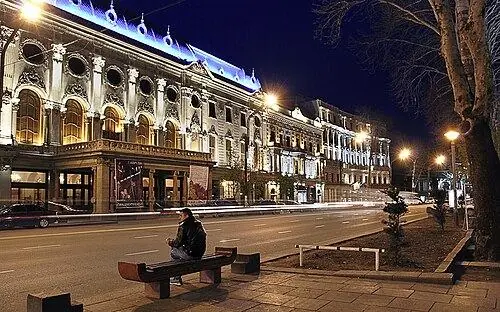
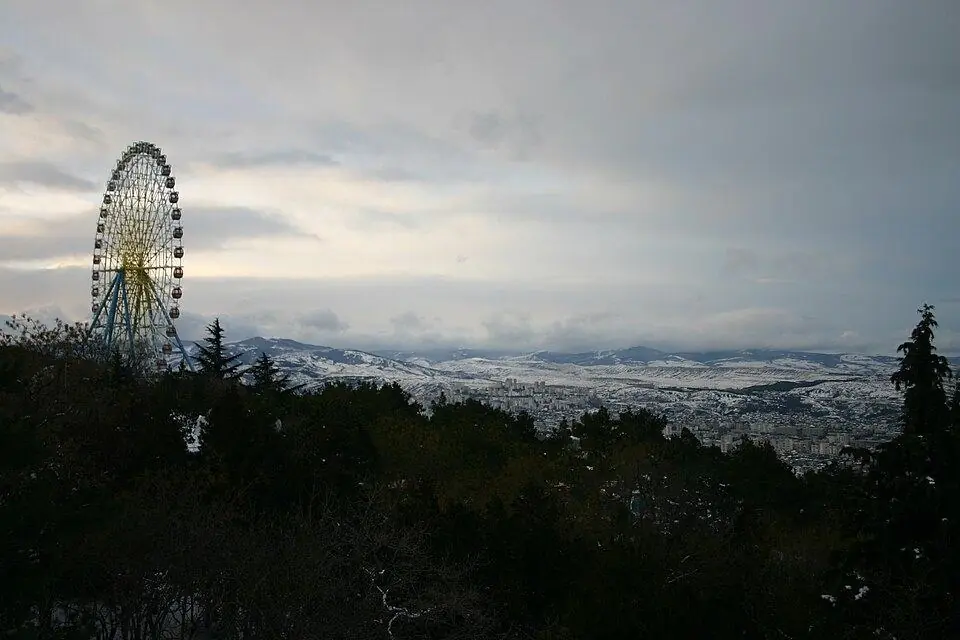
The capital is the choice if you want crowds and a big-city mood. From mid-December the centre glows, and a New Year village of stalls, a rink and the main tree fills a square at the top of Rustaveli Avenue. Our Tbilisi Christmas market guide covers the stalls, the tree and the lights. Our page on New Year Lights and Markets in Tbilisi lists the season's dates once the city confirms them.
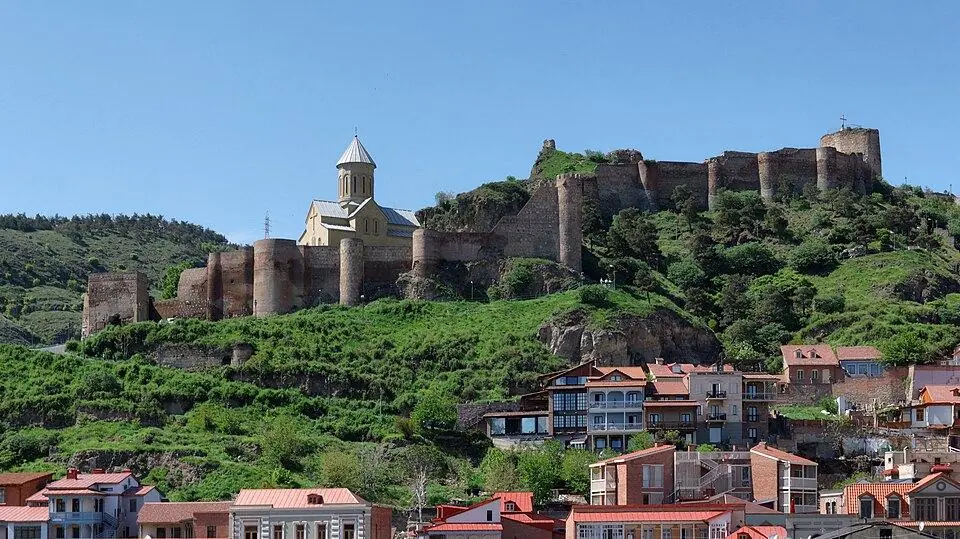
On the night itself, the city held a free concert on First Republic Square in 2025. The real show, though, is the rockets seen from above. Climb to Narikala, Mtatsminda or the lanes of Betlemi before 23:00. In 2025/26 the Rike to Narikala cable car ran until 03:00, and the metro and city buses were free from midnight to 03:00. Expect a similar plan this year, but check the city's notice in late December.
Gudauri and Bakuriani: New Year in the snow
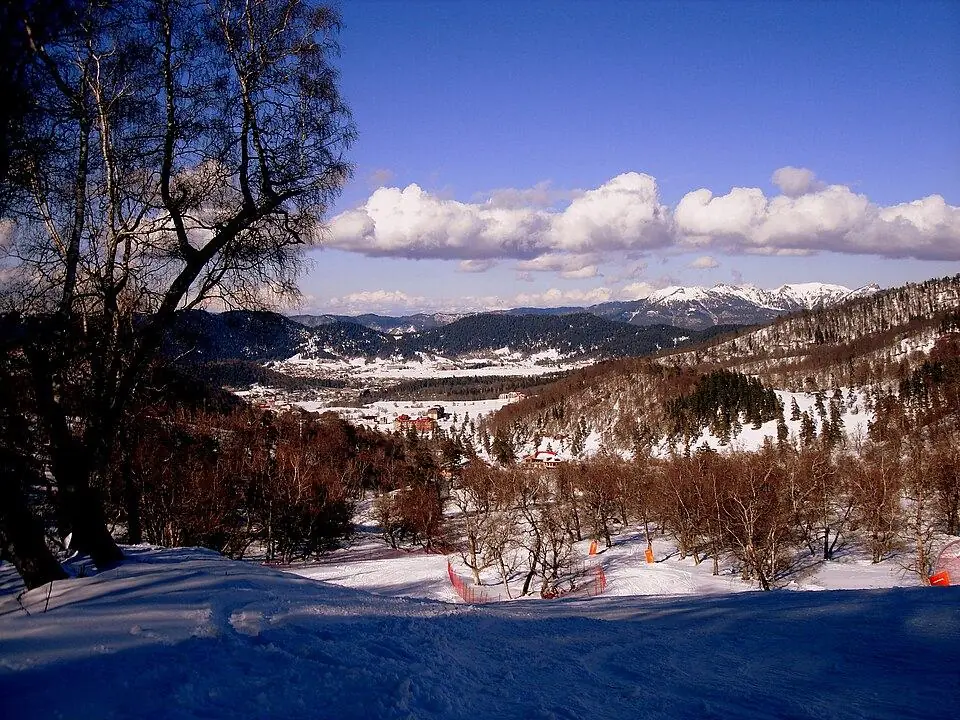
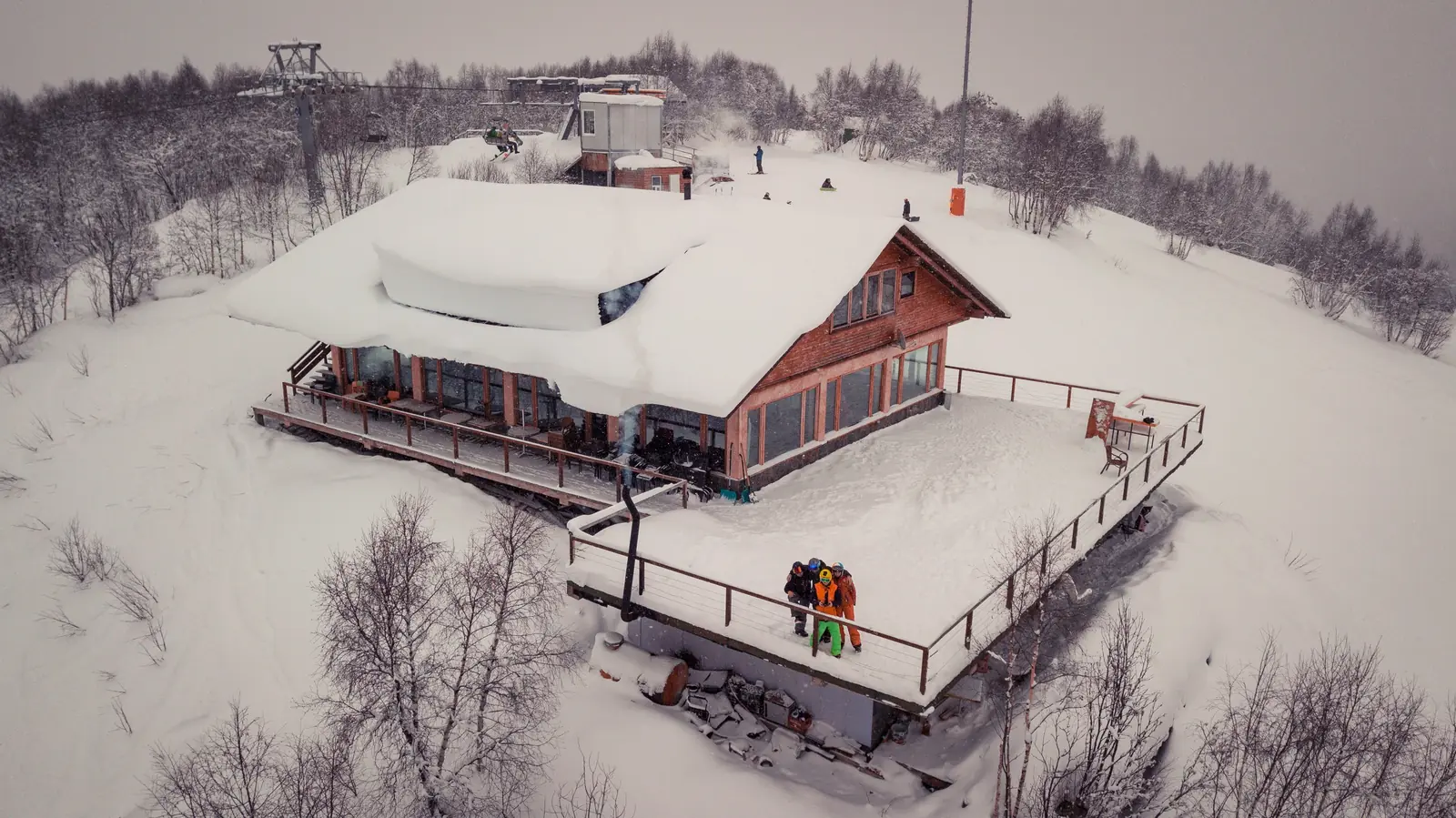
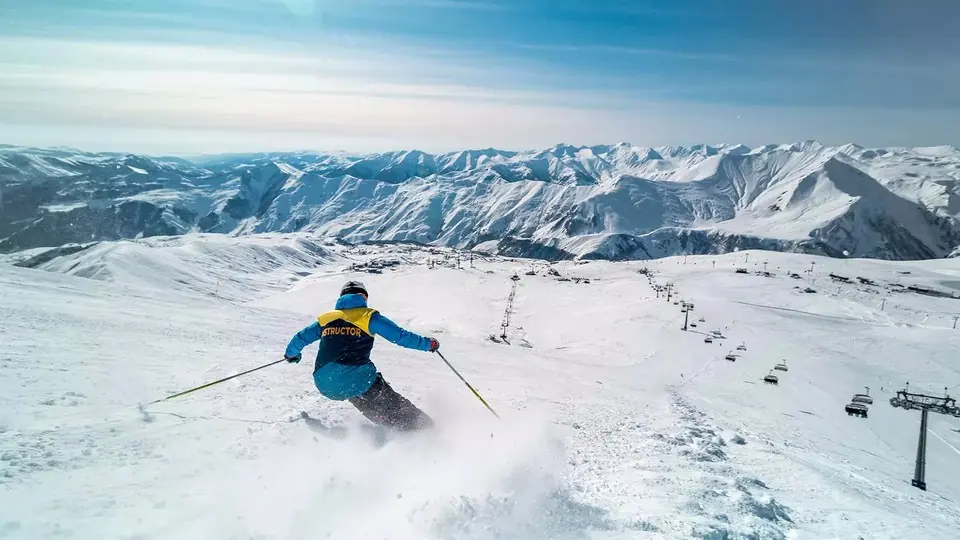
Many Georgian families greet the year in the mountains, so the two big ski resorts are lively and full. Gudauri sits at ~2,000 m on the Georgian Military Road, ~120 km from Tbilisi. It has the most lifts and the longest season. Its hotels sell New Year's Eve dinners with music, so you can ski by day and feast by night.
Bakuriani, above Borjomi at ~1,700 m, is the family pick. Its slopes are gentler, and children can sledge and skate. Many groups rent a cottage for the week. The drive from Tbilisi takes about 3 to 3.5 hours. The government says the little Kukushka railway up from Borjomi will run again in December 2026, a slow and scenic option if it does.
Snow is the gamble. In 2025/26 the first lifts opened on 20 December at Bakuriani and on 27 December at Gudauri. Nothing official had been announced for 2026/27 by mid-October, although one travel blog expects 20 December. Book a room with free cancellation, and read our guides to skiing in Gudauri and skiing in Bakuriani for passes and runs. Goderdzi in the Adjara mountains and Mestia in Svaneti are quieter snowy options, but both are far from Tbilisi.
Batumi: New Year by the Black Sea
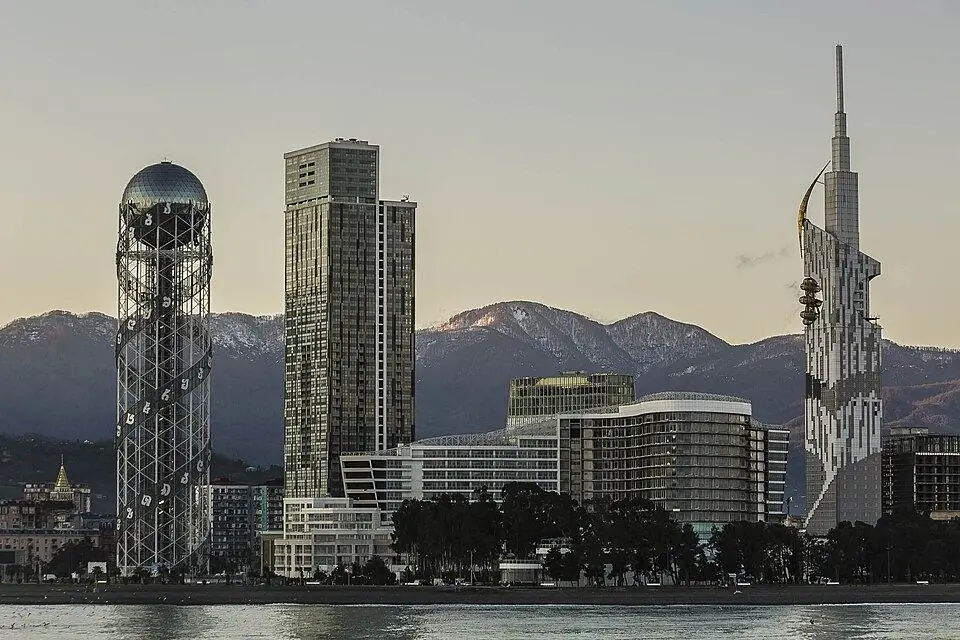
Batumi suits anyone who wants New Year without the deep cold. Afternoons in early January are usually mild, but rain is common, so pack a waterproof jacket. For the numbers, see Batumi weather in January. In 2025 the city lit its main tree on Europe Square on 22 December. A New Year village of food stalls, crafts and a stage opened beside it. A big open-air concert saw in the year, and a Christmas concert closed the season on 7 January.
Palms wrapped in lights line the seafront, and it is pleasant to walk there on New Year's Day. The fastest trains from Tbilisi take about four hours. Seats sell fast over the holidays, so book as soon as you can.
Kakheti: a quiet feast in wine country
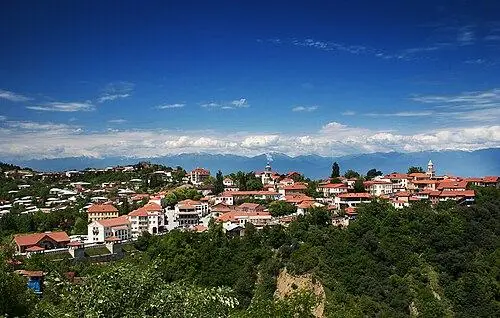
For a calm New Year, go east to Kakheti, the main wine region, about two hours from Tbilisi. Many small hotels and family guesthouses in Sighnaghi, Telavi and Kvareli lay on their own New Year's Eve supra, with wine from the qvevri in the cellar. You hear the rockets from the villages below, but the night feels local, not staged. On 1 January the Alazani Valley is still, and on a clear day the snowy Caucasus fills the horizon.
Two practical points. Family wine cellars often close on 1 and 2 January, so arrange tastings in advance. The short road to Telavi over the Gombori Pass also sometimes closes after heavy snow. Check road status, or take the longer main road through Sagarejo.
What is open and closed on 1 and 2 January in Georgia
Both days are public holidays under the Labour Code. Georgia does not shift a holiday that falls on a weekend, so in 2027 the second one is lost to a Saturday. The 31st is a normal working day, but many offices and shops shut early that afternoon. Our holiday page on New Year and Bedoba sums up the official side. Use the table below as a rough guide, and check anything your plans depend on.
| Service | On 1 and 2 January | Tip |
|---|---|---|
| Banks and government offices | Closed | Cash machines work; carry some lari for small shops |
| Supermarkets and malls | Mostly open, often with shorter hours on the 1st | Buy water and snacks on the 31st |
| Small shops and bazaars | Many shut on the 1st, busier again on the 2nd | Dezerter Bazaar is half empty on New Year's Day |
| Restaurants and cafes | Some closed, others open from the afternoon | Call ahead, above all in small towns |
| Museums | Many closed on the 1st, some on the 2nd too | Churches and outdoor sights stay open |
| Metro, buses and trains | Running, sometimes on a holiday timetable | Late-night metro and buses were free in 2025/26 |
| Taxis | Fewer drivers, long waits, higher fares | Book a transfer for airport runs |
| Pharmacies | The big chains keep 24-hour branches open | Note the nearest one to your hotel |
| Ski lifts | Open if the season has started | Holiday crowds: be at the lifts early |
| Family wine cellars | Often closed | Book visits in advance |
Orthodox Christmas in Georgia on 7 January
Georgian Christmas, called Shoba, comes six days after New Year, on 7 January, because the church follows the Julian calendar. In Georgia 25 December is a normal working day. Strict believers keep the Nativity fast, with no meat, milk or eggs, until Christmas. So a few New Year tables are meatless.
On the evening of 6 January families set a lit candle in the window. Tbilisi's big churches, Sameba above all, hold night services that run into the early hours. In the afternoon of the 7th the Alilo Christmas Procession walks through the centre with carols, icons and carts that collect gifts for people in need. In 2026 it set off at about 14:00. The 7th is a public holiday, and our Orthodox Christmas page has more on the services and what to wear.
Old New Year on 14 January
A week after Christmas comes the Old New Year, the New Year of the Julian calendar. Late on 13 January families gather for a smaller dinner, and a second, thinner wave of rockets lights the sky at midnight. Offices, shops and museums work as usual on the 14th, because it is not a day off.
The date is also the feast of St Basil, so some call it Basiloba. In Guria it is Kalanda. On its eve the men of a Gurian house once carried a festive pie, a chichilaki and a jug down to the wine cellar. The head of the family set them out without a word and knelt to pray to St Basil for the household. Then a walnut was cracked to read the family's fortune, and a full kernel was a good sign. Guria and Imereti still bake their crescent cheese and egg pie for the day. Our Old New Year page covers the date in more detail.
Planning a New Year trip to Georgia: practical tips
- Book early. Rooms for 28 December to 3 January go first and cost the most. Aim to book by early November, with free cancellation at the ski resorts in case the snow is late.
- Arrive by 30 December. Flights around New Year and Christmas fill with Georgians coming home, and taxis are hard to find on the 31st.
- Pre-book transfers for the airport and for any trip out of town between 31 December and 2 January.
- Carry cash. Banks close for two days, and bazaars, small shops and village guesthouses prefer lari notes.
- Get insurance. Georgia requires travel health insurance for foreign visitors, and your policy should cover skiing if you plan to ski.
- Pack for cold nights. Check Georgia weather in December and Georgia weather in January before you go. Nights in Tbilisi hover near freezing, and the resorts are far colder.
- Bring sweets. Georgians swap chocolates and candies all through the holidays, and a box from home is a perfect gift for a host or a guide.
- Learn the greeting. "Gilotsavt akhal tsels!" means Happy New Year. Around 7 January, switch to "Gilotsavt shobas!", Merry Christmas.
Every Maspindzeli tour is private, so it runs on any date you choose, the holidays included, for any group size. A guide in your language can walk you through the lights, sit you at a family table in Kakheti or drive you up to the snow. Each tour page lists what the price covers.
New Year in Georgia: FAQ
How is New Year celebrated in Georgia?
With a long family supra at home on 31 December, rockets from every street at midnight and visits to friends through the night. 1 and 2 January are public holidays, and the 2nd, Bedoba, is a day for luck. Many homes add a chichilaki and a plate of gozinaki.
Is New Year bigger than Christmas in Georgia?
Yes. New Year is the main family and party night, a habit from Soviet times, when church feasts were kept out of public life. Christmas falls on 7 January and is quieter and more religious.
What is a chichilaki?
It is the Georgian New Year tree: a stick of hazel or walnut shaved into hundreds of fine white curls and hung with dried fruit and sweets. It comes from western Georgia. Families burn it around Epiphany, on 18 or 19 January, to send off the old year's troubles.
What is the Georgian New Year tradition of the first guest?
The first person to enter a home in the new year is the mekvle, who is believed to bring the family's luck. Families choose a kind and lucky person in advance. The mekvle steps in right foot first and showers the hosts with sweets.
What do Georgians eat on New Year's Eve?
Satsivi, turkey or chicken in walnut sauce, is the centrepiece. Around it sit roast piglet, khachapuri, pkhali, salads, mandarins and pomegranates. The sweets are gozinaki and churchkhela, and many families toast midnight with Georgian sparkling wine.
Is everything closed on 1 January in Georgia?
No. Banks and offices close on both days, and so do plenty of small shops and museums. Supermarkets, malls, pharmacies, the metro and trains keep running. Book restaurants and transfers in advance.
Where is the best place to spend New Year in Georgia?
Tbilisi for lights and rockets, Gudauri or Bakuriani for snow and skiing, Batumi for milder weather by the sea, and Kakheti for a quiet supra with wine. Wherever you go, book by early November.
Can tourists join a Georgian New Year supra?
Yes. Many restaurants and resort hotels sell New Year's Eve dinners with a tamada and live music, and some family guesthouses seat their guests at their own table. Book weeks ahead, bring a small gift and pace yourself.