- The modern Georgian alphabet, Mkhedruli, has 33 letters, 5 vowels and 28 consonants, written from left to right, one letter for each sound and with no capital letters.
- Georgian has been written in three scripts: Asomtavruli (from at least the 5th century), Nuskhuri (from the 9th) and Mkhedruli (from the 10th). They share letter names and order, and UNESCO listed their living culture in 2016.
- Six consonants, კ, პ, ტ, წ, ჭ and ყ, are ejectives with no English equivalent; Georgia's national romanisation marks them with an apostrophe, though road signs usually drop it.
- The oldest dated Georgian writing is a mosaic of about 430 from a monastery near Bethlehem; inside Georgia, Bolnisi Sioni (493-494) and Ateni Sioni, home of the earliest dated Nuskhuri (835) and Mkhedruli (982), are where early inscriptions survive.
- Georgian Language Day falls on 14 April, the anniversary of the 1978 Tbilisi street protests that stopped Moscow from downgrading Georgian in the republic's constitution.
The Georgian alphabet is the 33-letter script used to write Georgian, a writing system found only in Georgia and its sister Kartvelian languages. Its modern form is Mkhedruli, which grew out of two older scripts, Asomtavruli and Nuskhuri; together the three form a living tradition on UNESCO's intangible heritage list. Each letter stands for a single sound, nothing is silent and there are no capitals, so a few evenings of practice are enough to start sounding out street signs, menus and the town names on minibus windscreens.
Below you will find all 33 letters with their names, the official romanisation and a rough English sound, followed by the six ejective consonants that English lacks, the reason Georgian never took up capital letters and the way the three scripts relate. Then come tips for decoding signs and menus, fifteen everyday words in Georgian, the story of Georgian Language Day on 14 April, and the churches where letters carved over a thousand years ago are still in place.
The Georgian alphabet at a glance
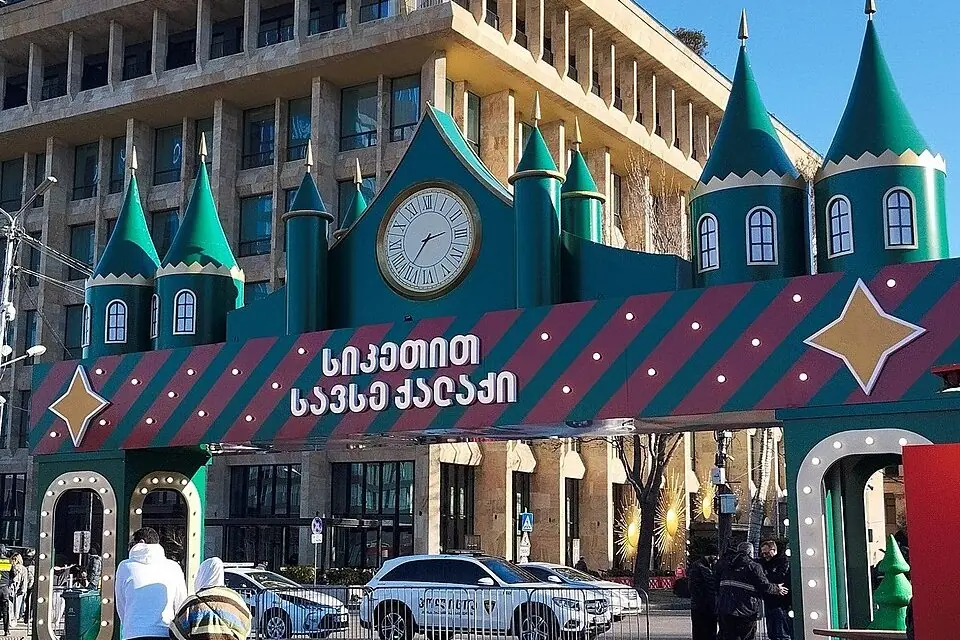
Georgians call their alphabet ანბანი (anbani), a word built from the names of its first two letters, ani and bani, in the same way that alphabet joins Greek alpha and beta. The script you meet on shop fronts, banknotes and road signs is Mkhedruli. It looks intricate but is forgiving: spelling matches speech, so once you know the 33 sounds you can read any word aloud.
| Question | Short answer |
|---|---|
| Name in Georgian | ანბანი (anbani); the modern script is მხედრული (Mkhedruli) |
| How many letters | 33: 5 vowels and 28 consonants (38 before five went out of use) |
| Direction | Left to right, in horizontal lines |
| Capital letters | None in ordinary writing; an all-caps style, Mtavruli, is used for headings |
| Scripts in its history | Asomtavruli, Nuskhuri and Mkhedruli, all with the same letter names and order |
| Oldest dated writing | About 430 near Bethlehem; 493-494 at Bolnisi Sioni inside Georgia |
| Languages written with it | Georgian, plus Mingrelian, Svan and Laz, which add a few letters of their own |
| UNESCO status | On the intangible heritage list since 2016 |
| Georgian Language Day | 14 April |
The letter shapes owe nothing to Latin, Cyrillic or Armenian, even though the original letter order copies Greek. Once you know them you start spotting them everywhere, from wine labels and metro maps to the receipt from your guesthouse.
Asomtavruli, Nuskhuri and Mkhedruli: the three Georgian scripts
Over roughly 1,600 years Georgian has been written in three scripts. Think of them as three generations of one alphabet: each letter keeps its name, its place in the sequence and its sound, and only its shape changes.
Asomtavruli, the rounded capitals (5th century onwards)
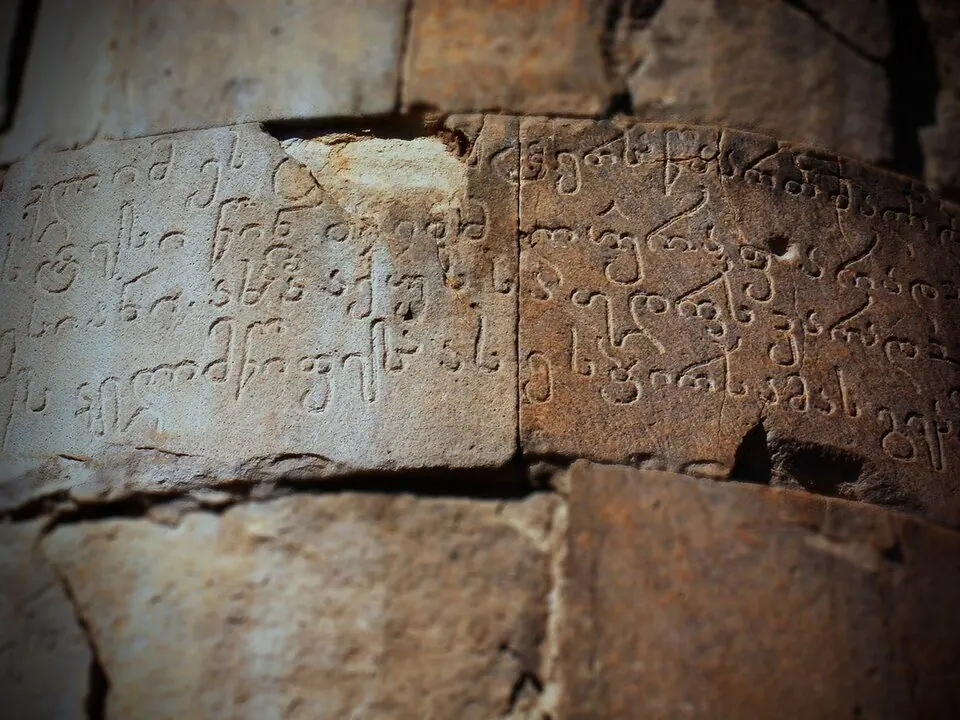
Asomtavruli is the oldest form on record and the one carved on early churches. Its name combines aso, letter, and mtavari, chief, so it means something like capital letters. Its other name, mrgvlovani, means rounded, after letters built from circles, straight lines and right angles, all of one height in the earliest examples. From the 9th century scribes used it less for books, but masons kept cutting it into church walls for centuries, and icon painters still label saints with it.
Nuskhuri, the script of church books (9th century onwards)
Nuskhuri developed from Asomtavruli as a smaller, more angular hand that was faster to write on parchment. Its earliest dated example is an inscription of 835 at Ateni Sioni, and the oldest manuscripts written in it date from 864. Scribes paired the two much as Latin pairs upper and lower case: Asomtavruli for titles and chapter initials, often in red or gold, and Nuskhuri for the text. That pairing is called khutsuri, the priests' script, and the Georgian Orthodox Church still uses it for liturgical books.
Mkhedruli, the everyday script (10th century onwards)
Mkhedruli takes its name from mkhedari, a horseman or warrior, and started life as the secular hand of the royal court. The oldest dated Mkhedruli inscription, of 982, is once again at Ateni Sioni, and royal charters of the 11th century were drawn up in it. For centuries the church kept to khutsuri while kings, poets and merchants wrote Mkhedruli. Printing tipped the balance. When a church press in Rome turned out the earliest printed Georgian book in 1629, a dictionary pairing Georgian with Italian, it used Mkhedruli, and as presses spread it became, by the 19th century, the only script most people used outside the church.
| Asomtavruli | Nuskhuri | Mkhedruli | |
|---|---|---|---|
| First three letters (a, b, g) | Ⴀ Ⴁ Ⴂ | ⴀ ⴁ ⴂ | ა ბ გ |
| Earliest dated example | About 430 (Bir el Qutt, near Bethlehem) | 835 (Ateni Sioni) | 982 (Ateni Sioni) |
| Shape | Round and upright, letters of equal height | Small, slanting and angular | Rounded, with tall and hanging strokes |
| Main use in the past | Stone inscriptions, early manuscripts, chapter titles | Church manuscripts | Royal charters, letters, secular books |
| Where you see it now | Church walls, icons, decorative lettering | Liturgical books and church calligraphy | Everything: signs, menus, books, phones |
If the first row of the table shows empty boxes, your device has no font for the two older scripts. In all three columns the letters are ani, bani and gani.
Where did the Georgian alphabet come from?
Nobody knows for certain who created the Georgian script or when. Most historians link it to the 4th-century conversion to Christianity of Kartli (known to classical writers as Iberia), when Georgians needed their own letters to translate the Gospels. That places the invention between the 330s and about 430, the date of the oldest surviving examples.
Two traditions offer other answers. A medieval chronicle, the Life of the Kings of Kartli, written around 800, names King Parnavaz I, who ruled in the 3rd century BC, as the inventor; most scholars regard this as legend because nothing written in Georgian from that era has turned up. Armenian sources of the 5th century credit Mesrop Mashtots, who devised the Armenian alphabet, but Georgian historians and several Western ones judge that passage unreliable or a later insertion. Inscription fragments dug up at Nekresi in Kakheti in the 1980s were dated by their finder to before Christ, a dating few specialists accept.
The structure is clearer than the origin. The letters follow Greek order, with sounds Greek lacked added at the end, and like Greek letters they once served as numerals: ა was 1, ი 10, რ 100 and the last letter of the old alphabet 10,000. Medieval builders dated their work this way.
The oldest dated Georgian writing was found outside the country. In 1952 the Franciscan archaeologist Virgilio Corbo dug out a Georgian monastery at Bir el Qutt, near Bethlehem, whose mosaic floor contains Asomtavruli prayers of about 430; they are kept in the Terra Sancta Museum in Jerusalem. Inside Georgia, the earliest dated inscriptions are the building texts of Bolnisi Sioni from 493-494.
The 33 Georgian letters with English sounds
The table follows alphabetical order. The romanised column uses Georgia's national system, adopted in 2002 by the state cartography service and the Institute of Linguistics, which adds an apostrophe to the six ejectives. The sound column is only a rough guide; a Georgian saying the word is the best teacher.
| Letter | Name | Romanised | Sounds roughly like |
|---|---|---|---|
| ა | ani | a | a in father, kept short |
| ბ | bani | b | b in bed |
| გ | gani | g | g in go, never soft |
| დ | doni | d | d in dog |
| ე | eni | e | e in bed |
| ვ | vini | v | v in van |
| ზ | zeni | z | z in zoo |
| თ | tani | t | t in top, with a puff of air |
| ი | ini | i | ee in meet, kept short |
| კ | k'ani | k' | k with a tight pop and no breath (ejective) |
| ლ | lasi | l | l in let |
| მ | mani | m | m in map |
| ნ | nari | n | n in net |
| ო | oni | o | o in fort, kept short |
| პ | p'ari | p' | p squeezed out with a pop, no puff of air (ejective) |
| ჟ | zhani | zh | s in measure |
| რ | rae | r | a tapped r, as in Spanish pero |
| ს | sani | s | s in sun |
| ტ | t'ari | t' | a clipped t with a glottal pop (ejective) |
| უ | uni | u | oo in food, kept short |
| ფ | pari | p | p in pot, with a puff of air |
| ქ | kani | k | k in kite, with a puff of air |
| ღ | ghani | gh | a soft gargle, close to the French r |
| ყ | q'ari | q' | a k pushed far back in the throat, with a pop (ejective) |
| შ | shini | sh | sh in ship |
| ჩ | chini | ch | ch in chip, with a puff of air |
| ც | tsani | ts | ts in cats, with a puff of air |
| ძ | dzili | dz | ds in beds |
| წ | ts'ili | ts' | ts with a sharp pop in place of breath (ejective) |
| ჭ | ch'ari | ch' | a crisp ch released from a closed throat (ejective) |
| ხ | khani | kh | ch in Scottish loch |
| ჯ | jani | j | j in jam |
| ჰ | hae | h | h in hat |
Older texts contain five more letters: ჱ (he), ჲ (hie), ჳ (vie), ჴ (qari, also called hari) and ჵ (hoe). Their sounds had merged with other letters or dropped out of speech, and the literacy society that the writer Ilia Chavchavadze and fellow reformers set up in 1879 took them out of the alphabet, leaving the 33 used today. Several survive in the Svan and Mingrelian alphabets, and ჶ (fi) occasionally appears for an f sound in foreign names.
Georgian letters with no English equivalent: the ejectives
Six Georgian consonants have no match in English: კ (k'), პ (p'), ტ (t'), წ (ts'), ჭ (ch') and ყ (q'). Linguists call them ejectives. To make one, shut your throat as if you were about to lift something heavy, shape the consonant in your mouth and let it go. The air trapped above your closed throat, not breath from the lungs, pushes the sound out, so it is short, crisp and faintly clicky.
Five have an aspirated partner, said with a puff of breath like an English k, p or t at the start of a word: ქ (k), ფ (p), თ (t), ც (ts) and ჩ (ch). Swapping them changes the meaning, as the pairs below show. The sixth, ყ (q'), is a k made far back in the throat with the same pop. Two more sounds you may know from other languages: ღ (gh), close to the French r, and ხ (kh), as in Scottish loch.
| Ejective | Meaning | Aspirated | Meaning |
|---|---|---|---|
| კარი (k'ari) | door | ქარი (kari) | wind |
| პური (p'uri) | bread | ფური (puri) | cow |
| წელი (ts'eli) | year; also waist | ცელი (tseli) | scythe |
Georgian also strings consonants together in ways English never does. მცხეთა, Mtskheta, puts three consonant sounds before its first vowel, and the verb გვფრცქვნი (gvprtskvni, you peel us) is a favourite party piece with eight consonant letters in a row. Do not slip extra vowels in; say each consonant quickly and move on. Stress is weak, so give every syllable about the same weight.
Why does the Georgian alphabet have no capital letters?
Georgian is written in one case only. A sentence, a personal name and a city all begin with an ordinary letter, so თბილისი looks the same at the start of a sentence as in the middle of one. Mkhedruli descends from the small book hand of the scribes, and when it replaced the older scripts it brought no set of capitals along. Its rhythm comes from height instead. Only four letters, ა, თ, ი and ო, stay between the middle lines; thirteen reach up above them, thirteen hang below, and ქ and ჭ (plus a handwritten ჯ) do both.
There is a capital-style alphabet, called Mtavruli, in which every letter has the same height. It works like English block capitals, for headlines, shop signs and emphasis, as in ᲡᲐᲥᲐᲠᲗᲕᲔᲚᲝ (Sakartvelo, Georgia). Around 1900 a few printers tried Mtavruli for the first letter of sentences and names, and in the 1950s the linguist Akaki Shanidze suggested borrowing Asomtavruli letters as sentence capitals. Neither habit spread. When Mtavruli joined the Unicode standard in 2018 it was set up as all-caps only, so phones and word processors do not capitalise the first letter of a Georgian sentence.
15 useful Georgian words written in Georgian script
The words that make people smile, plus the ones you need on doors and signs. An apostrophe marks an ejective; leave it out and you will still be understood.
| Georgian | Romanised | Meaning |
|---|---|---|
| გამარჯობა | gamarjoba | hello |
| მადლობა | madloba | thank you |
| დიახ / კი | diakh / k'i | yes (polite / everyday) |
| არა | ara | no |
| ბოდიში | bodishi | sorry, excuse me |
| ნახვამდის | nakhvamdis | goodbye |
| გაუმარჯოს | gaumarjos | cheers |
| წყალი | ts'q'ali | water |
| პური | p'uri | bread |
| ანგარიში | angarishi | the bill |
| საქართველო | sakartvelo | Georgia |
| შესასვლელი | shesasvleli | entrance |
| გასასვლელი | gasasvleli | exit |
| ტუალეტი | t'ualet'i | toilet |
| აფთიაქი | aptiaki | pharmacy |
Gamarjoba comes from the root for victory, so every greeting wishes someone success. The reply is გაგიმარჯოს (gagimarjos), and to an older person or a group you say გამარჯობათ (gamarjobat). The same root gives gaumarjos, raised with every glass at a supra. And Sakartvelo, the land of the Kartvelians, is what Georgians call their country.
UNESCO listing and Georgian Language Day on 14 April
On UNESCO's intangible heritage list since 2016
On 30 November 2016, meeting in Addis Ababa for its 11th session, UNESCO's intangible heritage committee added the living culture of Georgia's three scripts to its Representative List. Georgia had given the scripts national heritage status in 2015, and they became its third UNESCO entry, after polyphonic singing and qvevri winemaking. The listing protects a practice, not a monument: children learning Mkhedruli at school, the church keeping Asomtavruli and Nuskhuri alive in its books and icons, and calligraphers and type designers reworking all three.
Georgian Language Day
Every 14 April Georgia marks დედაენის დღე (dedaenis dghe), Mother Language Day. It recalls 14 April 1978, when a draft constitution for Soviet Georgia no longer named Georgian as the republic's only state language and thousands of people, most of them students, marched through Tbilisi in protest. The party chief, Eduard Shevardnadze, won Moscow's agreement to keep the old wording, an unusual retreat for the Soviet state. The day has been observed since 1990. It is not a public holiday, so shops and offices stay open, but schools, universities and the media mark it with readings, lectures and concerts.
The name echoes დედა ენა (Deda Ena, Mother Tongue), the primer by the teacher Iakob Gogebashvili first published in 1876, from which generations of Georgian children learned their letters. Its opening words, აი ია (ai ia, here is a violet), are still quoted by Georgians of every generation.
Where to see old Georgian inscriptions and manuscripts
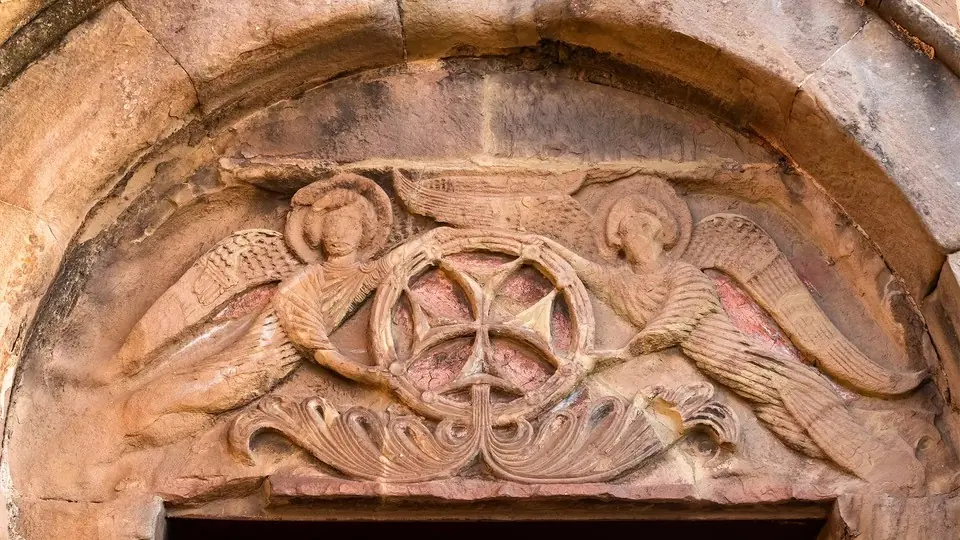
Georgia's churches double as its oldest archive. Builders dated and signed their work in Asomtavruli, painters captioned every saint and king, and pilgrims scratched their names into the plaster. These are the best places to see the alphabet's history for yourself.
Mtskheta and Tbilisi
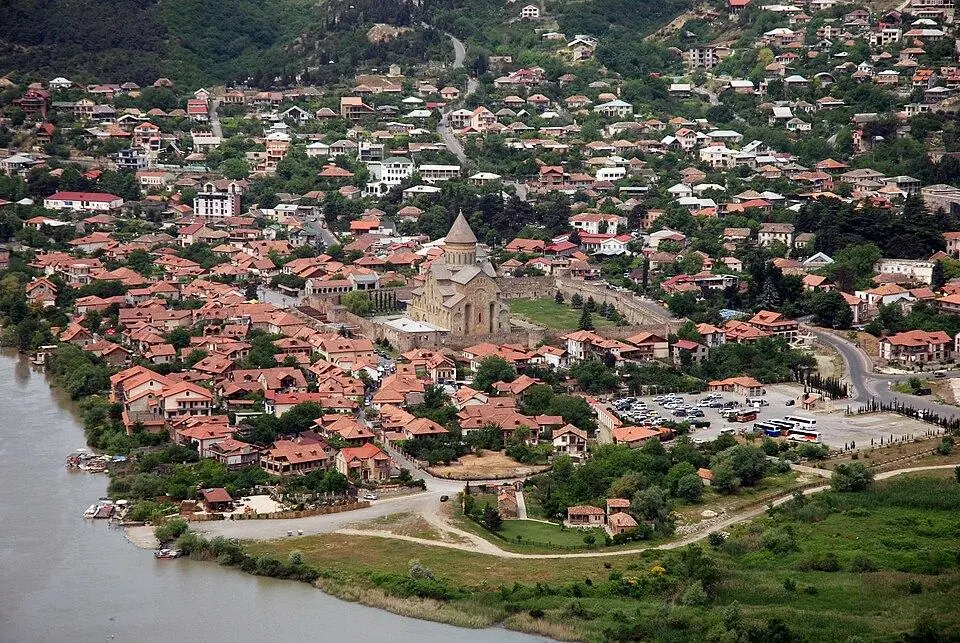
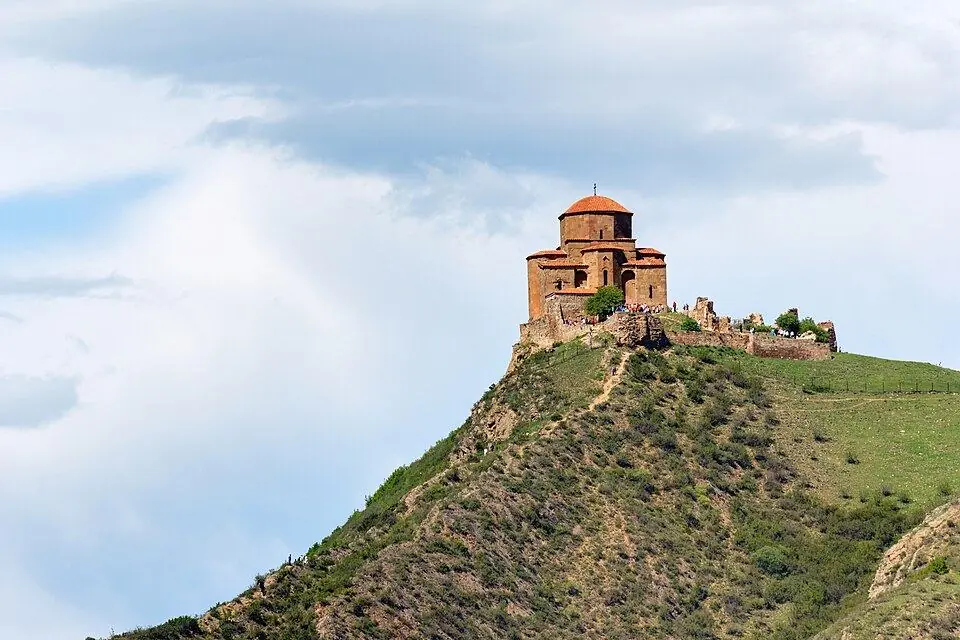
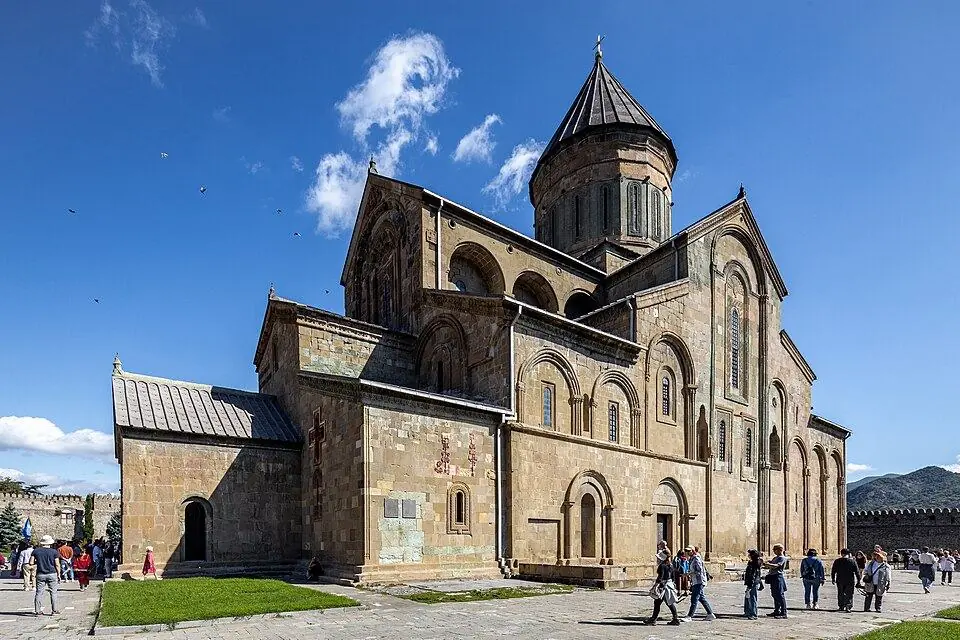
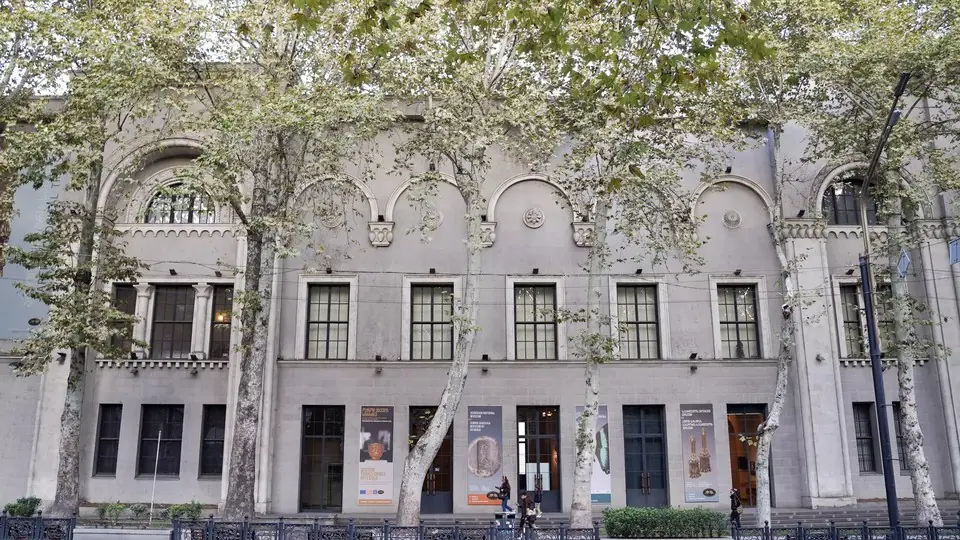
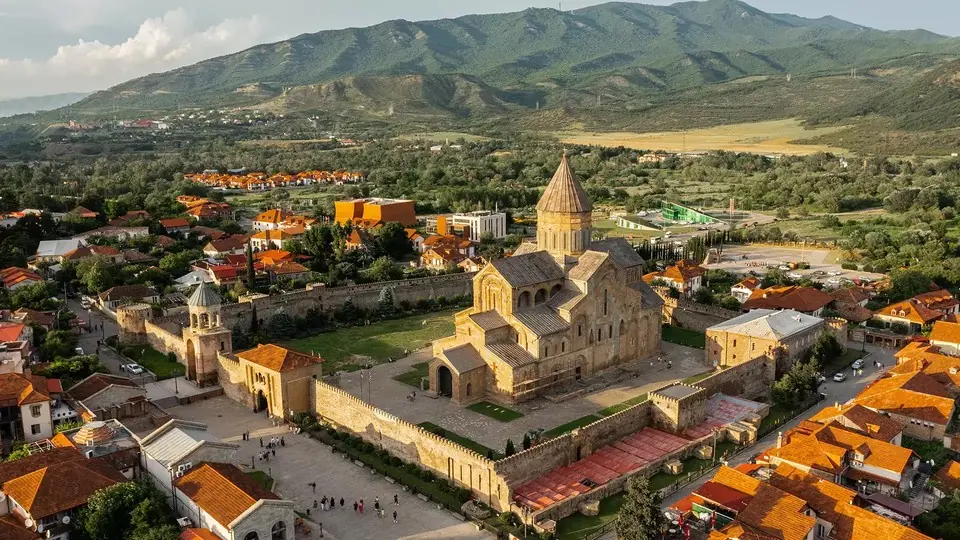
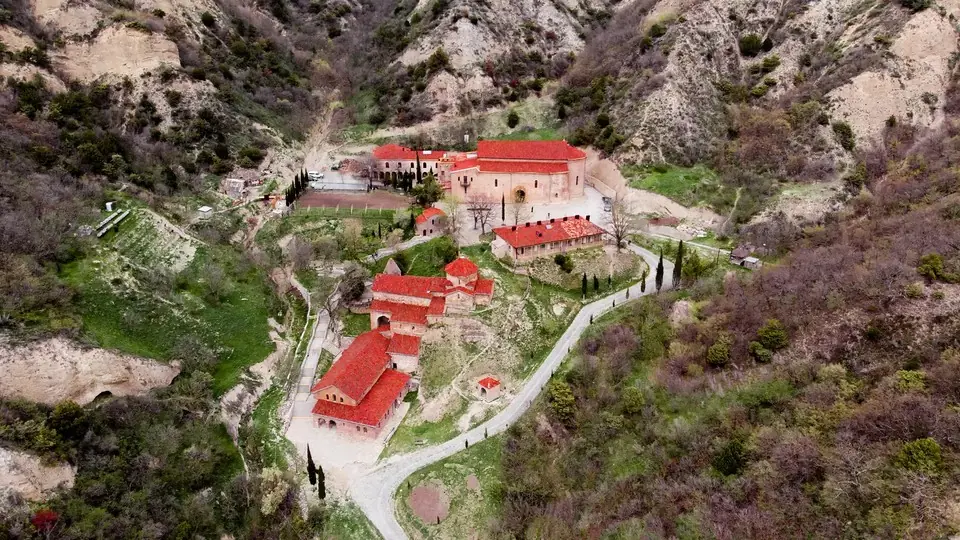
In Mtskheta, 20 km north of Tbilisi, the facades of Jvari Monastery (about 590-605) carry relief portraits of the princes who paid for it, each identified by a line of Asomtavruli. Below it, Svetitskhoveli Cathedral (1010-1029) has one of Georgia's best-loved inscriptions: on the north wall a carved right hand grips a mason's square beside a line naming the architect, Arsukisdze. In Tbilisi, the Georgian National Museum on Rustaveli Avenue holds the original Bolnisi building inscriptions; displays change, so ask whether they are on show. The National Centre of Manuscripts, which keeps the largest collection of old Georgian books, holds occasional exhibitions.
Bolnisi Sioni and Ateni Sioni in Kartli
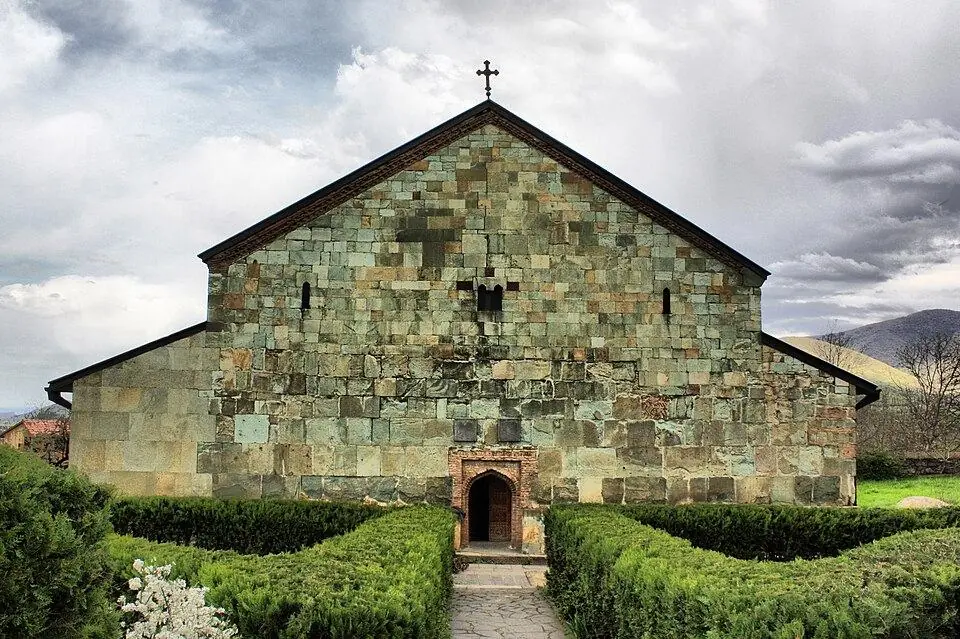
Bolnisi Sioni stands in the village of Kvemo Bolnisi, about 6 km south of Bolnisi town and roughly 65 km from Tbilisi. Work on the basilica started in 478-479, and its Asomtavruli inscriptions of 493-494 record the completion, which makes it the earliest building in Georgia known to carry its own finishing date. The original stones went to Tbilisi for safekeeping and casts now fill their places, but this long, dim church is still the nearest you can get to the beginning of written Georgian inside the country. Dmanisi is close enough to share the day.
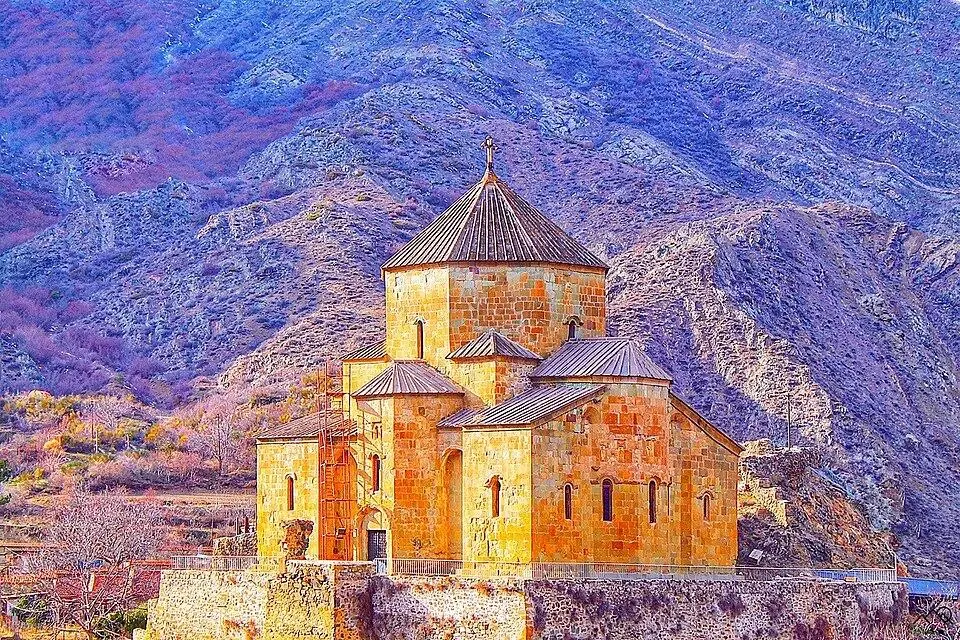
Ateni Sioni, a 7th-century church in the Tana valley about 10 km south of Gori, is a stone notebook of Georgian writing. Its walls carry the oldest known Nuskhuri inscription, dated 835, the earliest dated Mkhedruli, from 982, many later Georgian notes, and an Armenian line naming a builder called Todosak. Binoculars help with the higher lines, and the 11th-century frescoes inside deserve time of their own.
Gelati, Vardzia, Mestia and Batumi
Gelati, founded near Kutaisi by King David the Builder in 1106, was a monastery and an academy where scholars copied and translated books, and its painted portraits of kings are named in Asomtavruli. At Vardzia, the cave monastery in the far south, the Church of the Dormition holds the famous fresco of Queen Tamar beside her father George III, captioned in the same script. For manuscripts, go to Mestia: the Svaneti Museum shows Gospel books that Svan families hid in their towers for centuries, including the Adishi Gospels of 897 and the Mestia Gospels of 1033.
For a modern salute to the alphabet, walk to the northern end of Batumi's seafront, where the 130 m Alphabetic Tower wraps all 33 Mkhedruli letters around a double spiral of steel.
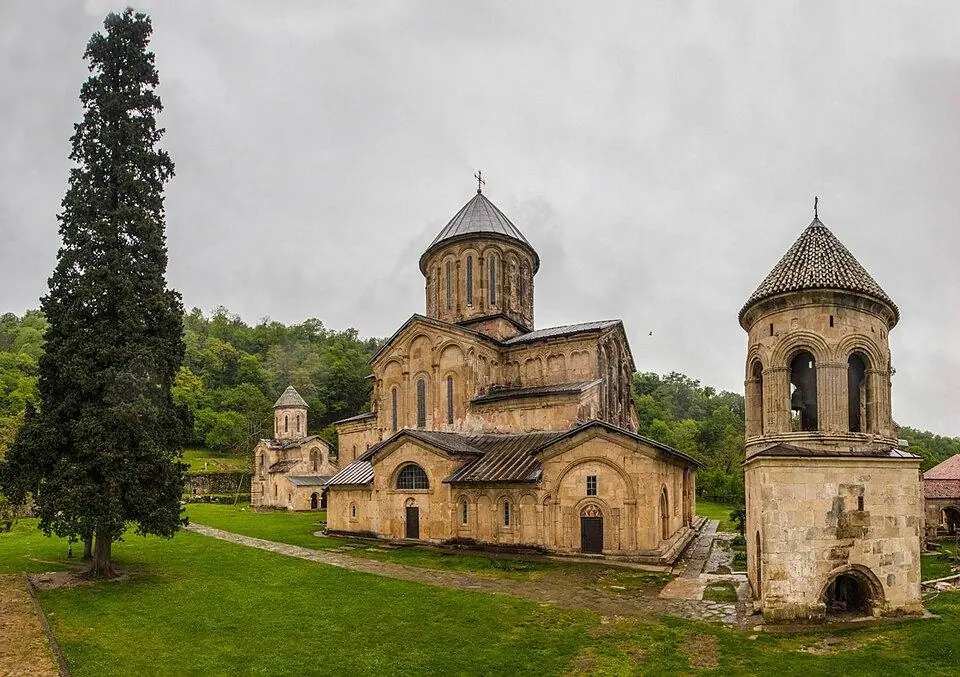
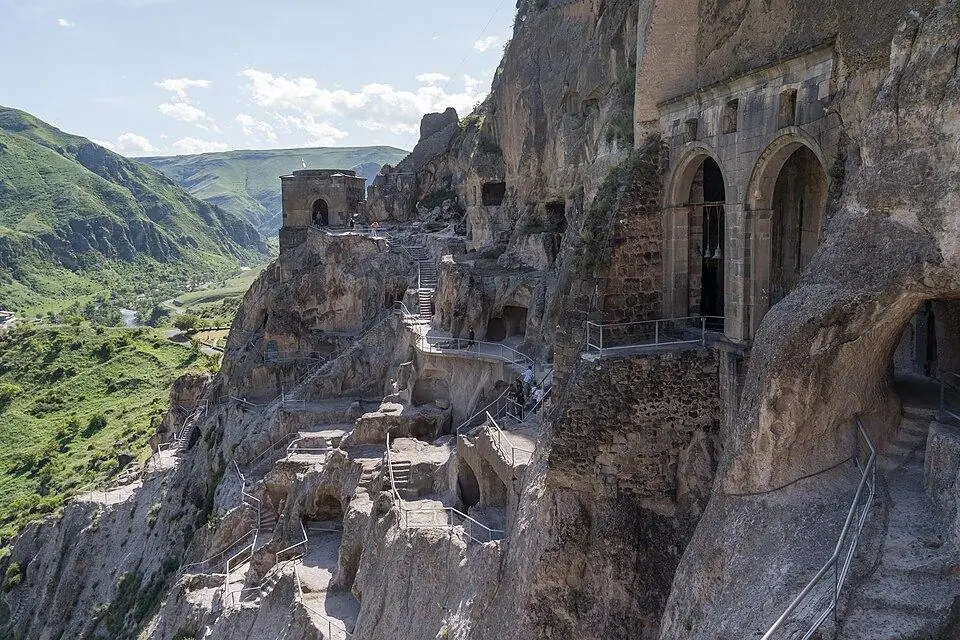


Our week-long Orthodox Georgia pilgrimage stops at Mtskheta, Ateni Sioni and Gelati, and a guide in your language explains the inscriptions on the way. Like every tour we run it is private, so you choose the dates and there is no upper limit on the size of your group.
Georgian alphabet: frequently asked questions
How many letters are in the Georgian alphabet?
Today's alphabet uses 33 letters: 5 vowels (a, e, i, o, u) and 28 consonants. The historical alphabet had 38, but five letters whose sounds had disappeared were dropped from the 1880s onwards. A few extra letters are used in Svan, Mingrelian and Laz.
Is the Georgian alphabet hard to learn?
The script is easier than it looks: one sound per letter, nothing silent and no capitals, so most visitors can sound out signs after a few evenings. The hard part is the language itself, above all its verbs.
Is the Georgian script related to Russian Cyrillic or Armenian?
No. Georgian letters are unrelated to Cyrillic, and the Armenian alphabet, though of the same era, is a separate system. The original Georgian letter order follows Greek, and the language belongs to the Kartvelian family, with no known relatives outside the Caucasus.
Which Georgian script is used today?
Mkhedruli is used for everything in daily life, from newspapers to text messages. Asomtavruli and Nuskhuri survive mainly in the church, on icons, in liturgical books and as decorative lettering.
Does Georgian have uppercase and lowercase letters?
No. Georgian is written in one case, so names and sentences start with an ordinary letter. A capital-style form called Mtavruli exists, but it is used only for all-caps headings, signs and emphasis, never for the first letter of a sentence.
How do you write and say hello in Georgian?
Hello is გამარჯობა, pronounced gamarjoba, and literally wishes the other person victory. Reply with გაგიმარჯოს (gagimarjos). Thank you is მადლობა (madloba).
When is Georgian Language Day?
On 14 April. Georgians call it Mother Language Day, and it honours the students and others who marched in Tbilisi on 14 April 1978 to defend Georgian's constitutional status. Observed every year since 1990, it is a working day rather than a day off.
How old is the Georgian alphabet?
The oldest dated Georgian inscriptions, from about 430, come from a Georgian monastery near Bethlehem; inside Georgia, Bolnisi Sioni's date from 493-494. Most historians place the alphabet's creation in the 4th or early 5th century, after the conversion to Christianity, while medieval tradition credits King Parnavaz I in the 3rd century BC.