- Georgia is an independent South Caucasus country along the Black Sea's eastern shore, with Russia, Turkey, Armenia and Azerbaijan as neighbours.
- By the most widely used continental boundary, the crest of the Greater Caucasus, most of Georgia lies in Asia and a strip of its northern mountains in Europe; institutionally it belongs to European bodies such as the Council of Europe, which it joined in 1999.
- The EU made Georgia a candidate country on 14 December 2023; since June 2024 EU leaders have described the accession process as halted, and in November 2024 the Georgian government said it would not pursue accession talks until 2028.
- The capital is Tbilisi, home to about 1.37 million of the country's 3.94 million people (Geostat, 1 January 2026); the language is Georgian, the currency is the lari and the clocks stay on UTC+4 all year.
- It has nothing to do with the US state: Georgians call their country Sakartvelo, and the English name most likely comes from gurj, the Persian word for Georgians.
Where is Georgia the country? It lies in the South Caucasus, the isthmus that separates the Black Sea from the Caspian, where Eastern Europe meets Western Asia. Russia lies north, across the Greater Caucasus; Turkey and Armenia lie south; Azerbaijan lies south-east; and the Black Sea forms Georgia's western edge. Its capital, Tbilisi, sits at roughly the latitude of Rome, Barcelona and Chicago, a little over two hours' flight east of Istanbul.
That short answer leaves the questions people actually argue about. Is Georgia in Europe or Asia? Is it a real country, or somewhere in the American South? How hard is it to reach? This guide covers the neighbours, the continental boundary lines and the institutional facts, the origin of the name, quick facts from the national statistics office, flight times, the regions and the two occupied territories. We guide travellers across the whole country from our base in Tbilisi, so the practical notes come from the road.
Where is Georgia the country? Its place on the map
Georgia covers the north-western part of the South Caucasus, which it shares with Armenia and Azerbaijan. It stretches about 550 km from the Black Sea coast to the dry steppe on the Azerbaijani border, and lies between roughly 41° and 43.5° north.
Two mountain systems frame the country. The Greater Caucasus forms its northern wall and most of the frontier with Russia, with summits above 5,000 m such as Shkhara (5,193 m) and Kazbek (5,054 m). The lower Lesser Caucasus rises in the south toward Turkey and Armenia. Between the two ranges lie the lowlands where most Georgians live: the humid Kolkheti plain in the west, whose rivers run to the Black Sea, and the drier plains of Kartli and Kakheti in the east, which drain through the Mtkvari (Kura) toward the Caspian.
A low ridge running north to south, the Likhi range, divides a wet, green west from a sunnier east, and the main highway crosses it at the Rikoti Pass. Georgia has about 310 km of Black Sea shore, part of it in occupied Abkhazia, but no Caspian coast: Azerbaijan lies in between, and Baku is around 450 km east of Tbilisi as the crow flies.
A few reference points
- Batumi, the main Black Sea resort, is less than 20 km from the Turkish border at Sarpi.
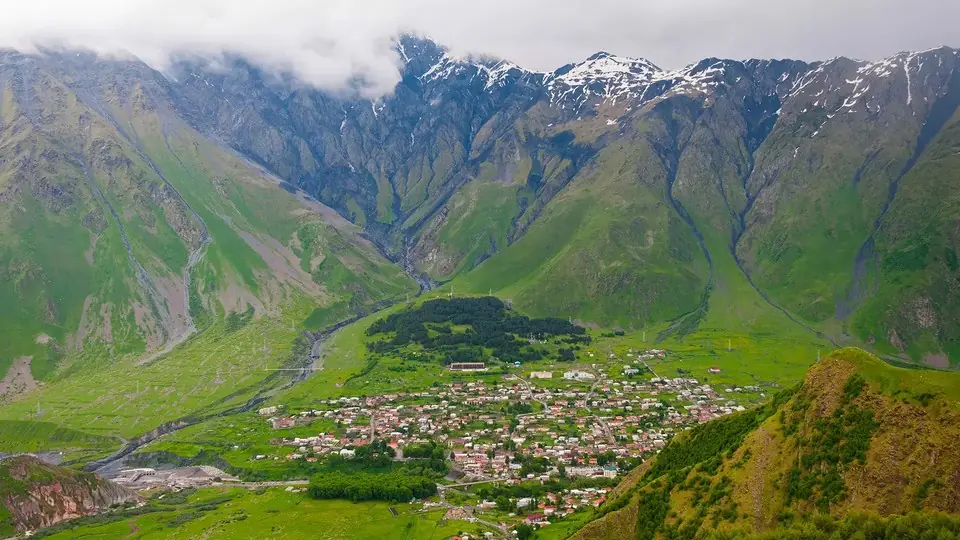
- Stepantsminda, the mountain town under Kazbek, is 11 km from the Russian border.
- Yerevan, the capital of Armenia, is about 280 km south of Tbilisi by road, a drive of five to six hours.
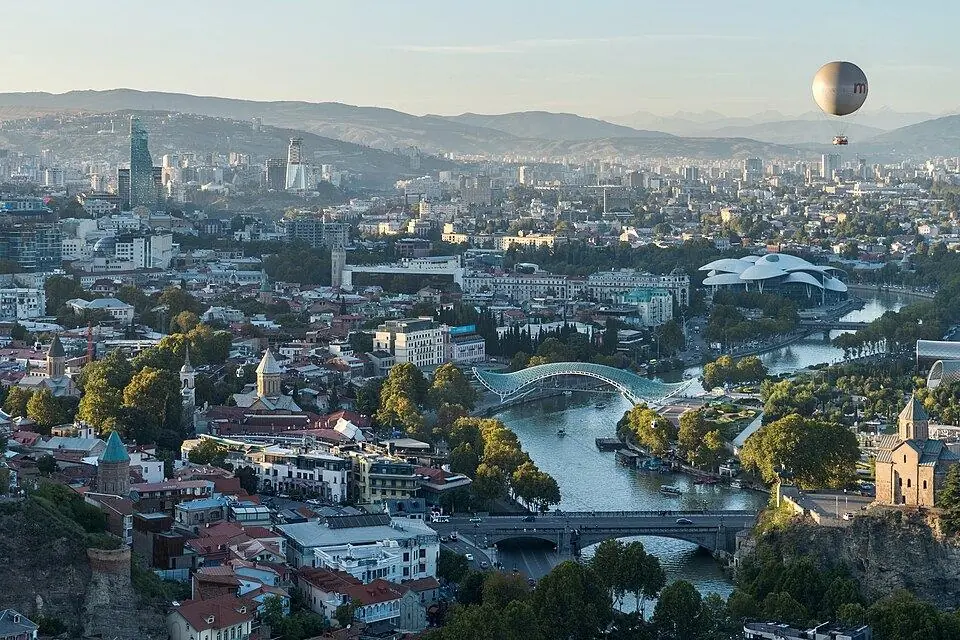
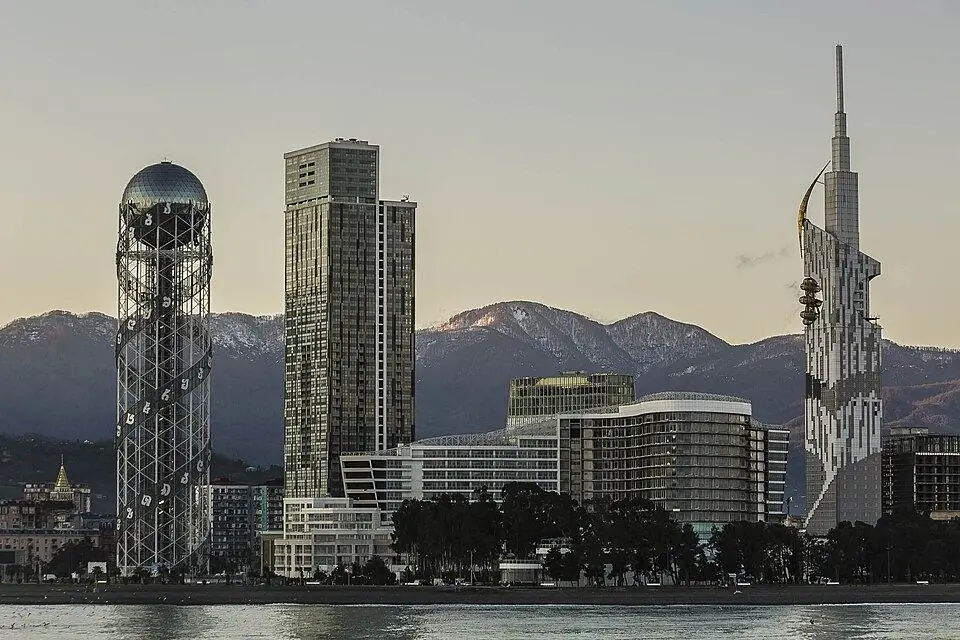
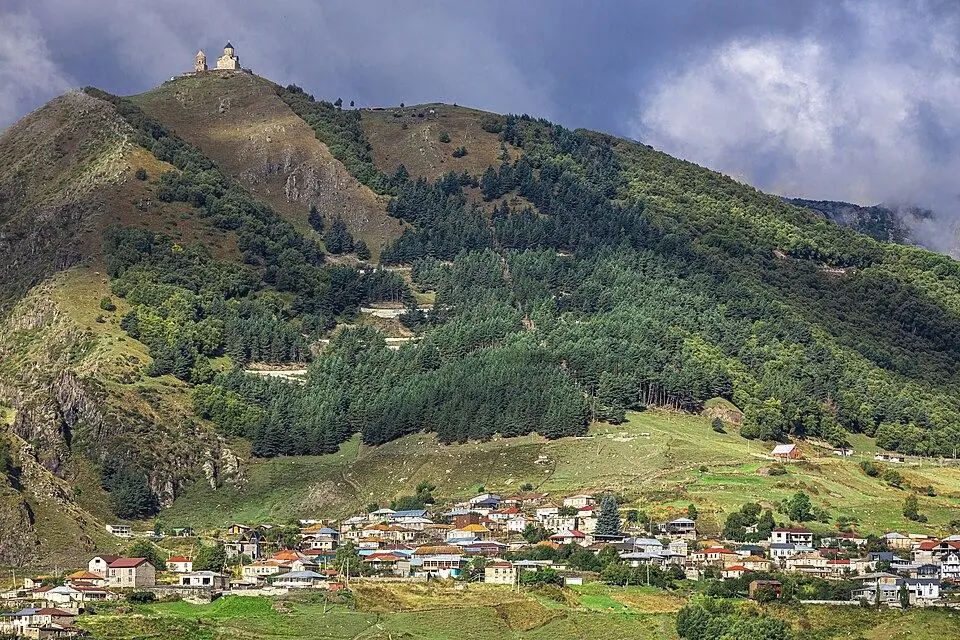
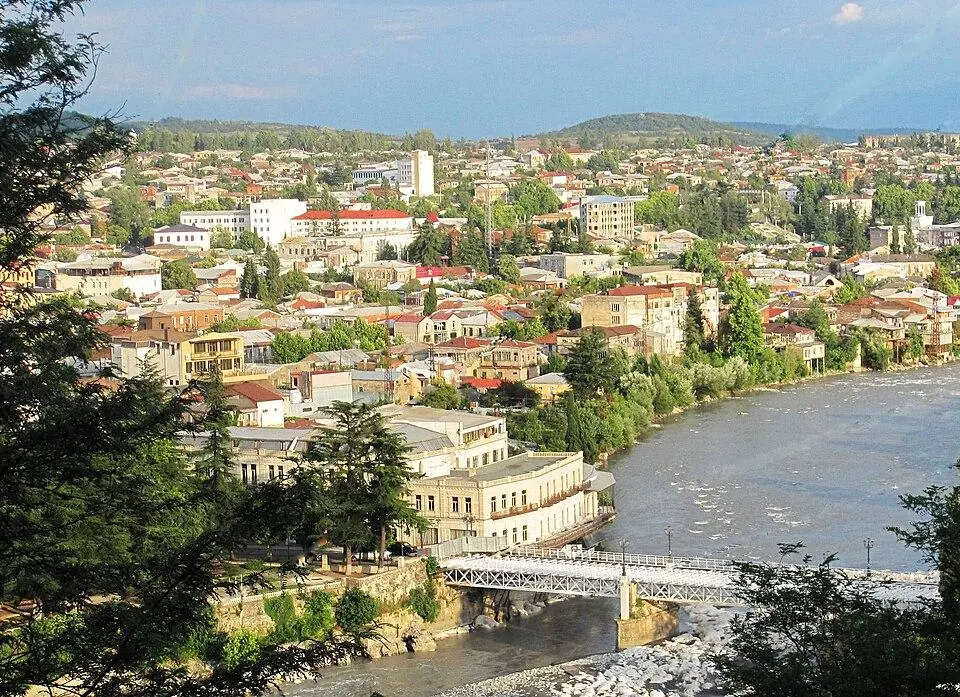
Which countries border Georgia? Russia, Turkey, Armenia and Azerbaijan
Georgia has four land neighbours. The lengths below are the official figures of the Georgian Border Police (Ministry of Internal Affairs) for the land border, which total 1,839 km. The ministry adds that they may still change as joint commissions finish delimiting and marking the line.
| Neighbour | Direction | Land border (official) | Main crossings for travellers | Status, October 2026 |
|---|---|---|---|---|
| Russia | North, along the Greater Caucasus | 894 km | Upper Lars, on the Georgian Military Road north of Stepantsminda | Open; rules for foreigners change often, so check before you go |
| Azerbaijan | South-east | 446 km | Red Bridge (Tsiteli Khidi) south-east of Tbilisi; Lagodekhi in Kakheti | Closed to most foreigners entering Azerbaijan since 2020; leaving Azerbaijan for Georgia has generally been allowed |
| Turkey | South-west | 275 km | Sarpi near Batumi; Vale near Akhaltsikhe; Kartsakhi in Javakheti | Open |
| Armenia | South | 224 km | Sadakhlo, Guguti and Ninotsminda (Bavra) | Open |
The Russian figure includes the sections along Abkhazia and the Tskhinvali region, which the government in Tbilisi does not control. Upper Lars is the only crossing to Russia that Georgia itself operates, and entering Georgia from Russia through either occupied region is illegal under Georgian law.
Tbilisi is close to the southern frontiers: the Red Bridge crossing into Azerbaijan is about an hour away by road and Sadakhlo, on the way to Yerevan, about an hour and a half. Our guide to border crossings with Armenia and Azerbaijan covers each post in detail.
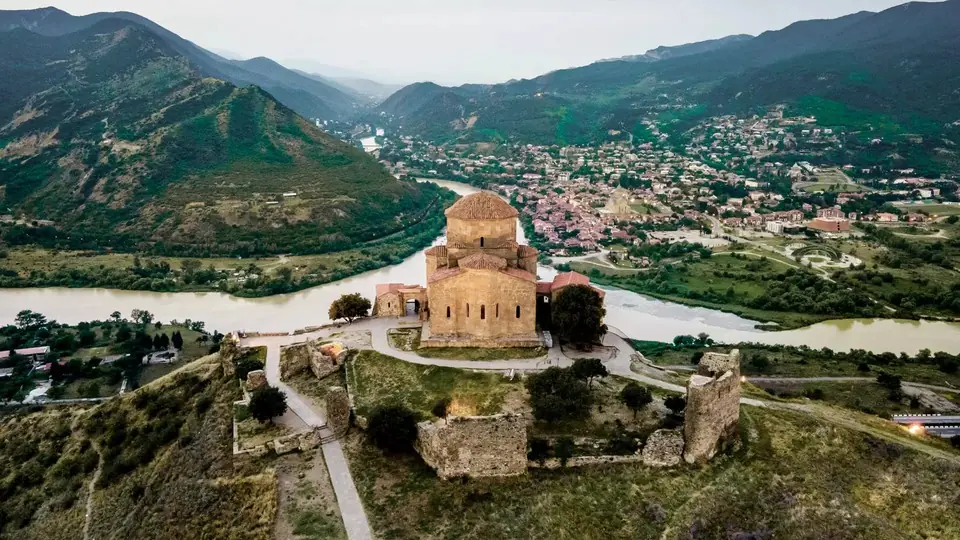
Is Georgia in Europe or Asia?
Reputable sources give both answers, because the line between Europe and Asia is a convention rather than something you can see on the ground, and in the Caucasus geographers have drawn it in several places. These are the main lines and where each one leaves Georgia.
| Boundary convention | Who uses it | Where it puts Georgia |
|---|---|---|
| The crest (watershed) of the Greater Caucasus | The most common modern choice, followed by the National Geographic atlas among others | Mostly in Asia. The valleys north of the main ridge, including Kazbegi, the Shatili side of Khevsureti and Tusheti, fall in Europe, which makes Georgia transcontinental |
| The Kuma-Manych Depression, north of the Caucasus | Long standard in Russian and Soviet geography | Entirely in Asia, along with the whole Caucasus |
| The Aras river and the Turkish and Iranian borders, south of the Caucasus | One of the schemes Encyclopaedia Britannica describes | Entirely in Europe |
| The Phasis (Rioni) and Kura rivers | Ancient Greek geographers such as Anaximander and Herodotus | Split in two, with the line following the Rioni past Kutaisi and the Mtkvari (Kura) through Tbilisi |
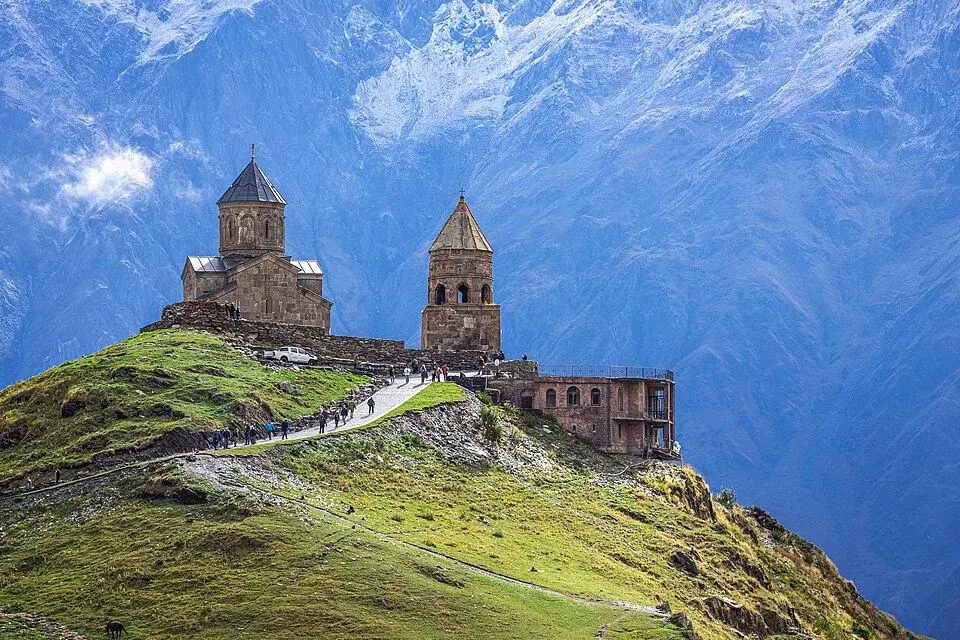
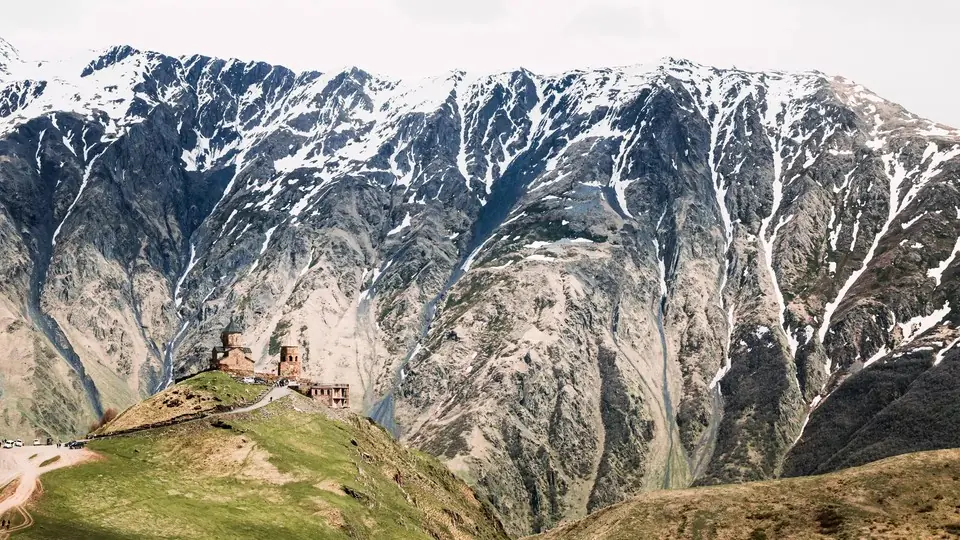
On the watershed line, Gergeti Trinity Church above Stepantsminda stands in Europe while Tbilisi is in Asia, about three hours apart by road. The Jvari Pass (2,379 m) on the Georgian Military Road is where you cross from one to the other: rivers south of it flow to the Aragvi, while the Tergi on the far side runs north into Russia.
Statistical bodies must put each country in one box. The UN's M49 scheme, copied by many databases, files Georgia under Western Asia, which is why some rankings group it with Asian countries. UNESCO counts it in its Europe and North America region.
Institutional and cultural ties with Europe
Institutions give a clearer answer than maps. Georgia joined the Council of Europe on 27 April 1999, which brings it under the European Court of Human Rights, and has taken part in the OSCE since 1992. Its clubs and national team play in UEFA competitions (the national side reached the knockout rounds of Euro 2024), and it has competed in the Eurovision Song Contest since 2007. The constitution in force since 2018 contains an article (Article 78) that tells state bodies to work toward full integration into the EU and NATO.
Georgia and the European Union: key dates
Georgia is not an EU member. These are the main steps in its relations with the union, as listed by the EU Delegation to Georgia (page updated 7 August 2026):
| Date | What happened |
|---|---|
| 27 June 2014 | EU-Georgia Association Agreement signed, with a free trade chapter known as the DCFTA |
| 1 July 2016 | Association Agreement enters into force |
| 28 March 2017 | Georgians with biometric passports can make Schengen visits without a visa (maximum 90 days in a 180-day window) |
| 3 March 2022 | Georgia applies for EU membership |
| 14 December 2023 | The European Council grants candidate status, on the understanding that nine reform steps are taken |
| 27 June 2024 | The European Council states that the accession process is de facto halted |
| 28 November 2024 | The Georgian government announces it will not pursue the opening of accession negotiations until 2028 |
| 16 December 2025 | Council presidency conclusions describe the accession process as having come to a standstill |
| March 2026 | The European Commission suspends the visa waiver for Georgian diplomatic, service and official passports for 12 months; ordinary passports are not affected |
As of October 2026 Georgia formally remains an EU candidate country. Relations can move quickly, so check the EU Delegation's website for anything newer than this page.
Is Georgia a country? Georgia vs the US state of Georgia
Yes. Georgia is a sovereign state and has been a member of the United Nations since 31 July 1992. On 9 April 1991 it restored its independence and left the Soviet Union, and its national day, 26 May, celebrates the 1918 founding of Georgia's first republic. Apart from the English spelling it has no link with the US state of Georgia, which lies roughly 10,000 km away.
Sakartvelo: what Georgians call their country
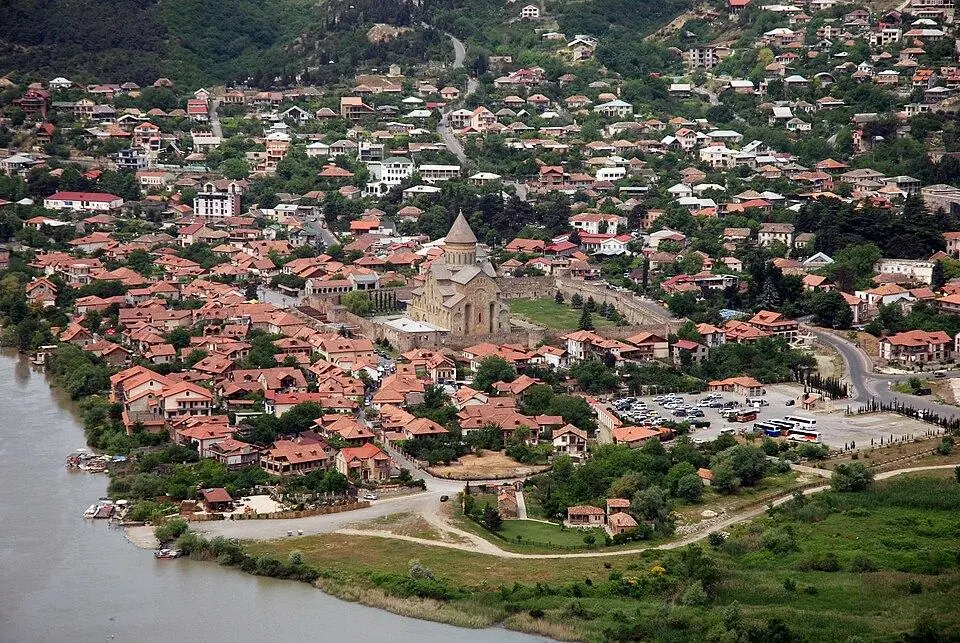
In Georgian the country is Sakartvelo (საქართველო). The word takes kartveli, the name Georgians use for themselves, and wraps it in the prefix sa- and the ending -o, a regular pattern that means 'the land where these people live'. Kartli, the central region around Mtskheta and Gori, is the historic core behind the name. The word appears in writing by about 800 AD, and after King Bagrat III united the Georgian lands in 1008 it came to stand for the whole kingdom. Classical authors used two other names: Colchis for the west, where Jason sailed for the Golden Fleece, and Iberia for the east.
Where does the name Georgia come from? Three theories
- From Persian gurj or gorj (the theory most scholars favour). Medieval Persians called the Georgians gurj, and the word reached Western Europe through Arabic and Syriac forms and the Crusaders around the 11th and 12th centuries. The Russian name, Gruziya, grew from the same root.
- From Saint George. Medieval Western writers explained the name through the country's patron saint, whose image you will see on icons all over Georgia. Most linguists call this a folk explanation.
- From Greek georgos, 'farmer'. The 17th-century French traveller Jean Chardin linked the name to the Greek word for a tiller of the soil. Few scholars accept it today.
At the Georgian government's request, some countries have dropped the Russian-derived name: Japan switched from Gruzia to Jojia in 2015, and Lithuania made Sakartvelas its official form in 2020. The US state has a separate and well-documented origin: the British colony founded there in 1732 was named after King George II.
| Georgia (the country) | Georgia (US state) | |
|---|---|---|
| Location | South Caucasus, on the Black Sea | South-eastern United States, on the Atlantic |
| Capital | Tbilisi | Atlanta |
| Population | About 3.94 million (2026) | About 11 million |
| Area | 69,700 km² | About 154,000 km² |
| Main language | Georgian | English |
| Origin of the name | Sakartvelo in Georgian; English name probably from Persian | King George II of Great Britain |
| Clock | UTC+4 all year | UTC-5, or UTC-4 in summer (8 to 9 hours behind Tbilisi) |
What is the capital of Georgia? Tbilisi and quick country facts
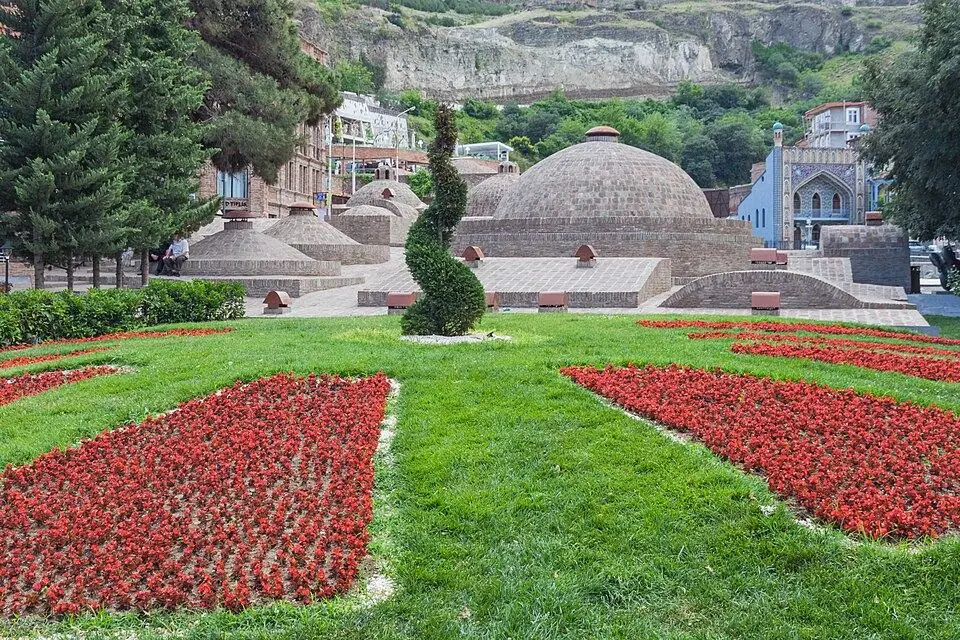
The capital of Georgia is Tbilisi, on the Mtkvari river in the east of the country. By Georgian tradition, King Vakhtang Gorgasali founded the city in the 5th century and his son made it the royal seat in place of Mtskheta. Its name comes from tbili, 'warm', a nod to the sulphur springs that still fill the domed bathhouses of Abanotubani. More than a third of the country's population now lives here.
| Fact | Georgia |
|---|---|
| Capital | Tbilisi, about 1,369,400 people (estimate for 1 January 2026) |
| Population | 3,941,100 (estimate for 1 January 2026); the census of November 2024 counted 3,929,581 |
| Area | 69,700 km², including the occupied territories |
| Official language | Georgian, written in its own 33-letter alphabet; Abkhaz is also official in Abkhazia |
| Mother tongue (2024 census) | Georgian 85.1%, Azerbaijani 6.8%, Armenian 3.5% |
| Religion (2024 census) | Orthodox Christian 82.0%, Muslim 11.1%, with smaller Armenian Apostolic and Catholic communities |
| Currency | Georgian lari (GEL), divided into 100 tetri |
| Time zone | UTC+4 all year, with no daylight saving |
| Government | Parliamentary republic |
| Highest peak | Shkhara, 5,193 m, on the Russian border in Svaneti |
| Phone code and power | +995; 220 V with European C and F plugs |
Population, language and religion figures are from Geostat, the National Statistics Office, and exclude Abkhazia and the Tskhinvali region, which it cannot survey. The area is the figure used by the Georgian National Tourism Administration.
Bank cards work across the cities, but keep some lari in cash for villages, markets and mountain guesthouses.
How far is Georgia? Flight times from London, Dubai, Delhi and New York
Georgia has three international airports: Tbilisi (TBS), the main gateway; Kutaisi (KUT), the base for low-cost flights from Europe, about 3.5 to 4 hours west of the capital by road; and Batumi (BUS) on the coast. The flight times below are typical for the journey to Tbilisi, based on sample schedules seen in October 2026, so treat them as a guide. Flights back west often take a little longer because of headwinds.
| From | Straight-line distance | Typical flight time to Tbilisi | Notes |
|---|---|---|---|
| Baku | About 450 km | About 1 h 10 min | Direct; Azerbaijan's land border stays shut to most incoming travellers |
| Istanbul | About 1,350 km | About 2 h 10 min to 2 h 25 min | Many direct flights a day from both Istanbul airports |
| Dubai and Sharjah | About 2,060 km | About 3 h 15 min to 3 h 30 min | Direct |
| Warsaw | About 2,150 km | About 3 h 40 min | Direct |
| London | About 3,570 km | About 5 h | Direct from Heathrow and Luton |
| Delhi | About 3,240 km | About 7 to 8 h with one stop | IndiGo has flown non-stop since 2023 (check it runs in your season); otherwise via Baku, Sharjah or Kuwait City |
| New York | About 8,980 km | About 13 to 16 h with one stop | Usually via Istanbul or another European hub |
Georgia lets citizens of 91 countries and territories in without a visa for as long as a year, a list that includes every EU state as well as Britain, the United States, Canada and Australia, and 11 more nationalities get shorter visa-free stays by treaty. Travellers from most other countries, India among them, use the online e-visa, although anyone holding a current American, British or Schengen visa or residence card (or one issued by another approved country) can skip it and stay up to 90 days in any 180. One rule applies to everybody: since 1 January 2026, foreign tourists must carry a health and accident policy valid in Georgia for every day of the trip, insured for at least 30,000 GEL. Check your passport in our visa checker, and see our guide to entry requirements for the details.
Regions of Georgia at a glance
Georgia is divided into nine regions (mkhare), two autonomous republics, Adjara and Abkhazia, and the capital city. Most trips combine Tbilisi with two or three regions. Our map of places to visit in Georgia, on the destinations page, pins every town, monastery and trail we cover, so you can see how they fit together.
| Region | Where | Best known for | Population, 1 Jan 2026 |
|---|---|---|---|
| Tbilisi | East-centre, on the Mtkvari | Old Town, sulphur baths, food and nightlife | 1,369,400 |
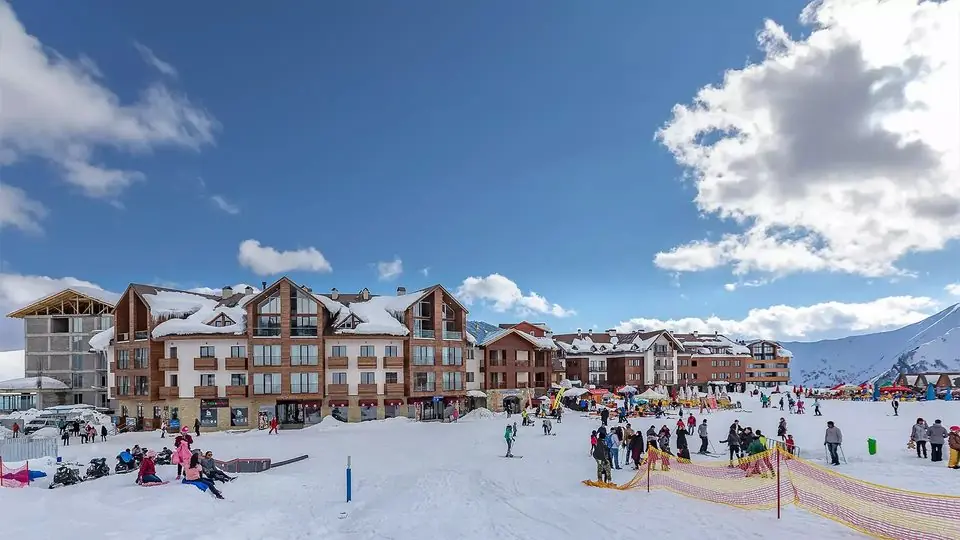
| Mtskheta-Mtianeti | North of Tbilisi up to the Russian border | Mtskheta, the Georgian Military Road, Gudauri, Kazbegi, Khevsureti | 93,200 |
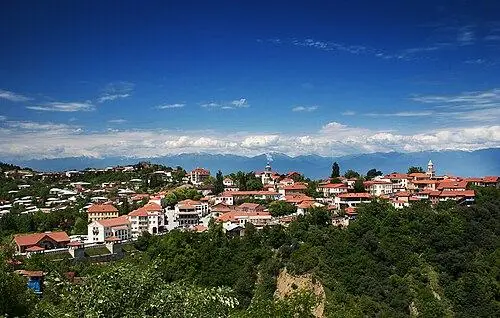
| Kakheti | Far east | Wine villages, Sighnaghi, Telavi, David Gareja, Tusheti | 300,000 |
| Kvemo Kartli | South, toward Armenia and Azerbaijan | Dmanisi, Bolnisi, canyons and medieval fortresses | 440,100 |
| Shida Kartli | West of Tbilisi | Gori and the Uplistsikhe cave town; its north is the occupied Tskhinvali region | 248,400 |
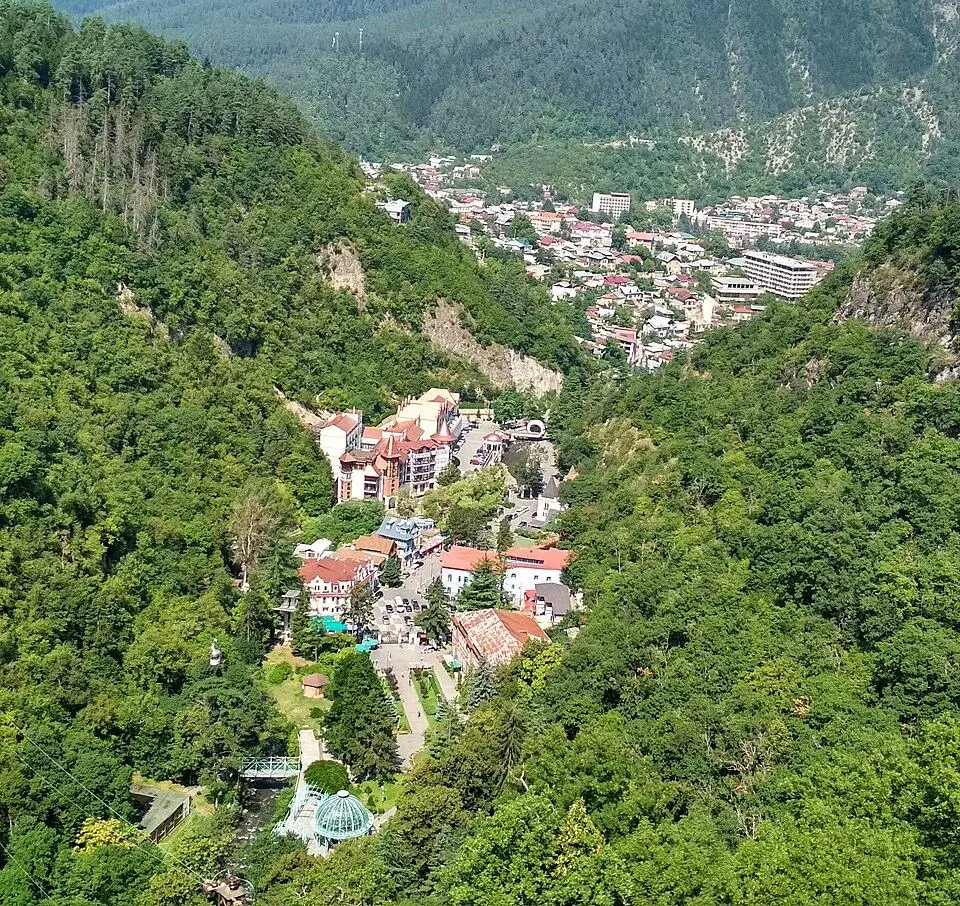
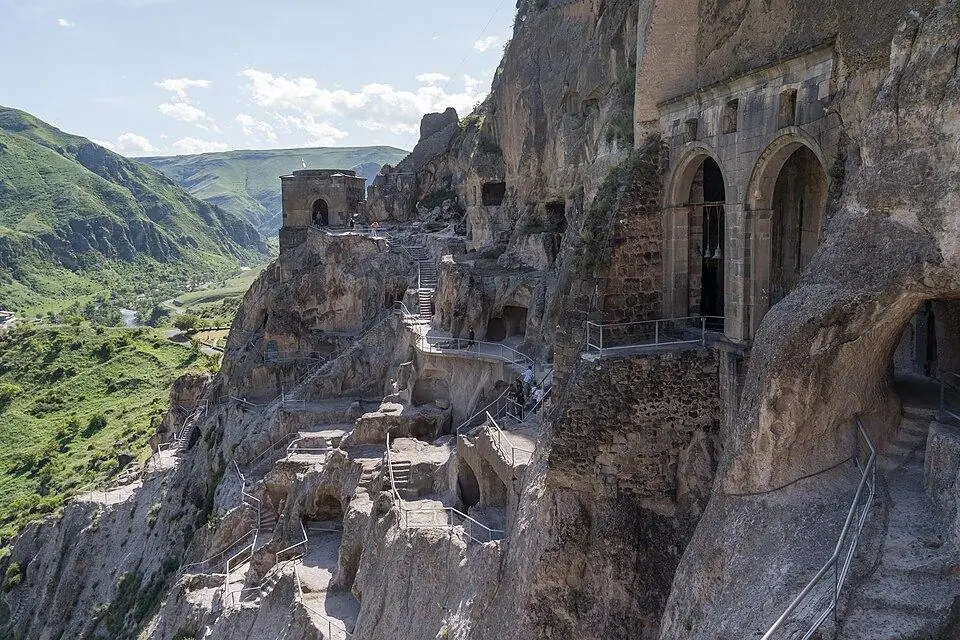
| Samtskhe-Javakheti | South-west, toward Turkey | Borjomi, Vardzia, Rabati, Bakuriani, volcanic lakes | 155,500 |
| Imereti | West-centre | Kutaisi, Gelati, Prometheus Cave, canyons | 492,500 |
| Racha-Lechkhumi and Kvemo Svaneti | Northern mountains | Ambrolauri, Khvanchkara wine, Shaori Lake | 29,500 |
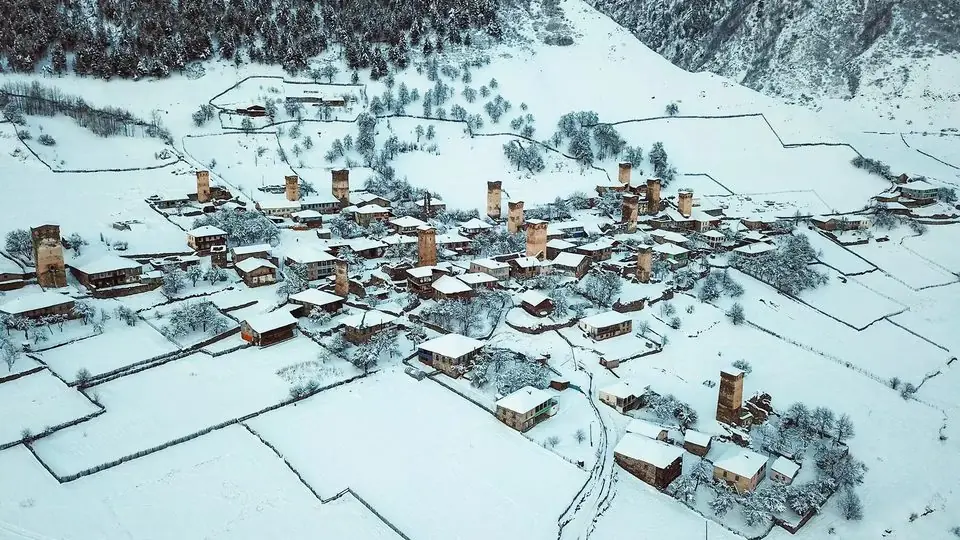
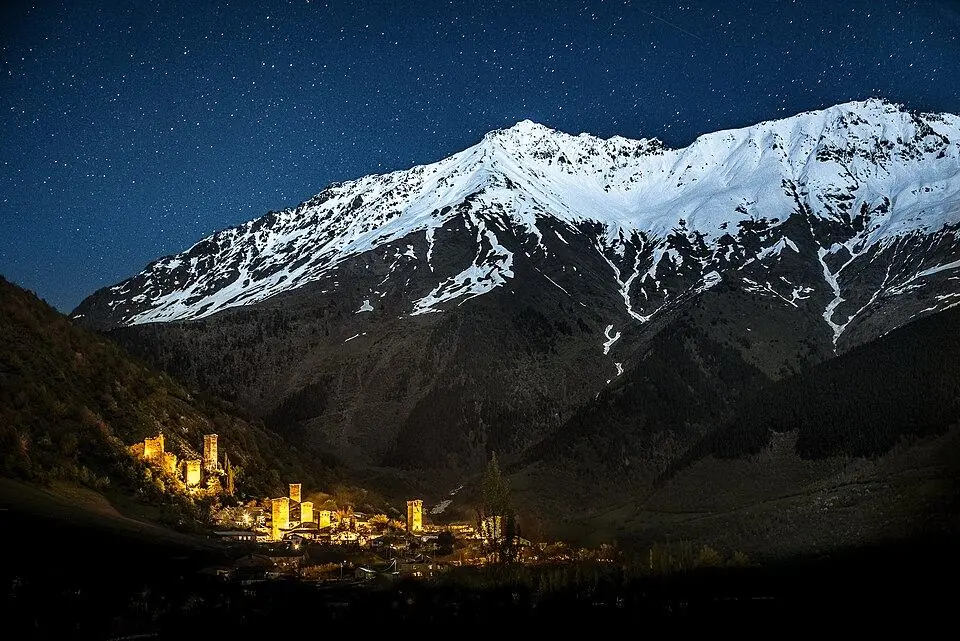
| Samegrelo-Zemo Svaneti | North-west | Mestia, Ushguli, Martvili Canyon, Zugdidi | 297,800 |
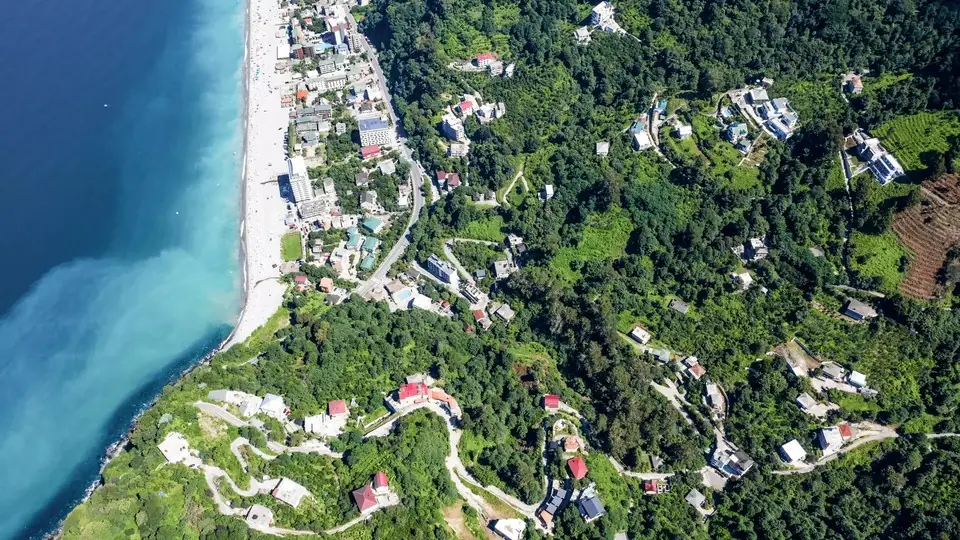
| Guria | Coast between Poti and Batumi | Black-sand beaches at Ureki, tea hills, Bakhmaro | 101,600 |
| Adjara (autonomous republic) | South-west coast | Batumi, Gonio, the Adjara highlands | 413,200 |
| Abkhazia (autonomous republic) | North-west coast | Occupied by Russia; we run no trips there | Not surveyed |
East of the Likhi range (Tbilisi, Kakheti, Kartli, Kazbegi) is drier wine and monastery country; the west is greener, with canyons, caves, the coast and the highest peaks. A first week usually stays mostly in the east; with ten days or more you can cross to Kutaisi and Svaneti or the sea.
Abkhazia and the Tskhinvali region: Georgia's occupied territories
Two parts of Georgia's internationally recognised territory lie outside the control of the Georgian government. Abkhazia covers the north-west, from the Enguri river to the Russian border along the Black Sea. The Tskhinvali region, also called South Ossetia, takes up the north of Shida Kartli, above Gori. Russia has occupied both since the war of August 2008, keeps military bases there and recognises them as independent states, as do a handful of other countries. Georgia, the EU, the US and most UN members regard them as part of Georgia. Together they account for close to a fifth of the country's area.
For travellers this has three practical consequences. Georgian law makes it a crime to enter Abkhazia or the Tskhinvali region from the Russian side. The administrative boundary lines are fenced in places and unmarked in others, so keep to public roads and well back from them near Gori, in the upper Truso valley and along the Enguri around Zugdidi. And most foreign governments advise against any travel to either region, so ordinary travel insurance will not cover you there. We run no trips to either, and our guide on whether Georgia is safe to visit explains the boundary lines in more detail.
Visiting Georgia: what its location means for your trip
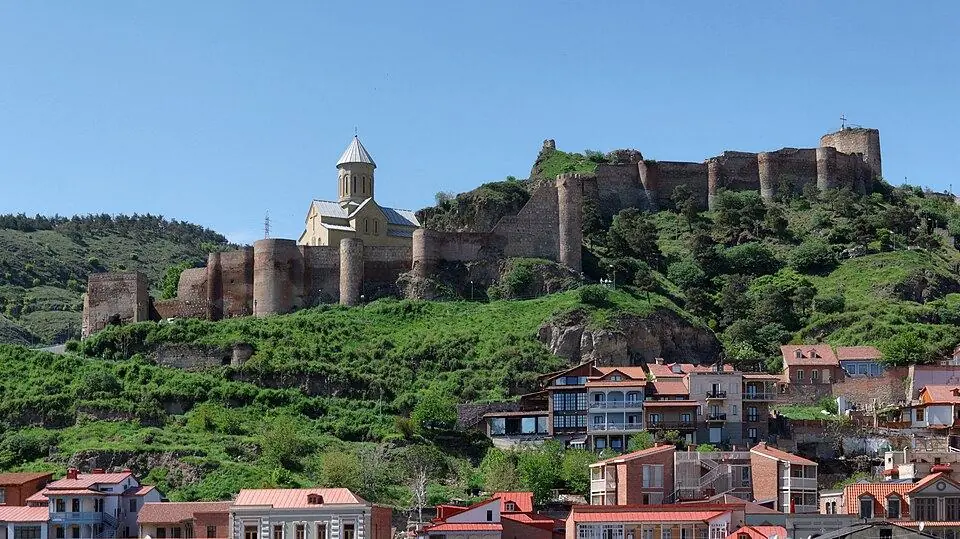
Georgia's position explains much of what makes it rewarding to visit. You can go from palm trees on the Black Sea to glaciers under 5,000 m peaks, yet distances are short: Tbilisi to Kazbegi takes about three hours and Tbilisi to the Kakheti vineyards about two. Centuries between Persia, Byzantium, the Ottomans and Russia left Orthodox churches, a mosque, a synagogue and Persian-style bathhouses a few minutes' walk apart in Old Tbilisi.
For a first trip, five to seven days covers Tbilisi, Mtskheta, Kazbegi and Kakheti; with ten days or more you can add Kutaisi and Svaneti or the coast. For that mix, aim for late May and June, or from September to the middle of October; the month-by-month detail is in our best time to visit guide, and our travel budget guide sets out what a day costs.
All our tours are private: you pick any date, travel only with your own group of any size, and have a guide in your language. There is no age limit for children, and we plan the pace around each family. The trips below suit a first visit, and the multi-country route makes the most of Georgia's place at the centre of the South Caucasus.
Frequently asked questions
Is Georgia in Europe?
Partly. By the common Greater Caucasus watershed line, most of Georgia lies in Asia and its northern mountain valleys in Europe. Institutionally it is European: it has been in the Council of Europe since 1999 and became an EU candidate country in December 2023.
Where is Georgia in Europe?
On the far south-eastern edge of the continent, east of the Black Sea, south of Russia and north of Turkey and Armenia. Tbilisi is about 2 hours 15 minutes by air from Istanbul and around 5 hours from London.
Is Georgia a country or a state?
Both exist. Georgia the country is an independent nation in the South Caucasus, a UN member since 1992, with Tbilisi as its capital. Georgia the US state, with Atlanta as its capital, is about 10,000 km away and was named after King George II.
What is the capital of Georgia the country?
Tbilisi, a city of about 1.37 million people on the Mtkvari river (Geostat, 2026). It has been the capital for most of the last 1,500 years.
Is Georgia part of the EU?
No. Georgia has been an EU candidate country since 14 December 2023, with an Association Agreement in force since 2016. Since June 2024 the European Council has called the accession process halted, and the Georgian government has said it will not seek to open accession talks until 2028.
Is Georgia part of Russia?
No. Georgia was absorbed into the Russian Empire in the 19th century and later became a Soviet republic, but it has been independent since April 1991. Russia occupies Abkhazia and the Tskhinvali region, which most of the world regards as Georgian territory.
What language do they speak in Georgia the country?
Georgian, a Kartvelian language unrelated to Russian or Turkish, with its own 33-letter alphabet. It is the mother tongue of 85% of residents (2024 census). Many older people also speak Russian, and younger Georgians in cities often speak English.
Do I need a visa for Georgia?
Usually not. Citizens of EU countries, the UK, the US, Canada, Australia and many other states can stay up to a year without one. Most other nationalities apply for an e-visa or use a qualifying third-country visa or residence permit. Everyone needs a health and accident policy covering the full trip.