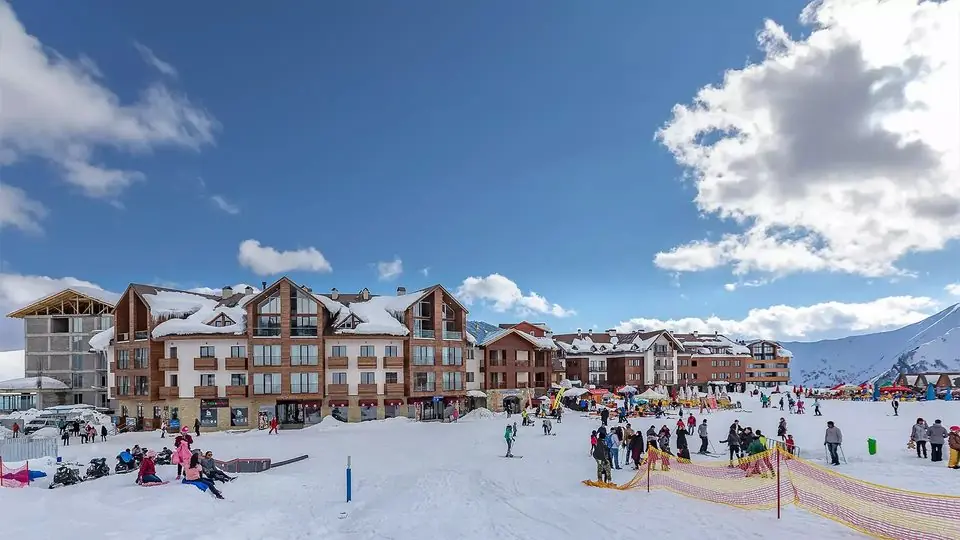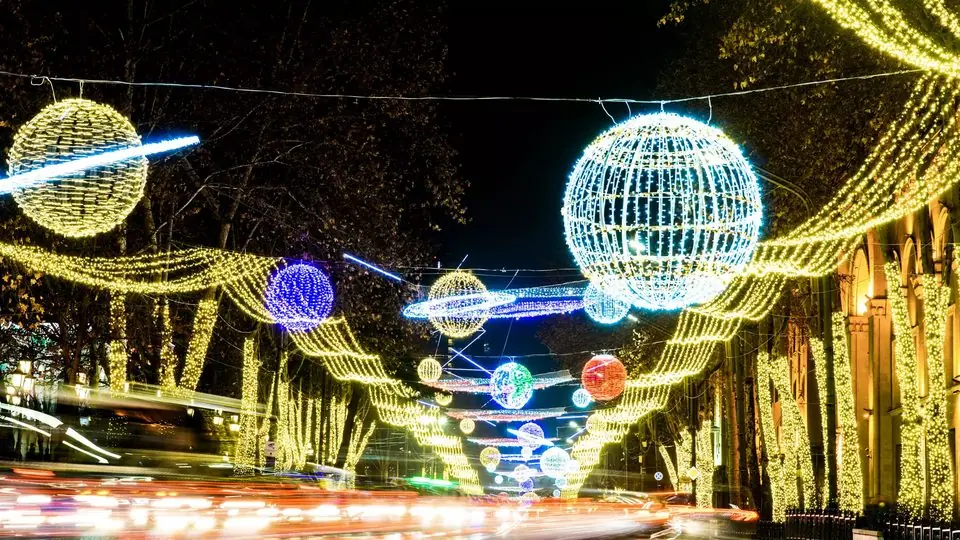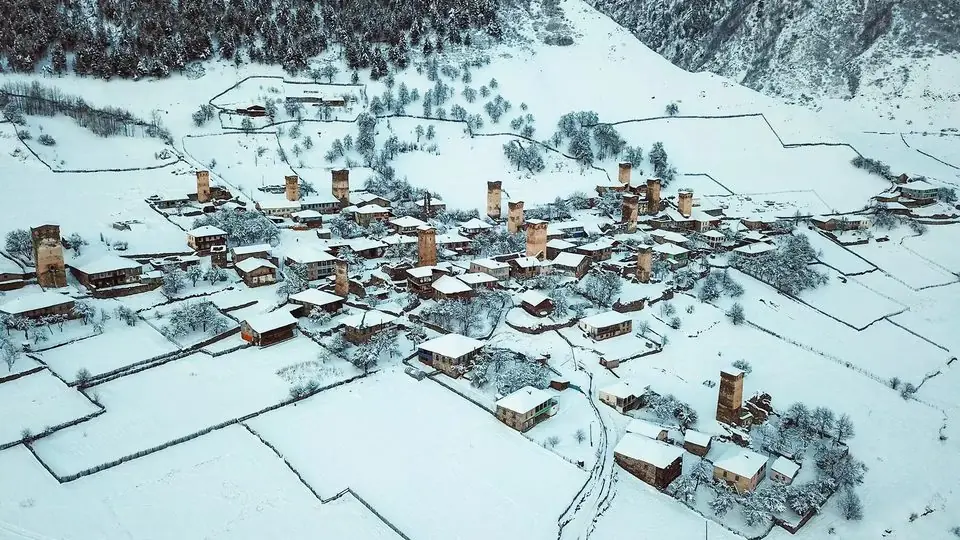
- Winter in Georgia runs from December to February. The east around Tbilisi is frosty and dry, the Black Sea coast is mild and wet, and above ~1,500 m the Caucasus lies under snow.
- Most sights stay open, from Tbilisi and Kakheti to Kutaisi's caves, Batumi and Vardzia, where just a small part is shut. The roads to Tusheti and Shatili and the Zagari Pass shut until late spring.
- The road to Kazbegi is kept open, but the Jvari Pass stretch closed on 10 to 17 days a winter in recent years. From 1 December to 1 March, winter tyres are the law on named mountain sections.
- Ski lifts usually start between mid- and late December and run to late March or April. No 2026/27 dates were out as of 21 October 2026.
- The holidays run from New Year's Eve through Orthodox Christmas and the Old New Year to Epiphany on 19 January. Outside those weeks and the ski resorts, it is low season.
Georgia in winter is worth a trip if you prefer snow, wine and long dinners to beaches and treks. From December to February the east is cold and mostly dry, the coast is mild and wet, and the Caucasus turns white. Tbilisi lights up for New Year, Kakheti's cellars go quiet, and ski lifts turn at Gudauri, Bakuriani and in Svaneti. The price is access: a few high valleys are cut off until summer, and the days are short.
This guide covers the whole season, with a note on early March. It shows how each region feels in the cold, which roads and sights close, and the holidays from New Year to Epiphany. Skiing, baths, food, wine, festivals, winter driving, prices and a sample 7-day plan follow. For one month in depth, see Georgia in December. Book a private tour with us for any day of the winter; your group can be any size, and the guide will speak your language.
Is Georgia in winter worth it? The season at a glance
Winter here is not one season but three. It depends on how high you are and which side of the mountains you stand on. The Likhi range shields the east from moist sea air, so Tbilisi and Kakheti get frosty nights, cool afternoons and little rain. The west faces the Black Sea and stays mild but damp. Above ~1,500 m, snow usually lies from December to March, and far longer on the high passes.
| Month | What the weather does | What is on | Crowds and prices |
|---|---|---|---|
| December | Cold nights and the shortest days; snow builds in the mountains | Film festival early on, New Year lights from mid-month, first ski days late in the month | Quiet and cheap until about 20 December, then busy |
| January | The coldest month: dry in the east, wet on the coast, deep snow up high | New Year, Christmas on 7 January, the Old New Year, Epiphany on the 19th | Peak until about mid-month, then calm in the lowlands |
| February | Still cold; the sea is at its coolest; the days grow by about an hour | The best ski snow, Lamproba in Svaneti, the freeride contest at Tetnuldi | Low in the cities; resort weekends stay busy |
| Early March | The thaw starts in the lowlands; the mountains are still in full winter | Spring skiing, two public holidays, and in 2027 the Berikaoba carnivals | Among the cheapest weeks of the year |
Who will love it, and who should wait
- A good fit: city breaks, museums and opera, sulphur baths, wine tasting by a stove, ski and snow days, church feasts and low prices outside the holidays.
- A poor fit: multi-day treks, Tusheti and Khevsureti, beach days and long road trips that cross many passes.
Early March: the last weeks of winter
Early March is a bridge between seasons. In the lowlands the thaw begins, and Tbilisi reaches about 13.5°C by day. Gudauri, Bakuriani and the Svan resorts still have deep snow. Two public holidays fall in the first days of the month: 3 March is Mother's Day and 8 March is Women's Day. Great Lent begins on 15 March 2027, so the village Berikaoba carnivals land in the week before. Hotels in the cities are at some of their lowest rates.
Where to go in winter: Tbilisi, Kakheti, the coast and the mountains
Georgia is small, yet its winters differ more than its size suggests. The table shows January, the coldest month, for seven places. For full monthly figures, see our Georgia weather in January page and the pages for single towns, such as Tbilisi weather, Gudauri weather and Batumi weather.
| Place (height) | Day / night in January | Rain or snow in January | How it feels |
|---|---|---|---|
| Tbilisi (~430 m) | 7.1 / -0.4°C | ~16 mm on ~4 days | Dry and often bright, frosty mornings; snow seldom stays |
| Telavi, Kakheti (~490 m) | 6.7 / -1.4°C | ~28 mm on ~5 days | Frost most nights, bare vines, white peaks across the valley |
| Kutaisi (~150 m) | 9.4 / 3.5°C | ~138 mm on ~12 days | Mild and damp: a raincoat matters more than a down jacket |
| Batumi (sea level) | 11.9 / 5.5°C | ~235 mm on ~14 days | The mildest corner and one of the wettest; sea about 11°C |
| Stepantsminda (~1,740 m) | -0.4 / -7.6°C | ~30 mm, mostly snow | A snowy village under Kazbek, clear and very cold at night |
| Gudauri (~2,200 m) | -3.5 / -9.9°C | ~89 mm, as snow | Full winter, with wind on the ridges |
| Mestia (~1,500 m) | 0.2 / -7.3°C | ~61 mm, mostly snow | Deep snow around the towers, with heavy falls at times |
Figures are 1991-2020 averages from our climate data: station normals where a station exists, older records or a 1 km climate model elsewhere.
Tbilisi: cold, dry and lively
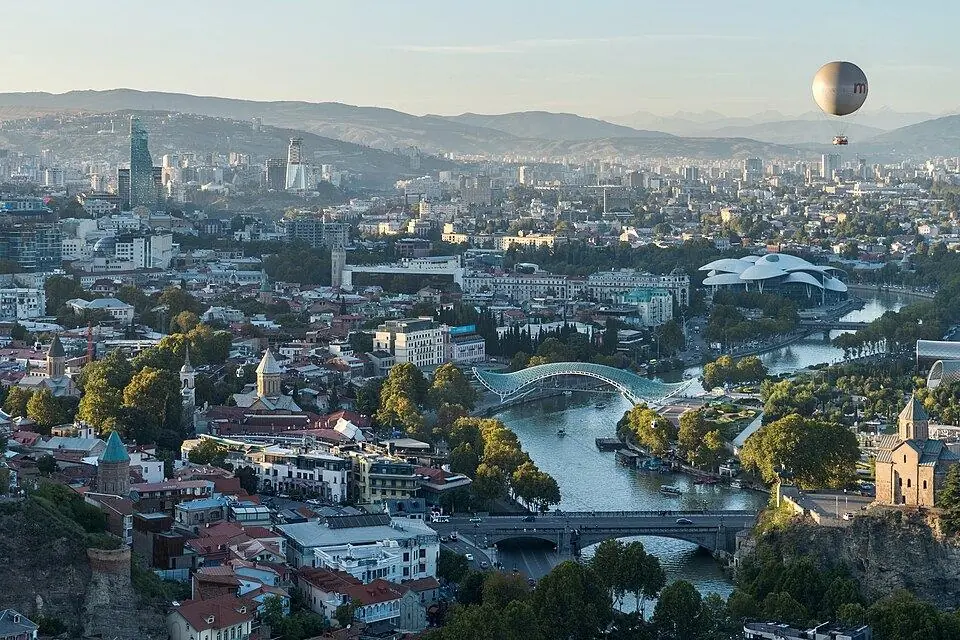
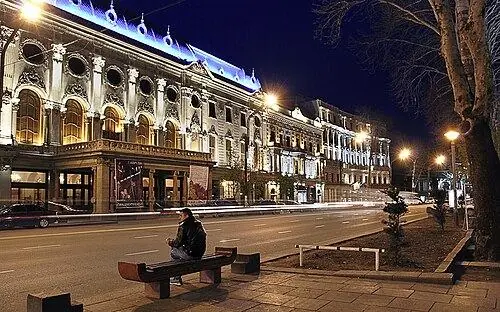
The capital is the easiest winter base. Days are crisp and often sunny, and the rare snow melts within a day or two. From mid-December to mid-January the centre has lights, a big tree and a New Year market; after that the city is calm and cheap. Give cold days to the National Museum, a sulphur bath or a wine bar, and evenings to the opera. Our guide to Tbilisi in winter has the detail, and the Tbilisi Christmas market guide covers the festive weeks.
Kakheti: bare vines and warm cellars
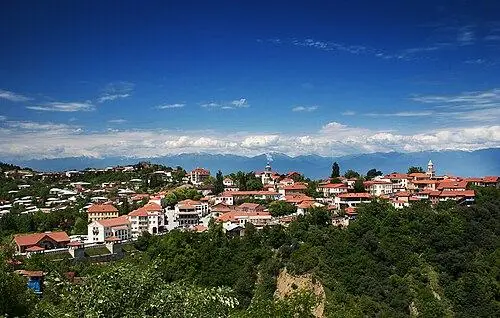
Kakheti, about 1.5 to 2 hours east by car, is at its quietest. The vines are bare, but frosty mornings often give the clearest view of the snowy range from Sighnaghi's walls. Family wineries have time to talk, and the young wine of the autumn is ready to taste. If the Gombori Pass shuts after snow, drivers take the lower road through Sagarejo.
Kutaisi and Imereti: mild, grey and good for caves
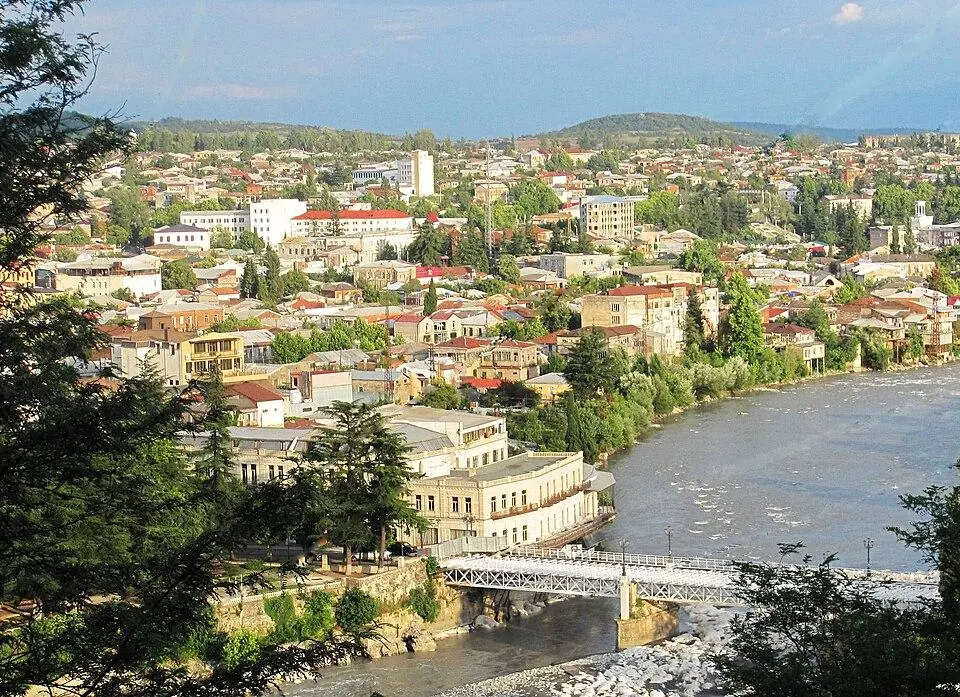
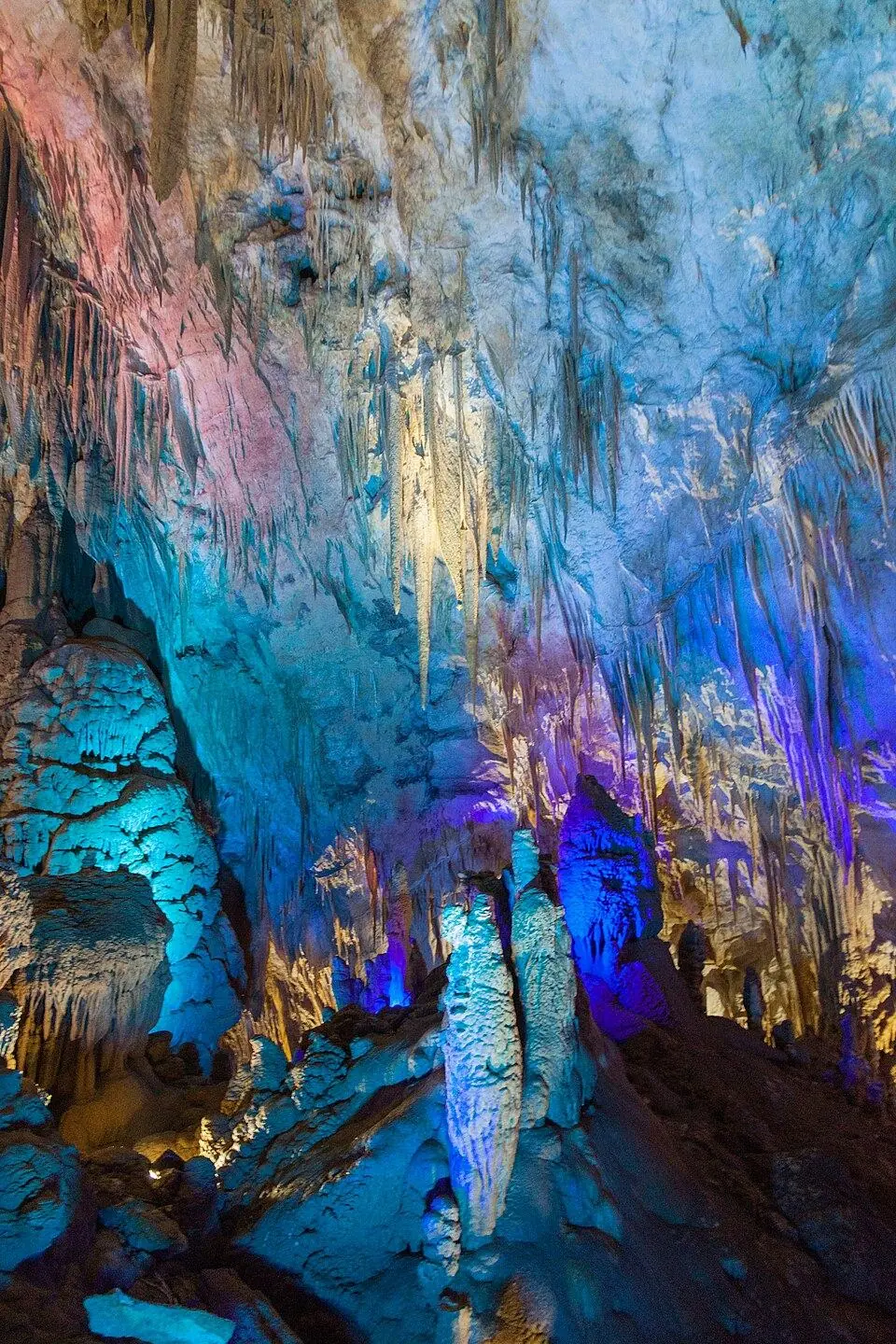
West of the Likhi range the air is softer and frost is rare, but rain is frequent. That makes it cave country. Prometheus Cave is a fine plan on a wet day, Gelati's mosaics are indoors, and the warm radon baths of Tskaltubo are ten minutes from Prometheus. Kutaisi airport, a base for low-cost airlines, makes this an easy first or last stop.
Batumi and the Black Sea coast
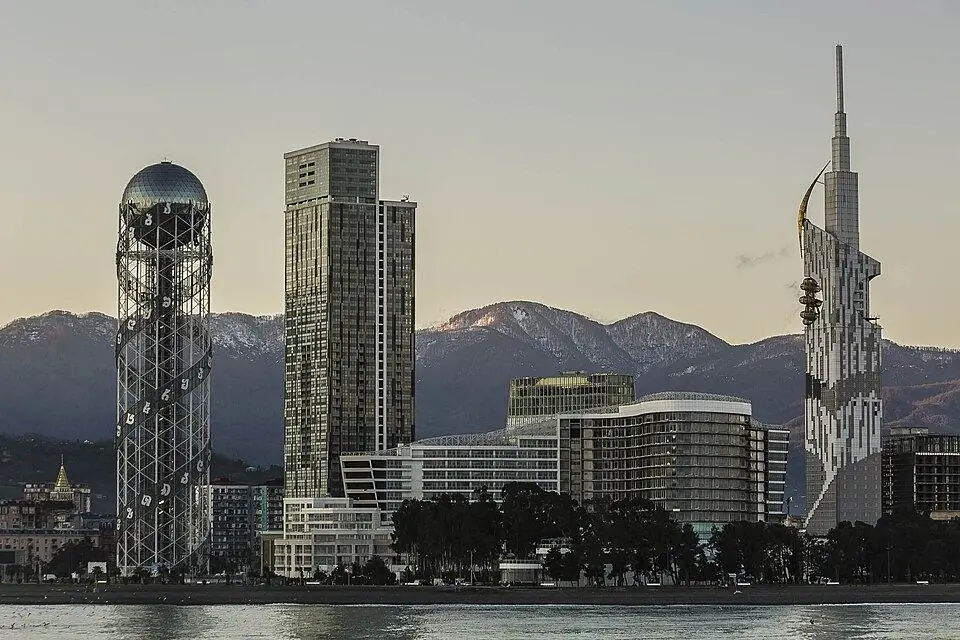
Batumi in winter is a mild, quiet seaside city rather than a resort. Afternoons reach about 12°C, yet it rains on roughly half the days, and the sea cools to about 10°C by February. Walk the empty boulevard, see the Botanical Garden on a dry day and order hamsi, small Black Sea anchovies fried crisp. Mandarins from the hills of Guria and Adjara are in season into December, and the snow at Goderdzi is about 3 to 4 hours inland.
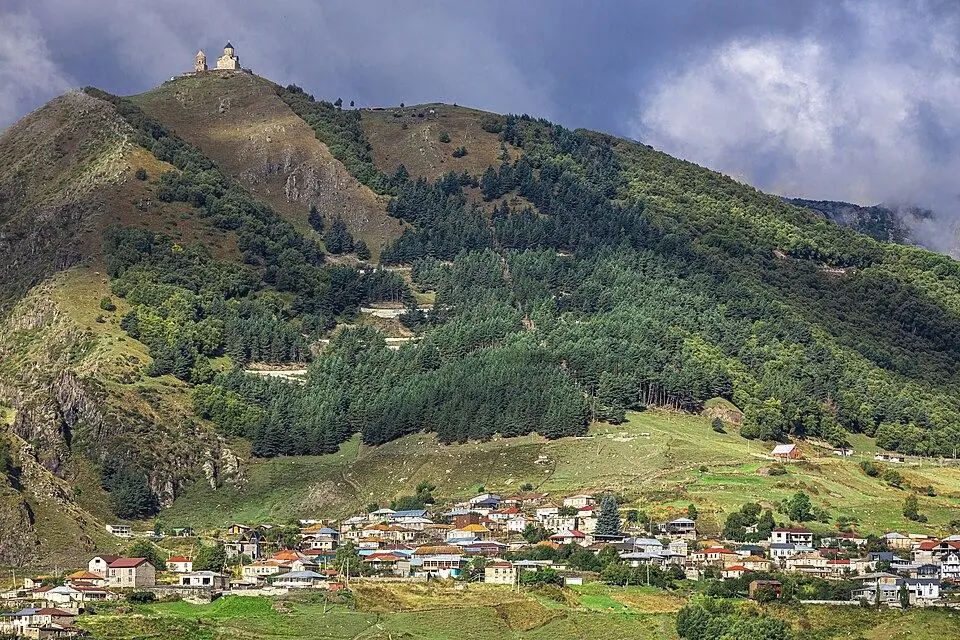
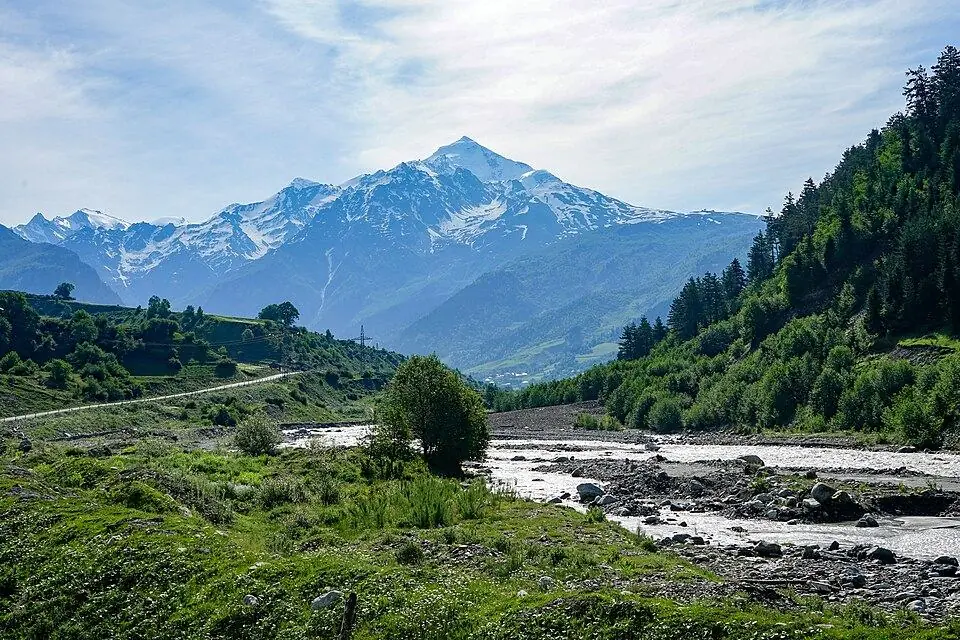
Kazbegi: snow under Mount Kazbek
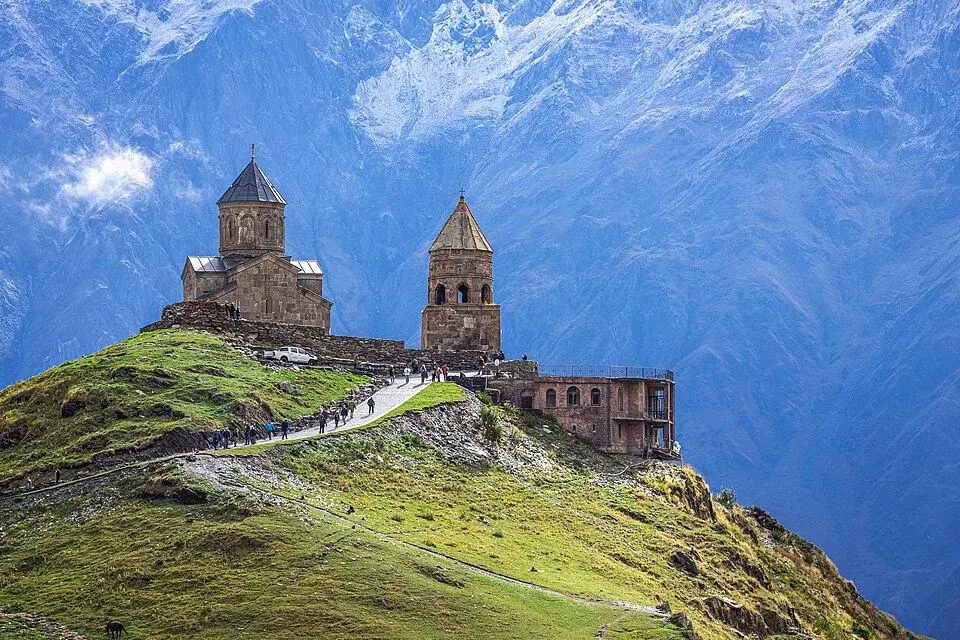
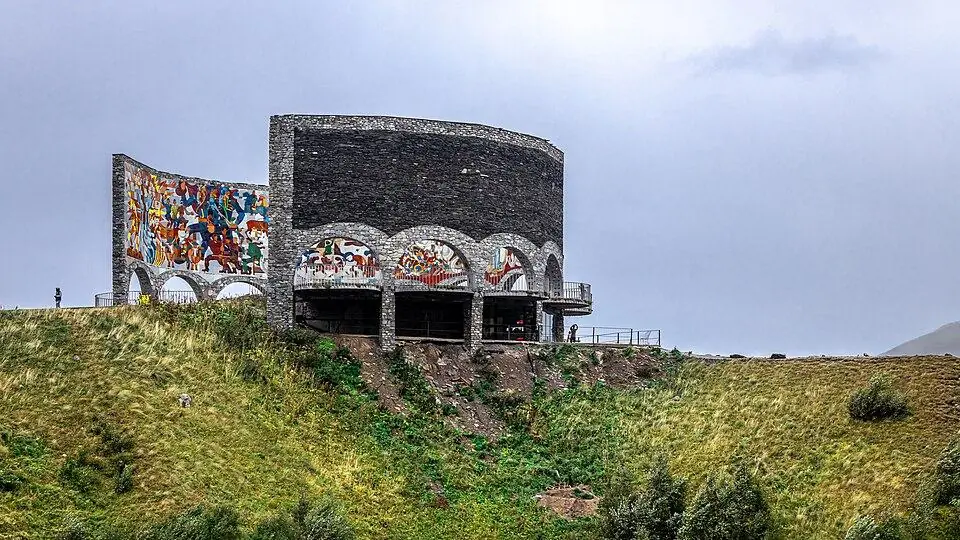
Stepantsminda, ~150 km north of Tbilisi, is the classic snowy day out. The Military Road is ploughed all winter, and Gudauri lies on the way. Gergeti Trinity Church stays open, but the 4x4 track and the footpath ice over, so bring ice grips. Side valleys such as Truso and Juta lie under avalanche slopes; leave them for spring unless a mountain guide says otherwise. Closures at the Jvari Pass are covered in the driving section below.
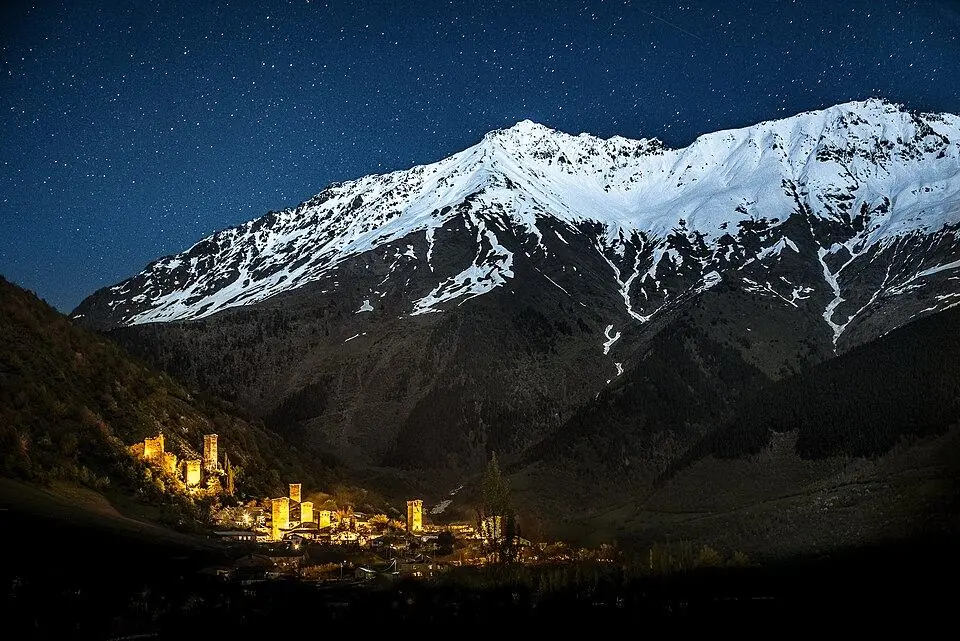
Svaneti: towers in the snow
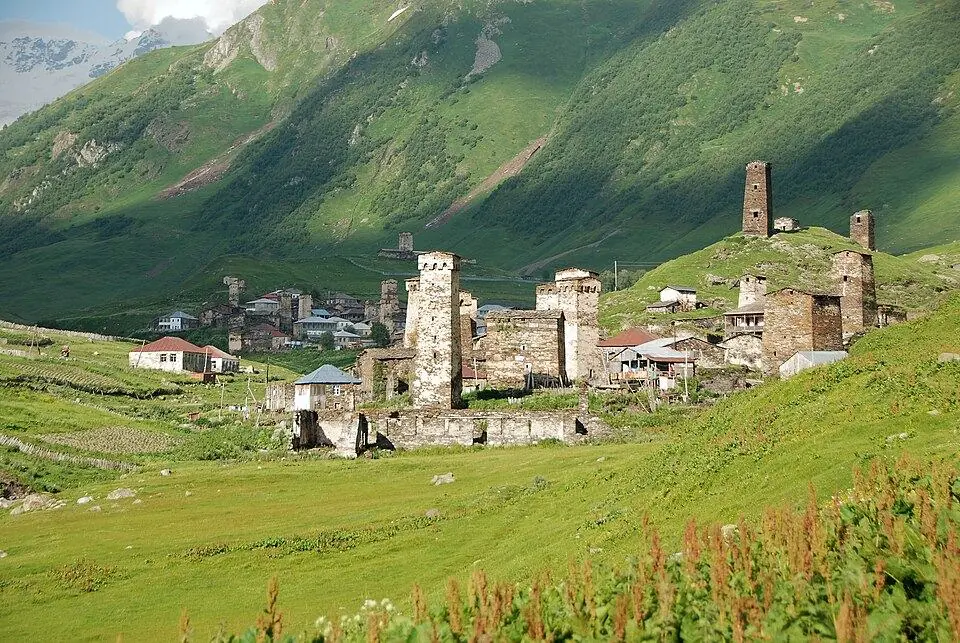
Upper Svaneti can be reached all winter on the ~135 km road from Zugdidi up the Enguri gorge. Small planes fly to Mestia from Natakhtari, near Tbilisi, but only when visibility is good, so keep a spare day. Mestia has two ski areas, Hatsvali and Tetnuldi. Ushguli stays open by road, usually with chains on the car, while the pass on to Lentekhi is shut until late spring.
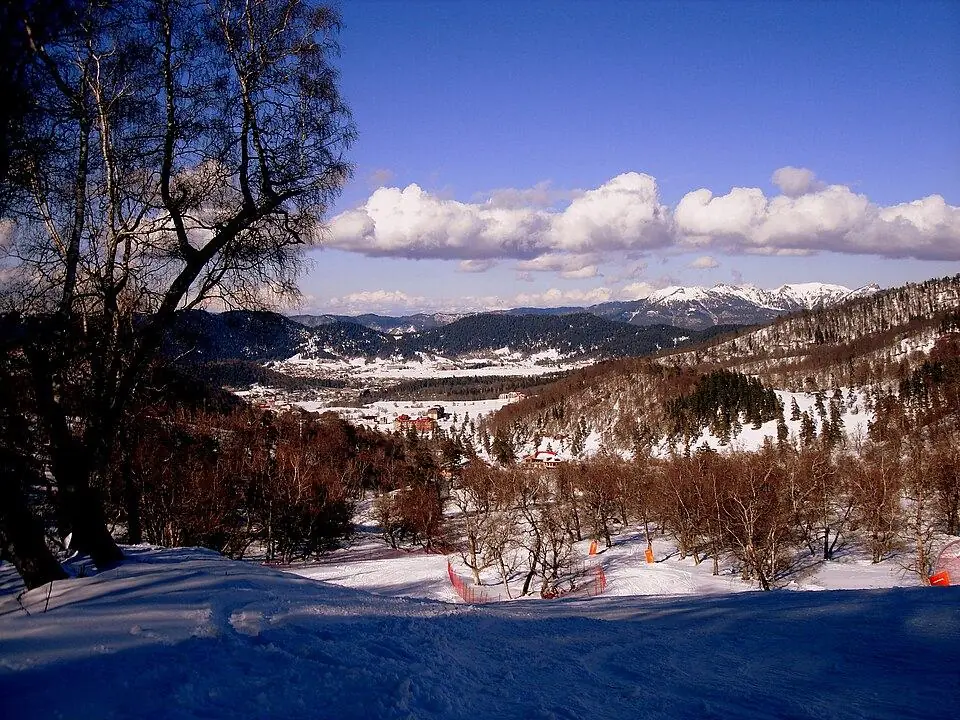
Borjomi, Bakuriani and Vardzia
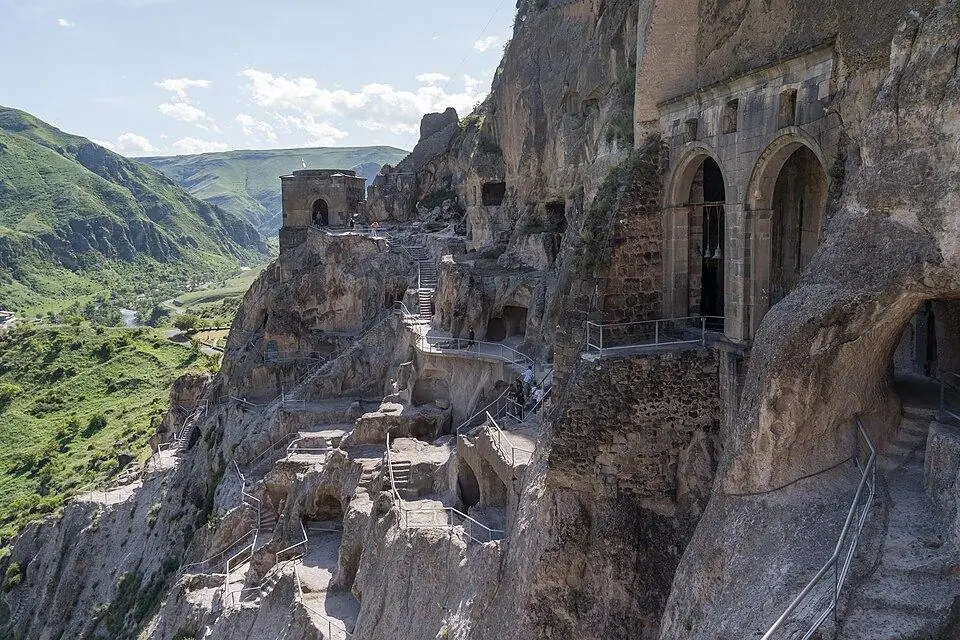
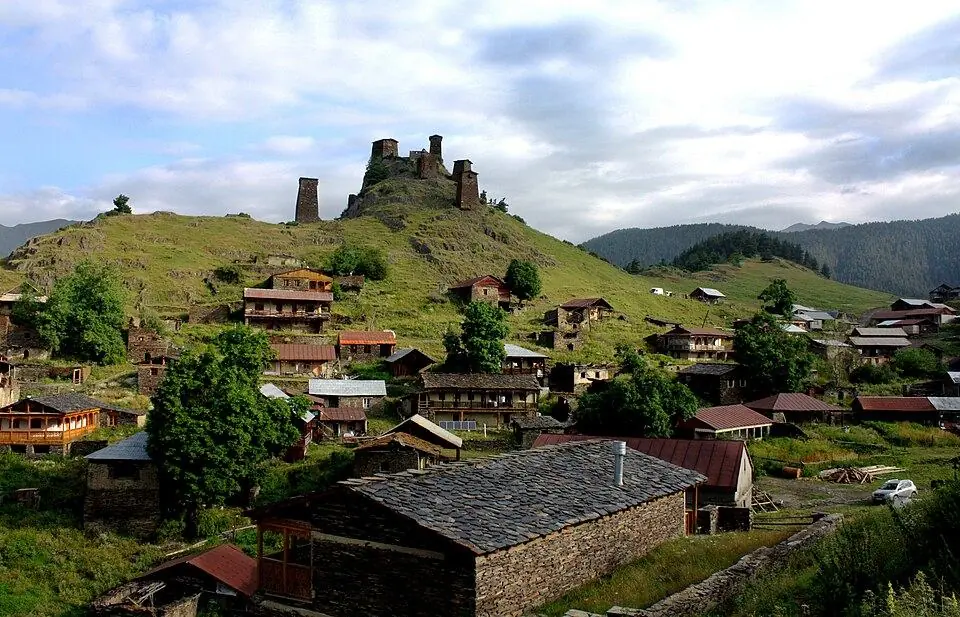
In the south-west, the spa park in Borjomi is lovely under snow, and Bakuriani above it is the family ski resort. The Kukushka mountain train between them was due back in December 2026; check before you count on it. Further south, the cave town of Vardzia stays open all winter with shorter hours. After a rockfall in May 2026, a small part of it is shut; the rest is open.
What stays open and what closes in winter
Almost everything in the lowlands works as usual. What closes is the high country, where gravel roads cross passes between ~2,600 and 2,950 m. The road rows below follow Roads Department notices from 2022 to 2026, as gathered in our road status data.
| Place or road | December to February | Normal access again |
|---|---|---|
| Tbilisi, Mtskheta, Kakheti, Uplistsikhe, David Gareja | Open; shorter days, and many museums shut on Mondays and public holidays | All year |
| Vardzia | Open, usually to about 17:00 in winter; a rockfall in May 2026 shut just a small part of it | All year |
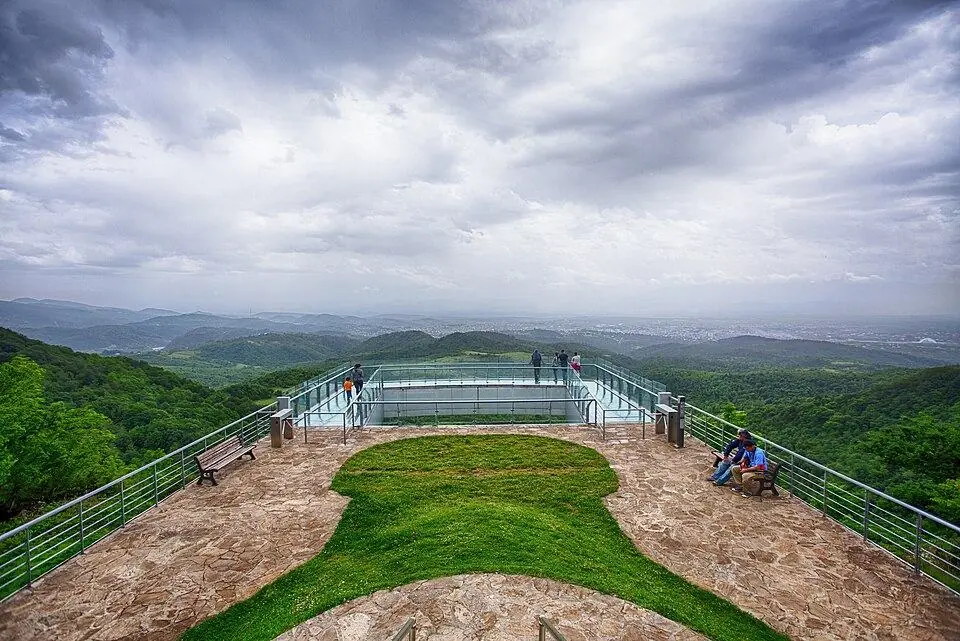
| Prometheus Cave, Sataplia, Gelati, Bagrati | Open daily; the Sataplia glass deck closes in rain or snow | All year |
| Martvili and Okatse canyons | Past their main season; Martvili's boats and the Okatse walkway stop in rain or snow | About April |
| Gergeti Trinity Church | Open, but the 4x4 track and the path are often icy | All year |
| Tusheti road, Abano Pass (2,950 m) | Shut to all traffic for the winter, usually from October | Late May to late June |
| Shatili road, Datvisjvari Pass (2,676 m) | Shut; a landslide at km 96 has also cut it since 30 August 2026 | Late May or early June |
| Ushguli to Lentekhi over the Zagari Pass (~2,620 m) | Shut, as a rule from late October or November, and by early December at the latest | Late May or June |
| Goderdzi Pass towards Akhaltsikhe (2,027 m) | Usually shut from November or December, though the ministry plans to keep it open from now on; the ski resort is reached from Batumi | Late April or May |
| Road to Bakhmaro (~1,950 m) | The top ~20 km above Chkhakaura is shut; snowmobile or snowcat in | May |
| Truso valley and the Juta road | No official winter status; snow and avalanche ground | Late spring |
| Kazbegi road over the Jvari Pass (~2,380 m) | Open; the Gudauri-Kobi stretch closes after blizzards or avalanche warnings | All year |
| Zugdidi to Mestia, and Mestia to Ushguli | Open; chains are often required for cars to Ushguli, mostly January to March | All year |
Cave sites in the cold
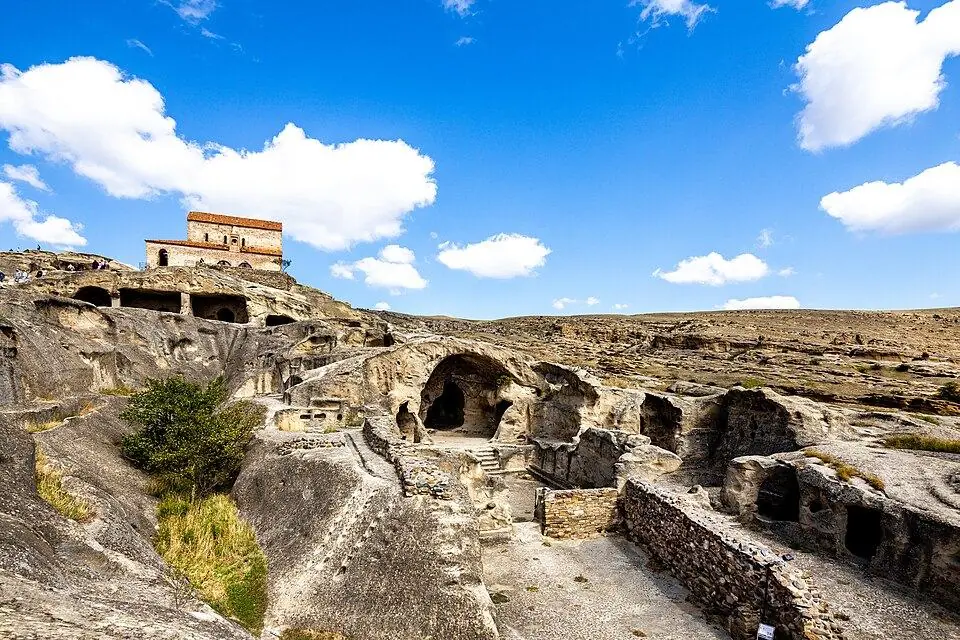
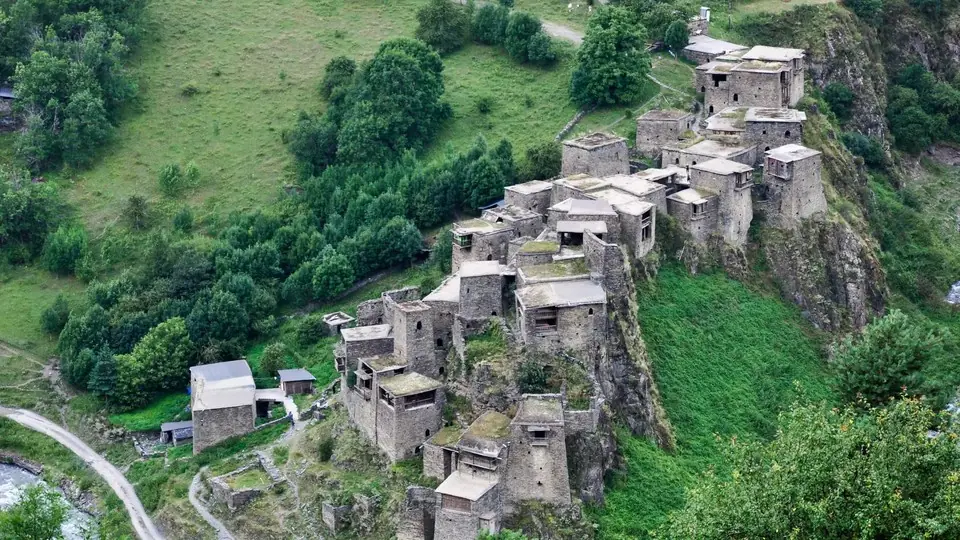
Vardzia sits at ~1,300 m, and January nights there average about -10°C. Its rock steps and tunnels can ice up, so wear boots with grip. The open rock at Uplistsikhe gets slippery after snow as well. The reward is space: both are emptier now than at any other time of year.
Snow days and skiing, in brief
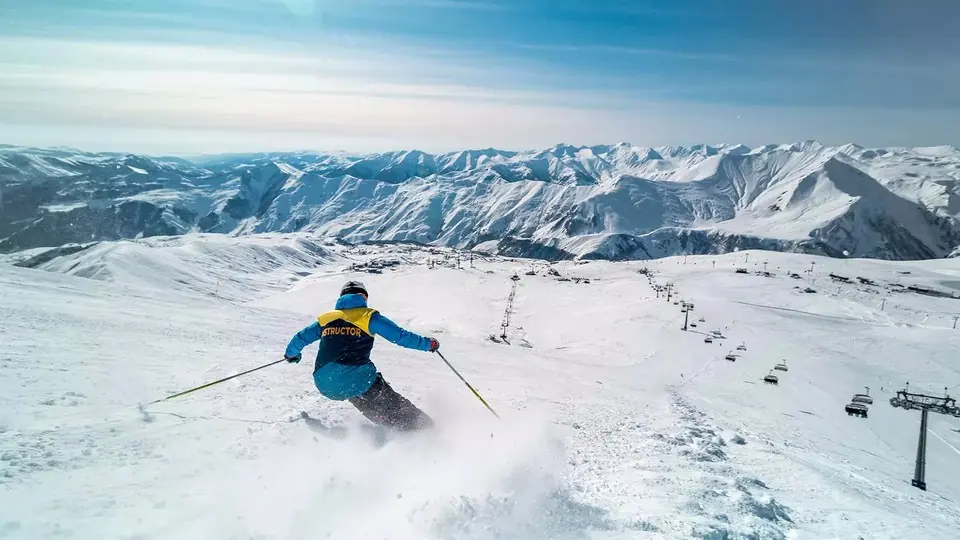
Georgia has five lift-served ski areas, and the state's Mountain Trails Agency operates all of them. One rechargeable card works at every one. Slopes are uncrowded on weekdays and cheap by Alpine standards. This is only an overview. For pistes, passes and where to stay, read about skiing in Gudauri, skiing in Bakuriani and the ski resorts in Georgia compared.
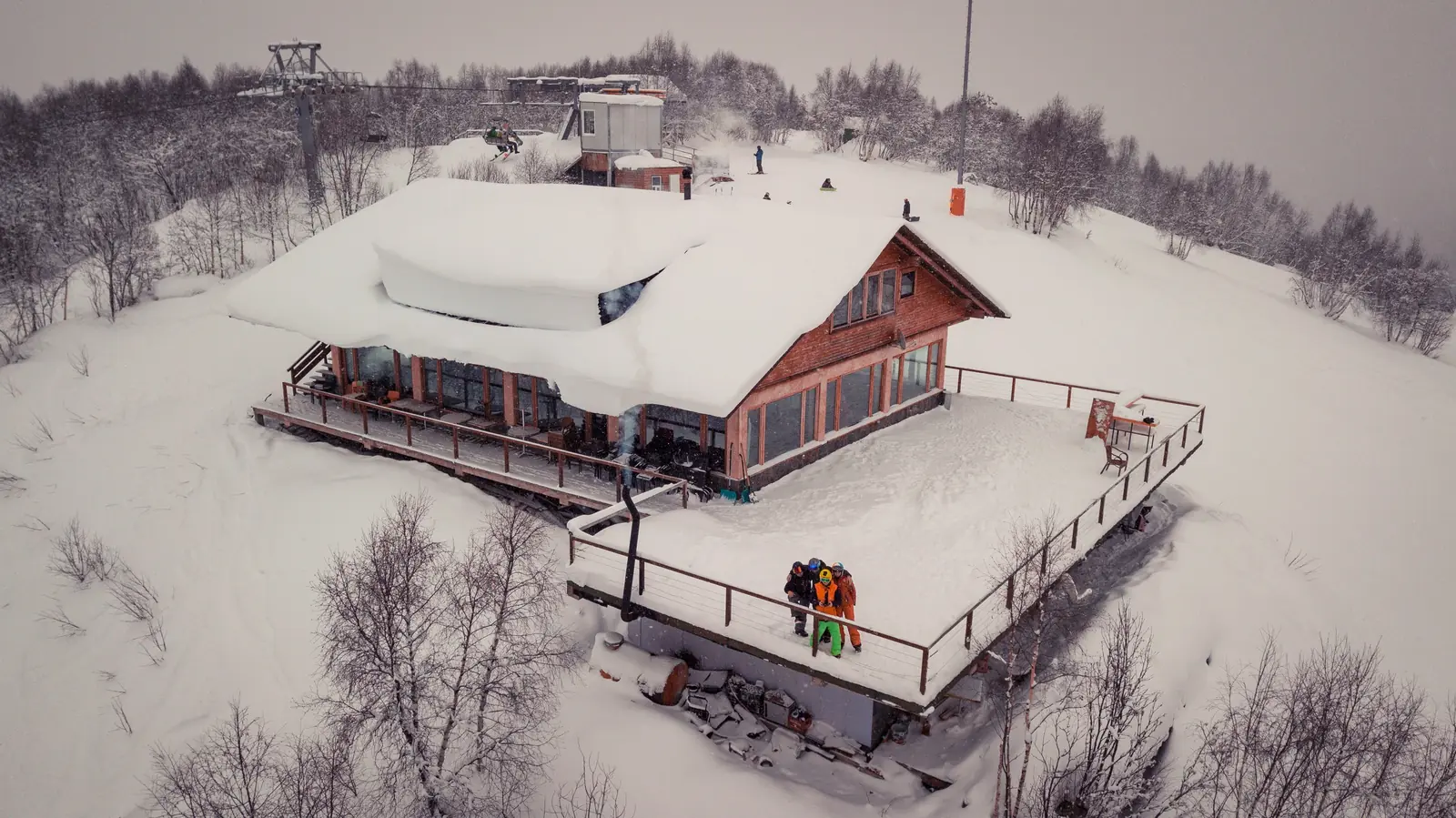
- Gudauri (~2,200 m, lifts to 3,276 m): the biggest, ~120 km up the Military Road from Tbilisi (2 to 2.5 hours), with wide open bowls and guided freeride.
- Bakuriani (~1,700 m): gentle runs among spruce above Borjomi, the pick for families and beginners.
- Goderdzi (top ~2,360 m): the snowiest, about 3 to 4 hours by road from Batumi.
- Hatsvali and Tetnuldi near Mestia: short forest runs above town, and long, high pistes ~15 km away at Tetnuldi.
There is no fixed opening day. The agency waits for enough snow, then names the date a few days ahead. In 2025/26 the first lifts turned on 20 December, and the last resorts joined on the 27th. Closing days ran from 29 March to 19 April, with Gudauri last. On 21 October 2026 the agency's press page had nothing yet on 2026/27, so treat any date you see online as a guess. January to March has the surest snow, and March often brings sunny spring days.
At Gudauri, a lift day was about 70 GEL (about $27) in 2026; at Bakuriani it was about 55 GEL (about $21) in 2026. Ski hire was about 50 GEL (about $19) in 2026 for a day. The government has also announced snowmaking and new runs at Gudauri for this winter, so ask what is ready when you book.
Not a skier? Gudauri and Bakuriani still make fine snow days, with sledging, snowshoe walks, snowmobile rides and long lunches. Make sure your travel insurance covers winter sports, as standard policies often leave them out.
Winter holidays: New Year, Christmas on 7 January and Epiphany
The festive season starts in mid-December and ends with Epiphany on 19 January. Church feasts are dated by the Julian calendar, which lags 13 days behind the one used for daily life. So Christmas lands on 7 January, while 25 December is a normal day at work and school. Here is the season in short; our guides to New Year in Georgia and Georgian Christmas go much deeper.
| Date | What | Day off? | What you will see |
|---|---|---|---|
| 31 December | New Year's Eve | No | Family feasts, then fireworks from every hill and balcony at midnight |
| 1-2 January | New Year and Bedoba, the 'day of fate' | Yes, both days | Quiet streets; banks and many shops and museums closed |
| 7 January | Christmas (Shoba) | Yes | Night liturgy from the 6th into the 7th, then Alilo processions in the afternoon |
| 13-14 January | Old New Year | No | A second, smaller round of fireworks; Kalanda customs in Guria and Samegrelo |
| 19 January | Epiphany (Natlisgheba) | Yes | Water blessed in churches on the evening of the 18th; people queue with bottles |
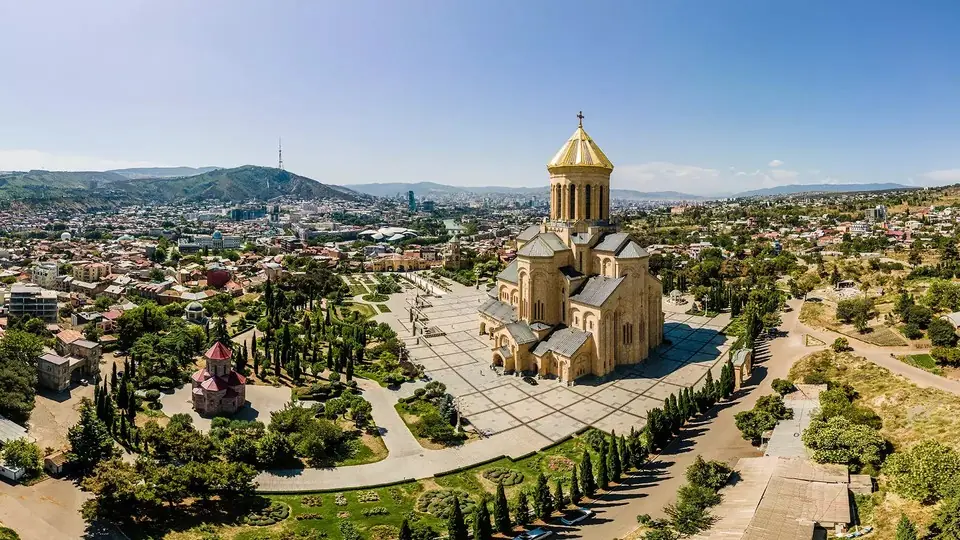
The biggest Christmas service is the night liturgy at Sameba Cathedral in Tbilisi. On 7 January 2027 it will be the first Christmas for Patriarch Shio III, enthroned in May 2026. In the afternoon the Alilo walk sets off: singers of old carols, clergy and small children in angel costumes, gathering gifts for families in need. In 2026 the column moved off from First Republic Square close to 14:00, and the walk to Sameba took about two hours. Watch from Rustaveli Avenue, or join in for a stretch.
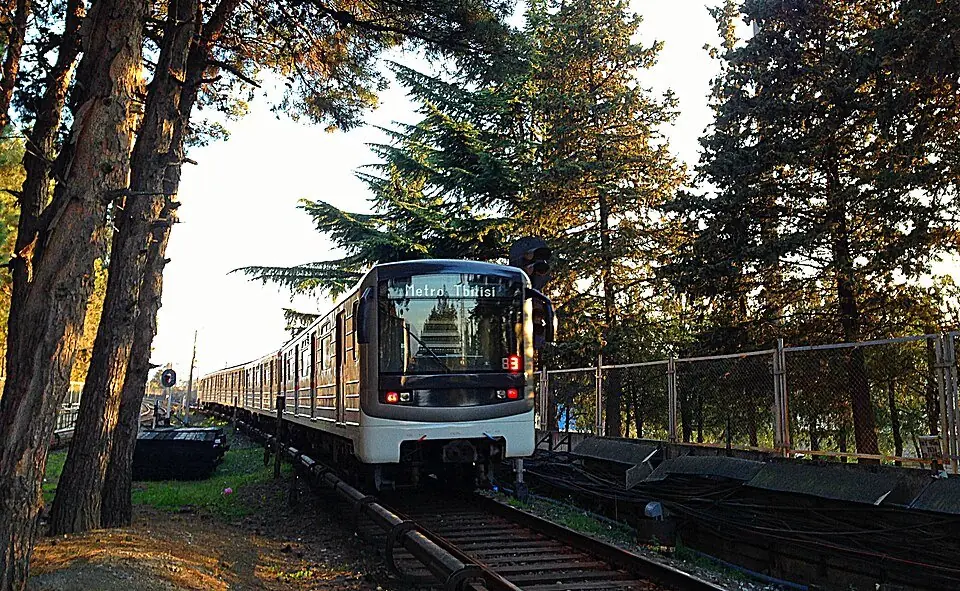
On 1, 2, 7 and 19 January, banks and offices close, as do many museums and small shops. Supermarkets and the metro keep running, so a holiday is no reason to stay away. Tbilisi's lights and tree usually stay up until mid-January.
Winter festivals and events, December to early March
Beyond the church calendar, winter has a handful of events worth planning around. Village rites move from year to year, so confirm the day locally before you travel.
| When | Event | Where | Good to know |
|---|---|---|---|
| Early December (1-7 December in 2025) | Tbilisi International Film Festival | Amirani cinema and other venues | 2026 dates not yet out in October |
| Mid-December to mid-January | New Year lights, tree and market | Central Tbilisi; Batumi has lights too | Free to wander; City Hall sets the dates in December |
| November into December | The late grape harvest | Guria and Adjara | Chkhaveri and other late western grapes |
| Mid-February, often the 14th | Lamproba, the Svan torch night | Mestia and nearby villages | Each village has its own way and time |
| Late February (2024, 2025 and 2026) | Freeride World Tour stop | Tetnuldi, Svaneti | The 2027 calendar was not out on 21 October 2026 |
| The week before Great Lent (8-14 March 2027) | Berikaoba masked carnival | Didi Chailuri, Sabue, Matani and Ude | No central programme; ask a local guide |
| 3 and 8 March | Mother's Day and Women's Day | Nationwide | Public holidays; flowers on every corner |
Lamproba is the one to travel for if you are in Svaneti in mid-February. At dusk, families light birch torches at their ancestors' graves, one for each man of the house, and carry them to a bonfire by the church. It is a living rite, not a show, so keep a respectful distance and ask before taking photos. Berikaoba is rowdier: masked players in animal skins act out comic scenes for cheese, eggs and wine.
Sulphur baths, wine and winter food
Sulphur baths
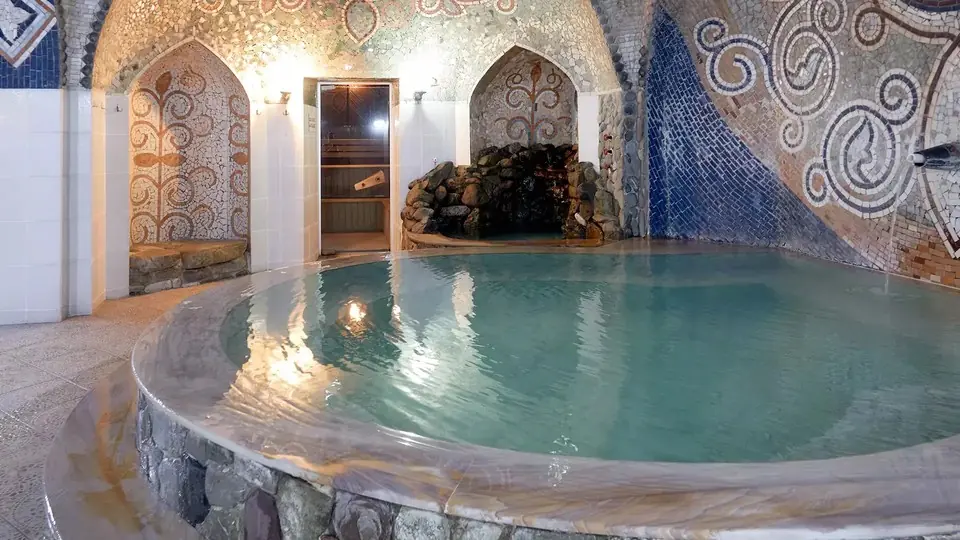
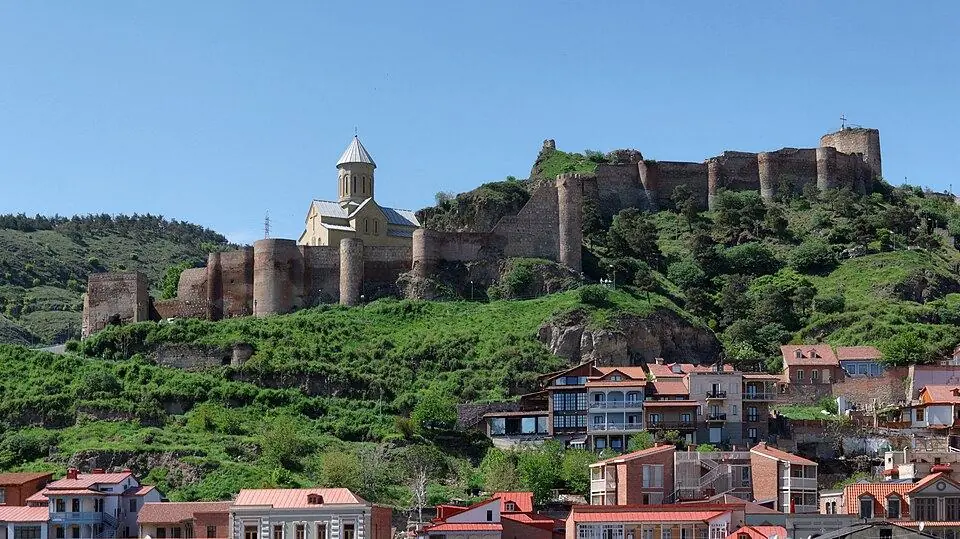
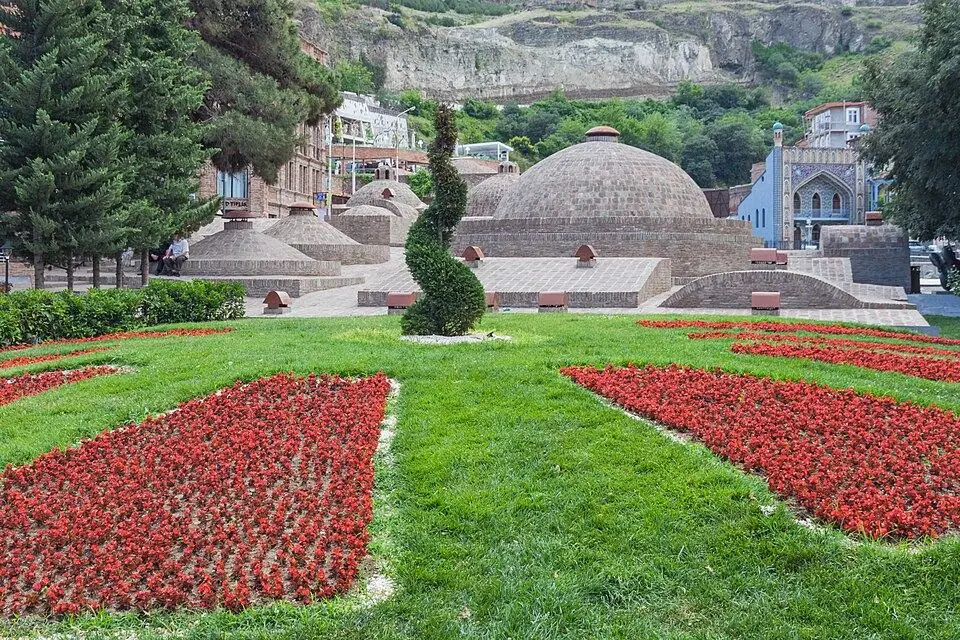
Cold weather is the best excuse for Abanotubani, the domed bath quarter below Narikala. Hot mineral water rises here by itself, and an hour in it after a frosty walk is the classic Tbilisi winter evening. A shared public section was about 15 GEL (about $6) in 2026 per person. Private rooms for a group ran at about 130-200 GEL (about $50-77) in 2026 for each hour, and a kisi scrub costs extra. Book private rooms ahead for weekends and the holiday weeks.
In the west, Tskaltubo near Kutaisi is an old Soviet spa town built around radon water at about 33-35°C. A soak there fits well into a wet day of caves.
Wine by the stove in Kakheti
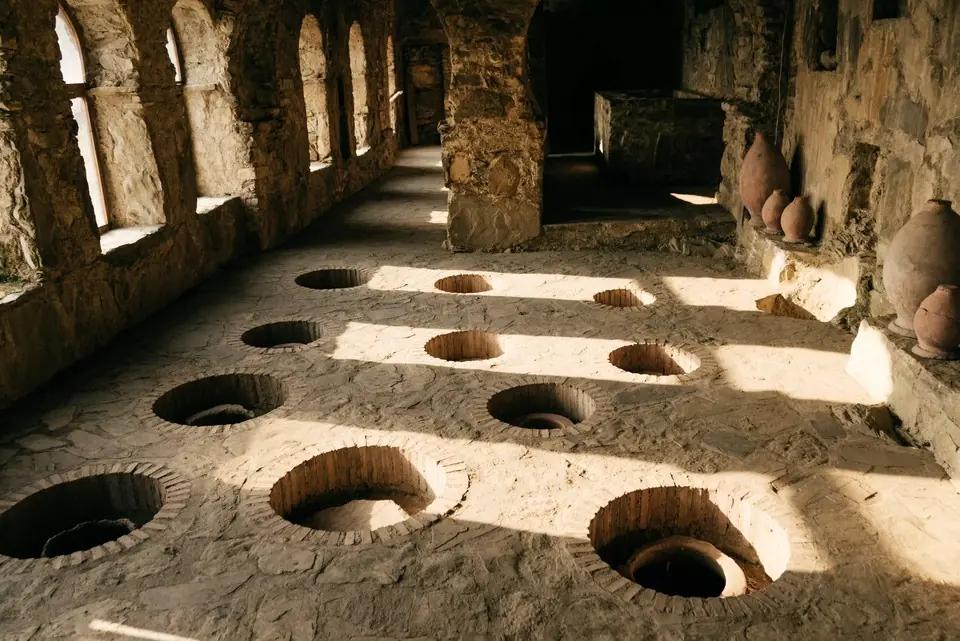
Winter is a calm time in the cellars. The harvest is long over, and the new wine has finished fermenting in qvevri, big clay vessels buried up to their necks. Small family wineries near Sighnaghi, Telavi and Kvareli welcome guests all year. Call ahead, as some close for a few days around the holidays. In the west, Guria and Adjara pick their last grapes, such as Chkhaveri, into December. A small glass of chacha, the grape spirit, is the local answer to the cold.
What to eat in a Georgian winter
- Satsivi: turkey or chicken in a cold sauce of walnuts and spice, the heart of the New Year table.
- Gozinaki: honey boiled thick with walnuts, then set and cut into small diamonds for the holidays.
- Churchkhela and dried persimmons from the markets, good snacks for the road.
- Khashi: a garlicky tripe broth eaten early in the morning, by tradition after a long night.
- Lobio in a clay pot, and khinkali in Pasanauri or Gudauri on the way north.
- Kubdari, the Svan pie of spiced meat, in Mestia.
- Hamsi on the coast, and sweet Gurian and Adjaran mandarins.
- During the 40-day fast before 7 January, many Georgians avoid meat and dairy. Look for fasting dishes such as pkhali, beans and mushrooms.
Driving in Georgia in winter: tyres, chains and closures
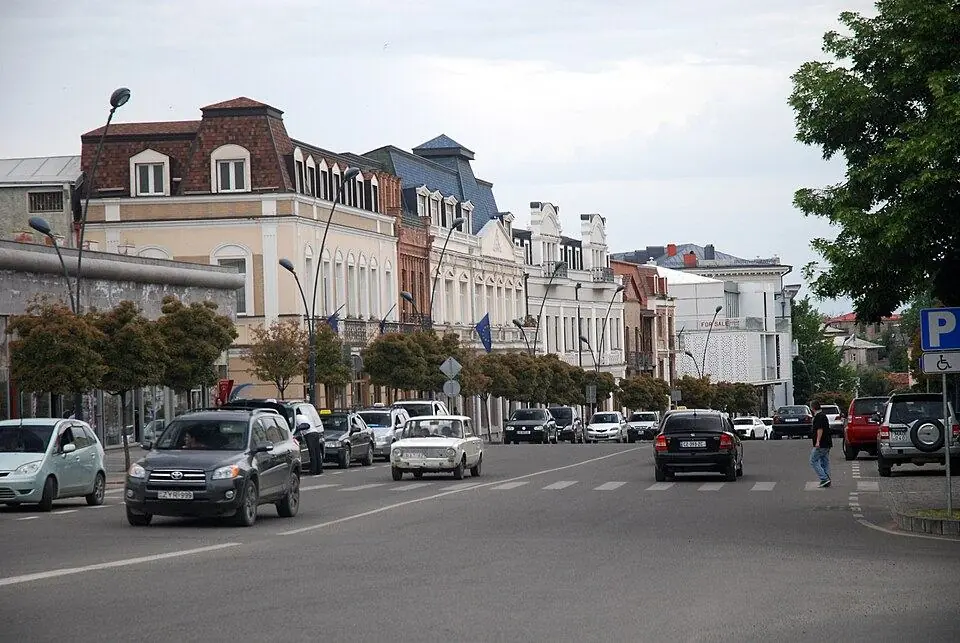
Main highways are cleared fast, and Georgians drive up to the ski resorts every weekend. Still, winter driving here needs care, and a few rules apply.
The winter tyre rule
From 1 December to 1 March, mountain road sections named in a government decree may only be driven on winter tyres. Tyres must carry the snowflake symbol and be no more than 10 years old. On cars the tread must be 3 mm deep or more, and on minibuses and buses 4 mm. Police can also order chains on the driven wheels in snow or ice. Breaking the rule costs a 100 GEL fine and 5 licence points, and police can turn the car back. We could not confirm the full list of sections, but reports agree that the Kazbegi road is on it.
The Jvari Pass and the road to Kazbegi
The Military Road climbs to ~2,380 m at the Jvari Pass, between Gudauri and Kobi. This stretch closes when blizzards or avalanche danger set in. Over the five winters to 2025/26 it was closed to all traffic on 10 to 17 days a season, mostly between December and April. Gudauri lies before the pass, so the resort can still be reached; Stepantsminda and Gergeti lie beyond it. Work goes on at a new Kvesheti-Kobi road with long tunnels that will skip this section, but no opening date had been given by October 2026.
Rental cars, daylight and drivers
Read your rental contract with care. Some firms ban their cars from roads such as Tusheti, Shatili, Juta, Truso and the Goderdzi Pass, and allow Mestia to Ushguli only from May to September. Ask for winter tyres and chains with any mountain booking. Aim to finish mountain driving by about 16:30, before the light goes and the frost sets in. If ice and snow are new to you, let a local driver with a winter-ready 4x4 take the mountain days.
Check the latest notices before any mountain day. The Roads Department posts closures on georoad.gov.ge and on its Facebook page, and its hotline is +995 32 2 31 30 76. Our road status page sums up the passes. In an emergency, dial 112.
Prices and crowds: a low season with two busy spells
Winter is low season for most of Georgia, with two exceptions: the holiday weeks and the ski resorts. Hotels in Tbilisi, Kakheti, Kutaisi and Batumi charge near their lowest rates for the first half of December, and from mid-January right through to March. Ski villages work the other way round. They are fullest and dearest from late December to mid-January, and on sunny weekends in February.
| Dates | Cities and lowlands | Ski resorts |
|---|---|---|
| 1-19 December | Very quiet, with some of the lowest rates of the year | Mostly waiting for the lifts to open |
| 20 December to about 14 January | Busy and dearer in central Tbilisi; book early | Peak: full, at their highest prices |
| Mid-January to February | Quiet and cheap | Busy at weekends, calmer midweek |
| Early March | Among the cheapest weeks of the year | Spring snow and fewer people midweek |
What things cost in winter 2026
- Shared section of a Tbilisi sulphur bath: about 15 GEL (about $6) in 2026.
- Georgian National Museum: an adult foreigner's ticket was about 40 GEL (about $15) in 2026. The museum shuts on Mondays and public holidays.
- Prometheus Cave: the same price, about 40 GEL (about $15) in 2026, buys a guided walk; usually open daily 10:00-17:30.
- Vardzia and Uplistsikhe: about 15 GEL (about $6) each in 2026.
- Ski day pass: Gudauri about 70 GEL (about $27) in 2026, Goderdzi about 30 GEL (about $12) in 2026.
A sample 7-day winter itinerary
This week works from mid-December to early March. It mixes the city, snow, wine and the caves of the west, and leaves room to swap days if a pass closes. Skiers can stretch days 2 to 4 into a longer stay; our Ski Week in Gudauri tour does exactly that.
- Day 1: Tbilisi
Land and settle in, then stroll through the Old Town to Abanotubani. Ride the cable car up to Narikala for the view at dusk, and end with a sulphur bath and khinkali. - Day 2: Mtskheta, then up to Gudauri
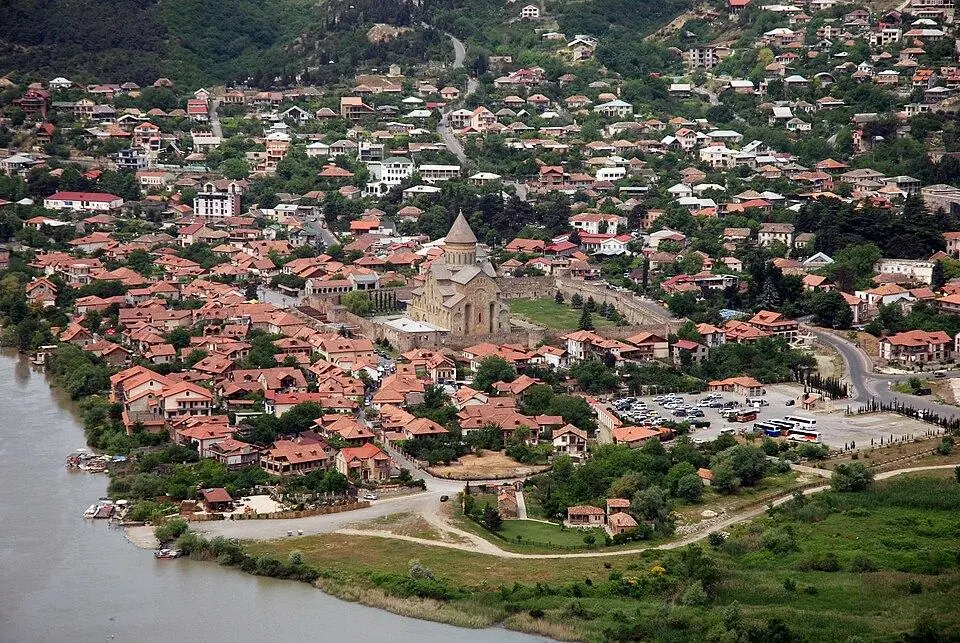
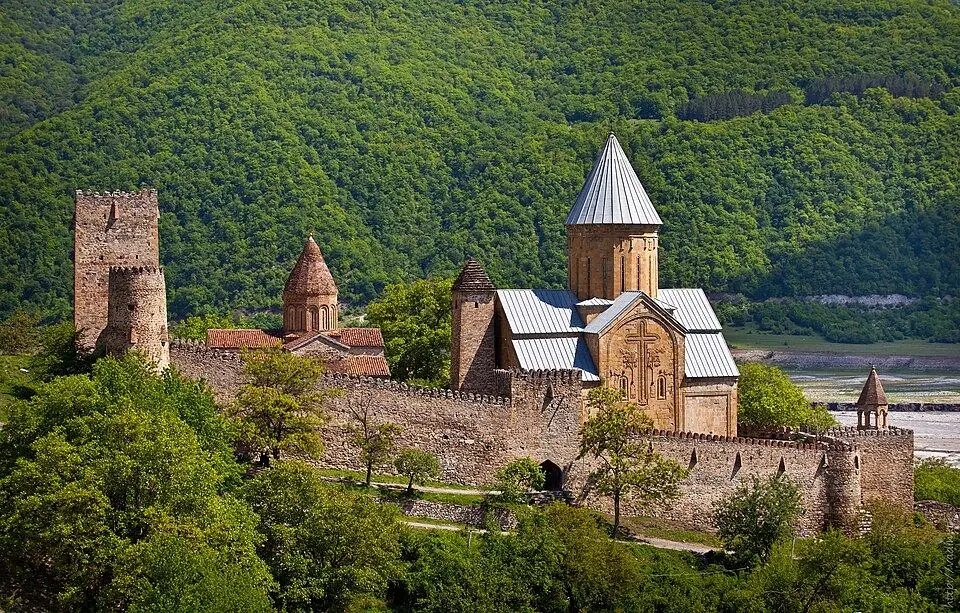
Spend the morning at Jvari Monastery and Svetitskhoveli Cathedral in Mtskheta, the old capital. Then head north on the Military Road past Ananuri Fortress to Gudauri, about 2 to 2.5 hours from Tbilisi. Sleep in Gudauri. - Day 3: Snow day in Gudauri or Kazbegi
Take a ski lesson, ride the lifts or try a snowshoe walk. If the Jvari Pass is open, drive on to Stepantsminda and go up to Gergeti Trinity Church by 4x4. If it is shut, stay on the slopes. - Day 4: Back to Tbilisi
Drive down by early afternoon. Visit the Georgian National Museum (not on a Monday), then catch an opera or ballet, or taste natural wine in a small bar. - Day 5: Kakheti
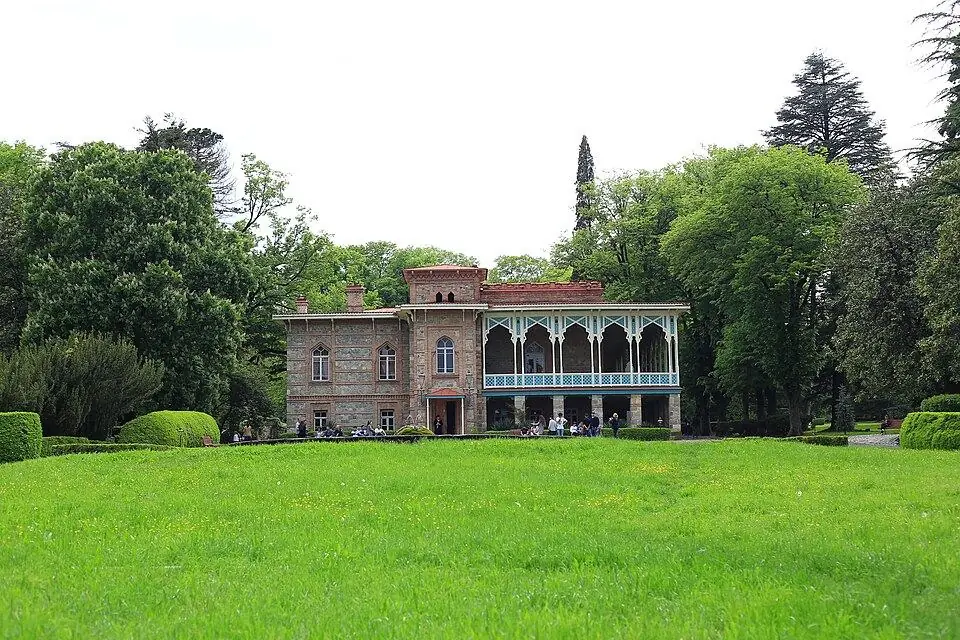
Go east to Bodbe Monastery and the walls of Sighnaghi, then eat lunch and taste qvevri wine at a family winery. Stop at the Tsinandali estate on the way back, or spend the night in Sighnaghi. - Day 6: West to Kutaisi
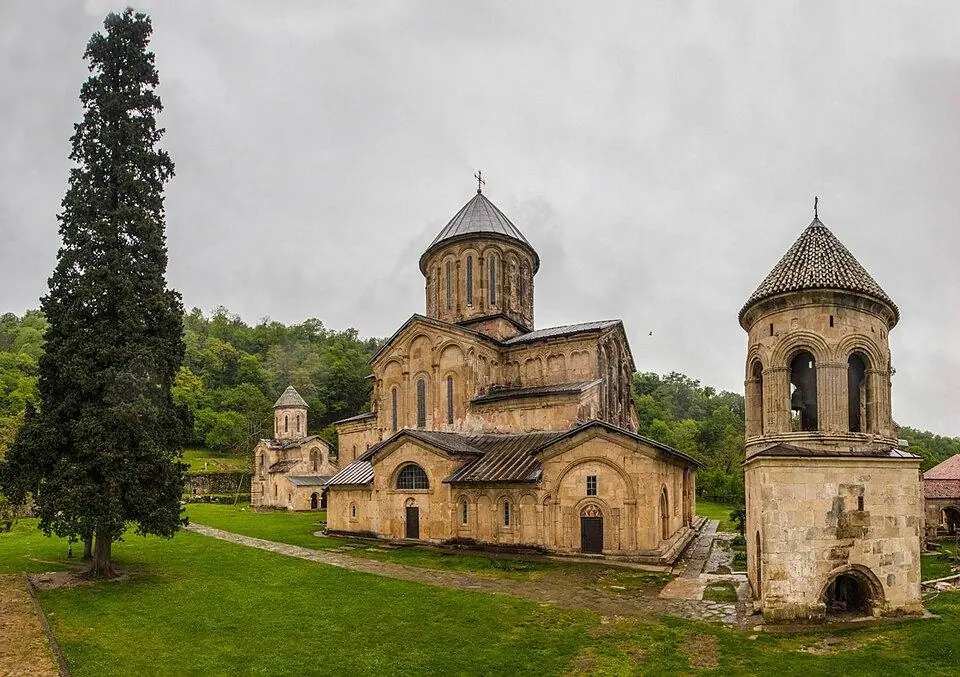
Cross to the west, ~230 km away. It takes about 3 to 3.5 hours by car, and much the same by train. See the mosaics of Gelati Monastery, then head underground at Prometheus Cave, a good plan in any weather. - Day 7: Tskaltubo and home
Soak in Tskaltubo's warm water or walk up to Bagrati Cathedral, then fly out of Kutaisi airport or ride back to Tbilisi.
If snow shuts the Jvari Pass on day 3, swap days 3 and 5 and try the mountains later in the week. A private driver makes that change easy.
What to pack for a Georgian winter
- A warm, windproof coat, plus a down layer for the mountains, where nights drop below -10°C.
- Thermal base layers, a hat, gloves and a scarf. Several thin layers beat one thick one, since homes and cafes are heated hard.
- Waterproof boots with deep grip for icy lanes, cave steps and wet days in Kutaisi and Batumi.
- Ice grips that slip over your boots, for Gergeti, Vardzia and the old cobbles of Tbilisi.
- Sunglasses and sunscreen, because snow glare is strong up high.
- Swimwear for the baths. For churches, women cover their hair and wear a long skirt, and men wear long trousers.
- A power bank, as the cold drains phone batteries quickly.
- Proof of travel insurance. It is compulsory for foreign visitors, and skiers need a policy that covers winter sports.
Carry some cash over the holidays. Hotels and most restaurants take cards, yet village cellars, guesthouses and market stalls often want cash, and banks shut on 1, 2, 7 and 19 January.
Georgia in winter: FAQ
Is Georgia worth visiting in winter?
Yes, if you want cities, food, wine, church feasts and snow rather than treks and beaches. The capital, the wine country, the caves near Kutaisi, Batumi and the ski resorts all work well from December to February. You give up the remote valleys, such as Tusheti and Khevsureti, whose roads close for the winter.
How cold is Georgia in winter?
In January, the coldest month, Tbilisi's average is about 7°C in the afternoon and a little under freezing at night. Batumi is milder at about 12°C and 5°C. The mountains are far colder: Gudauri averages about -3.5°C by day and nearly -10°C at night.
Does it snow in Tbilisi in winter?
Sometimes, but it seldom lasts more than a day or two. The city gets only about 16 to 21 mm of rain or snow a month from December to February. For snow you can count on, go up to Gudauri, Kazbegi, Bakuriani or Mestia.
When is ski season in Georgia?
Lifts usually open between mid- and late December and close between late March and mid-April, with Gudauri running longest. The surest snow falls from January to March. No 2026/27 dates had been named by 21 October 2026.
Can you visit Kazbegi in winter?
Yes. Snowploughs keep the Military Road to Stepantsminda open, and you can reach Gergeti Trinity Church by 4x4 or on foot with ice grips. The Jvari Pass section shuts after heavy snow; recent winters saw 10 to 17 such days. Leave a free day in your plan.
Is Svaneti open in winter?
Yes. Mestia is reached all year by road from Zugdidi, and small planes fly from Natakhtari when the weather allows. Ushguli is open by road, often with chains, but the Zagari Pass to Lentekhi stays closed until about late May or June.
Can you go to Tusheti in winter?
No. Tusheti's only road climbs over the 2,950 m Abano Pass, which closes for the winter, usually in October. It opens again between late May and late June. Plan Tusheti for July to September.
Do you need winter tyres in Georgia?
Yes, on mountain sections named by the government. Between 1 December and 1 March, cars there need snowflake-marked winter tyres with 3 mm of tread or more, and police can demand chains. The fine is 100 GEL. Ask your rental firm for both, or travel with a local driver.