Batumi Weather
Month-by-month Batumi weather with a named source for every figure: air and sea temperatures, rain, sunshine, the real swimming season, winter on the coast, storms and packing.
Batumi weather: 7-day forecast
Forecast for 41.646° N, 41.642° E, 3 m, updated through the day: data from MET Norway (CC BY 4.0). The monthly averages below are long-term climate, not a forecast.
The monthly figures come from the Batumi weather station records described in the guide on this page. Cloud cover: CHELSA 1981–2010. Sea: NOAA satellite sea-surface temperature. Daylight and sunrise are for the 15th of each month (Georgia keeps UTC+4 all year). A rain day has at least 1 mm.
- Batumi has a humid subtropical climate. Station records for 2011-2025 put the average afternoon high at 11.9°C (53°F) in January and 27.8°C (82°F) in August, and nights in July and August stay above 20°C.
- It ranks among the wettest places in Georgia: 2,518.9 mm of rain a year at Batumi Airport in the official 1981-2010 normals, about five times Tbilisi's total, with the most in September and October and the least in April and May.
- The sea off Batumi averages 17°C in May, 23°C in June and 27°C in August (NOAA satellite data, 2011-2025), and it usually stays above 20°C from early June to late October.
- Swim from mid-June to late September. For sightseeing, the Botanical Garden and trips into mountain Adjara, May, early June and the first half of October are the best compromise.
- Winter is mild, damp and quiet, with frost on only two or three nights a year, and Goderdzi's ski slopes are about three hours inland from mid-December to early April.
Batumi weather is warm, humid and wet. Summers are sticky rather than scorching, winters are mild, and rain can arrive in any month. Recent records from the city's weather station give average highs of about 28°C in August and 12°C in January, while the Black Sea warms from about 10°C in late February to 27°C in August. The price of all that greenery is rain: about two and a half metres a year, most of it in autumn, which puts Batumi among the wettest places in Georgia.
This page starts with a month-by-month table and names the source behind every column. It then explains why the coast is so wet, when the sea is really warm enough to swim, what Batumi in winter is like, how storms affect your plans, what the mountains inland are doing and what to pack. For sights, beaches, food and where to stay, see our Batumi travel guide; this page is about the sky and the sea. We plan private trips out of Batumi in every season, so the advice comes from rearranging real days around real downpours.
Batumi weather by month: temperature, sea, rain and sunshine
No single official dataset covers every column, so each has its own source. Air temperatures are our 2011-2025 averages from the daily records of Batumi's weather station (WMO 37484), published by Meteostat. Rain and rain days (at least 1 mm) are the official 1981-2010 normals for Batumi Airport, reported by Georgia's National Environmental Agency to the World Meteorological Organization and published by NOAA. Sea temperatures are our 2011-2025 monthly means from NOAA's daily satellite record (OISST) for open water ~20 km west of the city. Sunshine hours are older long-term station figures compiled by Meteoweb.ru from Soviet-era climate references.
| Month | Average high | Average low | Sea | Rain | Rain days | Sunshine |
|---|---|---|---|---|---|---|
| January | 11.9°C (53°F) | 5.5°C (42°F) | 11.4°C (53°F) | 234.7 mm | 14.0 | 99 h |
| February | 11.7°C (53°F) | 5.0°C (41°F) | 9.9°C (50°F) | 183.4 mm | 12.7 | 105 h |
| March | 13.6°C (56°F) | 6.6°C (44°F) | 10.0°C (50°F) | 156.6 mm | 12.6 | 126 h |
| April | 16.7°C (62°F) | 9.4°C (49°F) | 12.1°C (54°F) | 90.1 mm | 9.6 | 148 h |
| May | 20.1°C (68°F) | 13.7°C (57°F) | 17.2°C (63°F) | 92.5 mm | 9.6 | 199 h |
| June | 24.6°C (76°F) | 18.3°C (65°F) | 22.9°C (73°F) | 141.0 mm | 9.9 | 235 h |
| July | 26.8°C (80°F) | 20.6°C (69°F) | 25.6°C (78°F) | 164.9 mm | 10.1 | 214 h |
| August | 27.8°C (82°F) | 21.5°C (71°F) | 26.9°C (80°F) | 220.7 mm | 11.5 | 223 h |
| September | 25.1°C (77°F) | 18.3°C (65°F) | 25.2°C (77°F) | 330.1 mm | 11.1 | 201 h |
| October | 20.8°C (69°F) | 13.9°C (57°F) | 21.3°C (70°F) | 321.5 mm | 12.4 | 176 h |
| November | 17.0°C (63°F) | 9.9°C (50°F) | 17.3°C (63°F) | 305.5 mm | 12.2 | 125 h |
| December | 13.7°C (57°F) | 7.3°C (45°F) | 13.8°C (57°F) | 277.1 mm | 13.1 | 107 h |
| Year | 19.2°C (66°F) | 12.5°C (54°F) | 17.8°C (64°F) | 2,518.9 mm | 138.8 | 1,958 h |
Read the two rain columns together. January has the most wet days, 14, but moderate showers, while September and October bring the largest totals on only 11 or 12 days each, so a wet autumn day averages close to 30 mm. April and May are the driest months at about 90 mm, still more than Tbilisi gets in its wettest month.
The sea keeps afternoons and nights only 6 to 7°C apart in every month, and from 2011 to 2025 the station fell below 0°C on just two or three nights a year. The water runs about a month behind the air, coldest in late February and warmest around 10 August.
Batumi climate: why it is one of the wettest places in Georgia
In the Köppen system Batumi is humid subtropical (Cfa): no month is cold, summers are warm and muggy, and there is no dry season. The coast faces west into moist air off the Black Sea, and the land behind the city rises fast: Mount Mtirala, ~12 km inland, tops 1,300 m, and the Lesser Caucasus ridges beyond climb to ~2,500 m. Air forced up those slopes cools and sheds its water, which meteorologists call orographic lift. In early autumn the sea is still at about 25°C when cooler air masses arrive, and that contrast feeds the heaviest storms of the year.
The table compares yearly rain from the same WMO normals, all for 1981-2010 except Kobuleti, the next town up the coast (1991-2020). The older period explains why Tbilisi's figure is a little lower than the 511.5 mm on our Tbilisi weather page.
| Weather station | Rain per year | Wettest month |
|---|---|---|
| Batumi Airport | 2,518.9 mm | September, 330.1 mm |
| Kobuleti (1991-2020) | 2,521.4 mm | October, 318.1 mm |
| Poti | 2,040.0 mm | September, 262.0 mm |
| Zugdidi | 1,951.8 mm | June, 220.7 mm |
| Kutaisi | 1,461.0 mm | January, 164.7 mm |
| Tbilisi | 505.2 mm | June, 78.2 mm |
Batumi and Kobuleti share the top of the official list, and the forest behind them is wetter still: Mtirala, named from the Georgian word for weeping, gets more than 4,000 mm a year by the figures of Adjara's tourism department. The rain comes in heavy doses. Kobuleti counts ~140 days a year with at least 1 mm, but ~72 of them bring 10 mm or more and ~10 bring 50 mm or more, mostly from August to December. Kobuleti's wettest day on record, 15 August 2001, brought 261.3 mm. Between bursts the sun still manages roughly 1,950 hours a year.
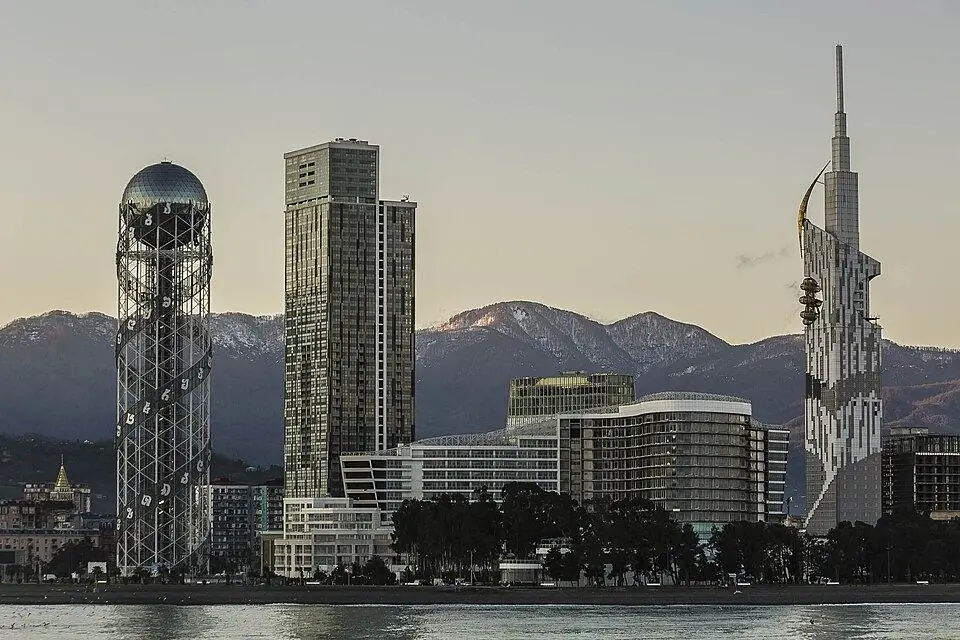
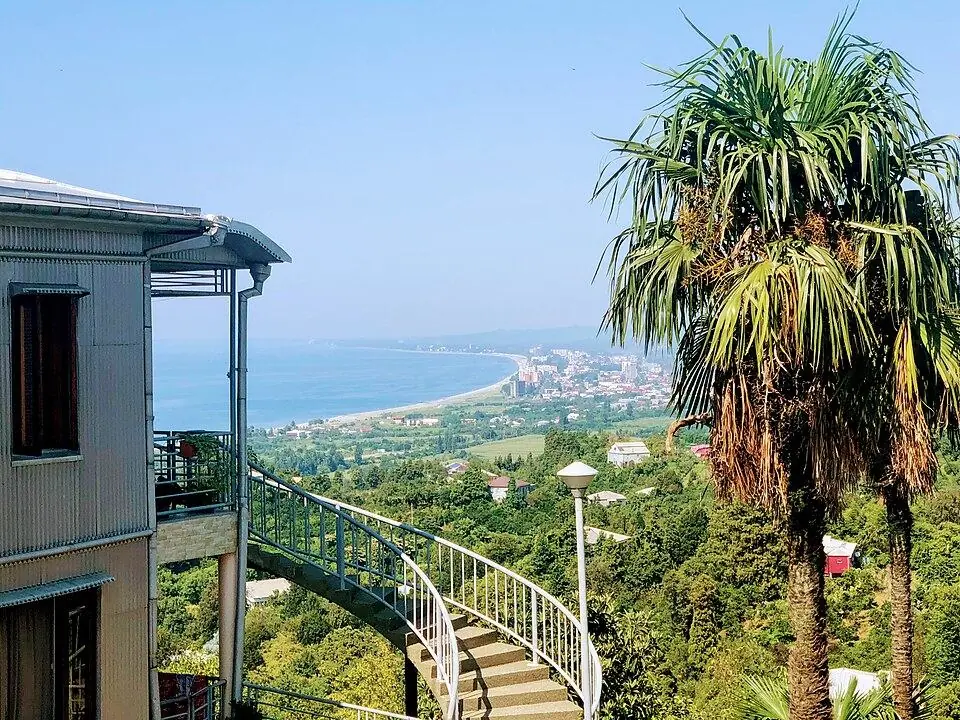
Batumi sea temperature and the swimming season
In NOAA's satellite record for 2011-2025, the average sea temperature off Batumi passes 18°C around 21 May, 20°C around 1 June and 24°C around 24 June. It peaks near 27°C around 10 August, slips under 24°C in late September and under 20°C around 26 October. These are open-water figures: the shallows can feel a little warmer on calm afternoons and cooler after a storm.
Single years wander. The water first reached 20°C as early as 14 May in 2012 and as late as 10 June in 2021, and it held above 20°C into November in 2012, 2019, 2020 and 2023. August averaged from 25.6°C (2013) to 27.8°C (2023).
- May, ~17°C: for hardy swimmers. Adjara's tourism department puts the season's start in late May, once the water reaches about 18°C.
- June, ~23°C: comfortable for most people from mid-month.
- July and August, ~26-27°C: the warmest water and the busiest beaches.
- September, ~25°C: a warm sea and space on the pebbles, though storms grow more frequent.
- October, ~21°C: fine on calm days in the first half, then mainly for keen swimmers; from November to April the sea is too cold for most visitors.
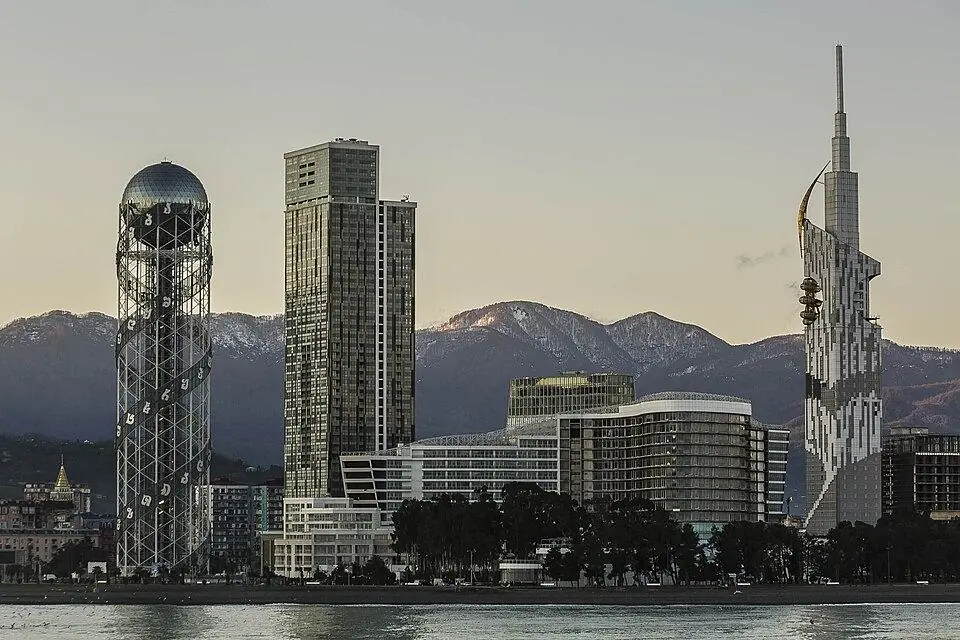
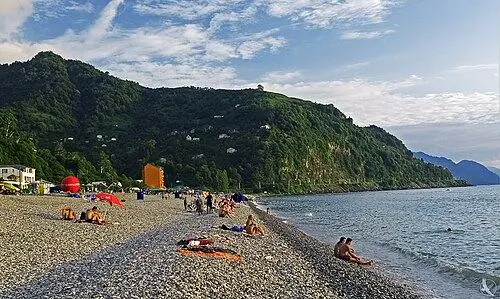
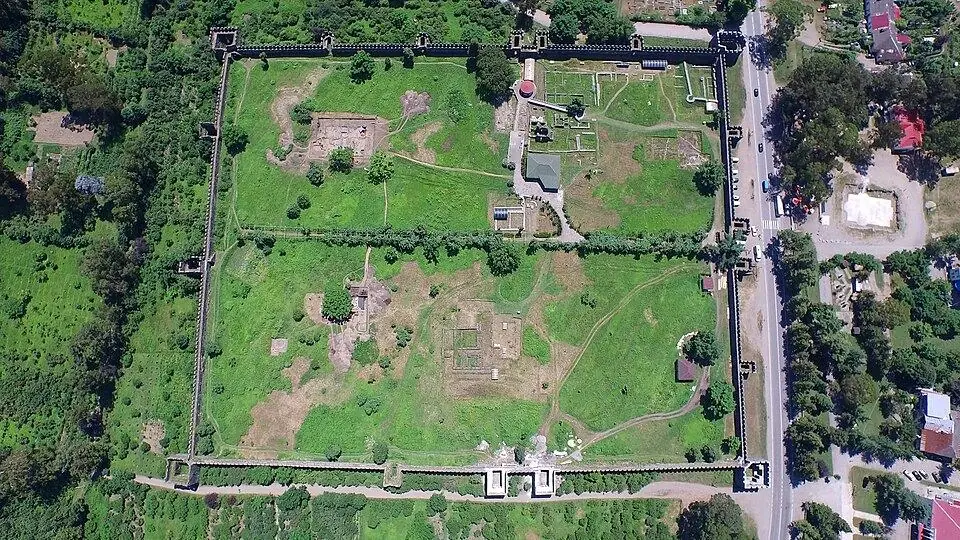
Batumi in spring (March to May): blossom, warm winds and the driest weeks
Spring is when Batumi looks greenest and stays driest: rain eases from 156.6 mm in March to about 90 mm in each of April and May, and the crowds have not yet arrived. The sea is still cold, so think gardens, walks and day trips.
Batumi in March
March averages 13.6°C by day and 6.6°C at night, with rain on ~13 days and the sea still near its yearly low of about 10°C. Camellias and the first magnolias bloom in parks and courtyards.
Batumi in April
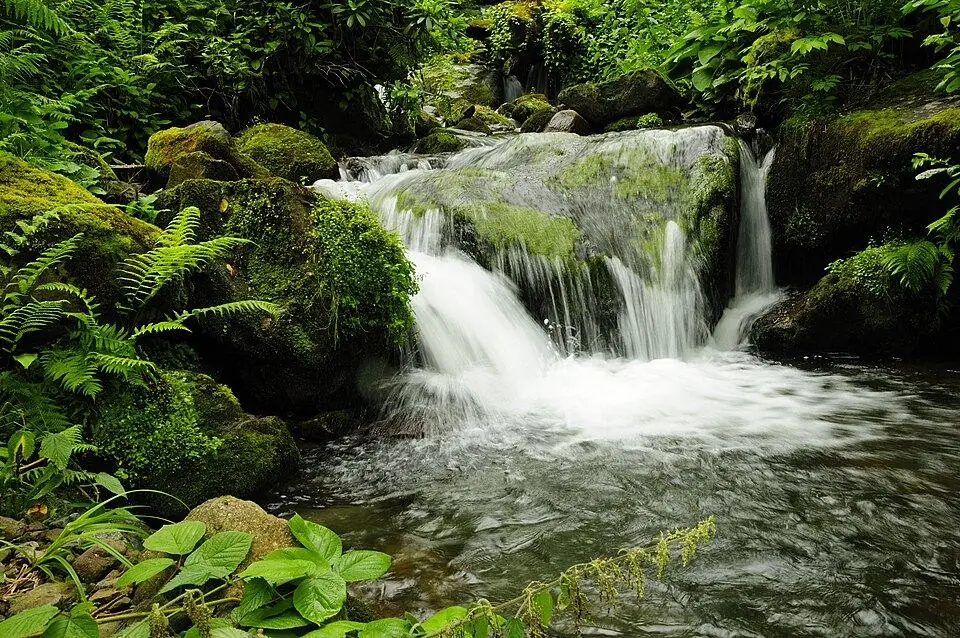
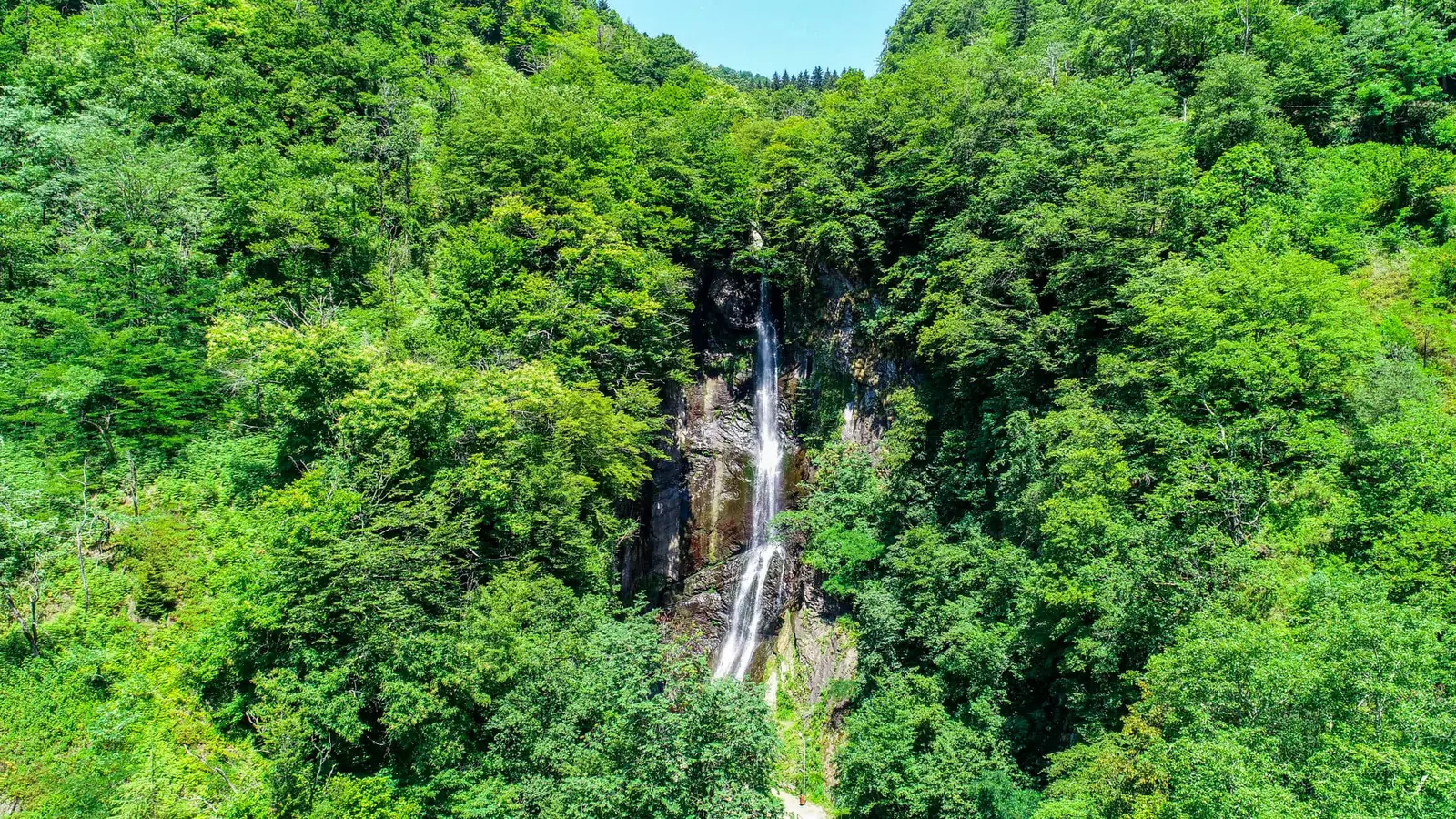
April warms to 16.7°C and 9.4°C and is, by a hair, the driest month in the 1981-2010 normals: 90.1 mm on ~10 days. Now and then a dry, warm wind pours down from the mountains and the station passes 30°C, about one April day a year since 2011. Go for the Botanical Garden and a full Makhuntseti waterfall.
Batumi in May
May brings 20.1°C afternoons, 13.7°C nights and 92.5 mm of rain, some of the most settled weather of the year, while the sea climbs from about 15°C to about 20°C. These are our favourite weeks for the old town, Mtirala's trails and the Adjaristskali valley. Warm-wind days can be fierce: the station hit 36°C in May 2013 and May 2014.
Batumi weather in summer (June to August): heat, humidity and the beach season
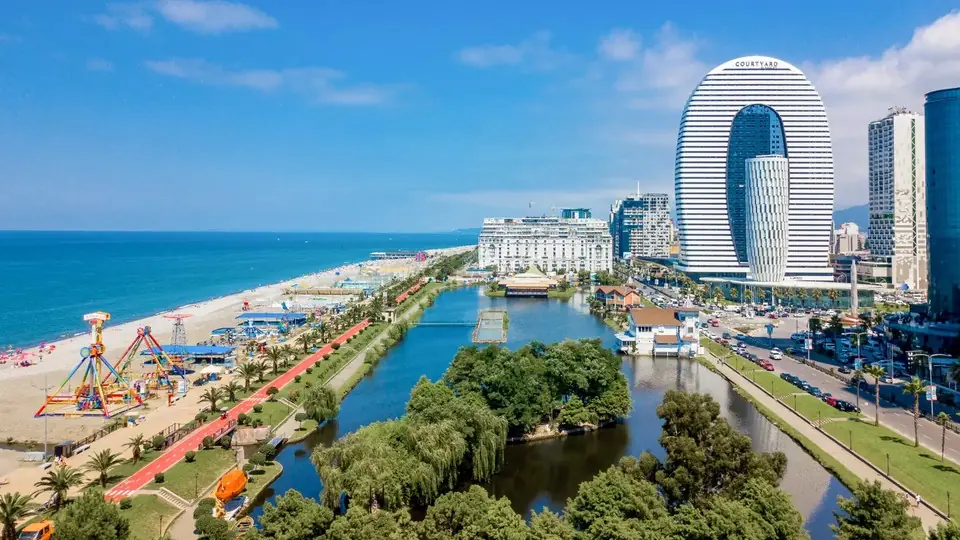
Summer on the coast is warm rather than blazing: highs run from 24.6°C in June to 27.8°C in August, and only about eight summer afternoons a year reach 30°C. What you notice is the humidity, with nights above 20°C in July and August, plus short thunderstorms that usually clear within hours.
Batumi in June
June averages 24.6°C and 18.3°C, with 141.0 mm of rain on ~10 days, the most sunshine of the year (235 hours) and the sea at about 23°C. Early June is a sweet spot: swimmable by mid-month and calm before the holiday rush.
Batumi in July
July reaches 26.8°C by day and 20.6°C at night, with the sea near 26°C and 164.9 mm of rain. Beaches fill up and the Black Sea Jazz Festival usually plays in mid-July, so book ahead.
Batumi in August
August is the warmest month on land and in the water: 27.8°C and 21.5°C in the air, about 27°C in the sea. The rain starts to build, 220.7 mm on ~12 days, often in late-month storms. From mid-August the autumn migration of birds of prey begins over the hills, and 28 August, Mariamoba, is a public holiday.
Batumi in autumn (September to November): a warm sea and the biggest storms
Autumn is a trade-off. The sea is warm and the crowds thin out, but September, October and November each bring more than 300 mm of rain. Keep your days flexible and a dry-weather plan in reserve.
Batumi in September
September averages 25.1°C and 18.3°C with the sea still about 25°C, so the first half is excellent for swimming. It is also the wettest month, 330.1 mm on ~11 days, much of it in big storms. Raptor migration peaks now: counters at Sakhalvasho and Chaisubani logged more than a million birds of prey in autumn 2019, according to Adjara's tourism department.
Batumi in October
October cools to 20.8°C by day and 13.9°C at night, with 321.5 mm of rain over ~12 days. The sea averages 21°C, so calm days early in the month can still feel like summer, and citrus ripens on the hillsides.
Batumi in November
November gives 17.0°C afternoons, 9.9°C nights and 305.5 mm of rain on ~12 days. The mandarin harvest is under way, the late harvest festivities of Guria and Adjara begin and the Botanical Garden turns to autumn colour: a quiet, good-value month if you carry an umbrella.
Batumi in winter (December to February): mild, rainy and quiet
Batumi in winter is soft by Georgian standards: afternoons of 11.7°C to 13.7°C, nights of 5°C to 7°C and rare frost. The price is grey skies, rain on about 13 days a month and the strongest winds of the year, averaging 20-23 km/h at the station from November to January against 12-13 km/h in summer. Snow seldom lies long at sea level, and a warm mountain wind can still push an afternoon to about 25°C.
Batumi in December
December averages 13.7°C and 7.3°C, with 277.1 mm of rain and the sea near 14°C. The city lights up for New Year, and hamsi, small Black Sea anchovies fried crisp, are at their best.
Batumi in January
January holds at 11.9°C and 5.5°C, with the most wet days of the year, 14, and about 99 hours of sunshine. The festive week runs from New Year's Eve to Orthodox Christmas on 7 January, though some seasonal guesthouses close.
Batumi in February
February is as mild as January, 11.7°C and 5.0°C, with 183.4 mm of rain and the sea bottoming out near 10°C. Camellias start to flower, and it is a good month to pair the coast with skiing.
Goderdzi, Adjara's ski resort, lies ~110 km and about three hours inland, with a season from about mid-December to early April and lifts from ~1,720 m to ~2,360 m: palm trees at breakfast, deep snow by lunch. Use winter tyres or a 4x4, or book a transfer; winter buses stop at Danisparauli, ~5 km below the resort. Our ski resorts guide compares it with Gudauri and Bakuriani.
Best time to visit Batumi for beaches, sightseeing and day trips
| If you want | Come in | Why |
|---|---|---|
| Beach days | Mid-June to mid-September | Sea at 23-27°C, long days, everything open |
| A warm sea with fewer people | Early June; first half of September | Swimmable water without the July and August crowds |
| Sightseeing and city walks | May, early June, early October | Highs of ~20-25°C; May has some of the driest weeks |
| The Botanical Garden | April and May; October and November | Spring flowers, then autumn colour; skip the day after heavy rain, when the slopes are slippery |
| Mountain Adjara and Green Lake | June to early October | The high track is usually free of snow; Makhuntseti and Keda work from April to November |
| Birdwatching | Mid-August to mid-October | Raptor migration over the hills, peaking in September |
| Skiing plus the sea | Mid-December to early April | Goderdzi is about three hours inland |
| Quiet streets and low prices | November to March | Mild and wet, with most visitors gone |
If you can pick only one window, early June or the first half of September gives the best mix of warm water, fewer people and weather good enough for day trips. Batumi also makes a fine last stop on a longer tour that ends at the sea after the mountains, Borjomi and Kutaisi. Combining the coast with the mountains or Kakheti? Check the best time to visit Georgia for those regions before you fix dates.
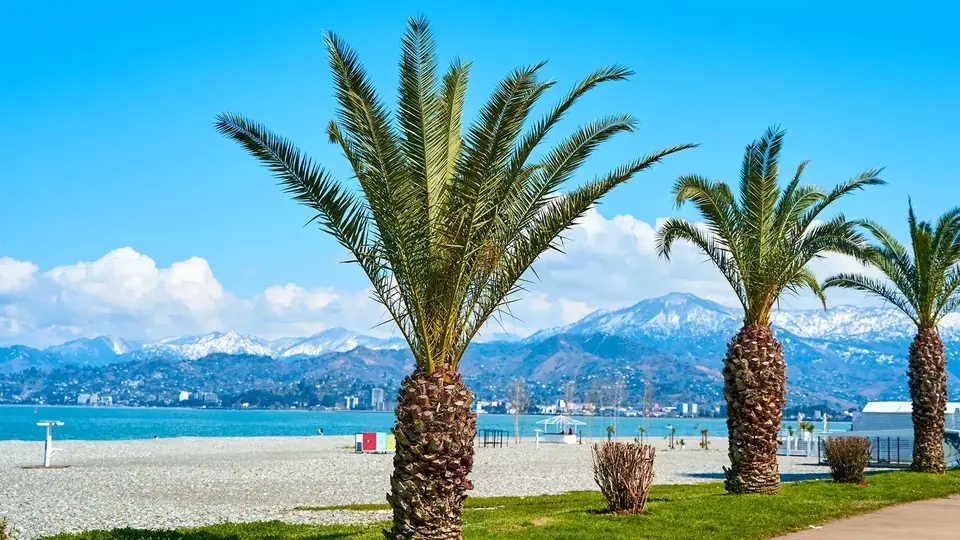
Mountain Adjara weather: Keda, Khulo, Goderdzi and Green Lake
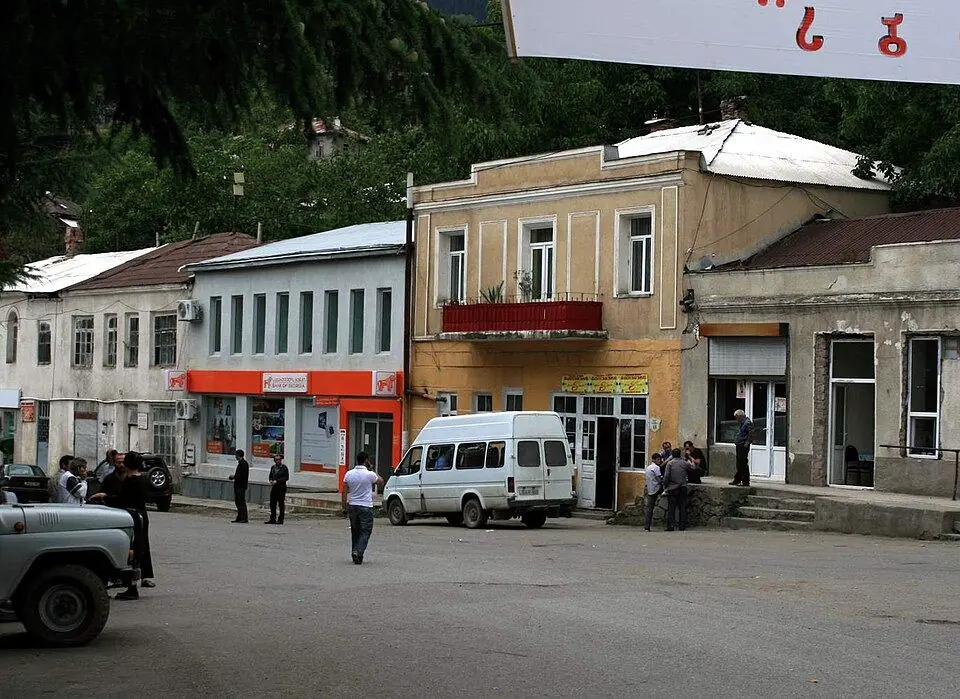
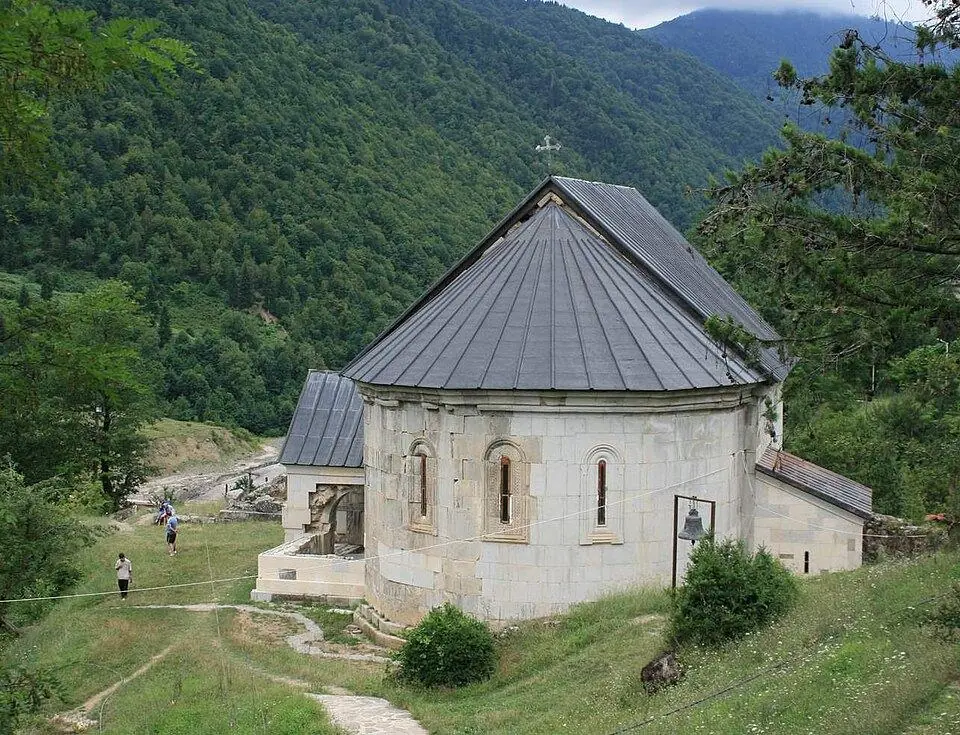
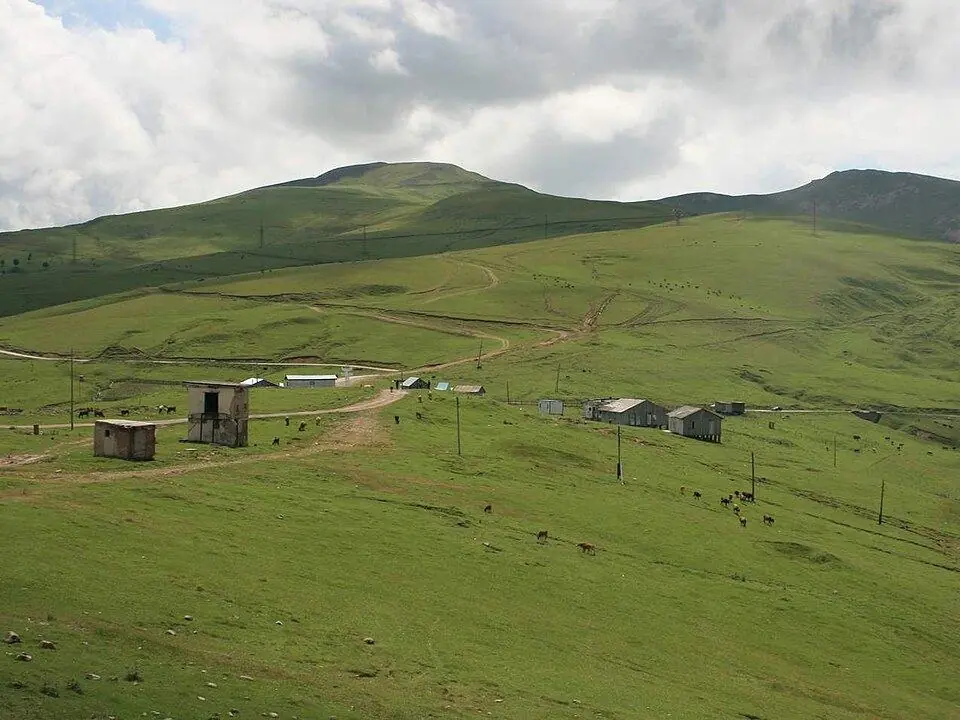
Drive east and the climate changes with height. Adjara's tourism department puts the highlands at roughly 19°C at the height of summer and 1°C in midwinter, against about 24.5°C and 6.5°C on the coast, and their winter lasts some five months. Keda, ~40 km up the Adjaristskali valley, is still mild wine country; Khulo, at ~920 m, is noticeably fresher; the Goderdzi Pass at 2,027 m lies under snow for roughly half the year.
- Makhuntseti waterfall (~35 km from Batumi) and Keda: April to November, the waterfall fullest in spring.
- Khulo and the Skhalta valley: best from May to October; winter snow reaches the higher villages.
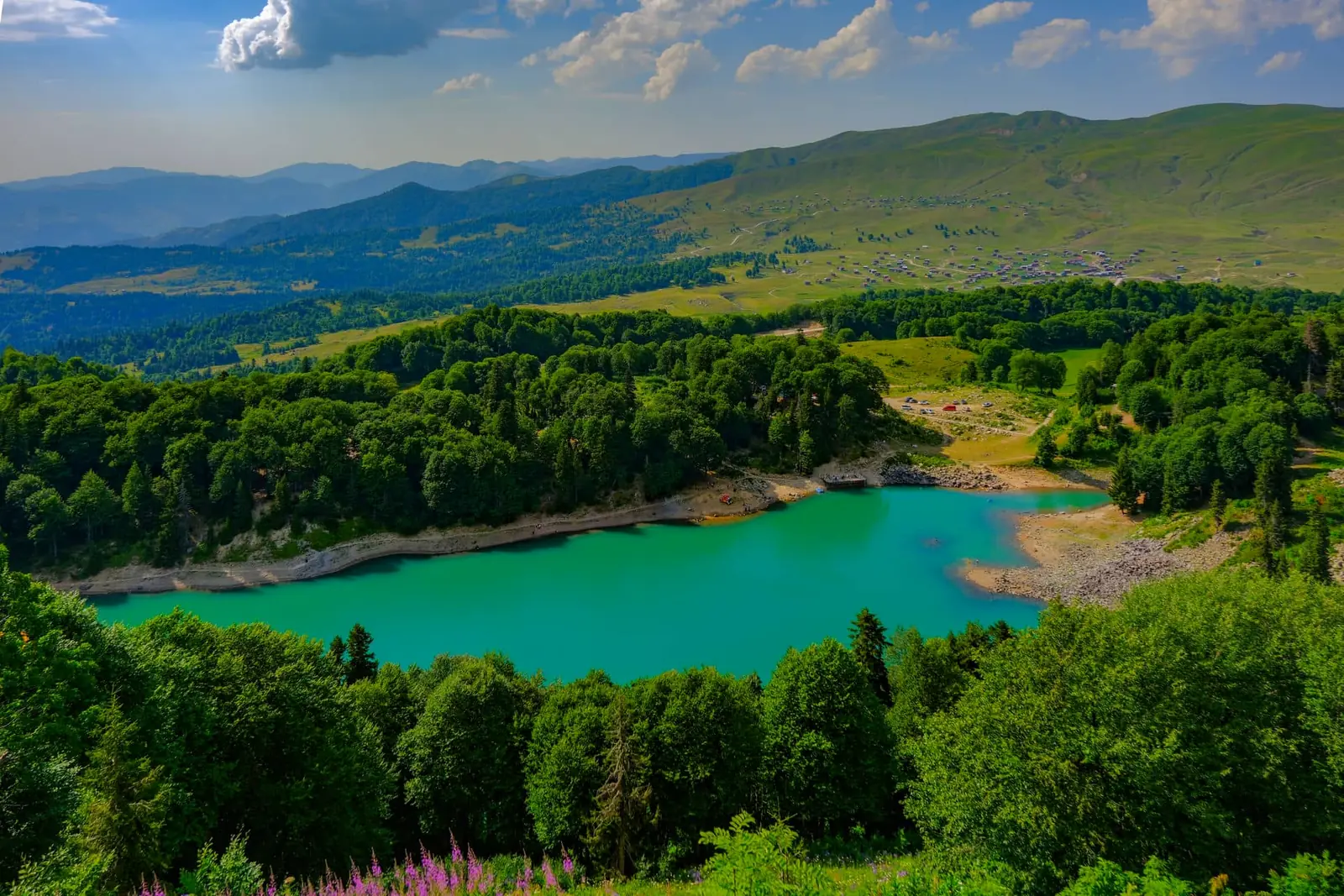
- Green Lake (~2,060 m): usually reachable from June to early October; the track turns to mud after rain, so go by 4x4.
- Goderdzi Pass road to Adigeni and Akhaltsikhe: a summer link that snow can close from late autumn into spring, so check road status first.
The coast and the mountains can have completely different days at the same time, so check the forecast for Khulo or Goderdzi itself rather than for Batumi.
Batumi rain, storms and sea conditions: warnings and forecasts
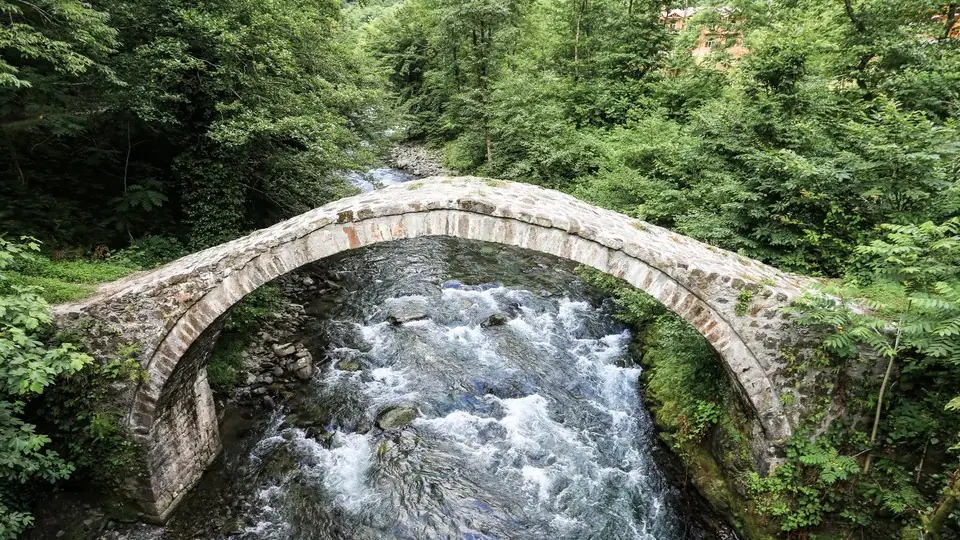
Much of Batumi's rain comes in bursts that pass within a few hours, so a wet forecast rarely means a lost day. The exceptions are the autumn storms, when one cloudburst can drop 50 mm or more and low-lying streets may flood for a while. Winter brings the roughest sea, when strong winds off the open water push big waves onto the beaches; in summer the water is usually calmest in the morning, before the afternoon breeze.
If it rains
- Buy fish at the market and have it cooked next door.
- Drive inland for a wine cellar lunch in Keda.
- Visit Makhuntseti after the shower, when the waterfall is at its loudest.
- Leave the Botanical Garden and Mtirala's trails for a dry day; both are steep and slippery when wet.
Where to check the Batumi weather forecast
Georgia's National Environmental Agency issues the official forecasts and storm warnings for Adjara; its site, meteo.gov.ge, can be read in English. For wind and waves, use a marine forecast that shows wave height for the coast, and follow the lifeguards' instructions on the beach. For mountain days, check the destination's own forecast and our road status tool, especially for the Goderdzi Pass.
Travelling with us? Your guide checks the outlook every evening and rearranges the plan, so a stormy beach day becomes a morning at Gonio and the old town. We run private trips on any date for groups of every size, guided in your language.
What to pack for Batumi in every season
Every Batumi bag needs a proper rain layer and shoes that grip on wet stone, plus water shoes for the pebbles from June to October.
December to February
- A warm waterproof jacket and a sweater for 5-7°C evenings
- An umbrella that can take wind
- Thermals and gloves for a day at Goderdzi
March to May
- Layers for days of 14-20°C and cool nights
- A light rain jacket
- Walking shoes for the Botanical Garden and Mtirala
June to August
- Light, breathable clothes for humid 25-28°C days
- Swimwear, a sun hat and strong sunscreen
- Something covering shoulders and knees for churches and mosques
September to November
- Summer clothes for September, a light jacket for later
- A good rain jacket and quick-drying shoes
- A fleece for evenings and mountain trips
Batumi weather: FAQ
What is the best month to visit Batumi?
June and September: the sea is 23-25°C and crowds are smaller than in July and August. May and early October suit sightseeing and day trips better than swimming.
When is the sea warm enough to swim in Batumi?
On average the water passes 20°C around 1 June and stays above it until late October (NOAA satellite data, 2011-2025). Most people find it comfortable from mid-June to late September, at 23-27°C.
What is the Batumi sea temperature in May and October?
May averages about 17°C, rising from ~15°C at the start to ~20°C at the end, so early in the month only hardy swimmers go in. October averages about 21°C, sliding from ~23°C to ~19°C, so the first fortnight is the better half for a swim.
What is the rainiest month in Batumi?
September, with 330.1 mm in Batumi Airport's 1981-2010 WMO normals, closely followed by October and November. January has the most rainy days, about 14, and April and May are the driest months.
Is Batumi worth visiting in winter?
Yes, if you want a mild, quiet city rather than a beach holiday. Afternoons average 12-14°C and the fish restaurants serve fresh hamsi. Expect rain on almost half the days.
Does it snow in Batumi?
Rarely, and it seldom lasts: in 2011-2025 the thermometer at the station dipped below zero only two or three times a year. Goderdzi, about three hours inland, has a ski season from mid-December to early April.
Is Batumi hotter than Tbilisi in summer?
No. Batumi's average August high is about 28°C, against about 32°C in Tbilisi, though the coast feels stickier because of the humidity and warm nights. In winter Batumi is the milder of the two.
What is the weather like in Batumi in October?
Mild and wet: highs of about 21°C, lows of about 14°C and around 320 mm of rain on ~12 days, usually in heavy bursts with sunny spells between. Calm days early in the month are still good for a swim.
Last checked Oct 2026 by the Maspindzeli team.
Batumi weather month by month
What each month brings, what to wear and what is on.
Weather nearby
July and January average highs, nearest first.
Places with this weather
Sights and villages close to Batumi and at a similar height.
Tours that visit Batumi
Not sure the weather will suit your plans?
We check the forecast for Batumi every week. Message us your dates and we will tell you what to expect and what to pack.
WhatsApp +995 598 74 74 54