Gudauri Weather
Month-by-month Gudauri weather from Georgia's official station records: temperatures at the base and the top lifts, precipitation and snow, the 2026/27 ski season, the Jvari Pass in winter, summer conditions and a packing list.
Gudauri weather: 7-day forecast
Forecast for 42.476° N, 44.479° E, 2,196 m, updated through the day: data from MET Norway (CC BY 4.0). The monthly averages below are long-term climate, not a forecast.
The monthly figures come from the Gudauri weather station records described in the guide on this page. Cloud cover: CHELSA 1981–2010. Daylight and sunrise are for the 15th of each month (Georgia keeps UTC+4 all year). A rain day has at least 1 mm.
- Gudauri has a cold, snowy, sunny winter and a short, cool summer: the resort's weather station at 2,197 m averages -6.7°C (20°F) in January and 13.2°C (56°F) in July, with midwinter afternoons near -3°C, nights near -10°C and summer days of about 17°C.
- It is wet for eastern Georgia, with roughly 1,500 to 1,600 mm of precipitation a year, mostly snow from November to March; the station counts about 179 snow-covered days a year, and the pistes usually carry 1 to 2 m in midwinter.
- Recent seasons started between 20 and 27 December and ended in mid-April (17 April 2025, 19 April 2026); the 2026/27 dates had not been announced on 18 October 2026.
- The surest skiing is from mid-January to mid-March; March brings the most new snow of the winter and April offers spring snow until closing.
- The Jvari Pass beyond the resort was closed to all traffic for 10 to 17 days a winter between 2021/22 and 2025/26, but the drive from Tbilisi to Gudauri does not cross it, and the Kvesheti-Kobi bypass had no opening date in October 2026.
Gudauri weather is properly alpine: long, snowy winters with hard frosts and bright sun, then a short, cool summer broken by showers. At the resort's own weather station, 2,197 m up, January averages -6.7°C (20°F) and July 13.2°C (56°F). A midwinter afternoon reaches about -3°C and the night drops to about -10°C, while the top lifts at 3,276 m run some 7°C colder by our estimate. Snow covers the ground on about 179 days a year, and the ski lifts normally turn from late December until mid-April.
Every figure here has a named source or a stated method: Georgia's official building-climate norm, the station's daily record held by NOAA, and notices from the state lift operator and the Roads Department. After the monthly table come the reasons Gudauri catches so much snow, each winter month, the 2026/27 season, summer weather, the Jvari Pass in winter, live checks and packing. The tips come from our drivers and guides, who work this road all year.
Gudauri weather by month: temperature, snow and precipitation
Monthly averages and the typical day-night gap come from Georgia's construction climatology norm (PN 01.05-08, 2008, published on matsne.gov.ge), which lists long-term figures for the Gudauri station at 2,197 m, near the lower lifts. Our day and night columns add and subtract half of that average range, so read them as rounded estimates. Precipitation and days with 1 mm or more come from the station's daily record in NOAA's GHCN-Daily archive: every complete month from 1950 to 1977, its most recent years.
No official station stands at the top lifts, so that column is our calculation: the base values minus 7°C, the textbook cooling of about 0.65°C per 100 m over the ~1,080 m climb to the Sadzele lift (3,276 m). Calm, clear nights can leave the summit milder; wind makes it feel much colder.
| Month | Average (station, 2,197 m) | Day / night at the base | Day / night at the top lifts (estimate) | Precipitation | Days with 1 mm+ | Snow and lifts |
|---|---|---|---|---|---|---|
| January | -6.7°C (20°F) | -3 / -10°C | -10 / -17°C | 89 mm | 10 | Deep cover, peak ski season |
| February | -6.1°C (21°F) | -2 / -10°C | -9 / -17°C | 104 mm | 11 | Deep, settled cover |
| March | -2.6°C (27°F) | 2 / -7°C | -5 / -14°C | 151 mm | 13 | Most new snow of the winter |
| April | 2.0°C (36°F) | 6 / -2°C | -1 / -9°C | 139 mm | 15 | Spring snow; lifts stop mid-month |
| May | 6.8°C (44°F) | 11 / 3°C | 4 / -4°C | 196 mm | 19 | Thaw, wettest month |
| June | 10.5°C (51°F) | 15 / 6°C | 8 / -1°C | 170 mm | 17 | Green slopes, frequent showers |
| July | 13.2°C (56°F) | 17 / 9°C | 10 / 2°C | 150 mm | 14 | Summer lifts from mid-July |
| August | 13.3°C (56°F) | 17 / 9°C | 10 / 2°C | 106 mm | 11 | Warmest and drier |
| September | 9.3°C (49°F) | 13 / 5°C | 6 / -2°C | 118 mm | 13 | Crisp, summer lifts end |
| October | 5.2°C (41°F) | 9 / 1°C | 2 / -6°C | 81 mm | 9 | First snow possible |
| November | about -1°C (30°F) | 3 / -4°C | -4 / -11°C | 74 mm | 9 | Cover builds, first pass closures |
| December | -4.4°C (24°F) | -1 / -8°C | -8 / -15°C | 95 mm | 10 | Lifts open in the second half |
The gauge record adds up to about 1,475 mm a year, and the norm gives 1,585 mm, almost three times the 560 mm it lists for Tbilisi. From November to March nearly all of it arrives as snow. The norm's extremes for the station are -33°C and 27°C, and the coldest five-day spell of an average winter holds at about -16°C.
Gudauri snow and climate: why the south side of the pass gets so much
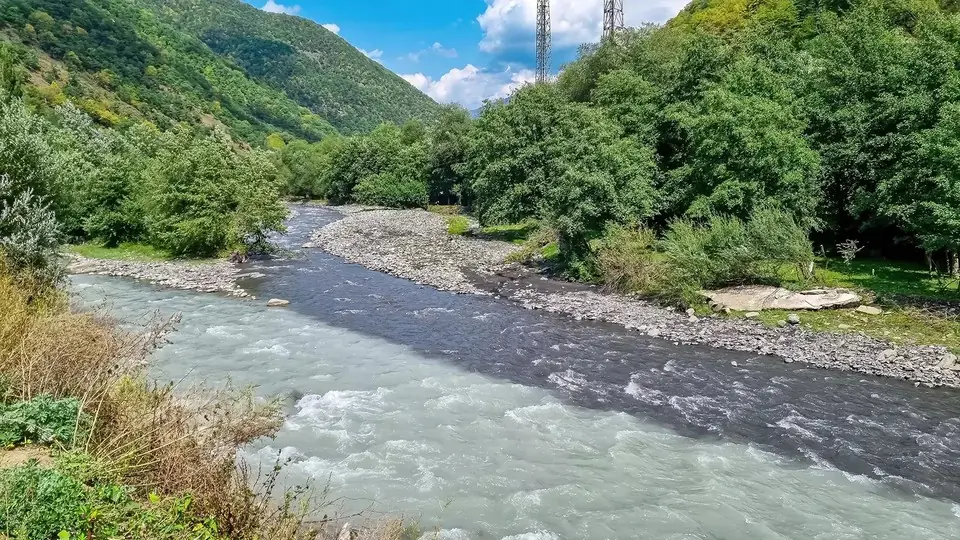
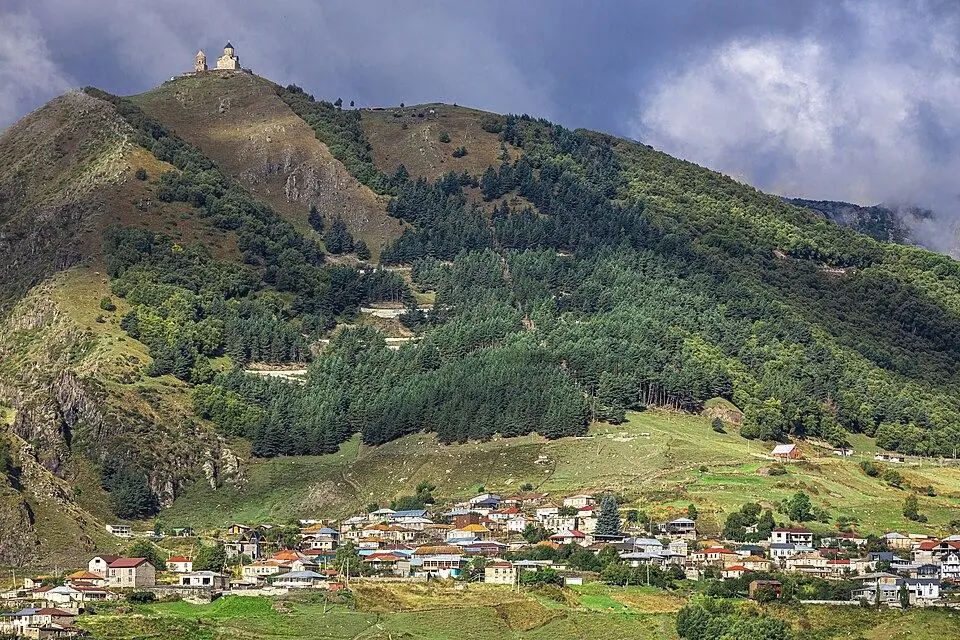
Gudauri lies on the southern slope just under the main ridge of the Greater Caucasus. Storms from the south and west are forced up the Aragvi valley against that wall and drop much of their moisture before crossing it, and the norm's station figures show how fast the climate changes over a few kilometres.
| Station (height) | January average | July average | Precipitation a year | Days with snow cover |
|---|---|---|---|---|
| Tbilisi, Vake (480 m) | 0.5°C | 24.1°C | 560 mm | 14 |
| Pasanauri (1,064 m) | -4.1°C | 18.5°C | 999 mm | 95 |
| Stepantsminda (1,747 m) | -5.2°C | 14.4°C | 786 mm | 104 |
| Kobi (1,962 m) | -8.0°C | 13.8°C | 1,160 mm | 160 |
| Gudauri (2,197 m) | -6.7°C | 13.2°C | 1,585 mm | 179 |
| Jvari Pass (2,396 m) | -11.4°C | 10.5°C | 1,537 mm | 212 |
Stepantsminda, beyond the pass, gets half of Gudauri's precipitation. Kobi, on the north side and 235 m lower, is still 1.3°C colder in January, largely because frosty air pools in the Tergi valley, and the north-facing runs above it keep their snow longest in spring. The pass itself averages -11.4°C in January, with snow lying for 212 days. Our Tbilisi weather guide covers the capital month by month.
Sunshine and wind
The norm has no sunshine-hour count for Gudauri, but it lists the solar energy reaching the ground. In January the station gets 43 kWh/m² of direct sunlight over the month, twice Tbilisi's 22, and 71 kWh/m² in total against 49. In July the order flips as summer cloud builds over the range: 94 kWh/m² of direct sun to the capital's 125. On snow, winter light reflects straight back at you, so you burn fast.
The village is fairly sheltered: its station logged calm air in 72% of observations, against 38% on the Jvari Pass. The strongest wind to expect once a year is 16 m/s (about 58 km/h), and once in 20 years 25 m/s (about 90 km/h). Ridges catch far more, so on gusty days expect the high, exposed lifts to pause first and keep a plan for the lower runs.
Gudauri weather in winter: December to March
Gudauri in December
December averages -4.4°C, about -1°C by day and -8°C at night, with 95 mm of precipitation on ten days. On the 15th the sun rises at about 08:24 and sets at about 17:30. In the past three seasons the first lifts turned on 20, 21 and 27 December, so plan little skiing before Christmas. From the last days of December to mid-January the resort is at its busiest.
Gudauri in January
The coldest month averages -6.7°C: about -3°C by day and -10°C at night at the base, and near -10°C and -17°C up top. Snow falls on about ten days. The national tourism administration rates January and February highest for settled cover. New Year and Orthodox Christmas (7 January) fill the hotels; after mid-month the slopes empty.
Gudauri in February
February is nearly as cold, -6.1°C, and a little wetter at 104 mm over eleven days. Daylight reaches about 10.5 hours by mid-month. For many skiers this is the sweet spot: a deep base, regular fresh snow and no holiday crowds.
Gudauri in March
March averages -2.6°C, just above freezing by day and near -7°C at night. It is the wettest winter month in the station record, 151 mm on about thirteen days, nearly all of it snow at these temperatures. Expect powder on the upper mountain after storms and soft snow on sunny lower slopes in the afternoon by late March. Warming after a big fall raises the avalanche danger off-piste, so read the forecast before any freeride.
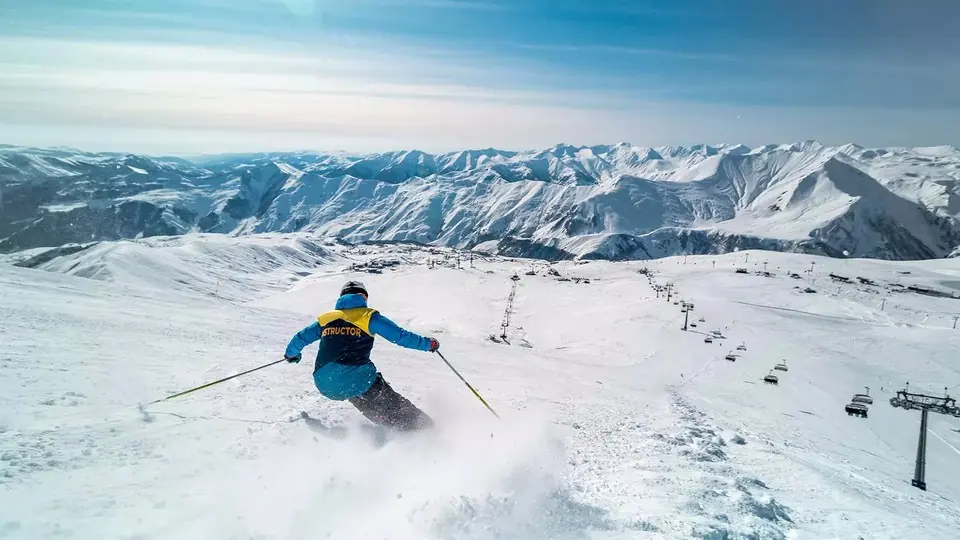
Gudauri ski season dates: 2026/27 opening and closing
On 18 October 2026 the Mountain Trails Agency (MTA), the state company that runs the lifts, had not announced 2026/27 dates; its latest Gudauri notice covered the summer lifts. In the past two winters it named the opening only three to ten days ahead (on 18 December 2024 for 21 December, on 17 December 2025 for 27 December), so expect news in mid-December. The national tourism site gives early December to mid-April, but lifts have actually started in the second half of December.
| Season | Lifts opened | Lifts closed | Notes |
|---|---|---|---|
| 2023/24 | 20 Dec 2023 (official opening) | No notice found | Two new cable cars and three new runs opened |
| 2024/25 | 21 Dec 2024 | 17 Apr 2025 | Gudauri and Kobi lifts daily, about 10:00-17:00 |
| 2025/26 | 27 Dec 2025 | 19 Apr 2026 | Longest season in Georgia that winter |
| 2026/27 | Not announced (18 Oct 2026) | Not announced | If the pattern holds: late December to mid-April |
In 2025/26 the day lifts turned from about 10:00 until 17:00, and floodlit runs opened on Friday and Saturday evenings, roughly 20:00-22:00. Daylight decides how long you can ski on the upper runs, especially in December and January.
| On the 15th of | Sunrise | Sunset | Daylight |
|---|---|---|---|
| December | 08:24 | 17:30 | 9.1 h |
| January | 08:29 | 17:52 | 9.4 h |
| February | 08:00 | 18:32 | 10.5 h |
| March | 07:16 | 19:07 | 11.9 h |
| April | 06:23 | 19:42 | 13.3 h |
Best time to ski in Gudauri
Our pick is late January to mid-March: the base is deep, regular storms keep it fresh, and the holiday crowds have gone home. The table weighs the four windows.
| When | Snow and weather | Crowds | Best for |
|---|---|---|---|
| Late December to mid-January | Lifts just open; cover can still be thin on the lowest runs; short, cold days | Busiest of the year | New Year and Christmas trips |
| Mid-January to February | Coldest, most settled snow; sunny spells between storms | Quieter after the holidays | Lessons, piste skiing, guided freeride |
| March | Most new snow of the winter, longer days, softer afternoons late in the month | Moderate | Powder mornings and sunny lunches |
| April until closing | Firm mornings, slush by afternoon low down; the north side holds snow longest | Quiet | Spring skiing and ski touring |
Still choosing between Gudauri, Bakuriani and Goderdzi? Our comparison of the ski resorts in Georgia sets their lifts, runs, snow and access side by side.
Our Ski Week in Gudauri runs on any dates and for any group size. We arrange a hotel next to the lifts, the transfers and lift passes, plus ski lessons or a freeride guide, and the free day in Stepantsminda can shift to suit the forecast.
Gudauri in spring and autumn: thaw, first snow and quiet weeks
April averages 2.0°C, with afternoons near 6°C and light frost at night, and the lifts close around mid-month. May is the wettest month of the year at 196 mm over about nineteen days, and the snow retreats from the village while drifts linger higher up. Many hotels and restaurants open only for the ski season, so in May you may find little open.
September is the pleasant shoulder month, 13°C by day and 5°C at night, with fewer showers than early summer. October cools to about 9°C by day and near freezing at night, and the first snow can whiten the slopes. By November the average sits around -1°C, the snow cover starts to build, and the first full closures of the Jvari Pass have come as early as 19 November 2023 and 26 November 2024.
Gudauri in summer: weather for hiking and paragliding
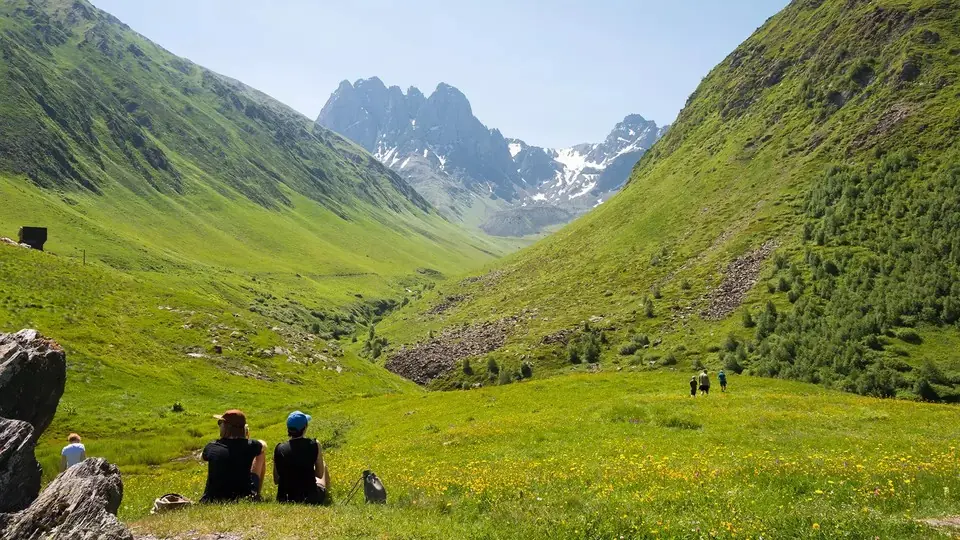
From June to August afternoons reach about 15 to 17°C and nights 6 to 9°C at the base; the station's record high is 27°C. June is wet, 170 mm over seventeen days, while August is the driest summer month at 106 mm. Showers and thunder build over the ridges on many afternoons, so walk early and come off the tops by lunchtime.
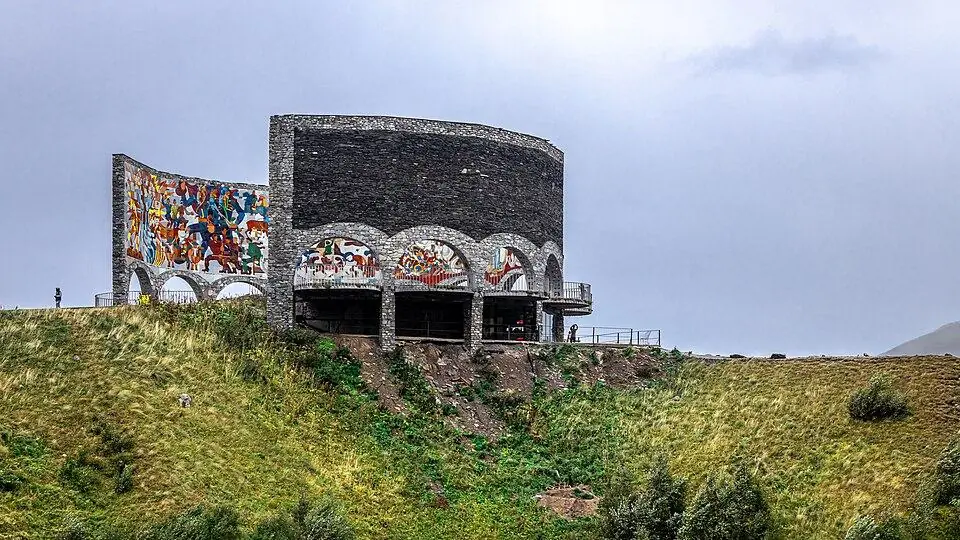
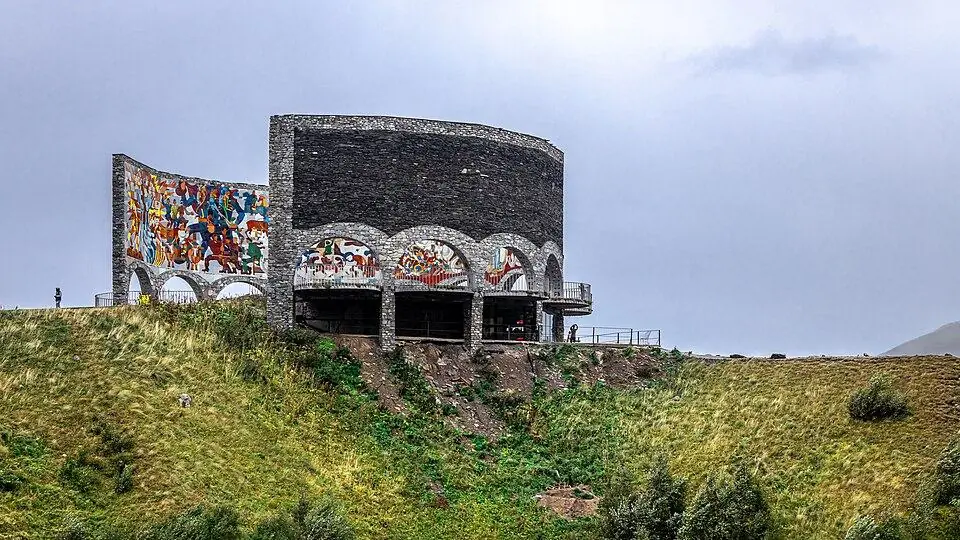
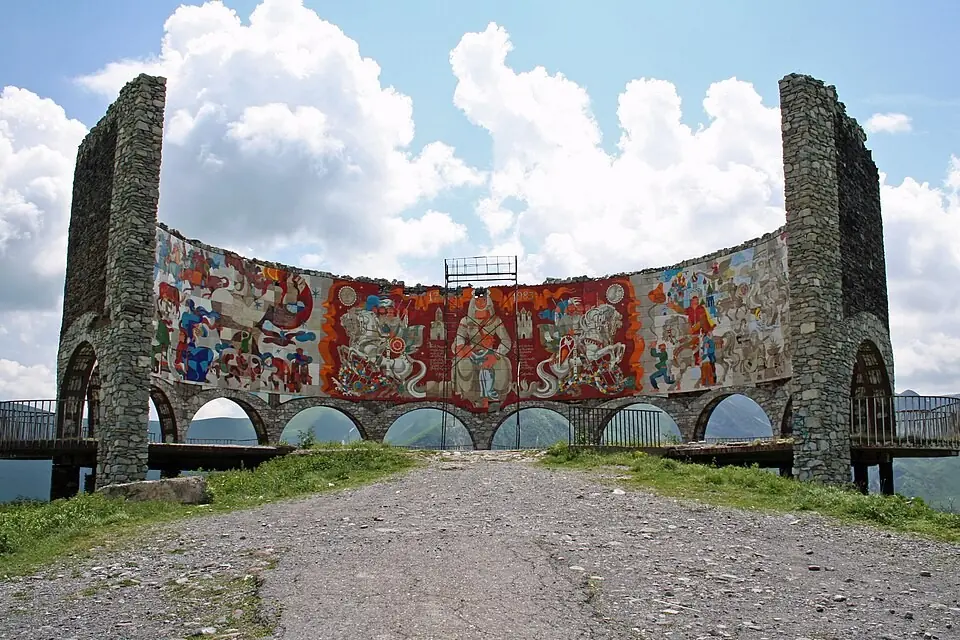
In 2026 the MTA ran the Goodaura, Kobi, Firni and Truso lifts daily from 18 July, about 11:00 to 17:00, carrying walkers onto the high ground; in 2025 the summer lifts stopped in September. Easy outings include the walk to the Friendship Monument viewpoint above the Devil's Valley, ridge walks above the resort, and day trips over the pass to the Truso valley and Gergeti.
Tandem paragliding flies from the slopes above the village in both summer and winter, but only when the wind and cloud allow, so leave a spare morning in your plans. The drier weeks of August and September usually give the most flyable days.
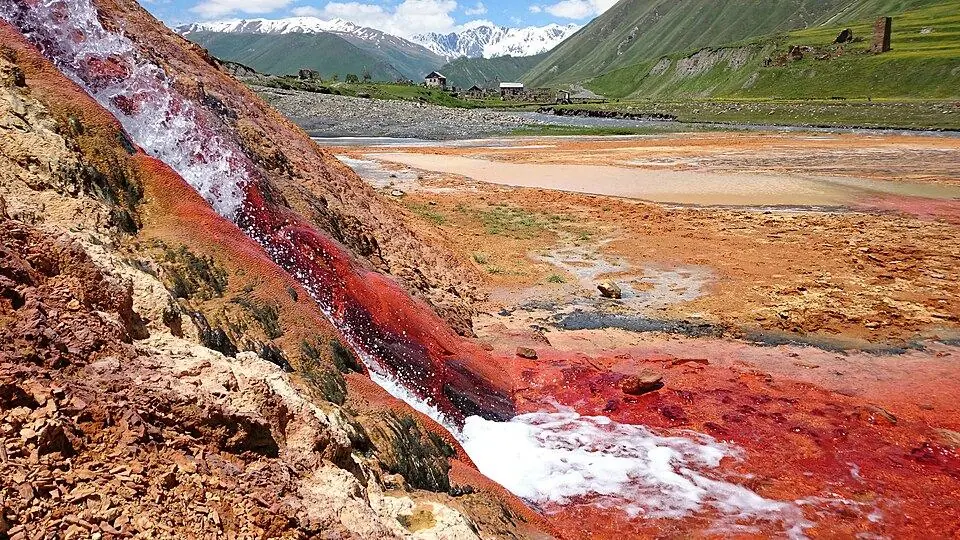
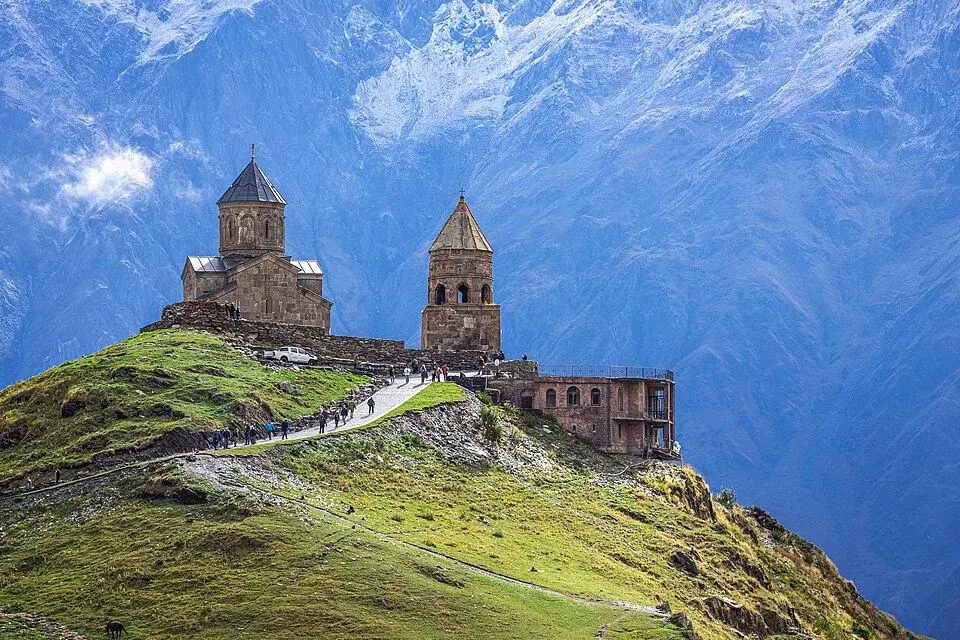
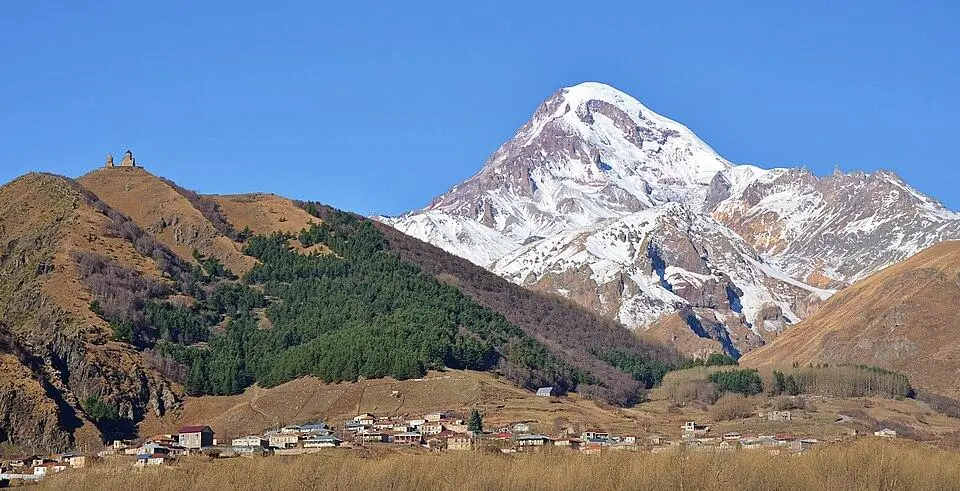
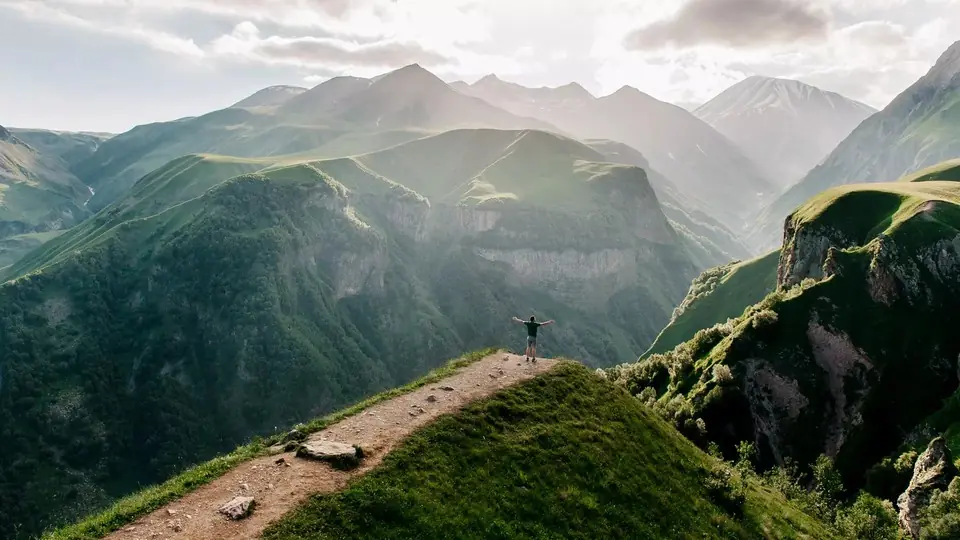
The Jvari Pass and the Georgian Military Road in winter
From Tbilisi you reach Gudauri, ~120 km away, up the hairpins above Pasanauri without crossing the pass. The Jvari Pass (~2,379 m) lies on the 14 km stretch beyond the resort, between Gudauri and Kobi, where the Roads Department stops traffic in blizzards and avalanche danger. We counted the full closures in its official list for the last five winters.
| Winter | Days fully closed | First full closure | Last full closure |
|---|---|---|---|
| 2021/22 | 17 | 19 Dec 2021 | 8 May 2022 |
| 2022/23 | 10 | 2 Feb 2023 | 8 Apr 2023 |
| 2023/24 | 12 | 19 Nov 2023 | 7 May 2024 |
| 2024/25 | 14 | 26 Nov 2024 | 14 Apr 2025 |
| 2025/26 | 13 | 9 Jan 2026 | 23 Apr 2026 |
Most closures last hours, some one to three days, and bans on lorries with trailers come far more often. A closure matters to skiers only if they sleep in Stepantsminda or plan a Kazbegi day; our Kazbegi travel guide covers the valley in winter.
By law, winter tyres with the snowflake mark and at least 3 mm of tread are required from 1 December to 1 March on road sections listed by government decree, and police may order chains; the fine is 100 GEL. The Gudauri to Kobi stretch is widely reported to be on the list, which we could not read. Carry chains for the hairpins anyway.
A new road will one day bypass the pass: 23 km from Kvesheti, below Gudauri, to Kobi, with five tunnels and five bridges. By 5 October 2026 the 9 km main tunnel and its evacuation twin were fully dug and their electrical and mechanical systems were going in; the two halves of the arch bridge, which stands 166 m above the gorge floor, were scheduled to join by the end of October. With no opening date on 18 October 2026, plan the 2026/27 winter on the old road.
Where to check Gudauri weather, snow and roads live
- Lifts and season news: the Mountain Trails Agency at mta.ski, with a lift status page in season.
- Avalanche danger: avalanche.ge forecasts the Gudauri area on the European five-level scale from December.
- Forecasts and warnings: Georgia's National Environmental Agency at meteo.gov.ge, with an English version.
- Road closures: the Roads Department list at georoad.gov.ge (most complete in Georgian), hotline +995 32 2 31 30 76, and 112 in an emergency. Our road status page sums up the notices and each pass's winter record.
- Local knowledge: your hotel and your driver usually hear of a closure before it is posted online.
In a mountain forecast, look past the headline temperature: the freezing level shows whether a storm brings snow or rain to the village, summit wind decides whether the top lifts run, and the new-snow total tells you when to chase powder.
What to pack for Gudauri in winter and summer
Winter (December to April)
- Layers for -10 to -20°C at the top lifts: a thermal base, a fleece or light down and a windproof shell.
- Goggles for whiteouts and flat light, and category 3 or 4 sunglasses for clear days.
- Sun cream with a high factor and lip balm: in January Gudauri gets twice Tbilisi's direct sunlight.
- A buff or face mask, warm gloves with a spare pair, and boots with a grippy sole for icy streets.
- Chains and winter tyres if you drive yourself, plus a full tank and water in case the road is held.
Summer (June to September)
- A waterproof jacket for afternoon storms and a warm layer for evenings near 6 to 9°C.
- Walking shoes or light boots, a hat and sun cream; the sun is strong at this height.
- A fleece or light down jacket for the top lifts, which run about 7°C colder than the village.
Gudauri weather: FAQ
When does it start snowing in Gudauri?
First snow can fall in October, when nights at the base reach freezing. A lasting cover usually builds during November, as the monthly average drops to about -1°C, and the station reports snow cover on roughly half the days of the year. Lifts normally open in the second half of December.
When does the Gudauri ski season start in 2026/27?
Not by 18 October 2026. Lifts started on 20 December 2023, 21 December 2024 and 27 December 2025, each date announced only days ahead, and the last two seasons ran until 17 and 19 April.
What is the temperature in Gudauri in January?
January averages -6.7°C at the station (2,197 m): about -3°C in the afternoon and -10°C at night. Up at the top lifts, figure on about -10°C in the day and -17°C after dark. Cold spells can hold near -16°C for days, and the record low is -33°C.
How much snow does Gudauri get?
The station gauge catches roughly 1.5 to 1.6 m of water a year, and from November to March it arrives mostly as snow, about 75 to 150 mm of water a month. The national tourism administration puts snow on the pistes at 1 to 2 m in a normal season, and March brings the most new snow.
Is March or April good for skiing in Gudauri?
Yes. March gets the heaviest snowfalls of the season along with longer, sunnier days. April gives spring snow, hard in the morning and soft by lunch, until the lifts close around mid-month; the north-facing runs towards Kobi hold their snow longest.
Is the road to Gudauri open in winter?
Nearly always. Snow slows the hairpins below the resort, and on rare nights avalanche danger shuts them too: the Mleta climb closed for about five hours on 24 December 2023. The closures in the news are mostly beyond it, on the Jvari Pass between Gudauri and Kobi, shut fully on 10 to 17 days a winter lately. Winter tyres are required on listed sections from 1 December to 1 March.
What is Gudauri's weather like in summer?
Mild and changeable: about 15 to 17°C in the afternoon and 6 to 9°C at night, with frequent afternoon showers, above all in June. August and September are the driest. In 2026 summer lifts ran from 18 July, and hiking and paragliding are the main draws.
Last checked Oct 2026 by the Maspindzeli team.
Weather nearby
July and January average highs, nearest first.
Places with this weather
Sights and villages close to Gudauri and at a similar height.
Tours that visit Gudauri

Not sure the weather will suit your plans?
We check the forecast for Gudauri every week. Message us your dates and we will tell you what to expect and what to pack.
WhatsApp +995 598 74 74 54