- Georgian architecture is best known for its stone churches: cross-shaped buildings crowned by one tall drum and a pointed conical roof, raised mostly between the 6th and 13th centuries.
- Three forms explain nearly every church you will see: the early basilica, the four-apse Jvari type of around 600, and the cross-dome church that became the norm by the 10th century.
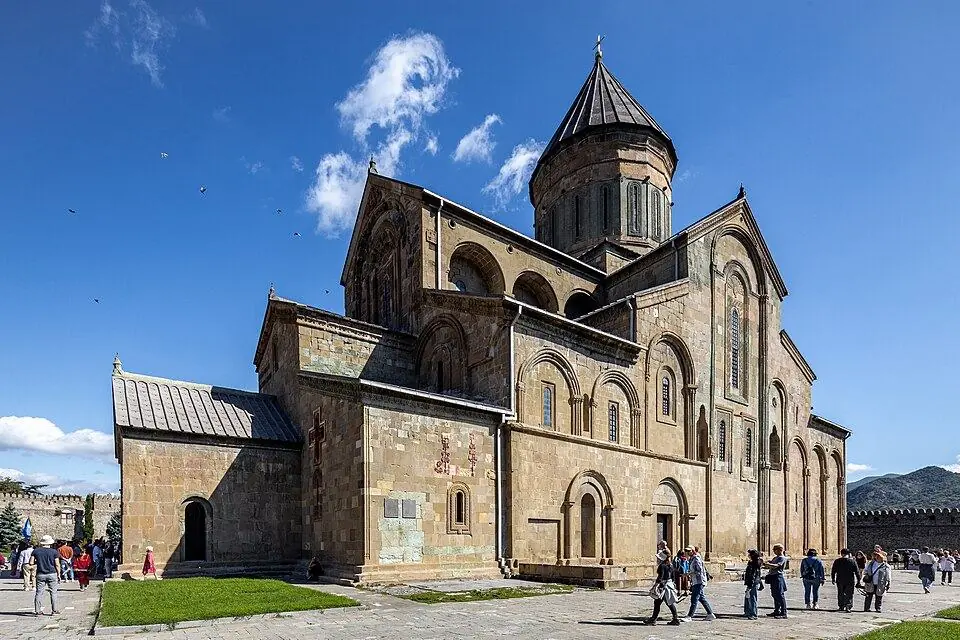
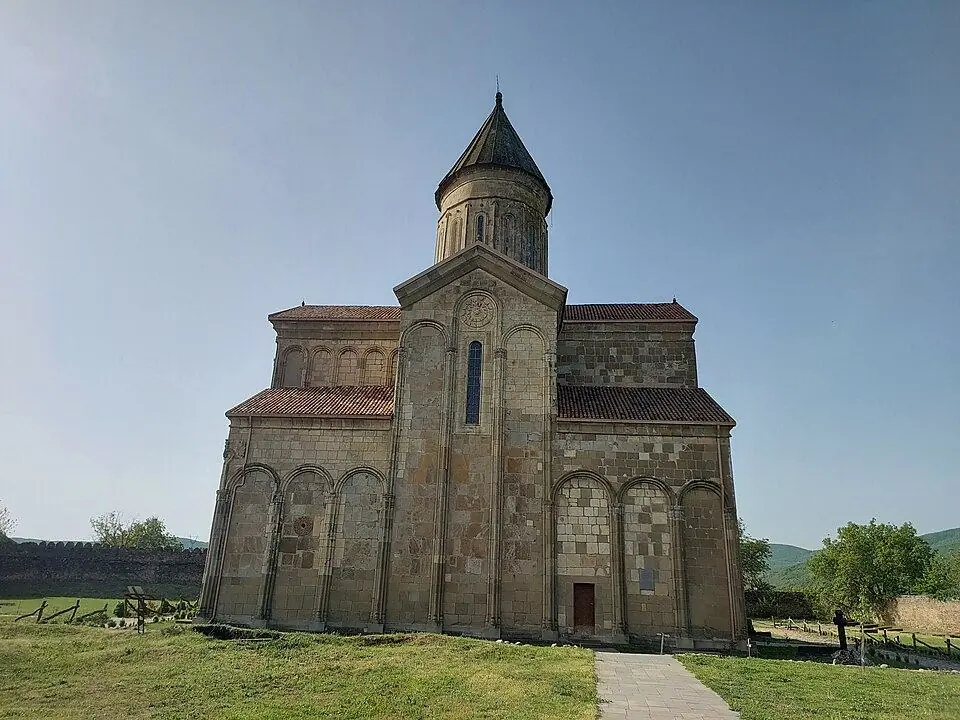
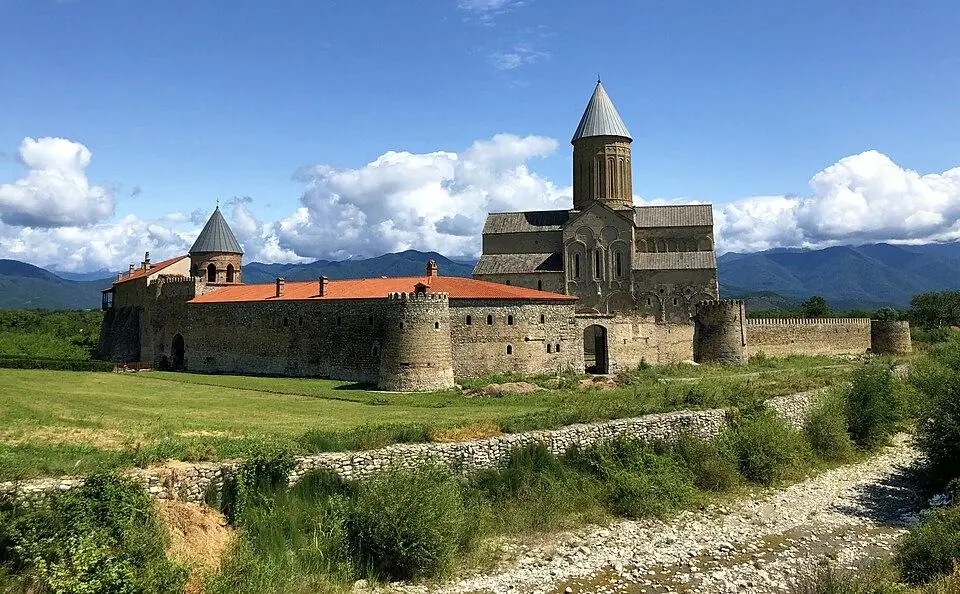
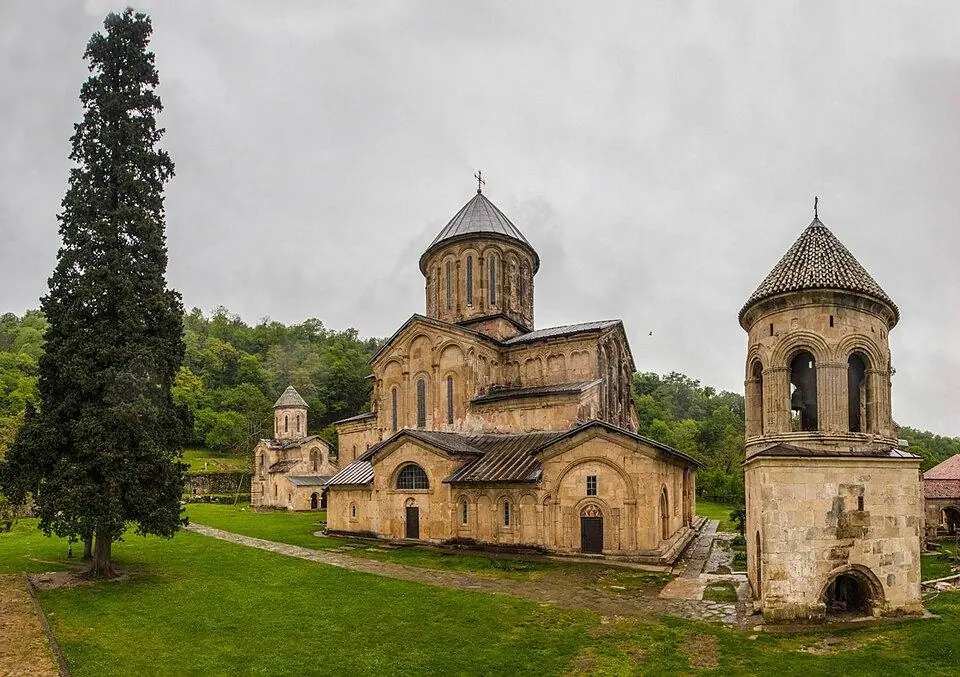
- The peak came in the 11th century with Bagrati, Svetitskhoveli, Alaverdi, Samtavisi and Nikortsminda, whose outer walls carry carved crosses, arcades and figure scenes.
- Beyond churches, look for the rock-cut towns of Vardzia and Uplistsikhe, the defence towers of Svaneti and Khevsureti, Old Tbilisi's carved wooden balconies and a few bold Soviet modernist buildings.
- Working churches are free to enter if shoulders and knees are covered and women wear a headscarf; Vardzia and Uplistsikhe charge about 15 GEL ($6) each in 2026.
Georgian architecture means, first of all, stone churches: compact buildings on a cross plan, each with a single tall drum and a pointed conical roof, standing on hilltops, inside walled courtyards and in mountain villages across the country. Most of the great ones went up between the 6th and 13th centuries, and nearly all are still in use. Around them you will find towns carved into cliffs, tower villages built against raiders, and the carved wooden balconies of Old Tbilisi.
This guide is for travellers rather than architects: the three church forms, the 11th-century golden age, the best carving, then cave towns, towers, Tbilisi's 19th-century streets and its Soviet buildings. A table lists 12 buildings worth crossing the country for, and the last sections cover dress, tickets and route planning. One note on names: this is Georgia in the Caucasus, not the 18th-century British style.
Georgian architecture at a glance: periods and styles
The royal court of Kartli turned Christian in the 330s, and church building has shaped the Georgian landscape ever since. Invading armies and earthquakes destroyed a great deal, yet hundreds of medieval churches still stand, many patched and re-roofed over the centuries. This timeline maps what you will actually see.
| Period | Dates | What was built | Where to see it |
|---|---|---|---|
| Before and around the conversion | 1st millennium BC to 4th century | Rock-cut halls, temples and fortified towns | Uplistsikhe, Narikala's foundations |
| Early Christian | 4th to 6th century | Basilicas, including Georgia's own three-church basilica | Bolnisi Sioni, Anchiskhati, Nekresi, Urbnisi |
| The Jvari type | Late 6th and 7th century | Four-apse churches under a central dome | Jvari, Ateni Sioni |
| The cross-dome takes shape | 7th to 10th century | Domes lifted on free-standing piers; longer cross plans | Kumurdo in Javakheti; Oshki and Ishkhani in today's Turkey |
| Golden age | 11th to early 13th century | Large cross-dome cathedrals with carved facades; monasteries and academies; Vardzia | Bagrati, Svetitskhoveli, Alaverdi, Samtavisi, Nikortsminda, Gelati |
| Late medieval | 13th to 18th century | Smaller churches, bell towers, castles and tower villages | Gergeti, Ananuri, Ushguli, Shatili, Gremi |
| Imperial Tbilisi | 19th and early 20th century | Balconied houses, merchant mansions, historicist public buildings | Old Tbilisi, Sololaki, Rustaveli Avenue |
| Soviet and after | 1921 to today | Stalin-era classicism, concrete modernism, new cathedrals | Highway Ministry, Chronicles of Georgia, Sameba |
The first Georgian churches: basilicas and the Jvari type
Basilicas, 4th to 6th century
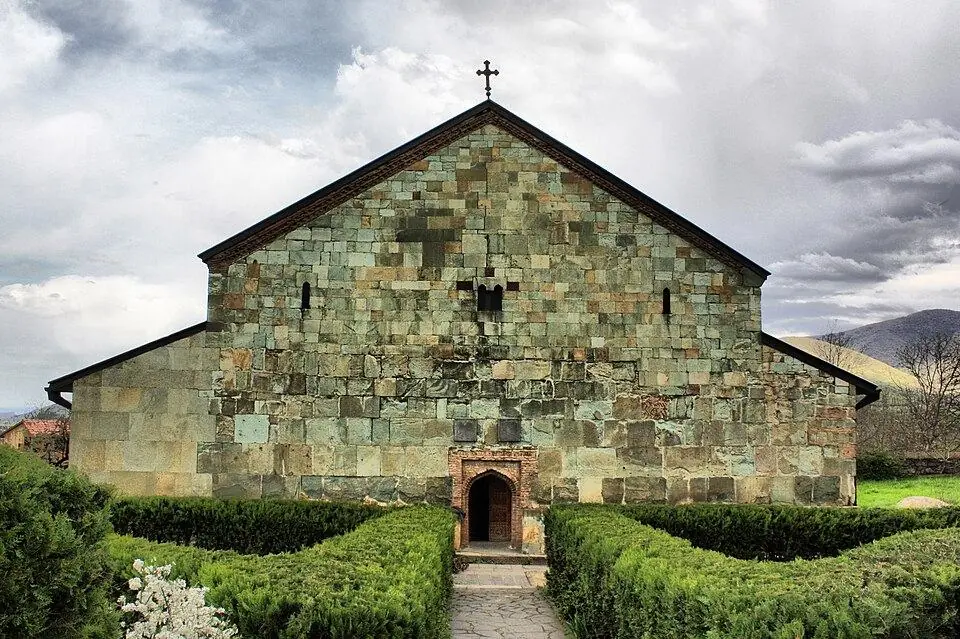
The earliest churches were basilicas: rectangular halls under a pitched roof, often split by piers into a nave and two aisles. Bolnisi Sioni, ~60 km south-west of Tbilisi, built from 478 to 493, is one of the earliest large basilicas to survive, and its dated inscriptions are key evidence for the early Georgian alphabet. In the capital, the 6th-century Anchiskhati is the oldest church still standing.
Georgia also produced a variant of its own, the three-church basilica. Solid walls replace the rows of columns, so each side aisle becomes a narrow chapel with its own door, wrapped around the main hall. Nekresi, on a wooded slope above the Alazani valley, has a well-known example.
The Jvari type: four apses and a dome, around 600
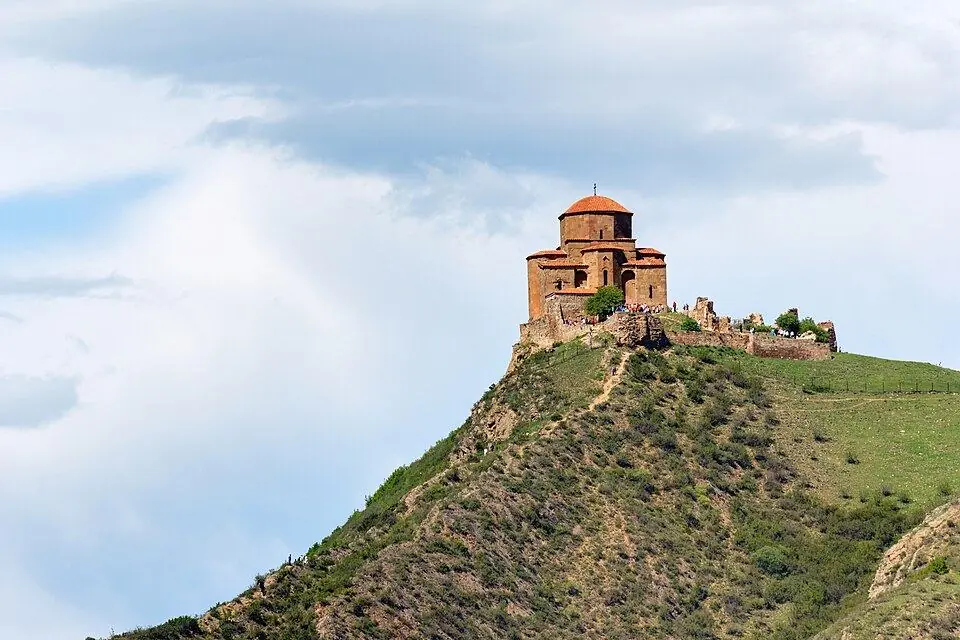
Between about 590 and 605 the rulers of Kartli raised Jvari, whose name simply means cross, on a rock at 656 m facing Mtskheta. Its plan is a tetraconch: a square centre under the dome, with a rounded apse opening from each side. In each corner a deep three-quarter-round niche leads to a small side room, and the dome rests on the walls through three tiers of squinches, small arches that turn the square into a circle.
Builders copied the plan so closely that historians speak of the Jvari type. Ateni Sioni near Gori repeats its proportions almost exactly, Martvili in Samegrelo and one church at Old Shuamta above Telavi follow it too, and in Armenia St Hripsime at Vagharshapat, finished in 618, belongs to the same family.
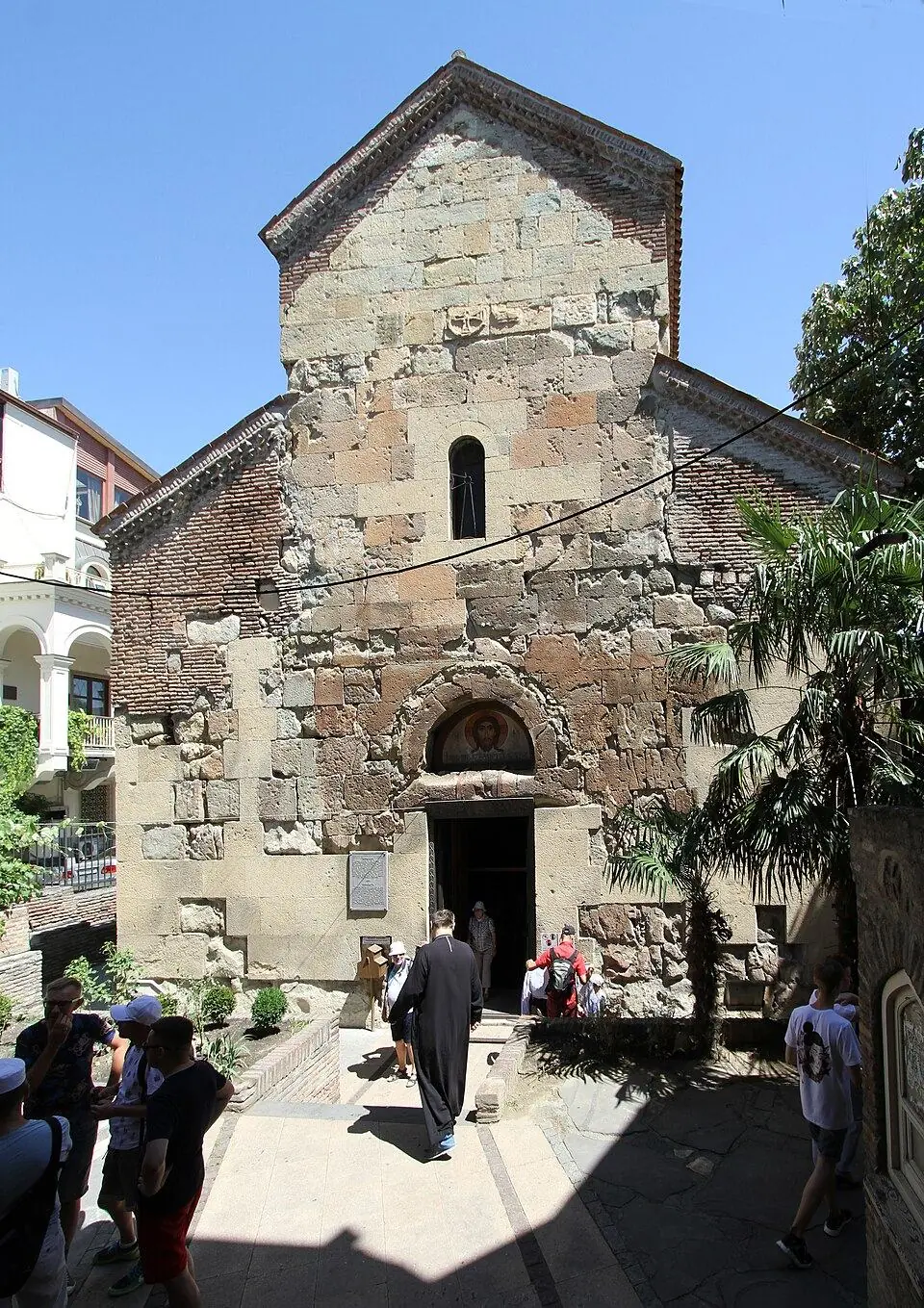
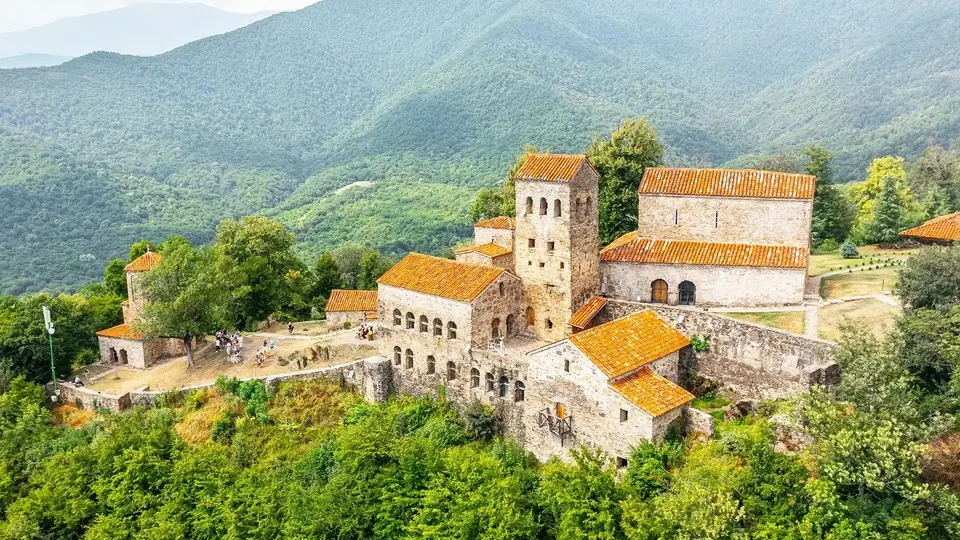
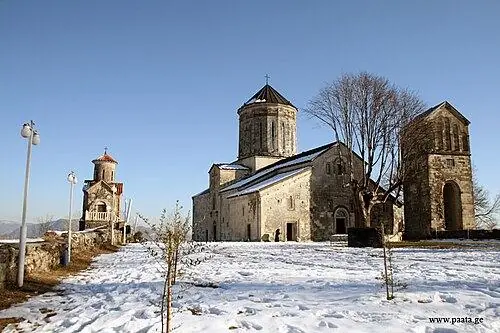
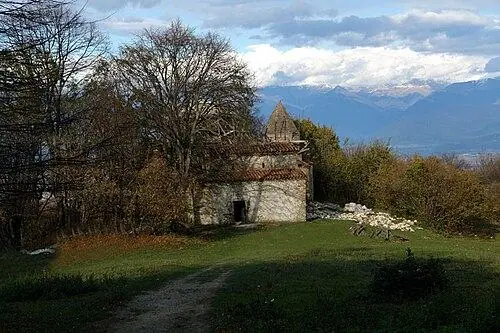
What is a cross-dome church? How Georgian church architecture works
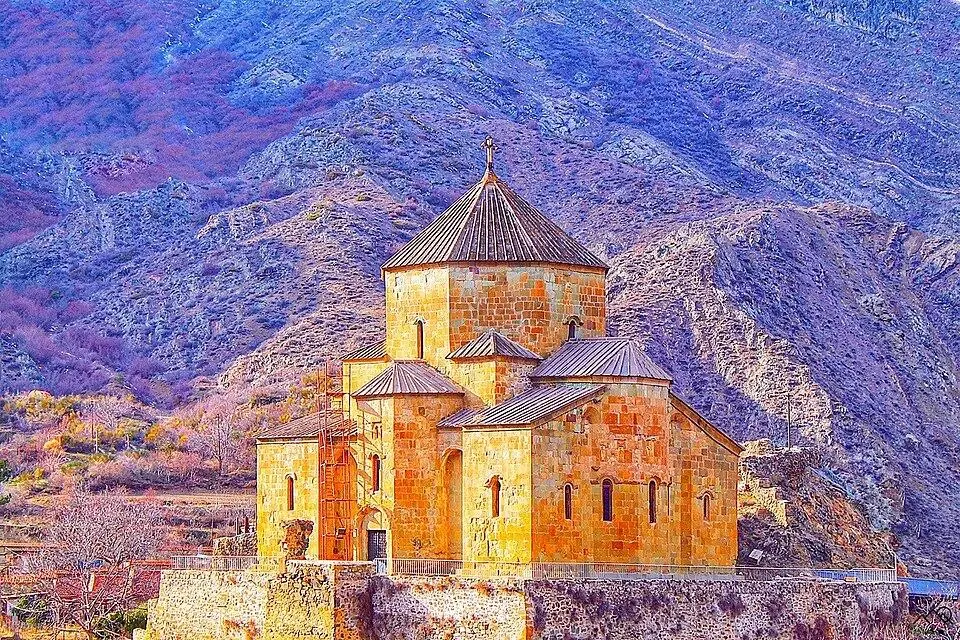
In the 7th century, starting with Tsromi in Shida Kartli, builders began to lift the dome on free-standing piers, which opened up the floor beneath it. By the late 10th century, in the monasteries of Tao-Klarjeti (Georgian lands now in north-east Turkey) such as Oshki, and at Kumurdo in Javakheti (964), the classic Georgian cross-dome church was complete, and new churches still follow it.
Almost every church you enter is a variation on it. Six things to look for:
- A cross set inside a rectangle: four arms, the western one usually longest, with small rooms filling the corners.
- One dome over the crossing, raised on a tall round or many-sided drum pierced by windows, often twelve.
- A conical or pyramid roof capping the drum. You never see the curve of the dome from outside, which gives Georgian churches their sharp, tent-like outline.
- Two deep triangular niches in the east wall, marking where the altar apse meets the side rooms.
- Blind arcades: shallow arches on slender paired columns running along the facades, with carved bands around windows and, on the east wall, often a large cross.
- Later additions: a bell tower, from the 13th century often built over the gateway, and a defensive wall around the churchyard.
Inside, there are no pews. People stand, light thin beeswax candles and kiss the icons, and the altar sits in the eastern apse behind a screen. Bare stone walls you see today were once painted from floor to dome.
The golden age: Bagrati, Svetitskhoveli, Alaverdi, Samtavisi and Gelati
Early in the 11th century Bagrat III brought most Georgian lands under one crown, and within about thirty years the new kingdom raised the cathedrals that still define Georgian architecture. In the 12th century David IV the Builder and later Queen Tamar kept going with monasteries, academies and the cave city of Vardzia.
- Bagrati Cathedral, Kutaisi (1003)
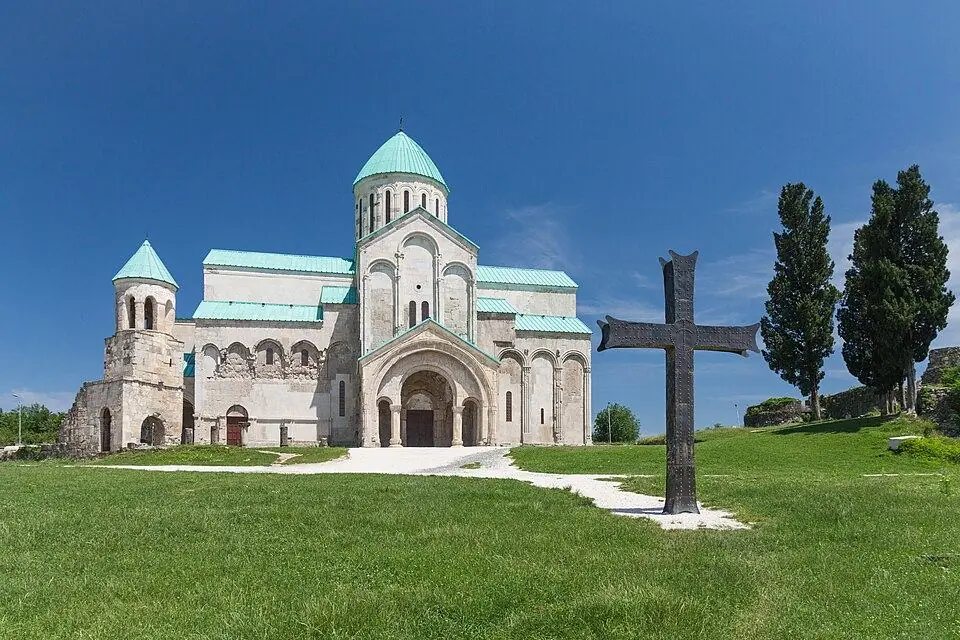
A floor inscription gives the year 1003, and the cathedral bears Bagrat III's name. Ottoman soldiers brought down the dome in 1692, and it stood roofless for nearly three centuries until a full rebuild in 2012, after which UNESCO removed it from the World Heritage List (2017). Compare the weathered old blocks with the crisp new ones. - Svetitskhoveli Cathedral, Mtskheta (1010-1029)
Georgia's principal church, ~58 m long, built by the architect Arsukisdze over a 5th-century basilica. His name is cut beside a carved hand gripping a set square, high on the north facade; the legend that the hand was cut off has no record behind it. The dome is a 15th-century rebuild, and the towered wall dates from 1787. - Alaverdi Monastery, Kakheti (early 11th century)
King Kvirike III of Kakheti built this cathedral, ~55 m high and the tallest church in Georgia until Sameba opened in 2004. The walls are plain; the effect comes from height and its lone setting in the Alazani vineyards. - Samtavisi Cathedral, Shida Kartli (1030)
A smaller cathedral ~45 km west of Tbilisi by an architect named Hilarion. Its east facade set the pattern for two centuries: two deep niches, a window framed by an ornamented double rhombus and a large carved cross above, bound together by arcading. - Gelati Monastery, near Kutaisi (from 1106)
David the Builder founded it as a monastery and an academy, and his grave lies beneath the gateway on the south side. In the apse of the main church, a mosaic set on gold shows the Virgin holding the Child, flanked by two archangels, from the early 12th century. It has been a UNESCO World Heritage site since 1994.
Our Orthodox Georgia pilgrimage visits Svetitskhoveli, Jvari, Alaverdi, Ateni Sioni, Bagrati and Gelati in a week, with a guide in your language who can explain the buildings and the liturgy. Being private, it fits any date and any group size.
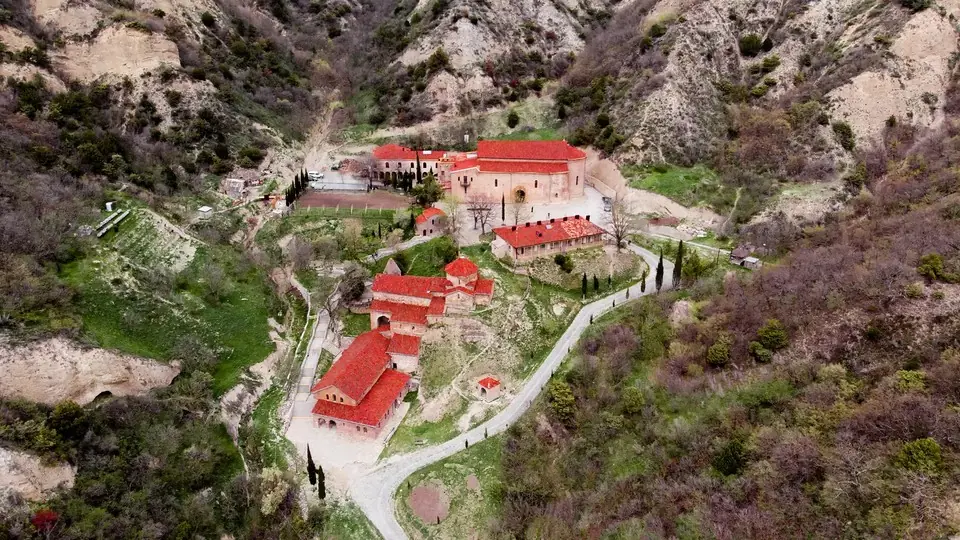
Carved facades and stone relief: Nikortsminda, Ateni Sioni and Jvari
Georgian builders treated the outside of a church as a field for sculpture, far more than most Byzantine builders of the time, who saved their effort for the interior.
- Jvari, around 600
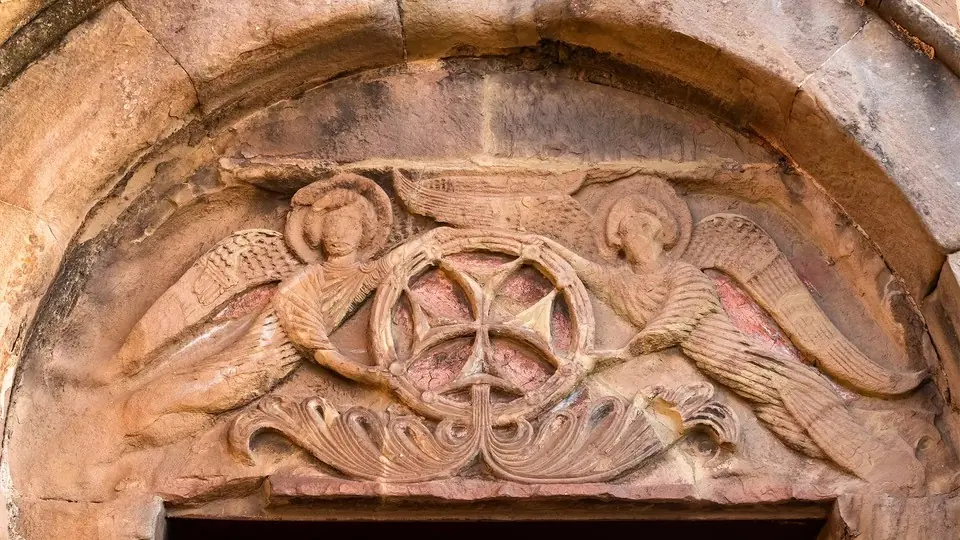
Low reliefs on the east apse show the founders kneeling before Christ, their names cut beside them, and over the south door two angels hold up a cross. - Ateni Sioni, 7th century
~10 km south of Gori in the Tana gorge. On the west wall a well-dressed rider shoots an arrow through a deer's neck while two more look on in alarm; over the north door two deer drink from one pool, often read as the faithful sharing one source. - Nikortsminda, 1010-1014
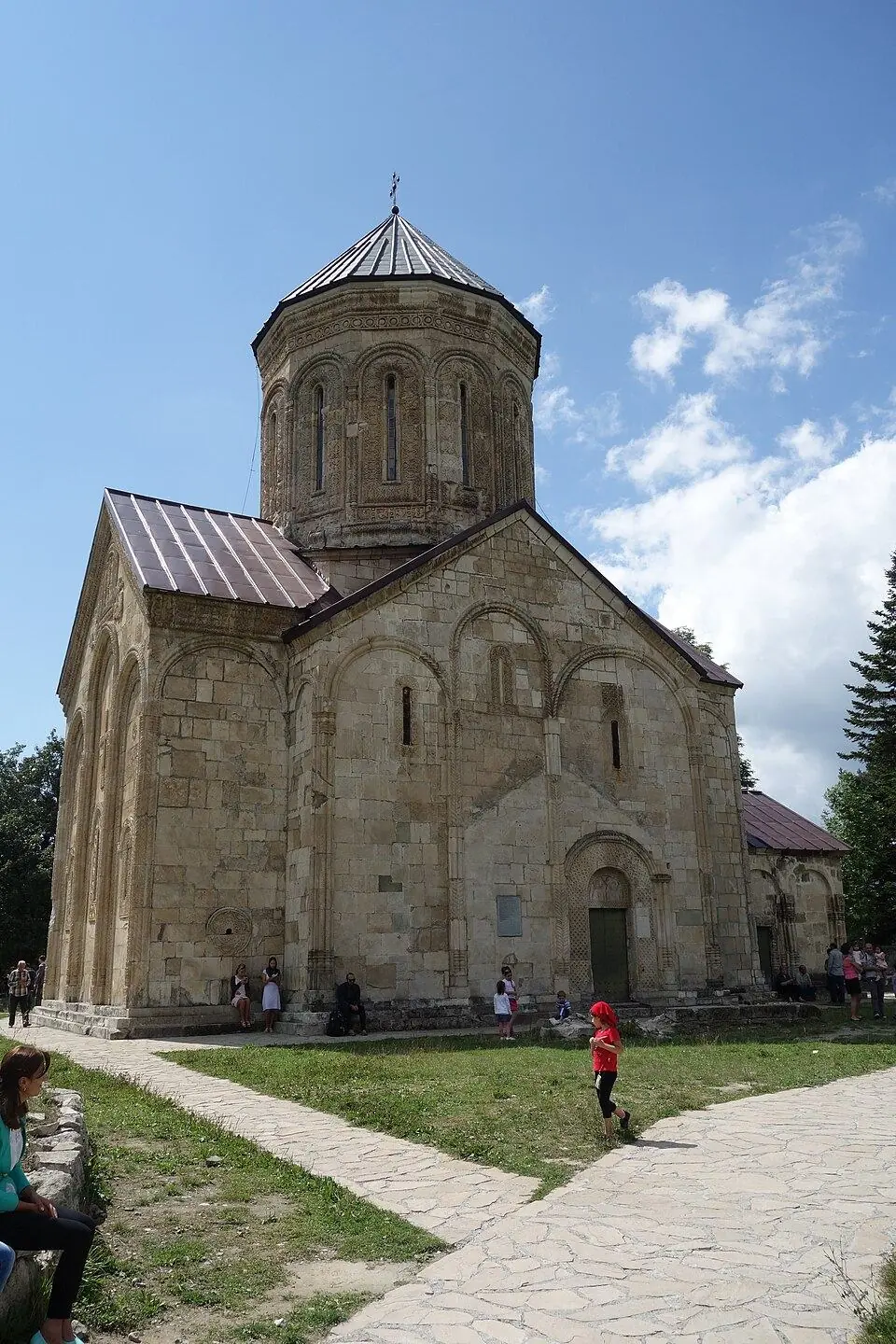
South of Ambrolauri in Racha, and the most richly carved of all. Whole narrative scenes cover the facades, among them the Transfiguration, the Last Judgement and the Exaltation of the Cross, with the mounted saints George and Theodore and animals both real and imaginary. Carved frames and arcading wrap the twelve-window drum. The church was restored after the 1991 Racha earthquake. - Tsughrughasheni and Pitareti, early 13th century
Two churches of Giorgi IV Lasha's reign in Kvemo Kartli, where interlaced geometric and plant ornament fills nearly every window, doorway and drum. Tsughrughasheni is a short drive from Bolnisi Sioni; Pitareti sits in a forested gorge and needs more time.
Frescoes and mosaics in brief
Smoke, damp and whitewash have dimmed many painted interiors. Seek out the gold mosaic at Gelati; the 11th-century cycle at Ateni Sioni in blues, greys and purples; Queen Tamar's portrait, painted while she reigned, at Vardzia and Kintsvisi; the late 14th-century cycle by the painter Damiane at Ubisa; the layered paintings of Lamaria in Ushguli; and the cave murals of David Gareja. Flash is not welcome.
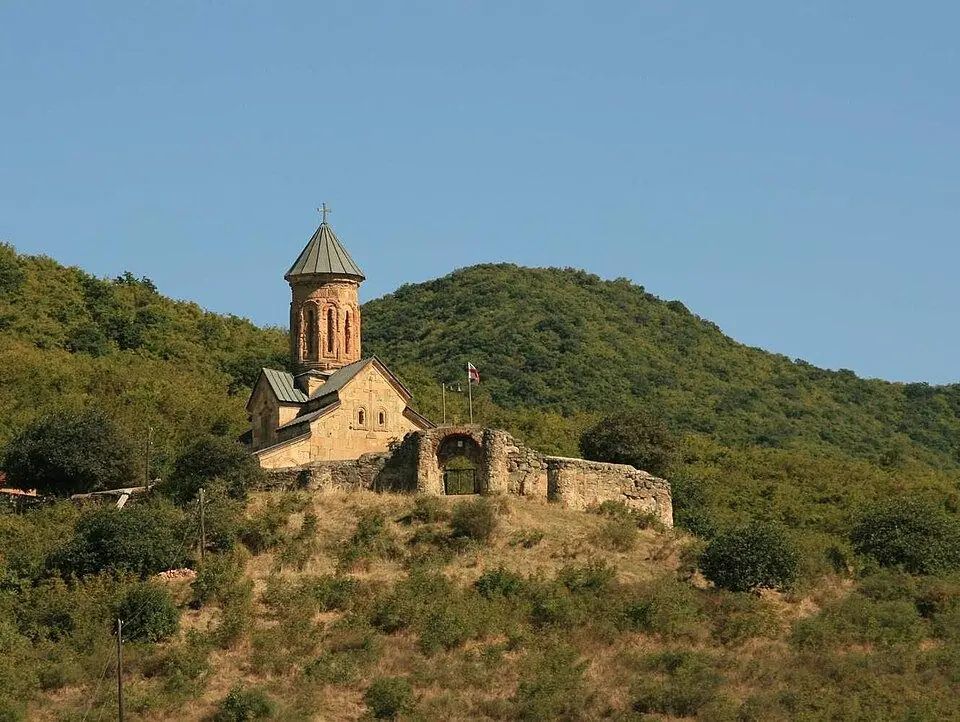
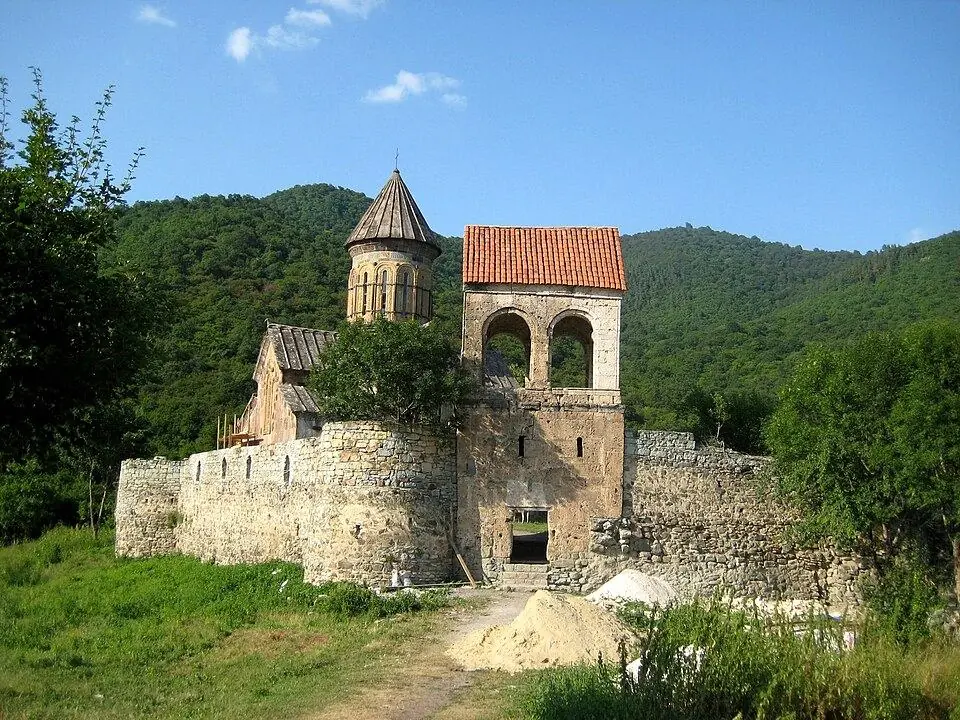
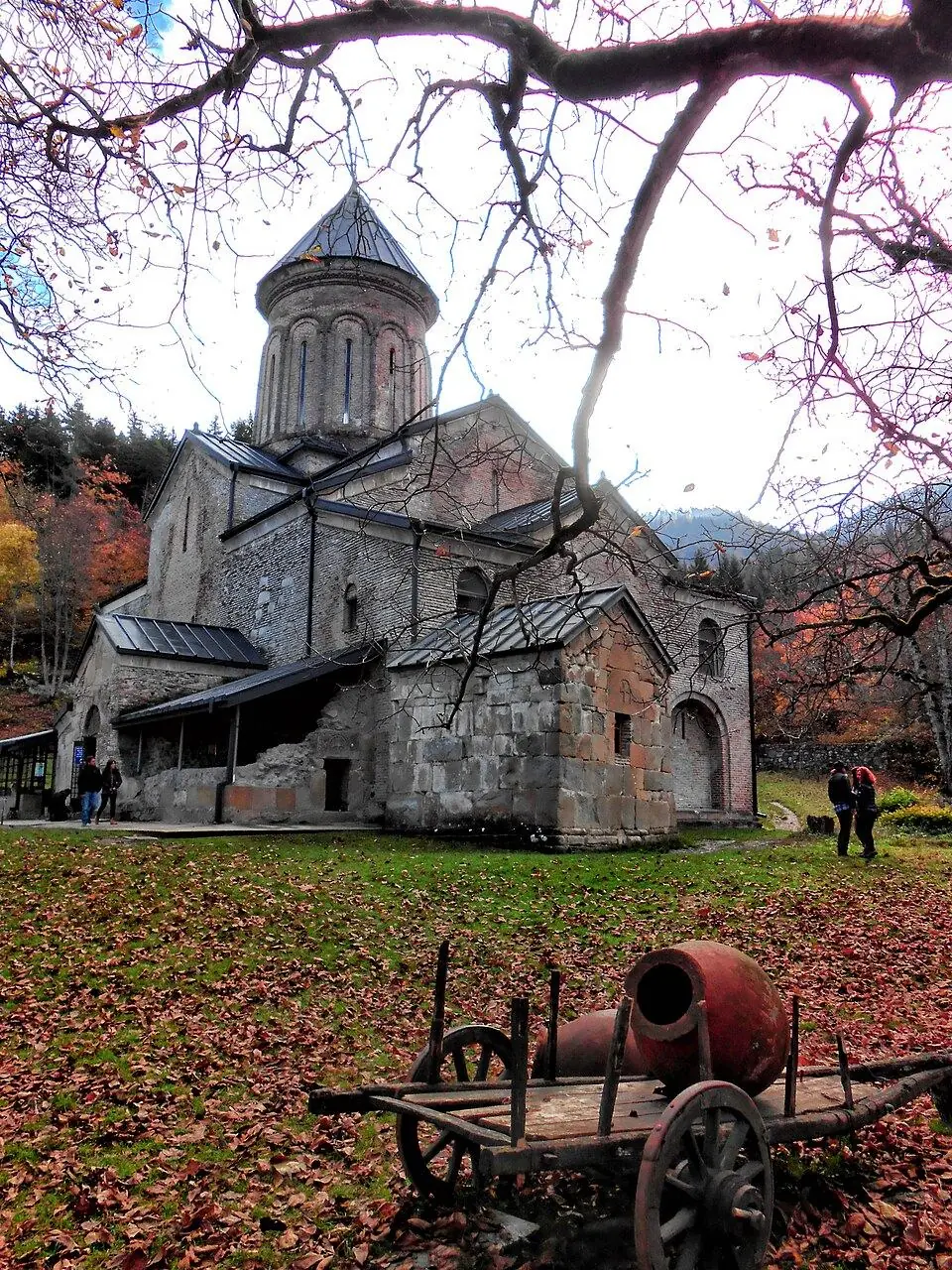
Cave towns and rock-cut monasteries: Uplistsikhe, Vardzia and David Gareja
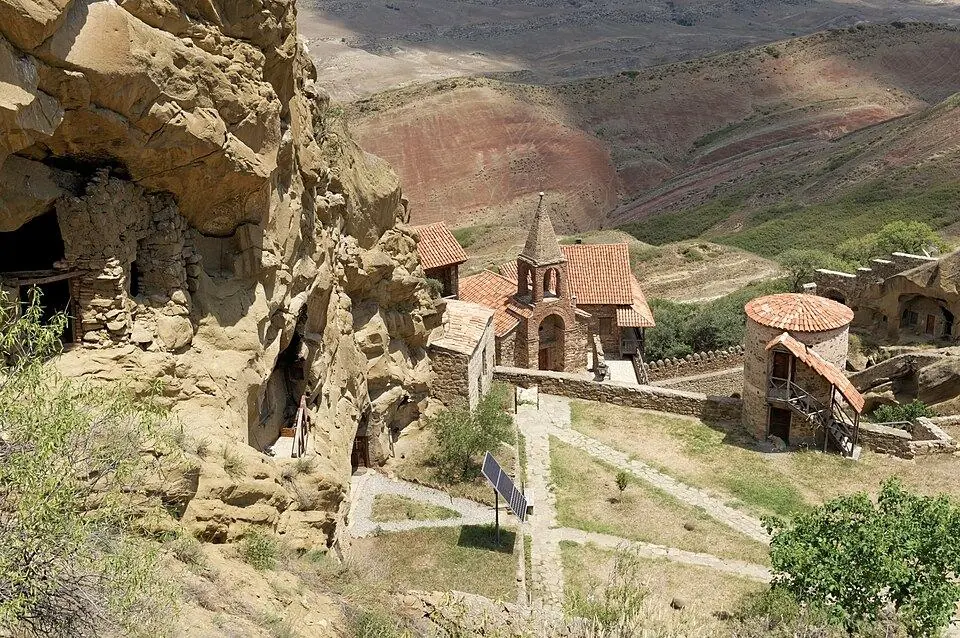
Where the rock was soft enough, Georgians carved instead of building. Three sites show how far they took it.
- Uplistsikhe, near Gori
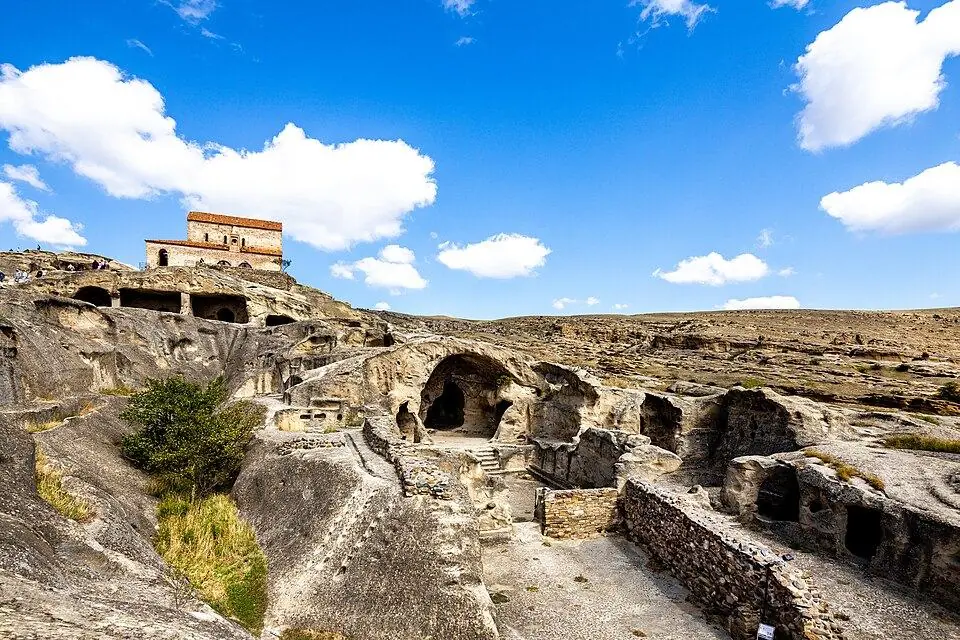
A town cut into a sandstone ridge above the Mtkvari, ~10 km east of Gori, in use from the 1st millennium BC. Its halls, streets and pagan temple area predate Christianity; some ceilings are carved to look like timber beams. A small brick basilica crowns the summit. It emptied after the Mongol invasions. Entry about 15 GEL ($6) in 2026. - Vardzia, Samtskhe-Javakheti
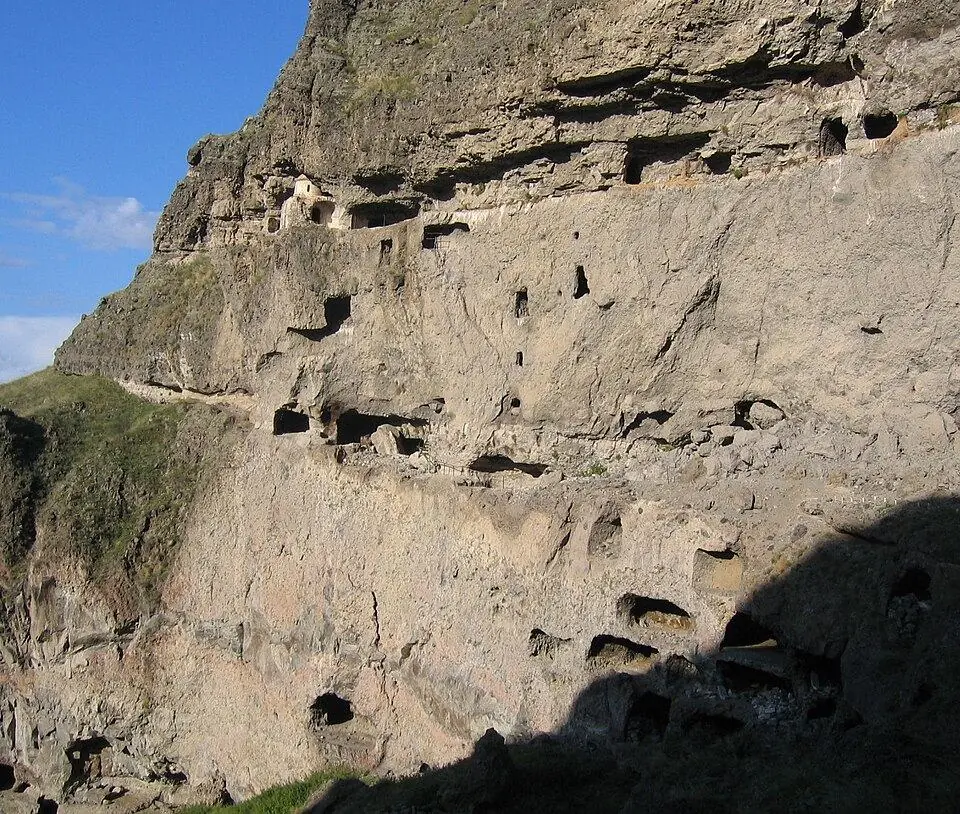
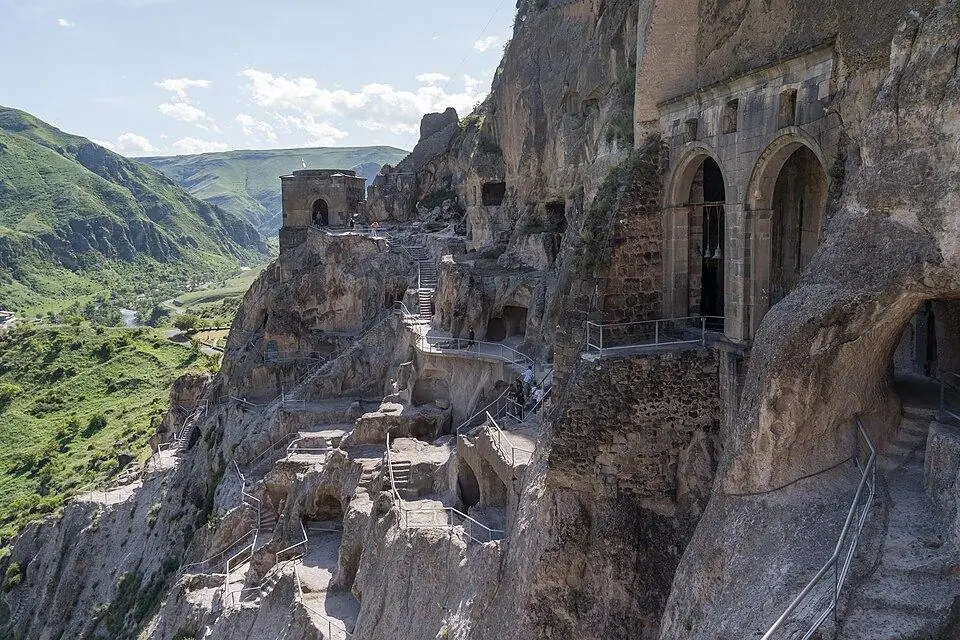
Begun under George III in the 1150s and finished as a fortified monastery by his daughter Tamar around 1200, with hundreds of rooms on several levels of cliff above the Mtkvari. An earthquake in 1283 sheared off the outer rock, so rooms once hidden inside the mountain now open onto the valley. The Church of the Dormition keeps painted portraits of George III and Tamar. Entry about 15 GEL ($6) in 2026; since a rockfall in May 2026 one small part of the site is shut. Nearby Vanis Kvabebi is four centuries older and far quieter. - David Gareja, Kakheti
St David settled in this semi-desert on the Azerbaijani border in the 6th century, and his followers dug cells, chapels and refectories into the hills. The main monastery, the Lavra, is free. Above it, the Udabno caves hold wall paintings of the 11th to 13th centuries; access to them varies from day to day, so check locally when you arrive.
Svan towers, Khevsur villages and Ananuri: Georgia's fortress architecture
In the high Caucasus valleys, far from any king, families saw to their own defence.
Svan towers
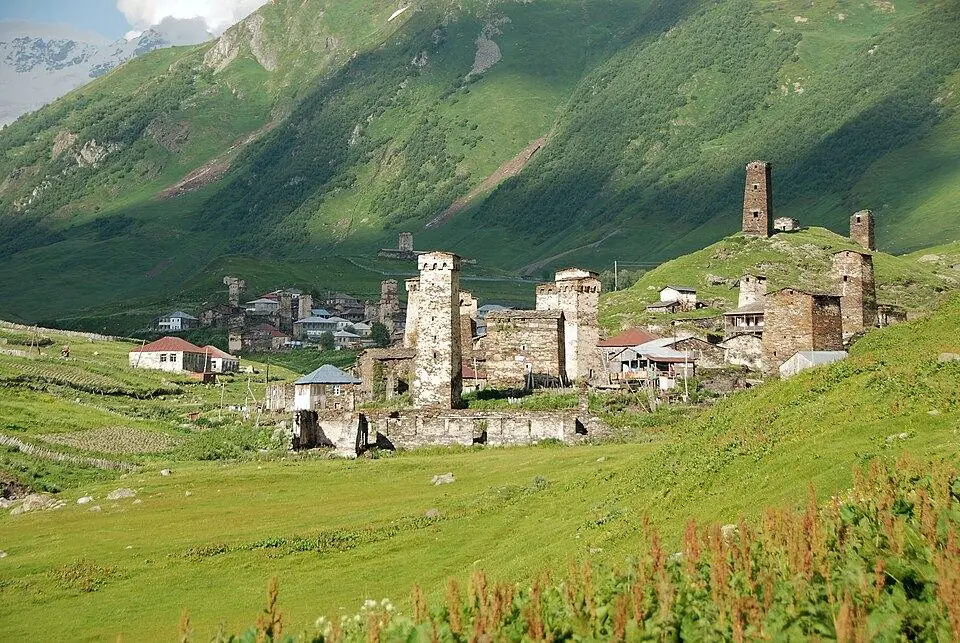
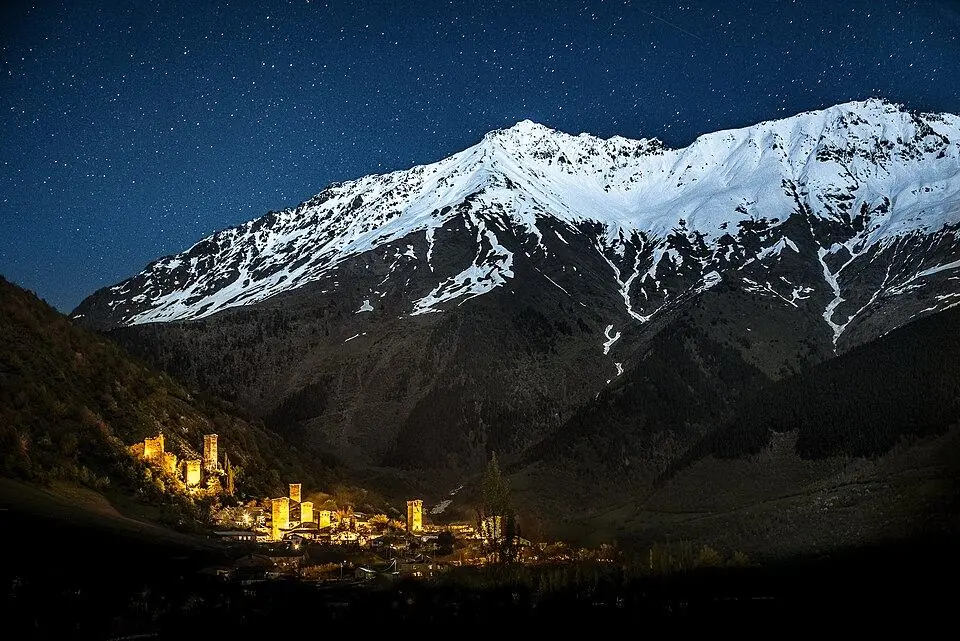
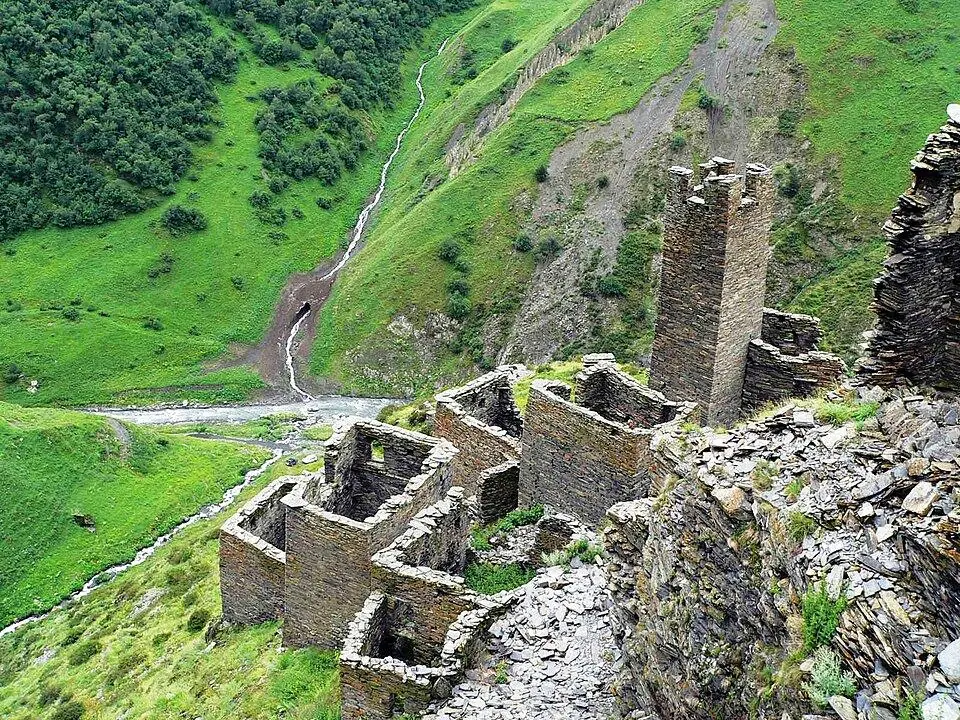
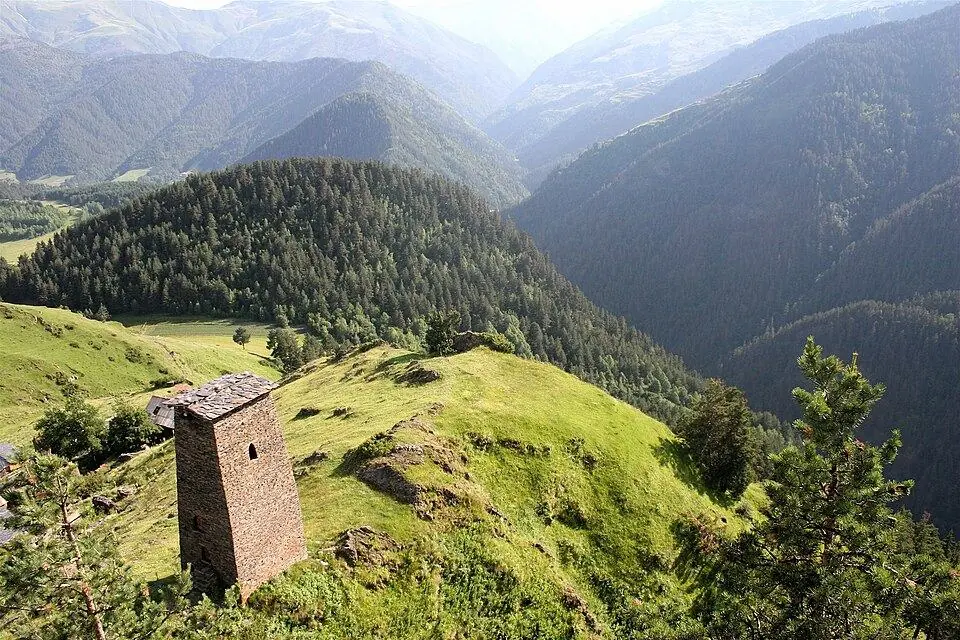
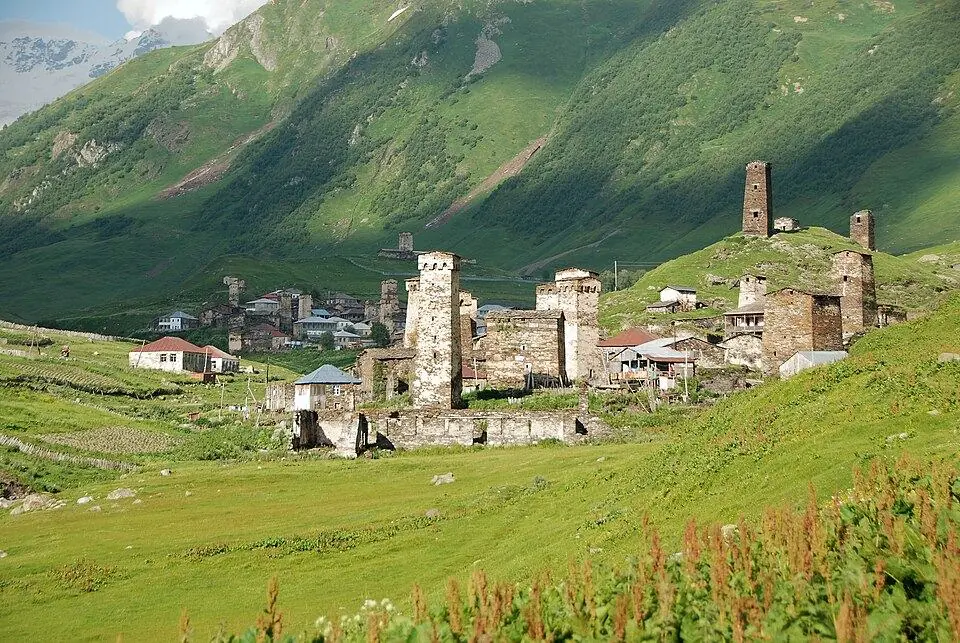
A Svan tower is a square stone shaft of four or five storeys, rarely six, ~20 to 30 m tall, narrowing slightly to a top floor with openings for archers under a pitched slate roof. The entrance sits several metres up and was reached by a ladder that could be pulled in. Families lived next door in the machubi, a two-storey house whose ground floor people and animals shared in winter, and retreated to the tower in raids and blood feuds. They were built across some nine hundred years, between about the 9th and the 18th centuries.
The densest groups stand in Mestia's old districts and the four villages of Ushguli, where up to ~30 survive, most of them in Chazhashi, the core of the Upper Svaneti UNESCO site since 1996. To climb one, the Margiani House Museum in Mestia lets you onto its tower roof; it is usually open about 10:00 to 18:00, closed on Mondays (2026).
Khevsureti and Tusheti
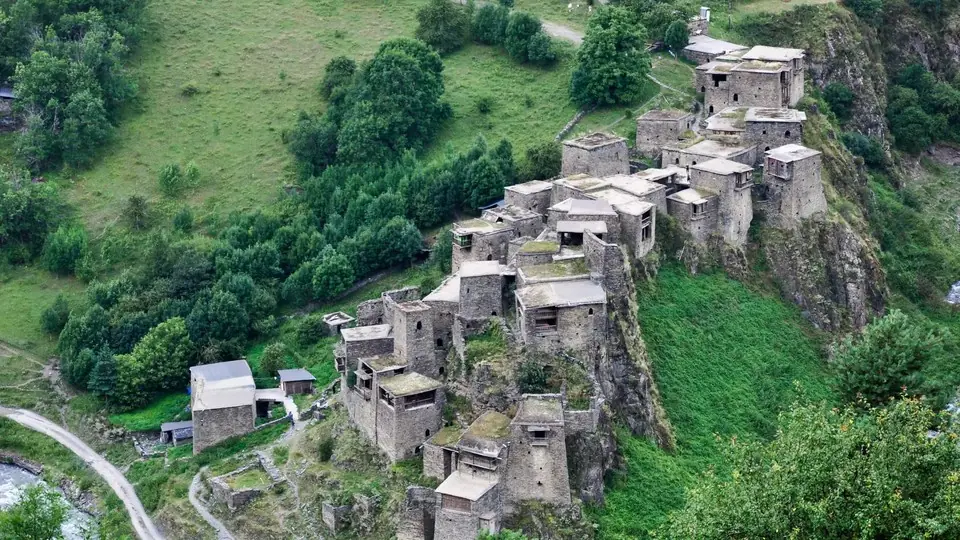
North-east of Kazbegi, the Khevsurs fortified whole villages. Shatili, in the Argun gorge beyond the 2,676 m Datvisjvari Pass, is ~60 tower houses grown into one stone mass on a slope. Mutso, ~12 km away on a ridge at 1,880 m, has been rebuilt since 2004 and won a Europa Nostra award in 2019. In Tusheti the Keselo towers above Omalo date from the 1230s, when villagers hid in them from the Mongols. These roads open only in summer, so check before planning.
Ananuri and other castles
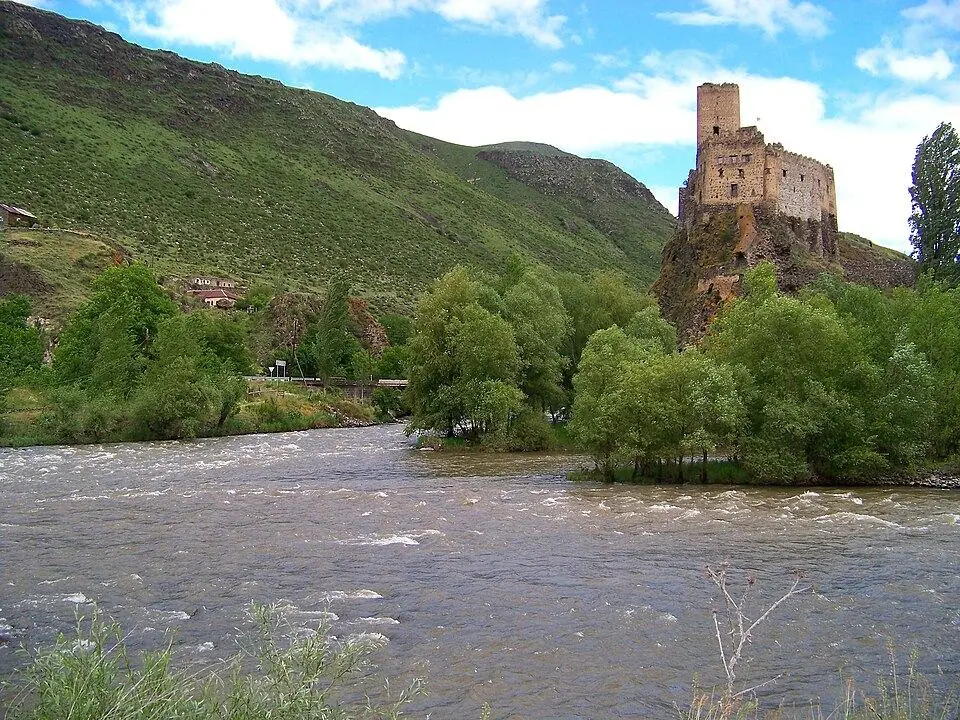
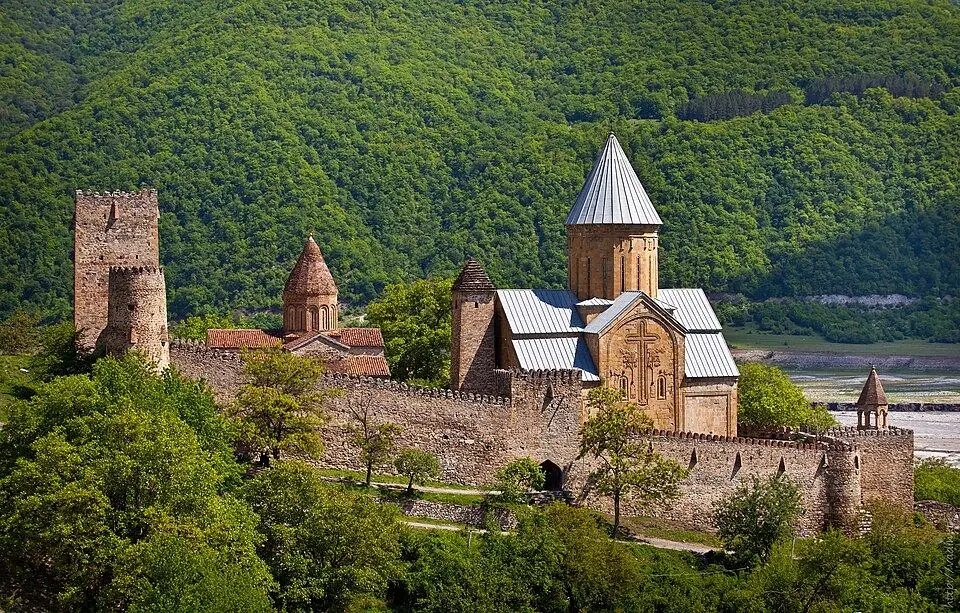
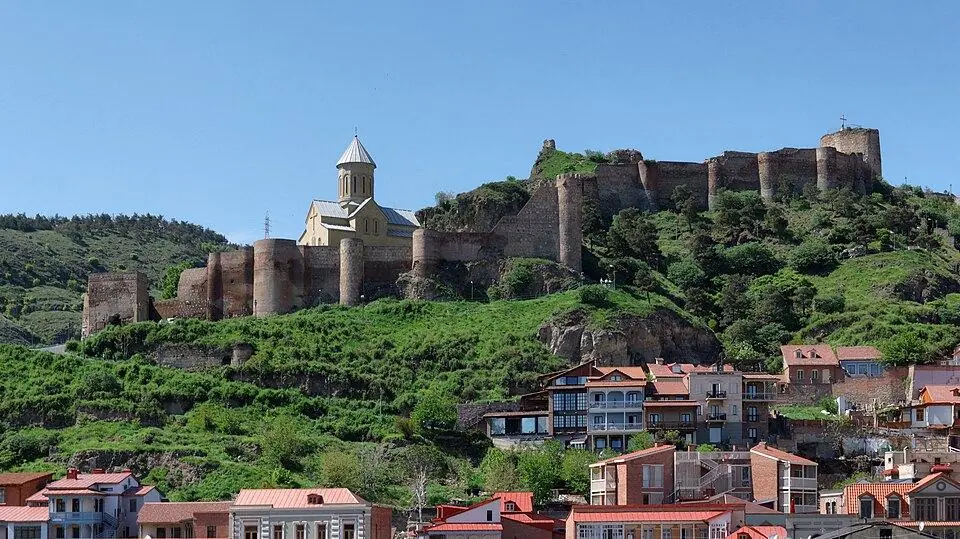
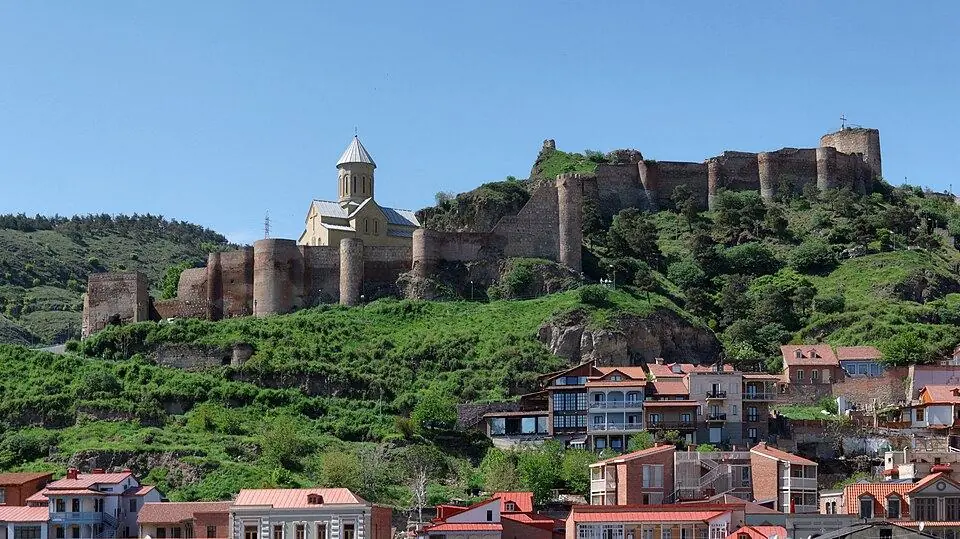
Ananuri, ~70 km north of Tbilisi on the Georgian Military Road, was the seat of the dukes of the Aragvi. Inside its walls stand the square Sheupovari tower, an older brick church and the larger church of 1689, whose south wall carries a carved cross sprouting grapevines. Narikala, Khertvisi, Rabati and Gremi are other castles worth a stop.
Darbazi: the village house
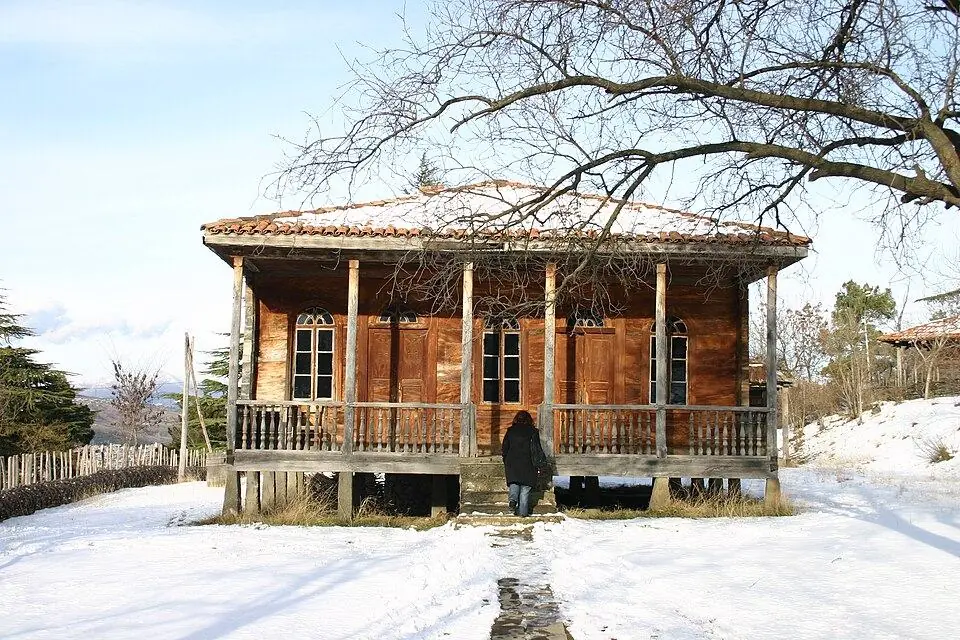
The traditional house of eastern and southern Georgia, the darbazi, was dug partly into a slope and roofed with a timber dome of logs laid in ever-smaller stepped rings, rising to a hole that let smoke out and daylight in. You can walk into several at the Open Air Museum of Ethnography in Tbilisi, near Turtle Lake.
Tbilisi balconies, courtyards and the 19th-century city
The Persian army of Agha Mohammad Khan burned Tbilisi in 1795, so most of the Old Town you walk through today went up in the 19th century, under Russian rule. Builders blended local, Persian and European habits, and the city's trademark became the carved wooden balcony.
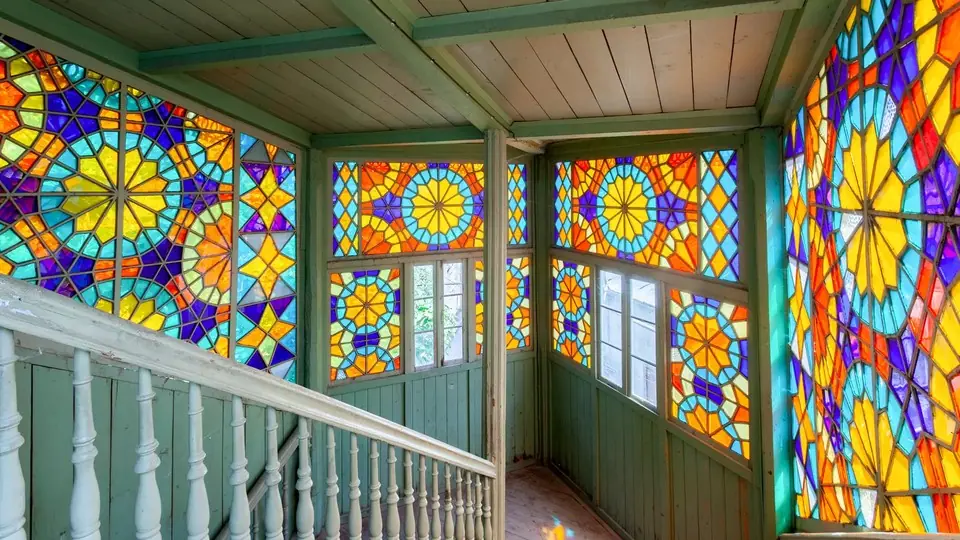
Balconies hang from brick houses in the lanes of Kala and Betlemi and above the river cliffs, cut with lattice and fretwork and often painted; many were later glazed in as enclosed galleries called shushabandi. Behind the street fronts lie what Tbilisians call Italian courtyards: shared yards ringed by wooden galleries, with spiral iron stairs, washing lines and a vine. Betlemi was the pilot area of the Save Old Tbilisi programme launched in 1998.
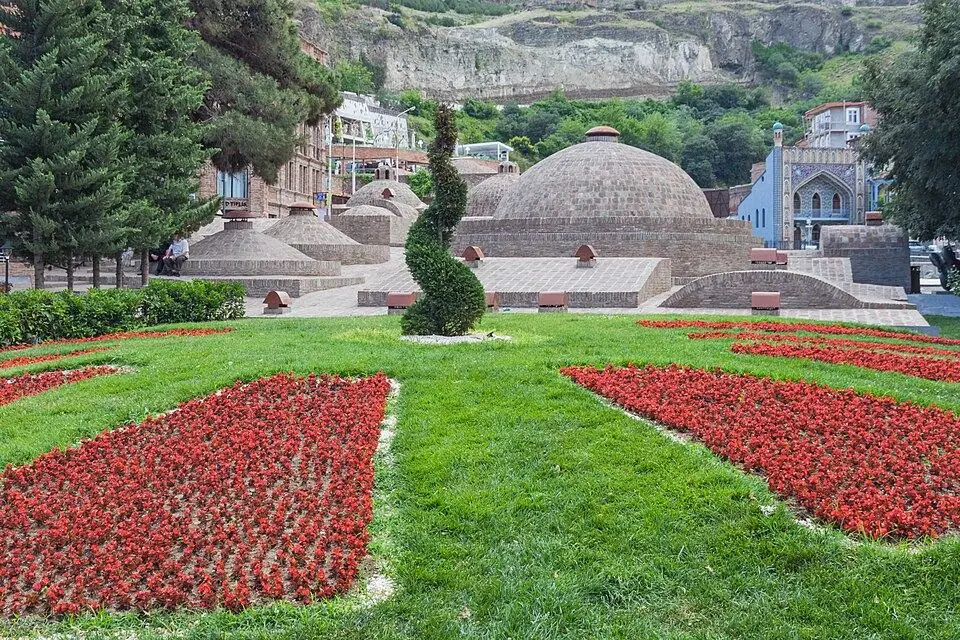
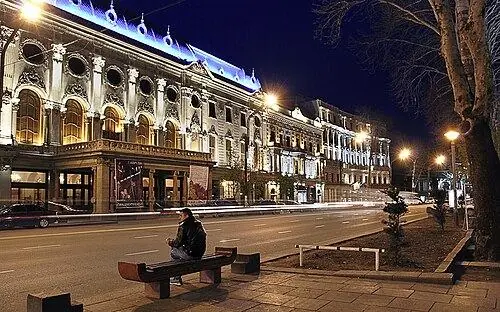
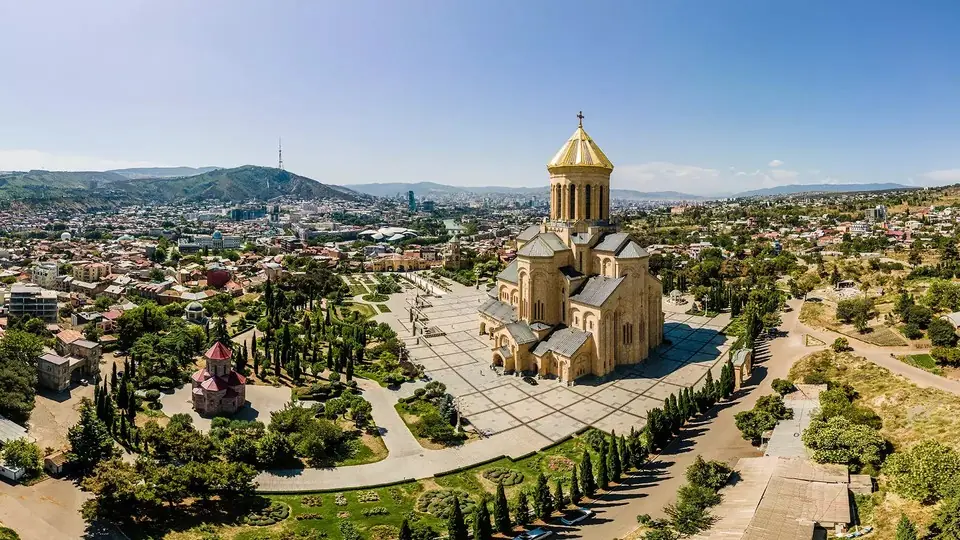
In Abanotubani, low brick domes cover the sulphur bathhouses, and the Orbeliani bath has a blue-tiled, Persian-style front. Uphill, Sololaki's 19th-century merchant mansions hide entrance halls with painted ceilings, stained glass and cast-iron stairs. Rustaveli Avenue, the showpiece of imperial Tiflis, has the Moorish Revival Opera (rebuilt 1896) and Kashveti Church (1904 to 1910), which the German architect Leopold Bielfeld modelled on Samtavisi. Sameba, consecrated in 2004, uses the medieval cross-dome language on a huge scale.
Our private Tbilisi walking tour covers the baths, Narikala, the balconied lanes and Sololaki's painted hallways, in a full day or four hours.
Soviet modernism: the Highway Ministry and the Chronicles of Georgia
Soviet rule (1921 to 1991) left grand classical buildings with Georgian ornament, such as the Parliament on Rustaveli Avenue (1933 to 1953), and the spa sanatoriums of Tskaltubo near Kutaisi. Later came bold concrete modernism.
The best known is the former Ministry of Highway Construction at 29a Gagarin Street, finished in 1975 to a design by George Chakhava and Zurab Jalaghania. Five two-storey blocks are stacked crosswise on three concrete cores, the tallest 18 storeys, leaving most of the slope beneath open, an idea its architects called the Space City method. The Bank of Georgia bought it in 2007 for its headquarters, and it was listed as a cultural monument the same year. It is an office, seen from the street. Other examples are the Nutsubidze Plateau housing blocks linked by sky bridges (1974 to 1976) and the Palace of Rituals, a wedding palace completed in 1985.
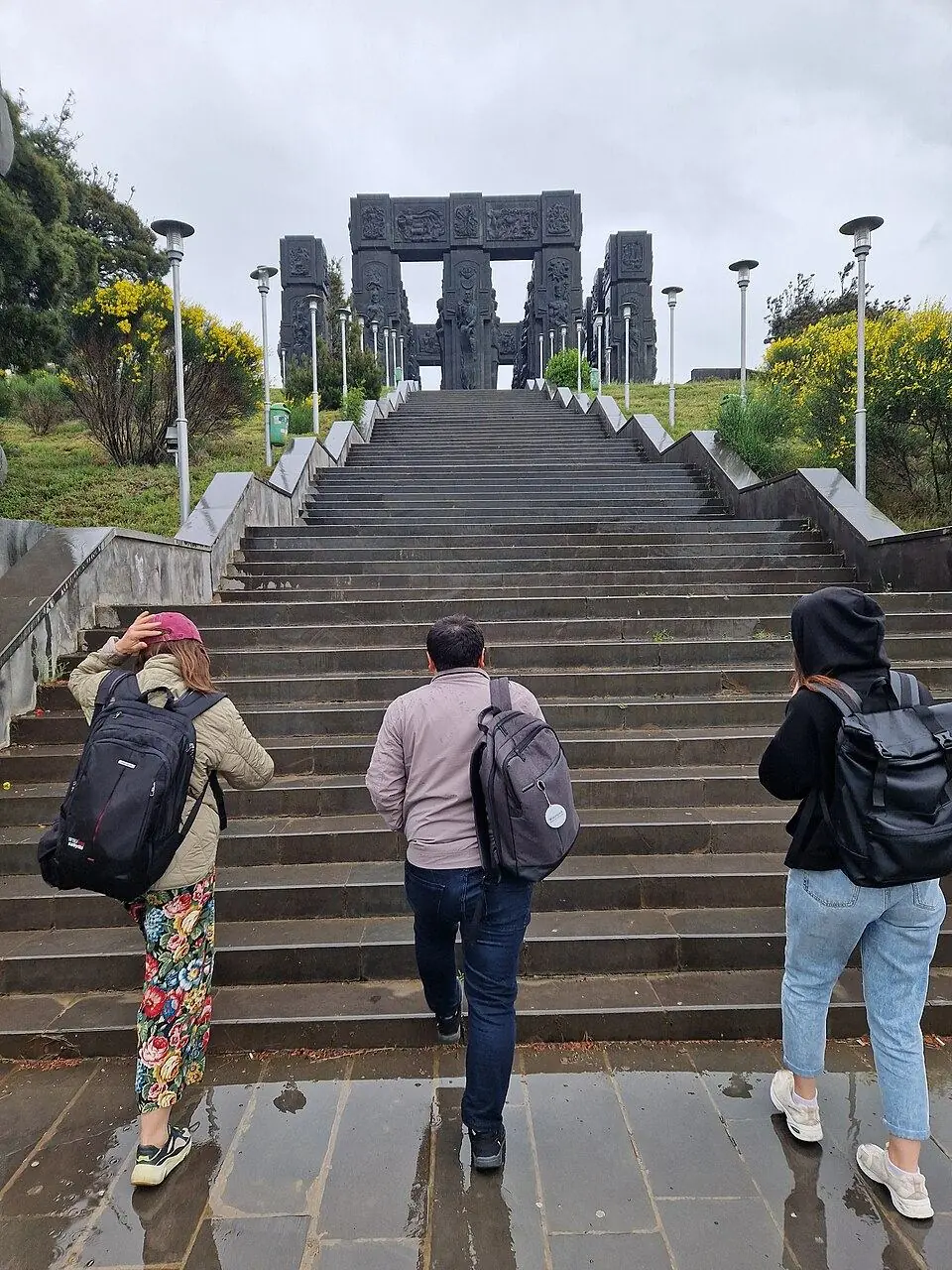
On a hill above the Tbilisi Sea reservoir, the Chronicles of Georgia is a monument by Zurab Tsereteli, begun in 1985 and never fully finished: 16 pillars, 30 to 35 m tall, with kings, queens and heroes above and the life of Christ below. It is free and best near sunset. Views on Soviet-era buildings differ in Georgia: some are listed as heritage, others have been altered or demolished.
12 essential buildings of Georgian architecture and where to find them
These twelve cover the whole story. Each name leads to our place page with directions, hours and what is nearby.
| Building (our place page) | Century | Style | Region | Why go |
|---|---|---|---|---|
| Bolnisi Sioni | 5th (478-493) | Basilica | Kvemo Kartli | Oldest church with a dated building inscription; early Georgian script |
| Jvari Monastery | Late 6th to early 7th | Tetraconch, the Jvari type | Mtskheta-Mtianeti | The model for a family of churches; view over two rivers |
| Ateni Sioni | 7th; paintings 11th | Jvari type | Shida Kartli | Deer-hunt reliefs and a fine fresco cycle |
| Bagrati Cathedral | 11th (1003); rebuilt 2012 | Cross-dome | Imereti | Sheer scale, and the debate over rebuilding |
| Nikortsminda Cathedral | 11th (1010-1014) | Cross-dome | Racha | Some of the richest figure carving in Georgia |
| Svetitskhoveli Cathedral | 11th (1010-1029) | Cross-dome | Mtskheta-Mtianeti | The national cathedral, royal tombs, the architect's hand |
| Samtavisi Cathedral | 11th (1030) | Cross-dome | Shida Kartli | The classic carved east facade |
| Alaverdi Monastery | 11th | Cross-dome | Kakheti | ~55 m of stone among the vineyards |
| Gelati Monastery | 12th (from 1106) | Monastery and academy | Imereti | Gold apse mosaic; UNESCO site |
| Vardzia | 12th | Cave monastery | Samtskhe-Javakheti | Hundreds of rooms in a cliff; Tamar's portrait |
| Ushguli | Built over centuries, roughly 9th to 18th | Svan defence towers | Svaneti | Tower villages under Shkhara; UNESCO since 1996 |
| Old Tbilisi (Kala) | Mostly 19th | Balconied houses, courtyards, baths | Tbilisi | Carved balconies and Italian courtyards |
How to group them into a trip
- Mtskheta: Jvari and Svetitskhoveli, ~30 minutes from Tbilisi; half a day.
- West on the main highway: Samtavisi, then Uplistsikhe and Ateni Sioni, both ~10 km from Gori, in one long day.
- South of Tbilisi: Bolnisi Sioni and Tsughrughasheni with Dmanisi in a full day.
- Kutaisi: Bagrati in town, Gelati ~20 minutes away; Nikortsminda is ~2 hours each way, so pair it with a night in Racha.
- Kakheti: Alaverdi, ~20 km north-west of Telavi, with Ikalto, Nekresi and Gremi nearby.
- The south-west: Vardzia with Khertvisi and Rabati, from a base in Borjomi or Akhaltsikhe.
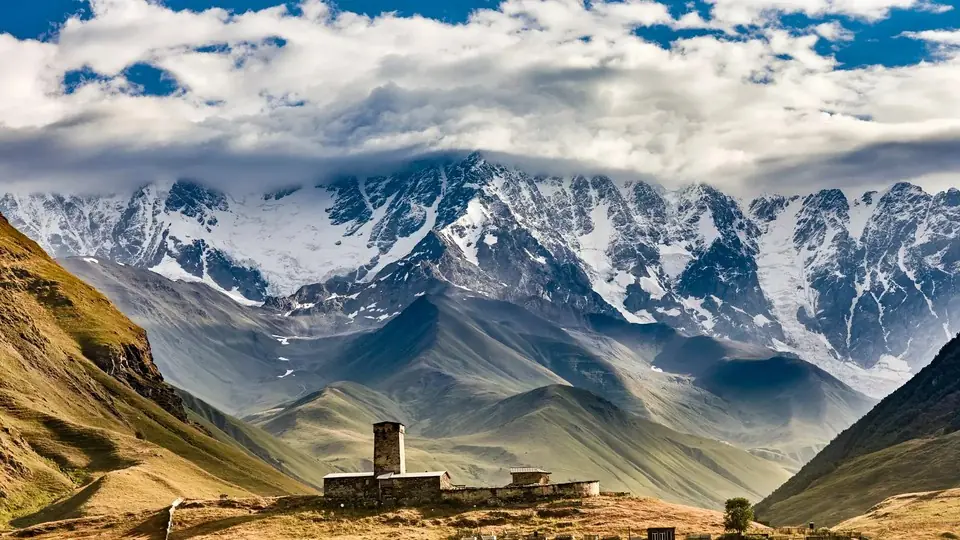
- Svaneti: Mestia and Ushguli need at least two nights.
Complete Georgia, our 11-day private tour, links many of these: Jvari, Svetitskhoveli, Ananuri, Uplistsikhe, Vardzia, Bagrati, Gelati and the towers of Mestia and Ushguli. Dates and group size are up to you.
Visiting Georgian churches: dress code, tickets and photos
- Dress: shoulders and knees covered for everyone; women add a headscarf and a long skirt, and men take off hats. Big churches lend scarves at the door; village ones often do not, so carry your own.
- Tickets: working churches and monasteries are free. Museum sites charge, for example about 15 GEL ($6) each for Uplistsikhe and Vardzia and about 10 GEL ($4) for the Svaneti Museum in 2026.
- Hours: most churches open at roughly 08:00 or 09:00 and close between about 18:00 and 20:00. Few post times, so do not leave a key church until dusk.
- Services: Saturday evening and Sunday morning liturgies are long and crowded. Stand quietly at the back, and do not wander or take photos.
- Photos: many churches allow them without flash, some monasteries ban them; ask at the candle desk.
- Behaviour: keep voices low, do not touch the frescoes, and never step behind the altar screen.
Georgian architecture: frequently asked questions
What is Georgian architecture known for?
Above all for medieval stone churches with one tall drum under a conical roof, many with carved facades, built mostly between the 6th and 13th centuries. Visitors also come for cliff monasteries such as Vardzia, the stone tower villages of the high Caucasus and Old Tbilisi's carved wooden balconies.
Is Georgian architecture the same as the British Georgian style?
No. In Britain the term means the classical terraces and townhouses built from about 1714 to 1830, under the kings named George. The architecture of Georgia, the country in the Caucasus, is an unrelated tradition centred on church building that began in the 4th century.
What is a cross-dome church?
A church whose plan forms a cross, usually inside a rectangle, with one dome raised on a drum where the arms meet. In Georgia the drum usually stands on free-standing piers and the dome hides under a conical or pyramid roof. The form developed between the 7th and 10th centuries and is still used today.
How is Georgian Orthodox church architecture different from Russian or Greek churches?
Georgian churches are usually of cut stone, topped by one tall drum and a cone-shaped roof, not the onion domes of Russia or the rounded domes of many Greek churches. They also carry far more sculpture outside: carved crosses, arcades and figure scenes.
What is the oldest church in Georgia?
The oldest with a dated building inscription is Bolnisi Sioni in Kvemo Kartli, built from 478 to 493. Excavated basilicas at Nekresi in Kakheti are older but survive mostly as foundations. Tbilisi's oldest surviving church is Anchiskhati, from the 6th century.
What were Svan towers used for?
They were family refuges. People lived in the house beside the tower and, in a raid or blood feud, climbed in through a door several metres up and pulled the ladder in behind them. The biggest groups stand in Mestia and Ushguli.
What is the tallest church in Georgia?
Holy Trinity Cathedral (Sameba) in Tbilisi, consecrated in 2004. Before it, the record belonged to the 11th-century cathedral of Alaverdi in Kakheti, ~55 m high.
Where can I see the carved balconies in Tbilisi?
In the Old Town lanes of Kala and Betlemi, on the houses above the river cliff near Metekhi Bridge, and in Sololaki. Mornings are quietest, and open gateways reveal the shared Italian courtyards behind.