Georgian National Museum
Georgia's main history museum on Rustaveli Avenue, with ancient gold, the Dmanisi early human fossils and a Soviet occupation exhibition.
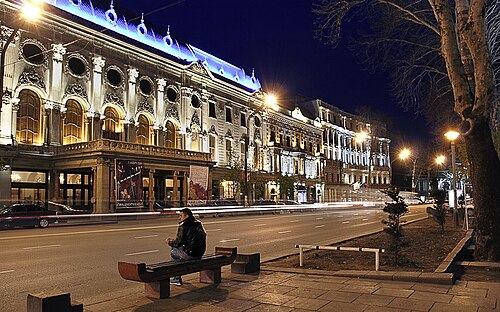
The Simon Janashia Museum of Georgia, the flagship of the Georgian National Museum, occupies a large building on Rustaveli Avenue a few steps from Freedom Square. It is the best single place to understand the country's long history. The archaeological treasury displays gold and silver jewellery from ancient Colchis and Iberia, including the 5th-century BC Akhalgori hoard, and the prehistory galleries show fossils of early humans from Dmanisi, about 1.8 million years old. Other halls cover medieval icons and goldsmiths' work, around 80,000 coins and a remarkable collection of Urartian inscriptions.
Allow at least two hours, and start with the treasury and the prehistory halls, which hold the most striking pieces. Upstairs, the Museum of Soviet Occupation exhibition documents the 1921 Red Army invasion, the repressions and the decades that followed through photographs, documents and personal objects. Temporary exhibitions change often, and most labels are in Georgian and English. The museum is a good choice for a hot afternoon or a rainy day.
History
The museum grew out of the collection of the Caucasian department of the Russian Imperial Geographic Society, founded on 10 May 1852. The building on Rustaveli Avenue was built in 1913–1917 for the Caucasian Museum, and its facade was reworked in 1929. It is named after the historian Simon Janashia. Since 2004 it has been part of the Georgian National Museum, which also runs the Dmanisi museum-reserve, the Open Air Museum of Ethnography and other museums across the country.
What to see and do
- See the gold of Colchis and Iberia in the archaeological treasury
- Look at the Dmanisi early human fossils, about 1.8 million years old
- Visit the Museum of Soviet Occupation exhibition
- Browse medieval icons, coins and Urartian inscriptions
How to visit
Getting there
The museum is at the Freedom Square end of Rustaveli Avenue, a 2-minute walk from Liberty Square metro station.
When to go
Any time; ideal on hot or rainy days. Plan 2–3 hours here.
- Check opening days locally; museums in Georgia usually close one day a week.
- See the treasury and prehistory halls first, before museum fatigue sets in.
- Combine with a walk along Rustaveli Avenue to the National Gallery.
Georgian National Museum: FAQ
What is the best museum in Tbilisi?
For a first visit, the Simon Janashia Museum of Georgia on Rustaveli Avenue is the most useful, with ancient gold, the Dmanisi fossils and the Soviet occupation exhibition. Art lovers should add the National Gallery for Pirosmani.
How long do you need at the Georgian National Museum?
Two to three hours covers the treasury, the prehistory galleries and the Soviet occupation exhibition at a steady pace.
Tours that include Georgian National Museum
Read more in our guides
 Photo: Alexxx1979, CC BY-SA 4.0
A day-by-day loop from Tbilisi through Uplistsikhe, Kazbegi and Kakheti, showing how long each drive takes, where to eat and sleep, and realistic 2026 costs.
 Photo: Marcin Konsek, CC BY-SA 4.0
What Prometheus Cave, Martvili Canyon, the National Museum, Vardzia, the Tbilisi cable cars and dozens of other sights cost to enter in 2026, with hours, combo tickets and free alternatives.
Photo: Alexxx1979, CC BY-SA 4.0Three ready-made days in the Georgian capital, each split into morning, afternoon and evening, with minutes on foot between stops, food stops by area and a plan B for rain.
Nearby places
Straight-line distance from Georgian National Museum.