- Borjomi is ~160 km and 2.5 to 3 hours west of Tbilisi; one night covers the park, the sulphur pools and the cable car, and a second night adds a national park hike, Bakuriani or Vardzia.
- In 2026 the ticket for Central Park is about 5 GEL (about $2) and the water at the Yekaterina spring is free; the sulphur pools ~3 km up the park and the cable car to the plateau each sell their own tickets.
- The Romanov palace at Likani has been shut for restoration since at least 2019, with no public tours; you can only see it from outside the fence or from the neighbouring resort hotel.
- The Kukushka narrow-gauge train to Bakuriani has not run since 2020; on 9 October 2026 Georgia's economy minister said it should restart in December 2026, so check before you plan around it.
- Borjomi-Kharagauli National Park is free: register at the visitor centre on Meskheti Street, then walk the 7 km Likani Valley loop, the 13 km Footprint Trail or a shelter trek of two to four days.
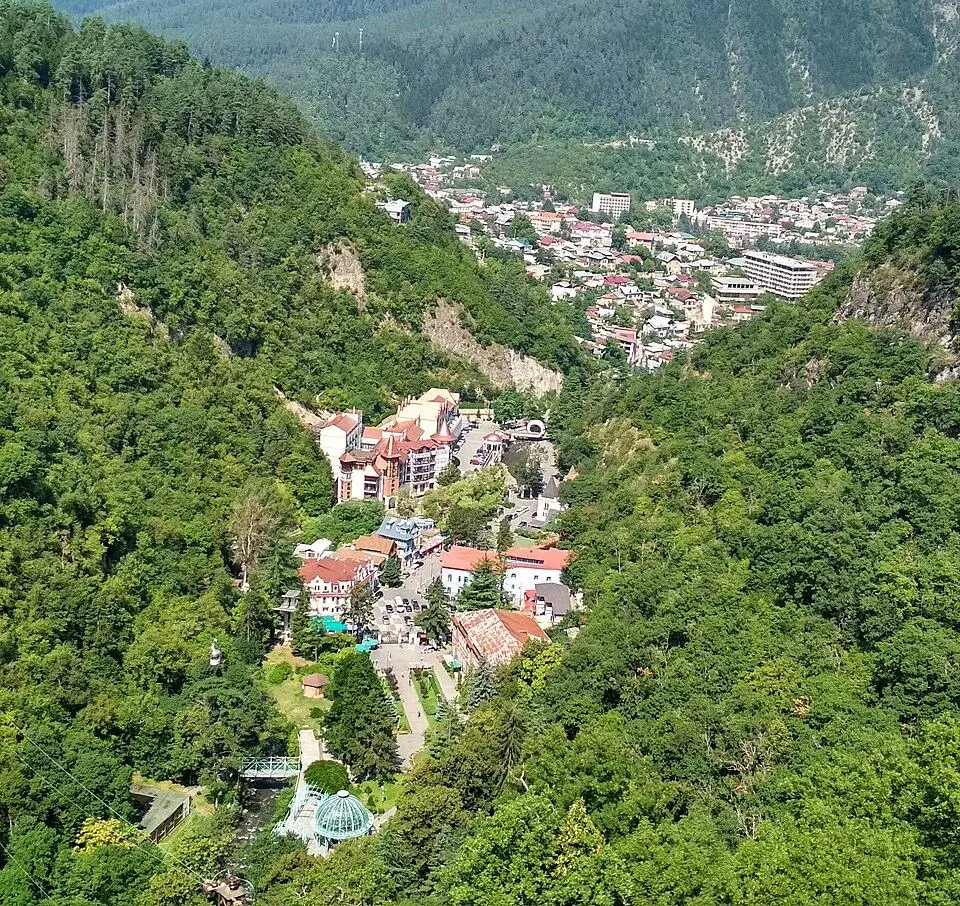
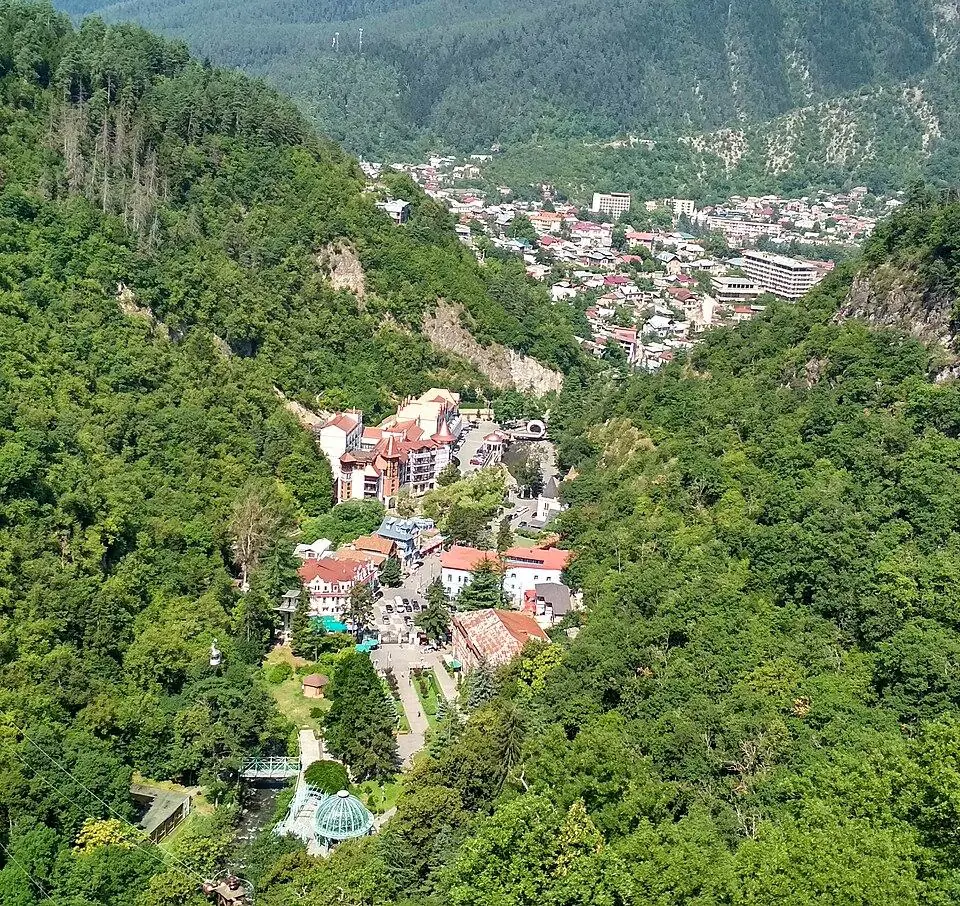
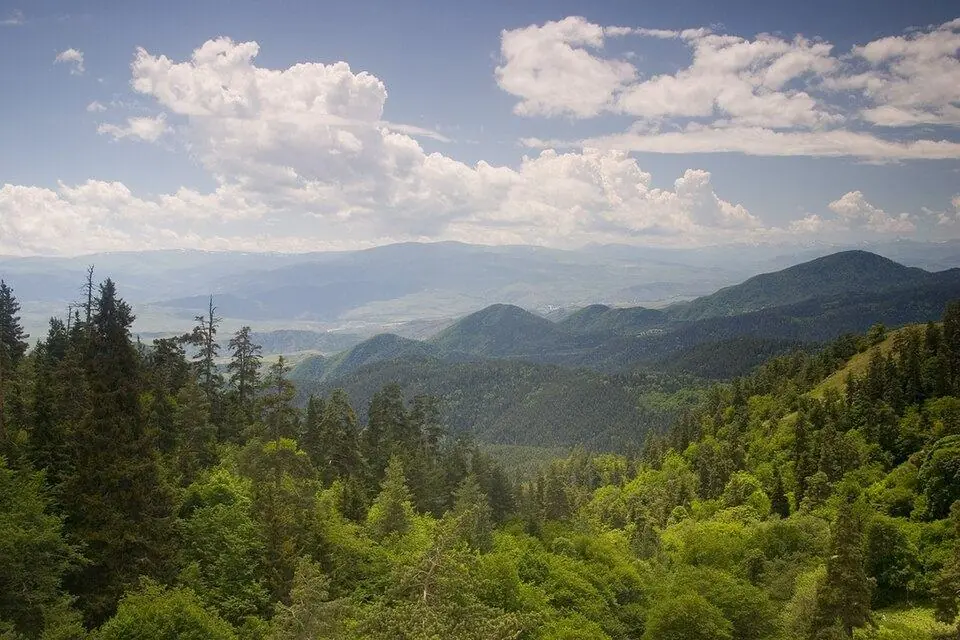
Borjomi is a small spa town at ~800 m in the pine and beech forest of the Mtkvari gorge, 160 km west of Tbilisi, and the salty, naturally sparkling water that carries its name is drunk all over the former Soviet world. The things to do in Borjomi are mostly simple pleasures: fill a bottle at the warm spring in Central Park, follow the stream for 40 minutes to the open-air sulphur pools, ride the old cable car for the view, and give a day to a marked trail in Borjomi-Kharagauli National Park, which begins at the edge of town.
This Borjomi travel guide takes each sight in turn with 2026 prices. It explains what you can and cannot see of the Romanov palace at Likani, whether the Kukushka mountain train to Bakuriani is running again, and how to continue to Rabati Castle and the cave city of Vardzia. You will also find the park authority's own trail distances, where to sleep and eat, the best months, transport from Tbilisi and Kutaisi, and plans for one to three days.
Things to do in Borjomi at a glance
Borjomi grew up in the 19th century as a summer retreat for the Russian imperial family, and the old resort of carved balconies and riverside villas is still easy to read. Nearly everything a first-time visitor wants lies within a short walk of the park gate, while the wild side, Borjomi-Kharagauli National Park, starts at Likani on the western edge of town.
Is it worth the trip? Yes, if you like forest walks, warm mineral water and faded imperial charm, and it is the natural overnight stop between Tbilisi and Vardzia. For glaciers and 4,000 m peaks, Kazbegi or Svaneti will serve you better.
| What to do | Where | Time needed | Cost in 2026 (approx.) |
|---|---|---|---|
| Taste the water at the Yekaterina spring | Central Park, just inside the gate | 30 min | Park ticket about 5 GEL; the water is free |
| Walk to the open-air sulphur pools | Top end of Central Park | 2.5 to 3 h with a soak | About 15 GEL for the pools |
| Ride the cable car and the Ferris wheel | Lower station beside the park gate | About 1 h | About 15 GEL one way for the cable car |
| See Firuze and the Romanov-era villas | Streets leading to the park | 45 min | Free |
| Visit the Museum of Local Lore | Across the river from the park | 1 h | About 5 GEL |
| View the Likani palace from outside | Likani, western edge of town | 30 min | Free; no entry |
| Hike the Likani Valley loop or the Footprint Trail | Likani ranger station | 4 to 6 h | Free; register first |
| Visit the Green Monastery | Chitakhevi, ~9 km west | 1 h | Free; leave a donation |
| See the frescoes of Timotesubani | ~17 km east | About 2 h with the drive | Free |
| Drive up to Bakuriani | 30 km uphill | Half a day | Ski lifts extra in winter |
| Day trip to Rabati Castle and Vardzia | 50 to 110 km south-west | Full day | About 20 GEL Rabati, about 15 GEL Vardzia |
Borjomi Central Park and the mineral springs
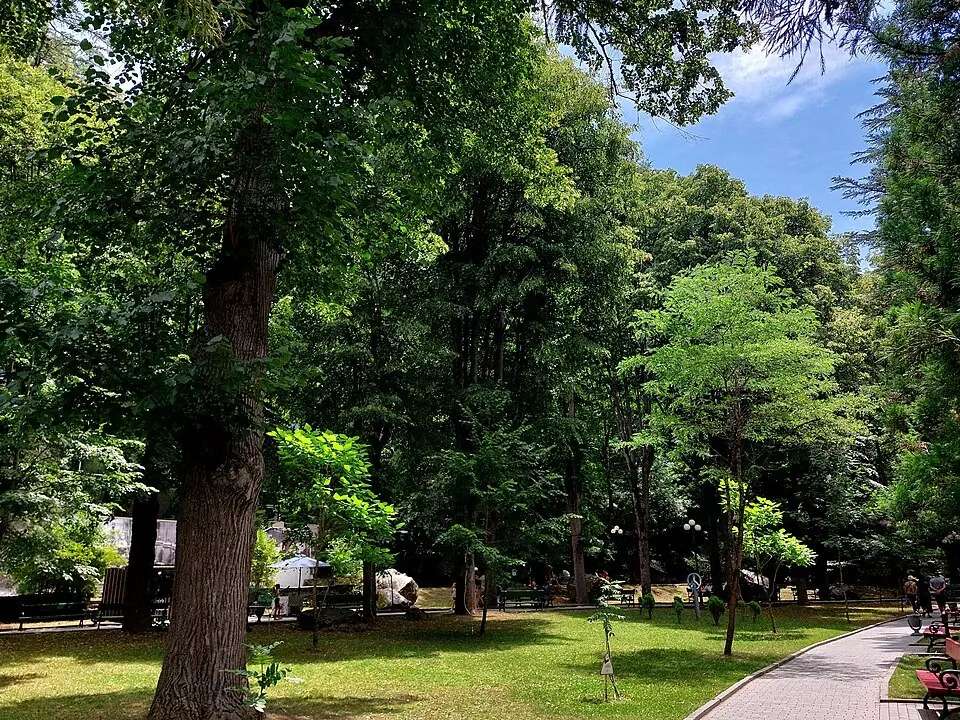
Central Park, also called the Mineral Water Park, fills the narrow valley of the Borjomula stream for about a kilometre above the town centre: shaded paths, footbridges, cafés, a children's funfair and, just past the entrance, the spring the resort was built around. On your left as you enter stands the brick hall of an early bottling plant, hung with archive photographs.
Soldiers of the Kherson Grenadier Regiment cleared the springs in 1829. In 1841 the viceroy Yevgeny Golovin brought his ailing daughter Yekaterina here, and the first spring took her name after she recovered. From the 1860s the Romanovs owned the estate, and by 1900 its water was sold across the empire.
The Yekaterina spring now runs under a glazed pavilion close to the gate, and filling a bottle from its taps costs nothing. Do not expect the chilled, lively drink from the shop: straight from the ground the water is tepid, salty and only gently fizzy, with a strong mineral finish that many first-timers find odd. It is a sodium bicarbonate water of volcanic origin, driven to the surface by natural carbon dioxide, and today it is exported to more than 30 countries.
In 2026 entry to the park cost about 5 GEL (about $2), young children went in free, and visitors reported that nobody charged before about 09:00. The gates open early and close in the evening all year. Weekday mornings are calm; on summer weekends coach groups and families from Tbilisi crowd the lower paths by late morning.
Borjomi sulphur pools: the forest walk and the baths
The finest half day in Borjomi is the walk to the sulphur pools at the top of the park. Past the funfair the paving ends and a broad, almost level track follows the Borjomula upstream under tall beech and fir, hopping from bank to bank over small bridges. From the gate it is ~2.5 to 3 km, or 35 to 45 minutes on foot. The track gets muddy after rain, so wear proper shoes rather than flip-flops.
The baths go back to the Romanov resort and were rebuilt in the 2000s. Open-air pools in a forest clearing are fed by sulphurous spring water at around 30 to 32°C, far cooler than the bathhouses of Tbilisi: pleasant on a summer afternoon and best of all in winter, when steam drifts into snowy branches. There are changing cabins, toilets and loungers to rent. The pools charge on top of the park fee, reportedly about 15 GEL (around $5.50) in 2026, though older guides quote 5 GEL. If walking is hard for you, 4x4 drivers near the gate will run you up the forest road for a negotiated price.
Cable car, Ferris wheel and Borjomi's Romanov-era town
The cable car leaves from beside the park entrance and hauls you up the wooded slope in about two minutes to the edge of the Borjomi plateau, where a Ferris wheel and a few cafés overlook the town and the gorge. In 2026 a ride cost roughly 15 GEL (about $5.50) one way or 30 GEL return, with the wheel charged separately. Save it for a clear evening, and if your legs are fresh, walk back down through the forest.
Firuze, the museum and the old resort streets
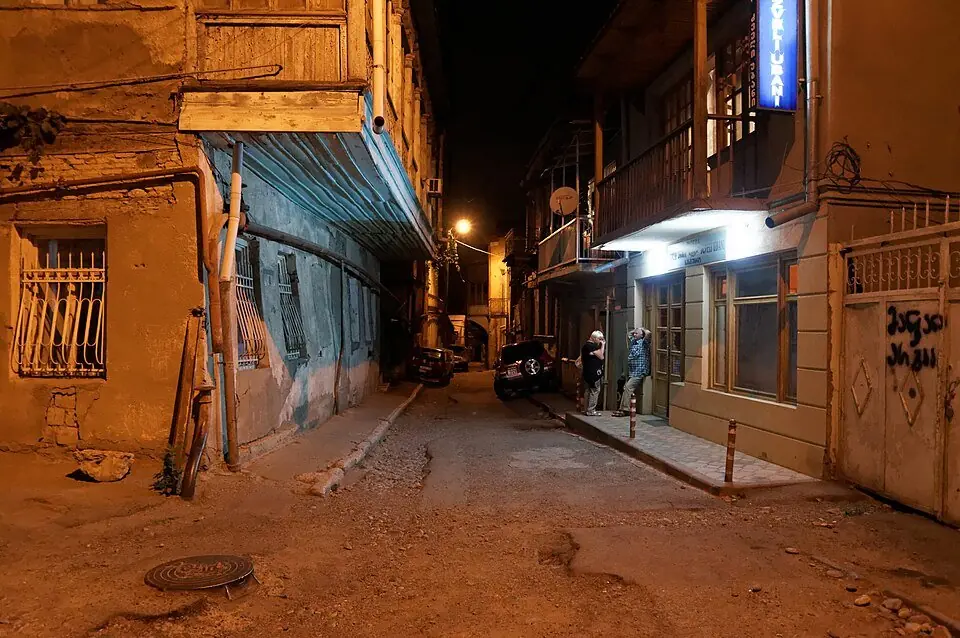
The street that leads to the park gate is the best place to admire the resort architecture: dachas with fretwork balconies, painted gables and wide verandas. By the gate stands Firuze, a blue-trimmed house built in 1892 for the Iranian consul Mirza Riza Khan, with Persian mirror work glittering under its upper balcony. It is now a hotel, so enjoy it from the street.
Across the Mtkvari, the Borjomi Museum of Local Lore occupies an 1890 building designed for the Romanov estate office. Among its 40,000-plus objects are furniture and tableware from the Likani palace, old Borjomi bottles and labels, and displays on the park's wildlife: the best rainy-day stop in town. A 2026 ticket was about 5 GEL (about $2), with hours of roughly 10:00 to 18:00, shorter in winter. For a free view, take the short, steep path up to the ruins of Gogia Fortress, one of a chain of medieval towers that watched over the gorge.
Likani and the Romanov Palace: can you visit?
Likani, on the western edge of Borjomi, was the private corner of the Romanov estate. In the 1890s Grand Duke Nicholas Mikhailovich, a grandson of Tsar Nicholas I, had a summer palace built here to designs by the architect Leon Benois, in a park above the Mtkvari. In 1898 a small hydroelectric station went up at Likani to light it, one of the earliest in the Russian Empire. The Soviet leadership later used the palace, and after independence it became a state residence.
The short answer for visitors is no, you cannot go in. The palace has been closed for restoration since at least 2019, the grounds are fenced and guarded, and there is no ticket office. A museum inside has been promised, but no opening date had been announced by October 2026. You can glimpse the facade through the trees from the fence line, and anyone staying at the Borjomi Likani resort next door looks onto the palace park from the hotel grounds.
Likani still deserves a visit for its own mineral springs and the ranger station where the park's main trails begin; local minibuses and taxis reach it from the centre in minutes.
Hiking in Borjomi-Kharagauli National Park from town
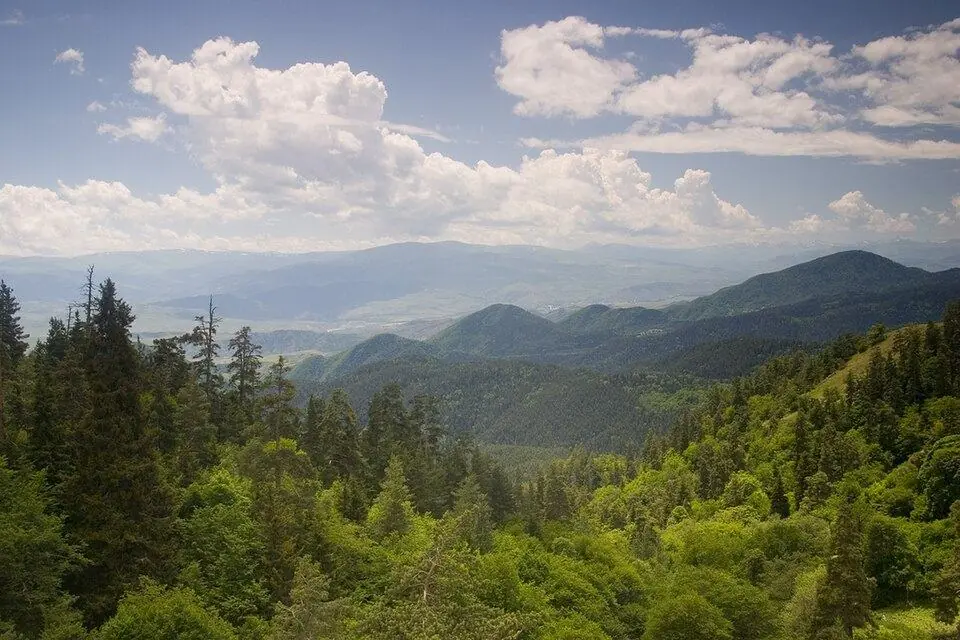
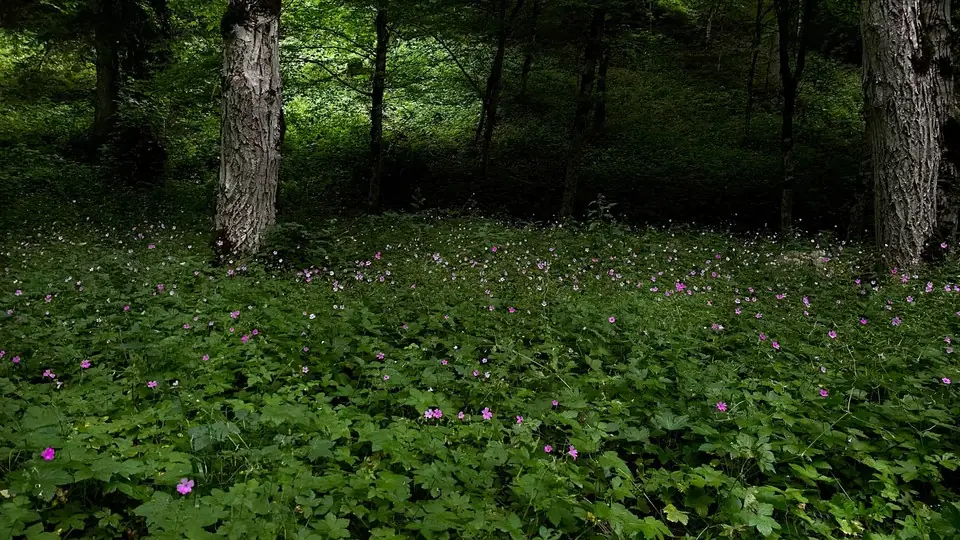
Borjomi-Kharagauli National Park was created in 1995 with help from WWF and the German government. The park itself covers about 85,000 ha of the Meskheti range west of town, from dry pine slopes above the Mtkvari to wet Colchic forest and alpine meadow. Entry is free, but every walker must sign in first at the park's visitor centre, number 23 on Meskheti Street; staff hand out maps, report on conditions and book shelter beds. In 2026 it opened about 09:00 to 18:00 on weekdays and 09:00 to 16:00 at weekends.
| Trail (park number) | Start | Distance and time | What to expect |
|---|---|---|---|
| Information Trail (7) | Visitor centre, Borjomi | 3 km loop, 1.5 to 2 h | A stiff first climb, then an easy circuit above the town |
| Likani Valley (12) | Likani ranger station | 7 km loop, about 4 h | Follows the Chitakhevi ridge with views down the gorge |
| Footprint Trail (6) | Likani ranger station | 13 km one way, about 6 h | Ancient yews, ridge views, a steep drop to Kvabiskhevi |
| Nikoloz Romanov Trail (1) | Likani ranger station | 43 km, 3 days | Over Lomismta (2,198 m) with two shelter nights, ends at Marelisi |
| Panorama Trail (3) | Atskuri ranger station | 34 km loop, 2 days | Night at Amarati shelter near summer shepherd camps |
| St Andrew Trail (2) | Atskuri ranger station | 54 km, 4 days | Crosses Sametskhvario (2,642 m), the highest point of the park |
| Snowshoe trail (10) | Likani ranger station | 15.5 km, 2 days | Winter circuit with a night at the Chitakhevi shelter |
The Likani ranger station is ~5 km from the visitor centre, and Atskuri lies ~27 km down the Akhaltsikhe road. On the Footprint Trail you pass yew trees thought to be 800 to 1,000 years old before a steep descent into the Kvabiskhevi valley. The Romanov trail tops out on Lomismta, where rhododendrons flower in May and June and, on a rare clear day, Elbrus shows far to the north.
A shelter bunk costs about 30 GEL (about $11) a night in 2026 and a campsite pitch about 10 GEL; camping elsewhere in the park is not allowed, and you carry your own food. Our St Andrew Trail page covers the four-day crossing stage by stage, and the five-day trek below pairs the park with Rabati and Vardzia.
Kukushka train to Bakuriani: is it running in 2026?
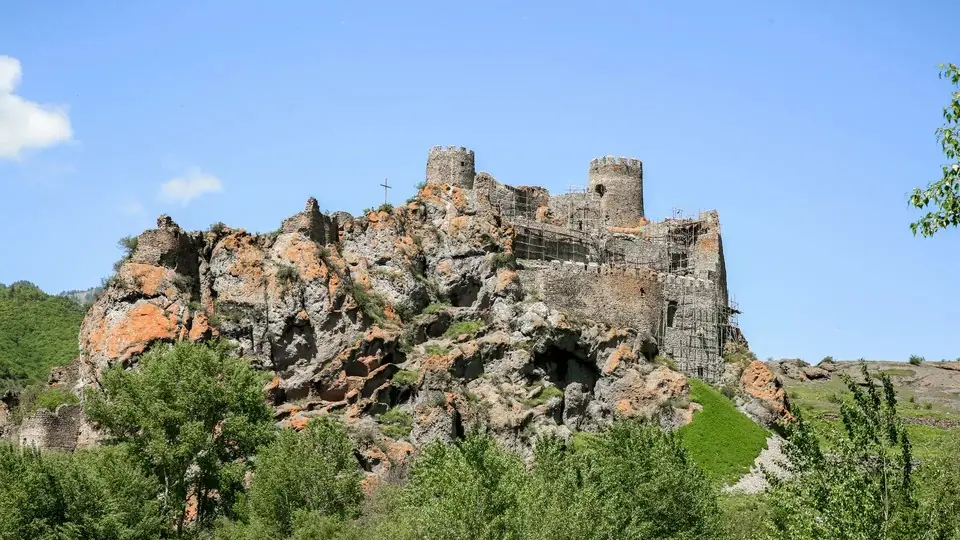
Not yet. The Kukushka, Russian for cuckoo, is the narrow-gauge mountain railway that opened in 1902 and winds ~37 km up from Borjomi to the ski resort of Bakuriani at ~1,700 m, crossing an iron bridge near Tsemi credited to Gustave Eiffel's company. Services stopped in spring 2020. In April 2026 the government ordered a full rebuild of the track, trains and stations, and on 9 October 2026 Economy Minister Mariam Kvrivishvili said the works were almost complete and the line should reopen in December 2026. By mid-October no timetable or fare had been published.
Until the train is back, minibuses and taxis cover the 30 km road to Bakuriani in about 40 minutes. In snow the road needs winter tyres or chains, and drivers in Borjomi know the conditions.
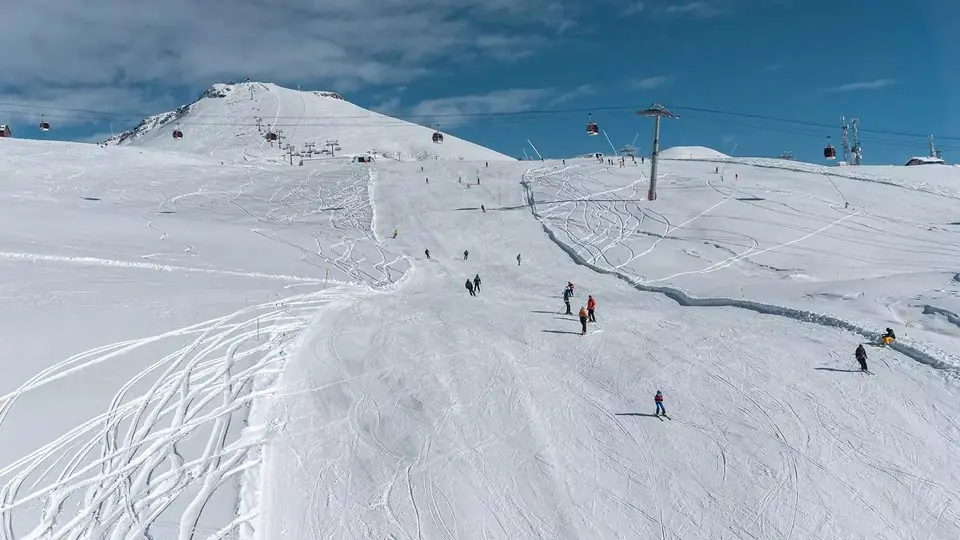
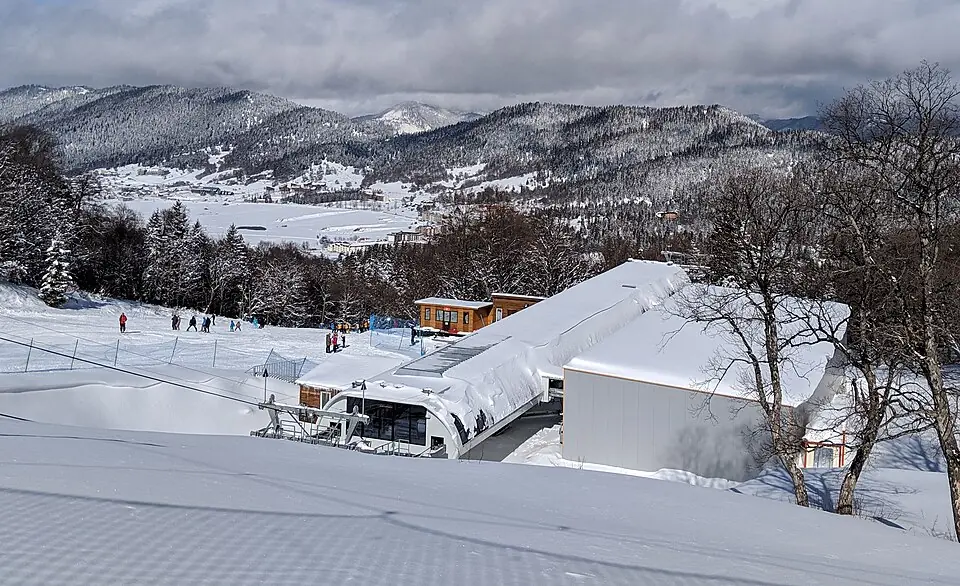
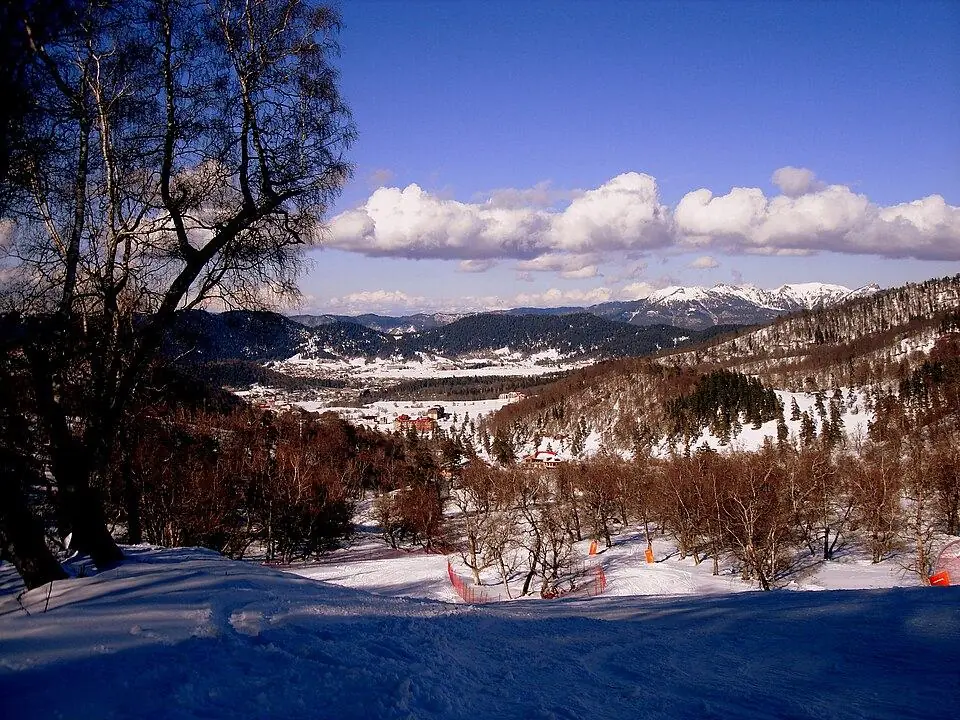
Bakuriani repays a few hours in any season, with spruce forest and an alpine botanical garden in summer and Georgia's favourite family ski slopes from late December to March; our comparison of Georgia's ski resorts covers its runs and passes.
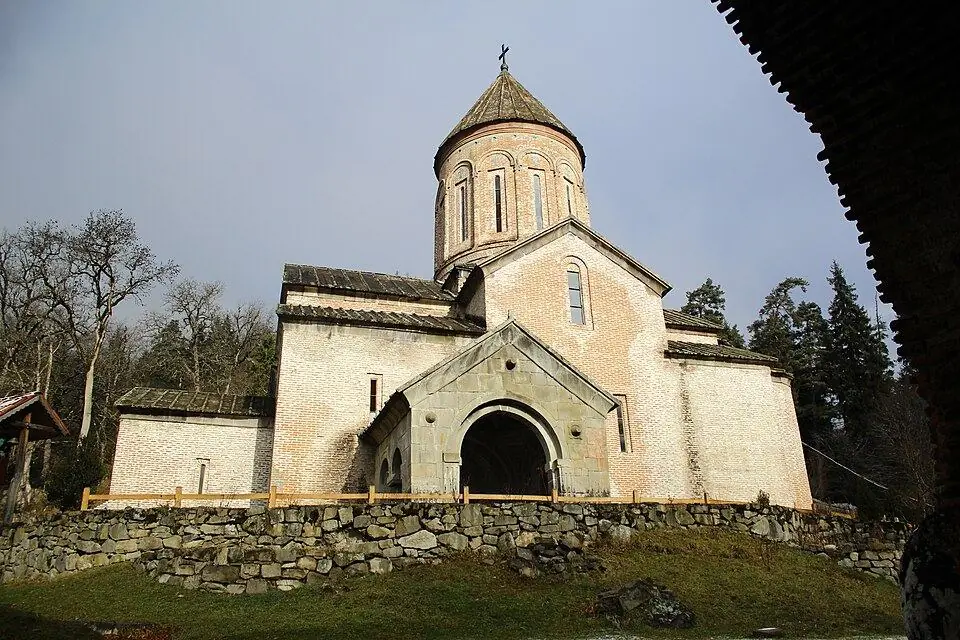
East of Borjomi, ~17 km by road, Timotesubani Monastery is the quiet surprise of the area: a pink-stone Dormition church from Queen Tamar's reign whose wall paintings, finished by the 1220s, rank among the finest of Georgia's Golden Age. Few groups make the detour; pair it with the Bakuriani road.
Day trips from Borjomi: Green Monastery, Rabati and Vardzia
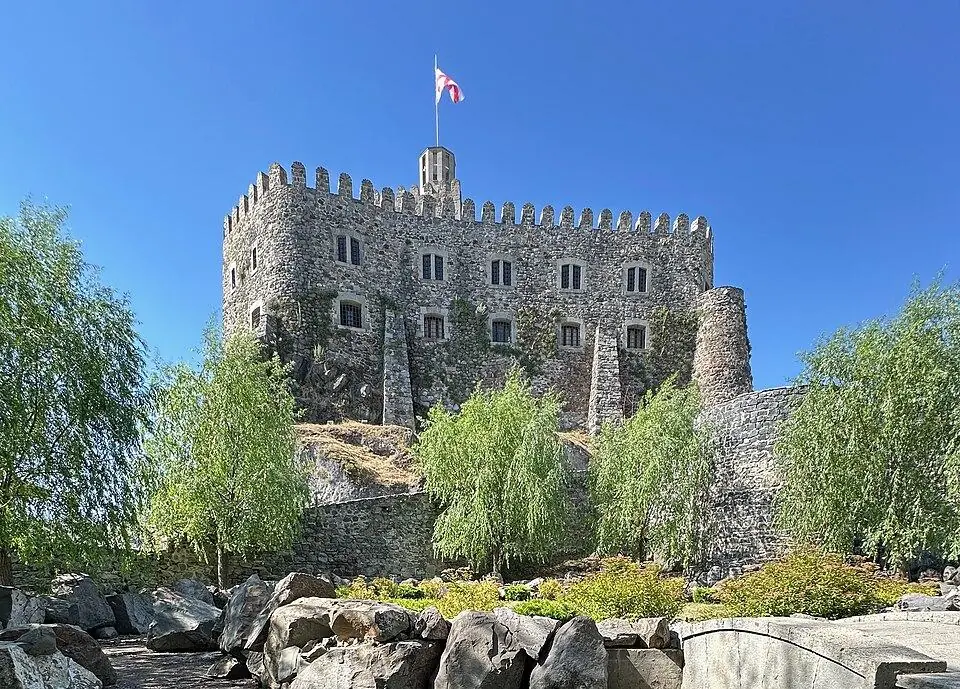
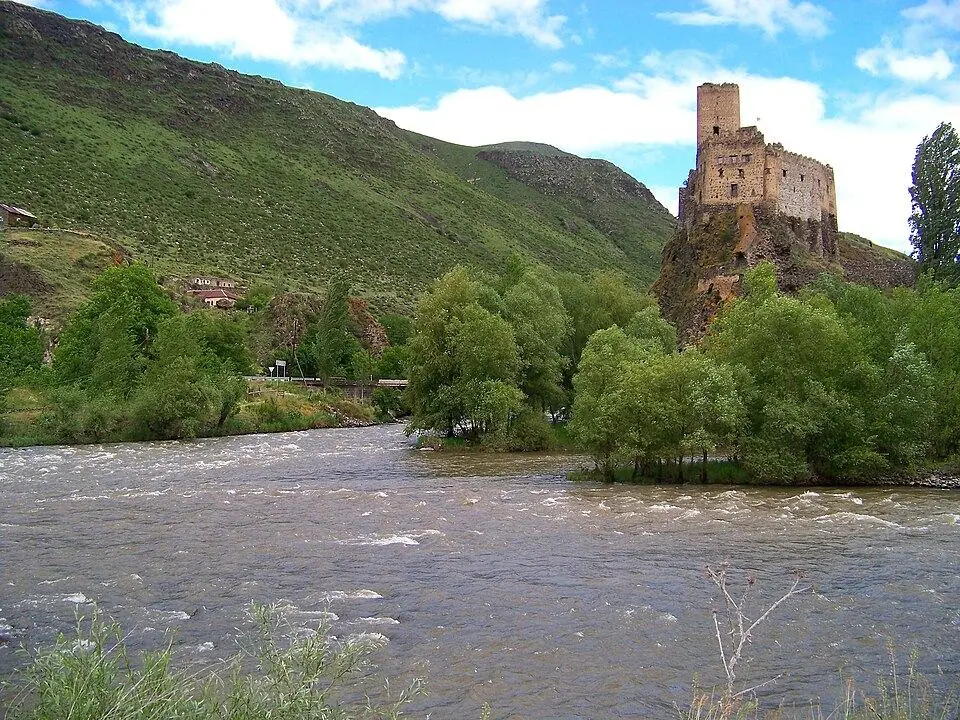
South-west of town the Mtkvari squeezes through its narrowest forested gorge before opening into the Samtskhe basin. The road along it links a monastery in the woods, a medieval bishop's fortress, the restored castle of Akhaltsikhe and the cave city of Vardzia: the classic day out from Borjomi.
| Stop | From Borjomi | Driving time | Time to allow |
|---|---|---|---|
| Green Monastery, Chitakhevi | ~9 km, then a 1.2 km lane | 15 min | 45 min to 1 h |
| Atskuri fortress | ~27 km | 35 min | 30 to 45 min |
| Rabati Castle, Akhaltsikhe | ~50 km | About 1 h | 1.5 to 2 h |
| Sapara Monastery | ~65 km | About 1.5 h | 1 h |
| Khertvisi Fortress | ~90 km | About 1 h 45 min | 20 to 30 min |
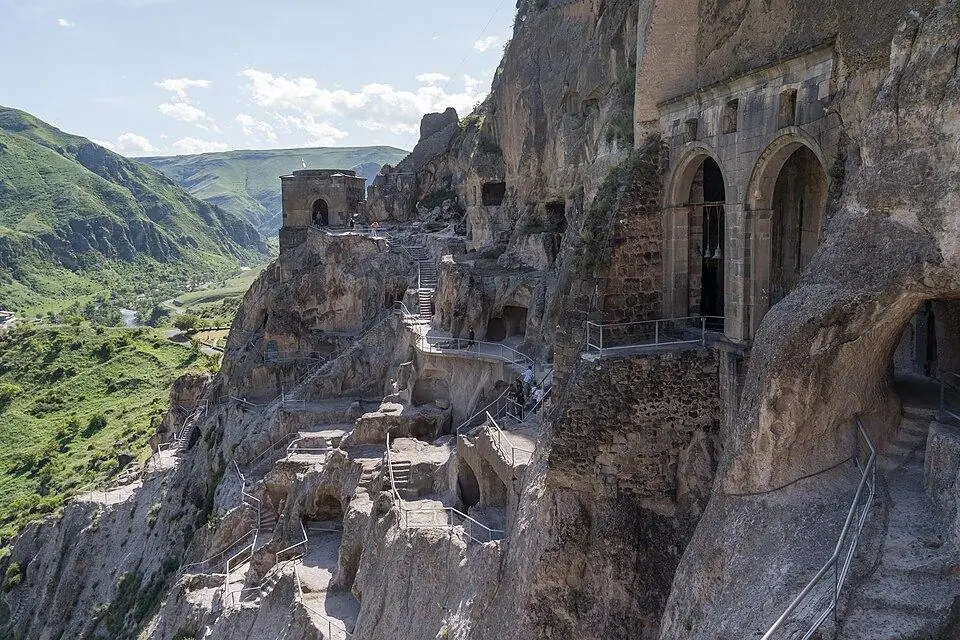
| Vardzia cave monastery | ~110 km | 2 to 2.5 h | 2 to 3 h |
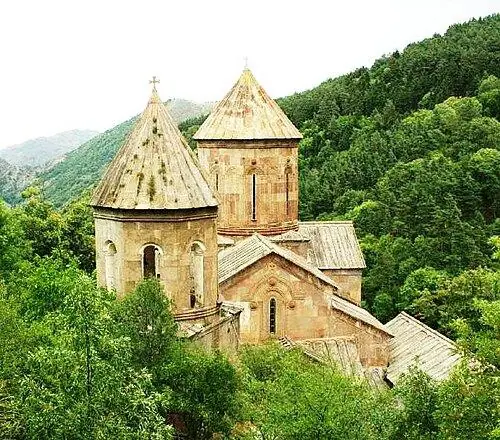
The Green Monastery, Mtsvane Monastery in Georgian, is a basilica of St George from the late 9th or 10th century, hidden in a damp side gorge at Chitakhevi. Its walls are rough stone, but the columns and arches are cut from greenish rock, hence the name. A lane climbs ~1.2 km from the main road beside a stream; walk it if you can, because the moss, ferns and running water are half the experience. Monks returned in 2003, so cover shoulders and knees and keep your voice low.
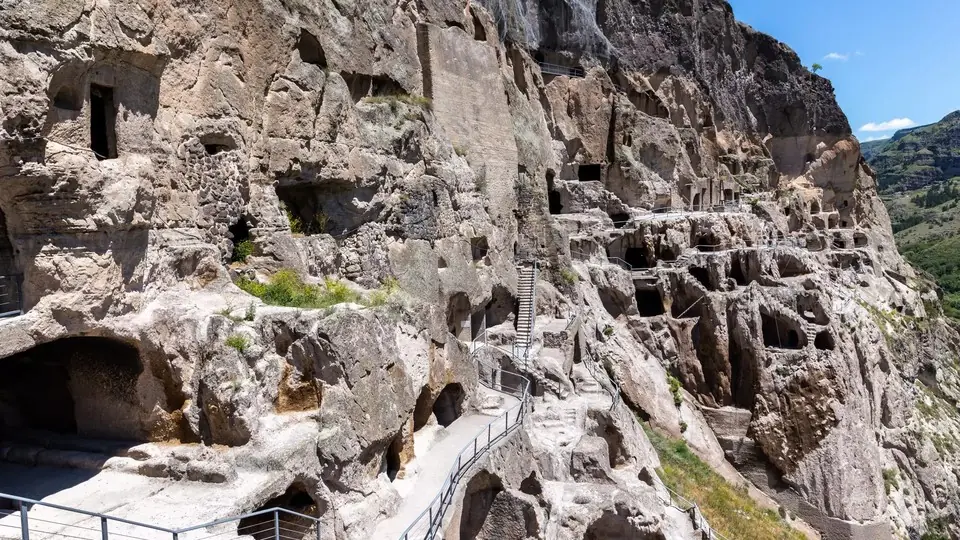
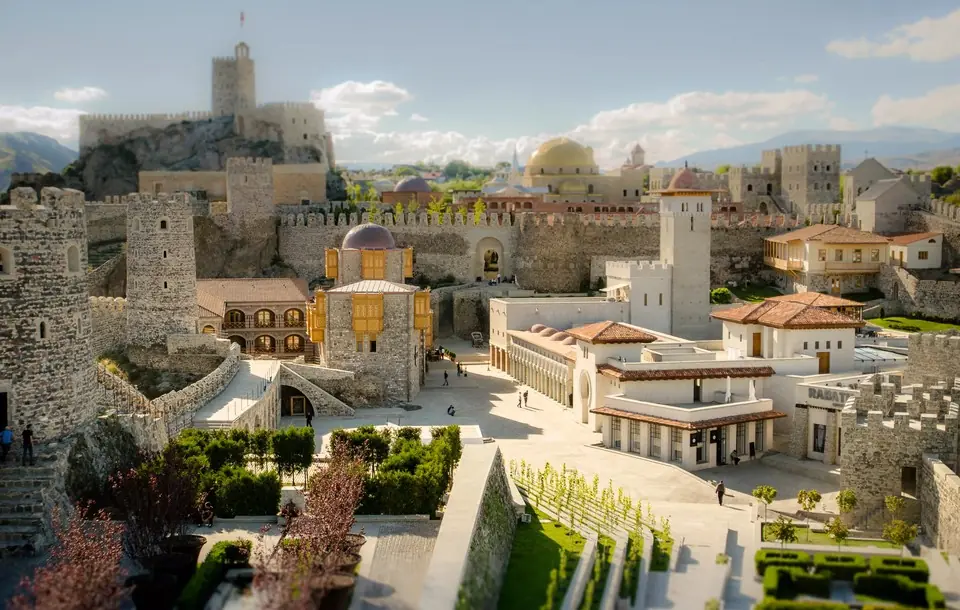
Rabati, the much-restored citadel above Akhaltsikhe, packs a church, an 18th-century mosque and a Jaqeli palace inside its walls; foreign adults paid about 20 GEL (about $7.50) for the upper part in 2026. Vardzia, the cliff of rock-cut cells that King George III started and Queen Tamar completed by about 1200, cost about 15 GEL (roughly $5.50); part of the cliff has been fenced off since the May 2026 rockfall, but you can still walk most of it.
Borjomi to Vardzia and back is about 220 km, or 4.5 to 5 hours of driving before any stops. It works as a day trip, but you reach the cliff in the midday heat. A night near Vardzia or in Akhaltsikhe is better: you see the caves in the cool of the morning and take the Javakheti plateau road home in summer. Our two-day private tour from Tbilisi follows that plan on the dates you pick, for any number of travellers, with a guide in your language.
Where to stay and what to eat in Borjomi
| Area | Best for | What to expect |
|---|---|---|
| Streets around the park gate | First visits and walkers | Historic villas, guesthouses and boutique hotels a few minutes from the spring |
| Station side of the river | Budget stays and public transport | Guesthouses and flats close to the bus station, the market and shops |
| Likani | Spa breaks | Large resort hotels with mineral-water treatments, next to the national park trailheads |
| Plateau villages: Tsaghveri, Tsemi, Libani | Families with a car | Cottages and guesthouses in pine forest, cooler nights, quiet evenings |
| Bakuriani | Winter sports | Ski hotels 30 km uphill, good value outside the ski season |
At the top end, the Crowne Plaza stands near the park gate, the Golden Tulip occupies Firuze, and the Borjomi Likani resort sits beside the palace grounds. Family guesthouses on the slopes cost a fraction of that and often cook dinner. Book ahead for July and August weekends and New Year.
What to eat in Borjomi
Borjomi belongs to Meskheti, whose cooking differs from that of Tbilisi or Kakheti. Order tashmijabi, potato mashed with young cheese until it pulls into long strings; apokhti, meat salted and dried in the old Meskhetian way; and trout from the cold streams of the gorge. Cafés line the walk to the park, but the better family-run places sit a few streets back on both sides of the river, and a guesthouse supper is often the best meal of the stay.
Take home a jar of pinecone jam, made from young green cones gathered in late spring and simmered whole in syrup, a pot of chestnut honey, and kevi, a chewy local gum made from pine resin. Stalls near the park gate and in the market sell all three.
How to get to Borjomi from Tbilisi and Kutaisi
Borjomi sits on a road and railway that turn south off Georgia's main east-west highway at Khashuri, so it is easy to reach from either end of the country. Add about half an hour if you start at Tbilisi or Kutaisi airport.
| From | By car | Public transport in 2026 |
|---|---|---|
| Tbilisi | ~160 km, 2.5 to 3 h via Gori and Khashuri | Marshrutka from Didube roughly every hour between 8 am and 7 pm, 12-15 GEL, 2.5-3 h; slow electric train once or twice a day, about 4-4.5 h, a few GEL |
| Kutaisi | ~150 km, about 2.5 h via Zestaponi and Khashuri | A few direct minibuses each morning, about 15 GEL and about 3 h; otherwise any eastbound bus to Khashuri, then a local minibus |
| Batumi | ~300 km, about 5 h via Kutaisi | Train or bus to Khashuri, then a minibus; in summer the Goderdzi Pass road via Akhaltsikhe is a scenic alternative |
| Bakuriani | 30 km, about 40 min | Minibuses and taxis; the Kukushka train is due back from December 2026 |
With your own car or a private driver you can break the trip from Tbilisi at Uplistsikhe cave town and Surami Fortress; our Tbilisi to Borjomi route page lists the stops and vehicle prices. The electric train stops at Borjomi Parki, the station nearer the park, and its timetable changes, so confirm times at Tbilisi Central or on railway.ge. In town you can walk everywhere, taxis wait by the bus station, and you only need a car for Timotesubani, the Atskuri trailhead and Vardzia.
Best time to visit Borjomi, and how many days to stay
At ~800 m, Borjomi runs a few degrees cooler than Tbilisi in summer and gets real winter cold. July averages highs of about 28°C, January averages lows of about -4°C, and the town gets about 630 mm of rain a year, with late spring the wettest stretch.
| Season | Weather | Best for |
|---|---|---|
| April to May | Fresh green forest, frequent showers | Park walks, the lower trails, rhododendrons on Lomismta from May |
| June to August | Warm days, cool nights, busy weekends | Sulphur pools, long hikes and the shelter treks |
| September to early November | Settled weather; leaf colour peaks from mid-October | Footprint Trail, photography, the red deer rut |
| December to March | Snow and short days, around freezing | Warm pools in the snow, snowshoe routes, skiing in Bakuriani |
For quiet paths, come midweek in May, June, September or October. The busiest times are weekends in July and August and the week around New Year.
How many days in Borjomi?
- 1 day from Tbilisi
Leave by 8 am. Taste the spring, walk up to the sulphur pools for a soak, eat in town, ride the cable car and stop at the Green Monastery on the way home. Expect 5 to 6 hours in the car in total. - 2 days
Spend day one as above, adding Firuze and the museum. On day two sign in at the visitor centre and walk one of the Likani trails, or drive up to Bakuriani by way of Timotesubani. - 3 days
Add Rabati and Vardzia with a night near the caves, then come home over the high Javakheti plateau from May to October or back down the Mtkvari gorge in winter.
Any of our private tours can add a hiking day in the national park.
Borjomi travel FAQ
Is Borjomi worth visiting?
Yes, for a night or two: a historic spa park, warm springs and sulphur pools, easy forest walks and one of Georgia's best-organised national parks, on the road to Vardzia. For high peaks, go to Kazbegi or Svaneti instead.
How many days do you need in Borjomi?
One full day covers the park, the pools and the cable car. A second day adds a national park hike or Bakuriani, and a third takes you on to Rabati and Vardzia.
Is Borjomi Central Park free?
No. The ticket cost about 5 GEL (roughly $2) in 2026, although early-morning entry has been reported as free. The spring water inside costs nothing, while the sulphur pools and the cable car charge separately.
Is the water from the Borjomi spring safe to drink?
Yes. It is the same mineral water that goes into the bottles, only warm and less fizzy. Because it is strongly mineralised, one or two cups are enough, and anyone on a low-salt diet should ask a doctor first.
Is the Kukushka train from Borjomi to Bakuriani running?
Not as of mid-October 2026. The line has been closed since 2020, and the economy minister said in early October 2026 that it should reopen in December after a full rebuild. Until then, minibuses and taxis reach Bakuriani in about 40 minutes.
Can you go inside the Likani Palace in Borjomi?
No. The Romanov palace is closed for restoration and guarded, with no public tours as of October 2026. You can see it through the fence, and guests of the neighbouring Borjomi Likani resort see it from the hotel grounds.
How do I get from Tbilisi to Borjomi?
Marshrutkas leave Didube bus station about once an hour through the day and take 2.5 to 3 hours; the fare was 12 to 15 GEL in 2026. A car or private transfer is no slower and can stop at Uplistsikhe or Surami, while the electric train takes over 4 hours.
Can you see Borjomi and Vardzia in one day?
From Tbilisi it is possible but exhausting, with about 8 hours of driving. From a base in Borjomi, Rabati and Vardzia make a full but comfortable day. The best plan is two days with a night near Vardzia.