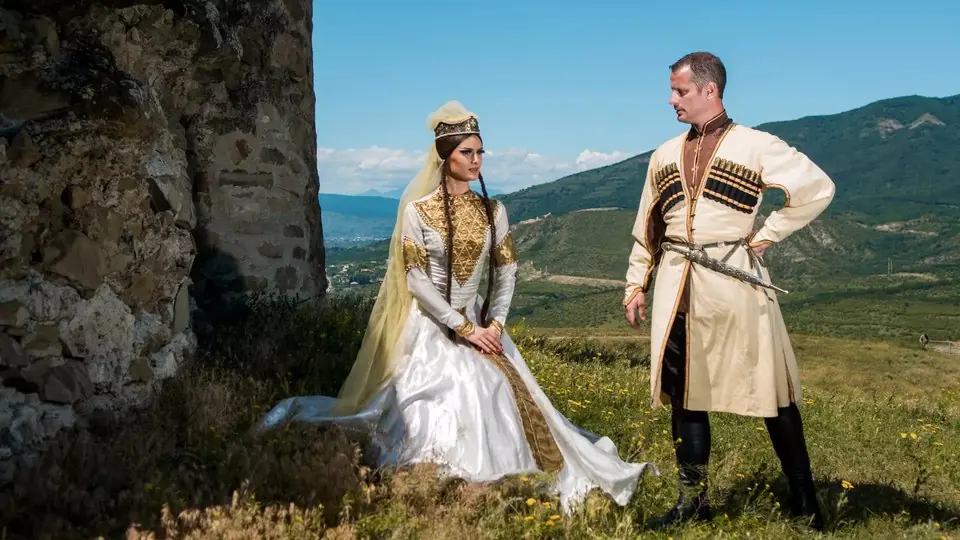
- Georgian men's national dress, the chokha, is a long wool coat, tight at the waist, with rows of slim cartridge holders called masrebi across the chest.
- A full outfit adds the akhalukhi undercoat, a narrow belt with a khanjali dagger, dark trousers, soft boots and often a papakhi fur hat.
- Women's national dress is the kartuli: a long gown with a rich chest panel, a long belt, and a velvet headband over a fine white veil.
- In 2020 Georgia listed the custom of wearing the chokha as national intangible heritage. There is no official Chokha Day, but National Dress Day falls on 18 May.
- You see chokhas at folk shows, weddings, church feasts, Tbilisoba and in Tbilisi museums. Ready-made coats sold online start at about 420 GEL (about $160).
The chokha is the national dress of Georgian men. It is a long, fitted wool coat with a row of slim cartridge holders down each side of the chest. Under it goes a high-collared undercoat called the akhalukhi. A narrow silver belt, a dagger and often a tall fur hat complete the look. Few men wear it every day now. Yet you will spot it at weddings, on stage at folk shows, at church feasts and at Tbilisoba each October.
This guide takes the outfit apart piece by piece. It shows how the dress changes from region to region and what women wear, the kartuli. It gives the short history of the Georgian chokha, its comeback since the 2010s and what people mean by Chokha Day. Then come the practical parts: where to see one, where to buy or rent one, and how to wear it with respect. A short FAQ closes the page.
What is a chokha?
A chokha is a man's coat cut from thick wool cloth. It sits close over the chest and waist, then opens into a full skirt that ends at the knee or lower. The front is cut away in a deep V, so the undercoat shows. The skirt is split at the sides, which made it easy to ride in. Down each side of the chest runs a row of narrow tubes, each in its own small pocket.
Coats come in black, grey, brown, dark blue and deep red, and in white or cream for weddings. Strictly, the word chokha means the coat alone. In everyday talk it often stands for the whole set, hat and dagger included. The Georgian chokha belongs to a family of Caucasian coats. Neighbouring peoples have their own versions, and Russians called the type cherkeska. In Georgia, though, it is simply the chokha.
Parts of the Georgian chokha, from hat to boots
A full chokha is a set of layers. Each piece once had a real job to do, and Georgians still use the old names for them.
| Part | What it is | Then and now |
|---|---|---|
| Chokha | Long wool coat with a V-shaped front and a flared, split skirt | A coat for riding and fighting; now worn on festive days |
| Masrebi (gazyri in Russian) | Slim tubes in pockets on both sides of the chest, often about eight a side, with bone or silver caps | Each held a measured powder charge for a muzzle-loading gun; now pure ornament |
| Akhalukhi | Fitted undercoat with a stand-up collar, closed by a long row of small hooks or buttons | Shows at the neck and chest; silk or satin for weddings |
| Belt | Narrow leather belt with silver fittings | Holds the dagger at the front |
| Khanjali | Straight, double-edged dagger in a silver-mounted sheath | Once a weapon; now mostly a symbol |
| Papakhi | Tall hat of sheepskin or astrakhan fur | Kept heads warm in the hills; often left off today |
| Nabadi | Heavy felt cloak with wide, square shoulders | Shed rain and snow; doubled as a shepherd's blanket |
| Kabalakhi | Cloth hood with two long tails | Thrown over the shoulders or wound round the head |
| Boots | Soft leather boots to the knee, over dark trousers | Riding boots; today smart black boots |
Regional styles: Khevsur, Svan, Tush and western dress
Each historical region of Georgia once had its own clothes. The long chokha of Kartli and Kakheti, in the east, became the national model. It is the one you see at weddings and on stage. The mountain and western styles look very different.
Khevsureti
Khevsur dress is the most striking of all. Men wore a short chokha of thick homespun wool. Crosses, stitched bands, beads, buttons and small coins covered the front and hem. Women wore knee-length dresses worked the same way, with heavy silver jewellery. Georgians call the Khevsur outfit talavari. Museums hold the best pieces, and you may see a few at summer festivals in the mountains.
Svaneti
Svan men wore a plain chokha of grey or brown wool, short enough for steep paths. The hat is the famous part. The svanuri kudi is a round cap of grey felt, with dark seams that meet in a cross on top. It guards against both sun and cold, and you can buy one anywhere from Mestia to Tbilisi.
Tusheti
Tush families spun and wove their own wool, and dark blue and black were the usual colours. Men wore a chokha with a dark hat. Men and women alike wore chitebi, bright hand-knitted slippers.
The west: Adjara, Guria and Samegrelo
On the Black Sea side, the men's outfit is the chakura. It pairs a short jacket with wide breeches that narrow below the knee and a bright silk sash. A kabalakhi hood is wound round the head like a turban. Jackets from Adjara and Guria were trimmed with silver thread. You still see this dress in the fast dances of the west.
The kartuli: Georgian national dress for women
Women's national dress is the kartuli, or kartuli kaba, which simply means Georgian gown. It falls to the floor, with a close bodice, a wide skirt and long sleeves. Many have a second pair of long, open sleeves that hang free. The chest panel, the gulispiri, carries most of the work: gold or silver thread, pearls, beads or braid.
A long belt, the sartkeli, ties at the waist, and its embroidered ends fall nearly to the hem. On the head sits the chikhti-kopi, a stiff band covered in velvet and often set with pearls. Beneath it the lechaki, a fine white veil, covers the hair and falls down the back. In cold weather women added the katibi, a short velvet coat lined with fur.
Today the kartuli is worn by brides at church weddings, by women's choirs and by dancers. White and cream are the wedding colours. On stage you also see deep red, blue and green.
A short history of the chokha
Coats of this kind have been worn across the Caucasus for well over a thousand years. Georgian scholars place the shape we know today in the late Middle Ages. By then the chokha and akhalukhi had become the normal dress of Georgian men. Nobles wore fine cloth and silver, and farmers wore homespun wool. The cut suited riders: the split skirt sat well on a horse, and the chest tubes kept powder ready to load.
The 20th century changed all that. After the Red Army took Georgia in 1921, Soviet rule pushed the chokha out of daily life. It looked like the dress of the old nobility and of the rebels who fought the new regime in the early 1920s. Within a generation most men wore suits or work clothes instead.
The chokha lived on through the stage. Iliko Sukhishvili and Nino Ramishvili founded their national dance company in 1945 and dressed its men in bold, sweeping chokhas. That theatre look still shapes how many people picture the coat.
The chokha comeback and Chokha Day
Since the 2010s the chokha has made a strong return. Politicians began to wear one at state events. Grooms and their friends now often marry in matching chokhas, and singers wear them at supras and concerts.
The Georgian Orthodox Church has backed the revival. A chokha society linked to the Patriarchate had about 1,000 members in 2011, by one press report. Its members turn out in chokhas at large church feasts and national events.
The state has given the custom formal standing too. On 9 June 2020, the state heritage body, the National Agency for Cultural Heritage Preservation, gave national intangible heritage status to the wearing of the chokha and akhalukhi. Its order calls the custom a symbol of Georgian identity. The chokha has no UNESCO listing of its own. It does appear in the 2018 UNESCO entry for chidaoba, Georgian folk wrestling, whose fighters wear a short, tough jacket also called a chokha.
Is there a Chokha Day?
There is no public holiday by that name. The nearest thing is National Dress Day, marked each year on 18 May. Offices and shops stay open, but libraries, town halls and folk groups hold costume walks, concerts and shows. One year about 600 people in national dress gathered for a flash mob on Europe Square in Tbilisi. Zestafoni and other towns hold marches of their own. Plans change from year to year, so watch local news in early May.
Where to see a chokha in Georgia
- Folk dance concerts. The big national ensembles, such as Sukhishvili, Erisioni and the Rustavi Ensemble, perform in full chokhas and kartulis. They tour abroad a lot, so check their Tbilisi dates. A few Tbilisi restaurants also put on a short folk show at dinner.
- Tbilisoba. In recent years the city festival has fallen on the first weekend of October. Folk groups, choirs and some stall-holders wear costume.
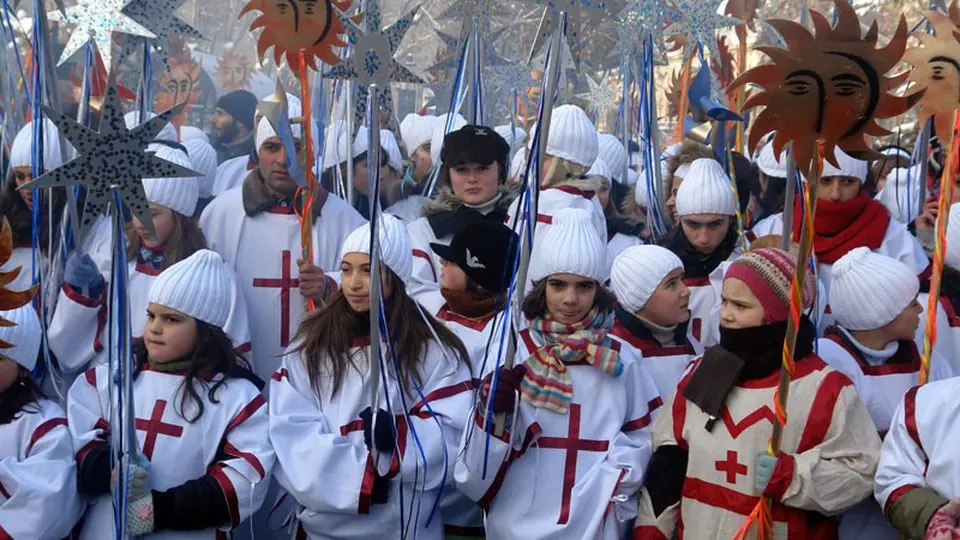
- Christmas Day, 7 January. Men in chokhas join the Alilo walk through Tbilisi. Our Georgian Christmas guide has the route and times.
- Weddings and supras. On summer and autumn weekends you may meet a wedding party outside a church, with the groom's side in matching coats.
- Church feasts. Big services draw men in chokhas, for example on 14 October, when Mtskheta keeps Svetitskhovloba.
- Chidaoba. Folk wrestlers fight in short chokha jackets to the sound of zurna pipes and drums, often at village festivals.
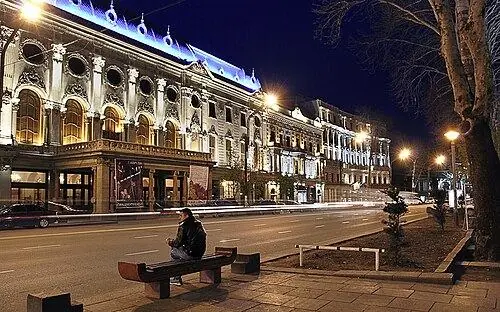
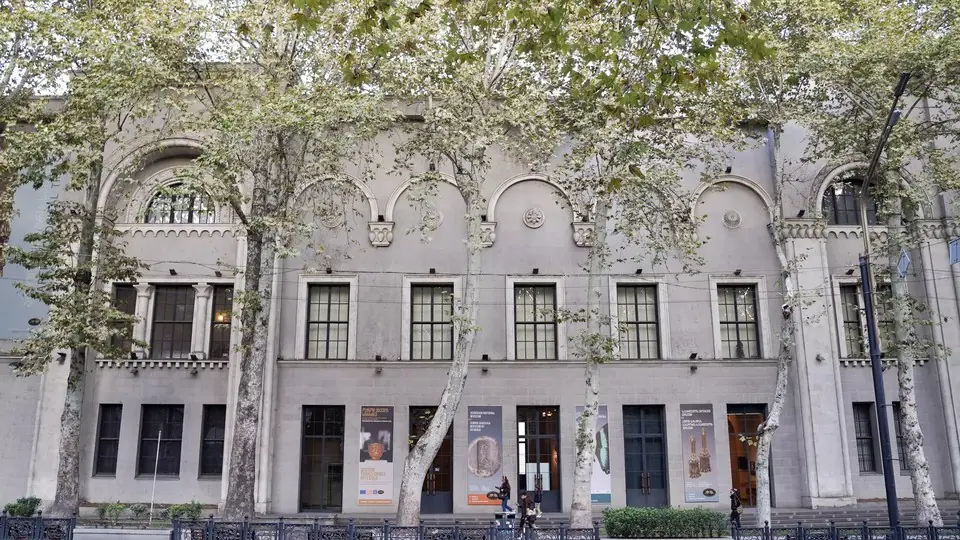
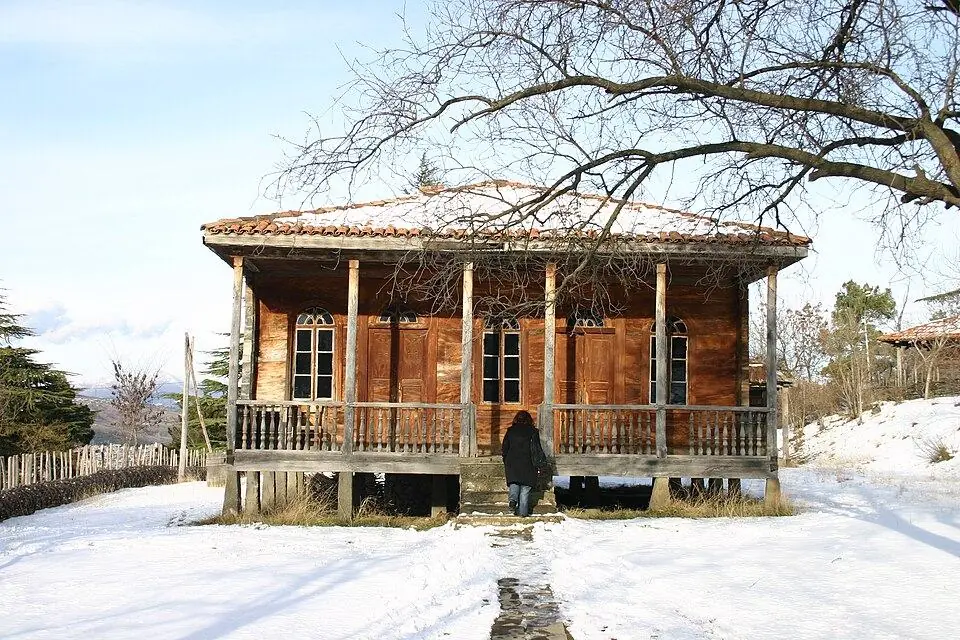
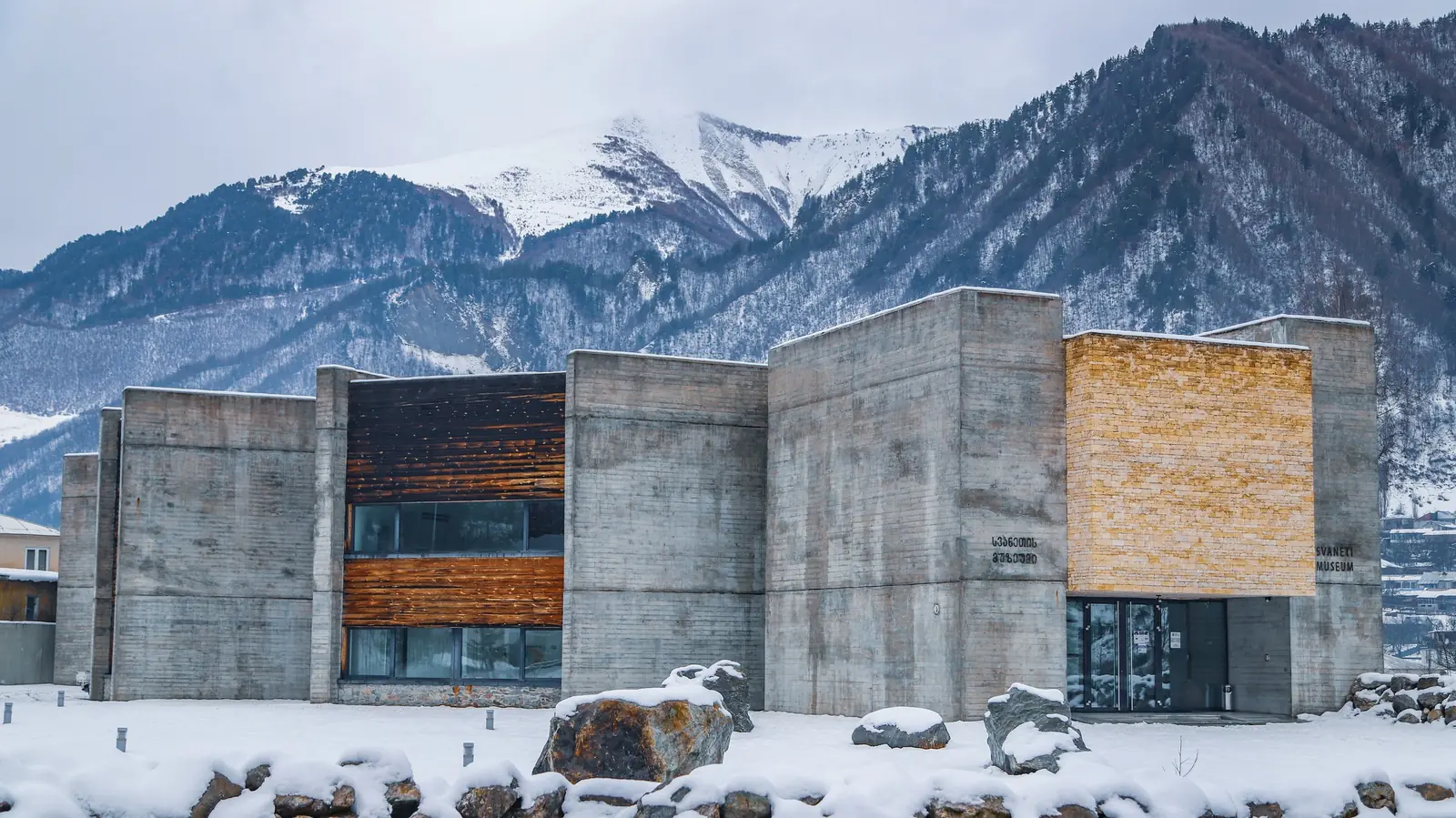
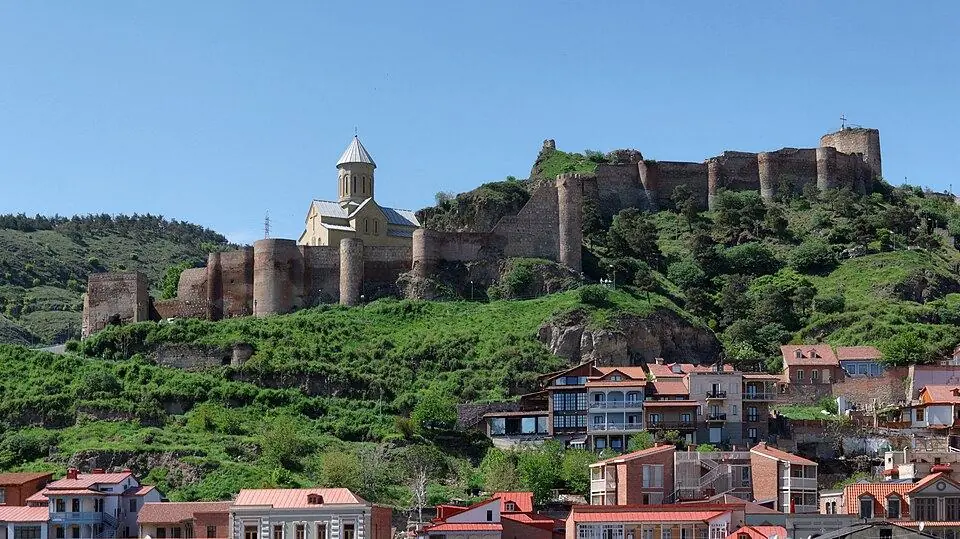
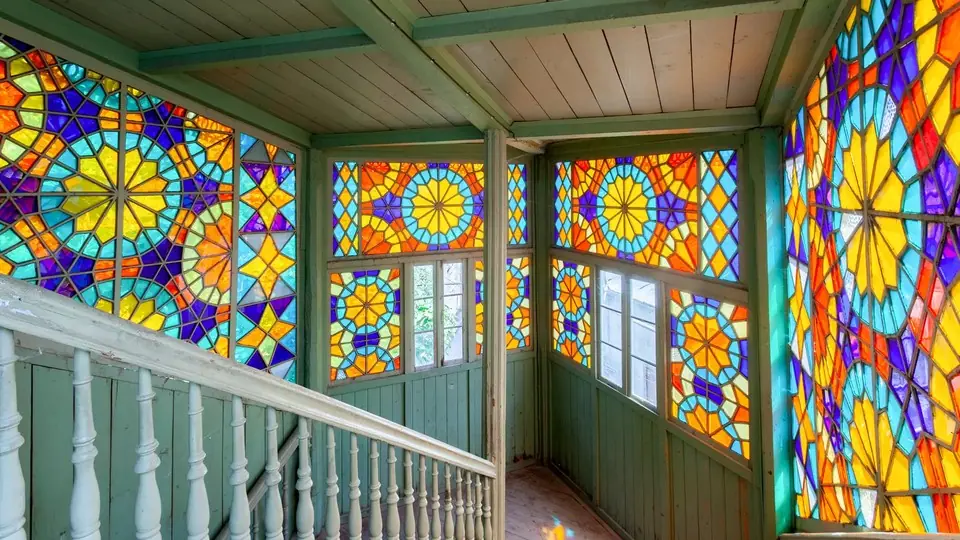
To study the clothes up close, go to a museum. On Rustaveli Avenue, the Georgian National Museum keeps regional costumes in its ethnography collection, though what is on show changes. As a foreign adult, expect a ticket of about 40 GEL (about $15) in 2026. Monday is its day off. The Art Palace of Georgia, once the Museum of Cultural History, keeps one of the country's largest collections of historic dress. The Open Air Museum of Ethnography shows the houses these clothes were worn in.
Where to buy or rent a chokha
Tbilisi has a small number of tailors and shops that make the chokha and kartuli to order. A set cut to your size needs fittings, so start early in your stay.
Prices depend on the cloth, the silver and the dagger. We found no prices published by Tbilisi shops. As a rough guide, ready-made chokha coats sold online in autumn 2026 cost about 420 to 960 GEL (about $160 to $370). One full black set with undercoat, belt and dagger from a Georgian maker was listed at about 1,700 GEL (about $660). Handmade silver belts and old daggers can cost much more.
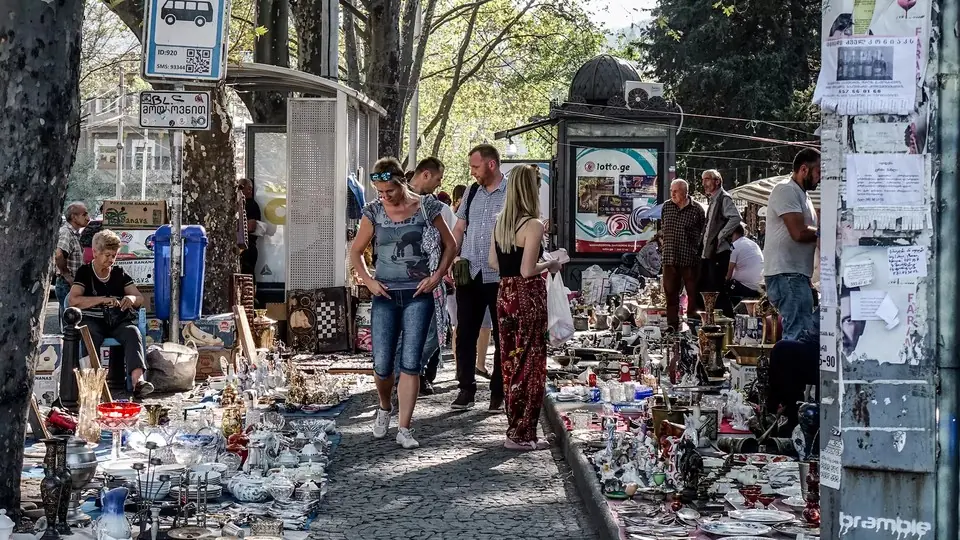
For a cheaper keepsake, Old Town souvenir shops sell felt Svan hats, papakhis and small chokhas for children. The Dry Bridge market is the place to hunt for old daggers, belts and buckles.
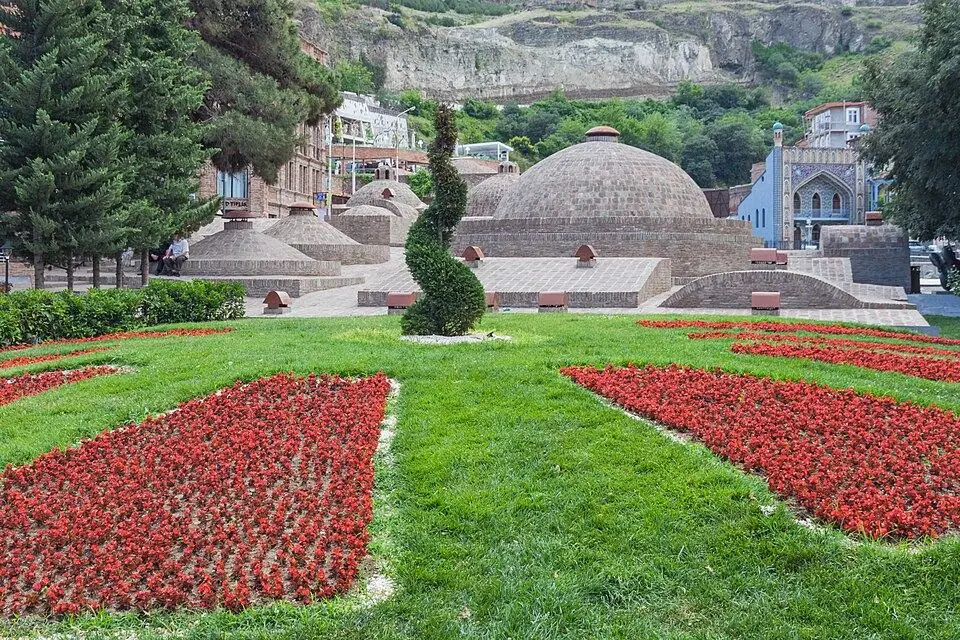
To rent rather than buy, look for the costume photo studios around Abanotubani and the Old Town. Some let you dress up by the hour for a photo shoot, with a sword or dagger as a prop. Ask the hourly rate before you change.
How to wear a chokha with respect: dos and don'ts
Georgians are proud of the chokha, and most are delighted to see a visitor in one. The coat stands for family, faith and the men who fought for the country. So treat it as national dress, not as a party costume.
- Do let a local help you dress. The hooks, the belt and the dagger each have their right place.
- Do take off a papakhi or any other hat when you step into a church.
- Do say yes if a host lends you a chokha for a wedding or a supra. You do not need one as a guest, and a dark suit is fine.
- Don't draw the dagger for fun or wave it about in photos. Never touch someone else's dagger or masrebi without asking.
- Don't wear a chokha as a joke, to a fancy-dress party or with trainers and a T-shirt.
- Don't photograph people in chokhas during a church service or a funeral. At weddings and festivals, ask first.
Seeing traditional Georgian clothing on a private tour
Our tours are private, so we plan them around what you want to see. Pick any date and any group size, and we will find a guide who speaks your language. Tell us you are curious about traditional Georgian clothing. We can then add the National Museum, the Art Palace, a folk concert or a costume photo session to your Tbilisi days.
For the best chance of seeing chokhas in the street, time your trip for Tbilisoba in early October or National Dress Day on 18 May. Remember that every foreign visitor needs travel insurance, and the cover must reach 30,000 GEL or more.
Georgian chokha FAQ
What is a chokha?
It is the traditional coat of Georgian men, made of wool and fitted at the waist. It has a deep V front and rows of slim cartridge holders on the chest. Men wear it over an undercoat called the akhalukhi, with a belt and a dagger.
What are the pockets on a Georgian chokha for?
The slim tubes on the chest are called masrebi. Each once held a measured charge of gunpowder, so a rider could reload a muzzle-loading gun fast. Today they are only decoration, often capped in silver or bone.
What is worn under a chokha?
Under the coat goes the akhalukhi, a fitted undercoat with a high collar, fastened down the front with many small hooks or buttons. Its collar and chest show through the V of the chokha. Dark trousers and soft leather boots finish the outfit.
What is the Georgian national dress for women called?
It is the kartuli, or kartuli kaba. It is a long gown with an embroidered chest panel and a long belt. It is worn with a velvet headband called the chikhti-kopi over a fine white veil, the lechaki.
Is there a Chokha Day in Georgia?
Not as a public holiday. The closest event is National Dress Day on 18 May, when towns hold costume walks and concerts and many men wear the chokha. It is a normal working day.
Can tourists wear a chokha?
Yes. Most Georgians are pleased to see a visitor in one, as long as it is worn with care and not as a joke. Rent one for photos in Tbilisi, or wear one if a host offers it at a wedding.
How much does a chokha cost?
We found no published Tbilisi shop prices. Coats sold ready-made online in 2026 ran from about 420 GEL (about $160) up to about 960 GEL (about $370). A full set with undercoat, belt and dagger can reach about 1,700 GEL (about $660) or more.
Where can I see people in chokhas in Georgia?
Go to a folk dance concert, Tbilisoba in early October or the Alilo walk on 7 January. You also see chokhas at weddings and big church feasts. The Georgian National Museum and the Art Palace in Tbilisi show historic costumes.