- Giorgoba, St George's Day, is a national day off in Georgia on 23 November: a Monday in 2026 and a Tuesday in 2027.
- The November feast recalls the saint's torture on the wheel, and church tradition says St Nino, his kinswoman, set it up. The spring feast on 6 May marks his death and is a working day.
- Most Georgians mark the day with a morning service in a St George church, a family dinner and calls to every Giorgi they know, since it is his name day.
- Banks and state offices close, but shops, restaurants, churches and transport keep going. Most state museums in Tbilisi shut on Mondays anyway.
- Visitors can join the liturgy at Kashveti or Sameba in Tbilisi, Svetitskhoveli in Mtskheta or Alaverdi in Kakheti, dressed for church.
St George Day in Georgia, called Giorgoba by Georgians, is a national day off on 23 November. In 2026 it falls on a Monday, so most people get a three-day weekend from Saturday the 21st. George is the country's patron saint, and his day belongs to churches and family tables more than to street parties. Expect full churches in the morning, candles lit before his icon and long dinners in the evening. Anyone called Giorgi spends the day answering calls.
This guide explains what the November feast remembers and why the saint turns up everywhere, from the flag to the main square of Tbilisi. It compares the spring and winter feasts, sums up regional customs and lists churches where you can join a service. You will also find what closes on the day, how to dress for church and a plan for the long weekend. For the bare dates, see our Giorgoba festival page.
St George Day in Georgia: what the 23 November feast marks
George was a Roman officer from Cappadocia, in the middle of what is now Turkey. Church tradition says he would not give up his faith under Emperor Diocletian and was beheaded in 303. Before he died he was tortured in several ways. In one, he was tied to a wheel, and the story says he survived it unharmed.
The 23 November feast is about that wheel. The Georgian Church dates its feasts by the Julian calendar, 13 days behind the civil one. Its 10 November is therefore our 23 November. Few other Orthodox churches give the wheel a feast of its own, so Georgians regard the day as theirs.
Tradition also links the feast to St Nino, the woman from Cappadocia who brought Christianity to the royal court at Mtskheta in the 4th century. The church calls her a relative of George. It says she taught the first converts to treat him as their guardian and set up his November day. Neither story can be proved, but Georgians still tell both.
Why St George is everywhere in Georgia
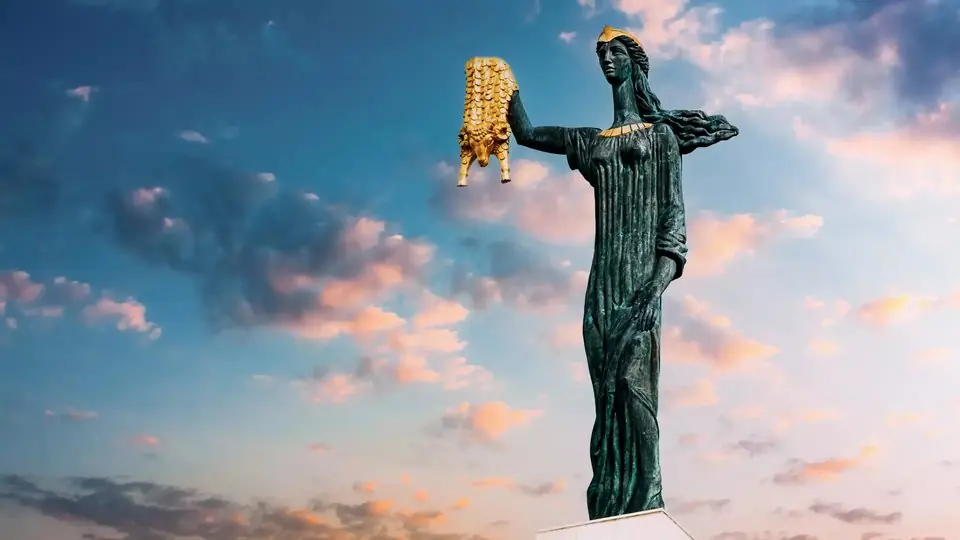
Spend a day in the country and you will meet the saint again and again. He rides across the coat of arms, spearing a dragon. The broad red cross on the white flag is his cross. In the middle of Freedom Square in Tbilisi, a gilded George by the sculptor Zurab Tsereteli stands on a tall column. It was unveiled on Giorgoba, 23 November 2006.
Churches are the clearest sign. Most villages have a church or chapel of St George, and a popular saying claims one for every day of the year. Treat the figure 365 as folklore, but the idea behind it is real: on almost any day, some parish keeps a local feast of George.
His name is just as common. Giorgi is the most popular man's name in Georgia, and its short forms Gia, Gogi, Goga and Gio are heard all the time. In the 2024 census 82% of residents called themselves Orthodox Christians, so the feast touches most families in some way.
In Kakheti and the mountains of the north-east, people knew him as Tetri Giorgi, White George. Scholars think older beliefs about a moon god blended into his cult there. A rider of White George was the centre of the 1918 republic's coat of arms, used again from 1991 to 2004. Our Georgia country facts page covers today's flag and arms.
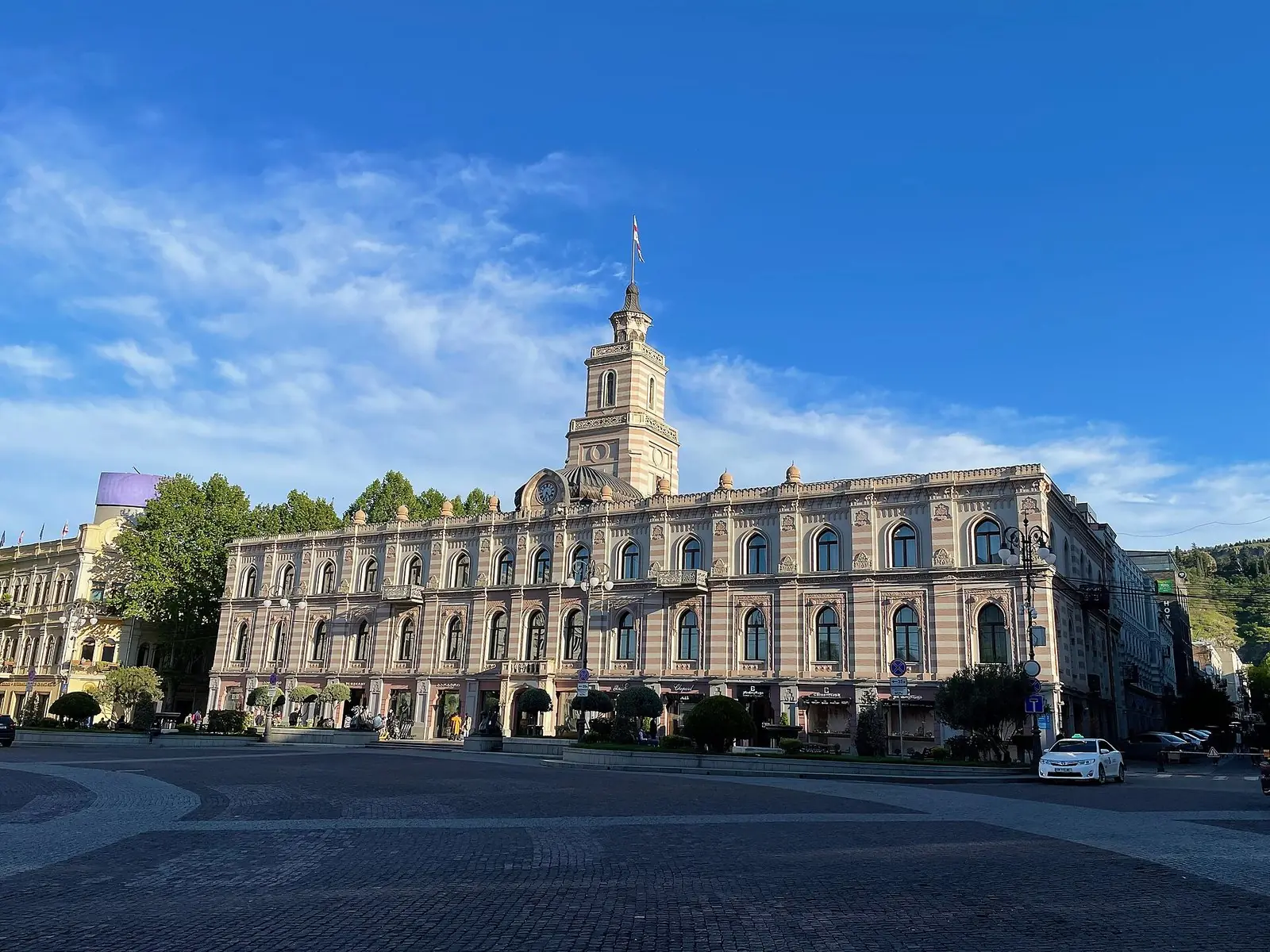
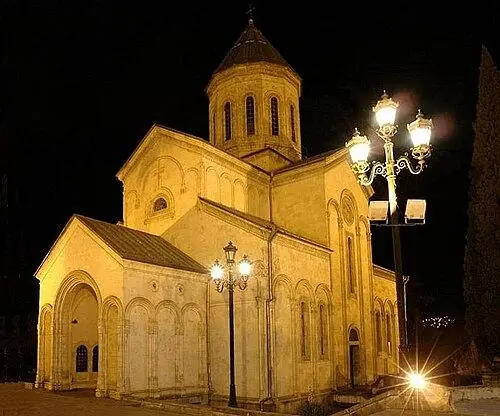
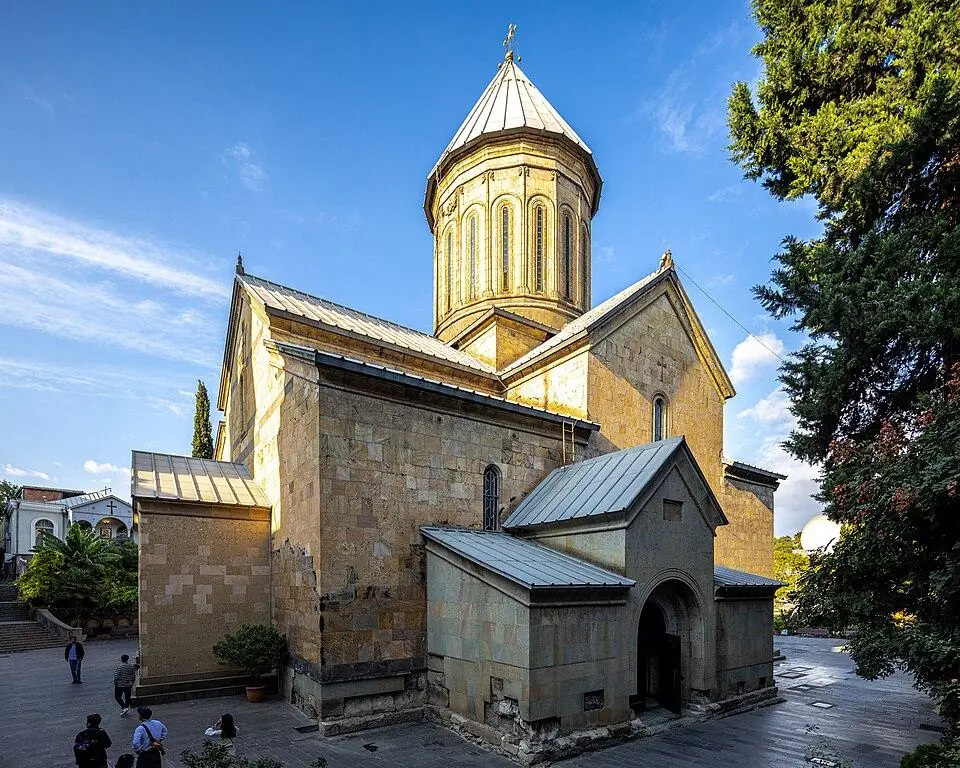
Two feasts a year: 6 May and 23 November compared
Georgia keeps two days for St George. The spring feast falls on 6 May, which is 23 April in the Julian calendar, the date most churches use for his death. The winter feast on 23 November recalls the wheel. Both fill St George churches, but only the November date closes offices.
| Spring Giorgoba | Winter Giorgoba | |
|---|---|---|
| Date | 6 May | 23 November |
| Julian calendar date | 23 April | 10 November |
| What it marks | His death by the sword | His torture on the wheel |
| Day off under the Labour Code | No | Yes |
| 2026 | Wednesday 6 May (past) | Monday 23 November |
| 2027 | Thursday 6 May | Tuesday 23 November |
In 2027 Orthodox Easter falls on 2 May, so the spring feast lands in Easter week. The November feast is the year's last day off before New Year.
How Georgians celebrate St George's Day
Morning liturgy
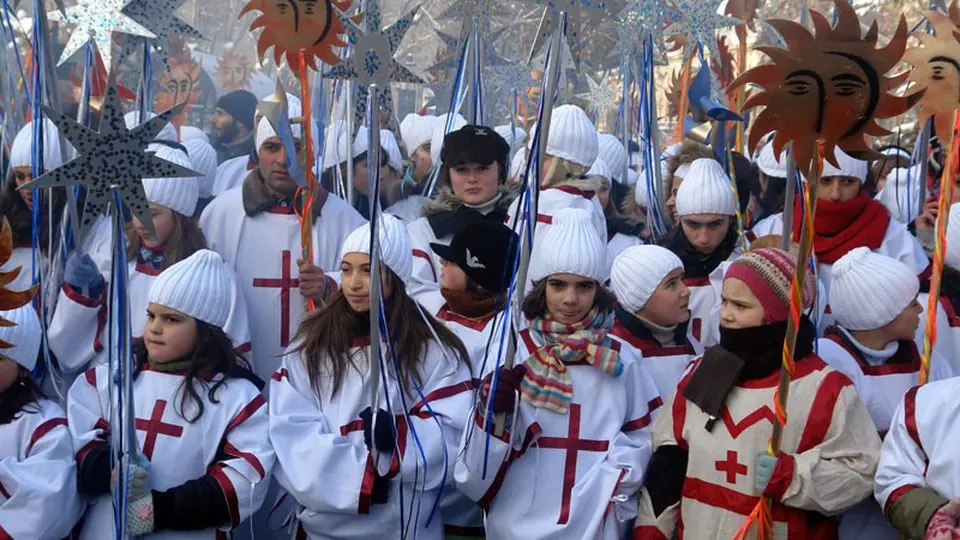
The day starts in church. The liturgy begins in the morning and often lasts two hours or more, sung by a choir in the Georgian polyphonic style. People drift in and out and light thin candles before his icon. Churches named after George are packed by mid-morning.
The church has a new head this year. Patriarch Ilia II died on 17 March 2026, and Shio III was enthroned as Catholicos-Patriarch on 12 May. To see where he will serve on Giorgoba, check patriarchate.ge in the days before.
Name days and the supra
For every Giorgi this is a name day, and Georgians take name days seriously. Friends ring, colleagues turn up with a bottle and the evening ends at a table. Homes without a Giorgi still cook mtsvadi, khachapuri and walnut dishes, with plenty of new wine.
At a supra the toastmaster usually raises a glass to St George, often together with the Virgin Mary. On Giorgoba that toast becomes the heart of the night. The feast also comes just before the Nativity Fast, which starts on 28 November and runs until Christmas on 7 January. For families who keep the fast, it is the last big meat feast for about six weeks.
Old shrine customs around the country
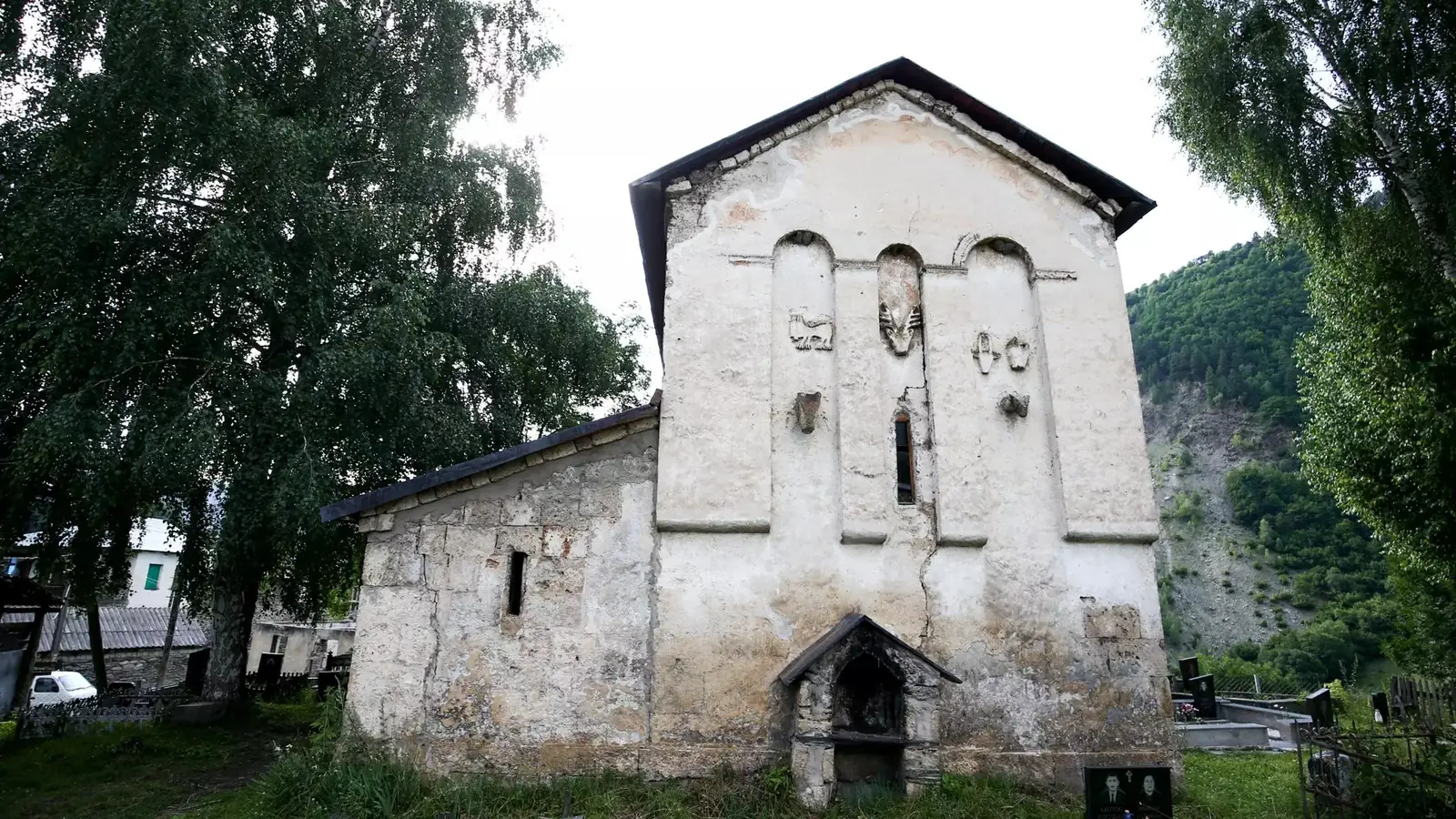
Georgian Christianity grew on top of older mountain beliefs, and St George took on many local faces. Ethnographers such as Kevin Tuite have studied highland villages that honour him at their own shrines, each with its own feast and rules.
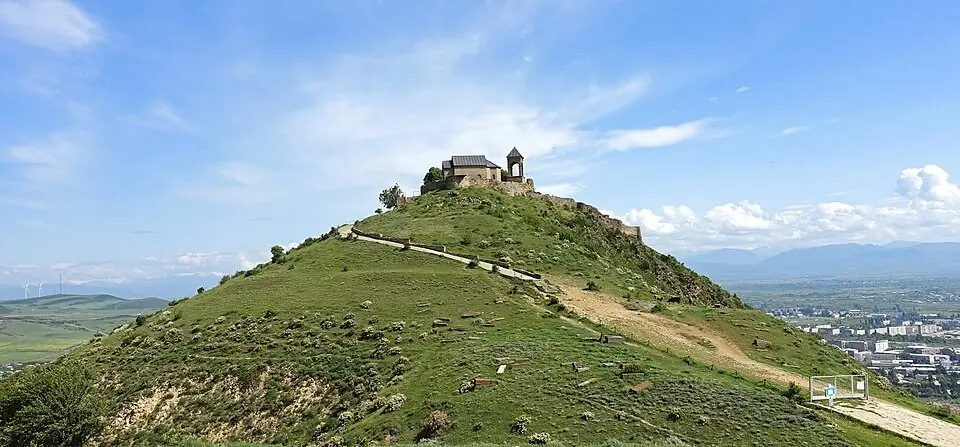
In a few places the old thank-offering lives on. At Gorijvari, the St George church on the hill above Gori, a family whose prayer was answered may bring a ram or a rooster on one of his feast days. They lead it around the church, and it is killed outside the churchyard and cooked for a shared picnic. The clergy discourage the custom, and you are unlikely to see it in Tbilisi.
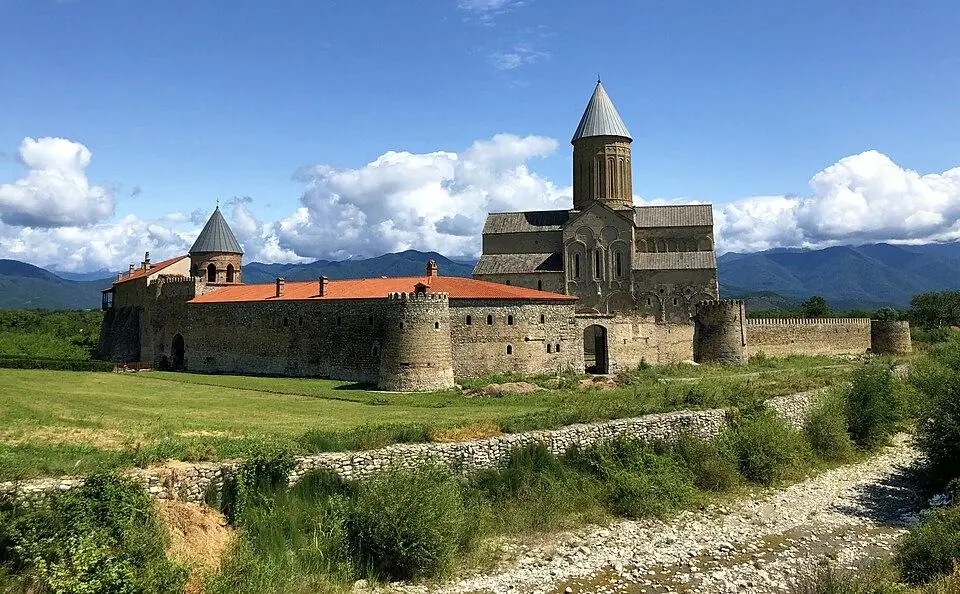
Other famous St George shrines keep their own dates. Lomisi, a mountain church above Mleta on the Military Road, draws its pilgrims in late spring or early summer for Lomisoba. Alaverdi's cathedral in Kakheti is dedicated to St George, yet its great festival, Alaverdoba, comes in September.
For the people of Samegrelo, the big St George feast used to be Iloroba at Ilori, a church from the early 11th century. Ilori is in Ochamchire district, in occupied Abkhazia, so it is out of reach for visitors today.
Where to join a Giorgoba service as a visitor
Any working church welcomes visitors on the day, but these give the strongest sense of the feast.
- Kashveti, Tbilisi
The St George church on Rustaveli Avenue, facing Parliament, is the natural choice in the centre. It went up in 1904-1910 in medieval style and fills from early morning. The avenue has been under reconstruction since July 2026, so expect fences. - Sameba, Tbilisi
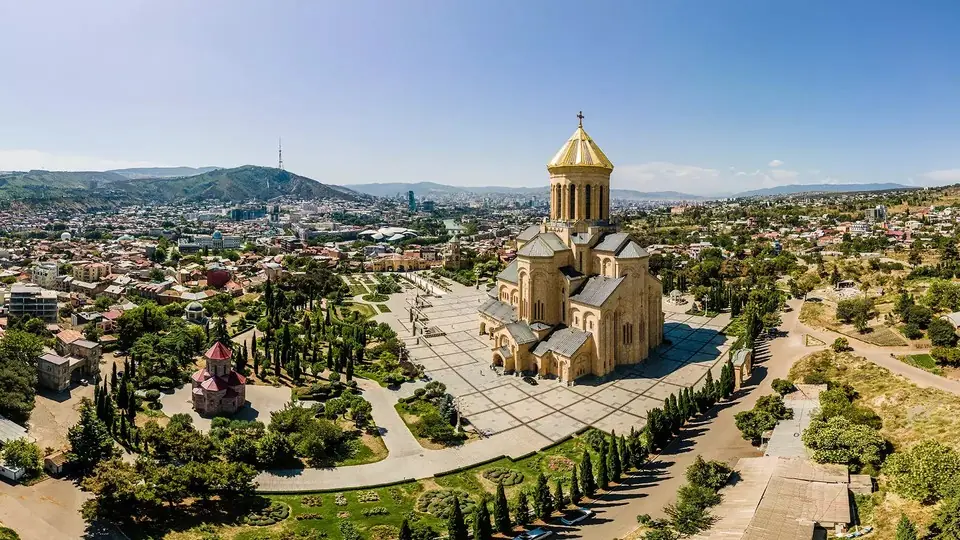
Patriarchs have led big feast services in this huge cathedral on Elia Hill in recent years. Even on a busy day there is room at the back. - Svetitskhoveli, Mtskheta
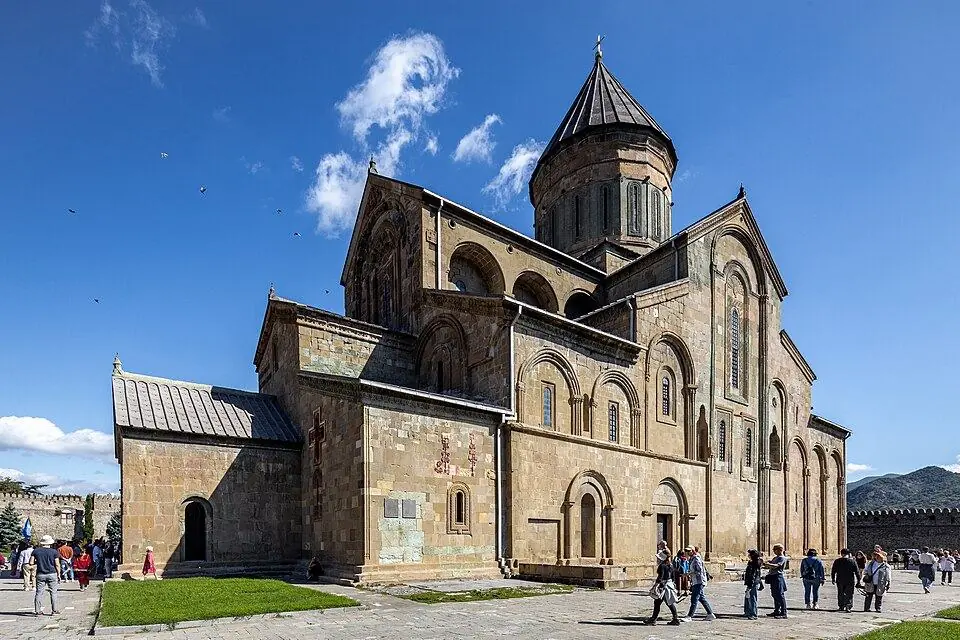
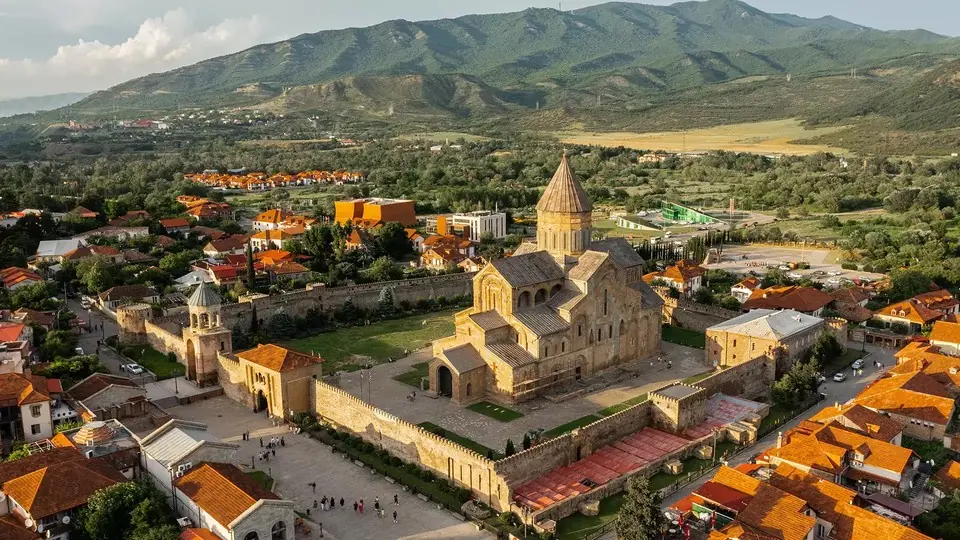
The cathedral of the old capital, half an hour's drive from Tbilisi, holds a solemn liturgy on Giorgoba. Samtavro, where St Nino lived, is a short walk away. - Alaverdi, Kakheti
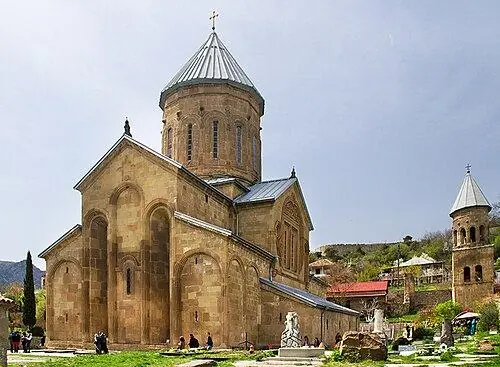
The 11th-century Cathedral of St George stands alone among vineyards ~20 km north of Telavi. Allow 2 to 2.5 hours from Tbilisi, so sleep in Telavi the night before. - Gorijvari, Gori
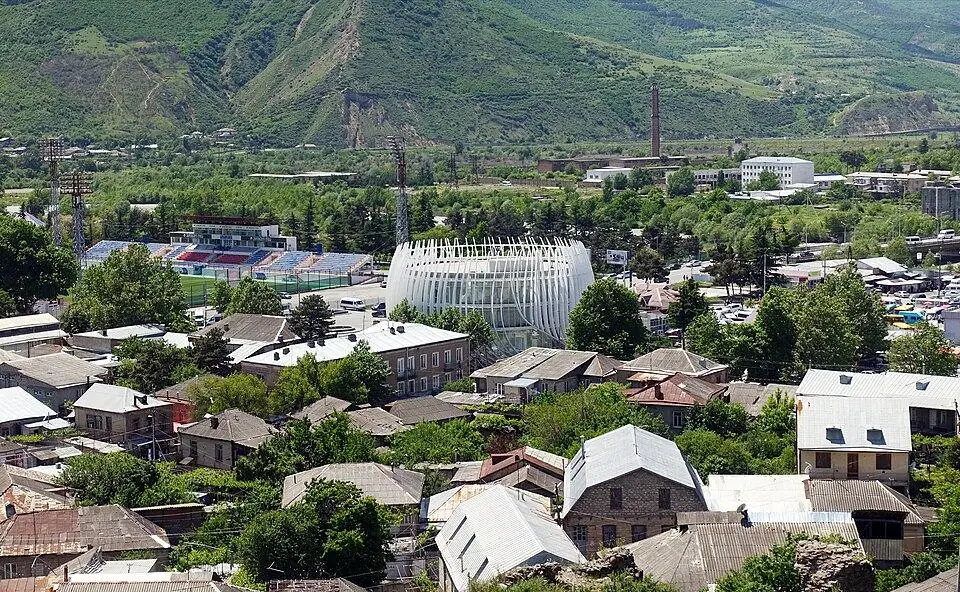
The hilltop church above Gori, ~86 km west of Tbilisi, has the most local feel, with families picnicking outside.
What is open and closed on Monday 23 November 2026
Giorgoba is one of the 18 days off in Georgia's Labour Code, so the state takes a break. Daily life carries on around it.
| Service | On 23 November 2026 | Tip |
|---|---|---|
| Government offices, schools, universities | Closed | Leave paperwork for Tuesday |
| Banks | Most branches closed | ATMs and card payments work as usual |
| Shops, supermarkets, malls, markets | Open | Some small family shops close early |
| Restaurants and cafes | Open, busy in the evening | Book dinner for Sunday and Monday |
| State museums in Tbilisi | Mostly closed | The Georgian National Museum and its branches close on Mondays anyway |
| Churches | Open, crowded in the morning | Sightsee inside churches after midday |
| Metro, buses, cable car, trains, flights | Running | Roads out of Tbilisi are busy on Saturday and Monday evening |
Private businesses decide for themselves. Hotels, taxis, wineries and guides work as normal, and our private tours run on the holiday like any other day. Many Tbilisi families drive to their home villages on Saturday 21 November, so set off early if you leave town that day.
How to dress and behave in a Georgian church
- Women: a headscarf and a skirt to the knee or longer. Many churches keep spare scarves and wraps by the entrance, but on a feast day they run out, so bring your own.
- Men: long trousers and no hat inside. Everyone: covered shoulders and a silent phone.
- Stand rather than sit. There are few benches, and they are kept for older people.
- Keep to the sides during the service, and never walk between the priest and the altar screen.
- Ask before taking photos, never use a flash and do not film people at prayer.
- Candles are sold at a counter near the door, so carry a few coins in cash.
- Only Orthodox Christians take communion; visitors simply watch.
A two-day plan for the 2026 Giorgoba weekend
Every tour we run is private. You pick the day, the group can be any size, and you get a guide in your language. This is how we would spend the long weekend, using the tours below as a base.
- Sunday 22 November: Tbilisi and the eve of the feast
Walk the Old Town in the morning. Sioni Cathedral keeps the vine cross that tradition ties to St Nino. After lunch, cross Freedom Square to see the gilded St George, then follow Rustaveli Avenue to Kashveti. Many churches hold an evening service on the eve of a feast, a calm time to hear the choir. - Monday 23 November: liturgy in Mtskheta
Leave at about 8:30 and join the morning service at Svetitskhoveli. Then visit Samtavro, where Nino lived, and Jvari on its hill above the two rivers. Have lunch in Mtskheta and come back for a Giorgoba dinner you booked ahead. - Tuesday 24 November (optional): Kakheti
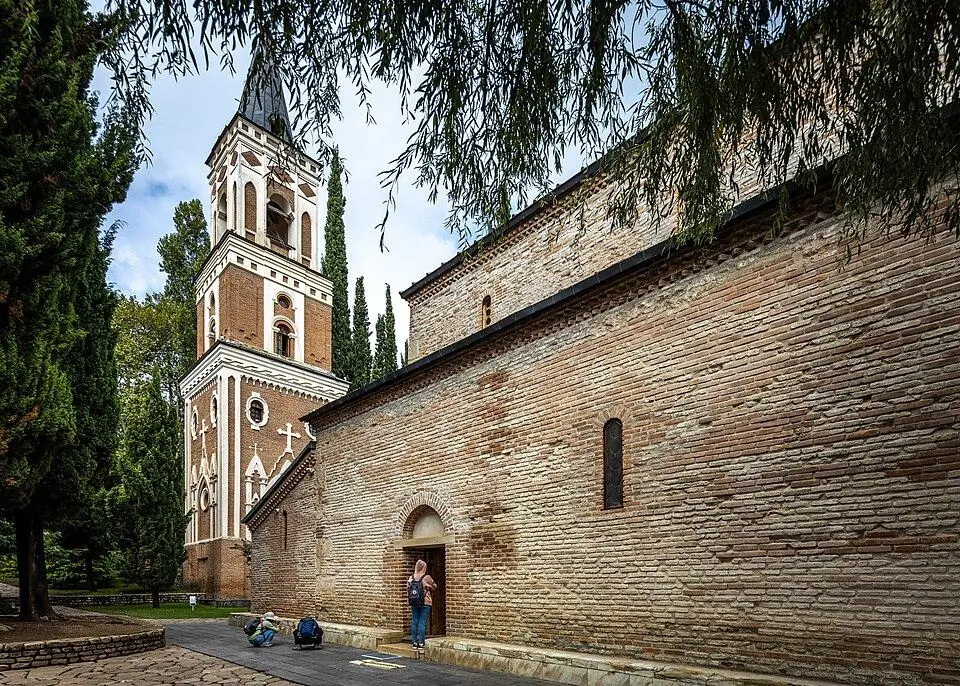
Drive to Bodbe, where Nino is buried, walk Sighnaghi's walls and taste the new wine in a family cellar. Ask us to add Alaverdi for a St George cathedral too.
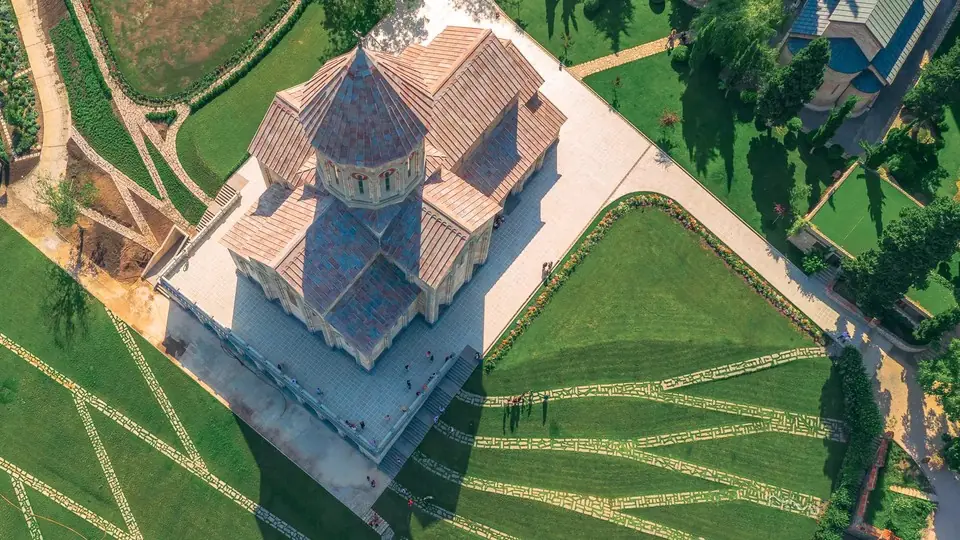
For a full week of churches, our Orthodox Georgia Pilgrimage covers Tbilisi, Mtskheta, David Gareja, Bodbe, Alaverdi and Gelati, and it can start on Giorgoba. Travel health insurance is compulsory for foreign visitors, so arrange it before you fly.
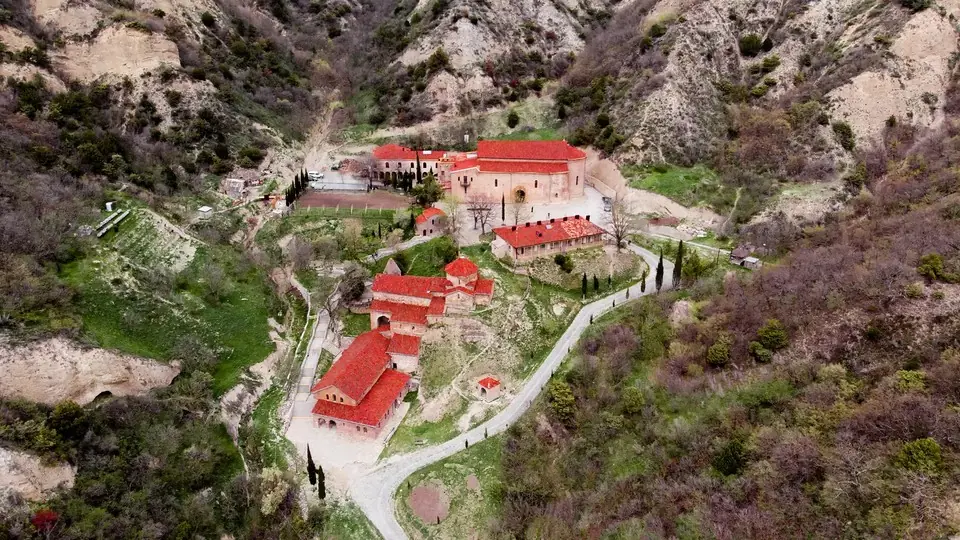
St George's Day in Georgia: FAQ
When is St George's Day in Georgia in 2026?
Giorgoba falls on Monday 23 November 2026 and on Tuesday 23 November 2027. It is a national day off. The spring feast on 6 May is a normal working day.
Why is St George so important in Georgia?
He is the country's patron saint. Church tradition says St Nino, who converted the Georgian court in the 4th century, was his relative and taught people to honour him. He is on the coat of arms and the flag, and Giorgi is the most common man's name.
How is St George's Day celebrated in Georgia?
With a morning liturgy in churches named after him and a family dinner at night. Every Giorgi celebrates his name day. In a few rural places, families still bring a ram or rooster as a thank-offering.
Is 23 November a public holiday in Georgia?
Yes. The Labour Code lists it among the country's 18 days off. Government offices, schools and most banks close, while shops, restaurants, churches and public transport stay open.
Why does Georgia celebrate St George twice a year?
The 6 May feast marks his death, as in most churches, shifted from 23 April by the Julian calendar. The 23 November feast, 10 November in that calendar, recalls his torture on the wheel and belongs to the Georgian tradition.
Can tourists go to church services on Giorgoba?
Yes, services are open to everyone. Women need a headscarf and skirt, men long trousers. Stand quietly at the side and ask before taking photos.
Are museums open in Tbilisi on 23 November 2026?
Most state museums, including the Georgian National Museum, close on Mondays, so expect them shut. Private galleries set their own hours.
Is Georgia named after St George?
Probably not. Linguists trace the name to gurj, an old Persian word for the Georgians. The saint's fame made the story popular, and many people still tell it.