Mtsvadi Recipe
მწვადი
A home-style mtsvadi recipe: big chunks of pork neck seasoned only with coarse salt, threaded on flat skewers and turned over glowing vine-cutting or charcoal embers until browned outside and juicy within. Served as Georgians do, pushed off the skewer with bread onto raw onion and pomegranate.
Recipe by the Maspindzeli team in Tbilisi · Updated 3 Nov 2026 · From Kakheti, the wine region; grilled all over Georgia
Full recipe with the timeline, timers and US measures: maspindzeli.ge/recipes/mtsvadi/
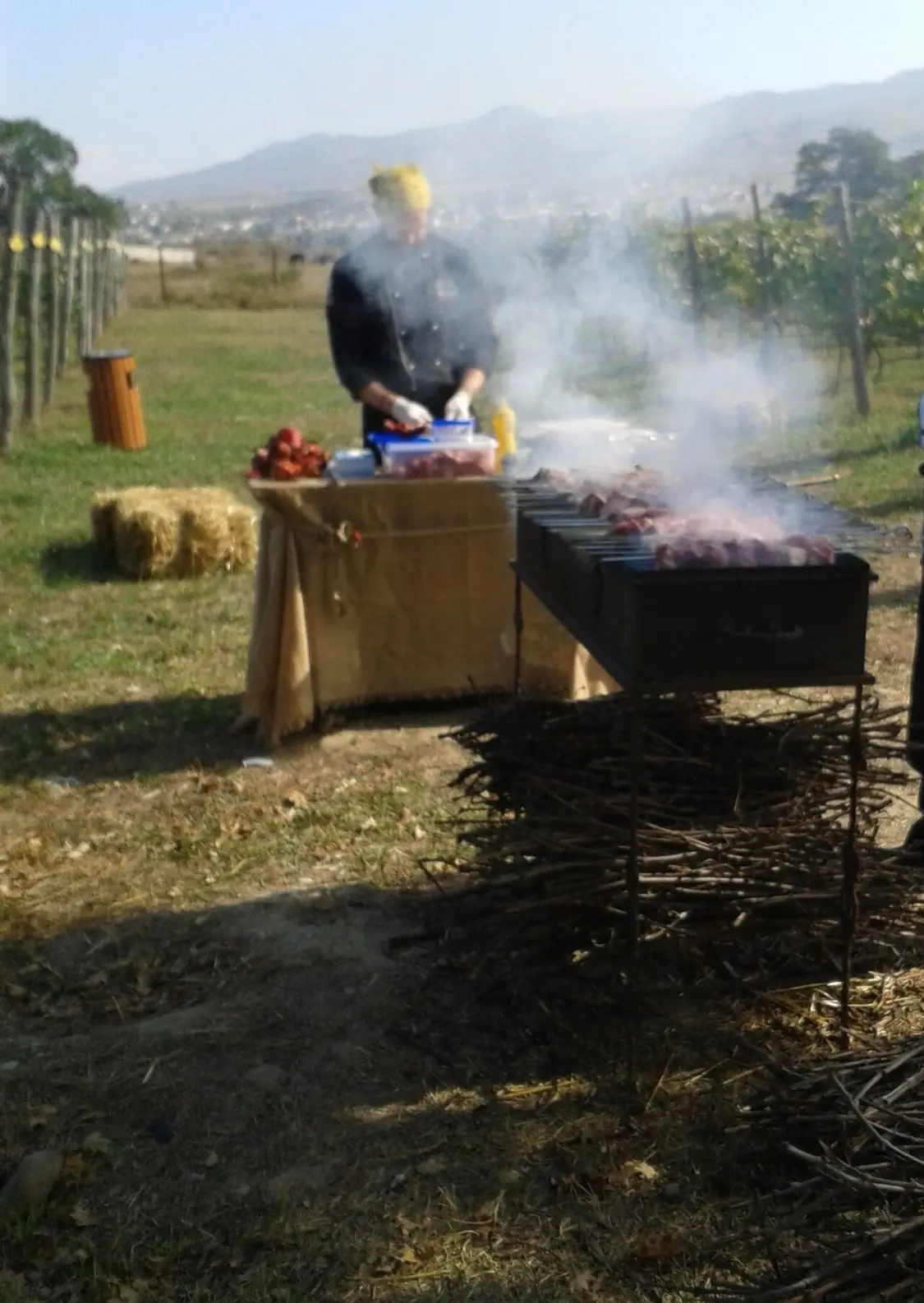
This mtsvadi recipe cooks pork the way Kakheti does it: large pieces of neck pushed onto flat skewers, rubbed with nothing except coarse salt and turned over the embers of dried vine prunings until the fat spits and crackles. Mtsvadi (მწვადი) is simply the Georgian word for meat roasted over a fire. Outside Georgia you will often find it sold as Georgian shashlik, which is the Russian name, and sometimes spelt mcvadi. Pork is the first choice, though veal, lamb and chicken go on the skewers too.
Ask a few Georgian cooks how to season it and you will hear two answers. The classic Kakhetian way uses no marinade at all: well-chosen fatty meat, salt, a fire that has burnt right down and a sprinkle of wine or pomegranate juice while it cooks. Plenty of other households toss the cubes with sliced onion and pepper a few hours ahead, and some leave them overnight in wine, vinegar, pomegranate juice or matsoni. The method below is the salt-only one; the marinades follow as variations.
Mtsvadi is weekend, picnic and feast food, cooked outdoors by whoever handles the fire best, and a regular at the supra, the Georgian feast. In Kakheti it also belongs to the chacha-distilling days from late autumn on, when neighbours gather by the still and grill fresh pork over the vineyard prunings. Our Georgian food guide, linked below, says where to try it on your trip.
Timeline: what to do, and when
1 h 20 min from start to table · 1 h 11 min hands-on · 40 min waiting
Each bar is one step. Hands-on Waiting, while the oven, the pot or the dough does the work. Steps that sit inside a wait are done in parallel.
Recipe
Mtsvadi
Ingredients
Meat
For sprinkling
To serve
Amounts are scaled. Times stay about the same, but a bigger pot takes a little longer to come to the boil.
You will need
- Mangal (Georgian open grill trough) or any charcoal barbecue
- A large armful of dry vine prunings, or about 2 kg lumpwood charcoal from hardwood
- 4 to 5 flat metal skewers, 45 to 60 cm long
- Sharp knife and chopping board
- Small bottle with a few holes pierced in the lid, or a pastry brush
- Long tongs and a heatproof glove
- Probe thermometer (optional)
- Large warmed bowl or platter for serving
Method
- Light the fire10 min hands-on· start here
Pile the vine prunings loosely in the mangal, or heap the charcoal in the middle of the barbecue, and light it. Keep a second bundle of prunings to hand, because they burn fast. Take the pork out of the fridge now so it loses its chill.
- Let it burn down to embers35 min waiting· starts at +10 min
Wait until every flame has died and the coals glow red under a fine coat of grey-white ash. Vine prunings collapse into a bed of small coals in about 20 minutes, charcoal takes 30 to 40. Rake the embers into an even layer the length of your skewers. At skewer height you should be able to hold your palm there for only 3 or 4 seconds.
- Cut the pork15 min hands-on· starts at +12 min, during step 2
Cut the neck into chunks of 4 to 5 cm, each about 50 g, keeping the fat attached. Pieces much smaller dry out before they brown; much bigger ones stay raw in the middle. Pat them dry with kitchen paper so they colour rather than steam.
- Thread and salt8 min hands-on· starts at +27 min, during step 2
Push 4 or 5 pieces onto each skewer through the middle, snug against each other but not squashed, and spread the fatty bits along the skewer. Keep one cut per skewer, as leaner shoulder cooks faster than neck. Season every side of the meat with the coarse salt, plus pepper if you like.
- Get the sprinkle and garnish ready8 min hands-on· starts at +35 min, during step 2
Stir 1 tsp salt into the wine (or pomegranate juice) and pour it into the bottle with the pierced lid. Slice the onions into thin rings and leave them in iced water to soften their bite. Knock the seeds out of half the pomegranate and squeeze the other half for juice.
- Grill, turning often23 min hands-on· starts at +45 min
Lay the skewers across the mangal about 10 cm above the embers. Turn them every 2 minutes or so, and every few turns shake a little of the salted wine over the meat. If dripping fat sets off flames, lift the skewer away for a moment and throw a pinch of salt or a splash of the wine on the fire, not water. Allow 18 to 25 minutes in all, depending on the heat and the size of the pieces.
- Check it is cooked2 min hands-on· starts at +1 h 8 min
Cut into the thickest piece. The juices should run clear and the centre should be pale all the way through, still moist, with no raw pink. A probe thermometer should read at least 63 °C / 145 °F; Georgians like it cooked through, nearer 70 °C / 160 °F, and neck stays juicy at that.
- Slide off onto the onion5 min hands-on· starts at +1 h 10 min
Drain the onion rings, salt them lightly and spread half of them in a warmed bowl or on a platter. Wrap a piece of lavash or shoti round the meat at the top of each skewer and pull the pieces down onto the onion. Scatter the rest of the onion and the pomegranate seeds on top and pour the pomegranate juice over the hot meat.
- Rest under the bread5 min waiting· starts at +1 h 15 min
Cover the bowl with the bread you used or a sheet of lavash and leave it for 5 minutes. The meat relaxes, and the bread soaks up the juices and becomes a treat of its own. Serve with the herbs and tkemali.
About 690 kcal per serving (1 of 4, made with 250 g raw pork neck, onion and pomegranate), without bread or sauce. This is an estimate from standard values for the ingredients, not a lab figure.
The cook brings the skewers straight from the fire and strips the meat into a shared bowl with a piece of bread, so the bread catches the first juices. Everyone then helps themselves with a fork or their fingers, taking a few onion rings and pomegranate seeds with each piece and adding tkemali on their own plate. In some Kakhetian villages the hot pieces are dropped straight into a bowl of pomegranate juice.
Tips, swaps and variations
Tips from your host
- Buy neck (collar) if you can. Its streaks of fat melt over the embers and baste the meat from inside; loin and tenderloin are too lean and turn dry long before they colour.
- Be patient with the fire. Grilling over live flames chars the outside and leaves the middle raw, and the meat tastes of soot. The right moment is when the coals have gone quiet and turned ash-grey on top.
- Never use pine or other resinous wood, firelighters soaked in fuel or lighter fluid. The meat picks up their smell. Vine prunings, oak, beech or fruit-tree wood are all good.
- Stay at the grill. Mtsvadi needs turning every couple of minutes, and a skewer left alone for five will burn on one side.
- Water poured on a flare-up throws up ash and bitter steam onto the meat. Georgian cooks reach for the salt cellar or the wine bottle instead, since both calm the flames without killing the heat.
- Wooden skewers work if that is all you have: soak them for 30 minutes first and thread the meat on two parallel sticks so the pieces turn with them.
Variations and swaps
- Onion and pepper (a quick basturma): mix the cubed pork with 1 large onion, thinly sliced, the salt and plenty of black pepper, cover and chill for 2 to 4 hours. Scrape off the onion before threading. Many Georgian families season it this way, especially away from Kakheti.
- Overnight wine marinade: toss 1 kg pork with 2 sliced onions, 100 ml dry white wine, 3 or 4 bay leaves, black pepper and, if you have it, 1/2 tsp ground dried barberry; chill for 8 to 12 hours. Some cooks add a few spoons of wine vinegar, though others say vinegar firms and dries the meat, so go easy.
- Pomegranate or matsoni marinade: cover the pork and sliced onion with unsweetened pomegranate juice and a spoon of oil, with crushed coriander seed and pepper, for 12 to 24 hours. Or coat it in matsoni (or thick plain yoghurt) for a few hours; scrape most of it off before grilling.
- Oven grill (broiler): heat the grill to its highest setting. Thread the meat on metal skewers, rest them across a roasting tin so they hang above it, and slide the tin in so the meat sits 8 to 10 cm below the element. Cook for 16 to 20 minutes, turning every 4 to 5 minutes, then check as above. It browns well but has no smoke, so finish with plenty of onion and pomegranate.
- Griddle or cast-iron pan: heat it empty over high heat for 5 minutes and rub it with a piece of pork fat. Cook the salted cubes (no skewers needed) in one layer with gaps between them, uncovered, turning every 2 to 3 minutes until browned all over and cooked through, 12 to 15 minutes. Do it in batches, open a window, and warm the pomegranate juice in the hot pan for a few seconds before pouring it over.
- Fuel without vineyards: use hardwood lumpwood charcoal, and when it has ashed over lay a handful of soaked fruit-tree chips or a few dry vine prunings on top just before the meat goes on, for some of that sweet smoke.
- Veal, lamb or chicken: pick a cut with some fat, such as lamb shoulder or neck fillet or veal shoulder, and use the same salt-only method or the onion basturma; Georgians often serve lamb with raw onion rings and chopped parsley. For chicken use boneless thighs, marinate them in onion and pomegranate juice for a few hours and cook until the centre reaches 75 °C / 165 °F.
- Mtsvadi chashushuli: Georgians also stew grilled pork with onion and tomato, which is a good home for leftovers. Fry 2 chopped onions in a little oil, add the cooked meat and 3 chopped tomatoes, simmer for 10 minutes and season with dried coriander, blue fenugreek and chilli.
Serve it with
- Raw onion rings and pomegranate seeds over the hot meat
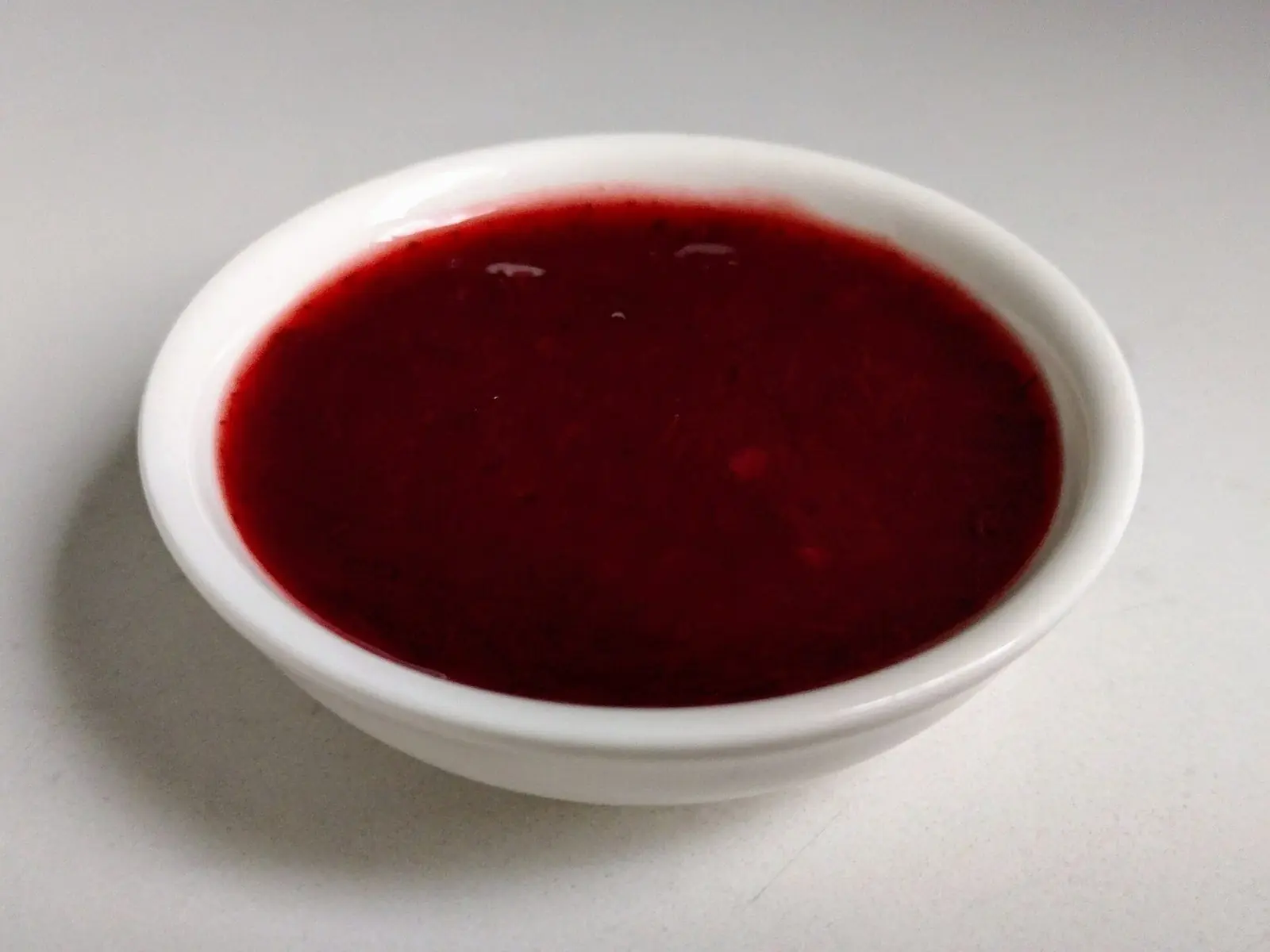
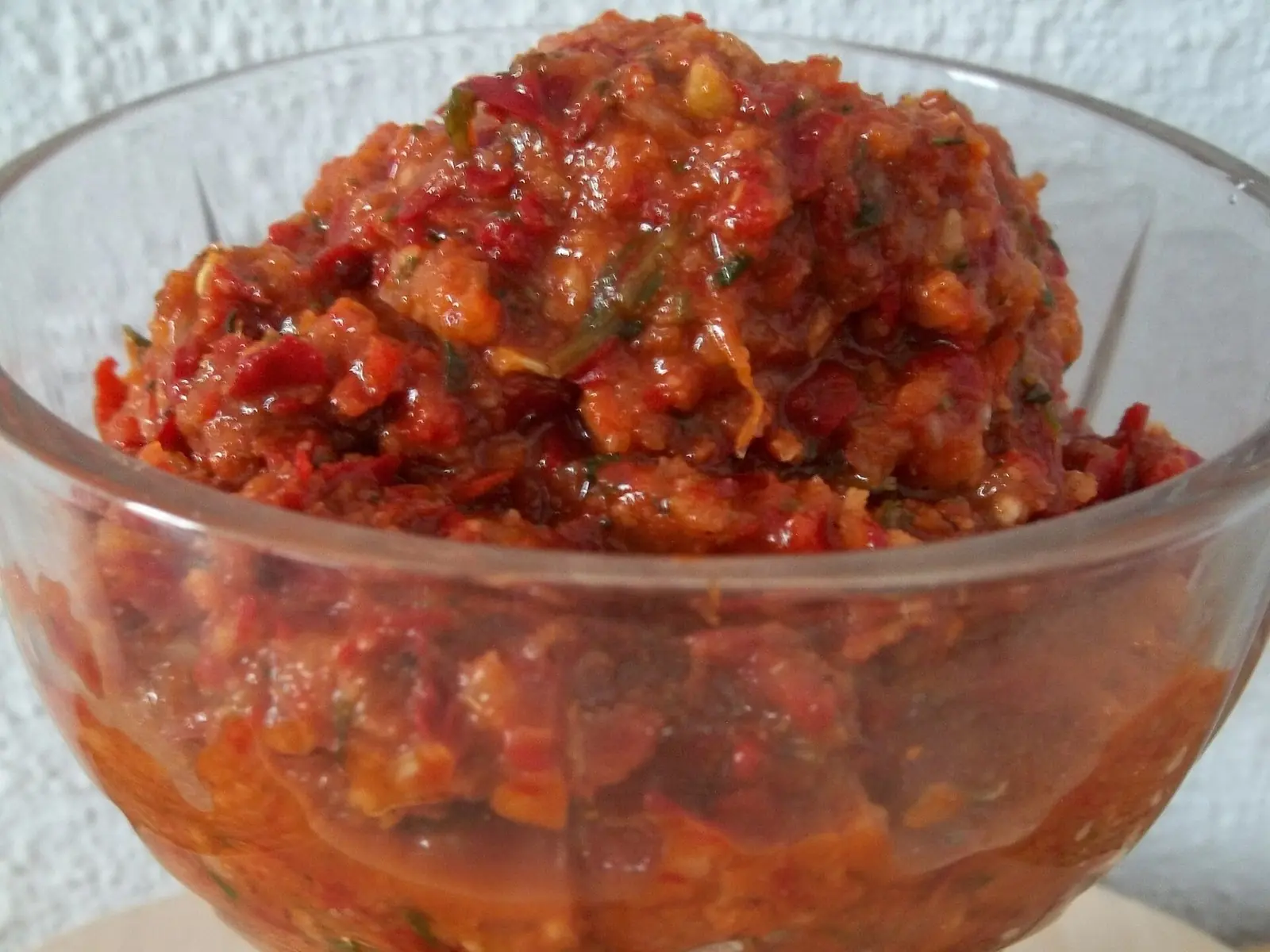
- Tkemali (sour plum sauce) or satsebeli, a fresh tomato sauce
- Shoti or lavash, to pull the meat off the skewers
- A plate of whole herbs: coriander, tarragon, purple basil, parsley and spring onions
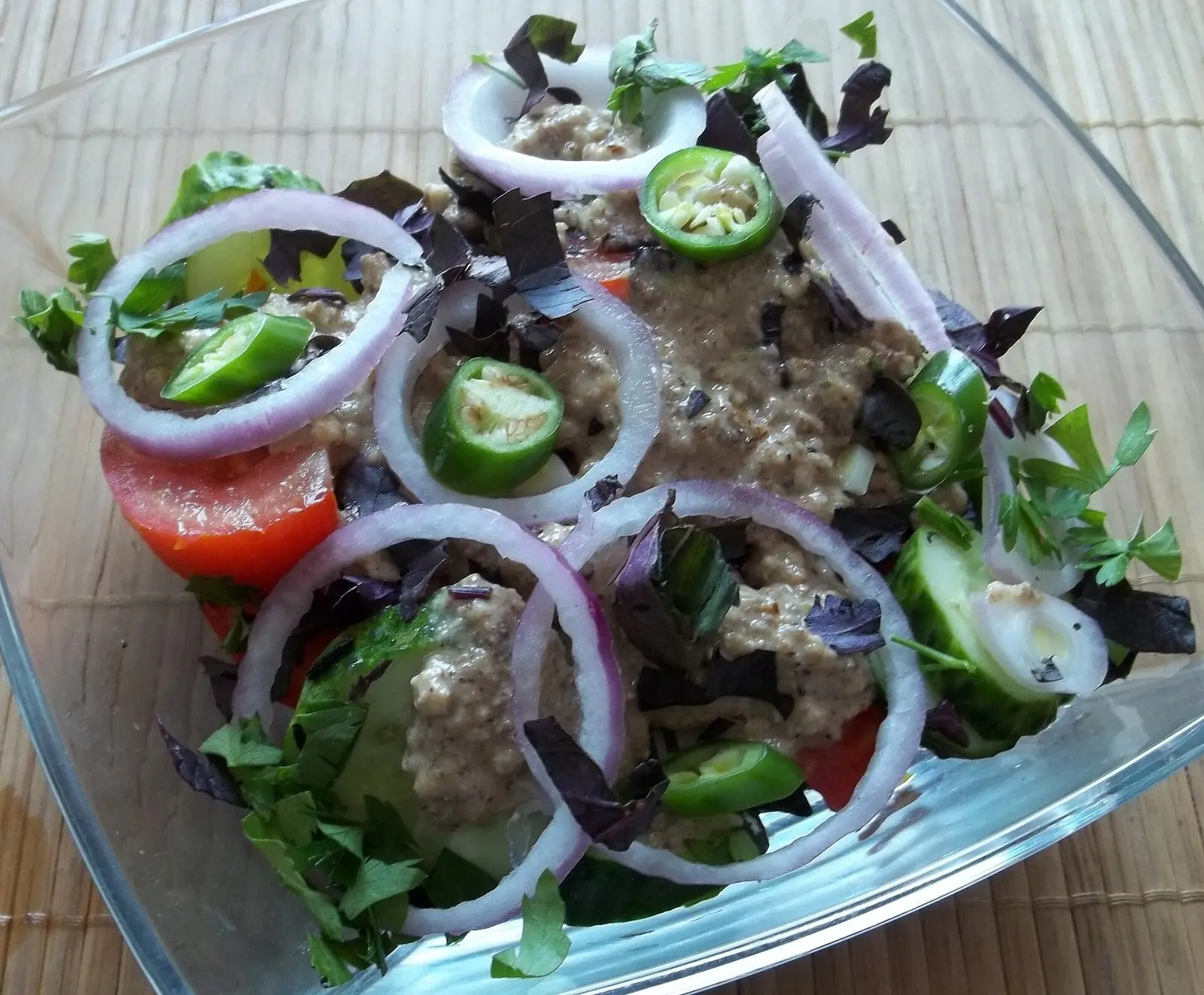
- Georgian tomato and cucumber salad
- Tomatoes, peppers and aubergines charred on the same fire
- Dry Kakhetian wine, amber Rkatsiteli or red Saperavi
Make ahead and storage
Mtsvadi is at its best within minutes of leaving the fire. Leftovers last up to 3 days, covered and chilled. Warm them through in a covered frying pan with a few spoons of water or wine over a low flame, as fierce reheating turns them tough, or stew them with onion and tomato (see the variations). Raw cubes, salted or in an onion marinade, can be frozen for up to 2 months and thawed overnight in the fridge before grilling.



Maspindzeli Travel, Tbilisi · private tours and cooking classes in Georgia · maspindzeli.ge · WhatsApp +995 598 74 74 54 · hello@maspindzeli.ge