Chashushuli Recipe
ჩაშუშული
A home-style chashushuli recipe: bite-sized veal or beef that first sweats out its juices, is browned in butter and then cooks down slowly with onion, ripe tomatoes, sweet peppers and chilli. Raw garlic, coriander and basil go in at the very end, so the thick red sauce tastes fresh as well as rich.
Recipe by the Maspindzeli team in Tbilisi · Updated 29 Oct 2026 · Cooked everywhere; Samegrelo has its own well-known version
Full recipe with the timeline, timers and US measures: maspindzeli.ge/recipes/chashushuli/
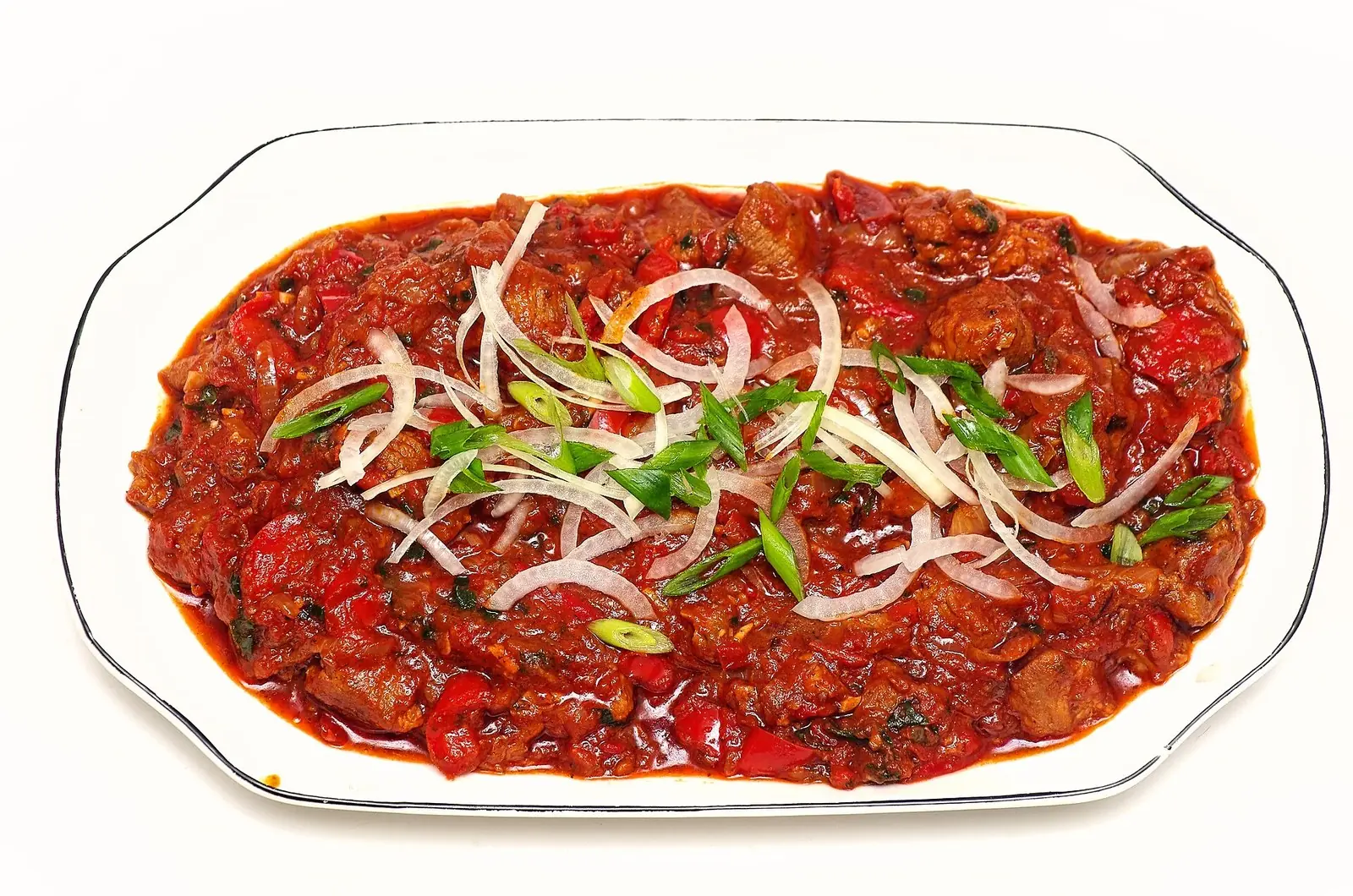
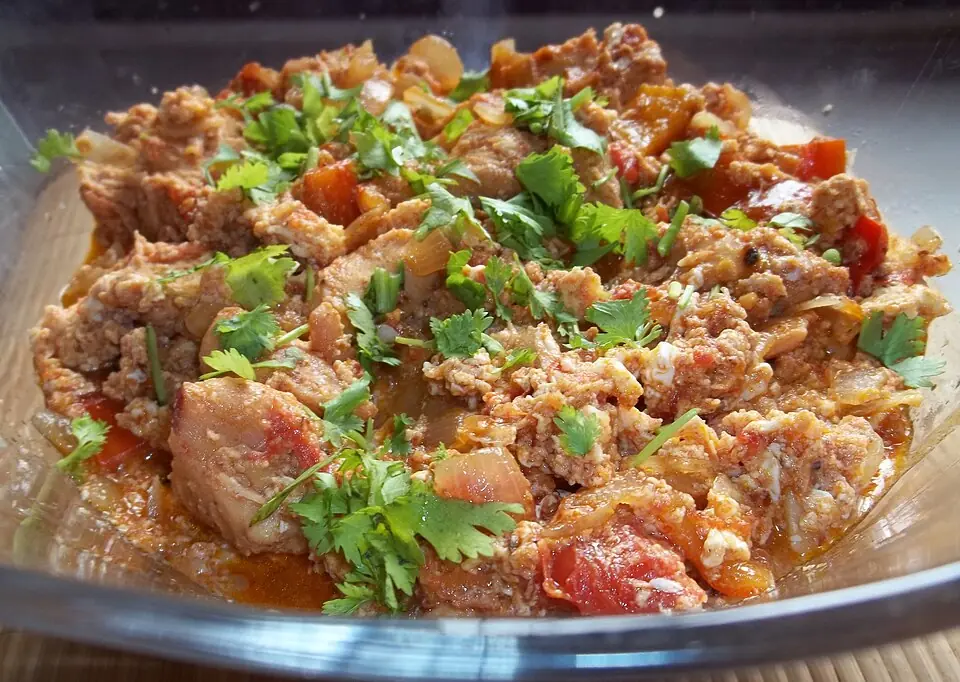
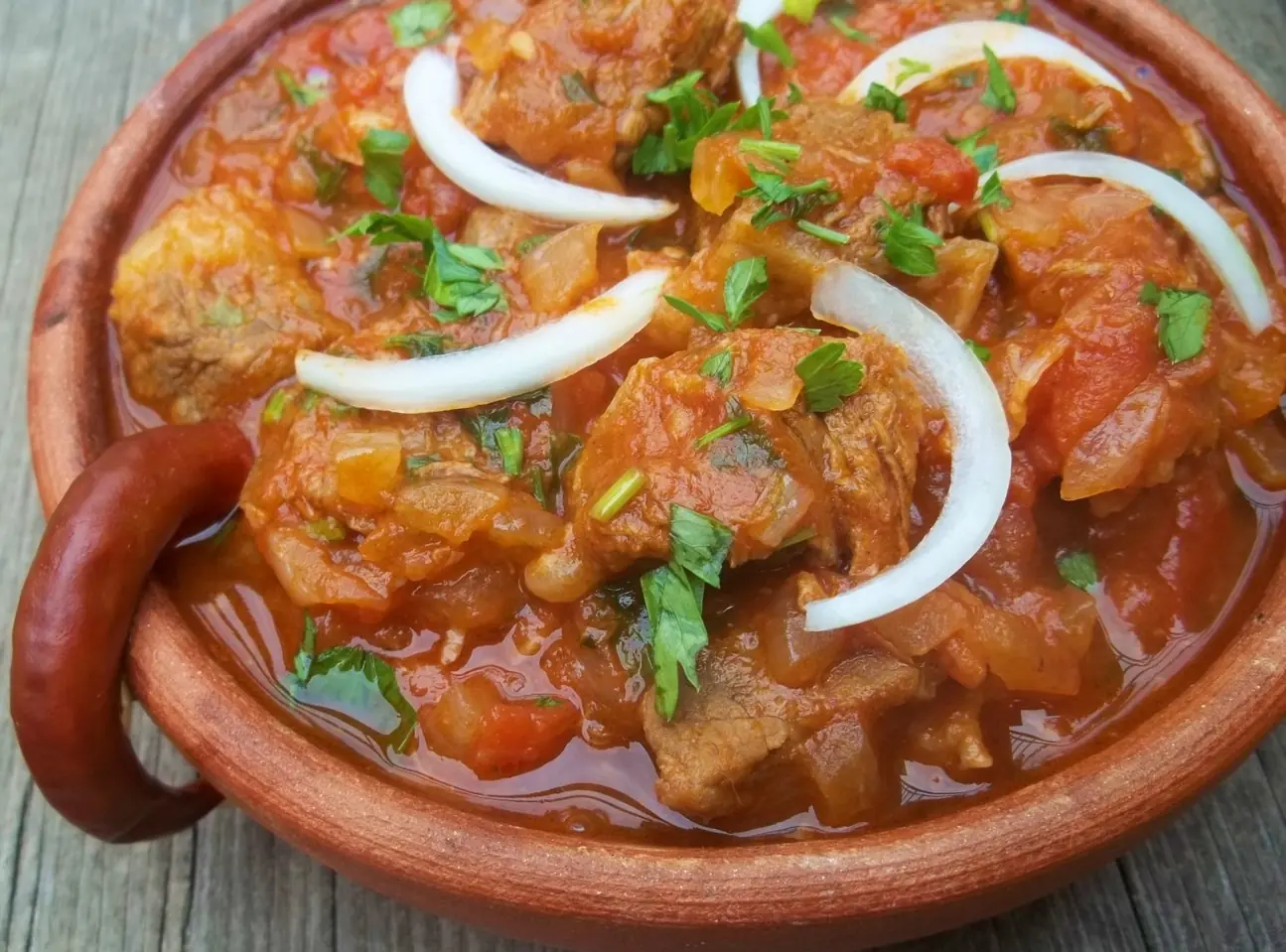
This chashushuli recipe makes the peppery meat and tomato stew that is a regular on Georgian tavern menus. Small pieces of veal or beef go into a hot, dry pot until they give up their juices, get browned in butter, and then cook down slowly with onions, tomatoes and sweet and hot peppers until the sauce clings to every piece. A handful of crushed raw garlic and plenty of coriander and basil are stirred in just before it reaches the table. In Georgia you will also see it called khbos chashushuli, which means veal chashushuli, while English menus tend to say Georgian beef stew or Georgian veal stew.
Chashushuli simply means stewed, and Georgian cooks use the word for many slow-cooked pans, from cabbage and mushrooms to chicken and pork. Ordered on its own, though, it means meat in a thick, red, garlicky sauce with a good kick of chilli. Veal is the classic meat. Beef is now used more and more, and since good braising beef is easier to find outside Georgia, the times below are for beef chuck, with veal noted wherever it differs.
It is a weekday dish at home and a standard hot plate at a supra, usually served bubbling in a small clay pan called a ketsi, with bread for the sauce and nothing else on the side. Its closest relative is ostri, another beef dish in a hot tomato sauce. The two overlap so much that some menus use the names for the same pot, and the FAQ below explains where they part ways.
Timeline: what to do, and when
2 h 40 min from start to table · 1 h 20 min hands-on · 5 min waiting
Each bar is one step. Hands-on Waiting, while the oven, the pot or the dough does the work. Steps that sit inside a wait are done in parallel.
Recipe
Chashushuli
Ingredients
Meat
Vegetables
Spices and herbs
Amounts are scaled. Times stay about the same, but a bigger pot takes a little longer to come to the boil.
Contains: milk.
You will need
- Heavy lidded casserole or deep sauté pan (roughly 4 litres), ideally cast iron
- Heatproof jug for the meat juices
- Large board and a sharp knife
- Kettle and a bowl of iced water for peeling the tomatoes
- Small clay pans (ketsi) or warmed deep plates for serving
Method
- Cut the meat12 min hands-on· start here
Trim off tough sinew and any thick lumps of fat, then cut the meat into pieces of about 3 cm and pat them dry with kitchen paper. Chop the onions finely and slice 2 of the garlic cloves.
- Let the meat sweat10 min hands-on· starts at +12 min
Heat the heavy pot over a medium-high flame until a drop of water hisses, then add the meat with no fat at all and put the lid on. After 6 to 8 minutes it will have turned grey and be sitting in a pool of its own juice. Pour that juice into the jug and keep it.
- Brown in butter12 min hands-on· starts at +22 min
Add the oil and butter to the pot and turn the heat to high. Fry the meat, turning it every minute or two, until most sides are well browned, about 10 to 12 minutes. In a small pot, brown it in two batches so it fries rather than steams.
- Soften the onions10 min hands-on· starts at +34 min
Turn the heat down to medium, add the onions and 1 tsp salt and stir, scraping up the brown bits from the base. Cook for 8 minutes until soft and golden, then add the sliced garlic, ground coriander, blue fenugreek and khmeli suneli and stir for 1 minute.
- Add the liquid4 min hands-on· starts at +44 min
Pour back the reserved juice, then the wine, and add enough hot water to come about a third of the way up the meat (about 200 ml). Bring it to a bubble, put the lid on and turn the heat to low.
- Simmer until nearly tender1 h 15 min waiting· starts at +48 min
Simmer gently for about 75 minutes for beef chuck, stirring every 20 minutes and adding a splash of hot water if the base starts to look dry. Veal shoulder needs only about 45 minutes. The meat is ready for the next stage when a piece is almost soft but still has a little bite.
- Peel the tomatoes, slice the peppers20 min hands-on· starts at +55 min, during step 6
While the meat simmers, cut a small cross in the base of each tomato, cover with boiling water for 30 to 60 seconds, then move them to iced water and slip off the skins; core and chop them. Seed the sweet peppers and cut them into strips, slice the chilli, chop the herbs and crush the remaining 4 garlic cloves with a pinch of salt.
- Add the peppers8 min hands-on· starts at +2 h 3 min
Uncover the pot and stir in the tomato paste, pepper strips and chilli. Let them cook gently on medium-low for 8 minutes, giving an occasional stir, until the peppers begin to go limp.
- Cook the tomatoes down20 min waiting· starts at +2 h 11 min
Add the chopped tomatoes and keep the pot uncovered at a lively simmer for about 20 minutes, stirring from time to time. Stop when the tomatoes have melted into a thick sauce that coats the meat and a piece of beef breaks up easily under a spoon. If it is still runny, give it a few minutes more; if it catches on the base, add a little hot water.
- Finish with garlic and herbs4 min hands-on· starts at +2 h 31 min
Lift the pot from the burner. Mix in the crushed garlic, most of the coriander, basil and parsley, the ajika or chilli flakes if you want more fire, and a few turns of black pepper. Taste and add salt.
- Rest, then serve5 min waiting· starts at +2 h 35 min
Cover again and leave it for 5 minutes while the raw garlic mellows and the herbs wilt. Spoon into hot clay pans or deep plates and scatter the last of the herbs on top.
About 710 kcal per serving (1 of 4) with beef chuck; about 560 with veal. This is an estimate from standard values for the ingredients, not a lab figure.
In Georgia chashushuli arrives in its hot clay pan with no side dish at all. Each person spoons a few pieces onto their plate, tears off bread to soak up the sauce, and takes a bite of pickle or raw herbs between mouthfuls to cool the chilli.
Tips, swaps and variations
Tips from your host
- Pick a braising cut with some fat and connective tissue: beef chuck, blade or shin, or veal shoulder. Lean steak or topside turns dry and stringy long before the sauce is ready.
- Veal cooks faster than beef. Shorten the covered simmer to about 45 minutes, test a piece, then carry on exactly as written.
- Pouring off the first juices is what lets the meat brown rather than boil. Keep every drop and return it later, because it holds much of the flavour. Some Georgian cooks let the juice bubble away instead, which also works but takes longer.
- Hold back the tomatoes until the meat is nearly tender. Added late they keep a bright, fresh taste and are far less likely to scorch on the base during the long simmer.
- Aim for a thick stew. The sauce should coat the meat, with only a little loose liquid at the edges, so reduce it a few minutes longer if it looks soupy.
- Leave the garlic at the end raw. Stirred in off the heat, it gives chashushuli its sharp punch, which is lost if it boils.
Variations and swaps
- Veal, the classic: use 1 kg veal shoulder or neck, simmer it for about 45 minutes before the peppers go in, then follow the recipe. The result is paler and softer than beef, and more like the khbos chashushuli on Tbilisi menus.
- Tinned tomatoes: out of season, use 2 tins of whole plum tomatoes, crushed by hand, instead of fresh ones. They are often sharper, so taste at the end and add a pinch of sugar only if the sauce tastes sour.
- Megrelian style: the Samegrelo version leans on heat. Stir 1 to 2 tbsp red ajika into the pot with the tomatoes, use two or three chillies and plenty of coriander, and serve with ghomi or mchadi.
- In the oven: once the liquid is in, cover the pot and bake it at 170 °C / 340 °F (150 °C / 300 °F fan) for roughly 90 minutes, stirring in the peppers and tomatoes 40 minutes before the end. A bunch of coriander tied with string can go into the middle and be squeezed out and thrown away at the end, so it leaves only its flavour.
- Pork with savory: pork shoulder cooked the same way is a common home version. Season it with 1 tsp dried summer savory (kondari) and a splash of white wine vinegar, and simmer it for about 50 minutes before the tomatoes.
- Mushroom chashushuli for Lent and fasting days: brown 1 kg quartered mushrooms hard in oil until well coloured, then cook the onions, peppers and tomatoes as above and simmer everything for 20 to 25 minutes. Use oil only and it is vegan.
- Lamb or kid: lamb is used much less often, but shoulder in chunks works well; give it about 60 minutes before the tomatoes. Georgian home cooks make kid (young goat) chashushuli in much the same way, with basil and chilli among the herbs.
Serve it with
- Warm shoti or tonis puri for mopping the plate
- Mchadi (cornbread) or ghomi, especially in western Georgia
- Georgian tomato and cucumber salad, or a plate of raw herbs, spring onions and radishes
- Mzhave (Georgian pickles) such as pickled cabbage, green tomatoes or jonjoli
- A dry, fruity Saperavi; many Georgians drink a white such as Rkatsiteli with it instead
Make ahead and storage
Cover and chill the stew within 2 hours; it keeps for 3 days and the flavour deepens overnight. To reheat, warm it slowly in a covered pan with 2 or 3 spoonfuls of water, stirring once or twice until it bubbles, then freshen it with chopped coriander and a little raw garlic. Chashushuli also freezes well for up to 3 months; defrost it overnight in the fridge first.



Maspindzeli Travel, Tbilisi · private tours and cooking classes in Georgia · maspindzeli.ge · WhatsApp +995 598 74 74 54 · hello@maspindzeli.ge