Ostri Recipe
ოსტრი
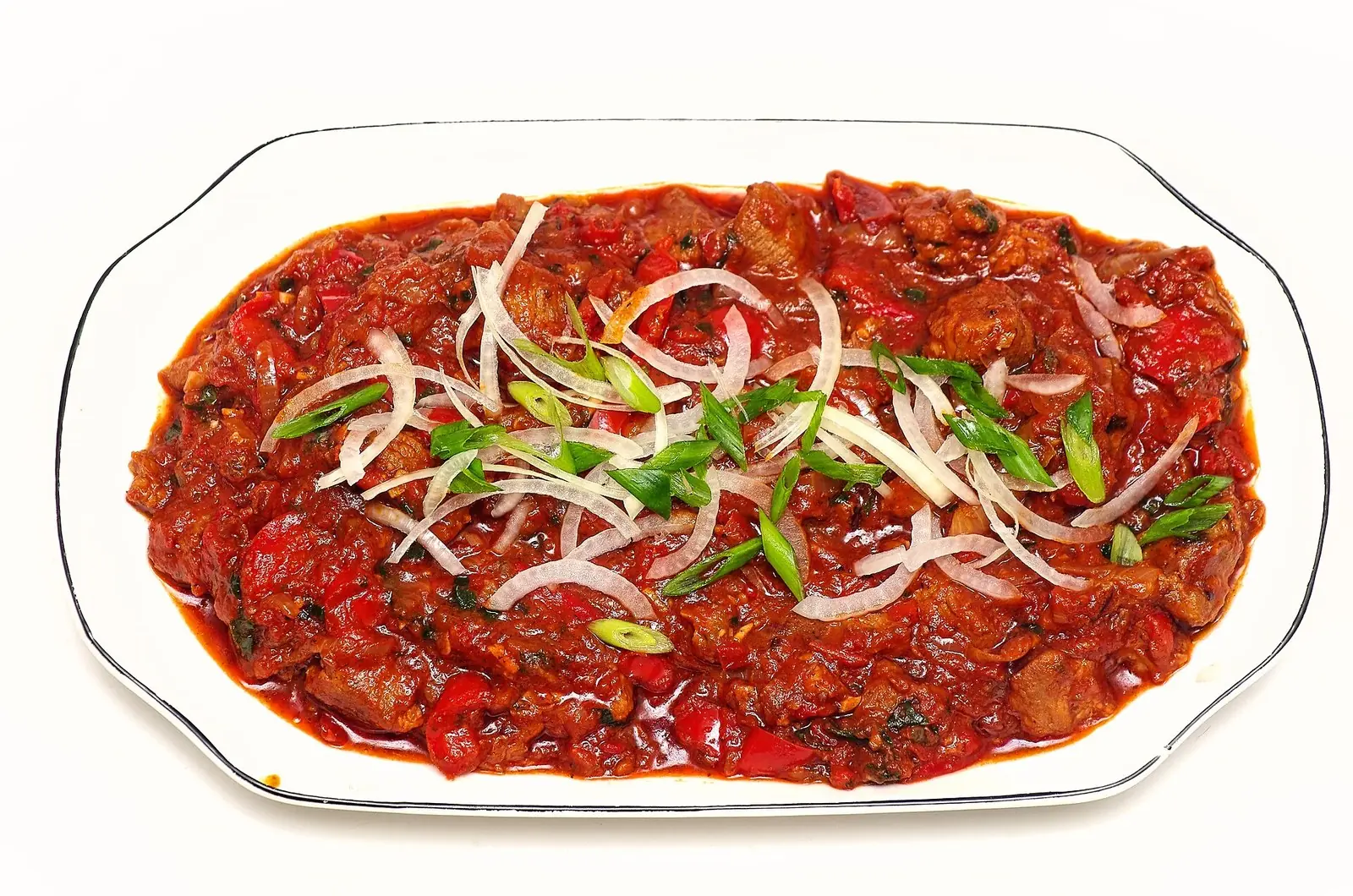
A home-style ostri recipe: chunks of beef cooked gently with bay leaves until they fall apart, then finished in a loose, fiery red sauce of onion, tomato, tomato paste and hot pepper, thinned with the meat's own broth. Parsley, purple basil and, if you like, chopped pickled cucumbers go in at the end.
Recipe by the Maspindzeli team in Tbilisi · Updated 2 Nov 2026 · Cooked everywhere, from home kitchens to city canteens
Full recipe with the timeline, timers and US measures: maspindzeli.ge/recipes/ostri/
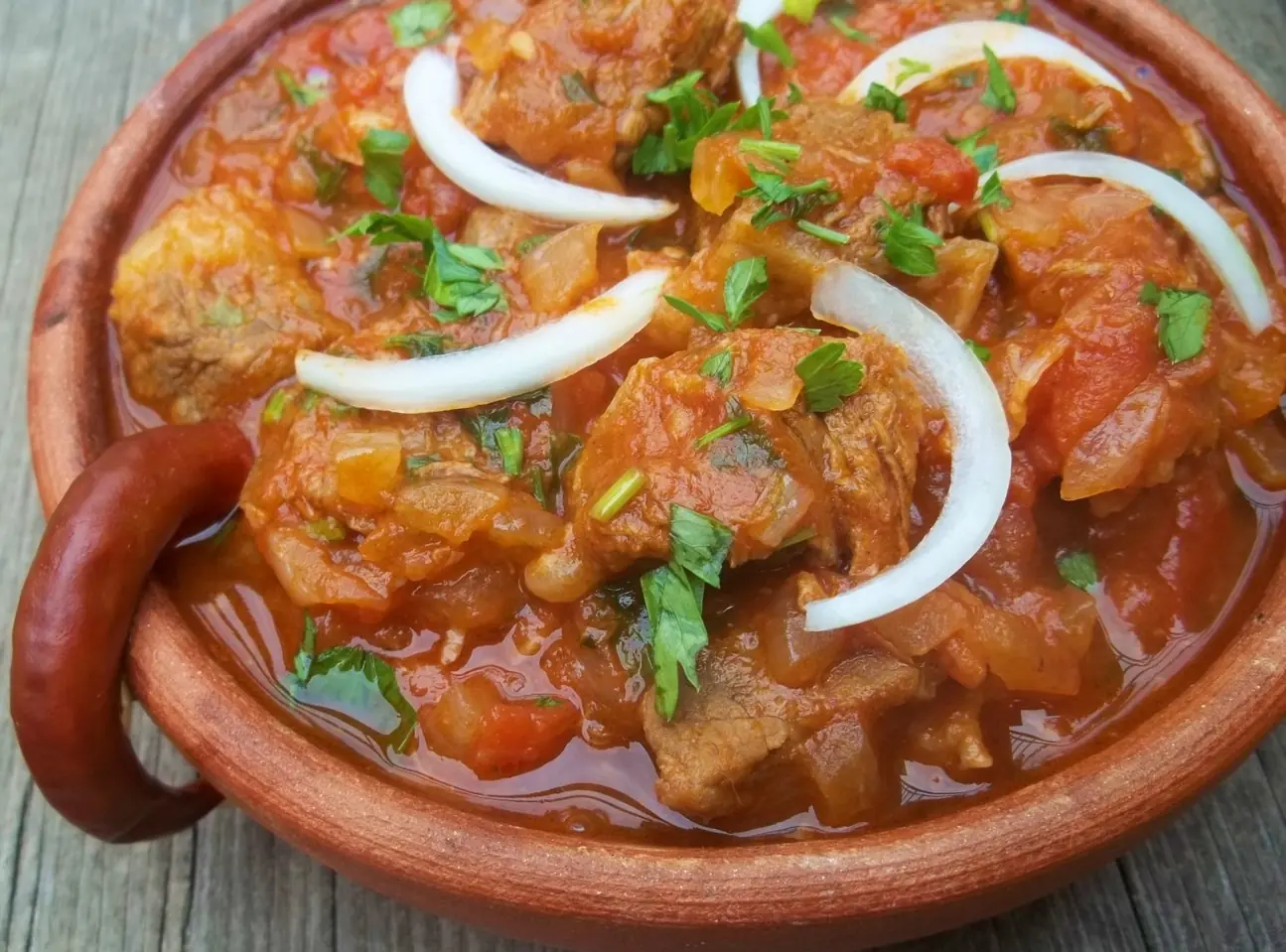
This ostri recipe shows the Georgian way with beef in a hot, brick-red tomato sauce. The meat starts in a covered pot with bay leaves and a little water and cooks very slowly until a spoon can break it. Its broth is poured off and saved, butter, onions, tomatoes, tomato paste, ground coriander and plenty of hot red pepper go into the pot, and then the broth returns to loosen everything. Parsley or purple basil and, if you like, diced pickled cucumbers finish it. You will also find it as Georgian ostri, ოსტრი in Georgian script, or остри on Russian-language menus.
Ostri is mostly everyday cooking, though a pot of it can also appear on a feast table. Families make it on an ordinary weeknight, and it is one of the cheaper hot plates in city canteens and beer halls. Georgian cooks argue less about the exact recipe than about thickness: a dense ostri is eaten with rice, a soupy one with mashed potato or lots of bread, and one large Georgian recipe site even files it among its soups.
Its nearest neighbour is chashushuli, and plenty of menus blur the two names. This page keeps to the classic ostri method: no browning at the start, a long gentle first cook, and a sauce without sweet peppers that you thin with the beef's own broth. The FAQ below sets out how the two dishes differ.
Timeline: what to do, and when
3 h 3 min from start to table · 1 h 3 min hands-on · 10 min waiting
Each bar is one step. Hands-on Waiting, while the oven, the pot or the dough does the work. Steps that sit inside a wait are done in parallel.
Recipe
Ostri
Ingredients
Beef and broth
Sauce
To finish
Amounts are scaled. Times stay about the same, but a bigger pot takes a little longer to come to the boil.
Contains: milk.
You will need
- Heavy pot with a tight-fitting lid, about 4 litres
- Large bowl or jug to hold the broth
- Box grater for the tomatoes
- Ladle
- Chopping board and a sharp knife
- Warm deep plates or clay bowls for serving
Method
- Cut the beef10 min hands-on· start here
Trim away hard sinew and any thick fat, then cut the beef into chunks of about 4 cm, as they shrink a lot during the long cook. Pat them dry if they are wet from the packet.
- Start the pot5 min hands-on· starts at +10 min
Put the beef in the pot with the bay leaves, 1/2 tsp salt and 300 ml cold water. Bring it slowly to a simmer over medium heat and skim off the grey foam that rises in the first few minutes. Cover tightly and turn the heat to its lowest setting.
- Cook the beef slowly2 h waiting· starts at +15 min
Leave the beef at a bare simmer with the lid on for about 2 hours, stirring every half hour. If the pot starts to look close to dry, pour in 100 ml hot water. It is ready when a chunk falls apart under a wooden spoon; very lean beef may need another 30 minutes.
- Prepare the sauce ingredients20 min hands-on· starts at +1 h 40 min, during step 3
Towards the end of the cook, chop the onions finely and slice the garlic thinly. Halve the tomatoes and rub each cut side against the large holes of a grater set over a bowl, throwing away the skins that are left in your hand. Chop the parsley and basil, and dice the pickled cucumbers into 1 cm cubes.
- Pour off the broth5 min hands-on· starts at +2 h 15 min
Tip or ladle the broth into the bowl, keeping the meat in the pot, and fish out the bay leaves. Expect 300 to 500 ml; if there is less, top it up with hot water to about 400 ml.
- Cook the onions in butter10 min hands-on· starts at +2 h 20 min
Set the pot over low to medium heat, add the butter and 1 tsp salt, and once the butter has melted stir in the onions. Give them 8 to 10 minutes, stirring every minute or so, until they are soft and see-through, with only their edges turning golden.
- Add the tomatoes5 min hands-on· starts at +2 h 30 min
Tip in the grated tomatoes and stir well. Let them bubble gently for 5 minutes, until the raw smell has gone.
- Stir in paste and spices3 min hands-on· starts at +2 h 35 min
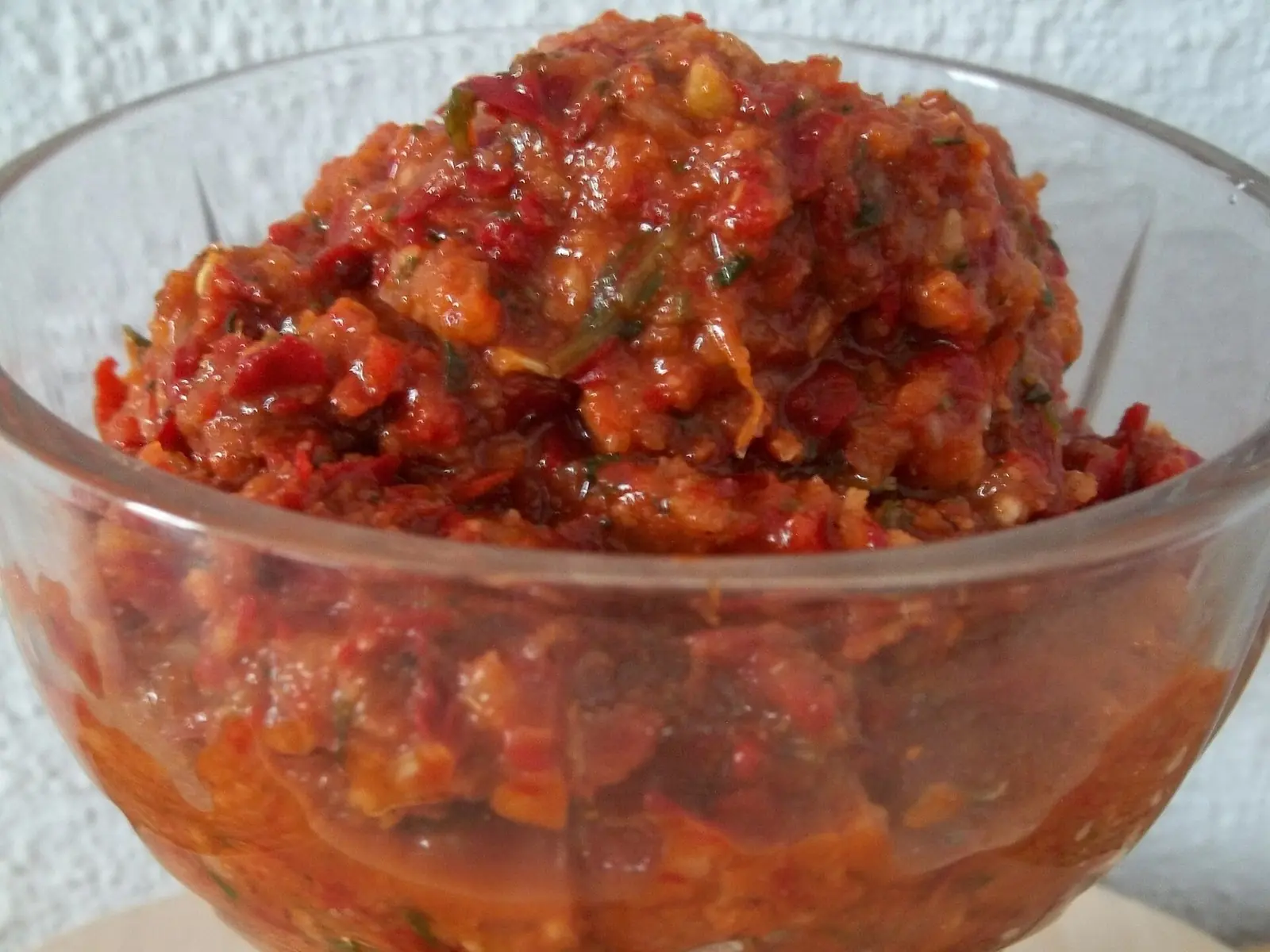
Add the tomato paste, garlic, ground coriander, hot red pepper and the ajika if using. Keep stirring for 2 to 3 minutes, so the paste darkens by a shade and the spices smell toasted.
- Return the broth10 min waiting· starts at +2 h 38 min
Pour the broth back a ladle at a time, stirring, until the sauce is as thick or as soupy as you want it. Simmer uncovered on low heat for 10 minutes, then taste, holding back on salt if pickles are going in.
- Add herbs and pickles5 min hands-on· starts at +2 h 48 min
Stir in most of the parsley and basil along with the diced pickles. Turn the heat up to medium and let the pot bubble for 5 minutes, stirring once or twice.
- Rest, then serve10 min waiting· starts at +2 h 53 min
Turn off the heat, cover the pot and let it stand for 10 minutes while everything settles. Ladle into heated deep plates and scatter over the rest of the herbs, a few half-moons of raw onion and some fresh coriander.
About 720 kcal for one of 4 servings made with chuck, butter and pickles, not counting rice, potato or bread; about 620 with beef shin. This is an estimate from standard values for the ingredients, not a lab figure.
Bring it to the table piping hot. With rice or mash, spoon the sauce over the side and use a fork and spoon; served on its own, tear off pieces of bread and dip them in. A slice of raw onion or a piece of pickle between mouthfuls takes the edge off the pepper.
Tips, swaps and variations
Tips from your host
- Keep the first cook at a bare simmer with the lid firmly on. A hard boil tightens the beef and drives off the liquid you need later, while gentle heat gives soft meat and plenty of broth.
- Georgian recipes usually ask for lean beef, and cheap eateries make ostri from trimmings. Lean cuts such as topside or silverside are fine if you keep the heat very low and allow up to 2 hours 30 minutes; chuck, blade and shin are more forgiving.
- The saved broth is what makes ostri looser and redder than other Georgian beef stews. Add it back gradually and stop when the sauce looks right to you, rather than pouring it all in at once.
- Ground hot pepper varies a great deal in strength. Begin with the amount given, then taste once the broth has simmered for a few minutes and add more if you want real fire.
- Cook the tomato paste with the garlic and spices for a couple of minutes before the broth goes back. Its raw, tinny taste disappears and the sauce turns a deeper red.
- Pickled cucumbers and ajika both carry a lot of salt, so season the pot properly only at the very end.
Variations and swaps
- Thick ostri with rice: return only about half the broth and simmer a few minutes longer, until the sauce clings to the meat. Some Georgian home cooks press hot boiled rice into a teacup, turn it out onto each plate and ladle the ostri over it.
- Thin ostri with mashed potato: add all the broth plus a splash of hot water, so the sauce is loose enough to eat with a spoon, and serve it beside a mound of buttery mash.
- Sweat-first method: some Georgian cooks put the beef and onions into a dry, covered pot until their liquid has cooked away, then add boiling water to cover and simmer until tender. They strain off the broth, cook a tin of tomatoes and the paste with the meat for 10 to 15 minutes, add broth to taste and finish with coriander, parsley, garlic and red pepper. This version has no butter.
- Pepper paste version: blend 3 or 4 seeded sweet and hot peppers with the garlic, 1 tsp blue fenugreek (utskho suneli) and freshly crushed coriander seed, and stir the paste into the meat together with the tomatoes. Some home cooks also swap the water for dry white wine.
- Dairy-free: replace the butter with 5 tbsp sunflower oil. The sauce is a little less rich but works just as well with rice or bread.
- Pressure cooker: cook the beef with the bay leaves and only 200 ml water for about 35 minutes at high pressure and let the pressure drop by itself, then carry on from pouring off the broth.
- Tinned tomatoes out of season: use a 400 g tin of chopped tomatoes instead of fresh ones and give them 2 or 3 minutes more before the paste goes in.
Serve it with
- Plain boiled rice with a thick ostri
- Mashed potato with a thin, spoonable ostri
- Warm shoti or another Georgian bread to dip in the sauce
- Fresh cucumbers, tomatoes and a handful of herbs, or a Georgian salad
- Georgian pickles such as jonjoli, beetroot-pink cabbage, pickled garlic or green peppers
- A dry Saperavi or a cold Georgian beer
Make ahead and storage
Chilled in a covered container, ostri stays good for 3 days, and many cooks think it tastes better on the second day. The sauce thickens as it cools, so reheat it slowly with a few spoonfuls of water or leftover broth until it bubbles. It freezes for about 3 months, but the pickles go soft; if you plan to freeze it, leave them out and stir in fresh ones when you reheat.


Maspindzeli Travel, Tbilisi · private tours and cooking classes in Georgia · maspindzeli.ge · WhatsApp +995 598 74 74 54 · hello@maspindzeli.ge