- Georgia (the country) has 3,941,100 inhabitants (Geostat estimate for 1 January 2026), its capital is Tbilisi, and its official language, Georgian, is the mother tongue of 85.1% of residents.
- The national flag is the white five-cross flag, which parliament adopted on 14 January 2004; the currency is the lari (GEL, symbol ₾), which traded at about 2.60 to the US dollar in October 2026.
- Georgia is not a Muslim country: the 2024 census recorded 82.0% Orthodox Christians and 11.1% Muslims, the latter living mostly in Adjara, Kvemo Kartli and the Pankisi Gorge.
- For the practical codes: dial +995, websites end in .ge, clocks show UTC+4 all year (no summer time since 2005), sockets take C and F plugs at 220 V, cars keep right, and 112 is the emergency number.
- Under the Labour Code the country has 18 days off a year, from New Year and Christmas on 7 January through four days at Orthodox Easter to St George's Day on 23 November.
Georgia country facts in brief: Georgia is a small, mostly Orthodox Christian republic in the South Caucasus, home to about 3.94 million people, with Tbilisi as its capital, a language and alphabet of its own and a currency called the lari. Its dialling code is +995, clocks show UTC+4 in every season and the sockets take European C and F plugs. Every figure here comes from an official source, mainly the 2024 census, the National Bank, the Labour Code and the constitution, read in October 2026.
Think of it as the reference sheet we would like every guest to skim before landing: a quick-facts table, then the flag, language, money, religion and church manners, phones and power, public holidays, people, government and fun facts that hold up. Location and neighbours have their own page, where is Georgia, so here they get one line: the country sits on the eastern shore of the Black Sea, with Russia to the north and Turkey, Armenia and Azerbaijan to the south.
Georgia country facts at a glance
These are the latest official figures as of October 2026. Geostat, the national statistics office, can only count people in territory the government controls, so its population, language, ethnic and religion data leave out Abkhazia and the Tskhinvali region.
| Fact | Georgia (the country) |
|---|---|
| Official name | Georgia; in Georgian, Sakartvelo (საქართველო). The constitution uses no longer form such as 'Republic of Georgia' |
| Capital | Tbilisi, with about 1,369,400 residents (Geostat estimate for 1 January 2026) |
| Population | 3,941,100 (Geostat estimate, 1 January 2026); 3,929,581 at the census of 14 November 2024 |
| Area | 69,700 km², a figure that includes the occupied territories |
| Official language | Georgian; in Abkhazia, Abkhaz as well |
| Currency | Georgian lari (GEL, ₾), split into 100 tetri; about 2.60 GEL per US dollar (National Bank of Georgia, 17 October 2026) |
| Coins and notes | Four tetri coins (5, 10, 20, 50) and two lari coins (1, 2); notes from 5 to 100 lari, plus a rarely seen 200 |
| Calling code | +995 |
| Internet domain | .ge, plus .გე in Georgian script |
| Time zone | UTC+4 the whole year; no daylight saving since March 2005 |
| Electricity | 220 V at 50 Hz; plug types C and F |
| Driving side | Right |
| Emergency number | 112, free, for police, ambulance, fire and rescue |
| Religion (2024 census) | 82.0% Orthodox Christian, 11.1% Muslim, 2.6% Armenian Apostolic, about 4% other faiths or none |
| Ethnic groups (2024 census) | Georgian 84.1%, Azerbaijani 6.8%, Armenian 4.3% |
| Government | Parliamentary republic; member of the United Nations since 1992 |
| Public holidays | 18 days off a year; the national day is Independence Day, 26 May |
| Highest peak | Shkhara, 5,193 m, in Svaneti |
The Georgia country flag, coat of arms and national anthem
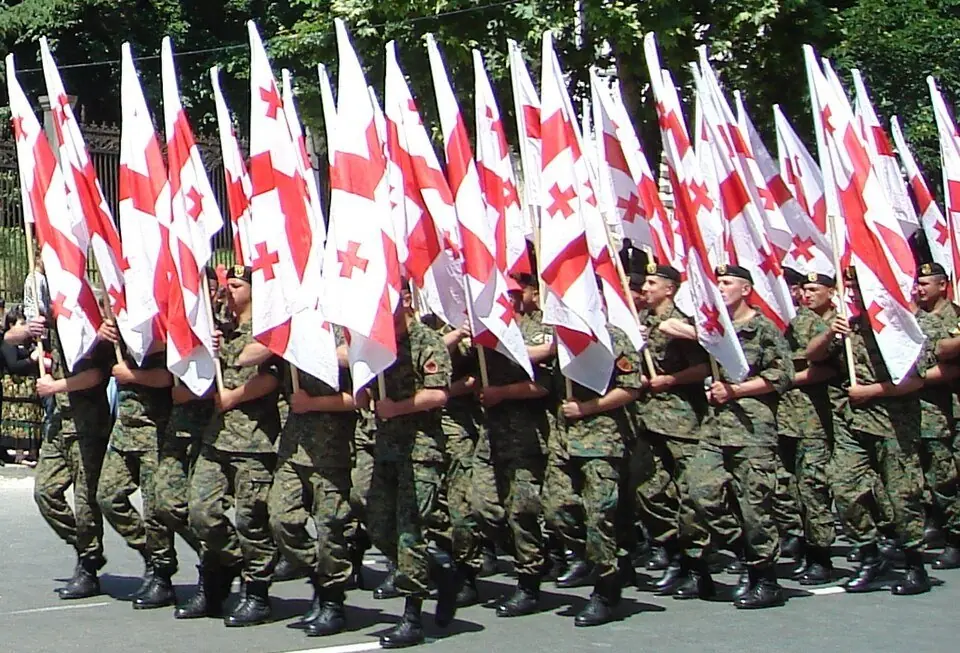
Georgia's flag is white, crossed edge to edge by a broad red St George's cross, with a smaller red cross in each of the four white quarters. Georgians call it khutjvriani drosha, the five-cross flag. The little crosses, whose arms widen toward the tips, are known as bolnur-katskhuri crosses after early medieval church carvings at Bolnisi and Katskhi. Parliament adopted the design on 14 January 2004, a date now kept as Flag Day.
The pattern itself is older. A five-cross banner flies over Tbilisi on a nautical chart drawn in 1367 by the Pizzigani brothers of Venice, although historians still argue over how long medieval Georgia really used it. In the early 2000s the opposition National Movement adopted it, and after the Rose Revolution of November 2003 it became the state flag, replacing the dark red flag of the 1918-1921 republic with its black and white stripes in the corner. No law gives the crosses a meaning; the usual readings are Christ with the four Evangelists, or the five wounds of Christ.
Coat of arms and anthem
The coat of arms, in use since 1 October 2004, shows St George on a silver horse driving his lance into a dragon, on a shield that is heraldically purple but almost always printed red. Two gold lions hold it, a gold royal crown sits on top, the whole rests on a golden grapevine, and the ribbon below reads Dzala ertobashia, 'strength is in unity'. The anthem, Tavisupleba ('Freedom'), dates from the same year: its music is arranged from Zakaria Paliashvili's operas Abesalom da Eteri and Daisi, with words by the poet Davit Magradze.
Georgia country language: what people speak
The official language is Georgian, kartuli to its speakers. It belongs to the small Kartvelian family with Megrelian, Svan and Laz, and is unrelated to Russian, Turkish, Armenian or the Indo-European languages of Europe. In the 2024 census, 85.1% of residents gave Georgian as their mother tongue, then Azerbaijani (6.8%), Armenian (3.5%) and Russian (1.4%). Megrelian is spoken at home across Samegrelo and Svan in the valleys around Mestia, but their speakers write in Georgian.
Georgian has its own alphabet, Mkhedruli: 33 letters and no capitals. Our guide to the Georgian alphabet covers the scripts and how to read them. Words can open with long runs of consonants; gvprtskvni, 'you peel us', starts with eight.
Most people over about 40 also understand Russian, still handy in the mountains and at markets, while younger Georgians and people working in tourism in Tbilisi, Batumi, Kazbegi and Mestia often speak good English. Road signs on the main routes repeat names in Latin letters.
| English | Georgian | Say it |
|---|---|---|
| Hello | გამარჯობა | gamarjoba |
| Thank you | მადლობა | madloba |
| Yes / no | კი / არა | ki / ara |
| Please / sorry | თუ შეიძლება / ბოდიში | tu sheidzleba / bodishi |
| Goodbye | ნახვამდის | nakhvamdis |
| Delicious | გემრიელია | gemrielia |
| Cheers | გაუმარჯოს | gaumarjos |
Georgia country currency: the lari (GEL)
Georgia's money is the lari, code GEL, made up of 100 tetri. It replaced a short-lived coupon currency in autumn 1995 and has been the only legal tender since 2 October of that year. Both names are old money words: lari meant a treasure or hoard, and tetri, 'white', was the Georgian name for a medieval silver coin. The lari sign, ₾, a stylised Georgian letter ლ (l) crossed by two strokes, came into use in 2014.
The coins you will handle are the 5-, 10-, 20- and 50-tetri pieces and the 1- and 2-lari coins; smaller 1- and 2-tetri coins exist but rarely turn up. Each banknote carries a figure from Georgian history:
| Note | Portrait | Who they were |
|---|---|---|
| 5 GEL | Ivane Javakhishvili | Historian who founded Tbilisi State University in 1918 |
| 10 GEL | Akaki Tsereteli | Poet of the 19th-century national revival |
| 20 GEL | Ilia Chavchavadze | Writer and national leader, later declared a saint |
| 50 GEL | Queen Tamar | Ruler of the 12th-century golden age (1184-1213) |
| 100 GEL | Shota Rustaveli | Author of the epic The Knight in the Panther's Skin |
| 200 GEL | Kakutsa Cholokashvili | Leader of armed resistance to Soviet rule in the 1920s; a rare note |
On 17 October 2026 the National Bank's official rate was 2.60 lari to the US dollar, 2.93 to the euro and 3.47 to the pound; our currency converter uses the same rate. Hotels sometimes quote in dollars or euros, but you pay in lari. Visa and Mastercard work in town shops, restaurants and hotels, while village shops, markets, small guesthouses and marshrutkas mostly want cash. Town exchange booths beat airport counters; the Tbilisi airport guide covers money on arrival.
Georgia country religion: is Georgia a Muslim country?
No. Georgia is a mainly Orthodox Christian country with a sizeable Muslim minority and a secular state. The 2024 census, the first since 2014, recorded these affiliations:
| Religion | People (2024 census) | Share |
|---|---|---|
| Orthodox Christian | 3,223,206 | 82.0% |
| Muslim | 437,458 | 11.1% |
| Armenian Apostolic | 101,736 | 2.6% |
| Jehovah's Witnesses | 10,787 | 0.3% |
| Catholic, Jewish, other faiths, none or not stated | 156,394 | 4.0% |
In the 4th century the eastern Georgian kingdom of Kartli (Iberia to classical writers) made Christianity its state religion, after St Nino, a woman from Cappadocia, converted King Mirian III; tradition dates it to 326 or 337. Georgia is usually named, after Armenia, as one of the first kingdoms to make the faith official. The Georgian Orthodox Church is autocephalous (self-governing), led from Tbilisi by the Catholicos-Patriarch of All Georgia, and keeps the Julian calendar, which is why Christmas falls on 7 January. Article 8 of the constitution guarantees freedom of belief while recognising the church's 'outstanding role' in the nation's history and its independence from the state.
Where Georgia's Muslims live: Adjara, Kvemo Kartli and Pankisi
In Adjara, on the Black Sea, many ethnic Georgians are Sunni Muslims, a legacy of Ottoman rule that ended in 1878; minarets rise in Khulo and the highland villages, and Batumi's Orta Jame mosque was built in 1866. Ethnic Azerbaijanis in Kvemo Kartli, around Marneuli, are mostly Shia, and the Kists of the Pankisi Gorge, a people related to the Chechens, are Sunni. In Old Tbilisi, the Jumah Mosque near the sulphur baths is known for Sunni and Shia believers sharing one prayer hall.
Muslim travellers will find mosques and plenty of halal restaurants in Tbilisi and Batumi. Georgian food culture itself is Christian: wine and chacha flow at every feast, and pork goes into mtsvadi (grilled skewers) and many khinkali fillings, so ask for beef, lamb, cheese or mushroom versions.
Armenian Apostolic churches serve the Armenian community in Tbilisi and Javakheti, and Georgian Jews, whose tradition says they arrived about 2,600 years ago, keep synagogues in Tbilisi, Kutaisi and Oni. Our Orthodox Georgia Pilgrimage tour visits the main Christian shrines with a guide in your language.
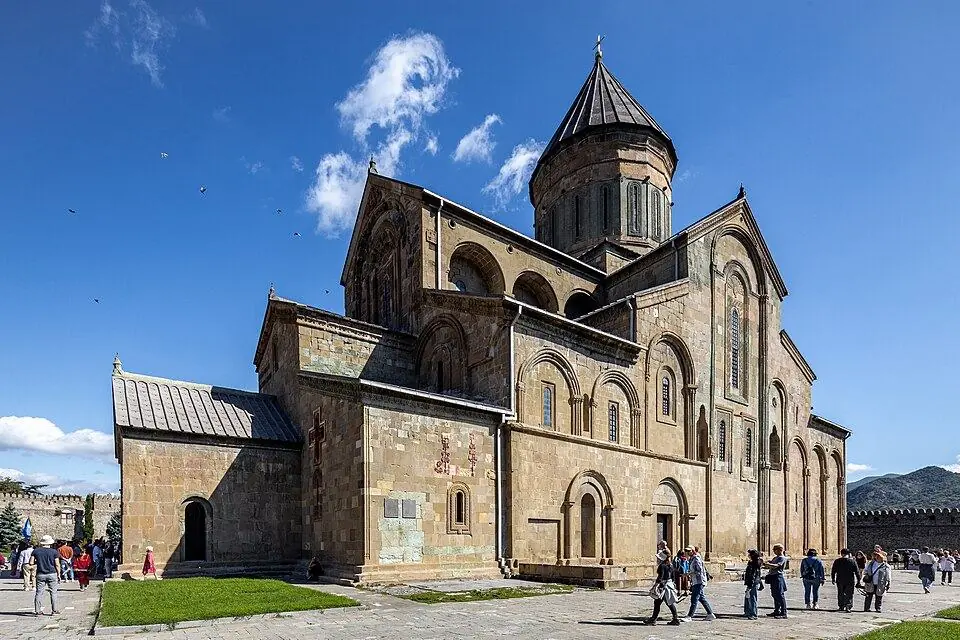
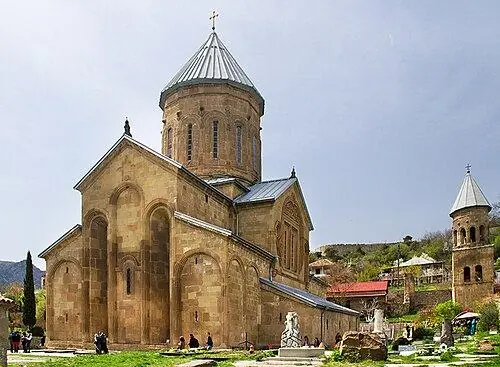
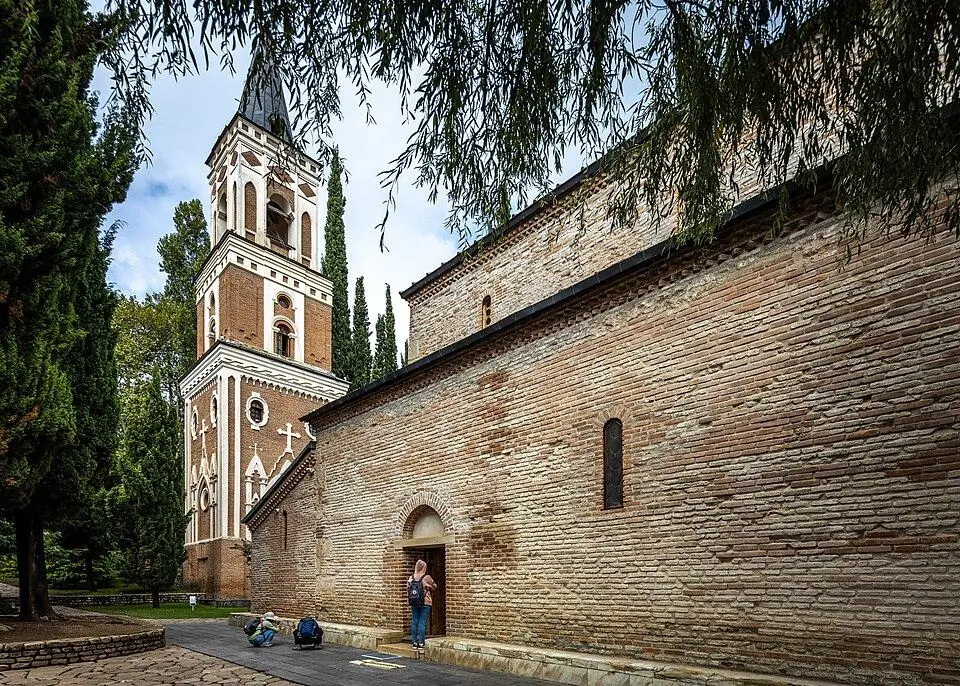
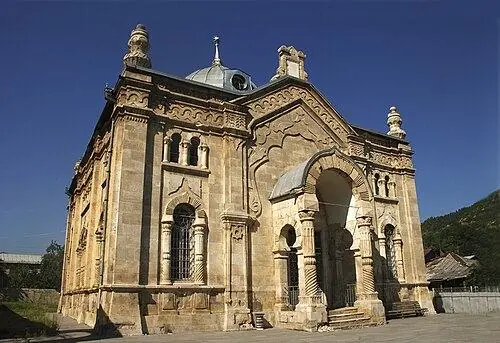
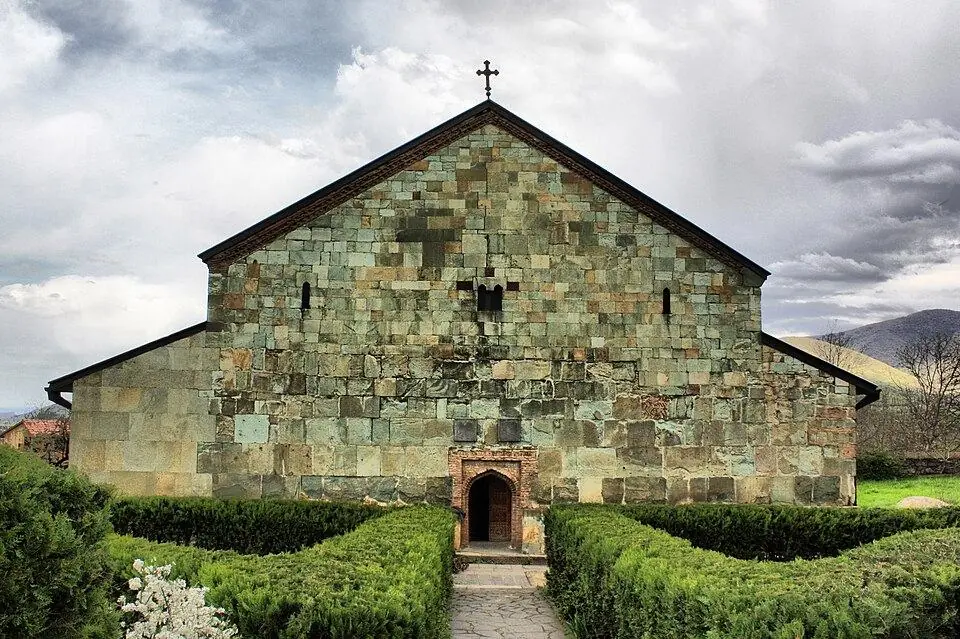
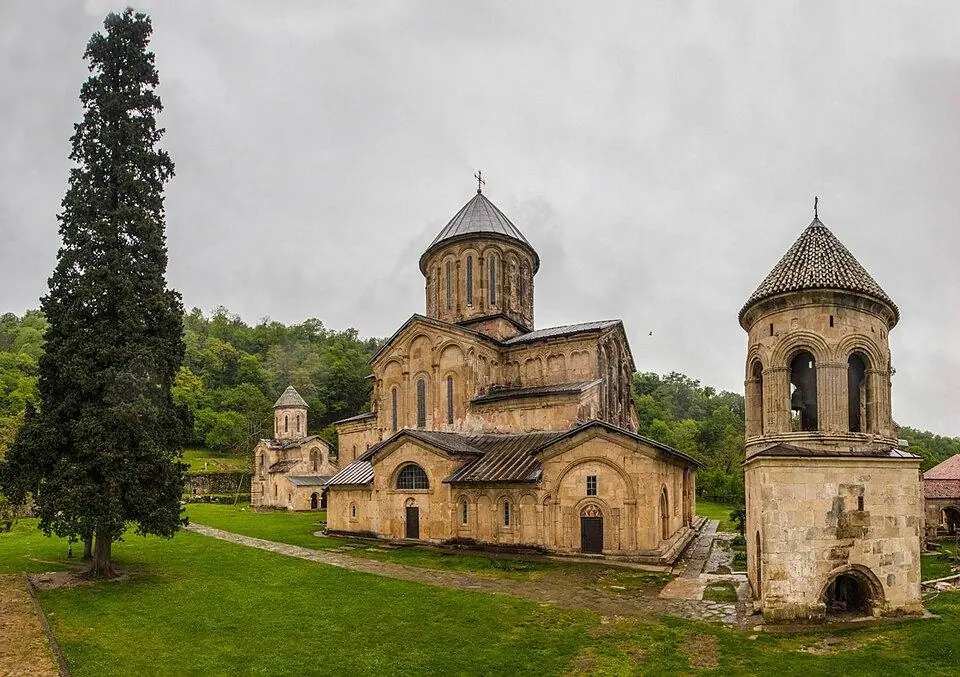
Visiting Georgian Orthodox churches: dress code and etiquette
Visitors are welcome in nearly every church, even during a service. A few customs apply everywhere:
- Women cover their hair and wear a skirt or wrap below the knee; trousers pass in many city churches but not in monasteries. Men wear long trousers and remove hats. Nobody goes in with bare shoulders.
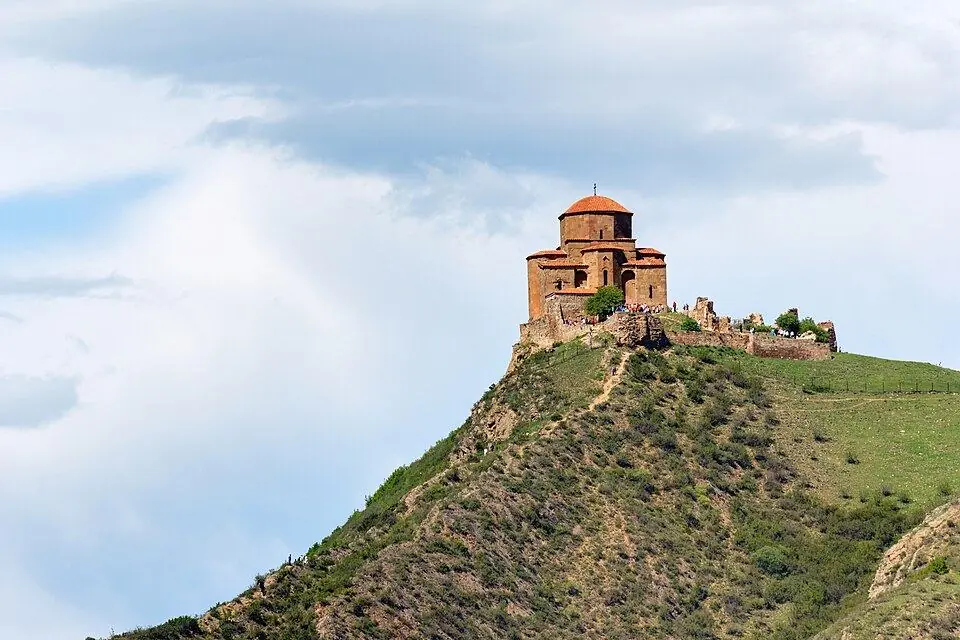
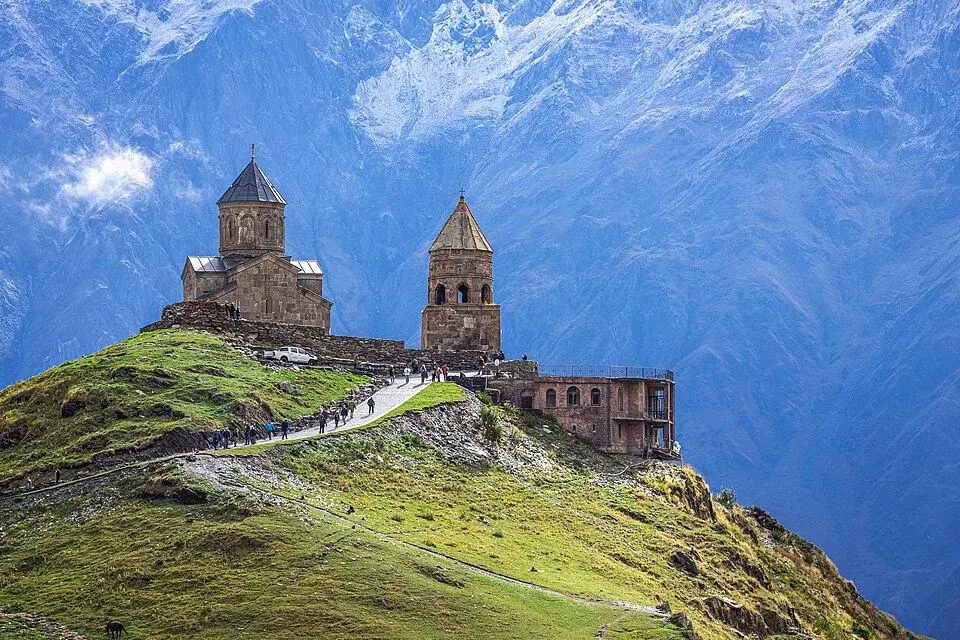
- Busy sites such as Jvari, Gergeti and Bodbe leave scarves and wrap skirts at the entrance, but a light scarf in your bag saves waiting.
- Keep your voice down, silence your phone and never walk behind the iconostasis, the icon screen before the altar, which only clergy pass.
- Many monasteries ban photography. Elsewhere, turn the flash off and ask before photographing a priest, a monk or a service.
- The congregation stands through long services; slipping in and out at the back is fine, as is lighting a thin candle bought at the church counter.
- In Tusheti, Khevsureti and Pshavi, old village shrines called khati or nishi predate the church. Women must keep away, and no visitor should step inside a shrine enclosure.
Georgia country code (+995), time zone, plug type and driving side
Phone numbers and the +995 code
To call Georgia from abroad, dial +995 and then the nine-digit number. Mobile numbers start with 5 (+995 5xx xx xx xx) and Tbilisi landlines with 32; inside Georgia you dial a mobile as just its nine digits. Drivers, guides and guesthouses mostly use WhatsApp. The mobile networks are Magti, Silknet and Cellfie, a local SIM needs only your passport, and the Tbilisi airport guide covers buying one on arrival.
Time zone: UTC+4, no daylight saving
The country keeps Georgia Standard Time, UTC+4, year round; the clocks last changed in March 2005, when summer time was dropped. Tbilisi shares its hour with Baku, Yerevan and Dubai. Because Europe and North America switch their clocks, the gap with them changes twice a year:
| Place | Time compared with Tbilisi |
|---|---|
| London | 3 hours behind in summer, 4 in winter |
| Paris, Berlin, Warsaw | 2 hours behind in summer, 3 in winter |
| New York, Toronto | 8 hours behind in summer, 9 in winter |
| Istanbul, Moscow | 1 hour behind |
| Dubai, Baku, Yerevan | Same time |
| Delhi, Mumbai | 1 hour 30 minutes ahead |
| Beijing, Singapore | 4 hours ahead |
Plug type and voltage: C and F, 220 V
Sockets take round-pin European plugs: type C, the slim two-pin Europlug, and type F, the thicker Schuko plug with earthing clips on its sides. Power is 220 V at 50 Hz. Visitors from the UK, Ireland, North America, Australia and the Gulf need an adapter; Indian two-pin plugs fit, three-pin ones do not. Chargers rated 100-240 V need only the adapter, but 110-volt-only appliances, such as some American hair dryers, also need a converter. Tbilisi electronics shops sell adapters for a few lari.
Driving side, emergency number and web domain
- Traffic keeps to the right. Overtaking on two-lane mountain roads can be bold, so read our guide to getting around before you hire a car.
- Dial 112 for any emergency service, mountain rescue included. The call is free, works from a phone with no SIM card, and its app lets you send a text or start a video call.
- Georgian websites end in .ge. A Georgian-script domain, .გე, was approved in 2014 and opened to the public in 2016.
Public holidays in Georgia (the country) for 2026 and 2027
Article 30 of the Labour Code sets 14 fixed days off plus four around Orthodox Easter, 18 in all. A holiday falling on a weekend is not moved, though the government can add an extra day off by decree. Banks and public offices close; most shops, restaurants and sights stay open, but check museum hours.
| Date | Holiday | What happens |
|---|---|---|
| 1-2 January | New Year | Midnight fireworks; 2 January, Bedoba, is a day for luck and visits |
| 7 January | Orthodox Christmas (Shoba) | Night liturgy, then Alilo street processions |
| 19 January | Epiphany (Natlisgheba) | Blessing of water in churches |
| 3 March | Mother's Day | Flowers and family meals |
| 8 March | International Women's Day | Flower stalls everywhere |
| 9 April | National Unity Day | Recalls the Soviet crackdown of 9 April 1989 and the 1991 independence act |
| Friday to Monday: 10-13 April 2026, 30 April-3 May 2027 | Orthodox Easter (Aghdgoma) | Midnight liturgy, red eggs and paska bread; on Monday families take food and wine to the graves of relatives |
| 9 May | Victory Day | Marks the 1945 victory over Nazi Germany |
| 12 May | St Andrew the First-Called Day | The apostle who, by tradition, first preached here |
| 17 May | Family Sanctity and Respect for Parents Day | Church-led procession in central Tbilisi |
| 26 May | Independence Day | National day, for the republic of 1918; concerts and fairs |
| 28 August | Mariamoba (Dormition of the Virgin) | Pilgrimages to churches of the Virgin |
| 14 October | Svetitskhovloba (Mtskhetoba) | Feast and liturgy at Svetitskhoveli in Mtskheta |
| 23 November | Giorgoba (St George's Day) | The patron saint's feast; the second Giorgoba, 6 May, is a working day |
City festivals such as Tbilisoba are not days off, and 25 December is an ordinary working day.
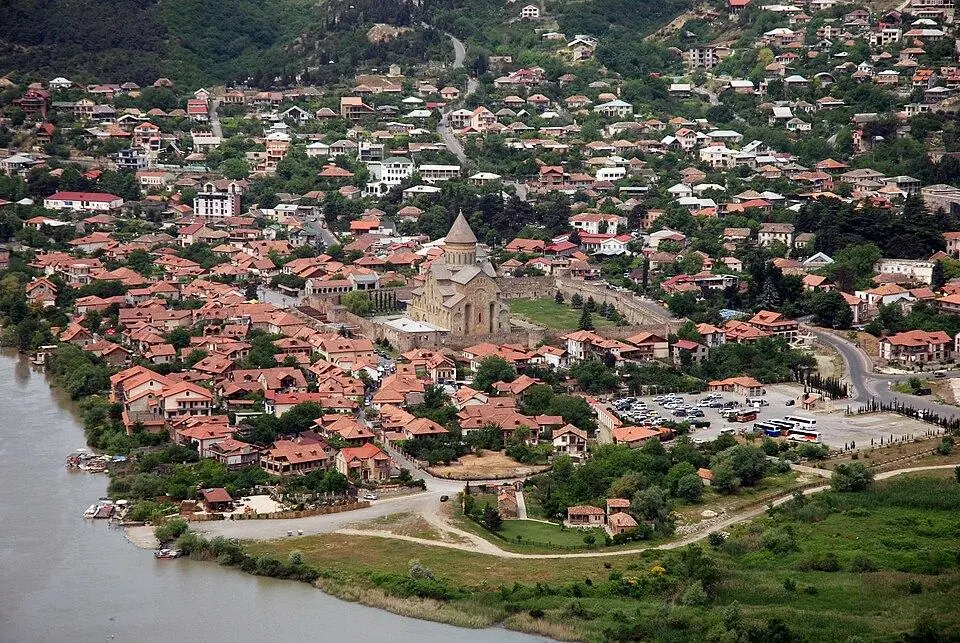
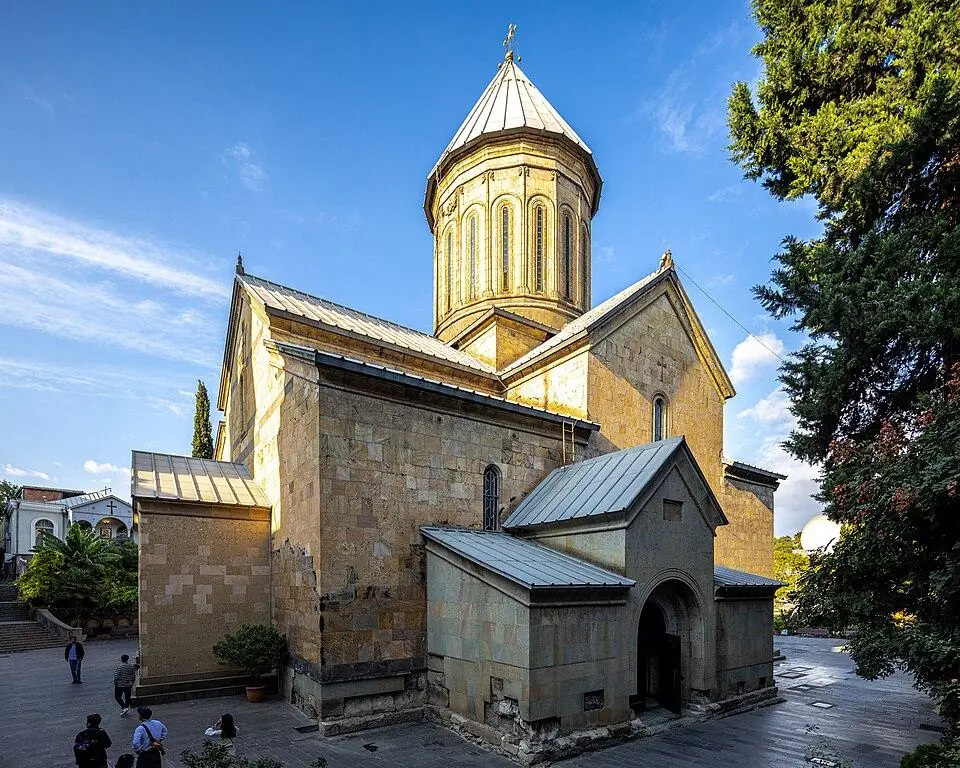
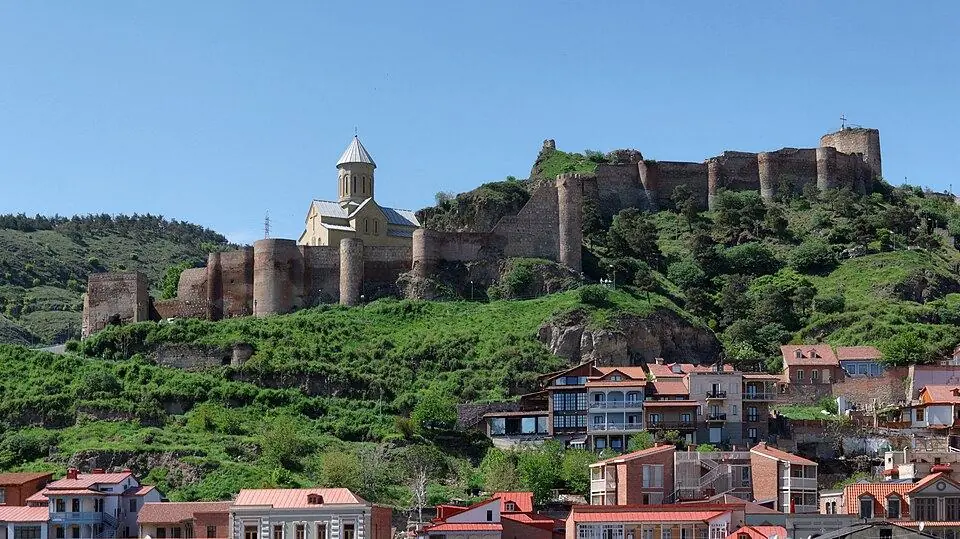
People of Georgia (the country): ethnic groups and regions
The 2024 census counted 3,929,581 residents, 5.8% more than in 2014. The growth came from Tbilisi (up 20.1%) and Adjara (up 20.7%), while most rural regions shrank. About 62.5% of people live in towns and cities, and one in three in the capital.
| Ethnic group | People (2024 census) | Share | Change since 2014 |
|---|---|---|---|
| Georgian | 3,304,075 | 84.1% | +2.5% |
| Azerbaijani | 268,832 | 6.8% | +15.4% |
| Armenian | 169,296 | 4.3% | +0.7% |
| Russian | 42,545 | 1.1% | +60.8% |
| Indian | 23,996 | 0.6% | Up from 446 |
| Ukrainian | 14,443 | 0.4% | +139.4% |
| Ossetian | 12,611 | 0.3% | -12.3% |
| Yazidi | 11,324 | 0.3% | -7.0% |
Regional identities run deep. Megrelians and Svans speak their own languages at home, Gurians are famed for polyphonic singing, Kakhetians for wine, and the mountain communities of the north-east, the Khevsurs, Tush and Pshavs, kept festivals and shrines older than the church. Azerbaijanis live mostly in Kvemo Kartli, Armenians in Javakheti around Akhalkalaki and Ninotsminda and in Tbilisi, and the Kists in the Pankisi Gorge. Many of the Indian residents are students at Georgian medical universities.
Administratively there are nine regions plus the autonomous republics of Adjara and Abkhazia and the city of Tbilisi; the where is Georgia guide maps each one.
How Georgia (the country) is governed, and its occupied territories
Georgia is a parliamentary republic. Under the 1995 constitution, as rewritten in 2017 and 2018, voters elect the 150 members of Parliament for four years by proportional representation, and a prime minister backed by the majority runs the government. The president is a largely ceremonial head of state, chosen since 2024 for five years by a 300-member electoral college instead of by popular vote. The Georgian Dream party has governed since 2012; the opposition disputed its October 2024 election win, and months of protests followed in central Tbilisi. For current advice on demonstrations, read whether Georgia is safe to visit in our safety guide.
Two regions lie beyond the government's control: Abkhazia in the north-west, along the coast to the Russian border, and the Tskhinvali region, also called South Ossetia, north of Gori. Russian forces have occupied both since the five-day war of August 2008. Russia and a few other states recognise them as independent; Georgia and nearly every other country regard them as occupied Georgian land. Entering either from Russia is an offence under Georgian law, none of the statistics above include them, and we run no trips there.
Fun facts about Georgia (the country) that are actually true
- Georgia has about 8,000 years of wine behind it: pottery from Gadachrili Gora and Shulaveris Gora, Neolithic farming sites in Kvemo Kartli, carries grape-wine traces dated to roughly 6000 BC, which a 2017 study called the oldest chemical evidence of winemaking. Making wine in buried qvevri has been on UNESCO's intangible heritage list since 2013.
- Some of the oldest humans found outside Africa lived here. At Dmanisi, ~85 km south-west of Tbilisi, excavations produced five skulls of early Homo about 1.8 million years old, now shown in the Georgian National Museum.
- Polyphonic folk singing earned Georgia one of the first UNESCO intangible heritage proclamations, in 2001, and the song Chakrulo is on the Golden Record that has travelled aboard the two Voyager probes since 1977.
- In Georgian, mama means father and deda means mother; the aluminium statue above Tbilisi is Kartlis Deda, Mother of Georgia.
- Georgian has no grammatical gender: one pronoun, is, covers he, she and it.
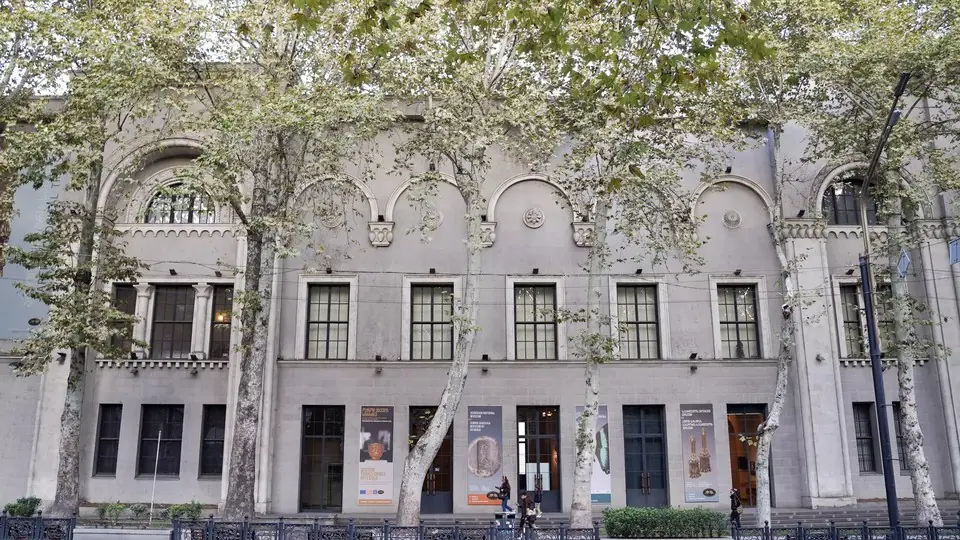
- The Argonauts sailed to Colchis, today's western Georgia, for the Golden Fleece, and real Colchian gold from the ancient town of Vani fills cases in the National Museum's treasury.
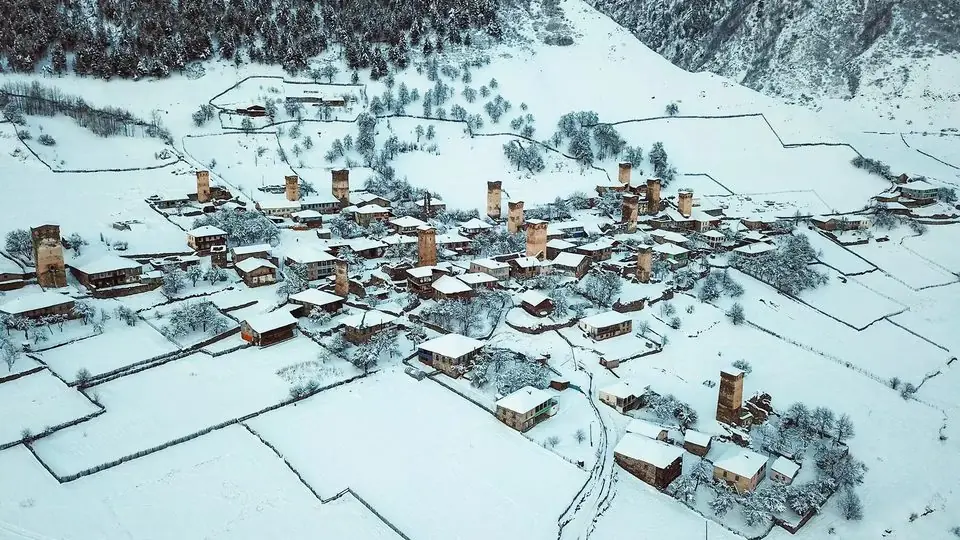
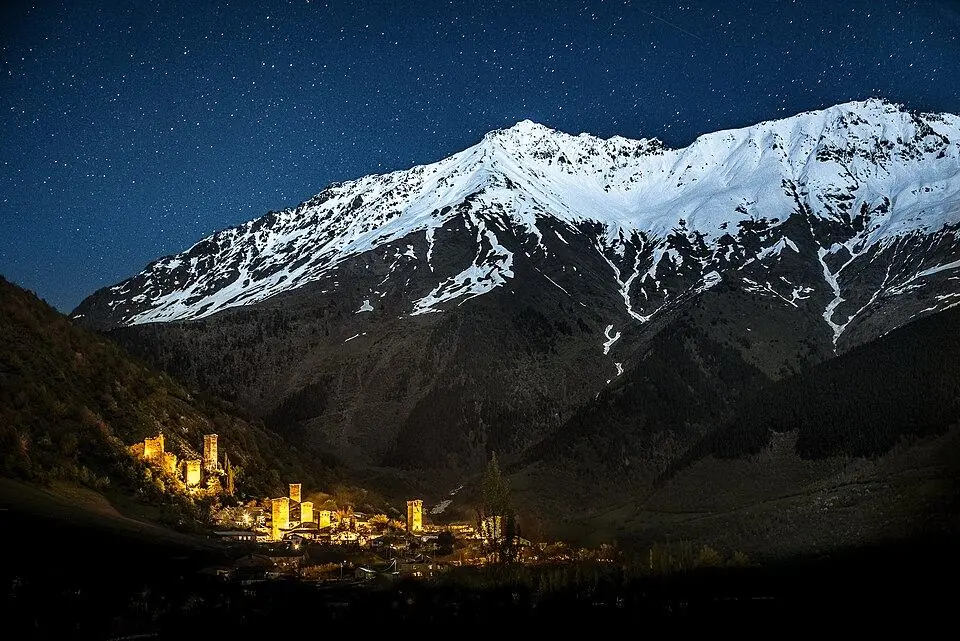
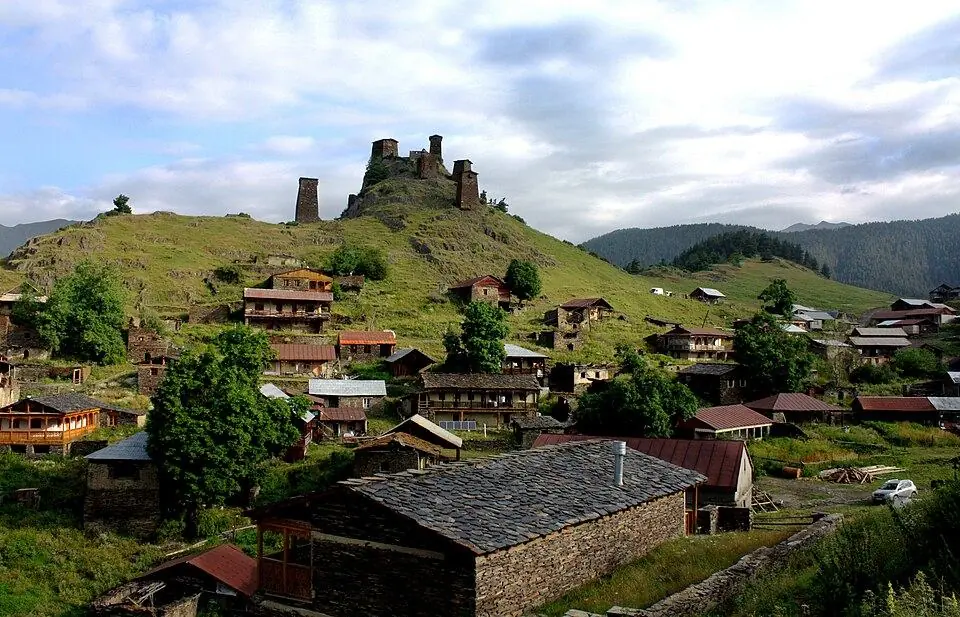
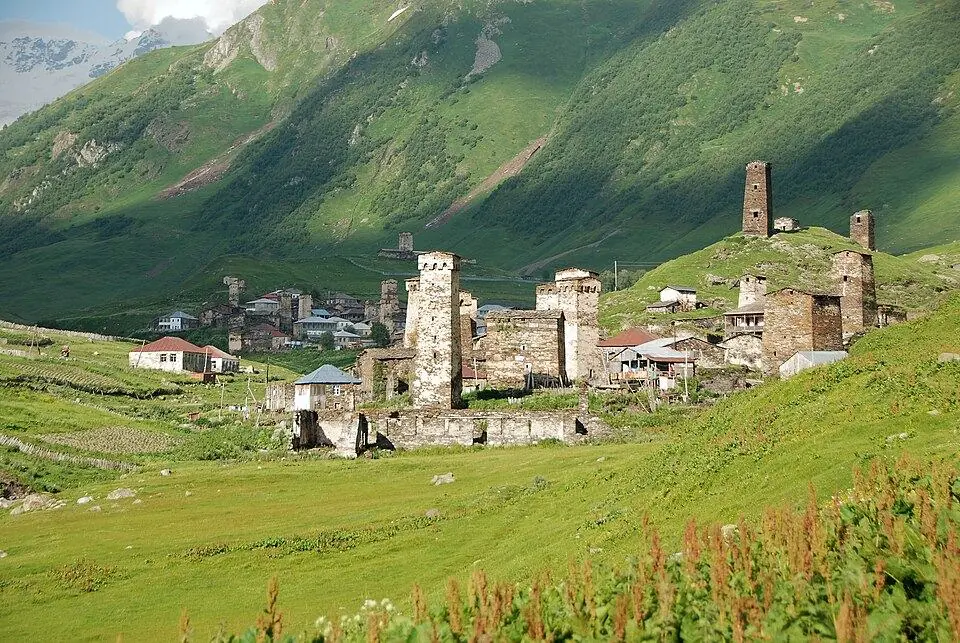
- Ushguli in Svaneti, at ~2,100 m, is often listed among Europe's highest villages lived in all year; its towers are part of Upper Svaneti, one of the country's four UNESCO World Heritage properties.
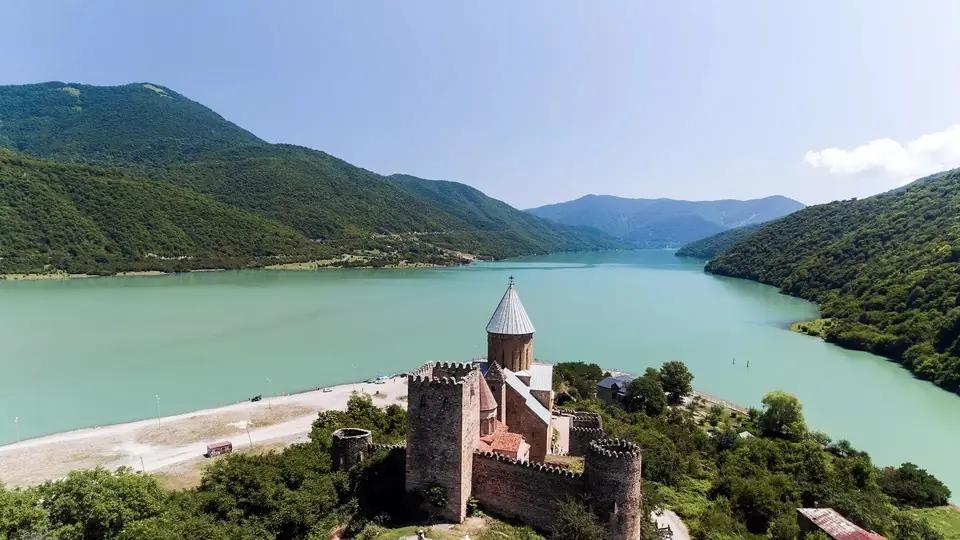
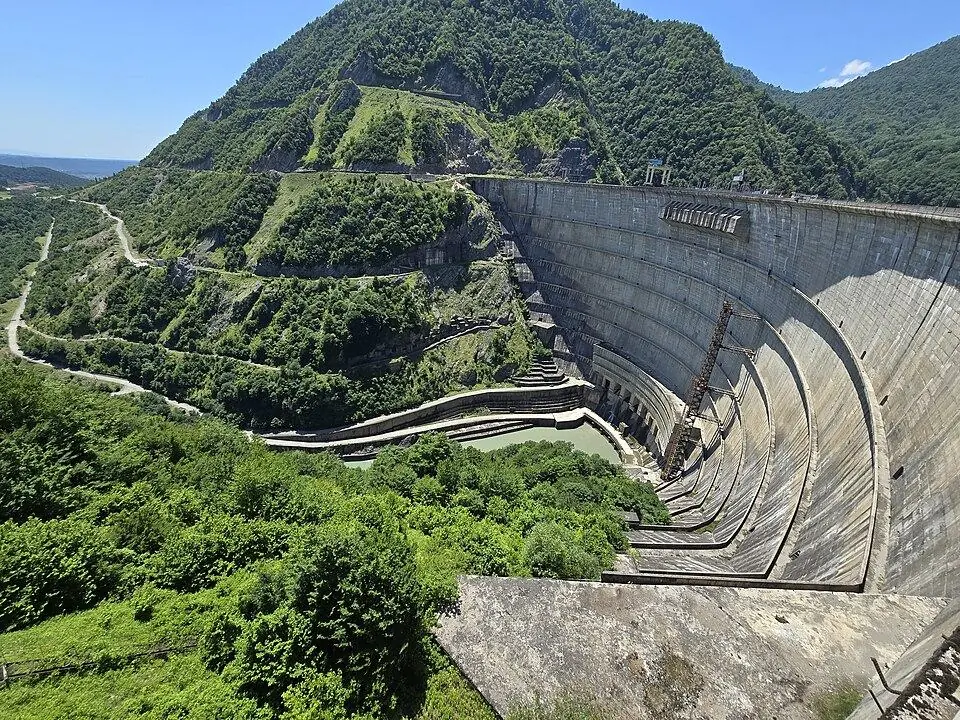
- The concrete arch of the Enguri Dam rises 271.5 m, among the tallest arch dams on earth.
- Nona Gaprindashvili, from Zugdidi, became the first woman awarded chess's grandmaster title, in 1978.
- The national rugby team, the Lelos, has played at every Rugby World Cup since 2003.
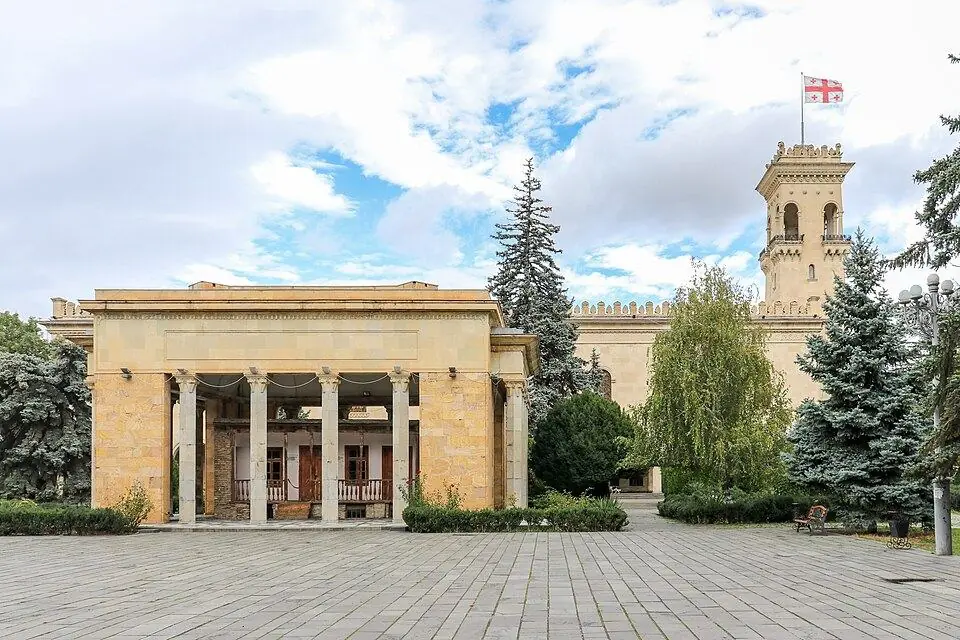
- Ioseb Jughashvili, known as Stalin, was born in Gori in 1878; his family's small house stands in the grounds of the Stalin Museum.
Many of these fit into one trip. Our seven-day route takes in Tbilisi and the Colchian gold of the National Museum, the churches of Mtskheta, Gori and Uplistsikhe, and the vineyards of Kakheti, privately, for a group of any size, on dates you pick.
Frequently asked questions
Is Georgia a Muslim country?
No. The 2024 census found 82.0% of residents to be Orthodox Christians and 11.1% Muslims. The constitution protects freedom of religion and recognises the historic role of the Georgian Orthodox Church. Most Muslims live in Adjara on the coast, in Kvemo Kartli and in the Pankisi Gorge.
What currency does Georgia the country use?
The Georgian lari (GEL, ₾), divided into 100 tetri. In October 2026 one US dollar bought about 2.60 lari and one euro about 2.93. Cards work in towns; carry cash for villages, markets and minibuses.
What is the country code for Georgia?
+995, followed by a nine-digit number: mobiles start with 5 and Tbilisi landlines with 32. The internet domain is .ge.
What plug type does Georgia the country use?
Types C and F, the round two-pin European plugs, at 220 V and 50 Hz. Bring an adapter from the UK, North America, Australia or the Gulf; most phone and laptop chargers need no converter.
What time zone is Tbilisi in?
UTC+4, Georgia Standard Time, with no daylight saving since 2005. Tbilisi runs 3 hours ahead of London from late March to late October and 4 hours ahead the rest of the year, 1 hour ahead of Istanbul and level with Dubai.
What do the five crosses on the Georgian flag mean?
The law gives no official meaning. Common readings are Jesus with the four Gospel writers, or the five wounds of the Crucifixion. The design appears on a Venetian chart of 1367 and became the state flag in January 2004.
Do people in Georgia speak English or Russian?
Both, depending on age. Georgian is the language of daily life, most people over about 40 understand Russian, and English is common among younger Georgians and in tourism in Tbilisi, Batumi and the main mountain towns.
Which side of the road do they drive on in Georgia (the country)?
The right, as in continental Europe. Signs on the main routes show names in Georgian and Latin letters, and many visitors hire a private driver for mountain roads.