Rtveli Grape Harvest
Spend the Georgian vintage with a Kakhetian family: cut the bunches by hand, tread them in a wooden satsnakheli, pour the juice into qvevri and toast the new wine at a harvest feast.
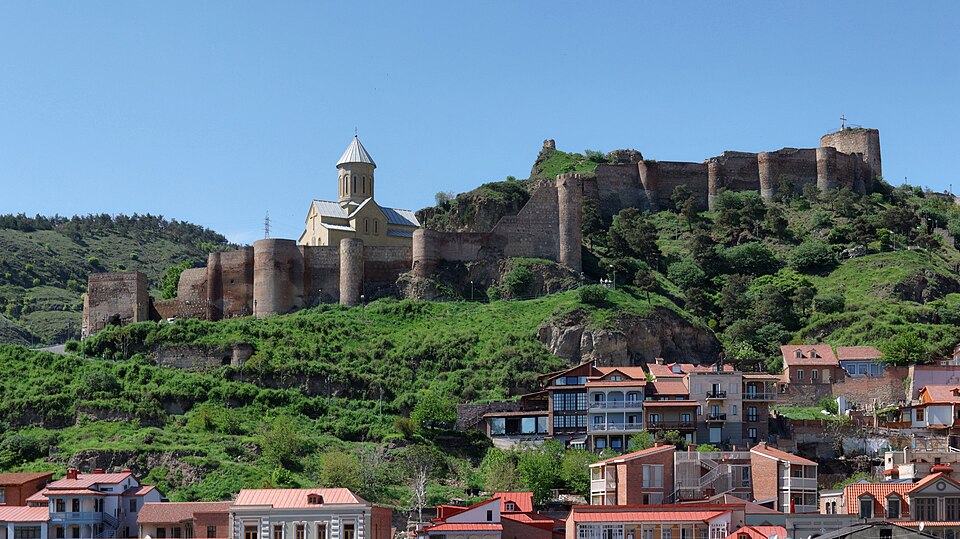 Old Tbilisi (Kala)Photo: Alexxx1979, CC BY-SA 4.0
In Kakheti, the weeks of rtveli, the grape harvest, matter more than any other time of year. Between mid-September and mid-October whole families, their neighbours and friends turn out to cut Rkatsiteli and Saperavi by hand, tread the bunches in a long wooden trough known as a satsnakheli, and tip juice, skins and stems into qvevri set into the cellar floor. On this trip you spend two harvest days living with a winemaking family, then visit Alaverdi, Tsinandali and the Khareba tunnel before a harvest supra in Sighnaghi closes the week.
The work in the vineyard is not heavy, and you can help for as long or as little as you want. Picking starts when the grapes are ripe, so the day can move by one or two days either way, and we fit the programme to the family's plans. Because of that, we offer this trip only in the harvest window, about mid-September to mid-October. You sleep in a family guesthouse near Telavi and then in a small Sighnaghi hotel, and the longest drive takes around two and a half hours.
Highlights
- Cutting bunches by hand alongside a Kakhetian family
- Treading the harvest in a wooden satsnakheli
- Helping fill and seal the qvevri in the family cellar
- Turning fresh grape must into churchkhela
- Glasses poured at Alaverdi Monastery, at Tsinandali and inside the Khareba tunnel
- A harvest feast in Sighnaghi, with polyphonic songs at the table
Tour facts
The family house and garden meals are easy to reach, and the Tsinandali estate and Khareba tunnel are mainly flat. Vineyard rows are uneven, and Sighnaghi's walls and the path to St Nino's spring at Bodbe are steep; guests with reduced mobility can take part from the cellar and the treading trough.
Places on this tour
13 places · tap any place to read its guide
- 1Tbilisi: last year's vintage and a Kakhetian supper
- 2Telavi market and a first walk through the vines
- 3The big day: cutting, treading and churchkhela
- 4Monks at harvest: Alaverdi, then Gremi, Nekresi and Khareba
- 5Chavchavadze's cellar, Sighnaghi's walls and the harvest feast
- 6Morning on the ramparts, Bodbe, and the road home
Day by day
01Tbilisi: last year's vintage and a Kakhetian supperOvernight: Tbilisi
Your guide collects you from the airport and introduces Old Tbilisi: Metekhi Church on its rock above the river, the cable car that swings up to Narikala Fortress, and the sulphur bathhouses of Abanotubani. In a Sololaki wine bar you sample qvevri wine from the previous vintage, made by the families you will stay with in Kakheti, and hear how this season's harvest is shaping up. Dinner is at a restaurant cooking Kakhetian food, such as chakapuli, spring lamb stewed with tarragon, and mtsvadi cooked over burning vine cuttings.
02Telavi market and a first walk through the vinesOvernight: Near Telavi (family guesthouse)
On the way to Kakheti, stop at the Telavi market, which in harvest season overflows with grapes, plastic crates and brand-new qvevri. Then carry on to your hosts' home in a wine village close to Telavi and move into their guesthouse. In the afternoon the winemaker takes you round the vineyard to explain the grape varieties, how ripeness is judged by tasting, and when picking will begin. Lend a hand cleaning the qvevri and coating them with lime so they are ready for the new wine, then join the family for dinner in their garden.
03The big day: cutting, treading and churchkhelaOvernight: Near Telavi (family guesthouse)
You are in the vineyard early with the family and their neighbours, snipping bunches of Rkatsiteli or Saperavi into crates. By midday the grapes are tipped into the satsnakheli, a long wooden trough, and trodden or pressed; the juice goes into the qvevri to ferment together with the skins and some of the stems. Lunch is eaten among the vines. In the afternoon, part of the fresh must is cooked with flour into a thick paste called tatara, and you dunk threaded walnuts into it again and again until they turn into churchkhela. In the evening the harvest crew sits down together for a family supra.
04Monks at harvest: Alaverdi, then Gremi, Nekresi and KharebaOvernight: Near Telavi (family guesthouse)
First check the fermenting qvevri; the juice bubbles away and needs stirring several times a day. Then drive to Alaverdi Monastery, where the monks make wine in a cellar with a history reaching back to the 11th century, and at rtveli you can watch their own harvest in progress. Afterwards visit Gremi, whose royal citadel dates from the 16th century, and Nekresi Monastery on its hillside. After lunch comes the Khareba wine tunnel in Kvareli, excavated in the 1950s, for a taste of semi-sweet Kindzmarauli. You return to your host family for dinner.
05Chavchavadze's cellar, Sighnaghi's walls and the harvest feastOvernight: Sighnaghi
After saying goodbye to your hosts, drive to Tsinandali, where in the 19th century Alexander Chavchavadze bottled some of the first European-style wines made in Georgia. See the house museum, the gardens and the old cellar, then follow the Alazani Valley to Sighnaghi for a walk on its 18th-century walls. If a neighbour has a still going, you can watch chacha being distilled from the grape pomace. The evening is the harvest supra itself, led by a tamada, full of toasts to the new wine and carried along by polyphonic singers.
06Morning on the ramparts, Bodbe, and the road home
Early in the morning, walk the walls of Sighnaghi while the mist lifts off the Alazani Valley. At Bodbe Monastery, where St Nino is buried, you can follow the steep path down to her spring if you want some exercise. The drive back to Tbilisi includes a pause at a roadside stall to buy churchkhela and a bag of Kakhetian walnuts. Your driver then takes you to the airport or your hotel. In spring, when the new wine is opened, expect a photo from your hosts of the qvevri you helped to fill.
Prices
Price per person for a private tour, by the size of your group. Sample prices
| Group size | Per person | Whole group |
|---|---|---|
| Solo traveller | $1,700 | $1,700 |
| 2 travellers | $1,030 | $2,060 |
| 3-4 travellers | $825 | from $2,475 |
| 5-8 travellers | $680 | from $3,400 |
| 9-15 travellers | $565 | from $5,085 |
Room and children
- Single room supplement: $220
- Children under 6 free (sharing a bed); ages 6-11 pay 70% of the adult price.
- Prices change with hotel level and season; your quote is final.
Popular add-ons
- Tbilisi airport transfer (car, 1-3 people)$30
- Extra night in Tbilisi with breakfast$90
- Supra dinner with folk music$60
What's included
- Arrival and departure transfers at Tbilisi airport
- Your own guide in your language
- Air-conditioned vehicle and driver for your group alone
- Five nights with breakfast, three of them in a winemaking family's home
- Every meal in Kakheti, plus the welcome dinner in Tbilisi
- A place in the harvest work and the churchkhela making
- Wine tastings at Alaverdi Monastery, the Tsinandali estate and in the Khareba tunnel
- The harvest supra, with tamada and singers
- Water in the car
- Your international flights
- Insurance for the trip with medical cover (a legal requirement for visitors since 2026)
- Lunch on day one in Tbilisi
- Any wine you buy to bring home
- Tips for your guide, driver and hosts
Good to know
Who it's for
- Wine lovers who want to cut grapes, tread them and fill a qvevri with a Kakhetian family
- Travellers who prefer staying in one family home over hotel hopping
- Families with children, who usually love the treading and churchkhela making
- Visitors free to travel between mid-September and mid-October
If your dates fall outside the harvest window, choose Wine & Supra, which runs from spring to late autumn and still includes cellars, cooking and a feast.
What to bring
- Old clothes and closed shoes you do not mind staining with grape juice
- A hat, sun cream and gloves if you like, for the vineyard rows
- A light jumper for chilly autumn mornings in the Alazani Valley
- A small gift from home for your host family, always appreciated
- Flexible plans: picking day can move by a day or two
- Modest clothes for Alaverdi and Bodbe
- The exact picking day depends on ripeness and weather; the family confirms it shortly before and we build the week around that date.
- Help as little or as much as you like; vineyard work is light and at waist height.
- The new wine needs months in the qvevri, so you cannot take home the vintage you made.
- Family guesthouses are simple and homely, and meals follow the family's harvest rhythm.
Guest reviews
Questions about this tour
When exactly is the rtveli harvest?
In most years Kakheti picks between mid-September and mid-October, beginning with white varieties like Rkatsiteli and finishing with Saperavi. The weather moves the dates a little every season, so we settle the exact picking day with your hosts a few days ahead and keep the rest of the week flexible around it.
Is the harvest work hard?
No. You cut the bunches with secateurs at about waist height and take a break whenever you want. Wear old clothes that can survive grape-juice stains, and closed shoes for walking between the rows.
Can children join the harvest?
Yes. Georgian kids normally help with the picking, and treading the grapes is usually their favourite part. If you travel with children, we match you with a host family that is used to having them around.
Can we take home wine we helped make?
Not on this trip, because the new wine has to rest in the qvevri for several months before it is ready. Many families are happy to sell you some bottles or ship them once the wine is ready, or to set a few aside for when you come back.