- The classic sights, from the sulphur baths and Narikala to Sioni and the Bridge of Peace, lie within about 2 km of each other and fill one long day on foot.
- Two days adds the National Museum, the Dry Bridge market and sunset on Mtatsminda; with three you can fit in Sameba, Turtle Lake and Fabrika too.
- Sololaki and the Old Town are the best bases for walking, Vera and Vake are quieter, and Chugureti and Avlabari are good value near the metro.
- Bring shoes with grip, a layer for churches and a few lari for markets; cards work almost everywhere else.
The best things to do in Tbilisi are a soak in the domed sulphur baths of Abanotubani, the cable car ride to Narikala Fortress, a slow wander through the balconied lanes of the Old Town and an evening of qvevri wine in Sololaki. Beyond those classics, the capital rewards curiosity: Soviet medals at the Dry Bridge, ancient gold in the National Museum, painted entrance halls, a funicular to a hilltop fairground and bars inside a former sewing factory.
This guide sorts 29 ideas by neighbourhood, so you can spend each day in one part of town instead of zigzagging over the hills. Then come the practical parts: where to stay, what to eat and drink, plans for one to three days, how the metro, buses, apps, cable cars and funicular fit together, and what to know about church dress, footwear and paying. Maspindzeli is based here, and this is the city we show our own guests.
Things to do in Tbilisi Old Town and Abanotubani
Kala, the Old Town, fills the strip between Freedom Square, the Mtkvari and the Narikala ridge. Start early, before the heat and the tour groups.
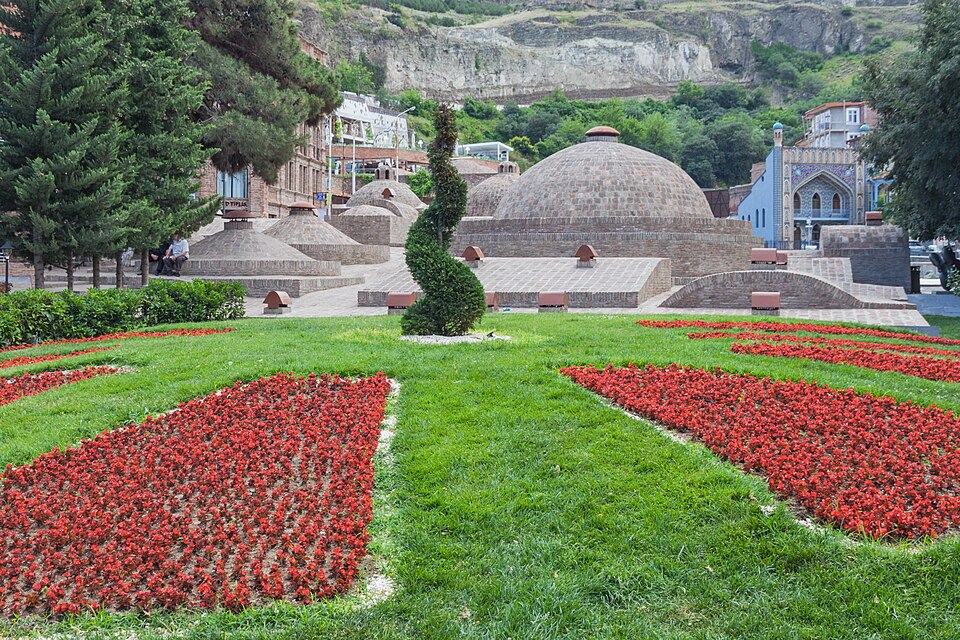
- Rent a private room at the sulphur baths
Under the brick domes, spring water fills pools in rooms you book by the hour. Do the full routine: a long soak, a cold plunge and a kisi, a hard scrub with a coarse mitt and a mountain of soap foam. Evening slots sell out first. - Follow the stream into Leghvtakhevi
A paved path behind the bathhouses runs up a narrow ravine to a 22-metre waterfall in about 10 minutes. The flow is fullest in spring. - Take the cable car up to Narikala
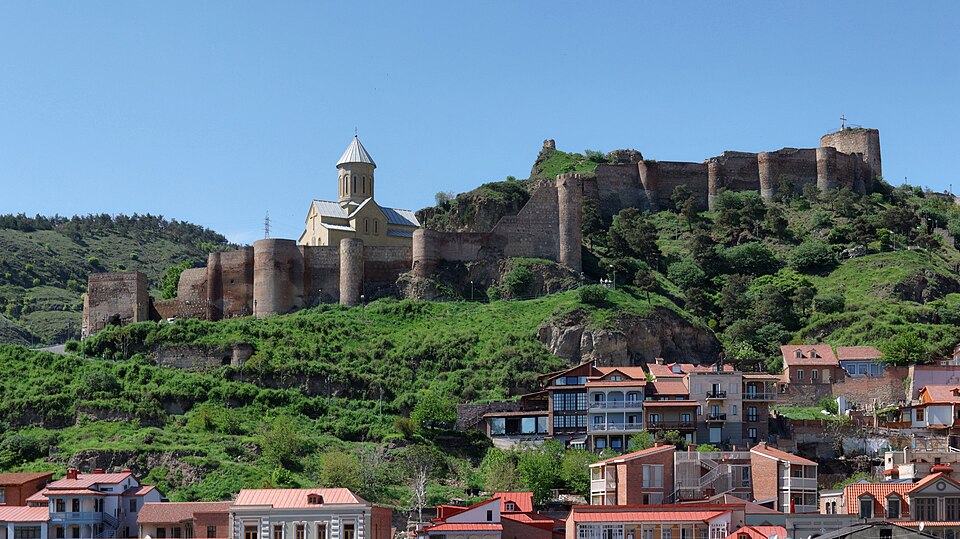
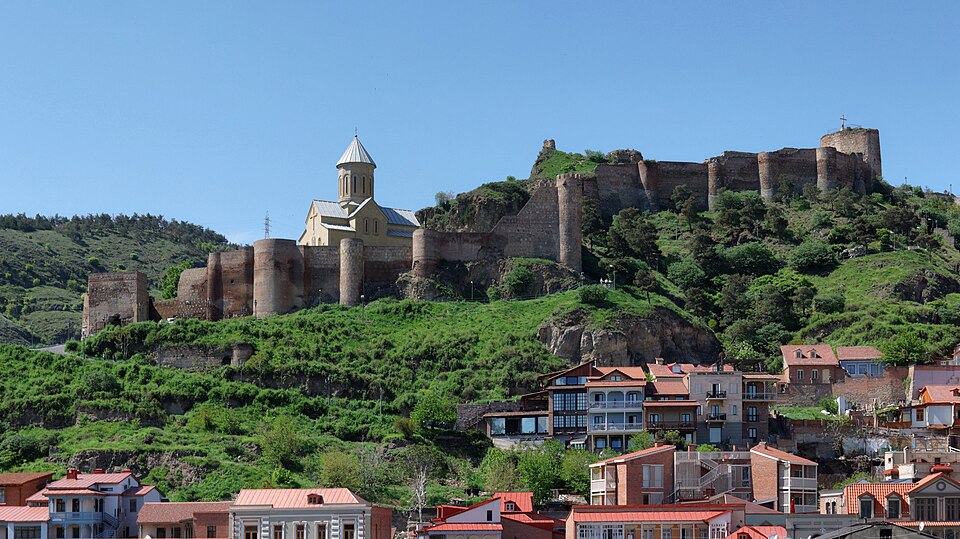
Gondolas cross the river from Rike Park to the 4th-century ramparts in a couple of minutes, and the whole Old Town opens out below. The walls are uneven and mostly unfenced, so watch your step. - Escape to the Botanical Garden
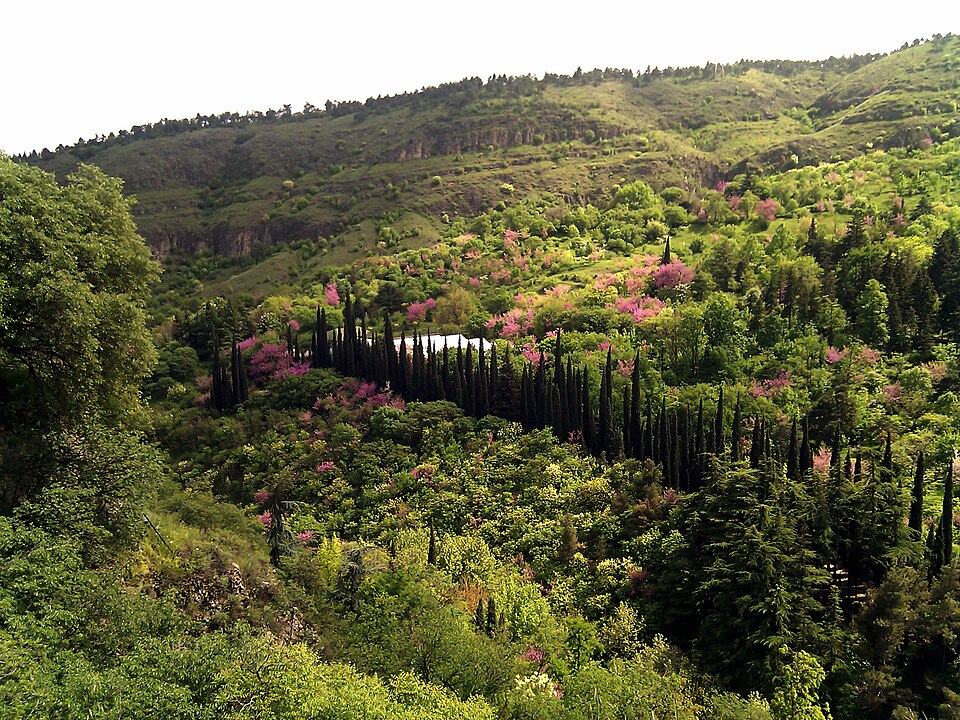
Behind Narikala, shaded paths lead up a valley to a waterfall and an arched stone bridge from 1914. On a July afternoon it is the coolest corner of the centre. - See St Nino's cross in Sioni Cathedral
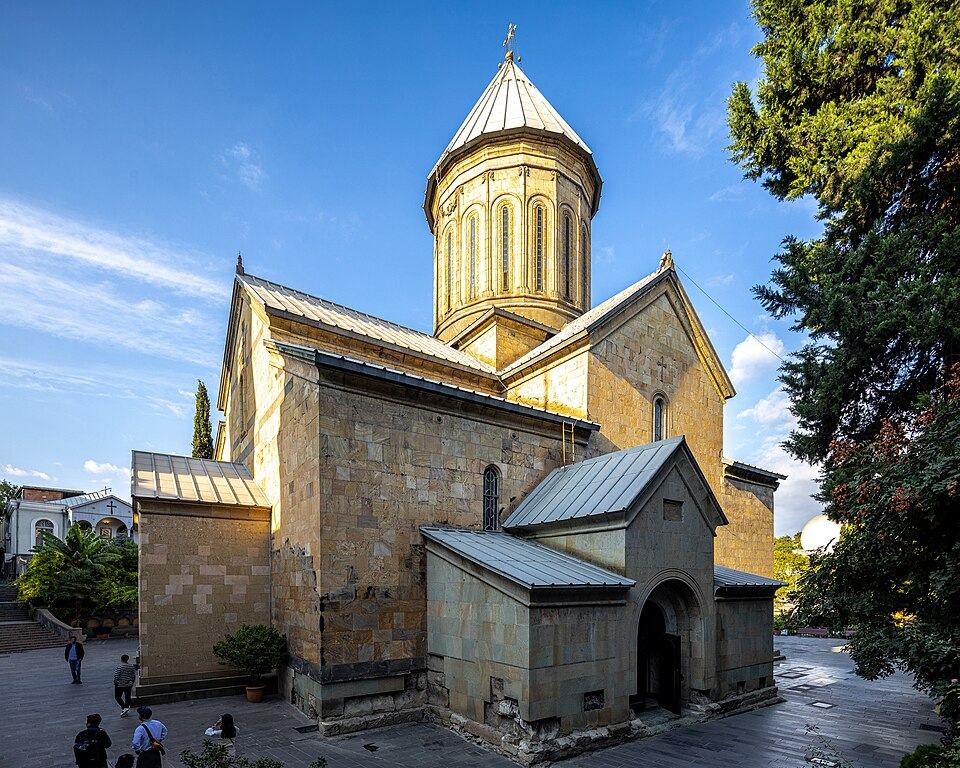
The city's main church for centuries hides a dim, mural-covered interior behind a plain front. Beside the altar is the cross of vine stems linked to St Nino, who converted Georgia. - Visit Anchiskhati and the Gabriadze clock tower
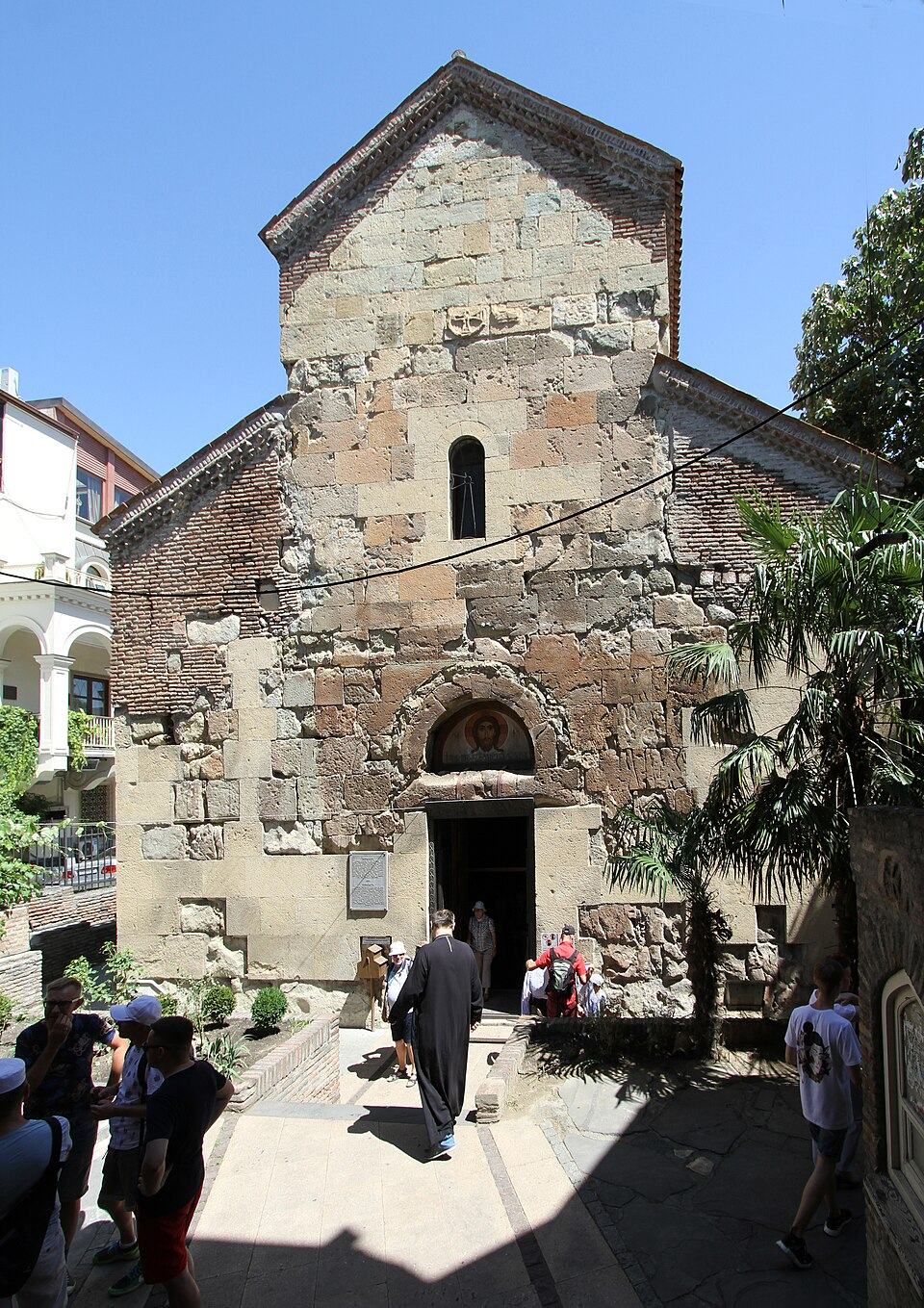
The 6th-century basilica is the oldest church standing in Tbilisi, and its choir is superb. Next door, a tiny angel pops out of the crooked marionette-theatre tower each hour to strike the bell. - Walk past three faiths in ten minutes
Between Sioni and the baths you pass the Great Synagogue, built around 1900 by Jews from Akhaltsikhe, an old Armenian church and the Jumah Mosque, where Sunni and Shia Muslims pray in one hall. - Cross the Bridge of Peace after dark
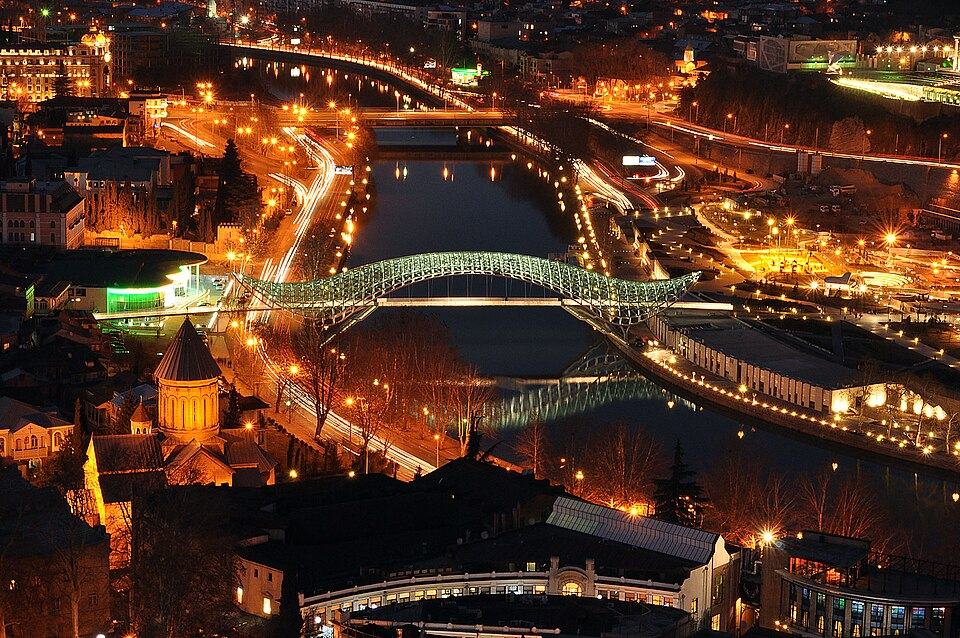
The 2010 glass footbridge plays LED patterns from sunset. Walk to Rike Park, then turn for the view of the lit Old Town under the fortress.
Sololaki and Mtatsminda: painted halls, the funicular and the best view
Sololaki climbs west of Freedom Square in a grid of 19th-century merchant houses and wine bars. Mtatsminda, the Holy Mountain, rises above it with the TV tower on top.
Sololaki
- Walk the ridge to the Mother of Georgia
From the top of the Narikala cable car, a path heads west for 10 minutes to Kartlis Deda, the 20-metre aluminium figure who offers wine to guests and a sword to invaders. - Peek into the painted entrance halls
Many apartment blocks hide grand entrance halls, called sadarbazo, with ceiling paintings, carved banisters and stained glass from the late 1800s. People live upstairs, so knock politely and keep quiet. - Have coffee in the Writers' House garden
This ornate mansion on Machabeli Street was built in the early 1900s for David Sarajishvili, the father of Georgian brandy. Its garden cafe is a calm pause between sights. - Climb the Betlemi stairs
A stepped lane rises toward the fortress past wooden balconies, small churches and sleeping cats, with a wider view at every landing. It is the free, sweaty alternative to the cable car.
Mtatsminda
- Ride the funicular to Mtatsminda Park at sunset
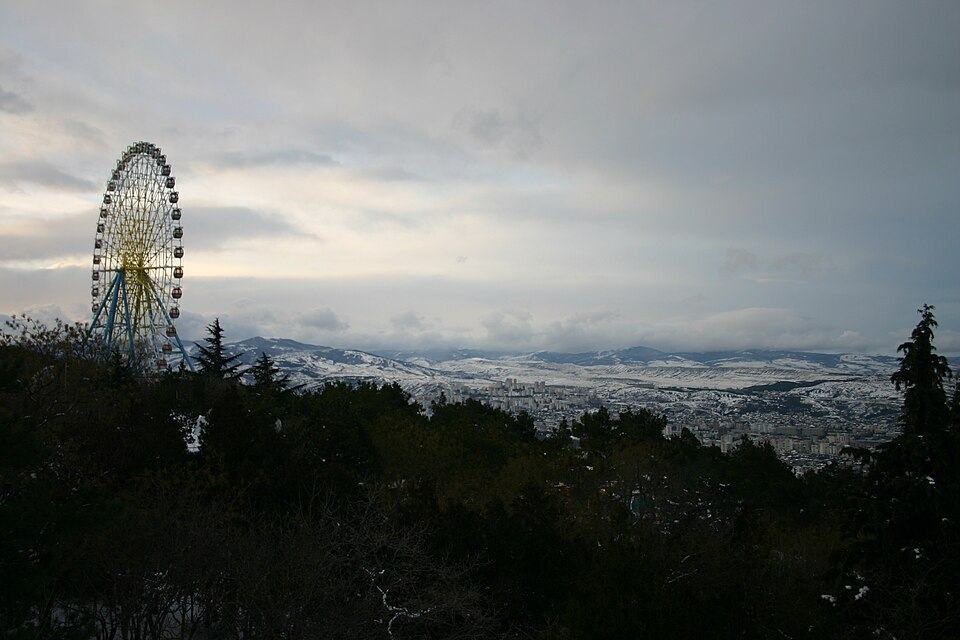
The line, first opened in 1905, climbs from Chonkadze Street to a park at about 770 metres, with fairground rides, a 65-metre Ferris wheel and terraces over the whole valley. Go up an hour before dusk. - Stop at the Pantheon of writers
Get off halfway at St David's Church, whose churchyard holds Ilia Chavchavadze, Alexander Griboyedov and many of Georgia's poets and artists. The walk back down to Sololaki is short and steep.
Rustaveli Avenue and Vera: museums, markets and theatre
Rustaveli Avenue, the showpiece of 19th-century Tiflis, runs about 1.5 km north-west from Freedom Square. The quiet streets of Vera climb the slope behind it.
- Spend a morning at the Georgian National Museum
Head first for the treasury of Colchian gold, then the Dmanisi skulls, about 1.8 million years old and among the earliest human remains found outside Africa. The Soviet occupation rooms upstairs are sobering. - See Niko Pirosmani at the National Gallery
The self-taught painter of feasts, animals and tavern signs now decorates half the souvenirs in town. His real canvases, a few doors up the avenue, are far more striking. - Book a night at the Opera or the Rustaveli Theatre
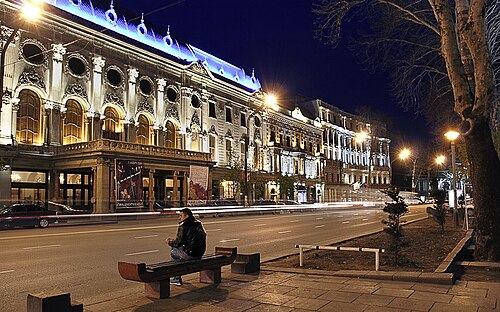
A ballet or a folk-dance show is the best excuse to see the interiors of the Moorish-style Opera House and its neighbour, and to spend an evening the way locals do. - Bargain at the Dry Bridge market
Traders spread Soviet badges, film cameras, drinking horns, vinyl and silver over blankets and railings, and painters sell canvases in the park beside them. Weekends bring the biggest choice. - Get lost in the backstreets of Vera
Peeling mansions, corner bakeries, galleries and some of the best coffee and wine in the city: this is everyday Tbilisi, ten minutes from the main sights.
Avlabari and Chugureti: Sameba, Fabrika and the food bazaar
On the left bank, Avlabari sits on a bluff facing the Old Town. Further north, Chugureti, the old German and working-class quarter, is now the city's creative hub.
Avlabari
- Climb to Sameba Cathedral
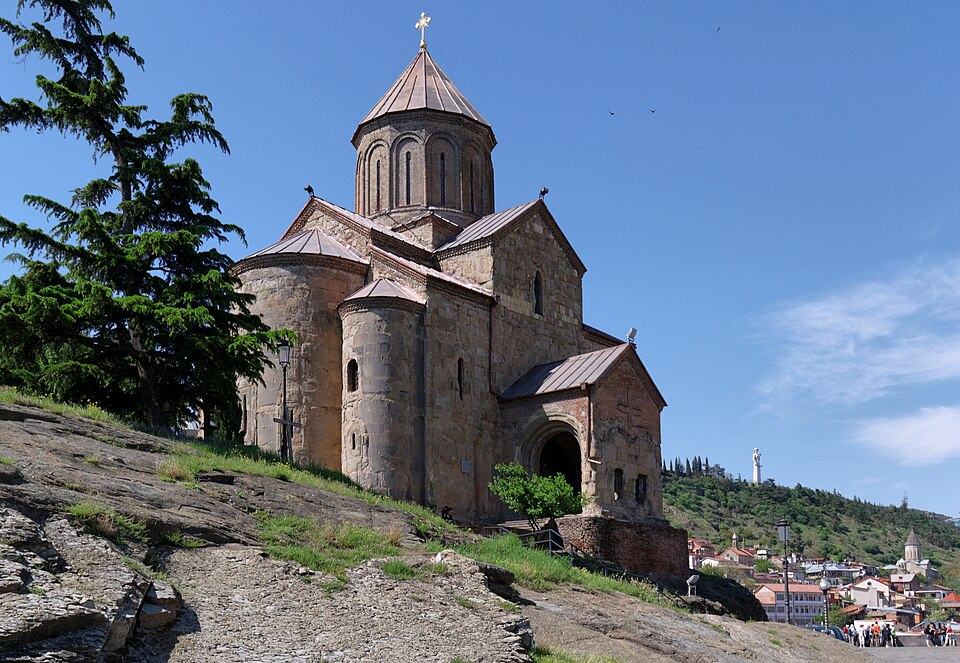
Consecrated in 2004, the Holy Trinity Cathedral crowns Elia Hill with a gilded dome visible from almost anywhere. Come during a service to hear the chant roll around the vast interior. - Stand beside King Vakhtang at Metekhi
The 13th-century church on the cliff edge, with the city founder's equestrian statue beside it, frames the classic view of the bath domes and Narikala. Come just before sunset. - Stroll through Rike Park
The riverside lawns below Metekhi link the Bridge of Peace with the cable car and fill with families on summer evenings. Its two giant tube-shaped halls still divide opinion.
Chugureti and Marjanishvili
- Spend an evening at Fabrika
A Soviet sewing factory reborn in 2016, Fabrika wraps a courtyard of bars, cafes, vintage and record shops in murals. On a warm Friday it is the liveliest courtyard in town. - Walk Aghmashenebeli Avenue
The restored main street of the German colonists' quarter is partly car-free, with bakeries, cafes and painted facades a short walk from Marjanishvili metro. - Graze your way through Dezerter Bazaar
By Station Square, the central food market is a maze of herbs, cheese, spice sacks, pickles and churchkhela. Traders offer tastes, and it is the place to stock up on dried spice blends and plum sauce.
Beyond the centre: Turtle Lake, the ethnography museum and the Chronicles
A short taxi ride takes you to the wooded hills and reservoirs where Tbilisi families spend their weekends.
- Ride the ropeway to Turtle Lake
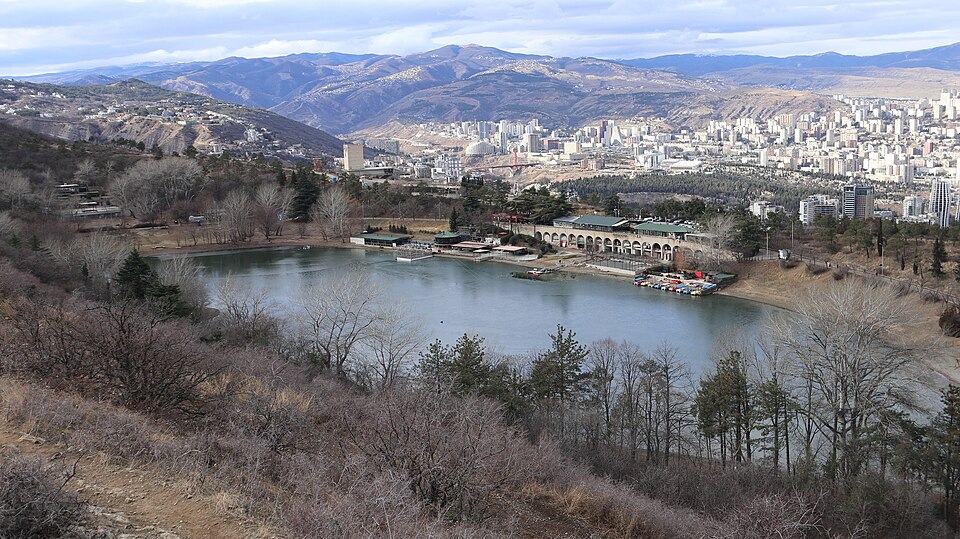
From the top of Vake Park, a cable car rises over the forest to a small lake ringed by a footpath and cafes, a few degrees cooler than the city. - Tour Georgia's villages at the Open Air Museum of Ethnography
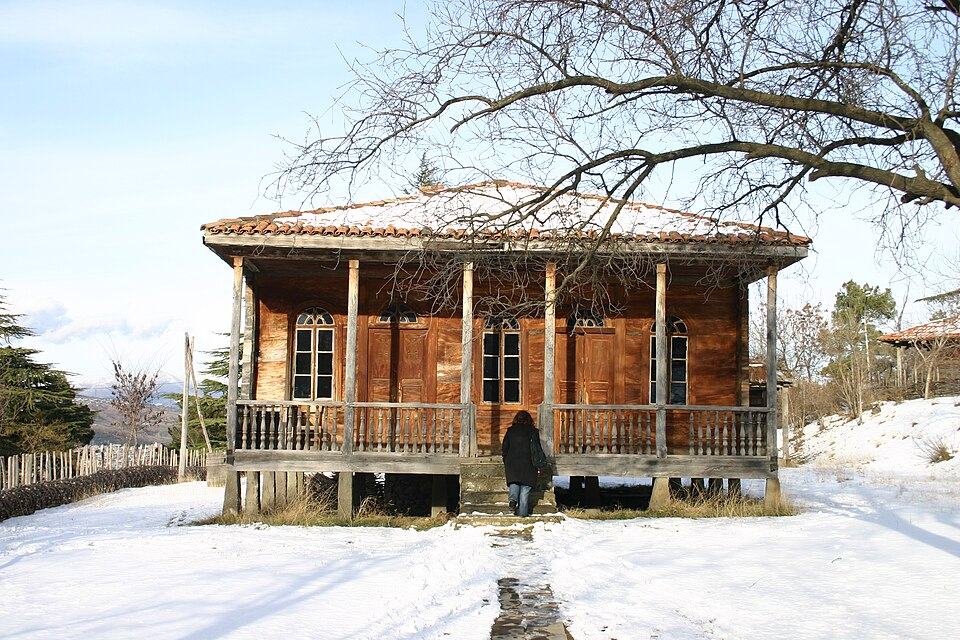
About a kilometre from the lake, some 70 rural buildings stand on a wooded slope: Svan and Khevsur towers, Kakhetian wine cellars and darbazi homes with stepped timber ceilings. See it before the mountains and you will recognise what you meet later. - Stand under the Chronicles of Georgia
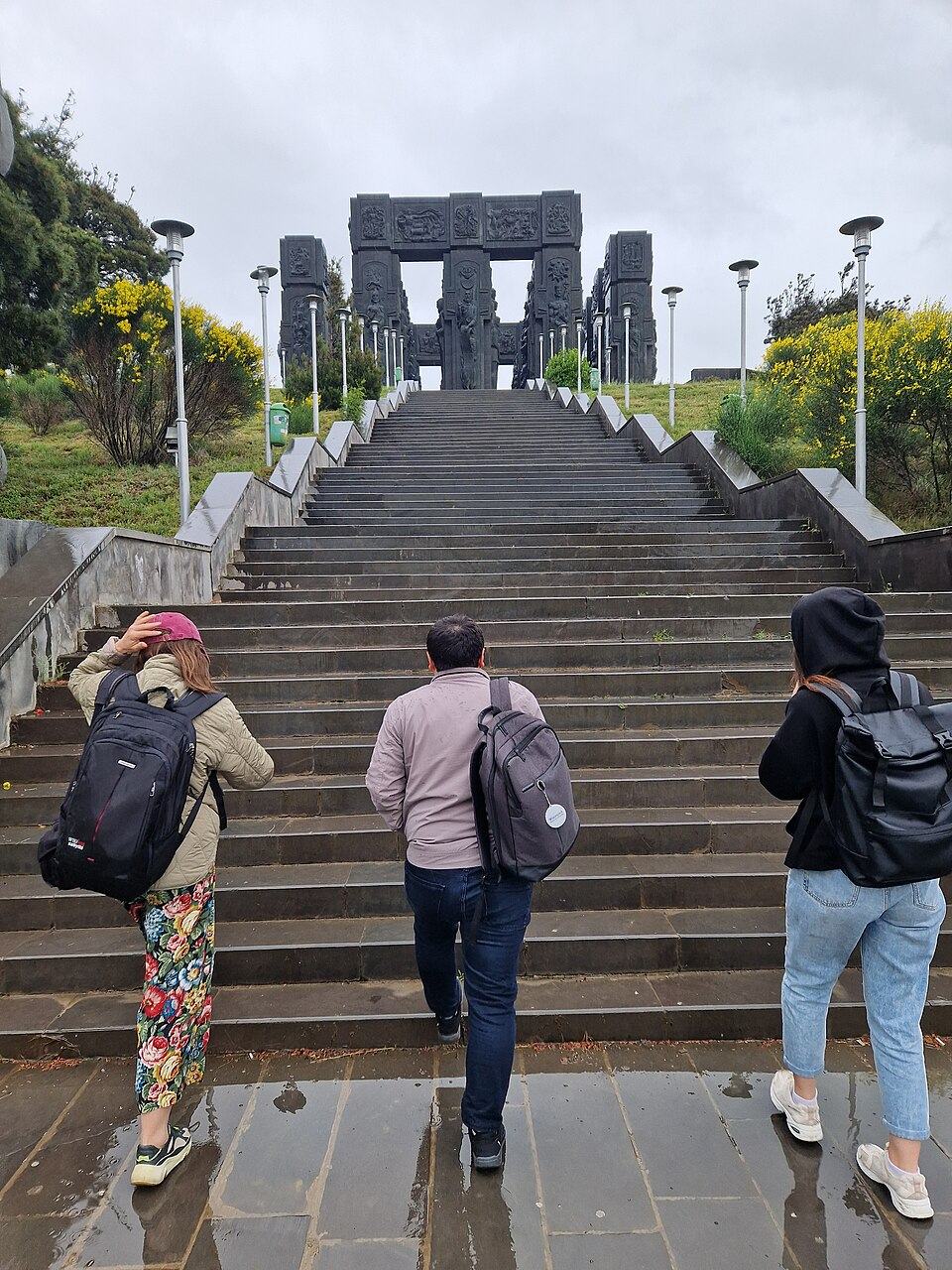
On the northern edge of the city, Zurab Tsereteli's 16 pillars, 30 to 35 metres tall, show Georgian kings and saints above scenes from the Bible. The site is often almost empty and has no shade. - Swim or stroll at the Tbilisi Sea or Lisi Lake
Locals swim in the Tbilisi Sea, a Soviet-era reservoir below the Chronicles. Across town, Lisi Lake has a shoreline loop busy with runners and families in the evening.
Where to stay in Tbilisi: the neighbourhoods explained
Visitors need only a handful of the city's districts. Choose by how you feel about hills, noise and taxis.
| Area | What it is like | Best for | Keep in mind |
|---|---|---|---|
| Old Town (Kala) and Abanotubani | Cobbled lanes, balconies, bathhouses and restaurants under Narikala | First visits, short stays, walking everywhere | Touristy corners, late-night noise, lanes cars cannot reach |
| Sololaki | Elegant 19th-century streets west of Freedom Square, full of wine bars | Old-city atmosphere with more calm | Hills in every direction |
| Vera | Leafy residential slopes behind Rustaveli Avenue | Quiet nights, cafes, a local feel | 15 to 25 minutes on foot to the Old Town |
| Vake | Upmarket district of parks, boutiques and restaurants | Families, longer stays, Turtle Lake | No metro; taxis or buses to the centre |
| Chugureti and Marjanishvili | Left-bank quarter around Fabrika and Aghmashenebeli Avenue | Value, nightlife, quick metro rides | Some streets are still rough around the edges |
| Avlabari | Bluff across the river near Sameba and Metekhi | Old Town views, budget guesthouses, a metro stop | An uphill walk home from the river |
| Saburtalo | Modern district of apartment towers and business hotels | Chain hotels, Lisi Lake | A long way from the historic sights |
For two or three nights, Sololaki or the edge of the Old Town near Freedom Square is the best balance: you walk home from dinner, yet a taxi can still reach your door. For a week, a flat in Vera or Chugureti feels like living here.
What to eat and drink in Tbilisi
Every region's dishes turn up on the capital's menus, so this is the place to taste the whole country. Georgians share everything, so order several plates for the table.
Dishes to try
- Khinkali: pleated dumplings sold by the piece. Lift one by its knot, nibble a hole, drink the broth, then eat the rest and leave the knot.
- Khachapuri: cheese bread in a dozen regional versions. Try Megruli, with extra cheese baked on top, and boat-shaped Adjaruli, stirred with egg and butter.
- Pkhali and badrijani: chopped greens or fried aubergine bound with walnut paste, garlic and herbs, the backbone of any vegetarian meal.
- Mtsvadi and chashushuli: skewers grilled over vine cuttings, and veal stewed with tomato and hot pepper.
- Shoti: canoe-shaped loaves baked against the hot clay walls of tone ovens in basement bakeries. Buy one warm and eat it as you walk.
- Something sweet: churchkhela, walnuts dipped in thickened grape juice, and Lagidze water, the syrup sodas in tarragon, pear or cream flavours created by Mitrofan Lagidze in the 1880s.
Wine bars and what to order
Dozens of small wine bars in Sololaki, the Old Town and Vera pour bottles from family producers who still ferment in qvevri, the buried clay jars of Georgian tradition. Ask for amber wine: Rkatsiteli, Kisi or Mtsvane left on their skins for weeks, giving a tea-coloured wine with real grip. For reds, try Saperavi from Kakheti or the lighter Tavkveri from Kartli. Most bars pour by the glass and let you taste first. Finish, if you dare, with chacha, the fiery grape spirit.
Markets
Go to Dezerter Bazaar in the morning for food and to the Dry Bridge at the weekend for antiques. Supermarket shelves are a cheap way to compare grapes, and bottles survive the flight home wrapped in clothes in a checked bag.
How long to spend in Tbilisi: 1, 2 and 3-day plans
Two full days covers the essentials; three leaves time for the outskirts or a half-day trip.
One day: the Old Town loop
- Morning: Freedom Square to the river
Drift down past Sioni, Anchiskhati and the clock tower to the Bridge of Peace, about 2 km with stops. - Late morning: up to Narikala
Ride the cable car from Rike Park, walk the walls and follow the ridge to the Mother of Georgia. - Afternoon: the baths and the gorge
Walk down to Abanotubani and the waterfall, then have a late lunch. - Evening: a soak and a glass
Take an early-evening bath, cross to Metekhi for the lights and end in a Sololaki wine bar.
Two days: add museums, markets and Mtatsminda
- Day 2 morning: the National Museum
Two hours with the gold and the fossils, then walk the avenue to the Opera. - Day 2 afternoon: Dry Bridge and Vera
Browse the flea market, then find lunch and coffee in Vera's side streets. - Day 2 evening: Mtatsminda
Take the funicular an hour before sunset, stop at the Pantheon and have dinner above the city lights.
Three days: Avlabari and the hills, or Mtskheta
- Day 3 morning: Sameba and Avlabari
Catch the morning service at the cathedral, then walk down past Metekhi to Rike Park. - Day 3 afternoon: Turtle Lake or Mtskheta
Take the Vake Park ropeway up to the lake, walk on to the ethnography museum, or head to Mtskheta, 30 minutes away. - Day 3 evening: Chugureti
Dinner on Aghmashenebeli Avenue, then drinks in the Fabrika courtyard.
Want mountains and wine as well in three days? Our Taste of Georgia tour pairs a Tbilisi day with trips to Kazbegi and Kakheti.
Getting around Tbilisi: metro, buses, Bolt, cable car and funicular
Central Tbilisi is compact: the baths are a 10-minute walk from Freedom Square. The hills are what slow you down.
- On foot: best for the Old Town, Sololaki and Rustaveli. Cross big roads by the underpasses; drivers rarely stop at zebra crossings.
- Metro: two lines, opened in 1966 as the Soviet Union's fourth metro, with very deep escalators. Useful stops are Liberty Square, Rustaveli, Avlabari, Marjanishvili, Station Square and Didube, where minibuses leave for the north and west of Georgia.
- Buses: they cover what the metro misses, such as Vake, and Google Maps shows most routes. Pay on buses and the metro with a contactless bank card or a rechargeable Metromoney card.
- Bolt and other ride-hailing apps: cheap, quick and priced upfront, so no haggling. The easiest way to reach the ethnography museum, the Chronicles or the airport.
- Cable cars: Rike Park to Narikala across the river, and Vake Park to Turtle Lake. Both may pause in strong wind.
- Funicular: Chonkadze Street in Sololaki to Mtatsminda Park, stopping at the Pantheon.
- Airport: the terminal is 18 km out, south-east of town. Bus 337 runs into the city, and an app taxi takes 25 to 40 minutes.
Tbilisi at night: wine bars, live music and clubs
Evenings start late: dinner around 9pm, then a bar, and in summer terraces stay full past midnight.
- Wine bars and terraces: Sololaki, the lanes around Erekle II and Shardeni streets, and Vera, from tiny natural-wine counters to rooftops facing Narikala.
- Courtyards and craft beer: Fabrika and the streets around Aghmashenebeli Avenue draw a younger crowd with DJ nights and street food.
- Music and dance: Georgian polyphonic singing, on UNESCO's intangible heritage list, is easiest to hear at a church service or a dinner with a live folk group.
- Clubs: the city's techno scene has an international following, with venues in former Soviet industrial spaces. Expect strict door checks, no photos on the dance floor and weekend parties that run past sunrise.
Practical tips: hills, church dress code and cash or card
Footwear and the hills
The city spreads between about 380 and 770 metres, and Old Town cobbles are worn smooth and slippery in rain. Pack trainers or walking shoes with grip. In July and August afternoons often top 30°C, so sightsee early and late and rest at midday.
What to wear in churches
Everyone should cover shoulders and knees. Women also need a headscarf and a skirt or wrap below the knee, and men take off their hats. Sameba, Sioni and other big churches keep spares at the door. Speak quietly and never photograph people at prayer.
Cash or card?
Cards and phone payments work in nearly every hotel, restaurant and shop in the centre. Cash still matters at Dezerter Bazaar, the Dry Bridge, small bakeries and some guesthouses. If a cash machine asks whether to bill you in your own currency, decline and pay in lari.
Staying safe
Tbilisi is relaxed at any hour; fast cars and broken pavements are the real hazards. Political protests have gathered outside Parliament frequently since late 2024, mostly after dark, so keep your distance.
Day trips from Tbilisi
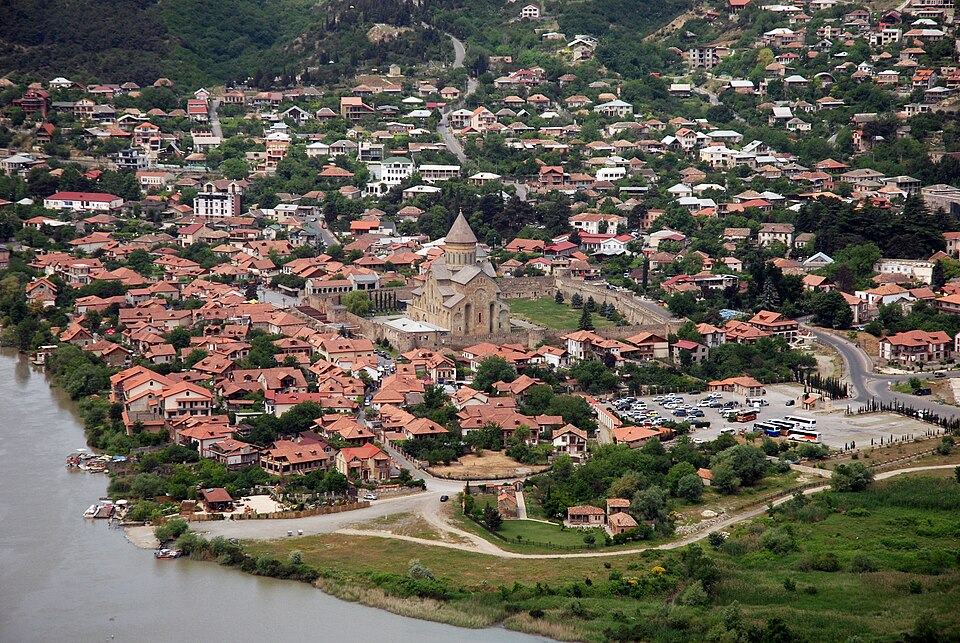
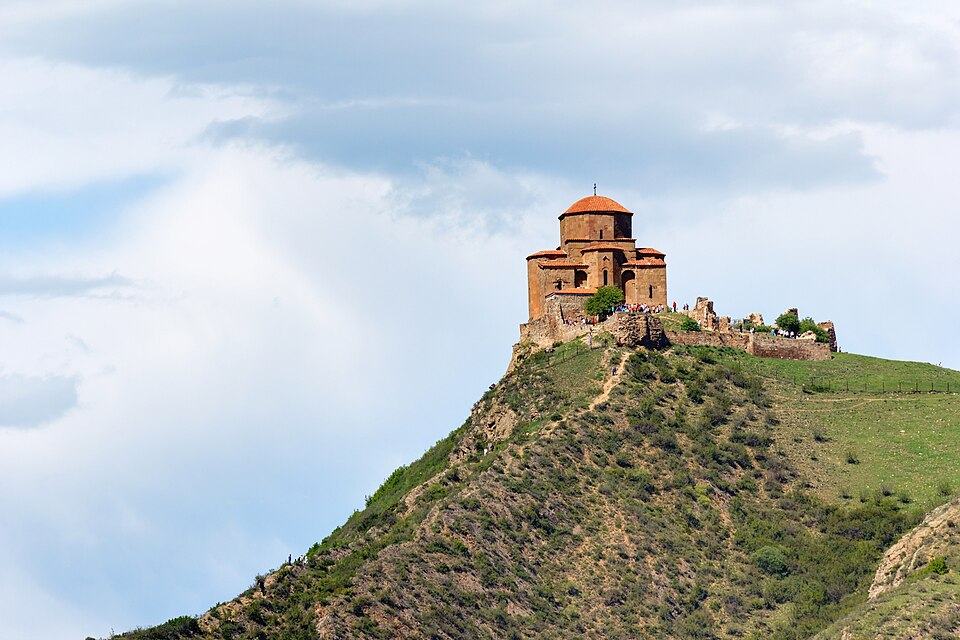
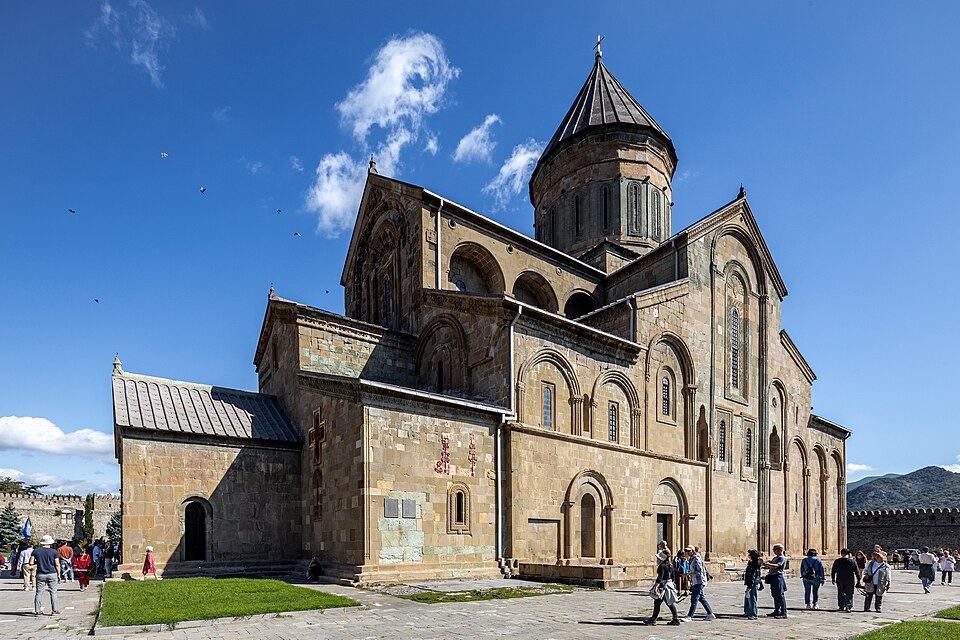
Mtskheta, the ancient capital, is half an hour away and makes the easiest half-day escape, while Kazbegi, Kakheti, Uplistsikhe and the desert monasteries of David Gareja each fill a full day. Our guide to the best day trips from Tbilisi compares them all.
Tbilisi FAQ
What is Tbilisi famous for?
Sulphur baths, the carved wooden balconies of the Old Town, Narikala Fortress, a lively natural wine scene and a skyline mixing Georgian, Persian, Russian imperial and Soviet buildings. It is also the gateway to Kazbegi and Kakheti.
How many days should I spend in Tbilisi?
Two full days suits most first-time visitors: one for the Old Town, Narikala and the baths, one for the museums, markets and Mtatsminda. Add a third for Sameba and the hills of Vake, or a half day in Mtskheta.
Where should I stay in Tbilisi on a first visit?
Sololaki or the Old Town near Freedom Square, so you can walk to most sights. Pick Vera for quieter nights, or Chugureti and Avlabari for lower prices close to a metro station.
Is Tbilisi a walkable city?
Yes, if you do not mind hills. Freedom Square, the Old Town, the baths and Rustaveli Avenue are within about 20 minutes of each other on foot, and the cable car and funicular handle the big climbs.
Do I need cash in Tbilisi?
Only a little. Cards and phone payments are accepted almost everywhere in the centre, including the metro. Keep small lari notes for markets, bakeries and tips.
What should I wear to visit churches in Tbilisi?
Cover your shoulders and knees. Women are expected to cover their hair and wear a skirt, and men should wear long trousers. Larger churches lend scarves and wraps at the entrance.
When is the best time to visit Tbilisi?
May, June, September and October, when days are warm and evenings cool. July and August are hot, and winter is mild, damp and quiet, ideal for long soaks and wine bars. Tbilisoba, the city festival, falls in October.