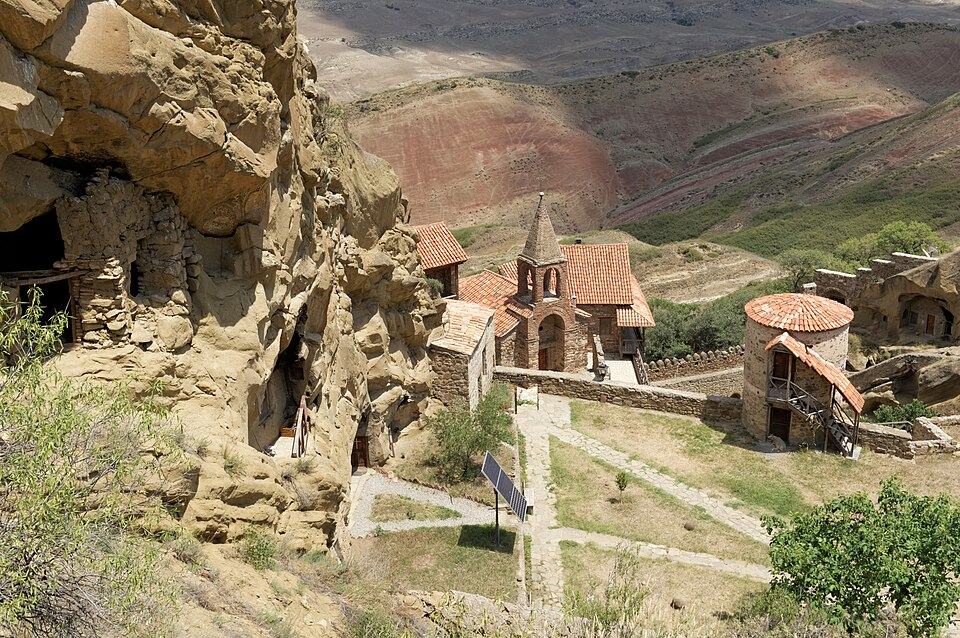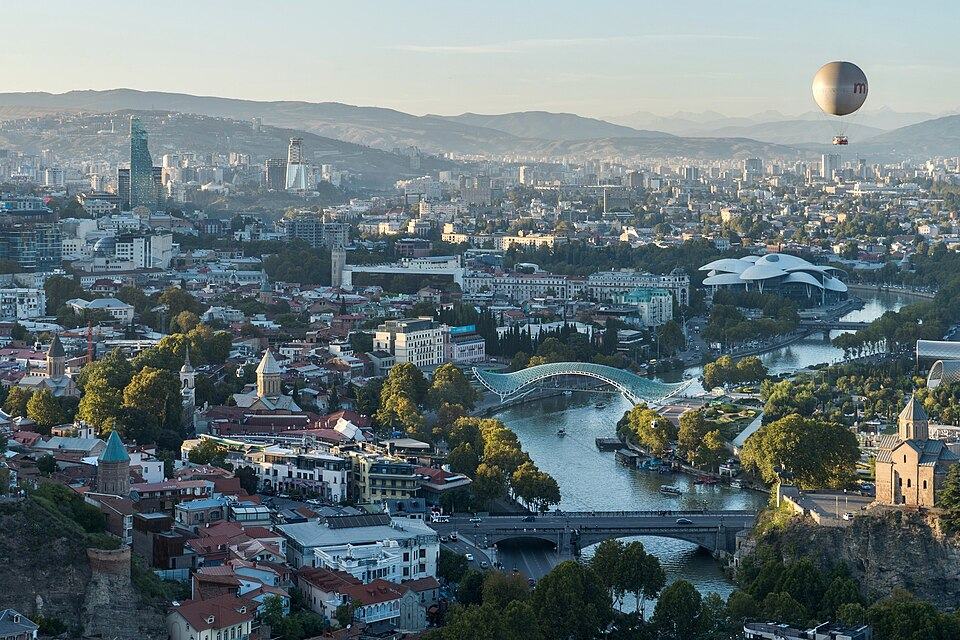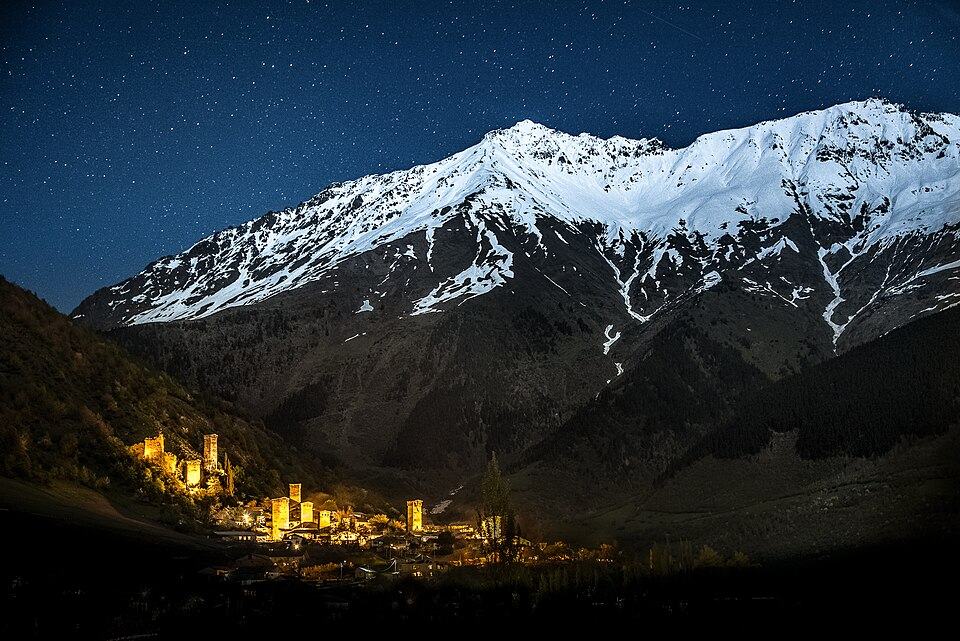
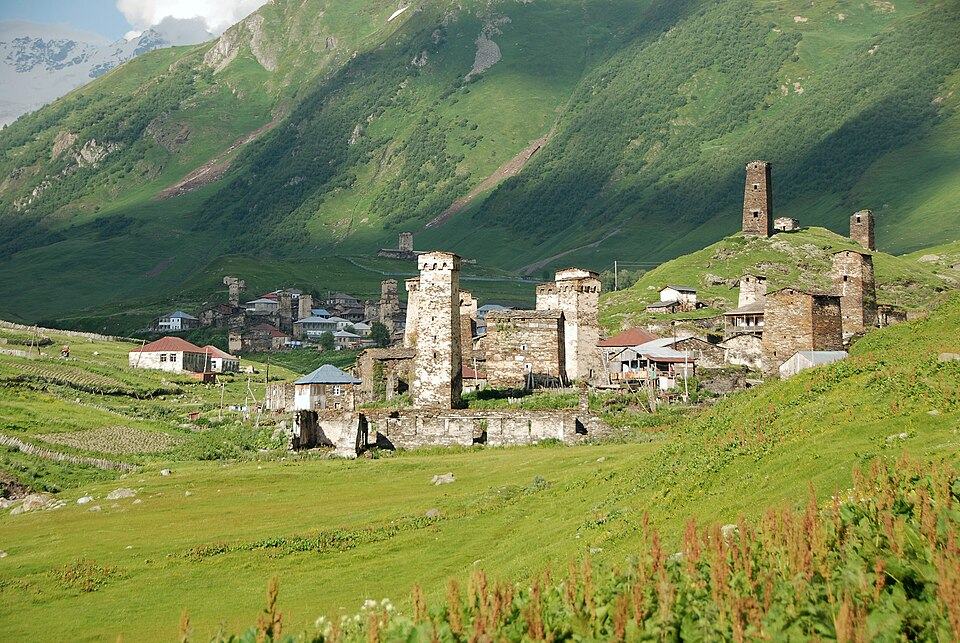
- Autumn colour in Georgia moves downhill: high valleys such as Ushguli, Juta and Tusheti turn in late September, mountain towns at 1,500 to 1,800 m peak in the first half of October, and the lowlands follow.
- Borjomi, Racha and the Gombori forest usually peak from mid-October to early November; Kakheti vineyards, Lagodekhi, Martvili and Tbilisi are at their best from late October to mid or late November.
- The Abano Pass road to Tusheti usually closes in early October once snow settles, so Tusheti is a September destination; Kazbegi, Svaneti, Borjomi and Kakheti stay open through autumn.
- For a single trip that catches colour in both the mountains and the lowlands, aim for roughly 5 to 25 October and travel from the high regions down to the valleys.
- Every window here shifts by a week or two from year to year with the first frosts and rain, so treat it as a guide and check a recent photo before you set off.
The best time to see autumn colours in Georgia is from late September to mid-November, but the peak date depends on how high you are. Birch and aspen near the treeline in Svaneti, Kazbegi and Tusheti turn gold in the last days of September, the forests around Borjomi and in Racha flare in the second half of October, and the vineyards of Kakheti, the canyons of Samegrelo and the parks of Tbilisi hold their colour into November.
This guide follows that wave downhill, region by region. For each place you get the usual peak window, the altitude that drives it, the walk we would choose and the roads that close as the snow comes. It ends with a sample route that chases the colour from the Caucasus to the capital, practical notes for an autumn trip and answers to the questions guests ask us most.
When do the leaves change colour in Georgia?
Georgia packs lowland vineyards and 3,000 m passes into one small country, so autumn does not arrive everywhere at once. A good rule of thumb is that colour reaches a slope roughly a week later for every 300 to 400 m you descend. The first frosts touch the upper valleys of the Greater Caucasus in mid-September, and by the end of November the last oaks and hornbeams near Tbilisi are bare.
Trees matter as much as height. In the high valleys the colour comes from birch, aspen, rowan and alder against dark pine and spruce, with sea buckthorn shrubs glowing orange along the rivers. Lower down, oriental beech, hornbeam, maples, wild pear and walnut give deeper reds and coppers. In the wet west, the subtropical Colchic forest keeps its colour late, while in Kakheti it is the vines themselves that turn yellow and rust after the harvest.
| Region | Altitude of the base | Usual peak | Best autumn walk | Autumn access |
|---|---|---|---|---|
| Tusheti (Omalo) | About 1,880 m | Mid-September to early October | Omalo to Dartlo and Parsma | Abano Pass road usually closes in early October |
| Upper Svaneti (Ushguli, Mestia) | About 2,100 m and 1,500 m | Late September to mid-October | Chalaadi Glacier, Ushba Glacier from Mazeri | Mestia road open all year; Zagari Pass to about mid-October |
| Kazbegi (Stepantsminda) | About 1,740 m | Late September to mid-October | Truso valley, Gergeti Trinity Church | Military Road open; Jvari Pass can close after snow |
| Bakuriani and the Borjomi park ridges | About 1,700 to 2,000 m | Early to mid-October | Likani loop up to the ridge | Open |
| Racha (Ambrolauri, Oni) | About 550 to 1,100 m | Mid-October to early November | Around Shaori Lake and Nikortsminda | Open via Kutaisi or Tkibuli |
| Borjomi town and gorge | About 800 m | Mid-October to early November | Central park and the Green Monastery path | Open |
| Gombori range (Tbilisi to Telavi) | Pass about 1,600 m | Mid to late October | Short forest walks near Shuamta | Check road status first |
| Kakheti vineyards | About 400 to 700 m | Late October to mid-November | Vineyard lanes below Sighnaghi and Telavi | Open |
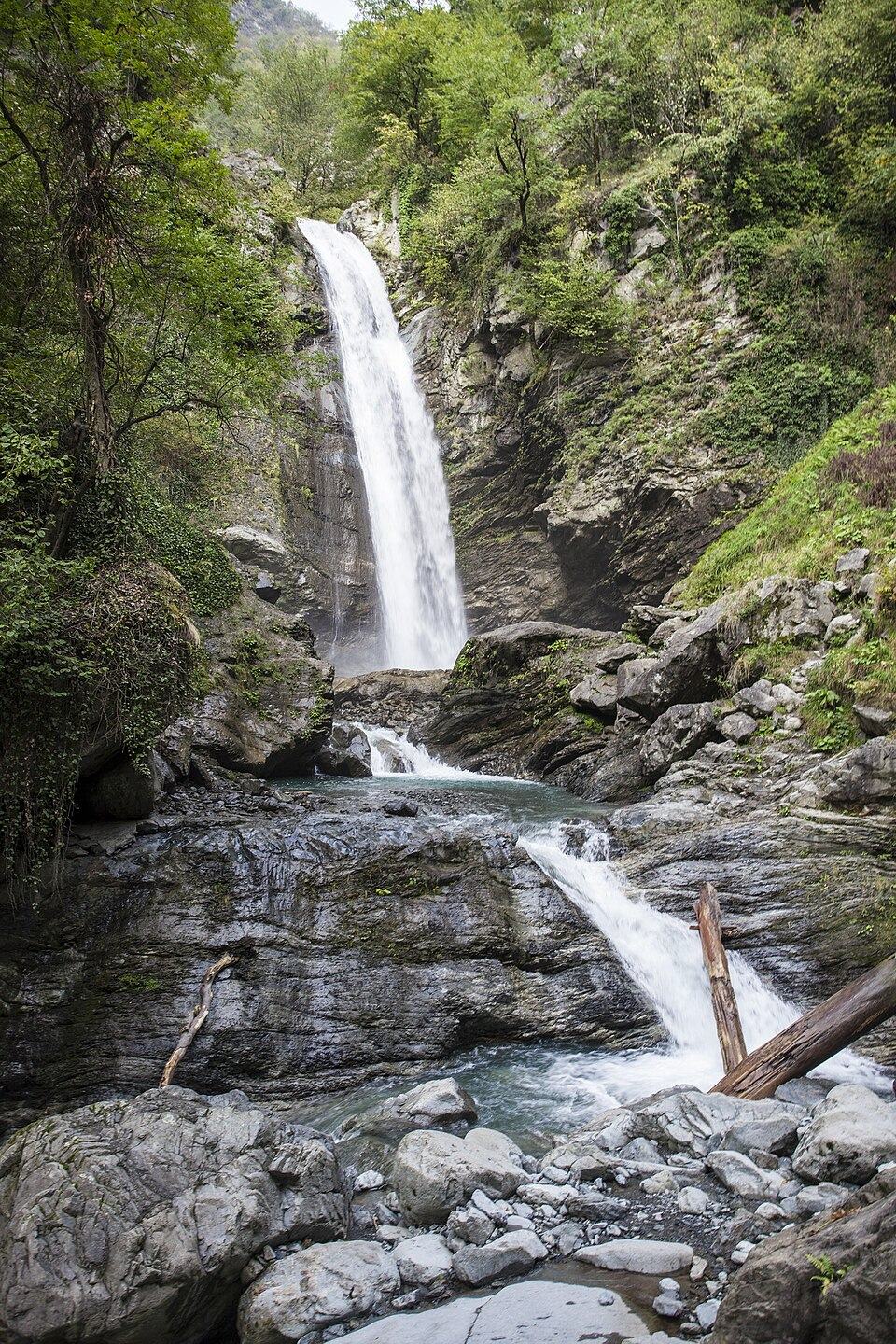
| Lagodekhi | Village about 590 m | Late October to mid-November | Ninoskhevi Waterfall trail | Open; high trek ends early October |
| Martvili and Imereti | About 200 to 400 m | Late October to late November | Martvili and Okatse canyons | Open; wet weather |
| Tbilisi | About 400 to 700 m | Early to late November | Botanical Garden, Zedazeni to Mamkoda | Open |
Svaneti in autumn: late September to mid-October
Upper Svaneti is the first big region to turn. Around Ushguli, at about 2,100 m, the slopes below the Shkhara wall go gold in the last week of September, with the stone towers standing in front of fresh snow on the peaks. Mestia, some 600 m lower, usually peaks between the first and second week of October, when the birch and aspen on the hills above the town light up and the mixed forest of the Mulkhra valley turns patchy red.
Early October days are often clear but cold at both ends, with frost in Ushguli at dawn and snow possible above about 2,700 m from late September.
Best walks in autumn
- Chalaadi Glacier: about 6 km return through birch and pine from a footbridge 9 km north of Mestia, an easy 2 to 3 hours, and at its most colourful in early October.
- Shdugra waterfall and the Ushba Glacier from Mazeri: forest trails below Ushba that stay walkable after the higher routes ice up.
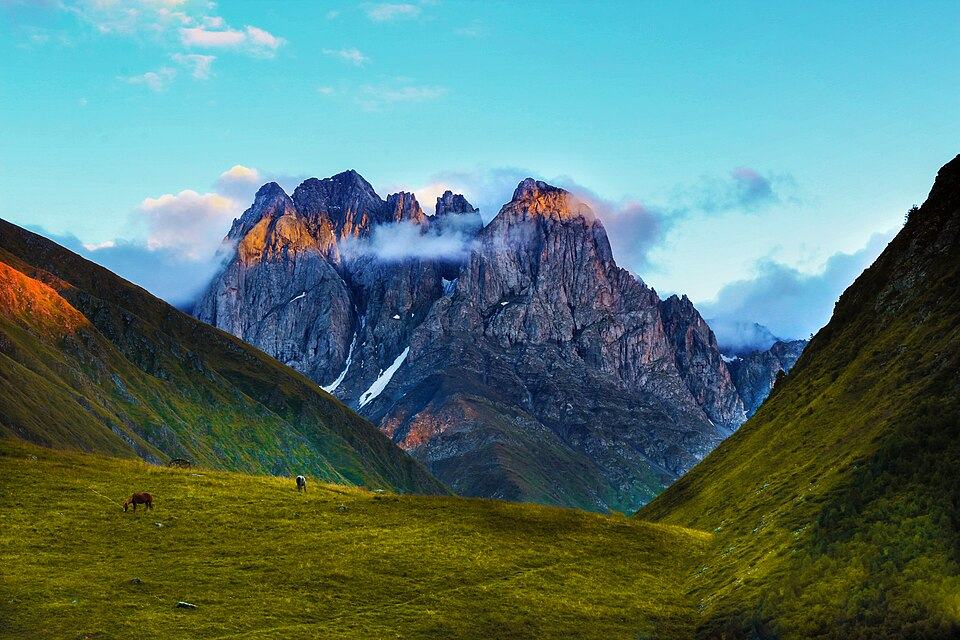
- Koruldi Lakes and the Guli Pass: excellent until late September, then often snowy; in October, go only with a guide and a turn-back time.
- The Mestia to Ushguli trek: usually possible until about early October, when guesthouses on the route start closing; our Mestia to Ushguli trek guide explains the stages.
The Zugdidi road keeps Mestia reachable in every season, but the rough back road from Ushguli toward Lentekhi, across the Zagari Pass, normally shuts around mid-October. Distances and climbs for each walk are on our Koruldi Lakes, Chalaadi Glacier and Ushba Glacier trail pages.
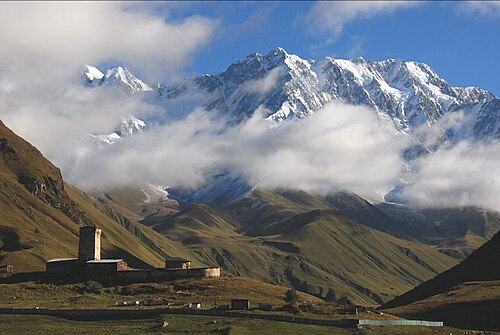
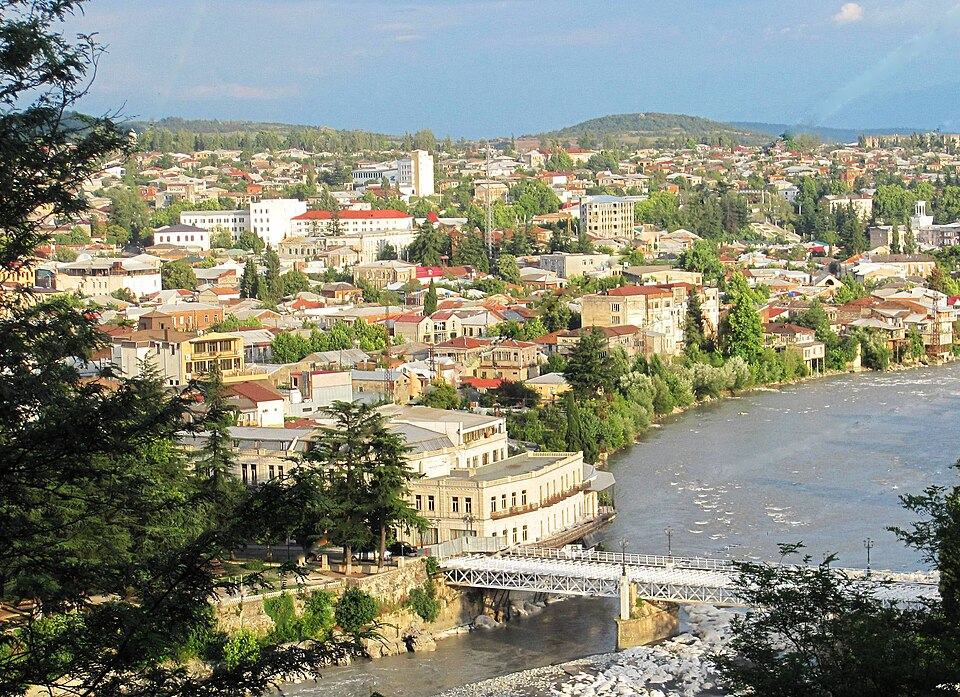
Kazbegi in autumn: golden slopes under Mount Kazbek
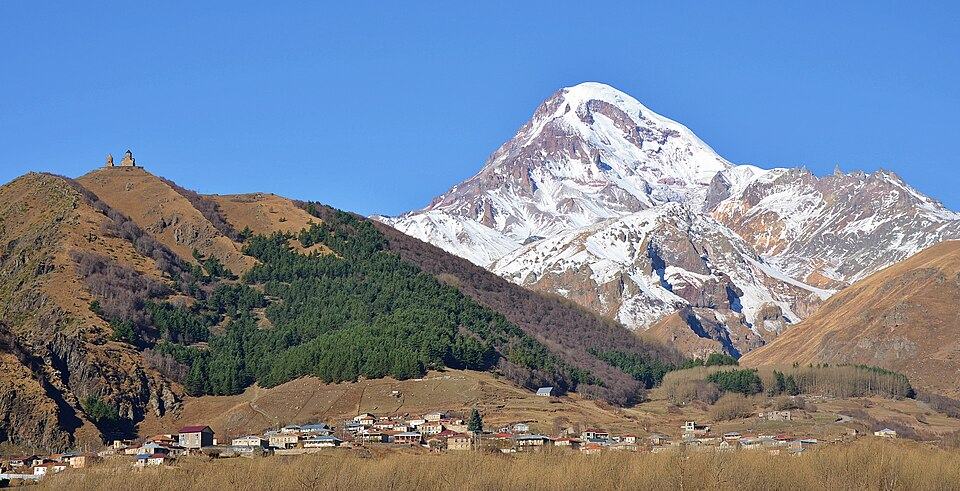
Kazbegi is the easiest place to see mountain autumn from Tbilisi, about three hours up the Military Road. Most of the valley is open grassland, so the colour here is less about forest and more about texture: hillsides of bronze grass, birch groves on the north-facing slopes, rowan berries, and dense thickets of sea buckthorn along the Tergi that turn bright orange with fruit. The usual peak runs from the last week of September to about the middle of October.
Best walks in autumn
- Gergeti Trinity Church: the forest path from Stepantsminda climbs through birch and pine to the church at 2,170 m, about 3 to 4 hours return.
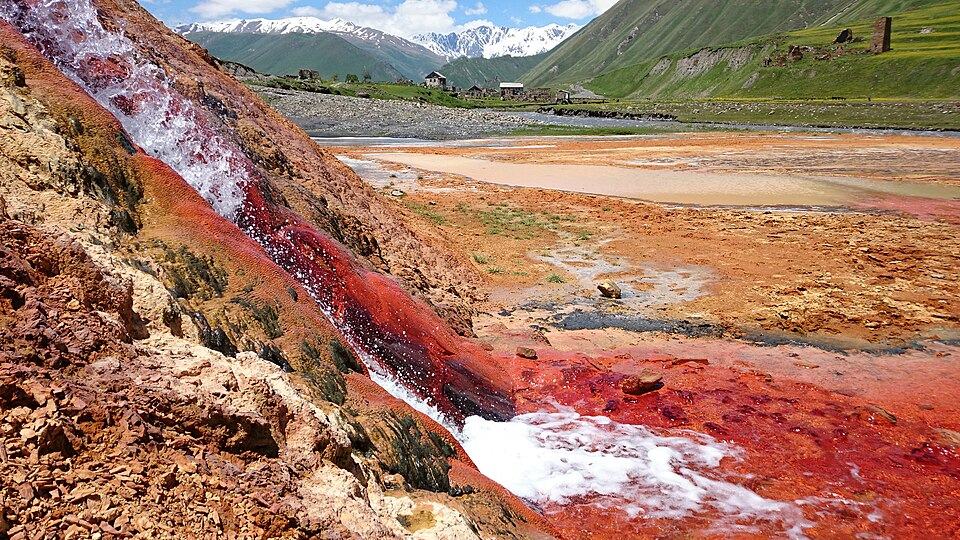
- Truso valley: a flat, open valley walk from Kvemo Okrokana past mineral springs and abandoned villages toward Zakagori fortress, with golden grass and red travertine. It usually stays walkable into November.
- Sno and Juta: Sno at the valley mouth is lovely in October; Juta, at about 2,200 m, peaks earlier, at the very end of September. Check whether cars can reach Juta village before you go, as the last stretch of road was damaged in 2025.
- Gveleti waterfall: a short, sheltered walk for a cloudy day.
The longer Gergeti Glacier route via the Sabertse Pass is best finished by late September; after that, snow and ice make it a guided outing only. The Jvari Pass on the Military Road stays open through autumn but can close for hours after the first heavy snowfall, so keep an eye on the forecast if your dates fall in late October. Our Kazbegi travel guide and the Truso and Gergeti trail pages have the detail.
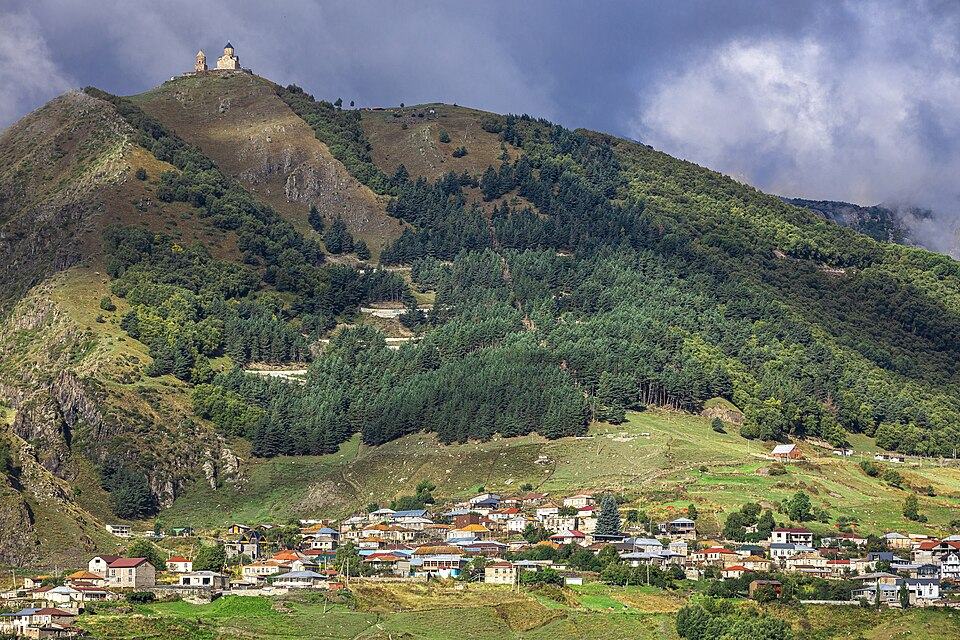
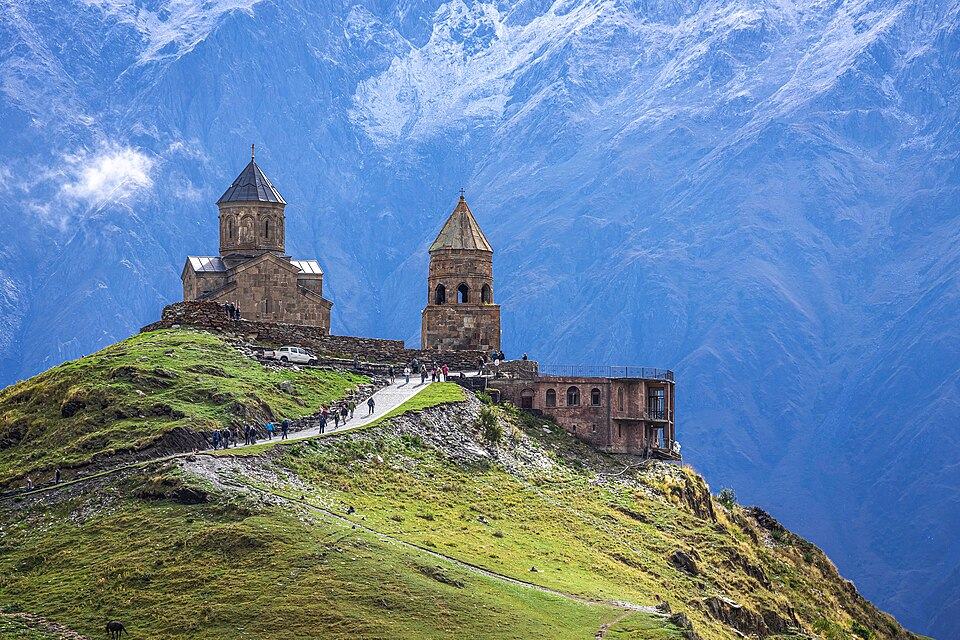
Tusheti in autumn: a short window before the Abano Pass closes
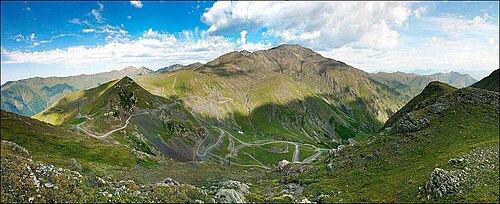
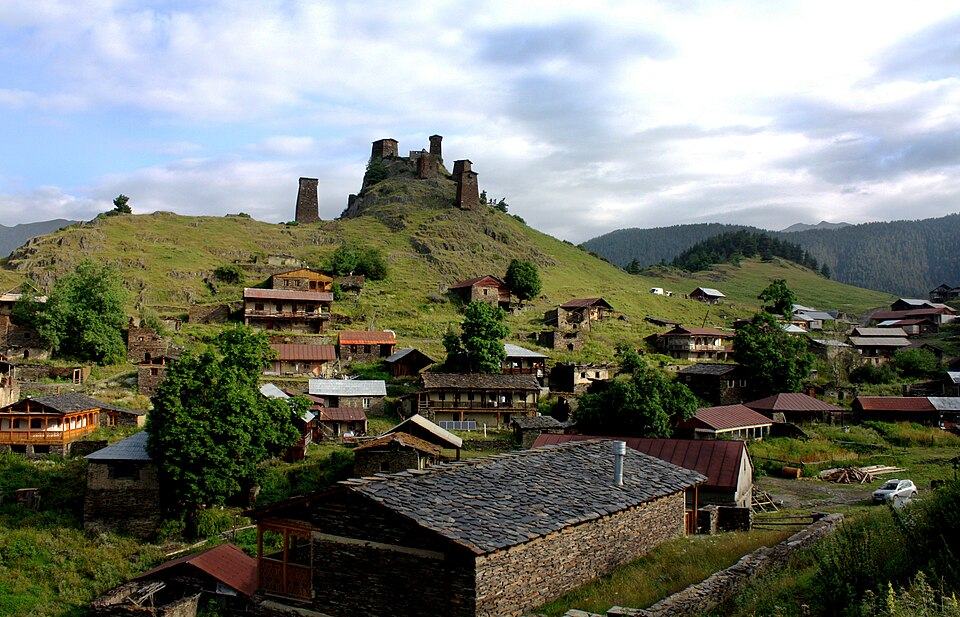
Tusheti has the most dramatic autumn in Georgia and the shortest one. The pine forests around Omalo, at about 1,880 m, are broken by birch and aspen that turn yellow from mid-September, and the season usually peaks in the last ten days of the month. By early October the high pastures are brown and the first snow is on the ridges.
Timing is ruled by the road. Cars reach Omalo on a single dirt track that tops out at roughly 2,850 m on the Abano Pass. Drivers usually stop using it in early October, when snow begins to stick up there. A mild year can stretch that to mid-October and an early storm can end it in late September; after that the track stays shut until the following June. Do not plan a Tusheti visit for October without a fallback.
Late September also brings one of the great scenes of the Georgian year: Tush shepherds driving their flocks down over the Abano Pass to winter pastures in the Kakheti lowlands, a journey of several days on foot. You may meet them on the road, so allow extra time and let the sheep pass.
Best walks in autumn
- Omalo to Shenako and Diklo: a half-day walk between villages through open forest above the gorge.
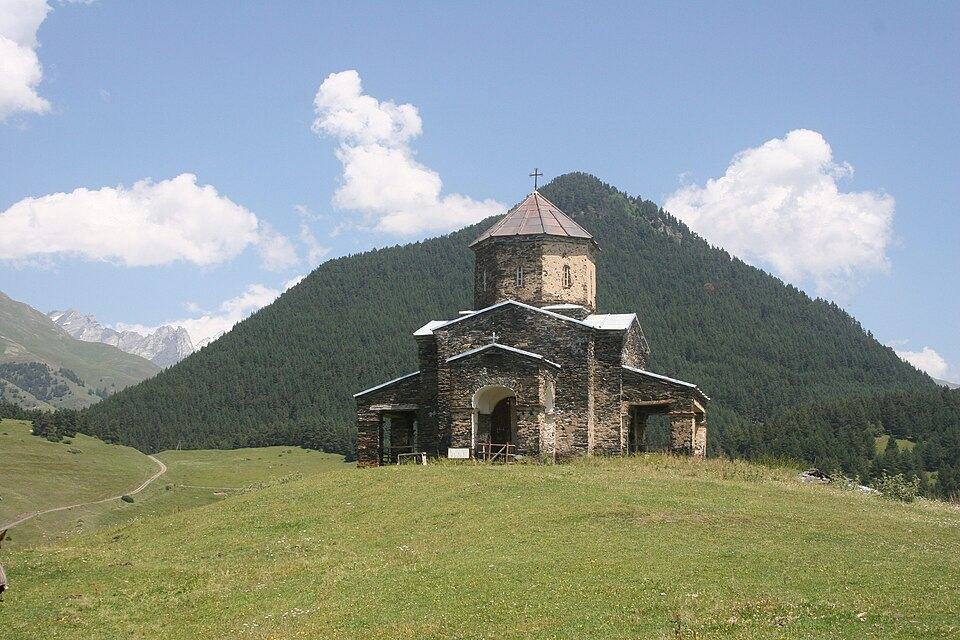
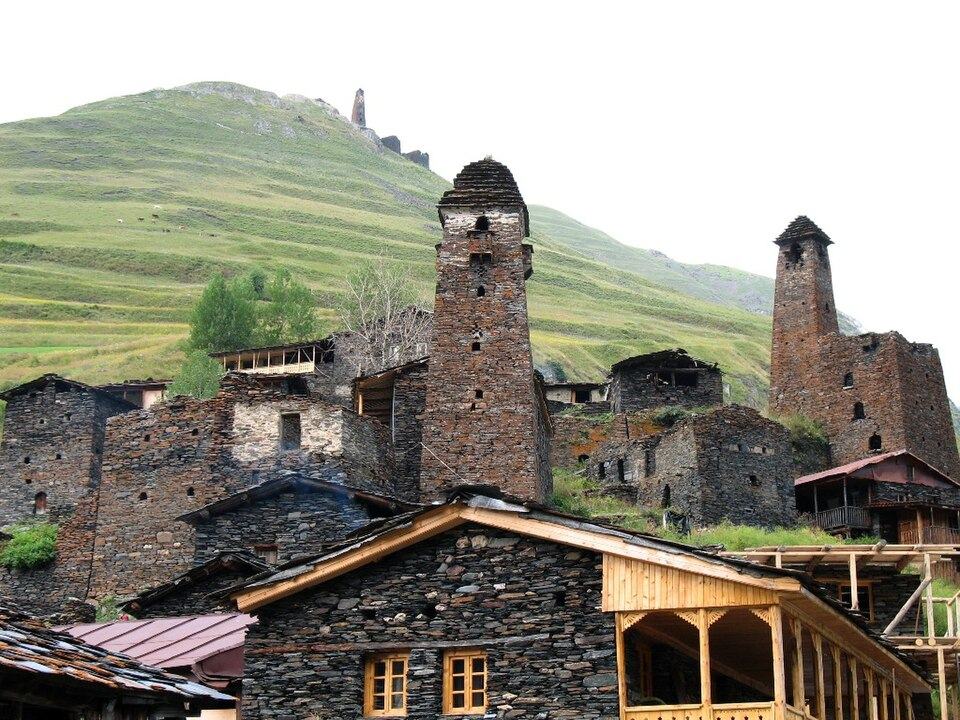
- Dartlo, Kvavlo and Parsma: the tower villages of the Pirikiti valley, covered on our Dartlo and Parsma trail page.
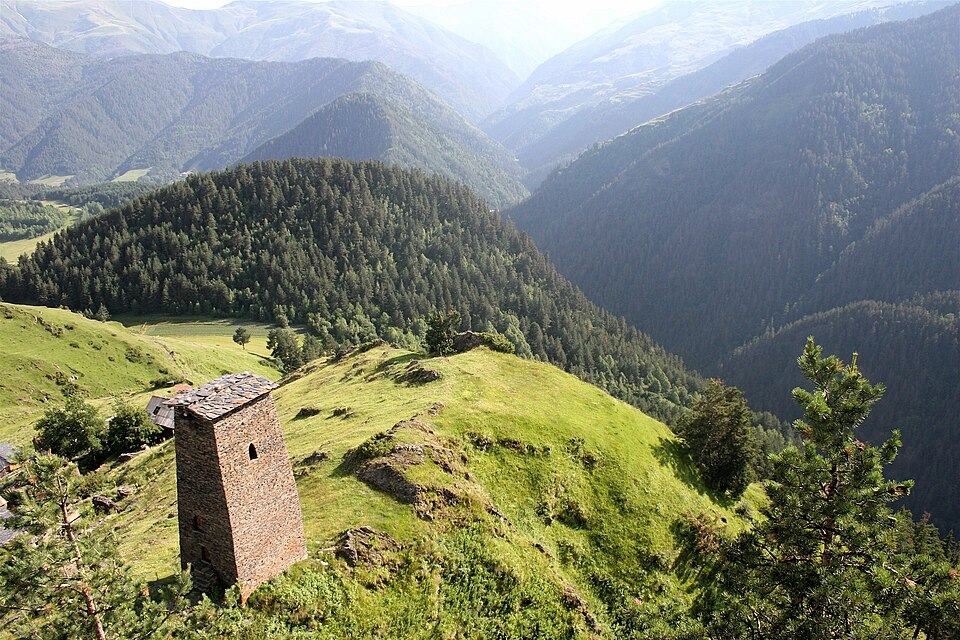
Racha in autumn: gold above the Rioni
Racha, in the upper Rioni valley, is the region many Georgians name first when you ask about autumn. The forests here are mixed beech, hornbeam, chestnut, maple and spruce, so the slopes turn every shade from lemon to dark red. The higher villages such as Ghebi and Chiora change first, in early October; the main valley around Ambrolauri, at about 550 m, and Oni, at about 830 m, usually peaks between mid-October and early November.
It is also harvest time. Racha picks its grapes later than Kakheti, often in late October, so the semi-sweet Khvanchkara wine villages are busy with picking and pressing just as the colour peaks.
Where to go
- Shaori Lake: the reservoir on the Nakerala ridge, at roughly 1,100 m, is ringed by forest that turns gold and red; it is a stop on the drive from Tkibuli.
- Nikortsminda: the 11th-century cathedral, with its carved facades, stands among orchards and walnut trees about 10 minutes from Shaori.
- Ambrolauri to Oni: a 30 km valley drive along the Rioni with stops at Barakoni church.
Racha is about 4 to 5 hours from Tbilisi via Kutaisi or the Nakerala road. Our Racha and Imereti Off the Beaten Path tour and the Imereti to Racha trek both run in early autumn; ask us about late October dates if you want the forest at its peak.
Borjomi and Samtskhe-Javakheti in autumn
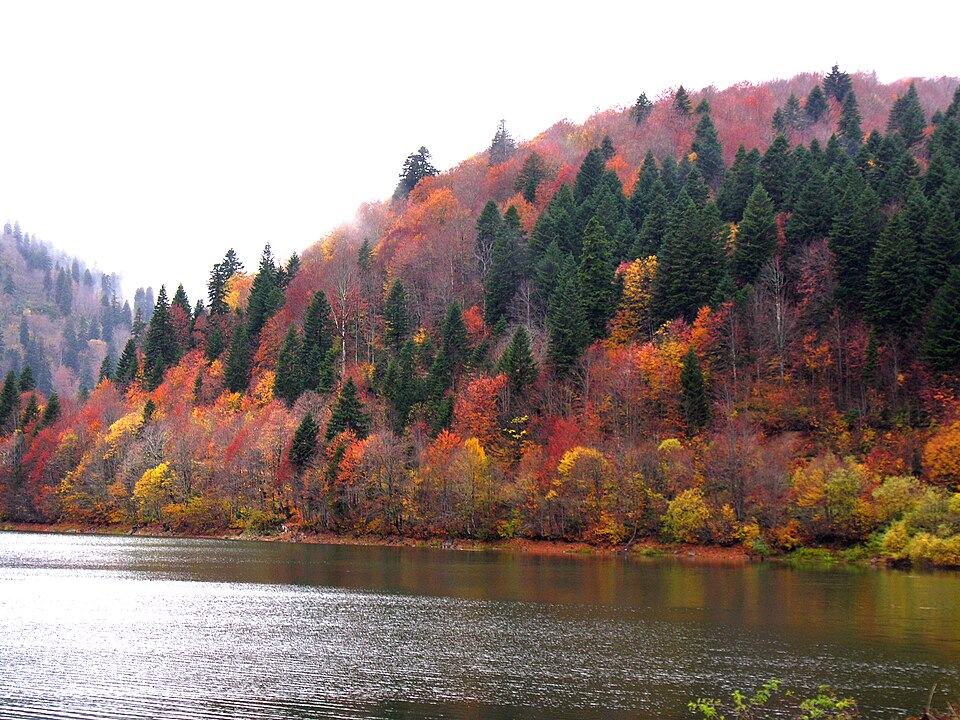
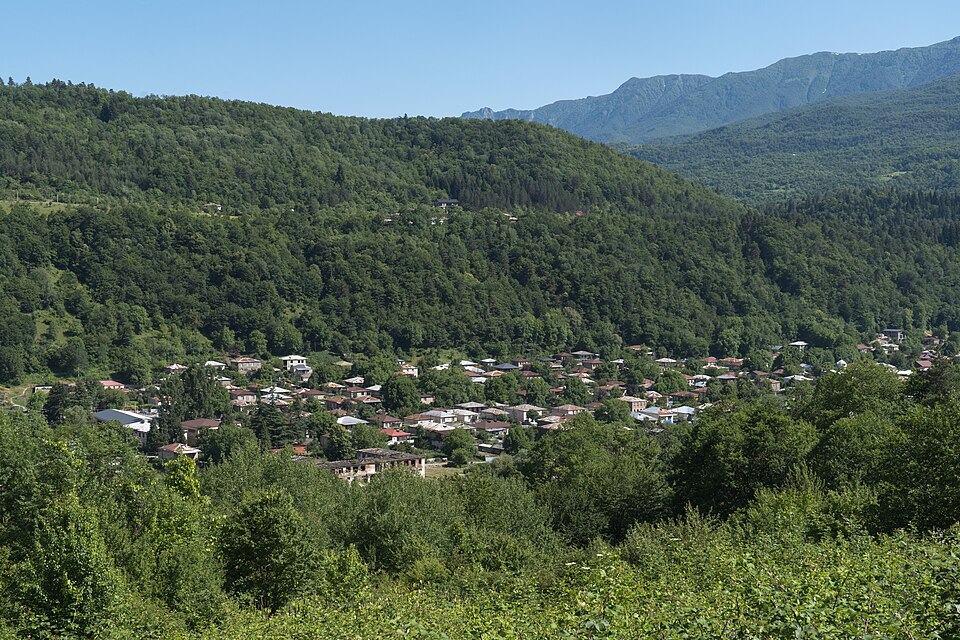
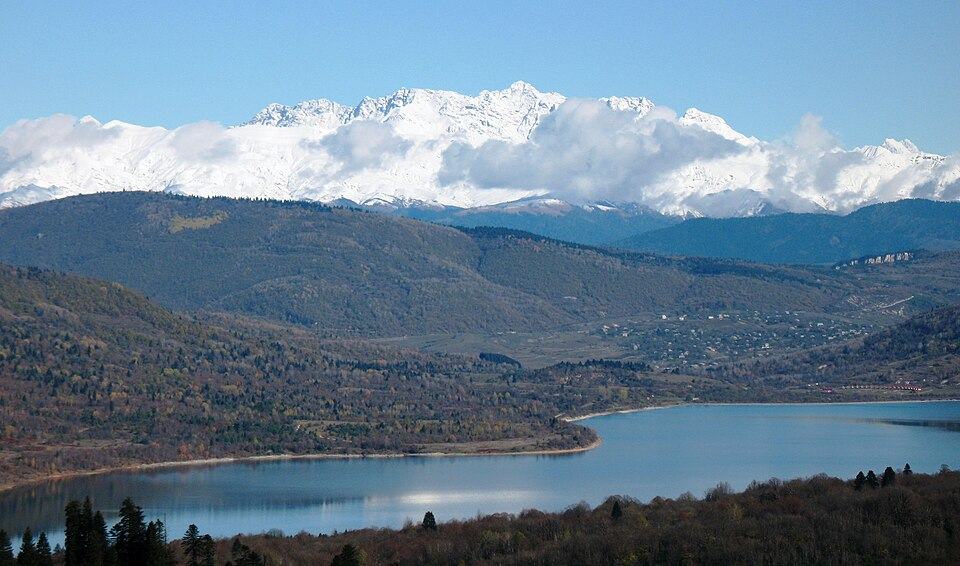
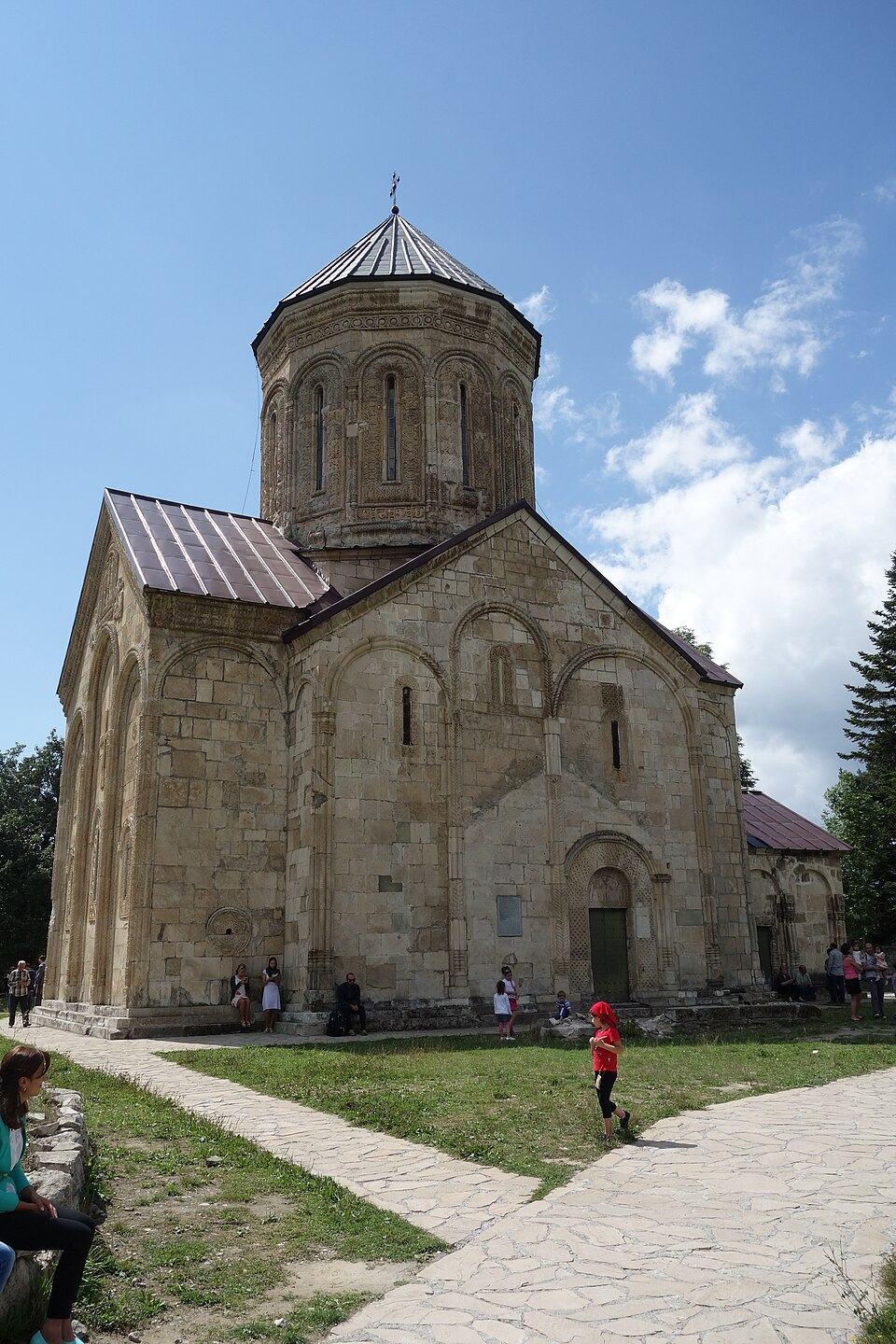
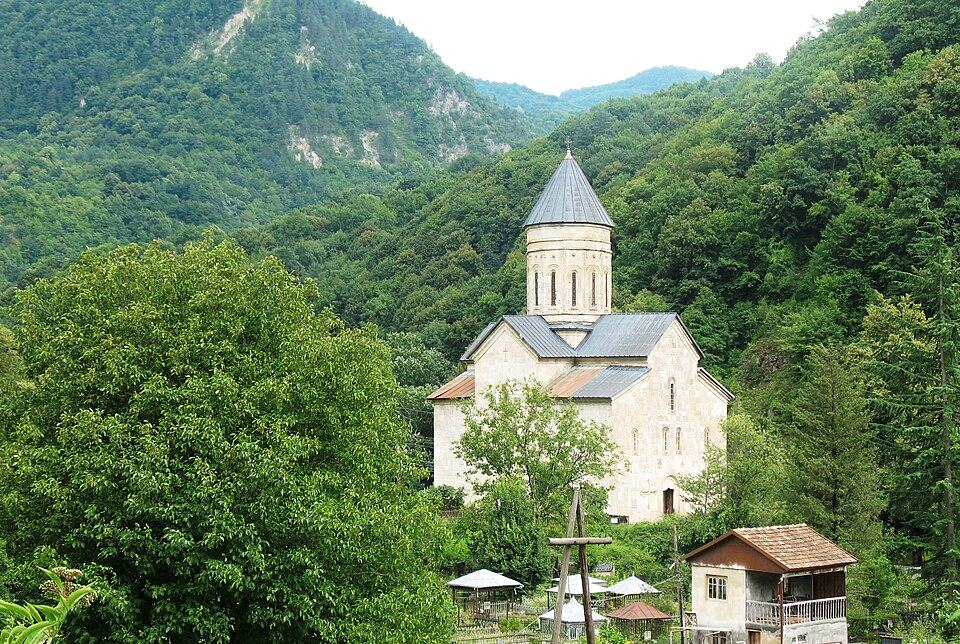
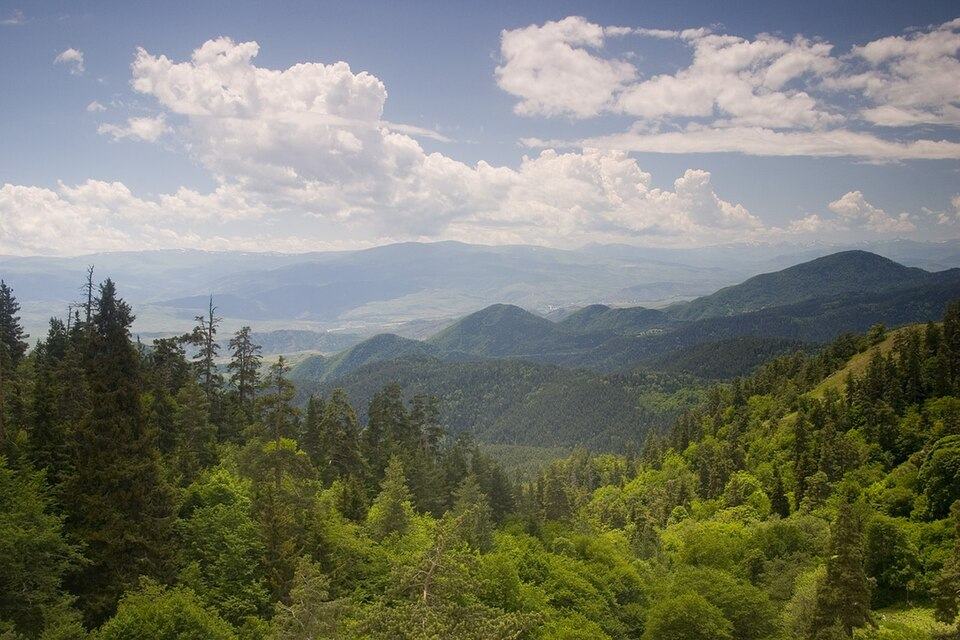
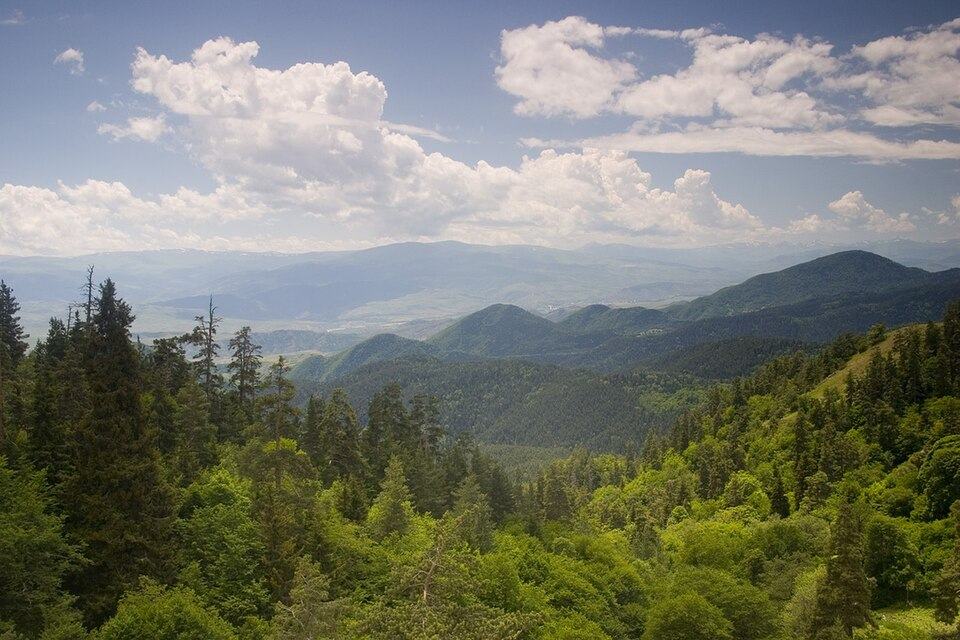
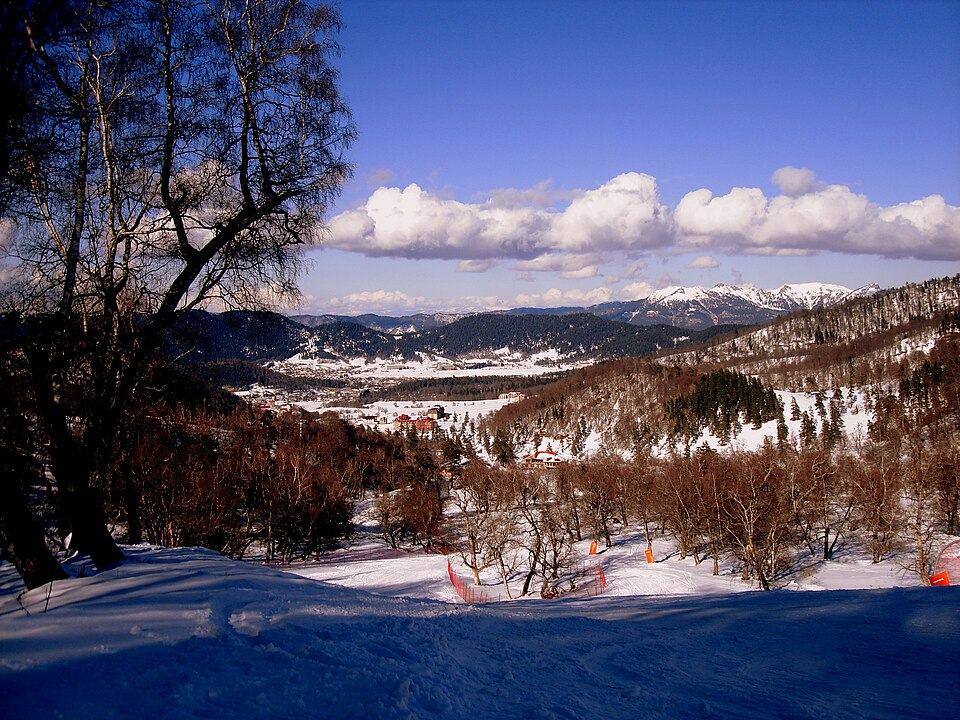
The Borjomi gorge is the classic autumn trip from Tbilisi, about 2.5 hours west. Here the Mtkvari cuts through the Lesser Caucasus between slopes of beech, hornbeam, maple and dark fir, and the mix of evergreen and deciduous trees gives a patchwork that photographs well even on grey days. The forest around the town, at about 800 m, usually peaks from mid-October into early November, while the ridges of Borjomi-Kharagauli National Park above 1,500 m and the ski village of Bakuriani at about 1,700 m turn in early to mid-October.
Best walks in autumn
- Borjomi central park: the old mineral water park follows a side stream into the forest and is at its best in late October.
- Likani valley loop in Borjomi-Kharagauli National Park: a short marked trail that climbs from the visitor area into beech and fir, with views back over the gorge. Register at the visitor centre first.
- The Green Monastery (Chitakhevi): a 9th to 10th-century church reached by a forest path a few kilometres up a side valley, quiet and colourful in October.
- St Andrew Trail: the park's multi-day ridge route over Sametskhvario peak, at about 2,640 m, is best finished by mid-October; see our trail page.
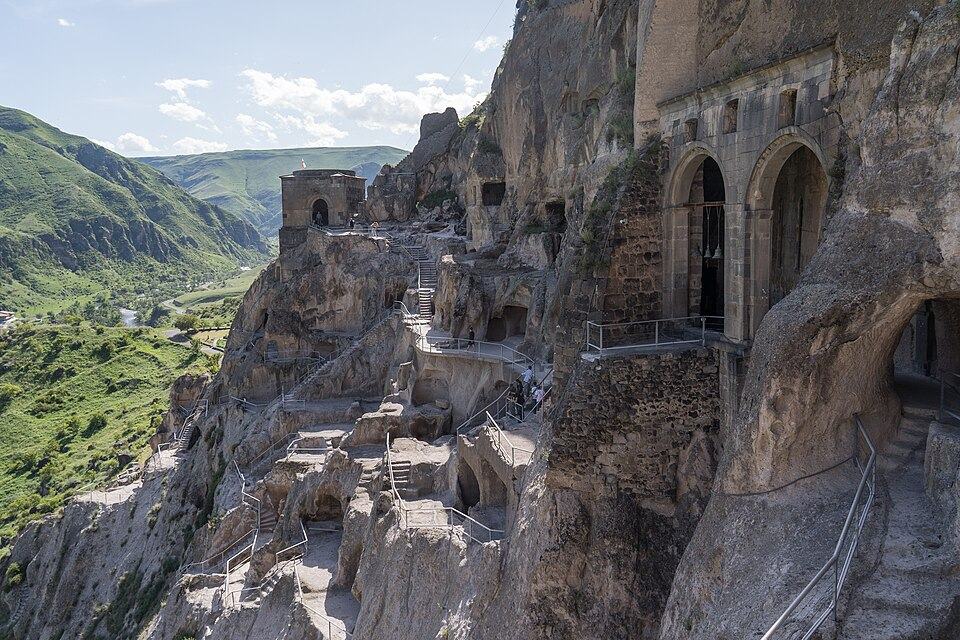
Borjomi pairs naturally with Rabati castle in Akhaltsikhe and the cave city of Vardzia, where the slopes of the Mtkvari canyon turn ochre and gold in October. After a rockfall in 2026 a small section of Vardzia is closed, but most of the site is open. The high road home across the Javakheti plateau, past Paravani and Tabatskuri lakes at over 2,000 m, can see snow from late October, so in colder weeks we return through Borjomi instead.
Kakheti and Lagodekhi: vineyards and beech forest in late autumn
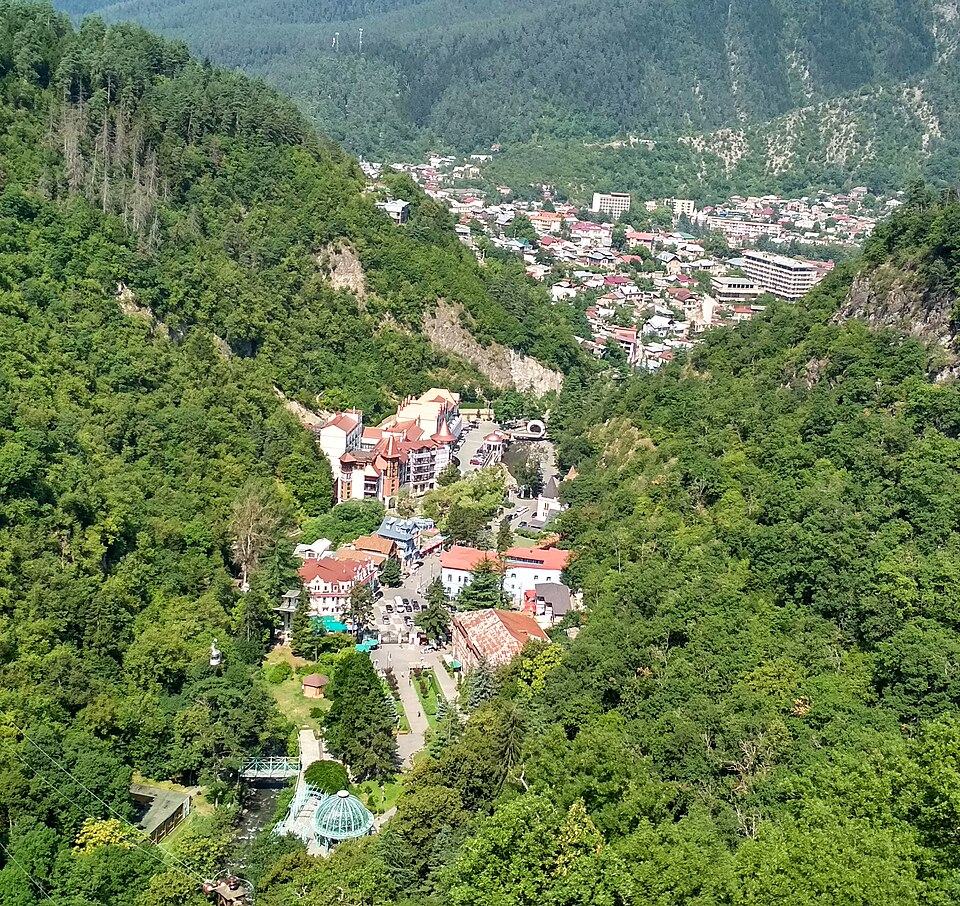
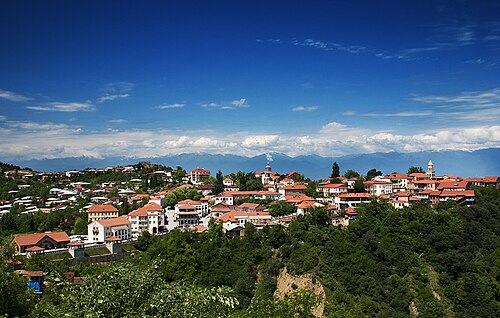
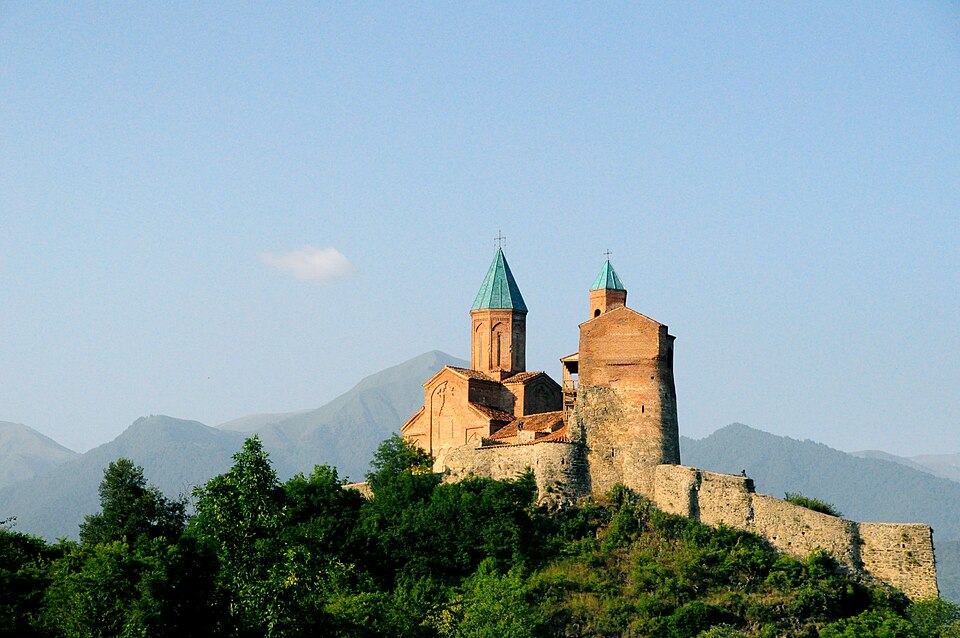
Kakheti has two autumns. The first is the harvest, Rtveli, from mid-September into October, when the vines are still green and the cellars are busy. The second, which few visitors see, comes after the picking: from late October to mid-November the vineyards of the Alazani valley turn yellow, rust and wine red, and on a clear day the first snow sits on the Greater Caucasus behind them. Our guide to Georgian wine and qvevri explains what happens in the cellar during these weeks.
The Gombori forest
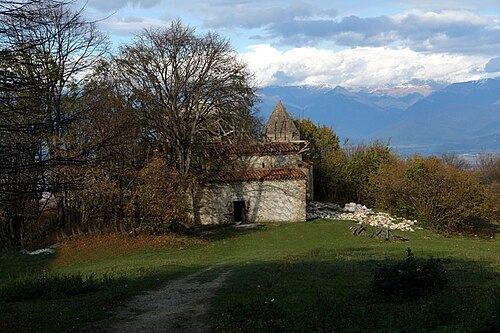
The direct road from Tbilisi to Telavi crosses the Gombori range at roughly 1,600 m through dense beech and hornbeam forest, which usually peaks from mid to late October. It is one of the finest autumn drives in the east, with a stop at the monasteries of Shuamta just before Telavi. The road has had long closures for works, so check its status before you plan the route; if it is shut, the longer road via Sagarejo and Gurjaani adds about an hour.
Lagodekhi
Lagodekhi National Park, at the far eastern end of Kakheti about 170 km from Tbilisi, protects one of the oldest forests in the country, with a broad belt of oriental beech between about 800 and 1,800 m and maples and hornbeam lower down. The lower forest usually colours from late October to mid-November, although after a mild autumn it can still look largely green in early November.
- Ninoskhevi (Gurgeniani) Waterfall: about 8.5 km return along a river gorge to a waterfall about 40 m high, 4 to 6 hours. Good into November; see our trail page.
- Black Rock Lake: the three-day trek to about 2,800 m is a summer route that usually ends in early October with the first snow.
Martvili, Okatse and Imereti: the late show in the west
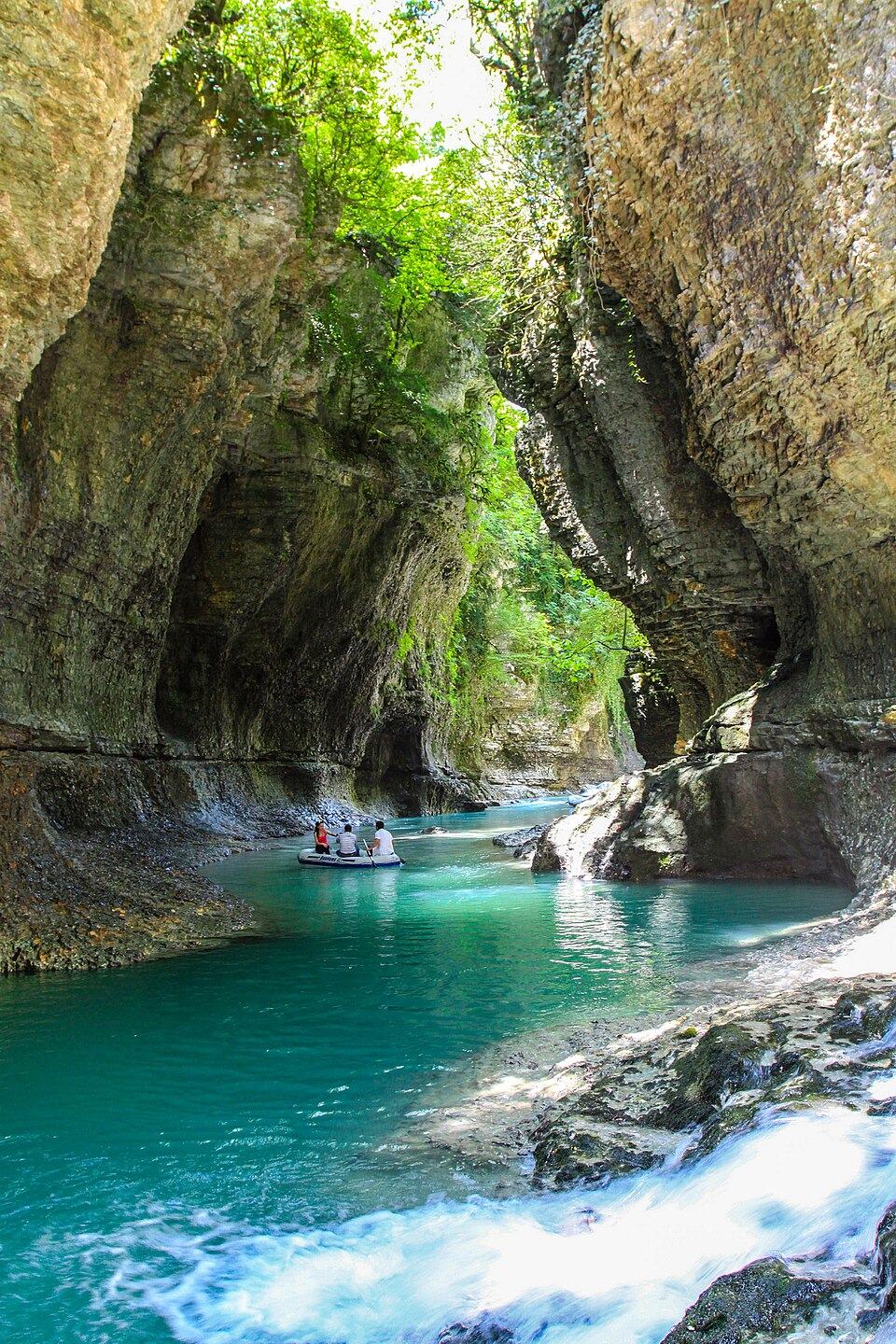
Western Georgia is warm and wet, and its Colchic forest of chestnut, hornbeam, beech, alder and oak keeps its leaves later than anywhere else in the country. The canyons of Samegrelo and Imereti, at only a few hundred metres above sea level, usually colour from late October and hold it until late November. Rain is the catch: October and November are among the wettest months here, so plan an indoor option for each day.
- Martvili Canyon: a short loop path above the turquoise Abasha river under overhanging trees, under an hour from Kutaisi. The boat ride usually runs from April to November but stops in rain.
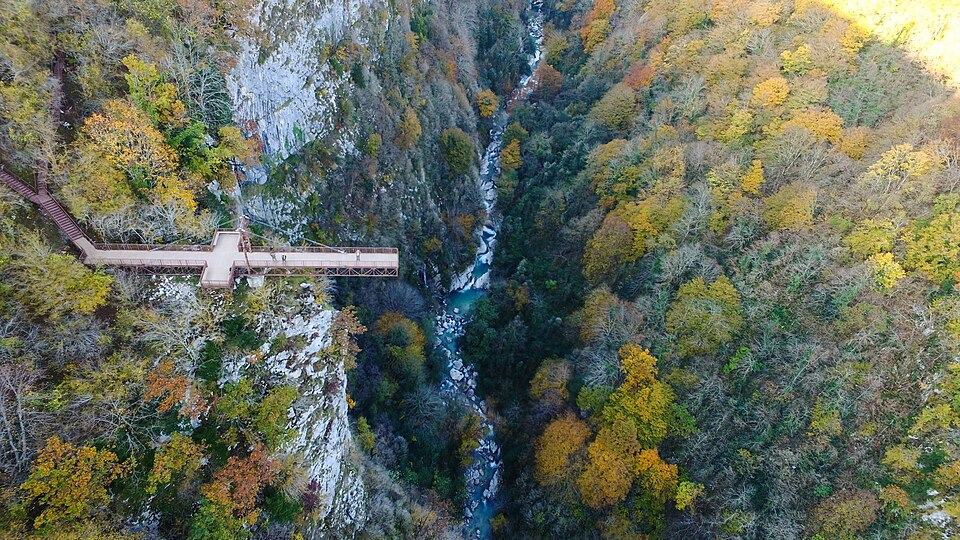
- Okatse Canyon: a walkway fixed to the cliff high above the gorge, with forest on both sides, and Kinchkha waterfall nearby.
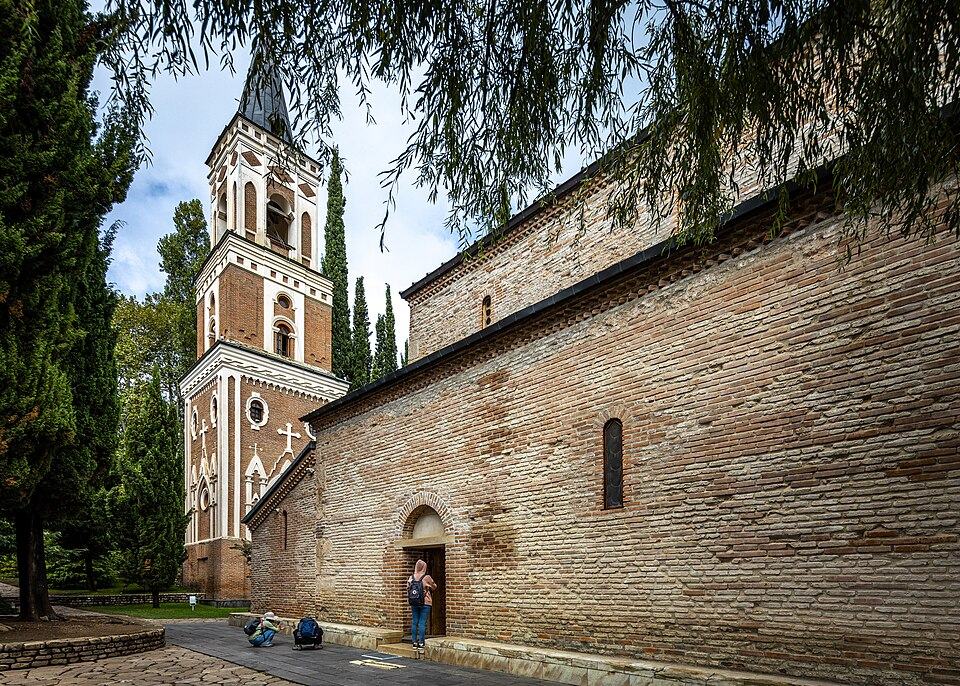
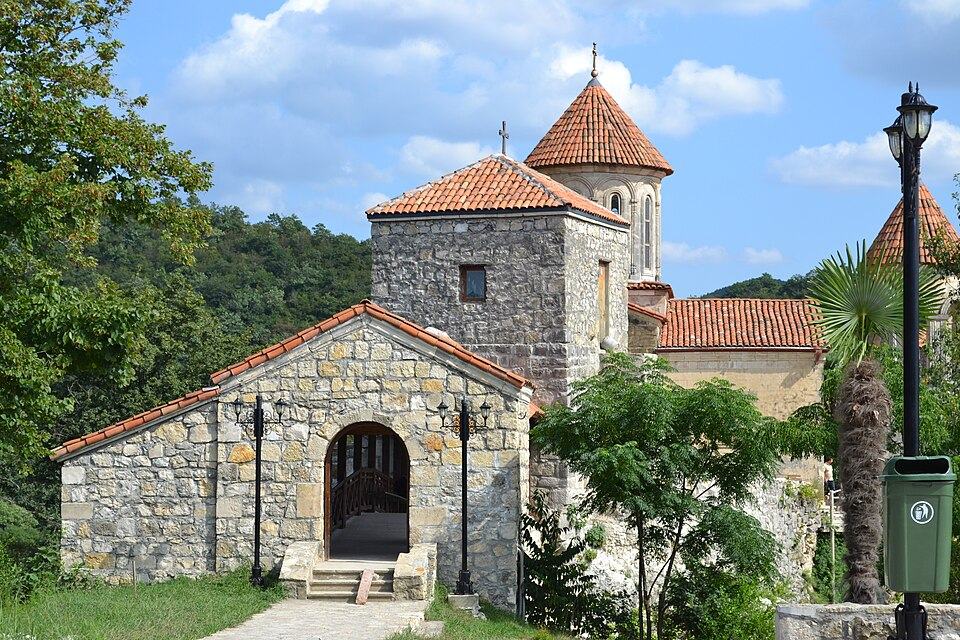
- Martvili Monastery: a hilltop church above the town with wide views over the turning Samegrelo hills.
Our collections of canyons and waterfalls in Georgia list more stops in the area, and the Kutaisi canyons day trip can be timed for the peak.
Autumn colours in Tbilisi: November in the city
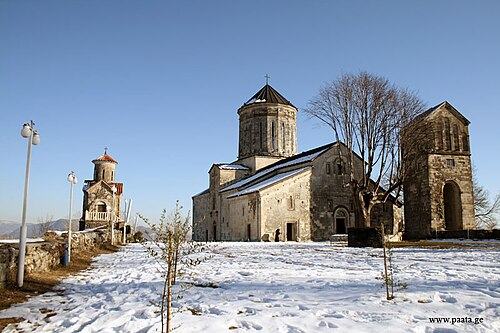
Tbilisi is the last place to turn. The plane trees of the old avenues, the parks on the hills and the forest of the Saguramo ridge usually go gold in early to mid-November, and in a mild year the colour lasts until the end of the month. Days are often still around 13 to 18°C in early November, which makes city walking a pleasure.
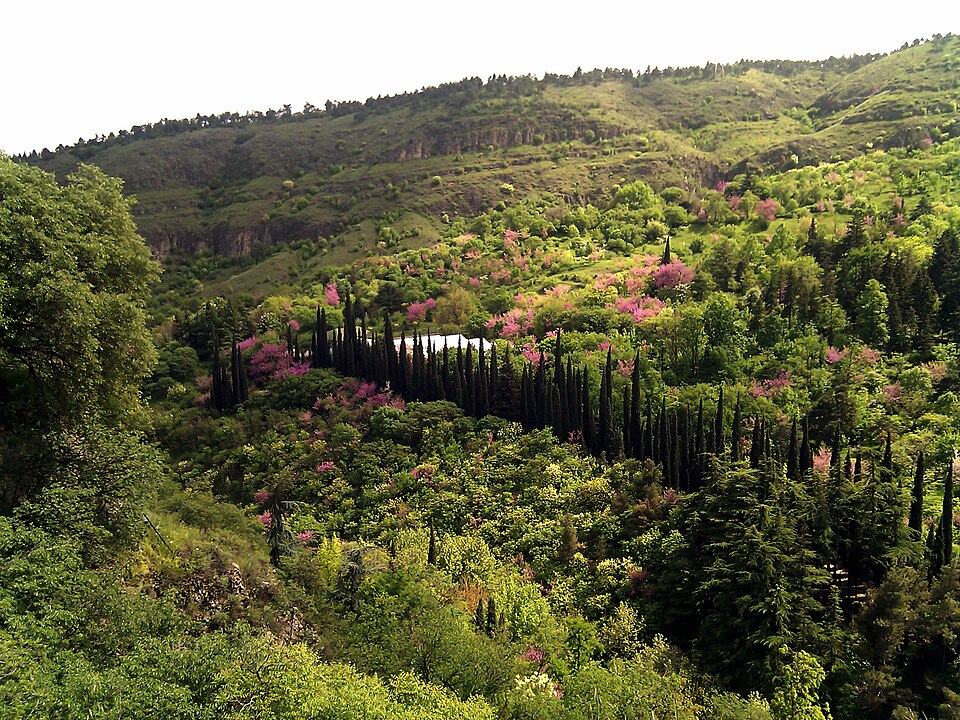
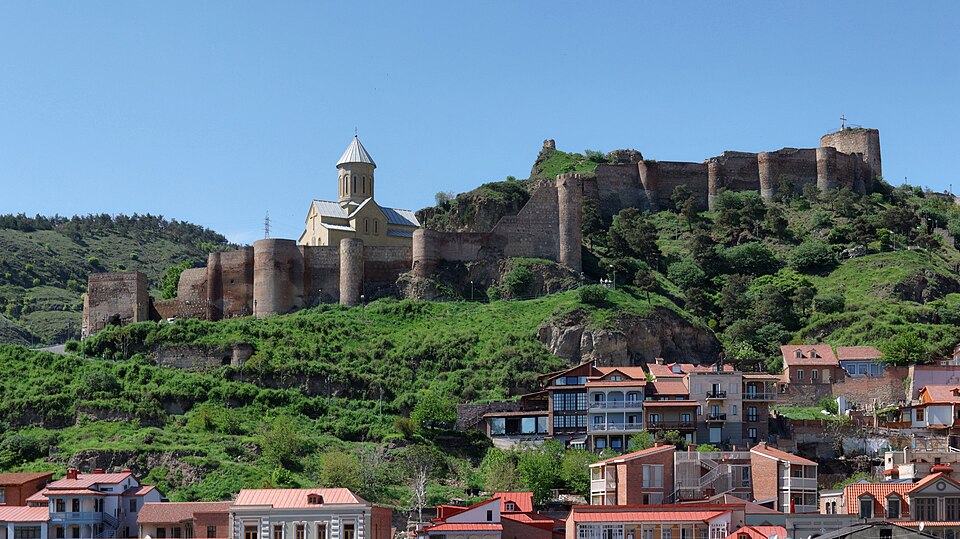
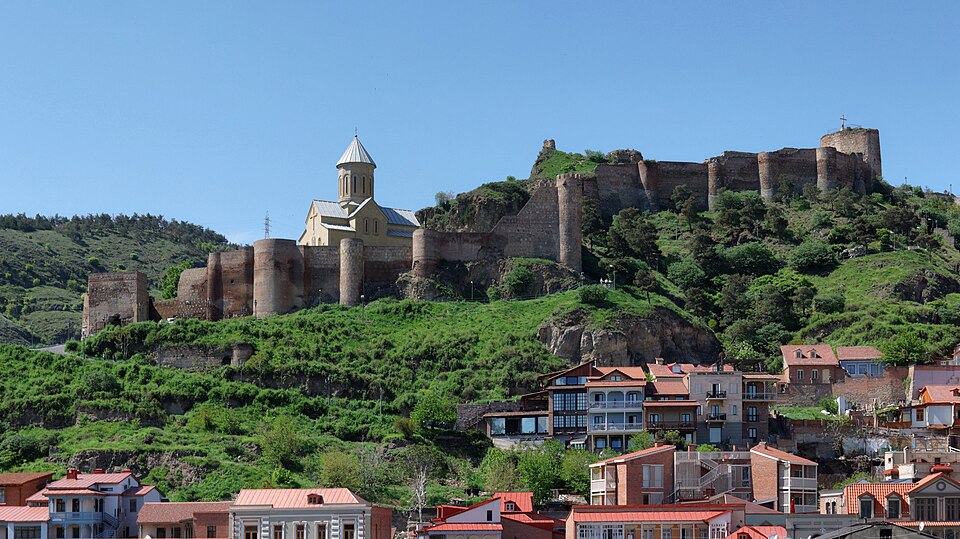
- National Botanical Garden: the gorge behind Narikala fortress, with a waterfall, footbridges and old trees that colour gradually over three or four weeks from late October.
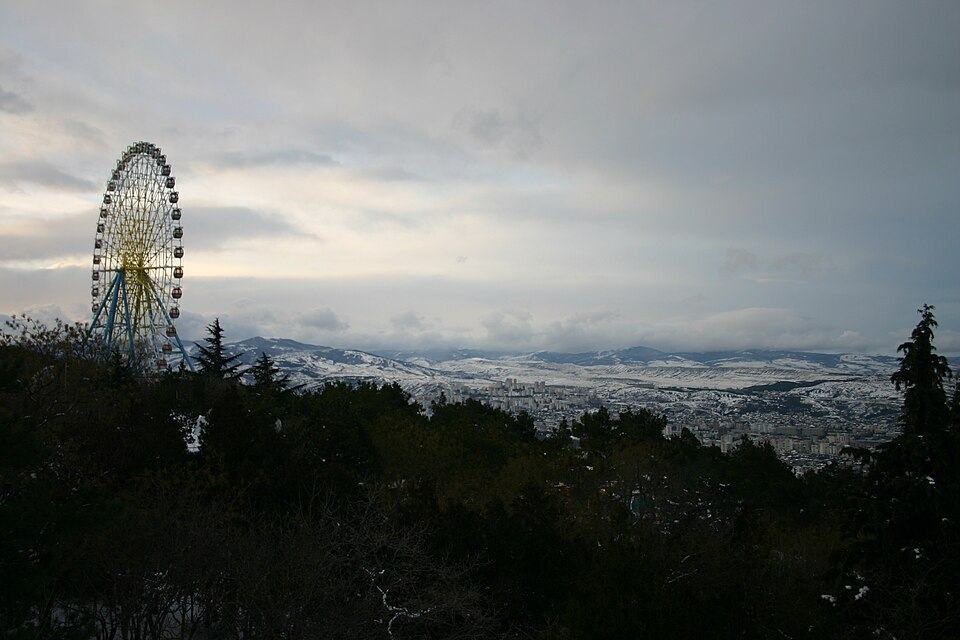
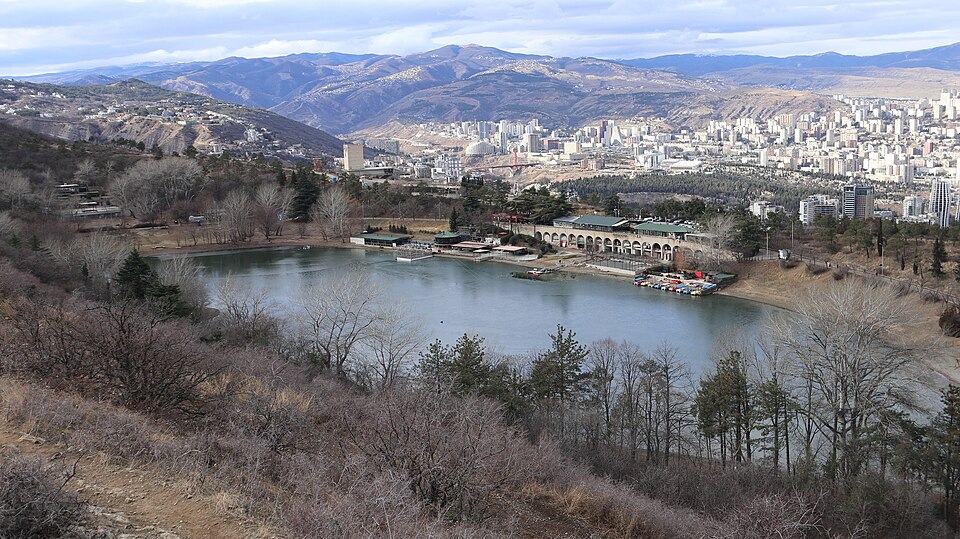
- Mtatsminda and the Turtle Lake slopes: forested hills above the city with long views over the roofs. Check whether the Turtle Lake cable car is running before you count on it.
- Zedazeni to Mamkoda in Tbilisi National Park: about 15 km and 6 hours along a forest ridge north of the city, best from mid-October to mid-November; see our trail page.
Our Georgia in November guide and Tbilisi itinerary help you fit these walks into a city stay.
Mountain roads that close in autumn, and a route to follow the colour
Autumn is when the high roads start to shut, one by one. The dates below are typical, not fixed: each depends on the first lasting snow, and the authorities close a road the day it becomes unsafe.
| Road | Height | Usually closes | Notes |
|---|---|---|---|
| Abano Pass to Tusheti | About 2,850 m | Early October, sometimes mid-October | Unpaved; closed until about June once shut |
| Datvisjvari Pass to Shatili (Khevsureti) | About 2,676 m | October to November with snow | Check before any late visit |
| Zagari Pass, Ushguli to Lentekhi | About 2,600 m | About mid-October | Rough; Mestia road via Zugdidi stays open |
| Javakheti plateau road to Vardzia | Over 2,000 m | Snow possible from late October | Borjomi route as an alternative |
| Jvari Pass, Military Road to Kazbegi | About 2,380 m | Kept open; short closures after snow | Winter tyres needed in the cold months |
| Gombori Pass, Tbilisi to Telavi | About 1,600 m | Not a snow issue in autumn | Recent long closures for works; check status |
Pack for frost: above 1,500 m most October mornings are below freezing, while Tbilisi still sees about 20°C by day. Many guesthouses in Tusheti, Juta and the Svaneti trekking villages close during October, so confirm a few days ahead. Most of the high routes on our hiking in Georgia guide finish their season in the first days of October. Our best time to visit Georgia article covers the wider calendar, including festivals and ski season.
A 10-day route that follows the colour downhill
- Days 1 to 3: Svaneti
Fly or drive to Mestia around 5 October; walk to Chalaadi, Mazeri and Ushguli while the high forest is at its peak. - Days 4 to 5: Racha
Drive via Kutaisi to Ambrolauri; Shaori, Nikortsminda and a Khvanchkara cellar as the valley starts to turn. - Days 6 to 7: Borjomi and Vardzia
Forest walks in Borjomi, then Rabati and Vardzia, returning to Tbilisi. - Days 8 to 9: Kazbegi
If the early cold has held off, the lower slopes and Truso still have colour; otherwise swap for Kakheti and the Gombori forest. - Day 10: Tbilisi
The Botanical Garden and the old town, with the city just beginning to turn.
Autumn in Georgia: frequently asked questions
When is peak autumn foliage in Georgia?
It depends on altitude. High mountain valleys such as Ushguli, Juta and Tusheti peak in late September, Mestia and Stepantsminda in the first half of October, Borjomi and Racha from mid-October to early November, and Kakheti, Lagodekhi, Martvili and Tbilisi from late October to late November.
Is October a good time to visit Georgia?
Yes. October brings the grape harvest, settled weather in the east, quieter roads and autumn colour in most regions. The main limits are the high mountains: Tusheti usually becomes unreachable early in the month, and long treks over high passes are mostly over.
Is the road to Tusheti open in October?
Usually only in the first days of the month. The Abano Pass road normally closes in early October once snow settles, sometimes later in a mild year and sometimes in late September. Plan Tusheti for September and check conditions with a local driver before you go.
Where is the best place for autumn colours in Georgia?
For forest colour, Racha and the Borjomi gorge are the most reliable. For colour with big mountains behind it, Svaneti and Kazbegi in early October. For an easy trip from Tbilisi, combine the Gombori forest with Kakheti's vineyards in late October.
Can you still hike in Georgia in October?
Yes, below about 2,500 m. Forest and valley walks in Borjomi-Kharagauli, Lagodekhi, Truso, Mazeri and Tbilisi National Park are good all month. High routes such as the Gergeti Glacier, Koruldi Lakes, Chaukhi Pass and Black Rock Lake usually finish their season in late September or early October.
Is Kazbegi worth visiting in autumn?
Very much so. From late September to mid-October the slopes around Stepantsminda turn gold and sea buckthorn glows along the river, often with fresh snow on Kazbek. Truso and Gergeti Trinity Church stay walkable, and the Military Road is kept open.
When do the leaves turn in Tbilisi?
Usually from late October, with the peak in the first half of November and some colour lasting to the end of the month. The Botanical Garden and the forest trail from Zedazeni to Mamkoda are the best places to see it.
Is November too late for autumn colours in Georgia?
Not in the lowlands. Kakheti's vineyards, Lagodekhi, the Martvili and Okatse canyons and Tbilisi are often at their best in the first half of November. The mountains, by then, are bare and between seasons.