- David Gareja lies ~98 km south-east of Tbilisi by road, about 2 hours each way, so the trip fills a whole day.
- The usual road runs via Sagarejo and Udabno village. No bus reaches the gate, so most visitors hire a driver or book a tour.
- In 2026 the Lavra, the working monastery at the heart of the site, charged no entry fee and kept daylight hours. Your guide checks the path up to Udabno's frescoes on the day.
- Dress as for any Georgian church: knees and shoulders hidden, and a scarf for women. The gate usually lends wraps.
- April, May and October are the kindest months, and the striped hills of Gareji glow best in low morning or evening light.
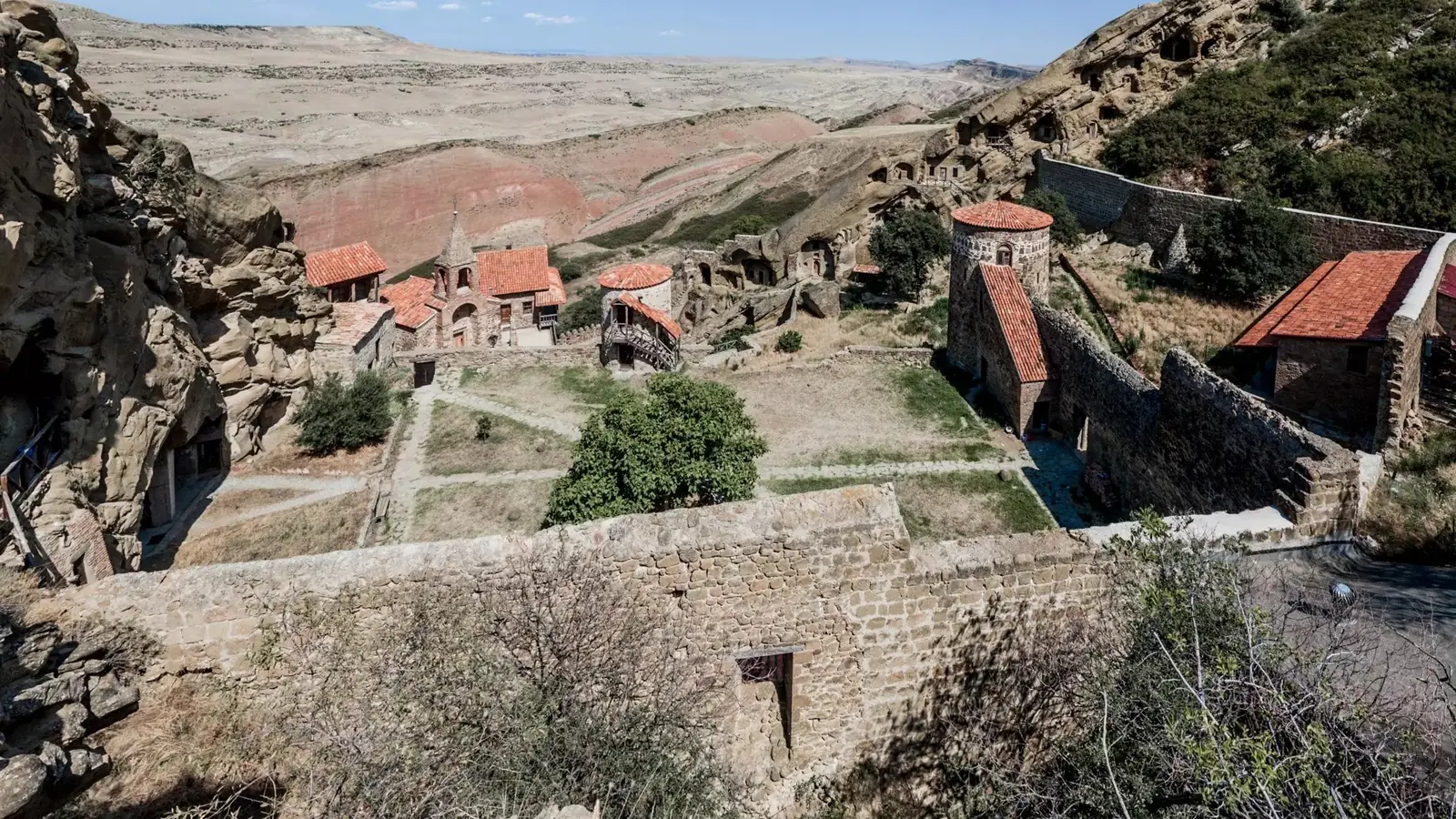
A David Gareja day trip takes you about 100 km south-east of Tbilisi, to a steppe of bare, striped hills on the border with Azerbaijan. Plan on 2 hours each way by road and 2 to 4 hours on site. David Gareja Monastery is a group of cave monasteries cut into soft sandstone from the 6th century on. Its oldest part, the Lavra, is still home to monks. No bus goes to the gate, so most people come with a driver, a private tour or a hire car.
This guide follows the day in order: the road from Tbilisi and its alternatives, the Lavra and Udabno, and the rainbow hills of Gareji. Then come hours, entry and dress code, the best months, lunch in Udabno village, safety and a Sighnaghi add-on. Prices are 2026 figures and change often. For the full history, open our David Gareja place page.
What David Gareja is: the Lavra, the cave cells and Udabno
St David Garejeli came to this hillside from Mesopotamia early in the 6th century. Georgians count him among the Thirteen Assyrian Fathers, the monks who spread monastic life in the country. He first lived in a natural cave with his pupil Lukiane. Over the centuries their followers cut cells, churches and dining halls into ~25 km of slopes, and about a dozen monasteries grew up.
A legend says David brought a stone back from Jerusalem, and the place won the name of a second Jerusalem. Most visitors today see two of the monasteries: the Lavra and Udabno.
The Lavra: St David's own monastery
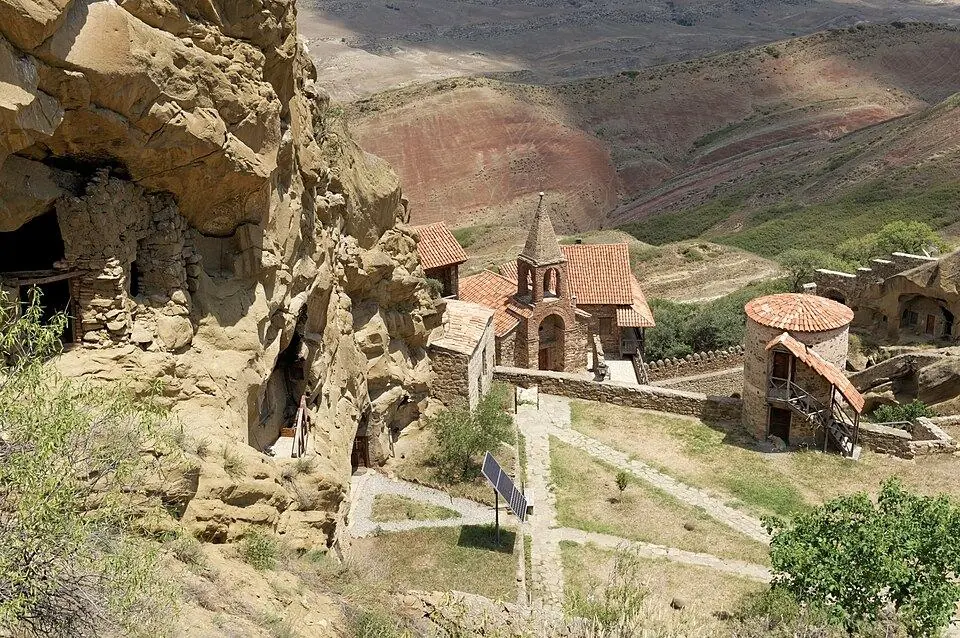
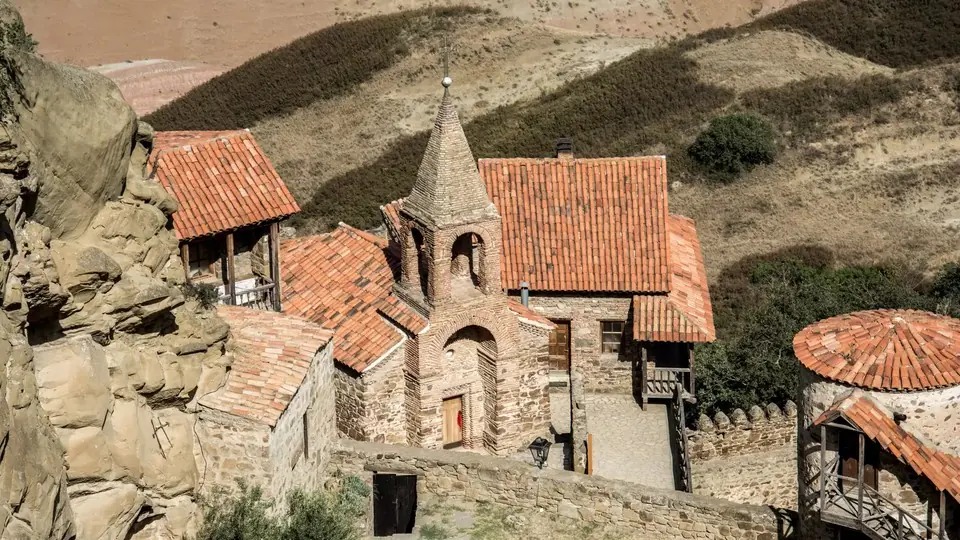
The Lavra sits at the foot of the hill behind a stone wall with towers. Cells open onto a sloping yard on several levels, linked by steps and wooden walkways. The main cave church holds the grave of St David. A few doors carry signs for monks only, and the rest is open to visitors.
Udabno and its frescoes
Udabno monastery lies above the Lavra, on the far side of the ridge. Its cave churches and dining hall keep wall paintings from about the 10th to the 13th centuries, among them scenes from St David's life. The path up to Udabno and its frescoes depends on conditions on the day, and your guide checks it before you set off.
The ridge also carries the state border with Azerbaijan. Border guards patrol it and are used to visitors, so keep to the path and do as they ask.
Gareji rainbow mountains: where to see Georgia's striped hills
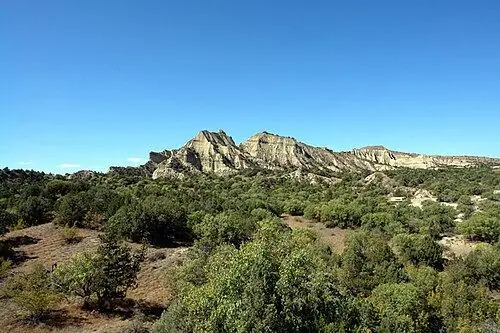
For many people the hills are half the reason to come. They are bare and banded in rust, pink, ochre, cream and a soft grey-green. Each stripe is a layer of old sediment, mostly clay and sandstone, and iron in the rock gives the warm reds. Guides call them the rainbow mountains of Gareji, or simply the coloured hills.
- From the road: the last ~14 km from Udabno village to the Lavra cross striped slopes, with room to pull over.
- On foot: some guides walk a group over the hills for the last few kilometres to the Lavra. Go only in dry weather, as the clay turns to glue after rain.
- Near the Mravaltskaro reservoir, north-west of the Lavra: the boldest bands, about 2 km from the water. Only dirt tracks lead there, so you need a 4x4 and a driver who knows them.
- From the path to Udabno: the ridge looks down on pink and white folds on both sides.
Colours by light and season
Light matters more than the date. In the first and last two hours of sun, the low light warms the reds and picks out every ridge, while at noon the bands look flat. Rain deepens them for a day or so. Spring lays thin green grass over the pink, July bleaches it, and October turns it tawny gold.
For badlands on a far bigger scale, head to Vashlovani National Park in Kakheti's south-east corner.
How to get to David Gareja from Tbilisi
As the crow flies, the Lavra is only ~60-70 km from Tbilisi. The good road bends east through Sagarejo, though, so the Tbilisi to David Gareja drive is ~98 km. The OSRM route planner puts it at 1 hour 40 minutes without stops. With city traffic and a slow last stretch, allow 2 hours each way.
| Way to go | Distance and time | Cost | Good to know |
|---|---|---|---|
| Private driver or private tour | ~98 km, about 2 h each way | A driver for the day: about 160-200 GEL (about $62-77) per car in 2026 | Easiest. The driver waits, and a guide explains the site |
| Own or hire car via Sagarejo | ~98 km, about 2 h | Fuel only | Paved almost all the way; fill up before the turn-off |
| Car via Rustavi | ~70 km, 2 h or more | Fuel only | Dirt steppe tracks; 4x4 and dry weather only |
| Gareji Line minivan | About 1.5 h each way | About 40 GEL (about $15) return in 2026, if it runs | Ran in summer in past years; check before you plan on it |
| Van to Sagarejo, then taxi | Van ~1 h, taxi ~1 h | Settle the taxi fare first | Few vans; scarce in winter |
The road via Sagarejo and Udabno
Leave Tbilisi on the Kakheti highway past the airport. Near Sagarejo, take the bypass to the roundabout and turn south on the road signed for Udabno and David Gareja. From there it is ~50 km and about an hour to the car park, through Udabno village. By 2026 the road was paved nearly all the way, with a short gravel patch near Udabno. Fill the tank in Sagarejo and save an offline map, as signs thin out on the steppe.
The shortcut via Rustavi
The steppe route from Rustavi looks shorter, at ~70 km, but it is a web of dirt tracks with few signs. Take it only in a 4x4, in dry weather, with a driver who knows it. Its bonus is Natlismtsemeli, Lukiane's cave monastery of St John the Baptist ~10 km north-west of the Lavra, with a painted portrait of King David the Builder.
Shuttle, van and taxi
For years a private minivan, the Gareji Line, ran daily from central Tbilisi from about mid-May to the end of October. Reports for summer 2026 disagree on whether it still runs, so check its Facebook page first. Otherwise, take one of the few vans from the Samgori area to Sagarejo and a taxi on from there.
If you would rather not drive, our David Gareja & Udabno Day Trip takes care of the road. It runs privately, on any date you pick and for groups of any size. Your guide speaks your language, and the driver knows the steppe roads. Check the tour page for what is included in the price.
What to see at David Gareja, in order, and how long it takes
- Car park and visitor centre: 10 minutes
Near the car park is a visitor centre with toilets and a church shop. Use the toilets here, as there are none on the hill. - The Lavra: 40 to 60 minutes
Walk down through the gate into the yard. See the cave church with St David's grave, the carved tombstones and the cells stacked up the cliff. - The Tears of David: 5 minutes
Above the Lavra, water drips from the roof of a small cave into a basin. Pilgrims call it the Tears of David and drink it as holy water. - The path to Udabno: 2 to 3 hours there and back
The path starts behind the church shop and climbs steeply at first. It then follows the ridge to Udabno's cave churches, just below the crest. - Rainbow hills: 30 to 60 minutes
Stop at the striped slopes between the Lavra and Udabno village, ideally late in the day. - Lunch in Udabno village: 1 hour
The village is ~14 km back up the road, about 20 minutes away.
For the Lavra alone you need about an hour on site. Add the Udabno path and the hills, and plan on 3.5 to 4 hours.
A sample day from Tbilisi
| Time | Stop |
|---|---|
| 08:00 | Leave Tbilisi on the Kakheti highway |
| 09:00 | Turn south near Sagarejo; last fuel and shops |
| 10:00 | The Lavra and the visitor centre |
| 11:00 | The path to Udabno, or a walk in the hills |
| 13:30 | Late lunch in Udabno village |
| 15:00 | Rainbow hills, or Ninotsminda Cathedral on the way back |
| 17:00 | Back in Tbilisi |
David Gareja opening hours, entry fee and dress code
The Lavra is a working monastery, not a museum, and we found no official timetable. In practice the gate is open in daylight, roughly from 09:00 or 10:00 until 18:00, and it closes earlier in winter. Some doors may shut during services. In December the sun sets at about 17:30, so arrive by early afternoon.
Entry to the Lavra was free in 2026. You can leave a donation or buy candles in the shop. The state heritage agency's price list does show a ticket at about 10 GEL (about $4) in 2026, under the name of the Ujarma and David Gareja museum-reserve. Visitor reports from 2026 do not mention anyone charging it at the Lavra gate, but carry some small notes just in case.
David Gareja dress code
- Everyone: shoulders and knees covered. Shorts and vest tops are not right inside the walls.
- Men: long trousers, and hats off inside the churches.
- Women: a skirt that covers the knees and a scarf over the hair.
- Scarves and wrap skirts are usually lent at the entrance. On our tours they are in the car.
Photos in the churches
Photos of the yard and cliffs are fine. Inside the churches, follow the signs, never use flash on old paint, and ask before you photograph monks or people at prayer. Near the border, leave the drone at home and keep cameras off the guards and their posts.
Best time for a David Gareja day trip
The steppe is dry and open, with no shade at all. Figures for nearby Rustavi give a fair idea of the heat on the plain, though the monastery hill catches more wind.
| Months | Daytime highs | What it is like |
|---|---|---|
| March to May | ~15 to 26 °C | Best season: green grass on the pink hills, wildflowers, some showers |
| June to August | ~32 to 35 °C | Fierce heat on bare rock; go at dawn and finish by 11:00 |
| September to November | ~29 °C, falling to ~14 °C | Second best: clear air, tawny hills, soft light |
| December to February | ~9 to 10 °C | Quiet and cold; sticky mud after rain, sometimes snow, short days |
Snakes live in these hills, venomous vipers among them, and are out from spring to autumn, most of all from April to June. They avoid people. Stay on the path, wear boots or covered shoes, and look before you put a hand on a rock. After a bite, keep the person still, call 112 and get to a doctor fast.
Lunch in Udabno village and the Oasis Club
Udabno means desert in Georgian, and the village fits its name: a scatter of houses on the open steppe, ~14 km before the Lavra. It is the last place on the road with food and beds. There are no shops after the highway, so pack water and snacks either way.
The best-known stop is the Oasis Club, a restaurant and guesthouse set up by a Polish couple. Georgian dishes share the menu with Polish pierogi, and there are dorm beds and cottages. It opens daily in the warm months; at other times, call ahead. Our private day trip ends with a late lunch in the village.
Combining David Gareja with Sighnaghi or Kakheti wine
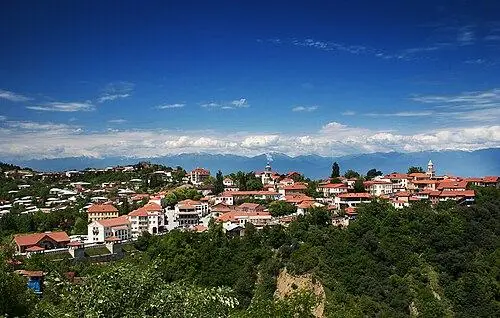
David Gareja lies south of the main Kakheti road, away from the wine valley, so a pairing makes a long day. From the Lavra to Sighnaghi is ~106 km, about 2 hours. A loop from Tbilisi to the Lavra, on to Sighnaghi and back comes to ~310 km and some 5.5 hours at the wheel.
- One long day: leave Tbilisi at 07:00 and see the Lavra while it is cool. Drive on to Sighnaghi for a late lunch, a walk on the walls and one cellar, and get back after dark.
- Two days: see David Gareja and sleep in Udabno or Sighnaghi. Give the second day to Bodbe, the Alazani Valley and its wine.
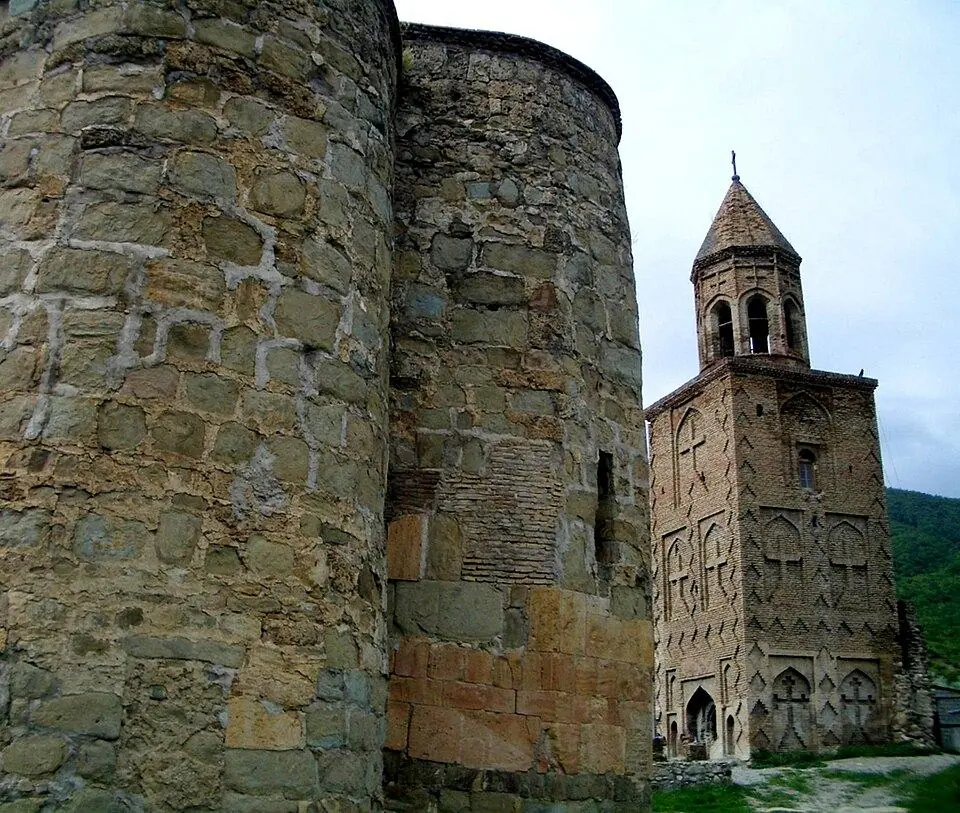
- A short add-on: Ninotsminda Cathedral, a 6th-century church near Sagarejo, is ~55 km from the Lavra and fits on the way home.
Skip the wine pairing in July and August, when the heat makes the morning walk hard. For the wine day on its own, our Kakheti Wine Day Trip covers Bodbe, Sighnaghi and a family cellar, privately and on any date.
Safety at David Gareja: heat, water, footwear and the border
- Water: carry at least 1.5 to 2 litres each, more in summer.
- Sun: wear a hat and sunscreen even in spring. The pale rock throws the glare back at you.
- Shoes: wear boots or trainers with a good grip for loose grit and smooth rock.
- Edges: parts of the ridge path run close to steep drops with no rails. Keep back from the edge, above all in strong wind, and hold on to children.
- Border: stay on the marked path, carry your passport and follow what the guards tell you.
- Help: call 112 in an emergency. Sagarejo, about an hour away, is the nearest town.
- Insurance: foreign visitors must hold travel insurance in Georgia, covering at least 30,000 GEL.
David Gareja day trip: FAQ
How far is David Gareja from Tbilisi?
About 98 km by road via Sagarejo, which takes around 2 hours each way. The steppe track via Rustavi is shorter, at ~70 km, but it needs a 4x4 and dry weather.
How do I get to David Gareja without a car?
No public bus goes all the way. Ride a van as far as Sagarejo and hire a local taxi, or ask whether the summer Gareji Line minivan is running. A private tour or a hired driver is far simpler.
Is there an entrance fee at David Gareja?
No fee was asked at the Lavra in 2026, though donations are welcome. A heritage agency tariff names a museum-reserve ticket of about 10 GEL (about $4) in 2026, yet 2026 visitor reports do not mention it being charged at the gate.
What are the David Gareja opening hours?
No official hours are posted. Visitors are usually let in from mid-morning until about six in the evening, and earlier in winter. Some doors shut during services.
What is the dress code at David Gareja?
Hide your shoulders and knees. Men need long trousers. Women need a skirt past the knee and a head scarf, and both are usually lent at the entrance.
Can I see Udabno monastery and its frescoes?
Udabno is part of the visit. Your guide checks the path when you arrive, and the walk up and back takes 2 to 3 hours.
Where are the rainbow mountains in Georgia?
The best-known striped hills surround David Gareja in south-east Kakheti. You see them on the last stretch of road to the Lavra, and the boldest bands lie near the Mravaltskaro reservoir.
Is David Gareja worth visiting in summer?
Only if you start very early. July and August highs reach the mid-30s °C, there is no shade, and snakes are active. Spring and autumn are far kinder.