- Gori is ~86 km west of Tbilisi, about an hour by car, and Uplistsikhe lies ~10 km east of Gori, so the two make one easy day trip.
- Without a car, take a Didube marshrutka or a morning train to Gori, then a taxi or Bolt to Uplistsikhe.
- In 2026 an adult ticket to Uplistsikhe cost about 15 GEL (about $6). The heritage agency lists Mondays as closed, but many visitors find it open daily.
- Allow 1.5 to 2 hours for Uplistsikhe and 2 to 3 hours for Gori. Ateni Sioni and Mtskheta fit the same day with a driver.
- The rock town has almost no shade, so go early in summer and wear shoes with a firm grip.
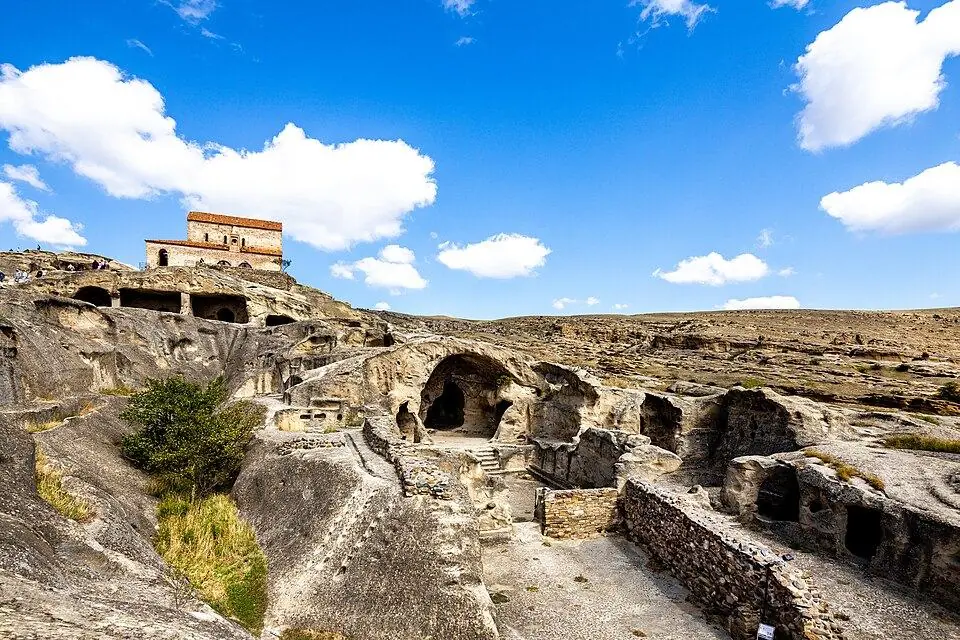
A Gori and Uplistsikhe day trip is the classic outing west of Tbilisi, and it fits comfortably into one day. Uplistsikhe, an ancient town hewn from a sandstone ridge over the Mtkvari, lies ~10 km east of Gori. Gori is about an hour from the capital on the main highway. Go by marshrutka and taxi, by the morning train, or with a driver who adds Ateni Sioni and Mtskheta.
We also cover tickets and hours at Uplistsikhe, the walk through the rock town and down its tunnel, and what to wear on bare rock. In Gori we look at the fortress, the old streets, the warriors' memorial and the Stalin Museum. Then come Ateni's frescoes and white wine, a full loop with Mtskheta, and food. For history in depth, open our Uplistsikhe and Gori place pages.
Why pair Gori and Uplistsikhe, with Mtskheta on the way
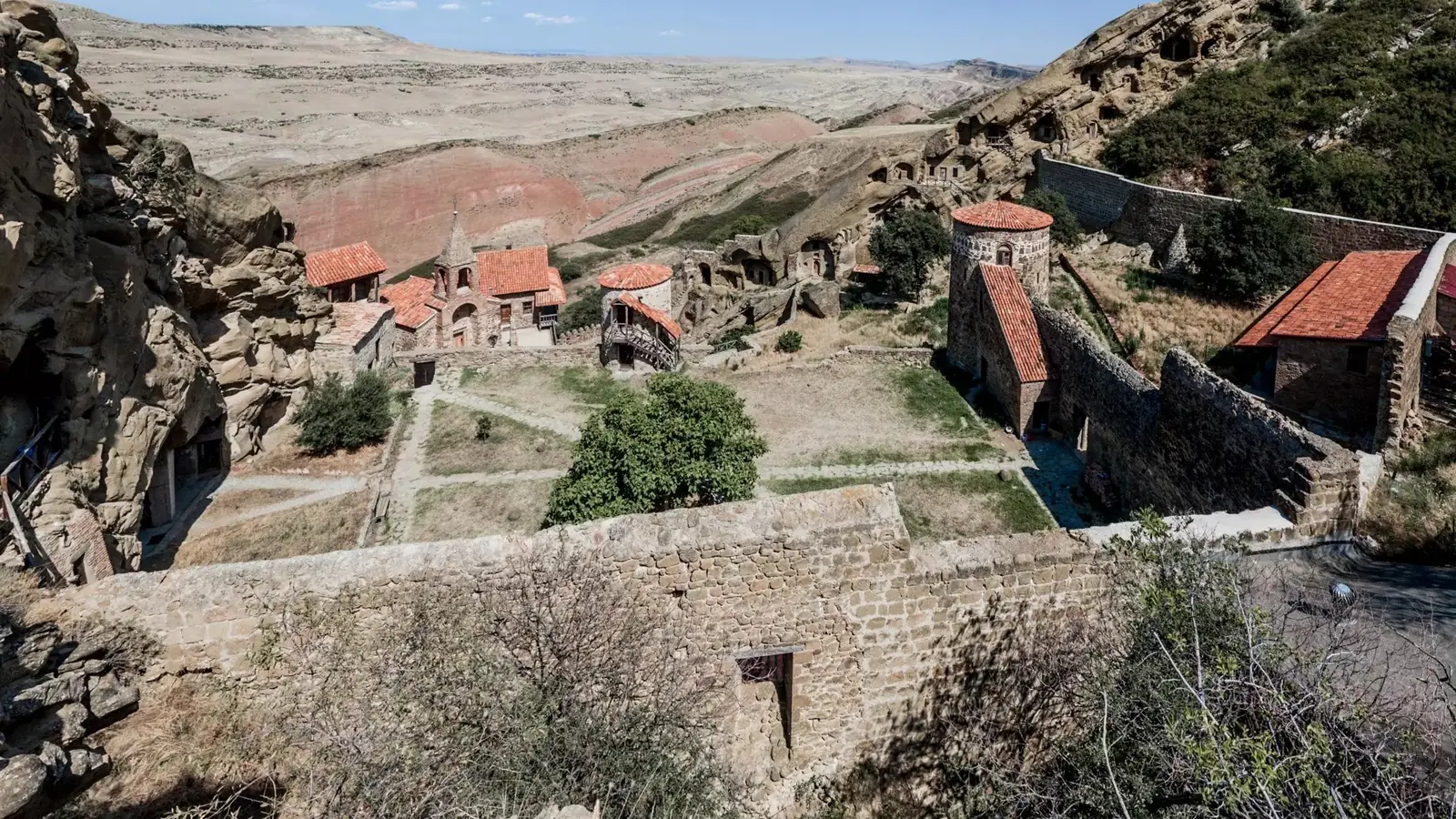
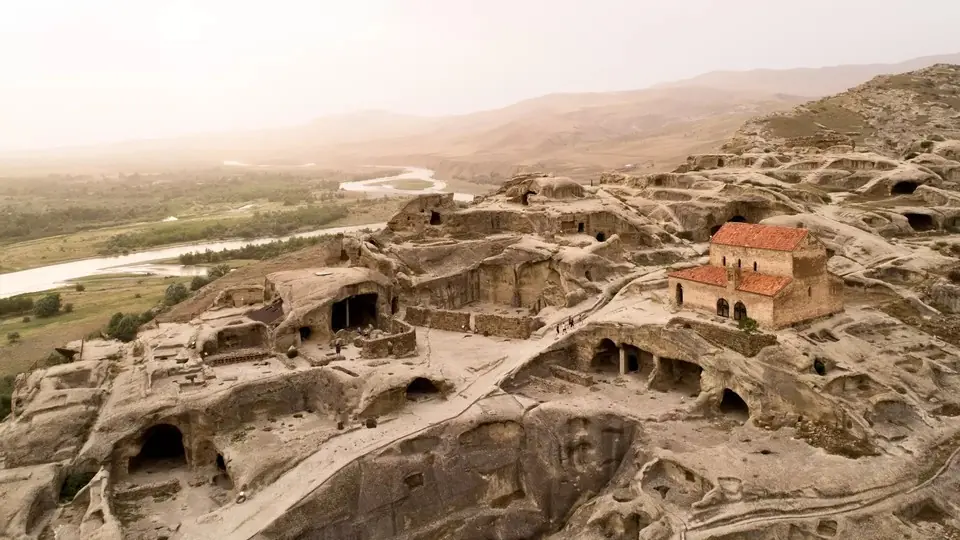
The two places tell very different stories. Uplistsikhe is one of the oldest town sites in Georgia. People already lived on its ridge more than 3,000 years ago, and most of the halls you walk through were cut between the 3rd century BC and the 3rd century AD. Gori, the main town of Shida Kartli, adds a medieval hilltop fortress and the house where Stalin was born in 1878.
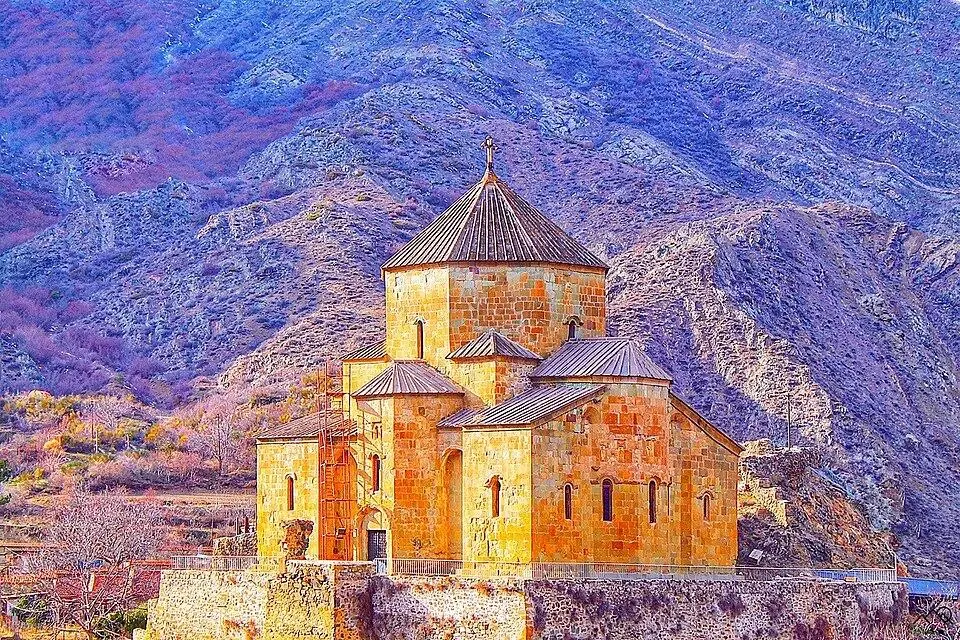
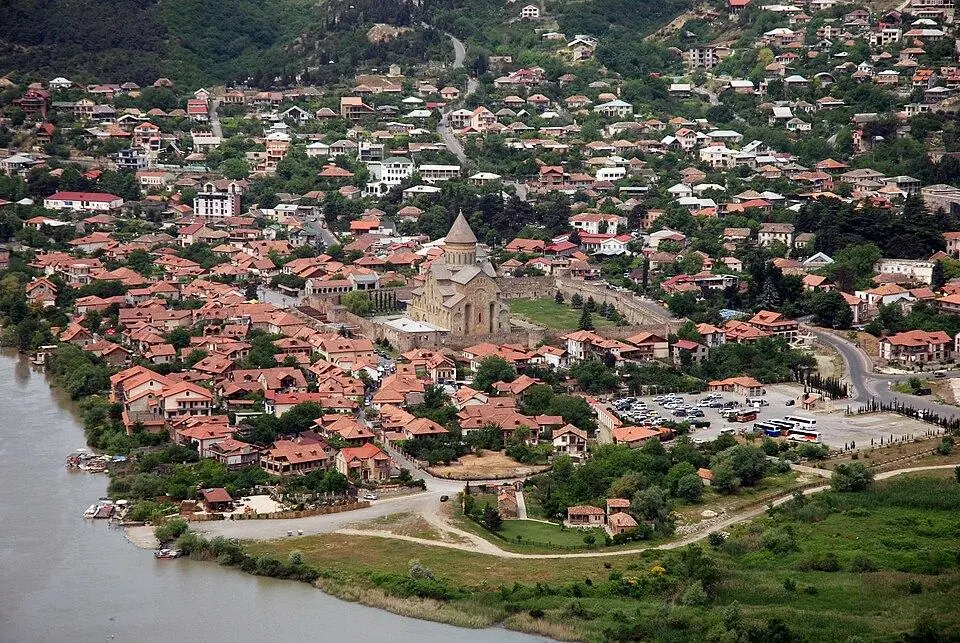
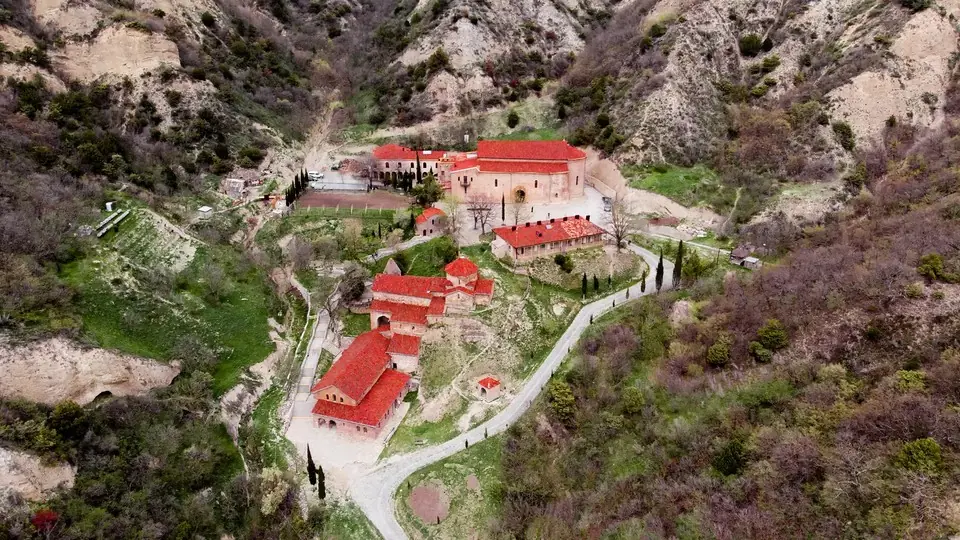
Mtskheta lies just off the same highway, ~20 km from central Tbilisi. Its churches, Jvari and Svetitskhoveli, belong to a UNESCO World Heritage Site and make a calm last stop. Some travellers choose Ateni Sioni instead, a frescoed 7th-century church ~10 km south of Gori.
| Sight | Where | Time to allow | Entry in 2026 (approx.) |
|---|---|---|---|
| Uplistsikhe | ~10 km east of Gori | 1.5 to 2 h | About 15 GEL (about $6) |
| Stalin Museum | Stalin Avenue, central Gori | 1 to 1.5 h | About 15 GEL (about $6) for the whole complex with a guide |
| Gori Fortress | Hill in the centre of Gori | 45 min to 1 h | Free |
| Ateni Sioni | ~10 km south of Gori | About 45 min | Free; leave a donation |
| Jvari and Svetitskhoveli | Mtskheta, ~20 km from Tbilisi | 1.5 to 2 h | Free |
How to get to Gori: marshrutka, train or driver from Tbilisi
Gori sits on Georgia's main road and railway to the west. Uplistsikhe lies off the highway, so plan a short taxi ride for the last part.
| Option | Time to Gori | Fare in 2026 (approx.) | Good to know |
|---|---|---|---|
| Marshrutka from Didube | 1 to 1.5 h | About 5 to 8 GEL (about $2 to $3) | Frequent in daytime; cash only |
| Train from Tbilisi Central | About 1 h | About 12 GEL (about $5) in 2nd class online | Only two or three trains a day; the morning ones suit a day trip |
| Bolt or taxi | About 1 to 1.5 h | Roughly 70 to 100 GEL (about $27 to $38) one way | Agree waiting time if you want a lift back |
| Private driver or tour | About 1 h | Priced per car | Adds Uplistsikhe, Ateni and Mtskheta to one day |
By marshrutka from Didube
Didube bus station stands next to Didube metro station. Ask for Gori at the booths or among the parked vans, which show the town's name behind the windscreen. Vans leave often from early morning into the evening, and you pay in cash. The ride takes an hour to an hour and a half, depending on traffic out of Tbilisi.
By train
Slower westbound trains from Tbilisi Central stop at Gori, but the fast trains to Batumi do not. In the autumn 2026 timetable, the Zugdidi train left Tbilisi at 08:15 and the Ozurgeti train at 08:25 on alternate days. Both reach Gori in about an hour. Few trains head back in the afternoon, so most people ride a marshrutka home. Gori station is about ten minutes by taxi from the centre. Our trains in Georgia guide explains online tickets.
By driver, tour or Bolt
Gori is inside the Bolt zone, so the app works from Tbilisi and for short rides in town. Hiring a private driver costs more, yet it lets you link Uplistsikhe, Ateni Sioni or Mtskheta in one loop. In October 2026, driver-only trips to Gori and Uplistsikhe started from about 145 GEL (about $56) per car on Georgian booking sites.
Going on west? Uplistsikhe and Gori appear as stops on our route pages for Tbilisi to Batumi, Tbilisi to Kutaisi and Tbilisi to Borjomi.
From Gori to Uplistsikhe
Uplistsikhe is ~10 km east of Gori, 15 to 20 minutes by car. Take a taxi or Bolt from the centre, and agree a round-trip price with about two hours of waiting. In 2026 drivers asked roughly 40-50 GEL (about $15-19). A few village minibuses run towards Kvakhvreli, ~2 km from the gate, but their times are irregular.
Uplistsikhe tickets and opening hours in 2026
Uplistsikhe is a museum-reserve run by Georgia's National Agency for Cultural Heritage Preservation. Tickets are sold by the car park, and the reserve also keeps a small archaeological museum of finds from the site.
| Ticket or service | Price in 2026 (approx.) | Notes |
|---|---|---|
| Adult entry | About 15 GEL (about $6) | One price for foreign and Georgian adults |
| Georgian pupils, students and pensioners | About 1 GEL (under $1) | Foreign students pay the adult price |
| Children under 6 | Free | No ticket needed |
| Guide in Georgian | About 25 GEL (about $10) | Per guided visit |
| Guide in another language | About 45 GEL (about $17) | Ask at the desk; not always free at short notice |
| Audio guide | About 15 GEL (about $6) | Useful when no guide is free |
The agency's own page gives the hours as 10:00 to 17:00 and names Monday as a day off. Several travel guides report the site open every day, with later closing in summer, at 18:00 or even 19:00. Until this is settled, avoid a Monday if you can, or ask your guesthouse or a Gori taxi driver to phone ahead. Arrive at least two hours before closing time.
Walking Uplistsikhe: the route, the tunnel and what to wear
The rock town spreads along a ridge in three parts, and the middle one holds most of the rooms. A loop of 1.5 to 2 hours covers the main sights. Expect bare rock slopes, worn steps and very few railings.
- Up from the ticket office
A path climbs from the ticket office onto the ridge, and the green valley of the Mtkvari opens out below you. - Halls with carved ceilings
The biggest rooms copy timber halls, with beams and square panels carved into the rock overhead. In the southern part, a ceremonial hall has an arched front in a Roman style, and guides point out a space they call the theatre. - Temples and wine presses
Before Christianity reached Kartli in the 4th century, this was a temple town. Look for halls with niches and stone benches, and for basins once used to press grapes. - The main street to the church
A rock-cut street with ruts and steps climbs through the town to the Prince's Church, a stone and brick basilica of the 9th or 10th century. Uplistsikhe was then a Georgian stronghold while Arab emirs ruled Tbilisi. - Down the tunnel to the river
A tunnel cut through the rock runs down towards the Mtkvari. It once let the town fetch water and come and go unseen, and most visitors now leave this way. It is dark in places, so use your phone torch.
Shade, heat and shoes
There are almost no trees on the ridge, and little shade near the top. In July and August, highs in Gori average about 29 to 30°C, and the rock holds the heat. In summer arrive at opening time, carry a litre of water each and wear a hat. Wear trainers or walking shoes with a good grip. The sandstone is worn smooth and turns slippery after rain or frost, so leave sandals at home.
Hold children's hands at the unfenced edges. There is no step-free route.
Things to do in Gori: the fortress, the old town and the memorial
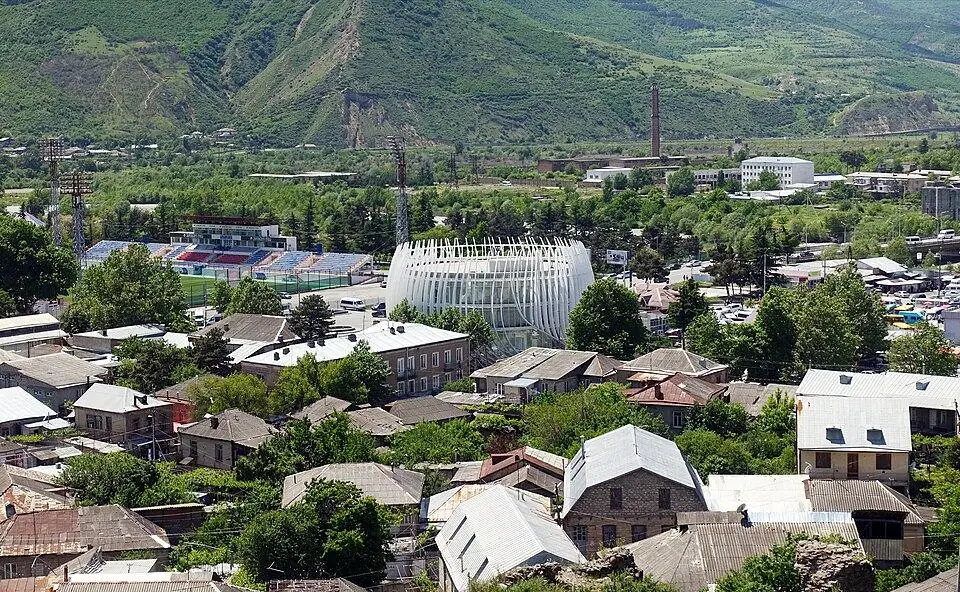
Gori stands where the Greater Liakhvi meets the Mtkvari, and the central sights lie within a 15-minute walk of the fortress hill. An earthquake in 1920 levelled much of the old town, so many buildings are Soviet.
Gori Fortress
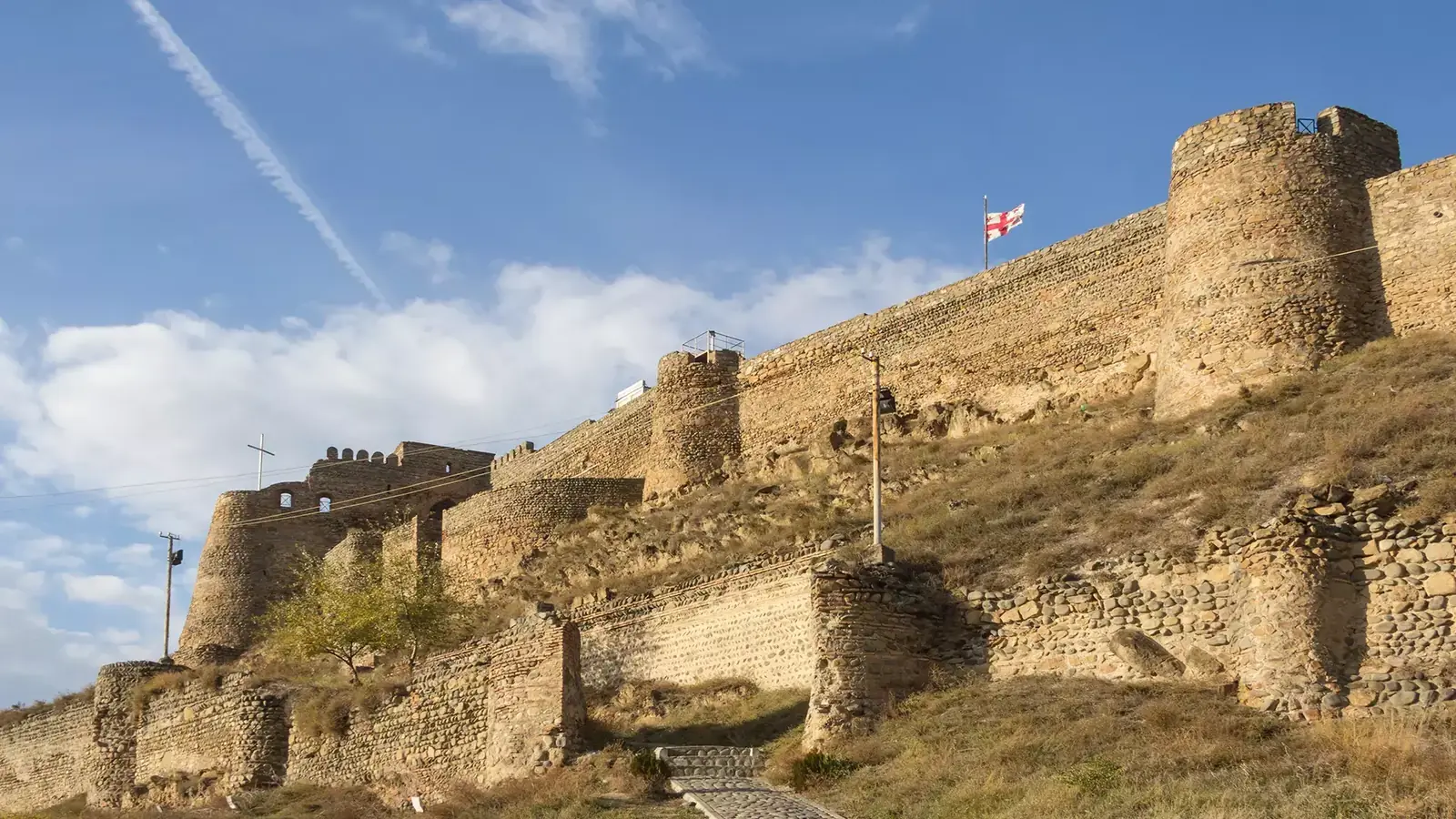
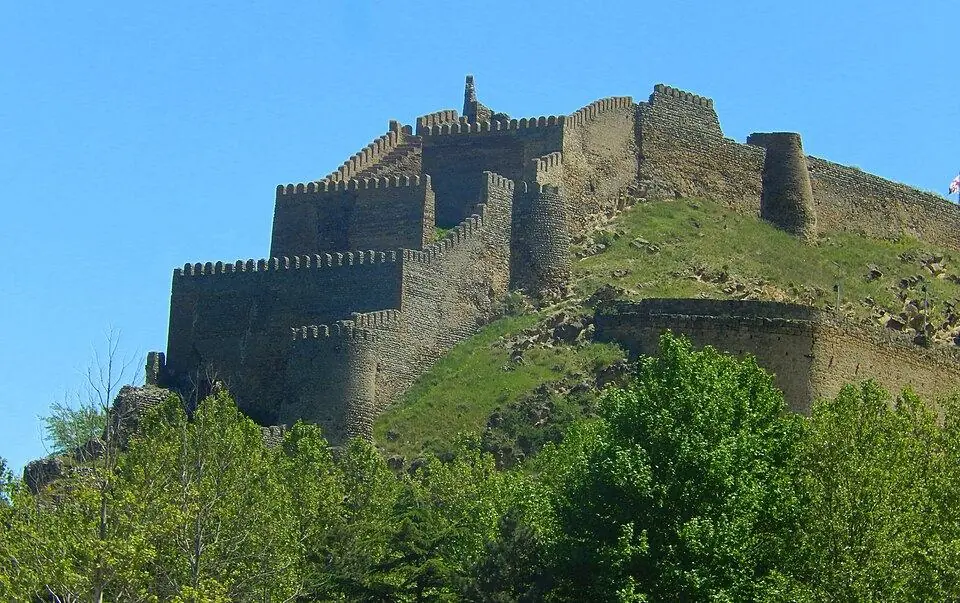
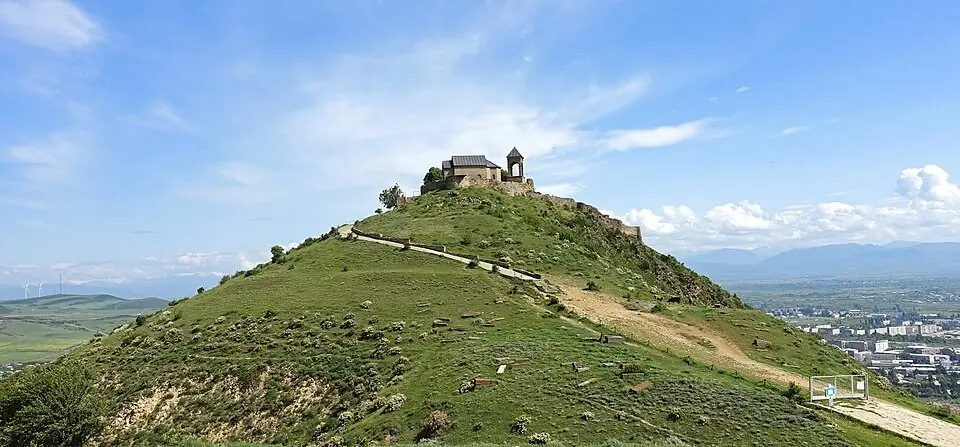
The walls of Gori Fortress wrap around a rocky hill in the centre. The hill was fortified before Christ, records name the castle from the 13th century, and today's walls date mostly from rebuilding in the 1630s and 1774. Entry is free. Climb for the view over the river valleys and, on clear days, the snowy Caucasus. Some stretches are crumbling or fenced off, so keep to the paths.
The warriors' memorial
At the foot of the hill, eight bronze warriors sit on stone blocks in a circle, many of them missing limbs or faces. The sculptor Giorgi Ochiauri cast them in the early 1980s for a memorial in Tbilisi. They were moved to Gori in 2009, the year after the August 2008 war. Today many people see them as a tribute to those who died in it.
Old streets, the bazaar and a local museum
- The old quarter by the fortress, with brick houses, wooden balconies and a cathedral that began life as a Catholic church.
- Lomchabuki, a Soviet-era bronze of a young man riding a lion.
- Gori's Historical and Ethnographic Museum, named after Sergi Makalatia, with local pottery and a fine coin collection.
- The bazaar across the river, best in the morning.
- Gorijvari, a church of St George on a hill across the Mtkvari, where the whole town glows at sunset.
The Stalin Museum in Gori: what you will see
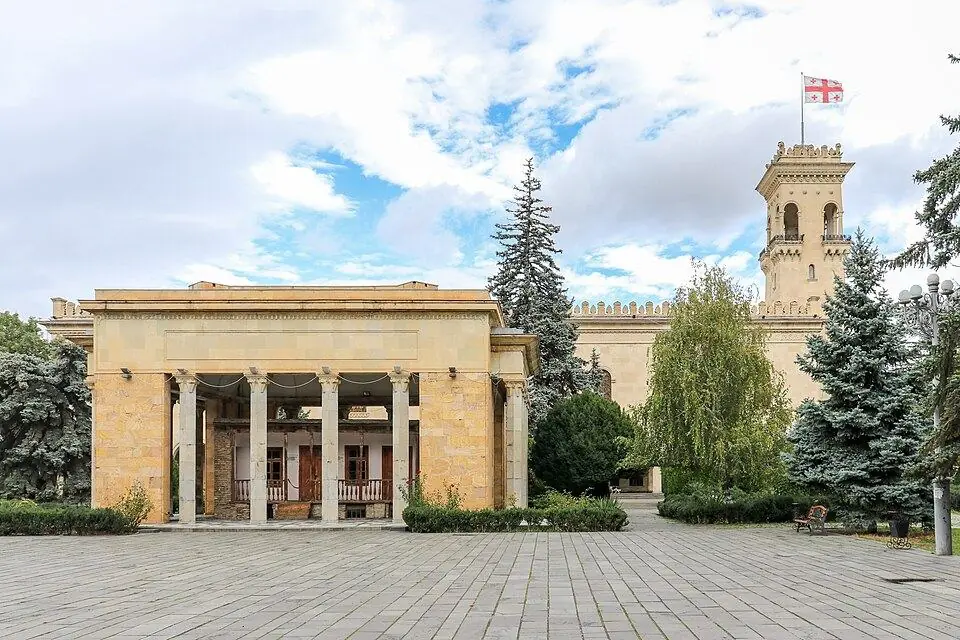
The museum's official name is the Joseph Stalin State Museum. It is a Soviet-era museum about the life of Joseph Stalin, who was born in Gori as Ioseb Jughashvili in 1878. A memorial museum first opened in his birth house in 1937, during his lifetime. The main building, with its tower and columns, was begun in 1951 and opened in 1957.
The visit has three parts. A stone pavilion shelters the small wooden house where his parents rented a room in his first years. Six halls follow his life in order, with photographs, documents, gifts and one of his 1953 death masks. Outside stands his green armoured railway carriage, used from 1941 and brought here in 1985.
The halls keep the layout and tone of their Soviet beginnings, and reference works such as Wikipedia note that it keeps its Soviet-era character. The museum states that a separate room on the years of repression has been open since 2010. Most labels are in Georgian and Russian, so a guide helps.
In 2026 a ticket for the whole complex with a guide was about 15 GEL (about $6), and the halls and house alone about 10 GEL (about $4). Hours are usually about 10:00 to 18:00, but sources disagree about Mondays. Allow 1 to 1.5 hours.
Ateni Sioni and Atenuri wine: the add-on south of Gori
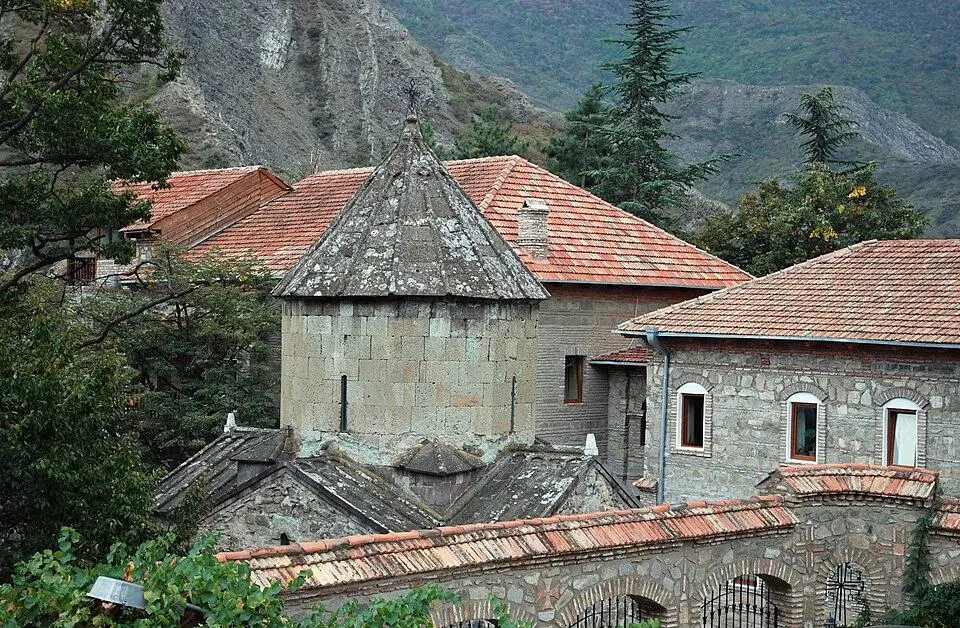
Twenty minutes south of Gori, the road follows the Tana river into a valley of vineyards and orchards. Ateni Sioni rises on a terrace above the river near Ateni village. It was built in the early 7th century on the same four-apse plan as Jvari in Mtskheta. Inside, frescoes painted in the later 11th century by at least four artists fill the apses in soft blues, greys and purples.
The valley also makes Atenuri, a light white wine from Chinuri and Goruli Mtsvane grapes, often turned into sparkling wine. Family cellars pour it by arrangement, so book a tasting through your driver or guesthouse.
Our week-long Orthodox pilgrimage tour stops at Ateni Sioni on its way across the country.
The Didube, Gori, Uplistsikhe and Mtskheta loop in one day
All four fit into one day if you get the order right: Uplistsikhe while the rock is cool, Gori over lunch and Mtskheta on the drive home.
With a driver or our private tour
- 08:30 Leave Tbilisi
Drive about 1 hour 15 minutes west, timed to reach the Uplistsikhe gate as it opens. - 10:00 Uplistsikhe
Walk the rock town and leave by the tunnel, about 1.5 to 2 hours. - 12:15 Ateni Sioni (optional)
About half an hour south for the frescoes. Skip it on short winter days. - 13:15 Lunch and the Stalin Museum
Eat in the centre of Gori, then see the museum. - 15:15 Gori Fortress
Climb for the view, then head back east. - 17:00 Mtskheta
Jvari first, where the Aragvi flows into the Mtkvari below its cliff, then Svetitskhoveli in the old town. - 19:00 Back in Tbilisi
About 210 km and 3 hours at the wheel in all.
Our private Uplistsikhe, Gori & Mtskheta Day Trip runs this plan from your Tbilisi hotel. Pick any date, bring a group of any size, and your guide will speak your language.
By marshrutka and taxi
- 08:00 Didube
Catch a van to Gori, or the 08:15 train from Tbilisi Central. - 09:30 Taxi to Uplistsikhe
Agree a return fare with waiting time before you set off. - 12:30 Back in Gori
Lunch, the Stalin Museum and the fortress. - 16:00 Van to Didube
Allow about an hour and a half with evening traffic. - Mtskheta, if time allows
Vans to Mtskheta leave Didube all day for about 2 GEL (under $1). On summer evenings you can reach Svetitskhoveli before dusk, but Jvari needs a taxi, and the last vans back leave around 20:00.
In winter, save Mtskheta for another morning with our Mtskheta day trip guide.
Where to eat on a Gori and Uplistsikhe day trip
Gori has plenty of simple Georgian restaurants around Stalin Avenue and the fortress. Expect large plates, home-style cooking and low prices rather than fine dining.
- Goruli katleti: Gori's own fried cutlet of minced beef and pork, a local favourite on most menus in town.
- Mtsvadi: skewers of pork or veal grilled over vine cuttings, sold at the roadside grills on the highway.
- Shechamandi: light Kartli soups of sorrel, cornel or buttermilk, good for vegetarians.
- Khinkali and khachapuri, found on every menu.
- Atenuri white wine, and Kartli apples and peaches from roadside stalls in late summer.
Near Mtskheta, the garden restaurants on the Tbilisi road are known for lobio, beans baked in clay pots.
Best time for an Uplistsikhe day trip
Uplistsikhe and Gori work all year, but the weather shapes the day. These are average highs for Gori.
| Months | Conditions | Advice |
|---|---|---|
| March to May | Highs of about 12 to 22°C; May is the wettest month | Green slopes; take care on wet rock |
| June to August | Highs of about 26 to 30°C, long days | Start at opening time and rest at midday |
| September and October | Highs of about 19 to 25°C, mostly dry | The best months, with the grape harvest in Ateni |
| November to February | Highs of about 5 to 12°C, frosty mornings | Short days: be at Uplistsikhe by 10:00 |
Weekends in spring and autumn are the busiest. With an extra day, sleep in Gori for Gorijvari at sunset and the bazaar next morning.
Our five-day Highlights of Georgia tour includes Gori and Uplistsikhe along with Kazbegi and Kakheti.
Gori and Uplistsikhe FAQ
Is Uplistsikhe worth visiting?
Yes, if you enjoy archaeology and wide views. It ranks among Georgia's earliest towns, and it is far easier to reach from Tbilisi than Vardzia.
Can I reach Uplistsikhe from Tbilisi by public transport?
Yes. Ride a Didube marshrutka or an early train to Gori, about an hour, and cover the last ~10 km by taxi or Bolt. Agree a return fare that includes waiting time.
How much is the Uplistsikhe ticket?
About 15 GEL (about $6) for adults in 2026, the same for Georgians and foreigners. Children under 6 go in free.
Is Uplistsikhe open on Mondays?
The heritage agency lists Monday as a day off, with hours of 10:00 to 17:00, but many visitors report finding it open daily. With only a Monday free, phone ahead or see Gori and Mtskheta first.
How long do you need for Gori and Uplistsikhe?
About 1.5 to 2 hours at Uplistsikhe and 2 to 3 hours in Gori, plus about 3 hours of travel: 7 to 8 hours from Tbilisi in all.
Which things to do in Gori should I not miss?
Climb Gori Fortress, see the warriors' memorial, visit the Stalin Museum and the ethnographic museum, and walk the old streets. End at Gorijvari for sunset.
Is Gori safe to visit?
Yes. Gori is a busy regional town that receives tourists every day. The line of the occupied Tskhinvali region lies a short way north of the town, so stay on main roads and never try to approach it.