Khinkali Recipe
ხინკალი
A home khinkali recipe in the mountain style: beef and pork with onion, pepper and cold water, wrapped in a firm dough and boiled until the filling turns to hot broth inside.
Recipe by the Maspindzeli team in Tbilisi · Updated 18 Oct 2026 · From Pshavi, Khevsureti and Mtiuleti; Pasanauri on the Military Road
Full recipe with the timeline, timers and US measures: maspindzeli.ge/recipes/khinkali/
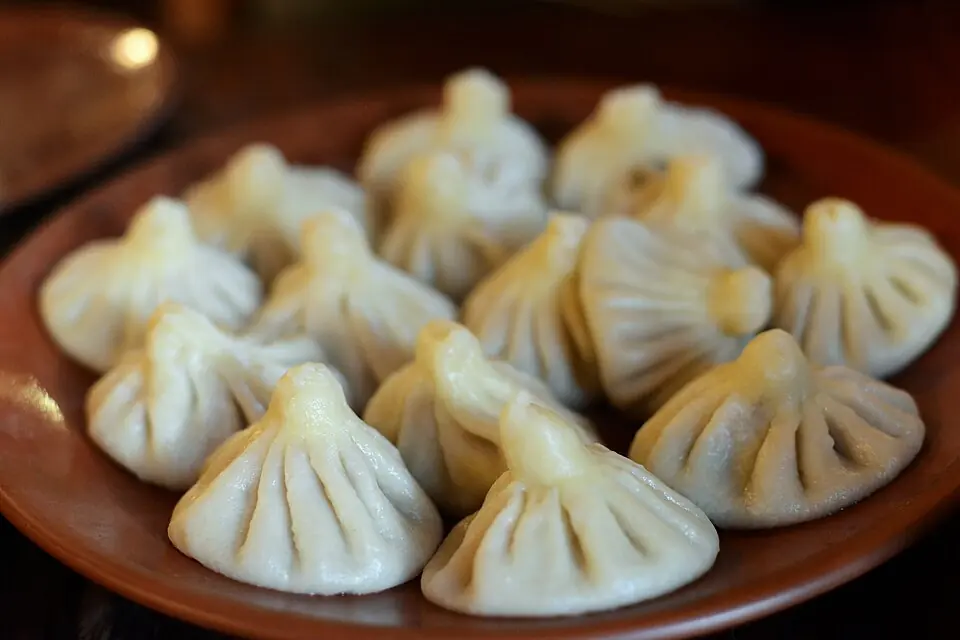
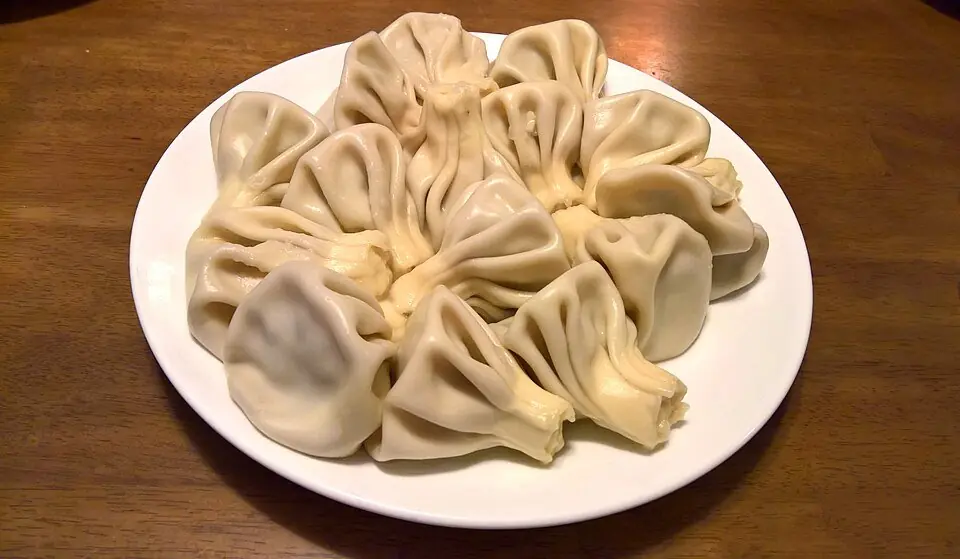
Khinkali are big twisted dumplings filled with raw minced meat, onion, pepper and cold water. As they boil, the meat juices and the water turn into a broth sealed inside the dough, which is why you eat them by hand and drink the broth first. This khinkali recipe makes the mountain style, mtiuluri or khevsuruli, with beef and pork and no herbs, the version people stop for on the road north of Tbilisi. You will also see the name spelled hinkali or khinkhali.
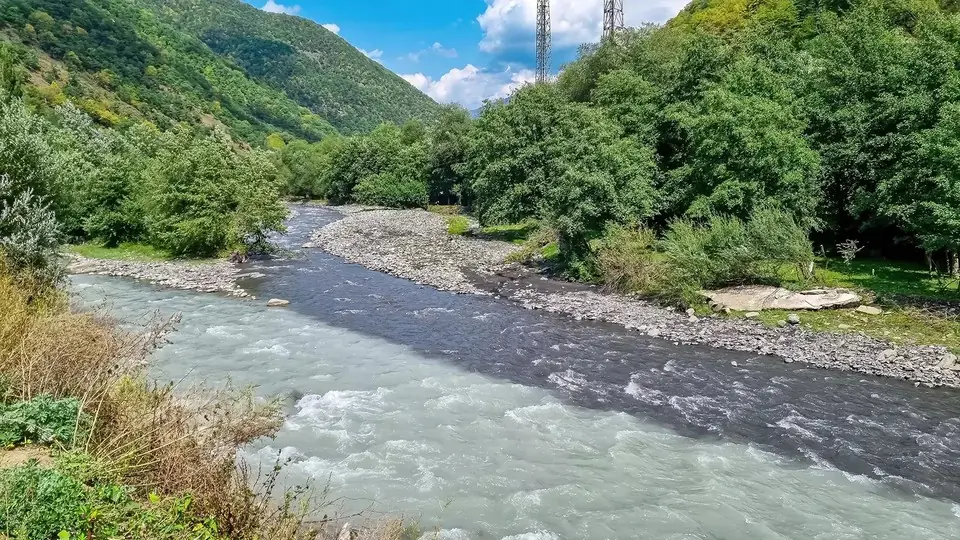
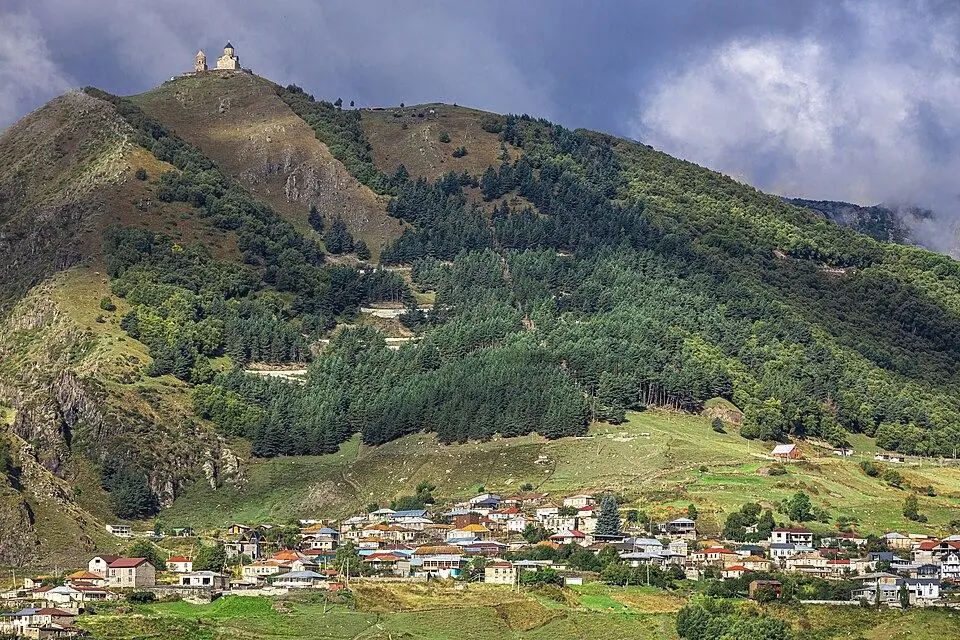
Khinkali belong to the highlands of eastern Georgia: Pshavi, Khevsureti and Mtiuleti, with Tusheti next door. Up there the filling was traditionally lamb or beef; today beef and pork is the standard mix almost everywhere, and the city style, kalakuri, adds fresh herbs. Where the idea of meat wrapped in dough first came from is debated, and some link it to the Mongol period, but in Georgia khinkali are a mountain food. Pasanauri, on the Georgian Military Road, is the village most Georgians name for them.
Khinkali are a meal in themselves, not a side dish, and they must be eaten the moment they leave the pot. Most people eat five to eight, with nothing but black pepper, and in the mountains often with a cold beer. Making them at home takes time, mostly for the pleating, so it is a good job to share.
Timeline: what to do, and when
2 h 13 min from start to table · 1 h 34 min hands-on · 30 min waiting
Each bar is one step. Hands-on Waiting, while the oven, the pot or the dough does the work. Steps that sit inside a wait are done in parallel.
Recipe
Khinkali
Ingredients
Dough
Filling
To cook and serve
Amounts are scaled. Times stay about the same, but a bigger pot takes a little longer to come to the boil.
Contains: gluten (wheat).
You will need
- Large bowl
- Rolling pin
- Glass or round cutter, about 8 cm across
- Floured trays and a clean tea towel
- Large pot, at least 5 litres
- Wooden spoon and a slotted spoon
Method
- Make the dough12 min hands-on· start here
Mix the salt into the flour in a large bowl, then pour in the cold water a little at a time, working it in with your hand. Turn it out and knead for about 10 minutes until smooth and very firm, much stiffer than bread dough. If it will not come together, add the last of the water; if it sticks, knead in a little flour.
- Rest the dough30 min waiting· starts at +12 min
Cover the dough with an upturned bowl or cling film and leave it at room temperature for 30 minutes. It relaxes and becomes much easier to roll thin.
- Make the filling15 min hands-on· starts at +14 min, during step 2
Put the beef, pork, onion, salt, pepper, chilli and cumin in a bowl and mix well with your hand. Add the cold water a splash at a time, squeezing the meat after each addition until the water disappears. Stop when the filling is soft and loose, like thick porridge, with no water pooling on top. Cover and chill until you need it.
- Roll and cut the circles20 min hands-on· starts at +42 min
Cut the dough into three and keep two pieces covered. Roll one out on a floured surface to about 3 mm thick and cut rounds with an 8 cm glass. Roll each round out to 12 to 13 cm, keeping the centre a little thicker than the edges, then dust with flour and stack under a tea towel. Repeat with the rest, re-rolling the scraps once, to make about 24.
- Fill and pleat45 min hands-on· starts at +1 h 2 min
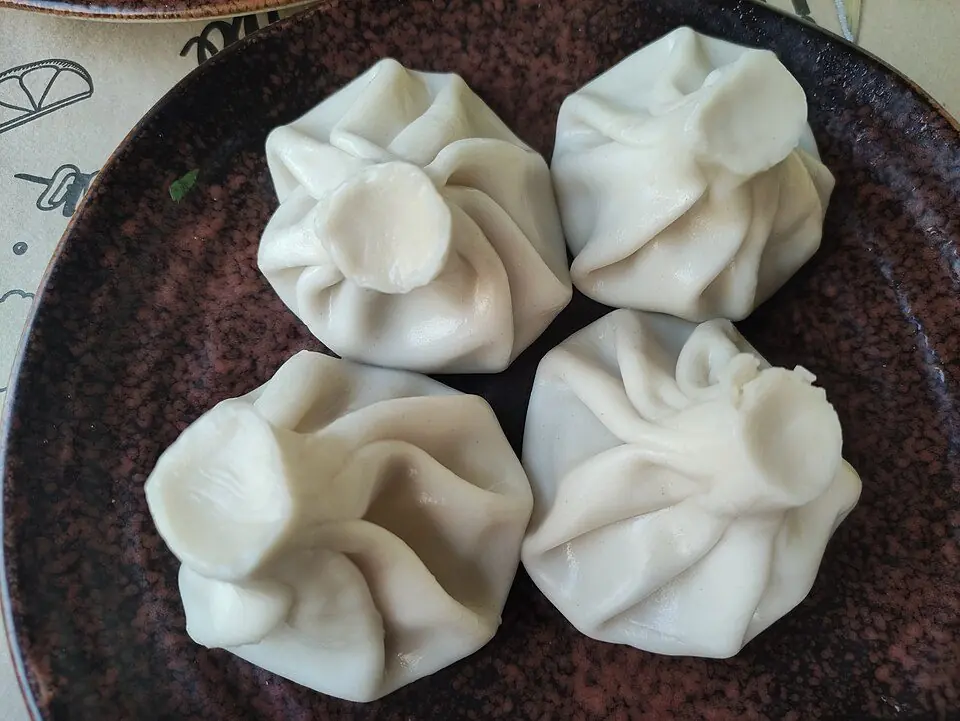
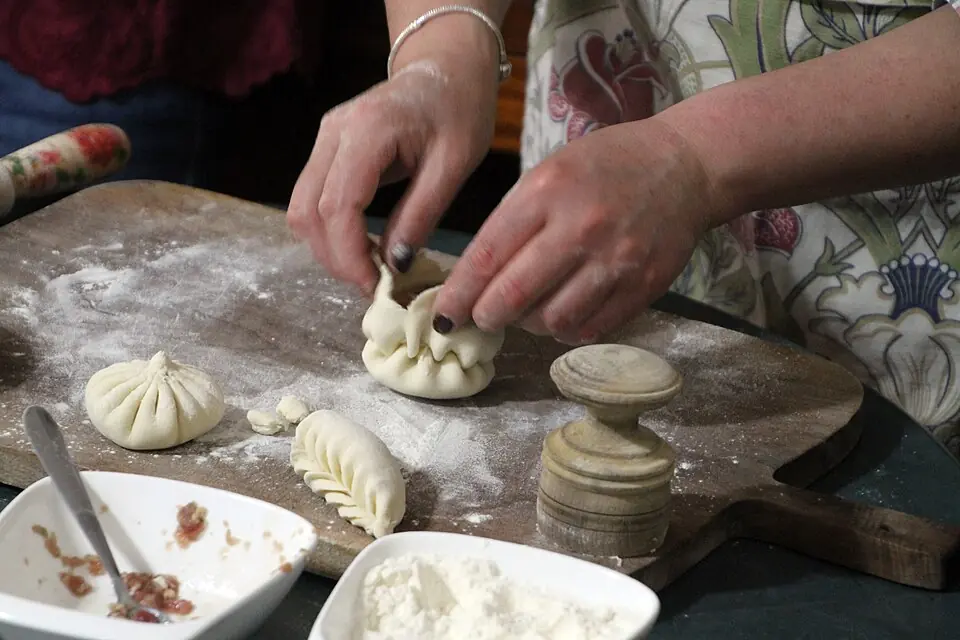
Lay a circle on the fingers of one hand and put about 40 g of filling, a heaped tablespoon, in the centre. With the other hand, fold the edge into small overlapping pleats, turning the dumpling as you go, until you are back at the start. Gather the pleats at the top, twist and pinch hard to seal, pinch off any thick excess above the knot and set it on a floured tray, not touching the others. When you have about ten left, put the water on to boil.
- Boil the first batch12 min waiting· starts at +1 h 47 min
Add the salt to the boiling water and drop in 12 khinkali one at a time, then stir gently with a wooden spoon so they do not stick to the bottom. They float after 3 to 4 minutes. Keep the water at a steady boil, not a violent one, for about 8 minutes more, 12 minutes in all.
- Serve the first batch2 min hands-on· starts at +1 h 59 min
Lift the khinkali out with a slotted spoon, let them drain for a few seconds and put them on a warm plate. Grind over plenty of black pepper and serve straight away.
- Boil the second batch12 min waiting· starts at +2 h 1 min
Bring the water back to the boil and cook the rest the same way, 12 minutes in all, while everyone starts on the first plate. Serve them as soon as they are drained.
About 870 kcal per serving of 6 khinkali, tops included. This is an estimate from standard values for the ingredients, not a lab figure.
Grind black pepper over the plate and wait a minute, because the broth inside is very hot. Pick a khinkali up by its knot, the kudi, and turn it upside down. Bite a small hole in the side, sip the broth, then eat the rest. Leave the knot on the plate: it is thick, chewy dough, and the pile shows how many you ate. Hands, not cutlery: a fork would tear the dough and spill the broth on the plate.
Tips, swaps and variations
Tips from your host
- Use fatty meat. Lean mince gives dry dumplings with little broth. In Khevsureti the meat is chopped by hand with a heavy knife, and a coarse grind from the butcher comes close.
- Add the water to the filling slowly. A very wet filling is harder to pleat and more likely to leak, so on your first try keep it a little firmer.
- Keep the dough and the circles covered all the time. Dry dough cracks at the pleats, and cracked khinkali lose their broth in the pot.
- Do not worry about the number of pleats. People like to say a proper khinkali has 19, but 12 to 15 even pleats and a tight seal at the top are all you need. With two people pleating, the job takes half the time.
- Cook only as many as the pot holds in one layer, about 12 in 5 litres, and keep the boil steady. Crowded or violently boiling khinkali stick together and split.
- Cooked leftovers are good fried the next day: brown them in a little butter or oil until crisp all over. Georgian menus often list fried khinkali too.
Variations and swaps
- Kalakuri, the city style: add a small bunch of coriander and a few sprigs of parsley, finely chopped, to the filling, with an extra pinch of chilli. This is the version you meet most often in Tbilisi.
- Lamb or beef only: in Tusheti and Khevsureti khinkali are often made with lamb, and an all-beef filling suits anyone who avoids pork. Use fatty cuts, or mince in a little lamb or beef fat, so the broth stays rich.
- Mushroom khinkali (sokos khinkali), for Lent and vegans: fry 2 chopped onions in 4 tbsp sunflower oil, add 600 g finely chopped mushrooms and cook until dry, then season with salt, pepper and chopped coriander and let it cool. Boil for 8 to 10 minutes.
- Potato khinkali (kartopilis khinkali): fill with mashed potato beaten with butter and fried onion, sometimes with a little crumbled cheese. Boil until they float and 2 to 3 minutes more, and serve with onions fried in butter.
- Cheese khinkali: use Imeretian cheese or sulguni, or outside Georgia a mix of feta and mozzarella, sometimes with chopped mint. Boil for 6 to 8 minutes.
- Spices: the cumin is optional. Georgian cooks use dzira (cumin) or kvliavi (caraway) in small amounts, and many use neither. Some add an egg to the dough for extra stretch.
Serve it with
- Freshly ground black pepper and nothing else
- Cold beer, the usual drink with khinkali in the mountains, or a small glass of chacha
- A plain salad of tomatoes and cucumbers
- Onions fried in butter, with potato khinkali
Make ahead and storage
Uncooked khinkali freeze well. Freeze them on a floured tray so they do not touch, then pack them into bags and keep for up to 2 months. Cook from frozen, without thawing, for 14 to 16 minutes. Cooked khinkali do not reheat well in water: keep leftovers in the fridge for up to 2 days and fry them until golden.

Maspindzeli Travel, Tbilisi · private tours and cooking classes in Georgia · maspindzeli.ge · WhatsApp +995 598 74 74 54 · hello@maspindzeli.ge