Ruisi Cathedral
Domed cathedral beside the Gori–Khashuri highway in Kareli municipality, rebuilt in the 15th century and host of David the Builder's 1103 church council.
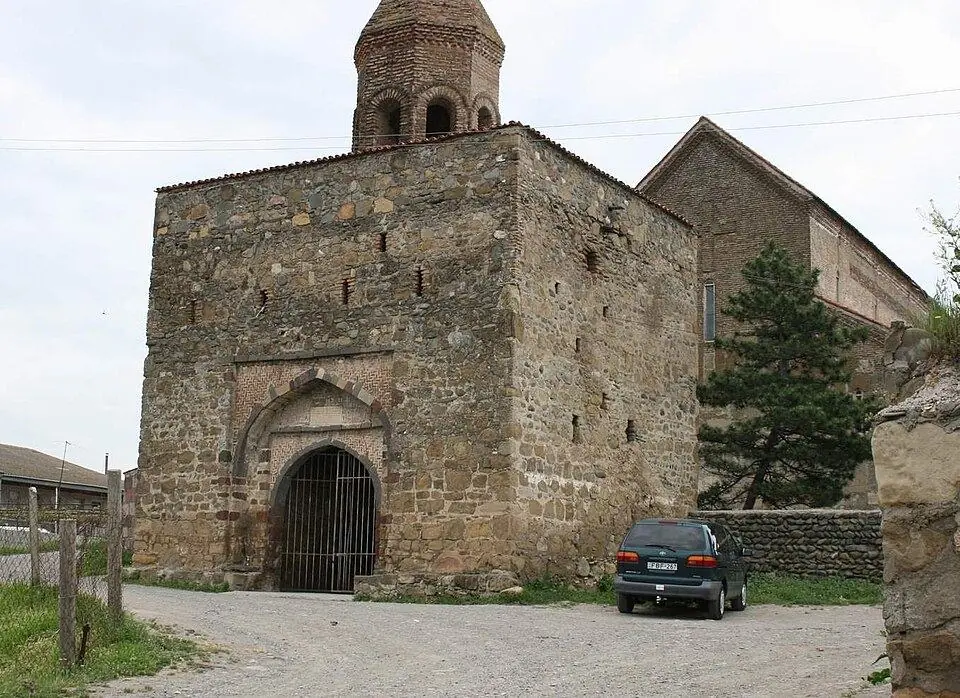
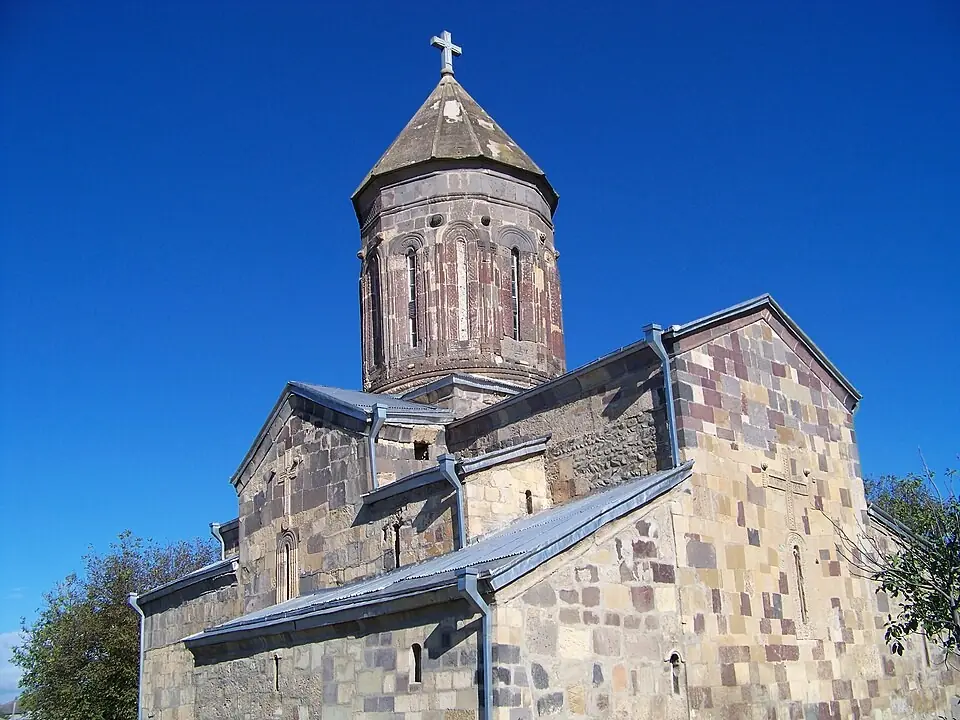 Ruisi CathedralPhoto: Jaba1977, CC BY-SA 4.0
In the middle of Ruisi village, in Kareli municipality, the cathedral rises just north of the main highway between Gori and Khashuri, and drivers can pick out its tall twelve-sided dome from the road. Built as a cross-in-square, it measures about 27 by 20 metres and stands 23 metres high; four free-standing piers carry the dome, and twelve windows light it. Masonry around the altar is the oldest part, from the 8th or 9th century. The building was remodelled in the 10th and 11th centuries, and around 1400 Timur's army nearly destroyed it.
Ruisi is best known for the church council that King David IV the Builder called in 1103, held here and at nearby Urbnisi, which reformed the Georgian church and removed bishops who stood against the crown. The interior is plain, because most of the frescoes were plastered over in the 19th century, though fragments of late medieval painting survive. It is an active parish church and a short, rewarding stop about 20 minutes west of Gori.
History
Its core was built in the 8th or 9th century, then rebuilt in the 10th and 11th. Timur's armies wrecked it around 1400, and King Alexander I (r. 1412–1442) ordered its restoration. Bishop Dionise Laradze refurbished it again in the 16th century, Queen Mariam of Kartli did the same in the 1660s, and the bell tower is a 17th-century addition. After heavy damage in the 1920 Gori earthquake, it was restored in 1936–1938 and again in 1950–1953.
What to see and do
- See the tall twelve-windowed dome from the highway
- Stand under the dome on its four free-standing piers
- Look for fragments of late medieval frescoes
- Learn about the church council of 1103
- Combine with Urbnisi a few kilometres away
How to visit
Getting there
Ruisi is just north of the E60 highway in Kareli municipality, about 20 minutes' drive west of Gori and roughly 1 hour 20 minutes from Tbilisi.
When to go
Spring and autumn; any time as a road stop. Plan 20–40 minutes here.
- Bring a scarf; women cover their hair inside.
- Turn off the highway carefully, as traffic is fast.
- Combine with Urbnisi and Kintsvisi for a half-day church loop from Gori.
Weather at Ruisi Cathedral
Based on the climate of Gori, 14 km away. Warmest in August (30° by day), coldest in January (−3° at night), with 507 mm of rain a year. Best months: Jun, Sep.
Ruisi Cathedral: FAQ
What happened at Ruisi in 1103?
King David IV the Builder held a church council at Ruisi and Urbnisi in 1103. It reformed the Georgian church and strengthened royal authority over the clergy.
How old is Ruisi Cathedral?
The oldest sections are 8th- or 9th-century work. Rebuilding followed in the 10th and 11th centuries, and again after Timur invaded around 1400.
Nearby places
Straight-line distance from Ruisi Cathedral.