Kubdari Recipe
კუბდარი
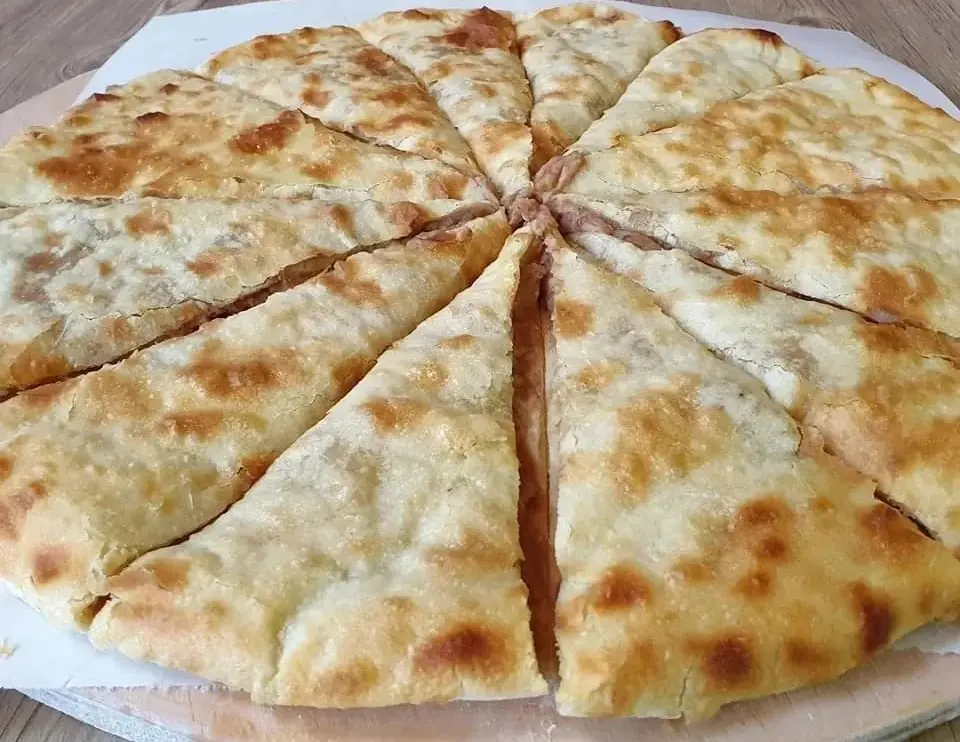
A home kubdari recipe in the Svan style: beef and pork chopped with a knife, kneaded with onion, garlic and Svan salt, then sealed raw inside a yeast dough and baked until the juices bubble up through the top. Four rounds, each one a meal.
Recipe by the Maspindzeli team in Tbilisi · Updated 23 Oct 2026 · From Svaneti, in the mountains around Mestia and Ushguli
Full recipe with the timeline, timers and US measures: maspindzeli.ge/recipes/kubdari/
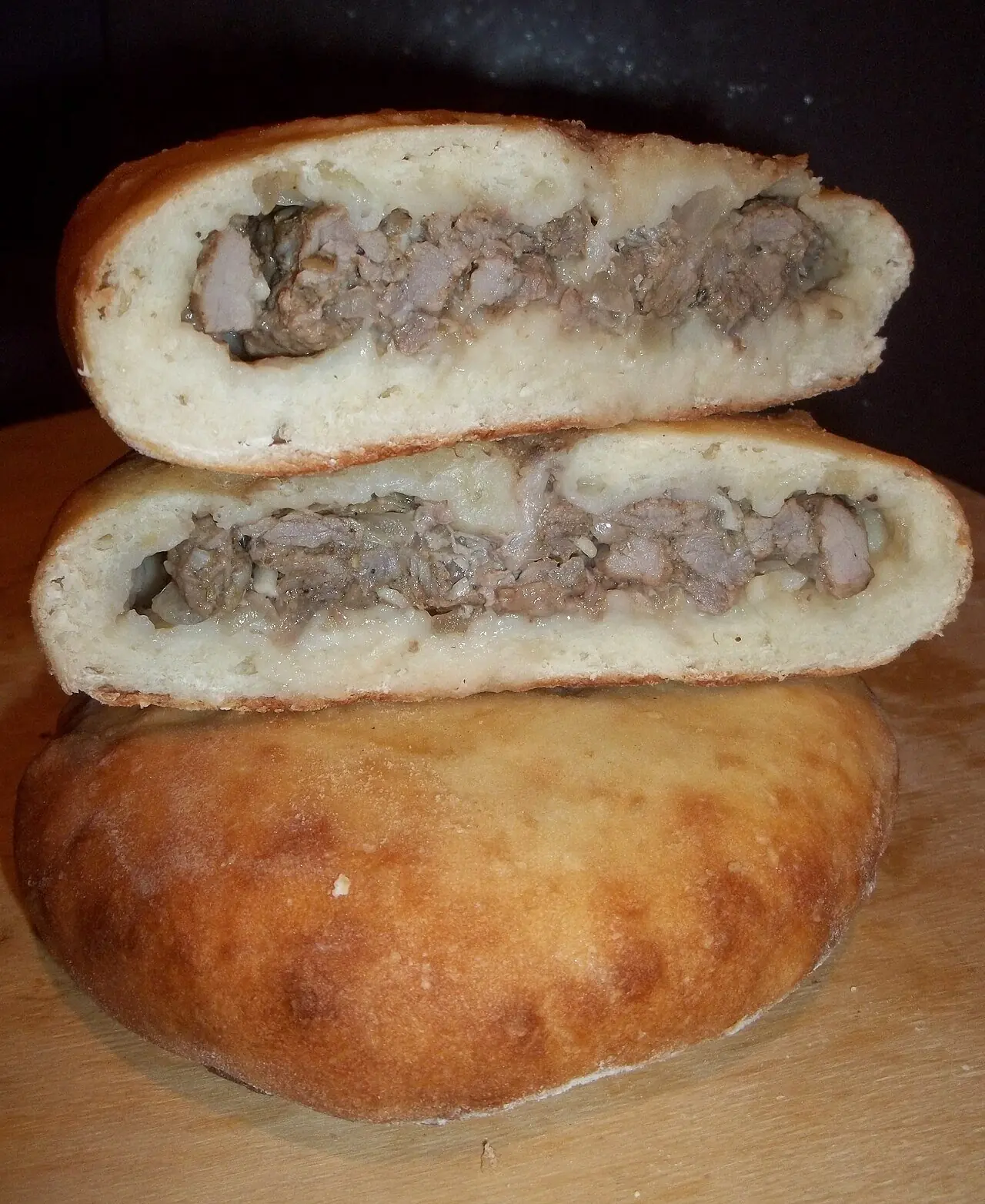
This kubdari recipe makes the meat-filled round bread of Svaneti the way Svan families bake it at home. Beef and pork are cut into small pieces with a knife, never minced, then worked by hand with onion, garlic, coriander, blue fenugreek and Svan salt. The meat is wrapped uncooked, the round is pressed into a thick disc, and in the oven it cooks in its own juices under the crust. You may see it listed as Svan kubdari, and Svans themselves also call it kubed or kuptaari.
For anyone learning how to make kubdari far from the Caucasus, two things decide the result: the knife work and the seasoning. Both are easy in an ordinary kitchen. Svan salt, the local blend of salt, garlic and mountain spices, is sold in Georgian shops abroad, and the ingredient list shows how to mix your own if you cannot find it. The dish's history and the best places to try it are covered in the guides linked below; this page sticks to the cooking.
Kubdari is food for a hungry table rather than a side dish. One round fills a walker after a day in the mountains, or two people with a salad, and it is eaten hot, cut into wedges, with herbs and pickles alongside.
Timeline: what to do, and when
2 h 42 min from start to table · 1 h 21 min hands-on · 1 h 35 min waiting
Each bar is one step. Hands-on Waiting, while the oven, the pot or the dough does the work. Steps that sit inside a wait are done in parallel.
Recipe
Kubdari
Ingredients
Dough
Filling
To finish
Home Svan salt (only if you cannot buy it)
Amounts are scaled. Times stay about the same, but a bigger pot takes a little longer to come to the boil.
Contains: gluten (wheat), milk.
You will need
- Large mixing bowl for the dough, and a second bowl for the filling
- Large, heavy, sharp knife and a big chopping board
- Mortar and pestle (only if you mix your own Svan salt)
- 2 large baking trays (oven size, about 45 by 35 cm)
- Baking paper
- Pastry brush
- Oven (200 °C / 390 °F, or 180 °C / 355 °F fan)
- Meat thermometer (optional, but useful)
Method
- Start the dough15 min hands-on· start here
First put the beef and pork in the freezer: half an hour there makes them far easier to dice. Whisk the yeast and sugar into the warm water and wait about 5 minutes for a beige foam. Combine the flour and salt in the large bowl, add the yeast water and the oil, and bring it together, then knead on the worktop for 8 to 10 minutes until smooth and springy. Aim for a dough a little firmer than bread dough, adding water only a spoonful at a time if it stays crumbly.
- Leave it to rise1 h 15 min waiting· starts at +15 min
Oil the bowl lightly, turn the dough in it, cover and set it somewhere warm for 60 to 90 minutes, until about twice the size. Prepare the meat and the filling while you wait.
- Mix the Svan salt, if making it5 min hands-on· starts at +20 min, during step 2
Skip this if you bought Svan salt. Crush the garlic in a mortar together with a spoonful of the coarse salt until it turns to a wet paste, then rub in the rest of the salt and all the ground spices with your fingertips until the mix is evenly coloured and slightly damp. Measure out 1 tbsp for the filling and keep the rest in a closed jar in the fridge.
- Chop the meat by hand25 min hands-on· starts at +25 min, during step 2
Cut away any gristle and silvery sinew. Slice the chilled beef and pork into thin strips, then across into small cubes of 5 mm to 1 cm. Rock the knife through the pile for another minute so some bits end up finer than others, but stop long before it looks like mince.
- Season and knead the filling12 min hands-on· starts at +50 min, during step 2
Chop the onions very finely and crush the garlic, then add both to the meat with the Svan salt, coriander, blue fenugreek, caraway, chilli, dill and fine salt. Knead with one hand for about 5 minutes, squeezing the mixture between your fingers, until the onion juice has been absorbed and it feels sticky; work in the cold water if it seems dry. Fry a teaspoon of it in a small pan, taste, and adjust the salt and spice, then cover the bowl and chill it until you shape the breads.
- Divide the dough and heat the oven5 min hands-on· starts at +1 h 30 min
Slide both baking trays into the oven and heat it to 200 °C / 390 °F (180 °C / 355 °F fan). Punch the air out of the dough, cut it into 4 pieces of about 190 g and roll each one into a tight ball under your palm. Cover the balls with a cloth and split the filling into 4 equal heaps.
- Rest the dough balls15 min waiting· starts at +1 h 35 min
Give the balls 15 minutes to relax while the oven comes up to heat. Rested dough stretches over the filling instead of shrinking back.
- Shape the kubdari16 min hands-on· starts at +1 h 50 min
Tear off four squares of baking paper. On a floured worktop, flatten one ball with your hands into a 20 cm circle that is a little thicker in the middle, heap a portion of the cold filling on it and fold the edge up over the meat in loose pleats, pinching them shut on top and pulling away any thick lump of dough. Set the parcel seam down on a paper square and press it outwards with your fingertips, from the centre to the rim, into a disc about 20 cm wide and 1.5 cm thick; a rolling pin would push the meat through the dough. Open a hole about 1 cm wide in the centre with a finger, then fill and shape the other three.
- Bake28 min waiting· starts at +2 h 6 min
Pull the hot trays out, slide two kubdari on their paper onto each and bake for 25 to 30 minutes, swapping the trays between shelves halfway. They are ready when the crust is a deep golden brown above and below and the juice bubbling in the centre hole looks clear rather than pink; a thermometer pushed into the filling should show at least 72 °C / 160 °F.
- Brush with butter3 min hands-on· starts at +2 h 34 min
Lift the kubdari onto a board and brush them straight away with the melted butter, letting a little trickle into each hole.
- Rest, then cut5 min waiting· starts at +2 h 37 min
Lay a clean tea towel over them for 5 minutes, so the juices settle back into the meat and the crust softens slightly. Cut each round into 6 wedges and serve hot.
About 1,080 kcal per kubdari (1 of 4; a whole 20 cm round, often shared between two). This is an estimate from standard values for the ingredients, not a lab figure.
Kubdari is eaten with the hands. Cut the hot round into wedges, pick one up by the crust and hold it level, because the meat juices run. Nobody minds if you wait a few minutes for it to cool: the filling stays hot much longer than the crust suggests.
Tips, swaps and variations
Tips from your host
- Choose meat with some fat. A filling of roughly three parts lean to one part fat stays juicy, so with very lean beef use the fattiest pork you can get, or chop in 50 to 80 g of pork back fat.
- Chill the meat until it is firm at the edges before dicing, and use your heaviest knife. A mincer or food processor squashes the fibres into a dense, sausage-like layer, which loses the loose, juicy texture that makes kubdari what it is.
- Always test-fry a little filling. Bought Svan salts vary a great deal in saltiness, and the bread wrapped round the meat mutes the seasoning, so the cooked spoonful should taste a touch bolder than you would want on its own.
- Keep the filling in the fridge until the moment you shape. Cold, sticky meat is easier to wrap neatly, and with raw pork inside it is the safer habit.
- Never skip the hole in the middle. Steam from the meat has to escape somewhere; without a vent the top crust puffs away from the filling and can split along the seam.
- If your trays only take one kubdari each, bake them in two rounds and keep the second pair on their paper in the fridge until the first pair comes out.
Variations and swaps
- In a frying pan: Georgian recipes also bake kubdari on the hob. Cook each one in a heavy, lightly oiled pan with a lid over medium-low heat for 10 to 12 minutes, flip it and give it 8 to 10 minutes more without the lid, until both sides are browned in patches and the juices in the hole run clear. Turning it keeps the top crust pressed onto the meat.
- One meat only: use 800 g of beef or of pork instead of the mix. For an all-beef filling with no pork at all, choose a well-marbled cut or chop in some beef fat so it does not dry out.
- Game, lamb or kid: by Svan tradition kubdari was first made with wild game, and lamb or kid are also used. Chop and season them the same way; game fillings need at least 74 °C / 165 °F in the centre.
- Milk dough: replace the water with warm whole milk and knead in 30 g soft butter, plus an egg if you like. Several Georgian family recipes enrich the dough this way for a softer, richer crust.
- Yeast-free dough: some Svan cooks wrap kubdari in a quick dough of matsoni (Georgian yoghurt) and baking soda. The soda dough from our Imeruli khachapuri recipe works; bake at the same temperature and time.
- Svan salt only: plenty of cooks season kubdari with nothing but onion, garlic and Svan salt. Use about 1.5 tbsp of a bought Svan salt and leave out the separate spices and fine salt, then test-fry as usual.
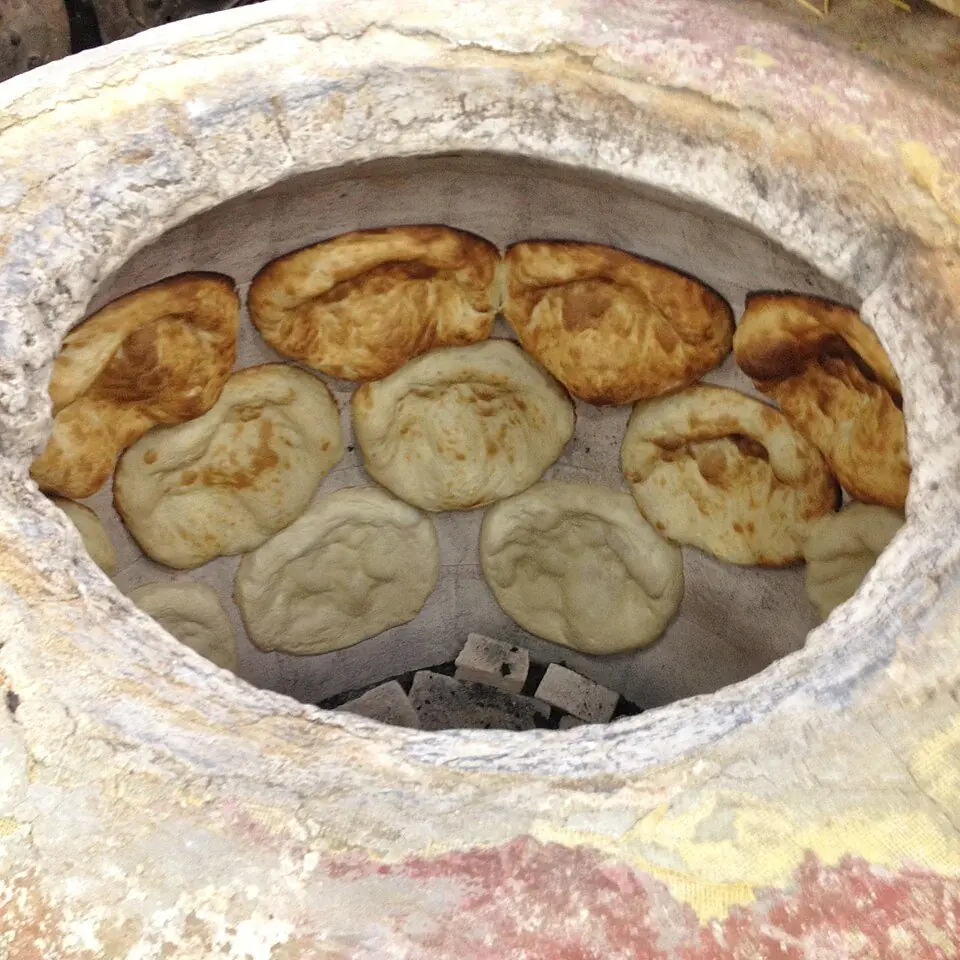
- Wood-fired: in Svan homes kubdari also goes into a hot wood-fired oven, which crisps and colours the base quickly. In a home kitchen, a baking stone or steel heated for 45 minutes on the lowest shelf comes closest; slide the rounds onto it on their paper.
- With gitsruli: if you find gitsruli at a market in Mestia, use it in place of the caraway. It is the spice Svans link most closely with kubdari, though people disagree on whether it is a wild cumin, a kind of caraway or a mountain herb of its own.
Serve it with
- A plate of fresh herbs: coriander, tarragon, dill and spring onions
- Sliced tomatoes and cucumbers with a pinch of Svan salt
- Tkemali (sour plum sauce) or a little ajika on the side
- Georgian pickles (mzhave), such as green tomatoes or cabbage
- Tashmijabi, Svan mashed potato beaten with cheese, for a full Svan table
- A cold beer or a glass of dry red wine
Make ahead and storage
Kubdari tastes best within an hour of baking, while the juices are still running. Leftovers, well wrapped, last 2 days in the fridge. To reheat, cover them loosely with foil and give them roughly 15 minutes at 180 °C / 355 °F, until piping hot in the centre, or warm single wedges in a covered pan over low heat. Baked and cooled kubdari also freeze well for up to 2 months; heat them straight from the freezer under foil at 180 °C / 355 °F for 25 to 30 minutes. The raw filling can be mixed the evening before and kept covered in the fridge, and the spices taste deeper for it.



Maspindzeli Travel, Tbilisi · private tours and cooking classes in Georgia · maspindzeli.ge · WhatsApp +995 598 74 74 54 · hello@maspindzeli.ge