- The Dmanisi hominins lived about 1.8 million years ago, and their bones are the oldest well-dated human fossils found outside Africa.
- A first jaw came out in 1991 and five skulls followed by 2005. Skull 5, published in 2013, is the most complete adult skull of early Homo from that time.
- Most scientists call them an early Homo erectus, some keep the name Homo georgicus, and a 2025 study proposed two species.
- The site is ~85-90 km south-west of Tbilisi, 1.5 to 2 hours by car. In 2026 the museum listed Tuesday to Sunday hours and a ticket of about 3 GEL (about $1).
Dmanisi, Georgia, is the hill where the oldest well-dated human fossils outside Africa came to light. The Dmanisi hominins lived here about 1.8 million years ago, and five of their skulls lay buried under the streets of a medieval town. The site sits ~85-90 km south-west of Tbilisi, in the Kvemo Kartli region. On a visit you see the dig under its roof, a small museum with casts, and the ruined town with its church. Allow two to three hours on site.
This guide explains the science in plain words, from the first find to the Skull 5 debate. Then come the medieval town, what you see today, 2026 hours and tickets, and where the real skulls are kept. It ends with how to get there from Tbilisi and a full-day loop with Bolnisi Sioni and the old German town of Bolnisi. Our Dmanisi place page has the basic facts and a map.
What was found at Dmanisi, and why it matters
Nobody came to Dmanisi looking for early humans. Archaeologists began digging the medieval town in 1936. In the early 1980s, old storage pits turned out to hold bones of extinct animals in their walls, among them a rhino tooth far older than the town. Simple stone tools followed in 1984.
The first human fossil appeared on 25 September 1991. It was a lower jaw with a full row of teeth, now catalogued as D211. Some guides give 1999 or 2001 as the year of discovery. Those are the years of the first two skulls and of Skull 3, not of the first find.
The age comes from the rock. A layer of lava right under the fossil beds has been dated to about 1.85 million years. The bones sit just above it, so they are a little younger, at about 1.8 million years.
| Year | Find |
|---|---|
| 1983-1984 | Extinct animal bones in medieval pits, then simple stone tools |
| 1991 | First human fossil: a lower jaw (D211) |
| 1999 | Skulls 1 and 2, the first skulls (D2280 and D2282) |
| 2000 | A massive lower jaw (D2600), later matched to Skull 5 |
| 2001 | Skull 3, a teenager, with its jaw |
| 2002-2003 | Skull 4, an older adult with no teeth, and its jaw |
| 2005 | Skull 5 (D4500), the most complete skull |
| 2013 | Skull 5 described in the journal Science |
| 2022 and 2025 | A tooth and a jaw of the same age at Orozmani, a dig near Dmanisi |
Why does it matter? Many experts once thought humans left Africa only about a million years ago, once they had big brains and better tools such as hand axes. The people of Dmanisi had small brains and very basic tools, yet they reached the Caucasus far earlier. No other site of that age has given so many human fossils from one layer.
The Dmanisi hominins: who they were, in plain words
Picture people about 1.45 to 1.66 m tall, weighing some 40 to 50 kg. Their legs were long and built for walking far, much like ours. Their arms and shoulders were closer to those of older, more ape-like ancestors. Above heavy brows sat a small braincase.
| Trait | Dmanisi hominins | What it tells us |
|---|---|---|
| Height and weight | ~145-166 cm, ~40-50 kg | Small bodies, at the low end of people today |
| Brain size | ~546-775 cc, average ~630 cc | Close to Homo habilis; roughly half a modern brain |
| Legs | Long, modern-looking legs | Good walkers over long distances |
| Arms and shoulders | A more primitive build | Closer to earlier hominins than to us |
| Tools | Oldowan flakes and choppers | No hand axes: simple tools were enough to travel |
Their tools were Oldowan, the oldest known style: sharp flakes struck off river cobbles, with the leftover core used as a chopper. Cut marks on animal bones show that they sliced meat from carcasses, whether hunted or scavenged.
Their world was greener and milder than today's dry hills, with a lake, riverside woods and grassland. They shared it with sabre-toothed cats, wolves, elephants, deer and even giraffes.
Skull 4 belonged to an older adult who lost almost all their teeth years before death, as the jawbone had healed smooth over the gaps. The team suggested that others may have helped this person to eat. Not everyone accepts that reading, but it is one of the earliest hints of care in the human story.
Dmanisi Skull 5 and the Homo erectus or Homo georgicus debate
Skull 5 is the star of the collection. Its braincase came out of the ground in 2005, and a huge jaw found in 2000 turned out to fit it. Together they make the first complete adult skull of early Homo from this period. It pairs the smallest brain at the site, about 546 cc, with the biggest face and teeth.
That jaw had caused a stir long before. In 2002 the team made it the type fossil of a new species, Homo georgicus. A few years later the same team decided that all the Dmanisi people were one group, and an early branch of Homo erectus.
The 2013 paper in Science, led by David Lordkipanidze, went further. It argued that the five skulls differ about as much as people or chimpanzees do today. If one group could look so varied, some African fossils with different species names might also be one lineage. The authors called the group Homo erectus ergaster georgicus.
Not everyone agreed. In 2014 Jeffrey Schwartz, Ian Tattersall and Zhang Chi said Skull 5 is too different and should keep the name Homo georgicus. In December 2025 a study in PLOS One by Victor Nery and colleagues compared tooth crown sizes and backed an earlier idea of two species. Skull 5 would stay Homo georgicus, and the rest would become Homo caucasi.
In 2026 most scientists still describe an early Homo erectus. Homo georgicus remains in use, and the two-species idea is one study that others have yet to test.
The medieval town of Dmanisi on the same hill
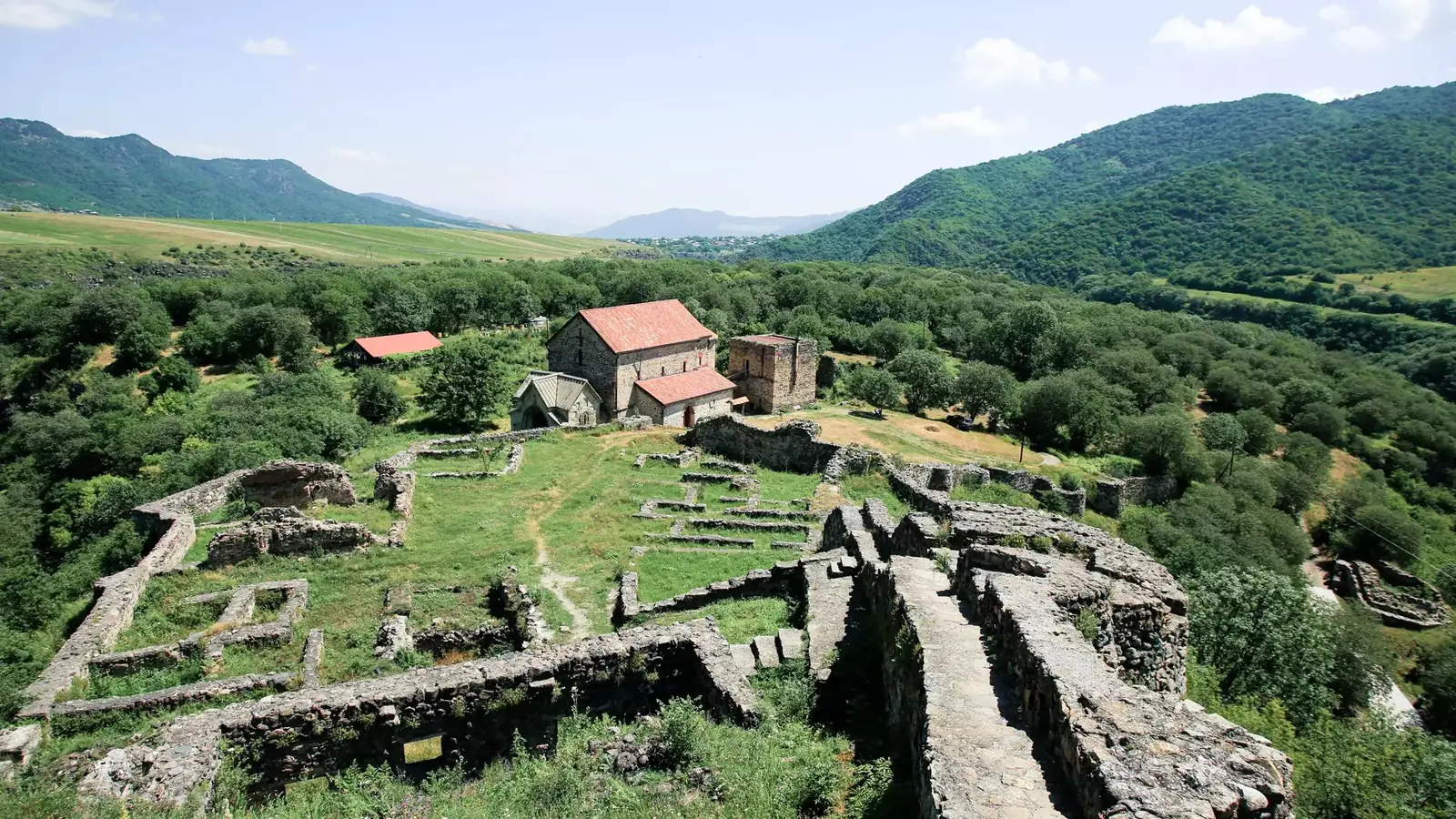
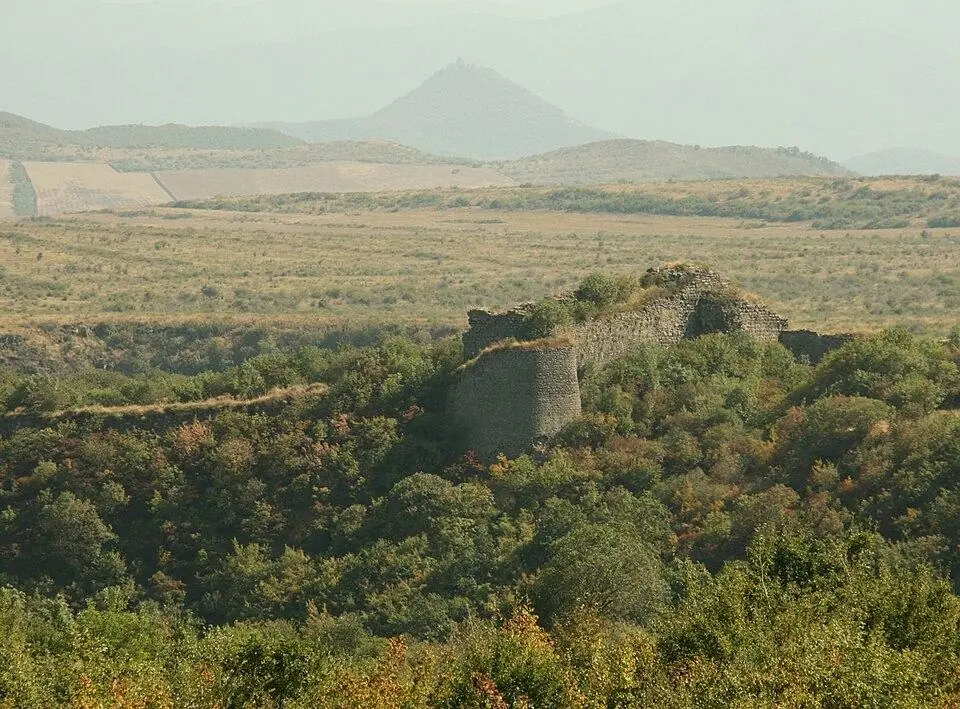
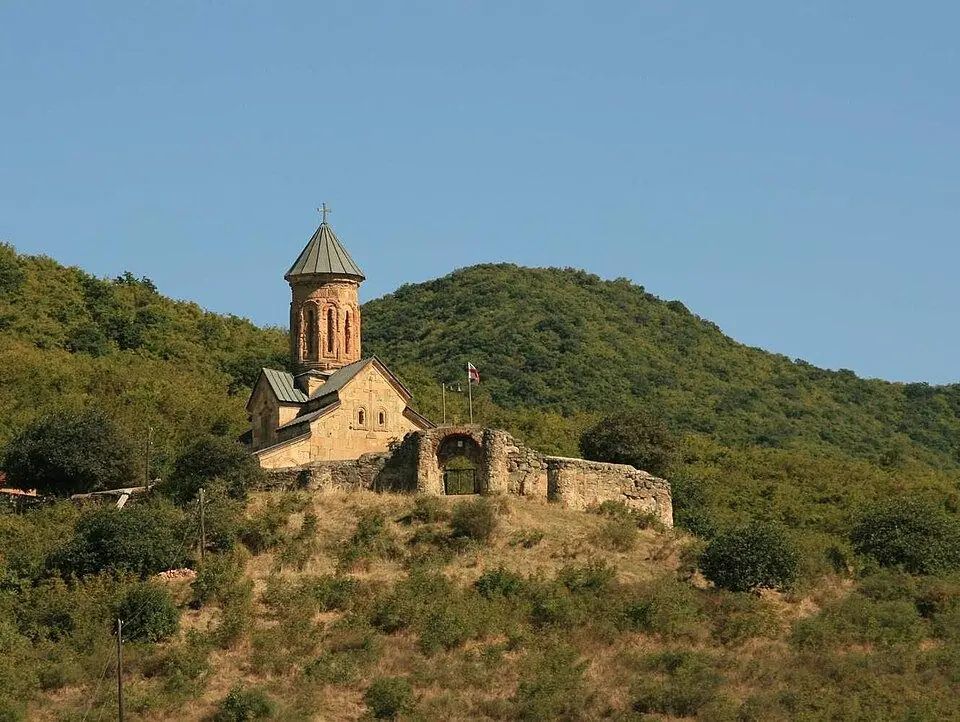
The fossils lie under a town that mattered in its own right. It stands on a narrow spur where the Mashavera and Pinezauri rivers meet, with cliffs on two sides. A wall closed the open side, and a citadel held the tip. The town grew rich in the 12th and 13th centuries before wars left it empty; our place page tells that story.
Dmanisi Sioni is the building to look for. This stone basilica dates from about the 6th century and still holds services. Between 1213 and 1222, under King George IV Lasha, builders added a porch on the west side with fine carved stonework. Its old Georgian inscriptions name the king. Another line there records a bishop who scrapped a fee that local couples paid to marry.
- The citadel at the tip of the spur, with the remains of a palace and views down into both gorges.
- Stone footings of houses, shops and workshops along the old streets.
- The ruins of a medieval bathhouse.
- Parts of the town wall and its gate on the landward side.
- Inside the church, keep knees and shoulders covered; women are expected to wear a headscarf.
What you see on a Dmanisi visit today
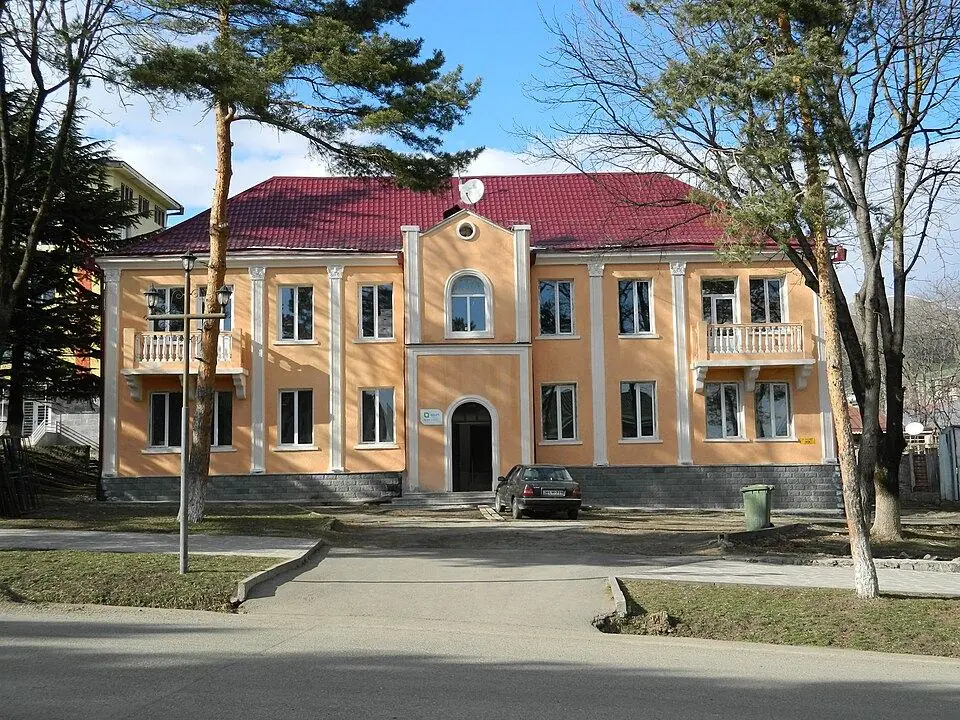
The Georgian National Museum runs the site as a museum-reserve. It reopened after an upgrade in 2009, and a visit follows a simple loop of two to three hours.
- Museum building: 30 to 45 minutes
Casts of the five skulls, stone tools and animal fossils from the dig, and finds from the medieval town. A full-size model shows how a Dmanisi teenager may have looked. - Excavation shelter: 20 to 30 minutes
A roof covers the pits where the skulls came out. In summer the research team is often at work, and you can watch from the edge. - Medieval town and Sioni: 45 to 60 minutes
Follow the paths through the ruins to the church, the bathhouse and the citadel at the end of the spur.
Dmanisi museum opening hours and tickets in 2026
The figures below come from the Georgian National Museum's own page for the branch, which carries no date. Treat them as a guide and phone ahead, above all outside summer.
| What | About (2026) | Good to know |
|---|---|---|
| Days and hours | Tuesday to Sunday, about 11:00-17:00 | Closed on Mondays and public holidays; last tickets about 30 minutes before closing |
| Season | Mainly about May to October | Some guides say March to November; call before a visit in the cool months |
| Adult ticket | About 3 GEL (about $1) in 2026 | Students, pupils and pensioners pay less; under-6s go free |
| Guide in a foreign language | About 45-60 GEL (about $17-23) in 2026 | Museum price list: a short tour of up to 1 hour, or 1.5 to 2 hours |
| Contact | +995 32 299 80 22, info@museum.ge | The museum's head office in Tbilisi |
Some guides say the ruins stay open to walkers all year, while the museum and the dig keep set hours. Our Georgia entrance fees guide lists ticket prices for other sites.
Where to see the Dmanisi skulls in Tbilisi
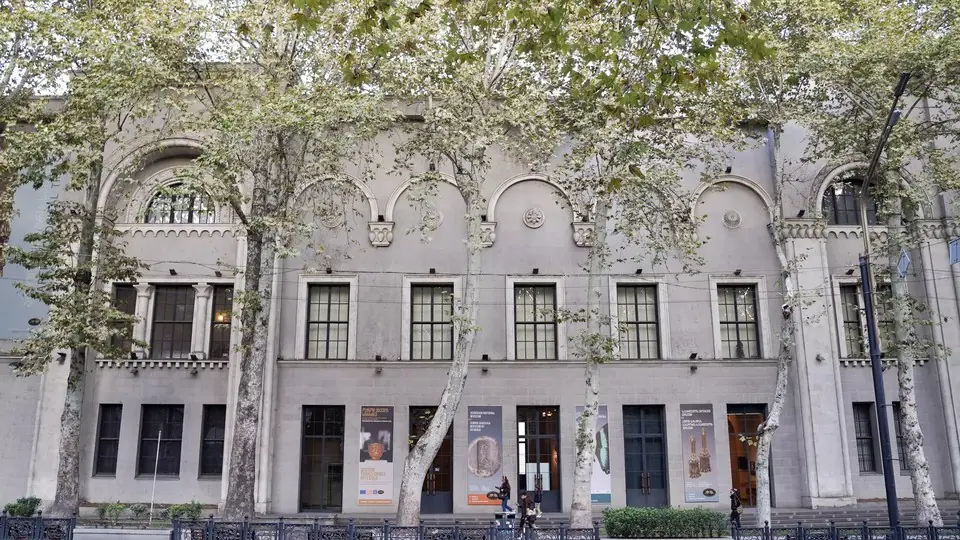
The original fossils belong to the Georgian National Museum and are kept in Tbilisi, while the site shows casts. For the real thing, head to the Simon Janashia Museum, which faces Rustaveli Avenue just up from Freedom Square. Its prehistory displays have long shown Dmanisi skulls.
Pieces go to labs and to shows abroad, so ask at the desk whether a skull on display is original. In 2026 the museum listed a foreign adult ticket of about 40 GEL (about $15), with doors open roughly 10:00 to 18:00 every day but Monday.
How to get to Dmanisi from Tbilisi
The Tbilisi to Dmanisi drive is ~85-90 km. Head south to Marneuli, then west through Bolnisi and up the Mashavera valley, on the road that runs on to the Guguti crossing into Armenia. The site lies by the village of Patara Dmanisi, before you reach Dmanisi town. A route planner gives about 1.5 hours without stops, so allow 2 hours with city traffic.
| Way to go | Time | Cost (2026) | Good to know |
|---|---|---|---|
| Private driver or private tour | ~1.5-2 h each way | From about 180 GEL (about $70) per car for a Dmanisi and Bolnisi loop | The driver waits, and Bolnisi fits on the way |
| Own or hire car | ~1.5-2 h | Fuel only | Paved road; snow and ice possible in winter |
| Marshrutka (minibus) | ~2-2.5 h | About 10 GEL (about $4) in 2026 | Few departures, and they go to Dmanisi town |
By marshrutka
Minibuses run from Tbilisi to Dmanisi town once or twice a day and leave when full. Sources disagree on where they start, Didube bus station or the stops near Samgori metro, so ask your hotel the evening before. The town lies ~19 km past the site by road. Ask the driver to stop at the museum turn-off, or take a local taxi back from town, and check the last ride home.
A Dmanisi day trip with Bolnisi Sioni and Katharinenfeld
Bolnisi lies on the same road, so a Dmanisi day trip strings three stops together. The loop from Tbilisi is ~200 km, with about 3.5 hours at the wheel. This order reaches the museum soon after it opens. Our day trips from Tbilisi guide compares this loop with routes in other directions.
| Time | Stop |
|---|---|
| 08:30 | Leave Tbilisi on the Marneuli road |
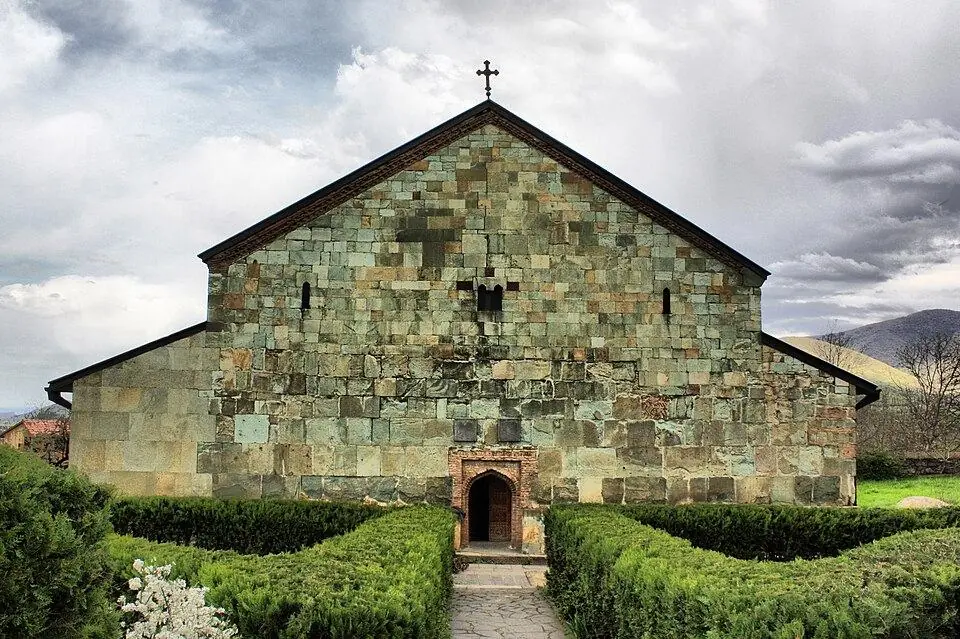
| 09:50 | Bolnisi Sioni, built 478-493, and Tsughrughasheni church, 2 km away |
| 11:30 | Dmanisi: museum, excavation shelter and medieval town |
| 14:15 | Drive back east towards Bolnisi |
| 15:00 | Late lunch and a walk through old Katharinenfeld |
| 16:45 | Leave Bolnisi |
| 18:00 | Back in Tbilisi |
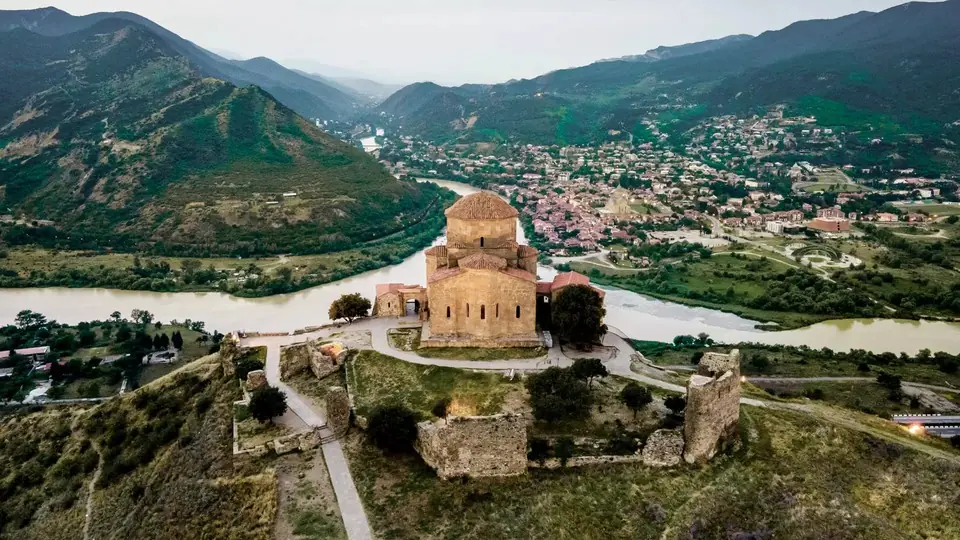
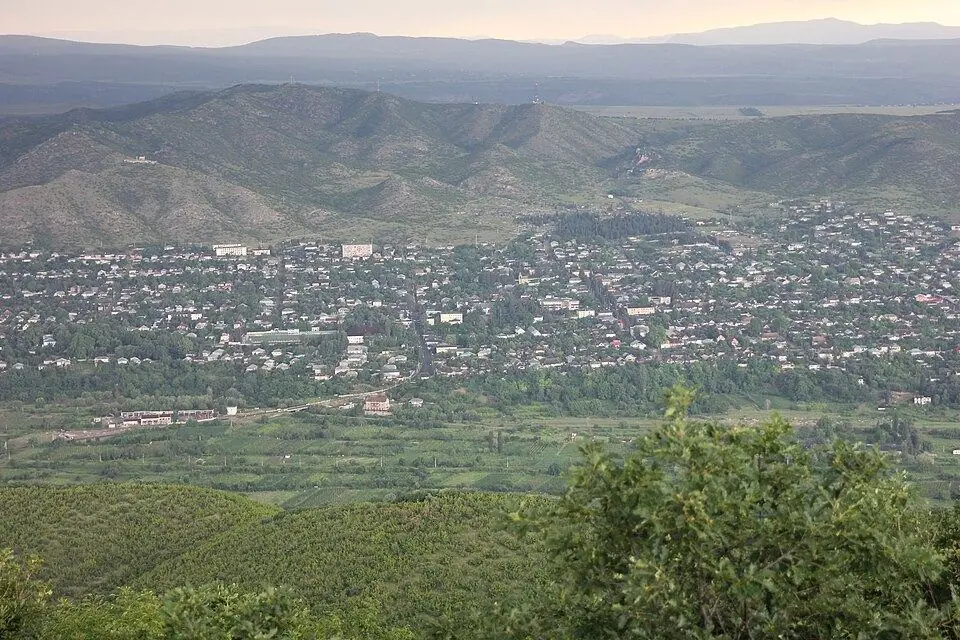
Bolnisi Sioni ranks among the oldest churches in Georgia, and its 5th-century lines are some of the earliest dated texts in the Georgian alphabet. The town of Bolnisi began in 1818 as Katharinenfeld, a colony of farmers from Württemberg in southern Germany. Many of the colonists' stone houses still stand on its central streets.
Going on to Armenia? Our private Georgia & Armenia tour takes the same road to Marneuli before crossing at Sadakhlo. Ask about adding Dmanisi to that day.
Best time to visit Dmanisi
The kindest months are late April to June, then September and October, with the museum open and mild days for the ruins. The site is higher than Bolnisi, so it is usually a few degrees cooler, but the summer sun on the bare spur is still fierce.
July and August suit early starts, and they are the usual months for fieldwork in the pit. From November to March the days are short, the road can ice over and the museum may be shut.
Dmanisi hominins and visiting: FAQ
What are the Dmanisi hominins?
They are early humans who lived at Dmanisi in southern Georgia about 1.8 million years ago. Five skulls and around a hundred other bones have been found. Most scientists see them as an early form of Homo erectus.
How old are the Dmanisi skulls?
About 1.8 million years. The lava just below the fossil layer is about 1.85 million years old, and stone tools from the site are dated between about 1.78 and 1.85 million years.
What is Homo georgicus?
It is the species name given in 2002 to the big Dmanisi jaw that later turned out to belong to Skull 5. The research team now groups the fossils with Homo erectus. Some scientists keep Homo georgicus, and a 2025 study proposed splitting the finds into two species.
How do I get to Dmanisi from Tbilisi?
Drive ~85-90 km south-west via Marneuli and Bolnisi, a trip of 1.5 to 2 hours. A private driver is easiest. Minibuses run to Dmanisi town only once or twice a day, so check the times before you rely on one.
Can I see the original Dmanisi skulls?
Not at the site, which shows casts. The originals belong to the Georgian National Museum in Tbilisi, whose museum on Rustaveli Avenue has displayed them. Some pieces travel, so check with staff whether what you see is the original.
Is a Dmanisi day trip worth it?
Yes, if early humans or medieval ruins interest you. The dig, the museum and the town take two to three hours. Add Bolnisi Sioni and old Katharinenfeld for a full, quiet day off the beaten path in Georgia.