- Akhaltsikhe is the capital of Samtskhe-Javakheti in southern Georgia, ~208 km from Tbilisi, and the best base for Rabati Castle, Sapara Monastery and Vardzia.
- In 2026 foreign adults paid about 20 GEL (about $8) for the upper part of Rabati Castle. Winter hours, in force from 1 October, ran from 09:00 to 18:00 every day.
- The castle's history museum shuts on Mondays and charges separately: about 15 GEL (about $6) in 2026.
- Below the walls, the old Rabati quarter keeps two synagogues, a Jewish burial ground of over 5,000 graves, and Orthodox, Catholic and Armenian churches.
- From Didube bus station in Tbilisi, a marshrutka to Akhaltsikhe departs roughly every hour and costs about 15 GEL (about $6). The trip takes 3 to 3.5 hours.
Akhaltsikhe is a small regional capital in southern Georgia, ~208 km west of Tbilisi. Most people treat it as one night on the road to Vardzia, but it deserves more. The top things to do in Akhaltsikhe start with Rabati Castle, a walled hilltop complex with a mosque, a church and a fine museum. Below it lies the old Rabati quarter, where two synagogues still stand. Sapara Monastery waits in the forest 20 minutes away, and the Turkish border crossing at Vale is ~18 km west.
This Akhaltsikhe travel guide gives the 2026 ticket prices and opening hours for Rabati Castle, and shows which parts are free. It walks you through the museum, the synagogues and the best viewpoints. Then come day trips to Sapara, Zarzma, Abastumani, Vale and Vardzia, and transport from Tbilisi, Borjomi and Kutaisi. We finish with places to sleep, the best months and short answers to common questions. For the full story of the fortress, see our Rabati Castle place page.
Where is Akhaltsikhe? The town at a glance
Akhaltsikhe sits at ~1,000 m on both banks of the Potskhovi, a tributary of the Mtkvari. About 17,000 people live here. The name means 'new fortress', and the fortress still crowns the north bank. Across the river, the newer town was laid out from the 1830s. It holds the bus station, the banks, the shops and most cafés.
For centuries this was a frontier town. From the 13th century the Jaqeli princes governed Samtskhe from this hill. In 1578 Ottoman armies captured the town, and a pasha ruled from it. Russian troops stormed the fortress in 1828. Each power left buildings behind, and that mix is the reason to stay.
| What | Details |
|---|---|
| Region | Samtskhe-Javakheti, southern Georgia, near the Turkish border |
| Height | ~1,000 m |
| From Tbilisi | ~208 km, 3 to 3.5 h by car |
| From Borjomi | ~50 km, about 1 h |
| From Kutaisi | ~175 km via Khashuri, about 3 h |
| To Vardzia | ~61 km, about 1 h |
| Time needed | One full day; two nights with day trips |
| Best months | May to June and September to October |
Things to do in Akhaltsikhe: a one-day plan
Akhaltsikhe is compact. From the bus station you can walk to the castle gate in 10 to 15 minutes. With one full day, this order works well. The museum closes at 18:00, and the best light on the walls comes late.
- Morning: Sapara Monastery
Take a taxi or drive ~10 km into the hills south-east of town. Give the frescoes and the views an hour, then head back for lunch. - Midday: the museum and the upper castle
Buy your tickets at the castle. See the museum first, since it is cool and dim. Then walk the walls, the mosque courtyard and the tower. - Afternoon: the old Rabati quarter
Leave by the gate and wander the lanes on both sides of the walls. Look for the two synagogues, the Jewish cemetery and the Catholic church. - Sunset: St Marine church
Climb to this 19th-century church on the slope above the castle. From its churchyard you look straight down onto the citadel as the light turns gold. - Evening: a Meskhetian dinner
Eat near the castle gate or cross the river to the new town. Order the local dishes, then sleep early if Vardzia is next.
Rabati Castle: what is inside the walls
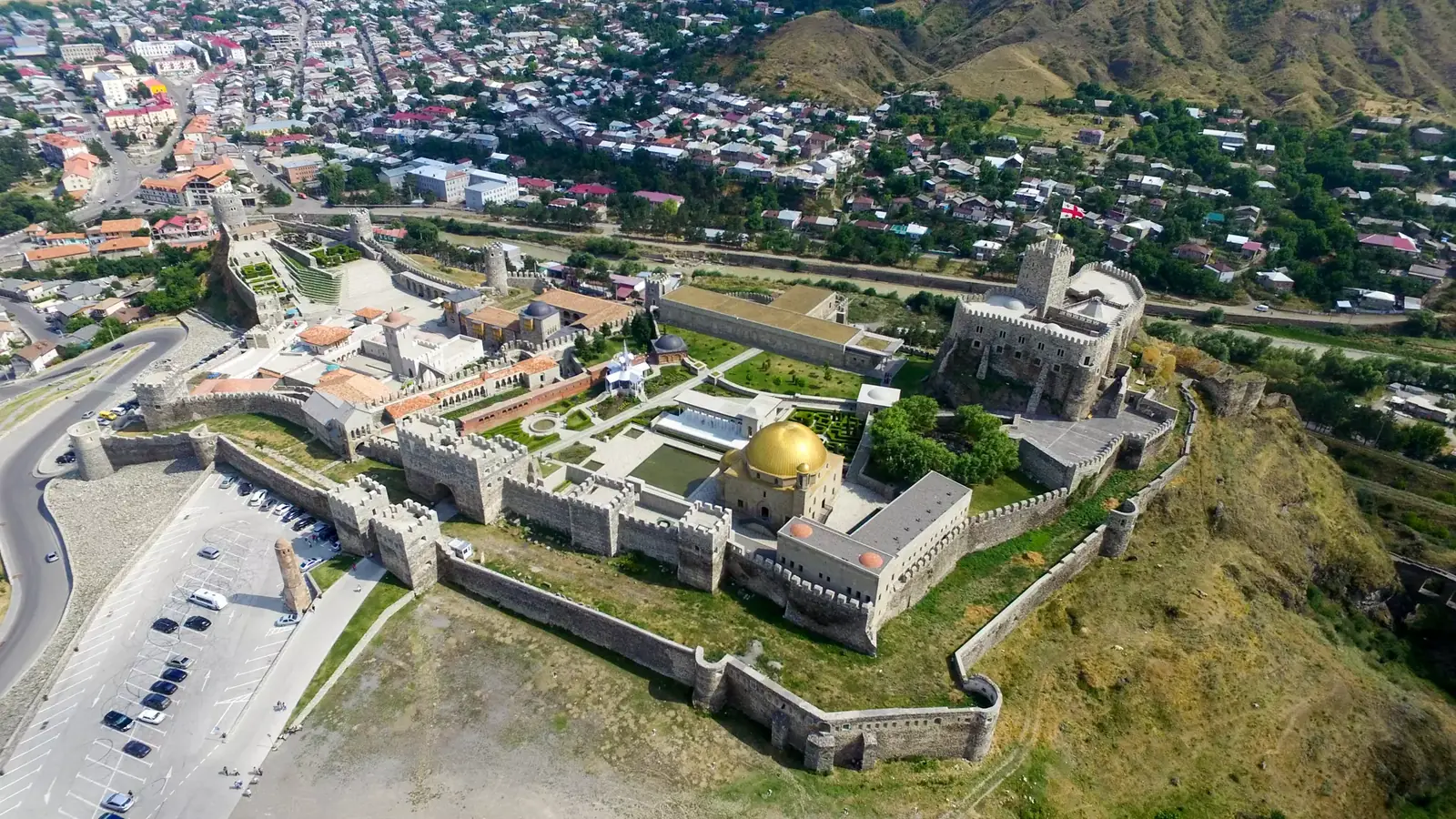
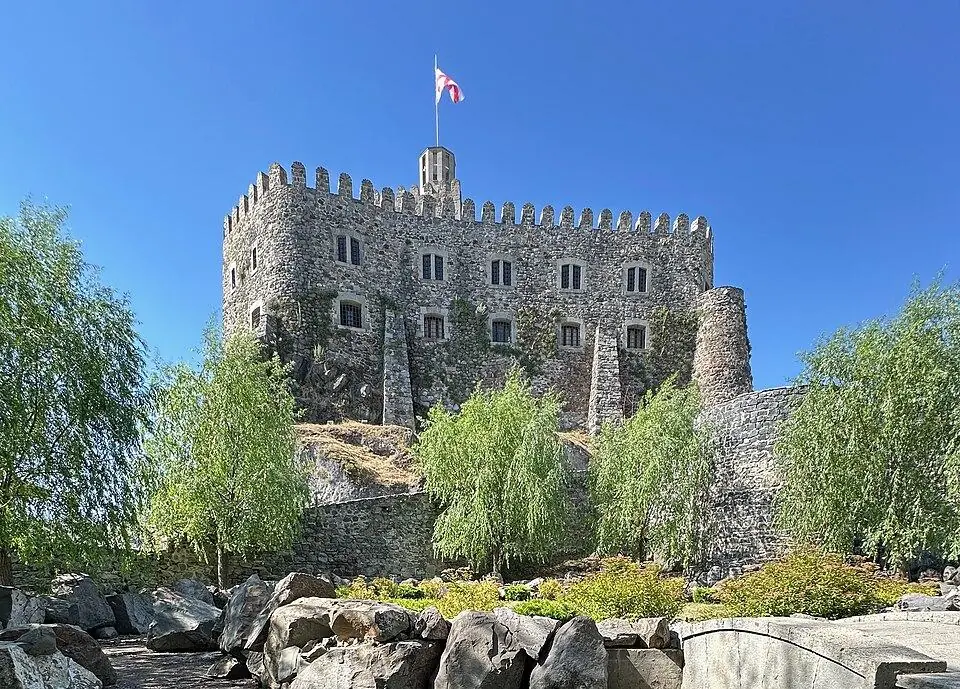
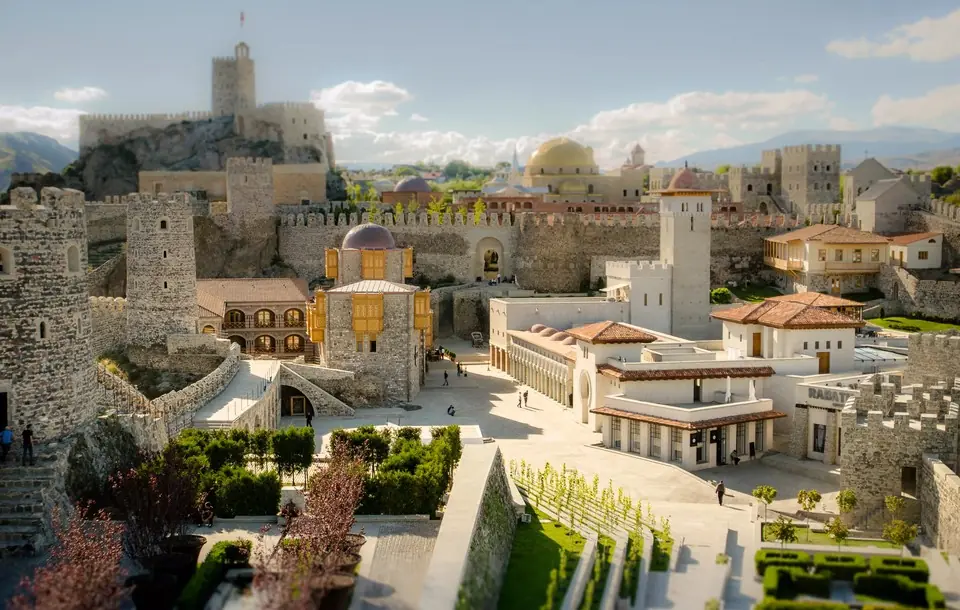
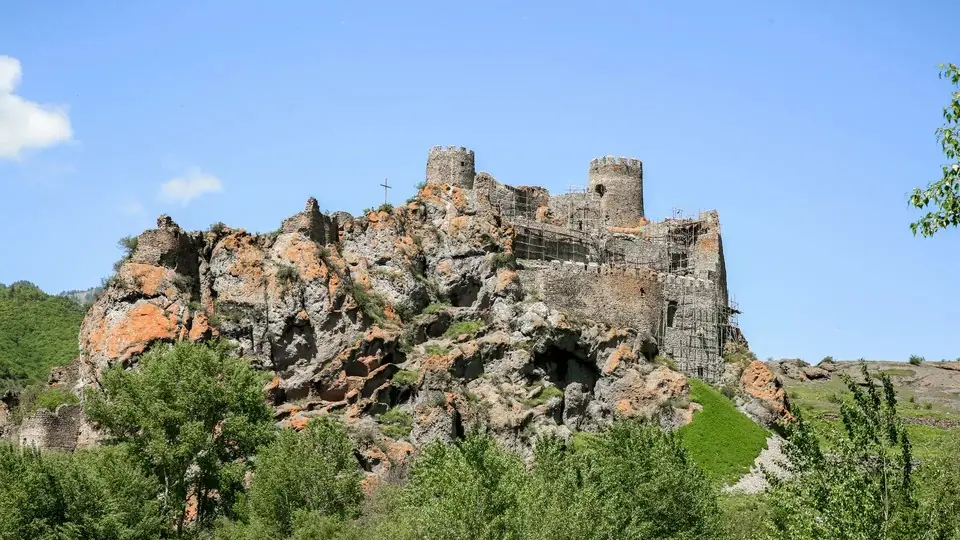
The castle complex covers about 7 to 8 hectares on a hill above the river. Its story begins in the 9th century, with a stronghold named Lomsia. Most of what you see now comes from a large state rebuild in 2011 and 2012. Workers restored the walls, the citadel, the mosque, the madrasa and the palace. Some visitors find the new stone too neat. Others love the gardens, pools and views. Either way, it explains the town's past in one walk.
The lower courtyard
The main gate opens into a lower courtyard with a hotel, a restaurant, a stretch of old wall, a lookout tower and a small terraced vineyard. In 2026 visitors reported that they could stroll this part without a ticket. The ticket check stands further up, where the upper castle begins.
The upper castle
- The Akhmediye mosque, built in 1752 for Haji Ahmed Pasha Jaqeli, with a golden dome and one minaret. Nobody prays here now, so you can look into its plain brick and stone hall.
- The madrasa, the old religious school behind the mosque, and a walled court with tiled pools and a fountain that many people walk past.
- A small Orthodox church, which the castle's own site dates to the 9th or 10th century.
- The citadel and its tall tower. You can climb it for the widest view over the town and the hills.
- A rebuilt darbazi, the old Meskhetian house type, with a stepped wooden roof that opens to the sky above the hearth.
- The palace of the Jaqeli princes, now home to the history museum.
After 1828 the Russian army used the mosque as a church for some years. That is why the castle's site calls it a church-mosque. Georgian, Ottoman and Russian work sit side by side, and that mix is the point of the place. Wear flat shoes, as the stone steps are steep and smooth.
Rabati Castle tickets and opening hours in 2026
The castle administration sells tickets at the gate. These are its 2026 prices, with the museum added for comparison:
| Ticket or service | Price in 2026 (approx.) | Notes |
|---|---|---|
| Foreign adult | About 20 GEL (about $8) | Upper castle |
| Foreign student or pupil | About 15 GEL (about $6) | Bring your card |
| Georgian citizen or resident | About 10 GEL (about $4) | Residence permit holders count |
| Georgian student, pupil or pensioner | About 3 GEL (about $1) | Residents too |
| Children under 6 | Free | Also free with papers: disability, veterans, ICOM |
| Castle guide for 1 or 2 people | About 20 GEL (about $8) | 40 GEL for 3 to 10, 60 GEL for 11 to 25 |
| Audio guide | About 15 GEL (about $6) | Per device |
| History museum | About 15 GEL (about $6) | Separate ticket |
From 1 October 2026 the complex was open every day from 09:00 to 18:00. Spring used the same hours, and some summer evenings run later, so ask on the day. The castle shut for Orthodox Easter, on 12 and 13 April in 2026. Big events change the hours too. On 30 June 2026, the feast of St Shalva Akhaltsikheli, it opened only in the late afternoon, and entry was free.
The museum works shorter days than the castle: from 10:00 until 18:00 as a rule, and never on a Monday. Arrive by about 16:00 if you want to see both.
Samtskhe-Javakheti History Museum: what to see in the Jaqeli palace
The museum belongs to the Georgian National Museum and fills the restored Jaqeli palace. It bears the name of the historian Ivane Javakhishvili. Its roots go back to a private collection of the 1880s. A regional museum grew from it in 1923, and the new display opened with the rebuilt castle in 2012.
More than 25,000 objects tell the story of Meskheti, the old name for this land. The oldest come from the 4th millennium BC. Look for the stone inscriptions in old Georgian script, the manuscripts and early printed books, the carpets and the coins. Gold from local burial mounds, Ottoman tiles and a copy of the Queen Tamar fresco from Vardzia stand out too. Finds from the 2015-2016 digs at Orchosani, in Adigeni district, joined the display later. Allow about an hour.
The old Rabati quarter: synagogues, churches and the Jewish cemetery
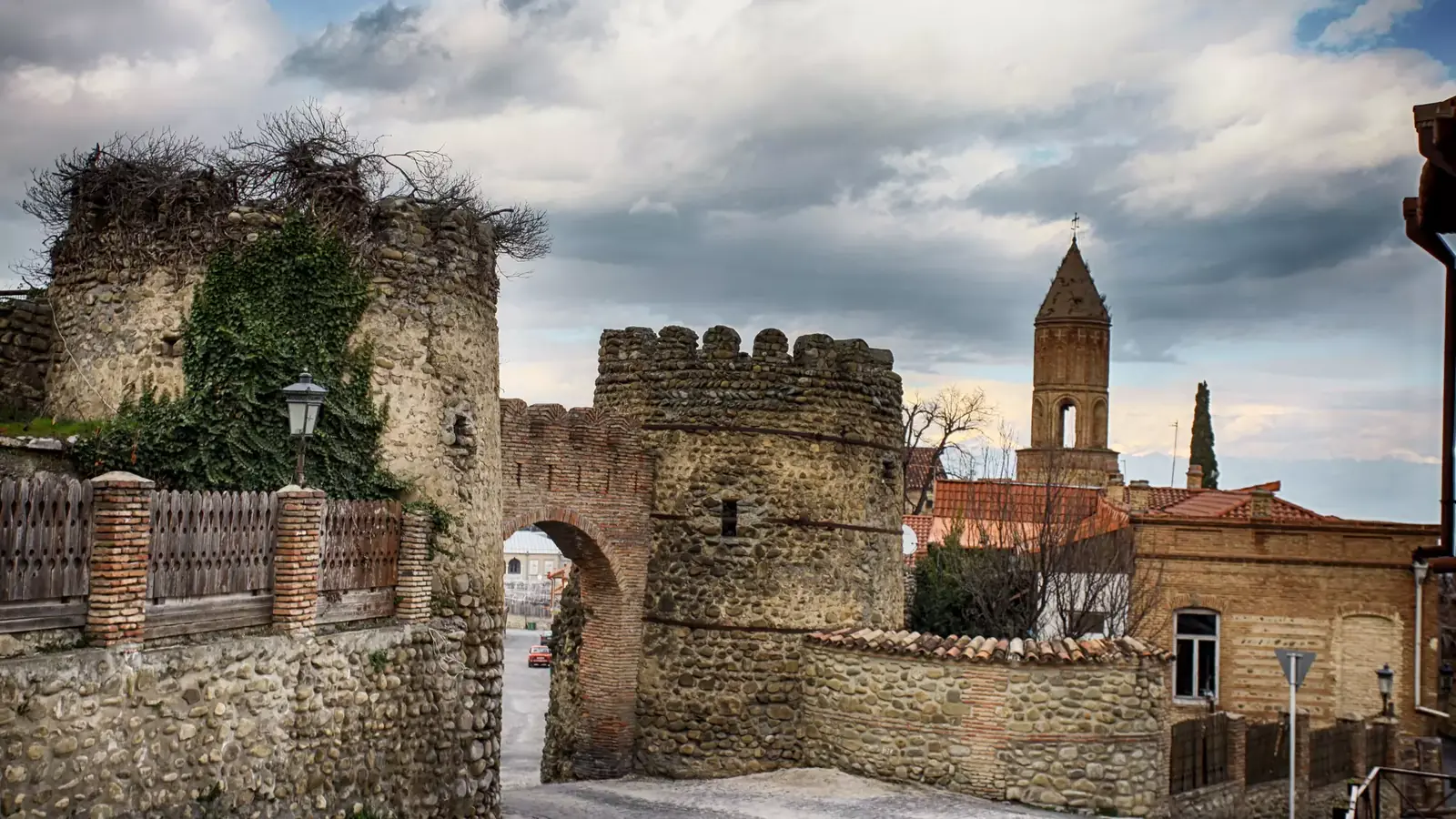
Rabati was the trading quarter around the fortress. In the 17th century Georgians, Armenians, Turks, Greeks and Jews all lived here, each group in its own corner around its own house of worship. Many of those buildings survive on the steep lanes. Walking them takes one to two hours, and it costs nothing.
The synagogues and the Jewish cemetery
The Jewish quarter, Daramala, lies north-east of the castle and has two synagogues. An inscription on the upper one dates it to 1862. Georgia's tourism agency calls it the oldest surviving synagogue in the country. Inside, the carved woodwork is the finest in the quarter. Two Torah scrolls are kept here, one thought to be about 500 years old. The lower synagogue is smaller and no longer used.
Most of the community left for Israel in the Soviet years, and only a few Jewish families remain. Services are rare, so the doors are often locked. A caretaker opens them for visitors who call ahead. Above the quarter, the Jewish cemetery holds more than 5,000 graves. Some are about 400 years old, with words in Georgian and Hebrew.
Churches, baths and viewpoints
- St Marine church: a 19th-century Orthodox church on the western side of the quarter, where Georgian and Greek families once lived. Its churchyard gives the classic view of the citadel.
- The Catholic church: a sign of the Georgian and Armenian Catholic community, which once had three churches here. One has been restored.
- St Stephen's: the ruined Armenian Apostolic church at the heart of the old Armenian streets.
- Ottoman baths: at least two old bathhouses stand outside the walls. They are locked, but you can spot their brick domes from the upper car park.
- Across the river: the new town has a large Orthodox church, rebuilt in 2020, with a statue of Queen Tamar facing the castle.
Sapara Monastery and other day trips from Akhaltsikhe
Akhaltsikhe sits in the middle of Meskheti's best sights, and most lie within an hour's drive. Taxis wait at the bus station, so you do not need a car. Distances below are by road from the town centre.
| Place | Distance and drive | Time to allow | Entry in 2026 (approx.) |
|---|---|---|---|
| Sapara Monastery | ~10 km, 20 to 30 min | 1 to 1.5 h | Free; leave a donation |
| Vale and its church | ~11 km, 15 min | 30 min | Free |
| Atskuri fortress | ~23 km, 25 min | 45 min | Free |
| Abastumani | ~27 km, 30 to 45 min | Half a day | Observatory tours extra |
| Zarzma Monastery | ~33 km, about 40 min | 1 h | Free |
| Green Monastery | ~42 km, about 50 min | 1 h | Free |
| Khertvisi Fortress | ~46 km, 45 min | 30 to 45 min | About 10 GEL (about $4) |
| Vardzia | ~61 km, about 1 h | 2 to 3 h | About 15 GEL (about $6) |
Sapara Monastery
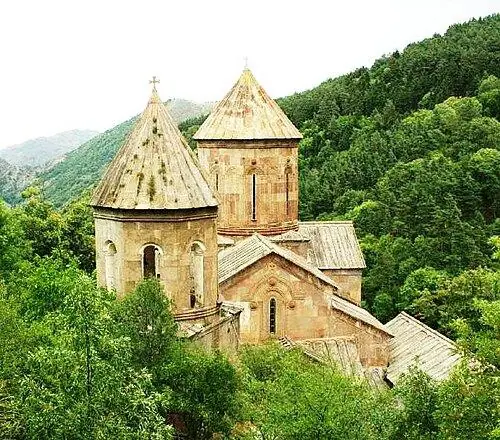
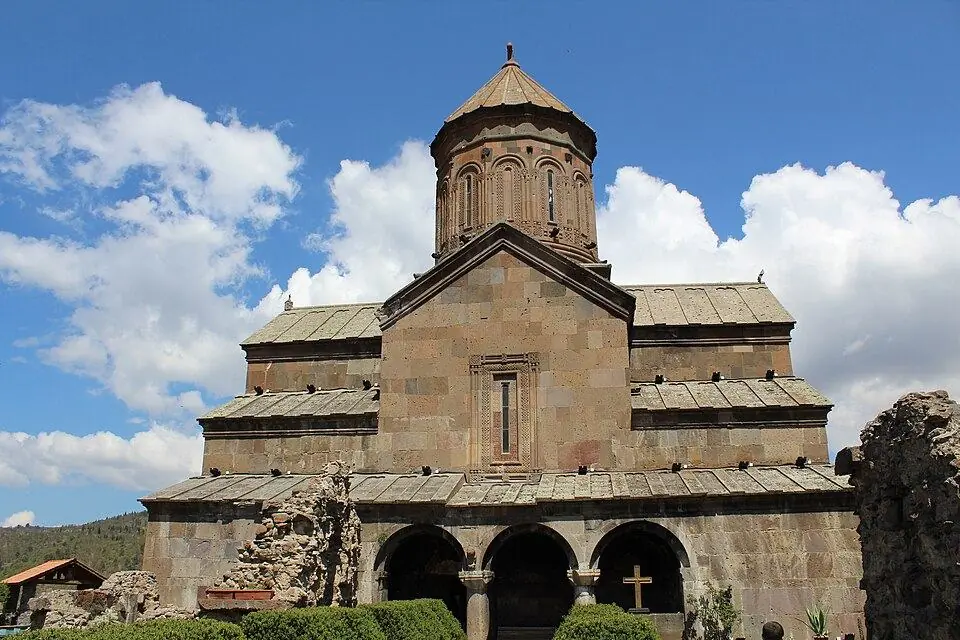
Sapara is the easy favourite. A paved road climbs ~10 km south-east of town to a working monastery on terraces above a wooded gorge. The little Dormition church is probably 10th century. The big church of St Saba was raised by the Jaqeli princes around 1300. On its south wall, 14th-century frescoes show the Jaqeli rulers in rich robes. Photos are not allowed inside. For the best view over the roofs, climb the path above the gate towards the ruined fortress.
No bus goes up, so take a taxi and agree the waiting time first. Dress for a working monastery: knees and shoulders covered, plus a scarf for women's hair. Weekends bring Georgian families and tour coaches, so come on a weekday for quiet.
Zarzma and Abastumani
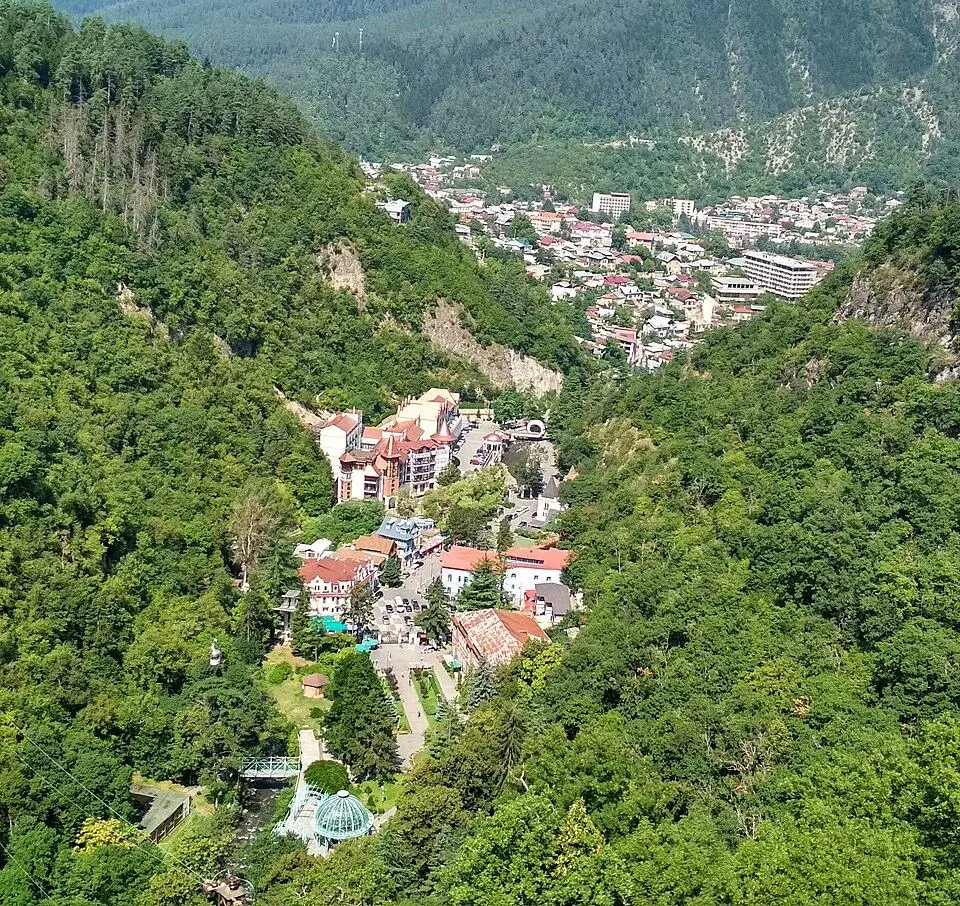
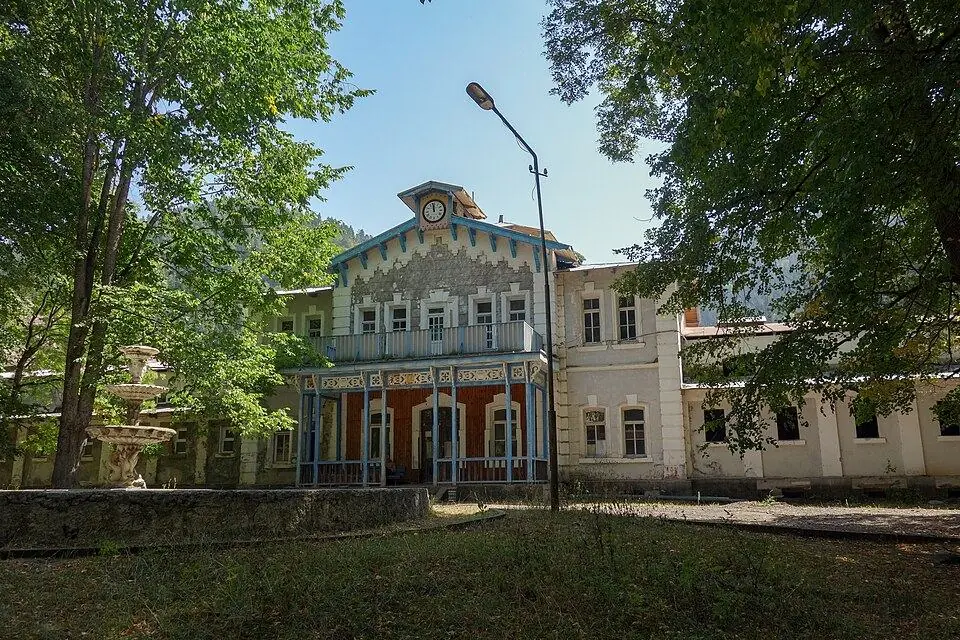
West of town, the Adigeni road leads to Zarzma Monastery. Its early 14th-century church has a tall separate bell tower and Jaqeli portraits of its own. Abastumani, a pine-forest resort with Georgia's national observatory, lies a short way north of the same road. Together they fill a relaxed day. In summer you can carry on over the Goderdzi Pass to Adjara and the Black Sea.
Vardzia and Khertvisi
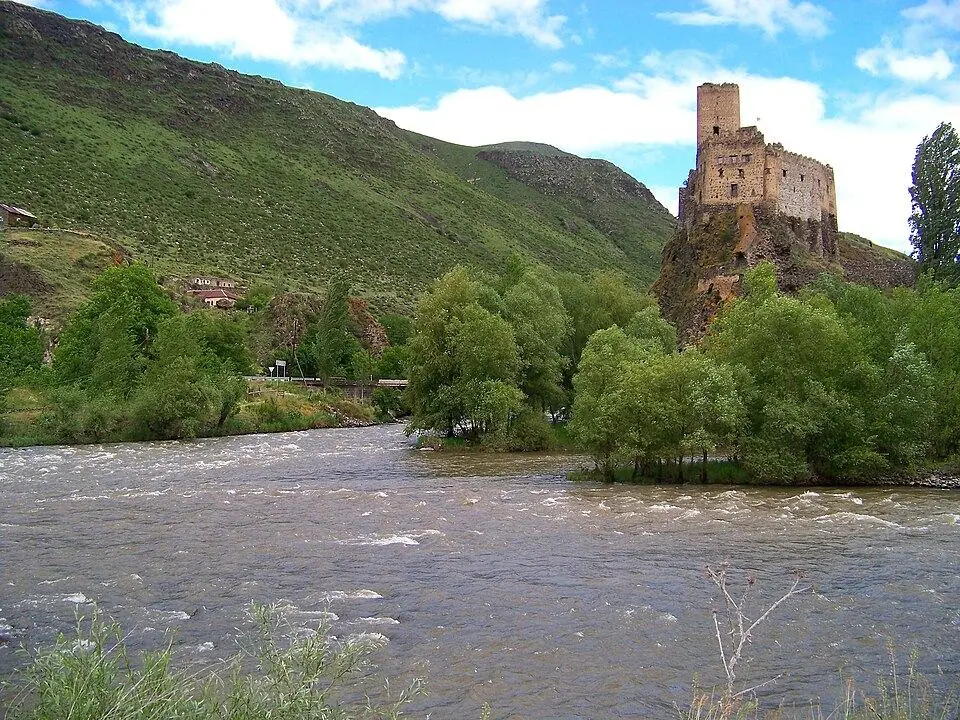
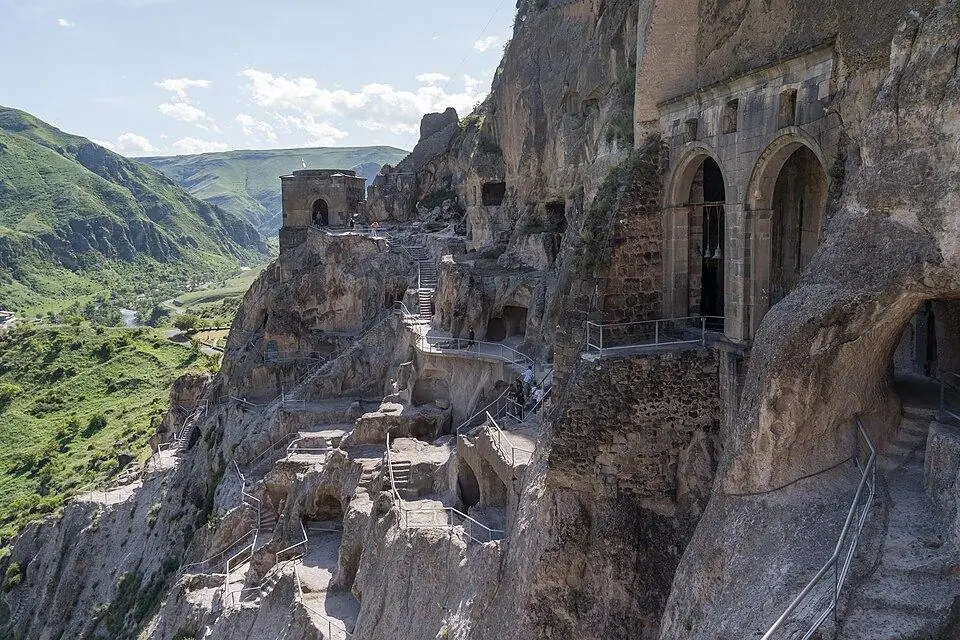
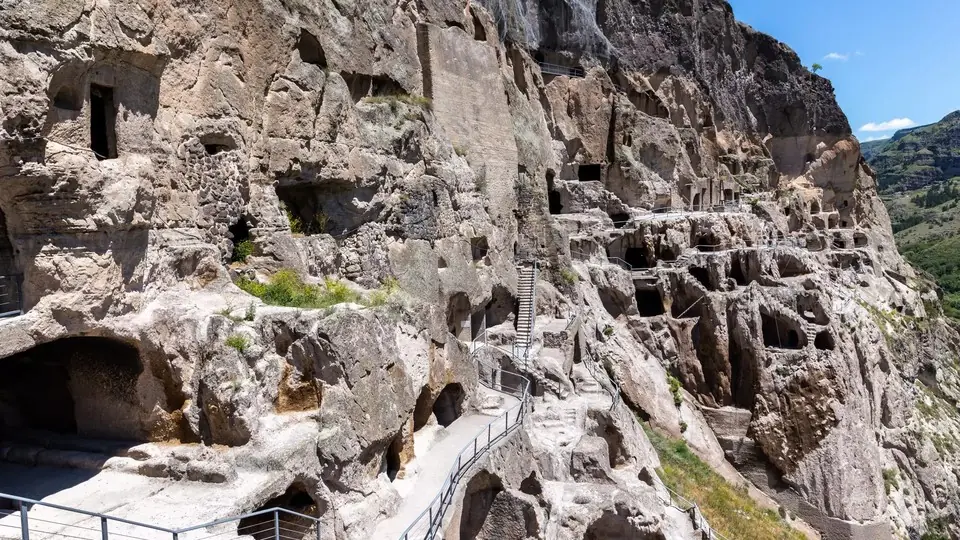
The cave city of Vardzia is why most people come this way. From Akhaltsikhe it is an easy morning. Pass Khertvisi Fortress on its rock, see the caves before the midday heat and be back for a late lunch. Since a rockfall in May 2026, only a small stretch by the Secret Tunnel has been fenced off. The rest of the cliff is open. Our Vardzia guide has the tickets, the hours and the walking route.
Want to walk first? Our five-day trip crosses Borjomi-Kharagauli National Park on foot, with nights in park shelters. It then visits Rabati, Khertvisi and Vardzia.
How to get to Vale, and the border crossing to Turkey
Vale is a small mining town ~11 km west of Akhaltsikhe, up the Potskhovi valley towards the Turkish border. It was a village by the 10th century, grew around lignite mines in Soviet times and became a town in 1962. Many families here belong to the Georgian and Armenian Catholic community.
Its main sight is the church of the Mother of God. It was first built in the 10th century and rebuilt as a basilica with three naves in the 16th. The church makes a short stop on the way to the border or to Zarzma.
- By car or taxi: about 15 minutes on the main road west from Akhaltsikhe.
- By minibus: in 2026 small buses left Akhaltsikhe bus station for Vale and the border about every 30 to 60 minutes, from about 09:00 to 18:00. The fare was about 1 GEL (about $0.40).
- From Tbilisi: there is no handy direct service, so ride to Akhaltsikhe and change there.
Past the town, the road climbs to the Vale crossing, ~18 km from Akhaltsikhe. On the Turkish side the post is called Türkgözü, in Posof district, and the road goes on towards Ardahan and Kars. It is a small crossing, so check its status and hours before you set out. Foot travellers usually walk across and find a minibus or taxi on the far side. Keep your passport handy.
Tbilisi to Akhaltsikhe: marshrutka, train, driver or car
No passenger train runs to Akhaltsikhe, so most travellers arrive by road. From Tbilisi the route follows the E60 highway west past Gori to Khashuri. It then turns south through the Borjomi gorge. The road is paved all the way.
| From | By car | Public transport in 2026 (approx.) |
|---|---|---|
| Tbilisi | ~208 km, 3 to 3.5 h via Gori, Khashuri and Borjomi | Marshrutka from Didube about every 40 to 60 min, about 07:00 to 19:00; about 15 GEL (about $6), 3 to 3.5 h |
| Borjomi | ~50 km, about 1 h | Frequent minibuses; about 6 to 10 GEL (about $2 to $4) |
| Kutaisi | ~175 km via Khashuri, about 3 h | A few morning minibuses at about 20 GEL (about $8); or change in Khashuri |
| Batumi | ~160 km over the Goderdzi Pass, 4 h or more, warm months only | One or two direct minibuses a day have run, about 30 GEL (about $12) |
| Vardzia | ~61 km, about 1 h | A few minibuses a day; the last one back leaves mid-afternoon |
- Marshrutka: minibuses leave from the Nige stand inside Didube bus station, by Didube metro. They often wait until full, so come early and carry cash.
- Train and minibus: the slow train from Tbilisi Central to Borjomi takes about 4 to 4.5 hours. A minibus covers the last hour. It suits travellers who want a night in Borjomi too.
- Private driver: the easiest choice if you want stops at Uplistsikhe, Borjomi or the Green Monastery. Our drivers go on any date you pick.
- Your own car: from May to October you can drive home over the high Javakheti plateau via Akhalkalaki and Tsalka. Snow can close that road in winter.
In Akhaltsikhe the bus station is in the new town, a 10 to 15 minute walk from the castle gate. Direct minibuses head back to Tbilisi from early morning until late afternoon. For stops on the way, see our route pages for Tbilisi to Borjomi and Tbilisi to Vardzia.
Our two-day private tour from Tbilisi spends the first afternoon inside Rabati Castle and sleeps near Vardzia. You reach the caves at opening time. Choose your own dates and group, large or small. Your guide will chat in whatever language you speak best, and we plan each day around families with kids of any age.
Where to stay in Akhaltsikhe, and what to eat
Akhaltsikhe has plenty of beds for a short stay, from family guesthouses to a few mid-range hotels. Choose your area by what you want to do after dark.
| Area | Good for | Double room in 2026 (approx.) |
|---|---|---|
| Rabati quarter, below the castle | Evening walks, quiet nights, the castle on your doorstep | Guesthouses from about 80 GEL (about $31), often with breakfast |
| Inside the castle walls | Waking up by the ramparts; one hotel with a spa | Higher; check current rates |
| New town by the river | The bus station, banks, shops and cafés | Similar to the Rabati quarter |
| Gorge villages near Vardzia | Reaching the caves at opening time | About 80 to 150 GEL (about $31 to $58) |
Summer weekends from June to September fill up early, as do festival dates, so reserve ahead. Many hosts can find you a driver for Sapara, Vardzia or the border.
Meskhetian food to try
Meskhetian cooking leans on dried and preserved food, made to last through long winters. Look for tenili, a white cheese stretched into thin strands and pressed into clay pots. Try small khinkali filled with apokhti, salted and dried meat, and the flaky local khachapuri. Winemakers are also reviving old grapes from stone terraces in the gorge, and a few places near the castle pour their wines.
Best time to visit Akhaltsikhe
Akhaltsikhe lies in a sheltered basin at ~1,000 m. Summers are hot and fairly dry, and winters are cold but often sunny. Our Akhaltsikhe weather page has the full monthly figures.
| Months | Weather | Good for |
|---|---|---|
| March and April | Highs of ~12 to 17°C, cold nights | Quiet sights and fruit blossom |
| May and June | Highs of ~22 to 26°C; the wettest months | Green hills and castle festivals |
| July and August | Highs of ~29 to 30°C | Early starts; the Goderdzi road is open |
| September and October | Highs of ~19 to 25°C, mostly dry | The best months overall; autumn colour |
| November to February | Highs of ~3 to 11°C, frosts to about -7°C; snow mainly December to February | An empty castle and short days |
Castle events cluster in late spring and summer. In 2026 the castle hosted the Spring of Rabat folk festival on 23 and 24 May and the Gemo Fest food fair on 6 and 7 June. The feast of St Shalva Akhaltsikheli followed on 30 June. Dates move each year, so check the castle's events page before you go.
For Vardzia on the same trip, June and September are ideal. In July and August, see the caves early and save Rabati for the evening.
Akhaltsikhe and Rabati Castle FAQ
What is Akhaltsikhe known for?
Akhaltsikhe is best known for Rabati Castle, the restored hilltop fortress with a mosque, a church and the regional history museum. It is also the main base for Vardzia, ~61 km away, and for Sapara Monastery. Its old quarter keeps two synagogues and churches of several faiths.
How much are Rabati Castle tickets?
For the upper castle, a foreign adult was charged about 20 GEL (about $8) in 2026. A foreign student with a card paid about 15 GEL (about $6). Georgian citizens and residents paid about 10 GEL. Children under 6 go in free. The history museum sells its own ticket.
What are Rabati Castle's opening hours?
Since 1 October 2026 the gates have opened at 09:00 and closed at 18:00 daily, and some summer evenings run later. It closes for Orthodox Easter and shifts its hours for big events. The museum inside opens from 10:00 to 18:00 and is closed on Mondays.
Is Rabati Castle free to visit?
Partly. In 2026 visitors could walk the lower courtyard by the gate without a ticket. You need a ticket for the upper part, with the mosque, citadel, tower and palace. Everyone got in free on St Shalva's feast day, 30 June, in 2026.
How do I get from Tbilisi to Akhaltsikhe?
Minibuses run from Didube bus station roughly hourly, from about 07:00 to 19:00. They cost about 15 GEL (about $6) and take 3 to 3.5 hours. By car the trip is ~208 km, and a private driver lets you stop in Borjomi.
Is Akhaltsikhe worth visiting?
Yes, for at least one night. You get a striking castle, a good museum and an old quarter with real variety, plus Sapara 20 minutes away. Staying here also puts Vardzia an easy hour's drive away.
How far is Vale from Akhaltsikhe?
Vale town is ~11 km west, about 15 minutes by car or minibus. The Vale crossing into Turkey is ~18 km from Akhaltsikhe. Check its hours before you travel.
How many days do you need in Akhaltsikhe?
One full day covers Rabati Castle, the museum, the old quarter and Sapara. Add a second day for Vardzia and Khertvisi, or for Zarzma and Abastumani.